Showing Posts From
Ancient architecture
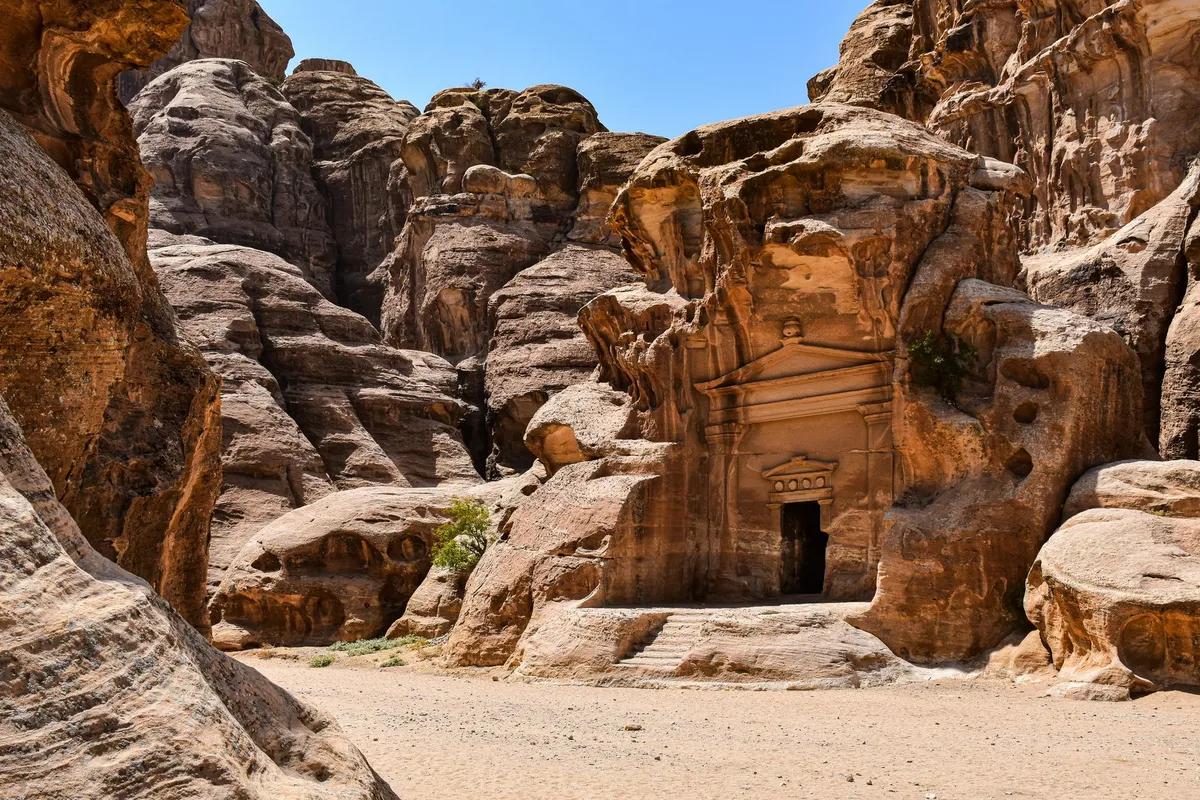

Unveiling the Rose-Red Gem of the Desert Nestled between the towering cliffs of southern Jordan, Petra stands as a testament to human ingenuity and the passage of time. This ancient city, carved directly into rose-red sandstone cliffs by the Nabataeans over 2,000 years ago, was once a thriving trade hub connecting the Silk Road to the Mediterranean. Today, it is a UNESCO World Heritage Site and one of the New Seven Wonders of the World, drawing travelers from every corner of the globe. But Petra is more than just a relic of the past—it’s a living, breathing experience where history, architecture, and adventure intertwine seamlessly. To truly appreciate Petra, you must first understand its origins. The Nabataeans, a nomadic Arab tribe, settled here around the 4th century BCE, transforming a barren desert into a bustling metropolis. Their mastery of water management—through an intricate system of dams, cisterns, and pipelines—allowed Petra to flourish in an otherwise inhospitable landscape. The city’s most iconic structure, Al-Khazneh (The Treasury), is a prime example of Nabataean craftsmanship, with its Hellenistic facade carved directly into the rock. But Petra’s allure extends far beyond its famous monuments. From the towering Monastery to the lesser-known High Place of Sacrifice, every corner of this ancient city whispers stories of trade, religion, and survival.As you traverse the Siq, the narrow gorge that serves as Petra’s grand entrance, the anticipation builds with every step. The path, flanked by towering cliffs, narrows to just a few meters wide, creating a dramatic funnel that heightens the sense of discovery. Suddenly, as you round a bend, Al-Khazneh emerges in all its glory—a breathtaking sight that has captivated visitors for centuries. The Treasury’s intricate carvings, including a central tholos (circular structure) and statues of mythological figures, reflect the Nabataeans’ blend of Arab, Egyptian, and Greco-Roman influences. It’s a masterclass in architectural fusion, a reminder that Petra was a melting pot of cultures long before globalization became a buzzword. But Petra’s wonders don’t end with its stone. The city’s strategic location along ancient trade routes meant it was a crossroads for spices, silks, and ideas. This cultural exchange is evident in the cuisine of the region, which today offers a tantalizing blend of Levantine flavors. From the smoky richness of mansaf (Jordan’s national dish of lamb and rice) to the sweet, nutty crunch of knafeh (a cheese pastry soaked in syrup), Petra’s culinary landscape is as diverse as its history. For those willing to venture beyond the main sites, local eateries in the nearby town of Wadi Musa serve up authentic Jordanian dishes that pair perfectly with a cup of cardamom-spiced tea.From Nomadic Tribes to Global Nomads: The Evolution of Travel in Jordan Petra’s story is inextricably linked to the evolution of travel itself. For centuries, the Nabataeans were the original digital nomads, traversing vast distances to trade goods and ideas. Today, Jordan has adapted to modern travel trends, offering visa policies that cater to global explorers. For those looking to extend their stay, the Jordan Pass is a game-changer. This bundled visa and entry package includes a visa on arrival (free for many nationalities), entry to over 40 attractions including Petra, and even a free night’s stay at certain hotels. It’s a cost-effective way to immerse yourself in Jordan’s wonders without the hassle of multiple transactions. For digital nomads and remote workers, Jordan offers a unique blend of affordability and connectivity. According to Numbeo, the cost of living in Amman, Jordan’s capital, is approximately 30% lower than in Western Europe, with a monthly budget of $1,200-$1,500 covering rent, food, and transportation. Wi-Fi speeds are reliable in urban areas, and co-working spaces like The Tank in Amman provide a professional environment for those balancing work and exploration. The country’s nomad visa, introduced in 2023, allows remote workers to stay for up to a year, provided they meet income requirements (typically around $2,000 per month). This policy reflects Jordan’s commitment to attracting global talent while preserving its cultural heritage.Beyond the practicalities, Jordan’s appeal lies in its ability to transport travelers through time. The ancient city of Jerash, with its remarkably preserved Roman ruins, offers a glimpse into the grandeur of the past, while the Dead Sea—just a few hours’ drive from Petra—provides a stark contrast with its mineral-rich waters and surreal landscapes. For those seeking adventure, the Wadi Rum desert offers jeep tours, camel treks, and even overnight stays in Bedouin camps under a blanket of stars. It’s a reminder that Jordan is not just a destination but a journey through layers of history, culture, and natural beauty. The Architecture of Whispers: Decoding Petra’s Hidden Structures Petra’s architecture is a silent storyteller, each structure revealing a chapter of the Nabataeans’ sophisticated urban planning and religious practices. The city’s layout is a masterclass in adapting to the natural terrain, with buildings and tombs carved directly into the sandstone cliffs. The most famous of these is Al-Khazneh, but Petra is home to over 800 individual monuments, each with its own story. The Street of Facades, for example, is a row of tombs carved into the cliffside, their facades decorated with Nabataean motifs. These tombs, some of which date back to the 1st century BCE, offer a glimpse into the Nabataeans’ beliefs about death and the afterlife. One of Petra’s most intriguing structures is the High Place of Sacrifice, a ritual site perched atop a mountain. To reach it, visitors must climb 800 steps, a journey that rewards them with panoramic views of the entire city. The High Place was used for animal sacrifices and religious ceremonies, reflecting the Nabataeans’ blend of Arab and Greco-Roman religious practices. The site’s altar, carved into the rock, is a stark reminder of the city’s spiritual significance. Nearby, the Temple of the Winged Lions is another architectural gem, dedicated to the Nabataean goddess Al-Uzza. Its intricate carvings and well-preserved columns speak to the city’s religious and cultural diversity.Petra’s architecture is not just about grand monuments—it’s also about the ingenuity of its water systems. The Nabataeans were pioneers in hydraulic engineering, creating a network of channels, cisterns, and pipelines that supplied water to the city. The Petra Great Temple, one of the largest free-standing structures in the ancient city, is a testament to this engineering prowess. The temple’s massive courtyard and intricate facade are complemented by an advanced water drainage system that prevented erosion and flooding. Even today, visitors can see remnants of these systems, a reminder of the Nabataeans’ ability to thrive in a desert environment. For those interested in the finer details of Petra’s architecture, the Petra Archaeological Park offers guided tours that delve into the city’s construction techniques and cultural significance. These tours often include visits to lesser-known sites like the Tomb of Sextius Florentinus, a Roman-style tomb that reflects the city’s later Roman occupation. The contrast between Nabataean and Roman architecture is striking, with the latter’s emphasis on symmetry and grandeur standing in stark contrast to the Nabataeans’ organic, cliff-integrated designs. Archaeology Under the Sands: The Secrets Petra Still Holds Despite centuries of exploration, Petra continues to yield new discoveries, proving that the ancient city is far from fully understood. In 2016, archaeologists uncovered a previously unknown monumental structure beneath the sands of Petra’s city center. The structure, believed to be a temple or public building, was buried under 1.5 meters of sediment and dated to the Nabataean period. Its discovery challenged existing theories about Petra’s urban layout and highlighted the city’s complex social hierarchy. Another groundbreaking find came in 2019, when researchers used LiDAR technology to map Petra’s underground water systems. The scans revealed a vast network of tunnels and cisterns that had gone unnoticed for centuries. These systems not only supplied water to the city but also played a crucial role in its defense, allowing Petra to withstand sieges and droughts. The LiDAR data also uncovered evidence of a previously unknown reservoir, suggesting that Petra’s water management was even more sophisticated than previously thought.Petra’s archaeological significance extends beyond its monuments. The city’s necropolis, a vast cemetery filled with tombs and burial sites, offers insights into Nabataean burial practices and social structures. The tombs vary in size and decoration, reflecting the wealth and status of the deceased. Some are simple, unadorned niches, while others are elaborate facades with intricate carvings. The largest tombs, like the Royal Tombs, are reserved for the city’s elite, their facades adorned with columns and pediments reminiscent of Greco-Roman architecture. One of the most fascinating aspects of Petra’s archaeology is its multicultural heritage. The Nabataeans were not an isolated culture but interacted with Egyptians, Greeks, Romans, and Arabs, absorbing and adapting their traditions. This is evident in the city’s art and architecture, which blends Nabataean, Hellenistic, and Roman styles. For example, the Obelisk Tomb, with its four pyramid-shaped obelisks, reflects Egyptian influences, while the Corinthian columns of the Temple of the Winged Lions are distinctly Greco-Roman. These cultural fusions make Petra a living museum of ancient civilizations. For those eager to participate in Petra’s ongoing discoveries, the Petra Archaeological Park offers volunteer programs and excavation opportunities. These programs allow visitors to work alongside professional archaeologists, learning about excavation techniques and the latest research. It’s a chance to contribute to the preservation of Petra’s heritage while gaining a deeper understanding of the city’s history. Savoring the Sands: A Culinary Journey Through Petra’s Flavors No visit to Petra is complete without indulging in the flavors of Jordanian cuisine. The region’s food is a reflection of its history as a crossroads of trade and culture, with influences from the Levant, Arabia, and the Mediterranean. Petra’s proximity to the Dead Sea and the agricultural heartlands of the Jordan Valley means that fresh ingredients are a staple, from crisp vegetables to fragrant herbs and succulent meats. One of the most iconic Jordanian dishes is mansaf, the national dish of Jordan. Traditionally served on special occasions, mansaf consists of tender lamb cooked in a yogurt sauce (jameed) and served over rice or bulgur. The dish is garnished with almonds and pine nuts and accompanied by a side of fresh flatbread. The origins of mansaf can be traced back to the Bedouin tribes of the Arabian Peninsula, who relied on yogurt as a primary food source due to its long shelf life. Today, mansaf is a symbol of Jordanian hospitality, often served to guests as a gesture of welcome.For a lighter meal, Petra’s markets and eateries offer a variety of mezze dishes—small plates meant to be shared. Hummus, made from blended chickpeas, tahini, lemon, and garlic, is a staple, as is baba ghanoush, a smoky eggplant dip. Falafel, deep-fried chickpea balls, are another must-try, often served in pita bread with fresh vegetables and tahini sauce. These dishes are not only delicious but also a reflection of Jordan’s agricultural abundance, with chickpeas, eggplants, and tahini being locally produced. No culinary journey through Petra would be complete without trying knafeh, a sweet pastry that is a staple of Levantine cuisine. Made from shredded phyllo dough layered with sweet cheese and soaked in sugar syrup, knafeh is often served hot and topped with pistachios. The dish has its roots in the Ottoman Empire, but each region has its own variation. In Jordan, knafeh is typically made with a type of cheese called akkawi, which gives it a unique texture and flavor. For the best experience, head to a local bakery in Wadi Musa, where knafeh is freshly prepared and served with a cup of strong, cardamom-spiced coffee. For those seeking a more adventurous culinary experience, Petra’s Bedouin camps offer a taste of traditional Bedouin cuisine. Dishes like zarb, a slow-cooked meat and vegetable stew cooked underground in a pit, and ghee, a clarified butter used in cooking and as a condiment, provide a glimpse into the nomadic lifestyle of the region’s original inhabitants. These meals are often accompanied by stories of Bedouin life, adding a cultural dimension to the dining experience. To pair your meal, Jordan is famous for its mint tea, a refreshing beverage made with fresh mint leaves and sugar. The tea is often served in small glasses and is a staple of Jordanian hospitality. For those who prefer something stronger, arak—a anise-flavored spirit—is a popular choice, often served with mezze dishes. Made from grapes and aniseed, arak is traditionally diluted with water and ice, turning milky white as the aniseed oils separate. The Modern Nomad’s Petra: Balancing Adventure and Preservation Petra is not just a relic of the past—it’s a living, evolving destination that must balance tourism with preservation. The Jordanian government and international organizations have implemented measures to protect Petra’s fragile structures from the wear and tear of millions of visitors. These include limiting the number of daily visitors, restricting access to certain areas, and using advanced technologies like 3D scanning to monitor the condition of monuments. For travelers, this means that visiting Petra requires a bit of planning. The best time to visit is during the shoulder seasons—spring (March to May) and autumn (September to November)—when temperatures are mild and crowds are smaller. Summer can be scorching, with temperatures exceeding 40°C (104°F), while winter brings cooler temperatures and occasional rain. To avoid the midday heat, it’s best to start your exploration early in the morning, when the Siq and Al-Khazneh are bathed in golden light.For those looking to extend their stay, Jordan offers a range of accommodations, from luxury hotels in Amman to eco-lodges in Wadi Rum. In Wadi Musa, the gateway to Petra, hotels like the Mövenpick Resort Petra and the Petra Moon Hotel offer modern amenities while staying close to the ancient city. For a more immersive experience, consider staying in a Bedouin camp in Wadi Rum, where you can sleep under the stars and wake up to the sound of camel bells. When it comes to getting around, Jordan’s public transportation system is reliable and affordable. Buses and taxis connect major cities like Amman, Petra, and Aqaba, while rental cars offer the flexibility to explore at your own pace. For those looking to combine adventure with culture, guided tours are a great option. Companies like Jordan Discovery and Experience Jordan offer tailored itineraries that include Petra, Wadi Rum, and the Dead Sea, with expert guides who provide insights into the region’s history and culture. As you plan your trip, it’s important to consider the environmental impact of your visit. Petra is located in a fragile desert ecosystem, and even small actions like carrying a reusable water bottle and avoiding single-use plastics can make a difference. The Petra Development and Tourism Region Authority (PDTRA) has implemented eco-friendly initiatives, such as waste management programs and water conservation efforts, to ensure that the ancient city remains pristine for future generations. A Feast for the Senses: Petra’s Unforgettable Legacy Petra is more than just a destination—it’s an experience that engages all the senses. The scent of frankincense and myrrh, traded by the Nabataeans, lingers in the air, while the taste of mansaf and knafeh lingers on the palate. The sight of Al-Khazneh emerging from the Siq is a moment of pure awe, and the sound of the wind whispering through the ancient cliffs is a reminder of the passage of time. It’s a place where history, culture, and nature converge, leaving visitors with memories that last a lifetime. For those who have walked the Siq, climbed the steps to the High Place of Sacrifice, and savored the flavors of Jordanian cuisine, Petra becomes more than just a stop on a travel itinerary. It becomes a part of who they are—a reminder of the ingenuity of ancient civilizations and the enduring power of human creativity. Whether you’re a history buff, an architecture enthusiast, a foodie, or an adventure seeker, Petra has something to offer. It’s a place where the past and present collide, creating an experience that is as enriching as it is unforgettable. As you leave Petra, carrying with you the echoes of its ancient streets and the flavors of its cuisine, you’ll realize that this city is not just a destination—it’s a journey. A journey through time, culture, and the boundless possibilities of human achievement. And perhaps, in the quiet moments after your visit, you’ll find yourself dreaming of the rose-red cliffs and the secrets they still hold.#PetraWonders #AncientArchitecture #JordanTravel #CulturalHeritage #MiddleEasternCuisine Related InsightsDim Sum Decoded: The Ultimate Cantonese Culinary Journey Through Hong Kong’s Hidden Gems Awadhi Cuisine: A Royal Legacy on Your Plate – The Untold Story of Lucknow’s Flavors From Street Corn to Michelin Stars: A Global Food Expedition for the Curious Traveler{ "@context": "https://schema.org", "@type": "FAQPage", "mainEntity": [ { "@type": "Question", "name": "What is the main focus of The Lost City of Petra: Where Ancient Wonders Meet Modern Adventure?", "acceptedAnswer": { "@type": "Answer", "text": "Discover the secrets of Petra, Jordan’s rose-red city carved into cliffs, blending 2,000-year-old history with breathtaking landscapes and culinary delights." } }, { "@type": "Question", "name": "Who authored the comprehensive guide on The Lost City of Petra: Where Ancient Wonders Meet Modern Adventure?", "acceptedAnswer": { "@type": "Answer", "text": "This detailed article and its insights were carefully researched and authored by Liam Carter." } }, { "@type": "Question", "name": "Where can I find more related content about Travel/Food?", "acceptedAnswer": { "@type": "Answer", "text": "You can explore more articles, detailed reviews, and similar insights by browsing the Related Insights section at the bottom of this article or visiting our dedicated Travel/Food category page." } } ] }
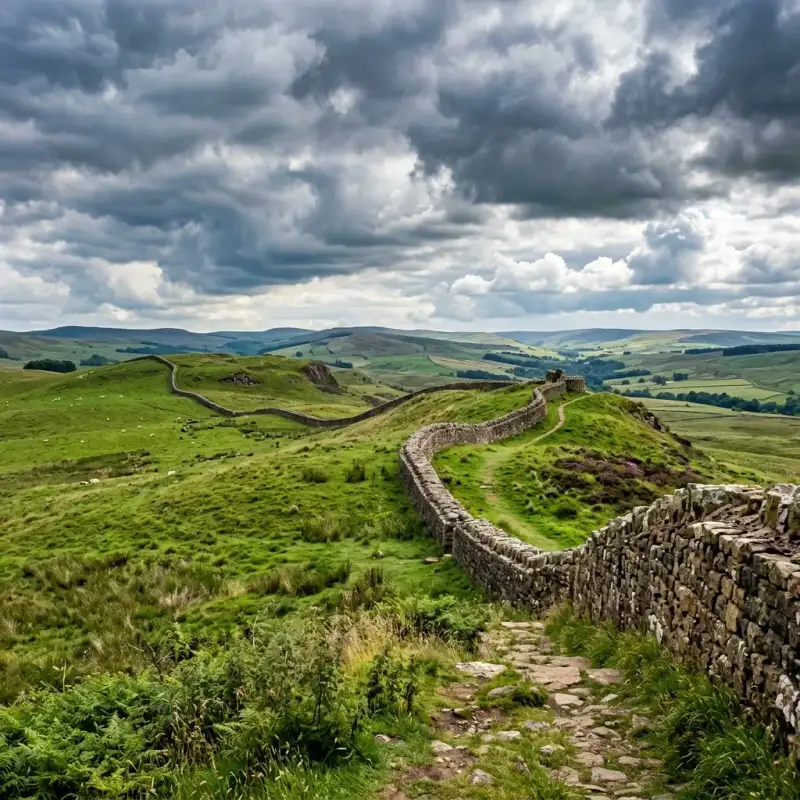
The sweeping, windswept moorlands of northern England hold a profound and enduring secret. Here, stretching across the rugged and dramatic neck of the island of Great Britain, lies one of the most spectacular and monumental archaeological survivals of the ancient world. Hadrian's Wall is not merely a collection of ancient, weathered stones; it is a physical manifestation of imperial ambition, a testament to staggering logistical prowess, and a deep psychological marker that once separated the known universe from the wild, untamed unknown. For nearly three centuries, this colossal barrier served as the ultimate north-western frontier of the mighty #RomanEmpire, standing against the biting winds and the defiant tribes of the north. To stand beside the remnants of the wall today, tracing its path as it aggressively snakes over the volcanic crags of the Whin Sill and plunges into the verdant valleys below, is to experience a profound sense of temporal dislocation. You are simultaneously in the modern English countryside and standing on the very precipice of antiquity. The wall stretches for 73 modern miles—or exactly 80 Roman miles—from the banks of the River Tyne at Wallsend in the east to the tidal flats of Bowness-on-Solway in the west. It is a structure so vast that it seems to defy the technological limitations of the second century. Yet, to truly understand #HadriansWall, we must look beyond its staggering physical dimensions. We must delve into the mind of the visionary emperor who ordered its construction, the sweat and toil of the legionaries who built it, the daily lives of the diverse auxiliary soldiers who manned it, and the vibrant civilian communities that sprouted in its formidable shadow. The Visionary Emperor and the Shift in Grand Strategy To comprehend the existence of this monumental fortification, one must first understand the political climate of Rome in the early second century and the philosophy of the man who ruled it. When Emperor Publius Aelius Hadrianus—known to history simply as #Hadrian—ascended to the imperial throne in AD 117, he inherited an empire that was stretched to its absolute breaking point. His predecessor, the militarily aggressive Emperor Trajan, had expanded Rome’s borders to their greatest ever territorial extent, conquering Dacia (modern-day Romania) and pushing deep into the Parthian Empire in the Middle East. However, this relentless expansion was financially crippling and militarily unsustainable. Rome was bleeding resources trying to hold onto rebellious, far-flung territories. Hadrian was fundamentally different from Trajan. An intellectual, a Hellenophile, and a pragmatic administrator, he recognized that the empire needed consolidation, not infinite expansion. He initiated a radical shift in Roman grand strategy: he abandoned Trajan's most indefensible eastern conquests and decreed that the empire must define and defend its existing borders. Hadrian spent more time traveling his empire than any other emperor, inspecting military installations and imposing discipline. In AD 122, his extensive tours brought him to the misty, rebellious province of Britannia. Britannia had always been a problematic territory for the Romans. The northern tribes, whom the Romans collectively referred to as Britons and later Picts, were fiercely independent and prone to launching devastating guerrilla raids against Roman installations. According to the Augustan History, a late Roman collection of biographies, Hadrian determined to decisively end this insecurity. He ordered the construction of the wall to "separate the Romans from the barbarians." This was a profound ideological statement. By building a permanent, monumental wall, Hadrian was declaring that the era of limitless Roman expansion was officially over. The wall was to be the literal edge of the civilized world, a fixed line in the landscape denoting where the light of #AncientRome ended and the darkness of barbarism began. A Staggering Feat of Military Engineering The logistical and physical reality of building Hadrian's Wall was an undertaking of mind-boggling complexity. It was an epic feat of #AncientEngineering that required the mobilization of immense resources. The construction was entirely entrusted to the highly trained Roman army, specifically the three legions stationed in Britain at the time: the Second Augustan (Legio II Augusta), the Sixth Victorious (Legio VI Victrix), and the Twentieth (Legio XX Valeria Victrix). These legions were not just elite fighting units; they were composed of highly skilled surveyors, architects, masons, and engineers. The original plan for the wall was wildly ambitious. The initial design called for a barrier built entirely of stone, measuring a massive 10 Roman feet (approximately 3 meters) in width—a phase archaeologists now refer to as the "Broad Wall." However, a few years into construction, reality and perhaps a desire for speed forced a modification. The thickness was reduced to roughly 6 to 8 feet, creating the "Narrow Wall." In the western sector of the frontier in modern-day Cumbria, where suitable limestone for mortar was scarce, the wall was initially constructed of stacked turf blocks, creating a formidable rampart 20 feet wide at its base. This turf section was eventually rebuilt in stone in the decades that followed. But the curtain wall itself was only one component of a deeply layered, complex military zone. Approaching the frontier from the hostile north, an attacker would first encounter a glacis (a cleared, sloping bank) followed by a massive, V-shaped ditch, measuring up to 27 feet wide and 9 feet deep. This ditch was dug through solid bedrock in places, except where the sheer vertical drop of the natural dolerite crags of the Whin Sill made it entirely unnecessary. Behind this ditch stood the imposing stone wall, likely standing some 15 feet high and topped with a parapet and a patrol walkway. The fortifications were meticulously standardized. Exactly every Roman mile (about 1.48 kilometers), the engineers constructed a "milecastle"—a fortified fortlet built directly into the wall, containing barracks for a few dozen men and a gateway that allowed controlled passage to the north. Between each milecastle sat two evenly spaced observation turrets, providing continuous surveillance and signaling capabilities along the entire 73-mile stretch. Remarkably, the defenses did not end there. To the south of the wall, the Romans constructed a uniquely baffling and massive earthwork known as the Vallum. The Vallum consisted of a huge flat-bottomed ditch flanked by twin continuous mounds of earth. Its purpose was not defensive in the traditional sense, as it offered no tactical advantage against an army. Instead, the Vallum served to seal off the military zone from the rear, ensuring that anyone approaching the wall from the Roman south—whether merchants, travelers, or locals—could only cross the frontier at heavily guarded, designated checkpoints. It transformed the wall into a highly regulated customs border, a physical barrier to unauthorized immigration, and an effective deterrent against the smuggling of goods and the rustling of livestock. #MilitaryHistory #EngineeringMarvel. The Cosmopolitan Garrison of the Cold North A common misconception is that the colossal structure was permanently guarded by the elite, heavy-infantry legionaries who built it. In truth, once the monumental task of laying the stones was completed, the legions withdrew to their comfortable fortress bases at York, Chester, and Caerleon. The day-to-day defense and policing of Hadrian's Wall were handed over to the auxilia—the auxiliary regiments of the Roman Army. These auxiliary soldiers were recruited from the myriad conquered provinces of the vast empire, creating a staggeringly cosmopolitan and multicultural society on the rain-swept edge of the world. Epigraphic evidence and altars found along the wall reveal an incredible ethnic diversity. There were regiments of Batavians from the modern-day Netherlands, fiercely proud of their equestrian skills. There were Tungrians from Belgium, Asturians from the sun-drenched plains of Spain, and even cohorts of skilled archers from the deserts of Syria. One can only imagine the profound culture shock experienced by a Syrian archer, accustomed to the blistering Mediterranean heat, finding himself standing watch on a freezing Cumbrian crag in the dead of winter, staring into the impenetrable northern fog. The daily lives of these soldiers were characterized by a mixture of intense boredom, rigorous training, and occasional bursts of absolute terror. They lived in a series of large, heavily fortified bases built directly astride or just behind the wall—forts with names that still echo in the landscape today, such as Housesteads (Vercovicium), Chesters (Cilurnum), and Birdoswald (Banna). Each fort housed between 500 and 1,000 men, packed tightly into barrack blocks, alongside granaries, headquarters buildings, and commanding officers' luxurious courtyard houses. Our understanding of this daily frontier life was revolutionized by the miraculous discovery of the #VindolandaTablets. Vindolanda is a Roman fort situated just south of the main wall line. Thanks to the unique, oxygen-free conditions of the waterlogged soil, archaeologists uncovered hundreds of thin, wooden leaf-tablets covered in carbon-ink handwriting. These fragile documents are a breathtaking window into the past, offering the most intimate, humanizing glimpses of life in the Roman military machine. Instead of reading about grand imperial campaigns, the Vindolanda tablets reveal the relatable, mundane struggles of ordinary people. We read the exasperated reports of commanders complaining about the wretched, impassable state of the local roads. We read a desperate plea from a decurion named Masculus, asking his commander to send more beer because his garrison had entirely run dry. We find the famous, elegantly written birthday invitation from a commander's wife, Claudia Severa, to her friend Sulpicia Lepidina—one of the earliest known examples of handwriting by a woman in the Latin language. Most poignantly, we read the universal complaints of soldiers serving in a cold climate, including requests from home for crucial supplies: "I have sent you... pairs of socks, two pairs of sandals, and two pairs of underpants." These delicate slivers of wood bridge the vast chasm of time, transforming faceless historical sentinels into relatable human beings who shivered, drank, socialized, and missed their families. #Archaeology #RomanArmy. Vici, Gods, and the Frontier Economy Hadrian's Wall is often romanticized in popular culture as a desolate, lonely outpost at the end of the earth, manned by stoic men staring endlessly into the abyss. The reality was vastly different. The wall was not a sterile, isolated military zone; it was a thriving, noisy, and dynamic corridor of intense human enterprise and economic activity. Where there are thousands of continuously paid soldiers, a robust economy inevitably follows. Almost immediately, vibrant civilian settlements known as vici (singular: vicus) sprang up outside the heavily guarded gates of the major forts. These settlements were chaotic, sprawling, and entirely reliant on the purchasing power of the garrison. The vicus was a bustling ecosystem of strip-houses, artisan workshops, taverns, brothels, and bustling market squares. Merchants traveled from across the empire to sell imported Gaulish pottery, Spanish olive oil, Mediterranean wine, and exotic foodstuffs to soldiers eager for a taste of home. Local blacksmiths, leatherworkers, and bronze-smiths set up lucrative shops to repair and manufacture military gear. At the heart of the vicus was usually the Roman bathhouse. Far from being a mere hygienic facility, the bathhouse was the undisputed social center of the community. It functioned as a combination of a modern leisure center, a pub, and a refuge from the pervasive northern chill. Here, soldiers and civilians alike would exercise, socialize, gamble, and conduct business while moving through a series of heated rooms. Furthermore, the rigid boundaries between the Roman military and the local Brittonic population began to blur significantly over the decades. Although ordinary auxiliary soldiers were legally forbidden from marrying while in service (a ban that lasted until the reign of Emperor Septimius Severus in the late second century), human nature prevailed. Many soldiers formed deeply committed, unofficial relationships with local Celtic women, raising families within the bustling vici. When their standard 25 years of grueling service finally concluded, they received the highly coveted prize of Roman citizenship. Rather than returning to the distant homelands they had barely known, many veterans chose to retire right there on the frontier, settling down permanently near their former comrades and their new families. Over generations, this intense mingling created a highly distinct, localized #RomanoBritish culture. The religious life of the wall perfectly illustrates this profound syncretism. The soldiers brought the official state pantheon with them—worshipping Jupiter, Mars, and Minerva on the parade grounds. But they also quickly adopted and revered the local Celtic deities. At Carrawburgh, they built a shrine to the native water goddess Coventina, tossing thousands of coins, pearls, and brooches into her sacred well. At Benwell, they worshipped the mysterious local god Antenociticus. Simultaneously, exotic mystery cults from the eastern fringes of the empire found fervent followers among the troops. The deeply atmospheric Temple of Mithras at Carrawburgh (Brocolitia)—designed to resemble a dark, windowless subterranean cave—served as a sanctuary where soldiers underwent intense, secretive initiation rites into the popular cult of the Persian sun god. The wall, therefore, was never a hermetically sealed barrier; it was a highly porous membrane, a vibrant zone of relentless cultural, religious, and economic exchange. #CulturalHistory #AncientBritain. The Slow Fade of the Roman Light How does such a monumental, seemingly invincible frontier finally fall? It is rarely the swift, catastrophic, cinematic breach by hordes of screaming barbarians that Hollywood epics might suggest. The demise of Hadrian's Wall was a prolonged, agonizingly slow fade, inextricably linked to the broader, terminal decline of the Western Roman Empire. The wall's dominance was actually briefly interrupted shortly after Hadrian's death in AD 138. His successor, Emperor Antoninus Pius, aggressively advanced the frontier further north into Scotland, constructing the Antonine Wall—a turf and timber barrier across the narrowest part of the country between the Firth of Forth and the Firth of Clyde. However, this forward policy proved strategically untenable. After a mere two decades, the Antonine Wall was abandoned, and the Roman army permanently retreated back to the impregnable stone certainty of Hadrian's original line. Fast forward to the third, fourth, and fifth centuries, and the geopolitical reality of the Roman world had fundamentally shifted. The empire was crumbling internally under the crushing weight of hyperinflation, endless political instability, and devastating civil wars, while simultaneously facing massive, unprecedented migrations of Germanic tribes across the Rhine and Danube frontiers. To deal with these existential crises closer to home, the central administration began gradually stripping Britannia of its troops. Units were repeatedly withdrawn to fight in continental squabbles, never to return. The fatal blow finally came in AD 410. Facing the sack of Rome itself by the Visigoths, Emperor Honorius allegedly sent a desperate rescript to the beleaguered cities of Britain, instructing them to "look to their own defenses." The central Roman administration, the logistical supply chains, and the imperial paychests abruptly ceased to exist. But what happened to the thousands of soldiers still stationed on Hadrian's Wall? They did not simply pack their bags and march away on a Tuesday afternoon. For many, Britannia was the only home they had ever known. They simply stopped receiving their imperial salaries. Without the backing of the state, the highly organized regiments slowly fragmented. The soldiers transitioned from being professional imperial troops to serving as local militias, protecting their families and farms. The commanding officers likely evolved into local warlords or petty kings, seamlessly blending into the fractured, post-Roman political landscape of the emerging #DarkAges. The wall itself, no longer maintained by the relentless discipline of the legions, entered its second, much longer life as a colossal, linear quarry. For well over a millennium, the beautifully squared, perfectly dressed Roman stones were systematically pillaged by generations of local inhabitants. If you travel through the border region today, the ghosts of the wall are everywhere. You will see Roman masonry proudly embedded in the sturdy walls of lonely farmhouses, field boundaries, and massive medieval fortifications like Thirlwall Castle. The magnificent, echoing crypt of Hexham Abbey was constructed almost entirely using stones looted from the nearby Roman bridge at Chesters. Later, during the violent, lawless era of the Border Reivers from the 14th to the 17th centuries, the tumbled ruins of the forts provided excellent hiding places and ready-made building materials for defensive 'pele towers'. The great wall was slowly, methodically being consumed by the very landscape it had once so arrogantly dominated. #BritishHistory #HistoricRuins. Destruction and Conservation: The Intervention of John Clayton By the 18th and 19th centuries, a new and far more terrifying threat emerged: the relentless, insatiable march of the Industrial Revolution. What a thousand years of casual pillaging had failed to completely erase, the demands of modern infrastructure threatened to obliterate in a matter of decades. A stark example of this organized destruction occurred in the aftermath of the 1745 Jacobite Rebellion. When the British government forces, led by General George Wade, struggled to move their heavy artillery across the country to intercept Bonnie Prince Charlie's rebel army due to the treacherous, muddy terrain, a drastic decision was made. Following the rebellion, the government ordered the construction of a new, paved Military Road (which still exists today as the B6318). Appallingly, for many miles, the easiest route was simply to flatten the remaining sections of Hadrian's Wall and build the road directly on top of its ancient, solid foundations, destroying priceless archaeology forever. The complete eradication of the wall seemed inevitable until the dramatic intervention of a singular, extraordinary individual: John Clayton. A wealthy, eccentric antiquarian and the highly influential town clerk of Newcastle upon Tyne in the mid-19th century, Clayton watched with growing horror as the surviving sections of the wall were being callously dynamited, ground up for road hardcore, and dismantled for agricultural improvements. Determined to halt the vandalism, Clayton leveraged his considerable personal fortune to begin systematically buying up the farms, lands, and ruined forts situated along the best-preserved central sector of the wall, including the magnificent sites of Chesters and Housesteads. He ordered his estate workmen to carefully clear the accumulated centuries of earth and debris from the wall's base. He then directed them to rebuild the fallen facing stones back onto the ancient core, purposely doing so without modern mortar to differentiate the restoration from the original Roman work—creating the distinctive, dry-stone "Clayton Wall" that is so universally recognized today. John Clayton's obsessive dedication and immense wealth single-handedly saved the most spectacular stretches of Hadrian's Wall for posterity. Without his timely intervention, there would likely be almost nothing left for us to marvel at today. #Conservation #JohnClayton #HistoryHeroes. The Wall in the Modern Imagination Today, Hadrian's Wall rightfully enjoys protected status as a universally recognized UNESCO World Heritage Site, drawing hundreds of thousands of awe-struck visitors from across the globe every single year. In 2003, the momentous opening of the Hadrian's Wall Path—an 84-mile (135 km) continuous National Trail—allowed modern adventurers to walk the entire, unbroken length of the ancient frontier from coast to coast. Walking the wall today is a deeply physical, almost spiritual experience. It is an act of historical pilgrimage. As modern hikers trudge through the clinging Cumbrian mud, lean into the ferocious, horizontal northern rain, and crest the spectacularly steep, breathtaking heights of Steel Rigg and the tragically beautiful gap where the famous Sycamore tree once stood, they forge a profound, physiological connection with the past. The burning in the calves and the biting wind on the face are exactly the same sensations experienced by the Tungrian infantrymen and Asturian cavalrymen nearly two millennia ago. The landscape has barely changed; only the uniforms have. The wall has firmly embedded itself in the modern imagination. It was the direct, explicitly acknowledged inspiration for the colossal "Ice Wall" guarding the northern boundary of Westeros in George R.R. Martin’s A Song of Ice and Fire series, capturing that same quintessential feeling of a desperate, final stand against the terrifying, frozen unknown. #Wanderlust #HikingUK #WorldHeritage #EpicJourneys. Conclusion: The Enduring Stones In a modern era where humanity continues to fiercely debate the morality, efficacy, and necessity of physical borders, this spectacular 1,900-year-old ruin serves as a profound and sobering historical mirror. Hadrian's Wall speaks volumes about the incredible ambition of empires, the desire to impose order upon chaos, and the deeply human urge to draw a line in the dirt and declare, "This is ours, and that is yours." Yet, as you stand in the quiet, fading light of a Northumbrian evening, listening only to the wind whistling over the ancient, moss-covered stones, the wall also speaks to the ultimate, inevitable futility of such hubristic endeavors. The invincible Roman Empire is nothing but dust and fragmented history. The god-like emperors are long dead. The mighty, disciplined legions that once made the earth tremble are gone. What remains is only the stone—deeply weathered, undeniably scarred, but breathtakingly resilient and strikingly beautiful. It no longer functions to divide the land or separate people. Instead, in a beautiful twist of historical irony, it now serves to unite people from every corner of the world, who travel thousands of miles to marvel at its scale and to walk reverently in the footsteps of the ancients. Hadrian's Wall stands as an eternal, silent testament to the poignant truth that while the grandest of human empires inevitably rise and fall, the monumental stories we carve into the living earth will endure forever. #RomanArchaeology #TravelBlogger #HistoricSites. #HadriansWall #RomanEmpire #BritishHistory #AncientArchitecture #HikingUK Related InsightsThe Great Pyramid of Giza: A Timeless Monument to Human Ingenuity Julius Caesar: The Ambitious Soldier Behind the Myth 千古绝唱,江水悠悠:探秘乐山大佛的沧桑与辉煌{ "@context": "https://schema.org", "@type": "FAQPage", "mainEntity": [ { "@type": "Question", "name": "What is the main focus of The Edge of Empire: A Journey Along Hadrian's Wall?", "acceptedAnswer": { "@type": "Answer", "text": "Explore the fascinating history, staggering engineering, and enduring legacy of Hadrian's Wall, the ancient Roman frontier that divided Britain." } }, { "@type": "Question", "name": "Who authored the comprehensive guide on The Edge of Empire: A Journey Along Hadrian's Wall?", "acceptedAnswer": { "@type": "Answer", "text": "This detailed article and its insights were carefully researched and authored by Liam Carter." } }, { "@type": "Question", "name": "Where can I find more related content about History?", "acceptedAnswer": { "@type": "Answer", "text": "You can explore more articles, detailed reviews, and similar insights by browsing the Related Insights section at the bottom of this article or visiting our dedicated History category page." } } ] }