Showing Posts From
Chocolatehistory
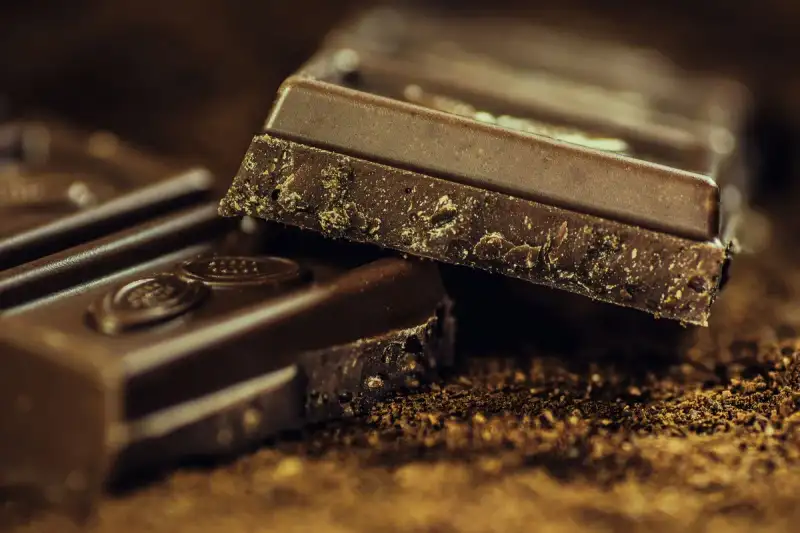

In the grand tapestry of human indulgence, few threads gleam with the profound richness and complex history of chocolate. It is a substance that transcends mere sustenance, weaving itself into the fabric of ritual, luxury, and daily comfort across continents and millennia. From the verdant embrace of the cacao tree, born of ancient earth and sun, emerges a foodstuff capable of myriad forms – a liquid, a solid, a paste – each a testament to its singular versatility and unparalleled allure. This journey, from a bitter, ceremonial brew in the heart of Mesoamerica to the ubiquitous bars and confections savored worldwide, is a narrative steeped in innovation, cultural exchange, and a relentless pursuit of culinary perfection. The Elixir of Ages: Cacao's Ancient Whispers and Contentious Names The story of chocolate begins not with the sweet, familiar squares of today, but with the venerable Theobroma cacao tree, whose processed seeds, known as cocoa beans, hold the very essence of this global phenomenon. Its genesis as a food source stretches back an astonishing 5,300 years, taking root in what is now southeastern Ecuador, cultivated by the Mayo-Chinchipe culture long before its introduction to the more widely recognized Mesoamerican civilizations. While the precise moment chocolate, as distinct from other cacao-based libations, first tantalized human palates remains shrouded in the mists of antiquity, evidence suggests the Olmecs, foundational figures of Mesoamerican civilization, engaged with cacao in a fascinating way: fermenting the sweet pulp surrounding the beans into an alcoholic beverage. For the vibrant societies of Mesoamerica – the Mayans, the Aztecs, and others – cacao was far more than a simple crop; it was a sacred gift from the gods, imbued with profound spiritual and practical significance. The precious cocoa bean served as a form of currency, a testament to its intrinsic value, facilitating commerce across diverse civilizations. It played an integral role in solemn ceremonies, offered as a revered tribute to leaders and deities, and even revered for its medicinal properties. The chocolate of this era, however, was a stark contrast to its modern descendant. It manifested as a bitter drink, meticulously flavored with indigenous additives such as vanilla, the subtle pungency of earflower, and the fiery kick of chili. A distinctive characteristic was the dark brown foam that crowned the beverage, meticulously created by pouring the liquid from a height, often between ornate containers, a performance of both craft and reverence. The very word "chocolate" carries with it a history as intricate and layered as the flavors of its namesake. First recorded in Spanish in 1579 and subsequently borrowed into English by 1604, its etymological roots remain a subject of scholarly contention. A popular, yet likely inaccurate, belief attributes its origin to the Nahuatl word chocolatl. However, early texts that genuinely document the Nahuatl term for a chocolate drink consistently employ a different word: cacahuatl, meaning "cacao water." This linguistic divergence compels a deeper exploration into its true etymology. Several alternative theories have been posited to unravel this linguistic enigma. One suggests a derivation from the hypothetical Nahuatl word xocoatl, meaning "bitter drink," a plausible description of the early Mesoamerican concoction. Yet, scholars Michael and Sophie Coe express skepticism, questioning the phonetic shifts required for the 'sh' sound of 'x' to transform into 'ch', and the unexplained addition of an 'l'. Another theory proposes a Mayan language origin, specifically chocolatl meaning "hot water." However, a critical lack of evidence for the form 'chocol' ever independently signifying 'hot' casts doubt upon this hypothesis. Despite the persistent uncertainty surrounding a direct Nahuatl origin, a degree of scholarly consensus points towards the Nawat word chikola:tl as the more probable source. The precise meaning of chikola:tl itself remains debated; some propose it means "cacao-beater," referencing the traditional act of whisking cocoa to create its signature foam, though the meaning of 'chico' within this context is unknown. Anthropologist Kathryn Sampeck offers an intriguing perspective, suggesting that "chocolate" originally denoted a specific cacao beverage among many, notably one that included annatto and was produced in what is now Guatemala. According to Sampeck's research, this particular term evolved to become the generic word for all cacao beverages around 1580, coinciding with the period when the Izalcos people of that region were the most prominent producers of cacao, thereby solidifying its linguistic footprint.From Sacred Brew to European Craze: The Transatlantic Leap The first documented European encounter with chocolate is often attributed to the formidable Spanish conquistador Hernán Cortés, who, in 1520, observed the enigmatic beverage being consumed in the court of Moctezuma II. For European palates accustomed to different flavors, this bitter, spiced drink proved to be an acquired taste, requiring time and adaptation to gain favor. It was not until 1585 that the first official record of a shipment of cocoa beans to Europe marked the beginning of chocolate's transatlantic journey. Initially, chocolate arrived veiled in an aura of exoticism and perceived potency. It quickly garnered a reputation as an aphrodisiac and a potent medicine, beliefs that undoubtedly fueled its dissemination across the continent. By the 17th century, chocolate had firmly established itself in European society, albeit in a markedly transformed state. To appeal to European tastes, it was sweetened, served warm, and infused with familiar spices, a far cry from the unadulterated bitter brew of its Mesoamerican origins. Religious orders, particularly those with extensive networks, played a significant, albeit often understated, role in its spread, contributing to its distribution and adaptation across various monastic and aristocratic circles. For centuries, chocolate remained largely the purview of the elite. The prohibitive cost of cocoa, sourced from colonial plantations established across the Americas, ensured its status as a luxury commodity. Throughout the 18th century, chocolate solidified its identity as a quintessentially southern European, aristocratic, and often Catholic indulgence, its production methods largely mirroring those employed by the Aztecs centuries prior, reflecting a blend of ancient tradition and nascent European refinement. The Industrial Revolution: Forging a Solid Future The 18th century heralded a new era for chocolate, as production methods began to see incremental improvements. However, it was the seismic shifts of the 19th century, driven by the fervor of the Industrial Revolution, that truly revolutionized chocolate's trajectory, transforming it from a niche, hand-crafted delicacy into a mass-consumed staple. The advent of engine-powered milling significantly streamlined the initial stages of processing, paving the way for greater efficiency. A pivotal moment arrived in 1828 with Coenraad Johannes van Houten's groundbreaking patent for a hydraulic press. This ingenious invention allowed for the revolutionary separation of cocoa butter from the chocolate liquor, giving rise to defatted cocoa powder. This innovation was nothing short of foundational, creating the very bedrock upon which the modern solid chocolate industry would be built. The ability to control fat content opened up entirely new possibilities for texture, shelf-life, and form. The 19th century was a crucible of innovation for chocolate production. The development of the melanger, a sophisticated mixing machine, further refined the texture and consistency of chocolate. The creation of modern milk chocolate introduced a new category of sweetness and creaminess, broadening its appeal immeasurably. Perhaps most crucially, the invention of the conching process – a prolonged kneading and aerating of chocolate paste – meticulously smoothed its texture and subtly altered its flavor profile, enhancing its melt-in-the-mouth quality and complexity. These technological advancements collectively magnified productivity to an astonishing degree: by 1890, a single worker could produce fifty times more chocolate using the same amount of labor than before the Industrial Revolution. This surge in efficiency fundamentally altered chocolate's identity, firmly transitioning it from a cherished beverage to a solid food, readily eaten and enjoyed. Concurrently, the global supply chain for cocoa beans began to shift dramatically. As mass markets for chocolate exploded across Western nations, production of the raw material increasingly migrated from the Americas to the burgeoning cocoa-growing regions of Asia and, most significantly, Africa. Today, West African countries, particularly Ivory Coast and Ghana, stand as the titans of global cocoa supply, collectively contributing approximately 60% of the world's cocoa, a testament to this profound historical shift.Modern Mosaics: Varieties, Ethics, and Innovation The 20th century, while marked by continued innovation, also brought ethical complexities to the forefront of the chocolate industry. Early in the century, British chocolate producers like Cadbury and Fry's faced significant controversy regarding the deplorable labor conditions prevalent in the Portuguese cacao industry in Africa. A searing 1908 report by a Cadbury agent starkly described these conditions as "de facto slavery." While a subsequent boycott by chocolate makers led to some improvements, the pervasive issue of slave labor among African cacao growers tragically resurfaced in the public consciousness in the early 21st century, reminding the industry of its enduring ethical responsibilities. Despite these grave concerns, technological progress continued apace, further refining the art and science of chocolate making. The development of the tempering technique became essential, carefully controlling temperature to ensure that chocolate achieved the desired crystalline structure, resulting in its characteristic satisfying "snap" and lustrous gloss. The addition of lecithin, an emulsifier, further improved chocolate's texture and consistency, making it smoother and more stable. The 20th century also witnessed the development of specific chocolate types such as white chocolate – made solely from cocoa butter, milk, and sugar, conspicuously lacking the non-fat cocoa solids found in other varieties – and couverture chocolate, renowned for its high cocoa butter content, ideal for professional coating and tempering. Furthermore, the emergence of the "bean-to-bar" trade model began to emphasize greater transparency and direct relationships between growers and producers, marking a significant evolution in how chocolate is sourced and crafted. At its core, chocolate is born from roasted and ground cocoa beans. It is a chameleon, taking liquid, solid, or paste forms, eaten on its own, or serving as an exquisite flavor enhancer for countless other foods. The process, an alchemical dance of fermentation, drying, cleaning, roasting, and grinding nibs into chocolate liquor, forms the basis of all chocolate. This liquor can be further processed into cocoa butter and cocoa powder, or shaped and sold as pure, unsweetened baking chocolate. The introduction of sugar transforms it into sweetened chocolates, which, when sold without milk, become the sophisticated dark chocolate. With the addition of milk, it blossoms into the beloved milk chocolate. White chocolate, a distinct category, contains only cocoa butter and milk, eschewing cocoa solids entirely. Today, chocolate reigns supreme as one of the most popular food types and flavors globally, an omnipresent delight in desserts ranging from ice creams and cakes to mousses and cookies. Candies are frequently filled with or coated in its sweetened embrace, and solid chocolate bars or those encasing other ingredients are cherished as convenient snacks. Its symbolic power is undeniable, with chocolate molded into festive shapes like eggs, hearts, and coins, becoming cherished traditional gifts for holidays such as Christmas, Easter, Valentine's Day, Hanukkah, and Eid al-Fitr. Beyond solid forms, chocolate endures in cold and hot beverages, from the comforting simplicity of chocolate milk and hot chocolate to the indulgent complexity of chocolate liqueur. The journey of chocolate is a saga of transformation – from a sacred, bitter brew cradled in ancient civilizations to a global phenomenon shaped by industrial prowess and ethical considerations. It remains a profound testament to human ingenuity and our enduring quest for both sustenance and sublime pleasure, a dark heart beating at the very core of culinary history.#ChocolateHistory #CacaoCulture #DemirŞef #FoodScience #GourmetChocolate Related InsightsL'Alchimie du Levant : Quand l'Histoire se Déguste en Mezze The Wild Yeast Revolution: Beyond the Loaf into the World of Fermented Alchemy Dan Dan Noodles: The Ultimate Szechuan Street Bowl{ "@context": "https://schema.org", "@type": "FAQPage", "mainEntity": [ { "@type": "Question", "name": "What is the main focus of The Obscure Origins and Transcendent Transformation of Cacao's Dark Heart?", "acceptedAnswer": { "@type": "Answer", "text": "Embark on a profound journey through chocolate's ancient roots, its Mesoamerican reverence, European transformation, and the industrial innovations that shaped this beloved global delicacy." } }, { "@type": "Question", "name": "Who authored the comprehensive guide on The Obscure Origins and Transcendent Transformation of Cacao's Dark Heart?", "acceptedAnswer": { "@type": "Answer", "text": "This detailed article and its insights were carefully researched and authored by Demir Şef." } }, { "@type": "Question", "name": "Where can I find more related content about Food?", "acceptedAnswer": { "@type": "Answer", "text": "You can explore more articles, detailed reviews, and similar insights by browsing the Related Insights section at the bottom of this article or visiting our dedicated Food category page." } } ] }