Showing Posts From
Escoffier
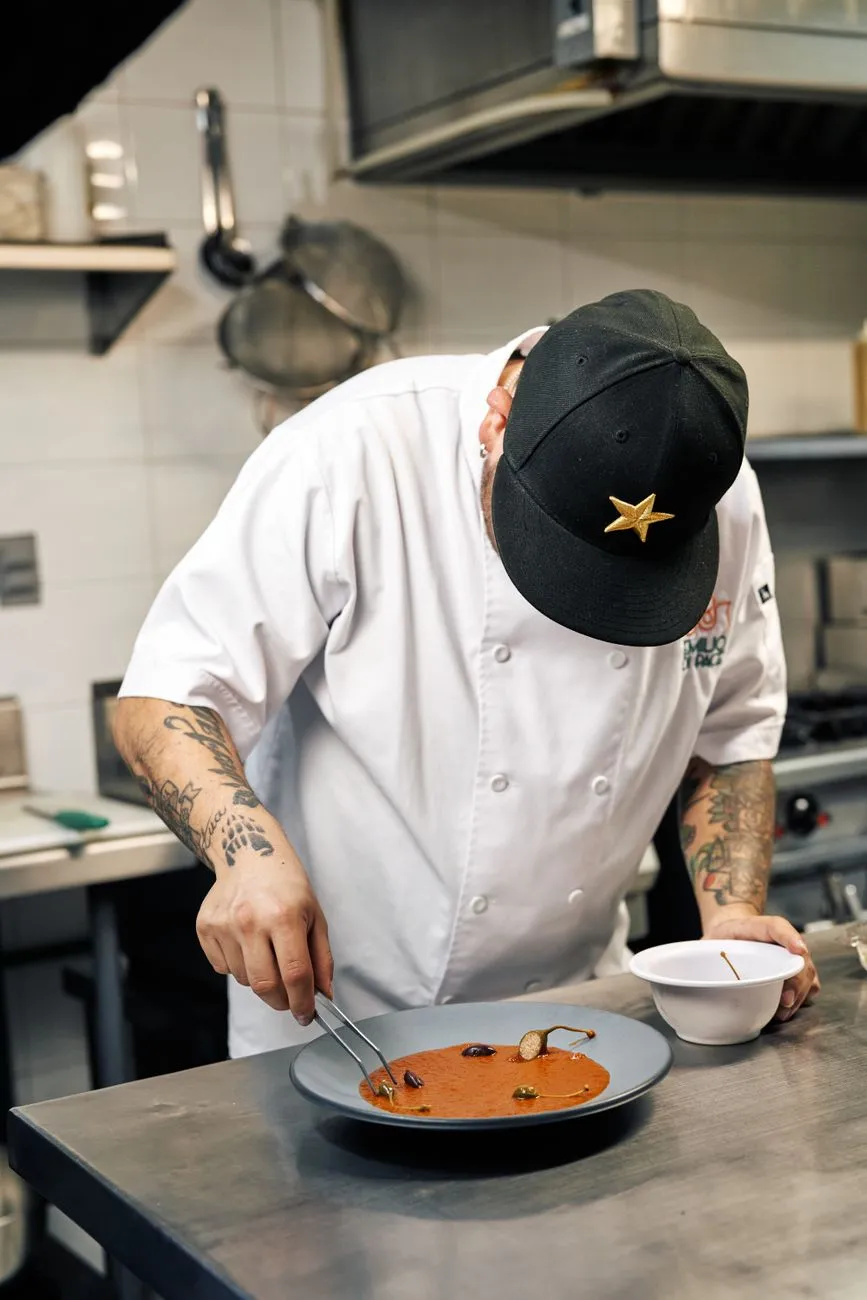

There is a specific silence that falls over a dining room when a plate of haute cuisine arrives. It is not merely the hush of anticipation; it is the sound of a social contract being honored. The diner has paid not just for sustenance, but for the accumulated weight of centuries—the ghosts of monarchs, the sweat of brigades, the geometry of a sauce reduced until it catches the light like amber. This is cooking as architecture, where the blueprint is written in butter, cream, and flour, and the builders wear white jackets stitched with hierarchy.The Gilded Cage: Origins in Excess and Exclusion Before the term haute cuisine crystallized into a doctrine, it existed as a privilege. The Wikipedia records remind us that this style was historically "accessible to a small demographic of rich and powerful individuals." It was the cuisine of the monarchy and the bourgeoisie, a theater where the ability to serve fruit out of season or ingredients "not typically found in France" was the ultimate flex of power. In the 17th century, the kitchen was a fortress. The food was "very rich and opulent," anchored by decadent sauces—mother sauces built on foundations of butter, cream, and flour—that still undergird French technique today. It was a cuisine of mass and volume. Service followed the service à la française: a staggering parade where all dishes hit the table at once, a landscape of silver and porcelain meant to overwhelm the senses before the first bite was taken. But even in this rigidity, evolution stirred. François Pierre La Varenne (1615–1678) pivoted the needle, dragging cookery out of the Middle Ages toward "somewhat lighter dishes, and more modest presentations." He began the long, slow work of subtraction—removing the heavy spice masks of the medieval palate to let the ingredient speak, however softly. Then came the architect: Marie-Antoine Carême (1784–1833). If La Varenne edited, Carême codified. He treated the kitchen like a drawing office. His pièces montées—edible architectural wonders replicating temples and ruins—turned the chef into an engineer. He "simplified and codified an earlier and even more complex cuisine," writing the first true grammar of the profession. It is a delicious irony that the man who built cathedrals of spun sugar and lard also tried to simplify the language of the stove. Across the Channel, the French influence colonized the British aristocracy. The data reveals a figure often lost to pop history: Jassinton Rozea (1721–1783). Master chef to the Duke of Somerset and later the Earl of Hopetoun in Edinburgh, Rozea authored The Gift of Comus (1752) and The Compleat Cook (1756). His "glorious banquets attended by European aristocrats in the expected French tradition" prove that haute cuisine was an early global export, a diplomatic language spoken in the dining rooms of power from London to Edinburgh. And let us dispel a persistent myth while we are here: Catherine de' Medici did not import Italian cooking to create French haute cuisine. The data is explicit. The French tradition was already simmering; it needed no foreign queen to light the fire. The General and the Brigade: Escoffier’s Cuisine Classique If Carême was the architect, Georges Auguste Escoffier was the general who modernized the army. Around 1900, he dragged the chaos of the grand hotel kitchens into the industrial age. His masterstroke was not a recipe, but a flowchart: the brigade de cuisine. He replaced the chaotic service à la française with service à la russe—serving meals in sequential courses. This changed the rhythm of dining forever. It allowed the kitchen to cook à la minute, plating hot food for one table at a time, rather than holding a banquet hostage to the slowest roast. It introduced the pacing we now take for granted: amuse-bouche, entrée, main, dessert. But the brigade system was the true revolution. Escoffier organized the kitchen into a military hierarchy: Chef de Cuisine, Sous-Chef, Chefs de Partie (saucier, poissonnier, pâtissier, etc.), Commis, and Plongeurs. Every hand knew its station. Every station knew its duty. This "system of cookery, based on Escoffier's Le Guide Culinaire," formalized the preparation of sauces and dishes into a replicable standard. Cuisine classique became the gold standard for the grand restaurants and hotels of Europe for much of the 20th century. It was distinct from cuisine bourgeoise (the cooking of affluent city dwellers), the bistro, and the provincial hearth. It was a high-wire act of consistency. A Sauce Béchamel in the Ritz Paris had to be structurally identical to one in the Carlton London. Escoffier gave the profession a spine.The Rebellion: When the Students Burned the Textbooks By the 1960s, the orthodoxy had calcified. Escoffier’s Guide had become a bible, and bibles invite heresy. Enter nouvelle cuisine. The term wasn't new—it had floated in culinary circles for centuries—but the modern iteration was forged by critics André Gayot, Henri Gault, and Christian Millau. They used it to describe a cohort of young lions: Paul Bocuse, Alain Chapel, Jean and Pierre Troisgros, Michel Guérard, Roger Vergé, and Raymond Oliver. Crucially, many were students of Fernand Point, the legendary chef of La Pyramide, who famously said, "Cooking is not chemistry, it is an art. It requires instinct and taste rather than exact measurements." Point’s disciples took that instinct and weaponized it against the Guide Culinaire. The manifesto of nouvelle cuisine reads like a declaration of independence:Natural Flavors: The freshest possible ingredients became non-negotiable. Simplified Preparation: The fussy, multi-day mise en place was slashed. Rejection of Heavy Sauces: The roux-thickened, cream-laden sauces brunes and blanches were banished. In their place: reductions, emulsions, vegetable coulis, the essence of the ingredient itself. No Strong Marinades: Meat tasted of meat. Reduced Cooking Times: Vegetables retained crunch and color; fish stayed translucent.It was a movement toward "conceptualism and minimalism," a "direct juxtaposition to earlier haute cuisine styles." Menus shrank. The pièce montée died. In its place rose inventive pairings—regional dishes elevated to the grand stage. A frog’s leg mousseline from Lyon. A salmon with sorrel sauce from the Troisgros brothers. The plate became a canvas for negative space.The Pendulum Swings Back: The Synthesis History rarely stays at the extremes. Within two decades, the pendulum began its return swing. Chefs realized that nouvelle cuisine, in its dogmatic pursuit of lightness, had thrown the baby out with the bathwater. The "richness and opulence" of the classics—the unctuous depth of a demi-glace, the comfort of a braise—had been lost. The modern era of haute cuisine is not a choice between Escoffier and Bocuse; it is a synthesis. Today’s three-Michelin-star kitchens run on Escoffier’s brigade discipline but plate with Bocuse’s minimalism. They use Guérard’s vegetable purity but finish with Carême’s structural elegance. The "high cooking" of the 21st century is defined by that original Wikipedia definition: "meticulous preparation, elaborate presentation, and the use of high quality ingredients," executed by "highly skilled gourmet chefs" at "premium prices." The Kaiseki tradition of Japan stands as a parallel summit—proof that the pursuit of "high cooking" is a universal human impulse, not merely a French monopoly. Both demand seasonality, knife skills that border on surgery, and a pacing that respects the guest’s palate. The Modern Plate: Where We Stand Now Walk into a top-tier restaurant today. You will see the brigade moving in silent synchrony—a legacy of 1900. You will taste a sauce that remembers Escoffier’s roux but wears the lightness of a nouvelle reduction. You will see a presentation that echoes Carême’s architecture but respects the negative space demanded by the Troisgros brothers. The "financial wherewithal" remains a barrier, yes. But the technique has democratized. The home cook now knows what a mise en place is. The culinary student learns the five mother sauces before they learn to boil an egg. The language of haute cuisine has escaped the palace and the grand hotel; it lives in the food truck that braises short ribs for 12 hours, in the bakery that laminates croissants by hand. The architecture of flavor stands taller because its foundations are deeper. We cook on the shoulders of generals and rebels, architects and poets. And when that plate arrives, demanding that specific, reverent silence? We understand exactly why.#HauteCuisine #CulinaryHistory #FrenchGastronomy #Escoffier #NouvelleCuisine #FineDining Related InsightsMumbai’s Edible Soul: The Spice, Chaos, and Unmatched Flavor of Its Street Food From Ancient Fields to Modern Crusts: Mastering Emmer & Spelt Sourdough „Die Architektur des Geschmacks: Wie Gastronomie zur Wissenschaft der Zivilisation wurde“{ "@context": "https://schema.org", "@type": "FAQPage", "mainEntity": [ { "@type": "Question", "name": "What is the main focus of The Architecture of Flavor: Deconstructing the Empire of Haute Cuisine?", "acceptedAnswer": { "@type": "Answer", "text": "Journey through the gilded kitchens of history where butter, hierarchy, and rebellion forged the world's most exacting culinary standard." } }, { "@type": "Question", "name": "Who authored the comprehensive guide on The Architecture of Flavor: Deconstructing the Empire of Haute Cuisine?", "acceptedAnswer": { "@type": "Answer", "text": "This detailed article and its insights were carefully researched and authored by Demir Şef." } }, { "@type": "Question", "name": "Where can I find more related content about Food?", "acceptedAnswer": { "@type": "Answer", "text": "You can explore more articles, detailed reviews, and similar insights by browsing the Related Insights section at the bottom of this article or visiting our dedicated Food category page." } } ] }