Showing Posts From
Himalayas
-
 Cemre Seyyah
 - 11 Oct, 2026 21:14
The Hundred Dollar Silence: Buying Time in Bhutan's Measured Kingdom
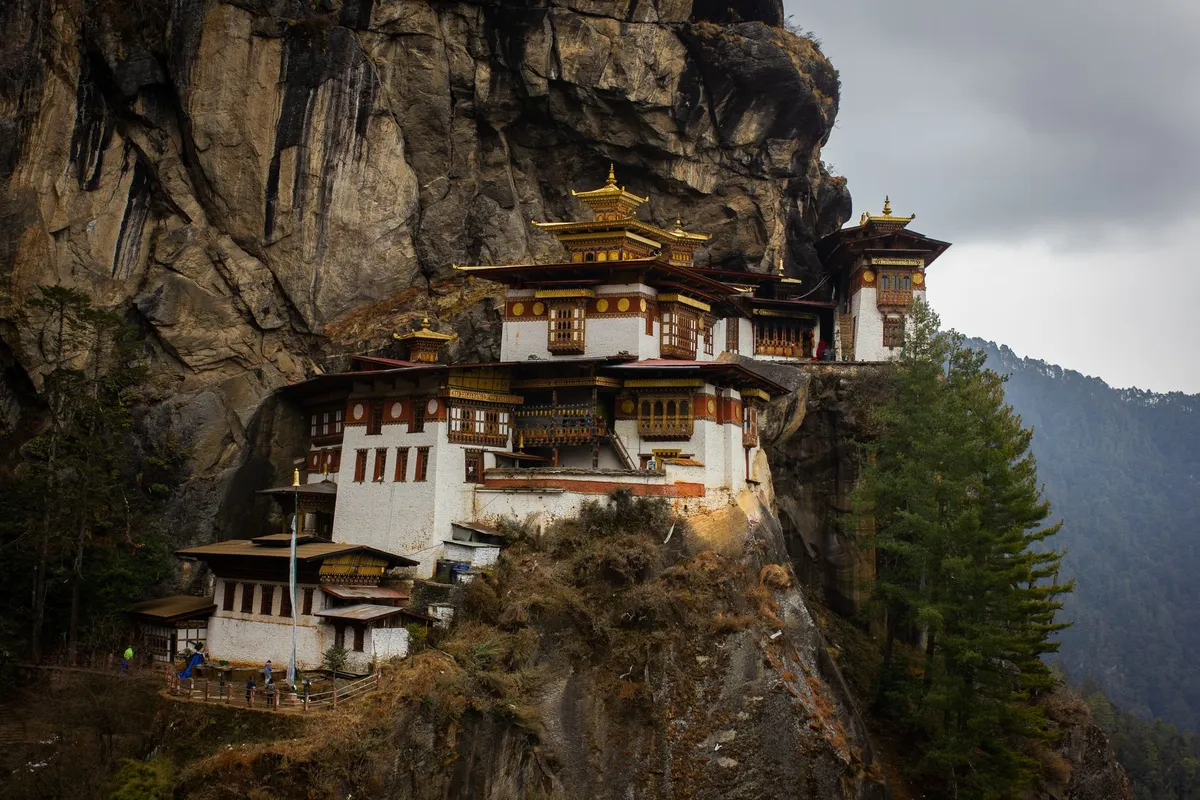
The air in Paro Valley does not just carry oxygen; it carries a tariff. It is a rare thing in the modern world—to arrive in a nation where the price of admission is calculated not in visa stamps, but in the deliberate throttling of footfall. Bhutan does not want tourists; it wants guests who understand that silence is a resource, and that a cliff-side monastery clinging to vertical rock at 3,120 meters is not a backdrop for a selfie, but a living nerve center of Vajrayana Buddhism. When the Kingdom cracked its door open in 1974, a mere 287 souls crossed the threshold. It was a cautious experiment by a monarchy determined to raise revenue without surrendering the "unique culture and traditions" that had survived centuries of isolation. By 1999, that number had climbed to 7,158, and annual revenue topped US$2 million. Yet the government watched the rising tide with a wary eye. They saw what happened to Everest’s base camp, to Venice’s canals, to Angkor Wat at sunrise. They chose a different algebra: High Value, Low Volume. In 2008, the philosophy sharpened. The slogan shifted to "High Value, Low Impact"—a subtle but significant semantic pivot acknowledging that volume is a crude metric, while impact is a moral one. The Gatekeepers of the Dragon Kingdom The mechanism of this selectivity is the Sustainable Development Fee (SDF), a fiscal gatekeeper that has shape-shifted dramatically in recent years. For decades, the "Minimum Daily Package" bundled the fee, accommodation, guide, and transport into a single opaque price tag—roughly US$200–$250 per day. It was a turnkey solution that guaranteed the "low volume" part of the equation but drew sharp criticism: does a "high value tourist" simply mean a wealthy one? The data suggests the barrier is indeed financial. In June 2022, the policy was revised again. The bundle was unbundled. The SDF spiked to US$200 per person, per night for almost all nationalities (Indian nationals paying a nominal 1,200 INR permit fee). The logic was pure: decouple the state’s revenue from the tour operator’s margin. Travelers could suddenly choose their own hotels, their own meals, their own pace. But the sticker shock was immediate. The Himalayas, it seemed, had become the exclusive playground of the ultra-wealthy.Then came the correction. In August 2023, the SDF was halved to US$100 per night. It was an admission that the "High Value" label cannot survive if the "Low Volume" becomes Zero Volume. The current structure remains a filter: Indians, Maldivians, and Bangladeshis navigate a different tier, but for the global traveler, the hundred-dollar nightly toll is the cost of preserving a nation’s "virtually unspoiled landscape and culture." It forces a question every visitor must answer in the quiet of their wallet: Is this moment worth the price of a luxury hotel room back home? Where the Tiger Sleeps: The Geometry of Faith If you pay the fee, you earn the right to stand before Taktshang Palphug—the Tiger’s Nest. The Wikipedia entry describes it clinically: "a cliff-side monastery overlooking the Paro Valley... sacred to Buddhists... housed inside is a cave where the Buddhist Deity who brought Buddhism to Bhutan meditated for 90 days... standing for well over a thousand years." Clinical words for a vertical miracle. You do not simply "visit" Taktshang. You ascend. The trail switchbacks through pine forests scented with juniper smoke, past prayer flags snapping like cardiac monitors measuring the mountain's heartbeat. The monastery appears, vanishes, reappears—a white geometric anomaly pinned to the sheer grey face of the cliff, 900 meters above the valley floor. Legend says Guru Rinpoche (Padmasambhava) flew here from Tibet on the back of a tigress (Yeshe Tsogyal), landing in that very cave to subdue local demons and plant the seed of the Dharma in the Land of the Thunder Dragon. He meditated for three months, three weeks, three days, and three hours. Ninety days of stillness. Today, tourists pant beside that same rock, the silence broken only by the turn of prayer wheels and the rustle of monk’s crimson robes. The temple complex has burned and been rebuilt—most recently after a devastating fire in 1998—but the cave remains. The energy does not burn.Wings Over the Last Shangri-La Getting to that trailhead requires threading a needle through the peaks. For thirty years, Druk Air (founded 1981) held a monopoly on the sky, its pilots famously certified to execute the hair-raising, instrument-free visual approach into Paro International Airport—widely considered one of the world's most dangerous landings. The liberalization of 2011 brought Bhutan Airlines, a second carrier, but the approach remains the same: a heart-stopping dive between Himalayan giants, wingtips brushing the clouds. The November 2024 tourism bulletin—the Department of Tourism’s new monthly pulse check—reveals the arteries of this flow. 15,990 tourists entered that single month. The split is telling: 7,034 international (paying the SDF) vs 8,956 Indian nationals (on permits). The entry points map the geography of access: 7,986 arrived via the dramatic Paro air bridge; 8,018 crossed the land border at Phuentsholing, the gritty, bustling gateway from West Bengal; a trickle—41 and 16—used the eastern posts of Samdrupjongkhar and Gelephu.This data paints a picture of two Bhutans. One viewed from 20,000 feet, pristine and exclusive. The other experienced at ground level, messy and vibrant, where the border town of Phuentsholing hums with cross-border trade and the rhythm of daily life uncurated for the foreign gaze. The Privatization of Pilgrimage The infrastructure holding this delicate balance together was once entirely state-run. The Bhutan Tourism Corporation (BTC) held the reins until October 1991, when privatization unleashed the private sector. By 2018, over 75 licensed tour operators competed for the traveler’s itinerary. Previously, every visitor—group or solo—was locked into a pre-paid, guided package tour arranged through an approved operator. The 2022/2023 reforms shattered that monopoly on logistics. You can now book your own boutique hotel in Thimphu or a homestay in Haa Valley. You still need a visa (pre-arranged for almost all nationalities) and a guide for most regions, but the "package" straightjacket has been cut. This shift aligns with the "Sustainable Tourism Development Strategy" (2005) which explicitly aimed to "increase tourist numbers by using the country's culture and environment to promote Bhutan as an exotic niche destination attractive to wealthy tourists." The language is unapologetic. Niche. Wealthy. Exotic. It is a strategy written in the ink of exclusivity. Eight Whispers to UNESCO Bhutan’s confidence in its own exceptionalism found a formal voice in 2012, when the Kingdom submitted its first UNESCO World Heritage Tentative List. Eight sites. A declaration that the "unique culture and traditions" mentioned in the 1974 tourism decree are not marketing copy, but Outstanding Universal Value waiting for recognition. While the list itself remains tentative, the sites span the spiritual and the strategic: ancient dzongs (fortress-monasteries), sacred valleys, and the remnants of the Trans Bhutan Trail—an ancient network of paths connecting the country long before the highway. Walking sections of that trail today, you understand the "Low Impact" mandate viscerally. The path is narrow. The villages are fragile. A cruise-ship volume of humanity would shatter the social fabric faster than an earthquake. The Medal and the Bulletin: A New Chapter On December 28, 2024, the industry received its highest honor. At Changyul Park, His Majesty The King conferred the Druk Thuksey Medal (the "Heart Son of the Dragon") upon the tourism industry itself. It was a historic milestone, celebrating the sector’s resilience and its role as a steward of the nation’s brand. Simultaneously, the Department of Tourism launched the "Friends of Tourism" initiative. It is a clever structural innovation: a platform to bind "people and organisations together as partners" to support national goals, develop the industry, and curate "meaningful experiences." It moves the conversation from transaction (fee collected, visa stamped) to relationship. The monthly bulletin—reporting those precise November numbers (15,990 arrivals, entry point breakdowns)—is the transparency tool. Data as discipline.The Critique That Lingers in the Pine Scent Yet, the criticism embedded in the Wikipedia entry—and in the hushed conversations of travelers sitting in Thimphu cafes—remains potent. "A 'high quality tourist' needs to be a wealthy tourist, because the hurdle of visiting Bhutan is mainly posed by the high pricing and not by actual interest or mindfulness." It is a blade that cuts both ways. The fee does filter for commitment. It funds free healthcare, free education, and the conservation of the 70% forest cover mandated by the Constitution. It pays for the rangers protecting the snow leopards and the black-necked cranes. But it also builds a wall. A young backpacker with six months of time and zero dollars—precisely the demographic often most "mindful" and culturally permeable—is mathematically excluded. The "High Value" tourist becomes a demographic proxy for "High Net Worth." Bhutan knows this. The fluctuation from $200 to $100 SDF proves they are watching the occupancy rates. The "Friends of Tourism" initiative suggests they want to diversify who comes, not just how many. But the structural tension remains: Can you preserve a culture by pricing its witnesses out of the room? The Calculus of the Thunder Dragon There is no perfect answer. There is only the Bhutanese way: The Middle Path, applied to macroeconomics. In 2019, before the world paused, the Kingdom saw its highest number ever: 315,000 tourists. The Asia-Pacific market surged—India, Thailand, Vietnam, Philippines, Australia, Japan, China, Singapore, Bangladesh, Malaysia, South Korea. Western markets (US, UK, Germany, France) grew steadily. The "Low Volume" ceiling felt higher then. Post-pandemic, the numbers are rebuilding, but the philosophy has hardened. You leave Bhutan the way you entered: through that needle-eye approach at Paro, banking hard over the dzong, the Tiger’s Nest shrinking to a white speck on a grey cliff. You have paid your hundred dollars a night. You have breathed air that costs a premium. You have seen a monastery that has stood for a millennium because a kingdom decided, fifty years ago, that some things are not for sale—even while selling the tickets to see them. The silence you bought? It’s still there, waiting in the pines. But the price goes up next season. It always does.#Bhutan #SustainableTravel #TigersNest #HighValueLowImpact #Himalayas Related InsightsA Story of Yesterday Book Review and Summary Kelewele: The Spicy Fried Plantain Snack Club Dead Book Review and Summary

In the vast tapestry of ancient trade routes, names like the Silk Road often command immediate recognition, evoking images of bustling caravans and exotic goods. Yet, stretching thousands of kilometers through some of the world's most breathtaking and treacherous terrain, another artery of commerce pulsed with life for over a millennium: the Ancient Tea Horse Road, or Cha Ma Gu Dao (茶马古道). It is a forgotten epic, a saga of human endurance, cultural exchange, and the relentless pursuit of sustenance and fortune through the roof of the world. As a professional blogger and expert who has dedicated countless hours to tracing the forgotten pathways of human history, I find the Tea Horse Road particularly compelling. It represents not just a conduit for goods, but a testament to the symbiotic relationship between diverse cultures – the Han Chinese, the Tibetans, and myriad ethnic groups dwelling in the unforgiving peaks and valleys of Yunnan and Sichuan. This isn't just a historical curiosity; it's an invitation to an adventure unlike any other. Imagine hardy porters shouldering hundreds of pounds of compressed tea bricks, navigating narrow precipices where a single misstep meant oblivion, driven by the insatiable Tibetan demand for tea – a vital dietary supplement in their meat and dairy-rich diet. In return, the formidable Tibetan horses, crucial for Chinese military might, flowed eastward. This intricate exchange fostered a unique blend of cultures, leaving behind a legacy of stone-paved paths, ancient inns, and vibrant communities. Join me as we delve into the heart of this majestic route, exploring its profound history, the practicalities of journeying its surviving segments today, and the indelible mark it has left on the Himalayan frontier. Prepare to uncover a truly epic adventure, far removed from the tourist throngs, into China's forgotten Himalayan trade route. The Genesis of Giants: Unearthing the Historical Tapestry of the Cha Ma Gu Dao The origins of the Ancient Tea Horse Road are shrouded in the mists of antiquity, with historical records pointing to its formal establishment during the Tang Dynasty (618-907 AD). However, informal bartering of tea for horses between Han Chinese and Tibetan tribes likely predates this by centuries. The fundamental driver for this exchange was a fascinating dietary and geopolitical synergy. Tibetans, inhabiting a high-altitude plateau with limited agriculture, relied heavily on tsampa (roasted barley flour), yak meat, and dairy products. Tea, particularly the fermented Pu'er tea from Yunnan, was not merely a beverage but a critical source of vitamins, aiding digestion and mitigating the high-fat diet. This made tea an indispensable commodity, almost a medicinal necessity. Conversely, the various Han Chinese dynasties, constantly battling nomadic invaders from the north, had an insatiable need for strong, agile warhorses. The Tibetan plateau, with its harsh environment, bred some of the finest mountain horses – sturdy, resilient, and perfectly adapted to difficult terrain. This mutual dependency created the impetus for one of history's most arduous trade routes. The earliest documented large-scale exchange, known as the "Tea-Horse Market" (茶马互市), solidified this relationship. By the Song Dynasty (960-1279 AD), the trade was heavily regulated by the imperial court, often monopolized to ensure a steady supply of horses for the army. The government established "Tea-Horse Superintendencies" in strategic locations like Ya'an in Sichuan and Dali in Yunnan, controlling prices and quantities. The volume of trade was staggering. Historical records indicate that during the Song Dynasty, up to 10,000 horses were traded annually for millions of kilograms of tea. This wasn't merely a commercial transaction; it was a geopolitical strategy that shaped empires. The perilous journey, traversing altitudes exceeding 5,000 meters and navigating perilous river gorges, was undertaken by caravans of mules, yaks, and incredibly resilient human porters, often carrying loads of over 60 kg for months. These early pioneers carved out paths that would become the backbone of an economic and cultural highway, laying the groundwork for a rich intermingling of traditions, languages, and beliefs across the Tibetan plateau and southwestern China. Their courage and perseverance forged a legacy that echoes through the remote villages and mountain passes to this day.A Trek Through Time: Navigating the Southern and Northern Routes The Ancient Tea Horse Road wasn't a single path but a complex network of arteries, primarily branching into two main conduits: the Southern Route (originating in Yunnan) and the Northern Route (originating in Sichuan). Each route possessed distinct characteristics, challenges, and cultural landscapes, yet both converged on Lhasa, the spiritual heart of Tibet. Understanding these routes is key to appreciating the sheer scale of the historical trade and the incredible diversity of the regions they traversed. The Southern Route, often considered the older and more treacherous, commenced in the tea-producing regions of Pu'er (普洱) and Xishuangbanna (西双版纳) in southern Yunnan province. From there, it wound its way north through the historic towns of Dali (大理) and Lijiang (丽江) – now UNESCO World Heritage sites famous for their ancient architecture and Naxi culture. The path continued through Shangri-La (香格里拉, also known as Gyalthang or Zhongdian), ascending into the high-altitude landscapes of Deqin (德钦) and across the formidable Meili Snow Mountain range. This segment was characterized by its deep river gorges – particularly the Mekong (澜沧江), Salween (怒江), and Jinsha (金沙江) – and notoriously steep mountain passes. Merchants on this route interacted with a myriad of ethnic groups, including the Bai, Naxi, Yi, and Lisu, before finally reaching Tibetan regions. The journey from Pu'er to Lhasa could take six months or more, covering an astonishing 4,000 kilometers. The elevation changes were extreme, from tropical lowlands to glacial peaks, demanding incredible adaptability from both humans and animals. The Northern Route, while still formidable, was generally considered slightly less arduous and became more prominent during later dynasties. It originated in Ya'an (雅安) in Sichuan province, a city famously dubbed the "Rain City" and a major hub for tea processing. From Ya'an, the route moved west through Kangding (康定), a historically significant border town, and further into the Ganzi Tibetan Autonomous Prefecture. This route traversed rolling grasslands, high mountain plateaus, and deep river valleys, eventually joining the Southern Route in eastern Tibet or proceeding directly to Lhasa via Chamdo (昌都). The Northern Route facilitated trade not just with Tibet but also with various Qiang and Yi communities in Sichuan. Both routes served as conduits for more than just tea and horses; they facilitated the exchange of salt, medicinal herbs, furs, gold, silver, and cultural practices, profoundly shaping the demographics and economies of the regions through which they snaked. Modern expeditions often attempt segments of these ancient paths, experiencing firsthand the enduring majesty and challenge of this monumental trade network. The Commerce of Courage: Understanding the Economics of Tea and Horses The Tea Horse Road was a testament to supply, demand, and sheer human will, embodying a unique economic ecosystem that sustained millions for centuries. The core commodities were Pu'er tea (from Yunnan) and Ya'an tea (from Sichuan) and Tibetan horses. The value proposition was immense, driven by scarcity and necessity on both sides. For the Tibetans, tea was not just a luxury; it was a fundamental component of their diet and culture. Its stimulant properties, ability to aid digestion of high-fat foods, and medicinal qualities made it invaluable. A single brick of high-quality tea could be a unit of currency, traded for sheep, yak butter, or even a small horse. The cost of transporting tea was exorbitant due to the extreme conditions. Porters, known as ma bang (马帮) or "horse caravans" despite many being foot porters, often carried loads weighing 60-100 kilograms, sometimes even more. Their daily wages were meager compared to the risks, but the alternative was often harsher poverty. The profit margins for merchants were substantial, reflecting the high risk and extended journey times. A caravan leader (often with significant capital and influence) would organize the logistics, from purchasing tea at the source to arranging safe passage and negotiating prices at various markets along the way. These entrepreneurial spirits understood commodity pricing, risk assessment, and cross-cultural negotiation perhaps better than anyone of their era. The Tibetan horses, particularly the Baima (white horse) and Heizhu (black horse) breeds, were prized for their strength, agility, and stamina in mountainous terrain. For the Chinese imperial armies, these were not merely animals but strategic assets, critical for cavalry units and defense. The imperial government often instituted a strict "tea-horse exchange" system where specific grades of tea were mandated for specific numbers or qualities of horses. For example, in the Song Dynasty, 60-80 catties (approximately 30-40 kg) of high-grade tea might fetch one superior horse, while inferior tea required substantially more. This quasi-barter system, often overseen by government officials, ensured that both sides received goods of acceptable quality. The economic impact extended beyond the immediate traders. Entire communities thrived along the route, offering services like lodging, food, animal fodder, blacksmithing, and guiding. Towns like Lijiang and Kangding grew into prosperous trading centers, their wealth directly tied to the flow of goods and people. The Tea Horse Road wasn't just a physical path; it was a dynamic economic artery, demonstrating the resilience and ingenuity of human commerce in the face of daunting natural obstacles.Modern Expeditions: Planning Your Journey on the Ancient Trails For the modern adventurer, exploring segments of the Ancient Tea Horse Road offers an unparalleled opportunity to connect with history, experience breathtaking landscapes, and immerse oneself in rich minority cultures. However, planning such a journey requires careful consideration, as many parts remain remote and challenging. This is not a well-trodden tourist circuit, but rather an authentic expedition into some of China's least-explored territories. Permits and Access: The most critical aspect, especially if venturing into Tibetan areas. Foreigners require a Tibet Travel Permit to enter the Tibet Autonomous Region (TAR), and this must be arranged through a registered travel agency in mainland China. Independent travel in the TAR is generally not permitted for foreigners. For areas in Yunnan and Sichuan (e.g., Shangri-La, Lijiang, Kangding), standard tourist visas for China suffice, and independent travel is usually allowed, though guides are recommended for remote trekking. Always check current regulations as they can change. Best Time to Visit: Spring (April-May) and Autumn (September-October) are generally the most favorable. These periods offer stable weather, clear skies, and comfortable temperatures, avoiding the heavy monsoon rains of summer (June-August) and the extreme cold and heavy snows of winter (November-March), which can render many high passes impassable. Route Selection:Yunnan Segment (Southern Route): Popular starting points include Pu'er, Dali, and Lijiang. From Lijiang, trekkers can follow segments towards Tiger Leaping Gorge and then north to Shangri-La. These areas are relatively accessible with developed infrastructure and offer stunning scenery and rich Naxi/Tibetan culture. Guided treks are readily available. Sichuan Segment (Northern Route): Ya'an, Kangding, and Litang are key towns. This route often involves higher altitudes sooner. Kangding serves as an excellent base for exploring the surrounding Kham Tibetan areas. Roads are generally well-maintained, but some ancient paths require significant hiking or local transport like jeeps. Into Tibet (TAR): This requires a fully organized tour with a local guide, driver, and pre-arranged itinerary. Popular routes include connecting from Yunnan/Sichuan to Lhasa, or flying directly into Lhasa and then exploring. The highest passes and most remote sections are typically within the TAR.Logistics & Accommodation:Transportation: For accessible segments, public buses connect major towns. For more remote areas, hiring a private driver or joining a small tour group is advisable. For trekking specific ancient paths, mules or horses can sometimes be hired from local villages. Accommodation: Ranges from modern hotels in major cities (Lijiang, Shangri-La, Kangding) to charming guesthouses in smaller towns, and basic guesthouses or homestays in remote villages. Expect varying levels of comfort. Altitude Sickness: A serious concern, especially on the Sichuan and Tibetan routes. Acclimatize slowly, ascend gradually, stay hydrated, and carry necessary medication. Consider a few days in Lijiang (2,400m) or Shangri-La (3,200m) before pushing higher.Planning your journey on the Tea Horse Road is about balancing adventure with practicality and respect for local cultures. It's a journey that demands patience and preparation, but the rewards are immeasurable. Cultural Immersion & Conservation: Sustaining the Legacy for Future Generations The Ancient Tea Horse Road is more than just an old trading path; it is a vibrant cultural corridor, a living museum of diverse ethnic traditions, and a delicate ecosystem requiring thoughtful preservation. As you trace these ancient trails, you're not just witnessing history; you're interacting with communities whose identities have been shaped by centuries of cross-cultural exchange. Ethnic Diversity: The route weaves through the homelands of numerous minority groups, each with distinct languages, customs, and artistic expressions. In Yunnan, you encounter the graceful Naxi people, with their unique Dongba script and matriarchal traditions in Lijiang; the artistic Bai people around Dali; and the fiercely independent Yi people. As you ascend into Sichuan and Tibet, the vibrant Kham and Amdo Tibetan cultures dominate, characterized by their deep Buddhist faith, intricate monasteries, colorful festivals, and nomadic lifestyles. Engaging respectfully with these communities – visiting local markets, trying regional cuisine, observing traditional ceremonies – enriches the travel experience profoundly. Always seek permission before photographing people, especially monks or during religious rituals. Supporting local economies through purchasing handicrafts or staying in locally-run guesthouses directly contributes to their livelihoods. Architectural and Spiritual Heritage: Along the Tea Horse Road, ancient towns and villages stand as enduring monuments. Lijiang's Dayan Old Town, with its labyrinthine canals and timber-framed houses, and Kangding's strategic position as a gateway to Tibet, are prime examples. Numerous Buddhist monasteries, some dating back centuries, dot the landscape, offering spiritual solace to travelers and serving as centers of learning and culture. Visiting these sites requires respectful behavior, such as removing hats, dressing modestly, and adhering to local customs like circumambulating clockwise. Conservation Challenges and Efforts: The very remoteness and historical significance of the Tea Horse Road, while alluring, also present conservation challenges. Modern development, while bringing much-needed infrastructure, also risks eroding the authenticity of ancient paths and traditional ways of life. Increased tourism, if not managed sustainably, can strain local resources and alter cultural practices. Conservation efforts are underway by both government agencies and local communities to protect the tangible and intangible heritage of the route. This includes:Preservation of Ancient Paths: Identifying and maintaining original stone-paved sections, often through community-led initiatives. Restoration of Historic Structures: Rehabilitating old inns, caravan stops, and watchtowers. Documentation of Oral Histories: Recording the stories and traditions of elderly villagers who remember the days of the caravans. Promoting Sustainable Tourism: Encouraging low-impact travel, supporting local businesses, and educating visitors on responsible tourism practices.By traveling consciously and respectfully, visitors become part of the conservation effort, helping to ensure that the epic legacy of the Ancient Tea Horse Road continues to inspire and inform future generations, preserving a truly invaluable piece of global heritage.Estimated Expedition Costs: 14-Day Tea Horse Road Segment (Yunnan & Sichuan) Embarking on a 14-day journey along accessible segments of the Ancient Tea Horse Road requires careful budgeting. This table provides estimated costs for a solo traveler, assuming mid-range comfort, excluding international airfare. Prices are subject to fluctuation based on season, negotiation skills, and specific choices. Data is simulated based on average costs observed in regions like Yunnan and Western Sichuan (similar to Numbeo indices for regional Chinese cities, adjusted for more remote areas and specialized travel services). | Category | Estimated Daily Cost (USD) | Total Cost (14 Days, USD) | Notes A deep dive into the historical origins, cultural significance, and enduring legacy of the Ancient Tea Horse Road. From its inception in the Tang Dynasty, driven by the unique interplay of Han Chinese military demands and Tibetan dietary needs, to its arduous routes winding through breathtaking and perilous Himalayan terrain. This article provides critical details for understanding this forgotten trade artery and considers modern expeditions into its remaining vestiges, blending history, logistics, and cultural immersion. Conclusion: An Enduring Legacy on the Roof of the World The Ancient Tea Horse Road, a testament to human ingenuity and resilience, stands as one of history's most extraordinary trade routes. Far from being a mere footnote to the more celebrated Silk Road, the Cha Ma Gu Dao carved its own epic saga through the formidable Himalayas, connecting disparate cultures and shaping the destiny of empires. From the fragrant tea mountains of Yunnan and Sichuan to the sacred heart of Lhasa, this serpentine network facilitated not only the exchange of tea for horses but also ideas, religions, and artistic expressions, fostering a unique cultural tapestry that continues to thrive in its remote communities. Today, while the thundering hooves of mule caravans have largely faded into legend, replaced by modern roads and logistics, the spirit of the Tea Horse Road endures. Its ancient paths, still visible in stretches, beckon intrepid travelers to embark on a journey of discovery. To walk these trails is to step back in time, to breathe the same rarefied air as the hardy porters and courageous merchants, and to witness firsthand the breathtaking landscapes that both challenged and sustained them. It's an opportunity for profound cultural immersion, to engage with the Naxi, Yi, and Tibetan peoples whose ancestors were integral to this trade, and to appreciate their living traditions. As we look to the future, the ongoing efforts to conserve this priceless heritage are crucial. The Ancient Tea Horse Road reminds us of the enduring power of human connection, the raw beauty of our planet, and the stories etched into every stone and mountain pass. It is a journey I wholeheartedly recommend for anyone seeking an adventure that transcends mere tourism – an expedition into the heart of a forgotten epic.#TeaHorseRoad #HimalayanAdventures #ChinaTravel #AncientTradeRoutes #CulturalHeritage Related InsightsExploring the Aegean Coast The Pantanal Chronicles: Into the Heart of Earth’s Greatest Wetland Sanctuary Fairy Tale Châteaux: A Journey Through the Loire Valley{ "@context": "https://schema.org", "@type": "FAQPage", "mainEntity": [ { "@type": "Question", "name": "What is the main focus of Beyond the Silk Road: Unveiling China's Epic Tea Horse Road – Your Definitive Guide to a Lost World?", "acceptedAnswer": { "@type": "Answer", "text": "Journey deep into the Himalayas to uncover the legendary Ancient Tea Horse Road, a forgotten trade route. Explore its history, culture, and plan your own expedition with expert insights from Wei Chen." } }, { "@type": "Question", "name": "Who authored the comprehensive guide on Beyond the Silk Road: Unveiling China's Epic Tea Horse Road – Your Definitive Guide to a Lost World?", "acceptedAnswer": { "@type": "Answer", "text": "This detailed article and its insights were carefully researched and authored by Wei Chen." } }, { "@type": "Question", "name": "Where can I find more related content about Travel?", "acceptedAnswer": { "@type": "Answer", "text": "You can explore more articles, detailed reviews, and similar insights by browsing the Related Insights section at the bottom of this article or visiting our dedicated Travel category page." } } ] }