Showing Posts From
Literary history
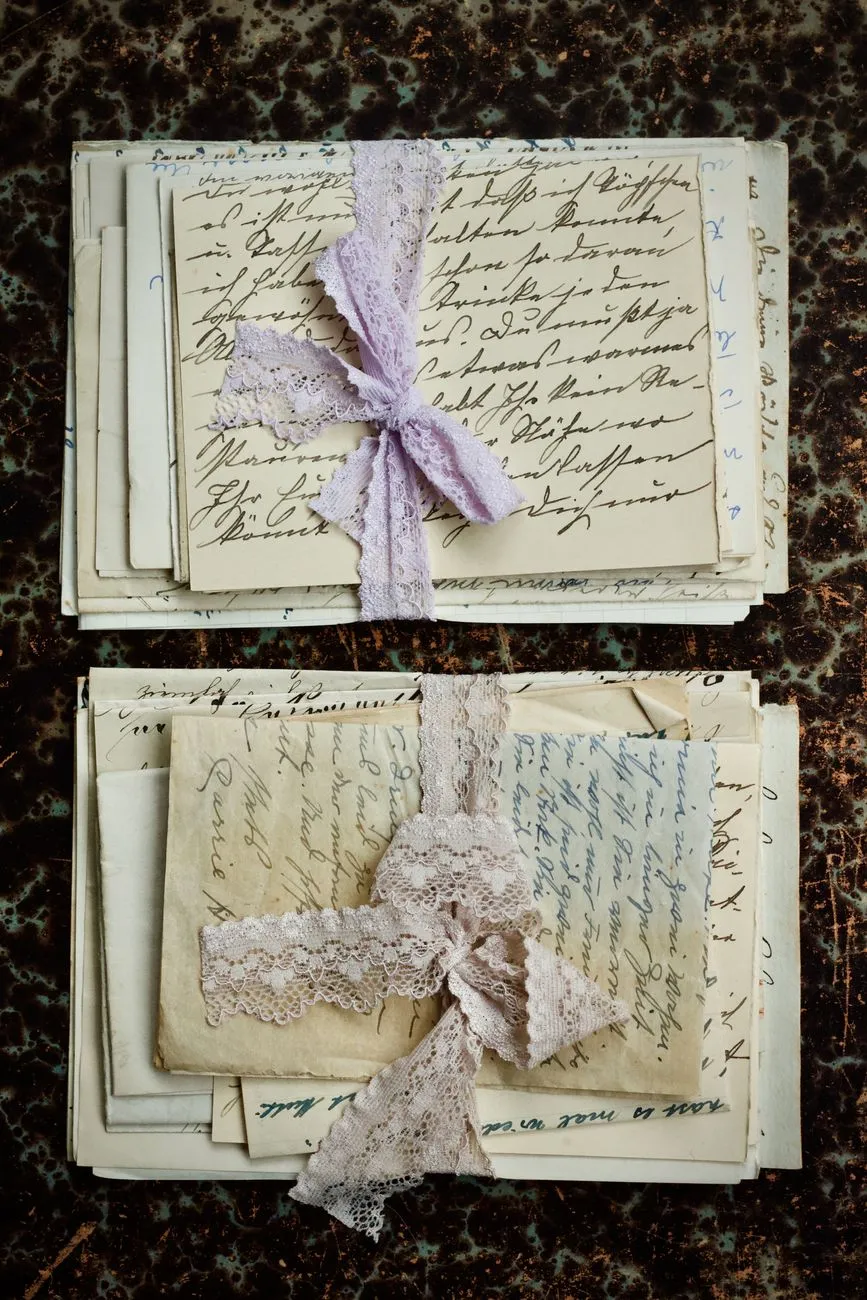
Whispered Pages: The Birth of a Letter‑Bound Narrative The first flicker of the epistolary form sparked in the twilight of the medieval manuscript, when authors began stitching together real‑world missives into a single, unfolding drama. The Spanish Cárcel de amor (c. 1485) by Diego de San Pedro is widely recognized as the earliest true epistolary novel, a daring experiment that let letters dominate the narrative canvas. Scholars debate whether the genre grew out of novels that simply inserted letters, or from miscellanies of correspondence and poetry that were later welded into a plot. Both pathways left a shared legacy: a story that lives inside the private ink of its characters. From Courtly Missives to Public Satire The 17th century saw the epistolary novel mature into a literary staple. Edmé Boursault’s Letters of Respect, Gratitude and Love (1669) gave rise to a miniature novel, Letters to Babet, when a string of letters to a girl named Babet grew distinct from the surrounding collection. The same year, Letters of a Portuguese Nun—attributed to Gabriel‑Joseph de La Vergne—captivated readers with its passionate, supposedly authentic voice. Across the Channel, James Howell’s Familiar Letters (1645‑50) is credited as the English pioneer, offering vivid snapshots of prison life, foreign adventure, and romantic longing. A landmark moment arrived with the anonymously published Love‑Letters Between a Nobleman and His Sister (1684‑87). Though authorship is still contested, many point to Aphra Behn. The three‑volume work stripped away the omniscient narrator, allowing each character’s perspective to pulse directly from the page. It also introduced intrigue: misplaced letters, forged notes, and withheld messages—all tools that would become hallmarks of the genre. The 18th‑Century Golden Age The epistolary novel burst into mainstream popularity during the Enlightenment. Samuel Richardson’s Pamela (1740) and Clarissa (1749) turned the format into a vehicle for moral exploration and social critique, selling thousands of copies across Europe. John Cleland’s Fanny Hill (1748) pushed boundaries further, presenting erotic confession through a series of letters addressed to an anonymous reader. In France, Montesquieu’s Lettres persanes (1721) used the format to satirize Western customs through the eyes of Persian travelers. Rousseau’s Julie, ou la nouvelle Héloïse (1761) wove love and philosophy into an intimate exchange of letters, while Choderlos de Laclos’ Les Liaisons dangereuses (1782) wielded epistolary manipulation as a weapon of social destruction. Germany contributed Goethe’s The Sorrows of Young Werther (1774), a tragic love story that sparked a wave of “Werther fever” across the continent. North America was not left untouched. Frances Brooke’s The History of Emily Montague (1769) holds the distinction of being Canada’s first novel, and William Hill Brown’s The Power of Sympathy (1789) earned the title of the United States’ first novel—both written entirely in letters. Satire, Parody, and the Rise of the Mock Epistolary The very popularity of the form invited ridicule. Henry Fielding’s Shamela (1741) lampooned Richardson’s moral earnestness, presenting a heroine who pens a diary under absurd circumstances. Oliver Goldsmith’s The Citizen of the World (1760‑61) adopted a Chinese philosopher’s voice to critique English society, and Fanny Burney’s Evelina (1788) turned the epistolary into a comic debutante’s adventure. Even Jane Austen flirted with the style in her early writings and the novella Lady Susan (1794). Though she abandoned the format for her later masterpieces, literary scholars suspect that her lost manuscript First Impressions—the seed of Pride and Prejudice—may have been epistolary, given the novel’s unusually high number of fully quoted letters. 19th‑Century Persistence: From Gothic Chills to Scientific Dreams While the 19th century saw the epistolary form wane in popularity, it persisted in strategic bursts. Honoré de Balzac’s Letters of Two Brides traced a 17‑year friendship through exchanged missives, and Mary Shelley’s Frankenstein (1818) layered letters within letters, framing the monster’s tragic confession inside a sea captain’s log. Anne Brontë’s The Tenant of Wildfell Hall (1848) framed its narrative as a retrospective letter, embedding the titular tenant’s diary within. Bram Stoker’s Dracula (1897) remains the most iconic example of the modern epistolary novel. Constructed from letters, diary entries, newspaper clippings, telegrams, and ship logs, the novel creates a mosaic of perspectives that heightens suspense and realism. Stoker’s technique demonstrates the genre’s capacity to fuse disparate documents into a cohesive, chilling whole. The Digital Age: Emails, Blogs, and Virtual Correspondence The epistolary tradition did not halt at the turn of the century. Contemporary writers now harness emails, text messages, blog posts, and social‑media feeds to recreate the immediacy of personal correspondence. The term “epistolary” has broadened to encompass any fictional document that mimics authentic communication, whether it arrives as a recorded podcast, a video chat transcript, or a series of Instagram DMs. This evolution honors the genre’s original promise: to embed the story within the lived, diegetic experiences of its characters. Why the Letter Still MattersAuthentic Voice – Letters bypass the omniscient narrator, allowing readers direct access to a character’s thoughts, biases, and emotions. Multiple Perspectives – A chorus of correspondents can present conflicting truths, inviting readers to piece together the “real” story. Historical Texture – The physicality of ink, paper, or digital timestamps adds a tactile realism that immersive prose alone struggles to achieve. Narrative Suspense – Misplaced or withheld letters create natural tension, as seen in Les Liaisons dangereuses and Dracula.These strengths explain why the epistolary form continues to inspire novelists, screenwriters, and even game designers seeking fresh ways to tell stories. Crafting an Epistolary Novel Today If you’re tempted to write your own letter‑bound saga, consider these practical steps:Define the Correspondents – Choose distinct voices with clear motivations. Map the Chronology – Plot each letter’s date to maintain logical progression. Insert Non‑Letter Documents – Diary excerpts, newspaper clippings, or text messages can enrich texture. Use a Fictional Editor – A framing device (e.g., “found letters compiled by…”) lends credibility. Balance Exposition and Action – Letters should reveal plot, not merely recount it.A Gallery of Epistolary Milestones The tactile allure of 18th‑century correspondence that inspired Richardson and Rousseau. Stoker’s Dracula assembled from fragmented documents, each piece adding to the horror. Today's epistolary novels often begin with an email notification. The Enduring Echo From the cramped chambers of a Spanish court to the flickering glow of a smartphone screen, the epistolary novel has proved remarkably adaptable. Its core promise—letting characters speak directly to one another—remains a potent tool for intimacy, intrigue, and authenticity. As readers continue to crave stories that feel both personal and expansive, the humble letter will undoubtedly keep finding new homes in the ever‑shifting landscape of literature.#EpistolaryNovel #LiteraryHistory #LetterWriting #HistoricalFiction #ReadingCommunity Related InsightsThe Silent Urban Revolution: Architecting Agentic Societies for Autonomous Last-Mile Delivery How to Make a Friend: A Modern Guide to Friendship Book Review and Summary American Psycho Book Review and Summary

-
 Aylin Okur
 - 12 Oct, 2026 13:51
From Goethe’s Apprentice to Modern Hero: Unraveling the Bildungsroman’s Secret Path
When Youth Becomes Narrative: The Birth of a Literary Form The first pages of a bildungsroman feel like a quiet sunrise over a restless horizon—an uneasy teen stepping out of a familiar doorway, eyes fixed on a world that promises both danger and destiny. This genre, defined by the German words Bildung (“formation” or “education”) and Roman (“novel”), isolates the psychological and moral metamorphosis of a single character as they stride from childhood’s cradle to adulthood’s threshold. Unlike a simple adventure story, the bildungsroman treats growth itself as the plot’s engine. Its central figure is usually “generally naive,” propelled by an emotional loss or a yearning for answers that pushes them into the unknown. The journey is less about external conquest and more about an internal reconciliation between the self and the society that shapes it.The German Roots: From Morgenstern to Dilthey The term bildungsroman first emerged in a university lecture hall in 1819, coined by philologist Johann Karl Simon Morgenstern. Morgenstern’s neologism lay dormant until Wilhelm Dilthey, a pivotal figure in German hermeneutics, resurrected it in 1870 and cemented its scholarly legitimacy with a 1905 publication. Dilthey’s advocacy turned the phrase from a footnote into a critical lens for literary analysis. The genre’s birth is often anchored to two German novels: Johann Wolfgang von Goethe’s Wilhelm Meister’s Apprenticeship (1795–96) and, earlier, Christoph Martin Wieland’s Geschichte des Agathon (1767). While Goethe’s work showcases the protagonist’s gradual acceptance of societal values, Wieland’s tale already hints at the “search for answers” motif that would become the bildungsroman’s hallmark. Milestones in the Canon: Goethe, Wieland, and the English Trail Goethe’s novel traveled beyond German borders when Thomas Carlyle rendered it into English in 1824. Carlyle didn’t stop at translation; his own Sartor Resartus (1833–34) became the first English-language bildungsroman, inspiring a generation of British writers. The English adaptation demonstrated that the genre’s core—psychological maturation—resonated across cultures. Later, literary scholars like Franco Moretti highlighted an unexpected tension within the form: the modern myth of perpetual youth and progress clashes with the “static teleological vision of happiness” found in classic endings such as Goethe’s Wilhelm Meister and Jane Austen’s Pride and Prejudice. In Austen’s work, the protagonist’s growth culminates in societal acceptance—a hallmark of the traditional bildungsroman arc. Even the ancient Iliad has been suggested as a proto‑bildungsroman. Barbara Whitman argues that Achilles’s evolution from rash youth to mature hero mirrors the genre’s essential trajectory, proving that the narrative of personal growth predates the term by millennia.Mapping the Inner Journey: Plot Mechanics and Societal Conflict A bildungsroman typically unfolds in three stages:Departure – An emotional loss or internal unrest forces the protagonist to leave home. Initiation – The character confronts a series of trials, often clashing with societal norms. Integration – Through hardship, the protagonist internalizes societal values and is finally accepted into the community.The conflict is rarely a simple man‑versus‑man battle; it is a deeper man‑versus‑society struggle. As the young hero navigates schools, workplaces, and romantic entanglements, they gradually reshape their worldview, ultimately aligning personal aspirations with collective expectations. In many narratives, this culminates in the protagonist’s ability to “reach out and help others,” signaling a fully realized maturity. Sub‑Genres: Development, Education, and the Artist’s Path The bildungsroman’s flexibility spawned several specialized offshoots, each sharpening the focus on a particular aspect of growth:Entwicklungsroman – A “development novel” that charts general personal evolution without a strict educational focus. Erziehungsroman – An “education novel” that concentrates on formal schooling and institutional training. Künstlerroman – The “artist novel,” tracing the emergence of a creative identity.Even memoirs can wear the bildungsroman’s cloak when they map a factual life onto a narrative of self‑formation. Jack Kerouac’s The Dharma Bums and Ernesto “Che” Guevara’s The Motorcycle Diaries are frequently cited as real‑life examples, blurring the line between fact and literary tradition.From Page to Screen: The Coming‑of‑Age Film The bildungsroman’s structural clarity translates seamlessly to cinema. The “coming‑of‑age film” mirrors the novel’s three‑act arc: a youthful protagonist is jolted from comfort, faces a series of formative challenges, and ultimately finds a place within—or sometimes outside—society. This cinematic shorthand owes its lineage to the literary genre’s clear‑cut milestones. Why the Bildungsroman Still Matters In an era dominated by rapid technological change, the bildungsroman offers a timeless reminder: growth is a process, not a flash. Its emphasis on psychological depth encourages readers to interrogate their own life stages, question societal expectations, and recognize that maturity often arrives after “mistakes and disappointments.” Moreover, the genre’s adaptability ensures its relevance. Whether explored through a 19th‑century German apprentice, an 18th‑century Greek warrior, or a modern teen navigating social media, the core inquiry remains: How does a person become whole? By tracing that question across centuries and continents, the bildungsroman affirms literature’s power to map the human heart—a map that readers continue to follow, page after page, film after film.#Bildungsroman #ComingOfAge #LiteraryHistory #Künstlerroman #ReadingJourney Related InsightsIn the Likely Event Book Review and Summary Banker's Holiday: A Novel of Fiscal Irregularity Book Review and Summary Anna Karenina Book Review and Summary

- Aylin Okur
- 06 Oct, 2026 12:25
Beyond the Map's Edge: Charting the Infinite Archipelago of Speculative Fiction
The map ends here. The vellum frays into white silence, the ink bleeding into the unknown. For centuries, cartographers drew sea monsters at the margins of the known world—hic sunt dracones—warning travelers that reality thins at the borders. But what if the monsters are the point? What if the true geography of the human imagination lies not in the safe harbors of the verified, but in the storm-tossed archipelagos of the what if? This is the domain of speculative fiction: a boundless, shape-shifting continent where the laws of physics are suggestions, history is a choose-your-own-adventure, and the dead refuse to stay buried. It is not merely a genre; it is the operating system of the impossible. The Architecture of the Unreal: Defining the Indefinable To speak of speculative fiction is to wrestle with a hydra. It is an umbrella term of staggering breadth, a catch-all cathedral sheltering fantasy, science fiction, supernatural horror, alternate history, magical realism, slipstream, weird fiction, utopia, dystopia, and the apocalyptic. If realistic fiction—anchored by literary realism and historical fiction—demands a passport stamped by the laws of nature and the consensus timeline, speculative fiction burns the passport. It presents individuals, events, and places that simply cannot exist in our ordinary real world, yet demand to be visited. The distinction is structural. Realistic fiction builds its house on the bedrock of the plausible; its events could happen, its settings are real. Speculative fiction, by contrast, constructs cathedrals on clouds. It may depict an entirely imaginary universe where nature’s laws are optional (the realm of high fantasy). It might hijack a verified historical moment—a battle, a birth, a treaty—and force it down a divergent, imaginary corridor (alternate history). Or it might hand the reader a device that violates current physics, a starship drive or a time loop, and ask us to treat it with the seriousness of a hammer (science fiction). Yet, the borders are porous. The abbreviation spec-fic (or sf, SF, S-F) often collides with the shorthand for science fiction, a semantic friction that reveals the family resemblance. Scholar John Clute coined the term fantastika in 2007 to describe this entire spectrum, borrowing from Slavic literary tradition to name the mode that encompasses the fantastic in all its guises. It is a literature of cognitive estrangement, forcing the reader to view the familiar through a cracked lens, rendering the ordinary alien and the alien intimate. The Rebel’s Label: Heinlein, Ellison, and the Politics of Genre The term "speculative fiction" carries a specific charge of rebellion in the mid-20th century. While earlier citations flicker in the historical record—an 1889 Lippincott's Monthly Magazine reference to Edward Bellamy’s Looking Backward, a 1900 Bookman mention of John Uri Lloyd’s Etidorhpa—the modern usage crystallizes around Robert A. Heinlein. In a February 1947 editorial for The Saturday Evening Post, Heinlein deployed the phrase as a synonym for science fiction, later clarifying he intended it to exclude fantasy. He wanted a label that demanded scientific rigor, a literature of extrapolation rather than enchantment. But the term slipped its leash. Writers like Harlan Ellison seized it as a crowbar to pry open the ghetto of "genre fiction." Ellison, a ferocious modernist, rejected the "science fiction writer" tag because it came with expectations of ray guns and rocket ships—expectations he found limiting. He used "speculative fiction" to signal literary ambition, to claim kinship with Borges and Kafka rather than Buck Rogers. It became a banner for writers who wanted the freedom to mix the supernatural with the scientific, the mythic with the mundane, without asking permission from genre gatekeepers. It defines an "expanded, open, imaginative type of fiction" that refuses to stay in its lane.Ghosts in the Machine: The Ancient DNA of the Impossible We mistake the label for the birth. The category ranges from ancient works to 21st-century neotraditional experiments, but the impulse—the speculative gesture—is as old as storytelling itself. Long before marketing categories existed, humans were doing mythopoeia: the creative design of lore and mythology. J.R.R. Tolkien gave the practice its name, and The Lord of the Rings stands as its towering modern monument, but the DNA is ancient. Consider Euripides (c. 480 – c. 406 BCE). In Medea, he committed an act of radical speculation. The received myth held that Corinthians killed Medea’s children after her flight. Euripides speculated: What if she killed them herself? The Athenian audience was offended. He had violated the canonical "history" of the myth, inserting a psychological horror that felt more true than the tradition. He rewrote the past to expose a darker present. William Shakespeare was a serial offender in this regard. In A Midsummer Night's Dream, he constructed a speculative collision: the Athenian Duke Theseus, the Amazonian Queen Hippolyta, the English fairy Puck, and the Roman god Cupid all converge in the Fairyland of Oberon, a fictional Merovingian sovereign. This is alternate history and portal fantasy centuries before the terms existed—a "historical invention" that mashed up geographies and pantheons to explore the anarchy of desire. Even the historians were speculating. Herodotus of Halicarnassus (5th century BCE), the "Father of History," filled his Histories with hypothetical explanations and ahistorical storytelling. Sima Qian (c. 145/135 – 86 BCE), author of the Shiji, created and edited speculative narratives within his encyclopedic annals. The line between recording the world and inventing one has always been permeable. These works capture the "conscious and unconscious aspects of human psychology in making sense of the world," responding to reality by creating artistic expressions that, paradoxically, drive practical societal progress—scientific research, cultural movements, the philosophy of science. The Bestiary of Subgenres: A Taxonomy of Wonder Because the umbrella is so vast, navigating it requires a field guide. The Wikipedia data provides a staggering list of inhabitants. Let us meet a few of the major clans. High Fantasy & Mythopoeia: The Secondary Worlds Here lie the fully imagined universes—Tolkien’s Middle-earth, Le Guin’s Earthsea, Jemisin’s Stillness. The laws of nature do not apply; magic is a physics. This is the realm of mythopoeia, where the author acts as a demiurge, forging languages, geologies, and theogonies. The themes—supernatural intervention, alternate histories of creation, the sexuality of gods and mortals—echo the oldest oral traditions. Science Fiction: The Extrapolated Future The child of the Enlightenment and the Industrial Revolution. It deals in "impossible technology or technology that defies current scientific understanding." Whether hard SF (rigorous physics) or soft SF (social speculation), it asks: If this goes on... It is the literature of the novum—the scientifically plausible (or plausibly imagined) new thing that changes everything. Alternate History: The Divergent Timeline The "what if" applied to the documentary record. The South wins the Civil War. The Roman Empire never falls. The asteroid misses the dinosaurs. It treats history not as a fixed line but as a branching tree, exploring the contingency of the present. Magical Realism & Slipstream: The Haunted Real The magic here is not a system but a symptom. In magical realism (think Márquez, Allende), the supernatural erupts into the mundane with the casualness of weather. Slipstream—the term suggests a current between genres—refuses to settle, straddling literary fiction and the fantastic, often leaving the reader uncertain if the strangeness is metaphor or metaphysics. The Weird & The Horrific: The Unknowable Lovecraft’s "cosmic indifference," the strange tales of Clark Ashton Smith, the modern New Weird (Miéville, VanderMeer). This is weird fiction: not merely scary, but ontologically destabilizing. It suggests the universe is not only stranger than we imagine, but stranger than we can imagine. Utopia, Dystopia, Apocalypse: The Political Dream/Nightmare From More’s Utopia to 1984, The Handmaid's Tale, Parable of the Sower. These are speculative fictions as social engineering blueprints—or warnings. They extrapolate political, ecological, or technological trends to breaking point, asking what humanity becomes under pressure.Suppositional Fiction: The Engine of Internal Consistency There is a subtle but crucial distinction hiding in the data: suppositional fiction. This subcategory designates works where characters and stories are constrained by an internally consistent world, but not necessarily one defined by a specific genre marker. It is the "if this, then what" rigor applied to any premise. Whether the premise is a generation ship, a portal to Faerie, or a world where sleep is currency, suppositional fiction demands that the consequences be worked out with logical integrity. It is the engineering discipline of the imagination. The Function of the Impossible: Why We Build Worlds That Don't Exist Why do we do it? Why did Euripides rewrite the murder? Why did Shakespeare build a fairy court in Athens? Why does a modern novelist spend years inventing a language for elves that never were? The data offers a profound answer: Such expressions can contribute to practical societal progress through interpersonal influences; social and cultural movements; scientific research and advances; and the philosophy of science. Speculative fiction is the simulation engine of the species. It allows us to stress-test ethics, politics, and identity in environments where the cost of failure is zero (ink on paper, pixels on screen). It is the "philosophy of science" made narrative. When we read The Left Hand of Darkness, we simulate a genderless society. When we read Neuromancer, we simulate the dissolution of the self in data. When we read The Three-Body Problem, we simulate the terror of cosmic sociology. It captures the "conscious and unconscious aspects of human psychology in making sense of the world." We speculate because the given world is insufficient to hold our fears, our hopes, and our questions. We build the impossible to understand the actual. The Living Canon: From Scroll to Screen The medium is indifferent to the mode. The Wikipedia entry explicitly notes the term applies to "works of literature, film, television, drama, video games, radio, and hybrid media." Black Mirror is speculative fiction. The Legend of Zelda is speculative fiction. The Expanse (novels and series) is speculative fiction. Welcome to Night Vale (podcast) is speculative fiction. The "umbrella genre" stretches across every storytelling technology we have invented. The fantastika is platform-agnostic; it colonizes whatever canvas is available.Standing at the Edge: The Perpetual Frontier There is no final map of this territory. As the 21st century unfurls, "neotraditional" works remix the ancient tropes—mythopoeia meets cyberpunk, alternate history kisses climate fiction, weird fiction colonizes the literary mainstream. The genre remains what it has always been: the literature of the adjacent possible and the radically impossible. It refuses the comfort of the verified. It insists that the map is not the territory, and that the territory is far larger, stranger, and more dangerous than the map admits. To read speculative fiction is to practice a radical form of empathy—for aliens, for AIs, for the dead, for versions of ourselves that never were. It is training for the future, whatever shape it takes. So, put away the passport. The border guard is a sphinx. The ticket is a question: What if? The train departs from Platform 9¾, from the Event Horizon, from the steps of the Library of Babel. The destination is unknown. The journey is the only truth.#SpeculativeFiction #Fantastika #LiteraryHistory #GenreStudies #Mythopoeia #ScienceFiction #FantasyLiterature #AlternateHistory #WeirdFiction #BookBlog Related InsightsAnother Life Book Review and Summary Wild Swans: Three Daughters of China Book Review and Summary Mr. Disappear: A Novel Book Review and Summary{ "@context": "https://schema.org", "@type": "FAQPage", "mainEntity": [ { "@type": "Question", "name": "What is the main focus of Beyond the Map's Edge: Charting the Infinite Archipelago of Speculative Fiction?", "acceptedAnswer": { "@type": "Answer", "text": "From Euripides to Heinlein, explore the sprawling umbrella genre that shatters realism—fantasy, sci-fi, alternate history, and the weird—mapping the literature of the impossible." } }, { "@type": "Question", "name": "Who authored the comprehensive guide on Beyond the Map's Edge: Charting the Infinite Archipelago of Speculative Fiction?", "acceptedAnswer": { "@type": "Answer", "text": "This detailed article and its insights were carefully researched and authored by Aylin Okur." } }, { "@type": "Question", "name": "Where can I find more related content about Books?", "acceptedAnswer": { "@type": "Answer", "text": "You can explore more articles, detailed reviews, and similar insights by browsing the Related Insights section at the bottom of this article or visiting our dedicated Books category page." } } ] }

- Aylin Okur
- 17 Sep, 2026 10:38
When the Pen Becomes a Mirror: The Secret Architecture of Self-Narration
The ink has barely dried on the page before the life it describes begins to dissolve. This is the paradox at the heart of every self-written account: the moment we commit memory to paper, we are no longer the person who lived it. We become the architect of a ruin, reconstructing rooms we can never truly inhabit again. The genre we casually call autobiography—sometimes whispered as autobio in literary corridors—is not merely a record. It is a negotiation between the self that was, the self that writes, and the self that reads.The Birth of a Hybrid Word The term itself arrived late to the party, and it arrived with disdain. In 1797, William Taylor coined "autobiography" in The Monthly Review, dismissing it as a "pedantic" hybrid—Greek roots stitched together like Frankenstein's monster: autos (self), bios (life), graphein (to write). He suggested the word only to condemn it. Yet language has a way of outliving its critics. By 1809, Robert Southey had reclaimed it, using it in its present sense, and the label stuck to a practice far older than the nineteenth century. Roy Pascal, the great scholar of the form, drew a sharp line between the diary and the autobiography. The diary moves through time like a traveler walking a road, marking each milestone as it appears. The autobiography, by contrast, stands on a summit and looks back—a review of a life from a single, fixed moment of composition. It is a retrospective architecture, built from the rubble of yesterday. Apologia: The Ancient Courtroom of the Self Long before the word existed, the impulse thrived. In antiquity, these works wore the mask of apologia—not apology in the modern sense of regret, but defense. The author stood before an invisible tribunal, justifying actions, explaining choices, shaping posterity's verdict. Flavius Josephus, the Jewish historian and rebel commander of Galilee, opened his Josephi Vita (c. 99 CE) with self-praise before pivoting to justification. He needed history to understand why he surrendered, why he survived, why he wrote. The rhetor Libanius framed his Oration I (begun 374 CE) as a literary oration, never meant for public declamation, but for the silent court of posterity. Even John Henry Newman, seventeen centuries later, would reach for this same tradition, titling his 1864 Christian confessional Apologia Pro Vita Sua—a defense of his life.Augustine: The Confessional Blueprint If there is a fountainhead of Western autobiography, it flows from Hippo. Augustine of Hippo (354–430) titled his work Confessions, and in doing so, he invented a grammar of the soul that echoes today. This was arguably the first Western autobiography ever written, and it became the template for Christian writers throughout the Middle Ages. Augustine did not merely recount events; he dissected desire. He wrote of a hedonistic youth, of young men boasting of sexual exploits, of a restless intellect sampling Manichaeism before finding rest in Christianity. He made the inner life a landscape as vivid as any battlefield. When Jean-Jacques Rousseau borrowed the title Confessions in the eighteenth century, he launched the confessional mode into the Romantic era—racy, self-critical, unflinching. The chain remains unbroken: from Augustine's garden in Milan to Rousseau's pages, to the raw memoirs lining modern shelves. The Spiritual Pilgrimage as Literary Form Spiritual autobiography constitutes its own continent within the genre. It traces the author's struggle toward the divine, marked by conversion, regression, and the gradual revelation of divine intention. The author re-reads their own past as a sacred text, each stumble a necessary step toward grace. Augustine's Confessions stands as the earliest example, but the tradition stretches across faiths and centuries. Mohandas Gandhi's An Autobiography: The Story of My Experiments with Truth frames political activism as spiritual laboratory. Black Elk Speaks records the Lakota holy man's visionary journey. Al-Ghazali's Deliverance from Error charts a Muslim philosopher's crisis and return. These works do not merely serve the writer's religion; they argue that a life, rightly read, is a theology.Memoir: The Narrower Lens If autobiography surveys the continent, memoir explores a single valley. Pascal observed that memoir focuses less on the self and more on others during the autobiographer's review of their own life. It trades comprehensiveness for intimacy, the "life and times" for memory, feeling, emotion. Julius Caesar understood this distinction. His Commentarii de Bello Gallico—Commentaries on the Gallic Wars—records nine years of campaigning not as self-portrait but as strategic testimony. His second memoir, Commentarii de Bello Civili, narrows further to the civil war against Pompeius and the Senate. These are not confessions; they are briefs filed in the court of history. The English Civil War (1642–1651) spawned a generation of memoirists: Sir Edmund Ludlow, Sir John Reresby. Across the Channel, Cardinal de Retz and the Duc de Saint-Simon turned the salons and corridors of Versailles into literature. In Spain, Leonor López de Córdoba (1362–1420) penned what scholars consider the first autobiography in Castilian—a woman's voice claiming space in a male canon. The Novel That Pretends to Be a Life Fictional autobiography performs a sleight of hand: a novel masquerading as memoir. The fictional character becomes the first-person narrator, and the novel addresses both internal and external experience as if the life were real. The reader signs a contract of belief, suspending disbelief at the threshold. Daniel Defoe's Moll Flanders (1722) wears the mask so convincingly that early readers mistook it for truth. Charles Dickens' David Copperfield opens with the iconic "Whether I shall turn out to be the hero of my own life, or whether that station will be held by anybody else, these pages must show"—a line that announces the form while inhabiting it. Charlotte Brontë's Jane Eyre presented itself on the original title page as "An Autobiography," edited by Currer Bell. J.D. Salinger's The Catcher in the Rye channels Holden Caulfield's voice so completely that generations of readers have mistaken the character for the author. The form even extends to fictionalized accounts of real figures: Robert Nye's Memoirs of Lord Byron ventriloquizes the poet. The boundary between invention and testimony blurs until the question becomes not "did this happen?" but "does this voice convince?"The Unreliable Architect: Memory as Maker Autobiographical works are, by nature, subjective. The author's inability—or unwillingness—to accurately recall memories has produced misleading, even incorrect information. Some sociologists and psychologists argue that autobiography offers the author the ability to recreate history—to become the editor of their own past, cutting scenes, rewriting dialogue, adjusting lighting. This is not necessarily deceit. Memory itself is reconstructive, not reproductive. Every retrieval rewrites the file. The autobiographer simply makes this process visible, deliberate. They curate the archive, deciding which letters burn and which survive. The result is not a photograph but a portrait—less concerned with likeness than with truth of a different order: emotional, thematic, symbolic. The Mirror and the Mask What draws us to these works across millennia? Perhaps it is the recognition that every life, examined closely, becomes universal. The specificities of Augustine's fourth-century Carthage or Caesar's Gaul or Moll Flanders' London dissolve, leaving the skeleton of choice, regret, ambition, failure. We read to see how others have negotiated the territory we all inhabit: the gap between who we are and who we wish to be. The autobiography, in all its forms—spiritual, military, fictional, fragmented—remains the most ambitious literary act: the attempt to make a life intelligible, to impose narrative on chaos, to say "I was here, and this is what it meant." The pen becomes a mirror. The mask becomes a face. And the reader, peering over the writer's shoulder, catches a glimpse of their own reflection.#Autobiography #LiteraryHistory #Memoir #SelfNarration #BookLovers
-
 Emily Page
 - 16 Aug, 2026 06:22
Ink and Iron: The Silent War Against the Forbidden Pages of the Soviet Union
The scent of old paper and damp basements often carried the fragrance of revolution. In a land where a single misplaced adjective could be interpreted as treason, the book became more than a vessel for storytelling—it became a weapon of survival, a clandestine currency, and a dangerous act of defiance. To possess a banned book in the Soviet Union was to dance on the edge of a blade, inviting the gaze of the Glavlit (the Main Administration for Literary and Publishing Affairs) and the shadow of the KGB. For decades, the Soviet state did not merely curate its libraries; it sculpted a reality by erasing the words that dared to contradict the official party line. The Architecture of Silence and the Glavlit Grip The mechanism of Soviet censorship was not a sporadic set of bans but a systemic architecture of silence. At the heart of this machinery was Glavlit, the state organ tasked with ensuring that no printed word escaped into the public consciousness unless it aligned perfectly with Marxist-Leninist ideology. This wasn't just about banning "anti-Soviet" propaganda; it was about the meticulous scrubbing of history. Maps were redrawn, names were excised from encyclopedias, and entire literary movements were treated as if they had never existed. The criteria for banning a book were as fluid as the political winds of the Kremlin. A writer could be the darling of the state one year and a "class enemy" the next. The state feared not only the explicit political critique but also the "bourgeois" influence—the notion that individual experience, spiritual longing, or existential dread mattered more than the collective progress of the proletariat.Shadows of the Masters: The Internal Exiles Among the most tragic figures of this era were those whose books were banned in their own homeland, often while the authors were still breathing. Mikhail Bulgakov stands as a titan of this struggle. His masterpiece, The Master and Margarita, a surrealist blend of biblical satire and a critique of Soviet bureaucracy, was far too subversive for the official presses. Bulgakov wrote it in secrecy, knowing that the imagery of the Devil visiting Moscow would be seen as a direct assault on the state's claim to absolute moral and social order. The book circulated in fragmented, handwritten copies for years, gaining a legendary status that no official publication could have ever achieved. In the Soviet Union, the "underground" status of a book often acted as a seal of authenticity. If the state hated it, the people craved it. Then there was Boris Pasternak. The publication of Doctor Zhivago became an international geopolitical incident. The novel, which focused on the personal tragedies of an individual caught in the gears of the Russian Revolution, was viewed as a betrayal of the socialist cause. When it was smuggled out of the USSR and published in Italy, the Soviet state responded with a campaign of vitriol. Pasternak was pressured to refuse the Nobel Prize in Literature in 1958, proving that the state's reach extended far beyond the borders of its own bookstores. The Western Contagion: Orwell and the Dread of Dystopia While the state fought its own writers, it was equally terrified of the "Western contagion." English-language literature, particularly that which critiqued totalitarianism, was strictly forbidden. George Orwell’s 1984 and Animal Farm were the ultimate forbidden fruits. The irony, of course, was that Orwell’s descriptions of Big Brother, the Thought Police, and the rewriting of history mirrored the lived experience of millions of Soviet citizens with terrifying precision. Reading Orwell was not merely a literary exercise; it was a cognitive awakening. It provided the vocabulary for the citizens to describe their own oppression. Along with Orwell, the works of Aldous Huxley and other Western philosophers who questioned the nature of power and the state were treated as spiritual poisons. These books were often translated in secret, the typed pages passed from hand to hand in a relay of intellectual bravery.Samizdat and Tamizdat: The Secret Arteries of Truth When the official printing presses were locked, the people created their own. This gave birth to the phenomenon of Samizdat (self-publishing). The process was painstaking: a person would acquire a typewriter, use carbon paper to make several copies of a banned text, and pass them to trusted friends. Each recipient was expected to make further copies. The sound of a typewriter clicking in a midnight apartment became the heartbeat of the Soviet intellectual resistance. Samizdat was not just for novels. It included poetry, political essays, and smuggled news reports. It was a decentralized network of truth that the KGB spent decades trying to dismantle. Those caught with Samizdat materials faced charges of "anti-Soviet agitation and propaganda," which could lead to imprisonment in the Gulags or forced psychiatric hospitalization. Parallel to this was Tamizdat (published "there," meaning abroad). This involved smuggling manuscripts out of the Soviet Union to publishing houses in Paris or New York. Once printed in the West, these books would be smuggled back into the USSR—often hidden in the linings of suitcases or disguised as innocuous travel guides. This bidirectional flow of information ensured that the voices of the suppressed were heard, even if only in whispers. The Sacred and the Profane: Religious Banning The Soviet Union's commitment to state atheism meant that any text promoting religion was subject to immediate banning. Bibles, Torahs, and Quranic texts were hunted by the state. Religious literature was seen as a competing loyalty, a spiritual allegiance that threatened the total devotion required by the Party. The banning of religious texts led to the creation of underground "home churches" and secret study circles. In these spaces, the act of reading a religious text became a liturgical act of rebellion. The state's attempt to erase the divine from the printed page only served to push faith deeper into the private, impenetrable spheres of the home and the heart.The Legacy of the Forbidden Page The fall of the Soviet Union eventually opened the floodgates, allowing the forbidden works to flood back into the bookstores of Moscow and Kyiv. However, the era of banning left a permanent mark on the global literary landscape. It taught the world that the more a government attempts to erase a story, the more immortal that story becomes. The works of Solzhenitsyn, particularly The Gulag Archipelago, stand as the ultimate testament to this era. By documenting the horrors of the labor camps, Solzhenitsyn did more than just write a book; he dismantled the legitimacy of a regime. His writing proved that the truth, once written down and shared, is an unstoppable force. The history of banned books in the Soviet Union is not just a list of titles; it is a map of human resilience. It reminds us that the desire for truth is more powerful than the fear of the police and that a single book, hidden under a mattress or passed in a dark alley, can eventually bring down an empire of silence. The Enduring Power of the Word Today, as we look back at the lists of forbidden authors—from the satirical brilliance of Bulgakov and the haunting prose of Pasternak to the searing honesty of Solzhenitsyn—we realize that censorship is a confession of weakness. A state that fears a book is a state that knows its own narrative is a lie. The Soviet experiment in literary control failed because it ignored a fundamental truth: the human mind cannot be fenced in. The "Ink and Iron" war was won not by the iron of the state, but by the ink of the dreamers, the dissidents, and the brave souls who dared to read.#SovietHistory #ForbiddenBooks #LiteraryResistance #Censorship #BookLovers Related InsightsOne Last Warning (Quinn & Costa, #8) Book Review and Summary Atmosphere Book Review and Summary Houdini Heart Book Review and Summary{ "@context": "https://schema.org", "@type": "FAQPage", "mainEntity": [ { "@type": "Question", "name": "What is the main focus of Ink and Iron: The Silent War Against the Forbidden Pages of the Soviet Union?", "acceptedAnswer": { "@type": "Answer", "text": "Explore the dangerous allure of forbidden literature in the USSR, from Samizdat to the works of Bulgakov and Orwell." } }, { "@type": "Question", "name": "Who authored the comprehensive guide on Ink and Iron: The Silent War Against the Forbidden Pages of the Soviet Union?", "acceptedAnswer": { "@type": "Answer", "text": "This detailed article and its insights were carefully researched and authored by Emily Page." } }, { "@type": "Question", "name": "Where can I find more related content about Books?", "acceptedAnswer": { "@type": "Answer", "text": "You can explore more articles, detailed reviews, and similar insights by browsing the Related Insights section at the bottom of this article or visiting our dedicated Books category page." } } ] }
- Aylin Okur
- 14 Aug, 2026 10:57
The Silent Ink: Unmasking the Forbidden Libraries of the Soviet Empire
Ideas are more dangerous than armies because an army can only conquer a territory, but a book can conquer a mind. In the heart of the 20th century, across the vast, frozen expanses of the Soviet Union, there existed a war not of bullets, but of ink. It was a war fought in the shadows of clandestine basements, through the frantic clicking of manual typewriters, and within the silent corridors of the Spetskhran—the special storage vaults where "dangerous" literature was locked away, far from the eyes of the proletariat. To own the wrong page was not merely a social faux pas; it was an act of treason against the state. The Iron Curtain of the Mind Censorship in the Soviet Union was not a sporadic occurrence but a systemic architecture designed to carve a specific version of reality. The state recognized that literature is the primary vehicle for empathy and critical thought. By controlling what people read, the regime sought to engineer the "New Soviet Man"—a citizen devoid of "bourgeois" distractions and fully aligned with the party line of Socialist Realism. Socialist Realism was the only approved artistic method. It required that art be "proletarian" in content and "national" in form, depicting the struggle toward communism in an optimistic, idealized light. Anything that deviated from this—anything that explored the depths of human despair, the complexity of individualism, or the failures of the state—was branded as "formalism" or "counter-revolutionary." The result was a massive blacklist of authors and titles that spanned from the classics of Western philosophy to the daring whispers of internal dissidents.The Architects of Dissent: Forbidden Voices from Within The most perilous books were those written by the people living under the regime, for the regime feared its own thinkers more than any foreign spy. Aleksandr Solzhenitsyn stands as perhaps the most towering figure of this struggle. His seminal work, The Gulag Archipelago, served as a brutal map of the Soviet system of forced labor camps. It was not merely a book; it was an indictment of the entire Soviet project. Because it exposed the systemic cruelty of the NKVD and the KGB, the manuscript had to be smuggled out of the country and published in the West before it could filter back into the USSR. To be caught with a copy of The Gulag Archipelago was to invite an immediate visit from the secret police. Then there was Boris Pasternak. His novel Doctor Zhivago captured the tragedy of an individual caught in the gears of historical upheaval. The Soviet authorities hated the book because it prioritized the internal emotional life of a man over the collective goals of the revolution. When the manuscript was smuggled to Italy and published there in 1957, Pasternak became a global symbol of intellectual resistance, though he was forced to refuse the Nobel Prize in Literature under immense state pressure. Other critical voices included:Mikhail Bulgakov: His masterpiece The Master and Margarita was a surrealist critique of Soviet bureaucracy and human nature. It remained unpublished in its entirety within the USSR for decades, circulating only in fragile, handwritten copies. Osip Mandelstam: A poet whose verses against Stalin were so potent that they were whispered from person to person, as printing them was a death sentence.The Western Ghosts: Banning the Global Canon The Soviet blockade didn't just stop at its borders; it extended to the global literary heritage. Any work that promoted capitalism, religious mysticism, or "decadent" individualism was strictly prohibited. Many works of Western philosophy, such as those by Friedrich Nietzsche or Jean-Paul Sartre, were treated with extreme suspicion. Their focus on the "Übermensch" or existentialist absurdity clashed violently with the deterministic certainty of Marxist-Leninist ideology. Similarly, religious texts—most notably the Bible—were heavily restricted or banned entirely during the peak of the state's atheistic campaigns. The "decadent" literature of the West, including many modernist poets and novelists, was viewed as a contagion. The regime feared that the individualism found in English or French literature would seep into the Soviet youth, encouraging them to question the collective identity imposed upon them by the Party.Samizdat: The Underground Printing Press of Courage When the official publishing houses became tools of the state, the people created their own. This gave birth to Samizdat (self-publishing). Samizdat was not a professional industry; it was a desperate, grassroots network of trust. The process was painstakingly slow and incredibly dangerous. A person would obtain a forbidden manuscript—perhaps a poem by Akhmatova or a chapter of Solzhenitsyn—and type it out using a manual typewriter. They would use carbon paper to create three to five copies. Each person who received a copy was then tasked with typing further copies and passing them along to trusted friends. This organic, viral spread of information meant that a book could travel across thousands of miles of Siberian tundra and urban apartment blocks without a single official printing press ever being used. The physical quality of these books was poor—thin paper, smudged ink, and handwritten corrections—but their intellectual value was priceless. They were the only windows of truth in a landscape of state-sponsored lies. Tamizdat: The Bridge to the Outside World While Samizdat was internal, Tamizdat (publishing "over there") involved smuggling manuscripts across the border to be printed in the West. Once printed in Paris, London, or New York, these books would be smuggled back into the Soviet Union, often hidden in the linings of suitcases or disguised as mundane travel guides. The cycle of Tamizdat was a psychological blow to the Soviet regime. It proved that while the state could control the presses within its borders, it could not control the global conversation. The exiled voices of authors like Vladimir Nabokov continued to haunt the Soviet consciousness, reminding the citizens that there was a world beyond the Iron Curtain where the mind was free to wander. The Spetskhran: The Cemetery of Living Books For those who were allowed to access "dangerous" literature, there was only one place: the Spetskhran. This was a specialized, restricted section of the libraries where banned books were kept. These were not destroyed—the Soviets were meticulous archivists—but they were locked away in vaults. To enter the Spetskhran, a researcher needed a special permit, often requiring the approval of the KGB. Even then, the reader was supervised. The books were treated like hazardous materials, kept under lock and key to ensure that the "poison" of forbidden thought did not leak into the general population. The irony of the Spetskhran was that it preserved the very books the state wished to erase, turning the library into a museum of forbidden ideas.The Legacy of the Forbidden Page When the Soviet Union finally collapsed in 1991, the floodgates opened. The books that had been whispered in basements and locked in vaults suddenly appeared on street corners and in official bookstores. However, the experience of reading a banned book is fundamentally different from reading a legal one. The history of banned Soviet literature teaches us that censorship rarely achieves its goal of eradication. Instead, it grants the forbidden text a supernatural power. A book that the government fears is a book that the people crave. The danger associated with the text becomes part of its allure, transforming the act of reading into an act of rebellion. The struggle of authors like Solzhenitsyn and Pasternak serves as a timeless reminder that the written word is the ultimate weapon against tyranny. Even in the face of the most oppressive regimes, the human drive for truth cannot be fully silenced. The ink may be hidden, and the pages may be fragile, but the ideas they carry are indestructible. The Echoes of the Forbidden List If we look back at the list of banned works—ranging from the spiritual depths of Dostoevsky (who faced his own censorship in his time) to the piercing political critiques of the 20th century—we see a pattern. The state always bans that which forces the individual to look inward. By banning books that explored the human soul, the Soviet Union attempted to replace the soul with a cog in a machine. Today, these books are no longer illegal, but they remain essential. They are not just historical artifacts; they are warnings. They remind us that whenever a government begins to decide which books are "appropriate" or "dangerous," the first casualty is always the truth. #SovietHistory #BannedBooks #LiteraryResistance #Samizdat #FreedomOfSpeechRelated InsightsMidnight Curfew Book Review and Summary King of Greed Book Review and Summary What Lies in the Woods Book Review and Summary{ "@context": "https://schema.org", "@type": "FAQPage", "mainEntity": [ { "@type": "Question", "name": "What is the main focus of The Silent Ink: Unmasking the Forbidden Libraries of the Soviet Empire?", "acceptedAnswer": { "@type": "Answer", "text": "Explore the dangerous world of Samizdat and the literary ghosts the Soviet Union tried to erase from history." } }, { "@type": "Question", "name": "Who authored the comprehensive guide on The Silent Ink: Unmasking the Forbidden Libraries of the Soviet Empire?", "acceptedAnswer": { "@type": "Answer", "text": "This detailed article and its insights were carefully researched and authored by Aylin Okur." } }, { "@type": "Question", "name": "Where can I find more related content about Books?", "acceptedAnswer": { "@type": "Answer", "text": "You can explore more articles, detailed reviews, and similar insights by browsing the Related Insights section at the bottom of this article or visiting our dedicated Books category page." } } ] }
- Emily Page
- 08 Aug, 2026 06:34
Ink and Iron: The Silent War Against the Written Word in the Soviet Union
A single page of paper, whispered in the shadows of a communal apartment, could be more dangerous than a suitcase full of explosives. In the monolithic machinery of the Soviet Union, the written word was not merely a vehicle for art or information; it was a strategic weapon. To write a sentence that deviated from the party line was an act of rebellion; to read a banned book was a flirtation with the Gulag. For decades, the state attempted to build a wall not just of concrete and barbed wire, but of silence, scrubbing the libraries of any thought that dared to breathe outside the suffocating confines of Socialist Realism. The Architect of Silence and the Glavlit Machine To understand why certain books were banished, one must understand the apparatus of the ban. The Soviet Union didn't just "dislike" certain books; it institutionalized the erasure of thought via Glavlit—the Main Administration for Literary and Publishing Affairs. This was the central censorship body that acted as the state's ideological filter. Every manuscript, every newspaper column, and every textbook had to pass through this sieve. The criteria for banning were fluid and terrifyingly broad. A book could be prohibited for "anti-Soviet agitation," "cosmopolitanism," "formalism," or simply because the author had fallen out of favor with the General Secretary. The goal was the creation of the "New Soviet Man," an individual whose intellectual landscape was curated by the Party. Anything that suggested a contradictory truth—whether it was the horror of the Great Purge or the allure of Western individualism—was treated as a contagion.The Giants of Dissent: Solzhenitsyn and the Truth of the Labor Camps Perhaps no name evokes the struggle between the pen and the state more than Aleksandr Solzhenitsyn. His work represents the ultimate nightmare of the Soviet censor: the witness. The Gulag Archipelago was not just a book; it was a panoramic indictment of the entire Soviet experiment. By documenting the sprawling system of forced labor camps, Solzhenitsyn stripped away the veneer of socialist utopia to reveal a skeletal reality of torture, starvation, and systemic cruelty. The state’s reaction was visceral. The manuscript had to be smuggled out of the country, published in the West, and then leaked back into the USSR via samizdat—the clandestine practice of self-publishing. People would manually type a banned manuscript, creating multiple carbon copies, which were then passed from trusted friend to trusted friend. To possess a copy of The Gulag Archipelago was to hold a piece of radioactive truth; it was an invitation for a visit from the KGB. Similarly, Solzhenitsyn's One Day in the Life of Ivan Denisovich managed a brief, paradoxical existence. It was initially permitted under Nikita Khrushchev during the "Thaw" as a way to criticize the excesses of Stalinism. However, as the political winds shifted and the state regained its appetite for control, the book was snatched back into the darkness of the prohibited list. It serves as a stark reminder that in the Soviet Union, a book's legality depended entirely on the current mood of the Kremlin. The Forbidden Mirrors: Bulgakov and the Absurdity of Power While Solzhenitsyn fought with facts, Mikhail Bulgakov fought with satire and the supernatural. The Master and Margarita is one of the most profound examples of a "ghost book"—a masterpiece written in secret, burned by the author himself in a fit of despair, and eventually reconstructed from fragments. Bulgakov’s novel was a direct assault on the spiritual bankruptcy of the Soviet elite. By bringing the Devil to Moscow, Bulgakov exposed the greed, hypocrisy, and cowardice of the literary establishment. The novel’s juxtaposition of a satirical modern Moscow with a poignant, humanized retelling of the trial of Pontius Pilate was an affront to the state's mandatory atheism and its insistence on a linear, materialist history. For years, The Master and Margarita existed only in the whispers of the intelligentsia. When a censored version finally appeared in the 1960s, it missing key passages, yet it still managed to ignite the imaginations of a generation. The book proved that the state could ban the printing press, but it could not ban the human impulse to laugh at the absurdity of tyranny.Western Contaminants: The Danger of the Foreign Word The ban didn't just target internal dissidents; it targeted the " decadent" influence of the West. Any work that promoted liberal democracy, religious faith, or "bourgeois" individualism was strictly forbidden. This included a wide swath of world literature and philosophy.George Orwell's 1984 and Animal Farm: These were the most feared imports. Orwell’s depiction of Big Brother and the manipulation of language (Newspeak) was too close to home. The Soviet state recognized that Animal Farm was a precise autopsy of the Russian Revolution's betrayal of its own ideals. The Works of Albert Camus and Jean-Paul Sartre: Existentialism was viewed with suspicion. The idea that an individual is responsible for creating their own meaning in an indifferent universe contradicted the Marxist-Leninist view that meaning was derived solely from one's role in the class struggle. Religious Texts: While the Bible and the Quran existed in clandestine circles, they were officially suppressed. Any theology that placed a higher power above the State was considered a threat to national security. American Pulp and "Jazz" Literature: Even non-political works were often banned if they depicted a lifestyle of leisure and consumption that contradicted the austere, hardworking image of the Soviet citizen.The Art of Survival: Samizdat and Tamizdat When the official bookstores became museums of propaganda, the people created their own publishing houses. Samizdat (self-publishing) became the lifeline of the Soviet soul. This was a decentralized network of bravery. A person would receive a banned text, type it out on a manual typewriter—often with several sheets of carbon paper underneath—and pass the copies to others. The risks were astronomical. If the KGB discovered a samizdat ring, the participants faced charges of "anti-Soviet agitation," which could lead to years in a labor camp or internal exile to the frozen wastes of Siberia. Yet, the hunger for forbidden knowledge outweighed the fear. Then there was Tamizdat (publishing "over there"). This involved smuggling manuscripts out of the USSR to publishers in Paris, London, or New York. Once published abroad, these books would be smuggled back into the country in the linings of suitcases or hidden within the covers of approved texts. This cycle created a global conversation about the Soviet Union that the state could not silence.The Ghostly Echoes of Erased Authors Beyond the famous names, thousands of lesser-known poets, historians, and essayists were simply erased. This was the "damnatio memoriae" of the Soviet era. Authors who had once been celebrated were suddenly stripped of their titles, their books were purged from libraries (often physically ripped out or thrown into incinerators), and their names were scrubbed from the indices of encyclopedias. The tragedy of the banned book in the Soviet Union was not just the loss of the text, but the attempted erasure of the human experience. When a book is banned, the state is claiming that the experience described in that book—the suffering, the doubt, the love, the heresy—did not happen, or should not be remembered. The Legacy of the Forbidden Page The fall of the Soviet Union eventually opened the floodgates, allowing the "forbidden" books to flood back into the Russian consciousness. However, the era of censorship left a permanent scar on the literary landscape. It created a culture where the most valuable books were the ones that were illegal, and where the act of reading became a political statement. The history of banned books in the USSR teaches us that censorship is an admission of weakness. The state banned Solzhenitsyn, Bulgakov, and Orwell not because their words were false, but because they were too true to be managed. The ink of the dissident proved more durable than the iron of the regime. Today, these works stand as monuments to the resilience of the human spirit. They remind us that as long as there is a single person willing to type a page in secret and another willing to read it in the dark, the truth can never be fully extinguished.#SovietHistory #BannedBooks #LiteraryResistance #Censorship #HistoryOfBooks Related InsightsThe Four Agreements Book Review and Summary Magic Claims Book Review and Summary Kafka on the Shore Book Review and Summary{ "@context": "https://schema.org", "@type": "FAQPage", "mainEntity": [ { "@type": "Question", "name": "What is the main focus of Ink and Iron: The Silent War Against the Written Word in the Soviet Union?", "acceptedAnswer": { "@type": "Answer", "text": "Explore the dangerous allure of forbidden literature in the USSR and the books that challenged the iron grip of state censorship." } }, { "@type": "Question", "name": "Who authored the comprehensive guide on Ink and Iron: The Silent War Against the Written Word in the Soviet Union?", "acceptedAnswer": { "@type": "Answer", "text": "This detailed article and its insights were carefully researched and authored by Emily Page." } }, { "@type": "Question", "name": "Where can I find more related content about Books?", "acceptedAnswer": { "@type": "Answer", "text": "You can explore more articles, detailed reviews, and similar insights by browsing the Related Insights section at the bottom of this article or visiting our dedicated Books category page." } } ] }
- Emily Page
- 13 Jul, 2026 22:53
The Anatomy of the Written Word: Unraveling the Sacred and Secular History of Literary Criticism
To read is to embark on a journey of silent communion with the dead and the living, but to critique is to map the cartography of that journey. Literature does not exist in a vacuum; it requires an analytical gaze to decipher its structural labyrinth, to evaluate its aesthetic weight, and to interpret its hidden patterns. This intellectual pursuit—known broadly as literary criticism or literary studies—serves as the ultimate bridge between the raw creation of the artist and the conscious comprehension of the audience. At its core, it is the systematic study, evaluation, and interpretation of literature, a discipline that has evolved from ancient philosophical inquiry into a highly sophisticated sphere of modern scholarship. Modern literary criticism does not walk this path alone. It is deeply entangled with, and often influenced by, literary theory—the philosophical analysis of literature’s fundamental goals and methods. Yet, a delicate tension persists between these two realms. While closely related, the literary critic and the literary theorist are not always identical. Some scholars argue whether literary criticism should be treated as a separate field of inquiry altogether. For instance, the renowned The Johns Hopkins Guide to Literary Theory and Criticism draws no real distinction between the two, choosing instead to use the terms together to describe a singular, unified concept. In contrast, other thinkers view literary criticism as the practical, hands-on application of literary theory. Under this view, criticism is always bound to the specific, breathing flesh of particular literary works, whereas theory remains floating in the realm of the general, the abstract, and the speculative. Whether practiced in the quiet halls of academia or within the pages of widely circulating periodicals, literary criticism has found diverse homes. Academic critics dissect texts within university literature departments, publishing their dense, peer-reviewed findings in specialized academic journals. Meanwhile, a more popular, public-facing critical tradition thrives in intellectual publications. Readers searching for insightful evaluations turn to esteemed platforms such as The Times Literary Supplement, The New York Times Book Review, The New York Review of Books, the London Review of Books, the Dublin Review of Books, The Nation, Bookforum, and The New Yorker. To understand how we arrived at this vibrant landscape of critical discourse, we must look backward, tracing the long historical lineage that shaped the modern analytical mind. The Threshold of Interpretation: Theory versus CriticismTo explore literary criticism is to confront the historic division between the abstract framework and the practical reading of a text. While literary theory constructs the lens through which we view a narrative, literary criticism is the act of looking through that lens at a specific page. The ongoing debate regarding their separation highlights a fundamental truth: criticism cannot easily escape theory, nor can theory prove its utility without the text. This dynamic manifests clearly in the venues where criticism is consumed. In the academic sphere, the dialogue is rigorous, focusing on structural methodologies and ideological decodings. In the public sphere, however, the essay and the review reign supreme. The transition of criticism from elite academic circles to publications like The New Yorker or the London Review of Books demonstrates that evaluating a book is both a scholarly science and a public art form, designed to guide the cultural taste of an era. From Antiquity to the Medieval Hermeneutic: The Genesis of CritiqueThe roots of this analytical impulse stretch deep into the soil of the classical period. In the 4th century BC, the Greek philosopher Aristotle penned the Poetics, a seminal treatise that offered the first formal typology and explanation of literary forms. Aristotle did not merely theorize in the abstract; he provided specific, acute criticisms of the contemporary artworks of his era. Through this work, he developed foundational concepts that remain central to literary studies to this day: mimesis (the imitative representation of nature and human action) and catharsis (the purging of pity and fear through art). As the classical world transitioned into the medieval period, the focus of critical inquiry shifted dramatically. Much of classical and medieval criticism became deeply intertwined with religious texts. The long, rigorous traditions of hermeneutics and textual exegesis, developed to unlock the spiritual truths of sacred scriptures, began to exert a profound influence on how scholars approached secular texts. This cross-pollination was especially evident within the rich literary traditions of the three Abrahamic religions: Jewish literature, Christian literature, and Islamic literature. In the medieval Islamic world, literary criticism flourished beyond strictly religious commentary, embedding itself in the study of Arabic literature and poetry from the 9th century onward. Intellectuals developed sophisticated methodologies to analyze poetic structures and rhetorical devices. Among the most notable figures of this Golden Age was Al-Jahiz, who explored style, presentation, and language in his landmark works al-Bayan wa-'l-tabyin and al-Hayawan. Similarly, Abdullah ibn al-Mu'tazz made pioneering contributions to Arabic poetic theory with his Kitab al-Badi, laying down systematic rules for the analysis of the modern poetic style. The Renaissance and the Classicist Revival The dawn of the Renaissance brought a dramatic intellectual rebirth, characterized by the recovery of classical texts and a desire to harmonize ancient wisdom with contemporary culture. This era developed classical ideas regarding the absolute unity of form and content into a rigid literary neoclassicism. Literature was proclaimed as the very beating heart of culture, and the poet or author was entrusted with a sacred duty: the preservation of a long, unbroken literary tradition. The true birth of Renaissance criticism can be traced precisely to the year 1498. This was the pivotal moment when Giorgio Valla published his Latin translation of Aristotle’s Poetics, reintroducing the foundational text to Western Europe. From this recovery onward, Aristotle’s ideas dominated the critical landscape, remaining the single most potent influence upon literary criticism until the close of the eighteenth century. Critics across the continent sought to interpret and apply these ancient rules to modern vernacular writing. Among the most influential of these Renaissance commentators was Lodovico Castelvetro, who in 1570 wrote extensive, highly debated commentaries on Aristotle’s Poetics, codifying the rigid rules of dramatic structure that would govern European theater for generations. The Baroque Transgression and the Metaphor of WonderBy the seventeenth century, the serene order, proportion, and harmony championed by Renaissance neoclassicism began to fracture. The Western world witnessed its first full-fledged crisis in modernity, as the core critical-aesthetic principles inherited from classical antiquity—such as proportion, unity, decorum, and harmony—were fundamentally challenged. For centuries, these values had stabilized Western thinking about the creation and evaluation of artworks. While Classicism remained a potent cultural force, it was gradually forced to share the stage with a rival movement: the Baroque. This new aesthetic favored the transgressive, the irregular, and the extreme. The Baroque did not seek to replicate the balanced unity or decorum that supposedly distinguished both nature and its greatest imitator, ancient art. Instead, it sought to startle, to destabilize, and to inspire awe. The theoretical framework for this radical Baroque aesthetic was not fully articulated until 1654, with the publication of Emanuele Tesauro’s seminal treatise, Il Cannocchiale aristotelico (The Aristotelian Telescope). Deeply inspired by the grand scale of Giambattista Marino’s epic poem Adone and the intellectual depth of the Spanish Jesuit philosopher Baltasar Gracián, Tesauro developed an innovative theory of metaphor. He argued that metaphor was not merely an ornamental poetic device, but a universal language of images. In Tesauro's view, the construction of a metaphor was a supreme intellectual act—an artifice that served as an epistemologically privileged path to accessing ultimate truth. Key Baroque concepts such as the "conceit" (concetto), "wit" (acutezza, ingegno), and "wonder" (meraviglia) became the new criteria by which great literature was measured. The Commercial Ink: Enlightenment and the Democratic PrintThe eighteenth century ushered in the Enlightenment, a period in which literary criticism transformed from an elite scholarly pursuit into a highly popular, public-facing phenomenon. This shift was driven by a dramatic rise in public literacy rates; reading was no longer an exclusive luxury reserved solely for the wealthy or the highly educated scholarly class. Accompanied by the rapid speed of the printing press and the intense commercialization of literature, a massive reading public emerged. For this new class of readers, literature was no longer viewed exclusively as an educational tool or a sacred source of religious instruction; it became a primary source of entertainment. Consequently, literary criticism arose as an essential guide for the consumer. The style of criticism in this era reflected the broader values of the Enlightenment, favoring clear, bold, and precise writing. However, it was also highly controversial, with critics frequently judging literary works based on the author’s religious beliefs. These critical reviews found a home in the rapidly multiplying newspapers, magazines, and journals of the day. Yet, the mass production and commercialization of literature had a distinct downside in the eyes of intellectuals. The emerging literary market, which Enlightenment theoreticians had hoped would educate the public and eradicate superstition and prejudice, began to slip away from their idealistic control. The noble business of the Enlightenment quickly transformed into a lucrative business with the Enlightenment. To combat the rise of sensational and low-quality entertainment literature, critics intensified their scrutiny. Highly celebrated authors were not spared from this fierce critical climate. For instance, the works of Jonathan Swift faced severe judgment; his masterpiece Gulliver's Travels was famously dismissed by one contemporary critic who described it as nothing more than "the detestable story of the Yahoos." Romantics, Rebels, and the Path to Modernity As the nineteenth century dawned, the British Romantic movement mounted a fierce rebellion against the rigid, rational constraints of Enlightenment thought. The Romantics introduced revolutionary aesthetic ideas to literary studies. They argued that the object of literature did not always have to be beautiful, noble, or formally perfect. Instead, they believed that literature possessed the power to enlighten the reader, elevating even the most common, mundane subject to the level of the sublime. In Germany, the Romantic movement followed closely on the heels of late German classicism. German Romanticism emphasized a deep understanding and appreciation of fragmentation—a concept that appears startlingly modern to contemporary readers. Furthermore, the German thinkers placed an immensely high value on Witz—a specific kind of intellectual "wit" or "humor"—elevating it far above the more solemn, serious tone that characterized much of Anglophone Romanticism. As the nineteenth century drew to a close, the cultural authority of the critic reached unprecedented heights. This era produced figures who achieved immense renown not for their poetry or fiction, but primarily for their contributions to literary criticism. Chief among them was Matthew Arnold, whose critical essays helped define the cultural standards of the Victorian era and established the critic as a vital guardian of societal values. While these historical movements each left an indelible mark, the modern landscape of literary criticism owes its direct existence to the radical shifts of the early twentieth century. It was during this period that criticism began to break away from historical and biographical analysis, turning its focus entirely toward the text itself. This transition was spearheaded first by the rigorous school of Russian Formalism, and shortly thereafter, by the rise of the New Criticism in Britain and the United States, forever changing how we read, interpret, and understand the written word.#LiteraryCriticism #BookHistory #Aristotle #LiteraryTheory #ClassicLiterature Related InsightsThe Summer We Crossed Europe in the Rain Book Review and Summary Please Enjoy Your Stay Book Review and Summary The Code Breaker Book Review and Summary{ "@context": "https://schema.org", "@type": "FAQPage", "mainEntity": [ { "@type": "Question", "name": "What is the main focus of The Anatomy of the Written Word: Unraveling the Sacred and Secular History of Literary Criticism?", "acceptedAnswer": { "@type": "Answer", "text": "Trace the rich intellectual journey of literary criticism from Aristotle's foundational concepts to the experimental shifts of the twentieth century." } }, { "@type": "Question", "name": "Who authored the comprehensive guide on The Anatomy of the Written Word: Unraveling the Sacred and Secular History of Literary Criticism?", "acceptedAnswer": { "@type": "Answer", "text": "This detailed article and its insights were carefully researched and authored by Emily Page." } }, { "@type": "Question", "name": "Where can I find more related content about Books?", "acceptedAnswer": { "@type": "Answer", "text": "You can explore more articles, detailed reviews, and similar insights by browsing the Related Insights section at the bottom of this article or visiting our dedicated Books category page." } } ] }