Showing Posts From
Medievaleurope
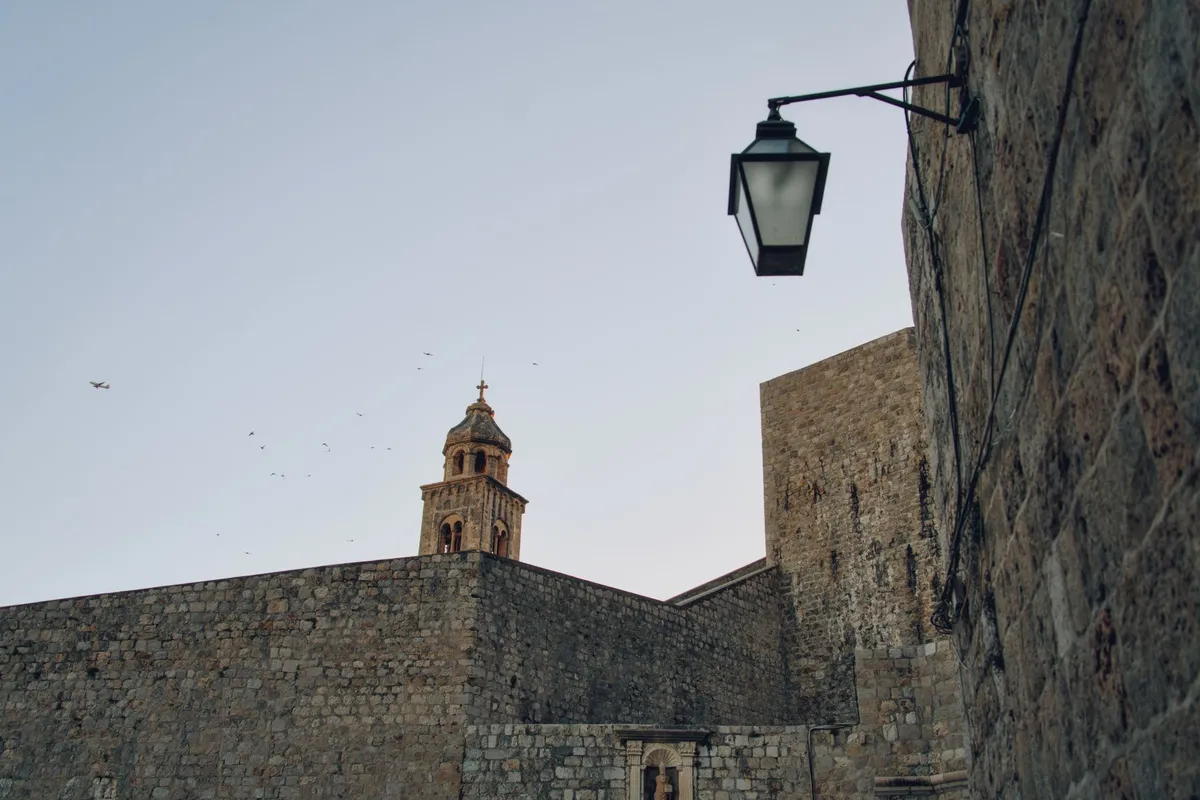

The sun does not merely shine upon the Adriatic; it illuminates a living tapestry of stone, salt, and centuries of defiance. To walk the streets of a Croatian coastal town is to step through a veil of time, where the modern traveler finds themselves brushing shoulders with the ghosts of Venetians, Ragusans, and ancient Illyrian tribes. Croatia is not just a destination; it is a monumental archive of human resilience carved into the very karst of the Balkan Peninsula. The Bastions of Ragusa and the Adriatic Horizon Dubrovnik, the legendary "Pearl of the Adriatic," remains the most profound testament to the medieval obsession with security and aesthetic grandeur. As you stand atop the Minceta Tower, the highest point of the city’s massive defensive system, the world narrows down to the rhythm of the waves crashing against the base of limestone ramparts. These walls, constructed predominantly between the 12th and 17th centuries, represent a masterclass in fortification. Unlike many European cities that lost their medieval character to fire or modernization, Dubrovnik preserved its core. Walking the Stradun, the main thoroughfare, one notices the uncanny uniformity of the buildings—a result of the Great Earthquake of 1667, which forced a rapid and structured reconstruction. The city was once the Republic of Ragusa, a maritime powerhouse that dared to rival the Venetian Republic. Its independence was bought not just with gold, but with the genius of diplomacy, navigating the complex power dynamics between the Ottoman Empire and the burgeoning kingdoms of the West.Diocletian’s Palatial Ghost in Split If Dubrovnik is a fortress preserved, Split is a city living inside a palace. The Diocletian’s Palace is arguably one of the most significant archaeological wonders in Europe. Built for the Roman Emperor Diocletian at the turn of the 4th century, it was never merely a temporary residence; it was a retirement fortress designed to be an entire city within itself. To navigate the Peristyle today is to participate in a strange, beautiful historical synthesis. Locals sip coffee where Roman soldiers once stood watch. The substructures, or the "cellars" of the palace, provided the blueprint for the living quarters above. As the Roman Empire receded, the citizens of Salona fled into these massive walls, building their homes within the very corridors designed for imperial guards. You are not visiting a ruin; you are visiting a layer cake of human habitation that spans 1,700 years. The Venetian Influence on the Istrian Peninsula Heading north to the Istrian Peninsula, the architectural dialect shifts. The town of Rovinj stands as a beacon of Venetian Gothic influence. Here, the landscape is defined by tight, winding alleys that climb toward the Basilica of St. Euphemia. The Venetian influence is unmistakable in the ornate balconies, the lion motifs carved into the stone lintels, and the vibrant, pastel-colored facades that reflect off the emerald waters of the Adriatic. The history of Istria is a complex narrative of shifting allegiances. It was a frontline of culture, where the Mediterranean influence of Italy met the rugged, Slavic soul of the hinterlands. While the coastal towns became hubs of maritime commerce and trade, the inland villages—often perched on hilltop plateaus like Motovun—functioned as defensive bastions against inland invaders. These towns, constructed from the local gray stone, offer a stark contrast to the opulence of the coast, revealing the tougher, more stoic side of the medieval Croatian experience.The Sacred Geometry of Zadar and Sibenik The medieval spirit of Croatia is deeply rooted in its religious heritage. In Zadar, the Church of St. Donatus, a pre-Romanesque structure from the 9th century, stands as an architectural anomaly. Its circular shape and massive, thick walls evoke the spirit of early Byzantine influence that permeated the Dalmatian coast long before the Gothic cathedrals began to dominate the skyline. Sibenik, however, takes this stone-carving mastery to an apex with the Cathedral of St. James. This structure is unique in the world, having been constructed entirely from stone without the use of wood or mortar for its structural joints. It is a masterpiece of the Renaissance, yet its spirit is purely medieval—an ambitious project that required the ingenuity of multiple generations of architects, including the legendary Juraj Dalmatinac. When you stand inside, looking at the stone barrel vaulting, you are witnessing the pinnacle of stone-crafting in the medieval period. The Living Heritage of the Adriatic Beyond the grand cathedrals and the intimidating ramparts, the true medieval world of Croatia survives in its traditions. It is found in the "klapa" singing, a form of a cappella music that echoes through the stone alleys of Dalmatia—a tradition recognized by UNESCO for its intangible cultural value. It is found in the local trade of salt, olive oil, and wine, industries that have defined the coastal lifestyle since the arrival of the Ancient Greeks. To travel through Croatia is to learn the language of stone. Every block in a wall, every archway in a cellar, and every crest above a doorway has a story of a merchant, a king, or a commoner fighting to maintain their autonomy against the tides of larger, more aggressive empires.Preserving the Past for Future Explorations The challenge for the modern visitor is to look past the glitz of the tourism industry and see the endurance beneath. Croatia has survived seismic shifts in borders, regimes, and ideologies. What remains is a testament to the fact that beauty, when crafted with the permanence of stone, can outlast even the most volatile historical eras. When you walk the ancient walls of Ston, or the narrow, labyrinthine alleys of Korcula—the purported birthplace of Marco Polo—you are connecting with a tangible, physical manifestation of medieval life. These towns were designed for a time when survival meant being able to seal the gates at sunset. Today, the gates are open, but the atmosphere remains thick with the scent of pine, sea salt, and the enduring weight of history. As the sun sets over the Adriatic, painting the limestone in hues of gold and violet, one cannot help but feel a deep sense of gratitude for those who labored to preserve these spaces. Croatia remains one of the few places in Europe where the medieval world hasn't just been preserved behind glass, but remains the backdrop for the daily lives of the people who call it home. It is a place where you don't just learn history; you inhabit it.#CroatiaTravel #MedievalHistory #Dubrovnik #Dalmatia #EuropeanHeritage Related InsightsIm Bann der Gezeiten: Wenn Stein und Meer den Mont Saint-Michel umarmen Sardinian Nuraghe Trails: Mapping the Bronze Age Megalithic Landscapes Lalibela : Le Chant de la Pierre Vivante – Plongée au Cœur des Églises Monolithiques d'Éthiopie{ "@context": "https://schema.org", "@type": "FAQPage", "mainEntity": [ { "@type": "Question", "name": "What is the main focus of Croatia Unveiled: Stepping Back into the Medieval World?", "acceptedAnswer": { "@type": "Answer", "text": "Journey through the ancient limestone corridors and fortress walls of Croatia, where the whispers of the Adriatic sea tell tales of empires past." } }, { "@type": "Question", "name": "Who authored the comprehensive guide on Croatia Unveiled: Stepping Back into the Medieval World?", "acceptedAnswer": { "@type": "Answer", "text": "This detailed article and its insights were carefully researched and authored by John Explorer." } }, { "@type": "Question", "name": "Where can I find more related content about Travel?", "acceptedAnswer": { "@type": "Answer", "text": "You can explore more articles, detailed reviews, and similar insights by browsing the Related Insights section at the bottom of this article or visiting our dedicated Travel category page." } } ] }
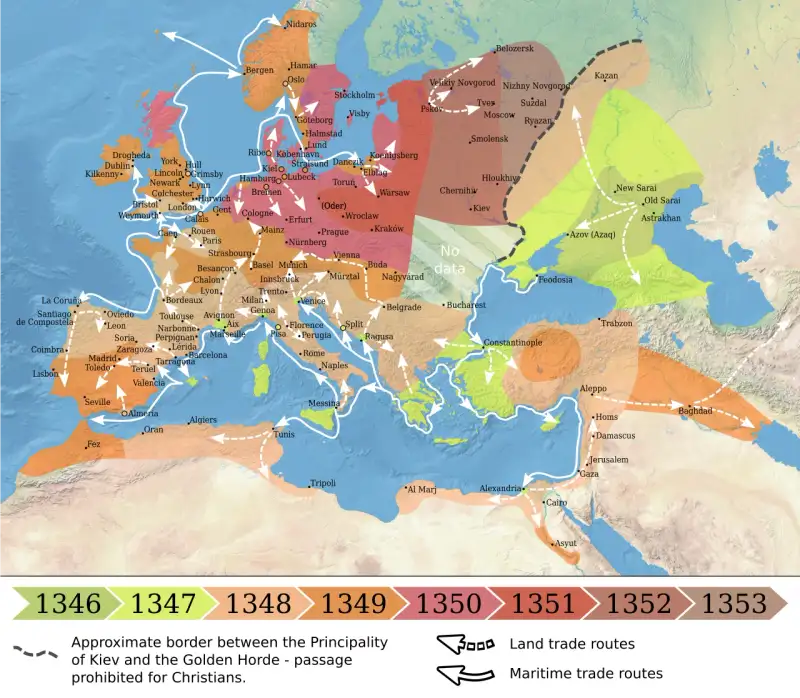

The Black Death: The Bubonic Plague That Decimated Medieval Europe A World on the Precipice In the year of our Lord 1347, the continent of Europe was entirely unaware that it stood upon the very precipice of the abyss. To understand the magnitude of the cataclysm that was about to unfold, one must first envision the fragile state of the world into which the pestilence crept. #MedievalEurope was a tapestry of burgeoning cities, sprawling feudal estates, and dense, interconnected trade networks. It was a world humming with the commerce of the Renaissance's dawn, yet precariously balanced on the edge of a knife. The preceding decades had not been kind. The Great Famine of 1315–1317 had already severely weakened the population, bringing years of unyielding rain, rotting crops, and widespread starvation. Generations had grown up undernourished, their immune systems compromised, their bodies frail. The population had swelled beyond the agricultural capacity of the land, creating crowded, unsanitary urban centers where waste flowed openly in the streets, and humans lived cheek-by-jowl with livestock, rats, and fleas. It was a world ripe for the harvest. But no prophet, no astrologer gazing at the conjunction of Saturn, Jupiter, and Mars in the house of Aquarius, could have truly predicted the sheer, unadulterated horror that was sailing toward them from the East. The #BlackDeath was not merely a disease; it was an apocalypse, an event so profound and terrifying that it fundamentally ruptured the fabric of human history. The Winds of Pestilence: Origins in the East The nightmare did not begin in the cramped alleys of Paris or the bustling docks of London. It originated in the vast, arid expanses of Central Asia, likely in the steppes of modern-day Kyrgyzstan or Mongolia. There, the bacterium Yersinia pestis had long circulated among populations of marmots and other rodents. Climate changes in the 1330s—perhaps a series of exceptionally dry years following a period of lush growth—drove these rodents out of their natural habitats and closer to human settlements. Through the intricate webbing of the Silk Road, the disease began its inexorable march westward. It hitchhiked on the backs of merchant caravans, nestled in bales of silk and sacks of spices, carried by the ubiquitous black rat (Rattus rattus) and its deadly companion, the Oriental rat flea (Xenopsylla cheopis). The turning point, the moment the plague truly weaponized itself against Europe, occurred at the Genoese trading outpost of Kaffa (modern-day Feodosia) on the Crimean Peninsula. In 1345, the city was besieged by the Golden Horde, led by the Mongol warlord Jani Beg. The siege dragged on, but suddenly, the Mongol ranks were decimated by a mysterious, rapidly fatal illness. In what is perhaps the first recorded instance of biological warfare, the desperate and dying Mongols loaded the plague-ridden corpses of their fallen comrades onto trebuchets and hurled them over the walls into the city of Kaffa. The Genoese merchants, horrified by the raining dead, quickly succumbed to the contagion. Panic ensued. Desperate to escape the infected city, they boarded their swift galleys and fled into the Black Sea, unwittingly carrying the grim reaper in their holds. #AncientHistory #Warfare The Death Ships Arrive In October 1347, a fleet of twelve Genoese galleys limped into the harbor of Messina, Sicily. The scene that greeted the Sicilian port authorities was one of unimaginable horror. The sailors aboard the vessels were either dead or dying. Those still clinging to life were delirious with fever, their bodies covered in mysterious black boils that oozed blood and pus. These were the infamous "death ships." The authorities in Messina quickly realized the danger and ordered the fleet out of the harbor, but it was too late. The true vectors of the disease—the infected rats and their fleas—had already scurried down the mooring lines and into the city. The Black Death had made landfall in Europe. The speed with which the contagion consumed Messina was breathtaking. Within days, the city was a charnel house. The disease spread so rapidly that the living could scarcely bury the dead. People dropped in the streets, in their homes, in the very churches where they sought sanctuary. From Sicily, the plague moved with terrifying swiftness. By early 1348, it had reached Genoa and Venice. By summer, it had crossed the Alps into France and the Holy Roman Empire. By autumn, it had crossed the Channel to England. The Anatomy of the Terror What made the Black Death so utterly terrifying to the medieval mind was its gruesome physical manifestation and its sheer unpredictability. Modern science tells us that the Black Death was primarily the bubonic plague, but it also manifested in two other, even more deadly forms: pneumonic and septicemic.Bubonic Plague: The most common form, characterized by the sudden onset of fever, chills, vomiting, and terrible aches. Its most distinguishing feature was the appearance of "buboes"—painful, swollen lymph nodes in the groin, armpits, or neck. These swellings, which could grow to the size of an apple, would eventually turn black and split open, oozing foul-smelling pus and blood. Mortality rate: 50% to 70%. Pneumonic Plague: This occurred when the infection reached the lungs. It was highly contagious, spreading directly from person to person through the air via coughing and sneezing. Victims would cough up blood and essentially drown in their own fluids within a matter of days. Mortality rate: nearly 100%. Septicemic Plague: The deadliest form, where the bacteria multiplied directly in the bloodstream. Victims would die incredibly quickly, sometimes before any other symptoms appeared. Internal bleeding caused dark patches on the skin—the literal "black death." Mortality rate: 100%.The Italian writer Giovanni Boccaccio, who survived the plague in Florence, provided a harrowing firsthand account in his masterpiece, The Decameron: "It did not take the form it had assumed in the East... but in men and women alike it first betrayed itself by the emergence of certain tumors in the groin or the armpits, some of which grew as large as a common apple, others as an egg... From the two said parts of the body this deadly gavocciolo soon began to propagate and spread itself in all directions indifferently." A Society in Collapse The societal impact of the Black Death cannot be overstated. As the death toll mounted, the very foundations of medieval civilization began to crumble. Institutions that had stood for centuries proved utterly powerless in the face of this invisible enemy. The Failure of Medicine The medical community of the 14th century was entirely unequipped to understand or combat the plague. Grounded in the ancient Greek theory of humorism, physicians believed that illness was caused by an imbalance of the four bodily humors (blood, phlegm, yellow bile, and black bile) or by "miasma"—corrupt, foul-smelling air rising from swamps or unburied corpses. Their treatments were as varied as they were ineffective. #MedicalHistory is replete with the desperate, sometimes bizarre remedies employed during the plague years. Bloodletting: Believing that drawing "bad blood" would cure the patient, physicians regularly bled victims using leeches or lancets, often simply accelerating their death by weakening them further. Aromatherapy: To combat the miasma, people carried nosegays of sweet-smelling flowers, herbs, and spices (the origin of the nursery rhyme "Ring Around the Rosie"). Bizarre Poultices: Buboes were lanced and treated with poultices made of anything from roasted onions and herbs to crushed emeralds and even the chopped-up remains of pigeons or snakes. Theriac: An expensive, ancient concoction containing dozens of ingredients, including opium and snake flesh, widely prescribed to the wealthy but entirely useless against Yersinia pestis.The Breakdown of Social Order More terrifying than the physical symptoms was the moral and social collapse that accompanied the plague. The sheer volume of death overwhelmed the living. Mass graves, known as plague pits, were dug outside city walls, where bodies were layered like lasagna. The bonds of family and friendship shattered under the weight of fear. Boccaccio noted with despair that "brother was forsaken by brother, nephew by uncle, brother by sister, and oftentimes husband by wife; nay, what is more, and scarcely to be believed, fathers and mothers were found to abandon their own children, untended, unvisited, to their fate, as if they had been strangers." Law and order evaporated. Magistrates and guards died or fled. Entire towns were abandoned, leaving ghost ships of stone in the countryside. Crops rotted in the fields for lack of hands to harvest them. Livestock wandered aimlessly, dying in the pastures. The silence that descended upon Europe was profound and chilling—the silence of the grave. #History The Scapegoats and the Zealots In the absence of a scientific explanation, the people of Medieval Europe turned to theology and superstition. The prevailing belief was that the Black Death was a divine punishment, the wrath of a furious God meted out upon a sinful world. This desperation gave rise to some of the darkest chapters of the plague years. The Flagellants Believing that extreme penance was the only way to appease God, massive movements of flagellants swept across Europe. These were bands of men and women who traveled from town to town, stripped to the waist, whipping themselves with scourges embedded with iron spikes while chanting hymns of repentance. They believed that by sharing in the suffering of Christ, they could atone for the sins of humanity. The flagellant movement grew massive, becoming a law unto itself and challenging the authority of the Church. Pope Clement VI eventually condemned them, recognizing the threat they posed not just to religious order, but to public health, as they actively spread the plague from town to town, their open wounds providing perfect entry points for the bacteria. The Persecution of the Jews Perhaps the most tragic and shameful consequence of the Black Death was the systematic persecution and massacre of Jewish communities across Europe. Desperate to find a human scapegoat for their suffering, wild rumors began to circulate that the Jews were responsible for the plague, accusing them of poisoning the wells and springs. Despite the fact that Jews were dying of the plague at the same rate as Christians, the hysteria proved unstoppable. In city after city, particularly in the Holy Roman Empire, Jewish populations were rounded up, tortured into false confessions, and burned at the stake. In February 1349, in the city of Strasbourg, over 2,000 Jews were burned alive in the local cemetery in a horrific event known as the Strasbourg massacre. In Basel, the entire Jewish population was burned in a specially constructed wooden house on an island in the Rhine. Pope Clement VI issued bulls defending the Jews and pointing out the illogical nature of the accusations, but his voice was drowned out by the roar of the mob. The Aftermath: A World Transformed By the early 1350s, the initial, catastrophic wave of the Black Death began to subside. It is estimated that between 30% to 50% of Europe's population had perished—somewhere between 25 and 50 million people. The demographic shock was unprecedented, and it set in motion a series of profound changes that would forever alter the course of Western civilization. The Economic Upheaval and the Fall of Feudalism The most immediate consequence of the massive population loss was a severe labor shortage. For centuries, the feudal system had relied on an abundance of cheap peasant labor bound to the land. Suddenly, the peasantry found themselves in a position of unprecedented bargaining power. Lords and landowners, desperate to have their fields tilled and their crops harvested, were forced to offer higher wages, better living conditions, and lower rents. Peasants who were once tied to the land of a specific lord found that they could simply leave and find better terms elsewhere. Governments attempted to resist this economic shift. In England, King Edward III issued the Statute of Laborers in 1351, which attempted to freeze wages at pre-plague levels and restrict peasant mobility. These measures, however, were largely ineffective and deeply resented, eventually contributing to the great Peasants' Revolt of 1381. The Black Death essentially broke the back of the feudal system, paving the way for the rise of a more mobile, affluent lower and middle class. The Shift in Religion and Culture The psychological trauma of the Black Death left an indelible mark on European culture. The Church, which had failed to protect the people or explain the tragedy, suffered a significant loss of prestige. Many of the most dedicated and selfless priests and monks had died while tending to the sick, leaving a vacuum that was often filled by less qualified, more opportunistic individuals. This creeping disillusionment sowed early seeds of dissent that would eventually blossom into the Protestant Reformation centuries later. Art and literature took on a darker, more morbid tone. The motif of the Danse Macabre, or the Dance of Death, became wildly popular. These artworks depicted skeletons leading people from all walks of life—kings, popes, merchants, and peasants—in a mocking dance to the grave, emphasizing the universality of death and the futility of earthly power and wealth. Tomb sculptures changed as well. Rather than the idealized, peaceful effigies of the past, wealthy individuals began commissioning "transi tombs," which featured two tiers: the top showing the person as they were in life, and the bottom revealing a rotting, worm-eaten corpse, a stark reminder of memento mori—"remember you must die." The Endless Echo The Black Death of 1347-1351 was not the end. The plague returned to Europe in successive waves every few decades for centuries, though never again with the apocalyptic ferocity of its initial debut. It became a grim, expected part of life, finally vanishing from Europe only in the 18th century, though it still exists in small pockets around the world today, easily treated with modern antibiotics. When we look back at the Black Death through the lens of history, we see more than just a medical catastrophe. We see a crucible that tested the absolute limits of human endurance. It was an era of unimaginable darkness, where the air itself seemed to carry the scent of the grave, and the tolling of the death knells never ceased. Yet, from that darkness, a new world was forged. The shattering of old hierarchies, the redistribution of wealth, and the shift in human consciousness laid the crucial groundwork for the Renaissance. The Black Death reminds us of the fragility of our civilization, the terrifying power of the natural world, and the profound, resilient nature of the human spirit when faced with the ultimate abyss. It remains, etched into our collective memory and perhaps even our DNA, the most terrifying chapter in the grand, sweeping narrative of human history. The Medical Truth Uncovered It is fascinating to consider how long the true cause of the plague remained hidden in shadows. It was not until the late 19th century, during a massive outbreak in Hong Kong in 1894, that Alexandre Yersin, a Swiss-French physician and bacteriologist, finally isolated the bacillus responsible for the disease. Named Yersinia pestis in his honor, this microscopic organism had ruled the world with an iron fist centuries before humanity even knew it existed. Following this, Paul-Louis Simond identified the rat flea as the primary vector in 1898. The intricate, deadly dance between the bacterium, the rat, the flea, and the human host was finally understood. It is a sobering thought that for centuries, humanity fought a war in the dark, battling miasmas and bad humors while the true enemy nested in the very thatch of their roofs and the straw of their beds. Modern Reflections on an Ancient Terror Today, in our era of rapid global travel, advanced medicine, and interconnected economies, the story of the Black Death serves as a potent, timeless warning. We have seen, in recent years, how quickly a novel pathogen can sweep across the globe, disrupting lives, economies, and social norms. While our medical arsenal is vastly superior to the poultices and bloodletting of the 14th century, our societal vulnerabilities remain eerily similar. The Black Death teaches us about the dangers of rampant scapegoating and the spread of misinformation during times of crisis. The tragic fate of the European Jews during the plague years is a stark reminder of how fear can rapidly curdle into hatred and violence against the marginalized. Furthermore, the economic aftershocks of the plague demonstrate how massive demographic shifts can upend established economic orders. Just as the plague empowered the peasantry and helped dismantle feudalism, modern pandemics force us to reevaluate the structures of our own labor markets and economic systems. A Masterpiece of Macabre History In the annals of human existence, there are dividing lines—events so massive that history is neatly split into "before" and "after." The fall of Rome was one. The discovery of the New World was another. But perhaps none was so sharp, so brutal, and so universally devastating as the Black Death. As a writer of historical fiction, I find myself continually drawn to this period. It is an era stripped of pretense, where human nature is laid bare in both its absolute worst and its absolute best. For every tale of a parent abandoning a child, there is a tale of a brave nun or a steadfast physician who stayed to comfort the dying, knowing it would cost them their own lives. The story of the Black Death is not just a story of a disease; it is the story of us. It is a testament to the fact that while humanity can be brought to the very brink of extinction, battered by forces beyond our control, we possess a terrifying, beautiful resilience. The cities repopulated, the fields were replanted, and the world spun on, forever scarred, but undeniably alive. We walk today on streets built over the plague pits, we admire art born from the ashes of the Danse Macabre, and we live in a society shaped by the economic earthquakes of the 1350s. The Black Death is not merely ancient history; it is the foundational trauma of the modern world. #HistoricalFiction #MarkDinn #TheBlackDeath #ResilienceMark Dinn is a renowned historical fiction author, known for his immersive and dramatic storytelling that breathes life into the darkest and most fascinating chapters of human history. His works focus on the resilience of the human spirit in the face of insurmountable odds. #History #MedievalEurope Related InsightsUnraveling the Mysteries of Stonehenge: A Monolithic Marvel of the Ancient World The Colosseum: Echoes of Eternity in the Heart of Rome The Rosetta Stone: Breaking the Silence of Ancient Egypt{ "@context": "https://schema.org", "@type": "FAQPage", "mainEntity": [ { "@type": "Question", "name": "What is the main focus of The Black Death: The Bubonic Plague That Decimated Medieval Europe?", "acceptedAnswer": { "@type": "Answer", "text": "A dramatic deep dive into The Black Death: The Bubonic Plague That Decimated Medieval Europe. Mark Dinn explores the untold history, drama, and legacy of this fascinating subject." } }, { "@type": "Question", "name": "Who authored the comprehensive guide on The Black Death: The Bubonic Plague That Decimated Medieval Europe?", "acceptedAnswer": { "@type": "Answer", "text": "This detailed article and its insights were carefully researched and authored by Mark Dinn." } }, { "@type": "Question", "name": "Where can I find more related content about History?", "acceptedAnswer": { "@type": "Answer", "text": "You can explore more articles, detailed reviews, and similar insights by browsing the Related Insights section at the bottom of this article or visiting our dedicated History category page." } } ] }