Showing Posts From
Mongolia
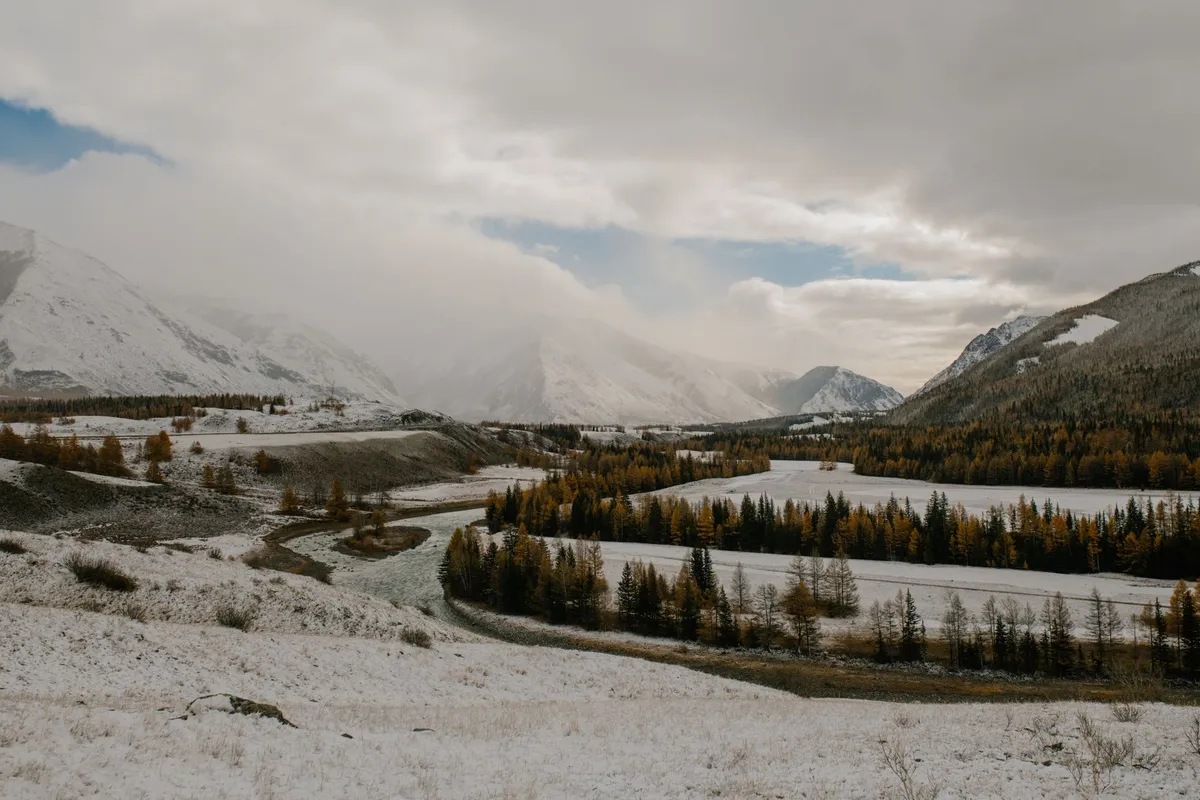

Crossing the Eternal Sky: The Altai Gateway The Altai range rises like a jagged spine between Mongolia, Russia, China, and Kazakhstan, guarding some of the planet’s most pristine pastoral corridors. For centuries, Kazakh eagle hunters and Mongolian herders have moved their flocks along these high valleys, following seasonal water sources that appear only after the summer melt. The gateway to this world is the dusty town of Ölgii, capital of Bayan‑Ölgii Province, where the paved road ends and the real journey begins. From Ölgii, a 4×4 track climbs toward the Tsambagarav massif, crossing the Khovd River at a narrow ford that can swell to a torrent in July. Travelers should time their departure for early June, when the passes are clear of snow but the grass is already tall enough to sustain livestock. Permits are mandatory. The Mongolian Ministry of Environment issues a “Special Protected Area” permit for the Altai Tavan Bogd National Park, while the local soum (district) office requires a “Herders’ Passage” letter signed by the host family. Both documents can be arranged in Ölgii within a day if you present a copy of your passport, a travel itinerary, and a letter of invitation from a registered ger camp. Fuel is scarce beyond the town; carry at least 120 liters of diesel in jerry cans, and verify that your vehicle’s ground clearance exceeds 220 mm to negotiate the rocky riverbeds. Satellite phones are advisable because mobile coverage disappears after the first 30 kilometers. The first night is usually spent at a family‑run ger camp near the Khar‑Us Lake. Here, the host will demonstrate the traditional “khadag” greeting — a blue silk scarf offered with both hands — and serve a bowl of salty milk tea (suutei tsai) alongside boiled mutton. This ritual is more than hospitality; it signals that you are accepted onto the migratory route and may travel with the herd for the next leg. Understanding these customs early prevents cultural missteps that can jeopardize later access to grazing lands. Reading the Wind: Traditional Navigation Techniques Long before GPS, Altai nomads read the landscape like a map written in wind, stone, and animal behavior. The prevailing westerly wind shapes the orientation of yurts, the direction of herd movement, and even the placement of fire pits. A seasoned herder can tell the time of day by the length of the shadow cast by a lone larch on the ridge, and can predict a storm by the sudden silence of marmots. For the modern traveler, learning a handful of these cues adds a safety layer that no satellite can replace. First, identify the “wind corridors” — narrow valleys where the breeze funnels consistently. Herders position their camps at the
-
 Aisha Sharma
 - 20 Sep, 2026 11:46
Whispers of the Taiga: Journey Among Mongolia's Last Reindeer Nomads
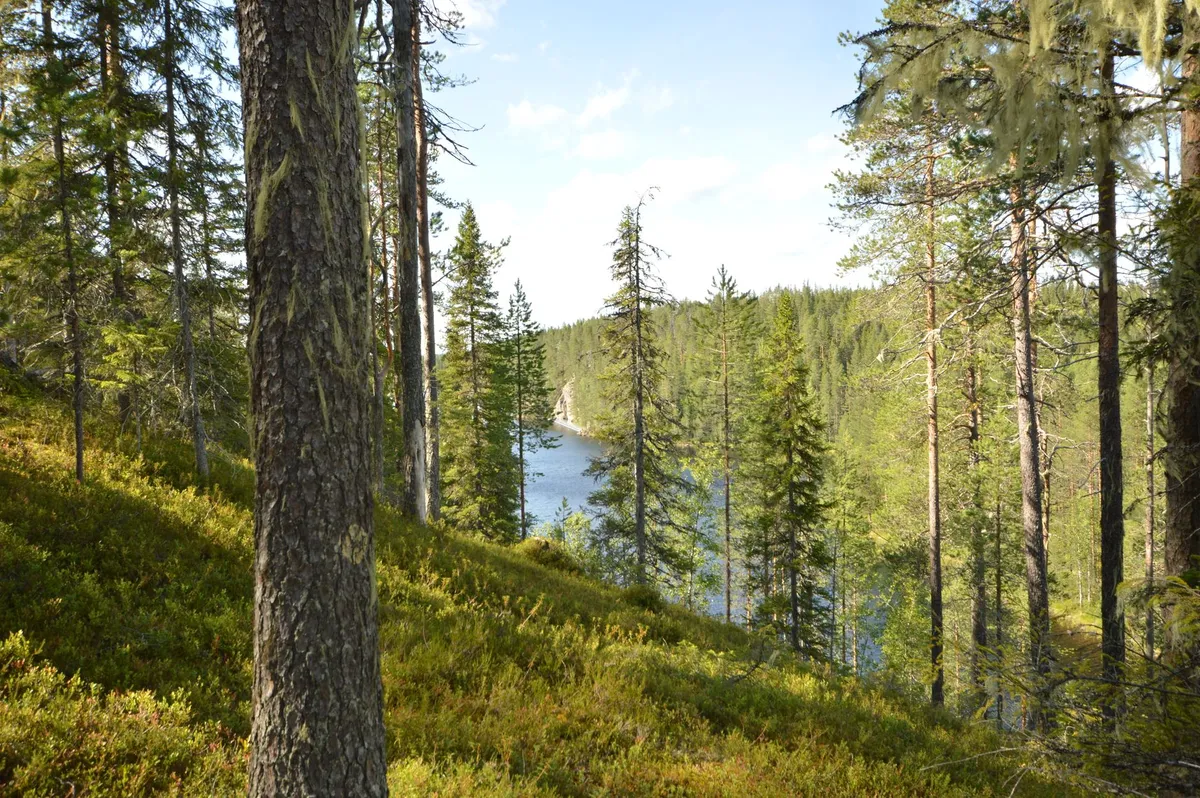
Crossing the Siberian Border into the Taiga The journey begins long before the first hoof prints appear on the mossy floor of the taiga. From Ulaanbaatar, a 12‑hour flight to Mörön followed by a bone‑rattling 4×4 ride across the steppe delivers you to the edge of the Darkhad Valley, where the Siberian frontier looms like a silent guardian. The road dissolves into a narrow track that winds through larch forests, past crystal‑clear rivers that reflect the sky in shades of jade. At the border checkpoint, Mongolian border guards stamp passports with a quiet efficiency that belies the remoteness ahead. Once the checkpoint fades, the landscape shifts dramatically. The steppe’s golden grasses give way to dense coniferous stands, their needles muffling every footfall. The air grows colder, scented with pine resin and damp earth. Reindeer herders — known locally as the Tsaatan or Dukha — have navigated these corridors for centuries, following seasonal pastures that stretch across the Russian‑Mongolian border. Their migration is not a simple north‑south line; it is a lattice of micro‑routes dictated by snow depth, lichen abundance, and the health of the herd. Understanding this geography is essential for any traveler who wishes to move with the herders rather than merely observe them from a distance. Local guides, often former herders themselves, speak a dialect of Tuvan peppered with Mongolian loanwords. They teach you to read the subtle signs: a broken branch indicates a recent passage; a cluster of reindeer droppings marks a favored grazing spot. The first night in a traditional ortz (a conical felt tent) is a lesson in minimalism. A single wood stove provides heat, while reindeer hides serve as both bedding and insulation. The silence is broken only by the soft click of hooves on frozen ground and the distant howl of a wolf pack — reminders that the taiga remains a wild, untamed realm. Morning Milk and Midnight Fires with the Tsaatan Dawn arrives with a pale glow filtering through the larch canopy. The herders rise before the sun, their movements practiced and unhurried. The first task is milking the reindeer — a delicate operation that requires a calm hand and a soft voice. Each animal yields a modest cup of rich, slightly sweet milk, which is immediately transformed into suutei tsai (salted milk tea) or fermented into airag, a mildly alcoholic beverage that fuels long days on the trail. Breakfast is a communal affair. Flatbreads baked on the stove’s hot stones accompany bowls of boiled reindeer meat, seasoned only with salt and wild onions foraged from the forest floor. Conversations flow in a mixture of Tuvan, Mongolian, and Russian, punctuated by laughter and the occasional story of a bear encounter or a sudden blizzard that once forced the herd to shelter in a hidden ravine. The herders’ knowledge of the land is encyclopedic; they can name every lichen species, predict the onset of a snowstorm by the behavior of the birds, and locate the safest river crossings without a map. As the day progresses, the herd moves in a loose formation, guided by the lead bull’s low, resonant calls. Travelers are invited to walk alongside, learning to match the reindeer’s pace — a steady, energy‑conserving gait that can cover 30 kilometres in a day. The terrain is unforgiving: frozen bogs that swallow boots, steep ridges that demand careful footing, and sudden thaw patches that turn solid ground into slush. Yet the herders navigate with an innate GPS built from generations of oral maps. Evening brings the ritual of the fire. A circle of stones encloses a blaze fed by dry larch branches. The herders share stories of the “Eternal Sky” — a spiritual concept that binds the people, the reindeer, and the forest into a single living entity. Songs rise in a haunting pentatonic scale, accompanied by the morin khuur (horsehead fiddle) whose strings vibrate with the same resonance as the taiga wind. For a visitor, these moments are not tourist performances; they are invitations into a worldview where time is measured by seasons, not clocks. Mapping the Ancient Migration Corridors The Tsaatan’s migration routes are not static lines on a map; they are living arteries that shift with climate, policy, and the health of the reindeer. Historical records from Russian explorers in the 19th century describe a network of summer pastures near the Shishged River and winter camps deep in the Sayan foothills. Modern GPS tracking, conducted in collaboration with the Mongolian Academy of Sciences, reveals that the herders now travel roughly 1,200 kilometres annually, a distance that has increased by 15 % over the past two decades due to shrinking lichen beds. Key waypoints include the “White Lake” (Tsagaan Nuur) where the herd grazes on nutrient‑rich sedges in July, and the “Black Rock Pass” (Khar Uul) that offers shelter from the biting January winds. Each waypoint carries cultural significance: White Lake hosts the annual “Reindeer Festival,” a gathering where families exchange news, arrange marriages, and perform shamanic rites to honor the spirit of the herd. Black Rock Pass is the site of a sacred cairn, built stone by stone by ancestors who believed it guided lost souls back to the tribe. The corridors intersect with protected areas such as the Khövsgöl Lake National Park and the Uvs Nuur Basin, a UNESCO World Heritage site. While conservation laws safeguard biodiversity, they also restrict traditional grazing zones, forcing herders to negotiate permits that can take months to secure. Satellite imagery shows a 12 % reduction in viable lichen cover since 2000, a trend linked to rising temperatures and increased frequency of summer droughts. The herders adapt by extending their stay in higher elevations, where cooler microclimates preserve lichen longer, but this adds physical strain and lengthens the migration. For travelers, understanding these corridors means more than following a trail; it means respecting the temporal rhythm of the land. Guided treks typically allocate 10‑14 days to traverse a single seasonal loop, allowing time for acclimatization, cultural exchange, and the inevitable weather delays. Maps provided by local NGOs highlight water sources, emergency shelters, and zones where photography is prohibited to protect sacred sites. Carrying a lightweight GPS device pre‑loaded with these waypoints is advisable, yet the most reliable navigation remains the herder’s whispered direction: “Follow the ridge where the wind sings.” Practical Logistics: Budgeting Your Taiga Expedition A realistic budget transforms a dream into a feasible plan. The following table summarizes average 2026 costs derived from Numbeo’s Mongolia dataset (crowdsourced from over 1,200 contributors) and on‑ground quotes from licensed tour operators in Mörön. Prices are in USD and reflect a solo traveler joining a small group (4‑6 people) for a 12‑day guided migration experience.Expense Category Low Estimate High Estimate NotesInternational flight (round‑trip to Ulaanbaatar) $850 $1,400 Varies by departure city and seasonDomestic flight Ulaanbaatar → Mörön $180 $250 Operated by Aero Mongolia / Hunnu Air4×4 transfer Mörön → Taiga entry point $120 $180 Shared vehicle, includes driverGuide & herder family fee (12 days) $1,200 $1,600 Covers accommodation, meals, cultural liaisonPermit & park entry fees $70 $110 National park & border zone permitsGear rental (sleeping bag, insulated boots) $90 $130 Optional if you bring own equipmentFood & incidentals (extra snacks, souvenirs) $150 $250 Local markets in MörönTravel insurance (adventure coverage) $120 $200 Must cover high‑altitude, remote evacuationTotal Approximate $2,780 $4,120Prices fluctuate with exchange rates (MNT/USD ≈ 3,450) and fuel surcharges. Early booking (3‑4 months ahead) typically secures the lower band. Beyond the table, hidden costs deserve attention. Satellite phone rental ($15/day) is advisable for emergency communication, as mobile coverage ends at the valley’s edge. A modest tip for the herder family (≈ $50) is customary and directly supports their livelihood. Currency exchange is best done in Ulaanbaatar; ATMs in Mörön dispense MNT but may run dry during peak season. Logistically, the optimal window is late June through early September, when the taiga is snow‑free, rivers are fordable, and the reindeer are in peak condition. Winter expeditions exist but require specialized cold‑weather gear and a higher risk tolerance. Visa‑free entry for up to 30 days applies to citizens of the United States, EU, Canada, Australia, and several Asian nations; others must secure a tourist visa (≈ $50) from a Mongolian consulate. Packing light is a discipline. Essentials include a four‑season sleeping bag rated to –20 °C, merino base layers, a wind‑proof shell, gaiters, and a headlamp with extra batteries. A compact first‑aid kit, water‑purification tablets, and a multi‑tool round out the kit. Remember that every kilogram adds to the vehicle’s fuel consumption on the rough track, so the herders appreciate travelers who respect the weight limit (typically 15 kg per person for personal gear). Preserving a Fragile Heritage in a Changing Climate The Tsaatan’s way of life sits at the intersection of cultural resilience and ecological vulnerability. Climate models for the Sayan‑Altai region project a mean temperature rise of 2.3 °C by 2050,
-
 John Explorer
 - 10 Jun, 2026 13:15
The Silent Chronicles of the Steppe: Unearthing the Enigma of Mongolia's Deer Stone Sentinels at Uushgiin Ovor
The wind doesn't just blow across the Mongolian steppe; it whispers tales. Tales of epochs so #ancient they predate written #history, of civilizations carved not into stone tablets, but into the very spirit of the land. For years, I chased these whispers, drawn by an irresistible magnetic pull to a mystery that has stood silent for millennia: the Deer Stones of Mongolia. Not the often-photographed Gobi, nor the popular eagle festivals, but a deeper, more primal hum that emanates from vast, untouched expanses where towering stone figures defy easy explanation. My quest led me to Uushgiin Ovor, a name that rolls off the tongue like a forgotten incantation, nestled in the Khövsgöl Province – a region of startling beauty and profound solitude, far removed from any beaten path. This wasn't a casual sightseeing trip; it was an expedition into the very fabric of time, a personal deep-dive into the spiritual and historical heart of Inner Asia, aiming to understand what secrets these silent sentinels have guarded for over 3,000 years. The Magnetic Pull of the Unexplained My fascination with Deer Stones began, as many of my most compelling journeys do, with a single, grainy photograph found in an obscure anthropological journal. It depicted a slender megalith, its surface etched with stylized flying deer, a warrior's belt, and a solar disc. The image was haunting, minimalist, and yet spoke volumes about a sophisticated #culture that vanished long before the rise of the great nomadic empires. Who were these artists? What grand visions compelled them to erect such monuments in the middle of an unending sea of grass and sky? Conventional archaeology offers theories – funerary markers, territorial claims, astronomical calendars, shamanic altars. But theories, no matter how rigorously debated, often fail to capture the visceral sense of awe and wonder that these objects evoke. I sought not just the 'what' and 'how,' but the 'why.' What did these stones mean to the people who carved them? And how do these ancient meanings echo, however faintly, in the lives of the nomads who still roam these lands? The #journey itself was a test of endurance and a lesson in perspective. From Ulaanbaatar, a city constantly reinventing itself, the path west unravels rapidly into dirt tracks and eventually, no tracks at all. Weeks were spent traversing landscapes that shifted from rolling green hills dotted with yaks and horses to arid plains stretching to horizons that seemed to bend the very concept of distance. Our Russian-made UAZ van, a beast of a vehicle that seemed to thrive on punishment, became our mobile home, our lifeline, and our only shield against the elements. The air grew thinner, crisper, carrying the scent of wild thyme and distant rain. Each day, the sense of civilization receded further, replaced by the omnipresent silence of the steppe, broken only by the mournful cry of a soaring eagle or the guttural bleating of a goat herd. Uushgiin Ovor: A Silent Congress of Giants When we finally arrived at Uushgiin Ovor, it was not with a dramatic flourish, but with a quiet revelation. Tucked into a gentle valley, shielded slightly by low hills, stood a collection of over 20 Deer Stones, forming a silent, open-air gallery. Unlike single, isolated stones I had seen in other regions, this site was a complex, a congress of giants. They stood erect, some nearly 15 feet tall, slender and imposing, each a unique masterpiece of prehistoric art. The late afternoon sun cast long, dramatic shadows, making the carved figures appear to stir, to dance on the ancient stone. I stepped out of the van, the crisp air biting at my cheeks, and felt an immediate shift in my perception of time. The modern world, with its incessant demands and fleeting concerns, seemed to melt away. Here, under the vast, unblinking eye of the Mongolian sky, millennia felt like moments. The sheer audacity of these ancient sculptors – to quarry, transport, and intricately carve such massive stones with rudimentary tools – was humbling. It spoke of a collective effort, a shared belief system so powerful it could mobilize communities for a purpose whose echoes still resonate today. Each stone at Uushgiin Ovor tells a slightly different story, yet they are united by common motifs. The most striking, of course, are the deer – often depicted with exaggerated, flowing antlers, almost like wings, as if in flight. These aren't just any deer; they are often interpreted as a mythical 'flying deer' or 'reindeer-griffins,' creatures of immense power and spiritual significance. They seem to soar towards the sky, connecting the earthly realm with the celestial. Below the deer, human figures are rare, but warrior regalia is prominent: intricate belts, daggers, bows, quivers, and often an axe or a shield. Some carvings even suggest intricate hairstyles or headdresses. At the very top, many stones feature a circular motif, often interpreted as a sun, moon, or celestial sphere, sometimes with radiating lines. This tripartite division – celestial (sun/moon), animal (deer), and human/warrior (weapons/belt) – suggests a complex cosmology, a layered understanding of the universe that likely tied into shamanic practices. For hours, I walked among them, tracing the ancient lines with my fingers, feeling the smooth, cold stone, imagining the hands that once worked here. Was this a sacred grove? A burial ground for revered warriors? A site for ancient ceremonies marking solstices or equinoxes? The prevailing archaeological theory often links them to an elite warrior culture, possibly early nomads of the Bronze and early Iron Ages, who may have revered the deer as sacred animals, perhaps even totemic ancestors or guides to the spirit world. The weapons could signify status, protection, or even symbolic offerings to the deceased or to deities. Echoes of the Past: Nomadic Life Today My journey, however, wasn't solely about academic interpretation. It was about connection. A few kilometers from Uushgiin Ovor, we encountered a small nomadic family, their ger (yurt) a beacon of white canvas against the endless green. They were herding yaks and horses, their lives inextricably linked to the land, much as their ancestors’ were thousands of years ago. Through my guide, a patient and insightful Mongolian man named Bat, I spent an evening sharing suutei tsai (salty milk tea) and airag (fermented mare's milk), discussing the Deer Stones. To the family, the stones were simply part of the landscape, ancient markers left by 'the old ones.' They didn't claim specific knowledge of their purpose, but their reverence for the land, the sky, and the animals was palpable. The deer, for them, still held a special place – a symbol of resilience, freedom, and the wild spirit of Mongolia. Their stories, passed down through generations, often included mythical animals, powerful shamans, and the enduring connection between humans and the natural world. While direct historical links are difficult to establish, the spiritual undercurrents felt strikingly similar to the symbolic language carved into the Deer Stones.One evening, sitting outside their ger under a sky ablaze with stars, the elder, a woman with eyes that held the wisdom of countless winters, pointed towards the distant silhouette of the stones. She spoke of the 'sky-wolf' – a mythical creature from Turkic and Mongolian legends often associated with creation and guiding spirits – and how ancient spirits still walked the land. Her words, though not a direct translation of archaeological theory, resonated deeply. The flying deer on the stones, soaring towards the celestial disc, could easily be interpreted as spiritual guides, connecting the earthly existence of the warrior with the eternal cosmos, much like the sky-wolf guides the souls of the worthy. Beyond Uushgiin Ovor: A Tapestry of Time Uushgiin Ovor is perhaps the most impressive Deer Stone complex, but it is by no means the only one. Scattered across the vast expanse of the Mongolian steppe, and extending into parts of #Siberia, Tuva, and Kazakhstan, are thousands of these enigmatic monuments. Each region has its own variations in style and motif, suggesting a wide cultural sphere and potentially different tribal identities, yet all share the core iconography of the deer, the warrior, and the celestial. This widespread distribution speaks to a profound shared cultural and spiritual heritage that spanned across ancient Inner Asia. In other remote valleys, we encountered smaller, solitary Deer Stones, often accompanied by khirigsuurs – large burial mounds typically surrounded by a stone fence. These burial complexes further reinforce the funerary and ceremonial aspects of the Deer Stones, suggesting they were part of a larger ritual landscape designed to honor the dead, communicate with the spirit world, and perhaps even mark ancestral territories. The sheer scale of these ancient projects, often involving hundreds of cubic meters of stone moved and shaped, is a testament to the organizational capabilities and belief systems of these ancient nomadic cultures. We also ventured to sites with ancient petroglyphs, rock carvings depicting hunting scenes, animals, and shamanic figures that predate the Deer Stones, some dating back to the Neolithic period. These older artworks provided a broader context, illustrating a continuous tradition of marking the landscape with spiritual and historical narratives. The Deer Stones, in many ways, represent a zenith of this ancient artistic and spiritual expression, a monumental form that synthesizes earlier motifs with a distinct, powerful aesthetic. The Enduring Spirit of the Steppe Leaving Uushgiin Ovor, the silence of the stones lingered with me. It wasn't an empty silence, but one brimming with unspoken stories, with the weight of ages. The steppe, often perceived as an empty wilderness, revealed itself to be a vast, living archive, its contours and stones etched with the chronicles of forgotten peoples. The experience was a profound reminder that history isn't confined to textbooks or museums; it lives in the wind, in the landscape, and in the enduring spirit of cultures that maintain a deep connection to their ancestral lands. What truly moved me was not just the archaeological significance, but the spiritual resonance. In the vastness of the steppe, under the dome of an infinite sky, the Deer Stones stand as a bridge between worlds – between the living and the dead, the human and the divine, the past and the present. They invite introspection, forcing us to confront our own place in the grand tapestry of time, to consider the universal human need for meaning, for memory, and for connection to something larger than ourselves. This journey wasn't about finding definitive answers, for some mysteries are best left partially veiled. It was about experiencing the questions themselves, about immersing oneself in a landscape where the veil between worlds feels thin, and the whispers of ancient spirits are carried on every gust of wind. It was about realizing that some of the greatest treasures of humanity are not locked away in vaults, but stand proudly, silently, in the most remote corners of our planet, waiting for those willing to embark on a quest of discovery, both outward and inward. Go. If you ever feel the magnetic pull of the unknown, the lure of deep history, and the call of true wilderness, consider the Mongolian steppe. Just be prepared to listen very carefully to the wind. It has stories to tell. #Mongolia #DeerStones #UushgiinOvor #AncientHistory #NomadicCulture #HiddenGems #Archaeology Related InsightsL'Eterna Seduzione della Costa Azzurra: Tra Scogliere di Porfido e Misteri Belle Époque Silent Steel: Photographing the Sunken Fleet of the Solomon Islands Australien: Wo die Ewigkeit des Outbacks auf den Puls der Moderne trifft{ "@context": "https://schema.org", "@type": "FAQPage", "mainEntity": [ { "@type": "Question", "name": "What is the main focus of The Silent Chronicles of the Steppe: Unearthing the Enigma of Mongolia's Deer Stone Sentinels at Uushgiin Ovor?", "acceptedAnswer": { "@type": "Answer", "text": "Journey into the heart of Mongolia's vast steppe to uncover the ancient secrets of the Deer Stone sentinels at Uushgiin Ovor, where history, myth, and nomadic culture intertwine in a breathtaking landscape." } }, { "@type": "Question", "name": "Who authored the comprehensive guide on The Silent Chronicles of the Steppe: Unearthing the Enigma of Mongolia's Deer Stone Sentinels at Uushgiin Ovor?", "acceptedAnswer": { "@type": "Answer", "text": "This detailed article and its insights were carefully researched and authored by John Explorer." } }, { "@type": "Question", "name": "Where can I find more related content about Travel?", "acceptedAnswer": { "@type": "Answer", "text": "You can explore more articles, detailed reviews, and similar insights by browsing the Related Insights section at the bottom of this article or visiting our dedicated Travel category page." } } ] }