Showing Posts From
Nutrition science
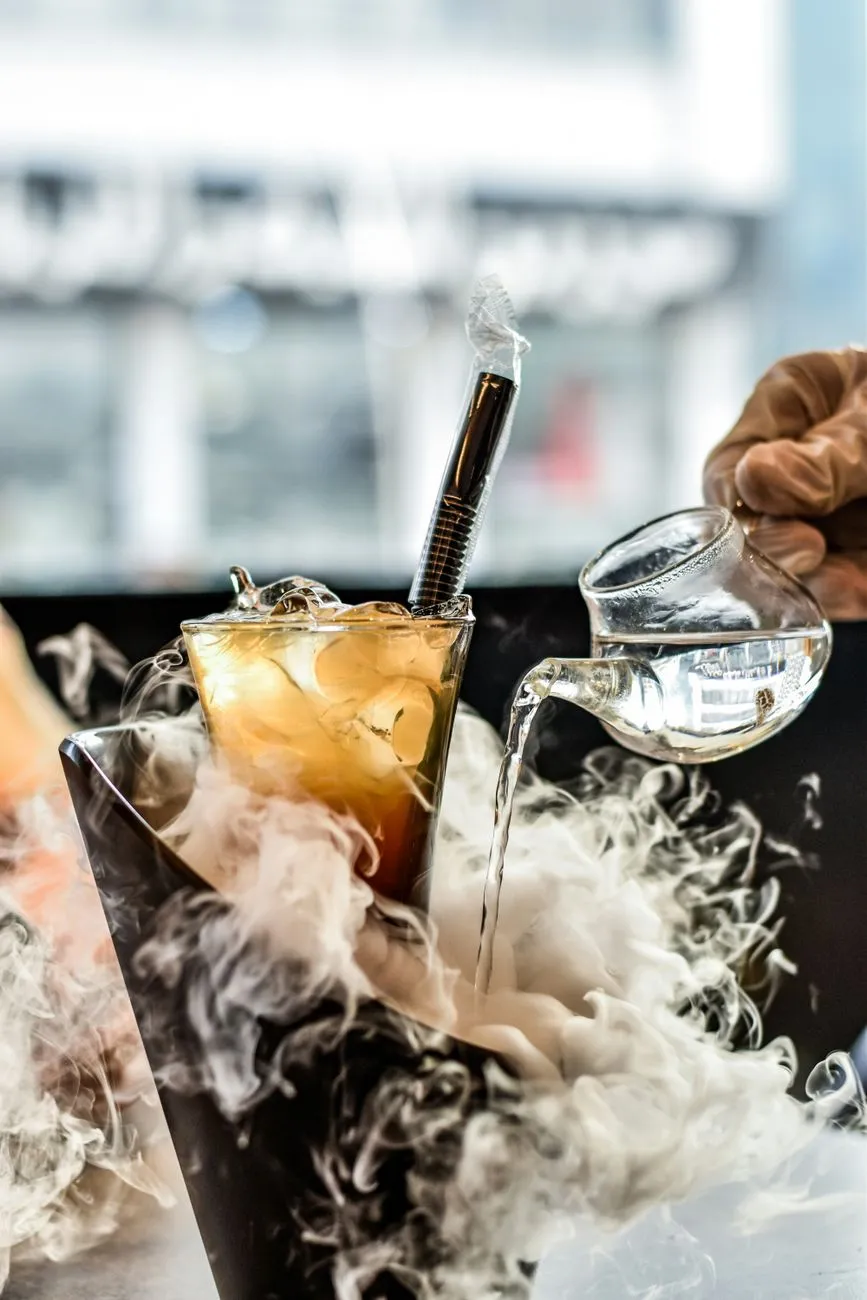

There is a universe humming beneath the crust of a sourdough loaf, a silent conversation between atoms that dictates whether an apple turns brown or a steak sears into mahogany perfection. We call it cooking; the universe calls it thermodynamics. Food chemistry is not merely the study of ingredients—it is the biography of matter as it transitions from soil to cell, the rigorous poetry of biological and non-biological components negotiating their existence on a plate. It is where the rustic intuition of a grandmother’s fermentation crock meets the cold, hard precision of quantum mechanics and reaction kinetics. To understand food is to understand the negotiable terms of entropy itself. The Silent Architect: Water’s Tyranny Over Texture We treat water as a passive filler, the background noise of a soup or the juice in a peach. But in the laboratory of the kitchen, water is the dictator. It constitutes fifty percent of a slab of meat and an astonishing ninety-five percent of lettuce, cabbage, and tomato products. This is not mere hydration; it is the stage upon which the drama of spoilage and preservation plays out. Water activity—that thermodynamic measure of energy status—is the invisible lever controlling shelf life. High water activity rolls out the red carpet for bacterial growth, turning a crisp vegetable into a slimy tragedy within days. The history of preservation is, fundamentally, the history of manipulating this tyrant. We dehydrate to strip the stage bare. We freeze to slow the molecular ballet to a near standstill. We refrigerate to buy time. But the most elegant manipulations alter water’s characteristics without banishing it entirely. Consider the humble apple slice, exposed to air. Enzymatic browning begins instantly, a chemical melanin production line triggered by polyphenol oxidase. The chef’s counter-move? Acidulated water—lemon juice. By lowering the pH, we denature the enzyme, freezing the apple in its pale, fresh innocence. This is food physical chemistry in action: physiochemical principles governing reactions during manufacture, handling, and storage. It is rheology, transport phenomena, and glass transitions playing out in a bowl of fruit salad.Sweet Geometry: The Carbon Rings That Fuel Empires If water is the stage, carbohydrates are the fuel—comprising seventy-five percent of the biological world and eighty percent of human food intake. The simplest actors are monosaccharides: glucose, fructose, galactose. They wear a simple uniform, a 1:2:1 ratio of carbon, hydrogen, and oxygen (CnH2nOn), yet their arrangement dictates the sweetness of honey or the structural rigidity of a tree trunk. When glucose and fructose lock hands in a specific glycosidic bond, they birth sucrose—the crystal crown of the plant world, the sugar we spoon into coffee. But the story deepens with polysaccharides. Chains of monosaccharides weave into pectin (the jam-setter), dextran, agar, and xanthan (the modernist chef’s thickener). Some chains are open books to human enzymes, unspooling in the small intestine to release glucose into the bloodstream. Others—dietary fiber—are stubborn scrolls, passing untouched into the large intestine where the gastrointestinal microbiota ferment them into short-chain fatty acids, feeding us by feeding our internal garden. We measure this sweetness in degrees Brix, a refractometer’s gaze capturing the density of dissolved solids. It is a metric of ripeness, of harvest timing, of the very sunlight trapped in a grape.The Amphiphilic Dance: Lipids, Membranes, and the Art of Richness Lipids are the rebels of the molecular world, defined not by what they are, but by what they refuse to do: dissolve in water. This "catchall" category—waxes, fatty acids, phospholipids, sphingolipids, glycolipids, terpenoids like retinoids and steroids—unites under the banner of hydrophobicity. Yet, they are not simple oil slicks. Most are amphiphilic, possessing a split personality: a hydrophobic tail fleeing water, a hydrophilic head embracing it. This duality is the architect of life’s boundaries—cell membranes—and the engine of culinary luxury. In the kitchen, lipids are the carriers of the soul. They dissolve fat-soluble vitamins (A, D, E, K), ferrying them across the intestinal border. They provide the mouthfeel of butter, the sizzle of rendered pork fat, the golden crust on a fry. Their physical state—linear aliphatic chains vs. rigid ring structures, flexible vs. aromatic—dictates melting point and texture. Chocolate’s snap comes from the precise polymorphic crystallization of cocoa butter triglycerides. The creaminess of an emulsion—mayonnaise, hollandaise, vinaigrette—is a metastable truce negotiated by phospholipids (lecithin in egg yolk) standing guard at the oil-water interface. Without this molecular diplomacy, flavor would have no vehicle, and texture no depth.Proteins: The Origami of Life Itself Strip a living cell of its water, and over half the remaining dry weight is protein. These are not static bricks; they are dynamic, complex macromolecules—origami folded from chains of amino acids containing carbon, nitrogen, hydrogen, oxygen, sulfur, and often metals like iron, copper, phosphorus, or zinc. Their shape is their function. A slight fever denatures them; a whisk unfurls them; heat cross-links them into the firm white of a cooked egg or the gluten network trapping gas in bread. We chase them for survival. Animal sources—eggs, milk, meat—offer "complete" profiles, mirroring our own needs. Vegetable sources—nuts, grains, legumes—require the ancient wisdom of protein combining (rice and beans, hummus and pita) to assemble the full alphabet of essential amino acids. Requirements shift with physiology: the growing child, the pregnant mother, the aging athlete. In the pan, proteins undergo the Maillard reaction, a chaotic cascade of amino acids and reducing sugars creating hundreds of flavor compounds—the crust on bread, the sear on steak, the aroma of roasted coffee. It is chemistry as perfume, biology as crust.From Scheele’s Apples to Algorithmic Palates: A History Written in Molecules This science did not arrive fully formed. It was midwifed by agricultural chemistry. In 1785, Carl Wilhelm Scheele isolated malic acid from apples, naming the very essence of tartness. Humphry Davy’s Elements of Agricultural Chemistry (1813) became the global textbook, running to five editions. Justus von Liebig’s findings, translated by Eben Horsford in Lowell, Massachusetts (1848), crossed the Atlantic to seed a new nation’s science. The stakes were often safety, not just flavor. The Society of Public Analysts formed in 1874, wielding analytical methods against adulterated bread, milk, and wine. The battle shifted from sawdust in flour to the complex toxicology of chemical additives by the 1950s. Harvey W. Wiley’s relentless crusade at the USDA birthed the FDA in 1906. The infamous Single-grain experiment (1907–1911) at Wisconsin—feeding cows only corn, then only wheat, then oats—laid bare the nutritional specifics of vitamins and minerals, moving nutrition from alchemy to evidence. Institutions crystallized: The American Chemical Society’s Agricultural and Food Chemistry Division (1908), the Institute of Food Technologists’ Food Chemistry Division (1995). The toolkit expanded—drawing from biopolymer science, colloidal interactions, nucleation theory, and the physics of disordered solids. Food Physical Chemistry became the bedrock discipline.The Modern Cauldron: AI and the Future of Flavor Today, the cauldron bubbles with silicon. Artificial intelligence methods are increasingly deployed to analyze the vast chemical data of food. Algorithms predict the properties of food molecules before they are synthesized. They hunt for bioactive compounds hidden in waste streams or obscure plants. They design novel ingredients and formulations—proteins with tailored functionality, fats with optimized melting profiles, sugar structures that hit the sweet receptor harder with less mass. This is the new frontier: in silico gastronomy. We are moving from observing reactions to predicting them, from analyzing composition to designing function. The discipline that began with Scheele’s malic acid and Davy’s lectures now navigates quantum mechanics and reaction kinetics to engineer the future of nutrition. Yet the goal remains profoundly human: to enhance the processes that delight us (fermentation, Maillard, emulsification) and prevent those that harm us (spoilage, oxidation, toxicity).We stand on the shoulders of analysts who checked wine for lead and chemists who weighed nitrogen in grain. Every time we salt a steak to draw out water, whip aquafaba into foam, or watch sugar caramelize into amber glass, we are practicing a science older than the word "scientist." We are negotiating with entropy, one delicious molecule at a time.#foodchemistry #moleculargastronomy #foodscience #culinaryhistory #futureoffood Related InsightsThe Umami Revolution: How Chefs Are Harnessing the Fifth Taste Today Thai Street Food Secrets: How to Recreate Bangkok’s Best Dishes at Home The Tuscan Secret: Why Minestrone with Farro is the Ultimate High-Fiber Superfood{ "@context": "https://schema.org", "@type": "FAQPage", "mainEntity": [ { "@type": "Question", "name": "What is the main focus of The Alchemy of Appetite: Decoding the Molecular Soul of Our Sustenance?", "acceptedAnswer": { "@type": "Answer", "text": "Journey into the invisible architecture of flavor where water activity dictates spoilage, carbon rings fuel civilization, and proteins fold into life itself—guided by history and modern AI." } }, { "@type": "Question", "name": "Who authored the comprehensive guide on The Alchemy of Appetite: Decoding the Molecular Soul of Our Sustenance?", "acceptedAnswer": { "@type": "Answer", "text": "This detailed article and its insights were carefully researched and authored by Demir Şef." } }, { "@type": "Question", "name": "Where can I find more related content about Food?", "acceptedAnswer": { "@type": "Answer", "text": "You can explore more articles, detailed reviews, and similar insights by browsing the Related Insights section at the bottom of this article or visiting our dedicated Food category page." } } ] }