Showing Posts From
Parthenon
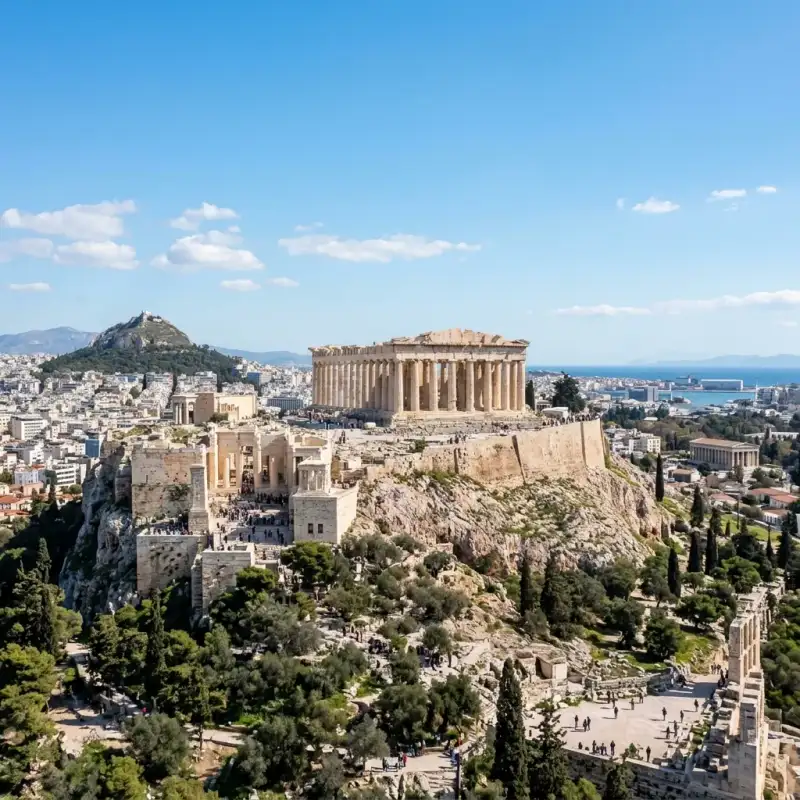

High above the sprawling, sun-drenched metropolis of modern Athens stands a limestone outcropping that has captured the human imagination for millennia. The Acropolis of Athens is not simply a collection of ancient ruins; it is the physical manifestation of the zenith of classical antiquity, the very cradle of Western civilization, and a breathtaking testament to the boundless potential of human creativity. As you stand at the foot of this sacred rock and gaze upwards, the sheer magnitude of its historical and cultural weight is palpable in the dry Mediterranean air. The temples that crown its summit—the Parthenon, the Erechtheion, the Temple of Athena Nike, and the majestic Propylaea—have withstood the ravages of time, brutal wars, and the relentless elements to remain as eternal beacons of philosophical, artistic, and political achievement. #AcropolisOfAthens #AncientHistory #TravelGreece When we speak of the Acropolis, we are inherently speaking of the birth of democracy, the flourishing of philosophy under the brilliant minds of Socrates, Plato, and Aristotle, and the genesis of theatrical tragedy and comedy. It is a place where myth and history intertwine so intimately that it becomes nearly impossible to separate the divine pantheon from the mortal men and women who worshipped them. For passionate travelers, diligent historians, and romantic dreamers alike, the Acropolis serves as the ultimate pilgrimage site, a place to connect viscerally with the deep roots of our modern world. In this comprehensive and immersive exploration, we will delve deep into the rich history, the astounding architectural marvels, the captivating legends, and the enduring legacy of this magnificent citadel. Prepare to be transported back to the Golden Age of Pericles, to walk the sacred paths of the Panathenaic Way, and to discover precisely why the Acropolis of Athens remains one of the most significant and awe-inspiring cultural landmarks on Earth. #Wanderlust #GreekMythology #WorldHeritage The Sacred Rock: Geography and Early Origins To truly understand the essence of the Acropolis, one must first understand the formidable rock upon which it is painstakingly built. Rising approximately 150 meters (490 feet) above sea level, the flat-topped limestone rock is a natural fortress par excellence. Its steep, almost vertical slopes provided excellent defensive capabilities, making it the most logical and ideal location for an ancient citadel. The word "acropolis" itself is derived from the Greek words "akron" (meaning highest point or extremity) and "polis" (meaning city). While there are countless acropoleis scattered across the mountainous terrain of Greece, the Acropolis of Athens is so universally iconic that it is almost always referred to simply as "The Acropolis" without any further qualification needed. #Geography #AthensGreece #AncientCitadel Human habitation on the Acropolis dates back deep into prehistory, specifically to the Neolithic period, around the 4th millennium BC. The earliest settlers were undoubtedly attracted by the formidable natural defense offered by the rock, as well as the crucial presence of fresh water springs, such as the famous Clepsydra spring tucked into the northwestern slope, which provided a reliable and life-saving water source during times of prolonged siege. By the Mycenaean period (around the 13th century BC), the Acropolis had transformed into a heavily fortified royal residence. Massive cyclopean walls, remarkably similar to those found at the legendary sites of Mycenae and Tiryns, were constructed around the perimeter of the rock. Traces of these ancient, awe-inspiring Mycenaean walls can still be seen today, silently woven into the later classical fortifications. This era was characterized by a fierce warrior culture, and the Acropolis served as the impenetrable heart of a burgeoning, ambitious city-state. #Mycenaean #AncientRuins #Archaeology As Athens slowly transitioned from a monarchy ruled by kings to an aristocracy of nobles and eventually to a revolutionary, fledgling democracy, the primary function of the Acropolis evolved in tandem. The royal palaces of old were replaced by grand temples dedicated to the fierce and wise patron goddess of the city, Athena. During the archaic period, several large and impressive temples were constructed, including the "Bluebeard" temple (named after a vividly painted sculpture found there) and the Old Temple of Athena, which housed the ancient, deeply venerated wooden cult statue of the goddess. These early structures were proudly adorned with vibrant, garish colors and elaborate pedimental sculptures, a stark contrast to the bleached, austere white marble we typically associate with antiquity today. However, this vibrant period of architectural experimentation and religious devotion was brutally interrupted by the Persian invasions of Greece. In 480 BC, under the command of the vengeful King Xerxes, the Persians successfully sacked Athens and razed the Acropolis to the ground, mercilessly burning the temples and destroying the sacred statues. This catastrophic, heart-breaking event, known archaeologically as the Perserschutt (Persian debris), left the Acropolis in smoldering ruins, but paradoxically, it also cleared the physical and psychological slate, paving the way for the most glorious chapter in its long history. #PersianWars #HistoryNerd #AncientGreece The Golden Age of Pericles: A Vision Realized in Marble Following the decisive and miraculous Greek victories over the vast Persian forces at the naval battle of Salamis and the land battle of Plataea, Athens emerged proudly as the dominant naval and political power in the Aegean Sea. The formation of the Delian League, initially an alliance of Greek city-states intended to defend against any future Persian attacks, slowly and inevitably transformed into a lucrative Athenian empire. The vast wealth flowing directly into Athens from its subordinate allies provided the city with unprecedented financial resources. It was in this intoxicating atmosphere of military triumph, economic prosperity, and renewed cultural confidence that the visionary Athenian statesman Pericles proposed a wildly ambitious, incredibly expensive building program for the devastated Acropolis. #Pericles #GoldenAge #AthenianEmpire Pericles envisioned an Acropolis that would not only honor the victorious gods but also serve as a monumental, undeniable display of Athenian wealth, imperial power, and absolute cultural superiority. To realize this grand vision, he assembled a veritable dream team of the greatest architects, sculptors, and artists of the classical age. The brilliant and renowned sculptor Phidias was appointed as the general overseer and artistic director of the entire massive project, while the genius architects Ictinus, Callicrates, and Mnesicles were specifically tasked with designing the individual, ground-breaking structures. The construction, which officially began in 447 BC and continued relentlessly for several decades, was an absolute marvel of logistical organization, structural engineering, and harmonious artistic collaboration. The primary building material, the pristine, dazzling white marble from nearby Mount Pentelicus, had to be painstakingly quarried, transported over rough, uneven terrain, and hoisted up the incredibly steep slopes of the Acropolis using innovative cranes and pulley systems. Thousands of highly skilled artisans, master stonemasons, carpenters, and laborers worked tirelessly, day in and day out, to bring Pericles' audacious vision to brilliant life. #Phidias #GreekArt #ClassicalArchitecture The ideological and philosophical underpinnings of Periclean Athens were deeply and intentionally woven into the very fabric of the new Acropolis. The monuments were purposefully designed to celebrate the ultimate victory of order over chaos, of enlightened civilization over savage barbarism, and naturally, of the Greeks over the Persians (a theme often allegorically represented by the mythological battles of the Olympian gods against the monstrous giants, or the civilized Lapiths against the unruly centaurs). It was a true golden era of intense intellectual and artistic ferment. As the towering temples steadily rose against the blue Attic sky, so too did the foundational pillars of Western philosophy, political science, and dramatic arts in the city below. The Acropolis was not a dead sanctuary isolated from the vibrant, noisy life of the city; it was the sacred, beating apex of a society that was rapidly and radically reinventing what it meant to be a civilized human being. The Periclean building program utterly transformed the battered, sad ruins of the old Acropolis into the ultimate expression of the classical ideal, forging an architectural ensemble of unparalleled beauty, mathematical harmony, and spiritual resonance that continues to inspire absolute awe today. #Architecture #ClassicalHistory #Humanism The Parthenon: The Crown Jewel of Classical Perfection At the very center of the Acropolis, commanding the highest point of the rock, stands the Parthenon, the undeniable masterpiece of ancient Greek architecture and the enduring, globally recognized symbol of ancient Greece itself. Dedicated entirely to Athena Parthenos (Athena the Virgin), the fierce patron goddess of the city, the Parthenon was built between 447 and 432 BC. Designed by the visionary architects Ictinus and Callicrates under the strict supervision of Phidias, the colossal temple represents the absolute culmination of the austere Doric order, yet it masterfully and subtly incorporates elegant Ionic elements to create a structure of perfect proportion, visual harmony, and majestic grace. #Parthenon #AncientArchitecture #Masterpiece What makes the Parthenon so profoundly extraordinary is not merely its immense physical size, but its incredibly sophisticated understanding of optical illusions and the quirks of human visual perception. The masterful architects knew inherently that perfectly straight lines and strict right angles, when viewed from a distance under the glaring Mediterranean sun, can easily appear rigid, dead, or even distorted. To counteract this natural phenomenon, they introduced a brilliant series of subtle structural refinements collectively known as "entasis." Astoundingly, there are virtually no perfectly straight lines anywhere in the Parthenon. The massive columns bulge ever so slightly in the middle to prevent them from looking awkwardly concave; the stylobate (the stepped platform upon which the entire colonnade rests) curves gently upward in the center to completely prevent the optical illusion of sagging beneath the immense weight of the roof; and the columns themselves lean slightly inward, giving the incredibly heavy stone building a wondrous sense of dynamic uplift, organic life, and breathing elasticity. This meticulous, almost obsessive attention to mathematical proportion (often romantically associated with the Golden Ratio) and clever visual trickery breathes vital life into the cold marble, making the Parthenon appear as though it grew organically and perfectly from the sacred bedrock itself. #GoldenRatio #ArchitectureLovers #OpticalIllusion The magnificent sculptural decoration of the Parthenon, carefully supervised by Phidias himself, was equally groundbreaking and ambitious. The massive pediments (the triangular gables at the east and west ends of the roof) depicted incredibly important mythological events tied to the city: the miraculous birth of fully-armed Athena from the head of Zeus on the east pediment, and the fiercely contested battle between Athena and Poseidon for the divine patronage of Athens on the west. The meticulously carved metopes (the square panels situated just above the outer colonnade) vividly illustrated dramatic mythical battles that symbolized the grand triumph of civilization over barbarism, such as the epic battle of the gods and giants, and the bloody clash between the Greeks and the Amazons. But perhaps the most famous, studied, and controversial sculptural element is the exquisite Ionic frieze that ran continuously around the high exterior wall of the inner sanctuary (the cella). This long, continuous band of breathtakingly detailed relief sculpture is widely believed by scholars to depict the Panathenaic procession, the absolute most important religious and civic festival in ancient Athens. It is a remarkably rare and significant instance of ordinary mortal citizens being proudly depicted alongside the divine gods on a major religious temple. Inside the dimly lit cella stood the crowning, awe-inspiring glory of the temple: the colossal chryselephantine (gleaming gold and ivory) statue of Athena Parthenos, created by the master Phidias himself. Standing nearly 12 meters (40 feet) tall, this dazzling, unimaginably expensive colossus held a life-sized statue of Nike (Victory) in her outstretched right hand, serving as a glittering, unforgettable testament to the city's immense wealth, imperial power, and devout religious dedication. #Sculpture #Athena #AncientArt The Erechtheion: Where Myth Meets Marble While the Parthenon is the undeniable star and focal point of the Acropolis, the Erechtheion is undeniably its most complex, enigmatic, mysterious, and arguably most enchanting structure. Built on the northern side of the Acropolis bedrock between 421 and 406 BC, the Erechtheion is a glaring architectural anomaly. Unlike the strictly symmetrical, perfectly proportioned, and rational Parthenon, the Erechtheion features a highly irregular, bizarrely asymmetrical floor plan. This was entirely necessary to gracefully accommodate the severely uneven terrain of the site and, more importantly, the strict religious requirement to house multiple ancient, deeply venerated shrines and sacred relics under one roof without disturbing them. #Erechtheion #Mythology #AncientMysteries The Erechtheion occupies the absolute most sacred ground on the entire Acropolis. It was deliberately built exactly on the legendary, mythic site of the famous contest between Athena and Poseidon. According to the foundational myth, the two powerful deities fiercely vied for the lucrative patronage of the city. Poseidon forcefully struck the solid rock with his mighty trident, bringing forth a bubbling spring of saltwater (or a magnificent, wild warhorse, in some thrilling versions of the tale). Athena, in turn, calmly struck the ground with her spear and magically brought forth the very first domesticated olive tree, a profound symbol of lasting peace, agricultural abundance, and economic prosperity. The Olympian gods sagely judged Athena's practical gift to be the far more valuable of the two, and she rightfully became the eternal patroness of Athens. The complex Erechtheion was ingeniously designed to encompass both of these sacred, physical marks: a specific opening in the roof and floor supposedly indicated exactly where Poseidon's trident had violently struck, and a sacred, living olive tree grew within the temple's walled precinct (a beautiful olive tree continues to grow precisely there today, lovingly replanted in modern times as a living, breathing link to the ancient myth). Furthermore, the temple housed the most ancient, holiest olive-wood cult statue of Athena Polias (Athena of the City), which was fervently believed to have miraculously fallen from heaven itself and was the central, revered focus of the grand Panathenaic festival. #Poseidon #GreekMyths #SacredOliveTree The absolute most iconic and beloved feature of the Erechtheion, however, is the breathtaking Porch of the Maidens gracefully attached to its southern side. Here, in a stunning departure from traditional architectural norms, the heavy marble roof is not supported by standard columns, but by six gracefully sculpted, beautifully idealized female figures known as the Caryatids. These stoic maidens stand with quiet, unwavering dignity, their intricately carved, flowing drapery purposefully resembling the vertical fluting of a traditional column, their strong, serene heads effortlessly bearing the immense crushing weight of the stone entablature above. The captivating figures currently standing exposed on the Acropolis are meticulous, high-quality modern replicas; five of the priceless original Caryatids are safely housed in the nearby, climate-controlled Acropolis Museum to protect them from further devastation by modern air pollution, while the sixth was tragically and controversially removed by Lord Elgin in the early 19th century and currently resides far away in the British Museum. The Caryatids remain one of the most instantly recognizable, endlessly copied, and universally beloved elements of classical Greek art, embodying a truly perfect, unparalleled fusion of structural utility and sublime aesthetic beauty. #Caryatids #ArtHistory #ClassicalBeauty The Propylaea and the Delicate Temple of Athena Nike The magnificent, awe-inspiring entrance to the sacred Acropolis precinct is the Propylaea, a truly monumental gateway brilliantly designed by the architect Mnesicles. Construction on this massive undertaking began in 437 BC but was tragically interrupted by the devastating outbreak of the Peloponnesian War in 432 BC and was, sadly, never fully completed according to its original, grandiose plan. Despite this, the Propylaea stands as a masterpiece of architectural ingenuity and spatial manipulation. Mnesicles was faced with the daunting task of designing a massive structure that could successfully bridge the incredibly steep, aggressively uneven slope of the western approach while simultaneously providing a grand, dramatic, and awe-inspiring transition from the noisy, secular world of the city below to the quiet, sacred sanctuary above. He masterfully achieved this by creating a highly complex structure with a massive central hall and two wide projecting wings, ingeniously utilizing a combination of robust, imposing Doric columns on the bold exterior facades and elegant, slender Ionic columns flanking the central, ascending passageway. The Propylaea was not merely a functional gate; it was a carefully choreographed psychological experience, designed to induce a profound sense of religious reverence, physical smallness, and breathless anticipation in the approaching visitor. Fascinatingly, one of the large wings even functioned as an early, public art gallery (known as the Pinakotheke), proudly displaying beautiful panel paintings for the enjoyment of weary travelers and devout pilgrims. #Propylaea #AncientGateway #MonumentalArchitecture Perched incredibly precariously on a sheer, steep bastion immediately to the right of the massive Propylaea is the tiny, exquisite Temple of Athena Nike (Athena of Victory). Designed by the Parthenon's co-architect, Callicrates, this incredibly small, graceful Ionic temple was finally completed around 420 BC. It replaced a much earlier, simpler shrine dedicated to the exact same victorious goddess. The temple's design is amphiprostyle, meaning it features a delicate colonnade at both the front and the rear but none along its enclosed sides. Interestingly, its intricately carved frieze boldly depicted scenes of actual, historical military battles between Greeks and Persians, a highly unusual and significant departure from the purely mythological, allegorical scenes traditionally found on other sacred temples of the era. The absolute most striking and famous sculptural element associated with this small temple was the beautifully carved marble parapet that surrounded the perilous edge of the bastion, added a few years after the temple's initial completion to protect visitors from falling. The parapet was lavishly adorned with high-relief sculptures of the winged goddess Nike in various everyday poses, the absolute most famous of which is the breathtakingly beautiful "Nike Adjusting Her Sandal." This undisputed masterpiece of the High Classical style is globally renowned for its incredibly masterful use of the "wet drapery" technique, wherein the thin marble fabric appears to cling wetly to the goddess's form, revealing the perfect human anatomy beneath with astonishing, almost provocative grace and sensuality. The Temple of Athena Nike stands proudly as a delicate, refined jewel, offering a striking, necessary architectural counterpoint to the massive, imposing scale of the Propylaea and the Parthenon. #AthenaNike #GreekTemple #WetDrapery A Citadel Through Time: Conquests, Transformations, and Tragedies The pristine classical perfection of the Periclean Acropolis was, unfortunately, not destined to remain undisturbed in a vacuum of time. Over the subsequent two and a half long, tumultuous millennia, the sacred rock bore silent witness to the endless rise and violent fall of vast empires, each successive conqueror leaving its distinct, often destructive mark on the ancient monuments. During the Hellenistic and subsequent Roman periods, the Acropolis remained a highly respected, heavily visited sanctuary. The Romans, who were profound and eager admirers of Greek culture and art, enthusiastically added their own monuments to the site, such as the small circular Temple of Rome and Augustus, and generously funded the restoration of several of the older, weathering structures. However, with the eventual rise and total dominance of Christianity, the ancient pagan temples underwent a radical, forced transformation. In the 6th century AD, the glorious Parthenon was officially converted into a Christian church dedicated to the Virgin Mary (known locally as Panagia Atheniotissa). This drastic conversion involved highly significant structural alterations to the ancient fabric, including the complete removal of the inner columns, the construction of a large Christian apse at the east end (which necessitated destroying part of the ancient frieze), and the unfortunate, deliberate defacement and destruction of many of the original "pagan" sculptures. The Erechtheion and the Temple of Athena Nike were similarly converted into active Christian churches. #ByzantineHistory #RomanEmpire #HistoricalTransformations In the 15th century, the expanding Ottoman Empire violently conquered Athens, and the long-suffering Acropolis underwent yet another radical transformation. The Parthenon, once a pagan temple and then a Christian church, was promptly converted into an Islamic mosque, and a tall, slender minaret was prominently added to its southwest corner. The elegant Erechtheion, once the holiest of ancient shrines, was repurposed to serve as the private harem for the local Turkish military commander, and the grand Propylaea was dangerously used as a heavily fortified gunpowder magazine. For several centuries, despite these dramatic changes in use, the monuments remained relatively intact structurally. However, the absolute greatest physical tragedy to ever befall the Acropolis occurred in the fateful year of 1687 during the brutal Morean War. Expanding Venetian forces, led by the aggressive General Francesco Morosini, laid heavy siege to the entrenched Ottoman garrison stationed on the Acropolis. The defending Ottomans had been actively using the Parthenon to store their massive reserves of gunpowder, foolishly believing the cultured Venetians would not dare fire their devastating artillery upon such a globally revered, ancient monument. They were tragically, disastrously mistaken. A fateful Venetian mortar shell struck the Parthenon dead-on, instantly igniting the massive stores of gunpowder and causing an absolutely massive, catastrophic explosion that violently blew out the entire center of the building, instantly destroying the heavy roof, the massive cella walls, and blowing out many of the exterior columns. The magnificent, pristine temple, which had miraculously stood largely intact for over two thousand long years, was tragically reduced to a shattered ruin in a single, deafening, catastrophic moment of war. #OttomanEmpire #VenetianSiege #HistoryOfWar The Controversy of the Marbles and The Modern Era The dawn of the 19th century brought an entirely different, highly controversial kind of tragedy to the scarred rock. Between 1801 and 1812, Thomas Bruce, the 7th Earl of Elgin and the acting British ambassador to the Ottoman Empire, controversially utilized an ambiguous Ottoman decree to brutally hack away and remove roughly half of all the surviving, priceless sculptures from the ruins of the Parthenon, as well as violently extracting one of the beautiful Caryatids from the Erechtheion and plundering numerous architectural fragments from other buildings. These violently removed sculptures, now widely known as the Elgin Marbles or the Parthenon Sculptures, were eventually shipped back to England, sold to the British government, and are currently housed in the British Museum in London. The removal of the marbles remains to this day a highly contentious, incredibly emotional international issue, with the modern Greek government and numerous passionate international organizations fiercely campaigning for their immediate return to Athens. They correctly argue that the sculptures are an integral, inseparable part of the unified monument and belong solely in their original, intended context, where they can be beautifully, safely displayed under the bright Attic sun in the state-of-the-art, purpose-built Acropolis Museum. #ElginMarbles #CulturalHeritage #Repatriation #ParthenonSculptures Modern Conservation: Protecting the Past for the Future Following the bloody but successful establishment of the fully independent Greek state in the 1830s, the Acropolis was immediately and proudly declared a protected archaeological site. The various medieval, Frankish, and Ottoman additions (including the minaret and a prominent Frankish tower) were systematically and aggressively cleared away in a determined, purist effort to forcefully restore the rock to its pristine, classical appearance. However, many early, enthusiastic restoration efforts in the 19th and early 20th centuries, though undoubtedly well-intentioned, tragically often caused far more long-term harm than good. The widespread use of ordinary iron clamps to physically hold shattered marble blocks together proved absolutely disastrous; as the iron inevitably rusted over the decades, it expanded violently, splitting and cracking the ancient, irreplaceable marble from the inside out. #Archaeology #Restoration #HeritageConservation Recognizing the dire, escalating crisis, in 1975, the Greek government officially launched the Acropolis Restoration Project, an incredibly monumental, highly scientific, and meticulously planned endeavor aimed at properly preserving and accurately, safely restoring the fragile monuments. This massive project, which successfully continues to this very day, represents the absolute pinnacle of modern conservation science and techniques. The highly destructive, rusty iron clamps of the past have been painstakingly removed and replaced with completely non-corrosive, custom-machined titanium. Thousands of fragments of shattered marble scattered aimlessly around the site have been meticulously cataloged, scanned, and, where structurally possible, seamlessly reincorporated into the standing buildings. The brilliant architects, engineers, and archaeologists involved in the project strictly adhere to the vital principle of complete reversibility, ensuring that any modern, structural additions can be safely and easily removed in the future if superior techniques or materials become available. Furthermore, all necessary modern interventions are carefully carved from fresh, bright Pentelic marble, ensuring they can be easily visually distinguished from the weathered ancient stone by future scholars. #HistoricPreservation #ScienceInArchaeology #Titanium The exposed Acropolis also faces severe, ongoing modern environmental threats, particularly from corrosive acid rain and heavy urban air pollution, which can rapidly eat away at the incredibly delicate, carved marble surfaces. To aggressively mitigate this grave threat, many of the most precious original sculptures, including the remaining majestic Caryatids and the delicate surviving frieze panels, have been carefully removed from the corrosive outdoor air and moved to the perfectly climate-controlled, protective environment of the breathtaking, modern Acropolis Museum, located just at the foot of the hill. The brilliant museum not only perfectly protects these priceless, irreplaceable artifacts but also masterfully provides millions of global visitors with unparalleled, profound contextual understanding of the entire site. As a proudly designated, highly protected UNESCO World Heritage site, the Acropolis inherently belongs not just to the people of Greece, but to the entirety of humanity. The massive, ongoing, dedicated efforts to meticulously protect and restore it are a beautiful, inspiring testament to our enduring, global commitment to honoring and preserving the physical, sacred remnants of our shared cultural heritage. #UNESCOWorldHeritage #AcropolisMuseum #Preservation Conclusion: The Eternal Flame of Human Civilization The Acropolis of Athens is far, far more than simply a dusty hill covered in beautiful, broken ancient stones. It is a profound, deeply moving testament to the absolute heights of human ambition, towering intellect, and sublime artistic endeavor. Through the brutal rise and violent fall of countless empires, through devastating wars, catastrophic explosions, religious conversions, and the slow, relentless, grinding passage of time, the Acropolis has stubbornly, magnificently endured. It stands proudly as a silent, powerful witness to the messy, brilliant birth of modern democracy, the breathtaking dawn of critical Western philosophy, and the absolute, unsurpassed perfection of classical art and architecture. #CulturalLegacy #HumanAchievement #HistoryMatters When we reverently walk the worn, ancient marble paths of the Acropolis today, we are quite literally walking in the exact footsteps of giants like Pericles, Socrates, Plato, and Phidias. We are actively engaging in a profound, silent dialogue with a distant, golden past that continues to fundamentally shape and inform our modern present. The magnificent Parthenon, with its exquisitely harmonious, mathematical proportions and its breathtaking, timeless beauty, remains the ultimate, unrivaled symbol of the classical ideal—a glowing beacon of pure reason, civic order, and exalted humanism in an increasingly complex, chaotic world. The Acropolis serves to constantly remind us of exactly what humanity is truly capable of achieving when we are guided by bold vision, peaceful collaboration, and an unwavering pursuit of absolute excellence. It is not merely a static monument to a dead past; it is an incredibly powerful, enduring source of inspiration for the future, a sacred, luminous rock that will undoubtedly continue to captivate, challenge, and uplift the human spirit for countless generations to come. #AthensForever #Inspiration #WondersOfTheWorld #Acropolis #Athens #Greece #Parthenon #History Related InsightsThe Great Fire of London (1666): An Empire Reborn from Ashes Viking Raids: The True Norse Warriors Behind the Legends The Enigma of Stonehenge: Druids and Giant Stones in Ancient Britain{ "@context": "https://schema.org", "@type": "FAQPage", "mainEntity": [ { "@type": "Question", "name": "What is the main focus of The Acropolis of Athens: A Timeless Citadel of Human Triumph?", "acceptedAnswer": { "@type": "Answer", "text": "Explore the majestic Acropolis of Athens, its magnificent architecture like the Parthenon, and its enduring legacy as the cradle of Western civilization." } }, { "@type": "Question", "name": "Who authored the comprehensive guide on The Acropolis of Athens: A Timeless Citadel of Human Triumph?", "acceptedAnswer": { "@type": "Answer", "text": "This detailed article and its insights were carefully researched and authored by Liam Carter." } }, { "@type": "Question", "name": "Where can I find more related content about History?", "acceptedAnswer": { "@type": "Answer", "text": "You can explore more articles, detailed reviews, and similar insights by browsing the Related Insights section at the bottom of this article or visiting our dedicated History category page." } } ] }