Showing Posts From
Petra
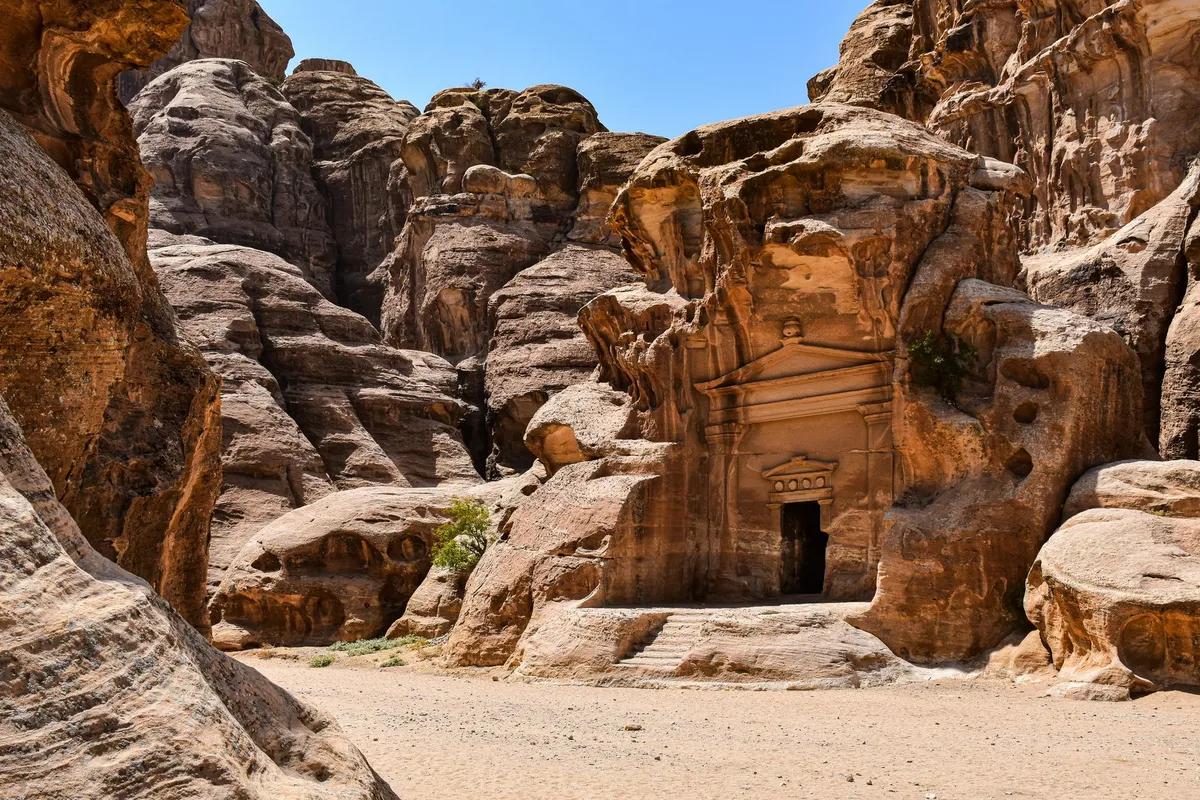

Unveiling the Rose-Red Gem of the Desert Nestled between the towering cliffs of southern Jordan, Petra stands as a testament to human ingenuity and the passage of time. This ancient city, carved directly into rose-red sandstone cliffs by the Nabataeans over 2,000 years ago, was once a thriving trade hub connecting the Silk Road to the Mediterranean. Today, it is a UNESCO World Heritage Site and one of the New Seven Wonders of the World, drawing travelers from every corner of the globe. But Petra is more than just a relic of the past—it’s a living, breathing experience where history, architecture, and adventure intertwine seamlessly. To truly appreciate Petra, you must first understand its origins. The Nabataeans, a nomadic Arab tribe, settled here around the 4th century BCE, transforming a barren desert into a bustling metropolis. Their mastery of water management—through an intricate system of dams, cisterns, and pipelines—allowed Petra to flourish in an otherwise inhospitable landscape. The city’s most iconic structure, Al-Khazneh (The Treasury), is a prime example of Nabataean craftsmanship, with its Hellenistic facade carved directly into the rock. But Petra’s allure extends far beyond its famous monuments. From the towering Monastery to the lesser-known High Place of Sacrifice, every corner of this ancient city whispers stories of trade, religion, and survival.As you traverse the Siq, the narrow gorge that serves as Petra’s grand entrance, the anticipation builds with every step. The path, flanked by towering cliffs, narrows to just a few meters wide, creating a dramatic funnel that heightens the sense of discovery. Suddenly, as you round a bend, Al-Khazneh emerges in all its glory—a breathtaking sight that has captivated visitors for centuries. The Treasury’s intricate carvings, including a central tholos (circular structure) and statues of mythological figures, reflect the Nabataeans’ blend of Arab, Egyptian, and Greco-Roman influences. It’s a masterclass in architectural fusion, a reminder that Petra was a melting pot of cultures long before globalization became a buzzword. But Petra’s wonders don’t end with its stone. The city’s strategic location along ancient trade routes meant it was a crossroads for spices, silks, and ideas. This cultural exchange is evident in the cuisine of the region, which today offers a tantalizing blend of Levantine flavors. From the smoky richness of mansaf (Jordan’s national dish of lamb and rice) to the sweet, nutty crunch of knafeh (a cheese pastry soaked in syrup), Petra’s culinary landscape is as diverse as its history. For those willing to venture beyond the main sites, local eateries in the nearby town of Wadi Musa serve up authentic Jordanian dishes that pair perfectly with a cup of cardamom-spiced tea.From Nomadic Tribes to Global Nomads: The Evolution of Travel in Jordan Petra’s story is inextricably linked to the evolution of travel itself. For centuries, the Nabataeans were the original digital nomads, traversing vast distances to trade goods and ideas. Today, Jordan has adapted to modern travel trends, offering visa policies that cater to global explorers. For those looking to extend their stay, the Jordan Pass is a game-changer. This bundled visa and entry package includes a visa on arrival (free for many nationalities), entry to over 40 attractions including Petra, and even a free night’s stay at certain hotels. It’s a cost-effective way to immerse yourself in Jordan’s wonders without the hassle of multiple transactions. For digital nomads and remote workers, Jordan offers a unique blend of affordability and connectivity. According to Numbeo, the cost of living in Amman, Jordan’s capital, is approximately 30% lower than in Western Europe, with a monthly budget of $1,200-$1,500 covering rent, food, and transportation. Wi-Fi speeds are reliable in urban areas, and co-working spaces like The Tank in Amman provide a professional environment for those balancing work and exploration. The country’s nomad visa, introduced in 2023, allows remote workers to stay for up to a year, provided they meet income requirements (typically around $2,000 per month). This policy reflects Jordan’s commitment to attracting global talent while preserving its cultural heritage.Beyond the practicalities, Jordan’s appeal lies in its ability to transport travelers through time. The ancient city of Jerash, with its remarkably preserved Roman ruins, offers a glimpse into the grandeur of the past, while the Dead Sea—just a few hours’ drive from Petra—provides a stark contrast with its mineral-rich waters and surreal landscapes. For those seeking adventure, the Wadi Rum desert offers jeep tours, camel treks, and even overnight stays in Bedouin camps under a blanket of stars. It’s a reminder that Jordan is not just a destination but a journey through layers of history, culture, and natural beauty. The Architecture of Whispers: Decoding Petra’s Hidden Structures Petra’s architecture is a silent storyteller, each structure revealing a chapter of the Nabataeans’ sophisticated urban planning and religious practices. The city’s layout is a masterclass in adapting to the natural terrain, with buildings and tombs carved directly into the sandstone cliffs. The most famous of these is Al-Khazneh, but Petra is home to over 800 individual monuments, each with its own story. The Street of Facades, for example, is a row of tombs carved into the cliffside, their facades decorated with Nabataean motifs. These tombs, some of which date back to the 1st century BCE, offer a glimpse into the Nabataeans’ beliefs about death and the afterlife. One of Petra’s most intriguing structures is the High Place of Sacrifice, a ritual site perched atop a mountain. To reach it, visitors must climb 800 steps, a journey that rewards them with panoramic views of the entire city. The High Place was used for animal sacrifices and religious ceremonies, reflecting the Nabataeans’ blend of Arab and Greco-Roman religious practices. The site’s altar, carved into the rock, is a stark reminder of the city’s spiritual significance. Nearby, the Temple of the Winged Lions is another architectural gem, dedicated to the Nabataean goddess Al-Uzza. Its intricate carvings and well-preserved columns speak to the city’s religious and cultural diversity.Petra’s architecture is not just about grand monuments—it’s also about the ingenuity of its water systems. The Nabataeans were pioneers in hydraulic engineering, creating a network of channels, cisterns, and pipelines that supplied water to the city. The Petra Great Temple, one of the largest free-standing structures in the ancient city, is a testament to this engineering prowess. The temple’s massive courtyard and intricate facade are complemented by an advanced water drainage system that prevented erosion and flooding. Even today, visitors can see remnants of these systems, a reminder of the Nabataeans’ ability to thrive in a desert environment. For those interested in the finer details of Petra’s architecture, the Petra Archaeological Park offers guided tours that delve into the city’s construction techniques and cultural significance. These tours often include visits to lesser-known sites like the Tomb of Sextius Florentinus, a Roman-style tomb that reflects the city’s later Roman occupation. The contrast between Nabataean and Roman architecture is striking, with the latter’s emphasis on symmetry and grandeur standing in stark contrast to the Nabataeans’ organic, cliff-integrated designs. Archaeology Under the Sands: The Secrets Petra Still Holds Despite centuries of exploration, Petra continues to yield new discoveries, proving that the ancient city is far from fully understood. In 2016, archaeologists uncovered a previously unknown monumental structure beneath the sands of Petra’s city center. The structure, believed to be a temple or public building, was buried under 1.5 meters of sediment and dated to the Nabataean period. Its discovery challenged existing theories about Petra’s urban layout and highlighted the city’s complex social hierarchy. Another groundbreaking find came in 2019, when researchers used LiDAR technology to map Petra’s underground water systems. The scans revealed a vast network of tunnels and cisterns that had gone unnoticed for centuries. These systems not only supplied water to the city but also played a crucial role in its defense, allowing Petra to withstand sieges and droughts. The LiDAR data also uncovered evidence of a previously unknown reservoir, suggesting that Petra’s water management was even more sophisticated than previously thought.Petra’s archaeological significance extends beyond its monuments. The city’s necropolis, a vast cemetery filled with tombs and burial sites, offers insights into Nabataean burial practices and social structures. The tombs vary in size and decoration, reflecting the wealth and status of the deceased. Some are simple, unadorned niches, while others are elaborate facades with intricate carvings. The largest tombs, like the Royal Tombs, are reserved for the city’s elite, their facades adorned with columns and pediments reminiscent of Greco-Roman architecture. One of the most fascinating aspects of Petra’s archaeology is its multicultural heritage. The Nabataeans were not an isolated culture but interacted with Egyptians, Greeks, Romans, and Arabs, absorbing and adapting their traditions. This is evident in the city’s art and architecture, which blends Nabataean, Hellenistic, and Roman styles. For example, the Obelisk Tomb, with its four pyramid-shaped obelisks, reflects Egyptian influences, while the Corinthian columns of the Temple of the Winged Lions are distinctly Greco-Roman. These cultural fusions make Petra a living museum of ancient civilizations. For those eager to participate in Petra’s ongoing discoveries, the Petra Archaeological Park offers volunteer programs and excavation opportunities. These programs allow visitors to work alongside professional archaeologists, learning about excavation techniques and the latest research. It’s a chance to contribute to the preservation of Petra’s heritage while gaining a deeper understanding of the city’s history. Savoring the Sands: A Culinary Journey Through Petra’s Flavors No visit to Petra is complete without indulging in the flavors of Jordanian cuisine. The region’s food is a reflection of its history as a crossroads of trade and culture, with influences from the Levant, Arabia, and the Mediterranean. Petra’s proximity to the Dead Sea and the agricultural heartlands of the Jordan Valley means that fresh ingredients are a staple, from crisp vegetables to fragrant herbs and succulent meats. One of the most iconic Jordanian dishes is mansaf, the national dish of Jordan. Traditionally served on special occasions, mansaf consists of tender lamb cooked in a yogurt sauce (jameed) and served over rice or bulgur. The dish is garnished with almonds and pine nuts and accompanied by a side of fresh flatbread. The origins of mansaf can be traced back to the Bedouin tribes of the Arabian Peninsula, who relied on yogurt as a primary food source due to its long shelf life. Today, mansaf is a symbol of Jordanian hospitality, often served to guests as a gesture of welcome.For a lighter meal, Petra’s markets and eateries offer a variety of mezze dishes—small plates meant to be shared. Hummus, made from blended chickpeas, tahini, lemon, and garlic, is a staple, as is baba ghanoush, a smoky eggplant dip. Falafel, deep-fried chickpea balls, are another must-try, often served in pita bread with fresh vegetables and tahini sauce. These dishes are not only delicious but also a reflection of Jordan’s agricultural abundance, with chickpeas, eggplants, and tahini being locally produced. No culinary journey through Petra would be complete without trying knafeh, a sweet pastry that is a staple of Levantine cuisine. Made from shredded phyllo dough layered with sweet cheese and soaked in sugar syrup, knafeh is often served hot and topped with pistachios. The dish has its roots in the Ottoman Empire, but each region has its own variation. In Jordan, knafeh is typically made with a type of cheese called akkawi, which gives it a unique texture and flavor. For the best experience, head to a local bakery in Wadi Musa, where knafeh is freshly prepared and served with a cup of strong, cardamom-spiced coffee. For those seeking a more adventurous culinary experience, Petra’s Bedouin camps offer a taste of traditional Bedouin cuisine. Dishes like zarb, a slow-cooked meat and vegetable stew cooked underground in a pit, and ghee, a clarified butter used in cooking and as a condiment, provide a glimpse into the nomadic lifestyle of the region’s original inhabitants. These meals are often accompanied by stories of Bedouin life, adding a cultural dimension to the dining experience. To pair your meal, Jordan is famous for its mint tea, a refreshing beverage made with fresh mint leaves and sugar. The tea is often served in small glasses and is a staple of Jordanian hospitality. For those who prefer something stronger, arak—a anise-flavored spirit—is a popular choice, often served with mezze dishes. Made from grapes and aniseed, arak is traditionally diluted with water and ice, turning milky white as the aniseed oils separate. The Modern Nomad’s Petra: Balancing Adventure and Preservation Petra is not just a relic of the past—it’s a living, evolving destination that must balance tourism with preservation. The Jordanian government and international organizations have implemented measures to protect Petra’s fragile structures from the wear and tear of millions of visitors. These include limiting the number of daily visitors, restricting access to certain areas, and using advanced technologies like 3D scanning to monitor the condition of monuments. For travelers, this means that visiting Petra requires a bit of planning. The best time to visit is during the shoulder seasons—spring (March to May) and autumn (September to November)—when temperatures are mild and crowds are smaller. Summer can be scorching, with temperatures exceeding 40°C (104°F), while winter brings cooler temperatures and occasional rain. To avoid the midday heat, it’s best to start your exploration early in the morning, when the Siq and Al-Khazneh are bathed in golden light.For those looking to extend their stay, Jordan offers a range of accommodations, from luxury hotels in Amman to eco-lodges in Wadi Rum. In Wadi Musa, the gateway to Petra, hotels like the Mövenpick Resort Petra and the Petra Moon Hotel offer modern amenities while staying close to the ancient city. For a more immersive experience, consider staying in a Bedouin camp in Wadi Rum, where you can sleep under the stars and wake up to the sound of camel bells. When it comes to getting around, Jordan’s public transportation system is reliable and affordable. Buses and taxis connect major cities like Amman, Petra, and Aqaba, while rental cars offer the flexibility to explore at your own pace. For those looking to combine adventure with culture, guided tours are a great option. Companies like Jordan Discovery and Experience Jordan offer tailored itineraries that include Petra, Wadi Rum, and the Dead Sea, with expert guides who provide insights into the region’s history and culture. As you plan your trip, it’s important to consider the environmental impact of your visit. Petra is located in a fragile desert ecosystem, and even small actions like carrying a reusable water bottle and avoiding single-use plastics can make a difference. The Petra Development and Tourism Region Authority (PDTRA) has implemented eco-friendly initiatives, such as waste management programs and water conservation efforts, to ensure that the ancient city remains pristine for future generations. A Feast for the Senses: Petra’s Unforgettable Legacy Petra is more than just a destination—it’s an experience that engages all the senses. The scent of frankincense and myrrh, traded by the Nabataeans, lingers in the air, while the taste of mansaf and knafeh lingers on the palate. The sight of Al-Khazneh emerging from the Siq is a moment of pure awe, and the sound of the wind whispering through the ancient cliffs is a reminder of the passage of time. It’s a place where history, culture, and nature converge, leaving visitors with memories that last a lifetime. For those who have walked the Siq, climbed the steps to the High Place of Sacrifice, and savored the flavors of Jordanian cuisine, Petra becomes more than just a stop on a travel itinerary. It becomes a part of who they are—a reminder of the ingenuity of ancient civilizations and the enduring power of human creativity. Whether you’re a history buff, an architecture enthusiast, a foodie, or an adventure seeker, Petra has something to offer. It’s a place where the past and present collide, creating an experience that is as enriching as it is unforgettable. As you leave Petra, carrying with you the echoes of its ancient streets and the flavors of its cuisine, you’ll realize that this city is not just a destination—it’s a journey. A journey through time, culture, and the boundless possibilities of human achievement. And perhaps, in the quiet moments after your visit, you’ll find yourself dreaming of the rose-red cliffs and the secrets they still hold.#PetraWonders #AncientArchitecture #JordanTravel #CulturalHeritage #MiddleEasternCuisine Related InsightsDim Sum Decoded: The Ultimate Cantonese Culinary Journey Through Hong Kong’s Hidden Gems Awadhi Cuisine: A Royal Legacy on Your Plate – The Untold Story of Lucknow’s Flavors From Street Corn to Michelin Stars: A Global Food Expedition for the Curious Traveler{ "@context": "https://schema.org", "@type": "FAQPage", "mainEntity": [ { "@type": "Question", "name": "What is the main focus of The Lost City of Petra: Where Ancient Wonders Meet Modern Adventure?", "acceptedAnswer": { "@type": "Answer", "text": "Discover the secrets of Petra, Jordan’s rose-red city carved into cliffs, blending 2,000-year-old history with breathtaking landscapes and culinary delights." } }, { "@type": "Question", "name": "Who authored the comprehensive guide on The Lost City of Petra: Where Ancient Wonders Meet Modern Adventure?", "acceptedAnswer": { "@type": "Answer", "text": "This detailed article and its insights were carefully researched and authored by Liam Carter." } }, { "@type": "Question", "name": "Where can I find more related content about Travel/Food?", "acceptedAnswer": { "@type": "Answer", "text": "You can explore more articles, detailed reviews, and similar insights by browsing the Related Insights section at the bottom of this article or visiting our dedicated Travel/Food category page." } } ] }
-
 Cemre Seyyah
 - 10 Jul, 2026 17:21
Whispers in Sandstone: Unearthing the Enduring Enigma of Petra, The Rose City
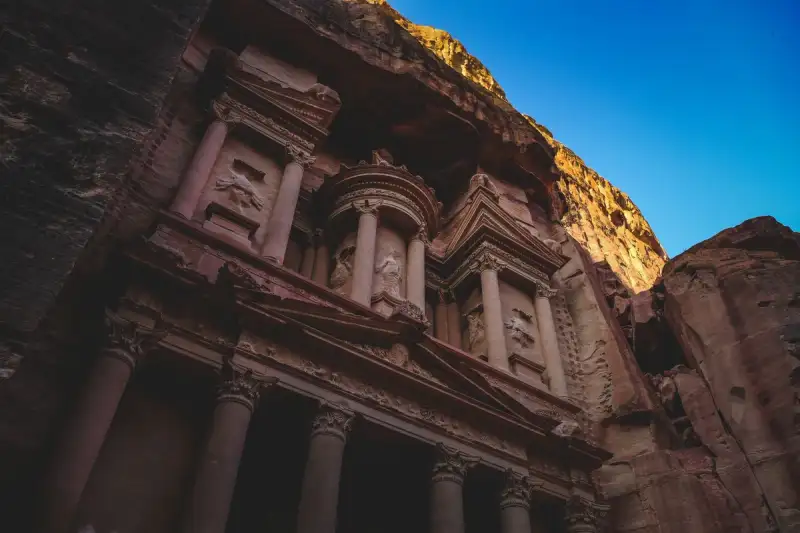
In the heart of southern Jordan, where the desert breathes tales older than memory, lies a city not merely built, but born from the very earth itself. A canvas of crimson stone, sculpted by ancient hands and the relentless artistry of time, Petra stands as a testament to human ingenuity and spiritual devotion. Known to its original inhabitants as Raqmu, meaning "The Marked" or "The Decorated," and later immortalized by the Greeks as "Petra" – simply, "Rock" – this ethereal metropolis has earned its poetic moniker, the "Rose City," from the breathtaking hue of the sandstone cliffs it calls home. A true marvel, it rightfully claims its place among the New 7 Wonders of the World and is a revered UNESCO World Heritage Site, a priceless jewel in humanity's cultural inheritance. To speak of Petra is to speak of eternity, for the story of this land stretches back into the mists of the Neolithic era. As early as 7000 BC, the nascent whispers of human settlement were heard in Beidha, a Pre-Pottery Neolithic community just north of the future city, where some of the earliest recorded farmers tilled the arid soil. Centuries later, during the Bronze Age, Petra’s strategic location began to etch itself into the annals of power, appearing in Egyptian campaign accounts and the enigmatic Amarna letters under names such as Pel, Sela, or Seir. The Edomite Echoes and the Rise of Raqēmō The Iron Age, spanning from 1200 to 600 BC, marked the era of the Edomites in the Petra region. Here, the unique configuration of the mountains became their salvation, offering a vital reservoir of water in an otherwise unforgiving landscape. This precious resource transformed the area into an essential stopping point for merchants, fostering a vibrant trade in commodities like wines, olive oil, and wood. Initially accompanied by nomadic tribes who eventually moved on, the Edomites remained, leaving an indelible mark on the land before the advent of the Nabataeans. Historical whispers, though debated by scholars, even speak of a tragic event involving 10,000 men cast from the mountain of Umm el-Biyara, where an Edomite site, dating no earlier than the seventh century BC, was later excavated. Into this ancient tapestry, a nomadic Arab people, the Nabataeans, intricately wove their destiny. One among several Bedouin tribes traversing the Arabian Desert in search of pasture and water, the Nabataeans, despite initial theories suggesting Aramean roots, are confirmed by archaeological, religious, and linguistic evidence as a distinct northern Arabian tribe. It was they who cemented the city’s identity, giving it the name Raqēmō, or Raqmu, as attested in ancient inscriptions. This name, possibly linked to the Arabic raqama meaning "to mark, to decorate," perfectly encapsulates the renowned carved rock façades that would come to define their architectural prowess. The Hebrew Bible, too, echoes this nomenclature, referring to a city called Rekem in the time of Moses, ruled by kings including one named Rekem. Josephus, the ancient historian, further confirms that Petra, known to the Greeks, was still called Rekeme by the Arabs of his era, after its royal founder. Even a funerary inscription found near the gorge entrance speaks of a Petraios born in Raqmu. The potential identification of Petra with the biblical Sela, a Hebrew word simply meaning "rock," remains a subject of scholarly discussion, but its connection to the ancient land of Edom is widely considered. Before their settled grandeur, the Nabataeans were described by Diodorus Siculus around 312 BC as a nomadic people who prioritized freedom from possessions, a philosophy that would drastically shift with time. At this early stage, the region was merely a natural fortress, a refuge, without a settled town, as indicated by accounts of Antigonus' expeditions against them. The Golden Age and the Ingenuity of Water It was in the 4th century BC that the Nabataeans settled in this strategic haven, transforming it into the capital of the Nabataean Kingdom by the 2nd century BC. Recognizing Petra's prime location on the lucrative incense trade routes, they shrewdly established it as a major regional trading hub, generating considerable wealth. Their mastery over the harsh desert environment was truly remarkable. Faced with scarcity, the Nabataeans developed sophisticated water conduit systems and efficient rainwater collecting techniques, along with advanced desert farming methods, allowing their civilization to thrive where others would falter. This ingenuity not only sustained their population but also cemented Petra's economic supremacy. Petra reached the zenith of its splendor in the 1st century AD. This was the era when the iconic Al-Khazneh, or The Treasury, was meticulously carved into the sandstone cliffs—a breathtaking structure believed to be the mausoleum of Nabataean king Aretas IV. During this golden age, the city's population swelled to an estimated 20,000 inhabitants, a bustling metropolis flourishing amidst the rugged landscape. The sheer scale and artistry of their rock-cut architecture during this period remain a source of awe and wonder.Roman Annexation and Gradual Decline The glorious independence of the Nabataean Kingdom, however, was destined to yield to the expanding might of Rome. In 106 AD, under the governorship of Aulus Cornelius Palma Frontonianus, the region of the Arabian Peninsula under Petra's influence was annexed by the Roman Empire, becoming part of the new province of Arabia Petraea. This marked the end of the native Nabataean dynasty, yet, paradoxically, the city continued to prosper for a time under Roman rule. The Petra Roman Road, a testament to Roman engineering and their commitment to infrastructure, was constructed around this period, further integrating Petra into the vast imperial network. A century later, during the reign of Severus Alexander, Petra still commanded a degree of grandeur, but signs of decline began to emerge. The issue of coinage ceased, and the construction of sumptuous tombs, a hallmark of Nabataean and early Roman Petra, came to an abrupt halt. This sudden cessation of grand projects suggests a significant catastrophe, perhaps an invasion by the formidable Sasanian Empire, though the exact cause remains debated. Concurrently, the rise of Palmyra, another influential city in the Roman East (flourishing from 130–270 AD), began to siphon away the vital pre-Islamic Arab trade routes that had long sustained Petra. As sea trade routes gained prominence, eclipsing the traditional overland caravan paths, Petra's economic importance inexorably waned. Despite this decline in commercial prowess, the city appears to have maintained a lingering significance as a religious center. Another Roman road was constructed at the site, perhaps indicating continued strategic or symbolic value. Epiphanius of Salamis, a bishop writing between c.315 and 403 AD, recounts a pagan feast held there on December 25th in honor of the virgin Khaabou and her offspring, Dushara. Dushara, along with al-Uzza, was one of Petra's principal deities, worshipped alongside a pantheon of other Nabataean gods such as Allat and Manat. Emperor Trajan further solidified Rome's presence and connectivity between 111 and 114 AD with the construction of the Via Traiana Nova. This ambitious road stretched from the Syrian border all the way to the Red Sea, passing directly through Petra. It meticulously followed the ancient routes of Nabataean caravans, and under the protective embrace of the Pax Romana, this route briefly revived trade between Arabia, Syria, and the Mediterranean harbors. The influence of emperors like Hadrian, around 125 AD, also played a role in the ongoing Roman administration and development of the region. Obscurity and Rediscovery The 4th century brought further misfortune. A devastating earthquake in 363 AD shattered many of Petra’s structures, dealing a severe blow to the city's already diminishing fortunes. Though several Christian churches were erected during the Byzantine era, indicating a shift in religious landscape, the city’s overall decline continued. By the early Islamic era, the once-thriving metropolis was largely abandoned, its intricate rock-cut dwellings and grand temples left to the desert winds, inhabited only by a handful of resilient nomads. For centuries, Petra remained a ghost city, its existence fading from Western memory, a secret held tightly by the local Bedouin tribes. It became a lost wonder, a forgotten chapter in the grand narrative of human civilization. This profound obscurity lasted until 1812, when the intrepid Swiss traveler, Johann Ludwig Burckhardt, disguised as an Arab scholar, "rediscovered" the city, unveiling its breathtaking beauty and historical significance to a captivated Western world. His accounts sparked renewed interest and laid the groundwork for future exploration and archaeological endeavors.Petra Today: A Living Legacy Today, Petra stands as more than just an archaeological site; it is a profound symbol of Jordan, the vibrant heart of its ancient soul. UNESCO, in its profound admiration, has described Petra as "one of the most precious cultural properties of man's cultural heritage," a sentiment echoed by every visitor who walks its ancient paths. It is, unequivocally, Jordan's most-visited tourist attraction, drawing close to a million tourists every year, each arriving to bear witness to its unparalleled majesty. To wander through Petra’s narrow Siq, the dramatic gorge that serves as its primary entrance, is to embark on a journey through time itself. The towering sandstone walls, painted in hues of ochre, crimson, and gold, speak of forgotten empires and whispered legends. Emerging into the open to behold the breathtaking facade of Al-Khazneh is an experience that transcends mere sightseeing, touching the very soul. Beyond its iconic Treasury, the city unfolds into a vast expanse of temples, tombs, living quarters, and intricate water channels, all carved with astonishing precision and artistry directly into the living rock. Petra is a testament to the enduring power of human spirit, adaptation, and vision. It reminds us that even in the most challenging environments, civilizations can flourish, leaving behind legacies that continue to inspire awe millennia later. It is a city of echoes, of rose-tinted dreams, where every carved facade and every silent canyon holds a fragment of an extraordinary past, inviting all who visit to listen to the whispers in the sandstone.#Petra #RoseCity #JordanTravel #AncientWonders #NabataeanLegacy
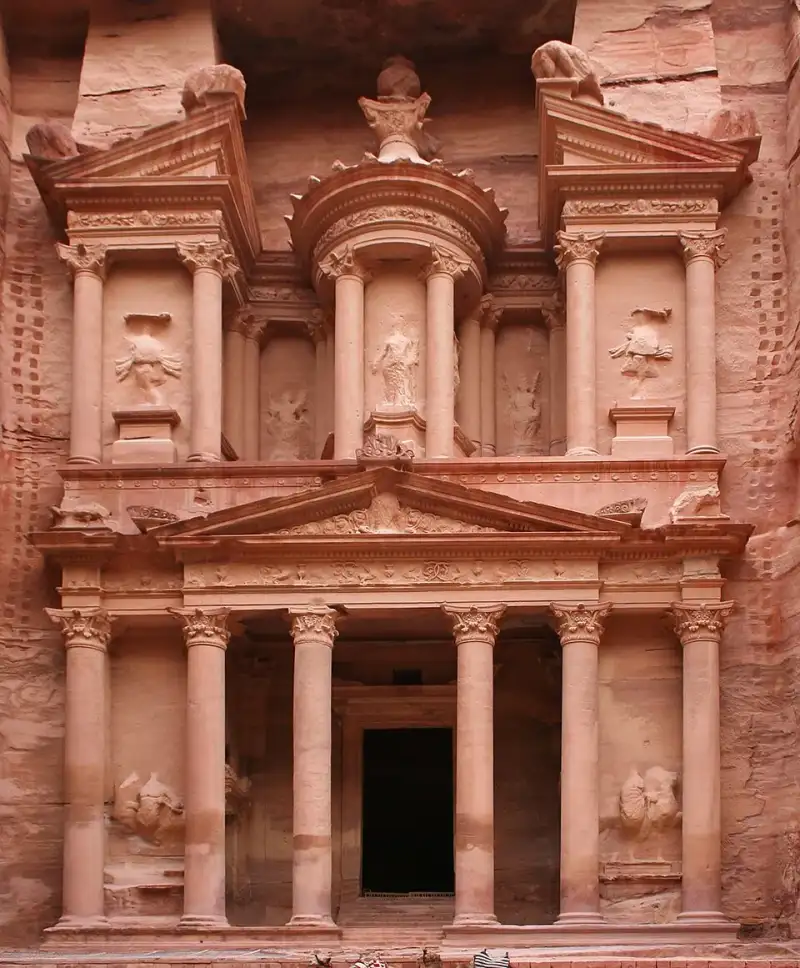
The Rose Red City: Unveiling the Mysteries of Petra There are few places on this planet where the very earth seems to whisper the tales of millennia past, where the marriage of human ingenuity and raw natural beauty is so profoundly realized that it leaves even the most seasoned traveler breathless. Petra is one such place. Tucked away in the rugged, sun-scorched mountains of southern Jordan, this ancient metropolis, often referred to as the Rose City due to the color of the stone out of which it is carved, stands as a testament to the brilliance of a civilization that flourished against all odds. It is a destination that transcends mere tourism; it is a pilgrimage into the depths of human history, an immersion into a world where stone and spirit are inextricably bound. #Petra #Jordan #TravelHistory As you embark on the journey to Petra, the modern world rapidly fades away, replaced by a landscape of stark, unforgiving majesty. The entrance to the city is guarded by the Siq, a narrow, winding gorge that snakes its way through towering cliffs of sandstone. The Siq is not merely a path; it is an experience, a geological wonder shaped by tectonic forces and smoothed by thousands of years of water erosion. The walls soar up to eighty meters high, casting long, cool shadows that provide respite from the blistering desert sun. With every step along the ancient, worn paving stones, anticipation builds. The air is still, save for the occasional echo of footsteps, the snort of a horse, and the distant murmur of voices bouncing off the undulating rock. And then, as if by magic, the narrow canyon walls part, revealing a sliver of sunlight and the breathtaking, sunlit facade of Al-Khazneh—the Treasury. Seeing the Treasury for the first time is a moment etched into the soul of every visitor. The sheer scale of the monument, standing nearly forty meters tall, carved intricately from the sheer rock face, defies belief. It is a masterpiece of Hellenistic architecture, adorned with Corinthian columns, intricate friezes, and statues of mythical figures, including Castor and Pollux. Yet, the Treasury is merely the prologue to a sprawling epic. Beyond it lies a vast city of tombs, temples, theaters, and dwellings, scattered across a rugged landscape that stretches as far as the eye can see. To truly understand Petra, one must delve deep into the history of the people who conceptualized and created it: the enigmatic Nabataeans. #AncientWonders #RoseCity #BucketList The Enigmatic Nabataeans: From Nomads to Masters of Stone The story of Petra is inextricably linked to the Nabataeans, an ancient Arab people whose origins are still shrouded in a degree of mystery. Believed to have migrated from the harsh expanses of the Arabian Peninsula around the 6th century BCE, the Nabataeans were initially nomadic pastoralists. They roamed the vast deserts, surviving in an unforgiving environment through their deep, almost supernatural knowledge of hidden water sources and their sheer resilience. However, as they settled in the region of Edom, they underwent a remarkable transformation. Within a few centuries, they transitioned from tent-dwelling nomads to sophisticated urbanites, master builders, and the foremost traders of the ancient world. #Nabataeans #AncientCivilizations What set the Nabataeans apart from their contemporaries was their extraordinary adaptability. They did not simply conquer the landscape; they collaborated with it. When they chose the site of Petra, originally known to them as Raqmu, they selected a location that was naturally fortified by towering mountains and deep, labyrinthine canyons. It was a fortress city, virtually impregnable to foreign invaders, yet perfectly positioned at the strategic crossroads of the lucrative trade routes that connected Arabia, Egypt, the Levant, and the Mediterranean. The societal structure of the Nabataeans was also notably advanced for its time. Historical accounts by Greek historians like Strabo suggest a relatively egalitarian society, where slavery was uncommon, and kings interacted freely with their subjects, even to the point of serving them at banquets. Women held significant status, evident from the fact that queens were featured alongside kings on Nabataean coinage, and women could inherit and own property. This progressive societal framework fostered a culture of innovation, art, and commerce that propelled Petra into a golden age of unparalleled prosperity. #HistoryFacts #Archaeology Engineering an Oasis: The Mastery of Water To build a grand city in the middle of a desert is a formidable challenge; to sustain a population of over twenty thousand people in such an environment requires sheer genius. The true miracle of Petra lies not just in its magnificent, photogenic facades, but in the highly sophisticated hydrological engineering that made life possible in the arid wasteland. The region receives only a few inches of rain annually, mostly in the form of sudden, violent winter storms that unleash deadly flash floods through the narrow canyons. The Nabataeans, rather than succumbing to these terrifying natural disasters, devised ingenious methods to harness them. They transformed Petra into an artificial oasis through an incredibly complex, city-wide system of dams, cisterns, rock-carved channels, and ceramic pipes. Before the raging floodwaters could tear through the Siq and destroy the city center, they were intercepted by a massive, expertly constructed dam and redirected through a tunnel known as the Muthlim. This not only protected the city from catastrophic destruction but also captured the precious water, storing it safely in vast, subterranean reservoirs. #EngineeringMarvels #WaterManagement Every drop of rain that fell on the surrounding mountains was collected and channeled into the city. The Nabataeans carved intricate conduits along the walls of the Siq, precisely angled—dropping only a few centimeters per kilometer—to maintain a steady, gentle flow of water without causing erosion. They built public fountains, lush, sprawling gardens, and even a massive swimming pool, complete with an island pavilion, in the heart of the desert. This absolute mastery over water was the foundation of Petra's power. It allowed them to provide sustenance and refreshment to weary caravans, solidifying their monopoly over the trade routes. The Nabataeans were not just masters of stone; they were the undisputed lords of water. #DesertOasis #NabataeanIngenuity Carved in Colors: The Architectural Tapestry Walking through the heart of Petra is akin to wandering through a colossal, open-air museum where the canvas is the earth itself. The Nabataeans were a profoundly syncretic people, actively absorbing and integrating the cultural and architectural influences of the many civilizations they encountered through their extensive, globe-spanning trade networks. This cosmopolitan worldview is vividly reflected in the architecture of Petra, a breathtakingly unique fusion of indigenous Arabian styles with Egyptian, Assyrian, Hellenistic, and later, Roman elements. Beyond the awe-inspiring Treasury lies the Street of Facades, a sweeping, dramatic valley lined with towering monumental tombs. The facades here range from simple, unadorned doorways cut into the rock to elaborate, multi-story structures featuring crow-stepped parapets, a distinctively Nabataean architectural motif that represented a stairway to heaven for the departed soul. As the valley opens up, the eye is drawn to the Theatre, a massive amphitheater carved directly into the living bedrock. Capable of seating over 8,000 spectators, it is a testament to the city's vibrant, bustling civic life. What is particularly striking about the Theatre is that its construction involved slicing mercilessly through pre-existing tombs, demonstrating the continuous, dynamic evolution and expansion of the city over centuries. #ArchitectureLovers #MonumentalTombs High above the city floor, carved into the sheer face of the Jabal al-Khubtha mountain, are the spectacular Royal Tombs. This impressive row of massive mausoleums includes the Urn Tomb, recognizable by the giant urn crowning its pediment and its vast, echoing interior; the Silk Tomb, famous for the mesmerizing, swirling colors of its sandstone, which look like draped silk; the Corinthian Tomb, which bears a striking, albeit heavily weathered, resemblance to the Treasury; and the massive Palace Tomb, an ambitious imitation of a Roman palace facade that was so large it required the builders to augment the natural rock with constructed masonry. The colors of the stone in this area—vibrant, shifting hues of red, pink, yellow, orange, and deep purple—change constantly with the movement of the sun, creating a dynamic, living landscape that is never the same from one hour to the next. #RoyalTombs #Geology For those willing to brave the arduous, winding ascent of over 800 rock-cut steps, the ultimate architectural reward awaits: Ad Deir, the Monastery. Larger and arguably more majestic in its raw power than the Treasury, the Monastery stands high in the remote mountains, overlooking the vast expanse of the Wadi Araba. Measuring fifty meters wide and forty-five meters high, its massive, relatively unadorned facade exudes a palpable, imposing grandeur. Originally built as a Nabataean temple, perhaps dedicated to the deified King Obodas I, it later served as a Christian chapel during the Byzantine era, complete with crosses carved into the interior walls, hence its modern name. #AdDeir #TheMonastery #HikingAdventures Little Petra: The Ancient Suburb A short distance from the main city lies Siq al-Barid, commonly known as Little Petra. This narrower, cooler gorge served as an important agricultural center, a trading suburb, and a resupply station for incoming caravans before they entered the main capital. Little Petra is renowned for its well-preserved, multi-story buildings carved into the rock, which include dining halls (triclinia) where merchants likely hosted lavish banquets. One of the most extraordinary discoveries in Little Petra is a remarkably preserved Nabataean fresco found on the ceiling of one of the rock-cut biclinia. Dating back to the 1st century CE, this exquisite painting depicts vines, flowers, birds, and mythological figures, revealing the refined artistic sensibilities of the Nabataeans. It stands as a rare surviving example of Hellenistic painting in the region and provides a vivid glimpse into the opulent, colorful interiors that once characterized the now-bare stone chambers of Petra. #LittlePetra #AncientArt #Frescoes The Crossroads of the Ancient World: Wealth Built on Incense The breathtaking, monumental architecture of Petra was bankrolled by an unimaginable accumulation of wealth, derived directly from the city's highly strategic position on the ancient trade routes. For centuries, the Nabataeans held a virtual monopoly on the trade of frankincense and myrrh, highly prized, aromatic tree resins harvested in the distant lands of southern Arabia (modern-day Yemen and Oman). These precious resins were absolutely essential for religious rituals, cremations, medicinal purposes, and cosmetics across the Egyptian, Greek, and Roman worlds, often commanding prices higher than their weight in gold. In addition to incense, the endless trains of camel caravans passing through Petra carried a dazzling, exotic array of luxury goods: pungent spices from India, shimmering silk from China, fine ivory from Africa, precious metals, and even bitumen from the nearby Dead Sea, which was used by the Egyptians in the mummification process. Petra became a bustling, cosmopolitan hub, a melting pot of cultures where merchants from across the known world converged, negotiated, and traded. The Nabataeans capitalized on this incredible flow of wealth not just by trading, but by providing crucial, life-saving services. They offered safe passage, abundant water, food, and secure shelter to the exhausted caravans after their treacherous desert crossings, in exchange for exorbitant tolls and taxes. Their wealth became the stuff of legend, attracting the envy and ire of neighboring empires. Yet, for a long time, their deep, unparalleled knowledge of the desert terrain and their impenetrable, hidden fortress city kept them safe from subjugation. #SilkRoad #SpiceRoute #AncientEconomy Gods of the Rock: Spirituality and Sacrifice To truly comprehend the essence of Petra, one must look beyond the grand, classical facades and understand the deep spiritual life of its inhabitants. The Nabataean religion was a complex, fascinating tapestry of ancient, indigenous Arabian beliefs seamlessly intertwined with the deities of the cultures they interacted with. Their chief god was Dushara, "the Lord of the Shara Mountain," a powerful deity associated with the sun, storms, and the mountains themselves. His female counterpart was Al-Uzza, an ancient Arabian goddess of power, fertility, and the morning star, who was often equated by visiting merchants with the Greek goddess Aphrodite or the Egyptian Isis. Unlike the Greeks and Romans, who depicted their gods in idealized human form, the Nabataeans originally, and persistently, worshiped their deities through aniconic representations known as betyls—literally translating to "houses of god." These were unadorned, rectangular blocks of stone carved directly into the rock face or set upon prominent altars. Walking through the narrow, hidden side canyons of Petra, an observant visitor can find hundreds of these betyls, silent, enduring witnesses to a deeply rooted, highly abstract form of spirituality that prioritized the divine presence over physical form. #Spirituality #NabataeanGods #Betyls The undisputed religious heart of Petra was the High Place of Sacrifice (Jebel Madhbah). Reached by a steep, exhausting, yet deeply rewarding climb up the mountain, this artificially leveled plateau offers stunning, panoramic views of the entire city below. Here, the Nabataeans carved a massive, chillingly practical altar, complete with intricate channels designed to drain the blood of sacrificed animals—typically sheep or goats—during elaborate religious ceremonies. Two massive obelisks, representing the divine duality of Dushara and Al-Uzza, stand nearby. Astoundingly, these obelisks were not built; they were created by quarrying away the entire top of the mountain until only the two pillars remained. The atmosphere atop the High Place is thick with an ancient, palpable energy, a profound connection to the divine forged in the high, silent, windswept peaks of the desert. #HighPlaceOfSacrifice #AncientRituals The Slow Fade and the Roman Era Despite their vast wealth, diplomatic cunning, and strategic brilliance, the Nabataeans could not hold out against the relentless, expanding power of the Roman Empire forever. In 106 CE, following the death of the last Nabataean King, Rabbel II Soter, the Roman Emperor Trajan annexed the Nabataean kingdom, incorporating it into the newly formed province of Arabia Petraea. The transition appears to have been relatively peaceful, without the destructive sieges that characterized other Roman conquests, and Petra continued to prosper under Roman rule for a considerable time. The Romans inevitably left their indelible mark on the city's urban planning, building a grand colonnaded street, an ornate public fountain known as a nymphaeum, and a monumental arched gate. However, the Roman annexation ultimately marked the beginning of Petra's slow, tragic decline. The Romans increasingly favored and developed sea routes for trade, bypassing the arduous desert journey and shifting the flow of wealth away from the overland caravan routes that had sustained the city for centuries. As maritime trade through the Red Sea and the port of Alexandria flourished, Petra's economic lifeblood slowly drained away. Nature, too, played a devastating role in the city's demise. A catastrophic earthquake in 363 CE destroyed many of the free-standing structures, homes, and, crucially, crippled the city's vital, life-sustaining water management systems. While Petra continued to be inhabited well into the Byzantine era, functioning as a provincial center of Christianity with several large, mosaic-floored churches constructed, its glorious days of immense wealth and power were over. Following another massive, devastating earthquake in 551 CE, and the subsequent Islamic conquest of the region in the 7th century, the city gradually slipped into obscurity. By the time of the Crusades in the 12th century, when Crusaders built a few small outposts in the area, Petra was largely abandoned, its magnificent, rock-cut monuments left to the shifting sands, the howling winds, and the local Bedouin tribes who used the caves for shelter. #RomanEmpire #Earthquake #DeclineAndFall "Rediscovery" and the Romantic Gaze of the West For centuries, the Rose City was "lost" to the Western world, its exact location a closely guarded secret of the local Bedouin tribes who fiercely protected their territory and used Petra's numerous caves for shelter and its hidden valleys for grazing their flocks. It wasn't until the year 1812 that Petra was dramatically reintroduced to the global stage by a daring, brilliant Swiss explorer named Johann Ludwig Burckhardt. Fluent in Arabic and deeply knowledgeable about Islamic customs, Burckhardt disguised himself as a Muslim scholar from India, traveling under the assumed name Sheikh Ibrahim Ibn Abdallah. Hearing persistent, tantalizing rumors of a magnificent, ancient city hidden deep in the impenetrable mountains of Edom, he convinced a local guide to take him there. He used the clever pretext of wishing to sacrifice a goat at the revered tomb of the Prophet Aaron (Jabal Haroun), which is located on a high peak overlooking Petra. As Burckhardt walked through the winding, claustrophobic Siq and laid eyes on the stunning facade of the Treasury, he became the first Westerner in over a millennium to behold the lost city. Though he had to conceal his overwhelming excitement to maintain his disguise and avoid being robbed or killed, his subsequent writings, published posthumously, ignited a firestorm of interest, fascination, and archaeological curiosity in Europe. Petra quickly became the ultimate symbol of the "lost city," a heavily romanticized ideal of ancient, mysterious grandeur. It inspired generations of artists, poets, and adventurers. In 1845, the British poet John William Burgon, who had ironically never even visited the site, immortalized Petra in his famous Newdigate Prize-winning poem, describing it with the now-iconic phrase: "Match me such marvel save in Eastern clime, a rose-red city half as old as time." #Exploration #JohannLudwigBurckhardt #LostCity Cinematic Immortality and Pop Culture In the modern era, Petra's otherworldly beauty has not only captured the attention of archaeologists and tourists but also the imaginations of filmmakers. The city's dramatic landscapes and imposing monuments provide a cinematic backdrop unlike any other on earth. Petra was catapulted into the global pop culture stratosphere in 1989 when it was featured in the climax of Steven Spielberg's blockbuster film, Indiana Jones and the Last Crusade. The iconic shots of Harrison Ford and Sean Connery riding through the Siq and arriving at the Treasury, presented in the film as the secret temple housing the Holy Grail, forever cemented Petra's status as a place of adventure and myth in the public consciousness. Since then, Petra has appeared in numerous other films and television series, including The Mummy Returns, Transformers: Revenge of the Fallen, and Mortal Kombat: Annihilation. This cinematic immortality has undoubtedly fueled the massive surge in tourism, bringing millions of people who wish to step into the frame of their favorite adventures. However, this level of fame brings with it the heavy burden of managing unprecedented crowds in a fragile, ancient environment. #IndianaJones #CinematicHistory #PopCulture The Living City: Bedouins, Tourism, and Conservation Today, Petra is far from lost; it is fiercely found. It is the undisputed jewel in Jordan's tourism crown, designated a UNESCO World Heritage site in 1985 and overwhelmingly voted as one of the New Seven Wonders of the World in 2007. Hundreds of thousands of visitors flock to the site annually, eager to walk in the footsteps of the Nabataeans, to marvel at the stone-carved wonders, and to experience the unique magic of the Rose City. However, the modern era has brought complex, unprecedented challenges. Petra is not merely a sterile, fenced-off archaeological site; it is a living, breathing, dynamic environment. The Bdoul Bedouin tribe inhabited the caves of Petra for centuries, living a traditional pastoral lifestyle until they were relocated to a nearby, purpose-built village (Umm Sayhoun) by the Jordanian government in the 1980s to facilitate tourism and preservation. Today, the Bdoul remain an absolute, integral part of the Petra experience. They run the myriad of souvenir stalls, offer camel, horse, and donkey rides through the sprawling site, and share their deep, ancestral knowledge of the land with visitors. The relationship between heritage preservation, the demands of mass tourism, and the economic livelihoods and cultural rights of the local Bedouin community is deeply complex and requires constant, delicate balancing. #BedouinLife #CulturalHeritage #SustainableTourism The physical preservation of Petra's majestic monuments is an urgent, massive, and incredibly challenging ongoing battle. The soft, porous sandstone that allowed the Nabataeans to carve such intricate, soaring masterpieces is also incredibly vulnerable to the ravages of time and the elements. Salt weathering, a destructive process caused by moisture drawing natural salts to the surface of the stone, is causing the delicate carvings on the facades to blister, crumble, and flake away. Severe wind erosion, increasingly unpredictable and sudden flash floods exacerbated by climate change, and the sheer, physical impact of millions of footsteps, touching hands, and animal hooves are taking a heavy toll. Conservation organizations, such as the Petra National Trust, in close partnership with the Jordanian government and international archaeological teams, are working tirelessly to study the decay, reinforce unstable structures, restore ancient water channels to divert floodwaters, and implement sustainable tourism practices. These efforts are crucial to ensure that Petra endures, not just as a memory, but as a physical reality for future generations to marvel at. #Conservation #UNESCO #ProtectOurHeritage The Flora and Fauna of the Shara Mountains While the awe-inspiring stone monuments are the primary draw, the natural environment of Petra is a wonder in its own right. The rugged Shara Mountains, despite their barren appearance, host a surprising diversity of flora and fauna, adapted to the harsh desert conditions. In the spring, following the winter rains, the valleys and crevices burst into a brief but spectacular bloom. Bright red anemones, delicate wild tulips, and hardy desert shrubs add sudden flashes of vibrant color to the red-rock landscape. The area is also a vital habitat for numerous animal species. The Nubian ibex, with its magnificent, sweeping horns, can occasionally be spotted navigating the impossibly steep cliff faces with casual grace. Rock hyraxes dart among the boulders, while the elusive Blanford's fox hunts in the cool of the night. The skies above Petra are patrolled by majestic birds of prey, including the Bonelli's eagle and the griffon vulture, riding the thermal currents that rise from the deep canyons. This rich biodiversity adds another layer of profound beauty to the Petra experience, reminding visitors that the Rose City is nestled within a living, breathing, ancient ecosystem. #Wildlife #DesertFlora #NatureLovers Conclusion: Echoes in the Canyon To visit Petra is to be profoundly humbled by the vastness of time and the indomitable, soaring spirit of human endeavor. It is a place where history is not confined to the dry pages of textbooks, but is vividly, permanently etched into the very fabric of the earth. From the awe-inspiring, colossal monuments that speak of untold wealth and worldly power to the silent, hidden, wind-scoured betyls that whisper of ancient gods and forgotten prayers, Petra is a breathtaking symphony composed entirely in stone. As the sun begins to set over the sprawling Wadi Musa, casting the towering rock faces into deepening, fiery shades of crimson, burnt orange, and rich violet, a profound, heavy silence descends upon the ancient city. The crowds thin, the heat of the day dissipates, and in that magical, twilight quietude, if you stand still and listen closely, you can almost hear the echoes of the vibrant past. You can imagine the loud, polyglot chatter of merchants haggling in the dusty marketplace, the rhythmic clatter of chariot wheels on the paved Roman streets, the smell of roasting meats and burning frankincense, and the steady, rhythmic chipping of the sculptor's iron chisel against the sandstone. The Nabataeans may be long gone, their empire absorbed into the vast, unforgiving tapestry of the empires that followed, but their legacy stands eternally, boldly and beautifully carved into the rose-red mountains of Jordan. Petra remains, as it always has been, a staggering testament to a civilization that dared to dream in stone, a people who turned a harsh, unyielding desert into an oasis of culture and commerce. They left behind a wonder that will continue to captivate, inspire, and deeply move the hearts of humanity until the very end of time. #TravelInspiration #Wanderlust #UnforgettableJourneys There is an enduring, almost mystical magic to the Rose City, a magnetic pull that draws travelers, dreamers, and seekers from every corner of the globe. It serves as a powerful reminder that even in the harshest, most desolate of environments, human creativity, resilience, and ambition can flourish, creating profound beauty that transcends the ages and speaks to the universal human soul. Whether you are a dedicated archaeology enthusiast, an intrepid explorer seeking the thrill of the unknown, or simply a seeker of beauty and history, Petra promises an experience that is nothing short of transformative. It is a physical journey into the heart of antiquity, and an emotional adventure that leaves an indelible, rose-tinted mark upon the soul. #ExploreTheWorld #HistoryLovers #PetraJordan #MiddleEastTravel Related InsightsUnraveling the Mysteries of Stonehenge: A Monolithic Marvel of the Ancient World 千古绝唱,江水悠悠:探秘乐山大佛的沧桑与辉煌 The Great Pyramid of Giza: A Timeless Monument to Human Ingenuity{ "@context": "https://schema.org", "@type": "FAQPage", "mainEntity": [ { "@type": "Question", "name": "What is the main focus of The Rose Red City: Unveiling the Mysteries of Petra?", "acceptedAnswer": { "@type": "Answer", "text": "Explore the ancient, rock-cut city of Petra in Jordan. Discover the ingenious Nabataean architecture, water management, and the rich history of the Rose City." } }, { "@type": "Question", "name": "Who authored the comprehensive guide on The Rose Red City: Unveiling the Mysteries of Petra?", "acceptedAnswer": { "@type": "Answer", "text": "This detailed article and its insights were carefully researched and authored by Liam Carter." } }, { "@type": "Question", "name": "Where can I find more related content about History?", "acceptedAnswer": { "@type": "Answer", "text": "You can explore more articles, detailed reviews, and similar insights by browsing the Related Insights section at the bottom of this article or visiting our dedicated History category page." } } ] }