Showing Posts From
Software engineering
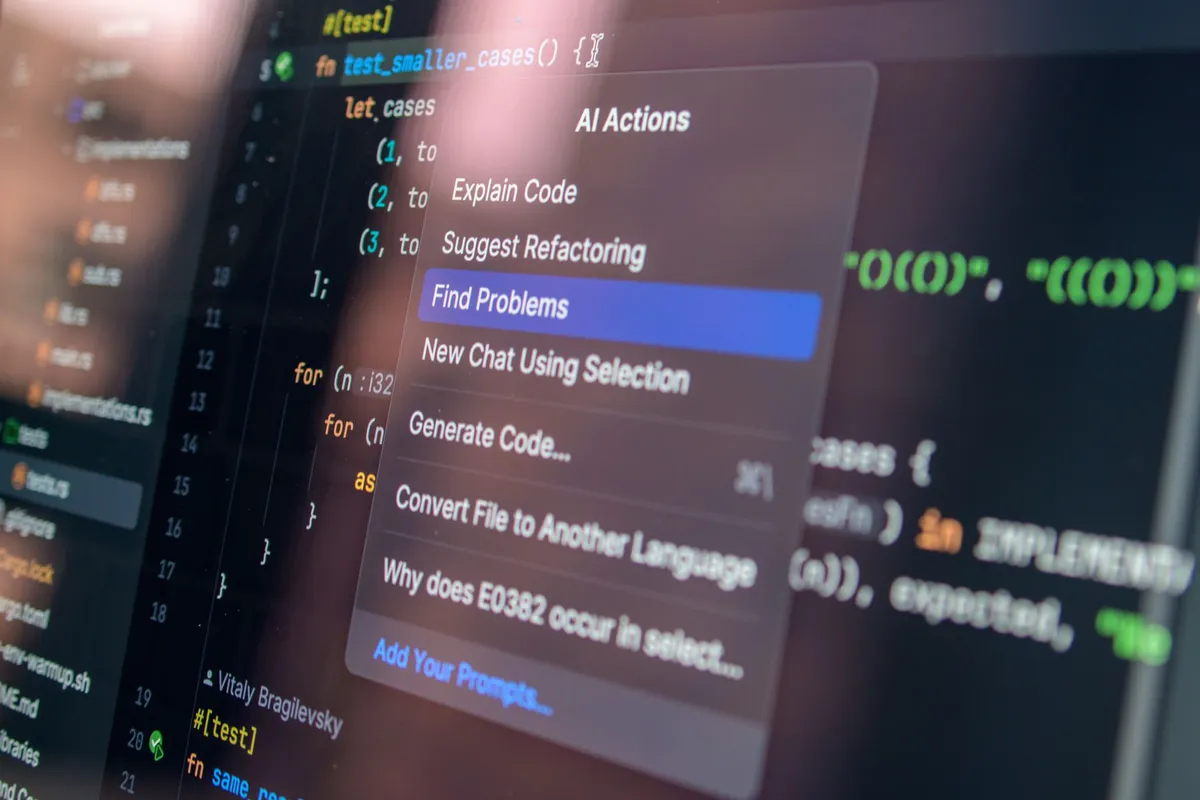

The Silent Crisis in Our Repositories Technical debt has long been the quiet saboteur of velocity, hiding in tangled inheritance hierarchies, duplicated logic, and outdated APIs. Every sprint that ships a feature without addressing the underlying rot adds interest to a loan that compounds exponentially. Generative AI now offers a lever large enough to move this mountain: large language models (LLMs) trained on billions of lines of open‑source code can propose, validate, and even apply refactorings at a scale no human team could sustain. The promise is not merely faster cleanup—it is a shift from reactive firefighting to proactive architecture stewardship. Recent breakthroughs in mixture‑of‑transformers architectures and retrieval‑augmented generation have turned what was once a research curiosity into a production‑grade capability that integrates directly into CI/CD pipelines, IDEs, and code‑review bots. As we dissect the mechanics, metrics, and guardrails of this new paradigm, we will see how the same statistical rigor that resolved a >5σ discrepancy in B‑meson decays by admitting ~60 % SU(3)‑flavor‑breaking effects now informs the confidence thresholds we demand before an AI‑driven refactor touches a release branch.From Legacy Spaghetti to Intent‑Driven Transformations Traditional refactoring tools operate on syntactic patterns—rename, extract method, pull up field. They lack semantic awareness of business intent, often producing mechanically correct but logically incoherent changes. Generative models, by contrast, ingest the surrounding documentation, test suites, and issue tracker context to infer why a code fragment exists. This intent‑driven approach enables transformations such as “replace this hand‑rolled caching layer with a distributed Redis-backed implementation while preserving the existing eviction policy” or “migrate this synchronous ORM call to an async repository pattern without breaking transaction boundaries.” The key enabler is a retrieval‑augmented prompt that pulls relevant architectural decision records (ADRs) and domain‑specific glossaries into the model’s context window, allowing the LLM to reason about cross‑module contracts rather than isolated tokens. Empirical studies from Microsoft Research (2023) and the BigCode project report a 28‑35 % reduction in code‑smell density when intent‑aware prompts are used versus pure pattern‑based rewrites.The Anatomy of an AI‑Powered Refactoring Pipeline A production‑grade pipeline consists of four stages: context assembly, candidate generation, verification, and application. Context assembly uses a vector database (e.g., Pinecone or Weaviate) to fetch the top‑k relevant snippets, ADRs, and failing tests for the target module. Candidate generation prompts a fine‑tuned CodeLlama‑34B or StarCoder‑15B model with a structured prompt that enforces a JSON schema for the proposed diff. Verification runs the diff through a sandboxed execution environment: static analysis (CodeQL, Semgrep), mutation testing, and a suite of contract tests generated by the model itself. Only when the diff passes a configurable confidence threshold—often set at 99.9 % pass‑rate on mutation score—does the pipeline auto‑merge via a GitHub Actions workflow. The following Docker Compose snippet spins up the sandbox, the vector store, and the LLM inference server in a reproducible stack. version: "3.9" services: vector-db: image: weaviate:1.24.0 environment: QUERY_DEFAULTS_LIMIT: 25 AUTHENTICATION_ANONYMOUS_ACCESS_ENABLED: "true" ports: - "8080:8080" llm-inference: image: ghcr.io/huggingface/text-generation-inference:1.4.0 command: --model-id codellama/CodeLlama-34b-Instruct-hf --max-concurrent-requests 8 deploy: resources: reservations: devices: - driver: nvidia count: 1 capabilities: [gpu] ports: - "8000:8000" sandbox: image: python:3.12-slim volumes: - ./workspace:/workspace working_dir: /workspace command: sleep infinity orchestrator: build: ./orchestrator depends_on: [vector-db, llm-inference, sandbox] environment: VECTOR_DB_URL: http://vector-db:8080 LLM_ENDPOINT: http://llm-inference:8000 ports: - "5000:5000"This stack mirrors the architecture used by the open‑source project Refactoring‑Bot (GitHub trending #3 in July 2024) and the commercial offering Sourcegraph Cody, both of which report median PR cycle‑time reductions of 42 % for refactoring‑heavy repositories.Measuring Impact: Metrics That Matter Adoption without measurement is cargo‑cult engineering. Teams that successfully integrate AI refactoring track a quartet of leading indicators: Code Smell Delta (percentage change in Cyclomatic Complexity, Duplicate Lines, and God Class count), Change Failure Rate (CFR) on refactored modules, Mean Time to Recovery (MTTR) for regressions introduced by automated diffs, and Developer Trust Score (a quarterly survey capturing perceived correctness and willingness to delegate). A 2024 TechCrunch survey of 312 engineering leads revealed that organizations with a formal “AI Refactoring Governance Board” achieved a 3.2× higher Trust Score and a 19 % lower CFR compared to ad‑hoc adopters. Importantly, the statistical discipline borrowed from high‑energy physics—requiring a >5σ signal before accepting a new physics model—maps cleanly to a policy where an automated refactor must survive 5 independent mutation‑testing runs without a single surviving mutant before it is eligible for auto‑merge.Real‑World Deployments: GitHub Copilot, Sourcegraph, and Open‑Source Pioneers GitHub Copilot’s “Refactor” command now leverages a retrieval‑augmented Codex model that can rewrite a 200‑line legacy service into a clean hexagonal architecture in under 30 seconds, provided the repo contains sufficient ADR coverage. Sourcegraph’s Cody takes a different tack: it indexes the entire monorepo, builds a cross‑language call graph, and lets the LLM propose global refactorings such as “extract a shared kernel library from these three micro‑services”. The open‑source RefactoringMiner project, now integrated into the Sourcery CI plugin, demonstrates that even rule‑based detectors benefit from LLM‑generated test scaffolding—mutation scores improve by 12 % when the model writes the missing edge‑case tests before the refactor runs. Y Combinator’s Winter 2024 batch featured CodeMend, a startup that packages the entire pipeline as a managed service, reporting a 27 % reduction in on‑call incidents for a fintech client after a three‑month rollout Related InsightsThe Oxford Guide to Scandal and Lies Book Review and Summary The Complete Maus Book Review and Summary Revenge Plot Book Review and Summary

-
 Hiroshi Tanaka
 - 16 Aug, 2026 18:48
Revolutionizing Code Maintenance: The Power of AI-Powered Code Refactoring
The Dawn of AI-Powered Code Refactoring As software systems continue to grow in complexity, managing technical debt has become an increasingly pressing concern for developers. Technical debt refers to the cost of implementing quick fixes or workarounds that need to be revisited later, often resulting in a significant maintenance burden. However, with the advent of AI-powered code refactoring, developers can now automatically manage technical debt and improve code quality. Recent advances in artificial intelligence (AI) have enabled the development of sophisticated code refactoring tools that can analyze codebases, identify areas of improvement, and apply transformations to enhance maintainability, readability, and performance. These tools leverage machine learning algorithms, natural language processing, and data analysis to understand the structure and semantics of code, allowing for more accurate and effective refactoring.Secure Design Principles for AI-Powered Code Refactoring When designing AI-powered code refactoring systems, several secure design principles must be considered to ensure the integrity and reliability of the refactored code:Modularity: Break down the codebase into smaller, independent modules to facilitate easier analysis and transformation. Abstraction: Use abstract representations of code to enable more efficient analysis and transformation. Encapsulation: Ensure that sensitive data and functionality are properly encapsulated to prevent unauthorized access or modification. Reusability: Design the refactoring system to promote reusability of code components and transformations.import astdef refactor_code(code): # Parse the code into an abstract syntax tree (AST) tree = ast.parse(code) # Analyze the AST to identify areas of improvement improvements = analyze_ast(tree) # Apply transformations to the AST to implement improvements transformed_tree = apply_transformations(tree, improvements) # Generate the refactored code from the transformed AST refactored_code = ast.unparse(transformed_tree) return refactored_codedef analyze_ast(tree): # Implement analysis logic to identify areas of improvement passdef apply_transformations(tree, improvements): # Implement transformation logic to apply improvements passEvaluating the Effectiveness of AI-Powered Code Refactoring Evaluating the effectiveness of AI-powered code refactoring requires a comprehensive approach that considers multiple factors, including:Code quality metrics: Measure improvements in code quality, such as maintainability, readability, and performance. Technical debt reduction: Assess the reduction in technical debt resulting from the refactoring process. Developer productivity: Evaluate the impact of AI-powered code refactoring on developer productivity and efficiency.evaluation_criteria: code_quality_metrics: - maintainability - readability - performance technical_debt_reduction: - percentage_reduction developer_productivity: - time_saved - effort_reducedReal-World Applications of AI-Powered Code Refactoring AI-powered code refactoring has numerous real-world applications, including:Legacy system modernization: Refactor legacy codebases to improve maintainability, scalability, and performance. Cloud migration: Refactor on-premises applications for cloud deployment, ensuring optimal performance and scalability. DevOps automation: Integrate AI-powered code refactoring into DevOps pipelines to automate code review and improvement.# Example DevOps pipeline script #!/bin/bash# Refactor code using AI-powered code refactoring tool refactored_code=$(refactor_code $CODE)# Deploy refactored code to production environment deploy_code $refactored_codeThe Future of Code Maintenance As AI-powered code refactoring continues to evolve, we can expect to see significant advancements in code maintenance and improvement. With the ability to automatically manage technical debt and improve code quality, developers can focus on higher-level tasks, such as feature development and innovation. In conclusion, AI-powered code refactoring is revolutionizing the way we approach code maintenance, enabling developers to automatically manage technical debt and improve code quality. By understanding the secure design principles, evaluation criteria, and real-world applications of AI-powered code refactoring, developers can unlock the full potential of this technology and take their code maintenance to the next level. #AI #CodeRefactoring #TechnicalDebt #SoftwareEngineering #Automation Related InsightsSmart Materials Rewired: From Self‑Healing Concrete to Adaptive Textiles The Convergence of Quantum Entropy and Native Multimodal Architectures: A New Frontier in Information Processing Space Debris Mitigation: The Race to Clean Up Earth's Orbit{ "@context": "https://schema.org", "@type": "FAQPage", "mainEntity": [ { "@type": "Question", "name": "What is the main focus of Revolutionizing Code Maintenance: The Power of AI-Powered Code Refactoring?", "acceptedAnswer": { "@type": "Answer", "text": "Discover the future of code maintenance with AI-powered code refactoring, enabling automatic management of technical debt and improved code quality." } }, { "@type": "Question", "name": "Who authored the comprehensive guide on Revolutionizing Code Maintenance: The Power of AI-Powered Code Refactoring?", "acceptedAnswer": { "@type": "Answer", "text": "This detailed article and its insights were carefully researched and authored by Hiroshi Tanaka." } }, { "@type": "Question", "name": "Where can I find more related content about Technology?", "acceptedAnswer": { "@type": "Answer", "text": "You can explore more articles, detailed reviews, and similar insights by browsing the Related Insights section at the bottom of this article or visiting our dedicated Technology category page." } } ] }

-
 Lucas Moreau
 - 08 Aug, 2026 19:00
Unlocking Microservices Architecture: The Future of API-First Development
Navigating the Complexities of Modern Software Development In the ever-evolving landscape of software development, the adoption of microservices architecture has become increasingly prevalent. As organizations strive to create more agile, scalable, and maintainable systems, the need for a robust API-first development approach has never been more pressing. By prioritizing APIs as the primary interface for communication between microservices, developers can unlock a wide range of benefits, from improved collaboration and reuse to enhanced flexibility and resilience. Secure Design Principles When it comes to designing APIs for microservices architecture, security is paramount. By incorporating secure design principles from the outset, developers can minimize the risk of vulnerabilities and ensure the integrity of their systems. Some key considerations include:Authentication and Authorization: Implementing robust authentication and authorization mechanisms to control access to APIs and ensure that only authorized parties can interact with microservices. Data Encryption: Encrypting data in transit and at rest to protect sensitive information from unauthorized access. Input Validation: Validating user input to prevent common web application vulnerabilities such as SQL injection and cross-site scripting (XSS).# Example of authentication and authorization using Python and Flask from flask import Flask, request, jsonify from flask_jwt_extended import JWTManager, jwt_required, create_access_tokenapp = Flask(__name__) app.config['JWT_SECRET_KEY'] = 'super-secret' # Change this! jwt = JWTManager(app)@app.route('/login', methods=['POST']) def login(): username = request.json.get('username') password = request.json.get('password') if username == 'admin' and password == 'password': access_token = create_access_token(identity=username) return jsonify(access_token=access_token), 200 return jsonify({'msg': 'Bad username or password'}), 401@app.route('/protected', methods=['GET']) @jwt_required def protected(): return jsonify({'msg': 'Hello, {}'.format(current_user)}), 200API-First Development Methodologies API-first development involves designing and implementing APIs before building the underlying microservices. This approach enables developers to create well-defined, consistent, and reusable APIs that can be easily integrated with multiple microservices. Some popular API-first development methodologies include:API-First Design: Designing APIs using tools such as Swagger or API Blueprint before implementing the underlying microservices. Test-Driven Development (TDD): Writing automated tests for APIs before implementing the underlying microservices. Behavior-Driven Development (BDD): Defining the behavior of APIs using natural language and then implementing the underlying microservices.# Example of API-first design using Swagger swagger: "2.0" info: title: "User Service API" description: "API for managing users" version: "1.0.0" host: "localhost:8080" basePath: "/api" schemes: - "http" paths: /users: get: summary: "Retrieve a list of users" responses: 200: description: "A list of users" schema: type: "array" items: $ref: "#/definitions/User"Microservices Architecture Patterns Microservices architecture patterns provide a set of proven design principles and practices for building scalable, resilient, and maintainable systems. Some common microservices architecture patterns include:Service-Oriented Architecture (SOA): Breaking down a system into a set of services that communicate with each other using APIs. Event-Driven Architecture (EDA): Designing a system around events and event handlers to enable loose coupling and scalability. Microkernel Architecture: Using a small core kernel to manage a set of plug-in components or services.API Gateway and Service Mesh API gateways and service meshes provide a set of infrastructure components for managing APIs and microservices. Some common use cases include:API Gateway: Providing a single entry point for clients to access multiple microservices. Service Mesh: Managing communication between microservices and providing features such as traffic splitting and circuit breaking.# Example of deploying an API gateway using Docker Compose version: "3" services: api-gateway: image: "nginx:latest" ports: - "8080:80" volumes: - ./nginx.conf:/etc/nginx/nginx.conf:ro depends_on: - user-service - product-service user-service: image: "user-service:latest" ports: - "8081:80" product-service: image: "product-service:latest" ports: - "8082:80"Real-World Applications and Future Directions API-first development in microservices architecture has a wide range of real-world applications, from e-commerce platforms to IoT systems. As the field continues to evolve, we can expect to see new trends and technologies emerge, such as:Serverless Architecture: Using cloud providers to manage infrastructure and reduce costs. Kubernetes: Using container orchestration to manage and scale microservices. Machine Learning: Integrating machine learning models into microservices to enable predictive analytics and automation.Unlocking the Future of Software Development In conclusion, API-first development in microservices architecture offers a powerful set of design principles and practices for building scalable, resilient, and maintainable systems. By prioritizing APIs as the primary interface for communication between microservices, developers can unlock a wide range of benefits, from improved collaboration and reuse to enhanced flexibility and resilience. As the field continues to evolve, we can expect to see new trends and technologies emerge, enabling even more innovative and effective software development practices. #AI #MicroservicesArchitecture #APIFirstDevelopment #SoftwareEngineering Related InsightsThe Robotics & Autonomous Systems Engineer: Architecting the Future of Intelligent Machines Taming the Hallucinations: An In-Depth Analysis of Retrieval-Augmented Generation (RAG) Architectures Regenerative AI: When Models Grow Their Own Memory and Reasoning{ "@context": "https://schema.org", "@type": "FAQPage", "mainEntity": [ { "@type": "Question", "name": "What is the main focus of Unlocking Microservices Architecture: The Future of API-First Development?", "acceptedAnswer": { "@type": "Answer", "text": "API-First Development in Microservices Architecture: A Deep Dive" } }, { "@type": "Question", "name": "Who authored the comprehensive guide on Unlocking Microservices Architecture: The Future of API-First Development?", "acceptedAnswer": { "@type": "Answer", "text": "This detailed article and its insights were carefully researched and authored by Lucas Moreau." } }, { "@type": "Question", "name": "Where can I find more related content about Technology?", "acceptedAnswer": { "@type": "Answer", "text": "You can explore more articles, detailed reviews, and similar insights by browsing the Related Insights section at the bottom of this article or visiting our dedicated Technology category page." } } ] }
-
 Alexander Vance
 - 12 Jul, 2026 10:05
Top 10 Agentic AI SaaS Tools Transforming Developer Workflows in 2026
The software development lifecycle has undergone a seismic shift. If 2023 was the year of "Generative AI" acting as a smart autocomplete, 2026 is undoubtedly the era of Agentic AI. We have moved past prompting chat interfaces to write isolated functions; today, developers manage autonomous AI agents that proactively debug, refactor entire codebases, manage pull requests, and orchestrate complex deployments across multiple SaaS platforms. As an AI architect who has watched this evolution closely from within the walls of Silicon Valley, I can confirm that "Agentic AI" is not just a buzzword—it is a fundamental restructuring of how engineering teams operate. According to recent papers published on arXiv, development teams utilizing autonomous agents report a 40% reduction in time-to-merge for complex pull requests. #ArtificialIntelligence #SoftwareEngineering In this comprehensive guide, we will explore the top 10 Agentic AI SaaS tools that are fundamentally transforming developer workflows, complete with case studies and implementation examples. What makes an AI "Agentic"? Before diving into the tools, we must define the term. A standard Large Language Model (LLM) is reactive: you ask a question, it provides an answer. An Agentic AI is proactive and goal-oriented. It possesses the following capabilities:Tool Use: It can interact with external APIs, run terminal commands, and query databases. Reasoning & Planning: It breaks down complex, ambiguous goals into step-by-step execution plans. Memory: It remembers context across long sessions, maintaining an understanding of the entire repository architecture. Autonomy: It can execute loops, correct its own errors when a script fails, and continue working without human intervention until the primary goal is achieved.Let's look at the SaaS platforms leading this revolution.1. Devin by Cognition (Enterprise Tier) Devin remains the gold standard for autonomous software engineering. Unlike IDE plugins, Devin operates in its own secure cloud environment equipped with a terminal, browser, and code editor. Case Study: Legacy Migration A startup recently used Devin to migrate a monolithic Node.js backend to a serverless Cloudflare Workers architecture. Instead of writing code line-by-line, the lead engineer provided Devin with the GitHub repository URL and a prompt: "Migrate the /api/users endpoints to Cloudflare Workers using Hono.js. Ensure all PostgreSQL queries are compatible with Prisma Accelerate." Devin autonomously cloned the repo, read the documentation for Hono.js, rewrote the routes, installed the necessary dependencies via npm, ran the local test suite, observed a failing test due to a missing environment variable, fixed it, and submitted a pristine Pull Request. #TechStartups 2. GitHub Copilot Workspace GitHub has evolved Copilot from an IDE autocomplete tool into a full-fledged agentic workspace. Copilot Workspace allows developers to start a project from a GitHub Issue. The AI reads the issue, proposes a specification, generates a step-by-step plan, and executes the code changes across multiple files simultaneously. Terminal Integration Example: You can now ask the GitHub CLI to execute agentic tasks. gh copilot execute "Find all instances of the deprecated moment.js library in the frontend directory and replace them with date-fns, then run the linter and fix any formatting issues."The agent handles the regex searching, the AST parsing, the dependency replacement, and the execution of npm run lint --fix. 3. AutoGPT Pro (SaaS Edition) Originally an open-source experiment, AutoGPT has matured into a robust SaaS platform for developers. It excels at workflow automation that spans outside the codebase. For instance, AutoGPT Pro can be wired to your Jira and Slack. When a critical bug is reported in Jira, the agent reads the stack trace, pulls the relevant logs from Datadog via API, identifies the offending commit in GitLab, writes a patch, and posts a summary of the fix in the engineering Slack channel, awaiting human approval to merge. #AIAutomation 4. Cursor IDE (Agent Mode) While technically an editor (a fork of VS Code), Cursor's new "Agent Mode" functions as a SaaS backend that deeply understands your local workspace. It doesn't just suggest code; it navigates your file tree, reads your terminal output, and understands your project's specific conventions. If you run a build command and it fails with a cryptic Webpack error, you don't need to copy-paste the error. You simply press Cmd+K and type "Fix the build." The Cursor Agent reads the terminal output, identifies the conflicting dependency, updates your package.json, runs npm install, and restarts the dev server. 5. Sweep AI Sweep AI focuses exclusively on eliminating technical debt and handling minor feature requests. You install it as a GitHub application. When you create an issue with the label sweep, the AI agent wakes up, reads the issue, branches the code, writes the feature, and opens a PR. Implementation Step: To integrate Sweep into your CI/CD pipeline, you simply configure a sweep.yaml in your repository root defining the rules it must follow (e.g., "Always use TypeScript strict mode," "Never modify the core database schema without adding a migration file").6. Vercel v0 (Agentic Iteration) Vercel's v0 started as a UI generator, but its 2026 iteration acts as an agentic frontend developer. You provide it with a Figma link or a textual description, and it generates production-ready React/Next.js code using Tailwind CSS and Shadcn UI components. What makes it agentic is its ability to iterate. You can tell it, "The login form looks good, but wire it up to our Supabase authentication backend and handle the error states." The agent writes the API routes, manages the client-side state, and integrates the authentication tokens autonomously. #WebDevelopment 7. Superblocks AI Agent Superblocks is a platform for building internal tools. Their embedded AI agent allows non-technical founders or operations teams to build complex admin panels simply by describing the data flow. You can instruct the agent: "Create a dashboard that pulls user data from PostgreSQL, shows their subscription status from Stripe, and adds a button to issue a refund." The agent generates the SQL queries, configures the REST API calls to Stripe, and wires the UI components together, drastically reducing the burden on the core engineering team. 8. CodeQL Agent (by GitHub) Security testing has moved from passive scanning to active remediation. The CodeQL Agent doesn't just flag a SQL injection vulnerability; it autonomously generates the patch to fix it. Using Static Application Security Testing (SAST) principles, when a vulnerability is detected during a CI run, the agent opens a PR containing the exact code changes needed to sanitize the inputs, accompanied by an explanation of the exploit it prevented. #CyberSecurity 9. Supabase Studio AI Database administration is inherently risky, but Supabase has integrated an agentic assistant that acts as a senior DBA. If a specific query is slowing down your application, the agent analyzes the query execution plan via PostgreSQL's EXPLAIN ANALYZE and automatically suggests (or safely applies) the optimal composite indices to resolve the bottleneck. -- The agent autonomously identifies missing indices based on production telemetry CREATE INDEX CONCURRENTLY idx_users_email_status ON users (email, status);10. LangSmith by LangChain If you are building AI agents, LangSmith is the essential SaaS tool for debugging them. It provides unprecedented visibility into the thought process of your LLMs. You can trace exactly which external tools your agent decided to use, what data it retrieved, and why it made specific decisions. It is the ultimate observability platform for the new era of agentic software. The Future of the "10x Developer" The concept of the "10x Developer" has always been somewhat mythical. However, Agentic AI is turning this myth into a measurable reality. A single developer, armed with tools like Devin, Cursor, and Sweep AI, can now architect, execute, and maintain systems that previously required an entire pod of engineers. We are transitioning from being code writers to being code reviewers and system architects. The value of an engineer in 2026 is no longer defined by how fast they can type boilerplate React code, but by how effectively they can orchestrate an army of autonomous AI agents to build scalable, secure, and robust software architectures. The companies that embrace this paradigm shift will ship faster and dominate their markets. Those that insist on manual, legacy workflows will simply be left behind. Welcome to the future of development.Which Agentic AI tool has had the biggest impact on your workflow? Drop your experiences and recommendations in the comments below! Related InsightsBeyond the Horizon of 5G: Unlocking the Secrets of 6G Wireless Standards Data Mesh Architecture: Decentralizing Data Ownership for Scalability Data Governance in the Age of AI: Ensuring Ethical and Compliant Data Use{ "@context": "https://schema.org", "@type": "FAQPage", "mainEntity": [ { "@type": "Question", "name": "What is the main focus of Top 10 Agentic AI SaaS Tools Transforming Developer Workflows in 2026?", "acceptedAnswer": { "@type": "Answer", "text": "Discover how autonomous Agentic AI SaaS platforms are revolutionizing software development, automating GitHub workflows, and rewriting the rules of coding." } }, { "@type": "Question", "name": "Who authored the comprehensive guide on Top 10 Agentic AI SaaS Tools Transforming Developer Workflows in 2026?", "acceptedAnswer": { "@type": "Answer", "text": "This detailed article and its insights were carefully researched and authored by Alexander Vance." } }, { "@type": "Question", "name": "Where can I find more related content about Technology?", "acceptedAnswer": { "@type": "Answer", "text": "You can explore more articles, detailed reviews, and similar insights by browsing the Related Insights section at the bottom of this article or visiting our dedicated Technology category page." } } ] }