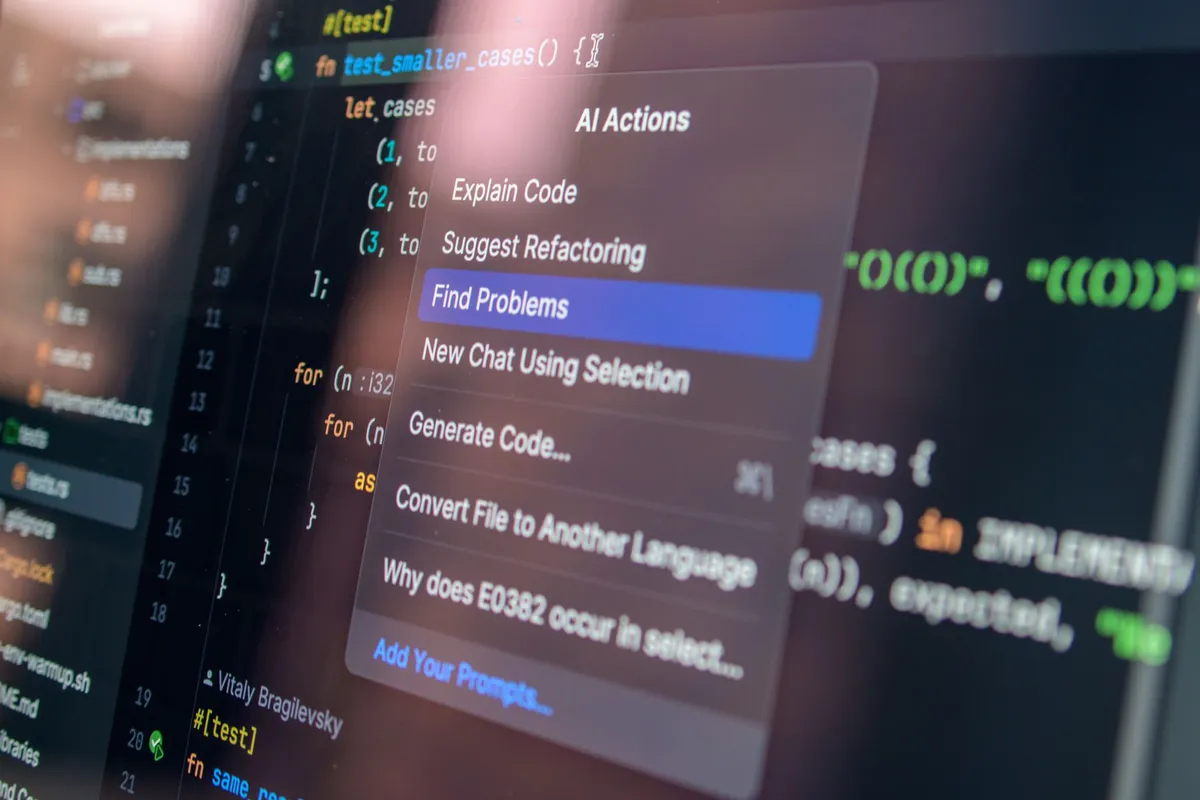
Revolutionizing Code Maintenance: The Power of AI-Powered Code Refactoring
-
 Hiroshi Tanaka
 - 16 Aug, 2026 18:48
The Dawn of AI-Powered Code Refactoring
As software systems continue to grow in complexity, managing technical debt has become an increasingly pressing concern for developers. Technical debt refers to the cost of implementing quick fixes or workarounds that need to be revisited later, often resulting in a significant maintenance burden. However, with the advent of AI-powered code refactoring, developers can now automatically manage technical debt and improve code quality.
Recent advances in artificial intelligence (AI) have enabled the development of sophisticated code refactoring tools that can analyze codebases, identify areas of improvement, and apply transformations to enhance maintainability, readability, and performance. These tools leverage machine learning algorithms, natural language processing, and data analysis to understand the structure and semantics of code, allowing for more accurate and effective refactoring.
Secure Design Principles for AI-Powered Code Refactoring
When designing AI-powered code refactoring systems, several secure design principles must be considered to ensure the integrity and reliability of the refactored code:
- Modularity: Break down the codebase into smaller, independent modules to facilitate easier analysis and transformation.
- Abstraction: Use abstract representations of code to enable more efficient analysis and transformation.
- Encapsulation: Ensure that sensitive data and functionality are properly encapsulated to prevent unauthorized access or modification.
- Reusability: Design the refactoring system to promote reusability of code components and transformations.
import ast

def refactor_code(code):
    # Parse the code into an abstract syntax tree (AST)
    tree = ast.parse(code)

    # Analyze the AST to identify areas of improvement
    improvements = analyze_ast(tree)

    # Apply transformations to the AST to implement improvements
    transformed_tree = apply_transformations(tree, improvements)

    # Generate the refactored code from the transformed AST
    refactored_code = ast.unparse(transformed_tree)

    return refactored_code

def analyze_ast(tree):
    # Implement analysis logic to identify areas of improvement
    pass

def apply_transformations(tree, improvements):
    # Implement transformation logic to apply improvements
    pass
Evaluating the Effectiveness of AI-Powered Code Refactoring
Evaluating the effectiveness of AI-powered code refactoring requires a comprehensive approach that considers multiple factors, including:
- Code quality metrics: Measure improvements in code quality, such as maintainability, readability, and performance.
- Technical debt reduction: Assess the reduction in technical debt resulting from the refactoring process.
- Developer productivity: Evaluate the impact of AI-powered code refactoring on developer productivity and efficiency.
evaluation_criteria:
  code_quality_metrics:
    - maintainability
    - readability
    - performance
  technical_debt_reduction:
    - percentage_reduction
  developer_productivity:
    - time_saved
    - effort_reduced
Real-World Applications of AI-Powered Code Refactoring
AI-powered code refactoring has numerous real-world applications, including:
- Legacy system modernization: Refactor legacy codebases to improve maintainability, scalability, and performance.
- Cloud migration: Refactor on-premises applications for cloud deployment, ensuring optimal performance and scalability.
- DevOps automation: Integrate AI-powered code refactoring into DevOps pipelines to automate code review and improvement.
# Example DevOps pipeline script
#!/bin/bash

# Refactor code using AI-powered code refactoring tool
refactored_code=$(refactor_code $CODE)

# Deploy refactored code to production environment
deploy_code $refactored_code
The Future of Code Maintenance
As AI-powered code refactoring continues to evolve, we can expect to see significant advancements in code maintenance and improvement. With the ability to automatically manage technical debt and improve code quality, developers can focus on higher-level tasks, such as feature development and innovation.
In conclusion, AI-powered code refactoring is revolutionizing the way we approach code maintenance, enabling developers to automatically manage technical debt and improve code quality. By understanding the secure design principles, evaluation criteria, and real-world applications of AI-powered code refactoring, developers can unlock the full potential of this technology and take their code maintenance to the next level.
#AI #CodeRefactoring #TechnicalDebt #SoftwareEngineering #Automation