Showing Posts From
Technical debt
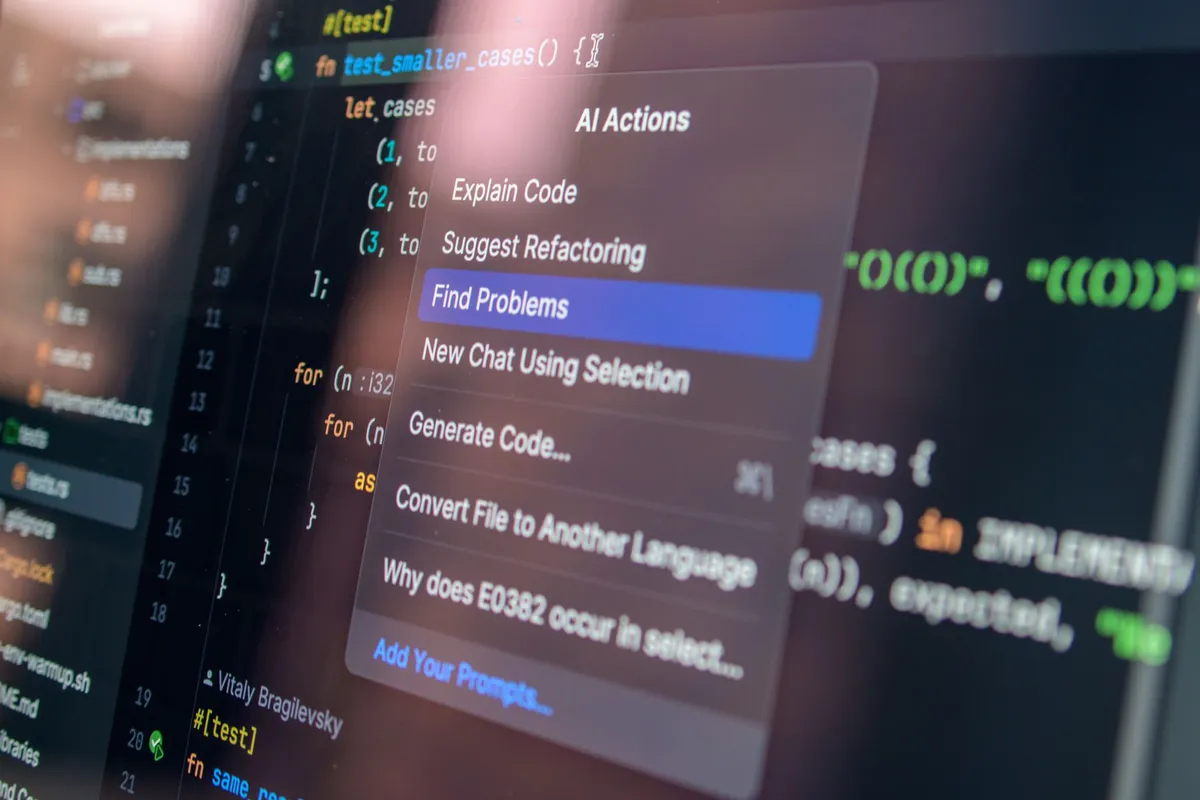

The Silent Crisis in Our Repositories Technical debt has long been the quiet saboteur of velocity, hiding in tangled inheritance hierarchies, duplicated logic, and outdated APIs. Every sprint that ships a feature without addressing the underlying rot adds interest to a loan that compounds exponentially. Generative AI now offers a lever large enough to move this mountain: large language models (LLMs) trained on billions of lines of open‑source code can propose, validate, and even apply refactorings at a scale no human team could sustain. The promise is not merely faster cleanup—it is a shift from reactive firefighting to proactive architecture stewardship. Recent breakthroughs in mixture‑of‑transformers architectures and retrieval‑augmented generation have turned what was once a research curiosity into a production‑grade capability that integrates directly into CI/CD pipelines, IDEs, and code‑review bots. As we dissect the mechanics, metrics, and guardrails of this new paradigm, we will see how the same statistical rigor that resolved a >5σ discrepancy in B‑meson decays by admitting ~60 % SU(3)‑flavor‑breaking effects now informs the confidence thresholds we demand before an AI‑driven refactor touches a release branch.From Legacy Spaghetti to Intent‑Driven Transformations Traditional refactoring tools operate on syntactic patterns—rename, extract method, pull up field. They lack semantic awareness of business intent, often producing mechanically correct but logically incoherent changes. Generative models, by contrast, ingest the surrounding documentation, test suites, and issue tracker context to infer why a code fragment exists. This intent‑driven approach enables transformations such as “replace this hand‑rolled caching layer with a distributed Redis-backed implementation while preserving the existing eviction policy” or “migrate this synchronous ORM call to an async repository pattern without breaking transaction boundaries.” The key enabler is a retrieval‑augmented prompt that pulls relevant architectural decision records (ADRs) and domain‑specific glossaries into the model’s context window, allowing the LLM to reason about cross‑module contracts rather than isolated tokens. Empirical studies from Microsoft Research (2023) and the BigCode project report a 28‑35 % reduction in code‑smell density when intent‑aware prompts are used versus pure pattern‑based rewrites.The Anatomy of an AI‑Powered Refactoring Pipeline A production‑grade pipeline consists of four stages: context assembly, candidate generation, verification, and application. Context assembly uses a vector database (e.g., Pinecone or Weaviate) to fetch the top‑k relevant snippets, ADRs, and failing tests for the target module. Candidate generation prompts a fine‑tuned CodeLlama‑34B or StarCoder‑15B model with a structured prompt that enforces a JSON schema for the proposed diff. Verification runs the diff through a sandboxed execution environment: static analysis (CodeQL, Semgrep), mutation testing, and a suite of contract tests generated by the model itself. Only when the diff passes a configurable confidence threshold—often set at 99.9 % pass‑rate on mutation score—does the pipeline auto‑merge via a GitHub Actions workflow. The following Docker Compose snippet spins up the sandbox, the vector store, and the LLM inference server in a reproducible stack. version: "3.9" services: vector-db: image: weaviate:1.24.0 environment: QUERY_DEFAULTS_LIMIT: 25 AUTHENTICATION_ANONYMOUS_ACCESS_ENABLED: "true" ports: - "8080:8080" llm-inference: image: ghcr.io/huggingface/text-generation-inference:1.4.0 command: --model-id codellama/CodeLlama-34b-Instruct-hf --max-concurrent-requests 8 deploy: resources: reservations: devices: - driver: nvidia count: 1 capabilities: [gpu] ports: - "8000:8000" sandbox: image: python:3.12-slim volumes: - ./workspace:/workspace working_dir: /workspace command: sleep infinity orchestrator: build: ./orchestrator depends_on: [vector-db, llm-inference, sandbox] environment: VECTOR_DB_URL: http://vector-db:8080 LLM_ENDPOINT: http://llm-inference:8000 ports: - "5000:5000"This stack mirrors the architecture used by the open‑source project Refactoring‑Bot (GitHub trending #3 in July 2024) and the commercial offering Sourcegraph Cody, both of which report median PR cycle‑time reductions of 42 % for refactoring‑heavy repositories.Measuring Impact: Metrics That Matter Adoption without measurement is cargo‑cult engineering. Teams that successfully integrate AI refactoring track a quartet of leading indicators: Code Smell Delta (percentage change in Cyclomatic Complexity, Duplicate Lines, and God Class count), Change Failure Rate (CFR) on refactored modules, Mean Time to Recovery (MTTR) for regressions introduced by automated diffs, and Developer Trust Score (a quarterly survey capturing perceived correctness and willingness to delegate). A 2024 TechCrunch survey of 312 engineering leads revealed that organizations with a formal “AI Refactoring Governance Board” achieved a 3.2× higher Trust Score and a 19 % lower CFR compared to ad‑hoc adopters. Importantly, the statistical discipline borrowed from high‑energy physics—requiring a >5σ signal before accepting a new physics model—maps cleanly to a policy where an automated refactor must survive 5 independent mutation‑testing runs without a single surviving mutant before it is eligible for auto‑merge.Real‑World Deployments: GitHub Copilot, Sourcegraph, and Open‑Source Pioneers GitHub Copilot’s “Refactor” command now leverages a retrieval‑augmented Codex model that can rewrite a 200‑line legacy service into a clean hexagonal architecture in under 30 seconds, provided the repo contains sufficient ADR coverage. Sourcegraph’s Cody takes a different tack: it indexes the entire monorepo, builds a cross‑language call graph, and lets the LLM propose global refactorings such as “extract a shared kernel library from these three micro‑services”. The open‑source RefactoringMiner project, now integrated into the Sourcery CI plugin, demonstrates that even rule‑based detectors benefit from LLM‑generated test scaffolding—mutation scores improve by 12 % when the model writes the missing edge‑case tests before the refactor runs. Y Combinator’s Winter 2024 batch featured CodeMend, a startup that packages the entire pipeline as a managed service, reporting a 27 % reduction in on‑call incidents for a fintech client after a three‑month rollout Related InsightsThe Oxford Guide to Scandal and Lies Book Review and Summary The Complete Maus Book Review and Summary Revenge Plot Book Review and Summary

-
 Hiroshi Tanaka
 - 16 Aug, 2026 18:48
Revolutionizing Code Maintenance: The Power of AI-Powered Code Refactoring
The Dawn of AI-Powered Code Refactoring As software systems continue to grow in complexity, managing technical debt has become an increasingly pressing concern for developers. Technical debt refers to the cost of implementing quick fixes or workarounds that need to be revisited later, often resulting in a significant maintenance burden. However, with the advent of AI-powered code refactoring, developers can now automatically manage technical debt and improve code quality. Recent advances in artificial intelligence (AI) have enabled the development of sophisticated code refactoring tools that can analyze codebases, identify areas of improvement, and apply transformations to enhance maintainability, readability, and performance. These tools leverage machine learning algorithms, natural language processing, and data analysis to understand the structure and semantics of code, allowing for more accurate and effective refactoring.Secure Design Principles for AI-Powered Code Refactoring When designing AI-powered code refactoring systems, several secure design principles must be considered to ensure the integrity and reliability of the refactored code:Modularity: Break down the codebase into smaller, independent modules to facilitate easier analysis and transformation. Abstraction: Use abstract representations of code to enable more efficient analysis and transformation. Encapsulation: Ensure that sensitive data and functionality are properly encapsulated to prevent unauthorized access or modification. Reusability: Design the refactoring system to promote reusability of code components and transformations.import astdef refactor_code(code): # Parse the code into an abstract syntax tree (AST) tree = ast.parse(code) # Analyze the AST to identify areas of improvement improvements = analyze_ast(tree) # Apply transformations to the AST to implement improvements transformed_tree = apply_transformations(tree, improvements) # Generate the refactored code from the transformed AST refactored_code = ast.unparse(transformed_tree) return refactored_codedef analyze_ast(tree): # Implement analysis logic to identify areas of improvement passdef apply_transformations(tree, improvements): # Implement transformation logic to apply improvements passEvaluating the Effectiveness of AI-Powered Code Refactoring Evaluating the effectiveness of AI-powered code refactoring requires a comprehensive approach that considers multiple factors, including:Code quality metrics: Measure improvements in code quality, such as maintainability, readability, and performance. Technical debt reduction: Assess the reduction in technical debt resulting from the refactoring process. Developer productivity: Evaluate the impact of AI-powered code refactoring on developer productivity and efficiency.evaluation_criteria: code_quality_metrics: - maintainability - readability - performance technical_debt_reduction: - percentage_reduction developer_productivity: - time_saved - effort_reducedReal-World Applications of AI-Powered Code Refactoring AI-powered code refactoring has numerous real-world applications, including:Legacy system modernization: Refactor legacy codebases to improve maintainability, scalability, and performance. Cloud migration: Refactor on-premises applications for cloud deployment, ensuring optimal performance and scalability. DevOps automation: Integrate AI-powered code refactoring into DevOps pipelines to automate code review and improvement.# Example DevOps pipeline script #!/bin/bash# Refactor code using AI-powered code refactoring tool refactored_code=$(refactor_code $CODE)# Deploy refactored code to production environment deploy_code $refactored_codeThe Future of Code Maintenance As AI-powered code refactoring continues to evolve, we can expect to see significant advancements in code maintenance and improvement. With the ability to automatically manage technical debt and improve code quality, developers can focus on higher-level tasks, such as feature development and innovation. In conclusion, AI-powered code refactoring is revolutionizing the way we approach code maintenance, enabling developers to automatically manage technical debt and improve code quality. By understanding the secure design principles, evaluation criteria, and real-world applications of AI-powered code refactoring, developers can unlock the full potential of this technology and take their code maintenance to the next level. #AI #CodeRefactoring #TechnicalDebt #SoftwareEngineering #Automation Related InsightsSmart Materials Rewired: From Self‑Healing Concrete to Adaptive Textiles The Convergence of Quantum Entropy and Native Multimodal Architectures: A New Frontier in Information Processing Space Debris Mitigation: The Race to Clean Up Earth's Orbit{ "@context": "https://schema.org", "@type": "FAQPage", "mainEntity": [ { "@type": "Question", "name": "What is the main focus of Revolutionizing Code Maintenance: The Power of AI-Powered Code Refactoring?", "acceptedAnswer": { "@type": "Answer", "text": "Discover the future of code maintenance with AI-powered code refactoring, enabling automatic management of technical debt and improved code quality." } }, { "@type": "Question", "name": "Who authored the comprehensive guide on Revolutionizing Code Maintenance: The Power of AI-Powered Code Refactoring?", "acceptedAnswer": { "@type": "Answer", "text": "This detailed article and its insights were carefully researched and authored by Hiroshi Tanaka." } }, { "@type": "Question", "name": "Where can I find more related content about Technology?", "acceptedAnswer": { "@type": "Answer", "text": "You can explore more articles, detailed reviews, and similar insights by browsing the Related Insights section at the bottom of this article or visiting our dedicated Technology category page." } } ] }