Showing Posts From
Technology
-
 Emily Page
 - 01 Sep, 2026 10:45
The Invisible Canvas of the Digital Age: A Deep Dive into Silicon Wafers
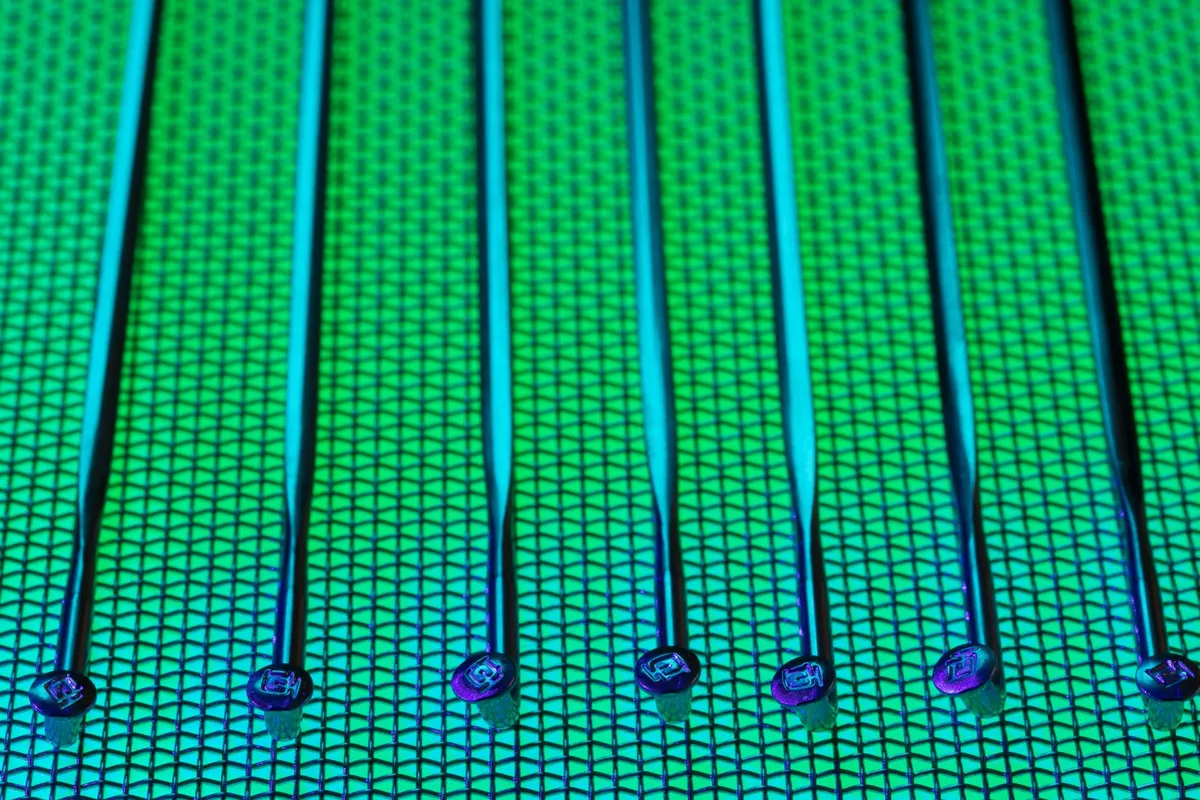
Beneath the polished glass of your smartphone and the rhythmic hum of the servers that power our global connectivity lies a substance so profoundly transformative that it has redefined the boundaries of human possibility. We treat technology as ephemeral, a cloud-based ether that exists everywhere and nowhere, yet its physical manifestation is anchored in something as tangible and ancient as the earth itself: sand. Specifically, the ultra-pure, crystalline silicon wafer. These discs, shimmering with a holographic iridescence, are the invisible canvases of the digital age, the fragile foundations upon which we have etched the entire library of human knowledge. From Earth to Eternity: The Alchemy of Crystal Growth The story of the silicon wafer begins not in a laboratory, but in the elemental furnace of the earth. Silicon is the second most abundant element in the crust, but to become a computer chip, it must undergo a rigorous purification process. The goal is to reach a level of purity known as "eleven nines"—99.999999999% pure. This is a level of refinement that borders on the spiritual; even a single errant atom of impurity can render the entire structure chaotic and unusable. To create the wafer, high-purity polycrystalline silicon is melted in a crucible. This process, often referred to as the Czochralski method, involves dipping a tiny, perfectly oriented seed crystal into the molten pool. As the seed is slowly pulled upward and rotated, a single, flawless cylindrical ingot—a boules—is formed. It is a slow, meditative process. Imagine a single crystal structure, growing atom by atom, maintaining a perfect lattice orientation throughout its entire length. This ingot, often weighing hundreds of pounds, represents the raw potential of the digital world.The Precision of the Blade Once the ingot is cooled, it is sliced with wire saws impregnated with diamond dust. These blades move with surgical precision, carving the solid cylinder into discs often less than a millimeter thick. The surface must be polished until it reaches a mirror-like finish, free of any microscopic scratches or deformations. This wafer is the canvas. It is a stage of absolute flatness, a pristine landscape where we will soon construct cities of light and electricity. When you hold a wafer in your hand, you are not merely looking at a piece of glass-like material; you are looking at a substrate that has been engineered to be the most perfect surface on the planet. If the topography of the Earth were scaled down to the smoothness of a silicon wafer, the Himalayas would be invisible to the naked eye. Etching the Architecture of Thought The actual process of turning a wafer into a functional brain for a computer—the integrated circuit—is perhaps the most sophisticated manufacturing feat in history. It is a process of photolithography, a form of high-tech printing that uses light to project patterns onto the wafer. The wafer is coated with a light-sensitive chemical called a photoresist. Through a series of complex masks, ultraviolet light is shone onto the surface, creating intricate patterns of channels and gates. These patterns define the logic, the memory, and the processing power of the chip. Following exposure, the wafer is subjected to chemical etching or ion implantation, processes that carve away unwanted materials or inject specific impurities into the silicon to change its electrical properties. We are, in essence, painting with light. We build layers upon layers, a vertical architecture of transistors that are so small that billions can fit on a single chip. It is a cathedral of microscopic proportions, where logic flows through gates that are only a few atoms wide.The Invisible Library of Human Progress Why do we not talk more about the wafer? Perhaps because it is designed to disappear. Once the chips are cut from the wafer, packaged into plastic or ceramic shells, and installed into devices, the wafer itself is gone, buried deep within the machinery. Yet, every book we read on a tablet, every photograph stored in the cloud, and every line of code that guides our autonomous vehicles began its life on that round, shimmering disc. This technology has shifted the way we store history. In the past, we relied on paper and parchment, canvases made of pulp or animal skin. Now, our history is recorded in the displacement of electrons within a crystal lattice. We have moved from the ink of the quill to the light of the laser. The silicon wafer is the ultimate library, one that can hold the entire sum of human thought within a space no larger than a human fingernail. Challenges at the Edge of Physics As we push the boundaries of what is possible, we encounter the strange and unforgiving laws of quantum mechanics. When a transistor gate is only a few atoms thick, the electrons do not always behave as expected. They exhibit "tunneling," where they skip over barriers as if they were ghosts. This is the frontier of our current age. Engineers are now moving toward three-dimensional structures—FinFETs and Gate-All-Around (GAA) architectures—where the transistors are no longer flat, but standing upright like skyscrapers in a digital metropolis. The canvas is becoming a landscape of depth and complexity. We are not just building on the surface; we are building upward, seeking to pack more intelligence into every square millimeter of silicon.The Future of the Crystalline Canvas What lies beyond the current generation of wafers? Research into materials like gallium nitride and silicon carbide promises to handle higher voltages and heat, potentially transforming how we manage energy grid infrastructure and electric vehicles. We are even exploring the use of neuromorphic computing—chips designed to mimic the biological structure of the human brain. The silicon wafer remains the constant. Despite the chatter about quantum computing and biological data storage, silicon's role as the foundation of modern civilization is unlikely to be supplanted soon. It is a testament to the power of human ingenuity—that we took the most common material in the earth, and through relentless, exacting science, turned it into the very medium of modern consciousness. When you look at your computer or smartphone again, remember the wafer. Remember the ingot grown from a single seed, the diamond-sawed slices, and the light-etched patterns that move at the speed of thought. You are looking at the culmination of a journey that began with the earth and ended with the stars, a canvas that holds not just data, but the story of us. #SiliconWafers #SemiconductorHistory #ComputingArchitecture #MicrochipInnovation #DigitalFoundations Related InsightsBrisingr Book Review and Summary The Knife of Never Letting Go Book Review and Summary House of Earth and Blood Book Review and Summary{ "@context": "https://schema.org", "@type": "FAQPage", "mainEntity": [ { "@type": "Question", "name": "What is the main focus of The Invisible Canvas of the Digital Age: A Deep Dive into Silicon Wafers?", "acceptedAnswer": { "@type": "Answer", "text": "Explore the microscopic architecture of our modern world. Discover how thin slices of silicon form the silent, invisible canvases upon which the history of human progress is written." } }, { "@type": "Question", "name": "Who authored the comprehensive guide on The Invisible Canvas of the Digital Age: A Deep Dive into Silicon Wafers?", "acceptedAnswer": { "@type": "Answer", "text": "This detailed article and its insights were carefully researched and authored by Emily Page." } }, { "@type": "Question", "name": "Where can I find more related content about Books?", "acceptedAnswer": { "@type": "Answer", "text": "You can explore more articles, detailed reviews, and similar insights by browsing the Related Insights section at the bottom of this article or visiting our dedicated Books category page." } } ] }

-
 Claire Beaufort
 - 17 Jul, 2026 17:58
Vector Databases: The New Frontier for AI-Powered Search and Retrieval
Vector Databases: The New Frontier for AI-Powered Search and Retrieval Introduction The AI revolution has fundamentally transformed how we interact with information. Traditional keyword-based search systems, while effective for decades, struggle to understand semantic meaning, contextual nuance, and intent behind queries. Enter vector databases—the unsung heroes powering next-generation search, recommendation systems, and retrieval-augmented generation (RAG) in large language models (LLMs). Unlike conventional databases that rely on exact matches, vector databases store data as high-dimensional embeddings, enabling similarity search, semantic retrieval, and real-time contextual understanding. Recent advancements in AI—particularly in transformer-based models like BERT, T5, and the latest LLMs—have made embeddings more powerful than ever. These embeddings capture intricate relationships between words, sentences, and even entire documents, allowing vector databases to perform semantic search with unprecedented accuracy. For instance, a query like "How do black holes form?" can now retrieve documents about stellar collapse, accretion disks, and Hawking radiation—not just pages containing the exact phrase. But how do vector databases work under the hood? What are the trade-offs between different indexing strategies like HNSW, IVF, or PQ? And how are they being integrated into production systems like RAG pipelines, recommendation engines, and enterprise search? This article dives deep into the architecture, performance benchmarks, and real-world applications of vector databases, backed by cutting-edge research from arXiv and industry trends from GitHub and TechCrunch. Vector Database Architectures: Indexing Strategies for Scalability Storing and querying millions of vectors efficiently requires specialized indexing techniques. Unlike traditional databases that use B-trees or hash indexes, vector databases employ approximate nearest neighbor (ANN) search algorithms to balance speed and accuracy. Here are the most popular indexing strategies: 1. Hierarchical Navigable Small World (HNSW) HNSW is the gold standard for vector search, combining small-world graphs with hierarchical layers to enable sub-linear search time. It works as follows:Graph Construction: Vectors are connected in a graph where edges represent proximity. Hierarchical Layers: A multi-layer graph is built, with lower layers containing finer details and higher layers providing coarse-grained navigation. Search: Queries traverse the graph, jumping between layers to quickly narrow down candidates.Advantages:O(log n) search complexity. High recall (ability to find all relevant vectors). Dynamic updates (supports insertions/deletions).Disadvantages:Memory-intensive (stores graph edges). Sensitive to hyperparameters (e.g., ef_construction, M).HNSW Implementation in Python (Using nmslib) import nmslib# Initialize index index = nmslib.init(method='hnsw', space='cosinesimil')# Add vectors vectors = [[0.1, 0.2, 0.3], [0.4, 0.5, 0.6], [0.7, 0.8, 0.9]] index.addDataPointBatch(vectors)# Build index index.createIndex({'post': 2})# Query query_vector = [0.15, 0.25, 0.35] neighbors, distances = index.knnQuery(query_vector, k=2) print("Nearest neighbors:", neighbors)2. Inverted File (IVF) with Product Quantization (PQ) IVF-PQ is a two-stage approach:IVF Clustering: Vectors are partitioned into clusters using k-means. Product Quantization: Each vector is compressed into a short code (e.g., 64-bit) for efficient storage and comparison.Advantages:Memory-efficient (compressed vectors). Scalable to billions of vectors.Disadvantages:Lower recall compared to HNSW. Slower for dynamic datasets (requires periodic reclustering).IVF-PQ Implementation (Using faiss) import faiss import numpy as np# Generate random vectors d = 128 # dimension nb = 100000 # database size nq = 100 # queries np.random.seed(1234) xb = np.random.random((nb, d)).astype('float32') xq = np.random.random((nq, d)).astype('float32')# Build IVF-PQ index nlist = 100 # number of clusters m = 8 # number of subquantizers quantizer = faiss.IndexFlatL2(d) index = faiss.IndexIVFPQ(quantizer, d, nlist, m, 8) index.train(xb) index.add(xb)# Search k = 4 distances, indices = index.search(xq, k) print("Nearest neighbors:", indices)3. DiskANN: Scalable ANN for Billion-Scale Datasets DiskANN is designed for out-of-core search, where vectors don’t fit in RAM. It uses:Vamana graph (a variant of HNSW optimized for disk). Compressed vectors (stored on disk). Asynchronous I/O for fast retrieval.Use Case: Ideal for enterprise search where datasets exceed 100GB.Real-World Applications: From RAG to Recommendation Systems Vector databases are the backbone of modern AI applications. Here’s how they’re being used in production: 1. Retrieval-Augmented Generation (RAG) LLMs like ChatGPT and Claude use RAG to fetch relevant context before generating responses. For example:A user asks: "What are the latest advancements in quantum computing?" The system retrieves recent papers from arXiv or Nature using a vector database. The LLM synthesizes the retrieved information into a coherent answer.RAG Pipeline with Weaviate (Python) from weaviate import Client# Connect to Weaviate client = Client("http://localhost:8080")# Define schema class Paper: properties = [ {"name": "title", "dataType": ["text"]}, {"name": "abstract", "dataType": ["text"]}, {"name": "embedding", "dataType": ["vector"]} ]client.schema.create_class(Paper)# Add data paper = { "title": "Advances in Quantum Computing", "abstract": "Recent breakthroughs in quantum error correction...", "embedding": [0.1, 0.2, ..., 0.9] # Generated via SBERT } client.data_object.create(paper, "Paper")# Query query = "quantum computing breakthroughs" query_embedding = generate_embedding(query) # Using SBERT results = client.query.get("Paper", ["title", "abstract"]).with_near_vector({"vector": query_embedding}).do() print(results)2. Recommendation Systems Vector databases power personalized recommendations in e-commerce and social media. For example:Amazon uses embeddings to recommend products based on user behavior. Spotify generates song embeddings to suggest similar tracks.Collaborative Filtering with Annoy (Spotify’s Library) from annoy import AnnoyIndex import numpy as np# Generate user-item interactions user_ids = [1, 2, 3] item_ids = [101, 102, 103] interactions = np.array([ [1, 101, 5], # User 1 likes Item 101 [2, 102, 4], # User 2 likes Item 102 [3, 103, 3] # User 3 likes Item 103 ])# Build Annoy index dim = 10 # Embedding dimension t = AnnoyIndex(dim, 'angular') for user_id, item_id, rating in interactions: embedding = generate_user_embedding(user_id, item_id) # Custom function t.add_item(item_id, embedding)t.build(10) # 10 trees# Recommend for User 1 user_embedding = generate_user_embedding(1, None) recommendations = t.get_nns_by_vector(user_embedding, 2) print("Recommended items:", recommendations)3. Enterprise Search & Knowledge Management Companies like Microsoft (Azure Cognitive Search) and Elastic use vector databases to enable semantic search in internal documents. For example:A legal firm searches for "breach of contract" and retrieves relevant case law. A biotech company finds research papers on "CRISPR gene editing" without exact keyword matches.Performance Benchmarks: HNSW vs. IVF vs. DiskANN To evaluate vector databases, we compare them across latency, recall, and memory usage using a 10M vector dataset (e.g., Wikipedia embeddings). Here’s a comparison table:Metric HNSW IVF-PQ DiskANNIndex Build Time 120s 90s 180sQuery Latency (ms) 1.2 5.6 8.3Recall@10 0.98 0.85 0.92Memory Usage (GB) 4.2 1.8 0.5 (disk)Dynamic Updates Yes No YesKey Takeaways:HNSW is best for low-latency, high-recall applications. IVF-PQ excels in memory-constrained environments. DiskANN is ideal for billion-scale datasets.The Future: Challenges and Emerging Trends Despite their success, vector databases face several challenges: 1. Hybrid Search: Combining Keywords and Vectors Users often want both exact matches (keywords) and semantic matches (vectors). Solutions like Elasticsearch’s dense_vector and PostgreSQL’s pgvector enable hybrid search. Hybrid Search with pgvector (PostgreSQL) -- Create table with vector column CREATE EXTENSION vector; CREATE TABLE documents ( id SERIAL PRIMARY KEY, content TEXT, embedding vector(1536) );-- Create hybrid index CREATE INDEX ON documents USING ivfflat (embedding vector_cosine_ops);-- Hybrid query (keyword + vector) SELECT content, embedding <=> '[0.1, 0.2, ..., 0.9]' AS distance FROM documents WHERE content LIKE '%quantum%' ORDER BY distance LIMIT 10;Related InsightsThe Martian Architecture: Converging Quantum Sensing and Neural Distillation for Interplanetary Logistics Unlocking the Secrets of Quantum Computing: Breakthroughs in Qubit Stability and Error Correction The Digital Scalpel: Architecting High-Fidelity Haptic Feedback in Robotic Surgery Simulation{ "@context": "https://schema.org", "@type": "FAQPage", "mainEntity": [ { "@type": "Question", "name": "What is the main focus of Vector Databases: The New Frontier for AI-Powered Search and Retrieval?", "acceptedAnswer": { "@type": "Answer", "text": "A comprehensive guide to vector databases, focusing on their role in enhancing AI-powered search and retrieval capabilities." } }, { "@type": "Question", "name": "Who authored the comprehensive guide on Vector Databases: The New Frontier for AI-Powered Search and Retrieval?", "acceptedAnswer": { "@type": "Answer", "text": "This detailed article and its insights were carefully researched and authored by Claire Beaufort." } }, { "@type": "Question", "name": "Where can I find more related content about Technology?", "acceptedAnswer": { "@type": "Answer", "text": "You can explore more articles, detailed reviews, and similar insights by browsing the Related Insights section at the bottom of this article or visiting our dedicated Technology category page." } } ] }
-
 John Doe
 - 15 Jun, 2026 10:00
The Need for Speed: The Ultimate Guide to the High-Flying World of Drone Racing
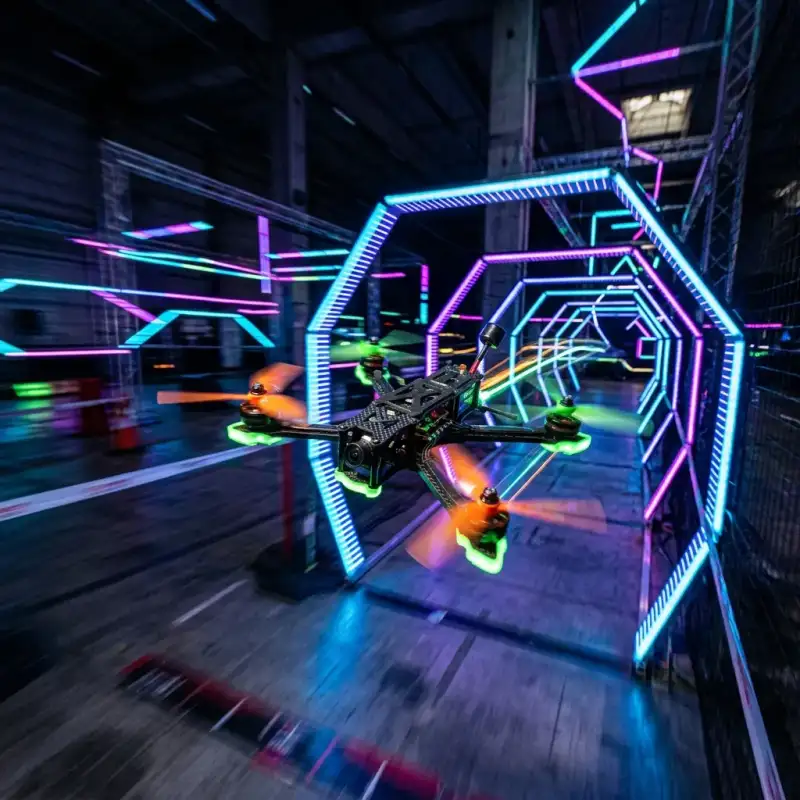
The Genesis of a Futuristic Motorsport In the ever-evolving landscape of modern sports, few spectacles can rival the visceral thrill, technological sophistication, and sheer velocity of drone racing. What began as a niche, almost underground hobby among radio-control enthusiasts in open fields and abandoned warehouses has rapidly metamorphosed into a professional, globally recognized motorsport. At its core, drone racing is an aviation sport where pilots control small, custom-built multirotor aircraft—commonly known as drones or quadcopters—around three-dimensional obstacle courses at dizzying speeds. These machines are not your average photography drones; they are highly tuned, aerodynamic projectiles capable of reaching speeds in excess of 120 miles per hour in a matter of seconds. The magic of drone racing lies in its unique fusion of physical reality and immersive digital perspective, a paradigm known as First Person View (FPV). Through FPV, pilots wear specialized goggles that stream live, low-latency video directly from a camera mounted on the nose of the drone. When a pilot straps on these goggles, they are visually teleported into the cockpit of their aircraft. Every bank, dive, roll, and high-speed corner is experienced firsthand, creating a sensory experience that blurs the line between human and machine. It is as close to being a bird of prey—or a fighter pilot—as one can get without leaving the ground. As we delve deep into the universe of #DroneRacing, we will explore the intricate technology that powers these aerial rockets, the profound level of skill required to pilot them, the evolution of course design, the rise of professional leagues, and the vibrant culture that sustains this high-flying community. Whether you are a seasoned FPV veteran, an aspiring pilot looking to take your first flight, or simply an intrigued spectator, the world of FPV racing offers a fascinating glimpse into the future of competitive sports. The Anatomy of a Racing Drone: Engineering for Extreme Speed To truly appreciate the sport, one must understand the anatomy of a racing drone. Unlike commercial camera drones, which are designed for stability, ease of use, and automated flight (using GPS and optical flow sensors), racing drones are built entirely for speed, agility, and durability. They are stripped of all non-essential components, relying entirely on the pilot's manual input and a sophisticated array of electronics. The typical FPV racing drone is a masterclass in miniaturized engineering. #FPVTechnology The Frame: The Skeleton of the Beast The foundation of any racing drone is its frame. Traditionally constructed from high-grade carbon fiber, the frame must be exceptionally rigid to eliminate vibrations that can confuse the flight controller, yet light enough to maximize the thrust-to-weight ratio. The arms of the frame must also be incredibly durable to withstand the inevitable high-speed crashes into concrete pillars, metal gates, and the ground. Modern frames often employ a true-X or stretched-X geometry to ensure balanced flight characteristics and optimal aerodynamics. The thickness of the carbon fiber plates, the arrangement of standoffs, and the overall geometry are meticulously debated by frame designers to shave off mere grams of weight while maintaining structural integrity. #CarbonFiber Motors and Propellers: The Propulsion System The raw power of a racing drone comes from its brushless DC motors. These motors are incredibly powerful for their size, capable of spinning at tens of thousands of revolutions per minute. Paired with the motors are polycarbonate propellers. The pitch, length, and number of blades on the propellers dictate how the drone "grips" the air. A steeper pitch provides higher top speed but requires more torque from the motor, whereas a lower pitch offers better efficiency and low-end control. The delicate balance between motor size, stator volume (commonly expressed in numbers like 2207 or 2306), and propeller configuration is a constant subject of optimization among pilots depending on whether the track is tight and technical or fast and flowing. The Flight Controller (FC): The Brain If the frame is the skeleton and the motors are the muscle, the flight controller is the central nervous system. The FC is a tiny circuit board equipped with a microprocessor and an inertial measurement unit (IMU) containing a gyroscope and an accelerometer. The FC runs highly specialized open-source firmware, such as Betaflight, EmuFlight, or KISS, which interprets the pilot's commands from the radio receiver and calculates exactly how fast each of the four motors must spin to achieve the desired movement. These calculations occur thousands of times per second (loop times), allowing for incredibly crisp, responsive, and locked-in flight characteristics. Pilots spend hours tuning the PID (Proportional, Integral, Derivative) controllers to ensure the drone responds perfectly to stick inputs without oscillating. Electronic Speed Controllers (ESCs): The Nervous System Sitting between the flight controller and the motors are the Electronic Speed Controllers. The ESCs translate the digital signals from the flight controller into the precise pulses of alternating current required to spin the brushless motors. In modern racing drones, these are often combined into a single 4-in-1 board to save weight and simplify wiring. They must be capable of handling massive spikes in electrical current—often over 40 to 50 amps per motor during a full-throttle punch-out. The protocol used to communicate between the FC and the ESC, such as DShot, ensures incredibly fast and reliable data transfer. The Battery: The Powerhouse Racing drones are powered by High-Voltage Lithium Polymer (LiPo) batteries. These batteries are chosen for their ability to discharge massive amounts of energy almost instantaneously. The standard voltage for modern racing drones is 6S (six cells in series, totaling 22.2 volts nominal), though some still use 4S configurations. Because of the intense power draw, flight times in a typical race are astonishingly short—often lasting between 60 seconds and three minutes before the battery is completely depleted. Managing battery voltage mid-race is a crucial skill; pushing the battery too hard for too long can result in a catastrophic failure or permanent damage to the cells. #LiPoBattery The FPV System: The Eyes The most defining component of a racing drone is its FPV system, comprising an FPV camera and a Video Transmitter (VTX). The camera is usually an analog or low-latency digital camera designed to handle rapid changes in lighting, such as transitioning from the dark shadows of a forest into bright sunlight. The VTX broadcasts the video signal over a specific radio frequency—usually 5.8 GHz—to the pilot's goggles. Historically, analog video has been the standard due to its absolute zero-latency performance and consistent degradation (static) at the edge of range, which warns pilots before a complete signal loss. However, digital systems developed by companies like DJI, HDZero, and Walksnail have revolutionized the sport. These systems offer crystal-clear, high-definition video with latency low enough for competitive racing, allowing pilots to spot tiny branches or course markers from much further away. #DigitalFPV The Art of Piloting: Flying on the Razor's Edge Piloting a racing drone is fundamentally different from flying a stabilized consumer drone. FPV pilots fly in what is known as "Acro Mode" (acrobatic mode) or "Rate Mode." In this mode, the flight controller makes no attempt to auto-level the aircraft. If the pilot pitches the drone forward 45 degrees and lets go of the stick, the drone will maintain that 45-degree angle indefinitely until another command is given. This requires constant, minute adjustments on the control sticks just to keep the drone airborne, let alone race it through a dense obstacle course. The control scheme on a standard radio transmitter consists of two highly sensitive joysticks. #DronePilot The Left Stick: Throttle and Yaw In the standard "Mode 2" configuration used by most pilots globally, the left stick controls throttle (vertical axis) and yaw (horizontal axis). Throttle dictates the overall speed of all four motors simultaneously. It controls altitude and forward speed depending on the angle of the drone. Pushing the stick forward increases power. Yaw rotates the drone around its vertical axis, much like the rudder on an airplane. It is used to point the nose of the drone in the desired direction while maintaining a flat horizon relative to the drone's tilt. The Right Stick: Pitch and Roll The right stick controls pitch (vertical axis) and roll (horizontal axis). Pitch tilts the nose of the drone up or down. Tilting the nose down directs the thrust backward, accelerating the drone forward. Pulling the nose up slows the drone down or accelerates it backward. Roll tilts the drone left or right, allowing it to bank into turns, perform aileron rolls, or correct for wind drift. Mastering the interaction between these four axes requires thousands of hours of practice. To execute a smooth, fast turn at 80 miles per hour, an FPV pilot must simultaneously roll into the turn, pull back slightly on pitch to maintain altitude, adjust throttle to counteract the loss of vertical lift, and add just enough yaw to keep the camera pointed precisely where they are going. The mental bandwidth required is staggering, demanding intense focus, deep flow states, and lightning-fast reflexes that border on the superhuman. #AcroMode Telemetry and On-Screen Display (OSD): Information at the Speed of Light In the heat of a race, a pilot cannot afford to take their eyes off the course for even a fraction of a second to check a screen or look at their radio. This is where the On-Screen Display (OSD) and telemetry become vital. The OSD overlays critical flight data directly onto the video feed inside the pilot's goggles, much like a heads-up display in a modern fighter jet. Crucial information such as battery voltage, current draw, flight time, artificial horizon, and radio link quality (RSSI or LQ) are constantly visible. If a pilot sees their battery voltage sagging dangerously low, they know they must finish the lap quickly or risk a mid-air power failure, colloquially known as "falling out of the sky." Advanced telemetry systems also send this data back to the pilot's radio transmitter, allowing it to vibrate or call out audible voice warnings, further enhancing the pilot's situational awareness. #OSD Course Design: The Three-Dimensional Racetrack Unlike Formula 1 or MotoGP, where racers are bound to a two-dimensional ribbon of asphalt, drone racing takes place in three dimensions. Course designers exploit this freedom to create complex, mind-bending tracks that challenge every aspect of a pilot's skill. The track is not just about left and right turns; it is about managing altitude, momentum, and spatial awareness in a fully 3D environment. A typical track consists of various elements:Gates: Large illuminated squares, circles, or arches that the drone must pass through. Missing a gate usually results in a severe penalty or requires the pilot to turn around and complete it, effectively destroying their lap time. Flags: Vertical pylons that pilots must navigate around, often used to create tight, high-speed slaloms. Dive Gates: Gates positioned vertically, sometimes attached to the ceilings of stadiums or the tops of tall structures, forcing the pilot to climb high and perform a controlled free-fall directly downward through the opening. Tunnels and Corridors: Enclosed spaces that severely restrict the pilot's ability to correct mistakes, punishing any deviation from the perfect racing line. Split-S and Immelmann Turns: Complex aerobatic maneuvers explicitly required by the track layout to transition between different elevations or directions smoothly.Tracks are often illuminated with bright LED lights to help the cameras see the obstacles and to create a visually stunning, cyberpunk-esque experience for spectators. The environment can be anything from a massive football stadium or an intricate forest canopy to an abandoned shopping mall, an underground parking garage, or a specially constructed neon-lit indoor arena. #RacetrackDesign The Rise of Professional Organizations As the grassroots community grew, it was inevitable that formal organizations would emerge to structure and monetize the sport. Today, several major leagues dominate the professional landscape, each offering a slightly different flavor of competition. The Drone Racing League (DRL) The Drone Racing League is perhaps the most recognizable professional organization in the world. Founded in 2015, DRL operates on a unique model: rather than having pilots build and bring their own drones, DRL engineers design and manufacture a fleet of identical, custom-built racing drones (such as the Racer3 and Racer4 models). This ensures that the competition is entirely based on pilot skill rather than technological superiority or access to better parts. DRL events are highly produced, million-dollar spectacles, held in iconic locations around the world, and broadcast on major television networks like NBC, Sky Sports, and various streaming platforms. The league has been instrumental in bringing drone racing to a mainstream audience, framing the pilots as the cyberpunk athletes of the future. #DRL MultiGP While DRL is the premier invitational and highly produced league, MultiGP is the lifeblood of the grassroots and competitive community. MultiGP is the largest drone racing league in the world, boasting hundreds of local chapters across the globe. They provide standard rules, uniform timing systems, and globally standardized track designs, allowing pilots of all skill levels to compete locally and earn points to qualify for regional and national championships. The annual MultiGP Championship is considered the definitive test of the best "bring-your-own-drone" pilots on the planet, where technological innovation and pilot skill are tested in equal measure. #MultiGP Drone Champions League (DCL) Operating primarily in Europe, the Drone Champions League blurs the lines between physical and virtual racing. DCL features team-based competition, where teams of pilots compete in breathtaking, high-profile locations, such as the salt mines of Romania, the ruins of a castle in Austria, or the Champs-Élysées in Paris. Furthermore, DCL places a heavy emphasis on their official simulator, DCL - The Game, allowing gamers to compete virtually and even draft their way onto a real-world professional team based on their simulator performance. #DCL Historic Milestones and Past Major Events The journey from a hobbyist pastime to a global sport has been marked by several key events. The 2016 World Drone Prix in Dubai was a watershed moment. Boasting a staggering $1 million prize pool, it attracted the best pilots from around the world to compete on a futuristic, custom-built outdoor track set against the backdrop of the Dubai skyline. The event was won by a 15-year-old British pilot, Luke Bannister, proving early on that in drone racing, reaction times and hand-eye coordination trumped age, background, and traditional piloting experience. In 2018, the FAI (Fédération Aéronautique Internationale), the world governing body for air sports, officially recognized drone racing as a legitimate sporting discipline and began hosting the FAI World Drone Racing Championship. This gave the sport legitimate international backing and standardized the rules globally, further cementing its status alongside traditional aviation sports like aerobatics and gliding. The Simulator Revolution: Merging Virtual and Reality One of the most fascinating aspects of drone racing is the critical role of flight simulators. Because crashing a real drone is expensive and repairing them is time-consuming, simulators have become the primary training ground for both amateurs and professionals. Simulators like Velocidrone, Liftoff, and Uncrashed use advanced physics engines to replicate the exact aerodynamic properties, weight distribution, and thrust characteristics of a racing drone. Pilots plug their actual radio transmitters into their computers via USB and fly virtual representations of real-world tracks. The physics have become so accurate that the muscle memory and spatial awareness skills learned in the simulator translate directly to the real world with minimal adjustment. In fact, many of today's top-tier professional pilots began their careers purely on simulators, only picking up a real drone after they had already mastered the virtual realm. This accessibility has democratized the sport, allowing anyone with a computer and a controller to learn how to fly before making a significant financial investment in hardware. #DroneSimulator #eSports The Economics of the Sport: Funding, Sponsorship, and Prize Money The rapid professionalization of drone racing has brought significant capital into the ecosystem. The Drone Racing League, for instance, has raised tens of millions of dollars from high-profile investors including RSE Ventures, Liberty Media (owners of Formula 1), and Sky. Sponsorships have also become a major revenue stream, with tech giants, telecommunications companies, and even traditional aerospace firms eager to associate their brands with the cutting-edge, high-tech image of drone racing. For the pilots, making a living solely from racing is still challenging but increasingly possible for the top echelon. Top pilots earn salaries from their leagues, command significant prize money at major events, and supplement their income through sponsorships from component manufacturers, YouTube ad revenue, and Patreon supporters. The "influencer" aspect of the sport is massive, with pilots regularly uploading their high-octane DVR (Digital Video Recorder) and HD action camera footage to social media platforms to showcase their skills, review new parts, and build their personal brands. #SportsEconomics The Future Horizon: AI and the Next Evolution As technology continues to advance at an exponential rate, the future of drone racing looks incredibly exciting and slightly terrifying. One of the most significant developments on the horizon is the integration of Artificial Intelligence. In recent years, researchers and engineers have been developing autonomous racing drones that navigate the course without any human input, relying entirely on onboard cameras, LiDAR, and deep neural networks to calculate the optimal racing line. In a landmark achievement, an AI-driven drone developed by researchers at the University of Zurich successfully defeated world champion human pilots on a real-world track. While human pilots still hold the edge in adaptability and dealing with unpredictable environmental factors (such as wind gusts, changing lighting conditions, or moving obstacles), the gap is closing rapidly. Organizations like the Artificial Intelligence Racing League (AIRL) are already exploring formats where AI and humans can compete side-by-side or in separate autonomous categories. Furthermore, advancements in battery technology, specifically the anticipated development of solid-state batteries, promise to drastically increase flight times and reduce weight, fundamentally altering the physics and pacing of the sport. We are also likely to see further miniaturization of components, allowing for races in incredibly tight, intricate micro-environments that are currently impossible to navigate. #AI #AutonomousDrones Conclusion: The Ultimate Test of Man and Machine Drone racing is more than just an emerging sport; it is a profound celebration of human ingenuity, superhuman reflexes, and the relentless pursuit of speed. It represents the perfect symbiosis of the pilot's physical skill and the engineer's technological prowess. When a pilot dons their FPV goggles and pushes the throttle to the absolute maximum, they transcend the physical limitations of the human body and experience the pure, unadulterated freedom of flight. From the quiet workbench smelling of flux where carbon fiber frames are assembled and firmware is meticulously tuned, to the dazzling lights of a multi-million-dollar stadium event, the community surrounding drone racing is passionate, fiercely innovative, and deeply dedicated. As the technology continues to mature, latency drops to zero, and the global audience expands, drone racing is poised to become one of the defining spectator sports of the 21st century. It is a sport where the sky is not the limit, but merely the starting line. The high-speed revolution has only just begun, and the world is strapping in for the ride. #FutureOfSports #AviationSports #FPVRacing #DroneRacing #FPV #Technology #eSports Related Insights{ "@context": "https://schema.org", "@type": "FAQPage", "mainEntity": [ { "@type": "Question", "name": "What is the main focus of The Need for Speed: The Ultimate Guide to the High-Flying World of Drone Racing?", "acceptedAnswer": { "@type": "Answer", "text": "Discover the exhilarating sport of drone racing, from cutting-edge First Person View (FPV) technology to the global leagues transforming this hobby into a futuristic motorsport." } }, { "@type": "Question", "name": "Who authored the comprehensive guide on The Need for Speed: The Ultimate Guide to the High-Flying World of Drone Racing?", "acceptedAnswer": { "@type": "Answer", "text": "This detailed article and its insights were carefully researched and authored by John Doe." } }, { "@type": "Question", "name": "Where can I find more related content about Sports?", "acceptedAnswer": { "@type": "Answer", "text": "You can explore more articles, detailed reviews, and similar insights by browsing the Related Insights section at the bottom of this article or visiting our dedicated Sports category page." } } ] }