Showing Posts From
The handmaid s tale
-
 Hannah Schmidt
 - 26 Dec, 2025 18:36
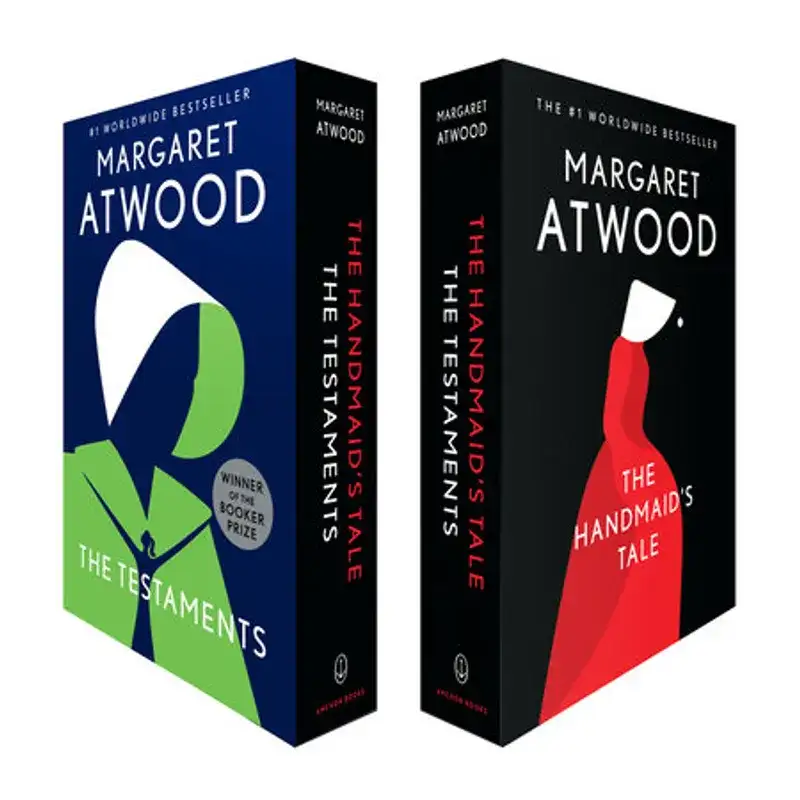
The Handmaid's Tale and The Testaments Box Set Book Review and Summary
The Handmaid's Tale and The Testaments Box Set Author: Margaret AtwoodPage Count: UnknownPublication Date: 2020-PRH Margaret Atwood’s The Handmaid’s Tale and The Testaments Box Set is a masterclass in dystopian fiction—one that doesn’t just warn but haunts, doesn’t just imagine but reflects the darkest corners of human oppression. These two novels, read together, form a chilling diptych of authoritarianism, resilience, and the quiet rebellion of the human spirit. Atwood, often hailed as the patron saint of feminist dystopian fiction, crafts a world so vividly oppressive that it lingers like smoke in the lungs long after the last page. The Handmaid’s Tale (1985), the foundational novel, introduces us to Gilead, a theocratic dictatorship born from environmental catastrophe and misogynistic extremism. Offred, its protagonist, is a Handmaid—stripped of her name, her family, her autonomy—reduced to a walking womb, a commodity in a society that treats women as either vessels or waste. Atwood’s genius lies in her ability to make the horrific feel eerily plausible. The regime’s rules aren’t fantastical; they’re extrapolations of real-world misogyny, religious extremism, and political control. The language of Gilead—where women are renamed after their Commanders (Of-Fred, Of-Warren, Of-Glen)—strips identity down to its barest, most dehumanizing form. Offred’s narration is a whisper of resistance: her memories of a pre-Gilead life, her defiance in small acts, her refusal to surrender entirely to the system that owns her. Atwood’s prose is deceptively simple, lulling the reader with the rhythm of Offred’s voice before slamming into the brutality of her world. There are no grand speeches, no overt declarations of rebellion—just the slow, suffocating weight of oppression, made bearable only by the flicker of human connection. The novel’s power lies in its ambiguity; we never know if Offred escapes, if she survives, if she ever regains her name. The ending is a masterstroke—neither triumphant nor conclusive, but a question mark dangling over the future, forcing the reader to confront the possibility that Gilead might endure. The Testaments (2019), the Booker Prize-winning sequel, arrives decades later to a Gilead that is rotting from within. Atwood expands the scope, weaving together the testimonies of three women: Aunt Lydia, the former enforcer turned secret dissident; Agnes, a young woman raised in Gilead’s elite; and Nicole, a Canadian teenager with ties to the resistance. Their stories converge in a narrative that is at once a reckoning and a glimmer of hope. What’s most striking about The Testaments is its structural audacity. Atwood adopts the form of a historical investigation, framing the novel as a compilation of testimonies, news reports, and personal accounts. This device not only lends credibility to the story but also mirrors the way truth is manipulated under authoritarian regimes. The novel’s tone is darker, more urgent—less a meditation on survival than a dissection of complicity and defiance. Aunt Lydia, once a villain in The Handmaid’s Tale, becomes its most complex character, a woman who played the game to survive but who now orchestrates the regime’s downfall from the shadows. Her arc is a brutal exploration of power: how it corrupts, how it can be wielded in even the most desperate circumstances. Atwood’s style here is sharper, more direct—less poetic, more urgent. The prose crackles with tension, especially in the sections dealing with Agnes and Nicole, whose coming-of-age stories cut through Gilead’s propaganda like a knife. The novel’s resolution is satisfying yet unsettling, offering closure without false hope. Gilead may fall, but Atwood reminds us that the roots of oppression run deep. The real victory is in the telling—the act of bearing witness, of refusing to let the past be buried. Together, these novels form a complete, devastating portrait of a society that weaponizes fear, religion, and biology to control its citizens. Atwood’s greatest triumph is making Gilead feel inevitable—less a fantasy of the future than a magnification of the present. Her style is unadorned, precise, and devastatingly effective. She doesn’t need to invent new horrors; she only needs to hold up a mirror. For readers who crave dystopian fiction that resonates beyond the page, this box set is essential. It’s a warning, a lament, and a defiant shout into the dark. Atwood doesn’t just predict the future; she forces us to confront the fragility of our own freedoms. #Atwood #TheHandmaidsTale #TheTestaments #DystopianFiction #FeministLiterature #MargaretAtwood Related InsightsMistborn: The Final Empire Book Review and Summary Everything You Need to Know: How Philosophy Can Set You Free Book Review and Summary Demon in the Wood Book Review and Summary{ "@context": "https://schema.org", "@type": "FAQPage", "mainEntity": [ { "@type": "Question", "name": "What is the main focus of The Handmaid's Tale and The Testaments Box Set Book Review and Summary?", "acceptedAnswer": { "@type": "Answer", "text": "Everything you need to know about The Handmaid's Tale and The Testaments Box Set with our detailed review." } }, { "@type": "Question", "name": "Who authored the comprehensive guide on The Handmaid's Tale and The Testaments Box Set Book Review and Summary?", "acceptedAnswer": { "@type": "Answer", "text": "This detailed article and its insights were carefully researched and authored by Hannah Schmidt." } }, { "@type": "Question", "name": "Where can I find more related content about Books?", "acceptedAnswer": { "@type": "Answer", "text": "You can explore more articles, detailed reviews, and similar insights by browsing the Related Insights section at the bottom of this article or visiting our dedicated Books category page." } } ] }
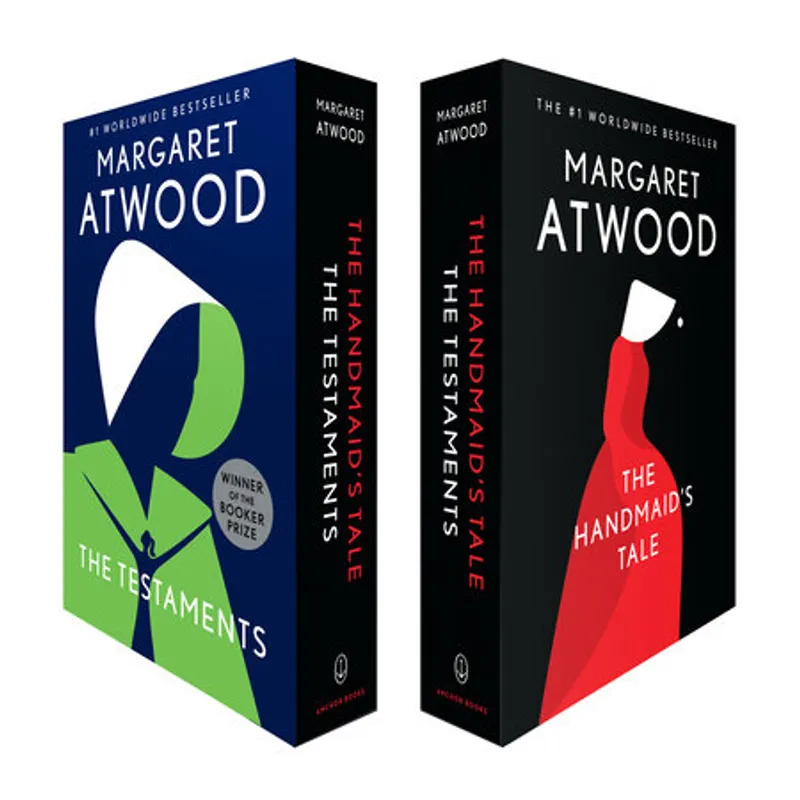
The Handmaid's Tale and The Testaments Box Set Author: Margaret AtwoodPage Count: UnknownPublication Date: 2020-PRH Margaret Atwood's The Handmaid's Tale and The Testaments Box Set is a masterful collection of two companion novels that delve into the darkest corners of human nature, societal collapse, and the unyielding power of the female spirit. This beautifully designed box set is a must-read for anyone who has been captivated by Atwood's unique blend of dystopian fiction, sharp social commentary, and lyrical prose. At the heart of both novels lies the Republic of Gilead, a totalitarian regime that has risen from the ashes of a Second American Civil War. This patriarchal society is built on the rigid enforcement of social roles, where women have been stripped of their agency, freedom, and even their names. In The Handmaid's Tale, we are introduced to Offred, a Handmaid bound to produce children for one of Gilead's Commanders. Through Offred's eyes, we witness the brutal suppression of women's bodies, the erasure of their identities, and the relentless struggle to survive in a world that seems determined to crush their spirits. One of the most striking aspects of Atwood's writing is her ability to craft a narrative that is both deeply personal and universally relatable. Offred's story is a powerful exploration of the human condition, a testament to the enduring strength of women in the face of unimaginable oppression. Atwood's prose is elegant, precise, and evocative, conjuring a world that is both hauntingly familiar and disturbingly plausible. In The Testaments, set more than fifteen years after the events of The Handmaid's Tale, Atwood expands her scope to explore the inner workings of Gilead's regime and the complex web of relationships that bind its characters together. Through the lives of three radically different women, Atwood reveals the cracks in Gilead's facade, the hidden fissures that threaten to topple its repressive power structure. This novel is a masterclass in suspense, intrigue, and social commentary, a searing indictment of the ways in which patriarchal societies seek to control and manipulate women's bodies. Throughout both novels, Atwood's style is characterized by her trademark wit, intelligence, and linguistic precision. Her writing is a joy to read, a testament to the power of language to shape our perceptions, challenge our assumptions, and inspire us to action. Atwood's world-building is meticulous, detailed, and utterly convincing, drawing the reader into a world that is both terrifying and mesmerizing. One of the most significant themes that runs throughout both novels is the power of female resistance, the ways in which women can come together to challenge, subvert, and ultimately overthrow oppressive regimes. Atwood's portrayal of women's relationships, their complexities, nuances, and depths, is one of the most compelling aspects of her writing. Her characters are multidimensional, flawed, and relatable, women who embody the full range of human emotions, desires, and contradictions. In conclusion, The Handmaid's Tale and The Testaments Box Set is a triumph of dystopian fiction, a searing commentary on the dangers of patriarchal societies, and a testament to the enduring power of the female spirit. This beautifully designed box set is a must-read for anyone who has been captivated by Atwood's unique blend of social commentary, sharp wit, and lyrical prose. It is a powerful reminder of the importance of feminism, resistance, and collective action in the face of oppression. #TheHandmaidsTale #TheTestaments #MargaretAtwood #FeministDystopianFiction #DystopianLiterature #ResistanceIsNotFutile Related InsightsRecruitment (The Resistance Trilogy #1) Book Review and Summary Pictures of You Book Review and Summary The Assassin's Blade Book Review and Summary{ "@context": "https://schema.org", "@type": "FAQPage", "mainEntity": [ { "@type": "Question", "name": "What is the main focus of The Handmaid’s Tale Book Review and Summary?", "acceptedAnswer": { "@type": "Answer", "text": "Everything you need to know about The Handmaid’s Tale with our detailed review." } }, { "@type": "Question", "name": "Who authored the comprehensive guide on The Handmaid’s Tale Book Review and Summary?", "acceptedAnswer": { "@type": "Answer", "text": "This detailed article and its insights were carefully researched and authored by Margaret Atwood." } }, { "@type": "Question", "name": "Where can I find more related content about Books?", "acceptedAnswer": { "@type": "Answer", "text": "You can explore more articles, detailed reviews, and similar insights by browsing the Related Insights section at the bottom of this article or visiting our dedicated Books category page." } } ] }