Elon Musk Book Review and Summary
-
 Elena Volkova
 - 07 Dec, 2025 10:24
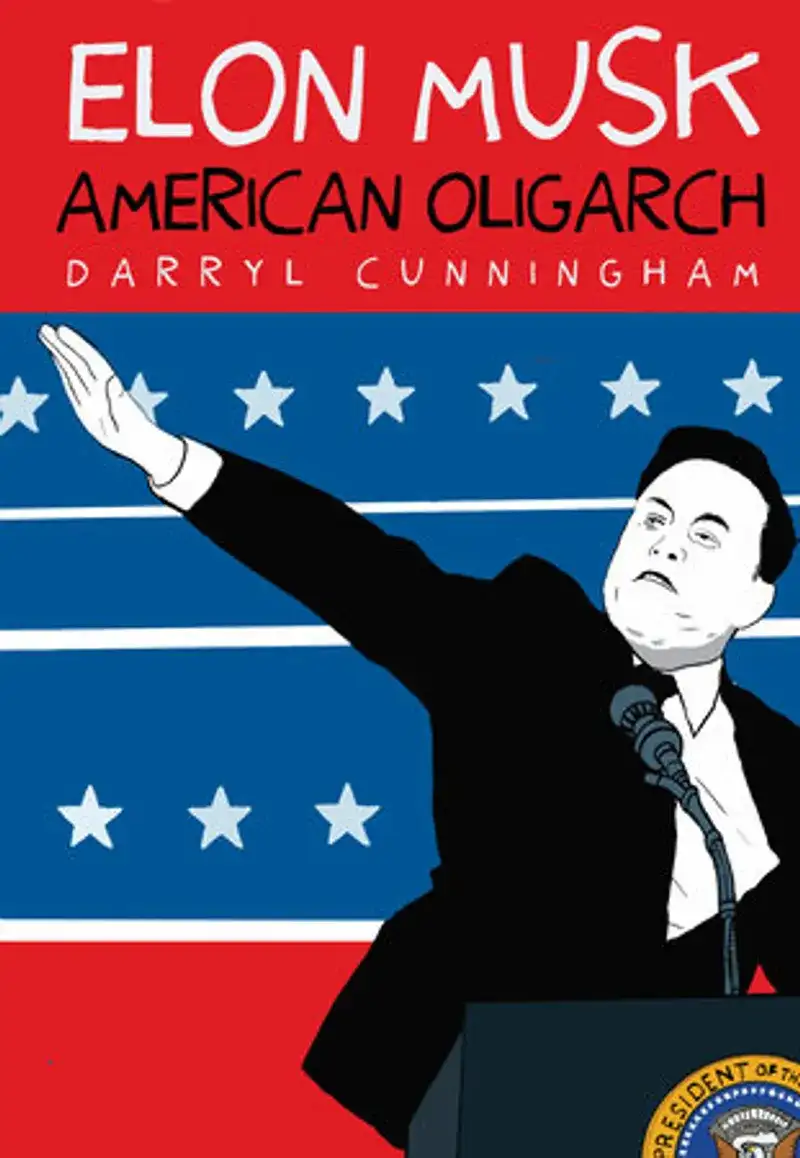
Elon Musk
Author: Darryl Cunningham
Page Count: Unknown
Publication Date: 2025-PRH
Darryl Cunningham’s Elon Musk arrives at a pivotal moment—neither a hagiography nor an exposé, but a razor-sharp dissection of ambition, mythmaking, and the contradictions that fuel our era’s most polarizing titan. Written in 2025, the book couldn’t be more timely, arriving as Musk’s empire—stretching from Tesla’s electric dreams to X’s chaotic reinvention of social media—faces existential scrutiny from regulators, investors, and the court of public opinion. Cunningham, known for his meticulous graphic nonfiction (Psychiatric Tales, The Age of Selfishness), here deploys his signature blend of investigative rigor and visual storytelling to peel back the layers of myth that have shrouded Musk since his PayPal days. The result is less a biography than a psychological profile of a man who has weaponized disruption—and a warning about the cost of unchecked genius.
Cunningham’s approach is audacious: he treats Musk not as a singular genius but as a product of his time—a Silicon Valley alchemy of libertarian ideology, techno-utopianism, and the cult of disruption. The book’s structure mirrors this complexity. Rather than a linear life story, Cunningham weaves thematic chapters that dissect Musk’s defining traits: his capacity for relentless innovation, his ruthless self-promotion, his exploitation of public subsidies, and his baffling blend of altruism and narcissism. Each chapter reads like a case study—on Tesla’s precarious balance between vision and vaporware, on SpaceX’s gambles that paid off where others failed, on Musk’s Twitter takeover as both a business strategy and a psychological experiment. Cunningham doesn’t just recount events; he interrogates the systems that allow Musk to thrive despite repeated missteps and controversies.
What sets this book apart is Cunningham’s refusal to be seduced by Musk’s narrative. Where most profiles romanticize the “visionary,” Cunningham exposes the myth as a carefully curated performance. He dissects Musk’s habit of overpromising—from the Hyperloop to Neuralink—while underdelivering, all while leveraging media attention and government contracts to offset risk. The book’s strongest chapter may be on Musk’s relationship with government subsidies, particularly Tesla’s reliance on taxpayer funds despite Musk’s libertarian posturing. Cunningham marshals data to show how Tesla’s “green revolution” has been bankrolled by public money, a bitter irony that Musk rarely acknowledges. It’s a theme that resonates beyond Musk: Cunningham quietly indicts an entire economic system that rewards spectacle over substance.
Visually, the book is classic Cunningham—clean lines, expressive caricatures, and a palette that shifts with tone. The art is deceptively simple, but it serves the narrative perfectly: Musk’s larger-than-life persona is rendered through exaggerated features and dramatic poses, while the cold facts lurk in the margins, in charts, timelines, and corporate filings. Cunningham uses the graphic medium to its fullest, letting the visuals underscore the absurdity of Musk’s claims (e.g., a panel of Musk standing atop Mars while Earth burns below, captioned “This will happen in 2024”).
Cunningham’s style is unflinching but not cynical. He doesn’t dismiss Musk’s achievements—SpaceX’s reusable rockets remain a marvel—but he refuses to let them obscure the man’s flaws. The book’s tone is that of a cautious optimist: Cunningham seems to ask, not whether Musk is a villain or a hero, but whether a society can afford to worship individuals who operate with such disregard for consequences. His prose is sharp but accessible, avoiding jargon while never dumbing down the complexity of the issues at hand.
The 2025 publication date is no accident. By this year, Musk’s influence has metastasized—his companies shape energy, space, transportation, and communication, while his personal brand has become a cultural Rorschach test. Cunningham’s book arrives as Musk’s credibility wanes in some quarters (see: Twitter’s plummeting value, Tesla’s stock volatility, his own erratic behavior) but his cult following remains undimmed. The book serves as both mirror and warning: a reflection of how we’ve come to conflate audacity with competence, and a caution about the dangers of putting all our chips on a single, mercurial player.
In Cunningham’s hands, Musk becomes a case study in the limits of charisma. The book’s final chapter, on Musk’s relationship with the public—how he cultivates loyalty through memes and insults alike—is a masterclass in psychological manipulation. Cunningham leaves the reader with an unsettling question: Is Musk a symptom of our broken systems, or the architect of their collapse?
Elon Musk is essential reading for anyone trying to understand the forces shaping the 21st century. It doesn’t just tell us about one man; it reveals how we’ve come to confuse disruption with progress, and how the line between genius and folly has never been thinner.
#ElonMusk #TechBaron #SiliconValley #GraphicBiography #DisruptionMyth #FutureOfWork