The Ruins of Troy
-
 Emre Yılmaz
 - 19 May, 2026 06:06
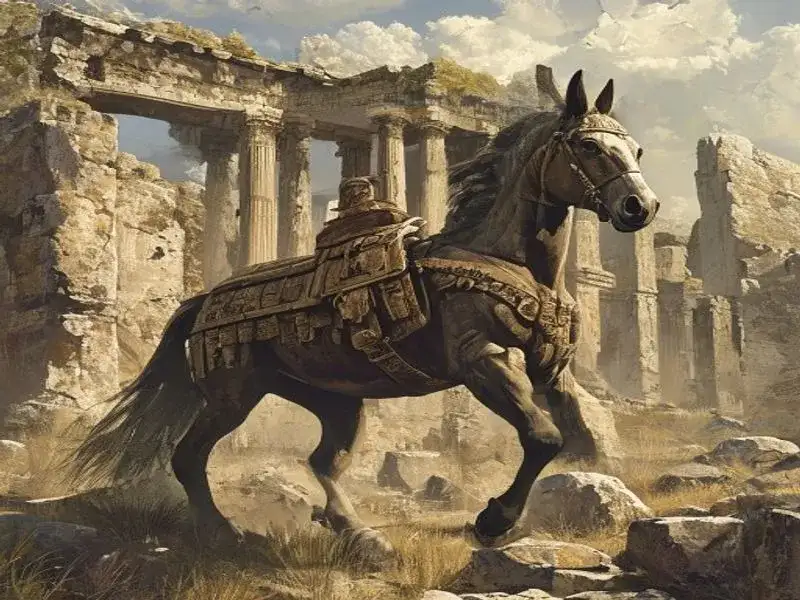
Unearthing Legend: The Ruins of Troy
Located in the northwestern province of Çanakkale, near the Dardanelles strait, the #ancient city of Troy is arguably the most famous archaeological site in the world. For centuries, the city of Troy, besieged by the Greeks for ten long years to reclaim the #beautiful Helen, was considered nothing more than a myth conjured by the poet Homer in his epic, the Iliad. It wasn’t until the 1870s, when the pioneering—and highly controversial—German archaeologist Heinrich Schliemann began excavating the hill of Hisarlık, that the physical reality of Troy was revealed to the modern world.
Nine Cities Built on Top of Each Other
Visiting Troy today is to walk through a staggering 4,000 years of #history. Because the location was highly strategic, controlling the vital trade routes between the Aegean and Black Seas, it was repeatedly destroyed by earthquakes, fires, and wars, only to be rebuilt over and over again. Archaeologists have identified nine distinct layers of the city, labeled Troy I through Troy IX.
The lowest layer, Troy I, dates back to the Early Bronze Age (c. 3000 BCE). The city of Homer’s epic is widely believed by scholars to be Troy VI or Troy VIIa, which dates to the Late Bronze Age (c. 1300–1190 BCE). In these layers, archaeologists found massive defensive walls and evidence of violent destruction by fire, corroborating the mythical tales of the city’s tragic fall. The highest layer, Troy IX, represents the Roman city of Ilium, which flourished under the patronage of Emperor Augustus, who claimed descent from the Trojan hero Aeneas.
Schliemann’s Trench and the Treasure of Priam
While Heinrich Schliemann is credited with discovering Troy, his methods were famously destructive. Convinced that the Homeric Troy must be at the very bottom, he drove a massive trench straight through the center of the mound, inadvertently destroying much of the actual Bronze Age city he was seeking.
During his careless excavations, Schliemann discovered a spectacular cache of gold, silver, and bronze artifacts, which he dubbed “Priam’s Treasure,” assuming it belonged to the legendary Trojan king. Modern dating, however, has shown that this treasure actually belonged to Troy II, predating King Priam by over a thousand years.
A Culinary Bridge Between Eras
The agricultural landscape around Troy, the fertile Troad region, has changed little since antiquity. The soil that once supported ancient Trojan farmers continues to yield incredible produce today. When visiting the ruins, one must take time to enjoy the local Aegean cuisine of Çanakkale.
Seafood is a staple, naturally, with sardines (sardalya) being a local specialty. Stuffed in vine leaves and grilled to perfection, they offer a taste that bridges the millennia. Pair this with a slice of peynir helvası, a traditional, sweet cheese dessert unique to the region, for a truly historic culinary experience.
#Troy #AncientTroy #Iliad #TrojanWar #TurkeyTravel #Archaeology #Homer #Canakkale #GreekMythology #AncientHistory
#travel #exclusive