La vita bugiarda degli adulti Book Review and Summary
-
 Lucia Garcia
 - 05 Jun, 2026 19:51
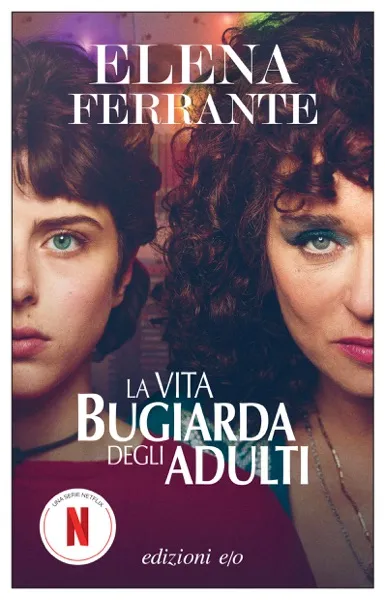
La vita bugiarda degli adulti
Author: Elena Ferrante
Page Count: Unknown
Publication Year: 2019-GB
Elena Ferrante’s La vita bugiarda degli adulti (The Lying Life of Adults), published in 2019, is a masterful exploration of adolescence, deception, and the brutal unraveling of illusion—both in others and within oneself. Like her Neapolitan Novels, Ferrante crafts a story that is at once deeply personal and universally resonant, delving into the ways we mythologize our pasts and the people who shape us. But where her earlier work focused on the lifelong bond between two women, this novel pivots inward, dissecting the fragile psyche of a young girl as she confronts the lies that define adulthood.
The novel follows Giovanna, a sharp-witted 12-year-old Neapolitan girl from a comfortable, intellectual household, who is abruptly thrust into a crisis when her father utters the words: “Your face is like Vittoria’s face.” These few syllables ignite Giovanna’s obsession with her estranged aunt, a woman her parents have demonized as a vulgar, monstrous figure. What begins as a curious fascination spirals into an identity crisis, as Giovanna grapples with the unsettling truth that the adults around her are not the moral pillars she assumed. Her father, once a paragon of virtue, is revealed to harbor his own ugly secrets. Her mother, fragile and controlling, is complicit in the family’s web of deceit. Even Giovanna herself, in her quest for truth, begins to construct her own myths—about her aunt, about her parents, about love and betrayal.
Ferrante’s genius lies in her ability to render the inner turmoil of adolescence with unflinching honesty. Giovanna’s voice is raw, unfiltered, and often contradictory—sometimes naive, sometimes cunning, always searching. Her observations are laced with the hyper-awareness of a child who has been taught to see the world through the lens of her parents’ expectations, only to discover that those lenses are cracked. The prose is dense with psychological insight, yet never loses its narrative momentum. Ferrante’s sentences are muscular, her pacing relentless, pulling the reader through Giovanna’s emotional labyrinth with the same compulsive force that drives the protagonist herself.
A central theme of the novel is the corruption of innocence—not through external violence, but through the slow erosion of trust. Ferrante suggests that adulthood is not a state of wisdom, but of accumulated lies, each one a betrayal of the ideals we once held. Giovanna’s journey is one of disillusionment, but it is also a journey toward self-awareness. She learns that the adults she idolized are flawed, that their judgments are often projections of their own fears, and that growing up means accepting the ugliness within and without. Yet Ferrante does not reduce the story to a simple moral about the loss of innocence. Instead, she captures the messy, contradictory nature of adolescence—the way Giovanna can simultaneously despise her parents and crave their approval, the way she can idealize her aunt while recoiling from her very presence.
The secondary characters are drawn with the same complexity. Vittoria, the aunt, is a force of nature—unglamorous, unrepentant, and magnetic. She embodies the novel’s central paradox: that the truth, no matter how ugly, has a strange allure. Giovanna’s parents, too, are not mere villains or victims, but deeply human figures trapped in their own cycles of denial and regret. Their relationships with Giovanna are fraught with love and manipulation, a dynamic that Ferrante renders with surgical precision.
Stylistically, La vita bugiarda degli adulti is quintessential Ferrante: a blend of psychological depth, social realism, and lyrical intensity. The Neapolitan setting is not just a backdrop but a character in itself, a place where beauty and squalor exist in uneasy proximity, much like the emotions Giovanna navigates. The dialogue crackles with the rhythms of real speech, yet it is always purposeful, advancing the novel’s themes of performance and authenticity.
What makes this novel particularly striking is its refusal to offer easy resolutions. Giovanna’s story does not end with a neat epiphany or a cathartic confrontation. Instead, it ends with a quiet acknowledgment of the lies we tell ourselves to survive—and the fragile, necessary truths we cling to in their place. Ferrante’s work has always been about the messy, unresolved nature of human connection, and this novel is no exception. It is a story about the lies we inherit, the lies we create, and the uneasy balance between the two.
In an era where social media and curated identities have made deception an art form, La vita bugiarda degli adulti resonates with urgent relevance. It asks: How much of our lives are we living in the shadow of others’ lies? How much of our identity is shaped by the fictions we’ve been fed? And, ultimately, what does it mean to grow up in a world where the adults around us are just as lost as we are?
Ferrante does not provide answers. Instead, she offers a mirror—one that reflects the fragmented, contradictory nature of the self. And in doing so, she cements her reputation as one of the most perceptive chroniclers of the human condition working today.
#Ferrante #ContemporaryFiction #ItalianLiterature #ComingOfAge #NeapolitanNovels #LiteraryFiction