Love the Revolution: An Unfinished Novel Book Review and Summary
-
 Marco Conti
 - 25 Aug, 2026 19:07
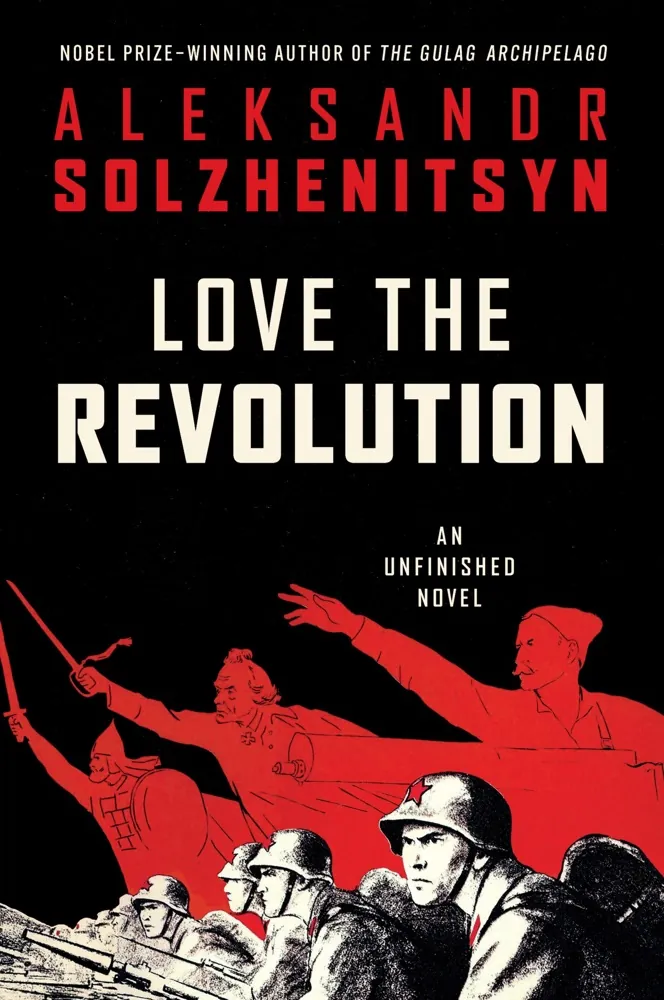
Author: Aleksandr Solzhenitsyn
Page Count: Unknown
Publication Date: Expected publication 2026-11-17 APL
Look, another press release crossing my desk, and my instant reaction is a heavy, bone-deep sigh. Why am I wasting brain cells parsing marketing copy for Love the Revolution when I still have three structural engineering problem sets glaring at me from the kitchen table and my electricity bill is three weeks overdue? Oh right, because rent doesn’t pay itself. So here we are. Let us pretend to care about early twentieth-century Russian prose for the next five hundred words.
The Chronology of Ideological Ruin
The synopsis tells us we are getting Aleksandr Solzhenitsyn’s Love the Revolution, composed in 1948 inside a literal gulag sharashka. Fine. Impressive provenance, if we are keeping score by sheer harrowing human endurance. But let us be entirely real for a second—wait, actually, scratch that. I take it back completely. The provenance doesn’t matter at all if the prose style reads like a translated textbook on dialectical materialism, which early draft material notoriously often does.
We are introduced to Gleb Nerzhin. A bright-eyed kid arriving in Moscow on a fateful Sunday morning in June 1941, entirely high on Marxist theory. Naturally, Operation Barbarossa drops on his head the exact same day. Classic historical irony. It is the literary equivalent of stepping outside with a freshly pressed suit only to get immediately flattened by a falling piano.
The Disintegration Trope
Solzhenitsyn apparently intended this to be a massive sweeping military panorama. Instead, we get an unfinished fragment. A snapshot. We are promised a psychological autopsy of a true believer whose dogmatic worldview shatters against the jagged rocks of actual combat and state betrayal.
Groundbreaking. Truly, nobody has ever written about the disillusionment of Soviet youth before. Where would we be without Arthur Koestler’s Darkness at Noon or Vasily Grossman’s massive wartime doorstoppers paving this exact intellectual highway decades ago? We are staring at a relic. A first pancake of a manuscript born from literal penal servitude. We will read it, obviously, because the literati treat Solzhenitsyn like a secular saint, but let us not pretend this unfinished draft will rival the structural genius of The First Circle.
And honestly, why am I even wasting breath critiquing a book that literally isn’t out until late 2026? Who plans a literary hype cycle this far in advance? I am staring at a blank document trying to stretch these observations out just to meet the absurd word count requirement my editor demanded, while my coffee goes stone cold and my quantum mechanics textbook mocks me from the shelf.
The tragedy of the Eastern Front meets the tragedy of my student budget. At least the Russian winter had the decency to end. I need to go walk through the park and brood silently about the human condition.