The Alchemist's Kitchen: When Physics Met the Pot and Changed Dinner Forever

There is a specific kind of silence that falls over a kitchen when a stock clarifies. It is not the silence of absence, but the silence of precision—albumin coagulating into a raft, trapping impurities, leaving behind a liquid amber so pure it catches the light like a gemstone. Marie-Antoine Carême knew this silence in the early 1800s. He didn’t have a PhD in colloidal chemistry, but he knew that if you boiled the broth too hard, the proteins would tighten like a fist, squeezing out the very gelatinous soul—the osmazome—he sought to capture.
That intuition, that chef’s sixth sense built on generations of trial and error, was the precursor to a revolution. It took a Hungarian physicist and a French physical chemist to put a name to the ghost in the machine. They called it Molecular and Physical Gastronomy. The year was 1988. The kitchen would never be the same.
The Physicist and the Chemist Walk Into a Kitchen
Nicholas Kurti was a man who played with temperatures near absolute zero. A Hungarian refugee who found a home at Oxford, he was a Fellow of the Royal Society, a titan of low-temperature physics. But Kurti had a grievance. He famously lamented: “I think it is a sad reflection on our civilization that while we can and do measure the temperature in the atmosphere of Venus, we do not know what goes on inside our soufflés.”
Enter Hervé This. A physical chemist at INRA (Institut National de la Recherche Agronomique) in France, This wasn’t just studying food; he was dissecting the mechanism of a recipe. He collected “culinary precisions”—old wives’ tales, chef’s tricks, grandmother’s rules—and subjected them to the scientific method. Does searing meat really “seal in juices”? (Spoiler: It doesn’t. It creates flavor via the Maillard reaction, but moisture escapes regardless).
When these two minds collided, the term “Molecular and Physical Gastronomy” was born. It wasn’t a cooking style. It wasn’t a menu. It was a discipline. A branch of food science that finally turned its microscope away from the factory floor—industrial preservation, safety standards, mass production—and pointed it squarely at the home stove and the restaurant pass.
Erice: The Mountain Where Recipes Became Equations
If you want to find the ground zero of modern culinary science, you don’t look at a three-Michelin-star restaurant. You look at a medieval hilltop town in Sicily: Erice.
In 1992, the Ettore Majorana Centre for Scientific Culture hosted a workshop originally titled “Science and Gastronomy.” It was the brainchild of Elizabeth Cawdry Thomas, a cooking teacher from Berkeley with a physicist for a husband and a Rolodex full of Nobel laureates. She saw the gap. She nudged Ugo Valdrè, who nudged Kurti. Kurti brought This. Antonino Zichichi, the centre’s director, opened the doors.
What happened in those rooms wasn’t cooking. It was forensics on flavor.
Scientists and professional cooks sat side-by-side, dissecting the chemical reactions of a traditional consommé, the physics of a soufflé’s rise, the rheology of a sauce. They weren’t there to make “foams” or “spheres.” They were there to understand why the foam forms, why the sphere holds. The proceedings birthed a new vocabulary: Note-by-Note Cuisine, Dispersion Systems, the formalization of Culinary Precautions.
After Kurti’s death in 1998, This renamed the workshops “The International Workshop on Molecular Gastronomy ‘N. Kurti’”. He remained the sole director, steering the ship from the INRA-AgroParisTech International Centre for Molecular Gastronomy. The shortened term—Molecular Gastronomy—stuck. It became the banner under which a generation of chefs would eventually march, though often misunderstanding the manifesto.
The Ghosts in the Machine: Precursors Who Knew Too Much
Kurti and This never claimed to invent the science of cooking. They merely organized it. They stood on the shoulders of giants who wore aprons instead of lab coats.
The Architect of Osmazome: Marie-Antoine Carême (1784–1833)
The “King of Chefs, Chef of Kings” didn’t just build edible cathedrals out of spun sugar and marzipan. He wrote the first theoretical treatises on French cuisine. His observation on stock—“the broth must come to a boil very slowly, otherwise the albumin coagulates, hardens…”—is a textbook definition of protein denaturation and colloidal suspension management. He understood viscosity, coagulation, and extraction without ever seeing a molecule. He was a molecular gastronome before the molecule was a culinary concept.
The Dreamer of Edible Membranes: Raymond Roussel (1877–1933)
In a surreal 1914 novella, L’Allée aux lucioles (The Alley of Fireflies), Roussel fictionalized Antoine Lavoisier—the father of modern chemistry—creating a “semi-permeable coating” to encase a frozen sculpture of one wine inside another. Fiction? Yes. But it predicted spherification and edible films nearly a century before Ferran Adrià made them famous at elBulli. Roussel called it significant “in both the annals of science and the history of improved gastronomy.” Prophetic doesn’t begin to cover it.
The Professors Who Taught the “Whys”: Halliday, Noble, and Lowe
While Kurti and This were still children, academics in America were writing the textbooks.
Evelyn G. Halliday and Isabel T. Noble published Food Chemistry and Cookery in 1943 (following The Hows and Whys of Cooking in 1928). Their foreword reads like a mission statement for the future discipline: “The main purpose of this book is to give an understanding of the chemical principles upon which good practices in food preparation and preservation are based.” Chapters on “The Chemistry of Baking Powders,” “Determination of Hydrogen Ion Concentration” (pH), and lab diagrams of distillation apparatus for vegetables and pipettes for pectin viscosity prove that the rigor was already there. They just lacked the unifying banner.
Then there was Belle Lowe. In 1932, at Iowa State College, she dropped Experimental Cookery: From The Chemical And Physical Standpoint. Six hundred pages. Standard textbook for decades. Section titles read like a modernist manifesto: “The Relation Of Cookery To Colloidal Chemistry,” “Coagulation Of Proteins,” “Syneresis,” “Hydrolysis Of Collagen.” She wasn’t playing. She was mapping the terrain Kurti and This would later claim.
Why “Food Science” Wasn’t Enough
Here is the crucial distinction the Wikipedia data forces us to confront: Food Science existed. It was massive. It was rigorous. But it was industrial.
Food science cared about Clostridium botulinum in cans. It cared about shelf-stable emulsions for salad dressing bottles. It cared about extrusion pressures for breakfast cereal. It did not care why your hollandaise broke, or how to perfectly cook a 63°C egg, or the physics of a crisp skin on a roast chicken.
Molecular Gastronomy was the insurgency. It said: The chemical and physical transformations happening in a ramekin are just as worthy of peer-reviewed investigation as the ones in a 10,000-liter reactor.
It gathered the “fragmented and isolated investigations” of history—Carême’s stock, Lowe’s collagen hydrolysis, Halliday’s pectin viscosity—and corralled them into a single, organized discipline within food science. One that spoke to cooks, not just scientists.
The Definition That Changed Everything
So, what is it, strictly speaking?
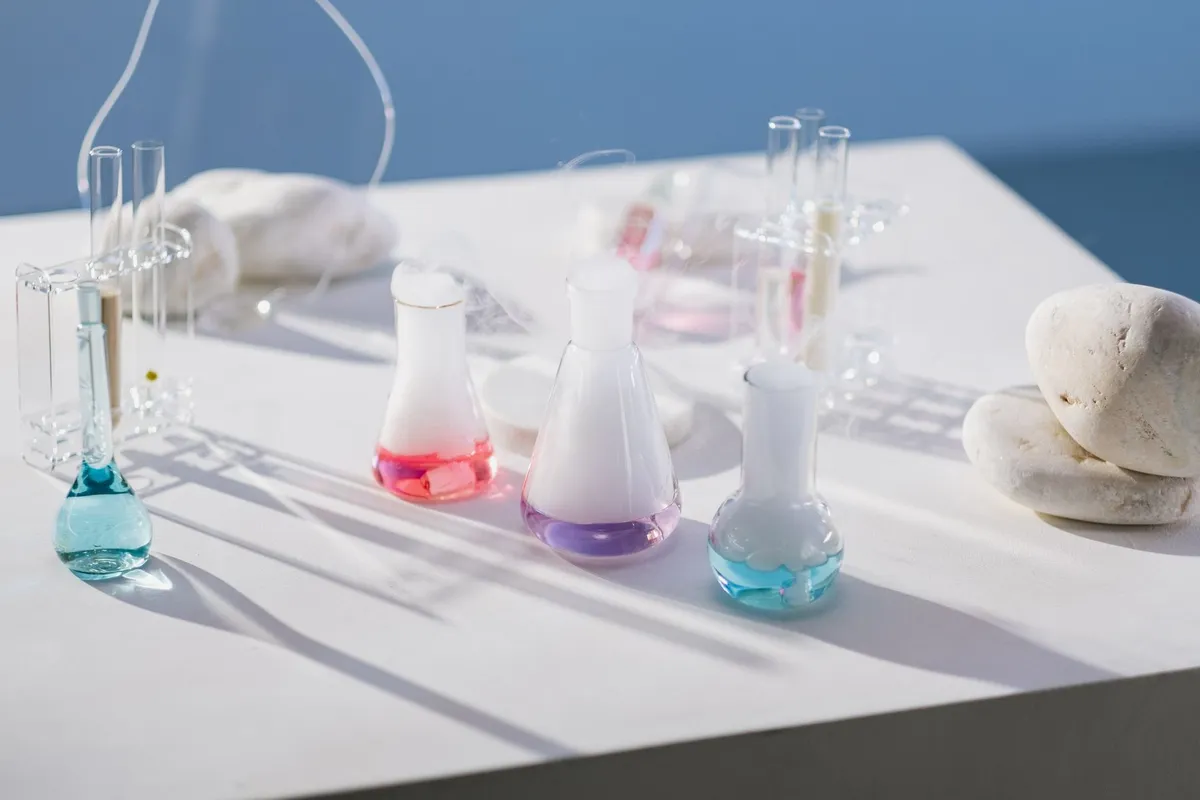
Molecular gastronomy is the scientific approach of cuisine from primarily the perspective of chemistry. The composition (molecular structure), properties (mass, viscosity, etc.) and transformations (chemical reactions, reactant products) of an ingredient are addressed and used in the preparation and appreciation of the ingested products. It is a branch of food science that approaches the preparation and enjoyment of nutrition from the perspective of a scientist at the scale of atoms, molecules, and mixtures.
Read that again. “At the scale of atoms, molecules, and mixtures.”
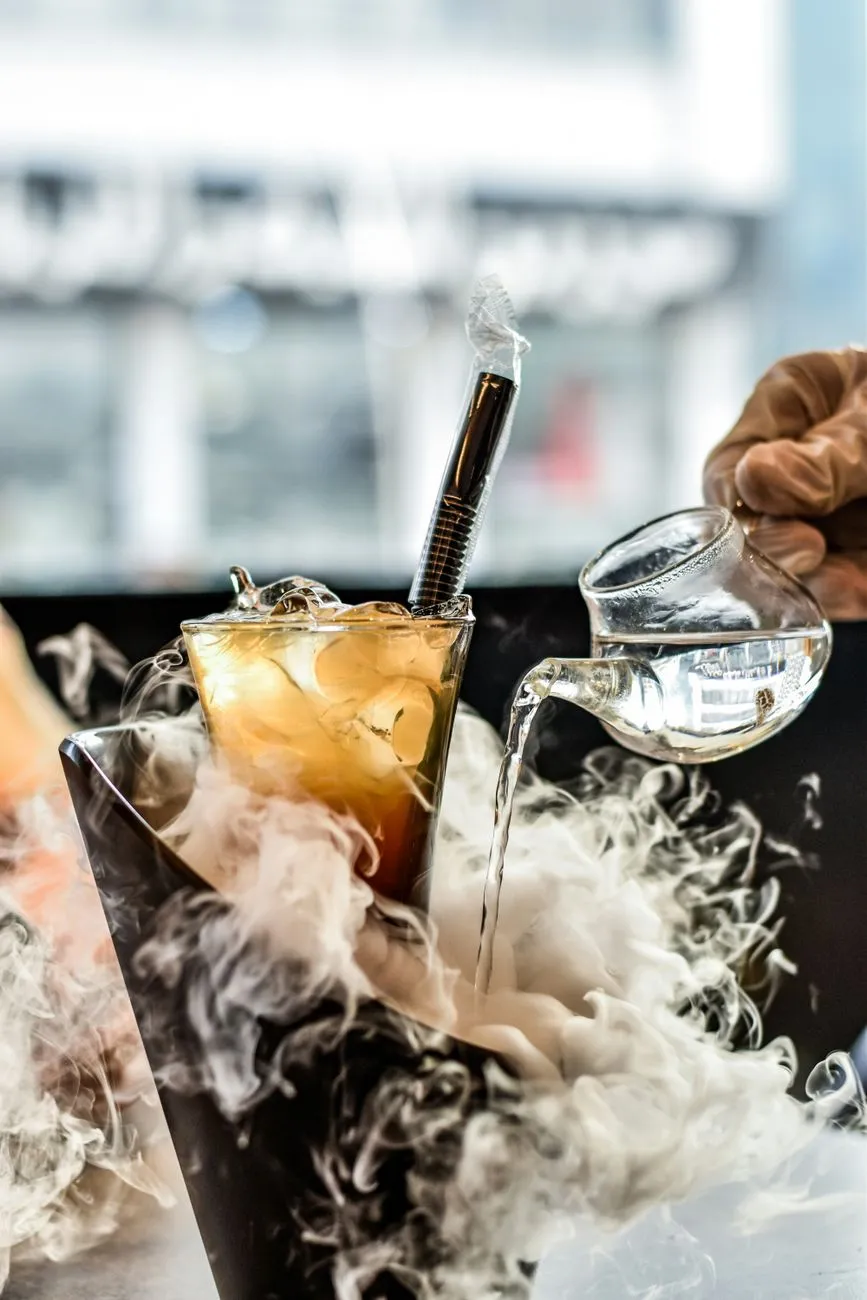
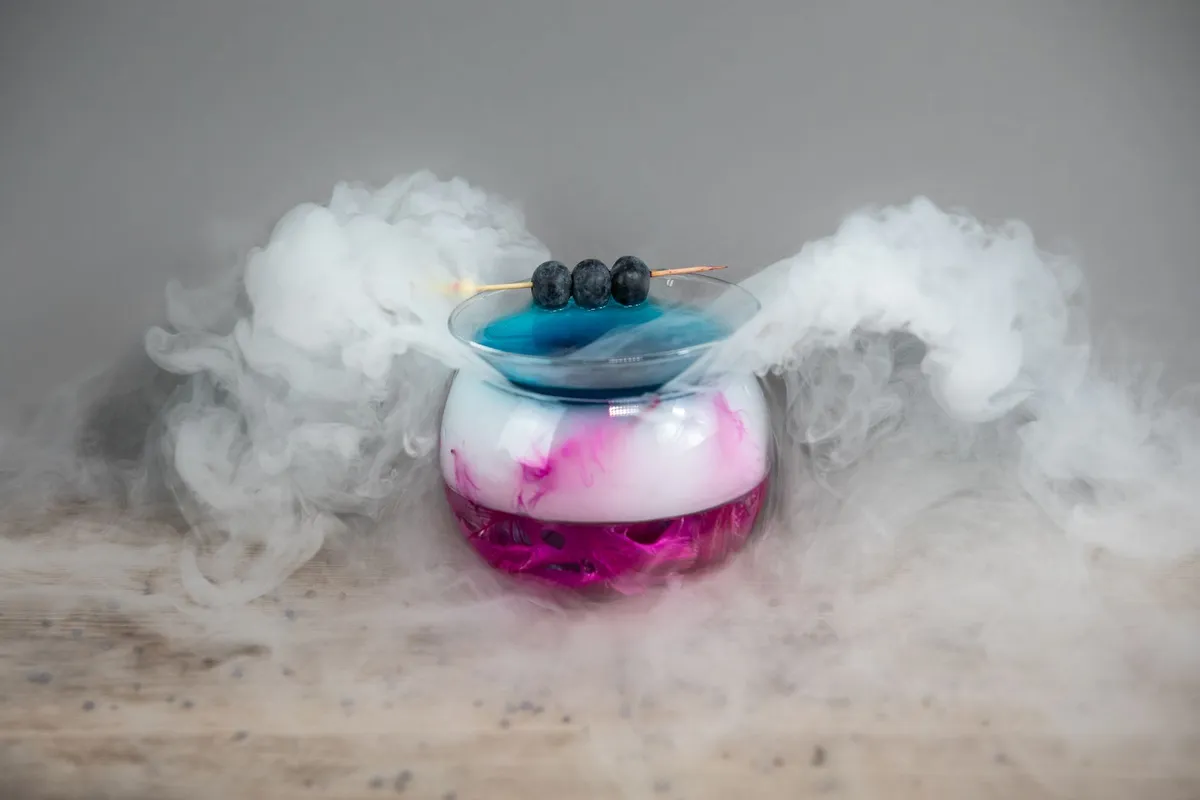
It is not “cooking with liquid nitrogen.” That is molecular cooking (or modernist cuisine). It is not “making caviar out of fruit juice.” That is a technique derived from the science.
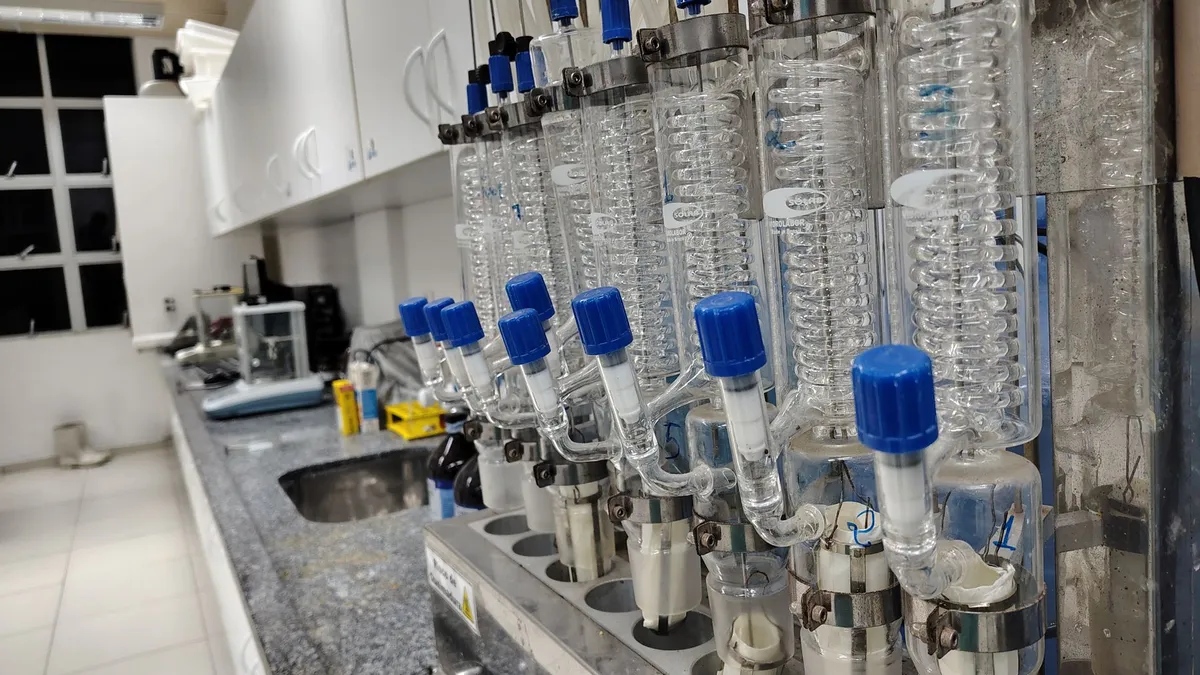
Molecular Gastronomy is the knowledge engine. It is the why behind the wow. When a chef uses transglutaminase (“meat glue”) to bind scallops into a perfect cylinder, they are applying the science of protein cross-linking. When they use a rotary evaporator to distill the essence of soil at 30°C, they are exploiting vapor pressure differentials. The cooking is the application. The gastronomy is the map.
The Legacy: From Erice to Your Plate
The Erice workshops didn’t just produce papers. They produced a mindset shift.
They gave us Hervé This’s “Note-by-Note Cuisine”—the radical idea that we should stop cooking with “whole foods” (carrots, beef, flour) and start cooking with pure compounds (water, proteins, lipids, glucose, odorant molecules). Build the dish molecule by molecule, like a symphony from sine waves. It sounds dystopian. It is the logical endpoint of the discipline.
They gave the world the language to explain sous-vide (precision temperature control denaturing proteins uniformly), spherification (calcium-alginate gelation at the interface of two liquids), and emulsification stability (Pickering stabilization, lecithin monolayers).
And they gave chefs—Adrià, Blumenthal, Achatz, Redzepi, Dufresne—the intellectual license to ask “What if?” backed by “Because physics.”
Elizabeth Cawdry Thomas, the cooking teacher from Berkeley who started the avalanche with a conversation in Sicily, is rarely credited on the marquee. But without her, Kurti and This might never have shared a table at the Ettore Majorana Centre. The history of taste turns on small hinges.
The Pot Still Simmers
Today, the term “Molecular Gastronomy” is often used as a pejorative—a synonym for “pretentious foam.” That is a tragedy of branding. The discipline itself is invisible now, baked into the DNA of every serious kitchen. When a line cook adjusts the pH of a purée to keep it green, they are doing molecular gastronomy. When a pastry chef calculates the water activity (aw) to prevent sugar bloom, they are doing molecular gastronomy.
Kurti wanted to know the temperature inside the soufflé. Now, we have probes that tell us to the tenth of a degree. We have the map. We know the terrain.
But the best chefs? They still listen for that silence. The silence of the stock clarifying. The silence of the protein raft forming. The silence where intuition meets equation.
That is where the magic lives. Right at the scale of atoms, molecules, and mixtures.
#MolecularGastronomy #FoodScienceHistory #CulinaryPhysics #NicholasKurti #HerveThis #ModernistCuisine #EriceWorkshops #DemirŞef