Showing Posts From
Culinary physics
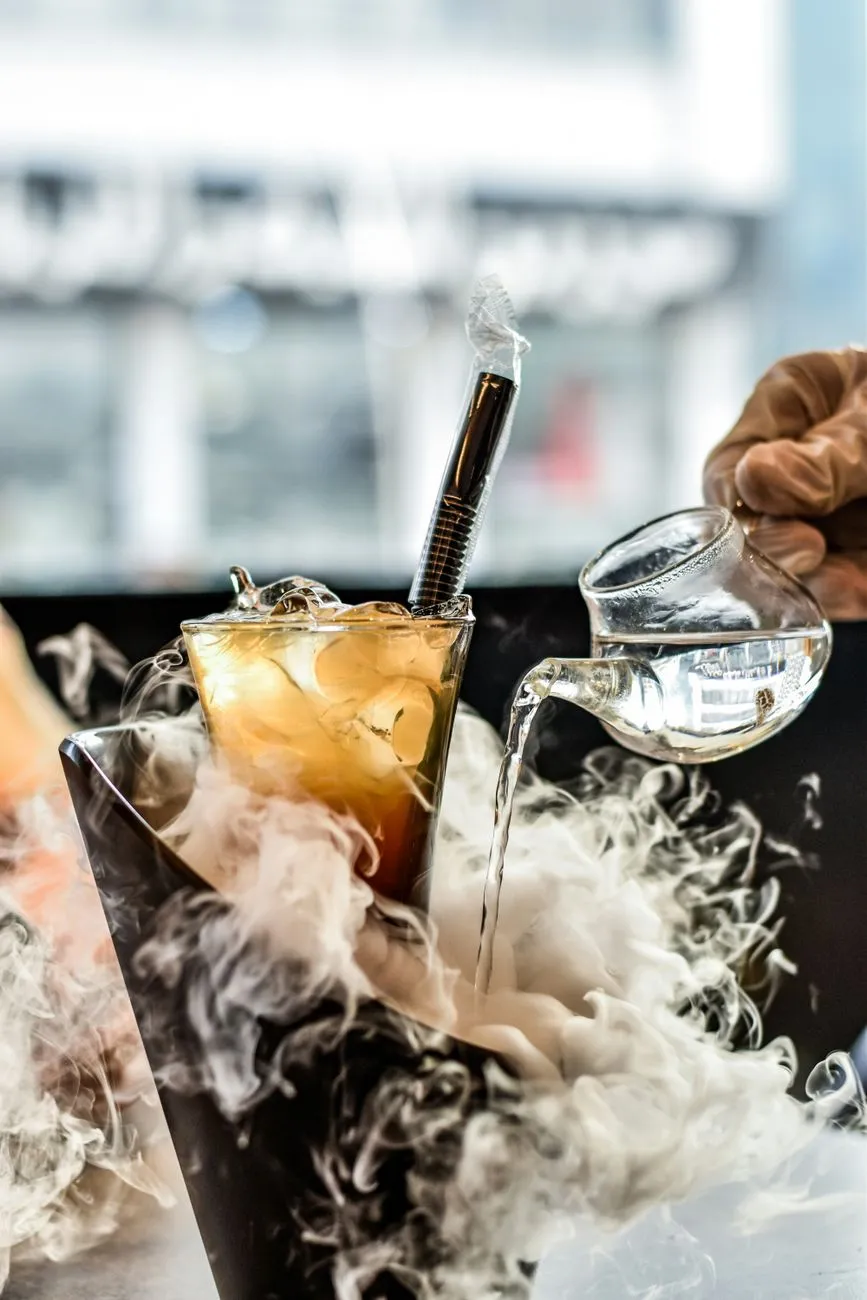

There is a universe humming beneath the crust of a sourdough loaf, a silent conversation between atoms that dictates whether an apple turns brown or a steak sears into mahogany perfection. We call it cooking; the universe calls it thermodynamics. Food chemistry is not merely the study of ingredients—it is the biography of matter as it transitions from soil to cell, the rigorous poetry of biological and non-biological components negotiating their existence on a plate. It is where the rustic intuition of a grandmother’s fermentation crock meets the cold, hard precision of quantum mechanics and reaction kinetics. To understand food is to understand the negotiable terms of entropy itself. The Silent Architect: Water’s Tyranny Over Texture We treat water as a passive filler, the background noise of a soup or the juice in a peach. But in the laboratory of the kitchen, water is the dictator. It constitutes fifty percent of a slab of meat and an astonishing ninety-five percent of lettuce, cabbage, and tomato products. This is not mere hydration; it is the stage upon which the drama of spoilage and preservation plays out. Water activity—that thermodynamic measure of energy status—is the invisible lever controlling shelf life. High water activity rolls out the red carpet for bacterial growth, turning a crisp vegetable into a slimy tragedy within days. The history of preservation is, fundamentally, the history of manipulating this tyrant. We dehydrate to strip the stage bare. We freeze to slow the molecular ballet to a near standstill. We refrigerate to buy time. But the most elegant manipulations alter water’s characteristics without banishing it entirely. Consider the humble apple slice, exposed to air. Enzymatic browning begins instantly, a chemical melanin production line triggered by polyphenol oxidase. The chef’s counter-move? Acidulated water—lemon juice. By lowering the pH, we denature the enzyme, freezing the apple in its pale, fresh innocence. This is food physical chemistry in action: physiochemical principles governing reactions during manufacture, handling, and storage. It is rheology, transport phenomena, and glass transitions playing out in a bowl of fruit salad.Sweet Geometry: The Carbon Rings That Fuel Empires If water is the stage, carbohydrates are the fuel—comprising seventy-five percent of the biological world and eighty percent of human food intake. The simplest actors are monosaccharides: glucose, fructose, galactose. They wear a simple uniform, a 1:2:1 ratio of carbon, hydrogen, and oxygen (CnH2nOn), yet their arrangement dictates the sweetness of honey or the structural rigidity of a tree trunk. When glucose and fructose lock hands in a specific glycosidic bond, they birth sucrose—the crystal crown of the plant world, the sugar we spoon into coffee. But the story deepens with polysaccharides. Chains of monosaccharides weave into pectin (the jam-setter), dextran, agar, and xanthan (the modernist chef’s thickener). Some chains are open books to human enzymes, unspooling in the small intestine to release glucose into the bloodstream. Others—dietary fiber—are stubborn scrolls, passing untouched into the large intestine where the gastrointestinal microbiota ferment them into short-chain fatty acids, feeding us by feeding our internal garden. We measure this sweetness in degrees Brix, a refractometer’s gaze capturing the density of dissolved solids. It is a metric of ripeness, of harvest timing, of the very sunlight trapped in a grape.The Amphiphilic Dance: Lipids, Membranes, and the Art of Richness Lipids are the rebels of the molecular world, defined not by what they are, but by what they refuse to do: dissolve in water. This "catchall" category—waxes, fatty acids, phospholipids, sphingolipids, glycolipids, terpenoids like retinoids and steroids—unites under the banner of hydrophobicity. Yet, they are not simple oil slicks. Most are amphiphilic, possessing a split personality: a hydrophobic tail fleeing water, a hydrophilic head embracing it. This duality is the architect of life’s boundaries—cell membranes—and the engine of culinary luxury. In the kitchen, lipids are the carriers of the soul. They dissolve fat-soluble vitamins (A, D, E, K), ferrying them across the intestinal border. They provide the mouthfeel of butter, the sizzle of rendered pork fat, the golden crust on a fry. Their physical state—linear aliphatic chains vs. rigid ring structures, flexible vs. aromatic—dictates melting point and texture. Chocolate’s snap comes from the precise polymorphic crystallization of cocoa butter triglycerides. The creaminess of an emulsion—mayonnaise, hollandaise, vinaigrette—is a metastable truce negotiated by phospholipids (lecithin in egg yolk) standing guard at the oil-water interface. Without this molecular diplomacy, flavor would have no vehicle, and texture no depth.Proteins: The Origami of Life Itself Strip a living cell of its water, and over half the remaining dry weight is protein. These are not static bricks; they are dynamic, complex macromolecules—origami folded from chains of amino acids containing carbon, nitrogen, hydrogen, oxygen, sulfur, and often metals like iron, copper, phosphorus, or zinc. Their shape is their function. A slight fever denatures them; a whisk unfurls them; heat cross-links them into the firm white of a cooked egg or the gluten network trapping gas in bread. We chase them for survival. Animal sources—eggs, milk, meat—offer "complete" profiles, mirroring our own needs. Vegetable sources—nuts, grains, legumes—require the ancient wisdom of protein combining (rice and beans, hummus and pita) to assemble the full alphabet of essential amino acids. Requirements shift with physiology: the growing child, the pregnant mother, the aging athlete. In the pan, proteins undergo the Maillard reaction, a chaotic cascade of amino acids and reducing sugars creating hundreds of flavor compounds—the crust on bread, the sear on steak, the aroma of roasted coffee. It is chemistry as perfume, biology as crust.From Scheele’s Apples to Algorithmic Palates: A History Written in Molecules This science did not arrive fully formed. It was midwifed by agricultural chemistry. In 1785, Carl Wilhelm Scheele isolated malic acid from apples, naming the very essence of tartness. Humphry Davy’s Elements of Agricultural Chemistry (1813) became the global textbook, running to five editions. Justus von Liebig’s findings, translated by Eben Horsford in Lowell, Massachusetts (1848), crossed the Atlantic to seed a new nation’s science. The stakes were often safety, not just flavor. The Society of Public Analysts formed in 1874, wielding analytical methods against adulterated bread, milk, and wine. The battle shifted from sawdust in flour to the complex toxicology of chemical additives by the 1950s. Harvey W. Wiley’s relentless crusade at the USDA birthed the FDA in 1906. The infamous Single-grain experiment (1907–1911) at Wisconsin—feeding cows only corn, then only wheat, then oats—laid bare the nutritional specifics of vitamins and minerals, moving nutrition from alchemy to evidence. Institutions crystallized: The American Chemical Society’s Agricultural and Food Chemistry Division (1908), the Institute of Food Technologists’ Food Chemistry Division (1995). The toolkit expanded—drawing from biopolymer science, colloidal interactions, nucleation theory, and the physics of disordered solids. Food Physical Chemistry became the bedrock discipline.The Modern Cauldron: AI and the Future of Flavor Today, the cauldron bubbles with silicon. Artificial intelligence methods are increasingly deployed to analyze the vast chemical data of food. Algorithms predict the properties of food molecules before they are synthesized. They hunt for bioactive compounds hidden in waste streams or obscure plants. They design novel ingredients and formulations—proteins with tailored functionality, fats with optimized melting profiles, sugar structures that hit the sweet receptor harder with less mass. This is the new frontier: in silico gastronomy. We are moving from observing reactions to predicting them, from analyzing composition to designing function. The discipline that began with Scheele’s malic acid and Davy’s lectures now navigates quantum mechanics and reaction kinetics to engineer the future of nutrition. Yet the goal remains profoundly human: to enhance the processes that delight us (fermentation, Maillard, emulsification) and prevent those that harm us (spoilage, oxidation, toxicity).We stand on the shoulders of analysts who checked wine for lead and chemists who weighed nitrogen in grain. Every time we salt a steak to draw out water, whip aquafaba into foam, or watch sugar caramelize into amber glass, we are practicing a science older than the word "scientist." We are negotiating with entropy, one delicious molecule at a time.#foodchemistry #moleculargastronomy #foodscience #culinaryhistory #futureoffood Related InsightsThe Umami Revolution: How Chefs Are Harnessing the Fifth Taste Today Thai Street Food Secrets: How to Recreate Bangkok’s Best Dishes at Home The Tuscan Secret: Why Minestrone with Farro is the Ultimate High-Fiber Superfood{ "@context": "https://schema.org", "@type": "FAQPage", "mainEntity": [ { "@type": "Question", "name": "What is the main focus of The Alchemy of Appetite: Decoding the Molecular Soul of Our Sustenance?", "acceptedAnswer": { "@type": "Answer", "text": "Journey into the invisible architecture of flavor where water activity dictates spoilage, carbon rings fuel civilization, and proteins fold into life itself—guided by history and modern AI." } }, { "@type": "Question", "name": "Who authored the comprehensive guide on The Alchemy of Appetite: Decoding the Molecular Soul of Our Sustenance?", "acceptedAnswer": { "@type": "Answer", "text": "This detailed article and its insights were carefully researched and authored by Demir Şef." } }, { "@type": "Question", "name": "Where can I find more related content about Food?", "acceptedAnswer": { "@type": "Answer", "text": "You can explore more articles, detailed reviews, and similar insights by browsing the Related Insights section at the bottom of this article or visiting our dedicated Food category page." } } ] }
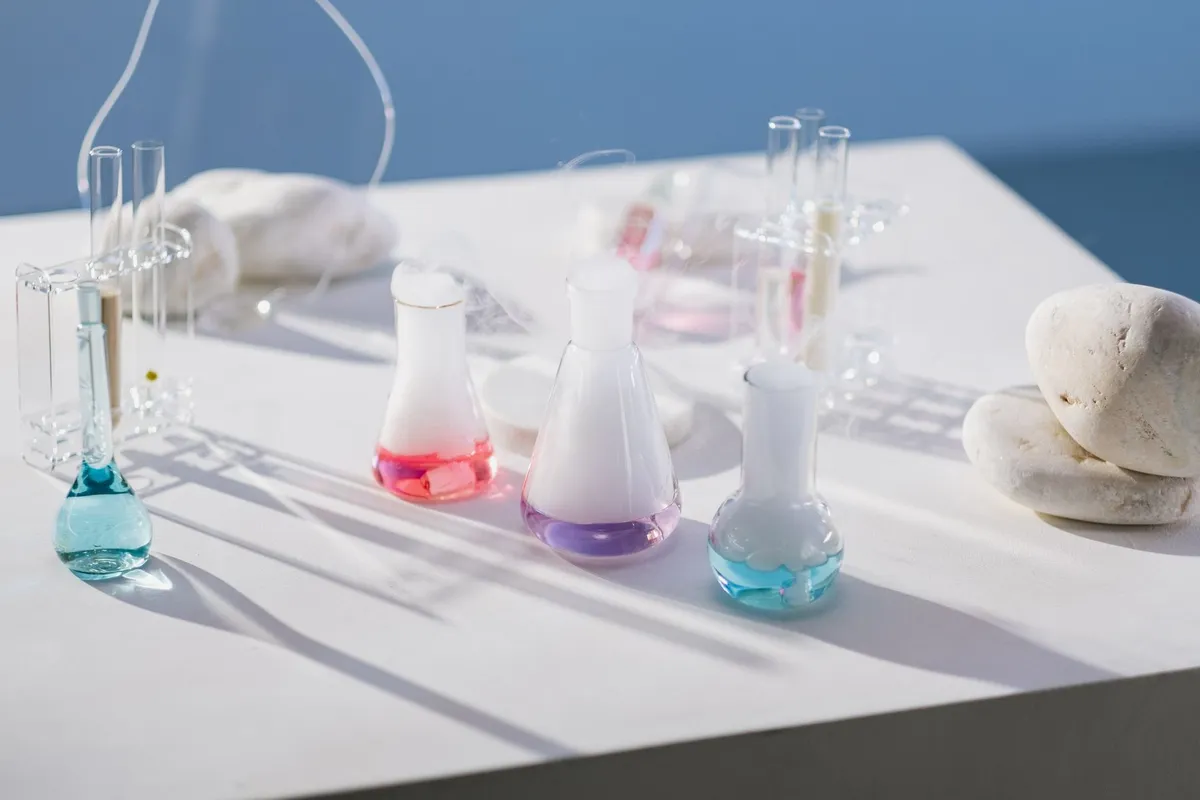
There is a specific kind of silence that falls over a kitchen when a stock clarifies. It is not the silence of absence, but the silence of precision—albumin coagulating into a raft, trapping impurities, leaving behind a liquid amber so pure it catches the light like a gemstone. Marie-Antoine Carême knew this silence in the early 1800s. He didn't have a PhD in colloidal chemistry, but he knew that if you boiled the broth too hard, the proteins would tighten like a fist, squeezing out the very gelatinous soul—the osmazome—he sought to capture. That intuition, that chef's sixth sense built on generations of trial and error, was the precursor to a revolution. It took a Hungarian physicist and a French physical chemist to put a name to the ghost in the machine. They called it Molecular and Physical Gastronomy. The year was 1988. The kitchen would never be the same. The Physicist and the Chemist Walk Into a Kitchen Nicholas Kurti was a man who played with temperatures near absolute zero. A Hungarian refugee who found a home at Oxford, he was a Fellow of the Royal Society, a titan of low-temperature physics. But Kurti had a grievance. He famously lamented: "I think it is a sad reflection on our civilization that while we can and do measure the temperature in the atmosphere of Venus, we do not know what goes on inside our soufflés." Enter Hervé This. A physical chemist at INRA (Institut National de la Recherche Agronomique) in France, This wasn't just studying food; he was dissecting the mechanism of a recipe. He collected "culinary precisions"—old wives' tales, chef's tricks, grandmother's rules—and subjected them to the scientific method. Does searing meat really "seal in juices"? (Spoiler: It doesn't. It creates flavor via the Maillard reaction, but moisture escapes regardless). When these two minds collided, the term "Molecular and Physical Gastronomy" was born. It wasn't a cooking style. It wasn't a menu. It was a discipline. A branch of food science that finally turned its microscope away from the factory floor—industrial preservation, safety standards, mass production—and pointed it squarely at the home stove and the restaurant pass.Erice: The Mountain Where Recipes Became Equations If you want to find the ground zero of modern culinary science, you don't look at a three-Michelin-star restaurant. You look at a medieval hilltop town in Sicily: Erice. In 1992, the Ettore Majorana Centre for Scientific Culture hosted a workshop originally titled "Science and Gastronomy." It was the brainchild of Elizabeth Cawdry Thomas, a cooking teacher from Berkeley with a physicist for a husband and a Rolodex full of Nobel laureates. She saw the gap. She nudged Ugo Valdrè, who nudged Kurti. Kurti brought This. Antonino Zichichi, the centre's director, opened the doors. What happened in those rooms wasn't cooking. It was forensics on flavor. Scientists and professional cooks sat side-by-side, dissecting the chemical reactions of a traditional consommé, the physics of a soufflé's rise, the rheology of a sauce. They weren't there to make "foams" or "spheres." They were there to understand why the foam forms, why the sphere holds. The proceedings birthed a new vocabulary: Note-by-Note Cuisine, Dispersion Systems, the formalization of Culinary Precautions. After Kurti's death in 1998, This renamed the workshops "The International Workshop on Molecular Gastronomy 'N. Kurti'". He remained the sole director, steering the ship from the INRA-AgroParisTech International Centre for Molecular Gastronomy. The shortened term—Molecular Gastronomy—stuck. It became the banner under which a generation of chefs would eventually march, though often misunderstanding the manifesto. The Ghosts in the Machine: Precursors Who Knew Too Much Kurti and This never claimed to invent the science of cooking. They merely organized it. They stood on the shoulders of giants who wore aprons instead of lab coats. The Architect of Osmazome: Marie-Antoine Carême (1784–1833) The "King of Chefs, Chef of Kings" didn't just build edible cathedrals out of spun sugar and marzipan. He wrote the first theoretical treatises on French cuisine. His observation on stock—"the broth must come to a boil very slowly, otherwise the albumin coagulates, hardens..."—is a textbook definition of protein denaturation and colloidal suspension management. He understood viscosity, coagulation, and extraction without ever seeing a molecule. He was a molecular gastronome before the molecule was a culinary concept. The Dreamer of Edible Membranes: Raymond Roussel (1877–1933) In a surreal 1914 novella, L'Allée aux lucioles (The Alley of Fireflies), Roussel fictionalized Antoine Lavoisier—the father of modern chemistry—creating a "semi-permeable coating" to encase a frozen sculpture of one wine inside another. Fiction? Yes. But it predicted spherification and edible films nearly a century before Ferran Adrià made them famous at elBulli. Roussel called it significant "in both the annals of science and the history of improved gastronomy." Prophetic doesn't begin to cover it.The Professors Who Taught the "Whys": Halliday, Noble, and Lowe While Kurti and This were still children, academics in America were writing the textbooks. Evelyn G. Halliday and Isabel T. Noble published Food Chemistry and Cookery in 1943 (following The Hows and Whys of Cooking in 1928). Their foreword reads like a mission statement for the future discipline: "The main purpose of this book is to give an understanding of the chemical principles upon which good practices in food preparation and preservation are based." Chapters on "The Chemistry of Baking Powders," "Determination of Hydrogen Ion Concentration" (pH), and lab diagrams of distillation apparatus for vegetables and pipettes for pectin viscosity prove that the rigor was already there. They just lacked the unifying banner. Then there was Belle Lowe. In 1932, at Iowa State College, she dropped Experimental Cookery: From The Chemical And Physical Standpoint. Six hundred pages. Standard textbook for decades. Section titles read like a modernist manifesto: "The Relation Of Cookery To Colloidal Chemistry," "Coagulation Of Proteins," "Syneresis," "Hydrolysis Of Collagen." She wasn't playing. She was mapping the terrain Kurti and This would later claim. Why "Food Science" Wasn't Enough Here is the crucial distinction the Wikipedia data forces us to confront: Food Science existed. It was massive. It was rigorous. But it was industrial. Food science cared about Clostridium botulinum in cans. It cared about shelf-stable emulsions for salad dressing bottles. It cared about extrusion pressures for breakfast cereal. It did not care why your hollandaise broke, or how to perfectly cook a 63°C egg, or the physics of a crisp skin on a roast chicken. Molecular Gastronomy was the insurgency. It said: The chemical and physical transformations happening in a ramekin are just as worthy of peer-reviewed investigation as the ones in a 10,000-liter reactor. It gathered the "fragmented and isolated investigations" of history—Carême's stock, Lowe's collagen hydrolysis, Halliday's pectin viscosity—and corralled them into a single, organized discipline within food science. One that spoke to cooks, not just scientists. The Definition That Changed Everything So, what is it, strictly speaking?Molecular gastronomy is the scientific approach of cuisine from primarily the perspective of chemistry. The composition (molecular structure), properties (mass, viscosity, etc.) and transformations (chemical reactions, reactant products) of an ingredient are addressed and used in the preparation and appreciation of the ingested products. It is a branch of food science that approaches the preparation and enjoyment of nutrition from the perspective of a scientist at the scale of atoms, molecules, and mixtures.Read that again. "At the scale of atoms, molecules, and mixtures." It is not "cooking with liquid nitrogen." That is molecular cooking (or modernist cuisine). It is not "making caviar out of fruit juice." That is a technique derived from the science. Molecular Gastronomy is the knowledge engine. It is the why behind the wow. When a chef uses transglutaminase ("meat glue") to bind scallops into a perfect cylinder, they are applying the science of protein cross-linking. When they use a rotary evaporator to distill the essence of soil at 30°C, they are exploiting vapor pressure differentials. The cooking is the application. The gastronomy is the map.The Legacy: From Erice to Your Plate The Erice workshops didn't just produce papers. They produced a mindset shift. They gave us Hervé This's "Note-by-Note Cuisine"—the radical idea that we should stop cooking with "whole foods" (carrots, beef, flour) and start cooking with pure compounds (water, proteins, lipids, glucose, odorant molecules). Build the dish molecule by molecule, like a symphony from sine waves. It sounds dystopian. It is the logical endpoint of the discipline. They gave the world the language to explain sous-vide (precision temperature control denaturing proteins uniformly), spherification (calcium-alginate gelation at the interface of two liquids), and emulsification stability (Pickering stabilization, lecithin monolayers). And they gave chefs—Adrià, Blumenthal, Achatz, Redzepi, Dufresne—the intellectual license to ask "What if?" backed by "Because physics." Elizabeth Cawdry Thomas, the cooking teacher from Berkeley who started the avalanche with a conversation in Sicily, is rarely credited on the marquee. But without her, Kurti and This might never have shared a table at the Ettore Majorana Centre. The history of taste turns on small hinges. The Pot Still Simmers Today, the term "Molecular Gastronomy" is often used as a pejorative—a synonym for "pretentious foam." That is a tragedy of branding. The discipline itself is invisible now, baked into the DNA of every serious kitchen. When a line cook adjusts the pH of a purée to keep it green, they are doing molecular gastronomy. When a pastry chef calculates the water activity (aw) to prevent sugar bloom, they are doing molecular gastronomy. Kurti wanted to know the temperature inside the soufflé. Now, we have probes that tell us to the tenth of a degree. We have the map. We know the terrain. But the best chefs? They still listen for that silence. The silence of the stock clarifying. The silence of the protein raft forming. The silence where intuition meets equation. That is where the magic lives. Right at the scale of atoms, molecules, and mixtures.#MolecularGastronomy #FoodScienceHistory #CulinaryPhysics #NicholasKurti #HerveThis #ModernistCuisine #EriceWorkshops #DemirŞef Related InsightsTabbouleh: The Fresh and Herbaceous National Salad Thai Street Food: Aromatic Delights from Bangkok to Chiang Mai – The Ultimate Guide to Southeast Asia’s Most Vibrant Culinary Adventure Wenn die Uhr langsamer tickt: Slow Food und das Erwachen regionaler Gaumen{ "@context": "https://schema.org", "@type": "FAQPage", "mainEntity": [ { "@type": "Question", "name": "What is the main focus of The Alchemist's Kitchen: When Physics Met the Pot and Changed Dinner Forever?", "acceptedAnswer": { "@type": "Answer", "text": "Trace the radical lineage of molecular gastronomy—from 18th-century stock pots to the Erice workshops where physicists and chefs rewrote the rules of flavor." } }, { "@type": "Question", "name": "Who authored the comprehensive guide on The Alchemist's Kitchen: When Physics Met the Pot and Changed Dinner Forever?", "acceptedAnswer": { "@type": "Answer", "text": "This detailed article and its insights were carefully researched and authored by Demir Şef." } }, { "@type": "Question", "name": "Where can I find more related content about Food?", "acceptedAnswer": { "@type": "Answer", "text": "You can explore more articles, detailed reviews, and similar insights by browsing the Related Insights section at the bottom of this article or visiting our dedicated Food category page." } } ] }