Showing Posts From
Books
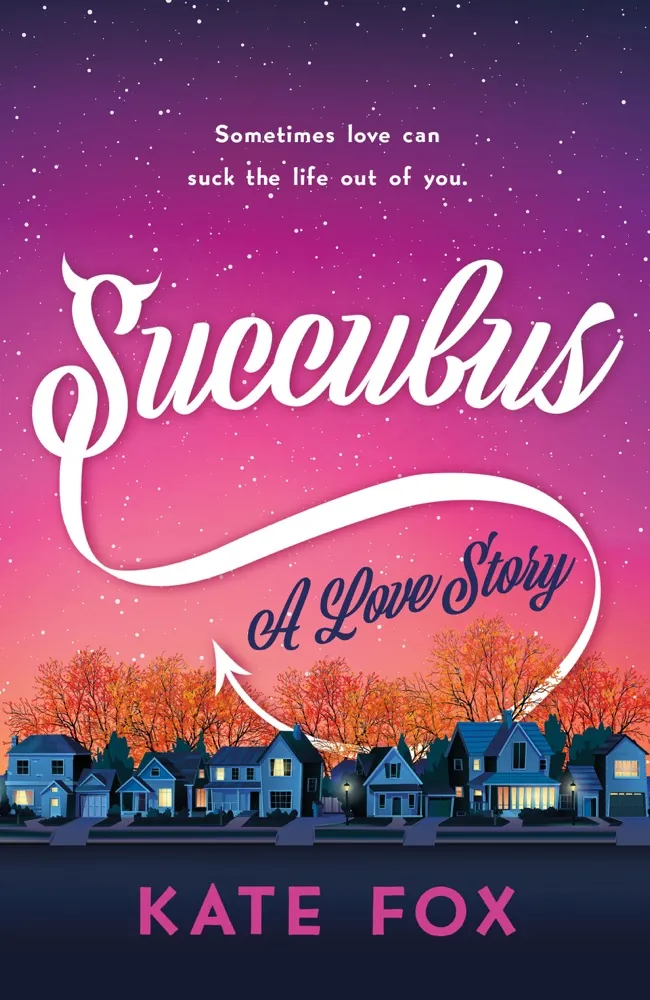

Author: Kate FoxPage Count: UnknownPublication Date: Expected publication 2026-10-20 APL Oh, Succubus: A Love Story—because nothing says "romance" like a woman who turns men into corpses with a peck on the cheek. Kate Fox—oh, the irony—has already set the bar low with that title, hasn’t she? It’s like if Twilight and The Hunger Games had a messy, tragic baby, and then that baby got a therapy dog. Tempest Dunlap, our sweet suburban succubus doula, is the kind of protagonist who makes you root for her and want to slap her simultaneously. She’s the anti-heroine we love to hate—or love to love, depending on how much you’ve been drinking. The synopsis leans hard into the "forbidden love" trope, but with a twist: the forbidden isn’t just societal—it’s biological. Tempest’s curse isn’t some gothic melodrama; it’s a cold, clinical fact. Every man she kisses dies. No grand supernatural backstory, no tragic history—just fate. And yet, she’s a "good person," which is the most infuriatingly humanizing detail here. She’s not a villain, she’s a victim, but also a murderer, which is the kind of moral gray area that makes horror fans salivate. It’s like if The Girl with All the Gifts had a love interest who wasn’t trying to eat her brain. Joel Tav, the doctor, is the kind of man who makes you want to scream at the page: Why him? He’s gorgeous, gentle, and—here’s the kicker—he doesn’t die. That’s the real hook, isn’t it? The synopsis doesn’t say whether Joel knows about Tempest’s... condition, but the tension there is palpable. Does he suspect? Does she lie? Or does she just hope he’ll never find out? The vigilante angle adds another layer—because nothing says "romance" like a man with a crossbow hunting down supernatural abominations. It’s the kind of setup that makes you wonder if this is going to be a True Blood retelling or a Crimson Peak with more blood. Thematically, this is a book about control—or the lack thereof. Tempest’s life is a carefully curated illusion of normalcy, but one wrong move and it all unravels. She’s homeschooling her niece, wearing sweatpants, and living in suburban New Jersey, which is the ultimate irony. She’s the kind of woman who would never be cast in a romance novel, and yet she’s the protagonist of one. The synopsis plays into the "quiet life" trope, but with a dark twist: her quiet life is built on lies and death. It’s the kind of psychological tension that makes you wonder if she’s the real monster here—or if the monster is the world that forces her into this role. And then there’s the vigilante. Because of course there’s a vigilante. This isn’t just a love story; it’s a thriller with a side of gothic horror. The synopsis doesn’t give much away, but the presence of a hunter implies that Tempest’s powers aren’t just a personal tragedy—they’re a threat to something larger. Is she being hunted because of her curse, or because of what she could become? The ambiguity is delicious. It’s the kind of setup that makes you want to grab a copy and see how Fox handles it. I can already predict this will be the kind of book that gets compared to The Raven Boys for its gothic undertones, but with more True Blood energy. Fox has a knack for blending romance and horror, and if she pulls this off, it’ll be the kind of book that leaves you with a sick, twisted smile on your face. But let’s be real—this is also the kind of book that could easily devolve into melodrama if Fox isn’t careful. The synopsis is thin, which means there’s a lot of room for missteps. Will Tempest’s internal conflict be compelling, or will it feel like a cheap twist? Will Joel be a love interest or a walking cliché? Only time will tell. For now, though, I’ll leave you with this: if you’re looking for a love story, don’t read this. If you’re looking for a horror novel with a dash of romance, maybe—but bring your skepticism. And if you’re just here for the dark humor, well, then you’re in for a treat. Now, if you’ll excuse me, I’m going to go sail my yacht on the lake. Alone. Because that’s what happens when you read about a woman who kills men with her kisses. #DarkRomance #HorrorLit #SuccubusProblems Related InsightsUndone (The Undone, #4) Book Review and Summary Miss Peregrine's Home for Peculiar Children Book Review and Summary Enlightenment Now Book Review and Summary{ "@context": "https://schema.org", "@type": "FAQPage", "mainEntity": [ { "@type": "Question", "name": "What is the main focus of Succubus: A Love Story Book Review and Summary?", "acceptedAnswer": { "@type": "Answer", "text": "Everything you need to know about Succubus: A Love Story with our detailed review." } }, { "@type": "Question", "name": "Who authored the comprehensive guide on Succubus: A Love Story Book Review and Summary?", "acceptedAnswer": { "@type": "Answer", "text": "This detailed article and its insights were carefully researched and authored by Diego Lopez." } }, { "@type": "Question", "name": "Where can I find more related content about Books?", "acceptedAnswer": { "@type": "Answer", "text": "You can explore more articles, detailed reviews, and similar insights by browsing the Related Insights section at the bottom of this article or visiting our dedicated Books category page." } } ] }
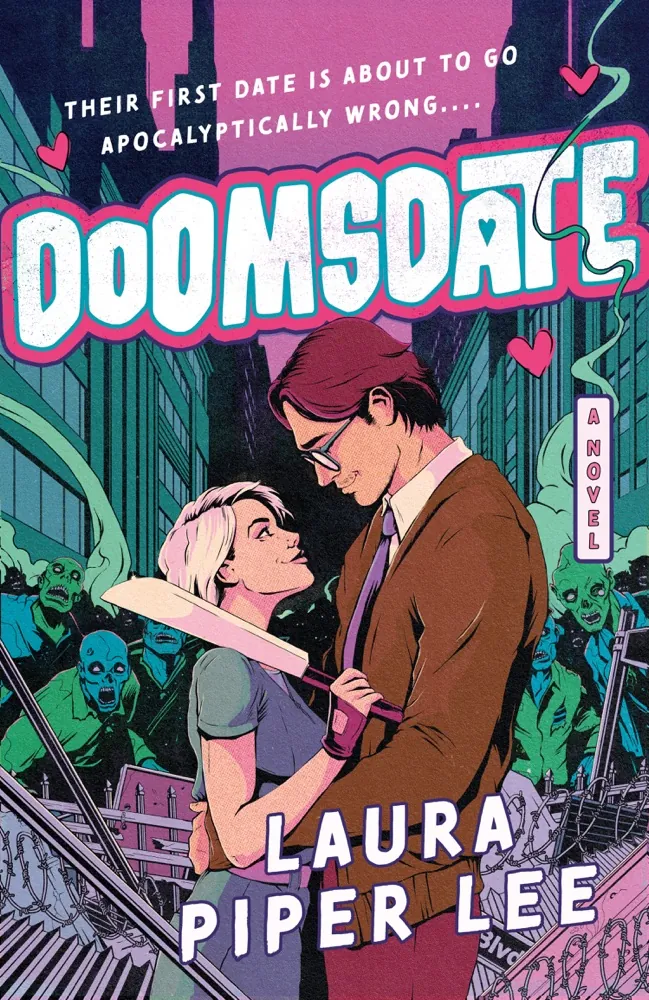

Author: Laura Piper LeePage Count: UnknownPublication Date: Expected publication 2026-09-15 APL Oh, Doomsdate—because nothing says feminist empowerment like a woman’s first priority being a bucket list orgasm while the world burns. Maisie Bennett, our doomsday prepper with a taser and a utility belt full of weapons, is framed as this badass survivalist—until we realize her entire emotional arc hinges on whether she can act normal on a date. And by "normal," we mean not brandishing a stun gun like a 1980s action heroine. The synopsis leans hard into the "feral rom-com" tagline, which is code for: Here’s a woman who’s prepared for the apocalypse but not for the fact that her love interest might actually like her. Everett Greer, the "soft, liberal arts professor," is the classic male character who exists solely to be taught by the woman—of course—but the twist is that his lesson plan includes sex education. Because nothing says "equality" like a man’s emotional labor being reduced to a curriculum. The synopsis plays up the "deal" trope—she’ll teach him survival, he’ll teach her how to live—which is a neat way of saying she’s the one who’s actually functional, and he’s the one who needs rescuing from his own grief. But where’s the subversion? Where’s the moment where Maisie doesn’t need to be the one holding the taser? The synopsis treats her competence as a quirk, not a strength—because if she weren’t so anxious about being "normal," she’d already be the one in charge. And let’s talk about the zombies—because nothing says "romantic tension" like a shared road trip with a cat as the emotional support animal. The GI virus is the perfect stand-in for modern dating anxiety: it traps people in their own bodies, turns them into monsters, and then reanimates them. Maisie and Everett’s dynamic is framed as a partnership, but the power imbalance is deliberate. She’s the one with the practical skills, he’s the one with the emotional baggage—and the only way he’s getting over it is through her. It’s the same old story: the woman’s survival instincts are her superpower, but the man’s growth is what matters. The synopsis also leans into the nerdy professor trope, which is always a fun way to signal that the male lead is intellectual but emotionally stunted. Everett’s tragedy is that he’s lost all lust for life—but not for sex, apparently, because the plot demands he wants Maisie. The fact that he’s forced into dating her (thanks to his best friend’s catfishing) makes his eventual attraction feel earned—but only because the synopsis promises it will be spicy. The emotional stakes are reduced to: Will they have sex before the zombies eat them? Because that’s the real question, isn’t it? The cat is the only character here who seems actually in control—Chicken, the feline sidekick, is the only one who doesn’t need to be fixed or taught or rescued. The synopsis treats animals as companions, not characters, which is a shame—because in a world where humans are failing, maybe the real lesson is that we don’t need to be saved by each other. But no, the focus is on Maisie’s growth—which, according to this synopsis, is learning to let go of her weapons and trust a man. I’m already predicting this will be the kind of book where Maisie finally sheds her "anxious prepper" persona by enduring Everett’s emotional baggage, because nothing says feminist empowerment like a woman adapting to a man’s needs. And the zombies? They’re just a backdrop—because the real horror is that Maisie’s only goal is to get laid before the world ends. Because that’s what matters, right? Not survival, not agency—just orgasm. I’m going to go cut my bangs now. Related InsightsThe Phantom Tollbooth Book Review and Summary Dead Take the a Train Book Review and Summary Hollywood, Ending Book Review and Summary{ "@context": "https://schema.org", "@type": "FAQPage", "mainEntity": [ { "@type": "Question", "name": "What is the main focus of Doomsdate Book Review and Summary?", "acceptedAnswer": { "@type": "Answer", "text": "Everything you need to know about Doomsdate with our detailed review." } }, { "@type": "Question", "name": "Who authored the comprehensive guide on Doomsdate Book Review and Summary?", "acceptedAnswer": { "@type": "Answer", "text": "This detailed article and its insights were carefully researched and authored by Marta Wisniewska." } }, { "@type": "Question", "name": "Where can I find more related content about Books?", "acceptedAnswer": { "@type": "Answer", "text": "You can explore more articles, detailed reviews, and similar insights by browsing the Related Insights section at the bottom of this article or visiting our dedicated Books category page." } } ] }

-
 Emily Page
- 08 Aug, 2026 06:34
Ink and Iron: The Silent War Against the Written Word in the Soviet Union
A single page of paper, whispered in the shadows of a communal apartment, could be more dangerous than a suitcase full of explosives. In the monolithic machinery of the Soviet Union, the written word was not merely a vehicle for art or information; it was a strategic weapon. To write a sentence that deviated from the party line was an act of rebellion; to read a banned book was a flirtation with the Gulag. For decades, the state attempted to build a wall not just of concrete and barbed wire, but of silence, scrubbing the libraries of any thought that dared to breathe outside the suffocating confines of Socialist Realism. The Architect of Silence and the Glavlit Machine To understand why certain books were banished, one must understand the apparatus of the ban. The Soviet Union didn't just "dislike" certain books; it institutionalized the erasure of thought via Glavlit—the Main Administration for Literary and Publishing Affairs. This was the central censorship body that acted as the state's ideological filter. Every manuscript, every newspaper column, and every textbook had to pass through this sieve. The criteria for banning were fluid and terrifyingly broad. A book could be prohibited for "anti-Soviet agitation," "cosmopolitanism," "formalism," or simply because the author had fallen out of favor with the General Secretary. The goal was the creation of the "New Soviet Man," an individual whose intellectual landscape was curated by the Party. Anything that suggested a contradictory truth—whether it was the horror of the Great Purge or the allure of Western individualism—was treated as a contagion.The Giants of Dissent: Solzhenitsyn and the Truth of the Labor Camps Perhaps no name evokes the struggle between the pen and the state more than Aleksandr Solzhenitsyn. His work represents the ultimate nightmare of the Soviet censor: the witness. The Gulag Archipelago was not just a book; it was a panoramic indictment of the entire Soviet experiment. By documenting the sprawling system of forced labor camps, Solzhenitsyn stripped away the veneer of socialist utopia to reveal a skeletal reality of torture, starvation, and systemic cruelty. The state’s reaction was visceral. The manuscript had to be smuggled out of the country, published in the West, and then leaked back into the USSR via samizdat—the clandestine practice of self-publishing. People would manually type a banned manuscript, creating multiple carbon copies, which were then passed from trusted friend to trusted friend. To possess a copy of The Gulag Archipelago was to hold a piece of radioactive truth; it was an invitation for a visit from the KGB. Similarly, Solzhenitsyn's One Day in the Life of Ivan Denisovich managed a brief, paradoxical existence. It was initially permitted under Nikita Khrushchev during the "Thaw" as a way to criticize the excesses of Stalinism. However, as the political winds shifted and the state regained its appetite for control, the book was snatched back into the darkness of the prohibited list. It serves as a stark reminder that in the Soviet Union, a book's legality depended entirely on the current mood of the Kremlin. The Forbidden Mirrors: Bulgakov and the Absurdity of Power While Solzhenitsyn fought with facts, Mikhail Bulgakov fought with satire and the supernatural. The Master and Margarita is one of the most profound examples of a "ghost book"—a masterpiece written in secret, burned by the author himself in a fit of despair, and eventually reconstructed from fragments. Bulgakov’s novel was a direct assault on the spiritual bankruptcy of the Soviet elite. By bringing the Devil to Moscow, Bulgakov exposed the greed, hypocrisy, and cowardice of the literary establishment. The novel’s juxtaposition of a satirical modern Moscow with a poignant, humanized retelling of the trial of Pontius Pilate was an affront to the state's mandatory atheism and its insistence on a linear, materialist history. For years, The Master and Margarita existed only in the whispers of the intelligentsia. When a censored version finally appeared in the 1960s, it missing key passages, yet it still managed to ignite the imaginations of a generation. The book proved that the state could ban the printing press, but it could not ban the human impulse to laugh at the absurdity of tyranny.Western Contaminants: The Danger of the Foreign Word The ban didn't just target internal dissidents; it targeted the " decadent" influence of the West. Any work that promoted liberal democracy, religious faith, or "bourgeois" individualism was strictly forbidden. This included a wide swath of world literature and philosophy.George Orwell's 1984 and Animal Farm: These were the most feared imports. Orwell’s depiction of Big Brother and the manipulation of language (Newspeak) was too close to home. The Soviet state recognized that Animal Farm was a precise autopsy of the Russian Revolution's betrayal of its own ideals. The Works of Albert Camus and Jean-Paul Sartre: Existentialism was viewed with suspicion. The idea that an individual is responsible for creating their own meaning in an indifferent universe contradicted the Marxist-Leninist view that meaning was derived solely from one's role in the class struggle. Religious Texts: While the Bible and the Quran existed in clandestine circles, they were officially suppressed. Any theology that placed a higher power above the State was considered a threat to national security. American Pulp and "Jazz" Literature: Even non-political works were often banned if they depicted a lifestyle of leisure and consumption that contradicted the austere, hardworking image of the Soviet citizen.The Art of Survival: Samizdat and Tamizdat When the official bookstores became museums of propaganda, the people created their own publishing houses. Samizdat (self-publishing) became the lifeline of the Soviet soul. This was a decentralized network of bravery. A person would receive a banned text, type it out on a manual typewriter—often with several sheets of carbon paper underneath—and pass the copies to others. The risks were astronomical. If the KGB discovered a samizdat ring, the participants faced charges of "anti-Soviet agitation," which could lead to years in a labor camp or internal exile to the frozen wastes of Siberia. Yet, the hunger for forbidden knowledge outweighed the fear. Then there was Tamizdat (publishing "over there"). This involved smuggling manuscripts out of the USSR to publishers in Paris, London, or New York. Once published abroad, these books would be smuggled back into the country in the linings of suitcases or hidden within the covers of approved texts. This cycle created a global conversation about the Soviet Union that the state could not silence.The Ghostly Echoes of Erased Authors Beyond the famous names, thousands of lesser-known poets, historians, and essayists were simply erased. This was the "damnatio memoriae" of the Soviet era. Authors who had once been celebrated were suddenly stripped of their titles, their books were purged from libraries (often physically ripped out or thrown into incinerators), and their names were scrubbed from the indices of encyclopedias. The tragedy of the banned book in the Soviet Union was not just the loss of the text, but the attempted erasure of the human experience. When a book is banned, the state is claiming that the experience described in that book—the suffering, the doubt, the love, the heresy—did not happen, or should not be remembered. The Legacy of the Forbidden Page The fall of the Soviet Union eventually opened the floodgates, allowing the "forbidden" books to flood back into the Russian consciousness. However, the era of censorship left a permanent scar on the literary landscape. It created a culture where the most valuable books were the ones that were illegal, and where the act of reading became a political statement. The history of banned books in the USSR teaches us that censorship is an admission of weakness. The state banned Solzhenitsyn, Bulgakov, and Orwell not because their words were false, but because they were too true to be managed. The ink of the dissident proved more durable than the iron of the regime. Today, these works stand as monuments to the resilience of the human spirit. They remind us that as long as there is a single person willing to type a page in secret and another willing to read it in the dark, the truth can never be fully extinguished.#SovietHistory #BannedBooks #LiteraryResistance #Censorship #HistoryOfBooks Related InsightsThe Four Agreements Book Review and Summary Magic Claims Book Review and Summary Kafka on the Shore Book Review and Summary{ "@context": "https://schema.org", "@type": "FAQPage", "mainEntity": [ { "@type": "Question", "name": "What is the main focus of Ink and Iron: The Silent War Against the Written Word in the Soviet Union?", "acceptedAnswer": { "@type": "Answer", "text": "Explore the dangerous allure of forbidden literature in the USSR and the books that challenged the iron grip of state censorship." } }, { "@type": "Question", "name": "Who authored the comprehensive guide on Ink and Iron: The Silent War Against the Written Word in the Soviet Union?", "acceptedAnswer": { "@type": "Answer", "text": "This detailed article and its insights were carefully researched and authored by Emily Page." } }, { "@type": "Question", "name": "Where can I find more related content about Books?", "acceptedAnswer": { "@type": "Answer", "text": "You can explore more articles, detailed reviews, and similar insights by browsing the Related Insights section at the bottom of this article or visiting our dedicated Books category page." } } ] }
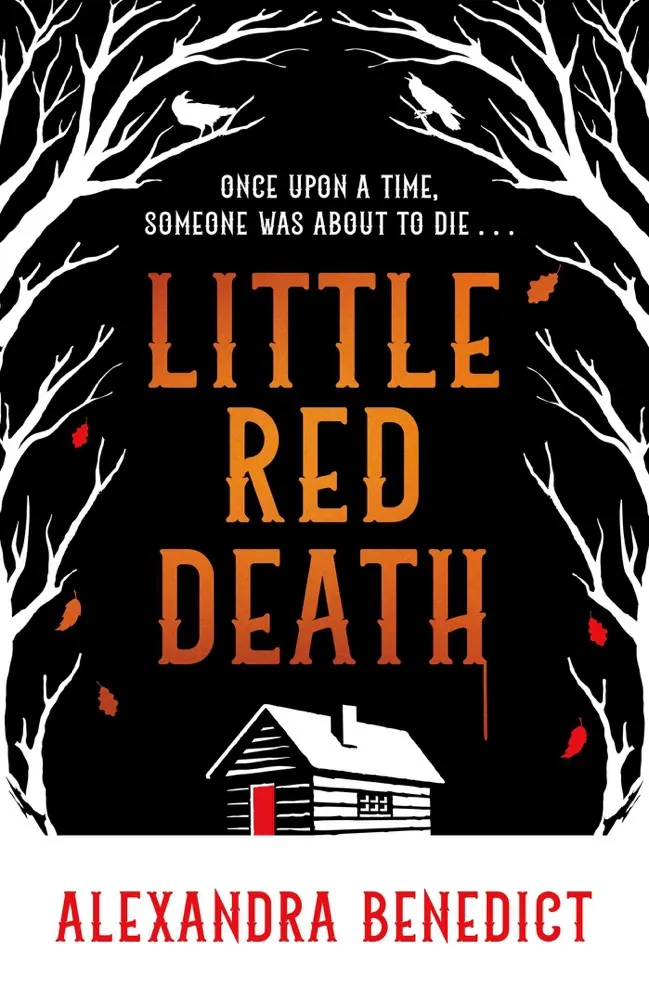

Author: A.K. BenedictPage Count: UnknownPublication Date: Expected publication 2026 APL Another procedural detective tracking a serial killer whose signature motif is cribbed from a Wikipedia page of public domain folklore. How utterly, ground-breakingly pedestrian. A.K. Benedict wants us to gasp because DI Lyla Rondell discovers her own life is just a poorly disguised Brothers Grimm fever dream. Yawn. And yet, the literati are practically frothing at the mouth over Little Red Death, praising its "meta" cleverness as if Charlie Kaufman hasn't been doing this exact bit since the Clinton administration. The Grimm Ripper and Other Lazy Monikers Let us dissect the sheer audacity of the press dubbing this fictional menace "the Grimm Ripper." Truly, journalists in this universe possess the creative bandwidth of a soggy cardboard box. But the real crime here isn't the murders—it's the relentless recycling of the "protagonist's past is a lie" trope. We get it. Reality is subjective. Nothing is sacred. Yet we are expected to applaud when a burnt-out copper realizes her childhood trauma was just foreshadowing. Folklore as a Crutch for Actual Plot Writers love dipping into folklore when they run out of genuine ideas. Why build an immersive world when you can just steal Hansel and Gretel's breadcrumbs and slap a police procedural coat of paint on it? Benedict is supposedly channeling Angela Carter mixed with Stephen King—according to blurts that read like they were composed at gunpoint by panicked publicists. Yet, beneath the slick marketing copy, the synopsis relies heavily on absolute vagueness. The bodies stack up. The world flips. Lyla takes "creative license." What does that even mean? Is she going to rewrite the ending with a Sharpie and a dream? The Aesthetic of Cynical Branding We are staring down the barrel of a 2026 publishing slate choked with high-concept gimmickry designed purely to secure a Netflix adaptation deal before the ink even dries. If you enjoy your noir marinated in fairy dust and served with a side of existential dread, knock yourself out. Personally, I would rather chew glass than read another thriller where a cynical detective has to "turn the final page" on her own psyche. Give me a gritty kitchen-sink drama about municipal tax fraud instead. At least the math doesn't pretend to be magic. I am going to go crochet a sweater out of spite. #LittleRedDeath #BookTwitterIsExhausting #CrimeFiction Related InsightsThe Dragon Republic Book Review and Summary King of Wrath / King of Pride / King of Greed / King of Sloth Book Review and Summary Crowned by Roses (Beasts of the Briar, #7) Book Review and Summary{ "@context": "https://schema.org", "@type": "FAQPage", "mainEntity": [ { "@type": "Question", "name": "What is the main focus of Little Red Death Book Review and Summary?", "acceptedAnswer": { "@type": "Answer", "text": "Everything you need to know about Little Red Death with our detailed review." } }, { "@type": "Question", "name": "Who authored the comprehensive guide on Little Red Death Book Review and Summary?", "acceptedAnswer": { "@type": "Answer", "text": "This detailed article and its insights were carefully researched and authored by Carmen Martinez." } }, { "@type": "Question", "name": "Where can I find more related content about Books?", "acceptedAnswer": { "@type": "Answer", "text": "You can explore more articles, detailed reviews, and similar insights by browsing the Related Insights section at the bottom of this article or visiting our dedicated Books category page." } } ] }
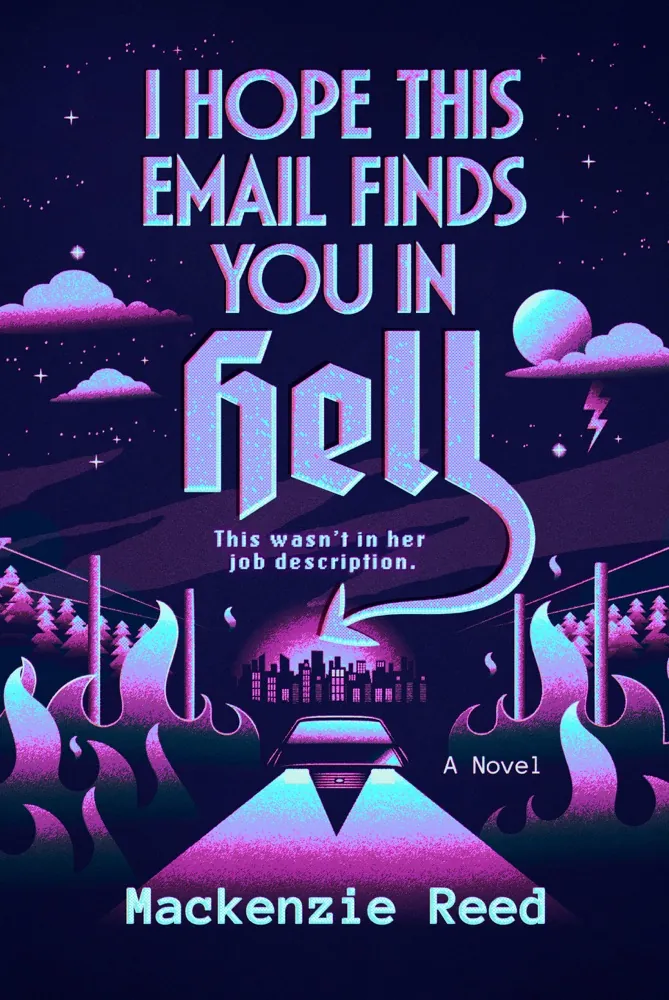
Author: Mackenzie ReedPage Count: UnknownPublication Date: Expected publication 2026-09-01 APL The synopsis for I Hope This Email Finds You in Hell reads like a corporate horror movie where the real monster isn’t the demon—it’s the soul-crushing tedium of a life insurance office. Brie Benson, our protagonist, is the kind of woman who’s spent so long pretending to care about spreadsheets that she’d rather watch a demonic exorcism than admit she’s emotionally dead. And yet—and yet—she stumbles into this mess anyway, like a boxer who finally throws a punch after years of taking hits. The premise is a masterclass in anti-romance horror, the kind where the love interest isn’t a knight in shining armor but a demon hunter with a very specific skill set—exorcisms, bureaucracy, and a side of brooding. Luke isn’t some rugged hero; he’s the guy who probably files his taxes in Latin and treats hell like a bad customer service call. The dynamic between Brie and Luke feels like the early stages of a Fight Club romance, where the only thing more explosive than their growing feelings is the idea that hell itself might be their undoing. But here’s the kicker: the real tension isn’t just the supernatural stakes—it’s the corporate hell they’re walking into. Times Square as a portal? That’s not just a setting; it’s a metaphor for how Brie’s entire life has been a grind, a loop of meaningless tasks until she finally snaps. The synopsis leans hard into the workplace horror trope, but with a twist—what if the monsters aren’t just lurking in the break room but are the break room? The idea of a demonic underworld with bureaucratic nightmares is either genius or a sign that Mackenzie Reed has been stuck in a meeting with the devil himself. It’s the kind of premise that makes you wonder if this is going to be a True Detective meets Office Space nightmare, where the real horror isn’t the exorcism but the fact that Brie’s entire life was just a slow descent into hell in a cubicle. Thematically, this book is a survival story disguised as a supernatural thriller. Brie’s compartmentalization isn’t just a coping mechanism—it’s her armor, and the moment she sees Luke’s exorcism, that armor shatters. The question isn’t whether she can handle the supernatural; it’s whether she can handle the fact that she’s been alive this whole time and didn’t even realize it. And Luke? He’s the kind of character who makes you root for him even when he’s being a jerk—because deep down, he’s just as lost as Brie, just with a much better excuse. The vagueness here is deliberate, and that’s where the real potential lies. The synopsis doesn’t spell out the rules of hell’s bureaucracy, but that’s the beauty of it—it’s unsettling because we’re left to imagine what kind of hell would make a demon hunter sigh and say, “Yeah, I’ve dealt with worse in HR.” It’s the kind of ambiguity that makes you think of Annihilation meets The Office, where the horror isn’t just external but systemic—and Brie’s entire life was just one long, soul-crushing meeting. I’d bet my fight gear this book is going to be a slow-burn disaster, the kind where the real horror isn’t the demon but the fact that Brie’s entire world was built on lies—about her job, about her life, about the fact that she ever thought she’d be happy in a cubicle. And Luke? He’s the kind of character who’ll either save her or break her, depending on whether he’s the hero or just another layer of hell. But here’s the thing—this isn’t just a horror story. It’s a breakup story, a career story, a self-discovery story, all wrapped up in a package that smells like stale coffee and bad decisions. And if Mackenzie Reed pulls this off, it’ll be the kind of book that makes you question everything you thought you knew about hell—and why you ever thought a life insurance job was a good idea in the first place. Now if you’ll excuse me, I just spilled coffee all over my desk. Again. Related InsightsJust in Time Book Review and Summary Whispers on Carbon Paper: The Subversive Art of Samizdat Literature in the Shadow of the Iron Curtain The Singularity Is Nearer Book Review and Summary{ "@context": "https://schema.org", "@type": "FAQPage", "mainEntity": [ { "@type": "Question", "name": "What is the main focus of I Hope This Email Finds You in Hell Book Review and Summary?", "acceptedAnswer": { "@type": "Answer", "text": "Everything you need to know about I Hope This Email Finds You in Hell with our detailed review." } }, { "@type": "Question", "name": "Who authored the comprehensive guide on I Hope This Email Finds You in Hell Book Review and Summary?", "acceptedAnswer": { "@type": "Answer", "text": "This detailed article and its insights were carefully researched and authored by Natalia Sokolova." } }, { "@type": "Question", "name": "Where can I find more related content about Books?", "acceptedAnswer": { "@type": "Answer", "text": "You can explore more articles, detailed reviews, and similar insights by browsing the Related Insights section at the bottom of this article or visiting our dedicated Books category page." } } ] }
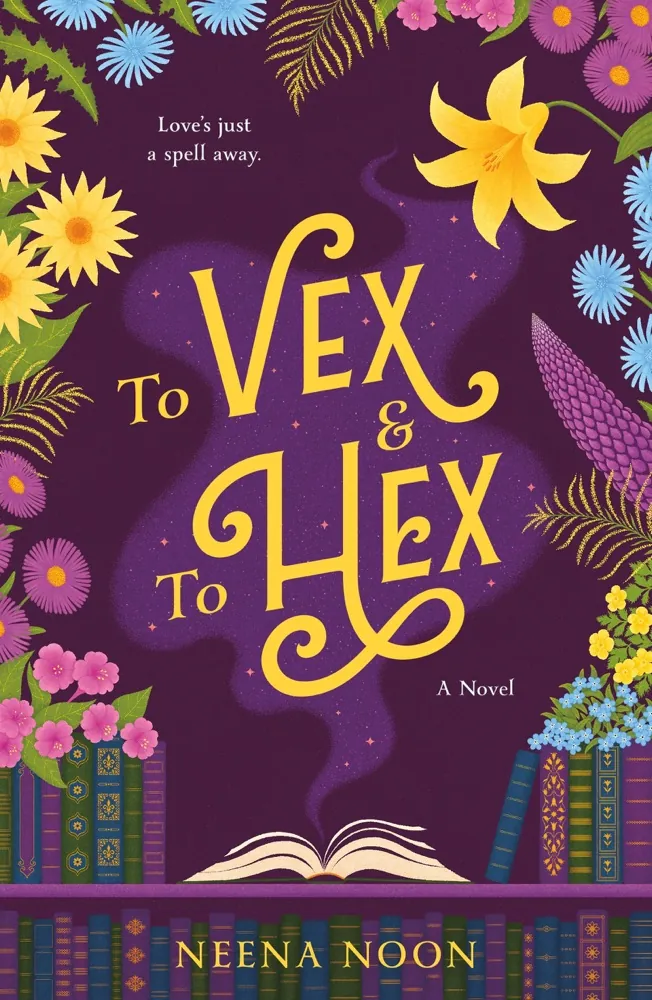
Author: Neena NoonPage Count: UnknownPublication Date: Expected publication 2026-11-03 APL The Coleman stove is hissing a frantic, blue-rimmed tune while ten feet away, a tetherball pole rattles like a loose tooth in the autumn wind. And I am sitting here on a blue nylon folding chair with three missing leg caps, staring at a printout of Neena Noon’s upcoming 2026 release, To Vex & To Hex. My youngest just tried to roast a hot dog wrapper over the embers. Kids are loud. God, they are loud. So excuse me if my mind immediately glommed onto the synopsis's promise of sanctuary, quiet stacks of paper, and an old man named Charles who needs protecting. We all look for safe houses. Sometimes they are brick-and-mortar secondhand bookstores. Sometimes they are just a moment of silence between the juice-box distribution and the tent zipper jams. The Architecture of the Shield Lucy Ansari is a bookseller witch. But look past the magical prose for a second. What is she actually doing? She is erecting a barricade. An estranged grandson—Grayson—arrives from Ireland because the patriarch is hurt. And what does Lucy do? She goes into hyper-vigilant, defensive lockdown. She wants to hex him. Why? Because when the people who anchor our safe spaces get broken or old, we lash out at the new variables. We build moats. And Grayson doesn't break down the door with an axe. He uses annoyance. He vexes her. It is a classic push-pull dynamic that feels less like a manufactured rom-com trope and more like the defensive posturing humans adopt when they are terrified of being displaced. Or worse—disappointed. Noon is trading on comfort here, leaning heavily into the vibe of Laurie Gilmore’s The Pumpkin Spice Café or Sawyer Bennett. Yet I suspect the emotional core relies entirely on whether Noon can make that sudden shift from "protective warden" to "vulnerable human" feel earned rather than rushed. Healing Through Friction Can we talk about the utility of a good argument? Adults hiding behind snark and "heated banter" are usually just scared kids wearing oversized coats. Yet the synopsis hints at suppression. Desperate to suppress. That phrase is doing heavy lifting. If a childhood teaches us anything, it is that suppression is just a pressure cooker waiting for a campfire spark. We read books like this not for the magic—though book magic sounds delightful when your own reality involves scraping melted marshmallows off a fleece jacket—but for the friction. Two stubborn people orbiting an injured elder, bumping their bruised elbows together until the armor cracks. Will it be deep? Probably not. It is marketed as cozy and high-spice, which means the emotional stakes will likely resolve right before a tidy, predictable sunset. And honestly? I can respect the architecture of a safe landing. The Blueprint of Softness Let us be real for a second. The synopsis is painfully sparse on actual plot mechanics. It relies entirely on the enemies-to-lovers beats we could write in our sleep. But sometimes, mid-camping trip, you don't want Dostoevsky. You want a warm mug and a predictable trajectory where the prickly exterior yields to a tender touch. My ten-year-old just asked if he can eat a marshmallow off the dirt. I need to go handle that before the raccoon population moves in. And then, frankly, I need to go home and water my dying cactus. #BookTwitter #RomCom #CozyRomance #NeenaNoon Related InsightsWaking Sleeping Beauty Book Review and Summary Red Moon Book Review and Summary Sanctuary Book Review and Summary{ "@context": "https://schema.org", "@type": "FAQPage", "mainEntity": [ { "@type": "Question", "name": "What is the main focus of To Vex & To Hex Book Review and Summary?", "acceptedAnswer": { "@type": "Answer", "text": "Everything you need to know about To Vex & To Hex with our detailed review." } }, { "@type": "Question", "name": "Who authored the comprehensive guide on To Vex & To Hex Book Review and Summary?", "acceptedAnswer": { "@type": "Answer", "text": "This detailed article and its insights were carefully researched and authored by Michael Brown." } }, { "@type": "Question", "name": "Where can I find more related content about Books?", "acceptedAnswer": { "@type": "Answer", "text": "You can explore more articles, detailed reviews, and similar insights by browsing the Related Insights section at the bottom of this article or visiting our dedicated Books category page." } } ] }
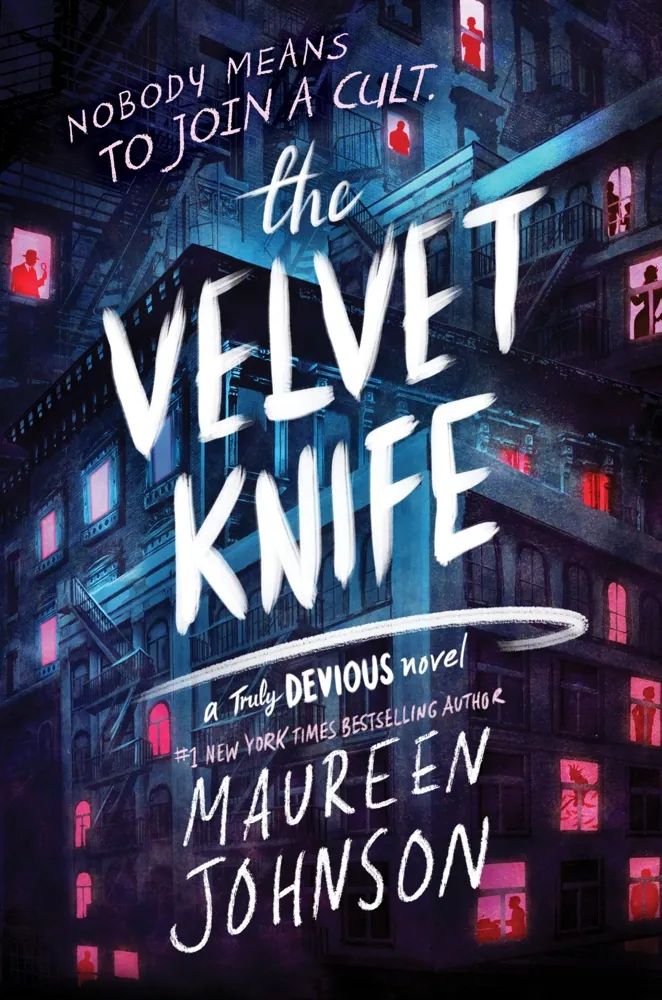

Author: Maureen JohnsonPage Count: UnknownPublication Date: Expected publication 2026-09-29 APL Look, I am currently surviving on instant ramen and cold brew that costs more than my textbook budget, which naturally means I have zero patience for sloppy logic. Yet here we are, staring at Maureen Johnson’s upcoming The Velvet Knife, and my cynical student soul is twitching. Where are the hard sciences? Why must YA lit always substitute actual forensics for angsty teenage drama? Give me chromatology, ballistics, or toxicology reports. Instead, we get emotional triangulation. The Thermodynamic Laws of Broken Hearts The synopsis proudly announces that our protagonist, Stevie Bell, can decipher cold-blooded homicide but utterly fails at basic interpersonal mechanics. And honestly? That is thermodynamically unsound. Human social interaction operates on predictable behavioral algorithms—unlike a corpse in a Manhattan apartment complex, which is just a static, decomposing lump of protein and carbon. Yet Johnson leans hard into this trope. And why shouldn’t she? It keeps the pages turning while we wait for the actual puzzle box to open. But let’s be entirely real for a second. If you can outsmart a serial killer in Vermont, you can surely detect a toxic text message without losing your mind. Cults, Conspiracies, and Cognitive Biases Notice how the synopsis casually drops the concept of cult indoctrination? "Does anyone realize that they’re joining a cult—before it’s too late?" Now, this is where my academic pedantry kicks in. Sociological manipulation requires profound psychological conditioning. It is not just a vibe. It takes weeks of sleep deprivation, isolation, and love-bombing. If Johnson actually treats the cult mechanics with the rigorous sociological realism that Karen McManus or Holly Jackson usually avoid, this might actually be worth skipping my economics lecture for. But let’s be honest. It will probably just be rich kids in high-end streetwear making poor life choices under neon lights. The Structural Problem of Vague Synopses To be brutally frank, this preview tells us virtually nothing. A dead body appears in Manhattan. Wow. Groundbreaking. We have zero specifics on the victim, the forensic anomalies, or the actual stakes. It is all vibes, Manhattan architecture, and adolescent brooding. Yet, I will still read it. Why? Because I am weak, perpetually broke, and secretly desperate for a distraction from my midterms. I have to run. I am late to coach my daughter's soccer practice. #YAmystery #BookTwitter #MaureenJohnson Related InsightsThe Light Years: A Novel Book Review and Summary Wicked and the wallflower Book Review and Summary Upgrade Book Review and Summary{ "@context": "https://schema.org", "@type": "FAQPage", "mainEntity": [ { "@type": "Question", "name": "What is the main focus of The Velvet Knife (Truly Devious, #6) Book Review and Summary?", "acceptedAnswer": { "@type": "Answer", "text": "Everything you need to know about The Velvet Knife (Truly Devious, #6) with our detailed review." } }, { "@type": "Question", "name": "Who authored the comprehensive guide on The Velvet Knife (Truly Devious, #6) Book Review and Summary?", "acceptedAnswer": { "@type": "Answer", "text": "This detailed article and its insights were carefully researched and authored by Marco Conti." } }, { "@type": "Question", "name": "Where can I find more related content about Books?", "acceptedAnswer": { "@type": "Answer", "text": "You can explore more articles, detailed reviews, and similar insights by browsing the Related Insights section at the bottom of this article or visiting our dedicated Books category page." } } ] }
-
 Sofia Bianchi
- 08 Aug, 2026 03:17
The Fall of the Crowned King (Gods and Monsters #5) Book Review and Summary
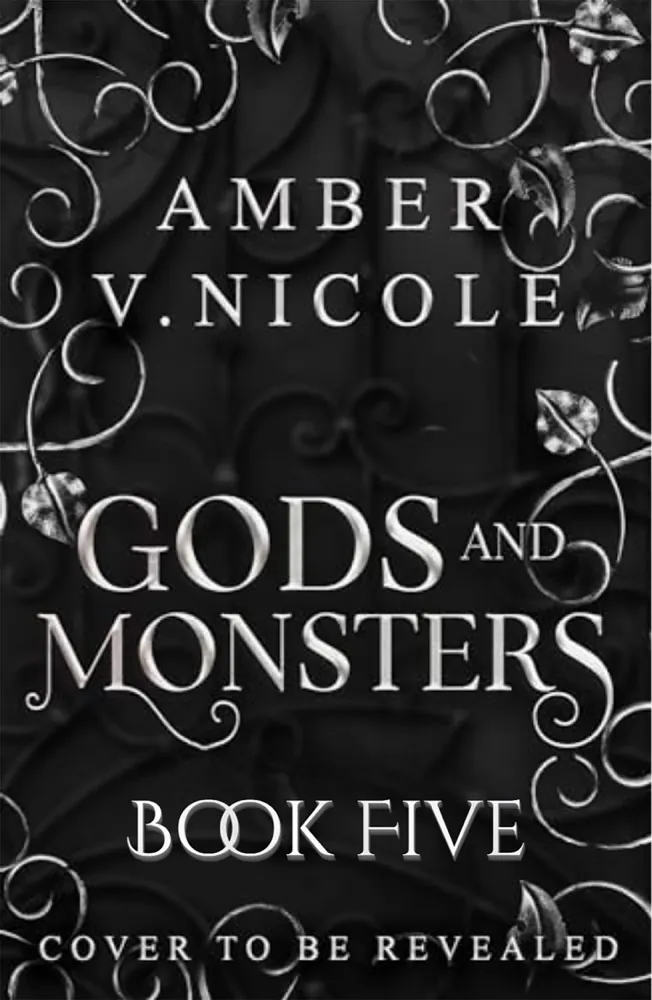
Author: Amber V. NicolePage Count: UnknownPublication Date: Expected publication 2026-11-24 APL Darling, do look at the slate for late November. While the August heat hangs mercilessly over the city—my townhouse air conditioning is throwing an absolute tantrum, by the way—Amber V. Nicole is preparing to drop The Fall of the Crowned King upon us. And honestly? I am vibrating with architectural and metaphysical euphoria. Gods and monsters. Such an exhaustively pedestrian dichotomy on paper, yet Nicole insists on ripping it open. But let us look closer at the existential stakes. The Ontology of Desolation We are staring down the barrel of a universe-shredding finale. Nismera breathes the thin, brittle air of pyrrhic victory. Yet—how deliciously predictable—a darker menace creeps in. What does victory even mean when the ontological architecture of existence collapses? The synopsis leans heavily into cosmic nihilism. It asks the elite question: when the gods fall, who picks up the shrapnel of our fragile constructs? And the prose promises an interrogation of identity through displacement. Dianna, Kaden, and Isaiah find themselves unmoored in a reality entirely foreign. They must parley with ghosts of their own history. Delicious. Absolute psychological violence wrapped in romantasy packaging. Aesthetic Parallels and Intellectual Vanity For those of us raised on Cassandra Clare and Kerri Maniscalco—truly, the holy trinity of brooding romantic dread—this fifth installment in the Gods and Monsters sequence smells faintly of ozone and expensive leather. Nicole is operating on pure adrenaline here. Yet, one must critique the delicious laziness of the synopsis itself. It’s wonderfully vague! An "old relic." A "race against time itself." Vague platitudes designed to keep the trust-fund masses salivating while we sip our iced negronis in this brutal summer humidity. But do I care about narrative transparency? Never. I care about the aesthetic of absolute ruin. My bold prediction? Samkiel and Dianna will not survive their own hubris. They will burn together, beautifully, like a private collection of rare manuscripts set ablaze in Mayfair. The Epistemic Crisis of the Mani-Pedi Anyway. The existential dread of the upcoming literary season is nothing compared to my current domestic crisis. My manicurist is entirely booked out for weeks—absolute weeks!—meaning I shall have to endure the apocalypse of November with unpolished cuticles. #AmberVNicole #TheFallOfTheCrownedKing #Romantasy #BookTok Related InsightsA Family Across Town: My Father's Double Life, A Memoir Book Review and Summary Crying on the Kitchen Floor: A Memoir Book Review and Summary Dragonfly in Amber Book Review and Summary{ "@context": "https://schema.org", "@type": "FAQPage", "mainEntity": [ { "@type": "Question", "name": "What is the main focus of The Fall of the Crowned King (Gods and Monsters #5) Book Review and Summary?", "acceptedAnswer": { "@type": "Answer", "text": "Everything you need to know about The Fall of the Crowned King (Gods and Monsters #5) with our detailed review." } }, { "@type": "Question", "name": "Who authored the comprehensive guide on The Fall of the Crowned King (Gods and Monsters #5) Book Review and Summary?", "acceptedAnswer": { "@type": "Answer", "text": "This detailed article and its insights were carefully researched and authored by Sofia Bianchi." } }, { "@type": "Question", "name": "Where can I find more related content about Books?", "acceptedAnswer": { "@type": "Answer", "text": "You can explore more articles, detailed reviews, and similar insights by browsing the Related Insights section at the bottom of this article or visiting our dedicated Books category page." } } ] }
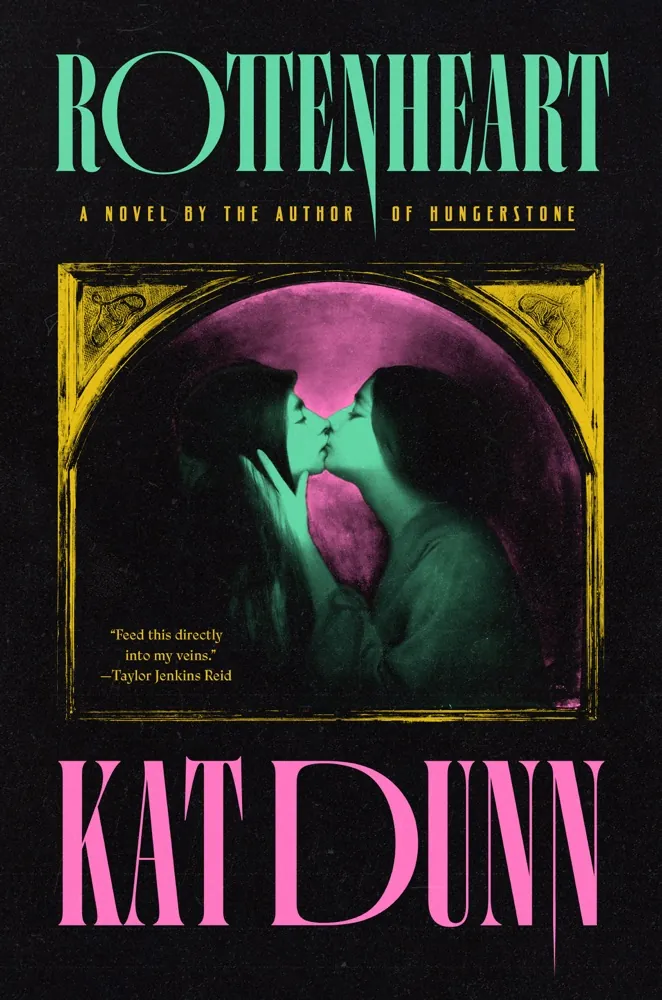

Author: Kat DunnPage Count: UnknownPublication Date: Expected publication 2026-10-13 APL Ah, another adaptation of the Danish prince. Must we? Yet, when the ink smells of old library dust and unrequited longing, my aristocratic sensibilities simply surrender. Kat Dunn’s upcoming Rottenheart arrives draped in velvet shadows, promising a sapphic haunting that steals straight from Shakespeare’s bones. Taylor Jenkins Reid demands to inject it directly into her veins. But what about us, darlings? What about those of us who prefer our poetry dripping with decay and our tropes strictly traditional? The Architecture of Melancholy Herne House sounds magnificent. Suffolk is awfully drafty, of course—my estate there has drafty corridors that positively echo with ancestral judgment—yet it provides the ideal backdrop for madness. The synopsis sketches a familiar architectural tragedy: two grand homes, a suffocating mother named Lydia, and a childhood friendship between Odette and Cecilia that surely blossomed into something forbidden before the rot set in. And oh, the rot. Dunn leans heavily into the Gothic machinery we adore. A sudden death. A cold aunt taking the reins—literally marrying into the tragedy, one assumes, given the Hamlet framework. But let us pause. Is the synopsis terribly vague about the actual mechanics of the haunting? It is. We are told Lydia never truly left, hovering ready to exact revenge. Naturally. But how does this manifest? Does the wallpaper bleed? Do the floorboards groan in pentameter? One prays for lyrical perfection, not mere cheap thrills. Sapphic Shadows and Spectral Spite We have seen this before. The gothic romance saturated in queer yearning is practically the house wine of our current literary salon. It whispers of Shirley Jackson, occasionally brushes shoulders with Carmen Maria Machado, and nods politely to gothic classics over an evening glass of port. Yet, if Dunn manages to capture the claustrophobic dread of aristocratic confinement—the absolute terror of a mother’s parasitic devotion—Rottenheart might just salvage an exhausted trope. A prediction, from one who knows the weight of old silver and older grudges: the prose will either be insufferably purple or exquisitely sharp. There is no middle ground when ghosts and grieving maidens are involved. I suspect the dynamic between Odette and Cecilia will provide the requisite emotional devastation, while the spectral mother acts as a clumsy catalyst for domestic ruin. One can only hope the poetry holds. Must fly now. I simply must go organize my walk-in closet—the cashmere has not been properly aired, and the impending autumn damp waits for no one. #Rottenheart #GothicHorror #SapphicReads #DarkAcademia Related InsightsThe Unseen Tapestry: Weaving Wonder into the Fabric of Reality with Magical Realism Mr. Fixer Upper Book Review and Summary Empire of Storms Book Review and Summary{ "@context": "https://schema.org", "@type": "FAQPage", "mainEntity": [ { "@type": "Question", "name": "What is the main focus of Rottenheart Book Review and Summary?", "acceptedAnswer": { "@type": "Answer", "text": "Everything you need to know about Rottenheart with our detailed review." } }, { "@type": "Question", "name": "Who authored the comprehensive guide on Rottenheart Book Review and Summary?", "acceptedAnswer": { "@type": "Answer", "text": "This detailed article and its insights were carefully researched and authored by Lucia Garcia." } }, { "@type": "Question", "name": "Where can I find more related content about Books?", "acceptedAnswer": { "@type": "Answer", "text": "You can explore more articles, detailed reviews, and similar insights by browsing the Related Insights section at the bottom of this article or visiting our dedicated Books category page." } } ] }
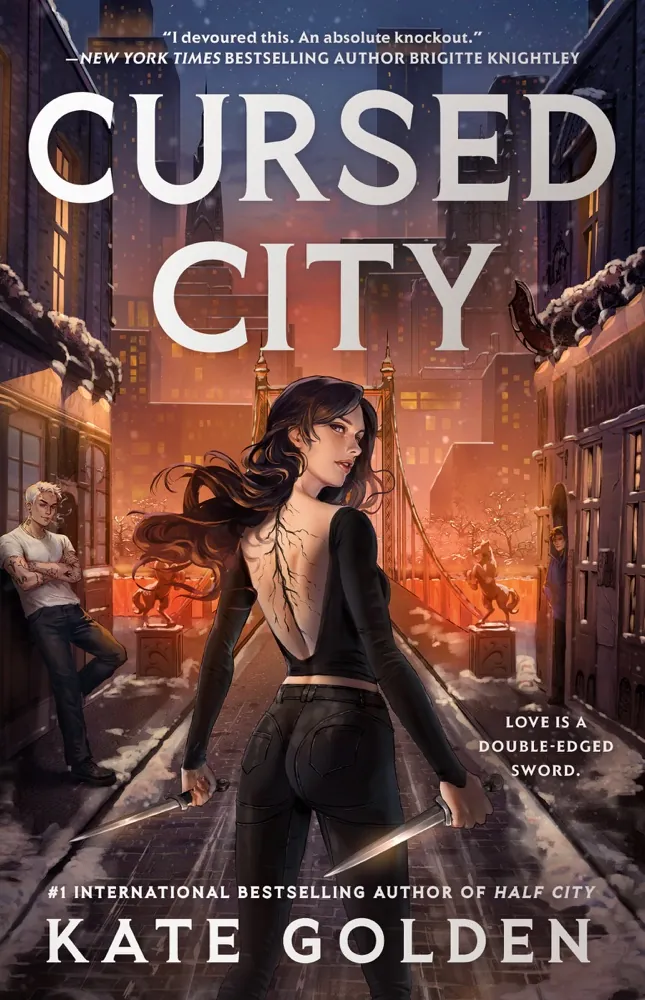
Author: Kate GoldenPage Count: UnknownPublication Date: Expected publication 2026-09-29 APL They pay me seventy-five dollars an hour to slash adjectives and bleed out clichés, yet I am sitting here reading the jacket copy for Kate Golden's Cursed City and wondering if the marketing department simply threw a dart at a board of urban fantasy buzzwords. "Stenciled edges." Right. Because artisanal paper goods magically fix structural pacing issues. But let us look past the decorative trade paperback gimmick and examine the text itself—or rather, the recycled tropes masquerading as a sophomore novel. The Anatomy of a Second-Semester Slump We are expected to care about Viv Abbot returning to Harker Academy for Deviant Defense. Harker—what an utterly uninspired name for a supernatural boarding school. It sounds like a mid-tier spin-off of The Cruel Prince crossed with a rejected script from the Shadowhunters writers' room. Yet here we are. Viv must rescue her reformed Brood demon boyfriend, Reid, by teaming up with his violent brother, Deacon. Groundbreaking. Truly. And by groundbreaking, I mean we have officially entered the era of the mandatory morally gray sibling swap. The synopsis leans hard into the "embrace her darkness" routine. Why do heroines in contemporary romantasy always have to inherit a latent dark side just because they love a monster? It is lazy shorthand for actual character development. Instead of building a complex psychological profile, the author gives us a bounty on Viv's head and a ticking clock. The Aesthetics of Searing Grift Let us discuss the prose promises hidden in this blurb. The text tells us that "temptation cuts deeper than any blade." Does it? Because that sentence cut me right across my patience barrier. And what about this "White Stag" guiding them through Astera's seedy underbelly? Sounds like a literal fauna-themed Uber driver for edgy teens. The synopsis is positively dripping with vague threats—enemies closing in from all sides, a city that thrives on lies, a betrayal that strikes at the heart. It is a masterclass in saying absolutely nothing while hitting every single beat of the modern supernatural romance checklist. Do not get me wrong. This book will sell three hundred thousand copies before lunch on release day. Readers eat up this brand of academy-setting melodrama with a spoon, especially when the publisher dangles sprayed edges like keys in front of a toddler. But as an editor staring down the barrel of another manuscript reliant on secret bounties and familial angst, I am exhausted. Golden is leaning heavily on the momentum of book one, treating the actual plot mechanics of Cursed City as an afterthought behind the aesthetic packaging. If the interior prose matches the derivative safety of this synopsis, we are in for a long semester. I predict a mid-book training montage, at least three breathless hallway confrontations with Deacon, and a third-act revelation that the White Stag cannot be trusted. Colour me shocked. Yet, as I stare at my rent bill and calculate how many split infinitives I must fix today just to afford groceries, I realize something profound about the industry. We are all trapped in the machine. Producing content for a readership that demands the exact same plot recycled with new foil stamping. I am officially entering my villain era. Related InsightsThe Compleat Works of Wllm Shkspr Book Review and Summary Credence Book Review and Summary Civil War and the Summer Of 2020 Book Review and Summary{ "@context": "https://schema.org", "@type": "FAQPage", "mainEntity": [ { "@type": "Question", "name": "What is the main focus of Cursed City (Harker Academy, #2) Book Review and Summary?", "acceptedAnswer": { "@type": "Answer", "text": "Everything you need to know about Cursed City (Harker Academy, #2) with our detailed review." } }, { "@type": "Question", "name": "Who authored the comprehensive guide on Cursed City (Harker Academy, #2) Book Review and Summary?", "acceptedAnswer": { "@type": "Answer", "text": "This detailed article and its insights were carefully researched and authored by Irina Ivanova." } }, { "@type": "Question", "name": "Where can I find more related content about Books?", "acceptedAnswer": { "@type": "Answer", "text": "You can explore more articles, detailed reviews, and similar insights by browsing the Related Insights section at the bottom of this article or visiting our dedicated Books category page." } } ] }
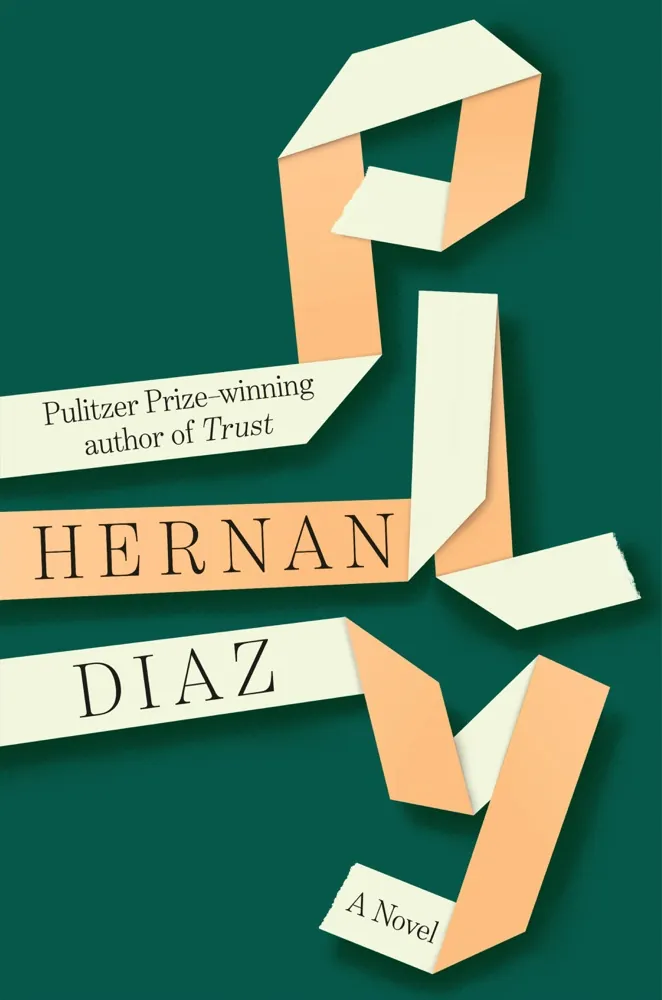

Author: Hernan DiazPage Count: UnknownPublication Date: Expected publication 2026-09-29 APL I am currently up to my elbows in cheap potting soil, wiping sweat from my forehead with the back of a mud-stained wrist, wondering why I thought heirloom Early Girls were a fun weekend hobby when I could just buy sad, mealy tomatoes at the grocery store like a normal person. But then the digital mailbag drops Hernan Diaz’s upcoming project on my phone, and suddenly dirt under my fingernails feels like the least of my existential problems. Let us look at Ply. Diaz won a Pulitzer for Trust, which was essentially a masterclass in architectural Russian nesting dolls about capital and perception. So naturally, his next move is to skip a few centuries entirely and throw us headfirst into a post-state future where humanity is trying to hold hands with nature again. Because nothing screams cozy weekend reading quite like the total dismantling of civilization and electricity piracy. The Grimy Romance of Electricity Theft The synopsis tells us our protagonist is a "pincher"—someone who steals grid juice for underground concerts. And look, I love a good dystopian arts scene as much as the next cynical editor who drinks too much cold brew on a Tuesday. Yet I am deeply suspicious of any fictional future where people still have the bandwidth to curate a rich music scene while the state has literally dissolved. When my local power grid flickers during a summer thunderstorm, my artistic output is strictly limited to staring blankly at the refrigerator and cursing the utility company. Touching the Fabric of Reality, Literally And then, of course, the plot escalates. Because you cannot simply have a Dickensian street urchin surviving on vibes and illicit kilowatts without stumbling upon a colossal scientific invention that alters reality. A scientific thriller wrapped in a family drama. Oh, joy. Another contraption that threatens to tear the space-time continuum apart, or whatever vague technological existential dread Diaz has cooked up for us this time. David Mitchell blurbed it—because of course he did—comparing it to a cracked mirror world. Naturally. Writers love a good cracked mirror. It gives them an excuse to be obscure without actually explaining how the plumbing works in this new, green utopian wasteland. Hope, Despair, and Tomato Stakes Will it balance hope and despair? Absolutely. Diaz has this infuriatingly brilliant way of making you feel both intellectually stimulated and emotionally hollowed out, much like realizing your tomato plants have blossom end rot just as the first fruit starts to blush. But will the technology element feel like an actual critique of our current late-stage capitalist nightmare, or just expensive set dressing for another literary tearjerker about found family and the distance between us? I am betting on the latter. Cormac McCarthy meets a Silicon Valley TED Talk, filtered through the linguistic precision of a man who clearly spends his mornings sharpening sentences on a whetstone. We are going to get devastating prose about human connection. We are going to get sweeping philosophical musings on control. And I am going to buy it the day it drops, read it in one breathless sitting, and then wander around my garden in the dark wondering why I subject myself to this emotional devastation. Right now, I am going to go rethink all my life choices at 3 AM. Related InsightsThe Sunlit Man Book Review and Summary Female Life on Planet Earth Book Review and Summary Miss Peregrine's Home for Peculiar Children Book Review and Summary{ "@context": "https://schema.org", "@type": "FAQPage", "mainEntity": [ { "@type": "Question", "name": "What is the main focus of Ply Book Review and Summary?", "acceptedAnswer": { "@type": "Answer", "text": "Everything you need to know about Ply with our detailed review." } }, { "@type": "Question", "name": "Who authored the comprehensive guide on Ply Book Review and Summary?", "acceptedAnswer": { "@type": "Answer", "text": "This detailed article and its insights were carefully researched and authored by Maximilian Fischer." } }, { "@type": "Question", "name": "Where can I find more related content about Books?", "acceptedAnswer": { "@type": "Answer", "text": "You can explore more articles, detailed reviews, and similar insights by browsing the Related Insights section at the bottom of this article or visiting our dedicated Books category page." } } ] }
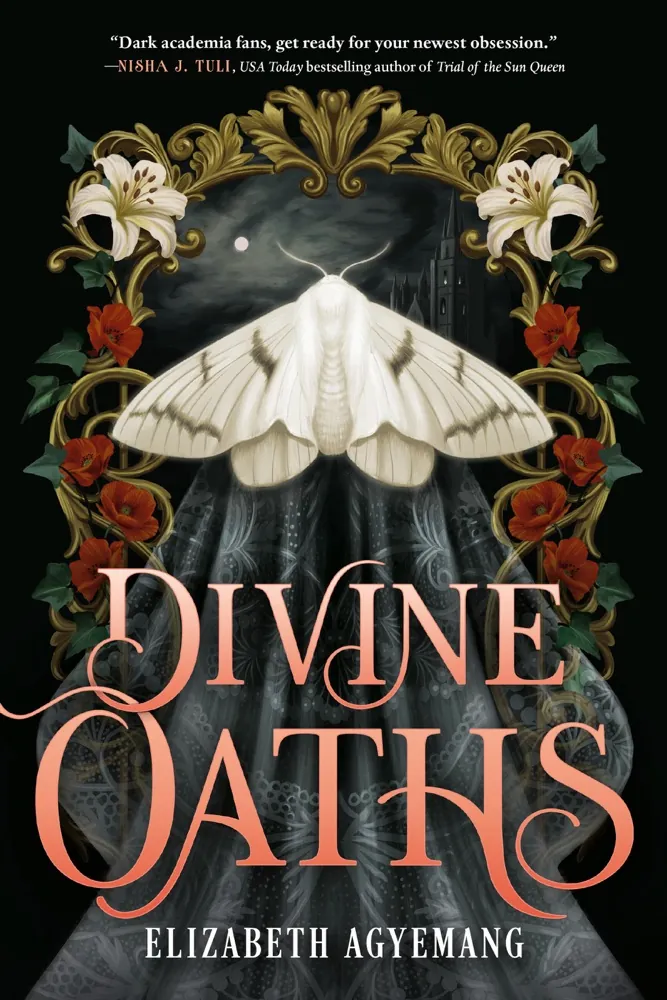

Author: Elizabeth AgyemangPage Count: UnknownPublication Date: Expected publication 2026-09-01 APL Teaching eighth-graders means watching kids teeter on that brutal cliff edge between childhood and the terrifying unknown of growing up. Naturally, when a synopsis crosses my desk that promises a brooding academic setting where a teenager suddenly inherits supernatural burdens, I pay attention. Elizabeth Agyemang’s upcoming Divine Oaths lands on my radar not just because of the publisher's glossy comparisons, but because it taps directly into the psychological wreckage my students face daily—the crushing weight of expectations. The Heavy Burden of Teenage Agency Look at the setup. Sianna Adu loses her family and instantly gains the supernatural ability to peer into lifelines, pasts, and futures. And what does she do? She takes dead-end jobs. How wonderfully, frustratingly realistic. Teenagers rarely get to choose their tragedies, yet they are expected to march forward as if their internal worlds haven't just been detonated. Dark academia as a genre—think Leigh Bardugo’s Ninth House or Tracy Deonn’s Legendborn—succeeds precisely because it treats adolescent anxiety with deadly seriousness. Westfield University isn't just a spooky campus hidden in a Virginia swamp. It is a metaphorical pressure cooker for youth culture. Yet, the synopsis relies heavily on familiar genre scaffolding. Secret societies? Check. Centuries-old curses? Double check. But does it reinvent the wheel? The jury is out. Romance as a Trap Door And then, naturally, we have Kasem Saint James. The "undeniably handsome heir" who ropes our protagonist into his mess. Sianna worries her newfound powers are tethered directly to him, forcing a proximity that screams enemies-to-lovers or reluctant allies. Here is my bold prediction as a reader who watches kids navigate hallway politics every single day: the romantic tension will either elevate this book into a masterclass of YA angst or drag it down into trope-heavy quicksand. The synopsis gives very little away about Sianna's internal voice outside of her trauma and her crush. I want bite. I want cynicism. If Sianna simply melts every time Kasem enters a room, I will throw the book across my classroom. Ultimately, Agyemang is playing in a crowded sandbox. The blending of supernatural destiny with institutional corruption mirrors the exact powerlessness twelve- and thirteen-year-olds feel within rigid school systems. They are forced to play games whose rules were written centuries before they were born. Now, if you will excuse me, I am going to go make a terrible pun about swamp-dwelling curses to annoy my wife. #DivineOaths #DarkAcademia #YABooks Related InsightsSnowed Inn (Honeycrisp Orchard, #2) Book Review and Summary East of Envy (The Great and Terrible Land, #2) Book Review and Summary Last Sacrifice Book Review and Summary{ "@context": "https://schema.org", "@type": "FAQPage", "mainEntity": [ { "@type": "Question", "name": "What is the main focus of Divine Oaths Book Review and Summary?", "acceptedAnswer": { "@type": "Answer", "text": "Everything you need to know about Divine Oaths with our detailed review." } }, { "@type": "Question", "name": "Who authored the comprehensive guide on Divine Oaths Book Review and Summary?", "acceptedAnswer": { "@type": "Answer", "text": "This detailed article and its insights were carefully researched and authored by Thomas Wright." } }, { "@type": "Question", "name": "Where can I find more related content about Books?", "acceptedAnswer": { "@type": "Answer", "text": "You can explore more articles, detailed reviews, and similar insights by browsing the Related Insights section at the bottom of this article or visiting our dedicated Books category page." } } ] }

-
 Sofia Romano
- 07 Aug, 2026 18:40
Le Pagine Proibite: Il Silenzio Forzato delle Biblioteche Sovietiche
C'è un silenzio che non è assenza di suono, ma una presenza opprimente, un muro invisibile eretto tra l'occhio del lettore e l'inchiostro del pensatore. Per decenni, nel cuore dell'Unione Sovietica, questo silenzio ha avuto il volto di un timbro rosso, di una pagina strappata e di una cella fredda. Immaginate l'ebbrezza del rischio: leggere un libro clandestino, passato di mano in mano in un seminterrato buio, sapendo che quelle parole potevano essere l'estensione della vostra libertà o l'inizio della vostra condanna. La censura sovietica non voleva solo eliminare i libri; voleva riscrivere la realtà stessa, cancellando l'esistenza di idee che non si piegavano alla volontà del Partito. L'Architettura della Paura: Glavlit e l'Arte del Taglio Per comprendere quali libri siano stati banditi, dobbiamo prima capire l'organismo che decideva cosa fosse "verità" e cosa fosse "veleno". Il Glavlit (l'Amministrazione Centrale per la Protezione dei Segreti di Stato) non era un semplice ente di revisione, ma un vero e proprio filtro ideologico. Nulla poteva essere stampato senza il suo sigillo di approvazione. La censura non colpiva solo i testi stranieri o apertamente anti-comunisti; la sua lama più crudele era rivolta verso i propri figli, verso quegli scrittori che, pur amando la terra russa, non riuscivano a soffocare l'urlo della verità. La logica era semplice: ogni opera doveva servire al consolidamento del Socialismo Reale. Se un romanzo suggeriva che l'individuo fosse più importante della collettività, o se una poesia evocava una malinconia troppo "borghese", quel testo diventava un nemico dello Stato. I libri venivano classificati, spostati in "fondi speciali" (Specialnye Fondi) accessibili solo a pochi privilegiati con permessi speciali, o semplicemente bruciati.I Giganti Caduti: I Classici e i Dissidenti nel Visore del Cremlino La lista dei libri banditi è un catalogo del dolore e della genialità. In cima a questa lista troviamo figure che oggi consideriamo pilastri dell'umanità, ma che allora erano considerati sabotatori culturali. Aleksandr Solženitsyn rappresenta forse il trauma più profondo per il regime. Con "L'Arcipelago Gulag", Solženitsyn non scrisse solo un libro, ma mappò l'inferno. Descrivere l'estensione del sistema dei campi di concentramento significava smascherare la macchina di terrore su cui poggiava il potere. Quest'opera fu bandita con una ferocia senza precedenti; possederne una copia significava sfidare apertamente l'autorità del KGB. Accanto a lui, troviamo Boris Pasternak. "Il dottor Živago" è l'esempio perfetto di come la bellezza possa essere pericolosa. Il romanzo, che esplora l'interiorità di un uomo durante la Rivoluzione d'Ottobre, fu giudicato "anti-sovietico" perché non celebrava il trionfo del proletariato, ma piangeva la perdita dell'anima individuale. Il libro dovette essere contrabbandato all'estero, stampato in Italia, per poi tornare in patria sotto forma di copie clandestine, diventando un simbolo globale di resistenza intellettuale. Non furono risparmiati nemmeno i classici universali. Molte opere di George Orwell, in particolare "1984" e "La fattoria degli animali", erano rigorosamente proibite. L'ironia era evidente: il regime sovietico riconosceva in Orwell l'analisi più lucida e terrificante della propria natura totalitaria. Leggere Orwell in URSS era come guardarsi allo specchio e vedere, finalmente, il mostro che ci stava governando. Samizdat e Tamizdat: Le Vene Clandestine della Cultura Quando lo Stato proibisce l'inchiostro, il popolo inventa nuovi modi per scrivere. Qui nascono due termini che definiscono l'eroismo della lettura: Samizdat e Tamizdat. Il Samizdat (auto-pubblicazione) era un atto di coraggio quotidiano. Funzionava così: un individuo riusciva a ottenere una copia di un testo proibito, lo copiava a macchina con diverse copie di carta velina, e le distribuiva a pochi amici fidati. Ogni persona che riceveva il testo aveva il dovere morale di copiarlo ulteriormente. Era una catena umana di trasmissione del sapere, un internet di carta e sudore che sfidava i radar della polizia segreta. Il Tamizdat (pubblicazione "laggiù"), invece, riguardava l'invio di manoscritti all'estero. Gli scrittori rischiavano la vita per spedire i loro testi in Occidente, dove potevano essere stampati e poi re-importati clandestinamente. Questa circolazione circolare della cultura impedì al regime di isolare completamente il popolo russo dalle correnti di pensiero universali.La Lista Nera: Dal misticismo al decadentismo Se guardiamo alla specificità dei testi banditi, notiamo come la censura sovietica avesse diverse "categorie di odio":Testi Religiosi: La Bibbia e i testi liturgici furono per lungo tempo perseguitati. L'ateismo di Stato richiedeva la rimozione di ogni riferimento al divino, visto come un "oppio" per le masse. Psicanalisi e Freud: Sigmund Freud fu bandito perché la psicanalisi si concentrava sull'inconscio individuale e sui desideri repressi, concetti che non avevano spazio in un mondo dove l'unica psiche ammessa era quella collettiva e razionalizzata dal Partito. Letteratura "Formalista": Poeti e scrittori come Vladimir Nabokov furono emarginati o banditi per il loro stile troppo ricercato, lontano dal "Realismo Socialista". Il regime esigeva un'arte semplice, didascalica e propagandistica; l'estetismo era visto come un tradimento della classe operaia. Filosofia Occidentale: Molti testi di filosofia esistenzialista o liberale venivano classificati come "decadentismo borghese". Qualsiasi opera che ponesse domande sull'esistenza individuale al di fuori della storia materiale era considerata sospetta.Il Peso del Silenzio: Cosa significava leggere nel Proibito Leggere un libro bandito in Unione Sovietica non era un semplice passatempo, era un rituale quasi religioso. I libri venivano nascosti sotto i materassi, dietro i battiscopa o in doppi fondi di vecchie valigie. Il lettore non leggeva solo per piacere, ma per sopravvivere psichicamente. In un mondo dove ogni giornale, ogni manifesto e ogni lezione scolastica ripeteva la stessa menzogna, il libro proibito era l'unica ancora di verità. C'era un legame quasi erotico e sacrale tra il lettore e l'opera bandita. La consapevolezza che quel libro fosse "pericoloso" ne aumentava il valore. Il rischio di essere arrestati, interrogati o deportati in Siberia conferiva a ogni pagina un'intensità che oggi, nell'era dell'informazione istantanea e sovrabbondante, facciamo fatica a immaginare.  Book Review and Summary The Raven Boys Book Review and Summary Furies Book Review and Summary{ "@context": "https://schema.org", "@type": "FAQPage", "mainEntity": [ { "@type": "Question", "name": "What is the main focus of Le Pagine Proibite: Il Silenzio Forzato delle Biblioteche Sovietiche?", "acceptedAnswer": { "@type": "Answer", "text": "Un viaggio profondo tra le opere letterarie proibite nell'Unione Sovietica, tra Samizdat, Gulag e la lotta per la libertà di pensiero." } }, { "@type": "Question", "name": "Who authored the comprehensive guide on Le Pagine Proibite: Il Silenzio Forzato delle Biblioteche Sovietiche?", "acceptedAnswer": { "@type": "Answer", "text": "This detailed article and its insights were carefully researched and authored by Sofia Romano." } }, { "@type": "Question", "name": "Where can I find more related content about Books?", "acceptedAnswer": { "@type": "Answer", "text": "You can explore more articles, detailed reviews, and similar insights by browsing the Related Insights section at the bottom of this article or visiting our dedicated Books category page." } } ] }
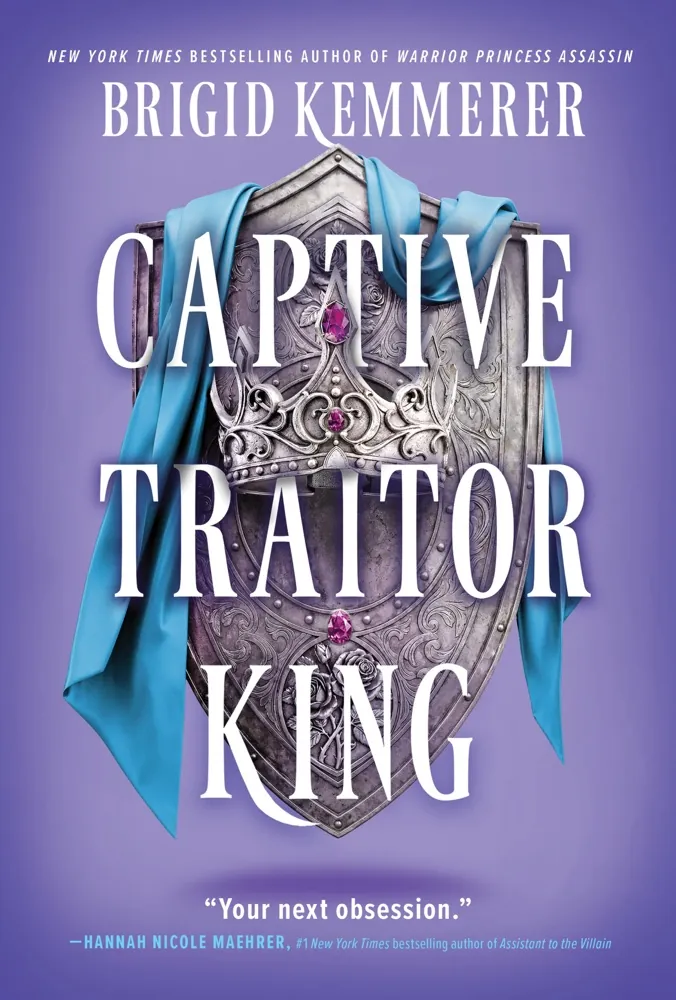
Author: Brigid KemmererPage Count: UnknownPublication Date: Expected publication 2026-11-03 APL This is what happens when you spend your morning commute dodging elbows on a packed rush-hour subway car with a thriller junkie pulse-checking upcoming releases. You get fixated. And frankly, this synopsis is doing things to my adrenaline glands that my feeble evening gardening session desperately needs. Thematic Analysis of Chaos Let us dissect the absolute mess outlined in this publisher copy. We have a political chess match involving starving populations, secret magic, and a betrayal so close to home it practically bites. Yet what jumps out at me between the lines of corporate marketing copy isn't the grand geopolitical collapse of Incendar and Astranza. It is the raw, unadulterated mess of the character dynamics. Asher is torn between loyalty and a brand-new royal heartthrob. Jory is dealing with an unmasked traitor for a brother. Ky is trying to keep a starving nation from eating him alive while navigating a reluctant bride and her lethal bodyguard. Fascinating in theory. Utterly chaotic in execution. Tropes and Trends We are looking at a textbook execution of the "Why Choose" polyamorous romance trend currently sweeping the fantasy market. Think Sarah J. Maas meets Jennifer L. Armentrout, but cranked up on political paranoia. Kemmerer leans hard into the hurt-comfort pipeline here. Asher has old scars. Ky is risking his crown. Jory is taking a throne. Everyone is bleeding emotionally while holding sharp metal objects. A dangerous gamble for any author. Will the romantic geometry actually hold up under the crushing weight of two collapsing kingdoms? Time will tell. But let us be honest—we are all here for the catastrophic romantic fallout anyway. The Anticipatory Verdict The synopsis plays it safe with standard fantasy buzzwords about buried truths and high stakes. Typical publisher boilerplate. But underneath the vague marketing speak, the psychological tension feels sharp enough to slice open a tomato. If Kemmerer manages to balance the high-speed political plotting with the messy, multi-person romantic entanglement without letting the pacing flatline in the middle, this sequel might just survive the sophomore slump. Can she pull it off, or will the plot collapse under the weight of its own romantic triangle-plus mathematics? Who knows. I just hope my Better Boy tomatoes survive the August heat wave while I wait to find out. #CaptiveTraitorKing #BrigidKemmerer #BookTok #FantasyRomance Related InsightsA Confederacy of Dunces Book Review and Summary Thomas Piketty's Capital in the Twenty-First Century Book Review and Summary Grim Folk Tale (The Unorthodox Chronicles, #4) Book Review and Summary{ "@context": "https://schema.org", "@type": "FAQPage", "mainEntity": [ { "@type": "Question", "name": "What is the main focus of Captive Traitor King (Braided Fate, #2) Book Review and Summary?", "acceptedAnswer": { "@type": "Answer", "text": "Everything you need to know about Captive Traitor King (Braided Fate, #2) with our detailed review." } }, { "@type": "Question", "name": "Who authored the comprehensive guide on Captive Traitor King (Braided Fate, #2) Book Review and Summary?", "acceptedAnswer": { "@type": "Answer", "text": "This detailed article and its insights were carefully researched and authored by Piotr Nowak." } }, { "@type": "Question", "name": "Where can I find more related content about Books?", "acceptedAnswer": { "@type": "Answer", "text": "You can explore more articles, detailed reviews, and similar insights by browsing the Related Insights section at the bottom of this article or visiting our dedicated Books category page." } } ] }
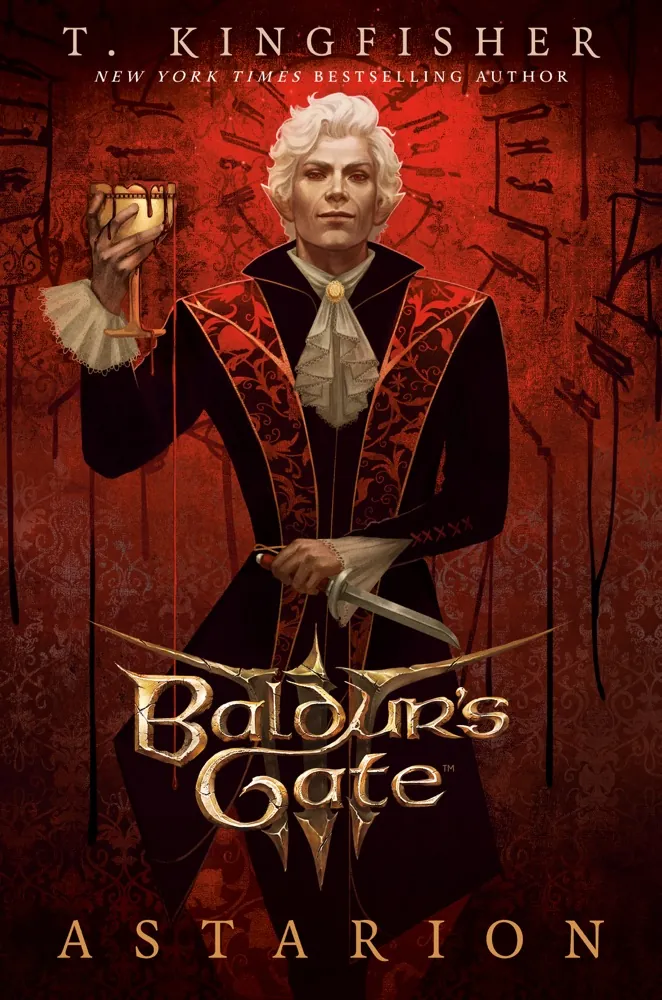

Author: T. KingfisherPage Count: UnknownPublication Date: Expected publication 2026-09-29 APL Yet, one must eat. Between mouthfuls of overpriced fish, I find myself perusing the upcoming promotional material for Baldur's Gate 3: Astarion by T. Kingfisher, scheduled for publication in late September of twenty-six. A bleak little enterprise, judging by the preliminary text. Naturally, I cannot help myself. Politics and forced servitude make for wretched bedfellows, and I spent forty years of my life arbitrating the disastrous results of both. The Anatomy of Tyranny The synopsis lays out a remarkably transactional universe. A magistrate turned vampire spawn, a tyrannical lord named Cazador Szarr, and a twisted competition for favor. Power dynamics. The currency of blood. T. Kingfisher handles dark material with a certain ruthless efficiency—think Christopher Buehlman meets The Traitor Baru Cormorant, minus the bureaucratic competence. Yet, the premise relies heavily on the classic trope of the oppressed underling striking a bargain with an unlikely ally. A handsome Aasimar paladin named Hahn den Suriel, no less. How dreadfully predictable. Does the syndicate of Cazador enforce no perimeter security? One moment you are fetching rat blood in the damp alleys of a morally bankrupt metropolis, and the next you are consorting with golden-eyed celestial knights beneath the cobblestones for the blood of a dead god. A Diplomatic Critique of Desperation Fascinating in theory. Questionable in execution. The synopsis promises a decadent dark fantasy, but what does that actually entail? More posturing about broken oaths? More nocturnal errands for an abusive master? I find myself squinting through the smog at the horizon, wondering if literature has entirely abandoned subtlety in favor of theatrical angst. Astarion is supposedly forbidden from trusting his peers or straying from his master’s errands. A standard leash-breaking narrative. If you have spent as many decades negotiating treaties with despotic monarchs as I have, you develop an acute allergy to characters who think a secret alliance solves systemic oppression. Time will tell if Kingfisher grants this rogue the grim realism he deserves, or if we are simply in for another sentimental romp disguised as horror. My money is on the former—Kingfisher rarely indulges in cheap redemptive arcs. The Ultimate Gamble And so we wait for autumn. The synopsis leaves much unsaid, hiding behind dramatic flourishes about dead gods and blackened undead hearts. Typical marketing vagueness. Give me precise treaty terms over vague prognostications any day of the week. Will this book revolutionize dark fantasy? Hardly. But it might distract me while I choke down the rest of this mediocre lunch and ponder why empires—and vampire lords—always fall for the oldest tricks in the geopolitical handbook. Would you trust an Aasimar with golden eyes beneath a rotting city? Related InsightsThe Dark Vault Book Review and Summary Tiempo de perdón Book Review and Summary Spirited Engagement Book Review and Summary{ "@context": "https://schema.org", "@type": "FAQPage", "mainEntity": [ { "@type": "Question", "name": "What is the main focus of Baldur's Gate 3: Astarion Book Review and Summary?", "acceptedAnswer": { "@type": "Answer", "text": "Everything you need to know about Baldur's Gate 3: Astarion with our detailed review." } }, { "@type": "Question", "name": "Who authored the comprehensive guide on Baldur's Gate 3: Astarion Book Review and Summary?", "acceptedAnswer": { "@type": "Answer", "text": "This detailed article and its insights were carefully researched and authored by Anna Kowalska." } }, { "@type": "Question", "name": "Where can I find more related content about Books?", "acceptedAnswer": { "@type": "Answer", "text": "You can explore more articles, detailed reviews, and similar insights by browsing the Related Insights section at the bottom of this article or visiting our dedicated Books category page." } } ] }
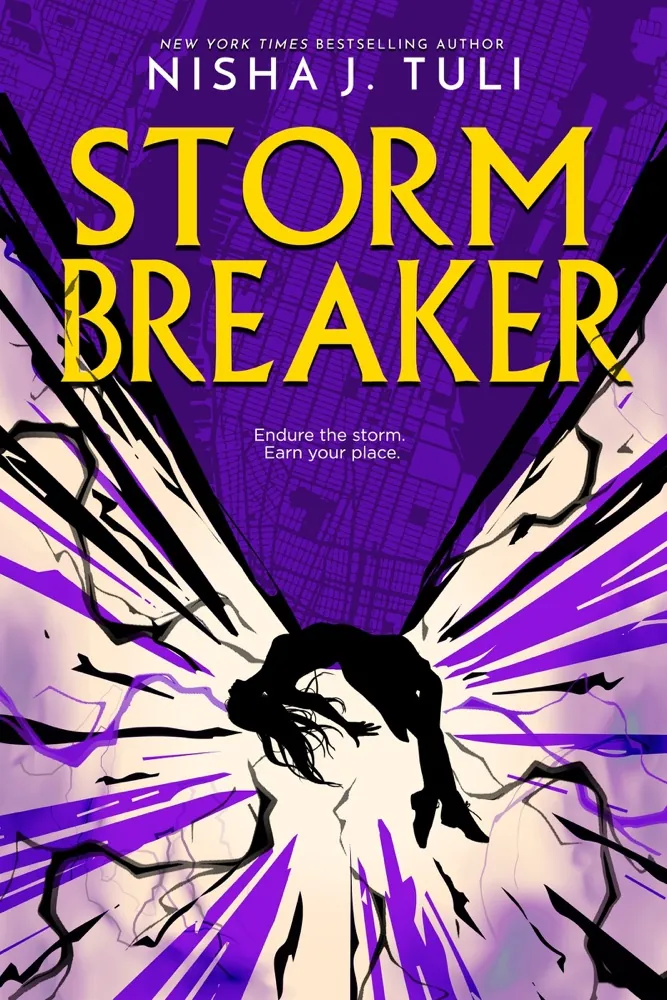

Author: Nisha J. TuliPage Count: UnknownPublication Date: Expected publication 2026-05-05 APL Tuli's Storm Breaker trilogy. The premise, much like the carefully curated art that surrounds me, promises a complex dance of power, obedience, and forbidden love. Poet Graves, the nineteen-year-old protagonist, is a product of the ruling elite in New Manhattan, her life a carefully constructed facade. The weight of her secrets, particularly the one that sets her apart from the rest – her ability to control the storms that ravage the wasteland – threatens to upend this delicate balance. It's a dangerous gamble, one that could have far-reaching consequences, not just for Poet, but for those around her. The setup is undeniably intriguing – a dystopian dark academia narrative, replete with brutal trials designed to expose weakness, and a forbidden romance that promises to upend the status quo. It's a familiar trope, one that echoes the works of Veronica Roth and Suzanne Collins, yet the unique blend of elements – the storm caller aspect, in particular – hints at a freshness that could set Storm Caller apart from its contemporaries. But, as is often the case, the devil lies in the details. The synopsis, while tantalizing, remains frustratingly vague. What are the true stakes of Poet's power? How does her relationship with Rook, the mysterious outsider, evolve? And what of the trials themselves – what secrets do they hold, and how will Poet navigate the treacherous landscape of Amery Academy? These are questions that only the full narrative can answer, and I, for one, am eager to see how Tuli chooses to develop these threads. The inclusion of two bonus scenes from the hero's POV is a nice touch, one that promises to add depth to the narrative. In many ways, Storm Caller feels like a spiritual successor to the likes of Fourth Wing, with its blend of dystopian politics and forbidden romance. It's a potent combination, one that has proven successful time and again in the world of YA fiction. Yet, I remain cautious – the line between homage and imitation is a fine one, and it's unclear, at this point, which side of that line Storm Caller will fall. Still, I'm drawn to the promise of this narrative, the way it seems to dance on the edge of chaos, threatening to spill over into something greater. It's a tantalizing prospect, one that has me wondering – will Storm Caller be the next big thing in YA fiction, or will it succumb to the pressures of its own ambition? Only time will tell. #StormCaller #DystopianFiction #ForbiddenRomance #YABooks Related InsightsA Confederacy of Dunces Book Review and Summary Escuadrón Cielo Book Review and Summary Her Life in Ruins Book Review and Summary{ "@context": "https://schema.org", "@type": "FAQPage", "mainEntity": [ { "@type": "Question", "name": "What is the main focus of Storm Caller (Storm Breaker, #2) Book Review and Summary?", "acceptedAnswer": { "@type": "Answer", "text": "Everything you need to know about Storm Caller (Storm Breaker, #2) with our detailed review." } }, { "@type": "Question", "name": "Who authored the comprehensive guide on Storm Caller (Storm Breaker, #2) Book Review and Summary?", "acceptedAnswer": { "@type": "Answer", "text": "This detailed article and its insights were carefully researched and authored by Elena Volkova." } }, { "@type": "Question", "name": "Where can I find more related content about Books?", "acceptedAnswer": { "@type": "Answer", "text": "You can explore more articles, detailed reviews, and similar insights by browsing the Related Insights section at the bottom of this article or visiting our dedicated Books category page." } } ] }
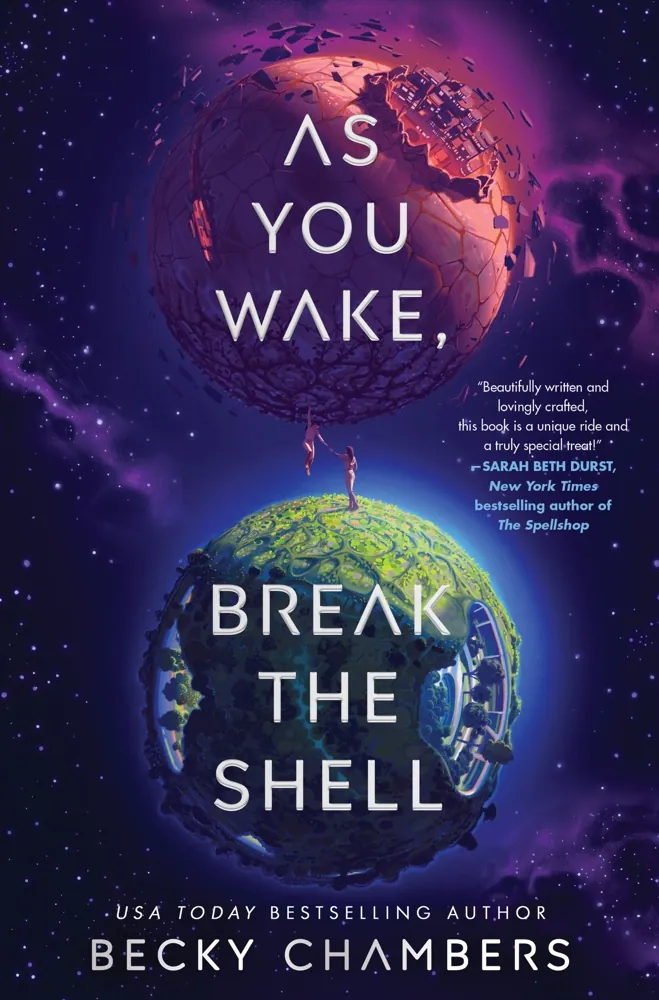

Author: Becky ChambersPage Count: UnknownPublication Date: Expected publication 2026-10-13 APL Good grief, this fan is merely blowing hot August air directly into my left eyeball while I sit here, melting slowly into a faux-leather armchair that really ought to be discarded. Yet, art waits for no sweltering heatwave. Becky Chambers is sliding back onto our desks with As You Wake, Break the Shell, and my sweat-drenched fingers are already itching to see if she can rescue us from the bleakness of modern science fiction. Or perhaps I just want a living ship because my current living situation involves a roommate who refuses to wash his coffee mugs. Anticipatory Preview and Thematic Analysis Let us examine the scaffolding of this upcoming duology, sparse though the synopsis may be. Fortune is a resource-poor rock. Fascinating in theory. But how poor, exactly? Are we talking sparse rations, or a societal starvation of the soul? Chambers has always excelled at cozy despair—if such an oxymoron is even permissible. We get Signy, the reclusive botanist bio-printing medicine from a plant shop. And Cora, a pilot shackled to a massive organic vessel called a rorqual. A living ship. Deliciously weird. And then there is the "mindbleed." What an aggressively ominous term. A neurological tax for communion with giant space fauna. It brings Cora straight to Signy’s shop, colliding two worlds of quiet survival. But notice how vague the synopsis remains about the mechanics of this threat. Does the mindbleed erase memories? Does it make you hear colors? We are left guessing. Still, the dual timeline structure catches my eye immediately—bouncing between the breathless, risky genesis of their bond and a future domestic bliss. Let us be entirely honest with one another. Chambers is practically the patron saint of the "found family" industrial complex. If you enjoyed Ursula K. Le Guin stripped of her sharper teeth, or perhaps a sunnier, more optimistic cousin to Becky Chambers’ own Monk and Robot series, you know precisely where this trajectory leads. Cozy introspection wrapped in ecological warmth. But I demand grit underneath the petals. I want the botany to bite back. Will this duology finally push Chambers past her characteristic narrative safety nets, or will we simply sip metaphorical tea while the galaxy mildly inconveniences our heroines? Time will tell. Until then, I shall continue melting into this upholstery, praying for a localized thunderstorm that will never arrive. #BeckyChambers #AsYouWakeBreakTheShell #SciFiReads #SpeculativeFiction Related InsightsLe Livre Oracle : Plongée dans l'Art Oublié de la Bibliomancie et ses Secrets Murmurés It Looks Like You in the Dark (Kobuk Valley Series) Book Review and Summary Into Thin Air: A Personal Account of the Mt. Everest Disaster Book Review and Summary{ "@context": "https://schema.org", "@type": "FAQPage", "mainEntity": [ { "@type": "Question", "name": "What is the main focus of As You Wake, Break the Shell Book Review and Summary?", "acceptedAnswer": { "@type": "Answer", "text": "Everything you need to know about As You Wake, Break the Shell with our detailed review." } }, { "@type": "Question", "name": "Who authored the comprehensive guide on As You Wake, Break the Shell Book Review and Summary?", "acceptedAnswer": { "@type": "Answer", "text": "This detailed article and its insights were carefully researched and authored by Olya Shevchenko." } }, { "@type": "Question", "name": "Where can I find more related content about Books?", "acceptedAnswer": { "@type": "Answer", "text": "You can explore more articles, detailed reviews, and similar insights by browsing the Related Insights section at the bottom of this article or visiting our dedicated Books category page." } } ] }
Author: Heidi PerksPage Count: UnknownPublication Date: Expected publication 2026-10-06 APL As I ride this sweltering overnight bus, sweat-drenched and slightly delirious, I find myself pondering the forthcoming thriller It Ends Here by Heidi Perks. What's striking about this synopsis is its air of calculated ambiguity – we're given just enough to pique our interest, but the specifics are shrouded in mystery. Yet, it's precisely this vagueness that raises the stakes and sets the tone for a tense, psychologically charged narrative. In the midst of a languid summer morning, a single gunshot shatters the tranquility of a small seaside town, leaving five strangers trapped inside a café and their loved ones desperate for answers. The police are left scrambling to identify the perpetrator and their motives, but as the minutes tick by, the situation only grows more enigmatic. No demands, no warning, no escape plan – just an eerie sense of purposelessness. But, as we all know, the most unsettling crimes often stem from the most mundane, everyday settings. Perks' use of a confined, pressure-cooker environment – reminiscent of classic thrillers like And Then There Were None – allows her to expertly ratchet up the tension and probe the characters' psyches. As the families outside the café grapple with the unthinkable possibility that one of their own might be the shooter, the narrative begins to unravel the complex web of relationships and buried secrets within the group. It's a masterful stroke, really – by keeping the characters' backstories and motivations opaque, Perks invites us to fill in the gaps with our own worst fears and suspicions. But what truly sets It Ends Here apart is its exploration of the devastating consequences of revelation. As the truth begins to surface, each character is forced to confront the darkest aspects of themselves and their loved ones. It's a theme that echoes the works of authors like Ruth Ware and Clare Mackintosh – a sense of creeping unease that permeates even the most seemingly idyllic relationships. And, of course, the big question on everyone's mind: Could it really be them? As the bus rumbles on, the summer heat haze clinging to the windows like a damp shroud, I find myself wondering – what secrets will It Ends Here ultimately uncover? Will Perks' prose be as taut and suspenseful as the synopsis promises? Only time will tell, but one thing's certain: this thriller has all the makings of a gripping, unputdownable read. Will it be the next big thing in the world of psychological suspense? Hardly, but I'm willing to take the gamble. In the end, it's the unknowing that will keep us up at night, our minds racing with the possibilities. And as I gaze out the window, the sun slowly rising over the horizon, I'm left with a haunting question: What secrets are we willing to uncover, and at what cost? #ThrillerThursday #PsychologicalSuspense #NewRelease #BookLovers #SummerReads Related InsightsBody in the Backyard Book Review and Summary Instructions for Dancing Book Review and Summary Her Kind Book Review and Summary{ "@context": "https://schema.org", "@type": "FAQPage", "mainEntity": [ { "@type": "Question", "name": "What is the main focus of It Ends Here Book Review and Summary?", "acceptedAnswer": { "@type": "Answer", "text": "Everything you need to know about It Ends Here with our detailed review." } }, { "@type": "Question", "name": "Who authored the comprehensive guide on It Ends Here Book Review and Summary?", "acceptedAnswer": { "@type": "Answer", "text": "This detailed article and its insights were carefully researched and authored by Irina Ivanova." } }, { "@type": "Question", "name": "Where can I find more related content about Books?", "acceptedAnswer": { "@type": "Answer", "text": "You can explore more articles, detailed reviews, and similar insights by browsing the Related Insights section at the bottom of this article or visiting our dedicated Books category page." } } ] }
Author: Melissa Anderson SweazyPage Count: UnknownPublication Date: Expected publication 2026-09-29 APL As I stand in my sweltering backyard, sweat-drenched and surrounded by the faint scent of ripening tomatoes, I find myself pondering the dark allure of The Sisters of Crimson House. Melissa Anderson Sweazy's latest novel promises to be a Southern Gothic horror that will leave readers spellbound and questioning the very fabric of family legacies. The question on my mind, however, is whether Sweazy can successfully weave a narrative that's both haunting and thought-provoking. On the surface, the story appears to be a classic tale of a family torn apart by tragedy and deceit. Charley Bryde, the protagonist, is a complex character – a woman who's been living in the shadows of her talented sister, Miranda, and struggling to find her place within the family's esteemed legacy of psychics. The fact that Charley's been forced to resort to lies and cons to save the family's coveted mansion, Crimson House, raises questions about the morality of her actions and the lengths to which people will go to preserve their family's reputation. But what truly piques my interest is the enigmatic entity threatening to destroy everything Charley's built. Is this entity a malevolent spirit, a manifestation of the family's dark past, or something more sinister? The synopsis is frustratingly vague on this point, leaving me to wonder whether Sweazy will provide a satisfying explanation or leave readers with more questions than answers. One thing is certain, though – The Sisters of Crimson House is a novel that will appeal to fans of Starling House, The September House, and Practical Magic. The Southern Gothic horror genre is experiencing a resurgence in popularity, and Sweazy's novel seems poised to capitalize on this trend. Authors like Laura Purcell and Silvia Moreno-Garcia have already proven that this genre can be both captivating and thought-provoking, and I'm eager to see how Sweazy will contribute to the conversation. As I look at the synopsis, I'm struck by the themes of family, legacy, and the power of secrets. It's clear that Sweazy is exploring the idea that our family's past can both define and destroy us, and that the secrets we keep can have far-reaching consequences. The character of Charley, in particular, seems like a fascinating study in contrasts – a woman who's both desperate to save her family's legacy and willing to do whatever it takes to achieve her goals. Yet, despite the promise of The Sisters of Crimson House, I'm left with a lingering sense of unease. Will Sweazy be able to balance the horror elements with the more nuanced themes of family and legacy? Can she create a narrative that's both haunting and thought-provoking, or will the story succumb to the pitfalls of clichéd horror tropes? Time will tell. As I finish planting my tomatoes and head back into the sweltering heat of the city, I'm left with one final question: will The Sisters of Crimson House be a novel that will leave readers sleeping with the lights on, or will it be a more cerebral horror that will linger in their minds long after they finish reading? #SouthernGothic #Horror #FamilyLegacies Related InsightsSocialism Is Dead! Long Live Socialism!: The Marx Code—Socialism with a Human Face: A New World Order Book Review and Summary Consequences A Dark Wealth and Power Romance Book Review and Summary How to Be Heard Book Review and Summary{ "@context": "https://schema.org", "@type": "FAQPage", "mainEntity": [ { "@type": "Question", "name": "What is the main focus of The Sisters of Crimson House Book Review and Summary?", "acceptedAnswer": { "@type": "Answer", "text": "Everything you need to know about The Sisters of Crimson House with our detailed review." } }, { "@type": "Question", "name": "Who authored the comprehensive guide on The Sisters of Crimson House Book Review and Summary?", "acceptedAnswer": { "@type": "Answer", "text": "This detailed article and its insights were carefully researched and authored by Piotr Nowak." } }, { "@type": "Question", "name": "Where can I find more related content about Books?", "acceptedAnswer": { "@type": "Answer", "text": "You can explore more articles, detailed reviews, and similar insights by browsing the Related Insights section at the bottom of this article or visiting our dedicated Books category page." } } ] }
Author: Philippa GregoryPage Count: UnknownPublication Date: Expected publication 2026-10-20 APL The central AC is wheezing like an old retriever in this August humidity, pushing eighty degrees of sticky dead air across my desk while I stare at Philippa Gregory’s latest pitch. My chest still aches—a dull, stubborn fracture from the kind of loss that leaves furniture sitting too heavy in empty rooms—and yet here I am, parsing historical fiction about fourteenth-century court intrigue. Or fifteenth-century, technically. The synopsis says 1420. Not that accuracy changes the weight of the thing. Gregory is returning to her stomping grounds with Royal Witch, tracking Eleanor Cobham from a nobody girl at Henry V’s court to a woman eyeing the English crown itself. And how does she get there? Ambition, sorcery, treason. The usual trifecta for a Tudor-adjacent bloodbath, even if we are backing up a bit chronologically from her usual stomping grounds. Thematic Analysis of Power and Survival What catches my eye through the haze of this heat is the psychological survival arc. The synopsis outlines a classic trauma-adjacent pivot—the moment a young woman realizes the nice, safe domestic future she dreamed up is a fairy tale whispered by men who intend to sell her out. Working for a Countess who commands an army does something to a person's neurology. It forces a hard recalibration. Suddenly, compliance looks less like virtue and more like suicide. Yet Gregory’s synopsis relies heavily on generic thriller beats. Sorcery and darker arts. It is a bit lazy, frankly. We have seen this playbook before from Hilary Mantel or Sharon Penman, where female agency gets hand-waved away by a sudden dabble in witchcraft when the historical record gets too narrow to climb out of otherwise. Does Eleanor actually practice the occult, or is it just the label stuck on her by hostile men terrified of a sharp mind? The synopsis refuses to say. A Critical Look at the Pitch Fascinating in theory. Frustratingly vague in execution. Gregory knows how to construct a fast-paced historical ride—think Philippa Gregory meets Alison Weir at a particularly cutthroat dinner party—but I worry about the character psychology here. When a person survives a broken system, when their foundational expectations shatter into jagged pieces, they do not usually pivot straight to ruling the country via black magic. They stutter. They adapt. They break down behind closed doors while keeping up appearances in the grand halls. Will Gregory grant Eleanor that messy, human interiority, or will she flatten her into a pantomime villain riding high on ambition alone? Time will tell. October is a long way off, and this apartment is not getting any cooler. How many more manuscripts will I read this afternoon while waiting for the compressor outside to kick back on? Related InsightsLover Revealed Book Review and Summary The Two Towers Book Review and Summary A Light in the Attic Book Review and Summary{ "@context": "https://schema.org", "@type": "FAQPage", "mainEntity": [ { "@type": "Question", "name": "What is the main focus of Royal Witch Book Review and Summary?", "acceptedAnswer": { "@type": "Answer", "text": "Everything you need to know about Royal Witch with our detailed review." } }, { "@type": "Question", "name": "Who authored the comprehensive guide on Royal Witch Book Review and Summary?", "acceptedAnswer": { "@type": "Answer", "text": "This detailed article and its insights were carefully researched and authored by Michael Brown." } }, { "@type": "Question", "name": "Where can I find more related content about Books?", "acceptedAnswer": { "@type": "Answer", "text": "You can explore more articles, detailed reviews, and similar insights by browsing the Related Insights section at the bottom of this article or visiting our dedicated Books category page." } } ] }

Author: Lucinda BerryPage Count: UnknownPublication Date: Expected publication 2026 APL The sweltering August heat is making it hard to focus, but this synopsis has me hooked. The Golden Child, Lucinda Berry's latest, promises to be a gripping psychological suspense novel that probes the darker aspects of family loyalty and favoritism. As I sit here, nursing a broken heart and trying to muster the energy to work, I find myself drawn to the complex web of relationships and moral dilemmas that this book seems to weave. Ava and Bentley, Irish twins with vastly different personalities, are at the center of this story. Ava, the golden girl, is driven and disciplined, while Bentley is the screwup, always teetering on the brink of disaster. But when Ava makes a mistake that can't be undone, she calls upon Bentley, who takes the blame and sets off a chain of events that will change their lives forever. This setup is fascinating in theory – what would you do if you had to choose between saving your brilliant, promising daughter or your troubled son? The synopsis raises more questions than it answers, and I appreciate the vagueness. It's clear that Berry is playing with themes of ambition, loyalty, and the consequences of our choices. The fact that Ava and Bentley are twins adds an extra layer of complexity to their relationship – they're not just siblings, but also two sides of the same coin. And yet, I find myself wondering about the supporting characters – the classmate who was hit, the parents who must make an impossible choice – how will they fit into the narrative? Berry's writing style, at least based on this synopsis, seems to be reminiscent of authors like Megan Abbott and Mary Kubica, who excel at crafting tense, psychologically charged stories that explore the darker aspects of human relationships. The setup is also vaguely reminiscent of The Last Mrs. Parrish, by Liv Constantine, which also delves into the complexities of family dynamics and the secrets that can destroy them. But what really draws me to The Golden Child is the way it seems to tap into the current cultural conversation about privilege, ambition, and the consequences of our actions. In an era where social media has created a culture of curated perfection, it's refreshing to see a book that explores the messy, often painful reality of human relationships. As I sit here, sweating and trying to focus, I find myself wondering – what would I do if I were in Ava's shoes? Would I take the blame, or would I let my sister suffer the consequences? And what about Bentley – is he a hero, or is he just a screwup trying to do the right thing? Time will tell, I suppose. One thing is certain, though – The Golden Child is going to be a wild ride, full of twists and turns that will keep readers on the edge of their seats. And that haunting question – if you had to choose, which child would you save? – is going to linger long after the final page is turned. #psychologicalthriller #familydrama #booklover Related InsightsThe Hero of Ages Book Review and Summary Bridgerton Boxed Set 5-8 Book Review and Summary Midnight in the House of Commons: A Charles Lenox Mystery (Charles Lenox Mysteries, 16) Book Review and Summary{ "@context": "https://schema.org", "@type": "FAQPage", "mainEntity": [ { "@type": "Question", "name": "What is the main focus of The Golden Child Book Review and Summary?", "acceptedAnswer": { "@type": "Answer", "text": "Everything you need to know about The Golden Child with our detailed review." } }, { "@type": "Question", "name": "Who authored the comprehensive guide on The Golden Child Book Review and Summary?", "acceptedAnswer": { "@type": "Answer", "text": "This detailed article and its insights were carefully researched and authored by Isabella Moore." } }, { "@type": "Question", "name": "Where can I find more related content about Books?", "acceptedAnswer": { "@type": "Answer", "text": "You can explore more articles, detailed reviews, and similar insights by browsing the Related Insights section at the bottom of this article or visiting our dedicated Books category page." } } ] }