Showing Posts From
Mediterranean cuisine
-
 Isabella Rossi
 - 03 Oct, 2026 11:57
The Golden Pulse: Reclaiming the Chickpea’s Lost Lineage in the Mediterranean
The chickpea has long suffered a case of mistaken identity. In the bright lights of the global commodity market, it has been reduced to a singular, beige, canned commodity—a reliable protein, perhaps, but a culinary cipher. Yet, scratch the surface of the Mediterranean basin, and you find a genome of staggering diversity: jet-black seeds from the Murgia plateau, wrinkled, ochre pearls from the Ligurian coast, and the angular, almost mineral-flavored cicerchia clinging to life in the Apennines. This is not merely a story of ingredient retrieval; it is a correction of the historical record. We are witnessing the rehabilitation of a pulse that sustained empires, fueled monastic scriptoria, and defined the cucina povera of the peasantry, only to be marginalized by the industrial demand for uniformity. The renaissance of these forgotten varieties is an act of gastronomic archaeology, driven by chefs, geneticists, and stubborn farmers who refuse to let the flavor of the land go extinct.Charlemagne’s Garden Edicts and the Ancient Pulse To understand where we are, we must first understand the administrative architecture that codified the chickpea’s place in European agriculture. The Capitulare de villis vel curtis imperii, a capitulary issued by Charlemagne circa 800 AD, stands as one of the most remarkable administrative documents of the early Middle Ages. It mandated the cultivation of specific plants across the royal estates, and nestled among the fenugrecum (fenugreek) and cicer italicum (Italian chickpea) is a explicit royal command: cicer must be grown. This wasn't arbitrary; it was strategic nutrition. The Carolingian court recognized the nutrient density of the pulse—its ability to fix atmospheric nitrogen into depleted soils and its shelf-stability for winter garrisons. The OpenAlex research on "Naming Names Plants in the Age of Charlemagne" highlights how this era solidified the taxonomy of the Mediterranean diet. The text distinguishes cicer italicum from other legumes, implying a recognition of distinct landraces even then. The "Italian chickpea" cited in the capitulary was likely a smaller, darker, more tannic ancestor of the modern Cece Nero or the Cicero of the Abruzzo. These were not the plump, blonde Kabuli types dominating today’s global trade (which arrived later via the Silk Road and Spanish galleons), but the Desi types: angular, thick-skinned, deeply rooted in the calcareous soils of the peninsula. Charlemagne’s edicts effectively froze a specific agricultural biodiversity into law, ensuring that for centuries, the "chickpea" on a European table was a variable expression of terroir, not a standardized SKU. The fall of the Carolingian centralization saw this diversity fragment into hyper-local pockets—each valley, each monastery garden, selecting for drought tolerance, cooking time, or flavor profile—creating the archipelago of varieties we are now racing to catalog. Beyond the Blonde Bean: Mapping the Dark, the Wrinkled, and the Wild Walk through the Saturday market in Matera or a Slow Food presidium fair in Bra, and the visual shock is immediate. The "chickpea" is no longer a monolith. The Cece Nero della Murgia (Black Chickpea of the Murgia) presents as a tiny, irregular pebble, its seed coat a deep, glossy anthocyanin black. It holds its shape with a defiant al dente bite, releasing an earthy, almost smoky broth that tastes of the limestone karst from which it sprang. Then there is the Cece di Merella, a Slow Food Presidium variety from the province of Cosenza, characterized by a distinctive "beak" or rostrum, pale yellow with a reddish eye, celebrated for a creamy texture that requires no soaking—a genetic quirk of a thinner testa (seed coat). Further north, the Cicerchia (Lathyrus sativus), often called the grass pea or "Indian vetch," occupies a controversial but delicious niche. Technically a different genus, it has been cultivated alongside true chickpeas (Cicer arietinum) for millennia in the central Apennines. Its flavor is distinctively grassy, sweet, and nutty, but its history carries a shadow: the neurotoxin ODAP (β-N-oxalyl-L-α,β-diaminopropionic acid), which causes lathyrism if consumed exclusively during famine. Modern agronomy has selected low-ODAP lines, rehabilitating this "poor man's meat" into a gourmet ingredient. In Liguria, the Cicero di Villalba—large, smooth, pale—dominates the farinata pans, its high starch content yielding that signature crisp-edged, custardy center. Each variety is a key fitted to a specific lock: the black chickpea for the long-simmered lagane e ceci of Basilicata; the cicerchia for the minestra of Umbria; the Kabuli-type Sultano for the hummus of the Levantine coast. We are not just reviving seeds; we are reviving the specific culinary logic that co-evolved with them.Terroir, Drought, and the Agronomy of Survival Why did these varieties vanish from the mainstream? The answer lies in the post-war "Green Revolution" calculus: yield per hectare, mechanical harvestability, and uniform hydration rates. The ancient landraces are agronomically "difficult." They are often indeterminate in growth habit (flowering continuously), making mechanical combining a nightmare of green pods mixed with dry. Their seed size varies wildly within a single plant, clogging sorting machines. And they demand time—long soaks, slow cooks—in a world that invented the pressure cooker and the tetrapak. But the climate crisis has inverted the value proposition. The Mediterranean is a climate change hotspot, facing desertification and erratic rainfall. Here, the forgotten varieties reveal their genius. The Cece Nero possesses a root architecture that plunges two meters deep, mining water from substrates where modern Kabuli varieties wither. The Cicerchia is perhaps the most resilient legume known to science, yielding a crop on 300mm of annual rainfall in soils too poor for wheat. Research from the Institute of Biosciences and Bioresources (IBBR) in Bari has demonstrated that these landraces maintain photosynthetic efficiency under water stress levels that obliterate commercial cultivars. They are not "low yielding" in a marginal environment; they are the only thing yielding. Furthermore, the nutritional density tracks with the stress tolerance. The thick, pigmented seed coats of the black and red varieties are reservoirs of polyphenols, flavonoids, and anthocyanins—compounds bred out of the blonde Kabuli for aesthetic uniformity. We stripped the medicine from the food to make it pretty. The renaissance is, fundamentally, a pivot from "agriculture as extraction" to "agriculture as insurance." Farmers in the Alta Murgia and the Sicani Mountains are now intercropping these pulses with ancient durum wheats (like Senatore Cappelli), mimicking the polycultures Charlemagne’s stewards would recognize, rebuilding soil organic matter without synthetic nitrogen. The chickpea is no longer just a crop; it is the keystone species of a regenerative rotation. From Cucina Povera to Michelin Plates: The Culinary Revival The laboratory and the field mean nothing without the kitchen. The current renaissance is being plated by a generation of chefs who treat the presidio catalog as a spice rack. In Matera, Chef Vincenzo Guarino at Il Terrazzo serves a Cacio e Pepe where the pasta is made from 30% Cece Nero flour, lending a dusky purple hue and a feral depth to the cheese emulsion. In Rome, Roscioli sources Cicerchia di Serra de' Conti for a pasta e ceci that refuses to be pureed, insisting on the toothsome integrity of the legume. In London and New York, chefs are importing Farinata flour milled from Cicero di Villalba, chasing the specific starch gelation that generic besan cannot replicate. This movement has hard data behind it. The nutritional divergence between commodity and heirloom is stark, as shown in the comparative analysis below.Variety / Metric Kabuli (Commodity) Cece Nero (Murgia) Cicerchia (Serra de' Conti) Cicero (Villalba) Desi Type (Generic)Avg Seed Weight (g/100 seeds) 22 - 28 12 - 16 18 - 22 24 - 30 14 - 18Protein Content (% Dry Weight) 19 - 21% 23 - 25% 28 - 31% 20 - 22% 22 - 24%Total Polyphenols (mg GAE/g) 1.2 - 1.8 4.5 - 6.2 3.8 - 5.0 2.1 - 2.8 3.0 - 4.0Anthocyanins (mg C3G/g) Negligible 8.5 - 12.0 0.5 - 1.2 Negligible 2.0 - 4.0Cooking Time (Soaked, mins) 45 - 60 60 - 75 40 - 50 (No soak) 50 - 60 60 - 90Primary Culinary Use Hummus, Canned, Flour Lagane e Ceci, Salads, Soups Minestra, Flour, Puree Farinata, Panelle, Fritters Dahl, Curries, BesanData synthesized from IBBR-CNR Bari reports (2020-2023) and Slow Food Presidium technical sheets. The table reveals the "why." The commodity Kabuli is a carbohydrate delivery vehicle; the Cece Nero is a nutraceutical. The Cicerchia is a protein powerhouse. Chefs are exploiting these mechanics: the high starch of the Cicero for the lattice structure of farinata; the structural integrity of the Nero for salads that don't turn to mush; the grassy sweetness of the Cicerchia for raw carpaccio-style preparations (blanched briefly). We are moving beyond "how do I cook this bean?" to "what does this specific bean want to become?"Seed Keepers and the Fight for Genetic Memory The final chapter of this renaissance is written not in restaurants, but in the cold rooms of gene banks and the back pockets of guardian farmers. The CREA (Council for Agricultural Research and Economics) in Italy maintains the Cicer collection at the Genebank of Bari, holding over 1,200 accessions. But ex-situ conservation (freezers) is a static snapshot. In-situ conservation—living, evolving in the field—is where the magic happens. The "Guardian Farmers" network, supported by the EU Horizon projects like INCREASE and BRESOV, are growing these varieties under participatory plant breeding programs. They are selecting for the same traits Charlemagne’s surveyors valued: early vigor to outcompete weeds, pod height for hand-harvesting, and that elusive "sapore antico" (ancient flavor). The legal framework is shifting to support this. The EU’s new "Organic Heterogeneous Material" regulation (2022/1994) finally allows the commercial sale of seed populations that do not meet the strict DUS (Distinctness, Uniformity, Stability) criteria required for standard varieties. This means a packet of Cece di Merella can legally contain the natural genetic variation that gives it resilience, rather than being forced into a clone-like uniformity. It is a legislative admission that biodiversity is the variety. Yet, the threat remains economic. The global chickpea trade is dominated by Australia, India, and Canada, moving millions of tonnes of Kabuli and Desi commodities at prices that make the €6-8/kg farm-gate price of Cece Nero look extravagant. The survival of the renaissance depends on the consumer accepting the "true cost" accounting: paying for the carbon sequestration, the water savings, the biodiversity preservation, and the pharmacological density of the pigment. It requires a shift from buying "chickpeas" to buying this chickpea, this harvest, this farmer.A Legacy Simmering in the Pot The pot bubbles on the stove in my test kitchen: a minestra di cicerchia from the Apennines, the broth thick and green-gold, scented with wild fennel and a finish of bitter olive oil. Next to it, a terracotta bowl holds lagane tossed with Cece Nero, the pasta ribbons stained a deep, improbable violet by the seed coats. Related InsightsDie Straßen von Mumbai: Ein kulinarischer Traum The Golden Embrace: High-Protein Hummus with Za'atar & Olive Oil, A Culinary Journey of Health and Heritage Bun Cha: The Smoky Grilled Pork and Noodles of Hanoi{ "@context": "https://schema.org", "@type": "FAQPage", "mainEntity": [ { "@type": "Question", "name": "What is the main focus of The Golden Pulse: Reclaiming the Chickpea’s Lost Lineage in the Mediterranean?", "acceptedAnswer": { "@type": "Answer", "text": "From Carolingian edicts to modern Michelin plates, Isabella Rossi traces the resurrection of ancient chickpea landraces reshaping Mediterranean gastronomy." } }, { "@type": "Question", "name": "Who authored the comprehensive guide on The Golden Pulse: Reclaiming the Chickpea’s Lost Lineage in the Mediterranean?", "acceptedAnswer": { "@type": "Answer", "text": "This detailed article and its insights were carefully researched and authored by Isabella Rossi." } }, { "@type": "Question", "name": "Where can I find more related content about Food?", "acceptedAnswer": { "@type": "Answer", "text": "You can explore more articles, detailed reviews, and similar insights by browsing the Related Insights section at the bottom of this article or visiting our dedicated Food category page." } } ] }
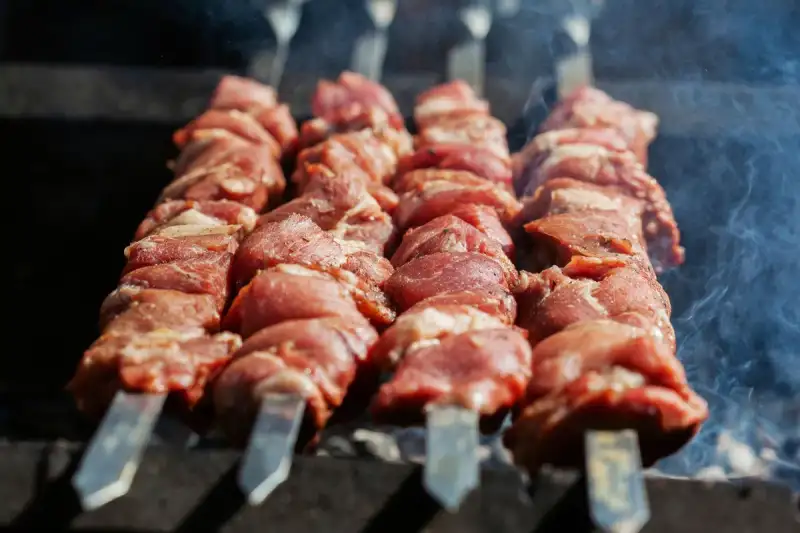

"From Ancient Grills to Modern Plates: Demir Şef's High-Protein Chicken Shish Kebab with Zesty Sumac Salad - A Culinary Journey Through Culture and Wellness" Greetings, food lovers and wellness seekers! Demir Şef here, ready to whisk you away on a gastronomic journey that promises not just exquisite flavors but also profound health benefits. Today, we're diving into a dish that is a true cornerstone of Mediterranean and Middle Eastern cuisine, a global ambassador of taste and tradition: Chicken Shish Kebab. But we won't stop there. We’ll elevate this classic with a vibrant, zesty Sumac Salad, crafting a meal that is as nourishing as it is delicious, with a special focus on its high-protein power. Imagine the smoky aroma of perfectly grilled chicken, marinated to perfection, mingling with the bright, tangy notes of a fresh sumac salad. This isn't just a meal; it's an experience, a celebration of history, culture, and mindful eating. The shish kebab, a dish whose origins stretch back through millennia to nomadic tribes cooking meat over open fires, has evolved from a simple necessity into a culinary art form, embraced by countless cultures across the globe. Its journey is a testament to food's incredible power to connect, transcend borders, and adapt, much like the dynamic culinary landscape shaped by immigration we see today. Beyond its captivating history and irresistible taste, our Chicken Shish Kebab is a powerhouse of nutrition. Chicken, particularly lean cuts like breast and thigh, is an exceptional source of high-quality protein. This is not just a buzzword; protein is a fundamental macronutrient crucial for virtually every bodily function. It’s essential for building and repairing tissues, making enzymes and hormones, and providing a sustained source of energy. For those focusing on fitness, weight management, or simply maintaining a healthy lifestyle, a high-protein meal like this kebab offers remarkable satiety, helping you feel fuller for longer and curbing unhealthy cravings. This focus on nutrient-dense protein makes our shish kebab an ideal choice for a balanced and energizing diet. The story of the shish kebab’s global proliferation perfectly illustrates how culinary traditions are shared and enriched through human migration and cultural exchange. According to recent studies, "Canada’s food culture is strongly shaped by its immigrant populations." This observation is not unique to Canada; it's a global phenomenon. Dishes like shish kebab have traveled across continents, carried by people who brought their culinary heritage with them, embedding these flavors into new lands and new communities. The very act of sharing a meal like shish kebab becomes a bridge, helping new communities "feel at home" and fostering "openness to new cultures coming to the country," as described in research exploring how future immigration might impact a nation's culinary landscape. This dish, therefore, is more than just food; it's a narrative of integration, understanding, and the delicious evolution of human culture.The preparation of a truly great shish kebab begins with the marinade. This isn't just about adding flavor; it's a science. Our marinade combines the fruity bitterness of olive oil, the zesty tang of fresh lemon juice, the pungent warmth of garlic and onion, and the earthy, subtly spicy notes of red pepper paste, oregano, and cumin. Each ingredient plays a crucial role. The acidity from the lemon juice and onion helps to tenderize the chicken, breaking down muscle fibers to ensure a succulent bite. The olive oil acts as a carrier for the fat-soluble flavors and helps keep the chicken moist during grilling. The array of spices – oregano for its aromatic, slightly bitter undertones, cumin for its distinctive earthy warmth, and paprika for a touch of sweetness and color – create a complex flavor profile that is both authentic and incredibly appealing. This thoughtful combination transforms simple chicken pieces into a culinary masterpiece, ready for their fiery kiss on the grill. The choice of chicken cut is also important for our high-protein goal. While chicken breast is often lauded for its leanness, chicken thighs, which we recommend for their richer flavor and tendency to stay juicier, also pack a significant protein punch while adding a little more healthy fat for extra satisfaction. Whichever cut you choose, you're investing in a meal that supports muscle maintenance and growth, provides sustained energy, and aids in overall satiety. This makes our Chicken Shish Kebab a fantastic choice for athletes, active individuals, or anyone looking to fuel their body with quality nutrition without sacrificing taste. This meticulous marination process and careful selection of ingredients are what set a Demir Şef recipe apart. We’re not just cooking; we’re crafting an experience, honoring centuries of culinary wisdom while optimizing for modern health goals.As the chicken cubes thread onto the skewers, they are transformed from simple ingredients into elegant preparations, ready for the flame. Grilling is the preferred method for shish kebab, imparting a characteristic smoky char that enhances the marinated flavors. The high heat seals in the juices, ensuring each cube of chicken is tender on the inside with a tantalizingly crisp exterior. The visual appeal of the kebabs sizzling over an open flame is part of the magic, a primal connection to those ancient cooks who first honed this method. For those without a grill, baking or broiling in the oven provides a fantastic alternative, still achieving that perfectly cooked, juicy result, though perhaps without the same smoky depth. To balance the richness of the grilled chicken, our vibrant Sumac Salad steps in as the perfect accompaniment. This isn't just a side dish; it's an essential component that completes the flavor profile and adds a refreshing burst of vitamins and fiber. Sumac, a cornerstone spice in Middle Eastern cuisine, offers a unique tangy, almost lemony flavor that is both bright and savory. It's derived from the dried and ground berries of the sumac bush, and its deep red hue adds a beautiful splash of color to any dish. Beyond its flavor, sumac has been traditionally used for its potential anti-inflammatory properties, making it a delicious addition to a health-conscious diet.The Sumac Salad combines finely diced cucumbers, ripe tomatoes, thinly sliced red onion, and generous handfuls of fresh parsley. This medley of fresh vegetables provides a wealth of dietary fiber, vitamins (especially Vitamin C and K), and antioxidants. The crispness of the cucumber, the juicy sweetness of the tomato, and the sharp bite of the red onion create a refreshing contrast to the savory kebab. Dressed simply with extra virgin olive oil and fresh lemon juice, the salad is then generously seasoned with sumac, tying all the flavors together in a harmonious symphony. This salad not only enhances the gastronomic experience but also significantly boosts the nutritional value of the meal, contributing to a feeling of lightness and promoting digestive health. It’s a testament to how simple, fresh ingredients, when thoughtfully combined, can elevate a dish to new heights of both flavor and wellness. The concept of "recipes from the future," as envisioned in studies exploring the impact of immigration on culinary landscapes, is beautifully embodied by a dish like chicken shish kebab. It's a classic that continually reinvents itself and finds new admirers in every corner of the world. Just as research suggests that future immigration will introduce and integrate "emerging food trends" and "new cuisines" into established food cultures, shish kebab has already undergone this journey for centuries. It’s a perfect example of a dish that transcends its geographical origins, becoming a universally beloved staple. This seamless adoption of diverse culinary elements not only enriches our palates but also, as noted by scientific inquiry, "aims to establish a shared understanding between Canadians and these future immigrant communities, helping these communities feel at home in Canada, and helping Canadians be more open to new cultures coming to the country." Applied globally, the shish kebab serves as a powerful symbol of cultural exchange and acceptance, a delicious common ground for humanity. This deep integration of food and culture highlights how our tables become meeting points for different traditions. Each bite of chicken shish kebab, with its expertly balanced spices and the freshness of the sumac salad, tells a story of lands far away and the people who brought these flavors to our plates. It’s a living "recipe from the future" because its adaptability, universal appeal, and ability to foster connection ensure its place in the global culinary narrative for generations to come. This understanding, gleaned from scientific explorations of how our food evolves, adds an even deeper layer of appreciation to the dishes we prepare and consume. Demir Şef's Master Recipe: High-Protein Chicken Shish Kebab with Zesty Sumac Salad This recipe is designed for both flavor and efficiency, ensuring a meal that is both healthy and incredibly satisfying. The marination time is crucial for flavor, so plan ahead! Yields: 6 servings Prep time: 30 minutes (plus 2+ hours marination time) Cook time: 20 minutes Ingredients: For the Chicken Shish Kebab:1.5 kg (approximately 3.3 lbs) boneless, skinless chicken thighs or breasts, cut into 1.5-inch (4 cm) cubes 1/2 cup (120 ml) olive oil 1/4 cup (60 ml) fresh lemon juice 4 cloves garlic, minced 1 large onion, grated or finely minced (gently squeeze out excess liquid) 2 tablespoons red pepper paste (biber salçası) OR 1 tbsp sweet paprika + 1 tbsp hot paprika 1 tablespoon dried oregano 1 teaspoon ground cumin 1 teaspoon salt (or to taste) 1/2 teaspoon black pepper (or to taste) Wooden or metal skewers (if using wooden, soak in water for at least 30 minutes to prevent burning)For the Zesty Sumac Salad:2 large cucumbers, finely diced 3 large ripe tomatoes, finely diced 1 large red onion, thinly sliced and finely chopped 1 large bunch fresh parsley, finely chopped 2 tablespoons sumac 3 tablespoons extra virgin olive oil 2 tablespoons fresh lemon juice Salt and black pepper to tasteInstructions:Prepare the Chicken Kebab Marinade: In a large mixing bowl, combine the olive oil, fresh lemon juice, minced garlic, grated onion (ensure you've squeezed out any excess liquid, as too much moisture can dilute the marinade), red pepper paste (or the paprika blend), dried oregano, ground cumin, salt, and black pepper. Whisk all the ingredients together until thoroughly combined, creating a thick, aromatic marinade. Marinate the Chicken: Add the cubed chicken pieces to the marinade bowl. Using your hands or a spatula, toss the chicken thoroughly, ensuring every piece is generously coated. Cover the bowl tightly with plastic wrap and refrigerate for a minimum of 2 hours. For the best flavor penetration and tenderization, I highly recommend marinating overnight (8-12 hours). Prepare the Sumac Salad: While the chicken is marinating, prepare your vibrant Sumac Salad. In a medium-sized serving bowl, combine the finely diced cucumbers, diced tomatoes, finely chopped red onion, and the fresh, finely chopped parsley. Dress the Salad: In a small separate bowl, whisk together the sumac, extra virgin olive oil, fresh lemon juice, salt, and black pepper. Once emulsified, pour the dressing over the chopped vegetables in the serving bowl. Toss gently to combine all the ingredients, ensuring the sumac dressing coats every piece. Cover the salad and refrigerate until you're ready to serve, allowing the flavors to meld and chill beautifully. Prepare the Skewers: Remove the marinated chicken from the refrigerator. If you're using wooden skewers, make sure they have been soaking for at least 30 minutes. Carefully thread the marinated chicken cubes onto the skewers. Try not to pack them too tightly, as this can prevent even cooking. Leave a little space between pieces to ensure consistent heat distribution. Preheat Grill or Oven: For Grilling: Preheat your outdoor grill to medium-high heat (aim for an internal temperature of around 400-450°F / 200-230°C). Lightly oil the grill grates to prevent sticking. For Oven Baking/Broiling: Preheat your oven to 425°F (220°C). Line a large baking sheet with aluminum foil for easier cleanup, then place a wire rack on top. Arrange the skewers on the wire rack.Cook the Kebabs: On the Grill: Place the chicken skewers directly on the preheated grill grates. Grill for about 4-6 minutes per side, turning them a quarter turn every few minutes, until the chicken is thoroughly cooked through, has a beautiful golden-brown char, and an internal temperature of 165°F (74°C). In the Oven: Bake the skewers for 15-20 minutes, flipping them halfway through the cooking time, or until the chicken is cooked through and reaches an internal temperature of 165°F (74°C). For extra char, you can place them under the broiler for the last 2-3 minutes, watching carefully to prevent burning.Rest and Serve: Once cooked, remove the kebabs from the heat and transfer them to a clean platter. Let them rest for 5 minutes. This crucial resting period allows the juices within the chicken to redistribute, resulting in incredibly tender and moist meat. Final Plating: Serve the hot, flavorful Chicken Shish Kebabs immediately alongside the chilled, zesty Sumac Salad. For a complete and traditional meal, consider serving with fluffy basmati rice, a side of bulgur pilaf, or warm pita bread to soak up all the delicious juices.There you have it—a meal that truly nourishes the body and delights the senses. This Chicken Shish Kebab with Sumac Salad is more than just a recipe; it's an invitation to explore the rich tapestry of global food culture, to appreciate the profound journey of ingredients, and to embrace a lifestyle focused on both flavor and well-being. From my kitchen to yours, may every bite be a journey and every meal a celebration. Afiyet olsun! (Enjoy your meal!)#HighProteinMeals #ChickenKebab #SumacSalad #HealthyEating #DemirŞefKitchen #GastronomyAndHealth #MediterraneanDiet Related InsightsSeaweed Gastronomy: Crafting Sustainable Plant‑Based Culinary Frontiers Masala Dosa: The Crispy Crepe That Conquered the World L'Alchimie du Levain : Quand le Temps Sculpte la Croûte et l'Âme du Pain{ "@context": "https://schema.org", "@type": "FAQPage", "mainEntity": [ { "@type": "Question", "name": "What is the main focus of From Ancient Grills to Modern Plates: Demir Şef's High-Protein Chicken Shish Kebab with Zesty Sumac Salad - A Culinary Journey Through Culture and Wellness?", "acceptedAnswer": { "@type": "Answer", "text": "Join Demir Şef on a health and gastronomy adventure with this high-protein Chicken Shish Kebab, paired with a vibrant Sumac Salad, exploring its global cultural impact and profound nutritional benefits." } }, { "@type": "Question", "name": "Who authored the comprehensive guide on From Ancient Grills to Modern Plates: Demir Şef's High-Protein Chicken Shish Kebab with Zesty Sumac Salad - A Culinary Journey Through Culture and Wellness?", "acceptedAnswer": { "@type": "Answer", "text": "This detailed article and its insights were carefully researched and authored by Demir Şef." } }, { "@type": "Question", "name": "Where can I find more related content about Food?", "acceptedAnswer": { "@type": "Answer", "text": "You can explore more articles, detailed reviews, and similar insights by browsing the Related Insights section at the bottom of this article or visiting our dedicated Food category page." } } ] }