Showing Posts From
Pastahistory
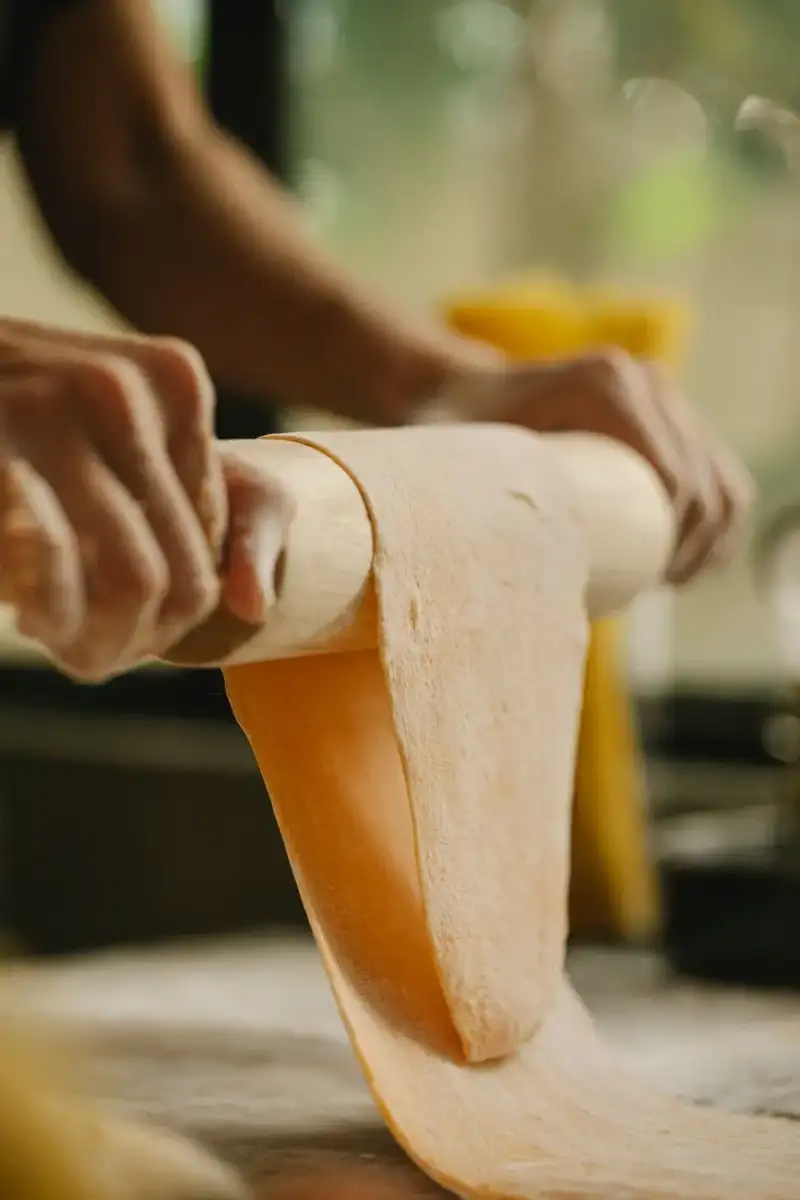

A symphony of simple ingredients, transformed by human hands and timeless techniques, pasta is more than mere sustenance; it is a profound cultural artifact, a testament to culinary evolution spanning millennia. From humble grains to countless forms, its story is etched into the annals of civilization, a golden thread woven through the rich tapestry of human endeavor and gastronomic delight. This universal language of comfort, a cornerstone of Italian cuisine, holds secrets in its very etymology, whispers of ancient hearths, and the echoes of countless meals shared across generations. To truly appreciate pasta is to journey back through time, to understand the ingenuity that birthed its initial forms, the hands that shaped its destiny, and the myriad ways it continues to nourish body and soul. The Elemental Core: Deconstructing Pasta's Fundamental Identity At its heart, pasta emerges from an alchemical blend of the most fundamental foodstuffs: unleavened dough, typically derived from wheat flour, commingled with water or eggs. This pliable mass is then meticulously fashioned into an astonishing array of sheets or distinct shapes, destined for the transformative power of boiling or baking. While historically and fundamentally rooted in durum wheat, a grain renowned for its high protein content and robust gluten structure, the modern definition of pasta has gracefully expanded. This evolution accommodates contemporary dietary needs and culinary innovation, embracing alternatives such as rice flour or legume-based flours like those from beans or lentils, providing gluten-free options without forsaking the essence of pasta itself. This adaptability underscores pasta's enduring relevance and its capacity to remain a universal comfort food, transcending traditional boundaries. The very word "pasta" itself, a relatively recent entrant into the English lexicon around the 1830s, carries a lineage stretching back through the Italian pasta to the Latin pasta, and ultimately to the Ancient Greek παστά. This etymological journey hints at its profound antiquity, suggesting a continuity of concept across diverse cultures and epochs, even before its definitive establishment as the Italian culinary icon we recognize today. Its independent development within Italy, a testament to the region's unique agricultural landscape and culinary ingenuity, solidified its status as an indispensable staple. Archaeological evidence places the Etruscans at the forefront of this culinary heritage, crafting pasta as far back as 400 BCE within the Italian peninsula, firmly rooting this food in a history far deeper than many might imagine. A Universe of Forms: Navigating the Dualities of Fresh and Dried The vast and diverse world of pasta is classically partitioned into two broad, yet distinct, realms: pasta secca, or dried pasta, and pasta fresca, its fresh counterpart. Each category possesses its own unique characteristics, methods of production, and culinary applications, contributing to the staggering diversity found within Italian cuisine. Dried pasta, the ubiquitous form found gracing supermarket shelves across the globe, is predominantly manufactured commercially through an extrusion process. This industrial method allows for consistent shapes and large-scale production, enabling its widespread availability. However, the artistry of crafting dried pasta is not confined to factories; it remains a cherished practice in many homes, where passion and tradition guide its creation. Its inherent durability and extended shelf life have historically been, and continue to be, key factors in its global dissemination and utility. In contrast, fresh pasta embodies a more intimate, hands-on tradition. Historically, and still widely cherished, pasta fresca is meticulously produced by hand. This labor-intensive yet rewarding process often involves simple tools, such as rolling pins and knives, to create tender sheets and shapes. While artisanal production thrives, the demands of modern commerce have also led to large-scale machines producing fresh pasta for grocery stores, bridging the gap between traditional craft and widespread accessibility. Yet, even in its commercial form, fresh pasta retains a distinct texture and flavor profile that sets it apart. The sheer variety within both fresh and dried pasta is nothing short of astounding. Culinary scholars and enthusiasts have documented a staggering 310 specific forms, known by an even more bewildering 1,300-plus documented names. This lexical abundance is not merely academic; it reflects a vibrant tapestry of regional identity and linguistic diversity within Italy. The names of specific pasta shapes or types frequently vary from locale to locale, a charming idiosyncrasy that speaks to the deep-rooted cultural significance of food. For instance, the captivating form known as cavatelli boasts no fewer than 28 different names, depending solely on the specific town or region where it is encountered. This intricate web of nomenclature is a testament to the profound regionalism that defines Italian gastronomy.The morphology of pasta shapes is not arbitrary; it is a meticulously evolved science, dictating ideal sauce pairings and culinary experiences. Long pasta forms, typically crafted through rolling and cutting or extrusion, such as spaghetti or fettuccine, thrive when paired with lighter, thinner sauces. This harmonious combination prevents dense chunks of meat or vegetables from clinging awkwardly to the strands, allowing the delicate coating of sauce to evenly embrace each noodle. Short pastas, almost exclusively produced via extrusion, are engineered for heartier applications. Their often intricate shapes, whether tubes, shells, or twists, are perfectly designed to capture and hold thick, robust sauces, ensuring a burst of flavor with every bite. The ingenious design of stuffed pasta, where dough is artfully folded around savory fillings of meat, vegetables, or cheese, represents yet another dimension of this culinary versatility, offering a complete, self-contained flavor experience. The Culinary Canvas: Three Archetypes of Pasta Preparation Beyond its diverse forms, pasta's culinary versatility is further underscored by the three classical categories of prepared dishes into which it traditionally falls. These archetypes offer distinct approaches to enjoying pasta, each providing a unique gastronomic experience. The most recognized and perhaps quintessential style is pasta asciutta, often simply referred to as pastasciutta. In this preparation, cooked pasta is elegantly plated and served with a complementary sauce or condiment. This category encompasses the vast majority of popular pasta dishes, from simple aglio e olio to complex ragùs, where the pasta acts as a perfect vehicle for the rich flavors of its accompaniment. A second, equally cherished classification of pasta dishes is pasta in brodo. Here, the pasta is not merely an accompaniment but an integral component of a soup-type dish. Delicate, often miniature pasta shapes, such as stelline or orzo, are simmered directly in broth, absorbing its flavors and contributing a comforting texture to the soup. This style is particularly popular during colder months or as a soothing starter. The third category, pasta al forno, showcases pasta's adaptability to baked preparations. In these dishes, the pasta is incorporated into a larger composition, often layered with sauces, cheeses, and other ingredients, before being baked in the oven until golden and bubbling. Lasagna, cannelloni, and various baked ziti dishes are prime examples of pasta al forno, offering hearty, deeply flavored meals. While individual dishes within these categories can vary immensely in their preparation, pasta dishes are generally characterized by their underlying simplicity. Many serve as a modest first course, a primo piatto, or for light lunches, such as vibrant pasta salads. Conversely, other preparations are designed with larger portions in mind, serving as the substantial main course for dinner. The sauces themselves are as varied as the shapes of pasta, presenting an endless spectrum of tastes, colors, and textures, each meticulously crafted to elevate the pasta experience. Echoes Through Time: The Ancient, Winding Path of Pasta's History The history of pasta is a compelling narrative, deeply entwined with the history of the Italian peninsula and the broader Mediterranean world. It is a story far older than commonly perceived, a testament to continuous culinary evolution rather than a singular invention. The earliest tangible threads of pasta's existence in Italy stretch back to the Etruscans, who, by 400 BCE, were already engaged in its creation. This ancient lineage firmly establishes pasta as an indigenous Italian development, challenging simplistic notions of its origins. While concrete information regarding specific pasta products in Italy becomes more abundant in the 13th or 14th centuries, the foundational concept of dough sheets cooked for sustenance has a much more profound history. In the 1st century, the Roman poet Horace speaks of lagana, describing them as fine sheets of fried dough – an everyday foodstuff in ancient Rome. This suggests a widespread familiarity with dough-based preparations. The 2nd-century writer Athenaeus of Naucratis provides a recipe for lagana, attributed to Chrysippus of Tyana from the 1st century, detailing sheets made of wheat flour and the juice of crushed lettuce, flavored with spices and deep-fried in oil. This ancient recipe paints a vivid picture of early culinary practices, showcasing the ingenuity of combining readily available ingredients. Moving into the early 5th century, a Roman cookbook describes a dish still referred to as lagana, which remarkably featured layers of dough interspersed with meat stuffing. This preparation is widely regarded as a direct ancestor of modern-day lasagna, illustrating a clear lineage in the evolution of layered pasta dishes. However, it is crucial to note that the cooking methods described for these ancient sheets of dough – often fried or baked rather than boiled – do not entirely align with the modern definition of either fresh or dry pasta as we know it today. Yet, the foundational elements of similar basic ingredients and perhaps the characteristic sheet-like shape undeniable connect these ancient precursors to their contemporary descendants. Beyond the Roman world, evidence of noodle-like or dough-based foods surfaces across ancient cultures, suggesting parallel culinary developments. The works of the 2nd-century Greek physician Galen reference itrion, describing homogeneous compounds crafted from flour and water. Further east, the Jerusalem Talmud, compiled between the 3rd and 5th centuries, records that itrium, a type of boiled dough, was a common food item in Palestine, indicating its pervasive presence in the diets of the time. The 9th-century Arab physician and lexicographer Isho bar Ali, in his comprehensive dictionary, defines itriyya, the Arabic cognate of itrion and itrium, as string-like shapes meticulously crafted from semolina and dried before cooking. This crucial detail of drying highlights an early understanding of preservation, a pivotal step in the development of shelf-stable pasta. The geographical text compiled by Muhammad al-Idrisi in 1154 for the Norman king of Sicily, Roger II, provides truly remarkable and concrete evidence of a flourishing pasta industry in the medieval Mediterranean. His account vividly describes itriyya being manufactured and extensively exported from Norman Sicily: "West of Termini there is a delightful settlement called Trabia [along the Sicilian coast east of Palermo]. Its ever-flowing streams propel a number of mills. Here there are huge buildings in the countryside where they make vast quantities of itriyya which is exported everywhere: to Calabria, to Muslim and Christian countries. Very many shiploads are sent." This passage is a powerful testament to the established production and trade of dried, string-like pasta from Sicily, predating the more famous voyages of discovery by centuries. It confirms that the concept of a commercially produced, exportable pasta product was well-entrenched in the Mediterranean by the 12th century. The historical lagana, thin sheets of dough in Latin, directly gave rise to the iconic Italian lasagna, illustrating a continuous culinary thread from ancient Roman tables to modern Italian feasts.Debunking the Myth: The Silk Road of Flour and the Marco Polo Enigma For generations, a popular legend has attributed the introduction of pasta to Italy to Marco Polo, suggesting he brought it back from China in the late 13th century. This captivating narrative, fueled by the romantic allure of exotic travels, is deeply ingrained in popular culture. Rustichello da Pisa, in his account of Marco Polo's Travels, does describe a food similar to lagana, which might have inadvertently contributed to this myth. However, food historians largely dismiss this tale as apocryphal. Jeffrey Steingarten, among other experts, asserts a more plausible theory: that the Moors were instrumental in introducing pasta to the Emirate of Sicily in the 9th century. This aligns perfectly with al-Idrisi's 12th-century account of Sicilian itriyya production and export, positioning Sicily as a pivotal crossroads for pasta's spread. Furthermore, traces of pasta-like foods have been identified in ancient Greece, reinforcing the idea of independent and convergent development across the Mediterranean. The famed food writer Jane Grigson notably believed the Marco Polo story to have been a marketing invention, likely originating in the 1920s or 1930s as an advertisement for a Canadian spaghetti company, illustrating how commercial interests can reshape historical narratives. The consensus among food historians today is that pasta likely took firm hold in Italy as a direct consequence of extensive Mediterranean trading throughout the Middle Ages. This vibrant exchange of goods, ideas, and culinary techniques between diverse cultures – from the Middle East to North Africa and Southern Europe – provided a fertile ground for the development and widespread adoption of pasta. The Ascendancy of a Staple: From Regional Delight to Global Phenomenon From the 13th century onwards, references to pasta dishes begin to appear with increasing frequency across the various regions of the Italian peninsula, signaling its growing prominence. By the 14th century, pasta was firmly embedded in the cultural imagination. The celebrated writer Boccaccio, in his collection of earthy tales, The Decameron, paints a deliciously fantastical picture of a mountain of grated Parmesan cheese, down which pasta chefs roll steaming macaroni and ravioli to eager gluttons awaiting below. This vivid imagery is not merely an entertaining fable; it underscores pasta's established place in Italian culinary fantasy and reality of the era. The 14th and 15th centuries marked a significant turning point in pasta's trajectory: the burgeoning popularity of dried pasta. Its inherent advantage of easy storage proved revolutionary. This innovation allowed people to embark on long voyages, storing pasta on ships as they set sail to explore the New World. Consequently, just a century later, pasta's reach had expanded exponentially, becoming a familiar foodstuff around the globe, carried by the winds of discovery and trade. This inherent portability transformed pasta from a regional delicacy into an international commodity, a versatile and shelf-stable source of sustenance for explorers and traders alike. The Marriage of Flavors: Pasta and the Power of the Tomato While pasta's origins are ancient, its iconic pairing with tomato sauce is a relatively more recent development, albeit one that has come to define Italian cuisine for many. Tomatoes themselves were introduced to Italy from the Americas in the 16th century. Initially regarded with suspicion, even as ornamental or poisonous, they gradually found their way into Italian cuisine during the 17th century, slowly overcoming initial prejudices. However, the description of the very first Italian tomato sauces for pasta dates specifically from the late 18th century. The definitive moment, the first written record of pasta explicitly served with tomato sauce, can be pinpointed to the 1790 cookbook L'Apicio Moderno, penned by the Roman chef Francesco Leonardi. This pivotal work marks the formal culinary union of two seemingly disparate elements, creating a synergy that would forever alter the course of gastronomic history and solidify pasta's place on the global stage. The robust acidity and sweetness of the tomato proved to be the perfect counterpoint to the subtle neutrality of pasta, creating a harmonious and utterly delicious partnership that continues to captivate palates worldwide. The Industrial Evolution of a Culinary Art The journey of pasta from artisanal craft to industrial product is a fascinating chapter in its history. At the dawn of the 17th century, the bustling city of Naples, renowned for its culinary innovations, began to develop rudimentary machines specifically designed for pasta production. These early inventions, though simple, laid the groundwork for future advancements. Over time, these rudimentary devices evolved into more sophisticated kneading machines and presses, which dramatically enhanced the efficiency and reduced the cost of pasta manufacturing. This mechanization was a crucial step, transforming pasta from a labor-intensive, often expensive, food into a more accessible staple. By 1740, the burgeoning industry gained formal recognition with the issuance of a license for the very first pasta factory in Venice. This official sanction marked a new era, transitioning pasta production from small-scale workshops to dedicated industrial enterprises. The 19th century witnessed further significant advancements, particularly in the processing of the raw material itself. Watermills and advanced stone grinders became instrumental in efficiently separating semolina – the coarse, highly nutritious flour derived from durum wheat – from the bran. This improved processing technique yielded a higher quality, more consistent semolina, which in turn spurred further expansion of the pasta industry, enabling greater production volumes and wider distribution. These industrial innovations were essential in cementing pasta's role not just as a cultural cornerstone, but as an economically viable and globally available food product.From the primordial dough sheets of the Etruscans to the sophisticated extruded forms of today, pasta’s story is a compelling testament to human creativity and an enduring culinary legacy. It has traversed millennia, defied legends, adapted to new ingredients, and embraced industrial innovation, yet its essence remains unchanged: a simple, nourishing food that speaks volumes of tradition, community, and the profound pleasure of a shared meal. #PastaHistory #ItalianCuisine #CulinaryEvolution #FoodScience #Gastronomy