Australia Unveiled: Where Sun-Kissed Shores Meet Ancient Souls and Modern Marvels (Part 2)
-
 John Explorer
 - 22 Aug, 2026 06:22
This is Part 2 of the series. Read Part 1 here.
Beyond the Postcard: Australia’s Hidden Gems
While Sydney’s skyline and the Great Barrier Reef steal the spotlight, Australia’s true magic lies in its secrets—the places where crowds thin, and the soul of the country reveals itself. These are the destinations that don’t make it onto postcards but linger in travelers’ memories forever.
The Kimberley: Australia’s Last Frontier
Few places on Earth feel as untamed and remote as the Kimberley region in Western Australia. Stretching over 423,000 square kilometers, it’s a land of ancient gorges, cascading waterfalls, and Indigenous rock art dating back 20,000 years. The Bungle Bungle Range, with its striped sandstone domes, is a surreal landscape that feels like another planet, while the Horizontal Falls—a natural phenomenon where tidal forces create a waterfall that flows sideways—defy logic.
For adventurers, the Kimberley offers 4WD expeditions, helicopter tours, and multi-day cruises along the Mitchell Falls or through the King George River. But its real treasure is its cultural heritage. The Wunan people have lived here for millennia, and their stories are woven into the land. Visitors can learn about bush tucker (traditional foods), traditional hunting methods, and the deep connection between the people and the earth.
Tasmania’s Wilderness: Where Time Stands Still
If the mainland is Australia’s bustling heart, Tasmania is its quiet soul. This island state, separated from the mainland by the Bass Strait, is a wilderness lover’s paradise. Over 40% of Tasmania is protected as national park or World Heritage Area, home to ancient rainforests, glacial lakes, and wildlife found nowhere else.
The Cradle Mountain-Lake St Clair National Park is a hiker’s dream, with trails like the Overland Track offering multi-day treks through alpine meadows and glacial valleys. The Freycinet Peninsula, with its pink granite mountains and white-sand beaches, is a photographer’s paradise, while the Tasmanian devil—a carnivorous marsupial—can be spotted in the wild, a rare sight in a world where many species are endangered.
But Tasmania’s true magic lies in its isolation. The South West Wilderness is one of the last true wilderness areas on Earth, where the only sounds are the wind in the trees and the calls of native birds. It’s a place where you can disappear for days, and when you emerge, the world feels different.
The Whitsunday Islands: Paradise Found
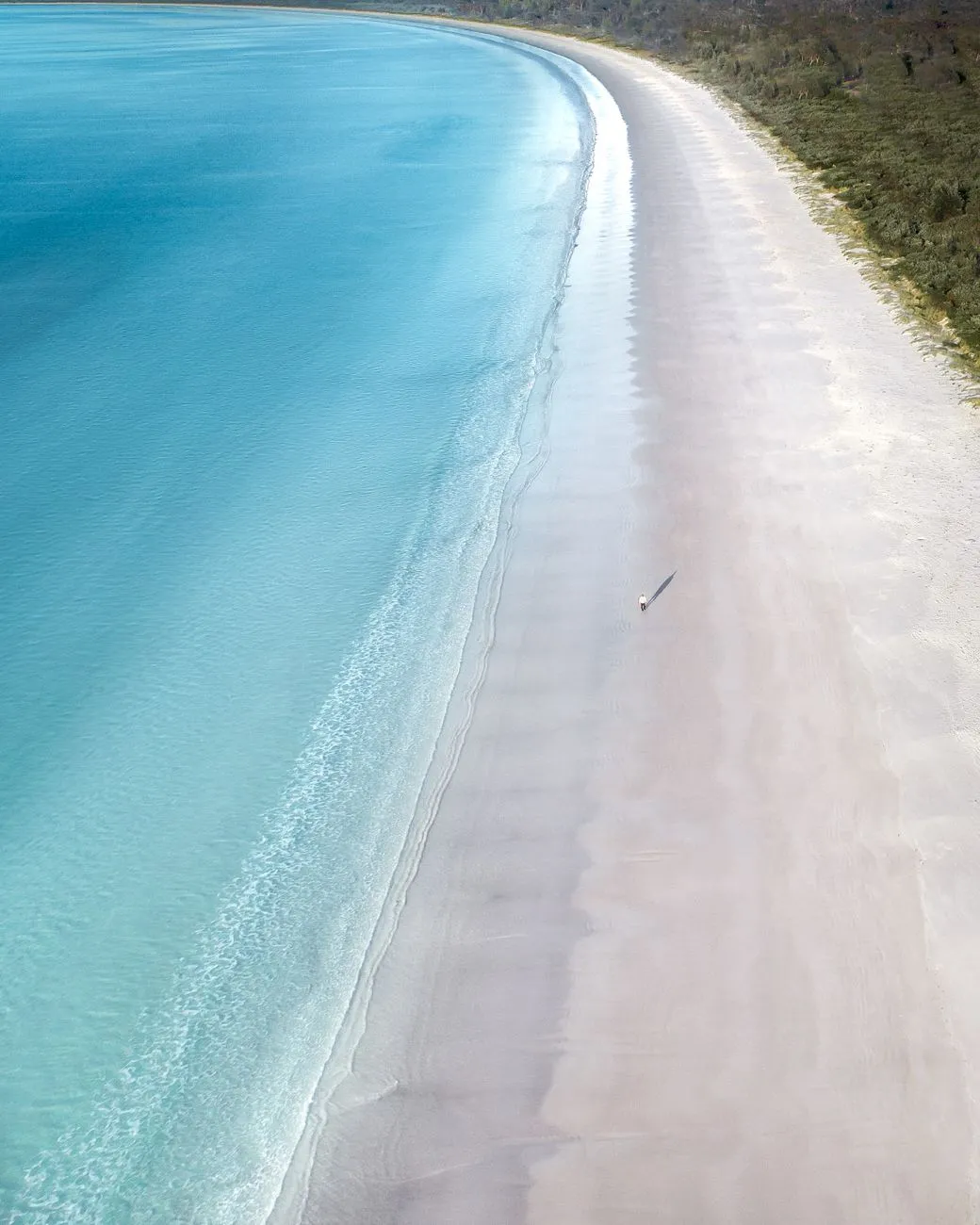
If you’ve ever dreamed of sailing through turquoise waters, surrounded by sugar-white beaches and lush rainforests, the Whitsunday Islands are your answer. This 74-island archipelago in the heart of the Great Barrier Reef is a sailor’s paradise, where the Whitehaven Beach—with its 98% pure silica sand—is often ranked among the world’s best beaches.
But the Whitsundays offer more than just relaxation. Heart Reef, a heart-shaped coral formation, is a snorkeler’s delight, while the Prosail Trail offers multi-day sailing adventures. The islands are also a hotspot for eco-tourism, with luxury resorts like Qualia on Hamilton Island leading the charge in sustainable luxury.
The Wildlife Enigma: Where Nature Puts on a Show
No discussion of Australia’s tourism would be complete without mentioning its wildlife—a cast of characters so bizarre, so otherworldly, that they feel like they’ve stepped out of a sci-fi movie. Australia is home to more than 378 mammal species, 828 bird species, and 4,000 species of fish, many of which exist nowhere else on Earth. For visitors, encountering these creatures isn’t just a novelty—it’s a privilege.
The Kangaroo and Wallaby: Icons of the Outback
No animal is more synonymous with Australia than the kangaroo. These marsupials, with their powerful hind legs and pouches, are a symbol of the country’s resilience. Spotting a kangaroo in the wild—whether in the Flinders Ranges or the Grampians National Park—is a moment that feels like stepping into a wildlife documentary.
But kangaroos aren’t the only marsupials worth meeting. The wallaby, a smaller cousin, is equally charismatic, often seen hopping through forests or grazing in open plains. For a truly immersive experience, visit Kangaroo Island in South Australia, where wildlife encounters are part of everyday life. Here, you might share a beach with sea lions, spot koalas in eucalyptus trees, or even see echidnas—spiky, egg-laying mammals that are one of only two monotremes in the world.
The Platypus: Nature’s Greatest Oddity
Few animals capture the imagination quite like the platypus. With its duck-like bill, beaver-like tail, and venomous spur on the male’s hind leg, it’s a creature that defies logic. Discovered by European scientists in 1798, the platypus was so bizarre that they initially thought it was a hoax.
Today, spotting a platypus in the wild is a rare and thrilling experience. The Barrington Tops National Park in New South Wales and the Platypus Creek in Victoria are two of the best places to see them, especially at dawn or dusk when they’re most active. Watching one surface from the water, its sleek body glistening, is a reminder of how wild and wonderful nature can be.
The Tasmanian Devil: A Fierce Survivor
The Tasmanian devil, with its black fur, pink ears, and bone-crushing bite, is one of Australia’s most feared and fascinating creatures. Once widespread across the mainland, it’s now found only in Tasmania, where it’s a symbol of the island’s wild spirit.
Sadly, the devil is also a species under threat, thanks to a contagious cancer called devil facial tumor disease (DFTD). Conservation efforts are underway to save it, and visitors can support these initiatives by visiting sanctuaries like the Tasmanian Devil Unzoo or the Bonorong Wildlife Sanctuary. Seeing a devil up close—its eyes gleaming with intelligence and its growls echoing through the night—is a humbling experience.
The Future of Australian Tourism: Challenges and Opportunities
Australia’s tourism industry stands at a crossroads. The pandemic forced a reckoning—one that exposed vulnerabilities but also revealed opportunities. As the world reopens, the question isn’t just how to attract more visitors but how to ensure tourism benefits everyone.
Sustainability: The New Frontier
Climate change isn’t a distant threat—it’s a present reality for Australia. The Great Barrier Reef’s bleaching events, the bushfires of 2019–2020, and the droughts that parch the outback are stark reminders that tourism must evolve. The good news? Australia is leading the charge in sustainable tourism.
- Eco-certifications like EcoTourism Australia help travelers identify businesses committed to sustainability.
- Carbon offset programs allow visitors to neutralize their travel emissions.
- Indigenous-led tourism is gaining traction, with experiences like cultural walks, bush tucker tours, and storytelling sessions offering authentic, low-impact ways to explore the country.
Domestic Tourism: The Unsung Hero
While international travel dominates headlines, domestic tourism is the backbone of Australia’s tourism economy. In 2021, as borders closed, Australians rediscovered their own backyard, leading to a surge in regional travel. This shift isn’t just a temporary fix—it’s a long-term opportunity.
Regional destinations like Margaret River in Western Australia, Byron Bay in New South Wales, and Port Douglas in Queensland are seeing record numbers of visitors, boosting local economies and reducing pressure on over-touristed hotspots. The challenge now is to keep this momentum going, ensuring that regional communities benefit from tourism dollars while preserving their unique character.
Technology and Innovation: The Next Wave
From virtual reality tours of Uluru to AI-powered travel planners, technology is reshaping how Australians and international visitors explore the country. The Australian Tourism Data Warehouse (ATDW) provides real-time data on attractions, while augmented reality apps enhance museum visits and guided tours.
But perhaps the most exciting innovation is personalized travel. Gone are the days of one-size-fits-all itineraries. Today, travelers can curate their own adventures, whether it’s a luxury glamping trip in the Flinders Ranges, a multi-day hike along the Larapinta Trail, or a foodie tour of Melbourne’s laneways.
Final Thoughts: Why Australia Will Always Call You Back
Australia isn’t just a place you visit—it’s a place that changes you. It’s the sunset over Uluru, painting the desert in hues of fire. It’s the crash of waves on the Twelve Apostles, a reminder of nature’s raw power. It’s the smell of eucalyptus in the Blue Mountains, the taste of fresh seafood in Sydney’s Circular Quay, and the sound of laughter echoing across Bondi Beach.
But more than anything, Australia is a feeling. It’s the freedom of the open road, the awe of standing beneath a sky so vast it feels infinite, and the humility of encountering creatures that have thrived here for millions of years. It’s a country that demands you slow down, to listen to the stories of the land and its people.
As the world becomes smaller and travel more accessible, Australia’s challenge—and its gift—is to remain a place of wonder. A place where the old and new coexist, where adventure and tranquility balance, and where every journey feels like a pilgrimage.
So, whether you’re planning your first trip or your tenth, remember this: Australia isn’t just a destination. It’s an invitation. An invitation to explore, to wonder, and to fall in love with a land that has been calling explorers for centuries.
And once it calls you, it never lets go.
#AustraliaTravel #GreatBarrierReef #UluruAdventure #TasmanianWilderness #HiddenGemsAustralia