Zeugma Mosaic Museum
-
 Emre Yılmaz
 - 17 Apr, 2026 18:35
Masterpieces in Stone: The Zeugma Mosaic Museum
Situated in the bustling culinary capital of Gaziantep in southeastern Turkey, the Zeugma Mosaic Museum is a sprawling testament to the artistic heights reached by the #ancient Romans. As one of the largest mosaic museums in the world, covering an incredible 30,000 square meters, it houses some of the most intricate and well-preserved Roman floor mosaics ever discovered.
A City on the Euphrates
The artifacts housed in the museum were rescued from the ancient city of Zeugma, located on the banks of the Euphrates River. Founded around 300 BCE by Seleucus I Nicator, one of Alexander the Great’s generals, Zeugma (meaning “bridge” or “crossing” in ancient Greek) thrived due to its strategic position on the Silk Road. By the Roman period, it was a fabulously wealthy metropolis home to affluent merchants, high-ranking military officials, and Roman nobility.
These elite citizens decorated their lavish villas with magnificent floor mosaics depicting scenes from Greek and Roman mythology. When the construction of the Birecik Dam in the year 2000 threatened to submerge the ancient city, an intense international rescue excavation was launched to safely recover these priceless artworks before the waters rose.
The Gypsy Girl
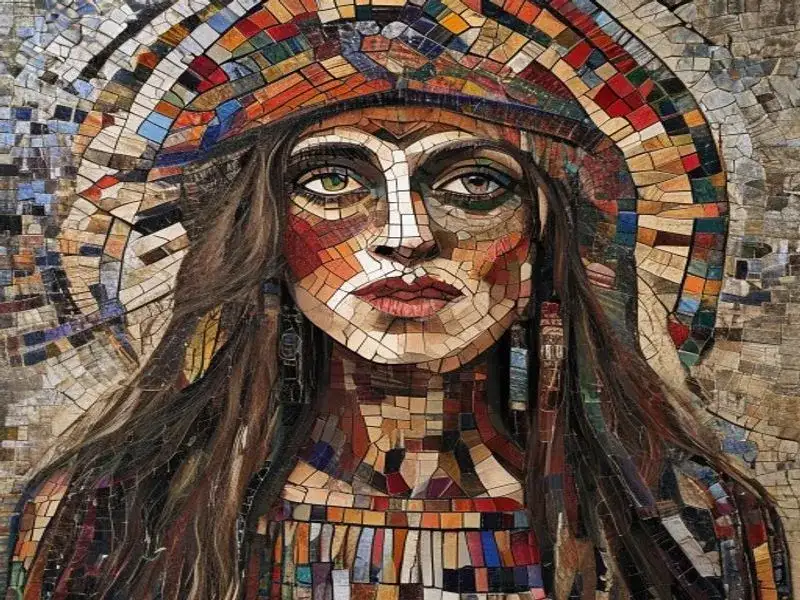
The crown jewel of the museum is undoubtedly the “Gypsy Girl” (Çingene Kızı) mosaic. Despite being only a small fragment of a larger, destroyed floor, the mesmerizing gaze of the subject has captivated visitors worldwide. Housed in a specially darkened room to highlight the intricate tesserae (the small stones used to make the mosaic), the subject’s eyes seem to follow the viewer from every angle. While popularly called the “Gypsy Girl” due to her disheveled hair and prominent cheekbones, historians debate her true identity, with some suggesting she represents a Maenad (a follower of Dionysus) or even Alexander the Great himself.
Other notable masterpieces include the massive mosaic of Poseidon, the god of the sea, riding his chariot, and the intricate depiction of the river god Acheloüs. The museum also reconstructs the #architecture of the Roman villas, allowing visitors to view the mosaics from the perspective of their original, wealthy owners.
The Culinary Capital of Turkey
No trip to the Zeugma Mosaic Museum is complete without exploring the unparalleled culinary scene of Gaziantep. Recognizing its rich gastronomic heritage, #UNESCO inducted Gaziantep into its Creative Cities Network for Gastronomy in 2015.
The city is synonymous with pistachios (Antep fıstığı) and baklava. The local baklava, crafted with paper-thin layers of phyllo dough, clarified butter, and vibrant green pistachios, is baked to perfection and soaked in syrup rather than honey. After marveling at the ancient Roman artistry, a plate of warm baklava paired with strong Turkish coffee (Türk kahvesi) or a savory slice of Alinazik kebab (smoked eggplant puree mixed with yogurt and topped with spiced lamb) offers a perfect conclusion to a day of cultural immersion.
#Zeugma #MosaicMuseum #Gaziantep #TurkeyTravel #RomanHistory #GypsyGirl #AncientArt #Euphrates #TurkishCuisine #TravelTurkey
#travel #exclusive