Classic Fish and Chips
-
 Michael Chef
 - 27 Apr, 2026 14:17
The Deep-Fried Heritage: Classic Fish and Chips
When one imagines the quintessential British takeaway, the scent of malt vinegar and the crisp crackle of golden batter immediately come to mind. Fish and chips is not merely a meal in the United Kingdom; it is a cultural institution. From the wind-swept coastal towns of Cornwall to the bustling streets of London, this dish tells a compelling story of immigration, industrialization, and culinary ingenuity.
A Tale of Two Ingredients
The pairing of fried fish and chipped potatoes seems inevitable now, but historically, they were separate entities introduced by different immigrant communities. The tradition of frying fish in batter—often referred to as pescado frito—was brought to Britain in the 16th century by Jewish refugees from Portugal and #Spain. They fried fish in oil so it could be eaten cold on the Sabbath without violating religious laws regarding cooking.
Meanwhile, the “chip” (a thick-cut fried potato) had its origins debated between #France and Belgium, but it gained immense popularity in the UK during the 19th century as a cheap, calorie-dense staple for the working class. The exact moment these two culinary forces joined is contested. Some credit a Jewish immigrant named Joseph Malin, who allegedly opened the first combined fish and chip shop in London’s East End around 1860. Others champion John Lees, who was selling the pairing out of a wooden hut in Lancashire around the same time.
The Science of the Perfect Fry
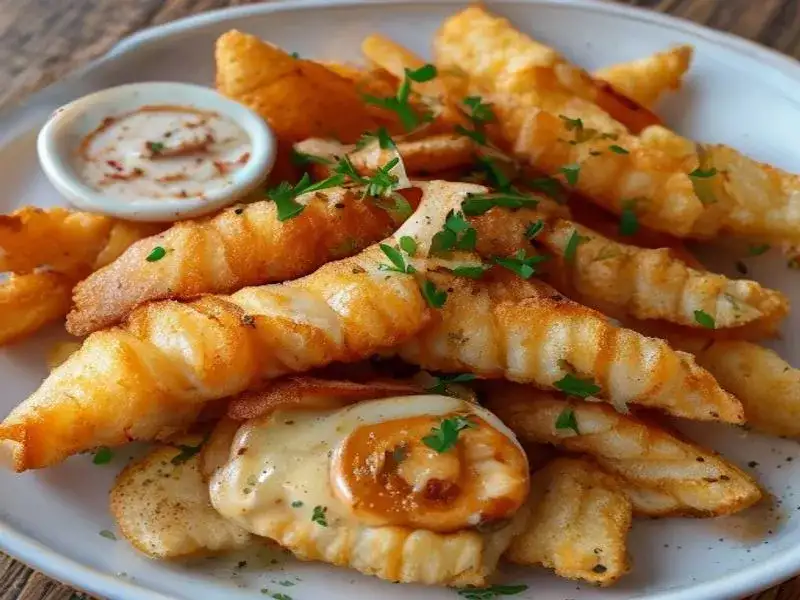
Creating the perfect portion of fish and chips is an art form heavily reliant on chemistry and technique. The fish—traditionally cod or haddock—must be incredibly fresh. The batter is typically a simple mixture of flour, water or beer, and a rising agent. The carbonation and acidity in beer not only add flavor but also create a lighter, crispier crust by expanding violently when hitting the hot oil, preventing the fish inside from becoming greasy.
The chips are equally important. Unlike French fries, British chips are thick-cut, traditionally from floury potato varieties like Maris Piper or King Edward. This ensures a fluffy interior with a robust, crispy exterior, capable of holding up to generous lashings of salt and malt vinegar. Historically fried in beef dripping for an unparalleled savory flavor, many modern “chippies” now use vegetable oils.
The Working Class Hero
During the Industrial Revolution, fish and chips became the fuel of the working class. The expansion of the railway network meant that fresh catch from ports like Grimsby and Whitby could be transported rapidly to inland industrial cities. During both World Wars, fish and chips were among the few foods not subject to rationing, as the British government recognized the dish’s vital role in maintaining home-front morale.
Today, whether wrapped in a cone of paper on a seaside pier or served alongside mushy peas and tartar sauce in a gastropub, fish and chips remain an enduring symbol of British resilience and culinary tradition.
#FishAndChips #BritishFood #CulinaryHistory #BritishTakeaway #FoodHistory #Seafood #UKCuisine
#britishfood #michaelchef #recipe #ukcuisine