Showing Posts From
France
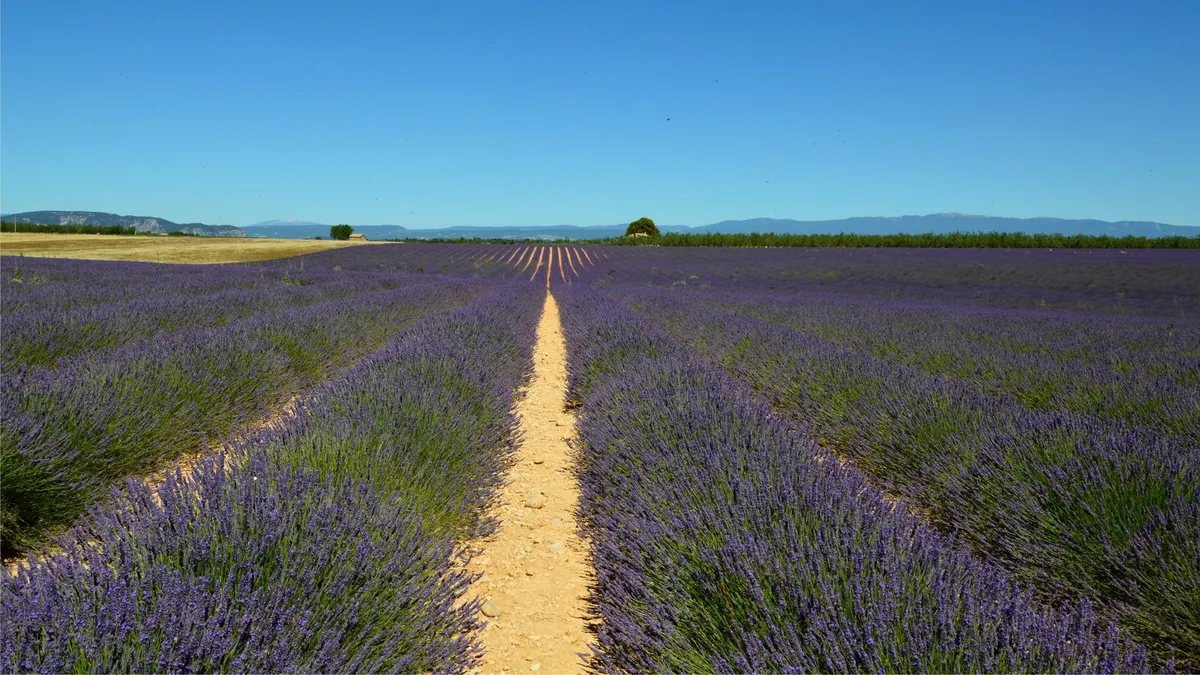
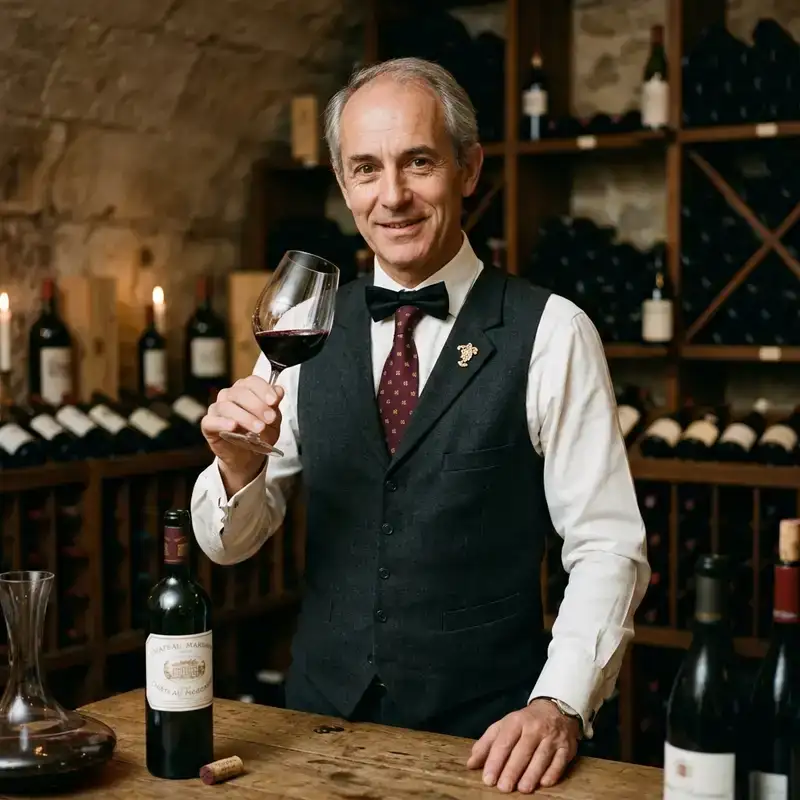
Sous le zénith implacable de l'été méridional, la terre provençale ne se contente pas de briller : elle palpite. Lorsque le mois de juin s'installe et que la canicule commence à dorer les calcaires du Luberon et du plateau de Valensole, un miracle chromatique s'opère. Les collines arides et les vastes vallées se drapent soudain d'un manteau d'un bleu profond, vibrant, presque hypnotique. C'est le réveil de l'or pourpre de la Provence, une ressource végétale qui a façonné non seulement les paysages, mais aussi l'âme, l'économie et l'identité olfactive de toute une région. En tant que voyageur et observateur amoureux de ces terres, chaque retour au milieu de ces rangées rectilignes est une promesse d'émerveillement et de reconnexion avec l'essentiel. La lavande fine, scientifiquement connue sous le nom de Lavandula angustifolia, n'est pas simplement une plante aromatique ; elle est la fille de la rigueur et du soleil. Établie principalement sur les hautes terres, entre 600 et 1 500 mètres d'altitude, elle pousse sur des sols pauvres, calcaires et bien drainés, là où d'autres cultures capitulent face à la sécheresse estivale. C'est cette rusticité qui lui confère sa noblesse. Contrairement au lavandin, son cousin hybride plus exubérant et plus bas en altitude, la lavande fine offre une essence d'une finesse incomparable, recherchée par les plus grands nez de la parfumerie mondiale. Les Chemins Secrets du Plateau de Valensole et du Luberon Pour appréhender la démesure de ce spectacle, il faut s'élancer sur les routes sinueuses du plateau de Valensole. Ici, l'horizon semble aspiré par une mer violette. Les vagues végétales ondulent au rythme du mistral, créant une chorégraphie naturelle que rien ne vient perturber, si ce n'est le bourdonnement incessant des abeilles. C'est un territoire où l'immensité le dispute à la poésie. Les photographes du monde entier s'y pressent, mais pour qui sait s'écarter des sentiers battus, la Provence offre des havres de paix insoupçonnés.En poussant vers le nord, dans la Drôme Provençale, ou en s'enfonçant dans les gorges sauvages de la Méouge, le paysage change de visage. Les champs deviennent plus intimes, lovés au creux de vallons secrets, encadrés par des chênes pubescents et des murets de pierres sèches. C'est dans ces décors plus confidentiels que l'on mesure le labeur des agriculteurs locaux. Car derrière la carte postale se cache une agriculture exigeante, soumise aux aléas climatiques, à la concurrence internationale et aux maladies du bois qui touchent épisodiquement les plants. Voici les principales variétés que l'on rencontre lors de la traversée des zones de production :La Lavande Fine (vraie lavande) : Cultivée en altitude, elle produit une huile essentielle AOP d'une pureté exceptionnelle, aux notes florales douces et camphrées. Le Lavandin : Un hybride stérile issu du croisement entre la lavande fine et la lavande aspic. Plus vigoureux, il pousse plus bas et produit beaucoup plus d'huile, principalement destinée à la saponification et aux produits d'entretien. La Lavande Aspic : Plus sauvage, poussant à plus basse altitude, elle se distingue par des feuilles plus larges et un parfum plus camphré, traditionnellement utilisé pour ses vertus apaisantes sur les brûlures et les piqûres.L'Alchimie de l'Alambic et le Savoir-Faire Ancestral La récolte de la lavande, qui bat son plein de la mi-juillet à la fin août, est un moment de communion collective. Jadis, les hommes et les femmes s'activaient à la faucille, courbés sous le soleil cuisant, liant les brins en bottes serrées avant de les acheminer vers les distilleries familiales. Aujourd'hui, les machines ont en grande partie remplacé la faucille sur les grands plateaux, mais l'esprit de la récolte demeure intact. L'odeur lourde et enivrante de la fleur coupée flotte dans l'air chaud, signalant aux voyageurs que l'été est à son paroxysme.L'étape de la distillation est le point d'orgue de ce cycle agricole. Dans les distilleries traditionnelles, qu'elles soient en pierre de taille ou modernisées, les brins de lavande sont tassés dans de grandes cuves métalliques appelées "distillateurs". La vapeur d'eau est ensuite injectée sous pression. En traversant la matière végétale, elle éclate les pockets sécrétoires qui contiennent l'huile essentielle. Le mélange de vapeur et d'essence s'élève, traverse un serpentin réfrigéré où il se condense, pour finir par s'écouler dans l'essencier. C'est là que s'opère la magie de la physique : l'huile essentielle, plus légère que l'eau et insoluble, flotte naturellement à la surface. Le spectacle de cet or liquide s'écoulant goutte à goutte est l'aboutissement d'une année de soins prodigués à la terre. Ce nectar précieux servira de fondement à la parfumerie de Grasse, aux cosmétiques haut de gamme et à l'aromathérapie. Préserver un Héritage Vivant Face aux Défis Modernes Explorer les champs de lavande de Provence, ce n'est pas seulement consommer un paysage esthétique ; c'est aussi prendre conscience de la fragilité de cet écosystème. Le changement climatique, marqué par des sécheresses de plus en plus précoces et des vagues de chaleur extrêmes, met à rude épreuve les plants de lavande fine. De plus, le "dépérissement", une maladie complexe liée à un phytoplasme transmis par des insectes piqueurs, décime des parcelles entières depuis plusieurs années. Puisse le voyageur qui foule ces terres le faire avec respect. Suivre les chemins balisés, s'abstenir de piétiner les rangs pour un simple cliché, et privilégier l'achat direct auprès des producteurs locaux sont autant de gestes qui garantissent la pérennité de ce patrimoine vivant. La lavande n'est pas un simple décor de cinéma ; c'est le fruit d'une symbiose millénaire entre l'homme et la nature calcaire du Midi. Lorsque le crépuscule tombe sur les plateaux provençaux, que le ciel s'embrase de teintes cuivrées et que le violet des champs se fond dans l'obscurité, la Provence offre une paix rare. C'est à cet instant précis, alors que le parfum de la lavande nocturne se mêle à la fraîcheur montante du soir, que l'on comprend pourquoi ce territoire continue de hanter l'imaginaire des poètes et des voyageurs du monde entier.#Provence #Lavande #Voyage #France #TourismeDurable Related Insights周庄:中国第一水乡的明朝记忆 Les Villages Engloutis de France : Plongée au Cœur d'un Patrimoine Submergé et de ses Mémoires Évanouies L'Odyssée Australienne : Entre Terre Rouge et Récifs d'Azur{ "@context": "https://schema.org", "@type": "FAQPage", "mainEntity": [ { "@type": "Question", "name": "What is the main focus of L'Or Pourpre de la Provence : Voyage au Cœur des Océans de Lavande?", "acceptedAnswer": { "@type": "Answer", "text": "Plongez dans l'histoire, la culture et la géographie des champs de lavande en Provence à travers le regard de Pierre Dubois." } }, { "@type": "Question", "name": "Who authored the comprehensive guide on L'Or Pourpre de la Provence : Voyage au Cœur des Océans de Lavande?", "acceptedAnswer": { "@type": "Answer", "text": "This detailed article and its insights were carefully researched and authored by Pierre Dubois." } }, { "@type": "Question", "name": "Where can I find more related content about Travel?", "acceptedAnswer": { "@type": "Answer", "text": "You can explore more articles, detailed reviews, and similar insights by browsing the Related Insights section at the bottom of this article or visiting our dedicated Travel category page." } } ] }
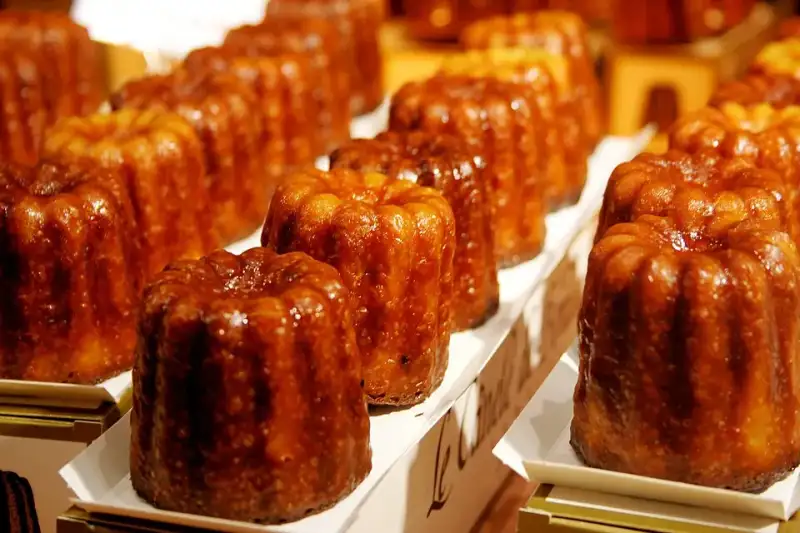
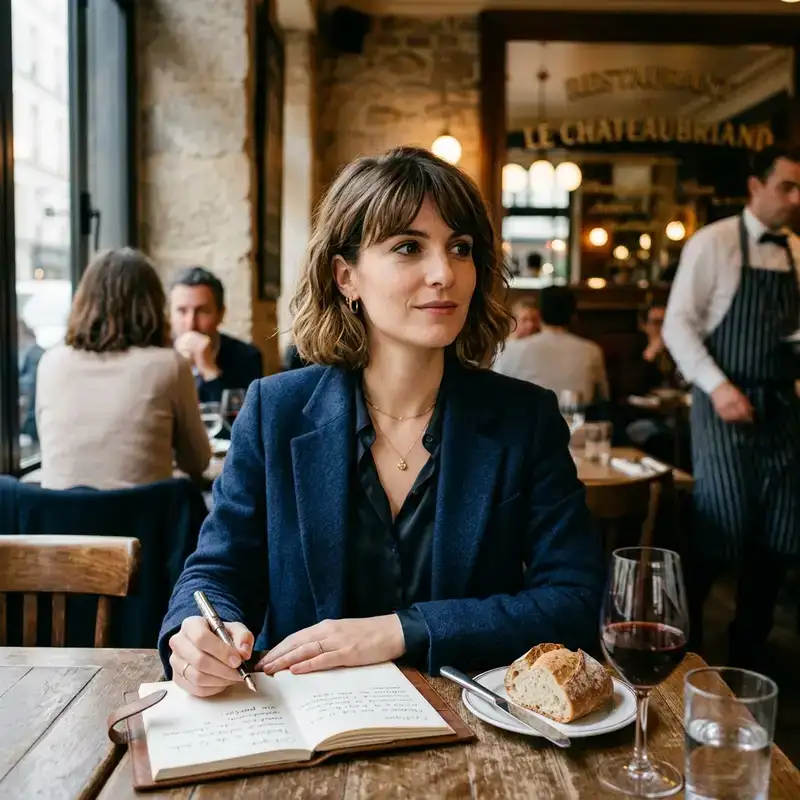
Bienvenue, chers passionnés de la gastronomie et de l'art sucré. Je suis Chloe Blanc, et aujourd'hui, je vous invite à un voyage sensoriel et historique au cœur de l'une des créations les plus fascinantes, les plus exigeantes et les plus gratifiantes de notre patrimoine culinaire : le cannelé. Ce petit gâteau, à l'apparence modeste mais au caractère bien trempé, est une véritable icône. Originaire de la majestueuse ville de Bordeaux, le cannelé (parfois orthographié canelé, avec un seul 'n' selon la confrérie dédiée à ce dessert) est bien plus qu'une simple friandise que l'on grignote sur le pouce. C'est une authentique prouesse technique, une alchimie de textures savamment orchestrée et une symphonie de parfums qui résonne avec l'histoire même de la France. Dans ce format long et détaillé, nous allons décortiquer ensemble ce joyau absolu de la #Patisserie française. Nous explorerons ses origines mystérieuses et passionnantes, nous analyserons l'importance capitale et le rôle de chaque ingrédient avec la rigueur d'un chimiste, et je partagerai avec vous, en toute transparence, les secrets de fabrication que j'ai pu affiner au fil de mes années d'expérience dans les cuisines et laboratoires des plus grandes maisons. Préparez-vous à plonger dans le monde merveilleux du croustillant caramélisé et du cœur fondant, intensément parfumé à la vanille et au vieux rhum. L'Histoire Mystérieuse du Cannelé de Bordeaux Pour comprendre véritablement l'âme du cannelé, il est indispensable de remonter le temps et de s'immerger dans l'histoire de Bordeaux, un port maritime florissant dont la puissance économique et les échanges commerciaux ont directement façonné ce dessert exceptionnel. Les origines exactes de cette pâtisserie sont nimbées de mystère, baignées de légendes transmises de génération en génération, mais la version la plus largement acceptée par les historiens de la gastronomie nous ramène au XVIIIe siècle, dans le calme des cloîtres du couvent des sœurs de l'Annonciade, situé juste derrière l'église Sainte-Eulalie. Le Lien Indéfectible avec le Monde du Vin La création du cannelé est intimement et indissociablement liée à l'industrie viticole bordelaise. À cette époque, le processus de "collage" du vin – une technique ancestrale visant à le clarifier, à éliminer les impuretés en suspension et à en adoucir les tanins – nécessitait une quantité astronomique de blancs d'œufs. Le blanc d'œuf, grâce à ses protéines, agit comme un filet qui emprisonne les particules indésirables avant de tomber au fond des barriques. Les viticulteurs, se retrouvant avec des milliers de jaunes d'œufs dont ils ne savaient que faire, les offraient généreusement aux religieuses locales et aux œuvres de charité. Les sœurs, dans un souci de ne rien gaspiller, utilisèrent ces précieux jaunes pour confectionner de petits gâteaux très nourrissants, qu'elles distribuaient aux pauvres ou vendaient pour subvenir aux besoins de leur communauté. Ces premiers balbutiements de la recette, alors appelés "canelas" ou "canelons", étaient probablement assez différents du chef-d'œuvre caramélisé que nous connaissons et vénérons aujourd'hui, car ils étaient frits dans la graisse plutôt que cuits lentement au four. L'Influence Décisive du Commerce Maritime Le port de Bordeaux, au-delà du vin, était également un carrefour commercial majeur à l'échelle mondiale, une porte d'entrée incontournable vers les colonies et les contrées lointaines. Les navires de commerce déchargeaient quotidiennement sur les quais des cargaisons de sucre de canne brut, de gousses de vanille odorantes en provenance des îles lointaines et de barriques de rhum des Caraïbes. Ces ingrédients exotiques, rares et précieux, ont naturellement trouvé leur chemin dans les cuisines bordelaises. L'ajout du rhum ambré et de la vanille charnue dans la pâte à base de jaunes d'œufs a transformé un simple gâteau de récupération, un peu roboratif, en une véritable gourmandise noble et raffinée. La Révolution française a mis un terme brutal aux activités des couvents, et la recette, jalousement gardée, a failli disparaître dans les méandres de l'histoire. Heureusement, au XIXe siècle, les artisans pâtissiers bordelais, conscients de ce patrimoine inestimable, l'ont ressuscitée, l'améliorant techniquement et lui donnant sa forme définitive, celle d'un cylindre cannelé de cuivre, d'où il tire son nom actuel et sa silhouette reconnaissable entre mille. L'Anatomie de la Perfection : Qu'est-ce qu'un Vrai Cannelé ? Avant de se lancer tête baissée dans la confection, il est crucial de savoir très précisément ce que l'on cherche à obtenir. En tant que chef, je suis d'une exigence absolue, voire intransigeante, sur l'apparence et la texture du cannelé. Un cannelé parfait se reconnaît immédiatement à plusieurs caractéristiques fondamentales, qui ne souffrent d'aucun compromis. Le Contraste des Textures : Le Graal du Pâtissier Le secret intime du cannelé réside dans une dichotomie parfaite et assumée. À l'extérieur, il doit arborer une croûte foncée, d'un brun profond, presque noire par endroits sur les arêtes supérieures, extrêmement croustillante, épaisse et caramélisée à souhait. Cette robe rigide doit opposer une légère résistance sous la dent, annonçant la gourmandise de la suite. Attention, cette croûte n'est absolument pas brûlée ni amère ; elle est le résultat d'une caramélisation poussée à l'extrême, une réaction de Maillard parfaitement maîtrisée par une cuisson millimétrée. À l'intérieur, c'est l'inverse absolu, un contraste saisissant. Le cœur du cannelé doit être incroyablement moelleux, tendre, aérien, alvéolé de petites poches d'air (les fameuses "alvéoles"), et presque s'apparenter à la texture fondante d'un flan parisien ou d'une crème prise, très hydratée. L'équilibre précaire entre ce cœur humide, riche et dense, et la carapace protectrice et croquante est ce qui rend la dégustation du cannelé si follement addictive. C'est une danse des contraires en bouche. L'Harmonie Visuelle Visuellement, la forme est iconique et doit forcer le respect : un petit cylindre mesurant généralement 5 centimètres de haut pour le format classique (il existe aussi le format "lunch" plus petit, ou la "bouchée"), strié de rainures profondes, régulières et nettes (les fameuses cannelures). La surface supérieure (qui est en fait le fond du moule lors de la cuisson, ne l'oublions pas) doit présenter un léger creux élégant, signe que la pâte a bien gonflé sous l'effet de la chaleur avant de se rétracter doucement en fin de cuisson, concentrant ainsi les sucs, le caramel et les arômes. La couleur doit être uniforme sur les flancs, d'un brun acajou profond et brillant, presque vitrifié. Les Ingrédients : La Symphonie des Saveurs La liste des ingrédients du cannelé est étonnamment courte. Cependant, dans la haute #Patisserie, plus la liste est courte, plus la qualité intrinsèque de chaque composant devient déterminante, vitale même. Chaque élément joue une partition précise, et aucune fausse note n'est tolérée si l'on vise l'excellence. Le Lait Entier et le Beurre de Baratte Le lait est la base liquide de notre appareil, la toile de fond de notre œuvre. Il est impératif d'utiliser du lait entier, de préférence un lait frais microfiltré ou, si vous pouvez en trouver, du lait cru, dont la teneur en matière grasse naturelle apportera une onctuosité inégalable. Le lait sert également de vecteur essentiel pour infuser la vanille ; le gras du lait fixe les molécules aromatiques lipophiles de la gousse. Le beurre, quant à lui, enrichit et assouplit la pâte. Optez pour un authentique beurre de baratte doux, contenant au moins 82% de matière grasse, issu de crèmes maturées. Il fondra délicatement dans le lait chaud, contribuant à la souplesse du cœur du cannelé tout en lui donnant un léger goût de noisette. Les Jaunes d'Œufs : L'Or Liquide Ce sont les véritables stars de la texture intérieure ! Les jaunes d'œufs apportent la richesse, la couleur dorée vibrante de la mie et cette consistance de flan inimitable qui fond sur la langue. Je recommande de toujours utiliser des œufs extra-frais, issus de poules élevées en plein air nourries aux céréales. Certains chefs ajoutent volontairement un œuf entier pour structurer davantage la pâte avec un peu de blanc (l'albumine aide à figer l'appareil et limite l'affaissement post-cuisson), mais la majorité absolue du ratio doit toujours rester en faveur des jaunes pour préserver ce gras savoureux. Le Sucre : L'Agent Caramélisant Le sucre est le moteur exclusif de la caramélisation. Il faut une quantité généreuse de sucre semoule fin ou de sucre de canne blond de qualité. Lors de la cuisson, sous l'effet de la chaleur intense, ce sucre va fondre, se lier aux protéines, se transformer en caramel contre les parois brûlantes du moule en cuivre, et former l'exosquelette croquant de la pâtisserie. Réduire le sucre dans une recette de cannelé sous prétexte de diététique, c'est un non-sens absolu : c'est sacrifier sa texture extérieure et détruire son identité même. Le cannelé est un plaisir indulgent, assumons-le ! La Vanille et le Rhum : L'Âme Aromatique Incontestable C'est ici que l'artisan exprime sa sensibilité, sa signature.La Vanille : N'utilisez sous aucun prétexte d'arôme artificiel ou d'extrait bas de gamme. Vous avez besoin d'une véritable gousse de vanille, charnue, souple, luisante et gorgée de caviar (les petites graines noires). La vanille Bourbon de Madagascar est le grand classique, offrant des notes boisées, rondes et chaudes très rassurantes. La vanille de Tahiti, plus charnue, grasse, avec ses notes florales et presque anisées, offre une dimension incroyable et beaucoup de modernité. Il faut fendre la gousse en deux dans le sens de la longueur, gratter consciencieusement les grains avec le dos d'un couteau et laisser le tout (gousses et grains) infuser très longuement dans le lait. Le Rhum : Un rhum ambré ou vieux de qualité supérieure est essentiel. Le rhum ne sert pas seulement à aromatiser ; son alcool va majoritairement s'évaporer à la cuisson, mais il laissera derrière lui des esters complexes, des notes boisées, fruitées et épicées qui subliment la vanille. Un vieux rhum agricole des Antilles françaises (comme un rhum de la Martinique) fera des merveilles absolues, apportant des notes de canne à sucre rôtie, de tabac blond et d'épices douces. Ne lésinez pas sur la qualité du rhum, il transparaît dans le produit final.Le Matériel : Le Secret Absolu du Moule en Cuivre Si vous me demandez, à moi, Chloe Blanc, quel est le plus grand et le plus impénétrable secret d'un cannelé réussi, ma réponse sera immédiate, directe et sans équivoque : le moule. Il n'y a pas de grand cannelé sans un bon moule en cuivre étamé, épais et lourd. Pourquoi le Cuivre et Seulement le Cuivre ? Le cuivre est un conducteur thermique d'une efficacité exceptionnelle, inégalée en cuisine. Dans l'enfer du four préchauffé à blanc, il absorbe la chaleur ambiante à une vitesse vertigineuse et la transmet de manière foudroyante, directe et parfaitement uniforme à la pâte fluide. C'est ce "choc thermique" continu et cette conductivité qui permettent à l'extérieur de saisir instantanément, de caraméliser intensément, tout en gardant l'intérieur moelleux, isolé par la croûte qui vient de se former. L'étamage à l'intérieur du moule (une très fine couche d'étain appliquée de manière artisanale) empêche l'oxydation du cuivre (le fameux vert-de-gris, toxique) et garantit une sécurité alimentaire totale tout en favorisant le démoulage. Le Chemisage à la Cire d'Abeille : La Tradition à l'État Pur Pour éviter que le cannelé, très riche en sucre, n'attache au moule en cuivre, et surtout pour lui conférer ce brillant spectaculaire et ce croustillant vitrifié, la méthode traditionnelle des puristes exige un chemisage minutieux à la cire d'abeille et au beurre. Il s'agit de fondre à feu très doux de la cire d'abeille pure d'apiculteur (souvent achetée en blocs) avec du beurre clarifié (pour éviter que le petit-lait ne brûle). On verse ensuite ce liquide chaud dans les moules froids, on les fait tourner pour bien napper les parois jusqu'aux bords, puis on les retourne brusquement sur une grille pour faire s'écouler l'excédent et ne laisser qu'un film microscopique, presque invisible. En refroidissant, ce film fige. Cette cire va fondre à nouveau lors de la cuisson, créant une barrière protectrice ultra-croustillante supplémentaire au goût infiniment subtil et floral de miel, et facilitant un démoulage absolument parfait. C'est un processus méticuleux, chronophage, qui demande un coup de main, mais c'est le prix immuable de l'excellence en matière de cannelé. Le Cas des Moules en Silicone : L'Hérésie Je sais que les moules en silicone sont très populaires dans les cuisines domestiques : ils sont abordables, souples, prennent peu de place et sont faciles d'entretien. Mais, je me dois d'être honnête : ils sont les pires ennemis du cannelé. Le silicone est par nature un isolant thermique. Au lieu de transmettre violemment la chaleur, il la bloque, la tamise. Il empêche littéralement la chaleur de saisir la pâte brutalement. Résultat : vous n'obtiendrez jamais la croûte caractéristique. Vous obtiendrez des gâteaux informes, spongieux, mous, sans aucun contraste de texture, avec une coloration pâle, mate et hétérogène. Si vous aimez la #France, son terroir et l'authenticité de sa pâtisserie, oubliez le silicone et investissez une bonne fois pour toutes dans le cuivre, des moules qui se transmettront de génération en génération ! La Préparation : L'Art Délicat de la Patience et de la Précision La préparation de l'appareil à cannelés (la pâte liquide) est d'une simplicité technique enfantine. Il ne s'agit ni plus ni moins que d'une pâte à crêpes très riche. Cependant, elle exige une précision absolue dans les pesées et surtout, une vertu essentielle, souvent rare de nos jours : la patience infinie. L'Infusion à Froid ou à Chaud Tout commence, idéalement la veille, par faire bouillir le lait avec le beurre fondu et la gousse de vanille fendue en deux et soigneusement grattée. Cette étape est cruciale pour extraire tous les arômes complexes de la vanille. Je laisse souvent ce mélange infuser hors du feu, à couvert, pendant au moins une heure, voire toute une nuit au réfrigérateur une fois refroidi, pour une "infusion à froid" qui préserve les notes les plus volatiles et florales de la vanille, avant de le réchauffer très légèrement (autour de 50°C) pour l'incorporer à la suite. Le Mélange Doux : Interdit de Fouetter ! Dans un grand cul-de-poule, on blanchit très légèrement les jaunes d'œufs avec le sucre à l'aide d'un fouet, mais sans insister. Puis, on y incorpore la farine tamisée. L'astuce fondamentale de chef, c'est de mélanger délicatement à la maryse ou à la spatule, simplement pour amalgamer, afin d'éviter au maximum d'incorporer de l'air. Plus vous fouettez vigoureusement pour aller vite, plus vous créez de réseau glutineux avec la farine et, pire encore, vous incorporez de microscopiques bulles d'air. Ces bulles sont fatales : elles se dilateront à la cuisson sous l'effet de la chaleur, faisant gonfler la pâte de manière disproportionnée et la faisant déborder hors des moules (ce qu'on appelle le redouté "fesses en l'air" en jargon de laboratoire). Ensuite, on verse le lait chaud parfumé en filet continu tout en remuant doucement et régulièrement pour obtenir une consistance lisse. On termine enfin par l'ajout du rhum ambré, qui va couronner l'appareil. Le Repos : L'Étape Sacrée et Non-Négociable L'appareil ressemble maintenant à une pâte à crêpes très parfumée et très liquide. L'erreur absolue de débutant serait de vouloir les cuire immédiatement, porté par l'impatience de la gourmandise. L'appareil à cannelé a un besoin vital de reposer au réfrigérateur, couvert d'un film alimentaire au contact (pour éviter la formation d'une croûte), pendant une durée incompressible de 24 à 48 heures. Pourquoi un temps de repos au froid si long est-il indispensable ? Il permet aux molécules d'amidon de la farine de s'hydrater complètement et lentement, donnant de l'élasticité et de la structure à la future mie, lui permettant de tenir la cuisson sans s'effondrer. Il laisse tout le temps nécessaire aux puissants arômes du rhum et de la douce vanille de se développer, de se complexifier, de fusionner et d'imprégner intimement chaque goutte de gras du lait et des œufs. C'est une maturation aromatique. Il fait retomber la pâte. Toutes les petites bulles d'air accidentellement incorporées lors du mélange vont remonter à la surface et s'échapper, ce qui garantira une pâte "morte", dense, qui assurera une cuisson stable, bien à plat, sans aucun débordement massif dans le four.Le repos est véritablement le gardien silencieux de la perfection gustative et visuelle de votre #Dessert de prédilection. La Cuisson : Le Choc Thermique et la Maîtrise Diabolique du Four Si la préparation requiert de la patience, la cuisson requiert, elle, une vigilance de tous les instants, l'œil rivé sur la vitre du four. Chaque four domestique ou professionnel est différent, et apprivoiser la cuisson idéale du cannelé demande souvent plusieurs essais, des ajustements, de la frustration parfois, mais la récompense est au bout. Le principe de base est la gestion stricte du choc thermique en deux temps. La Chaleur Saisissante : Créer la Carapace L'objectif initial est de croûter violemment l'extérieur du cannelé. On commence par enfourner les moules de cuivre (préalablement chemisés avec amour à la cire, passés au congélateur 10 minutes pour figer la cire, puis remplis de la pâte liquide sortie directement du frigo, bien remuée avant emploi) dans un four extrêmement chaud. Ce four est généralement préchauffé à une température infernale de 250°C (ou 480°F), idéalement en chaleur statique (sole et voûte) plutôt qu'en chaleur tournante qui pourrait déformer la pousse. Cette température accablante va provoquer une ébullition quasiment immédiate sur les parois du moule en cuivre. C'est ce contact brutal qui fixe la forme instantanément et initie la réaction de caramélisation. Cette première phase critique dure environ 10 à 15 minutes, selon les fours. La Cuisson à Cœur : Le Flan Moelleux Une fois la croûte fermement formée et que le cannelé est "saisi", si l'on laissait le four à 250°C, le gâteau finirait inévitablement carbonisé à l'extérieur, dur comme de la pierre, et cru et liquide à l'intérieur. Il faut donc agir vite et baisser drastiquement la température du four, autour de 180°C (350°F). Cette baisse de régime permet à la chaleur douce de pénétrer lentement et progressivement jusqu'au cœur de la pâtisserie, sans brûler la croûte existante, figeant délicatement les jaunes d'œufs et la farine en un flan divin, souple et parfumé. Cette seconde phase de cuisson lente dure environ 45 minutes à 1 heure, selon la taille des moules (bouchées ou gros cannelés) et la puissance résiduelle du four. L'astuce de professionnel est d'observer en permanence : pendant cette phase, la pâte va monter un peu, parfois gonfler hors du moule sous l'effet de l'évaporation de l'eau. Si la cuisson est bien menée et que la pâte a bien reposé, il va redescendre sagement dans son moule en fin de cuisson. Pour savoir si un cannelé est cuit, il faut en sacrifier un (ou le démouler avec un gant). Le cul du cannelé (le haut apparent) doit être d'un marron très foncé, uniforme. Dès la sortie du four, un bon cannelé se démoule instantanément. Un petit coup sec du poignet en retournant le moule de cuivre sur une grille, et le joyau glisse, brillant, fumant et crépitant de caramel chaud, libérant une odeur enivrante de vanille torréfiée dans toute la cuisine. La Dégustation : Un Rituel Sensoriel Hors du Temps La dégustation d'un cannelé est un moment solennel qui se respecte. Ne les mangez jamais immédiatement à la sortie du four, c'est une hérésie ! L'intérieur serait encore trop liquide et excessivement brûlant pour le palais, et surtout, la croûte extérieure n'aurait pas eu le temps de se figer et de sécher pour devenir croquante. À la sortie du four, un cannelé est paradoxalement assez mou. Il faut impérativement les laisser refroidir sur une grille à température ambiante, dans un endroit sec, pendant au moins une à deux heures. C'est à ce moment précis que la véritable magie opère : en refroidissant, le caramel de la croûte cristallise, se durcit pour atteindre son croustillant maximal, tandis que l'intérieur termine de prendre grâce à l'amidon pour offrir une mâche ferme mais fondante, absolument parfaite. Comment et Quand le Déguster pour une Expérience Ultime ? Le cannelé est, par essence, une pâtisserie éphémère. Sa perfection texturale ne dure que quelques heures, une fenêtre de tir très courte. Passé 8 à 12 heures, il commence inévitablement à ramollir, le cœur humide communiquant son humidité à la croûte, et le caramel absorbant l'humidité de l'air ambiant. C'est pourquoi un bon artisan pâtissier les cuit en continu tout au long de la journée, en petites fournées, plutôt qu'en une seule fois le matin. Un cannelé acheté la veille et mangé le lendemain sera bon en goût, mais caoutchouteux en texture. Il est sublime, divin, à l'heure du thé au milieu de l'après-midi, accompagnant à merveille un grand thé noir corsé, de type Earl Grey ou un thé de Ceylan, dont la pointe d'amertume et les notes de bergamote répondront subtilement à la rondeur de la vanille. Mais la tradition bourgeoise bordelaise veut qu'il clôture majestueusement un bon repas, servi en mignardise avec un café expresso bien serré et sans sucre, dont la force tranche avec la sucrosité du gâteau. Pour les plus épicuriens et puristes d'entre nous, un cannelé s'accompagne d'un verre de vin liquoreux de la région, tel un grand cru de Sauternes ou de Barsac, ou, en fin de soirée, d'un vieux Bas-Armagnac aux notes boisées, faisant un écho fantastique aux notes de rhum du dessert. Mes Astuces de Chef Pâtissier pour Réussir vos Cannelés à la Maison Si, après cette longue lecture, vous souhaitez vous lancer avec bravoure dans l'aventure chez vous, voici quelques recommandations très précieuses tirées de mon carnet de recettes personnel de chef, pour éviter les écueils les plus courants :Le Lissage de la Pâte Post-Repos : Après les 24 ou 48 heures de repos obligatoire au frigo, le beurre fondu de l'appareil aura figé et formé une couche solide en surface. Surtout, ne fouettez pas l'appareil frénétiquement pour le réincorporer ! Passez simplement la pâte froide au mixeur plongeant (girafe) pendant quelques petites secondes, en le gardant bien au fond du cul-de-poule sans le soulever pour ne pas incorporer d'air, afin de recréer une émulsion lisse et homogène. Le Remplissage Stratégique : Ne remplissez jamais vos moules en cuivre jusqu'au bord extrême. Laissez toujours environ 5 millimètres à 1 centimètre d'espace libre en haut du moule, car la pâte va inévitablement bouillonner et gonfler sous l'action de la chaleur extrême du début de cuisson. Le Démoulage Express : Démoulez vos merveilles à chaud, quasi immédiatement à la sortie du four, avec des gants épais. Si vous attendez qu'ils refroidissent dans le moule, le sucre et le caramel vont se figer et coller définitivement le cannelé au cuivre, rendant son extraction impossible sans le déchiqueter de manière chaotique. La Gestion du Gonflement Intempestif : Si, lors de la cuisson, vous remarquez à travers la vitre que vos cannelés montent trop haut comme des soufflés et menacent de déborder de façon imminente, pas de panique. Ouvrez brièvement la porte du four pendant 5 à 10 secondes. Cela fera chuter la température de la chambre de cuisson de quelques degrés et fera retomber la pâte instantanément. Refermez et poursuivez la cuisson. L'Entretien Précieux du Cuivre : Ne lavez absolument jamais vos moules en cuivre étamé avec du savon liquide, une éponge abrasive, et encore moins au lave-vaisselle (l'acidité détruirait l'étamage). Si vous les avez chemisés à la cire, le démoulage laisse le moule propre. Essuyez-les simplement à chaud, tout de suite après le démoulage, avec un chiffon doux ou un papier absorbant pour retirer les excédents de gras et de miettes. Conservez-les à l'envers, dans un endroit sec, à l'abri de la poussière. Ils vont foncer et se patiner avec le temps, c'est normal, c'est la marque des grands ustensiles, et c'est même hautement souhaitable pour la conductivité !Le Cannelé Aujourd'hui : Entre Traditions, Innovations et Variations Bien que je sois, vous l'avez compris, une fervente puriste attachée corps et âme à la recette historique classique vanille-rhum cuite dans le cuivre, la pâtisserie est un art vivant, en perpétuel mouvement, qui doit savoir se réinventer sans se trahir. De très nombreux chefs pâtissiers talentueux à travers le monde se sont approprié ce format ludique et cette texture incroyable pour créer des déclinaisons passionnantes, surprenantes, ouvrant de nouvelles voies gustatives. Nous voyons fleurir aujourd'hui, dans de grandes boutiques, des cannelés parfumés à la pâte de pistache d'Iran, à la fève de tonka râpée (qui se marie si bien avec le rhum), au praliné noisette onctueux, infusés au thé matcha, ou encore ultra-gourmands, évidés à froid par le dessous et garnis à la poche à douille d'un cœur coulant au caramel au beurre salé, d'une ganache montée au chocolat noir, ou d'une compotée de fruits rouges acidulée. Le format cylindrique, élégant et pratique à manger avec les doigts, se prête également incroyablement bien aux versions salées pour des apéritifs chics. Imaginez un appareil de base non sucré, enrichi de fins morceaux de chorizo ibérique épicé et de vieux Comté affiné 24 mois fondant, ou encore une variante méditerranéenne avec des tomates séchées hachées, du piment d'Espelette subtil et des éclats de chèvre frais. Ces versions salées, cuites également dans le cuivre avec un choc thermique, conservent cette fascinante dualité de texture, offrant un amuse-bouche croustillant et fondant qui surprend et régale toujours les convives. Cependant, et je terminerai là-dessus, malgré toutes ces formidables innovations et la créativité débordante de la nouvelle génération, le cannelé de Bordeaux originel, ce petit cylindre caramélisé au rhum et à la vanille, reste et restera pour l'éternité le roi incontesté de sa catégorie. C'est un véritable monument classé de la gastronomie de #France, prouvant de la plus belle des manières que l'élégance suprême réside souvent dans l'apparente simplicité des ingrédients conjuguée à une parfaite, voire obsessionnelle, maîtrise technique. Conclusion : Une Invitation Chaleureuse à la Création Pâtissière Créer de ses propres mains le cannelé parfait est un véritable voyage initiatique, un rite de passage pour tout passionné de pâtisserie, qu'il soit un amateur éclairé dans sa cuisine ou un professionnel en apprentissage. C'est une recette qui demande, exige même, de la rigueur absolue, une passion dévorante, et un respect profond pour la noblesse des matières premières, pour le temps qui passe, pour le geste artisanal. C'est un long apprentissage de l'humilité face aux caprices parfois imprévisibles de la matière vivante et de la puissance du four. Il faut accepter de rater les premières tournées pour mieux rebondir. Mais je vous le garantis, lorsque, après 48h d'attente fébrile et 1h de cuisson stressante, vous démoulez enfin, d'un geste sec, ces petits bijoux bruns, dorés, follement parfumés, craquants sous les doigts et fondants sous la dent, la récompense gustative et l'immense fierté personnelle sont largement au-delà des mots. C'est un moment de grâce pure. J'espère du fond du cœur que cette longue immersion dans l'univers secret et fascinant du cannelé vous aura inspiré, instruit, et surtout, donné faim. Ne vous laissez surtout pas intimider par son niveau d'exigence technique ou les mythes qui l'entourent. Procurez-vous de bons œufs, de la vraie vanille, un bon rhum, cherchez de beaux moules en cuivre étamé (c'est le meilleur investissement d'une vie de pâtissier), chemisez-les avec soin, prenez le temps, et lancez-vous sans crainte dans l'aventure ! La pâtisserie, n'oubliez jamais, est avant tout une question d'amour, de transmission et de partage autour d'une table. À vos fourneaux, sortez le beurre et la maryse, et vive la #ChloeBlanc touch ! Prenez soin de vous, de vos proches, et continuez inlassablement à explorer et à déguster les merveilles infinies du monde #Sweet. Merci infiniment de m'avoir lue jusqu'au bout, et à très bientôt pour de nouvelles explorations passionnantes, techniques et toujours gourmandes de notre si cher patrimoine sucré mondial. #patisserie #dessert #france #chloeblanc #sweet Related InsightsParis-Brest : Le Voyage Praliné Inoubliable Tarte Tatin : La Merveilleuse Erreur Culinaire Madeleine : Le Souvenir Sucré de l'Enfance{ "@context": "https://schema.org", "@type": "FAQPage", "mainEntity": [ { "@type": "Question", "name": "What is the main focus of Cannelé : Le Trésor Croustillant de Bordeaux?", "acceptedAnswer": { "@type": "Answer", "text": "Plongez dans l'univers de la haute pâtisserie avec Chloe Blanc et découvrez les secrets de ce dessert emblématique." } }, { "@type": "Question", "name": "Who authored the comprehensive guide on Cannelé : Le Trésor Croustillant de Bordeaux?", "acceptedAnswer": { "@type": "Answer", "text": "This detailed article and its insights were carefully researched and authored by Chloe Blanc." } }, { "@type": "Question", "name": "Where can I find more related content about Gastronomy?", "acceptedAnswer": { "@type": "Answer", "text": "You can explore more articles, detailed reviews, and similar insights by browsing the Related Insights section at the bottom of this article or visiting our dedicated Gastronomy category page." } } ] }
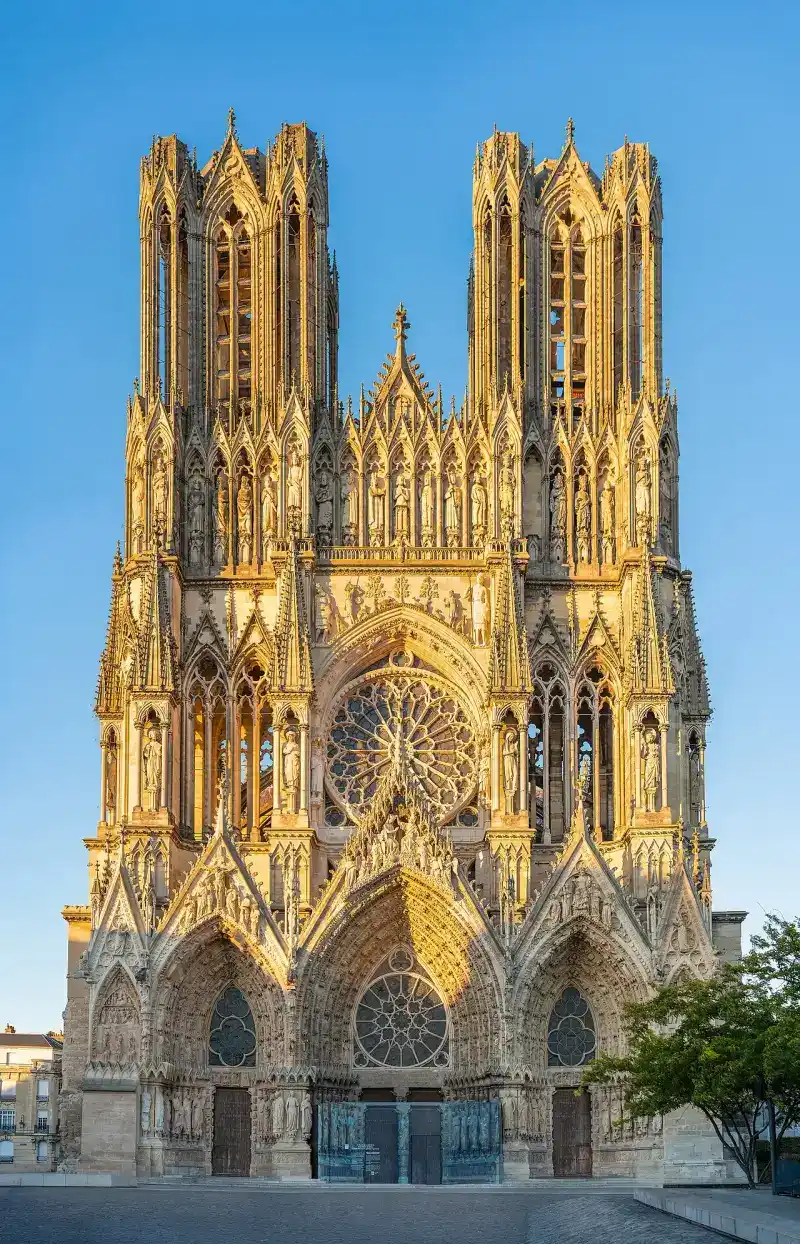
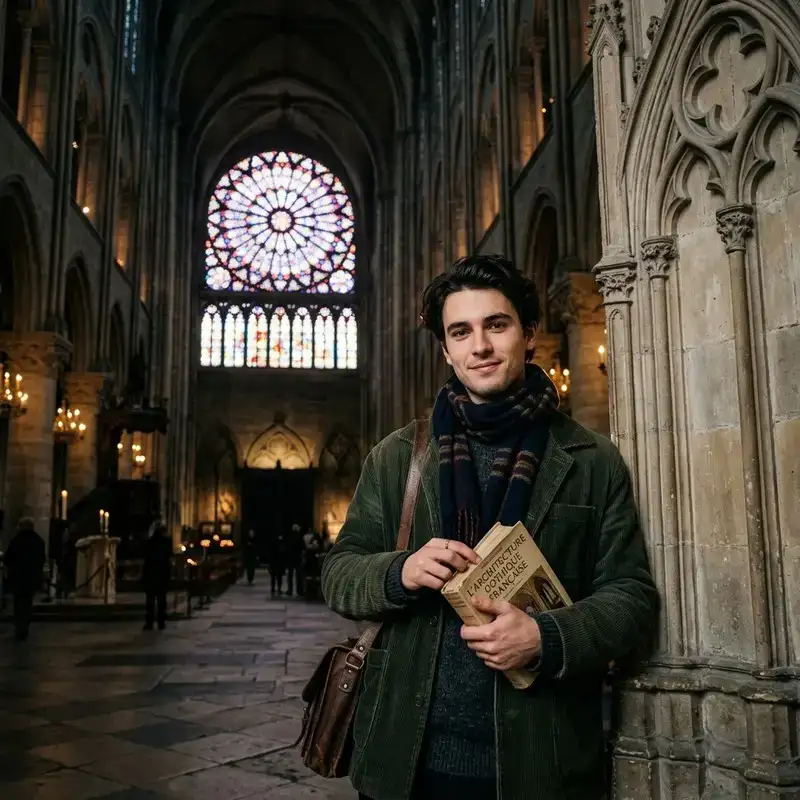
La Cathédrale de Reims : Le Sanctuaire des Rois de #France Bonjour à tous, passionnés d'histoire ! Je suis Lucas Martin. Pour clore ce tour d'horizon des grandes structures gothiques d'Europe, nous revenons en France, dans la région de la Champagne. Si Notre-Dame de #Paris est la cathédrale de la capitale, et Chartres la cathédrale de la lumière, Notre-Dame de Reims est la cathédrale de la Nation. Elle est le lieu sacré par excellence de la monarchie française. La Cité des Sacres Pendant près de 1 000 ans, la quasi-totalité des rois de France ont été couronnés dans cette cathédrale (33 souverains au total !). Pourquoi Reims ? L'histoire remonte à l'an 496, lorsque Clovis, le premier roi des Francs, y fut baptisé par l'évêque Saint-Remi. La légende raconte qu'une colombe descendue du ciel aurait apporté la "Sainte Ampoule", une fiole contenant une huile divine utilisée pour oindre les futurs rois. Reims est donc devenue le lieu de légitimation du pouvoir royal absolu. L'événement historique le plus célèbre s'y est déroulé le 17 juillet 1429 : le sacre de Charles VII, rendu possible par l'héroïsme de Jeanne d'Arc, présente dans la nef avec son étendard. Le Chef-d'œuvre du Gothique Flamboyant D'un point de vue architectural, Reims est souvent considérée (avec Amiens) comme l'apogée du style gothique rayonnant. Construite rapidement au 13e siècle (comme Chartres), la cathédrale de Reims pousse la recherche de hauteur et d'ouverture des murs encore plus loin. Sa façade ouest est une véritable dentelle de pierre. Là où les autres cathédrales conservent des tympans en pierre pleine au-dessus des portes, les bâtisseurs de Reims ont innové en y plaçant d'immenses rosaces en vitrail. C'est ce qu'on appelle "le triomphe de la lumière sur la matière". Avec plus de 2 300 statues qui ornent ses murs extérieurs, c'est l'édifice religieux gothique le plus sculpté au monde. L'Ange au Sourire : Le Symbole de la Ville Parmi ces milliers de sculptures, une figure se détache et a capté le cœur du monde entier : le fameux "Ange au Sourire" (L'Ange Gabriel), situé sur le portail nord de la façade ouest. Sculpté au milieu du 13e siècle, cet ange possède une expression d'une douceur et d'un humanisme frappants, très éloignée de la rigidité des sculptures romanes antérieures. Il illustre le nouveau courant artistique du gothique qui cherchait à doter les figures saintes d'émotions humaines. La Cathédrale Martyre (1914-1918) Malheureusement, l'histoire de Reims est tragiquement marquée par la Première Guerre Mondiale. Située près de la ligne de front, la cathédrale a été bombardée sans pitié par l'artillerie allemande en septembre 1914. Les échafaudages en bois qui entouraient la tour nord prirent feu, la toiture en plomb fondit, et la façade fut terriblement endommagée. L'"Ange au Sourire" a d'ailleurs eu la tête décapitée (elle sera restaurée plus tard). Ces bombardements suscitèrent une indignation mondiale. La cathédrale en ruine devint le symbole du patrimoine culturel européen détruit par la folie de la guerre (surnommée la "cathédrale martyre"). Grâce au financement d'importants mécènes américains (notamment la fondation Rockefeller), l'édifice fut patiemment reconstruit et restauré au lendemain de la guerre. Sa nouvelle charpente n'est plus en chêne, mais en béton armé (innovation majeure de l'architecte Henri Deneux). Une Renaissance par le Vitrail Les bombardements ont brisé la plupart des vitraux médiévaux de la nef. Pour combler les lacunes lumineuses, la cathédrale a fait appel, à la fin du 20e siècle, aux plus grands artistes contemporains. Le chef-d'œuvre incontesté de cette commande moderne se trouve dans la chapelle d'axe : trois magnifiques verrières créées en 1974 par le maître de la couleur, Marc Chagall. L'utilisation de ses bleus profonds, de ses rouges et de son iconographie onirique se marie avec une grâce absolue au chœur gothique. Récemment, en 2011, l'artiste allemand Imi Knoebel a également ajouté des vitraux géométriques et très colorés. Reims est donc le pont parfait entre le génie médiéval et l'art contemporain. En Conclusion Visiter Reims, c'est comprendre l'essence du pouvoir en France. C'est aussi admirer un bâtiment qui, bien qu'ayant frôlé l'annihilation, se dresse toujours, fier et magnifique, rappelant que la #culture et la beauté triomphent toujours de la destruction. Ne manquez surtout pas de déguster une flûte de Champagne (la région y oblige !) en admirant cette dentelle de pierre au soleil couchant. #Reims #France #RoisDeFrance #Gothique #PremiereGuerreMondiale #Chagall #AngeAuSourire Related InsightsDie Flüsternden Kristalle Siziliens: Eine Entdeckungsreise entlang der vergessenen Salzstraßen The Obsidian Trails: Tracing Azerbaijan's Forgotten Fire Keepers of Garasu The City of the Gods: Documenting Teotihuacan{ "@context": "https://schema.org", "@type": "FAQPage", "mainEntity": [ { "@type": "Question", "name": "What is the main focus of La Cathédrale de Reims : Le Sanctuaire des Rois de France?", "acceptedAnswer": { "@type": "Answer", "text": "Plongez dans l'histoire de la cathédrale Notre-Dame de Reims, le joyau meurtri du gothique champenois, lieu mythique des sacres des rois de France." } }, { "@type": "Question", "name": "Who authored the comprehensive guide on La Cathédrale de Reims : Le Sanctuaire des Rois de France?", "acceptedAnswer": { "@type": "Answer", "text": "This detailed article and its insights were carefully researched and authored by Lucas Martin." } }, { "@type": "Question", "name": "Where can I find more related content about Travel?", "acceptedAnswer": { "@type": "Answer", "text": "You can explore more articles, detailed reviews, and similar insights by browsing the Related Insights section at the bottom of this article or visiting our dedicated Travel category page." } } ] }
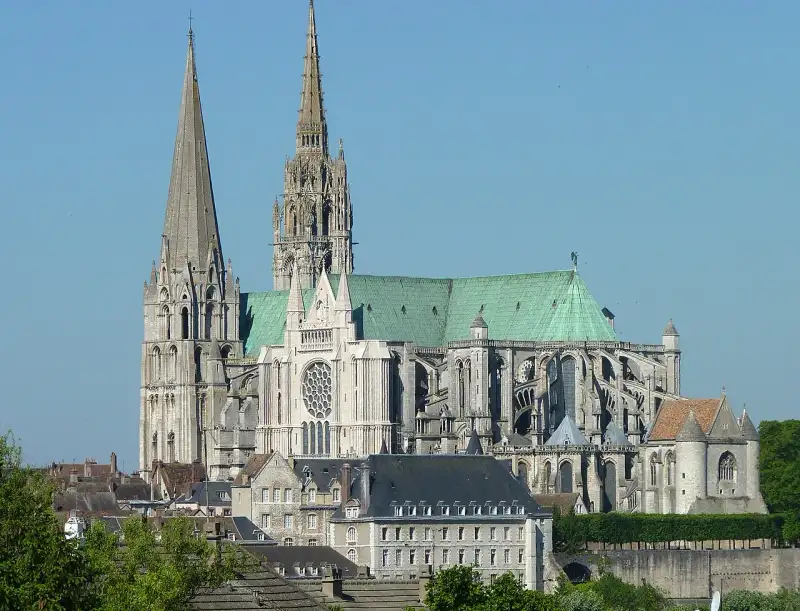
La Cathédrale de Chartres : Les Mystères de ses Vitraux Bonjour à tous, ici Lucas. S'il ne devait rester qu'un seul édifice pour représenter l'apogée de l'#architecture médiévale, le summum de l'harmonie religieuse et du savoir-faire humain, beaucoup d'historiens de l'art choisiraient celui dont nous allons parler aujourd'hui. Située à 80 kilomètres au sud-ouest de #Paris, émergeant majestueusement des vastes plaines céréalières de la Beauce, voici Notre-Dame de Chartres. Un Monument Préservé par Miracle Contrairement à Notre-Dame de Paris ou à Reims, la cathédrale de Chartres n'a pratiquement pas été endommagée par les guerres, la Révolution française ou les incendies ultérieurs. Ce que nous voyons aujourd'hui est l'édifice tel qu'il a été achevé au début du 13e siècle. C'est l'un des monuments les plus authentiques de la planète. L'histoire de la construction de Chartres est fascinante. En 1194, un incendie terrible ravage l'ancienne cathédrale romane. La population est au désespoir, pensant que la relique la plus sacrée de la ville, la Sancta Camisia (le voile ou la tunique que la Vierge Marie aurait porté lors de la naissance du Christ), a été détruite. Mais trois jours plus tard, miracle : les prêtres émergent de la crypte, saufs, portant la précieuse relique indemne ! Cet "intervention divine" provoque un immense élan de foi et de dons dans toute l'Europe (y compris de la part du roi Richard Cœur de Lion). Grâce à cette richesse soudaine, la cathédrale actuelle a été construite en un temps record d'environ 30 ans ! Cette rapidité explique la cohérence et l'harmonie exceptionnelles de son style : c'est le modèle parfait du gothique "classique". Le Bleu de Chartres : Le Mystère des Maîtres Verriers La gloire absolue de Chartres, ce qui attire les chercheurs du monde entier, ce sont ses vitraux. La cathédrale possède la collection de vitraux des 12e et 13e siècles la plus vaste et la mieux conservée au monde (176 verrières, représentant plus de 2 600 mètres carrés de verre !). Le secret le plus célèbre réside dans une couleur spécifique : le fameux "Bleu de Chartres" (présent notamment dans le célèbre vitrail de "Notre-Dame de la Belle Verrière"). C'est un bleu cobalt d'une intensité et d'une luminosité stupéfiantes. Le secret exact de la composition chimique de ce verre bleuté a été perdu au Moyen Âge, et même avec les technologies modernes, les maîtres verriers ont du mal à reproduire cette nuance exacte qui capte la lumière comme un saphir liquide. La Sculpture : Un Livre de Pierre Chartres possède trois grands portails sculptés qui sont des chefs-d'œuvre de l'évolution de la sculpture médiévale :Le Portail Royal (Ouest) : Survivant de l'incendie de 1194, il date de 1150. Les figures bibliques allongées en colonnes sont raides, figées, le regard tourné vers l'éternité (style roman tardif). Les Portails Nord et Sud : Réalisés au 13e siècle, ils montrent une véritable révolution artistique. Les statues se détachent du mur, prennent vie, pivotent sur leurs hanches, sourient ou discutent entre elles. C'est l'éveil du naturalisme gothique, préfigurant la Renaissance.Le Labyrinthe : Le Chemin de Jérusalem Un autre mystère au cœur de la nef : le labyrinthe. Dessiné sur le dallage en pierres noires et blanches au 13e siècle, il mesure près de 13 mètres de diamètre. Sa longueur totale, du début jusqu'au centre, est de 261,5 mètres. Au Moyen Âge, il était utilisé par les fidèles (qui le parcouraient souvent à genoux) comme un substitut au pèlerinage à Jérusalem, qui était long et dangereux. Le centre représentait la Jérusalem céleste, le salut. Fait fascinant : le diamètre du labyrinthe est exactement de la même taille que la grande rosace ouest. S'il était possible de replier la façade sur le sol, la rosace viendrait se superposer parfaitement sur le labyrinthe. Un témoignage troublant de la géométrie sacrée utilisée par les bâtisseurs. Mon Avis d'Historien Si vous êtes de passage à Paris, prenez ce train de 50 minutes vers Chartres. L'expérience de la lumière filtrant à travers les vitraux centenaires, plongeant la nef dans une lueur bleutée et pourpre, est l'une des expériences esthétiques les plus bouleversantes que l'on puisse vivre en Europe. Chartres n'est pas seulement un bâtiment d'ingénierie révolutionnaire, c'est un poème mystique écrit dans la pierre et la lumière. #Chartres #France #Vitraux #GothiqueClassique #MoyenAge #BleuDeChartres #Patrimoine Related InsightsEl Generalife: Los Jardines del Paraíso The Faroe Islands: Where Nordic Wilderness Meets Photographic Magic La Expansión del Islam y los Primeros Musulmanes{ "@context": "https://schema.org", "@type": "FAQPage", "mainEntity": [ { "@type": "Question", "name": "What is the main focus of La Cathédrale de Chartres : Les Mystères de ses Vitraux?", "acceptedAnswer": { "@type": "Answer", "text": "Découvrez la cathédrale Notre-Dame de Chartres en France, le chef-d'œuvre absolu du gothique, célèbre pour son labyrinthe, le voile de la Vierge et ses vitraux mystiques." } }, { "@type": "Question", "name": "Who authored the comprehensive guide on La Cathédrale de Chartres : Les Mystères de ses Vitraux?", "acceptedAnswer": { "@type": "Answer", "text": "This detailed article and its insights were carefully researched and authored by Lucas Martin." } }, { "@type": "Question", "name": "Where can I find more related content about Travel?", "acceptedAnswer": { "@type": "Answer", "text": "You can explore more articles, detailed reviews, and similar insights by browsing the Related Insights section at the bottom of this article or visiting our dedicated Travel category page." } } ] }
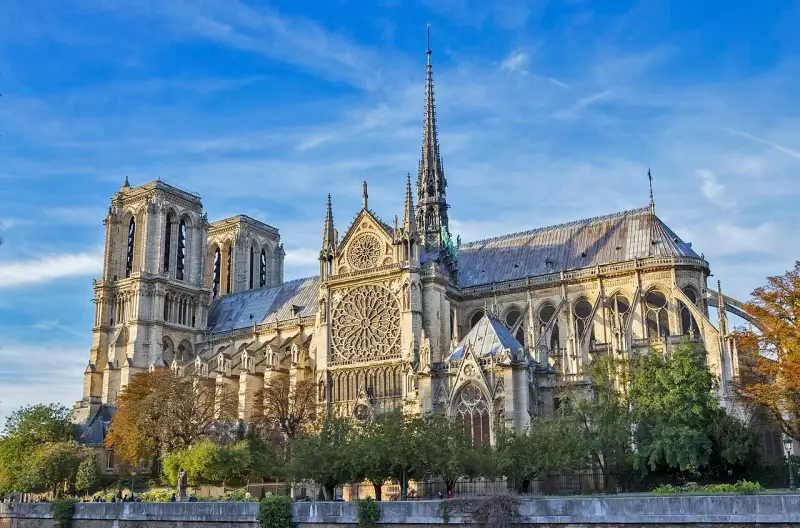
Notre-Dame de #Paris : La Résilience du Chef-d'œuvre Gothique Bienvenue à tous les passionnés d'histoire et d'#architecture. Je suis Lucas Martin, étudiant en histoire, et aujourd'hui je vous emmène au cœur de la #France, sur l'Île de la Cité, pour redécouvrir l'un des monuments les plus emblématiques au monde : Notre-Dame de Paris. Un Chef-d'œuvre Né de la Boue et de la Foi La construction de la cathédrale Notre-Dame de Paris a débuté en 1163, sous l'impulsion de l'évêque Maurice de Sully. À cette époque, Paris émergeait comme le centre intellectuel et politique de l'Europe. Il fallait une cathédrale digne de ce nouveau statut. Pendant près de deux siècles, des artisans, des tailleurs de pierre, des charpentiers et des maîtres verriers ont travaillé sans relâche pour élever cet édifice majestueux vers les cieux. L'architecture gothique de Notre-Dame est caractérisée par ses innovations techniques spectaculaires. L'utilisation des arcs-boutants a permis de soutenir les murs très hauts et d'ouvrir de vastes espaces pour les vitraux. Ces arcs, tels de gigantesques bras de pierre, ne sont pas seulement structurels ; ils ajoutent une esthétique élancée et aérienne à la cathédrale. L'Art des Vitraux : La Lumière Divine L'une des merveilles absolues de Notre-Dame réside dans ses immenses rosaces. La rosace nord, avec ses 13 mètres de diamètre, est un chef-d'œuvre de géométrie et de couleur, datant du 13e siècle. Lorsque la lumière du soleil traverse ces milliers de morceaux de verre coloré, elle inonde la nef d'une lueur mystique. Au Moyen Âge, la lumière n'était pas seulement fonctionnelle ; elle était théologique. On croyait que Dieu était lumière (Lux), et les cathédrales gothiques étaient conçues pour capturer cette essence divine. Les vitraux servaient également de "Bible de pierre" pour une population largement analphabète, racontant les histoires de l'Ancien et du Nouveau Testament. Les Gargouilles et les Chimères Il est impossible de parler de Notre-Dame sans évoquer ses fameuses gargouilles et chimères. Contrairement à une idée reçue, les gargouilles ont une fonction purement pratique : elles servent à évacuer l'eau de pluie loin des murs pour éviter la corrosion de la pierre. Les chimères, en revanche, sont de pures décorations ajoutées lors de la restauration menée par Eugène Viollet-le-Duc au 19e siècle. Ces créatures fantastiques, mi-bêtes mi-démons, contemplent Paris du haut des tours. Elles symbolisent le mal repoussé hors de l'église, tout en ajoutant une touche romantique et sombre à l'édifice, immortalisée par Victor Hugo dans son célèbre roman. Les Reliques Sacrées Notre-Dame est bien plus qu'une prouesse architecturale ; c'est un sanctuaire spirituel. Elle abrite l'une des reliques les plus vénérées du monde chrétien : la Sainte Couronne d'épines, acquise par le roi Saint-Louis au 13e siècle. Pour abriter cette relique inestimable, Louis IX avait d'ailleurs fait construire la Sainte-Chapelle, un autre joyau gothique situé à quelques pas de Notre-Dame. Aujourd'hui encore, la conservation de ces reliques fait l'objet d'une vénération particulière. Le Tragique Incendie de 2019 et la Résurrection Le 15 avril 2019, le monde entier a retenu son souffle en voyant les flammes ravager la toiture de Notre-Dame et provoquer l'effondrement de la célèbre flèche de Viollet-le-Duc. La "forêt", cette charpente en bois de chêne datant du 13e siècle, est partie en fumée. Pourtant, dans cette tragédie, la résilience du chef-d'œuvre s'est manifestée. La structure principale, les tours et la majeure partie des voûtes ont tenu bon. Aujourd'hui, un chantier de restauration titanesque est en cours, mêlant savoir-faire traditionnels et technologies de pointe (comme la numérisation 3D). Ce chantier est une preuve vivante que la cathédrale continue de fédérer l'humanité, bien au-delà de ses frontières. Conseils aux Voyageurs Si vous prévoyez de visiter Paris dans les années à venir, voici quelques conseils pour apprécier Notre-Dame :Prenez du recul : Les meilleures vues sur la cathédrale s'obtiennent depuis les quais de la Seine, particulièrement au coucher du soleil. Explorez l'Île de la Cité : Ne vous limitez pas à la cathédrale. Les ruelles de l'île, la Conciergerie et la place Dauphine valent le détour. Plongez dans l'histoire : Lisez "Notre-Dame de Paris" de Victor Hugo avant votre visite. Ce roman vous donnera une perspective unique sur l'âme de l'édifice.Notre-Dame de Paris n'est pas seulement un tas de pierres ; c'est le cœur battant de la France. Elle a survécu aux guerres, aux révolutions et aux incendies. Elle continuera de se tenir debout, témoin silencieux mais puissant de notre histoire commune. Merci de m'avoir accompagné dans cette exploration. L'histoire s'écrit chaque jour, et nous en sommes les témoins. #NotreDame #Paris #ArchitectureGothique #HistoireDeFrance #VoyageCulturel #PatrimoineMondial #France #Paris #Gothique #Cathdrales Related InsightsTerme di Caracalla: Il Lusso del Benessere Romano Gobeklitepe: The First Temple Beyond the Great Wall: Uncovering the Ming Dynasty Watchtowers in Hebei{ "@context": "https://schema.org", "@type": "FAQPage", "mainEntity": [ { "@type": "Question", "name": "What is the main focus of Notre-Dame de Paris : La Résilience du Chef-d'œuvre Gothique?", "acceptedAnswer": { "@type": "Answer", "text": "Découvrez l'histoire fascinante de Notre-Dame de Paris, chef-d'œuvre de l'architecture gothique française, sa résilience à travers les siècles et ses secrets." } }, { "@type": "Question", "name": "Who authored the comprehensive guide on Notre-Dame de Paris : La Résilience du Chef-d'œuvre Gothique?", "acceptedAnswer": { "@type": "Answer", "text": "This detailed article and its insights were carefully researched and authored by Lucas Martin." } }, { "@type": "Question", "name": "Where can I find more related content about Travel?", "acceptedAnswer": { "@type": "Answer", "text": "You can explore more articles, detailed reviews, and similar insights by browsing the Related Insights section at the bottom of this article or visiting our dedicated Travel category page." } } ] }
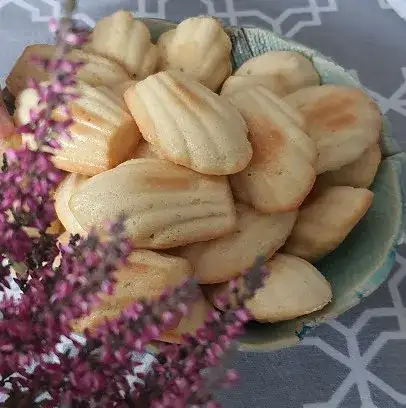
L'Éloge de la Madeleine : Un Voyage au Cœur de la Mémoire Émotionnelle et de la Haute Pâtisserie Bienvenue, chers passionnés de l'art sucré, dans ce nouvel espace où la magie de la haute pâtisserie prend vie. Je suis Chloe Blanc, et aujourd'hui, j'ai l'immense privilège de vous emmener dans un voyage sensoriel, historique et technique autour de l'un des joyaux les plus précieux de notre patrimoine culinaire français : la madeleine. Ce petit gâteau, à l'apparence si modeste et pourtant si sophistiquée, est bien plus qu'une simple douceur que l'on savoure distraitement à l'heure du thé. C'est une véritable institution, une capsule temporelle qui nous ramène instantanément à l'innocence de l'enfance, une symphonie de textures et de saveurs qui, lorsqu'elle est exécutée à la perfection, touche à l'universel. Marcel Proust a immortalisé la madeleine dans son chef-d'œuvre « À la recherche du temps perdu », décrivant avec une justesse bouleversante comment le goût subtil de ce gâteau trempé dans une infusion de tilleul a fait rejaillir, avec une vivacité inouïe, tout un pan oublié de son passé. Mais en tant que pâtissière professionnelle, mon rapport à la madeleine va bien au-delà de la littérature et de la simple nostalgie. C'est une quête perpétuelle de perfection, un équilibre fragile entre la chimie complexe des ingrédients, la maîtrise absolue des températures et l'amour du geste précis. La madeleine est exigeante, capricieuse même. Elle demande du respect, du temps et une compréhension profonde de ce qui se joue à l'intérieur du four. Dans cet article exhaustif, je vous dévoilerai absolument tous les secrets qui entourent la madeleine. Nous explorerons ses origines fascinantes, nous décortiquerons l'anatomie de la madeleine parfaite, nous plongerons dans la sélection intransigeante des matières premières, et surtout, je vous confierai les techniques de haute volée qui vous permettront d'obtenir cette fameuse « bosse » qui fait la fierté absolue de tout bon pâtissier. Préparez-vous à redécouvrir la madeleine sous un jour nouveau, celui de l'excellence et de la gourmandise sans compromis. Une Histoire Fascinante : De Commercy aux Tables Royales de Versailles Pour comprendre l'âme véritable de la madeleine, il faut remonter le temps et se rendre dans la région de Lorraine, plus précisément dans la charmante ville de Commercy, au beau milieu du XVIIIe siècle. L'histoire, toujours un peu teintée de légende et de romantisme, nous raconte que le duc de Lorraine, Stanislas Leszczynski (ancien roi de Pologne et beau-père bien-aimé du roi de France Louis XV), donnait une réception somptueuse dans son prestigieux château de Commercy. Suite à une querelle orageuse en cuisine, le chef pâtissier jeta son tablier et quitta les lieux, laissant le souverain et ses prestigieux invités sans le moindre dessert pour couronner le banquet. C'est alors qu'une jeune et audacieuse servante, prénommée Madeleine Paulmier, proposa de confectionner, à la hâte, de petits gâteaux selon une recette secrète que lui avait transmise sa grand-mère. Ces petites merveilles, cuites dans des coquilles Saint-Jacques qui leur donnèrent leur forme striée si caractéristique, firent une véritable sensation parmi les convives. Le duc Stanislas, enchanté par leur texture moelleuse, leur belle couleur dorée et leur parfum délicat, décida sur-le-champ de baptiser ces gâteaux du prénom de leur créatrice : « Madeleine ». Le succès fut d'une telle ampleur que la recette voyagea rapidement jusqu'à la majestueuse cour de Versailles, portée par les louanges de Marie Leszczynska, la fille de Stanislas et épouse de Louis XV. La madeleine conquit d'abord l'aristocratie française, s'imposant lors des goûters royaux, avant de se démocratiser progressivement et de devenir, au fil des siècles, l'emblème indétrônable de la pâtisserie ménagère et bourgeoise. Aujourd'hui, de nombreuses villes revendiquent des variations de la madeleine, mais Commercy reste la capitale historique et incontestée de ce délice. Des artisans passionnés y perpétuent la tradition, utilisant toujours des moules en forme de coquille, bien que l'acier lourd et le silicone antiadhésif aient depuis longtemps remplacé les véritables coquillages de bord de mer. Cette riche histoire nous rappelle humblement que les plus grandes inventions culinaires naissent souvent de l'imprévu, de la nécessité et de la transmission affectueuse des secrets de famille. C'est cet héritage extraordinaire que j'essaie d'honorer chaque fois que je beurre méticuleusement mes moules. L'Anatomie d'une Madeleine Parfaite : La Quête de l'Excellence En tant que chef pâtissier, je suis très souvent interrogée par mes apprentis ou mes clients sur ce qui différencie fondamentalement une bonne madeleine d'une madeleine exceptionnelle. La réponse réside toujours dans les détails, dans cette anatomie si particulière qui doit solliciter et ravir tous nos sens en une seule bouchée. Visuellement d'abord, une madeleine parfaite doit présenter deux faces distinctement opposées et complémentaires. Sur le dessous, on doit impérativement retrouver l'empreinte nette et précise de la coquille, avec des stries régulières, dorées à souhait, presque caramélisées, témoignant d'une cuisson homogène au contact de la matière. Les bords doivent être légèrement croustillants, offrant une mâche résistante et gourmande qui contraste avec la tendresse du cœur. Et puis, il y a le dessus. La surface doit être d'une douceur veloutée, d'un blond vénitien appétissant, et surtout, couronnée par la mythique, l'incontournable « bosse ». Cette excroissance voluptueuse et fière n'est absolument pas un défaut esthétique, c'est la signature indéniable d'une maîtrise technique irréprochable. Elle indique clairement que l'appareil a subi le bon choc thermique, s'épanouissant vers le haut avec énergie au lieu de s'étaler misérablement. À la dégustation, la magie doit opérer instantanément. La croûte, fine et délicate sous la dent, doit immédiatement céder la place à une mie d'une tendreté absolue, presque aérienne. Une véritable madeleine ne doit jamais, au grand jamais, être sèche ; elle doit conserver une humidité réconfortante, capturant à l'intérieur de ses alvéoles les parfums puissants de beurre noisette, de vanille des îles et d'agrumes fraîchement râpés. Le beurre doit tapisser le palais sans l'alourdir, laissant une longueur en bouche élégante, parfumée et régressive. C'est cet équilibre fragile entre le croquant des bords, le moelleux du centre et l'explosion aromatique qui définit la véritable haute pâtisserie. Chaque bouchée doit être une célébration. Les Ingrédients : La Symphonie des Saveurs et la Qualité Intransigeante En pâtisserie française, et particulièrement pour les classiques épurés, la recette n'est qu'une partition silencieuse ; ce sont les ingrédients qui en sont les musiciens. Pour obtenir une madeleine digne d'un grand salon de thé, aucun compromis n'est permis. Oubliez définitivement les arômes artificiels en fiole ou les margarines sans âme, nous parlons ici d'artisanat pur et exigeant. Le Beurre : L'Âme de la Madeleine Le beurre est indiscutablement l'ingrédient roi de cette préparation. Je préconise un beurre de baratte extra-fin, idéalement un beurre AOP d'Isigny ou de Charentes-Poitou, riche en matières grasses (au moins 82%). Mais le véritable secret de la madeleine de palace réside dans la préparation minutieuse de ce beurre : il doit être transformé en « beurre noisette ». En le chauffant doucement dans une petite casserole, l'eau s'évapore et les protéines de lait caramélisent subtilement, développant des arômes torréfiés, chauds et profonds, rappelant indéniablement la noisette grillée. Ce beurre noisette, une fois refroidi et soigneusement filtré, apportera une dimension aromatique incomparable et une profondeur unique à votre pâte. Les Œufs et le Sucre : La Structure et l'Émulsion Les œufs doivent être d'une fraîcheur irréprochable, si possible biologiques ou provenant de poules élevées en plein air. Surtout, ils doivent impérativement être à température ambiante pour garantir une émulsion parfaite et aérienne avec le sucre. Quant au sucre, j'aime personnellement combiner le sucre en poudre classique, extra-fin (qui apporte le croustillant de la croûte), avec une touche de miel (un miel d'acacia doux, aux notes florales subtiles). Le miel agit comme un sucre inverti naturel ; il retient l'humidité avec efficacité et garantit que votre madeleine restera extraordinairement moelleuse pendant plusieurs jours, tout en ajoutant une note complexe très élégante. La Farine et la Levure : La Légèreté Aérienne Utilisez de préférence une farine de blé type T45, qui est fine et surtout peu riche en gluten, pour éviter de donner de l'élasticité à la pâte au moment du mélange. La madeleine doit rester tendre, friable, et ne surtout pas devenir caoutchouteuse sous la dent. La levure chimique (ou poudre à lever) doit quant à elle être pesée au gramme près avec une balance de précision. Trop de levure et la madeleine développera un désagréable arrière-goût métallique ou savonneux ; trop peu, et elle sera dense, lourde, ressemblant davantage à un palet breton qu'à un nuage lorrain. Les Aromates : La Signature du Pâtissier C'est précisément ici que s'exprime la personnalité, le goût et l'intuition du pâtissier. La madeleine traditionnelle fait la part belle au zeste de citron jaune, fraîchement râpé (idéalement un citron de Menton, de Sicile ou d'Amalfi, dont l'écorce est gorgée d'huiles essentielles), qui apporte une fraîcheur indispensable pour balancer la richesse du beurre. J'y ajoute toujours, religieusement, les grains d'une véritable gousse de vanille charnue de Tahiti ou de Madagascar. La rencontre alchimique entre les notes torréfiées du beurre noisette, l'acidité vibrante du citron et la rondeur réconfortante de la vanille crée une synergie aromatique littéralement envoûtante. Le Secret Ultime de la Bosse : La Magie du Choc Thermique Abordons maintenant le Saint Graal, l'obsession de tout amateur de pâtisserie : comment obtenir, à coup sûr, cette bosse majestueuse et rebondie ? Pendant des décennies, des théories farfelues ont circulé dans les cuisines familiales. Certains juraient qu'il fallait mettre une cuillère en argent dans le fond du four, d'autres soutenaient mordicus qu'il fallait inciser la pâte en pleine cuisson. La vérité, elle, est purement scientifique : elle réside dans la thermodynamique et ce que nous appelons dans notre jargon professionnel le « choc thermique ». La première règle d'or, absolue et non négociable, est le repos. Une fois votre appareil à madeleine soigneusement préparé, il est strictement interdit de l'enfourner immédiatement. La pâte doit reposer au réfrigérateur, couverte, pendant au moins 12 heures, idéalement 24 heures. Ce long sommeil au froid intense a un double objectif. D'une part, il permet au réseau de gluten (le peu qui s'est formé lors du mélange) de se détendre totalement, ce qui garantit le moelleux. D'autre part, il permet au beurre de figer et aux délicats arômes de vanille et de citron d'infuser profondément dans la pâte. Mais surtout, et c'est là le point crucial, il refroidit la masse à cœur. Lorsque vous enfournez cette pâte glaciale dans un four préchauffé à très haute température (généralement autour de 220°C ou 425°F), un phénomène fascinant se produit. Les bords de la madeleine, en contact direct avec le métal brûlant et beurré du moule, cuisent, caramélisent et se figent presque instantanément. Une croûte solide se forme. Cependant, le cœur de la pâte, qui est encore très froid grâce à son séjour au réfrigérateur, prend beaucoup plus de temps à chauffer. Au fur et à mesure que la chaleur radiante pénètre inexorablement vers le centre, la levure chimique s'active brusquement, créant des bulles de gaz, tandis que l'eau contenue dans le beurre et les œufs se transforme en vapeur. Puisque les bords sont déjà emprisonnés par la croûte rigide et inébranlable, la seule échappatoire pour cette pâte en pleine expansion et pour ces gaz sous pression est de pousser vers le haut, là où le centre est encore liquide, tendre et flexible. C'est cette éruption volcanique miniature, poussée par la chaleur extrême, qui forme la célèbre bosse. Sans ce contraste violent entre une pâte très froide et un four très chaud, la madeleine cuira uniformément et restera désespérément, tragiquement plate. La Masterclass de Chloe Blanc : Ma Recette Signature Puisque nous partageons un amour profond pour la haute pâtisserie, je ne pouvais décemment pas rédiger cet article sans vous offrir un accès privilégié à ma propre recette, celle que je peaufine, ajuste et perfectionne depuis mes débuts dans les plus grands palaces parisiens. Voici, dévoilés pour vous, les secrets de la « Madeleine Signature Chloe Blanc ». Les Proportions (pour une vingtaine de madeleines parfaites) :150g de beurre doux d'excellence (AOP Isigny), afin d'obtenir environ 120g de beurre noisette propre 3 gros œufs entiers (scrupuleusement à température ambiante) 100g de sucre semoule extra-fin 25g de miel d'acacia de grande qualité 130g de farine T45 minutieusement tamisée 6g de levure chimique de bonne qualité 1 généreuse pincée de fleur de sel de Guérande Le zeste très fin d'un citron jaune non traité Les graines pulpeuses d'une grosse gousse de vanilleLa Méthodologie Pas à Pas : Étape 1 : Le Précieux Beurre Noisette Dans une petite casserole à fond épais, faites fondre le beurre à feu moyen. Laissez-le crépiter (c'est l'eau qui s'évapore en chantant). Lorsqu'il cesse complètement de chanter, qu'une mousse fine apparaît en surface et qu'il prend une belle couleur ambrée tout en dégageant une enivrante odeur de noisette grillée, retirez-le immédiatement du feu. Filtrez-le sans attendre à travers une passette très fine pour retirer les impuretés brûlées (le petit-lait). Laissez-le tiédir tranquillement jusqu'à environ 40°C. Étape 2 : L'Émulsion Aromatique Dans un grand cul-de-poule en inox ou le bol de votre robot pâtissier, mélangez le sucre semoule extra-fin et les zestes de citron. Frottez ce mélange du bout des doigts pendant quelques instants ; cette action mécanique va libérer les huiles essentielles du citron et parfumer le sucre d'une manière incroyable. Ajoutez les œufs entiers, les graines de vanille grattées et le miel. Fouettez vigoureusement pendant quelques minutes pour blanchir l'appareil, le rendre mousseux et dissoudre complètement les cristaux de sucre. Étape 3 : L'Incorporation des Poudres Tamisez ensemble, au-dessus d'une feuille de papier sulfurisé, la farine et la levure chimique. Ajoutez la délicate fleur de sel. Incorporez doucement ces poudres sèches au mélange d'œufs à l'aide d'une maryse ou d'un fouet manuel, en veillant scrupuleusement à ne pas trop travailler la pâte pour ne pas développer l'élasticité du gluten. Étape 4 : Le Lissage au Beurre Versez enfin le beurre noisette tiédi en un fin filet tout en mélangeant très délicatement avec votre maryse. Vous devez obtenir une pâte lisse, brillante, voluptueuse et parfaitement homogène, semblable à un ruban de satin. Étape 5 : Le Repos (Étape Cruciale) Filmez la pâte "au contact" (le film plastique posé directement sur la surface de la pâte pour éviter qu'une croûte sèche ne se forme à l'air libre) et placez-la au réfrigérateur, dans la zone la plus froide, pour un minimum de 12 heures, idéalement 24 heures. Étape 6 : La Cuisson et la Naissance de la Bosse Le lendemain, préchauffez votre four à 220°C (chaleur tournante). Beurrez très généreusement vos moules (s'ils sont en métal, ce que je recommande vivement pour la caramélisation) et farinez-les légèrement, en tapotant l'excédent. Remplissez les alvéoles aux trois quarts avec la pâte bien froide à l'aide d'une poche à douille. Enfournez. Laissez cuire à 220°C pendant 4 à 5 minutes (le temps de voir le choc thermique agir, les bords se figer et la bosse commencer son ascension). Puis, baissez immédiatement la température de votre four à 170°C et poursuivez la délicate cuisson pendant 5 à 7 minutes. Surveillez la coloration avec une attention de tous les instants ! Démoulez les madeleines dès la sortie du four, alors qu'elles sont encore brûlantes, en tapant délicatement la plaque sur le plan de travail, et laissez-les refroidir sur une grille surélevée pour préserver leur précieux croustillant extérieur. Réinventer un Classique : Variations Audacieuses et Accords Gastronomiques Bien que la madeleine nature soit, de l'avis de tous, une merveille d'équilibre, son statut d'icône n'interdit en rien l'innovation. La haute pâtisserie moderne adore s'approprier les classiques pour les bousculer avec élégance. Pour surprendre véritablement vos convives, vous pouvez opter pour un glaçage rocher ultra-gourmand. Après complet refroidissement sur grille, trempez généreusement la face striée de la madeleine dans un mélange tiède de chocolat au lait fondu (type Jivara) et de praliné amande-noisette, parsemé d'éclats de noisettes préalablement torréfiées. Remettez au frais quelques minutes pour figer la coque : le contraste en bouche entre la coque craquante au chocolat et le cœur divinement moelleux est un véritable péché de gourmandise. Une autre technique que j'affectionne particulièrement dans mes boutiques est de garnir les madeleines à l'aide d'une seringue de pâtissier ou d'une poche munie d'une douille très fine. Injectez au cœur de la pâte un lemon curd intensément acidulé, une ganache montée soyeuse à la pistache d'Iran ou encore un caramel beurre salé coulant, juste après la cuisson. La surprise à la dégustation est toujours un moment mémorable. Du côté salé, car il ne faut rien s'interdire, la pâte à madeleine se prête magnifiquement aux apéritifs raffinés : retirez le sucre, ajoutez-y du parmesan Reggiano fraîchement râpé, des tomates confites hachées, de la ciboulette ciselée et un trait d'une excellente huile d'olive vierge extra. L'Art de la Dégustation Pour sublimer votre création à son apogée, prêtez une attention toute particulière à l'accord des saveurs. Une madeleine fraîchement cuite, dégustée encore tiède, révèle toute l'étendue complexe de ses arômes beurrés et torréfiés. Elle trouve un partenaire tout simplement idéal dans un thé noir Earl Grey, dont les notes florales de bergamote feront un écho spectaculaire au zeste de citron de la recette. Pour les amateurs de café, un arabica pur cru d'Éthiopie, aux notes florales et légèrement citronnées, prolongera la délicate subtilité de la vanille en bouche. Et pour les très grandes occasions ? Un Champagne Blanc de Blancs, vif, minéral et élégant, tranchera la richesse de la pâte avec une effervescence follement festive. Conclusion : Bien Plus qu'un Gâteau, une Émotion à Partager Mes chers amis gourmets, la madeleine est la preuve irréfutable que la grandeur, en gastronomie comme ailleurs, ne réside pas toujours dans l'ostentatoire, le compliqué ou l'exubérance. À travers ce simple petit gâteau dodu et doré, c'est toute l'âme authentique de la pâtisserie française qui s'exprime avec justesse : une alchimie parfaite entre la rigueur inflexible de la technique, la noblesse absolue des ingrédients, et la pureté des souvenirs qu'elle fait naître. Chaque fois que je regarde l'intérieur de mon four et que je vois ces petites bosses se soulever avec grâce, je ressens le même émerveillement enfantin, la même magie opérer. J'espère très sincèrement que cet article passionné vous donnera l'envie irrépressible de revêtir votre tablier, de faire fondre du beurre doucement dans une casserole, de laisser embaumer votre cuisine, et de créer à votre tour ces merveilleuses petites capsules de bonheur. Prenez votre temps, respectez les températures, soyez infiniment patients avec le repos de la pâte, et je vous promets que la magie opérera. N'hésitez surtout pas à partager vos magnifiques réalisations avec moi, je serai ravie et honorée d'admirer vos créations dorées. À vos fouets, faites chauffer vos fours, et surtout, ne cessez jamais de rêver et de pâtisser ! Avec toute mon affection sucrée et dévouée, Chloe Blanc #Patisserie #France #Dessert #ChloeBlanc #Madeleine #Baking #HautePatisserie #Sweet #Gastronomy #FrenchPastry #Boulangerie #Gourmandise #Recette #Artisanat #FoodLover #patisserie #dessert #france #chloeblanc #sweet Related InsightsTarte Tatin : La Merveilleuse Erreur Culinaire Macaron : L'Élégance Parfaite en Une Seule Bouchée Profiterole : Gourmandise Absolue au Chocolat{ "@context": "https://schema.org", "@type": "FAQPage", "mainEntity": [ { "@type": "Question", "name": "What is the main focus of Madeleine : Le Souvenir Sucré de l'Enfance?", "acceptedAnswer": { "@type": "Answer", "text": "Plongez dans l'univers de la haute pâtisserie avec Chloe Blanc et découvrez les secrets de ce dessert emblématique." } }, { "@type": "Question", "name": "Who authored the comprehensive guide on Madeleine : Le Souvenir Sucré de l'Enfance?", "acceptedAnswer": { "@type": "Answer", "text": "This detailed article and its insights were carefully researched and authored by Chloe Blanc." } }, { "@type": "Question", "name": "Where can I find more related content about Gastronomy?", "acceptedAnswer": { "@type": "Answer", "text": "You can explore more articles, detailed reviews, and similar insights by browsing the Related Insights section at the bottom of this article or visiting our dedicated Gastronomy category page." } } ] }
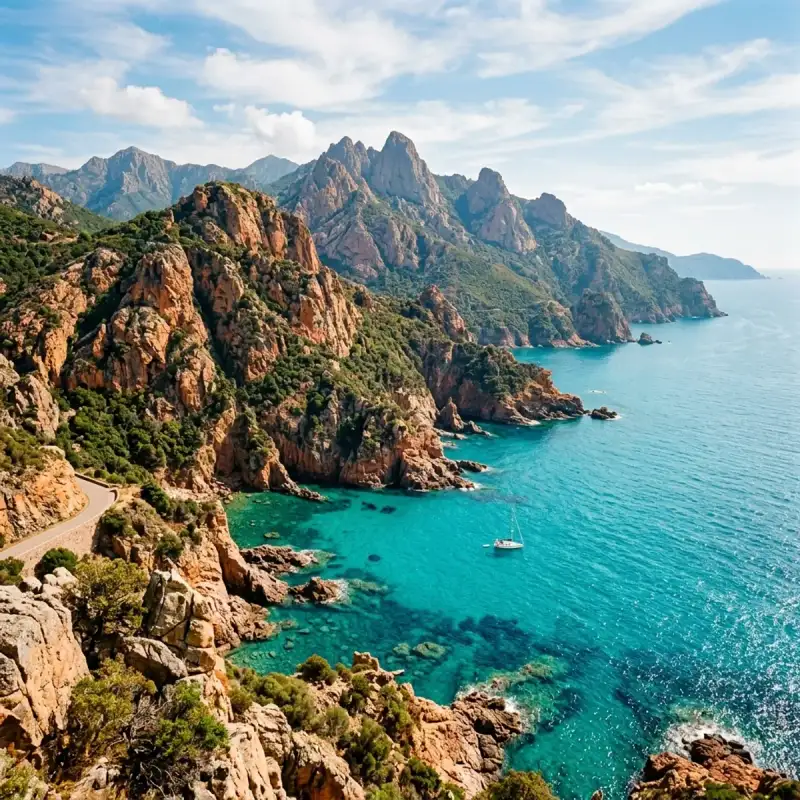

Bienvenue! Let us embark on an unforgettable #journey to the heart of #France. Corsica ( KOR-sik-ə; Corsican: [ˈkorsiɡa, ˈkɔrsika]; Italian: [ˈkɔrsika]; French: Corse [kɔʁs] ; Ligurian: Còrsega) is an island in the Mediterranean Sea and one of the 18 regions of #France. It is the fourth-largest island in the Mediterranean and lies southeast of the French mainland, west of the Italian Peninsula and immediately north of the Italian island of Sardinia, the nearest land mass. A single chain of mountains makes up two-thirds of the island. As of January 2026, it had a population of 365,636. The island is a territorial collectivity of France, and is expected to achieve "a form of autonomy" in the near future. The regional capital is Ajaccio. Although the region is divided into two administrative departments, Haute-Corse and Corse-du-Sud, their respective regional and departmental territorial collectivities were merged on 1 January 2018 to form the single territorial collectivity of Corsica. Corsican autonomy is more extensive than in other regional collectivities of France and the Corsican Assembly is permitted to exercise limited executive powers. Corsica's second largest town is Bastia, located in the prefecture of Haute-Corse. Corsica was ruled by the Republic of Genoa from 1284 to 1755, when it seceded to become a self-proclaimed, Italian-speaking republic. In 1768, Genoa officially ceded it to Louis XV of France as part of a pledge for the debts incurred after enlisting French military help in suppressing the Corsican revolt; as a result, France annexed the island in 1769. The future Emperor of the French, Napoleon Bonaparte, was a native Corsican, born that same year in Ajaccio: his ancestral home, Maison Bonaparte, is now a visitor attraction and museum. Because of Corsica's historical ties to Tuscany, the island has retained many Italian cultural elements, and many Corsican surnames are rooted in the Italian peninsula. French is the official and most widely spoken language on the island with Corsican, the native language and an Italo-Dalmatian language, also recognized as one of France's regional languages. Corsica is the third-least populated region of France after Mayotte and French Guiana. Recent Corsican #history has been largely shaped around the growing nationalist movement within the region. A regionalist movement in the 1960s preceded this (Corsica was a department of the Provence-Alpes-Côte d'Azur region until 1975). Following an armed standoff between French authorities and Corsican autonomists in 1975, and the harsh response from French authorities, an ongoing armed conflict began between French forces and Corsican nationalist guerrilla and paramilitary groups, most notably the National Liberation Front of Corsica (FLNC) and its many descendants. War-like violence continued until 2014, when a truce was announced between the FLNC-Union of Combatants, the largest faction of the Corsican nationalists, and the French government. The second largest faction, the FLNC-22 October, signed a truce in 2016. Violence picked up in 2022 after the murder of Yvan Colonna, a jailed Corsican nationalist, murdered by a prison inmate. Many suspect the French government is involved in the attack, and in 2023 the FLNC-UC and FLNC-22U resumed armed conflict. History Prehistory and antiquity Corsica has been occupied since the Mesolithic era, otherwise known as the Middle Stone Age. The permanent human presence in Corsica is documented in the Neolithic period from the 6th millennium BC. After a brief occupation by the Carthaginians, colonization by the #ancient Greeks, and a slightly longer occupation by the Etruscans, it was incorporated by the Roman Republic at the end of the First Punic War. In 238 BC, along with Sardinia, the islands became a province of the Roman Republic The Romans established colonies at Mariana and Aléria on the east coast, but they had little control over the interior. The Greeks, who had earlier built a colony in Aléria, considered Corsica to be one of the most backward regions of the Roman world. The island produced sheep, honey, resin and wax, and exported many slaves. Moreover, it was known for its cheap wines, exported to Rome, and was used as a place of exile; one of the most famous Romans exiled there was the philosopher Seneca. Corsica was integrated into Roman Italy by Emperor Diocletian (r. 284–305). Administratively, the island was divided into pagi, which in the Middle Ages became the pievi, the basic administrative units of the island until 1768. Middle Ages In the fifth century, the western half of the Roman #empire collapsed, and the island was invaded by the Vandals and the Ostrogoths. Briefly recovered by the Byzantine Empire, it soon became part of the Kingdom of the Lombards. This made it a dependency of the Duchy of Tuscia, which used it as an outpost against the Saracens. Pepin the Short, king of the Franks and Charlemagne's father, expelled the Lombards and nominally granted Corsica to Pope Stephen II. In the first quarter of the 11th century, Pisa and Genoa together freed the island from the threat of Arab invasion. After that, the island came under the influence of the Republic of Pisa. Many polychrome churches which adorn the island date from this period. Corsica also experienced a massive immigration from Tuscany, which gave to the island its present toponymy and rendered the language spoken in the northern two-thirds of the island very close to the Tuscan dialect. This led to the traditional division of Corsica into two parts, along the main chain of mountains roughly going from Calvi to Porto-Vecchio: the eastern Banda di dentro, or Cismonte, more populated, developed, and open to the commerce with Italy, and the western Banda di fuori, or Pomonte, almost deserted, wild and remote. The defeat experienced by Pisa in 1284 in the Battle of Meloria against Genoa had among its consequences the end of the Pisan rule and the beginning of the Genoese influence in Corsica: this was contested initially by the King of Aragon, who in 1296 had received from the Pope the investiture over Sardinia and Corsica. A popular revolution against this and the feudal lords, led by Sambucuccio d'Alando, got the aid of Genoa. After that, the Cismonte was ruled as a league of comuni and churches, after the Italian experience. The following 150 years were a period of conflict, when the Genoese rule was contested by Aragon, the local lords, the comuni and the Pope: finally, in 1450 Genoa ceded the administration of the island to its main bank, the Bank of Saint George, which brought peace. In the 16th century, the island entered into the fight between Spain and France for supremacy in Italy. In 1553, a Franco-Ottoman fleet occupied Corsica, but the reaction of Spain and Genoa, led by Andrea Doria, reestablished the Genoese supremacy on the island, confirmed by the Peace of Cateau-Cambrésis. Sampiero Corso (Sampiero di Bastelica) would later come to be considered a hero of the island. Their power reinstated, the Genoese did not allow the Corsican nobility to share in the government of the island and oppressed the inhabitants with a heavy tax burden. On the other hand, they introduced the chestnut tree on a large scale, improving the diet of the population, and built a chain of towers along the coast to defend Corsica from the attacks of the Barbary pirates from North Africa. The period of peace lasted until 1729, when the refusal to pay taxes by a peasant sparked the general insurrection of the island against Genoa. The island became known for the large number of mercenary soldiers and officers it produced. In 1743, over 4,600 Corsicans, or 4% of the entire population of the island, were serving as soldiers in various armies (predominantly those of Genoa, Venice, and Spain), making it one of the most militarized societies in Europe. Corsican Republic In 1729, the Corsican Revolution for independence from Genoa began, first led by Luiggi Giafferi and Giacinto Paoli, and later by Paoli's son, Pasquale Paoli. After 26 years of struggle against the Republic of Genoa, including an ephemeral attempt in 1736 to proclaim an independent Kingdom of Corsica under the German adventurer Theodor von Neuhoff, an independent Corsican Republic was proclaimed in 1755 under the leadership of Pasquale Paoli and remained sovereign until 1769 when the island was conquered by France. Following the outbreak of the French Revolution in 1789, Pasquale Paoli was able to return to Corsica from exile in Britain. In 1794, he invited British forces under Lord Hood to intervene to free Corsica from French rule. Anglo-Corsican forces drove the French from the island and established an Anglo-Corsican Kingdom. Following Spain's entry into the war, the British decided to withdraw from Corsica in 1796. 19th century Despite being the birthplace of the Emperor, the island was slightly neglected by Napoleon's government. In 1814, near the end of the Napoleonic Wars, Corsica was briefly occupied again by British troops. The Treaty of Bastia gave the British crown sovereignty over the island, but it was later repudiated by Lord Castlereagh who insisted that the island should be returned to a restored French monarchy. After the restoration, the island was further neglected by the French state. Despite the presence of a middle class in Bastia and Ajaccio, Corsica remained an otherwise primitive place, whose economy consisted mainly of subsistence agriculture, and whose population constituted a pastoral society, dominated by clans and the rules of vendetta. The code of vendetta required Corsicans to seek deadly revenge for offences against their family's honor. Between 1821 and 1852, no fewer than 4,300 murders were perpetrated in Corsica. During the first half of the century, the people of Corsica were still immersed in the Italian cultural world: the bourgeoisie sent children to Pisa to study, official acts were enacted in Italian and most books were printed in Italian. Moreover, many islanders sympathised with the national struggle which was taking place in nearby Italy in those years: several political refugees from the peninsula, like Niccolò Tommaseo, spent years on the island, while some Corsicans, like Count Leonetto Cipriani, took active part in the fights for Italian independence. Despite all that, during those years the Corsicans began to feel an increasingly strong attachment to France. The reasons for that are manifold: the knowledge of the French language, which thanks to the mandatory primary school started to penetrate among the local youth, the high prestige of French #culture, the awareness of being part of a big, powerful state, the possibility of well-paid jobs as civil servants, both in the island, in the mainland and in the colonies, the prospect of serving the French army during the wars for the conquest of the colonial empire, the introduction of steamboats, which reduced the #travel time between mainland France and the island drastically, and – last but not least – Napoleon himself, whose existence alone constituted an indissoluble link between France and Corsica. Thanks to all these factors by around 1870 Corsica had landed in the French cultural world. From the 19th century into the mid-20th century, Corsicans also grew closer to the French nation through participation in the French Empire. Compared to much of Metropolitan France, Corsica was poor and many Corsicans emigrated. While Corsicans emigrated globally, especially to many South American countries, many chose to move within the French Empire which acted as a conduit for emigration and eventual return, as many young Corsican men could find better job opportunities in the far corners of the Empire where many other French hesitated to go. In many parts of the Empire, Corsicans were strongly represented, such as in Saigon where in 1926 12% of Europeans were from Corsica. Across the French Empire, many Corsicans retained a sense of community by establishing organizations where they would meet regularly, keep one another informed of developments in Corsica, and come to one another's aid in times of need. Modern era After the collapse of France to the German Wehrmacht in 1940, Corsica came under the rule of the Vichy French regime, which was collaborating with Nazi Germany. In November 1942 the island was occupied by Italian and German forces following the Anglo-American landings in North Africa. After the Italian armistice in September 1943, Italian and Free French Forces pushed the Germans out of the island, making Corsica the first French department to be freed. During the May 1958 crisis, the French military command in Algeria mutinied against the French Fourth Republic and on 24 May occupied the island in an action called Opération Corse that led to the collapse of the government; the second phase of the coup attempt, occupying #Paris, was cancelled following the establishment of a transitional government under Charles de Gaulle. Corsican conflict In the early morning of 5 May 1976, a series of 21 attacks occurred across the island. These were claimed by a previously unknown group, the National Liberation Front of Corsica (Fronte di Liberazione Naziunale di a Corsica, FLNC). This group, modeled after the Algerian National Liberation Front, carried out a series of guerrilla attacks, mostly bombings, in the name of Corsican nationalism. By the afternoon of 5 May, a series of demands, called the Manifesto of 5 May, was released, expressing desire to detach itself from the French state and pursue the interest of Corsicans, who they claimed had lived under a colonial state since the time of the Genoese. This is considered the beginning of the Corsican conflict. From 5 May onwards, the FLNC carried out a large number of bomb attacks, ambushes, and other acts of guerrilla warfare against French forces, which they described as “colonial forces”. Notable attacks in the 1970s include the bombing of the Pigno transmitter in Bastia in 1977, the bombing of the air base in Solenzara in 1978, and the bombing of 23 buildings in Paris in one day in 1979. In 1981, the FLNC called a truce and supported François Mitterrand’s socialist campaign for president in order to open discussion with the socialist party in hopes of securing a Corsican autonomy process that would lead to eventual independence. The resulting Defferre Agreements were marked with instability, including an attempted assassination of sitting president Giscard shortly before the 1981 election. The FLNC achieved the reopening of the University of Corsica, but withdrew from the agreements in early 1982. The following agreements between Corsican autonomists and other government officials resulted in the creation of the Corsican Assembly and other government institutions. Following the departure of the FLNC from the agreements and the return of violence, the FLNC carried out larger operations in both number and scale; the 1980s is generally considered the deadliest period of the conflict. In May 1988, The FLNC signed a truce with the government similar to the 1981 truce. This caused a rift in the movement and would result in a division within the FLNC. The pro-truce “habituels” led by Alain Orsoni, formed the FLNC-Canal Habituel (Canale Abituale, FLNC-CA). The anti-truce “historiques” formed the FLNC-Canal Historique (Canale Storicu, FLNC-CS). A smaller third split called Resistenza, led by members unhappy with both of the other two movements, also formed. These three groups engaged in warfare between each other for most of the 1990s. Resistenza would gradually lower their arms before becoming a pro-peace organization in 1996. The FLNC-CA would announce its self-dissolution in 1996, which would result in a split amongst pro-war members creating the FLNC-5 May. The FLNC-CS participated in failed negotiations with the French government in 1996. Militants associated with the FLNC-5M and FLNC-CA carried out an assassination of prefect Claude Érignac in 1998. In 1999, the FLNC-Union of Combatants (Unione di Cumbattenti, FLNC-UC) formed out of a union between the FLNC-CS, FLNC-5M, an FLNC-CS splinter group called Fronte Ribellu, and a minor group called Clandestinu. In 2002, the FLNC-UC split, with more radical members forming the FLNC-22 October (22 Uttrovi, FLNC-22U). These groups led the nationalist in the conflict (with numerous minor groups) until 2014 and 2016, when the groups respectively signed truces. In 2022, Corsican nationalist Yvan Colonna was killed by an inmate. This resulted in large waves of unrest in Corsica which reignited the conflict. The August 2022 Corsica derecho swept across the island and killed six people, injured dozens of others, and caused significant damage. Geography Corsica was formed about 250 million years ago with the uplift of a granite backbone on the western side. About 50 million years ago sedimentary rock was pressed against this granite, forming the schists of the eastern side. It is the most mountainous island in the Mediterranean, a "mountain in the sea". The island is 183 km (114 mi) long at its longest, 83 km (52 mi) wide at its widest, has 1,000 km (620 mi) of coastline, with more than 200 beaches such as Paraguano. Corsica is very mountainous, with Monte Cinto as the highest peak at 2,706 m (8,878 ft), and around 120 other summits of more than 2,000 m (6,600 ft). Mountains comprise two-thirds of the island, forming a single chain. Forests make up 20% of the island. It is also the fourth largest island in the Mediterranean, after Sicily, Sardinia and Cyprus. Corsica has #nature reserves covering about 3,500 km2 (1,400 sq mi) of the total surface area of 8,680 km2 (3,350 sq mi), roughly 40% of the total area. Primarily located in its interior is Parc naturel régional de Corse. Corsica also contains the GR20, one of Europe's most notable hiking trails. The island is 90 km (56 mi) from Tuscany in Italy and 170 km (110 mi) from the Côte d'Azur in France. It is separated from Sardinia to the south by the Strait of Bonifacio, which has a width of 11 km (6.8 mi) at its narrowest point. Major communities In 2005 the population of Corsica was settled in approximately 360 communities. Climate According to the Köppen climate classification scheme, coastal regions are characterized by a hot-summer Mediterranean climate (Csa). Further inland, a warm-summer Mediterranean climate (Csb) is more common. At the highest elevation locations, small areas with a subarctic climate (Dsc, Dfc) and the rare Mediterranean climate can be found. The station of Sari-Solenzara records the highest year-round temperatures in Metropolitan France, with an annual average of 16.41 °C over the 1981–2010 period. The average amount of sunshine received annually was 2,715 hours in the period 2008–2016. Ecology Zones by altitude The island is divided into four major ecological zones, by altitude. Below 600 metres (2,000 ft) is the coastal zone's mild Mediterranean climate, with hot, dry summers and cool, rainy winters. The area's natural vegetation is sparse Mediterranean forest, scrubland, and shrubs. The coastal lowlands are part of the Tyrrhenian-Adriatic sclerophyllous and mixed forests ecoregion, in which forests and woodlands of evergreen sclerophyll oaks predominate, chiefly holm oak (Quercus ilex) and cork oak (Quercus suber). Much of the coastal lowlands have been cleared for agriculture, grazing and logging; these activities have reduced the forest area considerably. Between 600 and 1,800 m (2,000 and 5,900 ft) is a temperate montane zone. The mountains are cooler and wetter, and home to the Corsican montane broadleaf and mixed forests ecoregion. This region supports diverse forests of oak, pine, and broadleaf deciduous trees, with vegetation more typical of northern Europe. The population lives predominantly below 900 m (3,000 ft), with only shepherds and hikers from 600 to 900 m (2,000 to 3,000 ft). The subalpine zone, located between 1,750 and 2,100 m (5,740 and 6,890 ft) is characterized by the presence of small trees and shrubs, especially ferns, and heaths. The elevation above 1,800 to 2,700 m (5,900 to 8,900 ft) is the high alpine zone. Vegetation is sparse, with high winds and frequent cloud cover. This zone is uninhabited. There is considerable birdlife in Corsica. One famous example is the bearded vulture, or Lammergeier, which (along with the iconic griffon vulture) serve as environmental "janitors" by scavenging the remains of deceased animals, thus limiting the proliferation of infectious microbes and diseases. Other avian species to be seen include the barn owl, blue rock thrush, common crane, Corsican nuthatch, golden eagle, greater flamingo, osprey, peregrine falcon, red kite, and starry bittern. In some cases, Corsica is an isolated portion of a species' distribution; in other cases, it is the furthest point in a species' range. For example, a subspecies of hooded crow (Corvus cornix cornix) occurs in Corsica, but not anywhere further south. Corsica has abundant reptile and amphibians, one protected species being the sensitive Hermann's tortoise, which are found at A Cupulatta at Vero and Moltifao Regional Natural Park. Corsican brook and fire salamanders, leaf-toed gecko, and yellow and green grass snakes are also common. The European pond turtle can be seen, especially in the waters of Fango Estuary, southern Calvi, Biguglia Lagoon and Pietracorbara. Parc Naturel Régional de Corse The island has a natural park (Parc Naturel Régional de Corse, Parcu di Corsica), which protects rare animal and plant species. The park was created in 1972 and includes the Golfe de Porto, the Scandola Nature Reserve (a #UNESCO World Heritage Site), and some of the highest mountains on the island. Scandola cannot be reached on foot, but people can gain access by boat from the village of Galéria and Porto (Ota). Two endangered subspecies of hoofed mammals, the European mouflon (Ovis aries musimon) and Corsican red deer (Cervus elaphus corsicanus) inhabit the park. The Corsican red deer was re-introduced after it was extinct due to overhunting. This Corsican subspecies was the same that survived on Sardinia, so it is endemic. There are other species endemic to Corsica especially in the upper mountain ranges, i.e. Corsican nuthatch, Corsican fire salamander and Corsican brook salamander and many plant subspecies. Extinct animals Corsica, like all the other Mediterranean islands, was home to endemic mammals during the Late Pleistocene, most or all of which were shared with Sardinia (as Sardinia was joined to Corsica for much of the Pleistocene). Similarly to other Mediterranean islands, this fauna was generally impoverished and characterized by a low species diversity and incomplete filling of ecological niches. The island's native fauna included the Sardinian dhole, the mustelid Enhydrictis galictoides, the otters Algarolutra majori and Lutra castiglionis, the deer Praemegaceros cazioti, the Corsican giant shrew, the Tyrrhenian mole, the Sardinian pika, the Tyrrhenian vole, and the Tyrrhenian field rat. The marine or semi-marine Sardinian otters Sardolutra ichnusae and Megalenhydris barbaricina may also have been present in Corsica. Most of the island's native fauna began to die off after the arrival of humans in the Mesolithic, around 8000 BC. By the Neolithic, only four small-bodied species, the Corsican giant shrew, the Sardinian pika, the Tyrrhenian field rat, and the Tyrrhenian vole, survived. Praemegaceros had become locally extinct, although a population survived in Sardinia for a longer span of time. The surviving species were subjected to increased hunting pressures from both humans and introduced animals such as the red fox and least weasel, as well as competition for food from livestock and continental rodent species. However, they remained present on the island until historic times. Their extinction is correlated with the arrival further invasive animals, primarily the black rat, which arrived with the Carthaginians and the Romans, and with a rise in deforestation during the Roman period. Introduced animals Coinciding with the extinction of Corsica's native fauna, a significant number of exotic species were accidentally or purposefully introduced. Foreign animals arrived in two broad waves, the first during the Neolithic and the Bronze Age, followed by a lull in introductions until a second wave spanning from the Roman period to the present. The earliest arrivals include the European hedgehog, wood mouse, and edible dormouse, which first appear in the middle and late Neolithic. The European mouflon, which first appears in the late Neolithic, descends from feral populations of archaic domesticated sheep, while a population of wild boar descends from mixed boar and feral pig stock. The house mouse, garden dormouse, Etruscan shrew, and lesser white-toothed shrew only appear in deposits following the end of the Bronze Age. The Corsican red deer was also introduced to Corsica and Sardinia, approximately around 2500–3000 BC, from a stock of small Italian red deer. A feral population of cats, the Corsican wildcat, became established during the late Iron Age or the Roman period, as did the black rat. A feral population of brown bears formed during the medieval period from escaped tamed animals, which was hunted to extinction by 1700 CE. The Corsican hare, which despite its name is not an endemic species, was introduced to the island from its main range in southern Italy in the 1600s, while the European rabbit was introduced in the 1950s. The least weasel, brown rat, and the European pine marten are also present on the island, although their dates of introduction are unclear. Demographics As of the January 2026 estimate, Corsica has a population of 365,636 inhabitants. Immigration At the 2019 census, 55.7% of the inhabitants of Corsica were people born on the island, 29.9% were from Continental France, 0.3% were natives of Overseas France, and 14.1% were born in foreign countries. The majority of the foreign immigrants in Corsica come from the Maghreb (particularly Moroccans, who made up 29.0% of all immigrants in Corsica at the 2019 census) and from Southern Europe (particularly Portuguese and Italians, 23.9% and 12.5% of immigrants on the island respectively). Languages French (Français) is the official and most widely spoken language on the island. Italian was the official language of Corsica until 9 May 1859, when it was replaced by French. Corsican (Corsu), a minority language that is closely related to medieval Tuscan (Toscano), has a better prospect of survival than most other French regional languages: Corsican is the second most widely spoken language after French. However, since the annexation of the island by France in the 18th century, Corsican has been under heavy pressure from French, and today it is estimated that only 10% of Corsica's population speak the language natively, with only 50% having some sort of proficiency in it. Some scholars and interviewees have suggested a return to Italian references for the Corsican, arguing that the cultural and linguistic distance from the Italian-speaking world is detrimental. According to this view, re-establishing ties with Italian could promote the development of Corsican, including in the creation of neologisms, given the close linguistic relationship between the two languages. Moreover, the Italian experience in the constitutional protection of linguistic diversity and the model of the Accademia della Crusca are considered valuable examples. Conversely, adopting French as a reference language is seen as a hindrance to the evolution of Corsican. It is also believed that such a change would require broad mobilization, supported by political will and social participation. The Corsican language is divided into two main varieties: Cismuntanu and Ultramuntanu, spoken respectively northeast and southwest of the Girolata–Porto Vecchio line. This division was due to the massive immigration from Tuscany which took place in Corsica during the lower Middle Ages: as a result, the Cismuntanu became very similar to the Tuscan dialects, being part of the Italo-Dalmatian language group, while the Ultramuntanu maintained its original characteristics which make it much more similar to a Southern Romance language, such as Sardinian (Sardu). Therefore, due to the differences between the main dialectal varieties, many linguists classify Corsican as an Italo-Dalmatian language, while others consider it a Southern Romance one. Fewer and fewer people speak a Ligurian dialect, known as bunifazzinu, in what has long been a language island, Bonifacio, and in Ajaccio, the aghjaccinu dialect. In Cargèse, a village established by Greek immigrants in the 17th century, Greek (Ελληνικά) was the traditional language. Among foreign languages, the most spoken ones were English (39%) and Italian (34%) as reported by an official survey by the regional government. Cuisine From the mountains to the plains and sea, many ingredients play a role. Game such as wild boar (Cingale, Singhjari) is popular. There also is seafood and river fish, such as trout. Delicacies, such as figatellu (also named as ficateddu), made with liver, coppa, ham (prizuttu), lonzu, are made from Corsican pork (porcu nustrale). Characteristic among the cheeses is brocciu (similar to ricotta), which is used as a fresh ingredient in many dishes, from first courses (sturzapreti) to cakes (fiadone). Other cheeses, like casgiu merzu ("rotten cheese", the Corsican counterpart of the Sardinian casu martzu), and casgiu veghju, are made from goat or sheep milk. Chestnuts are the main ingredient in the making of pulenta castagnina and cakes (falculelle). A variety of alcohol also exists, ranging from aquavita (brandy), red and white Corsican wines (Vinu Corsu), muscat wine (plain or sparkling), to the famous "Cap Corse" apéritif produced by Mattei. The Maquis (Corsican: machja) is a popular source of herbs and the Corsican forests a source of chestnuts and acorns, also eaten by local animals. Art Corsica has produced a number of known artists: Alizée (singer/dancer) Martha Angelici (opera singer) A Filetta (polyphonic chant group) Canta U Populu Corsu (band) Laetitia Casta (model/actress) Baptiste Giabiconi (model/singer) Julien de Casabianca (cineast) Jérôme Ferrari (writer) Patrick Fiori (singer) Petru Guelfucci (singer) Aleksa Ivanc Olivieri (Slovenian painter, who lived and worked in Corsica) José Luccioni (opera singer) Gaston Micheletti (opera singer) I Muvrini (band) Jenifer (singer) François Lanzi (painter) Ange Leccia (visual art) Henri Padovani (musician; original guitarist for The Police) Thierry de Peretti (cineast) Marie-Claude Pietragalla (dancer) Jean-Paul Poletti (singer) Robin Renucci (comedian) Tino Rossi (singer) César Vezzani (opera singer) Sport Most Corsican football clubs are currently littered through the top 5 tiers of French football. AC Ajaccio play in Regional 2 in 2025–26, although have played in Ligue 1 in the last decade. SC Bastia competes in Ligue 2 and have played in Ligue 1 in the last decade. FC Bastia-Borgo currently competes in the Championnat National and Gazélec Ajaccio currently competes in the Championnat National 3. ÉF Bastia previously competed in Regional 1, but in 2021 merged with fellow Corsican team Association de la Jeunesse de Biguglia, to form Football Jeunesse Étoile Biguglia. Tour de Corse is a rally held since 1956, which was a round of the World Rally Championship from 1973 to 2008 and later the Intercontinental Rally Challenge and European Rally Championship. The Tour de Corse returned as a World Rally Championship round in 2015. Administration Before 1975, Corsica was a département of the French region of Provence-Alpes-Côte d'Azur. In 1975 two new départements, Haute-Corse and Corse-du-Sud, were created by splitting the hitherto united departement of Corsica. On 2 March 1982, a law was passed that gave Corsica the status of territorial collectivity (collectivité territoriale), abolishing the Corsican Regional Council. Unlike the regional councils, the Corsican Assembly has executive powers over the island. In 1992, three institutions were formed in the territorial collectivity of Corsica: The Executive Council of Corsica, which handles the type of executive functions held in other French regions by the presidents of the Regional Councils. It ensures the stability and consistency needed to manage the affairs of the territory The Corsican Assembly, a deliberative, unicameral legislative body with greater powers than the regional councils on the mainland The Economic, Social and Cultural Council of Corsica, an advisory body A local referendum held in 2003, aimed at abolishing the two départements to leave a territorial collectivity with extended powers, was voted down by a narrow margin. However, the issue of Corsican autonomy and greater powers for the Corsican Assembly continues to hold sway over Corsican politics. Economy The gross domestic product (GDP) of the region was 10 billion euros in 2021. In 1584 the Republic of Genoa governor ordered all farmers and landowners to plant four trees yearly; a chestnut, olive, ficus, and mulberry tree. Many communities owe their origin and former richness to the ensuing chestnut woods. Chestnut bread keeps fresh for as long as two weeks. Corsica's main exports are granite and marble, tannic acid, cork, cheese, wine, citrus fruit, olive oil and cigarettes. Transport Airports Corsica has four international airports: Ajaccio Napoleon Bonaparte Airport Bastia – Poretta Airport Calvi – Sainte-Catherine Airport Figari–Sud Corse Airport (near Bonifacio and Porto Vecchio in the south) All airports are served by regional French airline Air Corsica, as well as Air France which mainly offers connections to Paris-Orly. Budget carriers, such as EasyJet and Ryanair, offer seasonal connections to different cities in Europe. Railway The island has 232 kilometres (144 miles) of metre gauge railway. The main line runs between Bastia and Ajaccio via Ponte Leccia, and there is a branch line from Ponte Leccia to Calvi. The name of the rail network is Chemins de fer de la Corse (CFC). For a list of stations, see Railway stations in Corsica. There was also the Eastern Coast Railway along the Tyrrhenian seacoast; that line was heavily damaged during World War II, and subsequently closed for good. Seaports Corsica is well connected to the European mainland (Italy and France) by various car ferry lines. The island's busiest seaport is Bastia, which saw more than 2.5 million passengers in 2012. The second busiest seaport is Ajaccio, followed by L'Île-Rousse and Calvi. Propriano and Porto Vecchio in the south also have smaller ferry docks and are seasonally served from France (Marseille), while Bonifacio's harbour is only frequented by smaller car ferries from the neighbouring island of Sardinia. The ferry companies serving Corsica are Corsica Ferries - Sardinia Ferries (from Savona, Livorno and Piombino in Italy; Toulon and Nice in France), SNCM (from Marseille, Toulon and Nice in France), CMN – La Méridionale (from Marseille in France) and Moby Lines (from Livorno and Genoa in Italy). Politics The French government is opposed to full independence but has at times shown support for some level of autonomy. There is support on the island for proposals for greater autonomy, but polls show that a large majority of Corsicans are opposed to full independence. In 1972, the Italian company Montedison dumped toxic waste off the Corsican coast, creating what looked like red mud in waters around the island with the poisoning of the sea, the most visible effects being cetaceans found dead on the shores. At that time the Corsican people felt that the French government did not support them. To stop the poisoning, one ship carrying toxic waste from Italy was bombed. Some Nationalist groups that claim to support Corsican independence, such as the National Liberation Front of Corsica, have carried out a violent campaign since the 1970s that includes bombings and assassinations, usually targeting buildings and officials representing the French government or Corsicans themselves for political reasons. In 2000, Prime Minister Lionel Jospin agreed to grant increased autonomy to Corsica. The proposed autonomy for Corsica would have included greater protection for the Corsican language (Corsu), the island's traditional language, whose practice and teaching, like other regional or minority languages in France, had been discouraged in the past. According to the UNESCO classification, the Corsican language is currently in danger of becoming extinct. However, plans for increased autonomy were opposed by the Gaullist opposition in the French National Assembly, who feared that they would lead to calls for autonomy from other régions (such as Brittany, Alsace, or Provence), eventually threatening France's unity as a country. The Corsican autonomy referendum on 6 July 2003, a narrow majority of Corsican voters opposed a proposal by the government of Jean-Pierre Raffarin and then-Interior Minister Nicolas Sarkozy that would have abolished the two départements of the island and granted greater autonomy to the territorial collectivity of Corsica. On 13 December 2015, the regionalist coalition Pè a Corsica (English: For Corsica), supported by both Femu a Corsica and Corsica Libera and led by Gilles Siméoni, won the territorial elections with a percentage of 36.9%. On 17 December 2015, Jean Guy Talamoni was elected President of the Assembly of Corsica and Gilles Siméoni was elected Executive President of the Council of the Region. In addition, legislation granting Corsica a greater degree of autonomy was passed. On 16 March 2022, the interior minister, Gérald Darmanin, told regional newspaper Corse Matin before a two-day visit: "We are ready to go as far as autonomy – there you go, the word has been said." The comment came after two weeks of rioting in which 100 people were injured and public buildings and police were attacked with homemade explosive devices. In January 2025, the Assembly created an information mission on the institutional future of Corsica. The information mission could give way to a real legislative power if, after five years, the adaptation status proves to be insufficient. Bibliography Bertarelli, Luigi Vittorio (1929). Corsica. Guida d'Italia (in Italian). Rome: CTI. Carrington, Dorothy. 1971. Granite Island: A Portrait of Corsica. London: Longman. (reprinted by Penguin Books, 2008) Carrington, Dorothy. 1995. The Dream Hunters of Corsica. London: Weidenfeld & Nicolson. Carrington, Dorothy. 1962. This Corsica: A Complete Guide. London: Hammond & Hammond. Loughlin, John. 1989. "Regionalism and Ethnic Nationalism in France: A Case-study of Corsica". Thesis. San Domenico, Italy: European University Institute. Loughlin, John, and Claude Olivesi (eds.). 1999. Autonomies insulaires: vers une politique de différence pour la Corse. Ajaccio: Editions Albiana. ISBN 2-905124-47-4 Lowe, John. 1988. Corsica: A Traveller's Guide. London: John Murray. ISBN 978-0-719-54429-3 Ravis-Giordani, Georges (1991). Le Guide de la Corse. Besançon: La Manufacture. ISBN 2-7377-0262-3. Saul, John Ralston. 1992. Voltaire's Bastards: The Dictatorship of Reason in the West. New York: Free Press; Maxwell Macmillan International. ISBN 0-02-927725-6 Thompson, Ian. 1971. Corsica (Islands series). Newton Abbot: David & Charles. ISBN 978-0-715-35329-5 Turnbull, Patrick. 1976. Corsica. London: Batsford. ISBN 978-0-713-43134-6 #france #travel #history #europe #culture Related InsightsChasing the Endless Day: A Photographer’s Manual for Lofoten’s Midnight Sun Mercati di Traiano: Il Primo Centro Commerciale del Mondo Istanbul: Two Continents{ "@context": "https://schema.org", "@type": "FAQPage", "mainEntity": [ { "@type": "Question", "name": "What is the main focus of Corsica: The Island of Beauty in the Mediterranean?", "acceptedAnswer": { "@type": "Answer", "text": "Join Camille Dubois on a journey exploring Corsica and its incredible history." } }, { "@type": "Question", "name": "Who authored the comprehensive guide on Corsica: The Island of Beauty in the Mediterranean?", "acceptedAnswer": { "@type": "Answer", "text": "This detailed article and its insights were carefully researched and authored by Camille Dubois." } }, { "@type": "Question", "name": "Where can I find more related content about Travel?", "acceptedAnswer": { "@type": "Answer", "text": "You can explore more articles, detailed reviews, and similar insights by browsing the Related Insights section at the bottom of this article or visiting our dedicated Travel category page." } } ] }
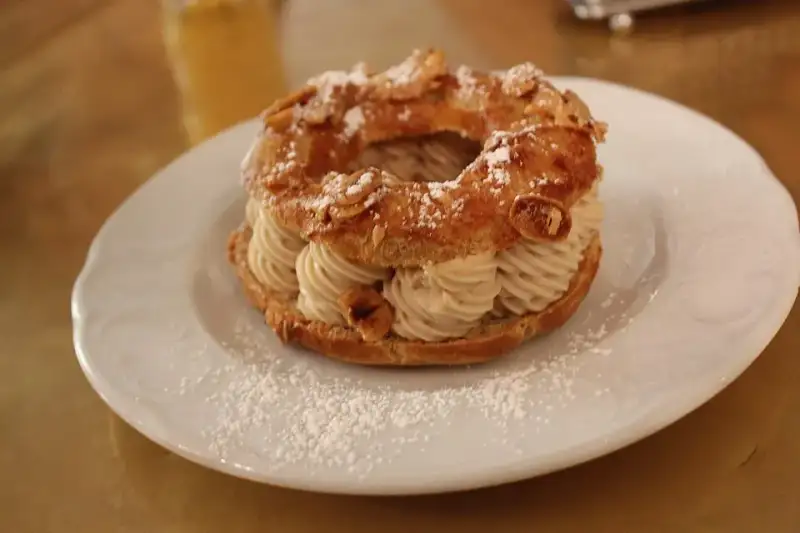
Paris-Brest : Le Joyau de la Pâtisserie Française Bonjour mes chers passionnés de gourmandises, esthètes des saveurs et amoureux inconditionnels de l'art culinaire. Je suis Chloe Blanc, et c'est avec une immense joie que je vous convie aujourd'hui à franchir les portes de mon univers, un monde exigeant mais profondément poétique où le sucre, le beurre, et la passion se rencontrent pour créer de la magie pure. S'il est un dessert, un seul, qui incarne à lui seul toute l'histoire, la technicité, la générosité et l'élégance absolue de notre belle nation gastronomique, c'est indubitablement lui : le majestueux Paris-Brest. Laissez-moi vous emporter dans un voyage sensoriel, technique et historique sans précédent autour de cette couronne majestueuse qui trône si fièrement dans les vitrines de toutes les grandes maisons de pâtisserie. Préparez-vous à plonger dans l'onctuosité incomparable d'une crème mousseline pralinée, à entendre le croquant irrésistible des amandes délicatement torréfiées et à savourer la légèreté aérienne d'une pâte à choux maîtrisée à la perfection. Une Histoire de Vélos, de Sueur et de Gourmandise Pour véritablement comprendre l'âme et la profondeur du Paris-Brest, il nous faut remonter le cours du temps et faire escale à la fin du dix-neuvième siècle, plus précisément en 1891. La France de la Belle Époque se passionne pour les innovations mécaniques. C'est dans cette atmosphère d'ébullition que naît la légendaire course cycliste Paris-Brest-Paris. Cette épreuve d'endurance titanesque et presque surhumaine de 1 200 kilomètres fut imaginée et créée par Pierre Giffard, un journaliste visionnaire, directeur du "Petit Journal", et pionnier incontesté du journalisme sportif moderne. Cette course, initialement destinée à démontrer au monde la fiabilité et l'avenir de la bicyclette, a rapidement captivé l'imaginaire de tous les Français, réunissant des foules considérables sur le bord des routes. Mais quel est donc le rapport entre des coureurs cyclistes épuisés, bravant les intempéries bretonnes, et notre somptueux dessert, me demanderez-vous avec raison ? L'histoire raconte que c'est en 1910 que le destin gourmand de cette course mythique s'est joué à jamais. Louis Durand, un artisan pâtissier au talent reconnu et installé à Maisons-Laffitte (une bourgade francilienne stratégiquement située sur le tracé de la course), fut approché par Pierre Giffard en personne. Le charismatique journaliste lui commanda une pâtisserie inédite et spéciale, une douceur hautement symbolique capable de rendre un hommage vibrant à cet événement sportif hors normes. Ce dessert devait redonner de l'énergie et du courage aux cyclistes éreintés, mais aussi ravir le palais des innombrables spectateurs enthousiastes qui jalonnaient le parcours. La Forme Évocatrice de la Roue C'est des suites de cette commande pour le moins insolite qu'est né le véritable mythe du Paris-Brest. Louis Durand, mû par une intuition géniale, eut l'idée lumineuse de façonner une grande couronne de pâte à choux rappelant de façon indéniable la forme d'une roue de bicyclette. Les amandes effilées, généreusement parsemées sur le dessus de la couronne, évoquaient avec poésie les rayons de cette fameuse roue. Quant à la richesse calorique et voluptueuse de la crème pralinée au beurre qui la garnissait, elle offrait sur un plateau l'énergie vitale et indispensable aux coureurs pour continuer leur périple exténuant. Aujourd'hui, soyons honnêtes, l'aspect purement nutritif et reconstituant a largement laissé la place au pur plaisir hédoniste et gastronomique. Cependant, la forme circulaire, symbole intemporel de mouvement, de continuité et de perfection géométrique, est restée gravée dans le marbre de la grande tradition pâtissière française. Le Paris-Brest n'est plus un "en-cas" pour sportif, il est devenu une institution. L'Anatomie d'un Chef-d'œuvre Pâtissier : Les Secrets de Chloe Blanc En tant que chef pâtissière, je n'ai de cesse de répéter que le Paris-Brest est l'un des exercices de style les plus exigeants de notre métier. Il est impitoyable car il ne souffre d'aucune médiocrité, d'aucune approximation. Chaque élément constitutif doit être savamment pensé, pesé au gramme près, et exécuté avec une précision relevant presque de l'orfèvrerie. Décortiquons ensemble la structure moléculaire et sensorielle de ce joyau. 1. La Pâte à Choux : Le Souffle, la Structure et l'Écrin La pâte à choux constitue le squelette indispensable de notre dessert. Une grande pâte à choux doit être uniformément dorée, présenter un croustillant franc à l'extérieur, et se révéler incroyablement alvéolée, légère et sèche à l'intérieur. Sa confection relève d'une alchimie complexe et passionnante.La Panade : Tout le processus démarre par le chauffage mesuré de l'eau, du lait (pour le moelleux), du beurre (pour le goût et la couleur), d'une bonne pincée de fleur de sel de Guérande et d'une pointe de sucre. L'ajout de la farine, obligatoirement hors du feu et en une seule fois, crée ce qu'on appelle la "panade". L'étape la plus technique et cruciale est ensuite le dessèchement de cette panade sur le feu. Il faut, à la force du poignet et à l'aide d'une spatule, faire évaporer l'humidité superflue pour que la pâte puisse, dans un second temps, absorber les œufs de manière optimale. L'Ajout des Œufs : C'est très exactement ici que l'instinct pur du pâtissier entre en jeu. Les œufs entiers doivent être incorporés un à un, avec patience. La texture finale recherchée doit former une crête ou un "ruban" parfait lorsqu'elle retombe de la spatule, elle ne doit être ni trop liquide (les choux s'étaleraient), ni trop cassante (les choux n'éclateraient pas). La Cuisson : Le four devient alors le théâtre de la magie de la physique. L'humidité emprisonnée au cœur de la pâte se transforme brutalement en vapeur sous l'effet de la chaleur, poussant violemment les parois vers l'extérieur et créant ce vide majestueux et caverneux à l'intérieur du chou. Le secret ultime : ne jamais, sous aucun prétexte, ouvrir la porte de votre four pendant les 25 premières minutes de cuisson, sous peine de voir votre belle roue s'affaisser et s'effondrer pitoyablement.Dans ma version signature de ce classique, j'ajoute un très fin craquelin sur le dessus de ma couronne de choux juste avant de l'enfourner. Ce craquelin est une pâte sablée basique composée à parts égales de beurre pommade, de cassonade brute et de farine. En fondant lors de la cuisson, il enrobe le chou, assurant un développement parfaitement sphérique et régulier, tout en apportant une texture merveilleusement sablée et sucrée qui contraste idéalement avec le moelleux du chou. 2. La Crème Mousseline Pralinée : Le Cœur Battant et Voluptueux Si la pâte à choux constitue la charpente, la crème mousseline pralinée en est indiscutablement l'âme charnelle. Elle se doit d'être voluptueuse, soyeuse, brillante, d'une richesse réconfortante mais qui, paradoxalement, doit fondre sur la langue sans laisser de sensation de lourdeur ou de gras excessif.La Crème Pâtissière : C'est la base indispensable de la mousseline. Elle doit être onctueuse, très riche en jaunes d'œufs pour la couleur et le liant, et intensément infusée. Pour ma part, je n'utilise que de la véritable gousse de vanille de Madagascar, grasse, charnue et gorgée de milliers de grains noirs parfumés. Elle doit être cuite à ébullition pour garantir sa sécurité alimentaire et sa bonne tenue, puis refroidie rapidement. Le Foisonnement avec le Beurre : Tout l'art délicat de la mousseline réside dans l'émulsion. On incorpore une quantité généreuse de beurre de très haute qualité (un beurre de baratte au lait cru d'Isigny ou des Charentes) à la crème pâtissière lissée. La règle d'or ? Les deux éléments doivent se trouver à une température absolument identique (environ 20-22°C) pour éviter que la crème ne "tranche", c'est-à-dire que le beurre ne se sépare de l'eau contenue dans la crème. On fouette alors longuement et vigoureusement, soit à la main pour les plus courageux, soit au robot, pour incorporer un maximum d'air. Ce processus de "foisonnement" rend cette crème visuellement plus claire et surtout étonnamment légère en bouche. L'Incorporation du Praliné : C'est cet ingrédient magique qui vient donner son identité au dessert. Et là, chers amis, je ne fais aucun compromis !3. Le Praliné Maison : L'Or Brun et Précieux de la Pâtisserie Ah, le praliné... Je pourrais en écrire des livres entiers. C'est ma véritable passion, mon péché mignon absolu. Pour élaborer un Paris-Brest digne de la haute gastronomie, il faut impérativement bannir les pâtes pralinées industrielles, trop douces et standardisées. Le praliné doit être une création maison, une signature. C'est la symphonie parfaitement accordée de fruits secs de prestige et de sucre caramélisé à vif. Dans l'intimité de mon laboratoire de recherche culinaire, je sélectionne méticuleusement mes fruits à coque. J'ai élaboré un mélange spécifique : j'utilise 60% de noisettes du Piémont IGP (Indication Géographique Protégée), mondialement réputées pour leur saveur torréfiée intense et leur teneur en huile incomparable, et 40% d'amandes Marcona venues d'Espagne pour leur douceur lactée et subtile.La Torréfaction : Les fruits secs sont étalés sur des plaques et torréfiés au four, lentement et à basse température (environ 150°C), pour exalter leurs huiles essentielles et leurs arômes complexes sans jamais les brûler. L'odeur qui embaume alors la cuisine est tout simplement divine, un parfum chaud, boisé et envoutant qui annonce le réconfort imminent. Le Caramel à Sec : Dans une casserole en cuivre, je réalise un caramel à sec, ambré, profond, presque poussé sur une pointe d'amertume afin de contrebalancer intelligemment la sucrosité finale du dessert. Je coule ensuite ce caramel bouillant en fine couche sur mes fruits secs tout juste sortis du four. Le Broyage : Une fois cette grande plaque de nougatine entièrement refroidie et figée, elle est concassée en morceaux puis broyée très longuement dans une meule de pierre traditionnelle ou un robot cutter surpuissant. D'abord, on obtient un pralin rustique (une poudre granuleuse idéale pour tapisser le fond des tartes), puis la friction fait son œuvre. L'huile précieuse contenue naturellement dans les fruits secs est libérée par la chaleur du mixage, transformant progressivement la poudre en une pâte fluide, onctueuse, miroitante : voilà notre praliné pur.Mon astuce secrète de Chef : Lors du dressage final de la pâtisserie, je m'assure de cacher toujours un généreux insert de ce praliné pur et coulant au cœur même des volutes de la crème mousseline. Ainsi, à la découpe et à la dégustation, le convive a la surprise d'obtenir une explosion de saveurs pralinées intenses, non diluées, qui vient titiller et réveiller violemment les papilles. 4. La Finition : L'Élégance des Amandes et le Sucre Neige C'est le couronnement de notre chef-d'œuvre. Les amandes effilées, qui ont été préalablement torréfiées pour leur donner du goût et de la couleur, sont parsemées sur le dessus du chou (souvent fixées par le craquelin ou une dorure avant cuisson). Elles apportent l'esthétique finale, le fameux rappel visuel des rayons de bicyclette de Monsieur Durand, mais elles procurent surtout une note croquante supplémentaire fondamentale lors de la mâche. Enfin, juste avant de servir (et jamais trop en avance pour ne pas qu'il fonde à cause de l'humidité du réfrigérateur), un léger voile de sucre glace, saupoudré avec la grâce et la délicatesse d'une première neige d'hiver, vient parfaire le tableau. C'est la signature intemporelle, l'habit de lumière du Paris-Brest. Ma Philosophie de Création : Entre Exigence Extrême et Émotion Pure Créer, monter et servir un Paris-Brest n'est pas seulement le fait de suivre une recette technique à la lettre, aussi précise soit-elle. C'est avant tout un acte de transmission, la volonté viscérale de procurer une émotion. La pâtisserie française, lorsqu'elle est portée à ce niveau d'exigence, cesse d'être de la simple cuisine pour devenir un véritable artisanat d'art. Quand je prépare minutieusement ce dessert de légende, je pense invariablement au sourire et au plaisir de la personne qui va le déguster. J'imagine, presque auditivement, le bruit sec du craquelin qui cède sous la pression de la cuillère à dessert, la douceur veloutée et parfumée de la mousseline qui vient tapisser le palais, le choc thermique et gustatif intense du praliné pur qui s'en échappe, et enfin, la note torréfiée et persistante des amandes qui étire la finale en bouche pendant de longues minutes. Pour atteindre ce niveau de perfectionnisme sensoriel, le choix rigoureux des matières premières est purement et simplement non négociable. On ne fait pas, et on ne fera jamais, de la grande gastronomie avec des ingrédients passables. Le beurre de baratte, le lait cru entier, la crème épaisse, les œufs de poules élevées en plein air nourries aux graines de lin, les fruits secs d'appellation... Chaque élément doit être sourcé, goûté, validé, et sélectionné auprès de producteurs et d'artisans passionnés. Utiliser ces produits d'exception, c'est rendre un hommage quotidien à notre terroir fabuleux, c'est une mise en valeur du travail acharné de nos agriculteurs. Ensuite, il y a la maîtrise absolue du temps, de l'hygrométrie et des températures. La pâtisserie est une science exacte, presque mathématique. Quelques degrés de trop dans le beurre lors de l'émulsion, et la mousseline est irrémédiablement gâchée, lourde et grasse. Quelques minutes de moins dans le four, et la magnifique couronne de pâte à choux retombe comme un soufflé raté. C'est cette danse quotidienne sur le fil du rasoir, ce besoin perpétuel de concentration, qui rend notre métier si palpitant, si vivant. Chaque nouvelle réalisation est un défi lancé à la matière. Comment Réussir Votre Paris-Brest à la Maison : Le Guide de l'Élite Je sais pertinemment que nombre d'entre vous, mes fidèles lecteurs et épicuriens avertis, êtes des pâtissiers amateurs éclairés, désireux de reproduire la magie et le faste des grandes maisons parisiennes dans l'intimité de vos propres cuisines. Voici quelques conseils exclusifs, mes secrets d'atelier, pour élever votre Paris-Brest vers les sommets de la gastronomie :Anticipez et Divisez le Travail : Ne tentez jamais de tout faire le même jour, c'est l'assurance d'un stress inutile. La veille, préparez votre praliné maison (il se conserve des mois), votre craquelin (que vous étalerez finement et congèlerez entre deux feuilles de papier cuisson), et votre crème pâtissière (pour qu'elle soit parfaitement froide). Le jour J sera ainsi sereinement dédié à la réalisation de la pâte à choux, au délicat foisonnement de la crème mousseline et au montage final. Cette organisation militaire vous sauvera de la panique et garantira des textures optimales. Dessinez votre Gabarit de Pochage : Ne pochez pas votre imposante couronne à l'aveugle, l'œil humain est trompeur ! Sur l'envers de votre feuille de papier cuisson, tracez au stylo ou au crayon un cercle parfait de 16 ou 18 centimètres de diamètre en utilisant un emporte-pièce, un moule ou un bol retourné. Retournez la feuille (pour que l'encre ne touche pas la pâte) : cela vous servira de guide infaillible pour pocher une roue régulière. Pochez deux boudins épais l'un à côté de l'autre, et un troisième par-dessus, à cheval sur la jointure des deux premiers. C'est le secret d'un chou majestueux et bien gonflé. La Magie Indispensable du Craquelin : Je le répète, n'omettez jamais l'étape du craquelin. Découpez des anneaux réguliers dans votre plaque de craquelin congelé et déposez-les très délicatement sur vos choux pochés juste avant d'enfourner. C'est l'assurance vie d'un développement homogène, d'une croûte qui ne se fendillera pas n'importe comment. Le Secret d'une Mousseline Aérienne : Sortez impérativement votre beurre et votre crème pâtissière du réfrigérateur bien à l'avance, au minimum deux heures avant. Ils doivent être à une température ambiante douce. Si la crème pâtissière est trop froide par rapport au beurre pommade, le beurre figera et fera de petits grains disgracieux. Utilisez le fouet de votre robot pâtissier à pleine puissance et battez longuement, au moins 5 à 10 minutes. La crème va blanchir spectaculairement, prendre un volume incroyable et devenir aussi légère qu'un nuage de douceur. Le Dressage Majestueux et Architecturé : À l'aide d'un couteau à dent fin (type couteau à pain), coupez délicatement votre couronne de choux refroidie à l'horizontale, aux deux tiers de sa hauteur (le "chapeau" doit être plus fin et léger que la base solide). À l'aide d'une grande poche à douille munie d'une douille cannelée de grand diamètre (type F8, M1, ou douille à petit four), pochez votre crème mousseline en formant de très jolies rosaces régulières, généreuses et bien rebondies. Soyez extrêmement généreux, l'abondance est la clé ! N'oubliez surtout pas, comme évoqué plus haut, d'insérer un fin cordon continu de praliné pur au cœur même de ces volutes de crème. Reposez délicatement le chapeau par-dessus sans l'écraser.Les Variations Modernes : L'Évolution du Mythe Si la recette traditionnelle aux amandes et noisettes reste intouchable, il serait faux de croire que le Paris-Brest est figé dans le passé. Aujourd'hui, l'imagination débordante de la nouvelle génération de chefs pâtissiers ne connaît plus de limites. Le concept même de pâte à choux garnie de mousseline pralinée a été décliné à l'infini pour explorer de nouveaux territoires gustatifs. Nous voyons ainsi fleurir dans les vitrines de somptueux Paris-Brest à la pistache d'Iran, arborant une couleur vert émeraude fascinante, où le praliné pistache vient remplacer la noisette, apportant des notes herbacées et élégantes. D'autres chefs se tournent vers la noix de pécan et le sirop d'érable pour une version aux accents nord-américains terriblement réconfortante. On trouve même des déclinaisons au sésame noir du Japon, offrant une expérience visuelle et gustative saisissante, jouant sur des notes fumées et torréfiées extrêmement complexes. Enfin, la forme elle-même a parfois évolué : éclairs individuels, formes rectangulaires très graphiques, ou petites bouchées. Pourtant, quel que soit l'habit qu'il revêt, l'ADN du Paris-Brest — ce contraste bouleversant entre le croquant, l'aérien et le crémeux riche — demeure intact. L'Art Délicat de la Dégustation : Les Accords Parfaits Un dessert d'une telle envergure, riche d'histoire et de travail, mérite d'être honoré et accompagné avec une élégance toute particulière. Comment déguster le Paris-Brest de manière optimale, selon les principes de Chloe Blanc ? Tout d'abord, la température de dégustation est une variable absolument capitale. Ne servez jamais un Paris-Brest directement sorti du réfrigérateur. Le froid intense anesthésie les papilles, fige le beurre de la crème mousseline qui devient dure, et emprisonne les molécules aromatiques du praliné. Pensez impérativement à laisser votre chef-d'œuvre reposer environ 20 à 30 minutes à température ambiante douce avant de le trancher. C'est le temps nécessaire pour que la crème retrouve tout son soyeux et que les effluves de noisettes s'échappent. Pour accompagner cette merveille absolue, plusieurs choix s'offrent à vous pour sublimer l'instant :Le Café de Spécialité : C'est l'accord classique, indémodable et terriblement efficace. L'amertume tranchante d'un grand espresso ou la rondeur suave d'un café méthode douce (filtre, V60) aux notes naturelles de cacao, de noisette ou de fruits rouges, viendra contraster à merveille avec la sucrosité du praliné, nettoyant le palais et équilibrant la richesse de la crème mousseline. Le Thé Noir de Caractère : Un grand thé noir, infusé avec précision, comme un Assam corsé d'Inde ou un majestueux Earl Grey aux notes subtiles et zestées de bergamote, apportera une note boisée, légèrement tannique et extrêmement rafraîchissante qui allégera considérablement la fin de bouche entre chaque bouchée gourmande. Le Vin d'Exception : Pour les gastronomes audacieux, pourquoi ne pas tenter un grand accord met et vin ? Un vin doux naturel muté sur grains, comme un vieux Banyuls ambré ou un Maury, avec ses arômes profonds de noix, de caramel, de figue sèche et de rancio, créera une résonance aromatique absolument fantastique et fusionnelle avec le praliné torréfié. Par ailleurs, un Champagne "Blanc de Noirs" (élaboré uniquement à partir de raisins noirs comme le Pinot Noir), puissant, vineux et très peu dosé, peut également apporter une belle effervescence tranchante pour venir casser le gras et contraster merveilleusement avec la texture voluptueuse du dessert.En Conclusion : Un Héritage Précieux à Savourer et à Transmettre Le Paris-Brest est, de toute évidence, bien plus qu'une simple recette de pâtisserie. C'est un morceau vibrant de l'histoire culturelle de la France. C'est une ode magnifique à l'artisanat patient, au geste précis, un symbole chaleureux de rassemblement dominical autour de la grande table familiale. Il représente à mes yeux l'essence même, l'apogée de tout ce que j'aime profondément dans mon métier de chef : la transformation alchimique de nobles produits bruts en une création éphémère, fragile, mais capable de procurer un bonheur immense et des souvenirs impérissables. Je vous invite de tout cœur, chers lecteurs, à vous lancer dans cette aventure pâtissière merveilleuse. Prenez le temps de peser, de fouetter, d'émulsionner, de pocher, et surtout, n'oubliez pas de savourer chaque instant du processus créatif. Pâtisser, c'est aimer. Et si, d'aventure, l'envie ou le temps de pâtisser vous manque cruellement, n'hésitez pas : poussez la porte d'une belle maison de pâtisserie artisanale, commandez un grand Paris-Brest classique, asseyez-vous, fermez les yeux et laissez-vous simplement emporter par la magie de cet héritage intemporel. Gourmandement et passionnément vôtre, Chloe Blanc Laissez parler votre cœur, laissez parler vos papilles, la gourmandise est un art de vivre. #Patisserie #France #Dessert #ParisBrest #HautePatisserie #ChefChloeBlanc #Gourmandise #Praline #PateAChoux #ArtDeVivre #FrenchPastry #BakingLove #GastronomieFrancaise #DessertsDeLegende #SavoirFaire #patisserie #dessert #france #chloeblanc #sweet Related InsightsMacaron : L'Élégance Parfaite en Une Seule Bouchée Madeleine : Le Souvenir Sucré de l'Enfance Profiterole : Gourmandise Absolue au Chocolat{ "@context": "https://schema.org", "@type": "FAQPage", "mainEntity": [ { "@type": "Question", "name": "What is the main focus of Paris-Brest : Le Voyage Praliné Inoubliable?", "acceptedAnswer": { "@type": "Answer", "text": "Plongez dans l'univers de la haute pâtisserie avec Chloe Blanc et découvrez les secrets de ce dessert emblématique." } }, { "@type": "Question", "name": "Who authored the comprehensive guide on Paris-Brest : Le Voyage Praliné Inoubliable?", "acceptedAnswer": { "@type": "Answer", "text": "This detailed article and its insights were carefully researched and authored by Chloe Blanc." } }, { "@type": "Question", "name": "Where can I find more related content about Gastronomy?", "acceptedAnswer": { "@type": "Answer", "text": "You can explore more articles, detailed reviews, and similar insights by browsing the Related Insights section at the bottom of this article or visiting our dedicated Gastronomy category page." } } ] }
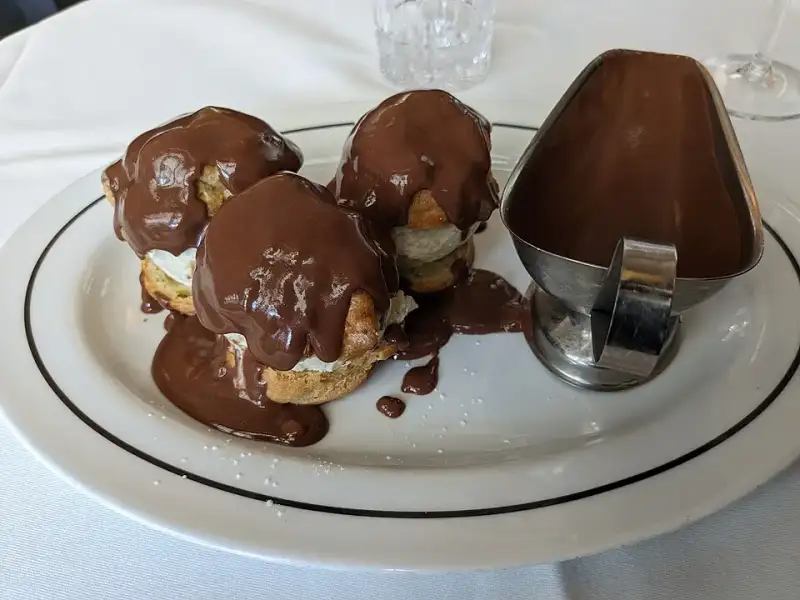
Profiterole : Le Joyau de la Pâtisserie Française Bonjour mes chers amis épicuriens, esthètes du goût et amoureux inconditionnels de la grande tradition culinaire française ! Je suis Chloe Blanc, et c'est avec une immense joie et une passion débordante que je vous accueille aujourd'hui dans mon univers sucré. La pâtisserie n'est pas seulement un métier pour moi ; c'est un langage universel, une forme d'art à part entière qui permet de transmettre des émotions pures, de raconter des histoires merveilleuses et de raviver des souvenirs d'enfance enfouis. Aujourd'hui, nous allons nous pencher sur un monument absolu, une véritable icône de nos brasseries parisiennes et de nos tables de fête : la légendaire Profiterole. Préparez-vous à un voyage sensoriel inédit où le chaud rencontre le froid, où le croquant sublime le moelleux, et où la gourmandise atteint son paroxysme. Que vous soyez un amateur éclairé dans votre cuisine ou un novice curieux de découvrir les coulisses de la gastronomie, je vous invite à découvrir tous les secrets, l'histoire et les techniques professionnelles pour maîtriser ce chef-d'œuvre. #Patisserie #France #Dessert L'Histoire Fascinante d'un "Petit Profit" Pour comprendre l'âme véritable de la profiterole, il faut remonter le temps et s'immerger dans les riches heures de l'histoire de France et de la Renaissance italienne. La légende, souvent romancée par les historiens de la table mais toujours captivante, fait remonter les origines de la pâte à choux au XVIe siècle. Lorsque Catherine de Médicis quitte son Italie natale pour épouser le futur roi de France Henri II, elle amène avec elle sa cour, ses artisans, et bien sûr, ses cuisiniers et pâtissiers personnels. Parmi eux, un certain Popelini, un chef audacieux qui aurait inventé une pâte desséchée sur le feu qu'on appelait alors la "pâte à chaud". Cette préparation, devenue par glissement phonétique et linguistique la "pâte à choux", allait révolutionner la confiserie. Cependant, le mot "profiterole" lui-même a une étymologie bien plus humble et inattendue. Au XVIIe siècle, une profiterole (littéralement un "petit profit") désignait une petite gratification, une aumône charitable sous la forme d'une boulette de pain cuite sous la cendre, que l'on offrait aux domestiques, aux serviteurs ou aux mendiants. Ce n'était alors qu'un mets rustique, bien loin du dessert luxueux et décadent que nous connaissons aujourd'hui. On l'agrémentait parfois d'un peu de viande rôtie, de fromage ou de bouillon chaud. La profiterole était donc, à l'origine, un plat exclusivement salé ! Il faudra attendre le début du XIXe siècle et le génie visionnaire du grand Antonin Carême — surnommé à juste titre "le roi des chefs et le chef des rois", l'inventeur de la haute cuisine française — pour que la profiterole prenne enfin ses lettres de noblesse sucrées. C'est lui qui eut la brillante idée de garnir ces petits choux creux de crème pâtissière onctueuse ou de crème chantilly aérienne, et de les napper d'un glaçage au caramel ou au chocolat. Plus tard, au milieu du XXe siècle, l'idée lumineuse de remplacer la crème par de la glace à la vanille, créant ainsi ce contraste thermique saisissant et si caractéristique avec la sauce au chocolat chaud, a définitivement scellé le destin de la profiterole comme un dessert de restaurant incontournable et mondialement célébré. L'Anatomie d'une Profiterole Parfaite En tant que pâtissière de métier, je considère la réalisation d'une profiterole comme un formidable exercice d'équilibriste. C'est un dessert franc, qui ne triche pas. Il repose sur trois piliers fondamentaux. Si l'un d'eux est négligé, l'édifice tout entier s'effondre lamentablement. Analysons ensemble cette sainte trinité de la gourmandise absolue. #ChloeBlanc #Sweet #Gastronomy 1. La Pâte à Choux : La Fondation Architecturale La pâte à choux est le contenant indispensable, le navire délicat qui va transporter les autres saveurs vers votre palais. Une pâte à choux réussie doit être légère comme un nuage, d'une belle couleur dorée uniforme, avec une fine croûte légèrement craquante à l'extérieur et une cavité bien développée, alvéolée et moelleuse à l'intérieur. Elle ne doit en aucun cas être caoutchouteuse, dense, ou pire, détrempée. Le chou doit être gonflé avec fierté, offrant une belle rondeur rebondie. C'est cette enveloppe protectrice et beurrée qui va accueillir la fraîcheur éclatante de la glace sans rompre sous son humidité. 2. Le Cœur Glacé : L'Âme de la Profiterole La tradition moderne la plus respectée veut que l'on garnisse le chou d'une généreuse et parfaite boule de glace à la vanille. Et attention, je parle ici d'une véritable glace artisanale, turbinée avec soin, infusée patiemment avec des gousses de vanille Bourbon de Madagascar, du Mexique ou de Tahiti, charnues et intensément parfumées. La qualité de cette vanille est absolument primordiale. Ses notes florales, parfois boisées ou caramélisées, vont venir trancher élégamment avec la rondeur biscuitée de la pâte à choux et la puissance brute du chocolat. La température de service de la glace doit être idéale : ni trop dure (ce qui empêcherait de la couper facilement à la cuillère à dessert), ni trop fondante (pour ne pas détremper le chou immédiatement et ruiner l'expérience texturale). 3. L'Écrin de Chocolat : La Touche de Noblesse Ah, la sauce au chocolat... C'est le grand frisson, le moment de grâce théâtral de la profiterole. Servie fumante en salle, directement devant le convive émerveillé, elle est versée généreusement, recouvrant les choux glacés d'un voile de mystère. Cette sauce ne doit pas être un simple glaçage figé qui casse sous la dent, ni un sirop liquide industriel sans texture. Elle doit être onctueuse, soyeuse, d'une brillance miroir envoûtante, et posséder une véritable profondeur aromatique. J'utilise toujours, sans exception, un chocolat de couverture noir de haute voltige, idéalement avec un pourcentage situé entre 65% et 70% de cacao. Cela permet d'apporter une belle amertume noble qui viendra magistralement contrebalancer la sucrosité inhérente de la glace à la vanille. C'est très exactement ce choc frontal des températures — le glacé polaire de la vanille percutant le brûlant volcanique du chocolat — qui crée l'étincelle magique en bouche. La Masterclass de Chloe Blanc : Mes Secrets de Fabrication et la Fiche Recette Complète Maintenant que nous avons longuement posé les bases théoriques et philosophiques de notre sujet, passons à la pratique. Voici mes secrets de chef et ma recette détaillée pour réaliser des profiteroles dignes des plus grands palaces parisiens, directement dans votre propre cuisine. Préparez vos balances de précision ! Les Astuces Techniques Indispensables Beaucoup de passionnés redoutent la confection de la pâte à choux. Pourtant, c'est une préparation éminemment logique et scientifique. Le dessèchement de la panade : C'est une étape vitale. Une fois la farine ajoutée d'un seul coup au liquide bouillant (eau, lait, beurre, sel, sucre), il faut remuer vigoureusement sur le feu doux à moyen à l'aide d'une spatule en bois. L'objectif est d'évaporer l'excédent d'humidité de la pâte jusqu'à ce qu'elle forme une boule bien homogène qui se détache parfaitement des parois de la casserole et laisse une fine pellicule caractéristique au fond. Le pochage et la cuisson : La règle d'or, absolue et non négociable : n'ouvrez sous aucun prétexte la porte de votre four pendant les 20 à 25 premières minutes de cuisson ! Le moindre choc thermique ferait retomber vos choux irrémédiablement, les transformant en galettes plates. Ils doivent cuire dans l'environnement saturé de la vapeur qu'ils dégagent eux-mêmes.Le Twist Moderne : Le Craquelin Pour apporter une dimension largement supérieure et très professionnelle à vos choux, je vous recommande vivement d'utiliser un craquelin. C'est un mélange tant pour tant de beurre pommade, de cassonade et de farine, étalé très finement, refroidi, puis détaillé en petits disques que l'on pose délicatement sur les choux pochés crus avant de les enfourner. À la chaleur du four, ce petit disque sucré va fondre et enrober le chou de manière uniforme, lui offrant une forme géométrique parfaitement sphérique, un développement d'une régularité stupéfiante et surtout, une texture ultra-croustillante incroyable qui résistera beaucoup mieux à l'humidité de la glace. La Fiche Recette Complète de Chloe Blanc (Pour 6 personnes) Pour le Craquelin :50g de beurre doux (à température ambiante, texture pommade souple) 60g de cassonade (le sucre roux apporte ce goût subtilement caramélisé indispensable) 60g de farine T55 Une belle pincée de fleur de sel de GuérandeMélangez intimement le beurre pommade avec la cassonade et la fleur de sel. Ajoutez la farine et mélangez à la spatule ou à la main jusqu'à obtenir une pâte homogène sans trop la travailler. Étalez très finement (environ 2 mm d'épaisseur) entre deux feuilles de papier sulfurisé à l'aide d'un rouleau à pâtisserie. Placez cette plaque au congélateur pendant au moins 30 minutes avant de détailler des disques réguliers de 3 à 4 cm de diamètre avec un emporte-pièce. Pour la Pâte à Choux :60g de lait entier (pour la couleur et le moelleux) 60g d'eau minérale (pour le croustillant) 60g de beurre doux coupé en petits dés 2g de sel fin 4g de sucre en poudre 75g de farine T55 (systématiquement tamisée pour éviter les grumeaux) 120g à 125g d'œufs entiers battus (environ 2 à 3 œufs moyens. Pesez-les, c'est crucial !)Dans une casserole, portez à ébullition l'eau, le lait, les dés de beurre, le sel et le sucre. Dès que le beurre est totalement fondu et que le liquide bout, retirez du feu et ajoutez la farine d'un coup. Mélangez vigoureusement avec une spatule en bois, puis remettez sur feu moyen pour dessécher la panade pendant 1 à 2 minutes. Transvasez dans un grand cul de poule pour stopper la cuisson. Incorporez les œufs battus très progressivement (en 3 ou 4 fois), en vérifiant la texture entre chaque ajout. La pâte est prête lorsqu'elle forme un ruban cassant ou un "bec d'oiseau" au bout de la spatule. Pochez des choux de 4 cm de diamètre sur une plaque. Déposez les disques de craquelin congelés bien au centre de chaque chou. Enfournez à 180°C (chaleur statique de préférence) pendant 25 à 30 minutes. Laissez refroidir sur une grille. Pour la Glace à la Vanille Artisanale :500ml de lait entier frais 150ml de crème liquide entière (minimum 30% MG) 5 gros jaunes d'œufs de poules élevées en plein air 120g de sucre en poudre extra-fin 2 magnifiques gousses de vanille de qualité exceptionnelle 20g de lait en poudre (le secret professionnel absolu pour éviter la cristallisation aqueuse de la glace)Faites chauffer doucement le lait et la crème avec les gousses de vanille préalablement fendues et grattées (graines + gousses). Retirez du feu, couvrez et laissez infuser au minimum 1 heure (voire toute la nuit). Blanchissez les jaunes d'œufs au fouet avec le sucre et le lait en poudre. Faites réchauffer le lait infusé (retirez les gousses), versez-le en filet sur les jaunes tout en fouettant, puis remettez le tout dans la casserole sur le feu. Cuisez doucement en remuant en "8" avec une spatule jusqu'à 84°C (cuisson "à la nappe"). Refroidissez la crème anglaise le plus rapidement possible (sur un bain-marie d'eau glacée), filmez au contact, laissez maturer 12 à 24h au réfrigérateur pour développer les arômes, puis turbinez dans votre sorbetière. Pour la Sauce au Chocolat Chaud Miroir :200g de chocolat noir de couverture de grande qualité (type Valrhona Caraïbe 66% ou Guanaja 70%) 200g de crème liquide entière 30% MG 50g de lait entier 20g de miel neutre (type acacia, essentiel pour la souplesse et la brillance) 15g de beurre doux (pour la touche veloutée finale)Faites bouillir la crème, le lait et le miel. Versez un tiers de ce liquide bouillant sur le chocolat finement haché (ou en pistoles). Émulsionnez énergiquement avec une maryse au centre du récipient pour créer un noyau élastique et brillant. Répétez l'opération avec le deuxième tiers, puis le dernier tiers. Incorporez le beurre pommade à la fin et lissez bien. Maintenez au bain-marie tiède avant le service. L'Art du Montage et du Service Sublimé La profiterole est, par excellence, un dessert que l'on appelle "minute". Elle ne souffre d'aucune attente, d'aucun délai entre son dressage et sa dégustation. C'est très exactement dans l'immédiateté foudroyante de son montage que réside toute l'intensité de son enchantement.La préparation ultime : Coupez délicatement le chapeau de vos choux (environ au tiers supérieur de leur hauteur) à l'aide d'un couteau scie. L'idéal, pour une expérience parfaite, est de leur redonner un très bref coup de chaleur au four (à 150°C pendant 3 à 4 minutes maximum) juste avant le dressage final pour raviver intensément le croustillant du craquelin. Laissez-les tiédir quelques instants. Le garnissage généreux : Formez de très belles boules de glace à la vanille, bien rondes et régulières, à l'aide d'une cuillère à glace que vous aurez préalablement trempée dans l'eau très chaude. Déposez délicatement mais rapidement la boule de glace bien au cœur du chou, et refermez nonchalamment avec le petit chapeau de craquelin, très légèrement incliné pour laisser deviner le trésor glacé à l'intérieur. Le dressage élégant : Disposez deux ou trois choux ainsi royalement garnis dans une belle assiette creuse ou une magnifique coupe en cristal ou en porcelaine fine. Le clou absolu du spectacle : La sauce au chocolat noir, maintenue bien chaude, ne doit surtout pas être versée en cuisine ! Elle doit être servie à part, dans une saucière élégante, et versée à table, majestueusement, sous les yeux ébahis des convives. La chaleur envoûtante du chocolat va venir épouser les formes du chou, faire fondre d'un millimètre la surface de la glace à la vanille, et enrober l'ensemble d'une nappe luisante, gourmande et profondément parfumée.Pour parfaire ce tableau de maître, vous pouvez ajouter au dernier moment quelques amandes effilées fraîchement torréfiées, des éclats de noisettes du Piémont caramélisées, ou même, pour les palais les plus pointus, quelques précieux grains de fleur de sel qui viendront exalter la longueur en bouche du cacao et piquer la curiosité de vos papilles. #Gourmandise #HautePatisserie Variations et Réinventions Contemporaines Audacieuses Bien que je sois, vous l'aurez compris, une ardente et fervente défenseuse de la profiterole ultra-classique à la vanille et au chocolat, la créativité débordante est le moteur même de notre métier d'artisan. Au fil des décennies, de nombreux grands chefs pâtissiers ont su réinventer ce monument classique avec un brio incontestable, l'emmenant vers des territoires gustatifs inexplorés.La Profiterole Praliné-Noisette Intense : On remplace la sage glace vanille par une glace au praliné noisette ultra-gourmande. On ajoute un cœur de pâte de praliné pur et coulant à l'intérieur du chou, et on nappe l'ensemble d'une sauce soyeuse au chocolat au lait et gianduja. Une véritable explosion régressive qui ravit les amateurs de douceur absolue ! La Version Fruitée et Printanière : À l'arrivée des beaux jours, pourquoi ne pas alléger le propos et imaginer un chou délicat garni d'un sorbet plein fruit à la fraise Mara des Bois ou à la framboise, agrémenté d'une compotée de fruits rouges acidulée, et surmonté d'un coulis chaud et vibrant de fruits de la passion ou d'une sauce onctueuse au chocolat blanc et à la vanille ? L'Approche Caféinée et Corsée : Remplissez votre chou d'une glace au café de spécialité d'Éthiopie ou de Colombie. Nappez d'une sauce chocolat noir très corsée (75% ou 80%) et parsemez de grué de cacao torréfié. Le mariage café-chocolat est d'une élégance rare, presque ténébreuse, et ravira les palais adultes recherchant de la puissance, de l'amertume et de la longueur en bouche. Le Retour Héroïque aux Sources Salées : Fermant la boucle de l'Histoire avec élégance, certains chefs audacieux et étoilés proposent aujourd'hui des profiteroles salées servies en entrée. Imaginez des petits choux garnis d'une mousse de foie gras légère, d'une crème fouettée à la truffe noire du Périgord ou d'un chèvre frais aux herbes, le tout surmonté d'un coulis chaud de légumes de saison ou d'un puissant jus de viande très réduit, façon miroir. C'est un clin d'œil historique brillant et absolument délicieux qui surprend toujours les convives.Accords Mets et Vins : Que Boire avec une Profiterole de Haut Vol ? La dégustation d'une profiterole est un moment fort, éminemment gourmand, riche et d'une intensité rare. Il convient donc de l'accompagner d'une boisson capable de soutenir cette puissance aromatique et cette texture enveloppante, sans pour autant alourdir l'expérience gustative globale.Les Vins Doux Naturels (VDN) : C'est sans doute l'accord roi. Un Maury rouge ou un vieux Banyuls, avec leurs notes complexes de fruits rouges surmûris et confits, de cacao en poudre, de pruneau et d'épices douces, feront un écho absolument parfait à la sauce au chocolat noir. Leur sucrosité résiduelle bien fondue s'accorde merveilleusement avec la glace. Un Vieux Porto Tawny : Un Porto Tawny, vieilli longuement en fûts de chêne (10 ou 20 ans d'âge), apportera des arômes oxydatifs sublimes de noix fraîches, de caramel blond et de légères notes de torréfaction qui viendront souligner et sublimer les notes beurrées de la pâte à choux et la rondeur de la vanille. Le Champagne : Pour alléger le palais, casser le gras de la crème et apporter une indispensable touche de festivité, un Champagne Demi-Sec ou, pour les plus puristes, un puissant Blanc de Noirs bien structuré offrira un contraste rafraîchissant et élégant. La finesse des bulles viendra littéralement rincer et dynamiser le palais entre chaque bouchée riche et fondante. L'Incontournable Café de Spécialité : Bien sûr, l'amertume naturelle et l'acidité maîtrisée d'un grand expresso pur arabica fraîchement extrait, ou l'élégance d'un grand cru de thé noir puissant (comme un Darjeeling de première récolte ou un thé Earl Grey intensément parfumé à la bergamote) restent des valeurs sûres, classiques et indémodables pour accompagner dignement ce dessert emblématique sans risquer de saturer le palais.Une Émotion en Héritage pour Conclure Pour refermer ce chapitre de notre immersion totale dans l'univers foisonnant de la profiterole, je voudrais vous partager une conviction très intime, née de mes années passées dans les fournils et laboratoires. Ce dessert fabuleux n'est pas seulement une simple addition de recettes techniques, fussent-elles parfaitement maîtrisées. C'est, avant tout, un puissant concentré d'émotions humaines. C'est le souvenir impérissable des longs repas de famille le dimanche après-midi, l'émerveillement magique dans les yeux d'un enfant qui regarde couler la cascade de chocolat chaud, le plaisir simple, brut et authentique du partage autour d'une grande table. En tant qu'artisans et créateurs de douceurs, notre mission première est de préserver, de chérir et de transmettre ce patrimoine gastronomique incroyable qu'est la haute pâtisserie française, tout en le faisant vibrer et vivre avec notre propre sensibilité, notre exigence et les codes de notre époque. La profiterole incarne à la perfection absolue cette dualité fascinante : elle est profondément ancrée dans notre histoire commune, elle se veut rassurante, généreuse, familière, et pourtant, elle exige, pour être véritablement sublimée, une rigueur millimétrée et une précision redoutable lors de sa conception. Je vous encourage de tout cœur à vous lancer dans cette aventure. Ne craignez surtout pas la pâte à choux, domptez-la ! Abordez ce dessert avec beaucoup d'amour, avec une patience infinie, et en utilisant toujours les meilleurs ingrédients que vous pourrez dénicher. La récompense pour vos efforts, cette fameuse "petite profiterole", ce petit profit originel dont nous parlions au début, se transformera alors inévitablement en un immense moment de bonheur partagé, un souvenir indélébile pour ceux que vous aimez. Cuisinez, testez, ratez parfois, recommencez toujours avec passion, mais surtout, n'oubliez jamais de prendre du plaisir ! La pâtisserie est une fête perpétuelle, un art de la célébration, et la profiterole en est assurément, aujourd'hui et pour toujours, l'une des reines couronnées. À vos balances, à vos fouets, et je vous souhaite une très, très bonne dégustation ! Avec toute ma gourmandise, mon dévouement et ma passion inaltérable pour le sucré, Chloe BlancChef Pâtissière#ChloeBlanc #Profiterole #ArtDeVivre #FrenchGastronomy #DessertLovers #ChefLife #BakingSecrets #FrenchPastry #FoodArt #patisserie #dessert #france #chloeblanc #sweet Related InsightsCrème Brûlée : La Douce Symphonie du Caramel Éclair : Le Grand Classique Indémodable Madeleine : Le Souvenir Sucré de l'Enfance{ "@context": "https://schema.org", "@type": "FAQPage", "mainEntity": [ { "@type": "Question", "name": "What is the main focus of Profiterole : Gourmandise Absolue au Chocolat?", "acceptedAnswer": { "@type": "Answer", "text": "Plongez dans l'univers de la haute pâtisserie avec Chloe Blanc et découvrez les secrets de ce dessert emblématique." } }, { "@type": "Question", "name": "Who authored the comprehensive guide on Profiterole : Gourmandise Absolue au Chocolat?", "acceptedAnswer": { "@type": "Answer", "text": "This detailed article and its insights were carefully researched and authored by Chloe Blanc." } }, { "@type": "Question", "name": "Where can I find more related content about Gastronomy?", "acceptedAnswer": { "@type": "Answer", "text": "You can explore more articles, detailed reviews, and similar insights by browsing the Related Insights section at the bottom of this article or visiting our dedicated Gastronomy category page." } } ] }
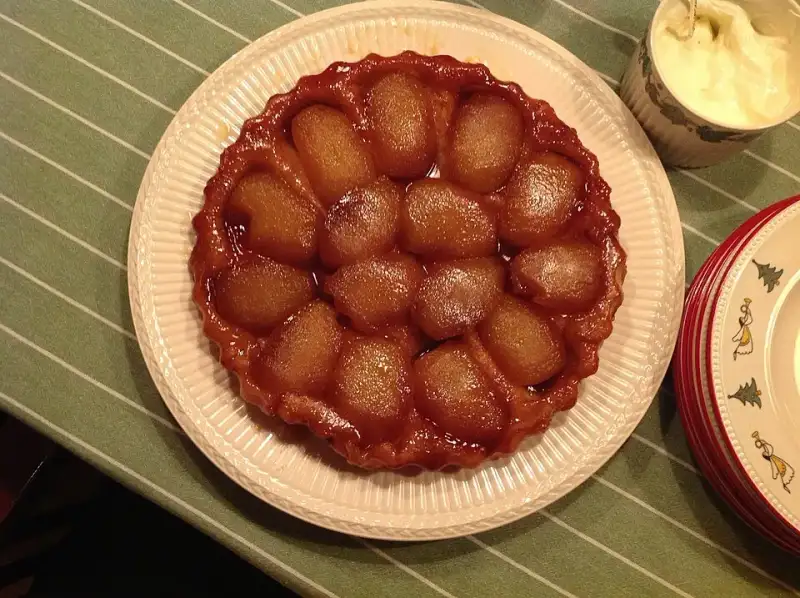
Bienvenue, chers épicuriens et amoureux de la gastronomie. Je suis Chloé Blanc, et c'est avec une émotion toute particulière que je vous ouvre aujourd'hui les portes de mon univers sucré. En tant que pâtissière, j'ai eu le privilège de travailler des ingrédients rares, de concevoir des entremets à la complexité vertigineuse et de sculpter des œuvres en sucre filé ou en chocolat grand cru. Pourtant, s'il est une création qui résonne en moi avec une force inouïe, une réalisation qui convoque instantanément la magie de l'enfance et l'essence même de l'art de vivre à la française, c'est indéniablement la Tarte Tatin. La Tarte Tatin n'est pas un simple dessert ; c'est un poème caramélisé, une ode à la pomme, un chef-d'œuvre de rusticité élégante. Elle incarne le mariage parfait entre l'acidité naturelle du fruit, l'amertume suave du caramel au beurre salé et le croustillant réconfortant d'une pâte cuite à la perfection. Dans cet article exhaustif, je vais vous guider pas à pas, vous révéler mes secrets de cheffe et vous transmettre ma passion pour que vous puissiez, chez vous, recréer ce joyau de la pâtisserie française. Installez-vous confortablement, préparez-vous un thé parfumé, et laissez-vous emporter par les effluves imaginaires de beurre noisette et de pommes confites. Prendre le temps de pâtisser, c'est s'offrir une parenthèse enchantée, loin du tumulte du quotidien. La Tarte Tatin mérite ce temps, cette dévotion. Elle est capricieuse parfois, mais tellement généreuse lorsqu'on la comprend. L'Histoire Fascinante et Mythique de la Tarte Tatin Toute grande recette possède sa légende, et celle de la Tarte Tatin est sans doute l'une des plus célèbres de l'histoire de la gastronomie. Nous sommes à la fin du XIXe siècle, au cœur de la Sologne, dans la petite bourgade de Lamotte-Beuvron. Deux sœurs, Stéphanie et Caroline Tatin, tiennent un établissement florissant, l'Hôtel Tatin, qui accueille les chasseurs, les bourgeois parisiens et les voyageurs de la région. Caroline s'occupe de l'accueil avec un charisme naturel et une élégance rare, tandis que Stéphanie règne en maîtresse absolue sur les fourneaux de l'auberge. La légende raconte qu'un dimanche d'ouverture de la chasse, dans le tumulte et la précipitation d'un service débordant, Stéphanie, étourdie par l'affluence, aurait oublié de placer la pâte au fond de son moule à tarte. Elle aurait disposé ses pommes généreusement beurrées et sucrées directement dans le plat avant de les enfourner. S'apercevant de sa méprise, elle aurait alors, dans un éclair de génie spontané, recouvert les pommes brûlantes d'un disque de pâte pour terminer la cuisson, avant de retourner le tout sur un plat de service. Le résultat fut spectaculaire : les pommes s'étaient confites dans un caramel riche et onctueux, protégées par une pâte dorée et croustillante. Les clients furent éblouis, subjugués par cette nouveauté, et la légende de la "Tarte des Demoiselles Tatin" était née. Si les historiens de la gastronomie et les puristes s'accordent à dire que la technique de la tarte renversée (ou tarte retournée) existait bien avant les sœurs Tatin dans la région (on parlait de "tarte solognote" aux pommes ou aux poires), ce sont bel et bien elles qui l'ont sublimée, popularisée et rendue inoubliable. Mais comment cette merveille provinciale a-t-elle conquis le monde entier ? C'est ici qu'intervient le célèbre critique gastronomique Curnonsky, surnommé le "Prince des gastronomes", qui, séduit par ce dessert lors d'un passage en Sologne, le chanta dans ses chroniques. Par la suite, le prestigieux restaurant parisien Maxim's l'inscrivit à sa carte, allant même jusqu'à envoyer un espion, dit-on, pour soutirer la recette originale aux sœurs. C'est ainsi qu'elle obtint sa consécration internationale. Aujourd'hui, la Tarte Tatin rayonne aux quatre coins du globe, de Tokyo à New York, mais elle exige toujours, pour être véritablement authentique, le respect absolu de ses principes fondateurs. L'Anatomie d'une Tarte Tatin Parfaite : Le Choix des Matières Premières Pour atteindre l'excellence, il ne suffit pas d'une bonne recette ; il faut des ingrédients d'une qualité irréprochable. La Tarte Tatin est minimaliste par nature. Elle ne contient que de la pomme, du sucre, du beurre et de la farine. Elle ne pardonne par conséquent aucune médiocrité. Chaque élément joue un rôle fondamental dans la symphonie des saveurs. Le Rôle Crucial des Pommes : Fermeté et Acidité C'est l'âme de la tarte. Toutes les pommes ne sont pas capables de supporter la double cuisson (le pochage dans le caramel puis le passage au four) sans se déliter lamentablement en compote. Le choix de la variété est la première étape vers le succès.La Reine des Reinettes : C'est pour moi la pomme Tatin par excellence. Elle offre un équilibre magistral entre sucre et acidité. Sa chair est ferme, un peu rustique, et elle développe à la cuisson des arômes profonds, presque épicés. C'est le choix traditionnel et indémodable. La Braeburn : Une excellente alternative contemporaine. Très ferme, dense, elle tient parfaitement à la cuisson et offre une belle jutosité ainsi qu'une pointe d'acidité qui contrebalance merveilleusement le sucre du caramel. La Pink Lady ou la Cripps Pink : Plus modernes, ces variétés conservent une très belle mâche après cuisson, ne s'effondrent pas, et apportent une touche acidulée croquante très intéressante. La Golden Delicious : Souvent utilisée par facilité, je la trouve parfois un peu trop douce, farineuse, et manquant de caractère pour une vraie Tarte Tatin. Néanmoins, elle présente l'avantage de très bien confire si on la choisit encore un peu verte.Ma recommandation de pâtissière ? Un mélange subtil de Reine des Reinettes pour l'authenticité aromatique et de Braeburn pour la tenue de la structure. Le Caramel : Beurre, Sucre et Alchimie Le caramel n'est pas un simple accompagnement sirupeux, il est le milieu de cuisson des pommes. C'est en lui que les fruits vont se gorger de saveurs. Je suis une fervente défenseuse, voire une militante, du beurre demi-sel en pâtisserie, et encore plus pour la Tatin. Le sel agit comme un exhausteur de goût naturel ; il vient casser la sucrosité parfois envahissante du sucre et apporte une complexité aromatique extraordinaire, réveillant les papilles à chaque bouchée. J'utilise un sucre en poudre fin, blanc, que je fais fondre lentement, à sec, pour obtenir une couleur ambrée, intense mais sans aucune amertume brûlée. L'ajout du beurre demi-sel stoppe brutalement la cuisson du sucre et crée une émulsion divinement parfumée. C'est un exercice d'équilibriste : un caramel trop clair sera fade, un caramel trop foncé ruinera le dessert par son amertume. La Pâte : Brisée ou Feuilletée ? L'Éternel Débat Voilà un sujet de discorde inépuisable parmi les puristes et les chefs ! Historiquement, les sœurs Tatin utilisaient une pâte brisée. Une pâte simple, robuste, rustique, capable de s'imprégner des sucs des pommes et du caramel tout en offrant un contraste friable et beurré sans se détremper totalement. Cependant, de nombreux grands chefs, y compris dans l'univers de la haute pâtisserie contemporaine, ont opté pour la pâte feuilletée. Le feuilletage apporte une légèreté aérienne, un croustillant sonore sous la cuillère et une élégance indéniable au dessert. Personnellement, j'aime préparer ce que l'on appelle une pâte brisée sablée, ou même une pâte feuilletée inversée pour les repas de fête. Mais pour la recette que je vais partager avec vous aujourd'hui, nous opterons pour une pâte brisée maison, riche et généreuse en beurre, qui absorbe merveilleusement bien le caramel tout en restant très structurée. Elle est le socle fidèle qui soutient le monument de pommes. Le Matériel Indispensable de la Pâtissière La réalisation d'une Tarte Tatin demande peu de matériel, mais il doit être parfaitement adapté. Le choix du récipient de cuisson est capital.Le moule à Tatin en cuivre étamé : C'est le Graal absolu. Le cuivre offre une conductivité thermique exceptionnelle, permettant au caramel de se répartir uniformément et aux pommes de confire à la perfection. La poêle en fonte : Une excellente alternative, très rustique et authentique. Elle retient la chaleur de façon homogène, ce qui permet de réaliser le caramel sur le feu, d'y confire les pommes, puis de passer la poêle directement au four. C'est pratique, efficace, et cela limite la vaisselle ! Un moule à manqué antiadhésif classique : Plus accessible pour les amateurs, il fonctionne très bien, mais il nécessite de préparer le caramel à part dans une casserole avant de le verser au fond du moule.Assurez-vous toujours, et c'est primordial, que votre récipient possède des bords suffisamment hauts (au moins 4 à 5 cm), car les pommes vont considérablement réduire à la cuisson et vous voulez éviter que le caramel ne déborde misérablement dans votre four. La Recette Signature de Chloe Blanc : Tarte Tatin à ma Façon Voici ma recette personnelle, peaufinée et chérie au fil des années. Elle requiert de la patience, un peu d'instinct, de l'amour, et une attention de tous les instants. Les Ingrédients pour une Tarte de 24 cm de diamètre Pour la Pâte Brisée Riche :250 g de farine T55 150 g de beurre doux extra-fin, bien froid, coupé en très petits dés 1 jaune d'œuf de poule élevée en plein air 50 g d'eau minérale glacée 1 belle pincée de fleur de sel de Guérande 1 cuillère à soupe rase de sucre semoule (pour une légère coloration à la cuisson)Pour la Garniture et le Caramel :10 à 12 pommes (Reine des Reinettes ou Braeburn), selon leur taille. Prévoyez-en toujours un peu plus, il faut tasser ! 200 g de sucre en poudre blanc 120 g de beurre demi-sel de baratte (le secret absolu de l'équilibre) Les graines d'une belle gousse de vanille de Madagascar (ma touche personnelle pour sublimer l'ensemble) Un filet de jus de citron (pour éviter l'oxydation des pommes lors de la découpe)Étape 1 : L'Art de la Pâte Brisée MaisonSur un plan de travail bien propre et frais, ou dans le bol de votre robot pâtissier équipé de la feuille, mélangez intimement la farine, le sucre semoule et la fleur de sel. Ajoutez le beurre très froid coupé en petits dés. Sablez le mélange entre la pulpe de vos doigts (ou à petite vitesse au robot) jusqu'à obtenir une texture ressemblant à du sable grossier ou à de la chapelure épaisse. Il est crucial de travailler vite pour ne pas trop chauffer le beurre avec vos mains. Incorporez le jaune d'œuf préalablement mélangé à l'eau glacée. Fraisez la pâte rapidement avec la paume de la main (écrasez-la en la poussant devant vous sur le plan de travail une ou deux fois) juste pour l'amalgamer intimement, sans jamais la pétrir. Formez une belle boule bien lisse, aplatissez-la légèrement en forme de galette épaisse, filmez-la au contact avec du film alimentaire et laissez-la reposer au réfrigérateur pendant au moins 2 heures (idéalement toute une nuit). Le repos détend le réseau de gluten et garantit une pâte extrêmement friable, fondante, qui ne se rétractera pas d'un millimètre lors de la cuisson.Étape 2 : La Préparation Minutieuse des Pommes C'est ici que réside le véritable travail préparatoire de la Tarte Tatin. C'est un exercice de méditation culinaire.Épluchez vos pommes avec le plus grand soin. Coupez-les en deux verticalement et retirez le cœur, les pépins ainsi que les parties dures à l'aide d'une cuillère à pomme parisienne pour un résultat parfaitement net et esthétique. Pour ma part, je laisse les pommes en grosses moitiés entières, voire en quartiers très épais si elles sont vraiment énormes. Plus les morceaux sont massifs, plus ils conserveront de la mâche et une texture soyeuse après leur longue cuisson. Si vous coupez vos pommes trop fin, vous obtiendrez inévitablement de la compote sous une pâte, ce qui est l'antithèse absolue de la Tatin. Citronnez-les très légèrement pour qu'elles gardent une belle couleur.Étape 3 : Le Caramel, l'Or FonduPlacez votre moule à tatin (ou votre lourde poêle en fonte) directement sur le feu à intensité moyenne. Versez le sucre en poudre en pluie régulière, idéalement en trois fois. Laissez fondre le sucre sans le remuer avec un ustensile. Contentez-vous de faire pivoter le moule doucement par le manche pour répartir la chaleur et homogénéiser la fonte. Lorsqu'il atteint une magnifique couleur ambrée foncée (soyez vigilants, la ligne est extrêmement fine entre l'ambré parfait et le caramel brûlé âcre !), retirez immédiatement du feu. Ajoutez sur-le-champ le beurre demi-sel froid coupé en dés, ainsi que les graines de vanille grattées. Le terrible contraste de température va créer une vive ébullition et des éclaboussures (soyez prudents) ; mélangez vivement avec une grande cuillère en bois jusqu'à obtenir une sauce caramel lisse, brillante et incroyablement épaisse. L'odeur à ce stade devrait vous transporter.Étape 4 : Le Rangement Architectonique des Pommes C'est mon étape préférée, celle qui demande de l'œil et de l'anticipation. Le montage doit être d'une précision diabolique.Hors du feu, disposez vos moitiés de pommes dans le caramel encore chaud, côté bombé vers le fond du moule. Serrez-les au maximum, comme un puzzle sans espaces. Gardez à l'esprit que les pommes vont rétrécir de près d'un tiers en cuisant. Il ne faut donc laisser strictement aucun espace vide. N'hésitez pas à les superposer légèrement ou à combler les moindres interstices avec des morceaux plus petits ou des quartiers retaillés. Remettez délicatement le moule sur un feu très très doux pendant une vingtaine de minutes. C'est l'étape du pré-pochage. Les pommes vont rendre leur jus naturel, qui va se lier au caramel, et elles vont commencer à confire doucement. Arrosez-les régulièrement avec le sirop bouillonnant qui se forme sur les bords. Retirez du feu et laissez impérativement tiédir l'ensemble pendant 30 minutes. Cette pause permet aux pommes d'absorber le caramel et d'éviter que la pâte crue ne fonde à leur contact.Étape 5 : L'Enveloppe et la Cuisson Magistrale au FourPréchauffez votre four à 180°C (thermostat 6), idéalement en chaleur tournante. Sortez votre pâte bien reposée du réfrigérateur et abaissez-la sur un plan de travail légèrement fariné pour obtenir un disque parfait d'environ 3 à 4 mm d'épaisseur et d'un diamètre légèrement supérieur (environ 2 cm de plus) à celui de votre moule. Déposez très délicatement le disque de pâte sur les pommes tiédies. L'astuce de cheffe indispensable : "Bordez" la pâte à l'intérieur du moule. Avec le manche d'une petite cuillère ou vos doigts, poussez délicatement les bords de la pâte entre la paroi extérieure des pommes et le bord du moule, en la rentrant vers l'intérieur, comme pour border un enfant frileux dans son lit. Cela créera une sorte de réceptacle imperméable qui retiendra le précieux caramel lors du périlleux retournement final. Piquez généreusement la pâte à l'aide d'une fourchette ou de la pointe d'un couteau d'office pour créer des cheminées qui laisseront échapper la vapeur d'eau libérée par les fruits pendant la cuisson. Enfournez à mi-hauteur pour 40 à 45 minutes, jusqu'à ce que la croûte de pâte soit d'un beau blond doré, parfaitement cuite et très croustillante au toucher.L'Instant Magique : Le Démoulage Spectaculaire C'est le moment de vérité, l'acmé de la recette, celui qui fait battre le cœur et trembler les mains de tout cuisinier, du plus humble au plus étoilé. Sortez la tarte fumante du four. Laissez-la reposer exactement 5 à 10 minutes sur une grille. Ce temps est chronométré. Pas plus, sinon le caramel va figer et coller irrémédiablement au fond du moule. Pas moins, sinon le jus encore trop liquide va déborder de toutes parts et inonder votre plan de travail. Posez un plat de service plat, légèrement creux (pour retenir l'excédent de jus caramélisé), à l'envers sur le moule. Munissez-vous de bons gants isolants. D'un mouvement sec, franc, rapide et sûr de vous, retournez l'ensemble. N'hésitez pas. L'hésitation est l'ennemie du démoulage. Soulevez le moule doucement, presque religieusement. Le spectacle est là, éblouissant : des pommes d'un brun cuivré, brillantes comme des gemmes, presque translucides, enchâssées dans un caramel onctueux à la consistance de miel, reposant fièrement sur un socle de pâte intensément croustillante. L'Art de la Dégustation : Un Moment Hors du Temps Une Tarte Tatin authentique ne se mange pas froide sortant du réfrigérateur, hérésie ! Elle ne se mange pas non plus brûlante à s'en écorcher le palais. Elle se déguste tiède. C'est précisément à cette température douce que les arômes capiteux de pomme rôtie au four, de beurre noisette, de caramel blond et de vanille s'expriment avec le plus de majesté et de complexité. Pour l'accompagner et lui rendre hommage, fuyez les artifices superflus. La simplicité est, ici plus qu'ailleurs, la sophistication suprême.La Crème Fraîche Épaisse : C'est le choix traditionnel, paysan, et mon favori absolu de très loin. Une véritable crème fraîche crue de Normandie, épaisse, veloutée, légèrement acidulée, que l'on dépose en grosse quenelle à côté de la part chaude. Elle fond doucement au contact de la tarte. Son onctuosité laitière contraste avec le croustillant de la croûte, tandis que son acidité naturelle vient équilibrer à la perfection la sucrosité du caramel. Un mariage d'une évidence bouleversante. La Glace à la Vanille : Pour les becs les plus gourmands, une boule généreuse de crème glacée artisanale à la vanille Bourbon fait toujours des merveilles absolues. Le contraste chaud-froid en bouche, mêlé à la texture fondante de la glace qui se marie au caramel chaud, est d'une gourmandise totalement irrésistible, presque pécheresse.Conclusion et Dernières Pensées Gourmandes Mes chers amis, j'espère que ce voyage passionné au cœur de la pure tradition pâtissière vous a inspiré, fait saliver, et surtout, donné l'envie irrépressible de vous mettre aux fourneaux. La Tarte Tatin est bien plus qu'une simple juxtaposition d'ingrédients, c'est une invitation au partage, une célébration vibrante des produits de nos terroirs agricoles, un symbole indéfectible de l'élégance et de la convivialité à la française. N'ayez pas peur de la technique du caramel, prenez vraiment le temps de sélectionner vos pommes chez votre primeur, et laissez la magie ancestrale de la cuisson opérer. La pâtisserie, je le répète souvent à mes équipes, est une magnifique preuve d'amour que l'on offre généreusement à ceux qui nous entourent. Il y a peu de bonheurs comparables à celui de voir les yeux de ses convives s'illuminer face à une Tatin tiède posée au centre de la table. Alors, préparez votre plan de travail, ajustez votre tablier, faites chauffer le sucre, et vive la gourmandise absolue ! Je suis impatiente de voir vos réalisations. N'hésitez pas à partager vos chefs-d'œuvre caramélisés avec moi en utilisant ces mots-clés sur vos différents réseaux sociaux. J'irai regarder toutes vos créations avec la plus grande attention. #Patisserie #France #Dessert #TarteTatin #ChloeBlanc #GastronomieFrancaise #Baking #FrenchPastry #Sweet #Gourmandise #Sologne #ApplePie #Caramel #Tradition #Artisanat #FoodLover #patisserie #dessert #france #chloeblanc #sweet Related InsightsMadeleine : Le Souvenir Sucré de l'Enfance Mille-feuille : Mille et Une Saveurs de la Vanille Macaron : L'Élégance Parfaite en Une Seule Bouchée{ "@context": "https://schema.org", "@type": "FAQPage", "mainEntity": [ { "@type": "Question", "name": "What is the main focus of Tarte Tatin : La Merveilleuse Erreur Culinaire?", "acceptedAnswer": { "@type": "Answer", "text": "Plongez dans l'univers de la haute pâtisserie avec Chloe Blanc et découvrez les secrets de ce dessert emblématique." } }, { "@type": "Question", "name": "Who authored the comprehensive guide on Tarte Tatin : La Merveilleuse Erreur Culinaire?", "acceptedAnswer": { "@type": "Answer", "text": "This detailed article and its insights were carefully researched and authored by Chloe Blanc." } }, { "@type": "Question", "name": "Where can I find more related content about Gastronomy?", "acceptedAnswer": { "@type": "Answer", "text": "You can explore more articles, detailed reviews, and similar insights by browsing the Related Insights section at the bottom of this article or visiting our dedicated Gastronomy category page." } } ] }
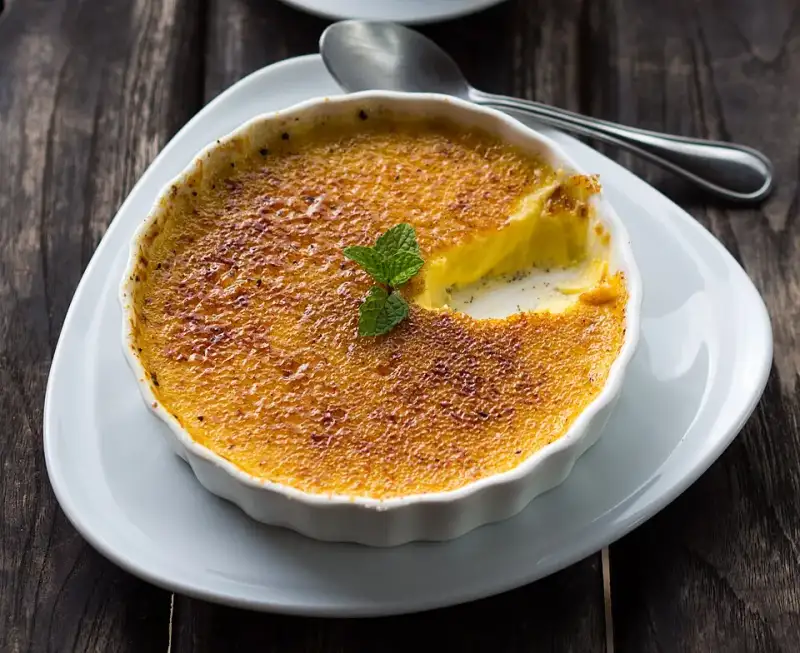
La Crème Brûlée : Une Ode à la Gourmandise et au Raffinement Bienvenue dans mon univers sucré. Je suis Chloe Blanc, et si la pâtisserie française était une couronne majestueuse, la crème brûlée en serait incontestablement l'un des diamants les plus purs et les plus éclatants. C'est avec une immense émotion et une passion dévorante que je vous invite aujourd'hui à redécouvrir ce monument absolu de notre gastronomie. La crème brûlée n'est pas simplement un dessert figurant sur la carte de toutes les brasseries du monde ; c'est une véritable expérience sensorielle, une poésie intemporelle qui se déguste à la cuillère, un chef-d'œuvre de simplicité qui exige pourtant une rigueur et une technique irréprochables. Depuis mes premiers pas en tant qu'apprentie pâtissière jusqu'à aujourd'hui, je n'ai jamais cessé d'être fascinée par ce contraste fondamental et audacieux qui caractérise ce dessert : le frisson de la crème glacée, riche, onctueuse et profondément vanillée, qui vient s'entrechoquer avec la chaleur ardente et la fine amertume d'une croûte de caramel ambré, tout juste saisie par la flamme. Le son du premier coup de cuillère — ce fameux « crac » sonore, net et satisfaisant — résonne comme une promesse de bonheur. Dans cet article exhaustif, je vais vous dévoiler tous mes secrets de chef pour maîtriser l'art délicat de la crème brûlée, depuis la sélection minutieuse de vos matières premières jusqu'au spectaculaire coup de chalumeau final. Préparez-vous à un voyage gustatif inoubliable au cœur du savoir-faire à la française. Un Voyage dans le Temps : Les Origines Disputées de la Crème Brûlée L'histoire de la gastronomie est souvent pavée de mystères, de légendes et de revendications passionnées. La crème brûlée ne fait pas exception à cette règle fascinante. Si nous autres Français sommes fiers de clamer la paternité de cette merveille, la vérité historique est une toile complexe tissée à travers toute l'Europe. Les Premières Traces Écrites La toute première mention officielle et imprimée de la recette sous le nom exact de « crème brûlée » apparaît en France, en l'an de grâce 1691. C'est dans le célèbre ouvrage Le Cuisinier Roial et Bourgeois, rédigé par le chef visionnaire François Massialot, que l'on trouve ce trésor. Massialot, qui officiait pour des figures illustres de la noblesse et de la cour, décrit une crème à base de jaunes d'œufs et de lait, sucrée et surmontée d'une croûte de sucre caramélisé à l'aide d'une pelle rougie au feu. La légende raconte que le jeune duc d'Orléans, se plaignant que sa crème était trop froide, inspira Massialot. Le chef eut alors l'idée de passer un fer chaud sur le sucre saupoudré au-dessus de la crème, réchauffant ainsi la surface tout en conservant la fraîcheur au cœur du dessert. Les Cousines Européennes : Catalogne et Angleterre Cependant, il serait injuste de ne pas mentionner les illustres cousines de notre crème brûlée. La Crema Catalana : En Espagne, et plus particulièrement en Catalogne, on revendique farouchement l'invention de la Crema Catalana. Selon les récits locaux, ce dessert daterait du Moyen Âge, élaboré par des religieuses pour la visite impromptue d'un évêque. La grande différence réside dans sa composition et sa préparation : elle est souvent parfumée aux zestes de citron et à la cannelle, et elle est épaissie avec de la fécule (comme la Maïzena) sur le feu, plutôt que d'être cuite doucement au four au bain-marie. La Trinity Cream : Outre-Manche, le prestigieux Trinity College de l'Université de Cambridge affirme avoir inventé la « Trinity Cream » ou « Cambridge Burnt Cream » à la fin du XIXe siècle. Les cuisines du collège possédaient même un fer à marquer spécial, orné des armoiries de l'école, destiné à brûler le sucre à la surface de la crème.Quoi qu'il en soit, la version française, avec son appareil riche exclusivement composé de crème liquide (et non de lait), de jaunes d'œufs, de sucre et de véritable vanille, s'est imposée au fil des siècles comme le standard ultime de l'élégance. L'Anatomie de la Perfection : La Sélection des Ingrédients Dans la haute pâtisserie, et tout particulièrement pour des recettes comprenant moins de cinq ingrédients, la qualité des matières premières ne laisse aucune place au compromis. Une crème brûlée médiocre est souvent le résultat d'ingrédients de seconde zone. Voici comment je sélectionne mon quatuor fondamental. 1. La Crème : La Quête de l'Onctuosité C'est l'élément central, l'âme texturale du dessert. Oubliez le lait, oubliez les crèmes allégées. Pour obtenir cette texture soyeuse, dense et veloutée qui tapisse le palais avec grâce, il faut impérativement utiliser une crème liquide entière. Je recommande une crème fleurette contenant au minimum 35 % de matière grasse. La matière grasse est le véhicule par excellence des arômes ; c'est elle qui va capturer et emprisonner les molécules volatiles de la vanille pour les restituer lors de la dégustation. Si vous souhaitez alléger (bien que je vous le déconseille pour une expérience authentique), vous pouvez opter pour un mélange moitié crème entière et moitié lait entier, mais vous perdrez en richesse.2. Les Œufs : L'Or Liquide La crème brûlée est techniquement une « crème prise » au four. L'agent coagulant naturel qui permet à la préparation de figer délicatement est le jaune d'œuf.Je n'utilise que des œufs extra-frais, issus de poules élevées en plein air ou de l'agriculture biologique. Le jaune d'œuf apporte non seulement la structure grâce à ses protéines et à la lécithine (un émulsifiant naturel), mais il donne aussi cette magnifique couleur ivoire tirant vers l'or clair. Comptez généralement environ un jaune d'œuf robuste pour 100 ml de liquide pour obtenir la tenue parfaite, ni trop ferme comme un flan, ni trop liquide.3. Le Sucre : La Douceur Équilibrée Il y a deux interventions du sucre dans cette recette :À l'intérieur de l'appareil : J'utilise du sucre en poudre blanc, fin (sucre semoule). Il se dissout rapidement et facilement lorsqu'on le fouette avec les jaunes d'œufs. Il ne faut pas trop sucrer l'appareil, car la croûte finale apportera un pic de sucrosité important. Pour la caramélisation : Nous y reviendrons en détail, mais la cassonade est souvent privilégiée pour sa couleur et sa texture.4. La Vanille : L'Épice des Rois S'il y a un ingrédient sur lequel il est strictement interdit de tricher, c'est bien la vanille. Fuyez les arômes artificiels, les essences synthétiques et les poudres de vanille épuisée qui n'ont plus de parfum. Une crème brûlée de luxe exige une gousse de vanille charnue, souple, luisante et gorgée de caviar (les fameux petits grains noirs). La Vanille de Madagascar (Planifolia) : C'est le grand classique. Elle offre des notes boisées, chaudes, cacaotées et une forte concentration en vanilline. C'est une valeur sûre qui rappelle les saveurs rassurantes de l'enfance. La Vanille de Tahiti (Tahitensis) : C'est ma préférée pour les grandes occasions. Ses gousses sont plus larges, très charnues, et développent des arômes floraux, fruités, avec des notes subtiles de pruneau, d'anis et de fève tonka. Elle transforme une simple crème en un chef-d'œuvre aromatique complexe.La Technique : L'Alchimie de la Préparation L'Infusion : Le Secret d'un Parfum Puissant Le processus commence par l'infusion, une étape cruciale trop souvent négligée. Pour extraire le maximum d'arômes de votre gousse de vanille, voici ma méthode infaillible :Fendez la gousse de vanille en deux dans le sens de la longueur à l'aide d'un petit couteau d'office bien aiguisé. Grattez minutieusement l'intérieur avec le dos de la lame pour récolter tout le caviar noir. Placez la crème liquide dans une casserole, ajoutez-y les grains de vanille ainsi que la gousse fendue. Faites chauffer doucement jusqu'à frémissement (ne laissez surtout pas bouillir à gros bouillons). Retirez immédiatement du feu, couvrez la casserole d'un film alimentaire ou d'un couvercle hermétique, et laissez infuser pendant au moins 30 minutes. Le fait de couvrir empêche l'évaporation des composés aromatiques volatils.Le Blanchiment et le Mélange Pendant que la crème marine dans ce bain de parfums divins, occupez-vous des jaunes d'œufs. Dans un grand cul-de-poule, versez les jaunes d'œufs et le sucre semoule. À l'aide d'un fouet, mélangez vigoureusement. Attention, il s'agit de « blanchir » légèrement le mélange, c'est-à-dire le rendre homogène et un peu mousseux, mais il ne faut surtout pas le monter de manière excessive ! Si vous incorporez trop d'air, votre crème brûlée sera remplie de petites bulles disgracieuses et perdra sa texture dense et fondante pour devenir spongieuse. Une fois la crème infusée (vous pouvez la réchauffer un tout petit peu si elle a trop refroidi, mais elle ne doit pas être bouillante), retirez la gousse épuisée. Versez ensuite un tiers de cette crème parfumée sur le mélange jaunes-sucre tout en remuant doucement. Incorporez ensuite le reste de la crème. Astuce de Chef : Passez toujours votre appareil liquide au travers d'un chinois étamine (une passoire très fine) avant de remplir vos ramequins. Cela permet de retenir les éventuels petits germes des jaunes d'œufs (les chalazes) ou les fragments de gousse, garantissant ainsi une texture soyeuse d'une perfection absolue. S'il y a de l'écume à la surface de votre liquide, retirez-la avec une écumoire ou passez un rapide coup de chalumeau à la surface pour faire éclater les bulles.La Cuisson : Le Défi de la Maîtrise Thermique La cuisson est l'étape où tout se joue. Le jaune d'œuf coagule à partir de 68°C. Si l'appareil dépasse les 85°C, les œufs risquent de "grainer" (de faire des grumeaux), transformant votre crème de luxe en une omelette sucrée fort peu ragoûtante. Le Bain-Marie et le Four Doux C'est pourquoi la cuisson au bain-marie est historiquement privilégiée. Elle agit comme un bouclier thermique, garantissant une montée en température douce, lente et homogène.Préchauffez votre four à basse température. La plupart des chefs préconisent un four à 95°C ou 100°C (thermostat 3). C'est la clé ! Une cuisson douce et prolongée est toujours préférable à une cuisson rapide et violente. Placez vos ramequins (de préférence en porcelaine, larges et peu profonds pour maximiser la surface de croûte caramélisée, car c'est là que réside tout le plaisir) dans un grand plat à gratin. Versez l'appareil à crème dans les ramequins, presque jusqu'à ras bord. Versez ensuite de l'eau frémissante dans le fond du plat à gratin, jusqu'à mi-hauteur des ramequins. Attention à ne pas éclabousser d'eau dans vos crèmes !L'Évaluation de la Cuisson : Le Fameux « Tremblotant » Le temps de cuisson varie énormément selon votre four, l'épaisseur de vos ramequins et la température de votre appareil de base. Cela peut aller de 45 minutes à plus d'une heure. Mais comment savoir si c'est cuit ? Oubliez la minuterie, fiez-vous à vos yeux et à vos mains. Avec un gant de cuisine, tapotez doucement le bord d'un ramequin. Les bords doivent être pris et fermes, mais le centre (sur un diamètre de 2 à 3 centimètres) doit encore être légèrement mobile et tremblotant, un peu comme de la gélatine. La crème continuera de figer en refroidissant. Si le centre est complètement rigide, c'est que la crème est trop cuite. Le Repos au Froid : La Patience est une Vertu Une fois les ramequins sortis du bain-marie et refroidis à température ambiante, couvrez-les d'un film alimentaire (sans toucher la crème) et placez-les au réfrigérateur. C'est ici que votre patience est mise à l'épreuve. Une véritable crème brûlée digne de ce nom doit reposer au froid pendant un minimum de 12 heures, idéalement 24 heures. Pourquoi ?La Texture : C'est le froid qui va achever de figer la préparation, lui donnant sa texture compacte, fraîche et fondante. L'Arôme : Les saveurs de la vanille ont besoin de temps pour infuser profondément l'appareil, s'épanouir et maturer. Le Contraste : La crème doit être glacée au moment où vous la caraméliserez. Si elle n'est pas assez froide, le coup de chalumeau risque de la réchauffer entièrement, détruisant ce contraste chaud-froid tant recherché.Le Couronnement : Le Spectacle de la Caramélisation Le moment de servir est arrivé. Le repas s'achève, vos convives attendent. C'est l'heure du spectacle pyrotechnique final. Quel Sucre Choisir ? Oubliez le sucre en poudre classique qui fond de manière inégale et nécessite trop de temps pour caraméliser. Le choix royal est la cassonade (sucre de canne roux). Ses cristaux légèrement plus gros fondent et caramélisent rapidement, offrant une belle couleur ambrée et de légères notes de mélasse. Certains chefs aiment utiliser de la vergeoise ou du sucre muscovado, mais ils ont tendance à s'agglomérer en raison de leur humidité. La Technique du Chalumeau La caramélisation ne se fait jamais à l'avance. Elle s'opère devant vos invités ou dans les minutes qui précèdent le service. Si vous la faites en avance, le sucre pompera l'humidité de la crème et se ramollira, ruinant tout votre travail.Saupoudrez une fine couche régulière de cassonade sur la surface de chaque crème glacée. Prenez le ramequin en main, inclinez-le et tapotez pour répartir le sucre. Videz l'excédent s'il y en a. Une couche trop épaisse fera un bloc de caramel impénétrable ; une couche trop fine brûlera trop vite. Allumez votre chalumeau de cuisine. Réglez-le sur une flamme moyenne. Passez la flamme sur le sucre à une distance d'environ 5 à 10 centimètres, avec des mouvements circulaires continus. Ne restez jamais statique ! Le sucre va fondre, bouillonner doucement, blondir puis roussir. Recherchez une couleur ambre foncée. C'est à la frontière de l'amertume du caramel brun que l'équilibre avec la douceur de la crème se crée.Dès que la croûte est formée et durcie (cela prend moins de 30 secondes en refroidissant), servez immédiatement ! Variations Contemporaines et Audaces Créatives Bien que la version classique à la vanille de Madagascar soit intouchable, ma nature créative de pâtissière me pousse souvent à explorer de nouveaux horizons. La base de la crème brûlée est une merveilleuse toile vierge pour expérimenter.Infusions Herbacées et Florales : Remplacez une partie de la vanille par une infusion de fleurs de lavande séchées, de thé Earl Grey à la bergamote, ou de thé vert Matcha. Les notes florales s'accordent divinement bien avec la richesse des œufs. Les Épices : Une pointe de fève Tonka râpée apporte des arômes envoûtants d'amande amère et de foin coupé. La cardamome verte infusée offre un voyage direct vers l'Orient. Les Insertions Clandestines : Pour la surprise, il est possible de cacher au fond du ramequin, avant de verser l'appareil, une fine couche de compotée de framboises acidulées, quelques éclats de marrons glacés, ou encore un praliné croustillant noisette. Lors de la dégustation, la cuillère plonge à travers le caramel, la crème vanille, pour découvrir ce trésor enfoui.L'Art de la Dégustation et les Accords Parfaits Déguster une crème brûlée est un acte rituel. Le dos de la cuillère vient frapper la surface. Le crac doit être franc. Ensuite, on plonge la cuillère profondément pour récupérer à la fois un éclat de caramel tiède et une belle portion de crème glacée. Le contraste en bouche est saisissant : la fine amertume croquante du sucre brûlé est immédiatement enveloppée et adoucie par la texture onctueuse, douce, et incroyablement parfumée de la crème froide. Que Boire avec ce Joyau ? Pour accompagner un tel monument, les accords doivent être à la hauteur.Les Vins Liquoreux : Un grand vin liquoreux français est le partenaire naturel. Un Sauternes, un Barsac, ou un Coteaux du Layon, avec leurs arômes de miel, de fruits confits et de cire d'abeille, viennent créer un écho parfait à la vanille et au caramel. Le Champagne : Pour jouer sur les contrastes, un Champagne Blanc de Blancs (100% Chardonnay) un peu vieux, aux notes briochées et beurrées, apportera une vivacité et des bulles rafraîchissantes qui "nettoieront" le palais de la richesse de la crème. Sans Alcool : Un thé noir robuste comme un Darjeeling de première récolte, ou un thé Oolong légèrement torréfié, offriront une douce amertume tannique qui équilibrera le sucre de la croûte.En Conclusion Chers amis épicuriens, la confection d'une crème brûlée d'exception est un voyage magnifique qui célèbre les bases mêmes de la grande Pâtisserie Française. Elle nous rappelle qu'avec une poignée d'ingrédients nobles, un respect absolu du produit et une technique maîtrisée, il est possible de créer des émotions pures et inoubliables. Je vous invite dès aujourd'hui à enfiler votre tablier, à sélectionner vos plus belles gousses de vanille et à faire chanter votre chalumeau. Prenez le temps, respectez les cuissons douces, et surtout, partagez ce chef-d'œuvre avec ceux que vous aimez. La magie de la pâtisserie réside avant tout dans cet acte de générosité. N'hésitez pas à partager vos réalisations, vos succès (et même vos essais trop cuits, car c'est ainsi que l'on apprend !) avec moi. À très bientôt pour de nouvelles aventures gourmandes. Avec toute ma passion sucrée, Chloe BlancRejoignez la communauté des passionnés de haute pâtisserie et partagez vos créations avec les hashtags incontournables : #Patisserie #France #Dessert #ChloeBlanc #Gastronomie #Sweet #CremeBrulee #ArtDeVivre #Gourmandise #patisserie #dessert #france #chloeblanc #sweet Related InsightsCannelé : Le Trésor Croustillant de Bordeaux Mille-feuille : Mille et Une Saveurs de la Vanille Croissant : L'Art du Feuilletage et de la Tradition{ "@context": "https://schema.org", "@type": "FAQPage", "mainEntity": [ { "@type": "Question", "name": "What is the main focus of Crème Brûlée : La Douce Symphonie du Caramel?", "acceptedAnswer": { "@type": "Answer", "text": "Plongez dans l'univers de la haute pâtisserie avec Chloe Blanc et découvrez les secrets de ce dessert emblématique." } }, { "@type": "Question", "name": "Who authored the comprehensive guide on Crème Brûlée : La Douce Symphonie du Caramel?", "acceptedAnswer": { "@type": "Answer", "text": "This detailed article and its insights were carefully researched and authored by Chloe Blanc." } }, { "@type": "Question", "name": "Where can I find more related content about Gastronomy?", "acceptedAnswer": { "@type": "Answer", "text": "You can explore more articles, detailed reviews, and similar insights by browsing the Related Insights section at the bottom of this article or visiting our dedicated Gastronomy category page." } } ] }
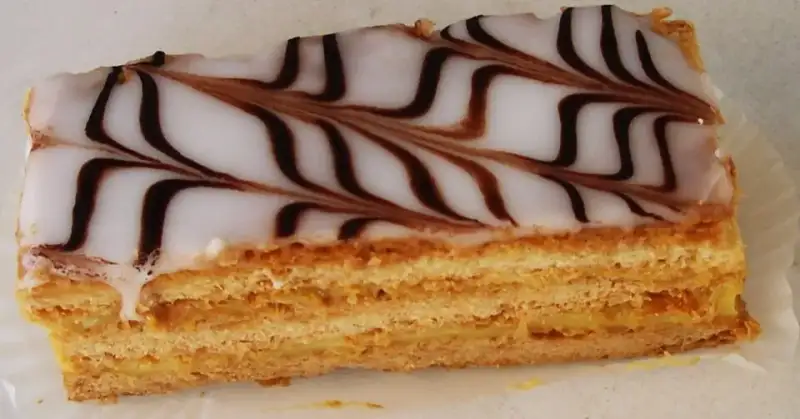
Bonjour à tous les amoureux de la gastronomie et de la douceur ! Je suis Chloé Blanc, chef pâtissière, et aujourd'hui, je vous invite à plonger avec moi dans les arcanes de la haute pâtisserie française. #Patisserie #France #Dessert #HauteGastronomie Si la pâtisserie française était un royaume, le mille-feuille en serait sans conteste l'un de ses monarques les plus majestueux, une couronne dorée et croustillante posée sur un trône de douceur vanillée. Le simple mot "mille-feuille" évoque instantanément, pour tout Français et pour tout amateur de sucré à travers le monde, une image de perfection géométrique, un contraste de textures absolument bouleversant, et une explosion de saveurs qui réveille les souvenirs les plus enfouis, nous ramenant souvent aux joies simples de l'enfance. Ce n'est pas simplement un gâteau, c'est une véritable architecture, une construction fragile et éphémère qui demande rigueur, passion, et une technique irréprochable. En tant que pâtissière, je peux vous confier qu'il y a peu de choses aussi gratifiantes que d'entendre le crépitement caractéristique d'une pâte feuilletée parfaitement cuite lorsqu'on la découpe avec la lame d'un couteau bien aiguisé. Ce son, c'est la promesse d'un moment de pur bonheur. Dans cet article particulièrement exhaustif, je souhaite partager avec vous ma passion brûlante pour ce classique intemporel de la gastronomie de notre belle #France. Nous allons explorer ensemble son histoire fascinante, disséquer ses composants avec l'œil d'un artisan, comprendre la chimie délicate qui opère dans nos fours, et bien sûr, je vous livrerai quelques-uns de mes secrets les plus précieux pour que vous puissiez, vous aussi, approcher cette perfection à la maison. #ChefPâtissier #MilleFeuille #Gourmandise #Sweet L'Histoire et les Origines du Mille-feuille : Un Héritage Séculaire Avant de mettre les mains dans la farine, il est essentiel de comprendre d'où vient ce monument de notre patrimoine culinaire. Contrairement à certains desserts dont la paternité est clairement établie (comme le Paris-Brest créé par Louis Durand ou le Saint-Honoré par la maison Chiboust), les origines du mille-feuille sont un peu plus nébuleuses, s'étendant sur plusieurs siècles d'innovations culinaires et de perfectionnements successifs. La première trace écrite d'une recette s'apparentant de loin au mille-feuille remonte à l'année 1651. C'est dans le célèbre ouvrage "Le Cuisinier françois" de François Pierre de La Varenne, l'un des pères fondateurs de la grande cuisine française moderne, que l'on trouve la mention d'un gâteau fait de feuilles de pâte superposées. Cependant, la pâte de l'époque n'avait pas encore la légèreté, l'aération et la complexité de celle que nous connaissons aujourd'hui. Elle s'apparentait plus à une succession de pâtes brisées fines. Il a fallu attendre la fin du 18ème siècle et le début du 19ème siècle pour que la véritable pâte feuilletée, telle que nous l'utilisons dans les laboratoires professionnels d'aujourd'hui, soit perfectionnée. Et c'est au "roi des chefs et chef des rois", l'illustre Marie-Antoine Carême, que nous devons cette évolution majeure. Carême a systématisé et codifié la technique du "tourage" (les fameux tours donnés à la pâte), créant ainsi une structure aérée et croustillante sans précédent. Bien qu'il ne soit pas l'inventeur de la pâte feuilletée (dont les origines remonteraient potentiellement au Moyen-Orient avec la pâte phyllo, ramenée en Europe lors des croisades), il a grandement contribué à populariser son utilisation dans les desserts à étages prestigieux. Le terme même de "mille-feuille" est une charmante exagération poétique de la réalité mathématique de la pâte. En effet, avec la méthode traditionnelle de pliage (généralement six tours simples), la pâte comporte très exactement 729 couches de beurre intercalées entre 730 couches de détrempe. On est loin des mille feuilles annoncées par son nom, mais le résultat en bouche justifie amplement cette jolie licence poétique ! Au 19ème siècle, le dessert sous sa forme finale, tel que nous le reconnaissons aujourd'hui avec son glaçage marbré, fut proposé par le pâtissier parisien Adolphe Seugnot en 1867. L'histoire raconte qu'il fut vendu avec un tel succès que sa pâtisserie, située rue du Bac à Paris, ne désemplissait pas et que les gens faisaient la queue sur le trottoir pour obtenir cette merveille de la pâtisserie parisienne. Aujourd'hui, plus d'un siècle et demi plus tard, il figure à la carte de toutes les bonnes pâtisseries de France et du monde, ayant traversé les époques sans jamais perdre de sa superbe ni de sa désirabilité. L'Anatomie d'un Chef-d'œuvre : Les Trois Piliers du Mille-feuille Un mille-feuille traditionnel se compose de trois éléments fondamentaux. La beauté de ce dessert réside dans l'équilibre parfait entre ces composants. S'il manque de maîtrise dans l'un d'eux, c'est toute la structure, tant physique que gustative, qui s'effondre. 1. La Pâte Feuilletée (Traditionnelle ou Inversée) C'est le squelette du mille-feuille, sa fondation même. Aujourd'hui, dans la haute pâtisserie contemporaine, nous privilégions très souvent la pâte feuilletée inversée. Quelle est la différence fondamentale ? Dans une pâte classique, le beurre (le beurre de tourage) est enfermé dans la détrempe (le mélange d'eau, de farine et de sel). Dans le feuilletage inversé, inventé bien plus tard, c'est le contraire : la détrempe est enfermée dans un mélange de beurre et de farine (appelé le beurre manié). Cette technique, bien que légèrement plus délicate à manipuler car le beurre extérieur fond rapidement sous les mains, offre plusieurs avantages considérables pour un résultat professionnel :Un développement plus régulier : La pâte lève de manière beaucoup plus uniforme et droite à la cuisson, évitant l'effet "tour de Pise". Une friabilité extraordinaire : Le résultat est beaucoup plus fondant en bouche, moins élastique et remarquablement croustillant. Elle fond sur la langue tout en croquant sous la dent. Une meilleure conservation : Elle a tendance à moins se rétracter lors du repos et se conserve mieux à l'air libre après cuisson.2. La Crème Pâtissière (ou Crème Diplomate) Le deuxième pilier est la crème. Traditionnellement, il s'agit d'une crème pâtissière à la vanille, riche, onctueuse et profondément réconfortante. Cependant, pour apporter plus de légèreté à l'ensemble et correspondre aux palais modernes qui recherchent moins de lourdeur, de nombreux chefs (moi y compris, dans ma propre boutique) optent aujourd'hui pour une crème diplomate ou une crème mousseline.La crème pâtissière est le classique absolu : du lait entier frais, des jaunes d'œufs pour la richesse, du sucre (modérément), de la fécule de maïs (ou de la poudre à crème pour la tenue) et d'abondantes gousses de vanille. Elle doit être onctueuse et non collante. La crème diplomate est une merveille de légèreté. C'est une crème pâtissière collée avec un peu de gélatine (pour la tenue) et à laquelle on incorpore délicatement de la crème liquide entière montée en chantilly. Cela donne une texture aérienne, un véritable nuage de vanille qui contraste merveilleusement avec le croustillant tranchant de la pâte feuilletée. La crème mousseline incorpore du beurre pommade, émulsionné foisonné à la crème pâtissière refroidie. Elle offre une texture plus ferme, très onctueuse et extrêmement gourmande. C'est elle que l'on retrouve dans le célèbre Fraisier.Le choix de la vanille est primordial pour l'identité de votre mille-feuille. J'ai une préférence marquée pour la vanille de Tahiti (Vanilla tahitensis) pour ses notes florales, sucrées et presque anisées, ou pour la vanille de Madagascar (Vanilla planifolia) pour ses arômes plus boisés, intenses, profonds et caramélisés. Une belle gousse charnue, fendue et grattée, infusée longuement dans le lait, c'est le secret d'un parfum inoubliable. #Vanille #Vanilla #Baking 3. Le Glaçage (Fondant, Sucre Glace, ou Décoration Moderne) La finition traditionnelle du mille-feuille, celle que l'on imagine dans les vitrines à l'ancienne, est un glaçage au fondant blanc, marbré de fines rayures de chocolat fondu (ou de fondant au cacao), étirées au couteau pour créer le motif caractéristique en chevrons, appelé motif "mille-feuille". C'est le style "pâtisserie de quartier" classique et rassurant que nous aimons tous. Cependant, d'un point de vue gustatif, ce fondant peut apporter une dose de sucre excessive qui déséquilibre le dessert et masque la subtilité de la vanille et le goût beurré de la pâte. La tendance moderne, initiée par des chefs visionnaires au début des années 2000, est de laisser le feuilletage apparent sur le dessus. La pâte du dessus est simplement saupoudrée de sucre glace et caramélisée au four. La surface devient brillante, lisse, et extrêmement croquante. On peut ensuite la décorer délicatement de points réguliers de crème pochée à la douille unie, de quelques éclats de feuille d'or, ou de gousses de vanille séchées, ajoutant ainsi de l'élégance, de la modernité et de la légèreté visuelle au gâteau. La Magie du Tourage : Un Processus de Rigueur et de Patience Laissez-moi vous parler plus en profondeur de l'art du feuilletage. Réaliser une pâte feuilletée de qualité professionnelle n'est pas une simple recette à suivre machinalement, c'est un véritable artisanat qui demande une compréhension intime de la matière, des températures et du temps. La magie du mille-feuille repose sur ce que nous appelons la lamination, ou le tourage. #Artisanat #SavoirFaire #ChloeBlanc Le principe scientifique sous-jacent est absolument fascinant. L'objectif est de créer une alternance mécanique de couches ultrafines de pâte (composée principalement d'eau et de farine) et de couches de matière grasse (le beurre sec). Lors de la cuisson, sous l'effet brutal de la chaleur du four (généralement autour de 180°C à 200°C) :L'eau contenue dans la détrempe et le beurre commence à s'évaporer et se transforme en vapeur d'eau. Cette vapeur cherche naturellement à s'échapper vers le haut pour se libérer. En montant, elle rencontre les fines couches de beurre qui agissent comme des barrières imperméables. Le beurre fond et commence à frire les couches de pâte adjacentes. La pression de la vapeur pousse ces couches de pâte vers le haut de manière spectaculaire, créant ce développement en hauteur volumineux et cette structure alvéolée et feuilletée si caractéristique.Pour réussir ce miracle de la physique culinaire, il faut respecter des règles d'or incontournables :Le contrôle drastique de la température : C'est la clé de voûte de toute pâte feuilletée ! La détrempe et le beurre manié doivent toujours être à la même consistance (souple mais ferme) et bien froids. Si le beurre est trop chaud, il va fondre, s'incorporer à la détrempe, et vous obtiendrez une pâte brisée grasse (adieu les belles couches régulières !). S'il est trop froid et cassant, il se brisera lors du laminage au rouleau, détruisant l'isolation des couches et créant des fuites de beurre à la cuisson. Les temps de repos scrupuleux : Le gluten contenu dans la farine se développe et crée un réseau élastique lorsqu'on travaille la pâte. Il est impératif de laisser la pâte reposer au réfrigérateur pendant au moins 1 à 2 heures entre chaque "tour" (pliage) pour que ce réseau de gluten se détende. Sans cela, la pâte résistera au rouleau, se rétractera irrémédiablement à la cuisson, et deviendra dure. Un bon mille-feuille se prépare sur deux, voire trois jours pour respecter ces temps de repos physiologiques de la pâte. La précision géométrique obsessionnelle : Les pliages doivent être nets, les bords parfaitement superposés et coupés droits. Tout défaut de régularité lors du tourage se traduira par un développement asymétrique ou de guingois à la cuisson.Mes Secrets de Chef pour un Mille-feuille Parfaitement Maîtrisé En tant que Chef Pâtissière, j'ai passé des milliers d'heures, fait des centaines d'essais, pour perfectionner mon mille-feuille signature. Voici les secrets professionnels que j'applique quotidiennement dans ma cuisine et que vous pouvez reproduire chez vous pour élever votre dessert à un niveau supérieur : 1. La Caramélisation Maîtrisée du Feuilletage Une pâte feuilletée simplement dorée ne suffit pas pour un mille-feuille. Pour qu'elle résiste à l'humidité de la crème et garde son croustillant des heures durant, je procède à une caramélisation en deux temps. Je cuis d'abord mes abaisses de feuilletage piquées à la fourchette, coincées entre deux grilles lourdes ou plaques de cuisson avec du papier sulfurisé (pour forcer un développement régulier, dense, et empêcher que la pâte ne gonfle de manière désordonnée). La cuisson est longue, environ 40 minutes, pour assécher la pâte à cœur. Ensuite, je retire la plaque supérieure, je saupoudre généreusement toute la surface de sucre glace à l'aide d'un tamis fin, et je repasse la plaque au four à très haute température (230°C ou sous le gril/salamandre) pendant quelques minutes sous haute surveillance. Le sucre va fondre et créer une fine croûte de caramel de verre, brillant et imperméable. C'est le secret absolu d'un croustillant exceptionnel, persistant et parfumé. #Croustillant #Caramel 2. Le Montage "À la Minute" L'ennemi juré du mille-feuille, son talon d'Achille, c'est l'humidité. Si vous dressez votre gâteau des heures, voire la veille à l'avance, l'eau contenue dans la crème va inexorablement migrer et détremper la pâte, la rendant molle, spongieuse et caoutchouteuse. Le drame absolu ! Le montage doit idéalement se faire le plus tard possible, à "la minute" ou au maximum 2 à 3 heures avant la dégustation. Conservez vos plaques caramélisées à température ambiante dans un endroit très sec (jamais au réfrigérateur qui est saturé d'humidité !) et votre crème bien froide dans une poche à douille au frigo. Vous assemblerez le tout juste avant le repas, assurant ainsi le fameux contraste textuel. 3. La Découpe : L'Art Délicat de ne pas tout Écraser Comment découper un mille-feuille fraîchement monté sans faire jaillir la crème sur les côtés et écraser lamentablement le feuilletage si patiemment réalisé ? Le secret réside dans l'utilisation d'un couteau-scie (un très bon couteau à pain long et aiguisé) et non d'un couteau lisse. Ne cherchez surtout pas à appuyer de haut en bas ! Inclinez légèrement le couteau. Sciez délicatement, par des mouvements de va-et-vient amples et légers sans forcer la première couche de pâte caramélisée. Une fois la croûte percée, descendez progressivement sans jamais écraser la structure. Certains chefs utilisent même des couteaux électriques pour une coupe chirurgicale sans pression. 4. Le Choix Crucial du Beurre de Tourage N'utilisez jamais, au grand jamais, un beurre de supermarché standard pour réaliser votre pâte feuilletée. Il contient trop d'eau (environ 16% d'eau). Dans la sphère professionnelle, nous utilisons spécifiquement du beurre de tourage (ou beurre sec) qui possède un taux de matière grasse de 84% et un point de fusion plus élevé. Sa plasticité est incroyable, il s'étire sans casser. Si vous êtes un amateur et que vous n'avez pas accès à ce produit technique, optez impérativement pour un beurre AOP extra-fin (comme le célèbre beurre Charentes-Poitou), qui est naturellement plus sec, plus ferme et plus malléable. Le goût incomparable d'un bon beurre frais imprègne chaque couche et fait toute la différence. L'Importance du Détail : Bien Choisir Ses Autres Ingrédients Dans la haute gastronomie, la meilleure des techniques, sans d'excellents produits de base, ne donnera qu'un résultat médiocre. Pour réaliser le mille-feuille ultime, chaque ingrédient, même le plus simple, doit être sélectionné avec le plus grand soin.La Farine : Privilégiez une farine de gruau type T45 ou un mélange équilibré de T45 et T55. Elle doit être suffisamment riche en protéines (gluten) pour supporter les nombreux pliages et étalements successifs sans se déchirer, mais pas trop forte non plus pour ne pas rendre la pâte trop élastique et difficile à allonger. Le Lait : Un lait entier micro-filtré ou même cru (si vous pouvez le faire bouillir au préalable) apportera beaucoup plus de corps, de saveur et de rondeur à votre crème pâtissière qu'un lait demi-écrémé UHT sans âme. Les Œufs : Choisissez impérativement des œufs extra-frais, issus de poules élevées en plein air (catégorie 0 ou 1). Leurs jaunes, riches et bien colorés, donneront naturellement une magnifique teinte jaune doré à votre crème, sans nécessiter d'artifices ou de colorants. Le Sel : N'oubliez jamais le sel ! C'est le grand oublié de la pâtisserie amateur. Une petite pincée de sel fin ou de fleur de sel dans la pâte (pour réguler le gluten et donner du goût) et dans la crème agit comme un formidable exhausteur de goût naturel, rehaussant de manière spectaculaire les arômes subtils de la vanille et l'onctuosité du beurre.Les Erreurs Communes à Éviter Absolument Lors de mes ateliers et masterclasses avec des passionnés, je vois souvent les mêmes erreurs se répéter. Voici les pièges à éviter :Travailler dans une cuisine trop chaude : La pâte feuilletée déteste la chaleur. Si votre cuisine dépasse les 25°C au cœur de l'été, la réalisation d'un mille-feuille va relever du parcours du combattant. Travaillez sur un plan de travail en marbre si possible, ou remettez systématiquement la pâte au frais au moindre signe de ramollissement du beurre. Piquer la pâte de manière insuffisante : Avant la cuisson, il faut piquer très généreusement l'abaisse de pâte avec un pique-vite ou une fourchette. Sans cela, de grosses bulles d'air disgracieuses vont se former, détruisant la régularité et la planéité de votre couche. Mélanger la crème chaude avec le beurre : Si vous optez pour une mousseline, assurez-vous que votre base de crème pâtissière soit revenue à une température ambiante, de l'ordre de 20-22°C, soit la même température que votre beurre pommade. Un choc thermique ferait trancher la crème, séparant le gras de l'eau, donnant un aspect grumeleux désagréable en bouche.L'Évolution et les Déclinaisons Modernes du Mille-feuille L'avantage inouï des grands classiques de la pâtisserie française, c'est qu'ils offrent une toile vierge infinie pour l'expression de la créativité. Aujourd'hui, le mille-feuille s'est affranchi de son seul format traditionnel rectangulaire à plat. Avez-vous déjà goûté un mille-feuille monté sur la tranche (ou mille-feuille vertical) ? Cette technique novatrice, popularisée par de très grands chefs contemporains comme Philippe Conticini, consiste à tourner la pâte d'un quart de tour lors du dressage, après l'avoir découpée en rectangles. Ainsi, les strates de feuillets sont à la verticale plutôt qu'à l'horizontale. Lors de la découpe par le client et de la dégustation, la sensation en bouche est complètement et radicalement différente : la pâte se brise encore plus facilement sous la dent sans offrir de résistance globale, et le contraste d'intensité avec la crème moelleuse insérée entre les bandes verticales est magnifié. Du côté des saveurs, la vanille reste la reine incontestée, l'étalon-or, mais de très nombreuses déclinaisons subliment ce dessert et l'adaptent aux saisons :Le Praliné : Une crème mousseline généreusement parfumée au praliné noisette fait maison (façon Paris-Brest), un pur délice aux notes torréfiées pour les amateurs inconditionnels de fruits secs. La Pistache et la Framboise : Une crème légère diplomate à la pâte de pistache d'Iran, garnie de framboises fraîches insérées secrètement au cœur de la crème pour apporter une touche d'acidité et de fraîcheur qui tranche avec la richesse du beurre. Les Agrumes : Des crèmes légères au citron de Menton, au yuzu japonais ou à la clémentine de Corse, souvent associées à des inserts de confits de fruits acidulés pour réveiller les papilles. Le Chocolat et Caramel : Un feuilletage cacaoté (où une petite partie de la farine est remplacée par du cacao amer) associé à un crémeux dense au chocolat noir intense (70%) et à un insert de caramel beurre salé coulant. L'apothéose de la gourmandise ! #Gourmand #Chocolat #CaramelL'innovation n'a de limite que notre propre imagination et les saisons, tant que le respect indéfectible du croustillant de la pâte et de l'équilibre des textures demeure la priorité absolue du chef. L'Accord Parfait : Que Boire avec un Mille-feuille ? La dégustation d'une telle merveille mérite d'être accompagnée de la bonne boisson. Trop souvent, on commet l'erreur de servir un vin très sucré (comme un Sauternes) avec un dessert déjà riche. Pour balancer le gras de la crème et du feuilletage, je vous conseille plutôt un vin blanc effervescent avec une belle acidité, comme un Champagne Blanc de Blancs (100% Chardonnay) peu dosé. Ses bulles fines viendront nettoyer le palais après chaque bouchée, tandis que ses notes briochées feront écho au feuilletage cuit. Si vous préférez les boissons chaudes, un thé noir corsé, tel qu'un Earl Grey à la bergamote ou un thé de Ceylan, avec une pointe d'amertume, sera le compagnon idéal pour trancher avec la douceur de la vanille. Le café noir, léger et aromatique (comme un Moka d'Éthiopie), offre également un contraste saisissant et bienvenu. Conclusion : L'Émotion Intacte d'une Dégustation Inoubliable Le mille-feuille est bien plus qu'une simple accumulation de calories, de beurre et de sucre. C'est, lorsqu'il est bien exécuté, une véritable expérience polysensorielle. La vue, d'abord, flattée par l'architecture géométrique et nette, la couleur ambrée, dorée et brillante du feuilletage caramélisé, les milliers de petits grains noirs de vanille parsemés comme des étoiles dans la crème ivoire. L'ouïe, ensuite, immanquablement stimulée par le craquement sec, profond et sonore de la pâte qui cède sous la pression de la fourchette. Et enfin, bien sûr, le goût et le toucher palatin : l'explosion en bouche, la tiédeur enveloppante de la vanille de Tahiti, la fraîcheur lactée de la crème aérienne, et ce goût incomparable de beurre noisette cuit qui tapisse longuement le palais. #FoodPorn #PastryLife #Degustation Faire un mille-feuille maison dans les règles de l'art demande incontestablement du temps, de l'abnégation, un peu de force dans les bras, et beaucoup d'amour. C'est un test de patience et de persévérance. Mais lorsque vous posez ce majestueux gâteau au centre de la table de vos convives, et que le silence respectueux se fait à la première bouchée, remplacé par des soupirs de satisfaction, vous savez que chaque minute, chaque tour, chaque repos passé à façonner la pâte en valait largement la peine. N'ayez pas peur de vous lancer. La pâte feuilletée intimide beaucoup de pâtissiers amateurs, elle est entourée d'une aura de mystère et de complexité. Mais avec de la méthode, de la rigueur, un bon rouleau à pâtisserie lourd, un réfrigérateur fidèle, et surtout les bons ingrédients de départ, tout le monde peut y arriver. Acceptez que votre premier essai ne soit peut-être pas parfait visuellement. Le feuilletage sera peut-être de travers, la crème un peu fuyante. Ce n'est pas grave ! C'est la beauté intrinsèque de l'artisanat : on apprend par la pratique, on comprend les réactions de la matière sous nos doigts, on s'améliore à chaque tentative. L'important est de se faire plaisir. Je vous invite chaleureusement à enfiler votre plus beau tablier blanc, à fariner légèrement votre plan de travail, à sortir votre meilleur beurre, et à vous lancer avec audace dans cette magnifique aventure qu'est la réalisation d'un mille-feuille maison. Croyez-moi, l'effort fourni est largement récompensé par la joie de la dégustation et la fierté de la création. Avec toute ma passion pour notre métier, mon respect pour nos traditions, et ma gourmandise indéfectible, Chloé BlancChef Pâtissière, Amoureuse de la Gastronomie Française#ChloeBlanc #Masterclass #PastryChef #ArtCulinaire #SaveursDeFrance #BoulangeriePatisserie #Millefeuille #Paris #patisserie #dessert #france #chloeblanc #sweet Related InsightsParis-Brest : Le Voyage Praliné Inoubliable Cannelé : Le Trésor Croustillant de Bordeaux Croissant : L'Art du Feuilletage et de la Tradition{ "@context": "https://schema.org", "@type": "FAQPage", "mainEntity": [ { "@type": "Question", "name": "What is the main focus of Mille-feuille : Mille et Une Saveurs de la Vanille?", "acceptedAnswer": { "@type": "Answer", "text": "Plongez dans l'univers de la haute pâtisserie avec Chloe Blanc et découvrez les secrets de ce dessert emblématique." } }, { "@type": "Question", "name": "Who authored the comprehensive guide on Mille-feuille : Mille et Une Saveurs de la Vanille?", "acceptedAnswer": { "@type": "Answer", "text": "This detailed article and its insights were carefully researched and authored by Chloe Blanc." } }, { "@type": "Question", "name": "Where can I find more related content about Gastronomy?", "acceptedAnswer": { "@type": "Answer", "text": "You can explore more articles, detailed reviews, and similar insights by browsing the Related Insights section at the bottom of this article or visiting our dedicated Gastronomy category page." } } ] }
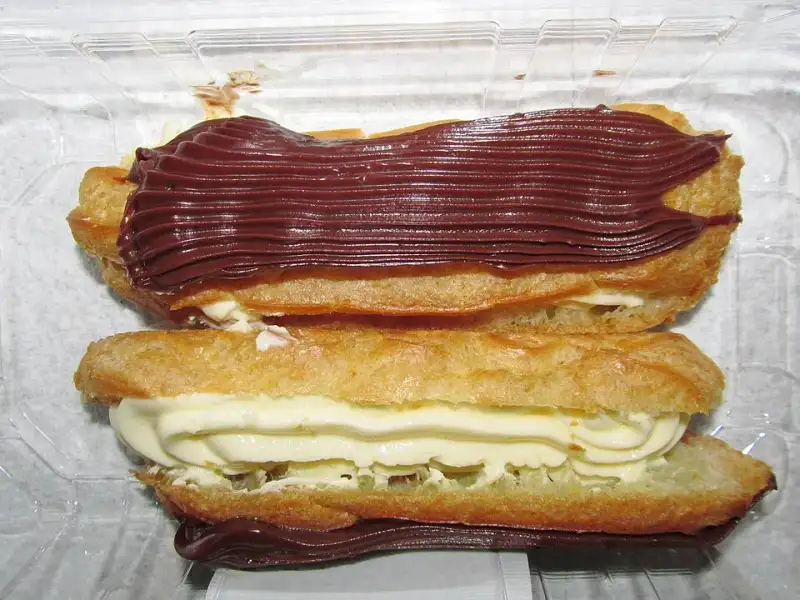
Éclair : Le Joyau de la Pâtisserie Française Bonjour à toutes et à tous, chers passionnés de haute gourmandise. Je suis Chloe Blanc, et c'est avec une émotion toujours renouvelée que je vous ouvre aujourd'hui les portes de mon laboratoire, ce sanctuaire où la farine, le beurre, le sucre et les œufs se transforment en poésie. Aujourd'hui, nous allons nous pencher sur un monument absolu, une véritable institution qui trône fièrement dans les vitrines de toutes les boutiques de l'Hexagone : le légendaire, l'incontournable, le majestueux Éclair. En tant que pâtissière, j'ai souvent coutume de dire que l'on juge le talent et la rigueur d'un chef à la qualité de ses classiques. L'éclair est l'un de ces marqueurs impitoyables. Derrière son apparente simplicité — une pâte, une crème, un glaçage — se cache une complexité technique redoutable, une exigence de chaque instant, et une quête d'équilibre absolu. Dans cet article ultra-détaillé, je vous invite à plonger avec moi dans les arcanes de ce dessert iconique, de sa riche histoire à ses techniques de réalisation les plus pointues, en passant par ses déclinaisons contemporaines. Préparez vos tabliers, affûtez vos douilles, et laissez-vous transporter par la magie de la pâtisserie française. #Patisserie #France #Dessert #ChloeBlanc #HautePatisserieChapitre 1 : Les Origines Fascinantes d'une Légende Sucrée Avant de revêtir notre tablier et de peser nos ingrédients au gramme près, il est primordial de comprendre l'âme de notre sujet. L'histoire de la pâtisserie française est un roman fascinant, peuplé de rois, de reines, d'artisans de génie et d'inventions fortuites. L'éclair ne fait pas exception à la règle. On situe généralement la naissance de l'éclair au milieu du XIXe siècle, aux alentours de 1850. Avant de porter ce nom évocateur qui claque comme une évidence, ce dessert était connu sous l'appellation charmante mais un peu compassée de "pain à la duchesse" ou encore de "petite duchesse". Il s'agissait d'un petit chou de forme allongée, roulé dans des amandes effilées avant cuisson, et souvent garni de confiture, de crème pâtissière ou de purée de fruits. C'est à l'immense Marie-Antoine Carême, souvent considéré comme le premier véritable "chef" de l'histoire et le fondateur de la haute gastronomie française, que l'on attribue les prémices de la pâte à choux moderne. Bien qu'il soit mort avant l'invention officielle du nom "éclair", ses travaux sur le perfectionnement de la pâte à choux (qu'il appelait alors "pâte à chaud") ont ouvert la voie à la création de ce chef-d'œuvre. Mais d'où vient donc ce nom si particulier, "éclair" ? L'étymologie, dans le domaine de la gastronomie, est souvent sujette à de merveilleuses légendes. La version la plus acceptée, et incontestablement la plus poétique, stipule que ce dessert fut baptisé ainsi car "il se mange en un éclair". Sa forme ergonomique, son cœur fondant et sa gourmandise irrésistible faisaient qu'il disparaissait des assiettes à la vitesse de la lumière. Une autre théorie, plus visuelle, suggère que la brillance miroitante de son glaçage fondant captait la lumière et rappelait l'éclat d'un éclair dans un ciel d'orage. Quelle que soit la vérité, ce nom a traversé les siècles avec la même fulgurance que la pâtisserie qu'il désigne.Chapitre 2 : La Philosophie de l'Éclair Selon Chloe Blanc Pour moi, l'éclair n'est pas seulement un dessert, c'est une véritable architecture gustative. C'est le dialogue constant entre trois éléments fondamentaux qui, s'ils sont parfaitement maîtrisés, créent une symphonie en bouche. Le Contenant (La Pâte à Choux) : Il doit être droit, régulier, sans craquelure disgracieuse (sauf si c'est un parti pris esthétique avec un craquelin). Il doit offrir une fine croûte légèrement croustillante sous la dent, tout en conservant une mie alvéolée et moelleuse à l'intérieur. Il ne doit pas être sec, mais ne doit pas non plus être détrempé par la crème. Le Contenu (La Crème Pâtissière) : C'est le cœur battant de l'éclair. Sa texture doit être soyeuse, lisse, fondante, sans la moindre trace de grumeau. Elle doit tapisser le palais sans l'alourdir, exploser en saveurs nettes et franches. Le pochage doit être généreux : un éclair ne doit jamais comporter de poches d'air vides à l'intérieur. La Parure (Le Glaçage) : C'est le premier contact visuel, l'invitation à la gourmandise. Qu'il s'agisse du traditionnel fondant pâtissier, d'un glaçage miroir moderne ou d'une fine plaque de chocolat tempéré, il doit être brillant, fin (pour ne pas saturer le dessert en sucre) et régulier.L'éclair parfait est celui qui réussit le pari de l'équilibre. Le sucre ne doit jamais masquer le produit brut (le cacao, le café, la vanille). La texture doit offrir un contraste saisissant entre le léger croquant extérieur, l'onctuosité de la crème et le fondant du glaçage. Chapitre 3 : L'Architecture Parfaite : La Pâte à Choux Entrons dans le vif du sujet avec la fondation de notre édifice : la pâte à choux. C'est sans doute l'une des pâtes les plus techniques de notre répertoire, car elle repose sur un processus de double cuisson (une cuisson sur le feu pour "dessécher", puis une cuisson au four pour "développer"). Le Choix des Ingrédients La magie opère grâce à une alchimie précise :Le Liquide : Les puristes débattent souvent. L'eau donne des choux plus légers, qui gonflent davantage et présentent une croûte plus fine et croustillante. Le lait, contenant des protéines et des sucres (le lactose), favorise la réaction de Maillard, donnant une belle coloration dorée et une texture très moelleuse. Mon secret ? Un mélange 50% eau et 50% lait entier. On obtient ainsi le meilleur des deux mondes : la légèreté de l'eau et le moelleux coloré du lait. Le Beurre : Choisissez un beurre doux de très haute qualité (minimum 82% de matière grasse). Il doit être coupé en tout petits dés pour qu'il fonde avant que le liquide ne commence à bouillir. C'est crucial : si l'eau bout et s'évapore pendant que le beurre fond encore, les proportions de votre recette seront faussées. La Farine : Je préconise une farine T55. Contrairement à la T45 souvent trop riche en amidon et pauvre en gluten, la T55 va développer juste assez de réseau glutineux pour que le chou gonfle sans s'effondrer, lui conférant une belle tenue à la cuisson. Les Œufs : Ils sont le moteur de l'expansion. Lors de la cuisson au four, l'eau contenue dans la pâte se transforme en vapeur. Piégée par le réseau formé par l'œuf et le gluten coagulés, cette vapeur va pousser les parois vers l'extérieur : c'est ainsi que le chou gonfle et se creuse.La Réalisation de la Panade et la Dessèche La première étape consiste à porter à ébullition le liquide, le sel, un soupçon de sucre et le beurre. Dès que l'ébullition est franche (et que le beurre est totalement fondu), on retire la casserole du feu et on verse la farine d'un seul coup. On mélange vigoureusement à la spatule ou à la cuillère en bois jusqu'à obtenir une boule de pâte homogène : c'est la panade. Vient ensuite l'étape critique de la dessèche. On replace la casserole sur feu moyen, et on vient "remuer" la pâte énergiquement pendant 2 à 3 minutes. Le but est d'évaporer l'excédent d'humidité. On sait que la pâte est suffisamment desséchée lorsqu'une fine pellicule blanchâtre commence à accrocher au fond de la casserole, et que la pâte forme une boule bien lisse qui se détache des parois. L'Incorporation des Œufs : Une Question de Jugement Une fois la panade placée dans la cuve du batteur (équipé de la feuille), on la laisse légèrement tiédir pour éviter de coaguler les œufs qui vont y être ajoutés. On ajoute les œufs entiers, préalablement battus en omelette, très progressivement, en plusieurs fois. C'est ici qu'intervient l'œil et le toucher de l'artisan. Le nombre d'œufs n'est jamais une science exacte en pâte à choux : il dépend du degré d'évaporation lors de la dessèche, du taux d'humidité de la farine et même de la météo du jour ! Comment savoir si la texture est bonne ? La pâte doit être souple, luisante, et lorsqu'on soulève la spatule, elle doit former une pointe qui retombe doucement en formant un ruban lourd, souvent appelé "la crête de coq" ou "le bec d'oiseau". Si la pâte est trop ferme, les choux éclateront au four. Si elle est trop liquide, ils s'étaleront lamentablement. Le Pochage et la Cuisson Pour un éclair, le pochage demande de la régularité. Utilisez une poche à douille munie d'une douille cannelée (et non unie, la douille unie favorise les craquelures car elle ne raye pas la pâte pour guider son développement). La douille PF16 (Petits Fours 16 dents) est un standard absolu dans le métier. Pochez des bâtonnets de 11 à 13 centimètres de long, en exerçant une pression constante, sur une plaque recouverte d'un tapis silicone perforé (type Silpain) pour une cuisson homogène par le dessous. La cuisson est l'épreuve de vérité. Four chauffé à 160°C - 170°C (chaleur tournante, bien que les vieux fours à sole statique soient souvent préférés pour éviter que l'air ne déforme les choux). La règle d'or, le commandement suprême : on n'ouvre JAMAIS la porte du four pendant les 25 premières minutes de cuisson. Jamais. Le moindre courant d'air froid ferait retomber la vapeur d'eau à l'intérieur des choux, provoquant leur effondrement immédiat et irréversible. On cuit généralement pendant 35 à 45 minutes, jusqu'à ce que les éclairs soient d'une belle couleur ambrée foncée. Un éclair pas assez cuit, même s'il paraît gonflé, s'affaissera à la sortie du four.Chapitre 4 : L'Âme de l'Éclair : La Crème Pâtissière La pâte à choux est la fondation, la crème en est l'âme. Une crème pâtissière réussie est une caresse pour le palais. L'Art de l'Infusion Tout commence par le lait (toujours entier). Si l'on réalise un éclair à la vanille, la qualité de la gousse est primordiale. J'utilise exclusivement de la vanille Planifolia de Madagascar, charnue, luisante, aux notes boisées et cacaotées. On fend la gousse, on gratte les grains, et on met le tout (grains et gousse) dans le lait froid. On porte frémissement, on coupe le feu, on couvre et on laisse infuser au minimum 30 minutes, voire toute une nuit au réfrigérateur. C'est l'infusion à froid suivie d'une chauffe qui permet de libérer l'intégralité du profil aromatique de l'épice. La Liaison et la Cuisson Dans un cul-de-poule, on blanchit énergiquement des jaunes d'œufs (pour la richesse) avec du sucre semoule, puis on ajoute un mélange de farine et de fécule de maïs (Maïzena). La fécule apporte de la légèreté, la farine assure une meilleure tenue. On verse une partie du lait bouillant infusé sur le mélange, on fouette, puis on reverse le tout dans la casserole. Et là, c'est un travail de force. Sur un feu moyen, il faut fouetter vigoureusement et en continu, en dessinant des "8" dans la casserole pour racler le fond et les bords. La crème va épaissir rapidement grâce à l'empesage de l'amidon. Une fois l'ébullition atteinte, il est impératif de continuer à cuire la crème pendant au moins 1 minute à 1 minute 30. Pourquoi ? Pour pasteuriser la crème (détruire les bactéries des jaunes d'œufs). Pour cuire l'amidon de la farine, évitant ainsi un désagréable goût farineux en bouche.À la fin de la cuisson, hors du feu, j'aime ajouter une noix de beurre fin. Il va fondre, apporter de la brillance, affiner la texture et prolonger la conservation. On débarrasse immédiatement la crème sur une plaque large, on la filme "au contact" (le film plastique touche directement la crème pour empêcher la formation d'une croûte) et on la place en cellule de refroidissement ou au réfrigérateur. Le Lissage et le Garnissage Une crème pâtissière refroidie a une texture "gélatinée" due à la prise de l'amidon. Avant de s'en servir, il est indispensable de la lisser ou de la foisonner. On la place dans le batteur munie du fouet, et on la bat quelques instants jusqu'à ce qu'elle retrouve une texture parfaitement soyeuse et pommade. Pour garnir notre pâte à choux parfaite, deux écoles s'affrontent :Par le dessous : On perce 3 petits trous réguliers sous l'éclair avec une douille unie fine, et on y injecte la crème jusqu'à ce qu'elle ressorte par les autres trous et que l'éclair soit bien lourd. C'est la méthode classique, invisible et très propre. Par le dessus : On coupe le dessus de l'éclair (souvent avec un craquelin) pour pocher la crème avec une belle douille cannelée de façon très visuelle et généreuse, presque comme un entremets.Chapitre 5 : Le Miroir de la Gourmandise : Le Glaçage et le Décor Un éclair nu n'est pas un éclair. Sa finition est sa signature. Le glaçage a une double fonction : il protège le chou de l'oxydation, prolongeant sa durée de vie, et il apporte la touche sucrée finale, le contraste visuel qui déclenche la salivation. Le Fondant Pâtissier : L'Exigence Classique La technique la plus traditionnelle, et sans conteste l'une des plus difficiles à maîtriser parfaitement, est l'utilisation du fondant blanc pâtissier. C'est ce glaçage opaque, brillant et sucré que l'on retrouve dans toutes les boulangeries. Pour qu'il soit réussi, le fondant doit être tiédi au bain-marie. Et c'est là que réside toute la difficulté : sa température d'utilisation se situe précisément entre 35°C et 37°C. S'il est trop froid, il sera épais, pâteux, impossible à étaler et surchargera l'éclair en sucre. S'il dépasse les 37°C - 38°C (ne serait-ce que d'un degré !), il "meurt". Ses cristaux de sucre fondent totalement, il perd sa nacre, devient translucide, mat, terne, et finira par coller aux doigts en séchant. C'est un travail d'orfèvre. On trempe la face supérieure de l'éclair d'un geste sûr, précis, on le ressort, on lisse l'excédent du bout du doigt (le fameux coup de doigt du pâtissier) et on le retourne d'un coup sec. Le résultat doit être lisse comme un miroir, net sur les bords, sans coulure disgracieuse.Les Alternatives Modernes Aujourd'hui, dans mes créations, j'aime aussi explorer d'autres textures pour désucrer légèrement le produit final :Le Craquelin : Posé sur la pâte avant cuisson, ce mélange de beurre, cassonade et farine fond et forme une croûte croustillante et régulière. Il dispense souvent de glaçage et apporte une mâche incroyable. Les Glaçages Miroir ou Nappages : Empruntés à la technologie des entremets, ils permettent des couleurs vibrantes et une brillance spectaculaire. Les Plaques en Chocolat : Une très fine feuille de chocolat tempéré déposée sur l'éclair apporte une élégance minimaliste, très "Couture", et un croquant qui tranche avec le fondant de la crème.Chapitre 6 : Les Déclinaisons Audacieuses : La Collection Chloe Blanc L'éclair est un terrain de jeu fabuleux pour l'imagination d'un chef. S'il ne faut jamais renier le sacré triumvirat (chocolat, café, vanille), la création permet de repousser les limites. Voici quelques-unes des signatures que j'ai eu l'honneur de développer :L'Éclair "Noir Absolu" : Une pâte à choux cacaotée, garnie d'un crémeux intense réalisé avec un chocolat de couverture Grand Cru du Venezuela à 72%. Le glaçage est remplacé par un grué de cacao torréfié et caramélisé, accompagné de quelques feuilles d'or. Une expérience amère, profonde, qui s'adresse aux puristes du cacao. L'Éclair "Café Grand Arabica & Noix de Pécan" : La crème pâtissière traditionnelle est infusée à froid avec des grains de café d'Éthiopie concassés, pour des notes très florales et acidulées, loin de l'amertume classique de l'extrait de café industriel. En finition, une opaline au café et des éclats de noix de pécan torréfiées. L'Éclair "Jardin d'Été" (Pistache de Bronte & Framboise) : Visuellement éblouissant. La crème est montée en diplomate (allégée avec de la crème fouettée) et enrichie d'une pâte pure de pistache de Sicile. Au cœur de l'éclair, un insert de confit de framboise pure acidulé. Le dessus est pochée d'une ganache montée à la pistache, parsemée de framboises fraîches et de micro-pousses de basilic. C'est l'élégance à la française, fraîche et printanière. L'Éclair Façon Tarte Citron Meringuée : Un twist amusant ! L'intérieur abrite un lemon curd vibrant, très riche en zeste de citron jaune et citron vert. Le dessus est surmonté d'une meringue italienne flambée au chalumeau, avec quelques zestes de citron confit pour la mâche.Chapitre 7 : L'Art de la Dégustation : Un Moment Sacré La Haute Pâtisserie se vit comme la Haute Horlogerie ou la Haute Couture : elle mérite une attention particulière lors de sa consommation. Un éclair ne se mange jamais à la sortie du réfrigérateur. Le froid intense anesthésie les papilles, fige le beurre de la crème, et rend la pâte à choux cartonneuse. Pour révéler toute l'amplitude de ses arômes, sortez votre éclair environ 15 à 20 minutes avant la dégustation, afin qu'il revienne à une température proche de 14-16°C. Et que boire avec cette merveille ?Avec un éclair au Chocolat Noir : Un thé noir de Chine (type Keemun), légèrement fumé, ou un vin rouge muté comme un Banyuls ou un Maury, dont les notes de fruits rouges confits souligneront la complexité du cacao. Avec un éclair au Café : L'évidence voudrait un expresso, mais je vous conseille plutôt un thé Oolong légèrement torréfié, qui accompagnera les notes empyreumatiques sans saturer le palais. Avec un éclair aux Fruits (Framboise, Citron) : Un Champagne Blanc de Blancs (100% Chardonnay), dont la bulle fine et l'acidité ciselée viendront réveiller le sucre et rincer le palais avec une grande élégance.En Conclusion L'éclair est bien plus qu'une simple friandise du dimanche. C'est un morceau de notre patrimoine culturel, un condensé de l'excellence et du savoir-faire à la française. De la rigueur géométrique de la pâte à choux à la volupté charnelle de la crème, chaque étape de sa création est un acte d'amour et de dévotion au beau et au bon. J'espère que ce voyage au cœur de mon laboratoire vous aura fasciné, éclairé, et surtout, qu'il vous aura donné une furieuse envie de pâtisser — ou au moins, de vous précipiter chez votre artisan pâtissier le plus proche pour croquer dans cette merveille intemporelle. N'ayez pas peur de vous lancer. La pâte à choux est exigeante, oui, mais elle pardonne à ceux qui font preuve de persévérance. Le premier lot sera peut-être de travers, le second un peu plat, mais le troisième sera couronné de succès. Et quel bonheur de voir gonfler ces petits miracles dorés derrière la vitre de son four ! Gourmandisement vôtre, Chloe Blanc #Gastronomie #PatisserieFrancaise #Desserts #ChloeBlanc #EclairAuChocolat #Baking #FrenchPastry #FoodLover #Gourmandise #SavoirFaire #patisserie #dessert #france #chloeblanc #sweet Related InsightsCannelé : Le Trésor Croustillant de Bordeaux Profiterole : Gourmandise Absolue au Chocolat Macaron : L'Élégance Parfaite en Une Seule Bouchée{ "@context": "https://schema.org", "@type": "FAQPage", "mainEntity": [ { "@type": "Question", "name": "What is the main focus of Éclair : Le Grand Classique Indémodable?", "acceptedAnswer": { "@type": "Answer", "text": "Plongez dans l'univers de la haute pâtisserie avec Chloe Blanc et découvrez les secrets de ce dessert emblématique." } }, { "@type": "Question", "name": "Who authored the comprehensive guide on Éclair : Le Grand Classique Indémodable?", "acceptedAnswer": { "@type": "Answer", "text": "This detailed article and its insights were carefully researched and authored by Chloe Blanc." } }, { "@type": "Question", "name": "Where can I find more related content about Gastronomy?", "acceptedAnswer": { "@type": "Answer", "text": "You can explore more articles, detailed reviews, and similar insights by browsing the Related Insights section at the bottom of this article or visiting our dedicated Gastronomy category page." } } ] }
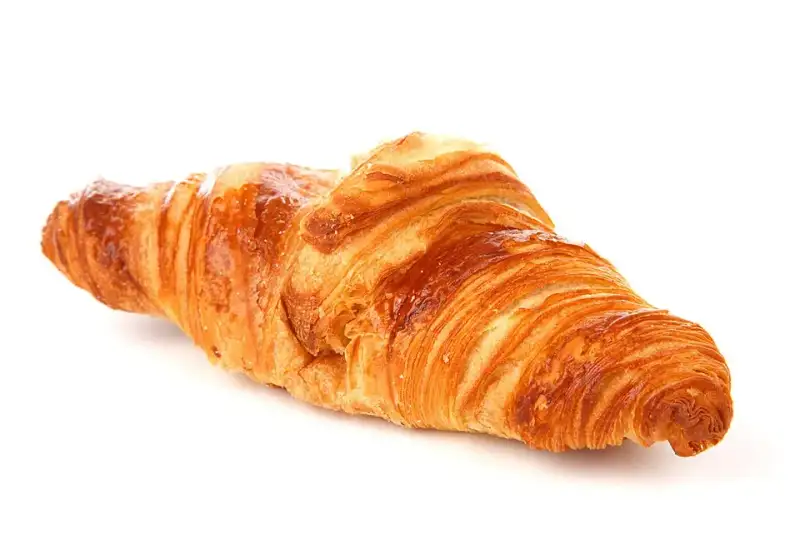
Bienvenue dans mon univers, chers passionnés de la haute gourmandise. Je suis Chloe Blanc, et aujourd'hui, je vous invite à plonger avec moi dans les arcanes de ce qui est sans doute la création la plus emblématique de notre patrimoine culinaire : le croissant. Plus qu'une simple viennoiserie, le croissant est une véritable institution, un symbole de l'élégance à la française, et un défi technique que chaque pâtissier, boulanger et tourier se doit de maîtriser à la perfection absolue. À travers cet article exhaustif, je souhaite partager avec vous ma passion, mon expertise technique, et les secrets immémoriaux qui transforment de simples ingrédients bruts en une œuvre d'art dorée et croustillante. Suivez-moi dans cette exploration fascinante où la rigueur géométrique rencontre l'émotion gustative. #Patisserie #France #Dessert L'Éveil d'une Passion : Mon Histoire Personnelle avec le Croissant Pour comprendre mon attachement charnel et profond à cette merveille de la boulangerie-pâtisserie, il faut nécessairement remonter à mes toutes premières années d'apprentissage. Je me souviens encore, avec une précision photographique, de l'aube naissante sur Paris lors de mon premier jour. Il était trois heures du matin, la capitale dormait encore profondément, enveloppée dans un silence de plomb, mais dans le laboratoire souterrain de mon maître d'apprentissage, l'effervescence était déjà à son comble, palpable, électrique. L'air ambiant était lourd, chargé des effluves enivrants et sucrés de levure fraîche, de farine torréfiée et surtout, du parfum incomparable de beurre noisette qui fondait doucement dans les étuves. C'est précisément là, dans cette chaleur rassurante, sous la lumière crue des néons vacillants, que j'ai touché ma toute première pâte levée feuilletée. Mon maître, un artisan exigeant, taciturne, au savoir-faire ancestral forgé par des décennies de pratique, m'a appris une leçon fondamentale : le croissant ne pardonne absolument aucune erreur. Il est le miroir de l'âme et de l'état d'esprit de celui qui le confectionne. S'il y a de la précipitation dans vos gestes, le croissant sera plat et dense. S'il y a un manque de respect des températures, le beurre s'échappera misérablement lors de la cuisson, pleurant sur la plaque de cuisson. Cette école impitoyable de la patience, de la précision millimétrique et de l'humilité a forgé mon identité même de chef. Aujourd'hui, dans mes propres ateliers, la réalisation du croissant reste un rituel quasi sacré, chorégraphié avec la précision d'un ballet. Chaque matin, le bruit sourd et régulier du laminoir, couplé au parfum suave de la cuisson, me rappellent viscéralement pourquoi j'ai choisi ce métier de passion. C'est une quête infinie de la perfection, un voyage quotidien vers la beauté de l'artisanat français où le geste humain magnifie la matière. Voyage à Travers le Temps : Mythes et Réalités Historiques Avant de disséquer la technique pure, il est crucial de comprendre d'où vient ce trésor national. Beaucoup, à travers le monde, pensent que le croissant est d'origine purement et exclusivement française. Pourtant, son histoire est bien plus complexe, fascinante, tissée de légendes héroïques, de mariages royaux et de migrations culinaires européennes. La Légende du Kipferl Viennois La légende la plus populaire et romanesque nous ramène en Europe centrale, à Vienne, en Autriche, lors du terrible siège de la ville par les redoutables troupes de l'Empire ottoman en 1683. On raconte avec passion que les boulangers viennois, travaillant durement au cœur de la nuit dans les sous-sols voûtés de la ville pour préparer le pain du lendemain, entendirent les bruits sourds et réguliers des ennemis qui tentaient de creuser des tunnels souterrains pour s'infiltrer sous les murailles. En donnant l'alerte générale et en prévenant la garde, ces boulangers noctambules permirent de sauver Vienne de l'invasion. Pour célébrer cette victoire éclatante, ils auraient créé une pâtisserie en forme de croissant de lune, symbole qui ornait les drapeaux de l'Empire ottoman, qu'ils baptisèrent le Kipferl. Manger ce croissant symbolisait alors la victoire et la "dévoration" métaphorique de l'ennemi vaincu. L'Arrivée en France : De l'Aristocratie à la Rue L'introduction de ce fameux Kipferl en France est souvent attribuée, de manière quelque peu romancée, à la jeune reine Marie-Antoinette, autrichienne de naissance, qui, nostalgique des saveurs de son enfance à la cour des Habsbourg, aurait demandé aux boulangers de Versailles de reproduire cette viennoiserie. Toutefois, les historiens de la gastronomie s'accordent à dire que c'est un officier autrichien nommé August Zang qui a véritablement et commercialement popularisé cette viennoiserie à Paris, en ouvrant la célèbre "Boulangerie Viennoise" vers 1839, située au 92 rue de Richelieu. Ses produits, confectionnés par des ouvriers venus spécialement de Vienne, connurent un succès fulgurant et immédiat auprès de l'aristocratie, de la presse et de la riche bourgeoisie parisienne. C'est d'ailleurs de là que vient le terme "viennoiserie" que nous utilisons encore aujourd'hui pour désigner l'ensemble de ces pâtes levées. La Naissance du Croissant Feuilleté Moderne Cependant, le Kipferl d'August Zang était réalisé avec une pâte proche de la brioche, assez dense, bien différente de l'architecture alvéolée que nous connaissons aujourd'hui. L'évolution majeure vers le croissant tel que nous le célébrons – léger, feuilleté, aérien et gorgé de beurre – s'est produite progressivement au début du XXe siècle grâce à l'ingéniosité des touriers parisiens. C'est le chef Sylvain Claudius Goy qui, en 1915, a été l'un des premiers à documenter rigoureusement la recette du croissant à base de pâte feuilletée levée, intégrant la technique du tourage au processus. Dès lors, le croissant a acquis ses lettres de noblesse définitives et est devenu l'emblème incontesté de la pâtisserie et boulangerie française moderne sur la scène internationale. #France Le Culte des Ingrédients : La Symphonie du Terroir Dans le domaine impitoyable de la haute pâtisserie, la meilleure technique du monde n'est absolument rien sans des matières premières d'exception. Le croissant est un produit d'une pureté désarmante, composé d'une poignée d'ingrédients seulement. C'est très précisément cette simplicité apparente qui le rend si complexe à maîtriser : il n'y a aucun artifice, aucun glaçage ou garniture pour masquer la médiocrité d'une matière première. Chaque élément doit être sélectionné avec une rigueur implacable, en respectant le terroir et le cycle de la nature. Le Beurre : L'Âme et l'Esprit du Croissant Le beurre est, sans l'ombre d'un doute, l'ingrédient star, le cœur battant de notre recette. Pour obtenir un feuilletage parfait, j'utilise exclusivement un beurre de tourage "sec". Ce beurre spécifique, souvent repensé pour les professionnels, possède un taux de matière grasse légèrement supérieur (généralement 84 % contre 82 % pour un beurre classique) et surtout, une teneur en eau moindre. La Plasticité : Son point de fusion est crucial. Il doit être suffisamment malléable à froid pour s'étaler sans se briser, mais assez résistant pour ne pas fondre instantanément sous la chaleur générée par le laminage. Le Terroir et l'Appellation : Je privilégie sans concession les beurres de baratte bénéficiant d'une Appellation d'Origine Protégée (AOP), tels que le majestueux beurre de Charentes-Poitou ou le délicat beurre d'Isigny. L'alimentation des vaches, riche et variée selon les saisons, donne à ce beurre des notes florales au printemps et des arômes intenses de noisette grillée en automne. C'est cette signature aromatique qui explosera en bouche après la cuisson.La Farine : La Structure Architecturale Le choix de la farine est une véritable affaire d'alchimiste, un équilibre précaire et délicat. Il nous faut une farine capable de développer un réseau glutineux (le squelette de la pâte) suffisamment fort et élastique pour emprisonner les gaz de fermentation dégagés par la levure, tout en conservant une extensibilité parfaite pour être étalée finement sans se rétracter indéfiniment. Je travaille personnellement avec un assemblage sur mesure, méticuleusement dosé. J'associe souvent une farine de gruau (issue de blés de force, très riche en protéines de haute qualité) mélangée à une farine T55 traditionnelle moulue sur meule de pierre pour préserver le goût originel du germe de blé. Ce savant dosage permet d'obtenir la fameuse "mâche" moelleuse à l'intérieur, contrastant avec la friabilité de l'extérieur. L'Hydratation et l'Équilibre : Eau et Lait La détrempe (la pâte de base avant l'incorporation du beurre) est hydratée avec un liquide dont la température doit être calculée au degré près en fonction de la température du laboratoire et de la farine. J'utilise un équilibre subtil de lait entier de ferme et d'eau pure.L'Eau : Elle apporte de la légèreté structurelle et garantit un croustillant exceptionnel à la croûte, permettant à celle-ci d'être fine et cassante. Le Lait : Grâce à ses matières grasses et à son lactose, il apporte de la rondeur, du moelleux en bouche, de la douceur et favorise une coloration ambrée spectaculaire à la cuisson (la fameuse réaction de Maillard).La Fermentation et les Exhausteurs La levure biologique fraîche de boulanger est l'organisme vivant responsable de la magie de l'alvéolage. C'est un élément capricieux qu'il faut traiter avec un immense respect. Dans ma recette signature, je l'associe systématiquement à un soupçon de levain liquide naturel. Ce levain ne sert pas tant à faire lever la pâte qu'à apporter une complexité aromatique extraordinaire, une très subtile acidité lactique qui vient nettoyer le palais et contrebalancer la richesse opulente du beurre. Enfin, je sélectionne un sel fin marin (comme la fleur de sel de Guérande récoltée à la main) pour agir comme un exhausteur de saveurs naturel, et un sucre de canne non raffiné pour nourrir la levure de manière optimale. La Chronologie de l'Excellence : Trois Jours de Labeur La réalisation d'un croissant d'exception, digne des plus grandes tables de la haute gastronomie, ne se fait pas en quelques heures. Elle s'étale rigoureusement sur trois jours complets. C'est un travail de longue haleine où la maîtrise du temps et des températures est la clé de voûte de la réussite. Le secret absolu réside dans la gestion millimétrée de l'alternance entre les phases d'action mécanique et les phases de repos au froid statique. Jour 1 : La Fondation (Le Pétrissage et le Pointage) Le premier jour est consacré à la création de la base. Tout commence par le frasage dans le pétrin, où les ingrédients secs et liquides se rencontrent. Le pétrissage doit être lent, extrêmement précis : ni trop court, au risque de ne pas structurer correctement le réseau de gluten, ni trop long ou trop rapide, pour éviter un échauffement prématuré de la pâte qui déclencherait une fermentation incontrôlable. Une fois cette pâte originelle (la détrempe) obtenue, elle est étalée délicatement en un rectangle régulier, filmée hermétiquement au contact pour éviter qu'elle ne croûte, et placée au réfrigérateur à 3°C pour un repos sacré, appelé pointage, d'une durée minimale de 12 à 18 heures. Cette maturation très lente à basse température permet de développer les précurseurs d'arômes, d'assouplir le gluten et de préparer la pâte à subir les contraintes du lendemain. Jour 2 : L'Architecture (Le Beurrage et le Tourage) Le deuxième jour est de loin l'étape la plus critique, celle qui demande la plus grande dextérité. Le pâton et la plaque de beurre de tourage doivent être exactement à la même consistance (généralement stabilisés aux alentours de 14°C à 16°C). Si le beurre est trop froid et cassant, il se brisera en éclats dans la pâte. S'il est trop chaud et pommade, il fusionnera irrémédiablement avec elle, détruisant ainsi la structure même du feuilletage. Le beurre est méticuleusement enchâssé au centre de la détrempe, qui est ensuite refermée comme une enveloppe précieuse. À cet instant précis, la virtuosité du tourier entre en jeu. Le tourage consiste à allonger mécaniquement la pâte à l'aide d'un laminoir puis à la replier sur elle-même selon un schéma mathématique. Ma signature technique réside dans l'exécution d'un tour double (également appelé tour portefeuille, où la pâte est pliée en quatre couches de beurre) suivi, après un repos salvateur de plusieurs heures au froid, d'un tour simple (pliage en trois). Entre chaque intervention, la pâte retourne obligatoirement dans les entrailles du réfrigérateur pour relâcher la tension du gluten et raffermir la matière grasse. Au terme de cette journée, le pâton renferme plusieurs dizaines de couches microscopiques alternant parfaitement pâte levée et beurre pur, chacune ne mesurant qu'une fraction infime de millimètre d'épaisseur. Jour 3 : La Naissance (Le Façonnage, l'Apprêt et la Cuisson) Le troisième jour est celui de la création finale. Après un ultime repos, le pâton est abaissé (étalé) avec une douceur infinie à une épaisseur finale très précise, généralement fixée entre 3,5 et 4 millimètres. La découpe en triangles isocèles parfaitement réguliers exige un coup de lame net, franc, sans bavure, pour ne pas écraser les strates. Vient ensuite le geste noble du façonnage : le triangle est très légèrement étiré, puis roulé délicatement de la base vers la pointe, avec la paume de la main, sans jamais exercer de pression excessive pour laisser respirer l'âme du feuilletage. Les croissants crus ainsi formés sont disposés en quinconce sur des plaques de cuisson et placés en chambre de fermentation contrôlée (l'apprêt) à une température stricte de 27°C, avec un taux d'humidité ambiante de 75 %. Cette phase délicate dure environ deux heures et demie. C'est le moment de vérité, le spectacle de la vie : on observe la pâte gonfler doucement, s'aérer, prendre du volume, et les différentes couches du feuilletage commencent à se désolidariser très subtilement, créant un léger effet d'escalier sur les flancs de la viennoiserie. Avant d'enfourner, chaque pièce est délicatement effleurée, dorée à l'aide d'un pinceau soyeux avec un mélange d'œufs entiers, de jaunes d'œufs et d'une larme de crème fleurette (la dorure), en prenant soin de ne pas sceller les bords feuilletés. La cuisson s'effectue dans un four ventilé de très haute précision, préchauffé. Le choc thermique initial (autour de 180°C) provoque l'évaporation instantanée de l'eau contenue dans le beurre et dans la pâte. La vapeur puissante générée pousse violemment les couches de pâte vers le haut, créant la séparation, avant que la chaleur ne fige la structure en coagulant l'amidon de la farine. Ce phénomène physique thermodynamique est ce qui crée l'alvéolage incomparable et majestueux du croissant. Pendant les 18 à 20 minutes de cuisson, la couleur évolue d'un jaune pâle crémeux à un brun ambré, profond et somptueux. Les Défis Techniques et Erreurs Fatales à Éviter La création de ce chef-d'œuvre est pavée d'embûches, particulièrement pour les passionnés qui tentent l'aventure à domicile. Voici les pièges dans lesquels même les professionnels avertis peuvent tomber s'ils manquent de vigilance :L'Excès de Température au Façonnage : Si l'environnement de travail est trop chaud, le beurre commence à fondre dans la pâte avant même la cuisson. Le résultat est désastreux : une croûte molle et une mie dense et grasse. Un Apprêt Trop Poussé : Si la température de la chambre de pousse dépasse les 28°C, le point de fusion du beurre est atteint. Le beurre va couler sur la plaque, laissant un croissant sec à l'intérieur et fripé à l'extérieur. Si la fermentation dure trop longtemps, le réseau de gluten s'effondre et le croissant retombe piteusement. Une Pâte Sur-travaillée : Si la détrempe développe trop de force au pétrissage, elle deviendra élastique au point d'être impossible à allonger correctement lors du tourage, entraînant un rétrécissement anarchique lors de la cuisson.L'Anatomie du Croissant Parfait et l'Art de la Dégustation Mais alors, comment reconnaître de manière irréfutable un croissant exceptionnel, celui qui mérite véritablement sa place sous les projecteurs d'une boutique de luxe ? L'expérience est, et doit être, résolument multisensorielle. #PatisserieL'Examen Visuel : Un croissant d'élite possède une forme rebondie, fière, généreusement bombée au centre, avec de belles "marches" ou strates distinctes qui témoignent d'un tourage et d'un roulage irréprochables. La coloration doit être audacieuse, profondément dorée, frôlant l'acajou sur les crêtes les plus exposées, contrastant avec la teinte plus claire des sillons intérieurs. L'Évaluation Tactile : En le prenant avec délicatesse, il doit surprendre par son étonnante légèreté par rapport à son volume imposant. C'est la preuve irréfutable d'un alvéolage spectaculaire et d'une fermentation optimale. La croûte, d'une finesse translucide par endroits, doit s'effriter en milliers de fragments dorés sous la moindre pression de vos doigts. L'Épreuve Auditive : C'est la signature indéniable de la perfection absolue. En le rompant, vous devez entendre un son net, un craquement franc, sonore et prolongé, caractéristique d'un feuilletage magistralement cuit et déshydraté. L'Analyse de l'Alvéolage : En l'ouvrant par le centre, on découvre la fameuse "mie". Elle doit ressembler à s'y méprendre à un somptueux nid d'abeille naturel (le honeycomb). Les alvéoles doivent être immenses, larges, régulières, séparées par des membranes de pâte translucides, brillantes, délicatement tapissées par la pellicule de beurre fondu. L'Extase Gustative : Dès la première inspiration, un parfum enivrant, complexe et chaleureux de beurre chaud, de noisette subtilement grillée et de sucre caramélisé envahit vos sens, soutenu par la note pointue et fermentée de la levure. En bouche, le contraste foudroyant entre la carapace ultra-croustillante, presque friable, et l'intérieur incroyablement fondant, chaud et beurré est une pure expérience d'extase culinaire.L'Art de le Savourer Déguster une création d'une telle complexité requiert un certain protocole de respect. Bannissez immédiatement le couteau ! Trancher un tel chef-d'œuvre avec une lame écrase sans pitié les centaines de couches de feuilletage que l'artisan a mis soixante-douze heures à échafauder. Le croissant se respecte, se manipule et se savoure exclusivement avec les mains. Rompez-le doucement par les extrémités pour écouter son chant croustillant. Prenez quelques secondes pour admirer la complexité de son architecture intérieure avant de le porter à vos lèvres. Côté accords, l'association classique avec un grand cru de café filtre, léger (comme un Éthiopien d'altitude aux notes florales et d'agrumes), demeure indémodable, l'amertume et l'acidité du café venant trancher avec panache la richesse lipidique de la viennoiserie. Personnellement, j'affectionne tout particulièrement de le tremper délicatement, et de manière éphémère pour préserver la texture de la croûte, dans un chocolat chaud noir intense, très peu sucré, préparé à l'ancienne. C'est une plongée instantanée en enfance, une parenthèse de réconfort absolu, hors du temps, dans notre monde perpétuellement trépidant. L'Évolution et le Rayonnement International du Croissant Bien que très profondément ancré dans la tradition séculaire française, le croissant n'est pas un monument figé dans le temps. C'est une matière vivante, une source d'inspiration inépuisable. En tant que chefs, à Paris, Tokyo, New York ou Dubaï, nous nous amusons sans cesse à repousser ses frontières, à le réinventer, à l'adapter aux palais contemporains. L'essor phénoménal du croissant bicolore contemporain (où l'on intègre une fine couche de pâte feuilletée intensément colorée et aromatisée, souvent au charbon végétal, au cacao grand cru ou à la poudre de framboise lyophilisée, juste avant le façonnage) témoigne de cette vitalité créative et esthétique débordante. On voit également l'émergence fascinante de formes architecturales nouvelles : les croissants cubiques parfaits cuits en moule fermé, les fameux New York Rolls circulaires qui détournent la pâte feuilletée, ou encore la tendance des fourrages décadents intégrant des pralinés pistache d'exception, des compotées de fruits exotiques de saison ou des crèmes pâtissières opulentes infusées à la vanille bleue de La Réunion. Néanmoins, malgré toutes ces innovations visuelles et gustatives, la virtuosité technique et la sensibilité profonde d'un chef pâtissier se mesureront toujours et avant tout à la perfection de son croissant nature, pur, sans artifices. C'est l'étalon-or, la base absolue, l'alpha et l'oméga de la discipline. En Conclusion : Une Lettre d'Amour à l'Artisanat Le croissant est infiniment plus qu'une simple douceur matinale que l'on avale distraitement avec son café sur le chemin du bureau. Il est la quintessence même du savoir-faire gastronomique et culturel français. Il exige du dévouement inconditionnel, de la sueur, du temps, une humilité de chaque instant face aux éléments, et surtout, une immense et sincère dose d'amour de la part de l'artisan. À notre époque moderne, souvent dominée par l'immédiateté, la recherche constante de rentabilité et la production industrielle de masse standardisée, la fabrication artisanale respectueuse d'un véritable croissant au beurre de qualité est un puissant acte de résistance. C'est une célébration magnifique de la lenteur assumée, de la transmission intergénérationnelle du geste juste et de la beauté brute de la main de l'homme. La toute prochaine fois que vous pousserez la lourde porte vitrée de votre artisan boulanger indépendant de quartier, et que vous tiendrez cette merveille fragile, dorée et encore tiède entre vos mains, je vous invite à prendre une fraction de seconde pour apprécier pleinement le formidable héritage historique, la science thermique et l'art chorégraphique qui se cachent derrière chacune des écailles de son feuilletage. Croquez, savourez pleinement l'instant présent, fermez les yeux et laissez toute la magie majestueuse de la haute pâtisserie vous transporter loin des tumultes du quotidien. Avec toute ma passion et ma gourmandise indéfectible, Chloe Blanc Chef Pâtissière #patisserie #dessert #france #chloeblanc #sweet Related InsightsMadeleine : Le Souvenir Sucré de l'Enfance Crème Brûlée : La Douce Symphonie du Caramel Mille-feuille : Mille et Une Saveurs de la Vanille{ "@context": "https://schema.org", "@type": "FAQPage", "mainEntity": [ { "@type": "Question", "name": "What is the main focus of Croissant : L'Art du Feuilletage et de la Tradition?", "acceptedAnswer": { "@type": "Answer", "text": "Plongez dans l'univers de la haute pâtisserie avec Chloe Blanc et découvrez les secrets de ce dessert emblématique." } }, { "@type": "Question", "name": "Who authored the comprehensive guide on Croissant : L'Art du Feuilletage et de la Tradition?", "acceptedAnswer": { "@type": "Answer", "text": "This detailed article and its insights were carefully researched and authored by Chloe Blanc." } }, { "@type": "Question", "name": "Where can I find more related content about Gastronomy?", "acceptedAnswer": { "@type": "Answer", "text": "You can explore more articles, detailed reviews, and similar insights by browsing the Related Insights section at the bottom of this article or visiting our dedicated Gastronomy category page." } } ] }
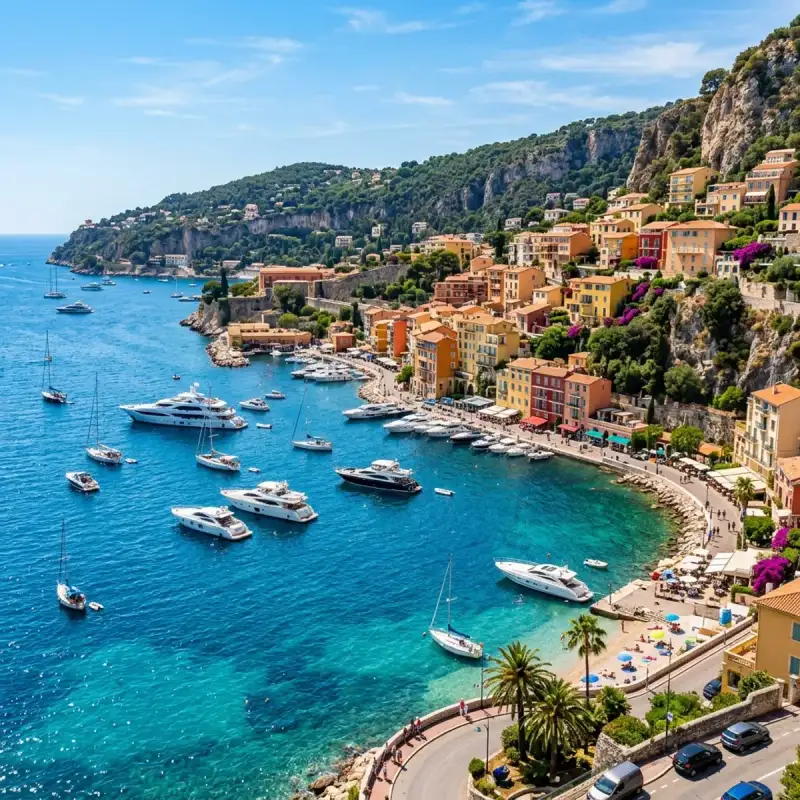
Bienvenue! Let us embark on an unforgettable #journey to the heart of #France. The French Riviera, known in French as the Côte d'Azur (French: [kot dazyʁ] ; Provençal: Còsta d'Azur, pronounced [ˈkwɔstɔ daˈzyʀ]; lit. 'Azure Coast'), is the Mediterranean coastline of the southeast corner of #France. There is no official boundary, but it is considered to be the coastal area of the Alpes-Maritimes department, extending from the rock formation Massif de l'Esterel to Menton, at the France–Italy border, although some other sources place the western boundary further west around Saint-Tropez or Toulon. The coast is entirely within the Provence-Alpes-Côte d'Azur region of France. The Principality of Monaco is a semi-enclave within the region, surrounded on three sides by France and fronting the Mediterranean. The French Riviera contains the seaside resorts of Cap-d'Ail, Beaulieu-sur-Mer, Saint-Jean-Cap-Ferrat, Villefranche-sur-Mer, Antibes, Juan-les-Pins, Cannes, and Théoule-sur-Mer. Riviera is an Italian word that originates from the #ancient Ligurian territory of Italy, wedged between the Var and Magra rivers. Côte d'Azur is originally a nickname given by France to the County of Nice after its annexation in 1860, because the climate was similar to that of the north of Italy, even in winter, with "a sky as blue as its sea". When the Mistral (Northwest) and the Tramontane (North) winds are blowing in the Languedoc and Provence areas, the temperature of the Mediterranean can be very cool in summer. This phenomenon is observed very little or not at all on the coast between the French Riviera and the Italian Riviera. This coastline was one of the first modern resort areas. It began as a winter health resort for the British upper class at the end of the 18th century. With the arrival of the railway in the mid-19th century, it became the playground and vacation spot of British, Russian, and other aristocrats, such as Queen Victoria, Tsar Alexander II and King Edward VII, when he was Prince of Wales. In the summer, it also played home to many members of the Rothschild family. In the first half of the 20th century, it was frequented by artists and writers, including Pablo Picasso, Henri Matisse, Francis Bacon, Edith Wharton, Somerset Maugham and Aldous Huxley, as well as wealthy Americans and Europeans. After World War II, it became a popular tourist destination and convention site. Many celebrities, such as Elton John and Brigitte Bardot, have homes in the region. Officially, the French Riviera is home to 163 nationalities with 83,962 foreign residents, although estimates of the number of non-French nationals living in the area are often much higher. Its largest city is Nice, which has a population of 340,017 as of 2017. The city is the centre of a métropole—Nice-Côte d'Azur—bringing together 49 communes and more than 540,000 inhabitants and 943,000 in the urban area. Nice is home to Nice Côte d'Azur Airport, France's third-busiest airport (after Charles de Gaulle Airport and Orly Airport), which is on an area of partially reclaimed coastal land at the western end of the Promenade des Anglais. A second airport at Mandelieu was once the region's commercial airport, but is now mainly used by private and business aircraft. The A8 autoroute runs through the region, as does the old main road generally known as the Route nationale 7 (officially now DN7 in Var and D6007 in Alpes-Maritimes). High-speed trains serve the coastal region and inland to Grasse, with the TGV Sud-Est service reaching Nice-Ville station in five and a half hours from #Paris. The French Riviera has a total population of more than two million. It is home to a high tech and science park (French: technopole) at Sophia-Antipolis (north of Antibes) and a research and technology centre at the University of Nice Sophia Antipolis. The region has 35,000 students, of whom 25 percent are working toward a doctorate. The French Riviera is a major yachting and cruising area with several marinas along its coast. According to the Côte d'Azur Economic Development Agency, each year the Riviera hosts 50 percent of the world's superyacht fleet, with 90 percent of all superyachts visiting the region's coast at least once in their lifetime. As a tourist centre, the French Riviera benefits from 310 to 330 days of sunshine per year, 115 kilometres (71 miles) of coastline and beaches, 18 golf courses, 14 ski resorts and 3,000 restaurants. Etymology Origin of term The term French Riviera comes by analogy with the term Italian Riviera, which extends east of the French Riviera (from Ventimiglia to La Spezia). As early as the 19th century, the British referred to the region as the Riviera or the French Riviera, usually referring to the eastern part of the coast, between Monaco and the Italian border. Riviera is an Italian noun which means "coastline". The name Côte d'Azur was given to the coast by the writer Stéphen Liégeard in his book, La Côte d’azur, published in December 1887. Liégeard was born in Dijon, in the French department of Côte-d'Or, and adapted that name by substituting the azure colour of the Mediterranean for the gold of Côte-d'Or. In Occitan (Niçard and Provençal) and French, the only usual names are Còsta d'Azur in Occitan and Côte d'Azur in French. A term like "French Riviera" (Ribiera Francesa in Occitan, Riviera Française in French) would only be used in literal translation, or adaptations of it. For instance, in French, "Riviera Française" is found in the online Larousse encyclopedia to refer to the holidays of a group of English workers (moreover, in Occitan, the word ribiera "coastline" mostly works as a common name, whereas in French, the old-fashioned term Rivière de Gênes was used to refer to the Italian Riviera whose center is Genoa). Disputes over the extent of the Riviera and the Côte d'Azur Côte d'Azur and the French Riviera have no official boundaries. Some sources put the western boundary at Saint-Tropez. Others include Saint Tropez, Hyères or Toulon in the Var (departement), or as far as Cassis in the Bouches-du-Rhône departement. In her 1955 novel, The Talented Mr. Ripley, Patricia Highsmith describes the Riviera as including all of the coast between Toulon and the Italian border. #history From prehistory to the Bronze Age The region of the French Riviera has been inhabited since prehistoric times. Primitive tools dating to between 1,000,000 and 1,050,000 years ago were discovered in the Grotte du Vallonnet, near Roquebrune-Cap-Martin, with stones and bones of animals, including bovines, rhinoceros, and bison. At Terra Amata (380,000 to 230,000 years ago), near the Nice Port, a fireplace was discovered that is one of the oldest found in Europe. Stone dolmens, monuments from the Bronze Age, can be found near Draguignan, while the Valley of Marvels (Vallée des Merveilles) near Mount Bégo, at 2,000 m (6,600 ft) elevation, is presumed to have been an outdoor religious sanctuary, having over 40,000 drawings of people and animals, dated to about 2000 BC. Greek influence Beginning in the 7th century BC, Greek sailors from Phocaea in Asia Minor began to visit and then build emporia along the Côte d'Azur. Emporia were started at Olbia (Hyères); Antipolis (Antibes) and Nikaia (Nice). These settlements, which traded with the inhabitants of the interior, became rivals of the Etruscans and Phoenicians, who also visited the Côte d'Azur. Roman colonization In 8 BC, the Emperor Augustus built an imposing trophy monument at La Turbie (the Trophy of the Alps or Trophy of Augustus) to mark the pacification of the region. Roman towns, monuments and amphitheatres were built along the Côte d'Azur and many still survive, such as the amphitheatre and baths at Cimiez, above Nice, and the amphitheatre, Roman walls and other remains at Fréjus. Barbarians and Christians Roman Provence reached the height of its power and prosperity during the 2nd and 3rd centuries AD. In the mid-3rd century, Germanic peoples began to invade the region, and Roman power weakened. In the same period, Christianity started to become a powerful force in the region. The first cathedrals were built in the 4th century, and bishoprics were established: in Fréjus at the end of the 4th century, Cimiez and Vence in 439, and Antibes in 442. The oldest Christian structure still in existence on the Côte d'Azur is the baptistery of Fréjus #cathedral, built at the end of the 5th century, which also saw the founding of the first monastery in the region, Lerins Monastery on an island off the coast at Cannes. The fall of the Western Roman #empire in the first half of the 5th century was followed by invasions of Provence by the Visigoths, the Burgundians and the Ostrogoths. There was then a long period of wars and dynastic quarrels, which in turn led to further invasions by the Saracens and the Normans in the 9th century. The Counts of Provence and the House of Grimaldi Some peace was restored to the coast by the establishment in 879 of a new kingdom of Provence, ruled first by the Bosonids dynasty (879–1112), then by the Catalans (1112–1246), and finally by the Angevins (1246–1382, elder branch, 1382–1483 (younger branch). In the 13th century, another powerful political force appeared, the House of Grimaldi. Descended from a Genoese nobleman expelled from Genoa by his rivals in 1271, members of the different branches of the Grimaldis took power in Monaco, Antibes and Nice, and built castles at Grimaud, Cagnes-sur-Mer and Antibes. Albert II, the current Prince of Monaco, is a descendant of the Grimaldis. In 1388, the city of Nice and its surrounding territory, from the mouth of the Var to the Italian border, were separated from Provence and came under the protection of the House of Savoy. The territory was called the Comté de Nice after 1526, and thereafter its language, history and #culture were separate from those of Provence until 1860, when it was re-attached to France under Napoleon III. Provence retained its formal independence until 1480, when the last Comte de Provence, René I of Naples, died and left the Comté to his nephew, Charles du Maine, who in turn left it to Louis XI of France. In 1486, Provence formally became part of France. Popularity with the British upper class in 18th and 19th centuries Until the end of the 18th century, the area later known as the Côte d'Azur was a remote and impoverished region, known mostly for fishing, olive groves and the production of flowers for perfume (manufactured in Grasse). A new phase began when the coast became a fashionable health resort for the British upper class in the late 18th century. The first British traveller to describe its benefits was the novelist Tobias Smollett, who visited Nice in 1763 when it was still an Italian city within the Kingdom of Sardinia. Smollett brought Nice and its warm winter climate to the attention of the British aristocracy with Travels through France and Italy, written in 1765. At about the same time, a Scottish doctor, John Brown, became famous for prescribing what he called climato-therapy, a change in climate, to cure a variety of diseases including tuberculosis, known then as consumption. The French historian Paul Gonnet wrote that, as a result, Nice was filled with "a colony of pale and listless English women and listless sons of nobility near death". In 1834, a British nobleman and politician named Henry Peter Brougham, First Baron Brougham and Vaux, who had played an important part in the abolition of the slave trade, travelled with his unwell daughter to the south of France, intending to go to Italy. A cholera epidemic in Italy forced him to stop at Cannes, where he enjoyed the climate and scenery so much that he bought land and built a villa. He began to spend his winters there and, owing to his fame, others followed: Cannes soon had a small British enclave. Robert Louis Stevenson was a later British visitor who came for his health. In 1882 he rented a villa called La Solitude at Hyères, where he wrote much of A Child's Garden of Verses. Railway, gambling and royalty In 1864, six years after Nice became part of France following the Second Italian War of Independence the first railway was completed, making Nice and the Riviera accessible to visitors from all over Europe. One hundred thousand visitors arrived in 1865. By 1874, residents of foreign enclaves in Nice, most of whom were British, numbered 25,000. In the mid-19th century, British and French entrepreneurs began to see the potential of promoting tourism along the Côte d'Azur. At the time, gambling was illegal in France and Italy. In 1856, the Prince of Monaco, Charles III, began constructing a casino in Monaco, which was called a health spa to avoid criticism by the church. The casino was a failure, but in 1863 the Prince signed an agreement with François Blanc, a French businessman already operating a successful casino at Baden-Baden (southwestern Germany), to build a resort and new casino. Blanc arranged for steamships and carriages to take visitors from Nice to Monaco, and built hotels, gardens and a casino in a place called Spélugues. At the suggestion of his mother, Princess Caroline, Charles III renamed the place Monte Carlo after himself. When the railway reached Monte Carlo in 1870, many thousands of visitors began to arrive and the population of the principality of Monaco doubled. The French Riviera soon became a popular destination for European royalty. Just days after the railway reached Nice in 1864, Tsar Alexander II of Russia visited on a private train, followed soon afterwards by Napoleon III and then Leopold II, the King of the Belgians. Queen Victoria was a frequent visitor. In 1882 she stayed in Menton, and in 1891 spent several weeks at the Grand Hotel at Grasse. In 1892 she stayed at the Hotel Cost-belle in Hyères. In successive years from 1895 to 1899 she stayed in Cimiez in the hills above Nice. First, in 1895 and 1896, she patronised the Grand Hôtel, while in later years she and her staff took over the entire west wing of the Excelsior Hôtel Régina, which had been designed with her needs specifically in mind (part of which later became the home and studio of the renowned artist Henri Matisse). She travelled with an entourage of between sixty and a hundred, including chef, ladies in waiting, dentist, Indian servants, her own bed and her own food. The Prince of Wales was a regular visitor to Cannes, starting in 1872. He frequented the Club Nautique, a private club on the Croisette, the fashionable seafront boulevard of Cannes. He visited there each spring for a two-month period, observing yacht races from shore while the royal yacht, Britannia, was sailed by professional crewmen. After he became King in 1901, he never again visited the French Riviera. By the end of the 19th century the Côte d'Azur began to attract artistic painters, who appreciated the climate, the bright colors and clear light. Among them were Auguste Renoir, who settled in Cagnes-sur-Mer and in Mougins, Henri Matisse and Pablo Picasso. Inter-war period, American visitors and decline of the aristocracy The First World War brought down many of the royal houses of Europe and altered the #nature and the calendar of the French Riviera. Following the war, greater numbers of Americans began arriving, with business moguls and celebrities eventually outnumbering aristocrats. The 'High Society' scene moved from a winter season to a summer season. Americans began coming to the south of France in the 19th century. Henry James set part of his novel The Ambassadors on the Riviera. James Gordon Bennett Jr., the son and heir of the founder of the New York Herald, had a villa in Beaulieu. Industrialist John Pierpont Morgan gambled at Monte Carlo and bought 18th-century paintings by Fragonard in Grasse – shipping them to the Metropolitan Museum in New York. A feature of the French Riviera in the inter-war years was the Train Bleu, an all first-class sleeper train which brought wealthy passengers down from Calais. It made its first trip in 1922, and carried Winston Churchill, Somerset Maugham, and the future King Edward VIII over the years. While Europe was still recovering from the war and the American dollar was strong, American writers and artists started arriving on the Côte d'Azur. Edith Wharton wrote The Age of Innocence (1920) at a villa near Hyères, winning the Pulitzer Prize for the novel (the first woman to do so). Dancer Isadora Duncan frequented Cannes and Nice, but died in 1927 when her scarf caught in a wheel of the Amilcar motor car in which she was a passenger and strangled her. The writer F. Scott Fitzgerald first visited with his wife Zelda in 1924, stopping at Hyères, Cannes and Monte Carlo – eventually staying at Saint-Raphaël, where he wrote much of The Great Gatsby and began Tender Is the Night. While Americans were largely responsible for making summer the high season, a French fashion designer, Coco Chanel, made sunbathing fashionable. She acquired a striking tan during the summer of 1923, and tans then became the fashion in Paris. During the abdication crisis of the British Monarchy in 1936, Wallis Simpson, the intended bride of King Edward VIII, was staying at the Villa Lou Viei in Cannes, talking with the King by telephone each day. After his abdication, the Duke of Windsor (as he became) and his new wife stayed at the Villa La Croë on the Cap d'Antibes. The English playwright and novelist Somerset Maugham also became a resident in 1926, buying the Villa La Mauresque toward the tip of Cap Ferrat, near Nice. Second World War When Germany invaded France in June 1940, the remaining British colony was evacuated to Gibraltar and eventually to Britain. American Jewish groups helped some of the Jewish artists living in the south of France, such as Marc Chagall, to escape to the United States. In August 1942, 600 Jews from Nice were rounded up by French police and sent to Drancy, and eventually to death camps. In all about 5,000 French Jews from Nice perished during the war. Following D-Day in Normandy, Operation Dragoon (initially Operation Anvil), the code name for the Allied invasion of Southern France, commenced on 15 August 1944, when American parachute troops landed near Fréjus, and a fleet landed 60,000 troops of the American Seventh Army and French First Army between Cavalaire and Agay, east of Saint-Raphaël. German resistance was not as fanatical as Hitler and the High Command had ordered, and crumbled in days. Saint-Tropez was badly damaged by German mines at the time of the liberation. The novelist Colette organized an effort to assure the town was rebuilt in its original style. When the war ended, artists Marc Chagall and Pablo Picasso returned to live and work. Post-war period and late 20th century The Cannes Film Festival was launched in September 1946, marking the return of French cinema to world screens. The Festival Palace was built in 1949 on the site of the old Cercle Nautique, where the Prince of Wales had met his mistresses in the late 19th century. The release of the French film Et Dieu… créa la femme (And God Created Woman) in November 1956 was a major event for the Riviera, making an international star of Brigitte Bardot, and making an international tourist destination of Saint-Tropez, particularly for the new class of wealthy international travellers called the jet set. The marriage of American film actress Grace Kelly to Prince Rainier of Monaco on 18 April 1956, attracted world attention once again. It was viewed on television by 30 million people. During the 1960s, the Mayor of Nice, Jacques Médecin, decided to reduce the dependence of the Riviera on ordinary tourism, and to make it a destination for international congresses and conventions. He built the Palais des Congrès at the Acropolis in Nice, and founded a Chagall Museum and a Matisse Museum at Cimiez. At the end of August 1997, Princess Diana and Dodi Fayed spent their last days together on his father's yacht off Pampelonne Beach near Saint-Tropez, shortly before they died in the Alma Tunnel in Paris. Geography Coastal municipalities Places Places on the Côte d'Azur (following the broadest definition), following the coast from south-west to north-east, include: Tourism Some data related to tourism on the Riviera in 2006: More than 14 million tourists 52% of customers from abroad 65 million nights stayed Tourists spending €5 billion 75,000 jobs; tourism is 18% of total employment in the Alpes-Maritimes. 500,000 tourists in the High Country 500,000 delegates 3 million admissions to museums and monuments More than 45% of tourists come by air Climate The French Riviera is mostly subtropical, featuring a Mediterranean climate, with sunny, hot, dry summers and mild winters. Winter temperatures are moderated by the Mediterranean; days of frost are rare. The average daily low temperature in Nice in January is 5.4 °C (41.7 °F); the January average daily low temperature in Toulon is 6.2 °C (43.2 °F). The average high temperature in August in Nice is 28.6 °C (83.5 °F); in Toulon the average daily high temperature is 29.7 °C (85.5 °F) The Côte d'Azur receives more rainfall annually than Paris (803.3 mm (31.63 in) annually in Nice and 684.8 mm (26.96 in) in Toulon compared with 649.8 mm (25.58 in) in Paris), but the rainy days are much less frequent and the Riviera is considerably sunnier; 111 rainy days a year in Paris compared with 61 days in Toulon and 63 in Nice. Rain is generally more common in the Autumn and Winter months while the summers are drier. Toulon has 2,793 hours of sunshine a year, Nice has 2,668 hours. Micro-climates exist in these coastal regions, and there can be great differences in the weather between various locations. Strong winds such as the mistral, a cold dry wind from the northwest or from the east, are another characteristic, particularly in the winter. Nice, in particular is surrounded by mountains to the North, protecting it from the Mistral winds making it feel milder on sunny days. The Sirocco is a southerly wind, coming from the African continent and often felt on the Mediterranean coast of Europe. It is a hot and humid wind, occasionally carrying sand from the Sahara which is then deposited in coastal areas across Southern Europe. The French Riviera is one of the mildest locations in the world for its latitude, owing to the Gulf Stream which moderates the temperatures in Western Europe, particularly in winter and the warming effect of the Mediterranean Sea. Because of this, the region boasts a long growing season and supports the growth of exotic flora such as Citrus Fruits and Palm Trees. Snow is very uncommon in the winters and the long, hot and sunny summers have long been a draw for tourists since the days of British Aristocracy. =### Nice and Alpes-Maritimes= Nice and the Alpes-Maritimes département are sheltered by the Alps. The winds are usually gentle, from the sea to the land, though sometimes the mistral blows strongly from the northwest, or, turned by the mountains, from the east. In 1956 a mistral from the northwest reached 180 kilometres per hour (110 mph) at Nice Airport. Sometimes, in summer, the sirocco brings high temperatures and reddish desert sand from the Sahara (see Winds of Provence). Rain can be torrential, particularly in the autumn, when storms and rain are caused by the difference between the colder air inland and the warm Mediterranean water temperature (20–24 °C [68–75 °F]). The rainiest months are September (75.6 millimetres [2.98 in] average rainfall); October (143.9 millimetres [5.67 in]); November (94.3 millimetres [3.71 in]) and December (87.8 millimetres [3.46 in]). Snow on the coast is rare, falling on average once every ten years. 1956 was exceptional, when 20 cm (7.9 in) blanketed the coast. In January 1985 the coast between Cannes and Menton received 30 to 40 cm (12 to 16 in). In the mountains, snow is present from November to May. =### Var= The département of Var (which includes Saint-Tropez and Hyères) has a climate slightly warmer, drier and sunnier than Nice and Alpes-Maritimes, but is less sheltered from the wind. The mistral, which brings cold and dry air down from the upper Alpine regions via the Rhône valley and extends with diminishing intensity along the Côte d'Azur, blows frequently during the winter. Strong winds blow for about 75 days a year in Fréjus. Events and festivals Several major events take place: Monaco and southeast France: Rallye Automobile Monte-Carlo, January Monaco: International Circus Festival of Monte-Carlo, January / February Mandelieu-la-Napoule: La Fête du Mimosa, February Nice: Carnival, February Menton: Lemon Festival, February Tourrettes-sur-Loup: Violet Festival, March Monaco: Monte-Carlo Masters, April–May Monaco: Formula One Grand Prix race, May Grasse; Rose Festival, May Cannes: Cannes Film Festival and Cannes Film Market, May Nice: Jazz Festival, July Juan-les-Pins: Jazz à Juan, late July. Grasse: Jasmine Festival, August Toulon: Toulon Tournament, Tall Ships' Race IRONMAN 70.3 Races, May Painters The climate and vivid colors of the Mediterranean attracted many famous artists during the 19th and 20th centuries. They included: Pierre Bonnard (1867–1947); retired to and died at Le Cannet. Roger Broders (1883–1953); Parisian #travel poster illustrator. Marc Chagall (1887–1985); lived in Saint-Paul-de-Vence between 1948 and 1985. Henri-Edmond Cross (1856–1910); discovered the Côte d'Azur in 1883, and painted at Monaco and Hyères. Maurice Denis (1870–1943); painted at St. Tropez and Bandol. Raoul Dufy (1877–1953); whose wife was from Nice, painted in the region, including in Nice. Albert Marquet (1873–1947); painted at St. Tropez. Henri Matisse (1869–1954); first visited St. Tropez in 1904. In 1917 he settled in Nice, first at the Hôtel Beau Rivage, then at the Hôtel de la Méditerranée, then at la Villa des Alliés in Cimiez. In 1921 he lived in an apartment in Nice, next to the flower market and overlooking the sea, where he lived until 1938. He then moved to the Hôtel Régina in the hills of Cimiez, above Nice. During World War II he lived in Vence, then returned to Cimiez, where he died and is buried. Claude Monet (1840–1927); visited Menton, Bordighera, Juan-les-Pins, Monte Carlo, Nice, Cannes, Beaulieu and Villefranche, and painted a number of seascapes of Cap Martin, near Menton, and at Cap d'Antibes. Edvard Munch (1863–1944); visited and painted in Nice and Monte Carlo (where he developed a passion for gambling), and rented a villa at Saint-Jean-Cap-Ferrat in 1891. Pablo Picasso (1881–1973); spent each summer from 1919 to 1939 on the Côte d'Azur, and moved there permanently in 1946, first at Vallauris, then at Mougins, where he spent his last years. Auguste Renoir (1841–1919); visited Beaulieu, Grasse, Saint-Raphaël and Cannes, before finally settling in Cagnes-sur-Mer in 1907, where he bought a farm in the hills and built a new house and workshop on the grounds. He continued to paint there until his death in 1919. His house is now a museum. Paul Signac (1863–1935); visited St. Tropez in 1892, and bought a villa, La Hune, at the foot of citadel in 1897. It was at his villa that his friend, Henri Matisse, painted his famous Luxe, Calme et Volupté in 1904. Signac made numerous paintings along the coast. Yves Klein (1928–1962); a native of Nice, considered an important figure in post-war European art. Sacha Sosno (1937–2013); French painter and sculptor who lived and worked in Nice. Writers Many writers have also been inspired by the area, including Death on the Riviera by John Bude, The Garden of Eden by Ernest Hemingway, Imogen by Jilly Cooper, and Swimming Home by Deborah Levy. Bibliography History Henry de Lumley, La Grand Histoire des premiers hommes européens, Odile Jacob, Paris, 2010 (ISBN 978 2 7381 2386 2). Aldo Bastié, Histoire de la Provence, Éditions Ouest-France, 2001. Mary Blume, Côte d'Azur: Inventing the French Riviera, Thames and Hudson, London, 1992. Patrick Howarth, When the Riviera was Ours, Routledge & Kegan Paul, London, 1977. Jim Ring, Riviera, the Rise and Fall of the Côte d'Azur, John Murray Publishers, London, 1988. Edouard Baratier (editor), Histoire de la Provence, Editions Privat, Toulouse, 1969 (ISBN 2 7089 1649 1). Painters La Méditerranée de Courbet à Matisse, catalog of the exhibit at the Grand Palais, Paris from September 2000 to January 2001. Published by the Réunion des musées nationaux, 2000. #france #travel #history #europe #culture Related Insights乌镇:梦回明清的水乡 伏見稲荷大社: 千本鳥居が導く神秘の山 Mud‑Brick Horizons: Documenting the Architectural Soul of Djenné and Timbuktu{ "@context": "https://schema.org", "@type": "FAQPage", "mainEntity": [ { "@type": "Question", "name": "What is the main focus of The Glamour and Secrets of the French Riviera?", "acceptedAnswer": { "@type": "Answer", "text": "Join Camille Dubois on a journey exploring The Glamour and Secrets of the French Riviera and its incredible history." } }, { "@type": "Question", "name": "Who authored the comprehensive guide on The Glamour and Secrets of the French Riviera?", "acceptedAnswer": { "@type": "Answer", "text": "This detailed article and its insights were carefully researched and authored by Camille Dubois." } }, { "@type": "Question", "name": "Where can I find more related content about Travel?", "acceptedAnswer": { "@type": "Answer", "text": "You can explore more articles, detailed reviews, and similar insights by browsing the Related Insights section at the bottom of this article or visiting our dedicated Travel category page." } } ] }
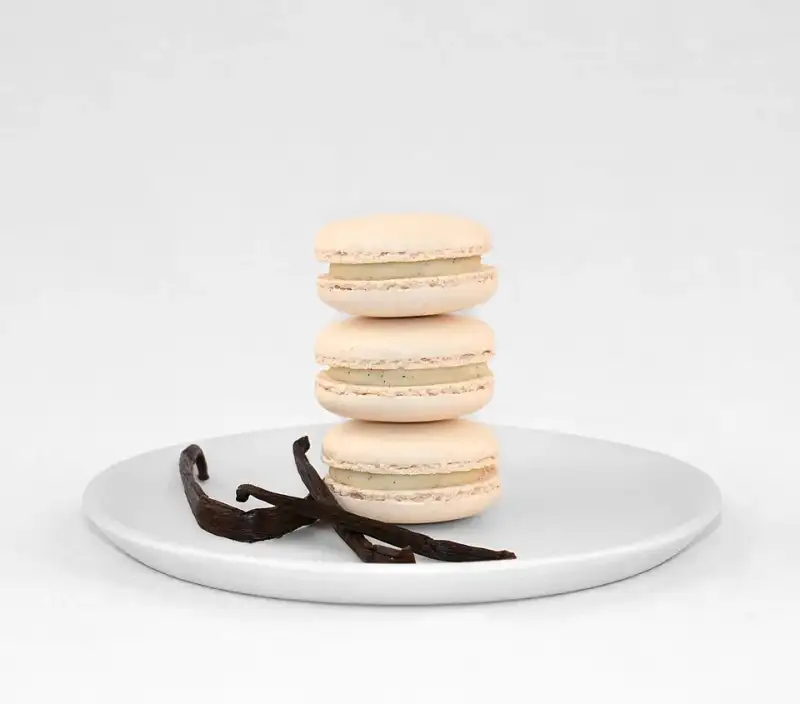
Bienvenue, chers épicuriens et amoureux de la gastronomie. Je suis Chloe Blanc, et aujourd'hui, je vous invite à un voyage sensoriel inoubliable au cœur de l'une des créations les plus fascinantes et les plus exigeantes de notre répertoire culinaire français : le macaron. Ce petit bijou rond, aux couleurs chatoyantes et aux saveurs infinies, n'est pas seulement une friandise ou un simple biscuit. C'est une véritable œuvre d'art, un concentré de technique, de précision horlogère et de passion débordante. En tant que chef pâtissière, je peux vous assurer que maîtriser la confection du macaron est l'équivalent de la quête du Saint Graal dans notre métier. C'est un apprentissage de tous les instants, une danse délicate avec les éléments naturels où l'humidité de l'air, la température exacte des blancs d'œufs, et la force de votre geste lors du macaronage jouent un rôle absolument crucial. Chaque fournée est une remise en question et un défi à relever. Dans cet article complet, je souhaite partager avec vous, au-delà des simples recettes, mon amour inconditionnel pour ce chef-d'œuvre incontesté de la #Patisserie française. Nous allons ensemble explorer ses origines souvent méconnues, disséquer de manière chirurgicale son anatomie parfaite, plonger dans les complexités techniques de sa fabrication, et, bien sûr, rêver autour de ses harmonies de saveurs infinies. Préparez-vous à découvrir les secrets les mieux gardés de la haute pâtisserie et à voir le macaron sous un tout autre angle. #France #Dessert #Macaron #ChloeBlanc #HautePatisserie L'Épopée Historique du Macaron : De l'Italie à la Cour de France Avant de devenir l'icône chic, élégante et résolument parisienne que le monde entier nous envie et tente de reproduire, le macaron a parcouru un long et tumultueux chemin. Son histoire est un fascinant mélange de légendes tenaces, d'échanges culturels à travers l'Europe et d'évolution culinaire perpétuelle. Les Racines Italiennes et l'Arrivée en France Si son prestige actuel est indéniablement français, le terme "macaron" trouve ses véritables racines dans la langue italienne. Il dérive probablement du mot maccherone ou maccarone, qui désignait autrefois une pâte fine et écrasée. L'histoire et les textes anciens racontent que ce sont d'abord les moines italiens, dans le secret de leurs abbayes, qui auraient été les premiers à confectionner ces petits biscuits roboratifs à base de poudre d'amande, de sucre et de blancs d'œufs dès le VIIIe siècle. Leurs vertus nourrissantes et leur longue conservation en faisaient une denrée prisée. Cependant, c'est véritablement au XVIe siècle que le macaron traverse majestueusement les Alpes pour conquérir le palais royal. La légende, souvent racontée dans les écoles de pâtisserie, veut que la reine Catherine de Médicis, lors de son fastueux mariage avec le futur roi Henri II en 1533, ait apporté avec elle dans ses bagages ses talentueux pâtissiers italiens. Par la même occasion, elle introduisit la recette de ces délices à la Cour de France. À cette époque lointaine, le macaron ne ressemblait pourtant pas à celui que nous connaissons et chérissons aujourd'hui. Il s'agissait d'un biscuit simple, très rustique, croquant à l'extérieur et moelleux à l'intérieur, dépourvu de toute garniture crémeuse et souvent craquelé en surface. L'Essor dans les Régions Françaises : Des Traditions Multiples Au fil des siècles et des voyages, le macaron s'est implanté dans diverses régions de #France, chacune s'appropriant la recette pour développer sa propre version, fièrement défendue par le terroir local. On pense notamment aux célébrissimes Macarons de Nancy, créés au XVIIIe siècle par deux religieuses audacieuses, Marguerite et Marie-Élisabeth. Cherchant à contourner les règles strictes interdisant la consommation de viande dans leur couvent, elles se mirent à préparer des pâtisseries riches en amandes pour combler les carences nutritionnelles. Surnommées affectueusement les "Sœurs Macarons", elles ont rendu cette gourmandise célèbre dans tout le pays, et leur secret de fabrication perdure encore aujourd'hui. Mais l'histoire ne s'arrête pas là. Il existe également les fameux macarons d'Amiens, plus épais et aux amandes effilées, ceux de Saint-Émilion au bon goût de vin de la région, de Joyeuse ou encore de Montmorillon. Chacun de ces macarons régionaux possède une texture, une forme, un aspect visuel et une histoire qui lui sont totalement uniques, prouvant que ce petit biscuit aux amandes a su conquérir le cœur, les traditions et le palais de tout un peuple, bien avant de devenir un produit de luxe. La Naissance du Macaron Parisien : La Révolution Gourmande Mais alors, à quel moment de l'histoire le macaron a-t-il acquis son allure moderne, ce chic intemporel défini par un double biscuit lisse enserrant une garniture fondante ? L'invention du macaron dit "parisien" ou macaron "Gerbet" remonte aux années 1830. C'est dans le bouillonnement intellectuel et culinaire de Paris que des pâtissiers visionnaires ont commencé à accoler deux coques de macaron simples en les solidarisant avec une couche de confiture, d'épices douces ou de liqueurs intenses. La consécration de cette forme, qui est aujourd'hui le standard mondial, est le plus souvent attribuée à Pierre Desfontaines, petit-cousin du célèbre Louis Ernest Ladurée. Au début du XXe siècle, profitant de l'essor des salons de thé parisiens où les femmes de la haute société pouvaient enfin se retrouver librement, il aurait eu la brillante idée d'assembler deux coques de macarons en les garnissant d'une savoureuse et riche ganache. Cette innovation, apparemment simple, a fondamentalement transformé un biscuit rustique de tradition en une véritable icône de la gastronomie de luxe, ouvrant la voie à une créativité sans aucune limite pour les générations futures de pâtissiers. L'Anatomie d'un Chef-d'Œuvre : Les Trois Piliers du Macaron Parfait Pour comprendre la magie profonde de ce #Dessert et apprécier pleinement sa complexité, il faut l'observer de très près, presque à la loupe. Un macaron parfait, selon les standards exigeants de la haute pâtisserie, se caractérise par trois éléments distincts, indissociables et indispensables. La recherche constante de cette sainte trinité est ce qui empêche tant de pâtissiers, amateurs comme professionnels, de dormir la nuit. 1. La Coque : Lisse, Brillante et Fièrement Bombée La toute première impression, avant même de goûter, est purement visuelle. La coque supérieure du macaron, qui se présente tel un dôme miniature, doit être d'une perfection absolue. Elle ne doit présenter absolument aucune craquelure, aucune bulle d'air disgracieuse, aucune aspérité ni granulosité. Sa surface lisse doit capter la lumière ambiante, offrant un éclat subtil et soyeux qui invite irrésistiblement à la dégustation. Au toucher, elle doit offrir une très légère résistance sous le doigt, promettant un croquant délicat qui cédera instantanément sous la dent, tel un fin verre de sucre filé. L'obtention de cette texture est le résultat direct d'un "macaronage" extrêmement précis et d'un temps de "croûtage" rigoureusement respecté. 2. La Collerette : L'Empreinte de la Réussite Technique C'est incontestablement le détail qui tue, la véritable signature visuelle d'un macaron techniquement réussi. La collerette, que l'on appelle souvent familièrement le "pied", est cette petite couronne mousseuse, légèrement boursouflée et dentelée qui se forme à la base de la coque pendant les premières minutes de la cuisson. Elle témoigne d'un équilibre chimique et physique parfait entre l'humidité résiduelle de la pâte, la puissance de la chaleur du four et le temps de repos préalable. Une collerette absente ou, à l'inverse, une collerette qui s'est trop étalée et affaissée, indique un défaut majeur de technique (pâte trop liquide ou four pas assez chaud). Elle doit s'élever verticalement et fièrement, soutenant avec élégance le dôme lisse de la coque. 3. L'Équilibre des Textures et la Garniture Fondante Le dernier élément de cette anatomie, et non des moindres pour l'expérience gustative, est l'interaction symbiotique entre l'intérieur de la coque et sa garniture. Une fois le croquant initial de la surface rompu par les dents, le palais doit immédiatement rencontrer une texture moelleuse, humide et presque fondante. Ce fameux moelleux ne vient pas par hasard : il provient de la phase cruciale de maturation du macaron. En effet, la plus grande règle d'or est qu'un macaron ne se déguste jamais le jour même de sa fabrication ! Il doit reposer entre 24 et 48 heures au réfrigérateur. Durant ce repos, l'humidité et les huiles de la garniture (qu'il s'agisse d'une ganache riche, d'une crème au beurre parfumée ou d'un confit de fruits frais) vont doucement imprégner le biscuit sec. C'est cette patiente osmose qui crée la fameuse texture "mâche", cet équilibre parfait entre le croustillant et le fondant tant recherché par les puristes. L'Impact des Colorants : Une Palette Artistique Le macaron est aussi un régal pour les yeux avant de devenir un délice pour le palais. L'utilisation et la maîtrise des colorants alimentaires constituent une étape délicate et artistique. J'ai, pour ma part, une préférence absolue pour les colorants en poudre hydrosolubles d'excellente qualité ou les colorants en gel très concentrés. Les colorants liquides de supermarché sont totalement à proscrire, car ils ajoutent une humidité non désirée qui déséquilibre immédiatement la texture fragile de la meringue. Les couleurs peuvent être vives et "pop" pour attirer l'attention et souligner un goût moderne (comme le jaune fluo pour le yuzu), ou pastel et naturelles pour évoquer la douceur et l'authenticité des ingrédients utilisés, comme un vert tendre et poudré pour la pistache d'Iran ou un rose délicat pour la framboise. L'harmonie visuelle, la régularité de la teinte, doivent toujours annoncer avec justesse la symphonie gustative qui va s'ensuivre. La Guerre des Meringues : Française, Italienne ou Suisse ? Le cœur battant, la structure même de la recette du macaron réside dans la meringue, cette émulsion aérienne magique constituée de blancs d'œufs et de sucre. Mais attention, toutes les meringues ne se valent pas, et le choix de la technique définit très souvent le style, le niveau et la philosophie du chef pâtissier.La Meringue Française : C'est la méthode la plus traditionnelle, la plus enseignée aux débutants et, en apparence seulement, la plus simple. Les blancs d'œufs y sont fouettés et montés en neige, tandis que le sucre en poudre y est incorporé progressivement. Le résultat donne un macaron à la texture extrêmement délicate, avec une coque souvent plus fine et croquante, et surtout un goût d'amande très prononcé car la pâte est moins chargée en sucre cuit. Cependant, c'est aussi la méthode la plus capricieuse et instable, terriblement sensible à l'humidité ambiante, à la qualité des œufs et aux moindres variations de température de votre four. La Meringue Italienne : C'est la véritable arme secrète des grandes maisons de pâtisserie et des professionnels. Elle consiste à verser un sirop de sucre bouillant (cuit très exactement à 118°C) en un fin filet sur des blancs d'œufs qui sont seulement partiellement montés. La chaleur intense du sirop cuit les blancs pendant le foisonnement, créant ainsi une meringue dense, incroyablement brillante et d'une stabilité physique à toute épreuve. Les macarons réalisés avec une meringue italienne sont généralement plus lisses, visuellement parfaits, moins sensibles à l'humidité de l'air ambiant, avec une collerette très régulière et solide. C'est la technique reine que je privilégie systématiquement dans ma cuisine de laboratoire pour garantir une qualité constante et irréprochable, même lorsque la météo capricieuse parisienne fait des siennes. La Meringue Suisse : Souvent moins courante pour la confection des macarons, elle implique de chauffer les blancs d'œufs et le sucre au bain-marie jusqu'à dissolution complète des cristaux avant de les fouetter énergiquement jusqu'à complet refroidissement. Elle offre un compromis technique intéressant entre la grande stabilité de l'italienne et la légèreté de la française, mais nécessite une parfaite maîtrise des températures au bain-marie pour ne pas cuire l'œuf prématurément.Le Rituel de Préparation : La Masterclass de Chloe Blanc Réaliser des macarons n'est pas simplement cuisiner, c'est accomplir un acte de méditation. Chaque geste compte, chaque gramme est important, chaque minute est décisive. Voici une plongée exclusive dans les étapes cruciales, les secrets professionnels que je chéris et que je transmets au quotidien à mes apprentis. #ChefLife #BakingSecrets L'Importance du "Tant pour Tant" et du Tamisage Extrême La base sèche fondamentale du macaron est traditionnellement appelée le "tant pour tant" : un mélange rigoureux, à parts strictement égales, de poudre d'amande extra-fine et de sucre glace. Pour obtenir une coque d'une douceur veloutée et éviter un effet rustique, il est impératif de passer ce mélange quelques secondes au robot-coupe pour l'affiner, puis de le tamiser très méticuleusement à l'aide d'un tamis fin. La moindre particule d'amande non broyée créerait des aspérités, de petites boursouflures inesthétiques sur le dessus du biscuit après cuisson. Le Vieillissement Essentiel des Blancs d'Œufs Voici un des plus grands secrets de chef, souvent ignoré à la maison : n'utilisez absolument jamais des œufs extra-frais pour faire des macarons. Les blancs doivent être "clarifiés" (soigneusement séparés des jaunes sans la moindre trace de gras) et laissés dans un récipient hermétique au fond du réfrigérateur pendant trois à cinq jours complets, voire une semaine. Ils doivent ensuite impérativement être ramenés à température ambiante la veille ou au moins quelques heures avant la préparation. Ce long processus de vieillissement modifie la structure moléculaire des protéines, réduisant considérablement l'élasticité et l'eau du blanc, permettant ainsi d'obtenir une meringue beaucoup plus ferme, beaucoup plus dense et remarquablement stable qui ne retombera pas lors du macaronage. Le Macaronage : L'Art du Geste Parfait C'est ici, à cette étape précise, que tout se joue, que le macaron vit ou meurt. Le macaronage est l'action délicate d'incorporer le fameux tant pour tant et les colorants éventuels à la meringue montée. Si vous ne mélangez pas suffisamment, la pâte conservera trop d'air, sera trop épaisse et vos macarons garderont de petites pointes inesthétiques sur le dessus au pochage, qui ne s'estomperont pas à la cuisson. Si, emporté par votre élan, vous mélangez trop énergiquement ou trop longtemps, la pâte deviendra désespérément liquide, les macarons s'étaleront pitoyablement sur la plaque de cuisson et ne développeront jamais de collerette. Le geste parfait s'effectue idéalement à l'aide d'une corne en plastique souple ou d'une grande maryse. Il faut racler le fond et les bords du bol, puis ramener la pâte vers le centre tout en l'écrasant très légèrement contre la paroi pour "casser" un peu la meringue et chasser un léger surplus d'air. On s'arrête exactement au moment où la pâte forme un fameux "ruban" continu, épais et lisse lorsqu'on soulève la maryse. C'est une question d'intuition, d'œil, de toucher et de grande expérience. Le Croûtage : L'Éloge de la Patience Une fois la pâte obtenue, elle est placée dans une poche à douille lisse, et les macarons sont pochés avec régularité sur leur plaque de cuisson recouverte de papier sulfurisé ou de tapis silpat. Vient alors le temps essentiel du croûtage. Il faut laisser reposer la plaque à l'air libre, dans un endroit sec et à l'abri des courants d'air, pendant 20 à 45 minutes, jusqu'à ce que la surface des coques soit devenue mate et totalement sèche au toucher délicat du doigt. C'est la formation de cette très fine croûte étanche qui empêchera l'humidité de s'échapper par le haut du biscuit, la forçant ainsi à s'échapper par le bas lors de la cuisson, ce qui aura pour effet mécanique de soulever la coque et de créer majestueusement la fameuse collerette. La Cuisson : Le Ballet Thermique Chaque four, même professionnel, est unique, et dompter son propre équipement est la dernière épreuve initiatique. Généralement, dans un four à chaleur tournante, une cuisson douce autour de 145°C à 150°C pendant 12 à 16 minutes est idéale selon la taille du macaron. Il est par ailleurs très souvent nécessaire d'ouvrir rapidement la porte du four (ce que l'on appelle "ourler") à mi-cuisson, voire deux fois, pour laisser s'échapper l'excédent de vapeur d'eau généré, l'humidité ambiante dans le four étant l'ennemie jurée d'un macaron parfait et craquant. Les Erreurs Courantes et Comment les Éviter : Conseils d'Experte Même les chefs les plus chevronnés et les Meilleurs Ouvriers de France ont, un jour, connu des échecs cuisants avec des plaques entières de macarons ratés. L'humilité est de mise. Voici quelques-unes des erreurs les plus fréquentes que j'observe chez les passionnés, et mes astuces infaillibles pour les surmonter. Les Coques Fendillées : L'Ennemi Humide C'est souvent le grand désespoir de tout pâtissier amateur : ouvrir la porte du four avec excitation et découvrir avec horreur des coques ressemblant à de petits volcans en éruption. Le fendillement massif est presque toujours lié à un excès d'humidité dans la pièce, à un blanc d'œuf non vieilli, ou le plus souvent à un croûtage totalement insuffisant. Si la coque n'a pas eu le temps de former une solide pellicule sèche, la pression de la vapeur dégagée pendant la cuisson s'échappera violemment par le haut, fissurant irrémédiablement la surface. Veillez toujours à laisser croûter vos macarons dans une pièce la plus sèche possible. S'il pleut abondamment à l'extérieur ou si l'air est lourd et très humide, n'hésitez pas à utiliser un petit déshumidificateur, à allumer la hotte aspirante de votre cuisine, ou à doubler allègrement le temps de repos. L'Absence Cruelle de Collerette : Problème de Pâte ou de Température Si, à l'issue de la cuisson, vos macarons restent désespérément plats, posés comme de tristes disques lisses sur le papier sans ce fameux petit pied dentelé qui les caractérise, plusieurs coupables peuvent être pointés du doigt. Un macaronage beaucoup trop excessif, qui a détruit la structure de la meringue et rendu la pâte dangereusement liquide, est souvent la première cause. La pâte s'étale au lieu de gonfler et n'a pas la force physique de se soulever. Une autre cause très fréquente est une température de la sole du four trop basse : la chaleur n'est pas suffisante et assez brutale pour saisir instantanément la base du macaron et créer ce choc thermique absolument vital au développement dynamique de la collerette. L'utilisation de tapis en silicone trop épais peut également freiner la transmission de chaleur; n'hésitez pas à superposer deux plaques de cuisson perforées pour mieux répartir l'air chaud et isoler légèrement la base. Des Coques Creuses à l'Intérieur : Le Mystère de l'Air Vous croquez avec envie dans un macaron visuellement parfait, bombé et doté d'une superbe collerette, mais à l'intérieur, c'est la déception : un grand vide intersidéral se cache sous la coque croustillante. Ce problème particulièrement frustrant est très souvent dû à une meringue trop violemment fouettée ou montée à une vitesse excessive sur le robot. Cela incorpore rapidement de grosses bulles d'air extrêmement fragiles qui finissent par éclater à la chaleur du four, laissant une grande cavité béante. Il peut également provenir d'une température de four légèrement trop élevée au départ, causant un gonflement très rapide et artificiel de l'extérieur du biscuit tandis que l'intérieur, encore cru, s'effondre lamentablement sur lui-même en refroidissant. Prenez toujours le temps de monter vos blancs très progressivement, à vitesse moyenne, pour obtenir des bulles fines, denses et structurellement stables. Les Macarons Qui Collent Désespérément au Tapis Il n'y a rien de plus rageant que d'avoir passé des heures à réaliser de somptueux macarons et de les voir se déchirer car ils refusent obstinément de se détacher de la plaque de cuisson. C'est très généralement le signe d'un manque de cuisson. Les macarons doivent être cuits jusqu'à ce que la coque soit parfaitement solidaire de son pied. Si, en fin de cuisson, en touchant très délicatement le dôme du macaron du bout de l'index dans le four, celui-ci "danse" ou bouge par rapport à sa base de façon désolidarisée, c'est qu'il manque incontestablement quelques précieuses minutes de cuisson. De plus, réglez votre impatience : laissez absolument toujours vos macarons refroidir complètement à température ambiante sur la plaque avant d'essayer de les décoller de leur support, qu'il s'agisse de papier sulfurisé ou de tapis en silicone. L'Alchimie des Saveurs : De la Tradition à l'Avant-Garde Si la maîtrise technique de la coque parfaite demande une incroyable rigueur quasi militaire, la création de la garniture est, en revanche, le terrain de jeu absolu par excellence où s'exprime la personnalité, la sensibilité et la créativité du chef pâtissier. La coque en amande apporte la texture, le croquant et la douceur sucrée indispensable, tandis que la garniture apporte l'âme du produit, la force, l'acidité tranchante, l'amertume noble ou le parfum envoûtant. Les Classiques Intemporels et Incontournables Certaines saveurs sont devenues des standards indémodables et exigent, de par leur popularité, une exécution absolument irréprochable. On ne triche pas avec un classique.Le Chocolat Intense : Une ganache montée au chocolat noir grand cru (minimum 70% de cacao), où la puissante amertume et les notes torréfiées du cacao viennent intelligemment contrebalancer le sucre inhérent à la coque du macaron. La Vanille de Madagascar ou de Tahiti : Une ganache blanche onctueuse, littéralement constellée de milliers de grains de vanille grattés, offrant une douceur florale, chaude et infiniment réconfortante en bouche. Le Caramel Beurre Salé : L'équilibre parfait et addictif entre le sucre caramélisé profondément ambré, le gras généreux du beurre demi-sel et la fine pointe de fleur de sel de Guérande qui vient piquer et réveiller les papilles. La Pistache Pure : Un grand classique qui est pourtant si souvent malmené. Il exige impérativement d'utiliser une véritable pâte de pistaches de Bronte en Sicile ou d'Iran, 100% pure et sans aucun arôme artificiel de type "amande amère", pour révéler des notes délicatement torréfiées, herbacées et subtiles. La Framboise Acidulée : Souvent travaillée sous forme de confit gélifié de fruits frais (pectine) plutôt que d'une ganache riche, pour apporter une acidité très percutante et une explosion de fraîcheur fruitée estivale qui désucre immédiatement le palais.L'Audace de la Haute Pâtisserie Contemporaine Aujourd'hui, libéré de ses carcans, le macaron est devenu une fabuleuse toile vierge pour des associations inattendues et audacieuses. Directement inspirée par le cycle des saisons, par mes voyages lointains et par les rencontres avec des producteurs passionnés, j'aime repousser les limites des saveurs classiques. #Gastronomy #CulinaryArt Imaginez la complexité d'un macaron associant la puissance terrienne et envoûtante de la truffe noire du Périgord (Tuber Melanosporum) à la douceur ronde d'une ganache crémeuse au chocolat blanc et au mascarpone. Pensez à l'acidité vibrante et exotique du jus de Yuzu japonais audacieusement mariée au parfum boisé, poivré et anisé du basilic thaï frais. Les infusions à froid sont également un domaine extraordinaire : une fine ganache infusée au thé noir Earl Grey et bergamote, à la lavande de Haute-Provence ou même délicatement épicée au poivre rouge de Sichuan. L'un de mes accords signatures dont je suis la plus fière est le macaron que j'ai nommé "Jardin d'Hiver". Il se présente sous la forme d'une délicate coque vert pâle, très légèrement poudrée, renfermant une ganache montée soyeuse infusée à la verveine fraîche citronnée, et un cœur coulant, presque liquide, au confit de pamplemousse rose de Corse. La vivacité extrême et la légère amertume de l'agrume viennent casser net la richesse beurrée de la ganache, créant une explosion de fraîcheur inoubliable en fin de dégustation. L'Art de la Dégustation : Un Moment de Pur Plaisir Suspendu Déguster un macaron de qualité ne se fait pas à la va-vite, debout dans la rue entre deux rendez-vous. C'est un rituel qui mérite attention, respect du produit et temps. Comme je l'ai mentionné précédemment, la règle d'or est que le macaron doit impérativement être sorti du réfrigérateur une quinzaine de minutes au minimum avant la dégustation. Ce retour à température ambiante permet à la ganache ou à la crème de retrouver toute sa souplesse, son fondant, et de libérer pleinement l'ensemble de ses précieux arômes qui étaient alors figés par le froid. Mais avec quelle boisson accompagner avec grâce ce véritable joyau de la #Patisserie ?Le Thé : C'est le compagnon historique, aristocratique et naturel du macaron. Un thé noir fin et léger, comme un Darjeeling de première récolte, s'accorde à merveille avec la puissance des macarons au chocolat, au café ou au caramel. À l'inverse, un thé vert Sencha japonais ou un thé blanc Pai Mu Tan délicat sublimera avec élégance la fraîcheur des macarons aux fruits rouges exotiques, aux agrumes ou aux notes florales (comme la célèbre association rose, litchi et framboise). Le Champagne : Pour transformer une simple dégustation en une véritable célébration mémorable, rien ne vaut l'effervescence luxueuse d'un Champagne brut, voire blanc de blancs. Ses bulles fines et son acidité tranchante viennent nettoyer le palais et rafraîchir les papilles entre deux bouchées gourmandes, révélant de manière spectaculaire la complexité des macarons à la vanille bourbon, aux agrumes confits, ou même au foie gras mi-cuit pour de spectaculaires versions salées lors des repas de fête. Le Café : Pour les amateurs d'accords corsés, un espresso court et très structuré est le partenaire idéal, presque viril, d'un macaron intensément sucré au caramel beurre salé, au praliné noisette ou au chocolat au lait. Il se crée alors un contraste saisissant, presque brutal mais divin, entre l'amertume torréfiée et brûlante de la boisson et la douceur régressive et fondante de la pâtisserie, appelant irrésistiblement à y revenir.Conclusion : L'Éternelle Magie du Macaron Le macaron est, en définitive, bien plus qu'une simple tendance culinaire éphémère ou un gadget sucré destiné aux réseaux sociaux ; c'est un fier ambassadeur de l'élégance, du raffinement et du savoir-faire technique artisanal français à travers le monde entier. Il incarne à lui seul le paradoxe merveilleux de la haute pâtisserie : une apparence de fragilité absolue, de délicatesse et de grande simplicité, qui cache en réalité une complexité technique redoutable, une rigueur scientifique implacable et des heures de travail acharné en laboratoire. En tant que créatrice de douceurs, je peux vous confier que chaque nouvelle fournée de macarons est une nouvelle aventure passionnante, une remise en question permanente face aux éléments naturels et aux ingrédients, mais surtout une immense source de joie lorsque le résultat final est à la hauteur de mes espérances. Voir les yeux de mes clients s'illuminer d'émerveillement et de gourmandise lorsqu'ils croquent avec délectation dans l'une de ces petites sphères colorées est, sans l'ombre d'un doute, la plus belle et la plus gratifiante de toutes les récompenses. Je vous invite sincèrement, la prochaine fois que vous croiserez le chemin d'une véritable boutique d'artisan pâtissier proposant des macarons, à prendre le temps. Le temps d'admirer la brillance des coques alignées en vitrine, le temps de respirer leur parfum complexe, et le temps de savourer en pleine conscience chaque instant de cette expérience gustative unique. Laissez-vous doucement transporter par la magie intemporelle du macaron, ce véritable joyau sucré qui fait la fierté de notre #France. Merci du fond du cœur de m'avoir accompagnée dans ce fascinant voyage sucré et parfumé. N'hésitez surtout pas à partager autour de vous vos propres saveurs de macarons préférées, vos associations audacieuses ou même vos propres expériences et déboires de pâtisserie à la maison. À très bientôt pour de toutes nouvelles et palpitantes découvertes gourmandes ! Avec toute ma passion sucrée, Chloe Blanc #patisserie #dessert #france #chloeblanc #sweet Related InsightsCrème Brûlée : La Douce Symphonie du Caramel Cannelé : Le Trésor Croustillant de Bordeaux Éclair : Le Grand Classique Indémodable{ "@context": "https://schema.org", "@type": "FAQPage", "mainEntity": [ { "@type": "Question", "name": "What is the main focus of Macaron : L'Élégance Parfaite en Une Seule Bouchée?", "acceptedAnswer": { "@type": "Answer", "text": "Plongez dans l'univers de la haute pâtisserie avec Chloe Blanc et découvrez les secrets de ce dessert emblématique." } }, { "@type": "Question", "name": "Who authored the comprehensive guide on Macaron : L'Élégance Parfaite en Une Seule Bouchée?", "acceptedAnswer": { "@type": "Answer", "text": "This detailed article and its insights were carefully researched and authored by Chloe Blanc." } }, { "@type": "Question", "name": "Where can I find more related content about Gastronomy?", "acceptedAnswer": { "@type": "Answer", "text": "You can explore more articles, detailed reviews, and similar insights by browsing the Related Insights section at the bottom of this article or visiting our dedicated Gastronomy category page." } } ] }
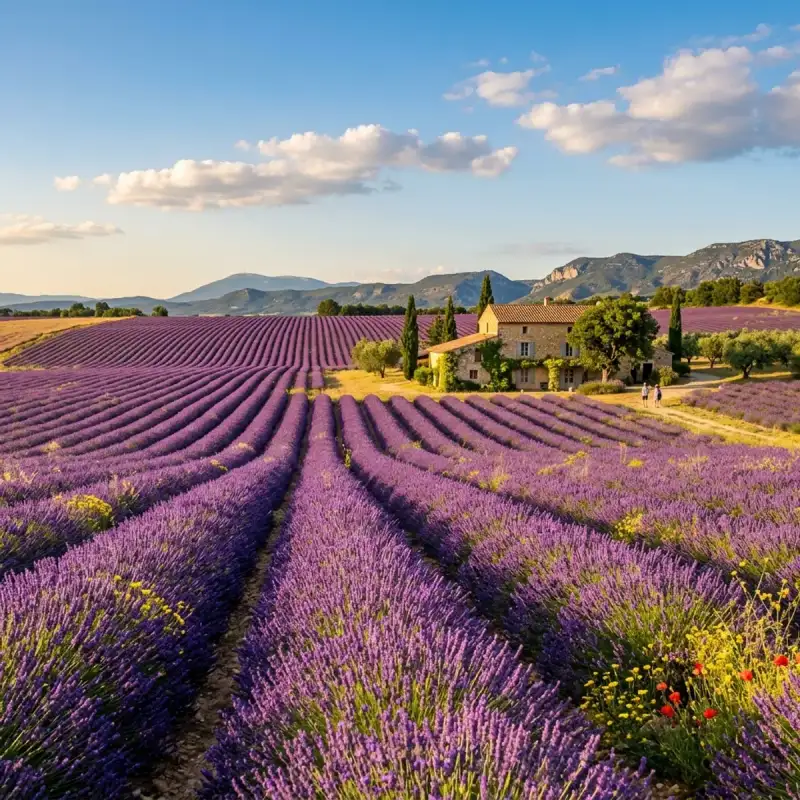
Bienvenue! Let us embark on an unforgettable #journey to the heart of #France. Provence is a geographical, cultural region and historical province of southeastern #France, which stretches from the left bank of the lower Rhône to the west to the Italian border to the east; it is bordered by the Mediterranean Sea to the south. It largely corresponds with the modern administrative region of Provence-Alpes-Côte d'Azur and includes the departments of Var, Bouches-du-Rhône, Alpes-de-Haute-Provence, as well as parts of Alpes-Maritimes and Vaucluse. The largest city of the region and its modern-day capital is Marseille. The Romans made the region the first Roman province beyond the Alps and called it Provincia Romana, which evolved into the present name. Until 1481 it was ruled by the counts of Provence from their capital in Aquae Sextiae (today Aix-en-Provence), then became a province of the kings of France. It also hosted the Avignon papacy in the middle ages, when the Pope and his Curia fled Rome. While the region has been part of France for more than 500 years, it still retains a distinct cultural and linguistic identity, particularly in the interior of the region. Etymology The region got its name in Roman times, when it was known as Provincia Romana, simply "the Roman province". This name eventually was shortened to Provincia (the province), and as the language evolved from Latin to Provençal, so did the pronunciation and spelling. #history Prehistoric Provence The coast of Provence has some of the earliest known sites of human habitation in Europe. Primitive stone tools dating back 1 to 1.05 million years BC have been found in the Grotte du Vallonnet near Roquebrune-Cap-Martin, between Monaco and Menton. More sophisticated tools, worked on both sides of the stone and dating to 600,000 BC, were found in the Cave of Escale at Saint-Estève-Janson; tools from 400,000 BC and some of the first fireplaces in Europe were found at Terra Amata in Nice. Tools dating to the Middle Paleolithic (300,000 BC) and Upper Paleolithic (30,000–10,000 BC) were discovered in the Observatory Cave, in the Jardin Exotique of Monaco. The Paleolithic period in Provence saw great changes in the climate. Two ice ages came and went, and the sea level changed dramatically. At the beginning of the Paleolithic, the sea level in western Provence was 150 meters higher than today. By the end of the Paleolithic, it had dropped to 100 to 150 meters below the sea level today. The cave dwellings of the early inhabitants of Provence were regularly flooded by the rising sea or left far from the sea and swept away by erosion. The changes in the sea level led to one of the most remarkable discoveries of signs of early man in Provence. In 1985, a diver named Henri Cosquer discovered the mouth of a submarine cave 37 metres below the surface of the Calanque de Morgiou near Marseille. The entrance led to a cave above sea level. Inside, the walls of the Cosquer Cave are decorated with drawings of bison, seals, auks, horses and outlines of human hands, dating to between 27,000 and 19,000 BC. The end of the Paleolithic and beginning of the Neolithic period saw the sea settle at its present level, a warming of the climate and the retreat of the forests. The disappearance of the forests and the deer and other easily hunted game meant that the inhabitants of Provence had to survive on rabbits, snails and wild sheep. In about 6000 BC, the Castelnovian people, living around Châteauneuf-les-Martigues, were among the first people in Europe to domesticate wild sheep, and to cease moving constantly from place to place. Once they settled in one place they were able to develop new industries. Inspired by pottery from the eastern Mediterranean, in about 6000 BC they created the first pottery made in France. Around 6000 BC, a wave of new settlers from the east, the Chasséens, arrived in Provence. They were farmers and warriors, and gradually displaced the earlier pastoral people from their lands. They were followed about 2500 BC by another wave of people, also farmers, known as the Courronniens, who arrived by sea and settled along the coast of what is now the Bouches-du-Rhône. Traces of these early civilisations can be found in many parts of Provence. A Neolithic site dating to about 6,000 BC was discovered in Marseille near the Saint-Charles railway station. and a dolmen from the Bronze Age (2500–900 BC) can be found near Draguignan. Ligures and Celts in Provence Between the 10th and 4th century BC, the Ligures were found in Provence from Massilia as far as modern Liguria. They were of uncertain origin; they may have been the descendants of the indigenous Neolithic peoples. According to Strabo, the Ligurians, living in proximity to numerous Celtic mountain tribes, were a different people (ἑτεροεθνεῖς), but "were similar to the Celts in their modes of life". They did not have their own alphabet, but their language remains in place names in Provence ending in the suffixes -asc, -osc, -inc, -ates, and -auni. The #ancient geographer Posidonius wrote of them: "Their country is savage and dry. The soil is so rocky that you cannot plant anything without striking stones. The men compensate for the lack of wheat by hunting... They climb the mountains like goats." They were also warlike; they invaded Italy and went as far as Rome in the 4th century BC, and they later aided the passage of Hannibal, on his way to attack Rome (218 BC). Traces of the Ligures remain today in the dolmens and other megaliths found in eastern Provence, in the primitive stone shelters called 'Bories' found in the Luberon and Comtat, and in the rock carvings in the Valley of Marvels near Mont Bégo in the Alpes-Maritimes, at an altitude of 2,000 meters. Between the 8th and 5th centuries BC, tribes of Celtic peoples, probably coming from Central Europe, also began moving into Provence. They had weapons made of iron, which allowed them to easily defeat the local tribes, who were still armed with bronze weapons. One tribe, called the Segobriga, settled near modern-day Marseille. The Caturiges, Tricastins, and Cavares settled to the west of the Durance river. Celts and Ligurians spread throughout the area and the Celto-Ligures eventually shared the territory of Provence, each tribe in its own alpine valley or settlement along a river, each with its own king and dynasty. They built hilltop forts and settlements, later given the Latin name oppidum. Today the traces of 165 oppida are found in the Var, and as many as 285 in the Alpes-Maritimes. They worshipped various aspects of #nature, establishing sacred woods at Sainte-Baume and Gemenos, and healing springs at Glanum and Vernègues. Later, in the 5th and 4th centuries BC, the different tribes formed confederations; the Voconces in the area from the Isère to the Vaucluse; the Cavares in the Comtat; and the Salyens, from the Rhône river to the Var. The tribes began to trade their local products, iron, silver, alabaster, marble, gold, resin, wax, honey and cheese; with their neighbours, first by trading routes along the Rhône river, and later Etruscan traders visited the coast. Etruscan amphorae from the 7th and 6th centuries BC have been found in Marseille, Cassis, and in hilltop oppida in the region. Greeks in Provence Traders from the island of Rhodes were visiting the coast of Provence in the 7th century BC. Rhodes pottery from that century has been found in Marseille, near Martigues and Istres, and at Mont Garou and Evenos near Toulon. The traders from Rhodes gave their names to the ancient town of Rhodanousia (Ancient Greek: 'Ροδανουσίαν) (now Trinquetaille, across the Rhône river from Arles), and to the main river of Provence, the Rhodanos, today known as the Rhône. The first permanent Greek settlement was Massalia, established at modern-day Marseille in about 600 BC by colonists coming from Phocaea (now Foça, on the Aegean coast of Asia Minor). A second wave of colonists arrived in about 540 BC, when Phocaea was destroyed by the Persians. Massalia became one of the major trading ports of the ancient world. At its height, in the 4th century BC, it had a population of about 6,000 inhabitants, living on about fifty hectares surrounded by a wall. It was governed as an aristocratic republic, by an assembly of the 600 wealthiest citizens. It had a large temple of the cult of Apollo of Delphi on a hilltop overlooking the port, and a temple of the cult of Artemis of Ephesus at the other end of the city. The Drachma coins minted in Massalia were found in all parts of Ligurian-Celtic Gaul. Traders from Massalia ventured inland deep into France on the Rivers Durance and Rhône, and established overland trade routes deep into Gaul, and to Switzerland and Burgundy, and as far north as the Baltic Sea. They exported their own products; local wine, salted pork and fish, aromatic and medicinal plants, coral and cork. The Massalians also established a series of small colonies and trading posts along the coast; which later became towns; they founded Citharista (La Ciotat); Tauroeis (Le Brusc); Olbia (near Hyères); Pergantion (Breganson); Caccabaria (Cavalaire); Athenopolis (Saint-Tropez); Antipolis (Antibes); Nikaia (Nice), and Monoicos (Monaco). They established inland towns at Glanum (Saint-Remy) and Mastrabala (Saint-Blaise). The most famous citizen of Massalia was the mathematician, astronomer and navigator Pytheas. Pytheas made mathematical instruments which allowed him to establish almost exactly the latitude of Marseille, and he was the first scientist to observe that the tides were connected with the phases of the moon. Between 330 and 320 BC he organised an expedition by ship into the Atlantic and as far north as England, and to visit Iceland, Shetland, and Norway. He was the first scientist to describe drift ice and the midnight sun. Though he hoped to establish a sea trading route for tin from Cornwall, his trip was not a commercial success, and it was not repeated. The Massalians found it cheaper and simpler to trade with Northern Europe over land routes. Roman Provence (2nd century BC to 5th century AD) In the 2nd century BC the people of Massalia appealed to Rome for help against the Ligures. Roman legions entered Provence three times; first in 181 BC the Romans suppressed Ligurian uprisings near Genoa; in 154 BC the Roman Consul Optimus defeated the Oxybii and the Deciates, who were attacking Antibes; and in 125 BC, the Romans put down an uprising of a confederation of Celtic tribes. After this battle, the Romans decided to establish permanent settlements in Provence. In 122 BC, next to the Celtic town of Entremont, the Romans built a new town, Aquae Sextiae, later called Aix-en-Provence. In 118 BC they founded Narbo (Narbonne). The Roman general Gaius Marius crushed the last serious resistance in 102 BC by defeating the Cimbri and the Teutons. He then began building roads to facilitate troop movements and commerce between Rome, Spain and Northern Europe; one from the coast inland to Apt and Tarascon, and the other along the coast from Italy to Spain, passing through Fréjus and Aix-en-Provence. In 49 BC, Massalia had the misfortune to choose the wrong side in the power struggle between Pompey and Julius Caesar. Pompey was defeated, and Massalia lost its territories and political influence. Roman veterans, in the meantime, populated two new towns, Arles and Fréjus, at the sites of older Greek settlements. In 8 BC the Emperor Augustus built a triumphal monument at La Turbie to commemorate the pacification of the region, and he began to Romanize Provence politically and culturally. Roman engineers and architects built monuments, theatres, baths, villas, fora, arenas and aqueducts, many of which still exist. (See #architecture of Provence.) Roman towns were built at Cavaillon; Orange; Arles; Fréjus; Glanum (outside Saint-Rémy-de-Provence); Carpentras; Vaison-la-Romaine; Nîmes; Vernègues; Saint-Chamas and Cimiez (above Nice). The Roman province, which was called Gallia Narbonensis, for its capital, Narbo (modern Narbonne), extended from Italy to Spain, from the Alps to the Pyrenees. The Pax Romana in Provence lasted until the middle of the 3rd century. Germanic tribes invaded Provence in 257 and 275. At the beginning the 4th century, the court of Roman Emperor Constantine (ca. 272–337) was forced to take refuge in Arles. By the end of the 5th century, Roman power in Provence had vanished, and an age of invasions, wars, and chaos began. Arrival of Christianity (3rd–6th centuries) There are many legends about the earliest Christians in Provence, but they are difficult to verify. It is documented that there were organised churches and bishops in the Roman towns of Provence as early as the 3rd and 4th centuries; in Arles in 254; Marseille in 314; Orange, Vaison and Apt in 314; Cavaillon, Digne, Embrun, Gap, and Fréjus at the end of the 4th century; Aix-en-Provence in 408; Carpentras, Avignon, Riez, Cimiez (today part of Nice) and Vence in 439; Antibes in 442; Toulon in 451; Senez in 406, Saint-Paul-Trois-Châteaux in 517; and Glandèves in 541. The oldest Christian structure still surviving in Provence is the baptistery of the Fréjus #cathedral, dating from the 5th century. At about the same time, the first two monasteries in Provence were founded: Lérins Abbey, on the island of Saint-Honorat near Cannes, and Abbey of St Victor in Marseille. Germanic invasions, Merovingians and Carolingians (5th–9th centuries) Beginning in the second half of the 5th century, as Roman power waned, successive waves of Germanic tribes entered Provence: first the Visigoths (480), then the Ostrogoths, then the Burgundians, finally, the Franks in the 6th century. Arab invaders and Berber pirates came from North Africa to the Coast of Provence in the early 7th century. During the late 7th and the early 8th centuries, Provence was formally subject to the Frankish kings of the Merovingian dynasty, but it was in fact ruled by its own regional nobility of Gallo-Roman stock, which ruled themselves according to Roman, not Frankish, law. The region actually enjoyed more prestige than the northern Franks had, but the local aristocracy feared Charles Martel's expansionist ambitions. In 737, Charles Martel headed down the Rhône Valley after subduing Burgundy. He attacked Avignon and Arles, garrisoned by the Umayyads, and came back in 739 to capture for a second time Avignon and chase the duke Maurontus to his stronghold of Marseille. The city was brought to heel and the duke had to flee to an island. The region was thereafter under the rule of Carolingian kings, descended from Charles Martel, and then was part of the #empire of Charlemagne (742–814). In 879, after the death of the Carolingian ruler Charles the Bald, Boso of Provence (also known as Boson), his brother-in-law, broke away from the Carolingian kingdom of Louis III and was elected the first ruler of an independent state of Provence. Fraxinet and the Counts of Provence (9th–13th centuries) During the Middle Ages, Provence was ruled by three successive dynasties of counts and became a focal point in the rivalries between the Crown of Aragon, the kings of Burgundy, the rulers of the Holy Roman Empire, and the Angevin kings of France. The Bosonids (879–1112), descendants of Boson, the first king of Provence, held the county in the early medieval period. His son, Louis the Blind (r. 890–928), lost his sight during his attempt to claim the Italian throne. He was succeeded in influence by his cousin Hugh of Italy (d. 947), who became duke of Provence and count of Vienne. Hugh transferred the capital from Vienne to Arles and recognised the overlordship of Rudolph II of Burgundy, making Provence a fief of Burgundy. In the 9th and 10th centuries, Provence was subject to invasions by Normans and Saracens (a term used in medieval sources for Muslim raiders). While the Normans withdrew, the Saracens established a permanent base at Fraxinet in 887. In 973 they captured Maieul, abbot of Cluny, prompting a coordinated response by local forces. Under Count William I, the Provençals defeated the Saracens at the Battle of Tourtour, near La Garde-Freinet. Surviving Saracens were either killed, enslaved, or left the region. Dynastic conflicts persisted. A dispute between Rudolph III of Burgundy and the German emperor Conrad II resulted in Provence becoming a fiefdom of the Holy Roman Empire in 1032, a status it retained until 1246. In 1112, Douce I, Countess of Provence, the last Bosonid heiress, married Ramon Berenguer III, Count of Barcelona, initiating the rule of the Barcelona dynasty in Provence. From 1112 to 1131 he governed as Count of Provence. Following the dynastic union of the County of Barcelona and the Kingdom of Aragon (1137), later known as the Crown of Aragon, Provençal succession passed to the House of Aragon, whose members ruled until 1246. The traditional coat of arms of Provence—four red vertical bars on a gold field—originates from this period of Aragonese rule. In 1125, Provence was divided: territories north and west of the Durance passed to the Count of Toulouse, while the lands between the Durance, the Mediterranean Sea, the Rhône, and the Alps remained under the counts of Provence. The capital shifted from Arles to Aix-en-Provence and later to Brignoles. Under the House of Aragon, the 12th century saw significant ecclesiastical construction in Provence in the Romanesque style, combining elements of the Gallo-Roman tradition of the Rhône valley with the Lombard style of the Alps. Aix Cathedral was built on the site of the Roman forum and later partially rebuilt in #gothic style. The Church of St. Trophime in Arles became a major Romanesque monument, while Montmajour Abbey developed into an important pilgrimage site. The 12th century also witnessed the foundation of major Cistercian monasteries in remote areas of Provence, including Sénanque Abbey (1148–1178) in the Luberon, Thoronet Abbey near Draguignan (1160), and Silvacane Abbey at La Roque-d'Anthéron (1175). In the 13th century, the French Capetian monarchy extended its influence into southern France through dynastic marriages. Alphonse, Count of Poitou, son of King Louis VIII, married Joan, Countess of Toulouse. King Louis IX married Marguerite of Provence. In 1246, Charles of Anjou, the youngest son of Louis VIII, married Beatrice of Provence, heiress to the county. Provence subsequently became linked to the Angevin dynasty and the Kingdom of Naples. The popes in Avignon (14th century) In 1309, Pope Clement V, who was originally from Bordeaux, moved the Papal Curia to Avignon, a period known as the Avignon Papacy. From 1309 until 1377, seven popes reigned in Avignon before the Schism between the Roman and Avignon churches, which led to the creation of rival popes in both places. After that, three antipopes reigned in Avignon until 1423, when the papacy finally returned to Rome. Between 1334 and 1363 the old and new Papal Palaces of Avignon were built by Popes Benedict XII and Clement VI respectively; together the Palais des Papes was the largest Gothic palace in Europe. The 14th century was a terrible time in Provence, and all of Europe: the population of Provence had been about 400,000 people; the Black Death (1348–1350) killed fifteen thousand people in Arles, half the population of the city, and greatly reduced the population of the whole region. The defeat of the French Army during the Hundred Years' War forced the cities of Provence to build walls and towers to defend themselves against armies of former soldiers who ravaged the countryside. The Angevin rulers of Provence also had a difficult time. An assembly of nobles, religious leaders, and town leaders of Provence was organised to resist the authority of Queen Joan I of Naples (1343–1382). She was murdered in 1382 by her cousin and heir, Charles of Durazzo, who started a new war, leading to the separation of Nice, Puget-Théniers and Barcelonnette from Provence in 1388, and their attachment to the County of Savoy. From 1388 up to 1526, the area acquired by the Savoy was known as Terres Neuves de Provence; after 1526 it officially took on the name County of Nice. Good King René, the last ruler of Provence The 15th century saw a series of wars between the kings of Aragon and the counts of Provence. In 1423 the army of Alphonse of Aragon captured Marseille, and in 1443 they captured Naples, and forced its ruler, King René I of Naples, to flee. He eventually settled in one of his remaining territories, Provence. History and legend has given René the title "Good King René of Provence", though he only lived in Provence in the last ten years of his life, from 1470 to 1480, and his political policies of territorial expansion were costly and unsuccessful. Provence benefitted from population growth and economic expansion, and René was a generous patron of the arts, sponsoring painters Nicolas Froment, Louis Bréa, and other masters. He also completed one of the finest castles in Provence at Tarascon, on the Rhône river. When René died in 1480, his title passed to his nephew Charles du Maine. One year later, in 1481, when Charles died, the title passed to King Louis XI. Provence was legally incorporated into the French royal domain in 1486. 1486 to 1789 Soon after Provence became part of France, it became involved in the Wars of Religion that swept the country in the 16th century. Between 1493 and 1501, many Jews were expelled from their homes and sought sanctuary in the region of Avignon, which was still under the direct rule of the Pope. In 1545, the Parlement of Aix-en-Provence ordered the destruction of the villages of Lourmarin, Mérindol, Cabriéres in the Luberon, because their inhabitants were Vaudois, of Italian Piedmontese origin, and were not considered sufficiently orthodox Catholics. Most of Provence remained strongly Catholic, though Protestants controlled the Principality of Orange, an enclave ruled by William of the House of Orange-Nassau of the Netherlands, who inherited it in 1544 and which was not incorporated into France until 1673. An army of the Catholic League laid siege to the Protestant town of Mėnerbes in the Vaucluse between 1573 and 1578. The wars did not stop until the end of the 16th century, with the consolidation of power in Provence by the Bourbon kings. The semi-independent Parliament of Provence in Aix and some of the cities of Provence, particularly Marseille, continued to rebel against the authority of the Bourbon king. After uprisings in 1630–31 and 1648–1652, the young King Louis XIV had two large forts, fort St. Jean and Fort St. Nicholas, built at the harbour entrance to control the city's unruly population. At the beginning of the 17th century, Cardinal Richelieu began to build a naval arsenal and dockyard at Toulon to serve as a base for a new French Mediterranean fleet. The base was greatly enlarged by Jean-Baptiste Colbert, the minister of Louis XIV, who also commissioned his chief military engineer Vauban to strengthen the fortifications around the city. At the beginning of the 17th century, Provence had a population of about 450,000 people. It was predominantly rural, devoted to raising wheat, wine, and olives, with small industries for tanning, pottery, perfume-making, and ship and boat building. Provençal quilts, made from the mid-17th century onwards, were successfully exported to England, Spain, Italy, Germany and the Netherlands. There was considerable commerce along the coast, and up and down the Rhône river. The cities: Marseille, Toulon, Avignon and Aix-en-Provence, saw the construction of boulevards and richly decorated private houses. At the beginning of the 18th century, Provence suffered from the economic malaise of the end of the reign of Louis XIV. The Great Plague of Marseille struck the region between 1720 and 1722, beginning in Marseille, killing some 40,000 people. Still, by the end of the century, many artisanal industries began to flourish; making perfumes in Grasse; olive oil in Aix and the Alpilles; textiles in Orange, Avignon and Tarascon; and faience pottery in Marseille, Apt, Aubagne, and Moustiers-Sainte-Marie. Many immigrants arrived from Liguria and the Piedmont in Italy. By the end of the 18th century, Marseille had a population of 120,000 people, making it the third largest city in France. During the French Revolution Most of Provence, with the exception of Marseille, Aix and Avignon, was rural, conservative and largely royalist, and the Revolution was as violent and bloody in Provence as it was in other parts of France. On 30 April 1790, Fort Saint-Nicolas in Marseille was besieged, and many of the soldiers inside were massacred. On 17 October 1791, a massacre of royalists and religious figures took place in the ice storage rooms (glacières) of the prison of the Palace of the Popes in Avignon. When the radical Montagnards seized power from the Girondins in May 1793, a real counter-revolution broke out in Avignon, Marseille and Toulon. A revolutionary army under General Carteaux recaptured Marseille in August 1793 and renamed it "City without a Name" (Ville sans Nom.) In Toulon, the opponents of the Revolution handed the city to a British and Spanish fleet on 28 August 1793. A Revolutionary Army laid siege to the British positions for four months (see the Siege of Toulon) and finally, the enterprise of the young commander of artillery, Napoleon Bonaparte defeated the British and drove them out in December 1793. About 15,000 royalists escaped with the British fleet, but five to eight hundred of the 7,000 who remained were shot on the Champ de Mars, and Toulon was renamed Port la Montagne. The fall of the Montagnards in July 1794 was followed by a new White Terror aimed at the revolutionaries. Calm was not restored until the rise of the Directory to power in 1795. Provence produced some memorable figures in the French Revolution; both moderates such as the comte de Mirabeau and figures of the far left such as the Marquis de Sade; there was also the military figure Charles Barbaroux and the theorist Emmanuel-Joseph Sieyès (1748–1836), who instigated the coup of 18 Brumaire which brought Napoleon to power. The revolutionary anthem La Marseillaise despite its origins on the Rhine got its name because revolutionary volunteers from Marseille sang it on the streets of #Paris. Under Napoleon Napoleon restored the belongings and power of the families of the Ancien Régime in Provence. The British fleet of Admiral Horatio Nelson blockaded Toulon, and almost all maritime commerce was stopped, causing hardship and poverty. When Napoleon was defeated, his fall was celebrated in Provence. When he escaped from Elba on 1 March 1815, and landed at Golfe-Juan, he detoured to avoid the cities of Provence, which were hostile to him, and therefore directed his small force directly to the northeast of it. 19th century Provence enjoyed prosperity in the 19th century; the ports of Marseille and Toulon connected Provence with the expanding French Empire in North Africa and the Orient, especially after the opening of the Suez Canal in 1869. In April–July 1859, Napoleon III made a secret agreement with Cavour, Prime Minister of Piedmont, for France to assist in expelling Austria from the Italian Peninsula and bringing about a united Italy, in exchange for Piedmont ceding Savoy and the Nice region to France. He went to war with Austria in 1859 and won a victory at Solferino, which resulted in Austria ceding Lombardy to France. France immediately ceded Lombardy to Piedmont, and, in return, Napoleon received Savoy and Nice in 1860, and Roquebrune-Cap-Martin and Menton in 1861. The railroad connected Paris with Marseille (1848) and then with Toulon and Nice (1864). Nice, Antibes and Hyères became popular winter resorts for European royalty, including Queen Victoria. Under Napoleon III, Marseille grew to a population of 250,000, including a very large Italian community. Toulon had a population of 80,000. The large cities like Marseille and Toulon saw the building of churches, opera houses, grand boulevards, and parks. After the fall of Louis Napoleon following the defeat in the Franco-Prussian War, barricades went up in the streets of Marseille (23 March 1871) and the Communards, led by Gaston Cremieux and following the lead of the Paris Commune, took control of the city. The Commune was crushed by the army and Cremieux was executed on 30 November 1871. Though Provence was generally conservative, it often elected reformist leaders; Prime Minister Léon Gambetta was the son of a Marseille grocer, and future prime minister Georges Clemenceau was elected deputy of Var in 1885. The second half of the 19th century saw a revival of the Provençal language and #culture, particularly traditional rural values. driven by a movement of writers and poets called the Félibrige, led by poet Frédéric Mistral. Mistral achieved literary success with his poem Mirèio (Mireille in French); he was awarded the Nobel Prize for literature in 1904. 20th century Between World War I and World War II, Provence was bitterly divided between the more conservative rural areas and the more radical big cities. There were widespread strikes in Marseille in 1919, and riots in Toulon in 1935. After the defeat of France by Germany in June 1940, France was divided into an occupied zone and unoccupied zone, with Provence in the unoccupied zone. Parts of eastern Provence were occupied by Italian soldiers. Collaboration and passive resistance gradually gave way to more active resistance, particularly after Nazi Germany invaded the Soviet Union in June 1941 and the Communist Party became active in the resistance. Jean Moulin, the deputy of Charles de Gaulle, the leader of the Free France resistance movement, was parachuted into Eygalières, in the Bouches-du-Rhône on 2 January 1942 to unite the diverse resistance movements in all of France against the Germans. In November 1942, following Allied landings in North Africa (Operation Torch), the Germans occupied all of Provence (Operation Attila) and then headed for Toulon (Case Anton). The French fleet at Toulon sabotaged its own ships to keep them from falling into German hands. The Germans began a systematic rounding-up of French Jews and refugees from Nice and Marseille. Many thousands were taken to concentration camps, and few survived. A large quarter around the port of Marseille was emptied of inhabitants and dynamited, so it would not serve as a base for the resistance. Nonetheless, the resistance grew stronger; the leader of the pro-German militia, the Milice, in Marseille was assassinated in April 1943. On 15 August 1944, two months after the Allied landings in Normandy (Operation Overlord), the Seventh United States Army under General Alexander Patch, with a Free French corps under General Jean de Lattre de Tassigny, landed on the coast of Var between St. Raphael and Cavalaire (Operation Dragoon). The American forces moved north toward Manosque, Sisteron and Gap, while the French First Armored Division under General Vigier liberated Brignoles, Salon, Arles, and Avignon. The Germans in Toulon resisted until 27 August, and Marseille was not liberated until 25 August. After the end of the war, Provence faced an enormous task of reconstruction, particularly of the ports and railroads destroyed during the war. As part of this effort, the first modern concrete apartment block, the Unité d'habitation of Le Corbusier, was built in Marseille in 1947–52. In 1962, Provence absorbed a large number of French citizens who left Algeria after its independence. Since that time, large North African communities settled in and around the big cities, particularly Marseille and Toulon. In the 1940s, Provence underwent a cultural renewal, with the founding of the Avignon Festival of theatre (1947), the reopening of the Cannes Film Festival (begun in 1939), and many other major events. With the building of new highways, particularly the Paris Marseille autoroute which opened in 1970, Provence became destination for mass tourism from all over Europe. Many Europeans, particularly from Britain, bought summer houses in Provence. The arrival of the TGV high-speed trains shortened the trip from Paris to Marseille to less than four hours. In recent years, residents of Provence have struggled to reconcile economic development and population growth with their desire to preserve the region's unique landscape and culture. Geography The original Roman province was called Gallia Transalpina, then Gallia Narbonensis, or simply Provincia Nostra ('Our Province') or Provincia. It extended from the Alps to the Pyrenees and north to the Vaucluse, with its capital in Narbo Martius (present-day Narbonne). Location and borders In the 15th century, the County of Provence was bordered by the river Var on the east and the Rhône to the west, with the Mediterranean to the south, and a northern border that roughly followed the Durance. Bordering it on the northwest were two territories that had earlier formed part of Provence, i.e., the Comtat Venaissin, centered on Avignon which was ruled by the pope from the 13th century until the French Revolution, and, just north of this, the Principality of Orange, that through inheritance became a possession of William the Silent, who became the founder of the present ruling house of the Netherlands, the House of Orange-Nassau. The principality was independent between the 12th century and 1673 when it was occupied and then annexed by Louis XIV during one of his wars with its prince, Dutch stadtholder William III, the future king of England. At the end of the 14th century, another piece of Provence along the Italian border, including Nice and the lower Alps, was detached from Provence and attached to the lands of the duke of Savoy. The lower Alps were re-attached to France after the Treaty of Utrecht in 1713, but Nice did not return to France until 1860, during the reign of Napoleon III. The administrative region of Provence-Alpes-Cote d'Azur was created in 1982. It included Provence, plus the territory of the Comtat Venaissin around Avignon, and the Principality of Orange, the eastern portion of the Dauphiné, and the former County of Nice. The area immediately to the north, in the Drome, is sometimes referred to as the fr:Drôme Provençale, given its very similar features and landscapes. Rivers The Rhône river, on the western border of Provence, is one of the major rivers of France, and has been a highway of commerce and communications between inland France and the Mediterranean for centuries. It rises as the effluent of the Rhône Glacier in Valais, Switzerland, in the Saint-Gotthard massif, at an altitude of 1753 m. It is joined by the river Saône at Lyon. Along the Rhône Valley, it is joined on the right bank by the rivers Eyrieux, Ardèche, Cèze and Gardon (or Gard), on the left Alps bank by rivers Isère, Drôme, Ouvèze and Durance. At Arles, the Rhône divides itself in two arms, forming the Camargue delta, with all branches flowing into the Mediterranean Sea. One arm is called the "Grand Rhône"; the other one is the "Petit Rhône". The Durance river, a tributary of the Rhône, has its source in the Alps near Briançon. It flows south-west through Embrun, Sisteron, Manosque, Cavaillon, and Avignon, where it meets the Rhône. The Verdon River is a tributary of the Durance, rising at an altitude of 2,400 metres in the southwestern Alps near Barcelonette, and flowing southwest for 175 kilometres through the departments of Alpes-de-Haute-Provence and Var before it reaches the Durance at near Vinon-sur-Verdon, south of Manosque. The Verdon is best known for its canyon, the Verdon Gorge. This limestone canyon, also called the 'Grand Canyon of Verdon', 20 kilometres in length and more than 300 metres deep, is a popular climbing and sight-seeing area. The Var River rises near the Col de la Cayolle (2,326 m; 7,631 ft) in the Maritime Alps and flows generally southeast for 120 kilometres (75 mi) into the Mediterranean between Nice and Saint-Laurent-du-Var. Before Nice was returned to France in 1860, the Var marked the eastern border of France along the Mediterranean. The Var is the unique case in France of a river giving a name to a department, but not flowing through that department (due to subsequent adjustments to the department's boundaries). Camargue With an area of over 930 km2 (360 sq mi), Camargue is western Europe's largest river delta (technically an island, as it is wholly surrounded by water). It is a vast plain comprising large brine lagoons or étangs, cut off from the sea by sandbars and encircled by reed-covered marshes which are in turn surrounded by a large cultivated area. It is home to more than 400 species of birds, the brine ponds providing one of the few European habitats for the greater flamingo. Mountains By considering the Maritime Alps, along the border with Italy, as a part of the cultural Provence, they constitute the highest elevations of the region (the Punta dell'Argentera has an elevation of 3,297 m). They form the border between the French département Alpes-Maritimes and the Italian province of Cuneo. Mercantour National Park is located in the Maritime Alps. On the other hand, if the département Hautes Alpes is also considered as part of the modern Provence, then the alpin Écrins mountains represent the highest elevations of the region with the Barre des Écrins culminating at 4102m. Outside of the Maritime Alps, Mont Ventoux (Occitan: Ventor in classical norm or Ventour in Mistralian norm), at 1,909 metres (6,263 ft), is the highest peak in Provence. It is located some 20 km north-east of Carpentras, Vaucluse. On the north side, the mountain borders the Drôme département. It is nicknamed the "Giant of Provence", or "The Bald Mountain". Although geologically part of the Alps, is often considered to be separate from them, due to the lack of mountains of a similar height nearby. It stands alone to the west of the Luberon range, and just to the east of the Dentelles de Montmirail, its foothills. The top of the mountain is bare limestone without vegetation or trees. The white limestone on the mountain's barren peak means it appears from a distance to be snow-capped all year round (its snow cover actually lasts from December to April). The Alpilles are a chain of small mountains located about 20 kilometres (12 mi) south of Avignon. Although they are not particularly high – only some 387 metres (1,270 ft) at their highest point – the Alpilles stand out since they rise abruptly from the plain of the Rhône valley. The range is about 25 km long by about 8 to 10 km wide, running in an east–west direction between the Rhône and Durance rivers. The landscape of the Alpilles is one of arid limestone peaks separated by dry valleys. Montagne Sainte-Victoire is probably the best-known mountain in Provence, thanks to the painter Paul Cézanne, who could see it from his home, and painted it frequently. It is a limestone mountain ridge which extends over 18 kilometres between the départements of Bouches-du-Rhône and Var. Its highest point is the Pic des mouches at 1,011 m. The Massif des Maures (Moor Mountains) is a small chain of mountains that lies along the coast of the Mediterranean in the department of Var, between Hyères et Fréjus. Its highest point is the signal de la Sauvette, 780 metres high. The name is a souvenir of the Moors (Maures in Old French), Arabs and Berbers from North Africa, who settled on the coast of Provence in the 9th and 10th centuries. The Massif des Maures extends about sixty kilometres along the coast, and reaches inland about thirty kilometres. On the north it is bordered by a depression which is followed by the routes nationales 97 and 7, and the railroad line between Toulon and Nice. On the south it ends abruptly at the Mediterranean, forming a broken and abrupt coastline. The peninsula of Saint-Tropez is part of the Massif des Maures, along with the Giens Peninsula and the islands offshore of Hyères; Porquerolles, Port-Cros, and île du Levant. Cape Sicié, west of Toulon, as well as the Massif de Tanneron, belong geologically to the Massif des Maures. The Calanques The Calanques form a dramatic feature of the Provence coast, a 20-km long series of narrow inlets in the cliffs of the coastline between Marseille on the west and Cassis on the east. The best known examples of this formation can be found in the Massif des Calanques. The highest peak in the massif is Mont Puget, 565 metres high. The best known calanques of the Massif des Calanques include the Calanque de Sormiou, the Calanque de Morgiou, the Calanque d'En-Vau, the Calanque de Port-Pin and the Calanque de Sugiton. The calanques are remains of ancient river mouths formed mostly during Tertiary. Later, during Quaternary glaciation, as glaciers swept by, they further deepened those valleys which would eventually (at the end of the last glaciation) be invaded by the sea and become calanques. The Cosquer cave is an underwater grotto in the Calanque de Morgiou, 37 metres (121 ft) underwater, that was inhabited during Paleolithic era, when the sea level was much lower than today. Its walls are covered with paintings and engravings dating back to between 27,000 and 19,000 BC, depicting animals such as bison, ibex, and horses, as well as sea mammals such as seals, and at least one bird, the auk. Landscapes The garrigue is the typical landscape of Provence; it is a type of low, soft-leaved scrubland or chaparral found on limestone soils around the Mediterranean Basin, generally near the seacoast, where the climate is moderate, but where there are annual summer drought conditions. Juniper and stunted holm oaks are the typical trees; aromatic lime-tolerant shrubs such as lavender, sage, rosemary, wild thyme and Artemisia are common garrigue plants. The open landscape of the garrigue is punctuated by dense thickets of Kermes oak. Climate Most of Provence has a Mediterranean climate, characterised by hot, dry summers, mild winters, little snow, and abundant sunshine. Within Provence there are micro-climates and local variations, ranging from the Alpine climate inland from Nice to the continental climate in the northern Vaucluse. The winds of Provence are an important feature of the climate, particularly the mistral, a cold, dry wind which, especially in the winter, blows down the Rhône Valley to the Bouches-du-Rhône and the Var Departments, and often reaches over one hundred kilometres an hour. Bouches-du-Rhône Marseille, in the Bouches-du-Rhône, has an average of 59 days of rain a year, though when it does rain the rain is often torrential; the average annual rainfall is 544.4 mm. It snows an average of 2.3 days a year, and the snow rarely remains long. Marseille has an average of 2835.5 hours of sunshine a year. The average minimum temperature in January is 2.3 °C., and the average maximum temperature in July is 29.3 °C. The mistral blows an average of one hundred days a year. Var Toulon and Var, which includes St. Tropez and Hyères, have a climate slightly warmer, dryer and sunnier than Nice and the Alpes-Maritime, but also less sheltered from the wind. Toulon has an average of 2899.3 hours of sunshine a year, making it the sunniest city in metropolitan France, The average maximum daily temperature in August is 29.1 °C., and the average daily minimum temperature in January is 5.8 °C. The average annual rainfall is 665 mm, with the most rain from October to November. Strong winds blow an average of 118 days a year in Toulon, compared with 76 days at Fréjus further east. The strongest Mistral wind recorded in Toulon was 130 kilometres an hour. Alpes-Maritimes Nice and the Alpes-Maritimes department are sheltered by the Alps, and are the most protected part of the Mediterranean coast. The winds in this department are usually gentle, blowing from the sea to the land, though sometimes the mistral blows strongly from the northwest, or, turned by the mountains, from the east. In 1956, a mistral wind from the northwest reached the speed of 180 kilometres an hour at Nice airport. Sometimes in summer the sirocco brings high temperatures and reddish desert sand from Africa (see Winds of Provence). Rainfall is infrequent, 63 days a year, but can be torrential, particularly in September, when storms and rain are caused by the difference between the colder air inland and the warm Mediterranean water temperature (20–24 degrees C.). The average annual rainfall in Nice is 767 mm, more than in Paris, but concentrated in fewer days. Snow is extremely rare, usually falling once every ten years. 1956 was a very exceptional year, when 20 centimetres of snow blanketed the coast. In January 1985 the coast between Cannes and Menton received 30 to 40 centimetres of snow. In the mountains, the snow is present from November to May. Nice has an annual average of 2694 hours of sunshine. The average maximum daily temperature in Nice in August is 28 °C., and the average minimum daily temperature in January is 6 °C. Alpes-de-Haute-Provence The department of Alpes-de-Haute-Provence has a Mediterranean climate in the lower valleys under one thousand metres in altitude and an alpine climate in the high valleys, such as the valleys of the Blanche, the Haut Verdon and the Ubaye, which are over 2500 metres high. The alpine climate in the higher mountains is moderated by the warmer air from the Mediterranean. Haute-Provence has unusually high summer temperatures for its altitude and latitude (44 degrees north). The average summer temperature is 22 to 23 °C. at an altitude of 400 metres, and 18 to 19 °C. at the altitude of 1000 metres; and the winter average temperature is 4 to 5 °C. at 400 metres and 0 C. at 1000 metres. The lower valleys have 50 days of freezing temperatures a year, more in the higher valleys. Sometimes the temperatures in the high valleys can reach −30 °C. Because of this combination of high mountains and Mediterranean air, it is not unusual that the region frequently has some of the lowest winter temperatures and some of the hottest summer temperatures in France. Rainfall in Haute-Provence is infrequent – 60 to 80 days a year – but can be torrential; 650 to 900 mm. a year in the foothills and plateaus of the southwest, and in the valley of the Ubaye; and 900 to 1500 mm. in the mountains. Most rainfall comes in the autumn, in brief and intense storms; from mid-June to mid-August, rain falls during brief but violent thunderstorms. Thunder can be heard 30 to 40 days a year. Snow falls in the mountains from November to May, and in midwinter can be found down to altitude of 1000–1200 metres on the shady side of the mountains and 1300 to 1600 metres on the sunny side. Snowfalls are usually fairly light, and melt rapidly. The mistral, a wind blowing from the north and the northwest, is a feature of the climate in the western part of the department, bringing clear and dry weather. The eastern part of the department is more protected from the mistral. A southerly wind known as the marin brings warm air, clouds and rain. Haute-Provence is one of the sunniest regions of France, with an average of between 2,550 and 2,650 hours of sunshine annually in the north of the department, and 2,700 to 2,800 hours in the southwest. The clear nights and sunny days cause a sharp difference between nighttime and daytime temperatures. Because of the clear nights, the region is home of important observatories, such as the Observatory of Haute-Provence in Saint-Michel-Observatoire near Forcalquier. Vaucluse Vaucluse is the meeting point of three of the four different climatic zones of France; it has a Mediterranean climate in the south, an alpine climate in the northeast, around the mountains of Vaucluse and the massif of the Baronnies; and a continental climate in the northwest. The close proximity of these three different climates tends to moderate all of them, and the Mediterranean climate usually prevails. Orange in the Vaucluse has 2595 hours of sunshine a year. It rains an average of 80 days a year, for a total of 693.4 mm a year. The maximum average temperature in July is 29.6 °C., and the average minimum temperature in January is 1.3 °C. There are an average of 110 days of strong winds a year. Culture Art Artists have been painting in Provence since prehistoric times; paintings of bisons, seals, auks and horses dating to between 27,000 and 19,000 BC were found in the Cosquer Cave near Marseille. The 14th-century wooden ceiling of the cloister of Fréjus Cathedral has a remarkable series of paintings of biblical scenes, fantastic animals, and scenes from daily life, painted between 1350 and 1360. They include paintings of a fallen angel with the wings of a bat, a demon with the tail of a serpent, angels playing instruments, a tiger, an elephant, an ostrich, domestic and wild animals, a mermaid, a dragon, a centaur, a butcher, a knight, and a juggler. Nicolas Froment (1435–1486) was the most important painter of Provence during the Renaissance, best known for his triptych of the Burning Bush (c. 1476), commissioned by King René I of Naples. The painting shows a combination of Moses, the Burning Bush, and the Virgin Mary "who gave birth but remained a virgin", just as the bush of Moses "-burned with fire, and the bush was not consumed". This is the explication according to a plaque in the cathedral. A more likely reason for the juxtaposition is that in 1400 a shepherd, or shepherds, discovered a miraculous statue of the Virgin and Child inside another burning bush (thorn bush specifically), in the village of L'Epine in the present day department of La Marne. The site and statue were later visited by the "Bon Roi René". The wings of the triptych show King René with Mary Magdalene, St. Anthony and St. Maurice on one side, and Queen Jeanne de Laval, with Saint Catherine, John the Evangelist, and Saint Nicholas on the other. Louis Bréa (1450–1523) was a 15th-century painter, born in Nice, whose work is found in churches from Genoa to Antibes. His Retable of Saint-Nicholas (1500) is found in Monaco, and his Retable de Notre-Dame-de-Rosaire (1515) is found in Antibes. Pierre Paul Puget (1620–1694), born in Marseille, was a painter of portraits and religious scenes, but was better known for his sculptures, found in Toulon Cathedral, outside the Hôtel de Ville of Toulon, and in the Louvre. There is a mountain named for him near Marseille, and a square in Toulon. In the 19th and 20th centuries, many of the most famous painters in the world converged on Provence, drawn by the climate and the clarity of the light. The special quality of the light is partly a result of the Mistral (wind), which removes dust from the atmosphere, greatly increasing visibility. Adolphe Monticelli (1824–1886) was born in Marseille, moved to Paris in 1846 and returned to Marseille in 1870. His work influenced Vincent van Gogh who greatly admired him. Paul Cézanne (1839–1906) was born in Aix-en-Provence, and lived and worked there most of his life. The local landscapes, particularly Montagne Sainte-Victoire, featured often in his work. He also painted frequently at L'Estaque. Vincent van Gogh (1853–1890) lived little more than two years in Provence, but his fame as a painter is largely a result of what he painted there. He lived in Arles from February 1888 to May 1889, and then in Saint-Remy from May 1889 until May 1890. Auguste Renoir (1841–1919) visited Beaulieu, Grasse, Saint Raphael and Cannes, before finally settling in Cagnes-sur-Mer in 1907, where he bought a farm in the hills and built a new house and workshop on the grounds. He continued to paint there until his death in 1919. His house is now a museum. Henri Matisse (1869–1954) first visited St. Tropez in 1904. In 1917 he settled in Nice, first at the Hotel Beau Rivage, then the Hotel de la Mediterranée, then la Villa des Allies in Cimiez. In 1921 he lived in an apartment at 1 Place Felix Faure in Nice, next to the flower market and overlooking the sea, where he lived until 1938. He then moved to the Hotel Regina in the hills of Cimiez, above Nice. During World War II he lived in Vence, then returned to Cimiez, where he died and is buried. Pablo Picasso (1881–1973) spent each summer from 1919 to 1939 on the Côte d'Azur, and moved there permanently in 1946, first at Vallauris, then at Mougins, where he spent his last years. Pierre Bonnard (1867–1947) retired to and died at Le Cannet. Georges Braque (1882–1963) painted frequently at L'Estaque between 1907 and 1910. Henri-Edmond Cross (1856–1910) discovered the Côte d'Azur in 1883 and painted at Monaco and Hyères. Maurice Denis (1870–1943) painted at St. Tropez and Bandol. André Derain (1880–1954) painted at L'Estaque and Martigues. Raoul Dufy (1877–1953), whose wife was from Nice, painted in Forcalquier, Marseille and Martigues. Albert Marquet (1873–1947) painted at Marseille, St. Tropez and L'Estaque. Claude Monet (1840–1927) visited Menton, Bordighera, Juan-les-Pins, Monte Carlo, Nice, Cannes, Beaulieu and Villefranche, and painted a number of seascapes of Cap Martin, near Menton, and at Cap d'Antibes. Edvard Munch (1863–1944) visited and painted in Nice and Monte Carlo (where he developed a passion for gambling), and rented a villa at Saint-Jean-Cap-Ferrat in 1891. Paul Signac (1863–1935) visited St. Tropez in 1892, and bought a villa, La Hune, at the foot of citadel in 1897. It was at his villa that his friend, Henri Matisse, painted his famous Luxe, Calme et Volupté" in 1904. Signac made numerous paintings along the coast. Pierre Deval (1897–1993), a French modernist and figurative painter, lived and worked at the Domaine d'Orvès in La Valette-du-Var from 1925 until his death in 1993. Nicolas de Staël (1914–1955) lived in Nice and Antibes. Yves Klein (1928–1962), a native of Nice, is considered an important figure in post-war European art. Sacha Sosno (1937–2013) is a French painter and sculptor living and working in Nice. Source and Bibliography about artists on the Mediterranean Méditerranée de Courbet á Matisse, catalogue of the exhibit at the Grand Palais, Paris from September 2000 to January 2001. Published by the Réunion des musées nationaux, 2000. Architecture Literature Historically, the language spoken in Provence was Provençal, a dialect of the Occitan language, also known as langue d'oc, and closely related to Catalan. There are several regional variations: vivaro-alpin, spoken in the Alps, and the Provençal variations of south, including the maritime, the rhoadanien (in the Rhône Valley) and the Niçois (in Nice). Niçois is the archaic form of Provençal closest to the original language of the troubadours, and is sometimes to said to be literary language of its own. Provençal was widely spoken in Provence until the beginning of the 20th century, when the French government launched an intensive and largely successful effort to replace regional languages with French. Today, Provençal is taught in schools and universities in the region, but is spoken regularly by a small number of people, probably less than 500,000, mostly elderly. Writers and poets in the Occitan language The golden age of Provençal literature, more correctly called Occitan literature, was the 11th century and the 12th century, when the troubadours broke away from classical Latin literature and composed romances and love songs in their own vernacular language. Among the most famous troubadours was Folquet de Marselha, whose love songs became famous all over Europe, and who was praised by Dante in his Divine Comedy. In his later years, Folquet gave up poetry to become the Abbot of Thoronet Abbey, and then Bishop of Toulouse, where he fiercely persecuted the Cathars. In the middle of the 19th century, there was a literary movement to revive the language, called the Félibrige, led by the poet Frédéric Mistral (1830–1914), who shared the Nobel Prize for Literature in 1904. Provençal writers and poets who wrote in Occitan include: Raimbaut de Vaqueiras (1180–1207) Louis Bellaud (1543–1588) Théodore Aubanel (1829–1886) Joseph d'Arbaud (1874–1950) Robert Lafont (1923–2009) French authors Alphonse Daudet (1840–1897) was the best-known French writer from Provence in the 19th century, though he lived mostly in Paris and Champrosay. He was best known for his Lettres de mon moulin (Letters from My Windmill) (1869) and the Tartarin of Tarascon trilogy (1872, 1885, 1890). His short story L'Arlésienne (1872) was made into a three-act play with incidental music by Georges Bizet. Marcel Pagnol (1895–1970), born in Aubagne, is known both as a filmmaker and for his stories of his childhood, Le Château de ma Mère, La Gloire de mon Père, and Le Temps des secrets. He was the first filmmaker to become a member of the Académie Française in 1946. Colette (Sidonie-Gabrielle Colette) (1873–1954), although she was not from Provence, became particularly attached to Saint-Tropez. After World War II, she headed a committee which saw that the village, badly damaged by the war, was restored to its original beauty and character Jean Giono (1895–1970), born in Manosque, wrote about peasant life in Provence, inspired by his imagination and by his vision of ancient Greece. Paul Arène (1843–1896), born in Sisteron, wrote about life and the countryside around his home town. Émigrés, exiles, and expatriates In the 19th and 20th centuries, the climate and lifestyle of Provence attracted writers almost as much as it attracted painters. It was particularly popular among British, American and Russian writers in the 1920s and 1930s. Edith Wharton (1862–1937), bought Castel Sainte-Claire in 1927, on the site of a former convent in the hills above Hyères, where she lived during the winters and springs until her death in 1937. F. Scott Fitzgerald (1896–1940) and his wife Zelda first visited the Riviera in 1924, stopping at Hyères, Cannes and Monte Carlo, eventually staying at St. Raphaël, where he wrote much of The Great Gatsby and began Tender is the Night. Ivan Bunin (1870–1953), the first Russian writer to win the Nobel Prize for Literature, went to France after the Russian Revolution, set several of his short stories on the Côte d'Azur, and had a house in Grasse. Somerset Maugham (1874–1965) bought a house, the Villa Mauresque, in Saint-Jean-Cap-Ferrat in 1928, and, except for the years of World War II, spent much of his time there until his death. Other English-speaking writers who live in or have written about Provence include: Peter Mayle Carol Drinkwater John Lanchester Willa Cather Charles Spurgeon (who spent long periods in Menton) Katherine Mansfield Lawrence Durrell Scientists, scholars and prophets Pytheas (4th century BCE) was a geographer and mathematician who lived in the Greek colony of Massalia, now Marseille. He conducted an expedition by sea north around Great Britain to Iceland, and was the first to describe the midnight sun and polar regions. Petrarch (1304–1374) was an Italian poet and scholar, considered the father of humanism and one of the first great figures of Italian literature. He spent much of his early life in Avignon and Carpentras as an official at the Papal court in Avignon, and wrote a famous account of his ascent of Mount Ventoux near Carpentras. Nostradamus (1503–1566), a Renaissance apothecary and reputed clairvoyant best known for his alleged prophecies of great world events, was born in Saint-Remy-de-Provence and lived and died in Salon-de-Provence. Music Music written about Provence includes: "Di Provenza il mar, il suol", an aria for baritone from La traviata (Act 2) by Giuseppe Verdi The opera Mireille by Charles Gounod, after Frédéric Mistral's poem Mirèio Georges Bizet' L'Arlésienne, incidental music to Alphonse Daudet's eponymous play L'Arlesiana, an opera by Francesco Cilea, based on the play L'Arlésienne by Alphonse Daudet Darius Milhaud: Le Carnaval d'Aix, Suite provençale, La Cheminée du roi René, Suite française (5. Provence), Ouverture méditerranéenne The Tableaux de Provence (Pictures of Provence), a suite for alto saxophone and orchestra composed by Paule Maurice Eugène Reuchsel: Promenades en Provence, Huit Images de Provence, for organ The Suite Provençale for concert band by Jan Van der Roost Two song settings of Vladimir Nabokov's poem "Provence" in Russian and English versions by composers Ivan Barbotin and James DeMars on the 2011 contemporary classical album Troika Cinema Provence has a special place in the history of the motion picture – one of the first projected motion pictures, L'Arrivée d'un train en gare de La Ciotat (The Arrival of a Train into La Ciotat Station), a fifty-second silent film, was made by Auguste and Louis Lumière at the train station of the coastal town of La Ciotat. It was shown to an audience in Paris on 28 December 1895, causing a sensation. Before its commercial premiere in Paris, the film was shown to invited audiences in several French cities, including La Ciotat. It was shown at the Eden Theater in September 1895, making that theatre one of the first motion picture theatres, and the only of the first theatres still showing movies in 2009. Three other of the earliest Lumiere films, Partie de cartes, l'Arroseur arrosé (the first known filmed comedy), and Repas de bébé, were also filmed in La Ciotat in 1895, at the Villa du Clos des Plages, the summer residence of the Lumière Brothers. Parks and gardens Cuisine The cuisine of Provence is the result of the warm, dry Mediterranean climate; the rugged landscape, good for grazing sheep and goats but, outside of the Rhône Valley, poor soil for large-scale agriculture; and the abundant seafood on the coast. The basic ingredients are olives and olive oil, garlic, sardines, rockfish, sea urchins and octopus, lamb and goat, chickpeas, and local fruits, such as grapes, peaches, apricots, strawberries, cherries, and the famous melons of Cavaillon. The fish frequently found on menus in Provence are the rouget, a small red fish usually eaten grilled, and the loup (known elsewhere in France as the bar), often grilled with fennel over the wood of grapevines. Aïoli is a thick emulsion sauce made from olive oil flavoured with crushed garlic. It often accompanies a bourride, a fish soup, or is served with potatoes and cod (fr. Morue). There are many recipes. Bouillabaisse is the classic seafood dish of Marseille. The traditional version is made with three fish: scorpionfish, sea robin, and European conger, plus an assortment of other fish and shellfish, such as John Dory, monkfish, sea urchins, crabs and sea spiders included for flavour. The seasoning is as important as the fish, including salt, pepper, onion, tomato, saffron, fennel, sage, thyme, bay laurel, sometimes orange peel, and a cup of white wine or cognac. In Marseille the fish and the broth are served separately—the broth is served over thick slices of bread with rouille (see below). Brandade de morue is a thick purée of salt cod, olive oil, milk, and garlic, usually spread on toast. Daube provençale is a stew made with cubed beef braised in wine, vegetables, garlic, and herbes de provence. Variations also call for olives, prunes, and flavouring with duck fat, vinegar, brandy, lavender, nutmeg, cinnamon, cloves, juniper berries, or orange peel. For best flavour, it is cooked in several stages, and cooled for a day between each stage to allow the flavours to meld together. In the Camargue area of France, bulls killed in the bullfighting festivals are sometimes used for daube. Fougasse is the traditional bread of Provence, round and flat with holes cut out by the baker. Modern versions are baked with olives or other fillings inside. It is roughly equivalent to focaccia. Pissaladière is another speciality of Nice. Though it resembles a pizza, it is made with bread dough and the traditional variety never has a tomato topping. It is usually sold in bakeries, and is topped with a bed of onions, lightly browned, and a kind of paste, called pissalat, made from sardines and anchovies, and the small black olives of Nice, of the Cailletier or Taggiasca variety, also found in Liguria. Ratatouille is a traditional dish of stewed vegetables, which originated in Nice. Panisse is a dish made of chickpea flour, which is boiled into a paste, cooled and set into a mould, and then fried. It is not dissimilar to socca. Rouille is a mayonnaise with red pimentos, often spread onto bread and added to fish soups. Tapenade is a relish consisting of pureed or finely chopped olives, capers, and olive oil, usually spread onto bread and served as an hors d'œuvre. The Thirteen desserts is a Christmas tradition in Provence, when thirteen different dishes, representing Jesus and the twelve apostles, and each with a different significance, are served after the large Christmas meal. Herbes de Provence (or Provençal herbs) are a mixture of fresh or dried herbs from Provence which are commonly used in Provençal cooking. =### Wines= The wines of Provence were probably introduced into Provence around 600 BC by the Greek Phoceans who founded Marseille and Nice. After the Roman occupation, in 120 BC the Roman Senate forbade the growing of vines and olives in Provence, to protect the profitable trade in exporting Italian wines, but in the late Roman empire retired soldiers from Roman Legions settled in Provence and were allowed to grow grapes. The Romans complained about the competition from and poor quality of the wines of Provence. In the 1st century AD the Roman poet Martial condemned the wines of Marseille as "terrible poisons, and never sold at a good price." As recently as the 1970s the wines of Provence had the reputation of being rather ordinary: In 1971 wine critic Hugh Johnson wrote: "The whites are dry and can lack the acidity to be refreshing; the reds are straightforward, strong and a trifle dull; it is usually the rosés, often orange-tinted, which have most appeal." He added, "Cassis and Bandol distinguish themselves for their white and red wines respectively. Cassis (no relation of the blackcurrant syrup) is livelier than the run of Provençal white wine, and Bandol leads the red in much the same way." Since that time, cultivation of poorer varieties has been reduced and new technologies and methods have improved the quality considerably. The wines of Provence are grown under demanding conditions; hot weather and abundant sunshine (Toulon, near Bandol, has the most sunshine of any city in France) which ripens the grapes quickly; little rain, and the mistral. The great majority of the wines produced in Provence are rosés. The most characteristic grape is mourvèdre, used most famously in the red wines of Bandol. Cassis is the only area in Provence known for its white wines. There are three regional classifications (Appellation d'origine contrôlée (AOC)) in Provence: AOC Côtes de Provence dates to 1997, though these wines were recognised in the 17th and 18th centuries, notably by Madame de Sévigné, who reported the habits and preferred wines of the Court of Louis XIV. The title Côtes de Provence was already in use in 1848, but production was nearly destroyed by phylloxera later in that century, and took decades to recover. The appellation today covers 84 communes in Var and Bouches-du-Rhône, and one in Alpes-Maritimes. The principal grapes used in the red wines are grenache, mourvèdre, cinsault, tibouren, and syrah. For the white wines, clairette, vermentino, sémillon, and ugni blanc. The appellation covers 20,300 hectares (50,000 acres). 80 percent of the production is rosé wine, fifteen percent is red wine, and 5 percent white wine. AOC Coteaux d'Aix-en-Provence was classified in 1985. The wines of Aix were originally planted by veterans of the Roman legions in the 1st century BC, and were promoted in the 15th century by René I of Naples, the last ruler of Provence. Most vineyards were destroyed by phylloxera in the 19th century, and very slowly were reconstituted. The principal grapes for red wines and rosés are grenache, mourvèdre, cinsault, syrah, counoise, carignan, and cabernet sauvignon. White wines are made mainly with bourboulenc, clairette, grenache blanc, and vermentino. There are 4,000 hectares (9,900 acres) in production. 70 percent of the wines are rosés, 25 percent red wines, and 5 percent white wines. AOC Coteaux varois en Provence is a recent AOC in Provence. The name Coteaux Varois was first used in 1945, and became an AOC in 1993. The name was changed to Couteaux Varois en Provence in 2005. The red wines principally use grenache, cinsaut, mourvèdre, and syrah grapes. White wines use clairette, grenache blanc, rolle blanc, sémillon, and ugni blanc. There are 2,200 hectares (5,400 acres) in this AOL. It produces 80 percent rosés, 17 percent red wines, and 3 percent white wines. In addition, there are five local classifications (Les appellations locales): Bandol AOC, grown in the department of Var on the coast west of Toulon, mostly around the villages of La Cadiere d'Azur and Castellet. Wines of this appellation must have at least fifty percent mourvèdre grapes, though most have considerably more. Other grapes used are grenache, cinsault, syrah, and carignan. AOC Cassis, made near the coastal town of Cassis, between Toulon and Marseille, was the first wine in Provence to be classified as an AOC in 1936, and is best known for its white wines. Wines from Cassis are described in French literature as early as the 12th century. The grapes most commonly used are marsanne, clairette, ugni blanc, sauvignon blanc, and Bourboulenc. Rosé wines use grenache, carignan, and mourvèdre. AOC Bellet; at the time of the French Revolution, the little town of Saint Roman de Bellet (now part of Nice) was the center of an important wine region. Production was nearly destroyed by phylloxera and by the two wars, and only in 1946 was the region again producing fully. It was classified as an AOC in 1941. Today the region is one of the smallest in France; just 47 hectares. The grapes are grown on terraces along the left bank of the Var River, east of the town. The major grapes grown for red wines and rosés are braquet, Folle, and cinsault, blended sometimes with grenache. For white wines, the major grapes grown are rolle blanc, roussane, spagnol, and mayorquin; the secondary grapes are clairette, bourboulenc, chardonnay, pignerol, and muscat. Palette AOC; the little village of Palete, four kilometres east of Aix-en-Provence, has long been famous for the production of a vin cuit, or fortified wine, used in the traditional Provence Christmas dessert, the Thirteen desserts, and the Christmas cake called pompo à l'oli, or the olive-oil pump. This production was nearly abandoned, but is now being recreated. The main grapes for red wine are grenache, mourvèdre, and cinsaut; for the white wines clairette. AOC Les Baux de Provence; was established as an AOC for red and rosé wines in 1995. South of Avignon, it occupies the north and south slopes of the Alpilles, up to an altitude of 400 metres (1,300 ft), and extends about thirty kilometres from east to west. The principal grapes for the red wines are grenache, mourvèdre, and syrah. For the rosés, the main grapes are syrah and cinsault. =### Pastis= Pastis is the traditional liqueur of Provence, flavoured with anise and typically containing 40–45% alcohol by volume. When absinthe was banned in France in 1915, the major absinthe producers (then Pernod Fils and Ricard, who have since merged as Pernod Ricard) reformulated their drink without the banned wormwood and with more aniseed flavour, coming from star anise, sugar and a lower alcohol content, creating pastis. It is usually drunk diluted with water, which it turns a cloudy color. It is especially popular in and around Marseille. Sports Pétanque, a form of boules, is a popular sport played in towns and villages all over Provence. A more athletic version of the sport called jeu provençal was popular throughout Provence in the 19th century – this version is featured in the novels and memoires of Marcel Pagnol; players ran three steps before throwing the ball, and it resembled at times a form of ballet. The modern version of the game was created in 1907 at the town of La Ciotat by a former champion of jeu provençal named Jules Hugues, who was unable to play because of his rheumatism. He devised a new set of rules where the field was much smaller, and players did not run before throwing the ball, but remained inside a small circle with their feet together. This gave the game its name, lei peds tancats, in the Provençal dialect of Occitan, 'feet together'. The first tournament was played in La Ciotat in 1910. The first steel boules were introduced in 1927. The object is to throw a ball (boule) as close as possible to a smaller ball, called the cochonnet, (this kind of throw is called to faire le point or pointer); or to knock away a boules of the opponent that is close to the cochonnet (this is called to tirer). Players compete one-on-one (tête-à-tête), in teams of two (doublettes) or teams of three (triplettes). The object is to accumulate thirteen points. The point belongs to the ball the closest to the cochonnet. A player pitches balls until he can regain the point (reprenne le point) by having his ball closest to the cochonnet. Each ball from a single team, if there are no other balls from the other team closer to the cochonnet, counts as a point. The points are counted when all of the balls have been tossed by both teams. #france #travel #history #europe #culture Related InsightsArctic Circle Digital Nomadism: Building Connectivity in Greenland's Remote Towns Vale do Douro: As Paisagens Vinhateiras Mais Belas do Mundo Mount Fuji: The Sacred Mountain of Japan{ "@context": "https://schema.org", "@type": "FAQPage", "mainEntity": [ { "@type": "Question", "name": "What is the main focus of The Purple Gold of Provence: Exploring the Lavender Fields?", "acceptedAnswer": { "@type": "Answer", "text": "Join Camille Dubois on a journey exploring The Purple Gold of Provence and its incredible history." } }, { "@type": "Question", "name": "Who authored the comprehensive guide on The Purple Gold of Provence: Exploring the Lavender Fields?", "acceptedAnswer": { "@type": "Answer", "text": "This detailed article and its insights were carefully researched and authored by Camille Dubois." } }, { "@type": "Question", "name": "Where can I find more related content about Travel?", "acceptedAnswer": { "@type": "Answer", "text": "You can explore more articles, detailed reviews, and similar insights by browsing the Related Insights section at the bottom of this article or visiting our dedicated Travel category page." } } ] }
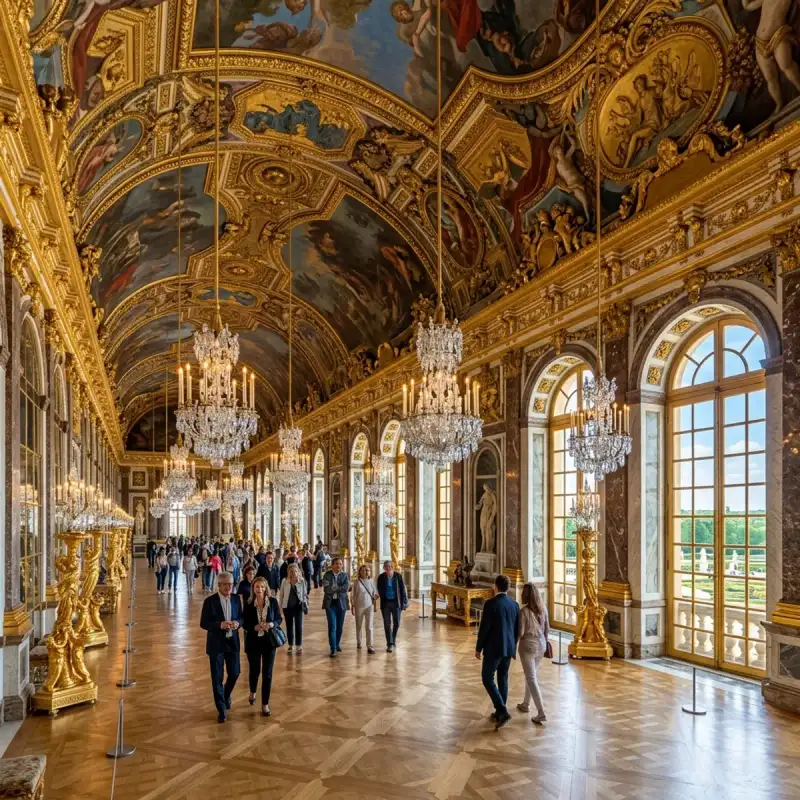
Bienvenue! Let us embark on an unforgettable #journey to the heart of #France. The Palace of Versailles (French: Château de Versailles) is a château and historic monument in Versailles in the Yvelines department of #France, southwest of #Paris. It served as the principal residence of the French kings Louis XIV, Louis XV, and Louis XVI. The king, the court, and the royal government lived there permanently from 6 May 1682 until 6 October 1789, except during the Regency years (1715–1723). Conceived by Louis XIV to glorify the French monarchy, the palace became the most important architectural project of his reign and is considered one of the masterpieces of French classical #architecture. It exerted major influence across Europe in the 18th and 19th centuries in architecture and the decorative arts. The palace forms a vast and complex ensemble of courtyards and buildings designed to maintain architectural harmony. It covers about 63,154 square metres and contains roughly 2,300 rooms, around 1,000 of which belong to the National Museum of the #history of France housed in the Palace and the Trianons. The park of the Palace of Versailles covers 815 hectares today, compared with more than 8,000 hectares before the French Revolution. Of this area, 93 hectares are formal gardens. The estate includes numerous features, such as the Petit Trianon and Grand Trianon—later used by Napoleon I, Louis XVIII, Charles X, Louis Philippe I, and Napoleon III—as well as the Hameau de la Reine, the Grand and Petit Canal, a former menagerie, the Orangerie, and the Pièce d'Eau des Suisses. As one of the most visited sites in Europe, the estate is central to ongoing discussions about managing overtourism. Location The Palace of Versailles is located in the north‑west part of the commune of Versailles, on the Place d’Armes, about 16 kilometres south‑west of Paris. The term “Palace of Versailles” refers both to the main palace building and its immediate surroundings, as well as to the entire Versailles estate, which includes — among other elements — the Grand Trianon, the Petit Trianon, the Grand Canal, and the palace park. History The site of Versailles is first mentioned in 1038 in a charter of the Abbey of Saint‑Père de Chartres. During the Middle Ages, the area consisted of small villages, farmland, and woodland. In the 16th century, the lands that would become Versailles were owned by the Gondi family, who were influential at the French court. Louis XIII acquired part of the land in 1623 and purchased the remainder in 1632. Before the later palace existed, Louis XIII built a modest brick‑and‑stone hunting lodge in 1623. The building consisted of a central block flanked by two wings and measured about 35 metres in length. Surrounded by marshland, it was sometimes mocked by contemporaries as the “chétif château” (“puny château”) or the “château de cartes” (“house of cards”) because of its red brick, white stone, and slate colours. The lodge included a small gallery, several rooms hung with tapestries, and a central salon that later became the location of Louis XIV’s bedchamber. In 1630, the château was the site of the political event known as the Day of the Dupes, during which Cardinal Richelieu regained the king’s favour. After the death of Louis XIII in 1643, the estate fell into neglect for nearly two decades. The lodge and its grounds were poorly maintained, and disputes arose among the estate’s staff. The captain of the hunt, Louis Lenormand de Beaumont, was assassinated in 1660, contributing to the disorder on the estate. Louis XIV began to take an interest in Versailles shortly after his marriage in 1660. He ordered the reorganization of the gardens, the dismissal of corrupt staff, and the repair of the buildings. His valet, Jérôme Blouin, was placed in charge of restoring order to the estate. These early improvements prepared the site for the larger construction campaigns that began in 1664. In 1623, Louis XIII, king of France, built a hunting lodge on a hill in a favourite hunting ground, 19 kilometres (12 mi) west of Paris, and 16 kilometres (10 mi) from his primary residence, the Château de Saint-Germain-en-Laye. The site, near a village called Versailles, was a wooded wetland that Louis XIII's court scorned as being generally unworthy of a king; one of his courtiers, François de Bassompierre, wrote that the lodge "would not inspire vanity in even the simplest gentleman". From 1631 to 1634, architect Philibert Le Roy replaced the lodge with a château for Louis XIII, who forbade his queen, Anne of Austria, from staying there overnight, even when an outbreak of smallpox at Saint-Germain-en-Laye in 1641 forced Louis XIII to relocate to Versailles with his three-year-old heir, the future Louis XIV. When Louis XIII died in 1643, Anne became Louis XIV's regent, and Louis XIII's château was abandoned for the next decade. She moved the court back to Paris, where Anne and her chief minister, Cardinal Mazarin, continued Louis XIII's unpopular monetary practices. This led to the Fronde, a series of revolts against royal authority from 1648 to 1653 that masked a struggle between Mazarin and the princes of the blood, Louis XIV's extended family, for influence over him. In the aftermath of the Fronde, Louis XIV became determined to rule alone. Following Mazarin's death in 1661, Louis XIV reformed his government to exclude his mother and the princes of the blood, moved the court back to Saint-Germain-en-Laye, and ordered the expansion of his father's château at Versailles into a palace. Louis XIV had hunted at Versailles in the 1650s, but did not take any special interest in Versailles until 1661. On 17 August 1661, Louis XIV was a guest at a sumptuous festival hosted by Nicolas Fouquet, the Superintendent of Finances, at his palatial residence, the Château de Vaux-le-Vicomte. Louis XIV was impressed by the château and its gardens, which were the work of Louis Le Vau, the court architect since 1654, André Le Nôtre, the royal gardener since 1657, and Charles Le Brun, a painter in royal service since 1647. Vaux-le-Vicomte's scale and opulence led him to imprison Fouquet that September, as he had also built an island fortress and a private army. But Louis XIV was also inspired by Vaux-le-Vicomte, and he recruited its authors for his own projects. Louis XIV replaced Fouquet with Jean-Baptiste Colbert, a protégé of Mazarin and enemy of Fouquet, and charged him with managing the corps of artisans in royal employment. Colbert acted as the intermediary between them and Louis XIV, who personally directed and inspected the planning and construction of Versailles. Construction Work at Versailles was at first concentrated on gardens, and through the 1660s, Le Vau only added two detached service wings and a forecourt to the château. But in 1668–69, as a response to the growth of the gardens, and the Treaty of Aix-la-Chapelle (1668), Louis XIV decided to turn Versailles into a full-scale royal residence. He vacillated between replacing or incorporating his father's château, but settled on the latter by the end of the decade, and from 1668 to 1671, Louis XIII's château was encased on three sides in a feature dubbed the enveloppe. This gave the château a new, Italianate façade overlooking the gardens, but preserved the courtyard façade, resulting in a mix of styles and materials that dismayed Louis XIV and that Colbert described as a "patchwork". Attempts to homogenize the two façades failed, and in 1670 Le Vau died, leaving the post of First Architect to the King vacant for the next seven years. Le Vau was succeeded at Versailles by his assistant, architect François d'Orbay. Work at the palace during the 1670s focused on its interiors, as the palace was then nearing completion, though d'Orbay expanded Le Vau's service wings and connected them to the château, and built a pair of pavilions for government employees in the forecourt. In 1670, d'Orbay was tasked by Louis XIV with designing a city, also called Versailles, to house and service Louis XIV's growing government and court. The granting of land to courtiers for the construction of townhouses that resembled the palace began in 1671. The next year, the Franco-Dutch War began and funding for Versailles was cut until 1674, when Louis XIV had work begun on the Ambassadors' Staircase, a grand staircase for the reception of guests, and demolished the last of the village of Versailles. Following the end of the Franco-Dutch War with French victory in 1678, Louis XIV appointed as First Architect Jules Hardouin-Mansart, an experienced architect in Louis XIV's confidence, who would benefit from a restored budget and large workforce of former soldiers. Mansart began his tenure with the addition from 1678 to 1681 of the Hall of Mirrors, a renovation of the courtyard façade of Louis XIII's château, and the expansion of d'Orbay's pavilions to create the Ministers' Wings in 1678–79. Adjacent to the palace, Hardouin-Mansart built a pair of stables called the Grande and Petite Écuries from 1679 to 1682 and the Grand Commun, which housed the palace's servants and general kitchens, from 1682 to 1684. Hardouin-Mansart also added two entirely new wings in Le Vau's Italianate style to house the court, first at the south end of the palace from 1679 to 1681 and then at its north end from 1685 to 1689. War and the resulting diminished funding slowed construction at Versailles for the rest of the 17th century. The Nine Years' War, which began in 1688, stopped work altogether until 1698. Three years later, however, the even more expensive War of the Spanish Succession began and, combined with poor harvests in 1693–94 and 1709–10, plunged France into crisis. Louis XIV thus slashed funding and cancelled some of the work Hardouin-Mansart had planned in the 1680s, such as the remodelling of the courtyard façade in the Italianate style. Louis XIV and Hardouin-Mansart focused on a permanent palace chapel, the construction of which lasted from 1699 to 1710. Louis XIV's successors, Louis XV and Louis XVI, largely left Versailles as they inherited it and focused on the palace's interiors. Louis XV's modifications began in the 1730s, with the completion of the Salon d'Hercule, a ballroom in the north wing, and the expansion of the king's private apartment, which required the demolition of the Ambassadors' Staircase. In 1748, Louis XV began construction of a palace theatre, the Royal Opera of Versailles at the northernmost end of the palace, but completion was delayed until 1770; construction was interrupted in the 1740s by the War of the Austrian Succession and then again in 1756 with the start of the Seven Years' War. These wars emptied the royal treasury and thereafter construction was mostly funded by Madame du Barry, Louis XV's favourite mistress. In 1771, Louis XV had the northern Ministers' Wing rebuilt in Neoclassical style by Ange-Jacques Gabriel, his court architect, as it was in the process of falling down. That work was also stopped by financial constraints, and it remained incomplete when Louis XV died in 1774. In 1784, Louis XVI briefly moved the royal family to the Château de Saint-Cloud ahead of more renovations to the Palace of Versailles, but construction could not begin because of financial difficulty and political crisis. In 1789, the French Revolution swept the royal family and government out of Versailles forever. Role in politics and #culture The Palace of Versailles was key to Louis XIV's politics, as an expression and concentration of French art and culture, and for the centralization of royal power. Louis XIV first used Versailles to promote himself with a series of nighttime festivals in its gardens in 1664, 1668, and 1674, the events of which were disseminated throughout Europe by print and engravings. As early as 1669, but especially from 1678, Louis XIV sought to make Versailles his seat of government, and he expanded the palace so as to fit the court within it. The moving of the court to Versailles did not come until 1682, however, and not officially, as opinion on Versailles was mixed among the nobility of France. By 1687, however, it was evident to all that Versailles was the de facto capital of France, and Louis XIV succeeded in attracting the nobility to Versailles to pursue prestige and royal patronage within a strict court etiquette, thus eroding their traditional provincial power bases. It was at the Palace of Versailles that Louis XIV received the Doge of Genoa, Francesco Maria Imperiale Lercari in 1685, an embassy from the Ayutthaya Kingdom in 1686, and an embassy from Safavid Iran in 1715. Louis XIV died at Versailles on 1 September 1715 and was succeeded by his five-year-old great-grandson, Louis XV, then the duke of Anjou, who was moved to the Château de Vincennes and then to Paris by Louis XV's regent, Philippe II, Duke of Orléans. Versailles was neglected until 1722, when Philippe II removed the court to Versailles to escape the unpopularity of his regency, and when Louis XV began his majority. The 1715 move, however, broke the cultural power of Versailles, and during the reign of Louis XVI, courtiers spent their leisure in Paris, not Versailles. During Christmas 1763, Mozart and his family visited Versailles and dined with the King. The 7-year-old Wolfgang Amadeus Mozart played several works during his stay and later dedicated his first two harpsichord sonatas, published in 1764 in Paris, to Madame Victoria, daughter of Louis XV. In 1783, the palace was the site of the signing of the last two of the three treaties of the Peace of Paris (1783), which ended the American Revolutionary War. On 3 September, British and American delegates, led by Benjamin Franklin, signed the Treaty of Paris at the Hôtel d'York (now 56 Rue Jacob) in Paris, granting the United States independence. On 4 September, Spain and France signed separate treaties with Britain at the Palace of Versailles, formally ending the war. The King and Queen learned of the Storming of the Bastille in Paris on 14 July 1789, while they were at the palace, and remained isolated there as the Revolution in Paris spread. The growing anger in Paris led to the Women's March on Versailles on 5 October 1789. A crowd of several thousand men and women, protesting the high price and scarcity of bread, marched from the markets of Paris to Versailles. They took weapons from the city armoury, besieged the palace, and compelled the King and royal family and the members of the National Constituent Assembly to return with them to Paris the following day. As soon as the royal family departed, the palace was closed. In 1792, the National Convention, the new revolutionary government, ordered the transfer of all the paintings and sculptures from the palace to the Louvre. In 1793, the Convention declared the abolition of the monarchy and ordered all of the royal property in the palace to be sold at auction. The auction took place between 25 August 1793 and 11 August 1794. The furnishings and art of the palace, including the furniture, mirrors, baths, and kitchen equipment, were sold in seventeen thousand lots. All fleurs-de-lys and royal emblems on the buildings were chambered or chiselled off. The empty buildings were turned into a storehouse for furnishings, art and libraries confiscated from the nobility. The empty grand apartments were opened for tours beginning in 1793, and a small museum of French paintings and art school was opened in some of the empty rooms. By virtue of an order issued by the Versailles district directorate in August 1794, the Royal Gate was destroyed, the Cour Royale was cleared and the Cour de Marbre lost its precious floor. 19th century – history museum and government venue When Napoleon became Emperor of the French in 1804, he considered making Versailles his residence but abandoned the idea because of the cost of the renovation. Prior to his marriage with Marie-Louise in 1810, he had the Grand Trianon restored and refurnished as a springtime residence for himself and his family, in the style of furnishing that it is seen today. In 1815, with the final downfall of Napoleon, Louis XVIII, the younger brother of Louis XVI, became king, and considered returning the royal residence to Versailles, where he had been born. He ordered the restoration of the royal apartments, but the task and cost was too great. Louis XVIII had the far end of the south wing of the Cour Royale demolished and rebuilt (1814–1824) to match the Gabriel wing of 1780 opposite, which gave greater uniformity of appearance to the front entrance. Neither he nor his successor Charles X lived at Versailles. The French Revolution of 1830 brought a new monarch, Louis Philippe I to power, and a new ambition for Versailles. He did not reside at Versailles but began the creation of the Museum of the History of France, dedicated to "all the glories of France", which had been used to house some members of the royal family. The museum was begun in 1833 and inaugurated on 30 June 1837. Its most famous room is the Galerie des Batailles (Hall of Battles), which lies on most of the length of the second floor of the south wing. The museum project largely came to a halt when Louis Philippe was overthrown in 1848, though the paintings of French heroes and great battles still remain in the south wing. Emperor Napoleon III used the palace on occasion as a stage for grand ceremonies. One of the most lavish was the banquet that he hosted for Queen Victoria in the Royal Opera of Versailles on 25 August 1855. During the Franco-Prussian War of 1870–1871, the palace was occupied by the general staff of the victorious German Army. Parts of the château, including the Hall of Mirrors, were turned into a military hospital. The creation of the German #empire, combining Prussia and the surrounding German states under Wilhelm I, was formally proclaimed in the Hall of Mirrors on 18 January 1871. The Germans remained in the palace until the signing of the armistice in March 1871. In that month, the government of the new French Third Republic, which had departed Paris during the war for Tours and then Bordeaux, moved into the palace. The National Assembly held its meetings in the Opera House. The uprising of the Paris Commune in March 1871, prevented the French government, under Adolphe Thiers, from returning immediately to Paris. The military operation which suppressed the Commune at the end of May was directed from Versailles, and the prisoners of the Commune were marched there and put on trial in military courts. In 1875 a second parliamentary body, the French Senate, was created and held its meetings for the election of a President of the Republic in a new hall created in 1876 in the south wing of the palace. The French Senate and National Assembly continue to meet in the palace in joint session on special occasions, such as the amendment of the Constitution of France. 20th century The end of the 19th and the early 20th century saw the beginning of restoration efforts at the palace, first led by Pierre de Nolhac, poet and scholar and the first conservator, who began his work in 1892. The conservation and restoration were interrupted by two world wars but have continued until the present day. The palace returned to the world stage in June 1919, when, after six months of negotiations, the Treaty of Versailles, formally ending the First World War, was signed in the Hall of Mirrors. Between 1925 and 1928, the American philanthropist and multi-millionaire John D. Rockefeller, Jr. gave $2,166,000, the equivalent of about 38 million dollars in 2024, to restore and refurbish the palace. More work took place after World War II, with the restoration of the Royal Opera of Versailles. The theatre was reopened in 1957, in the presence of Queen Elizabeth II of the United Kingdom. In 1978, parts of the palace were heavily damaged in a bombing committed by Breton terrorists. Starting in the 1950s, when the museum of Versailles was under the directorship of Gérald van der Kemp, the objective was to restore the palace to its state – or as close to it as possible – in 1789 when the royal family left the palace. Among the early projects was the repair of the roof over the Hall of Mirrors; the publicity campaign brought international attention to the plight of post-war Versailles and garnered much foreign money including a grant from the Rockefeller Foundation. One of the more costly endeavours for the museum and the French Fifth Republic has been to repurchase as much of the original furnishings as possible. Consequently, because furniture with a royal provenance – and especially furniture that was made for Versailles – is a highly sought-after commodity on the international market, the museum has spent considerable funds on retrieving much of the palace's original furnishings. 21st century The Palace of Versailles is currently owned by the French state. Its formal title is the Public Establishment of the Palace, Museum and National Estate of Versailles. Since 1995, it has been run as a Public Establishment, with an independent administration and management supervised by the French Ministry of Culture. Several restoration activities were initiated during the 2000s. In 2003, a new restoration initiative – the "Grand Versailles" project – was started, which began with the replanting of the gardens, which had lost over 10,000 trees during Cyclone Lothar on 26 December 1999. One part of the initiative, the restoration of the Hall of Mirrors, was completed in 2006. Another major project, the further restoration of the backstage areas of the Royal Opera of Versailles, occurred from 2007 to 2009. The palace and its grounds continue to be the site of several events in the 2020s. During the 2024 Summer Olympics, the palace's grounds hosted the equestrian and modern pentathlon competitions. In 2026, American singer-songwriter Olivia Rodrigo filmed the music video of her single "Drop Dead" in and around the palace, which is referenced in the song's lyrics. Months later, on 17 June 2026, U.S. President Donald Trump signed the Islamabad Memorandum – the memorandum of understanding to end the 2026 Iran war – during his dinner at the palace with French President Emmanuel Macron, which was held after the G7 summit in Évian-les-Bains. His Iranian counterpart, President Masoud Pezeshkian also remotely signed the document in Tehran. Architecture and plan The Palace of Versailles is a visual history of French architecture from the 1630s to the 1780s. Its earliest portion, the corps de logis, was built for Louis XIII in the style of his reign with brick, marble, and slate, which Le Vau surrounded in the 1660s with Enveloppe, an edifice that was inspired by Renaissance-era Italian villas. When Jules Hardouin-Mansart made further expansions to the palace in the 1680s, he used the Enveloppe as the model for his work. Neoclassical additions were made to the palace with the remodelling of the Ministers' Wings in the 1770s, by Ange-Jacques Gabriel, and after the Bourbon Restoration. The palace was largely completed by the death of Louis XIV in 1715. The eastern facing palace has a U-shaped layout, with the corps de logis and symmetrical advancing secondary wings terminating with the Dufour Pavilion on the south and the Gabriel Pavilion to the north, creating an expansive cour d'honneur known as the Royal Court (Cour Royale). Flanking the Royal Court are two enormous asymmetrical wings that result in a façade of 402 metres (1,319 ft) in length. Covered by around 10 hectares (1.1 million square feet) of roof, the palace has 2,143 windows, 1,252 chimneys, and 67 staircases. The palace and its grounds have had a great influence on architecture and horticulture from the mid-17th century to the end of the 18th century. Examples of works influenced by Versailles include Christopher Wren's work at Hampton Court Palace, Berlin Palace, the Palace of La Granja, Stockholm Palace, Ludwigsburg Palace, Karlsruhe Palace, Rastatt Palace, Nymphenburg Palace, Schleissheim Palace, and Esterházy Palace. Royal Apartments The construction in 1668–1671 of Louis Le Vau's enveloppe around the outside of Louis XIII's red brick and white stone château added state apartments for the king and the queen. The addition was known at the time as the château neuf (new château). The grands appartements (Grand Apartments, also referred to as the State Apartments) include the grand appartement du roi and the grand appartement de la reine. They occupied the main or principal floor of the château neuf, with three rooms in each apartment facing the garden to the west and four facing the garden parterres to the north and south, respectively. The private apartments of the king (the appartement du roi and the petit appartement du roi) and those of the queen (the petit appartement de la reine) remained in the château vieux (old château). Le Vau's design for the state apartments closely followed Italian models of the day, including the placement of the apartments on the main floor (the piano nobile, the next floor up from the ground level), a convention the architect borrowed from Italian palace design. The king's State Apartment consisted of an enfilade of seven rooms, each dedicated to one of the known planets and their associated titular Roman deity. The queen's apartment formed a parallel enfilade with that of the grand appartement du roi. After the addition of the Hall of Mirrors (1678–1684) the king's apartment was reduced to five rooms (until the reign of Louis XV, when two more rooms were added) and the queen's to four. The queen's apartments served as the residence of three queens of France – Maria Theresa of Spain, wife of Louis XIV, Maria Leszczyńska, wife of Louis XV, and Marie Antoinette, wife of Louis XVI. Additionally, Louis XIV's granddaughter-in-law, Princess Marie-Adélaïde of Savoy, duchess of Burgundy, wife of Louis, Duke of Burgundy, occupied these rooms from 1697 (the year of her marriage) to her death in 1712. Ambassador's Staircase The Ambassadors' Staircase (Escalier des Ambassadeurs) was an imperial staircase built from 1674 to 1680 by François d'Orbay. Until Louis XV had it demolished in 1752 to create a courtyard for his private apartments, the staircase was the primary entrance into the Palace of Versailles and the royal apartments especially. It was entered from the courtyard via a vestibule that, cramped and dark, contrasted greatly with the tall, open space of the staircase – famously lit naturally with a skylight – so as to overawe visitors. The staircase and walls of the room that contained it were clad in polychrome marble and gilded bronze, with decor in the Ionic order. Charles Le Brun painted the walls and ceiling of the room according to a festive theme to celebrate Louis XIV's victory in the Franco-Dutch War. On the wall immediately above the staircase were trompe-l'œil paintings of people from the Four Parts of the World looking into the staircase over a balustrade, a motif repeated on the ceiling fresco. There they were joined by allegorical figures for the twelve months of the year and various Classical Greek figures such as the Muses. A marble bust of Louis XIV, sculpted by Jean Warin in 1665–66, was placed in a niche above the first landing of the staircase. The State Apartments of the King The construction of the Hall of Mirrors between 1678 and 1686 coincided with a major alteration to the State Apartments. They were originally intended as his residence, but the King transformed them into galleries for his finest paintings, and venues for his many receptions for courtiers. During the season from All-Saints Day in November until Easter, these were usually held three times a week, from six to ten in the evening, with various entertainments. =### The Salon of Hercules= This was originally a chapel. It was rebuilt beginning in 1712 under the supervision of the First Architect to the King, Robert de Cotte, to showcase two paintings by Paolo Veronese, Eleazar and Rebecca and Meal at the House of Simon the Pharisee, which was a gift to Louis XIV from the Republic of Venice in 1664. The painting on the ceiling, The Apotheosis of Hercules, by François Lemoyne, was completed in 1736, and gave the room its name. =### The Salon of Abundance= The Salon of Abundance was the antechamber to the Cabinet of Curios (now the Games Room), which displayed Louis XIV's collection of precious jewels and rare objects. Some of the objects in the collection are depicted in René-Antoine Houasse's painting Abundance and Liberality (1683), located on the ceiling over the door opposite the windows. =### The Salon of Venus= This salon was used for serving light meals during evening receptions. The principal feature in this room is Jean Warin's life-size statue of Louis XIV in the costume of a Roman emperor. On the ceiling in a gilded oval frame is another painting by Houasse, Venus subjugating the Gods and Powers (1672–1681). Trompe-l'œil paintings and sculpture around the ceiling illustrate mythological themes. =### The Salon of Mercury= The Salon of Mercury was the original State Bedchamber when Louis XIV officially moved the court and government to the palace in 1682. The bed is a replica of the original commissioned by King Louis Philippe I in the 19th century when he turned the palace into a museum. The ceiling paintings by the Flemish artist Jean Baptiste de Champaigne depict the god Mercury in his chariot, drawn by a rooster, and Alexander the Great and Ptolemy surrounded by scholars and philosophers. The Automaton Clock was made for the King by the royal clockmaker Antoine Morand in 1706. When it chimes the hour, figures of Louis XIV and Fame descend from a cloud. =### The Salon of Mars= The Salon of Mars was used by the royal guards until 1782, and was decorated on a military theme with helmets and trophies. It was turned into a concert room between 1684 and 1750, with galleries for musicians on either side. Portraits of Louis XV and his Queen, Marie Leszczyńska, by the Flemish artist Carle Van Loo decorate the room today. =### The Salon of Apollo= The Salon of Apollo was the royal throne room under Louis XIV, and was the setting for formal audiences. The eight-foot-high silver throne was melted down in 1689 to help pay the costs of an expensive war, and was replaced by a more modest throne of gilded wood. The central painting on the ceiling, by Charles de la Fosse, depicts the Sun Chariot of Apollo, the King's favourite emblem, pulled by four horses and surrounded by the four seasons. =### The Salon of Diana= The Salon of Diana was used by Louis XIV as a billiards room, and had galleries from which courtiers could watch him play. The decoration of the walls and ceiling depicts scenes from the life of the goddess Diana. The celebrated bust of Louis XIV by Bernini made during the famous sculptor's visit to France in 1665 is on display here. Private apartments of the King and Queen =### Private apartments of the King= The apartments of the King were the heart of the château; they were in the same location as the rooms of Louis XIII, the creator of the château, on the first floor (second floor US style). They were set aside for the personal use of Louis XIV in 1683. He and his successors Louis XV and Louis XVI used these rooms for official functions, such as the ceremonial lever ("waking up") and the coucher ("going to bed") of the monarch, which was attended by a crowd of courtiers. The King's apartment was accessed from the Hall of Mirrors from the Oeil de Boeuf antechamber or from the Guardroom and the Grand Couvert, the ceremonial room where Louis XIV often took his evening meals, seated alone at a table in front of the fireplace. His spoon, fork, and knife were brought to him in a golden box. The courtiers could watch as he dined. The King's bedchamber had originally been a Drawing Room before Louis XIV transformed it into his own bedroom in 1701. He died there on 1 September 1715. Both Louis XV and Louis XVI continued to use the bedroom for their official awakening and going to bed. On 6 October 1789, from the balcony of this room Louis XVI and Marie-Antoinette, joined by the Marquis de Lafayette, looked down on the hostile crowd in the courtyard, shortly before the King was forced to return to Paris. The bed of the King is placed beneath a carved relief by Nicolas Coustou entitled France watching over the sleeping King. The decoration includes several paintings set into the panelling, including a self-portrait of Antony van Dyck. =### Private apartments of The Queen= The petit appartement de la reine is a suite of rooms that were reserved for the personal use of the queen. Originally arranged for the use of the Maria Theresa of Spain, consort of Louis XIV, the rooms were later modified for use by Marie Leszczyńska and finally for Marie Antoinette. The Queen's apartments and the King's Apartments were laid out on the same design, each suite having seven rooms. Both suites had ceilings painted with scenes from mythology; the King's ceilings featured male figures, the Queen's featured females. Hall of Mirrors The Hall of Mirrors is a long gallery at the westernmost part of the palace that looks out onto the gardens. The hall was built from 1678 to 1681 on the site of a terrace Le Vau built between the king and queen's suites. The hall is clad in marble and decorated in a modified version of the Corinthian order, with 578 mirrors facing 17 windows and reflecting the light provided by them. The ceiling fresco, painted by Le Brun over the next four years, embellishes the first 18 years of Louis XIV's reign in 30 scenes, 17 of which are military victories over the Dutch. The fresco depicts Louis XIV himself alongside Classical figures in the scenes celebrating moments in his reign such as the beginning of personal rule in 1661, breaking from earlier frescoes at Versailles that used allegories derived from Classical and mythological scenes. The Salon of War and the Salon of Peace bookend the Hall of Mirrors on its northern and southern ends respectively. The Salon of War, constructed and decorated from 1678 to 1686, celebrates French victories in the Franco-Dutch War with marble panels, gilded bronze trophies of arms, and a stucco bas-relief of Louis XIV on horseback riding over his enemies. The Salon of Peace is decorated in the same fashion but according to its eponymous theme. Royal Chapel The Royal Chapel of Versailles is located at the southern end of the north wing. The building stands 40-metre (130 ft) high, and measures 42 metres (138 ft) long and 24 metres (79 ft) wide. The chapel is rectangular with a semicircular apse, combining traditional, #gothic royal French church architecture with the French Baroque style of Versailles. The ceiling of the chapel is constituted by an unbroken vault, divided into three frescos by Antoine Coypel, Charles de La Fosse, and Jean Jouvenet. The palette of motifs beneath the frescoes glorify the deeds of Louis IX, and include images of David, Constantine, Charlemagne, and Louis IX, fleur de lis, and Louis XIV's monogram. The organ of the chapel was built by Robert Clicquot and Julien Tribuot in 1709–1710. Louis XIV commissioned the chapel, its sixth, from Hardouin-Mansart and Le Brun in 1683–84. It was the last building constructed at Versailles during Louis XIV's reign. Construction was delayed until 1699, however, and it was not completed until 1710. The only major modification to the chapel since its completion was the removal of a lantern from its roof in 1765. A full restoration of the chapel began in late 2017 and lasted into early 2021. Royal Opera The Royal Opera of Versailles was originally commissioned by Louis XIV in 1682 and was to be built at the end of the North Wing with a design by Hardouin-Mansart and Carlo Vigarani. However, due to the expense of the King's continental wars, the project was put aside. The idea was revived by Louis XV with a new design by Ange-Jacques Gabriel in 1748, but this was also temporarily put aside. The project was revived and rushed ahead for the planned celebration of the marriage of the Dauphin, the future Louis XVI, and Marie Antoinette. For economy and speed, the new opera was built almost entirely of wood, which also gave it very high quality acoustics. The wood was painted to resemble marble, and the ceiling was decorated with a painting of the Apollo, the god of the arts, preparing crowns for illustrious artists, by Louis Jean-Jacques Durameau. The sculptor Augustin Pajou added statuary and reliefs to complete the decoration. The new Opera was inaugurated on 16 May 1770, as part of the celebration of the royal wedding. In October 1789, early in the French Revolution, the last banquet for the royal guardsmen was hosted by the King in the opera, before he departed for Paris. Following the Franco-German War in 1871 and then the Paris Commune until 1875, the French National Assembly met in the opera, until the proclamation of the French Third Republic and the return of the government to Paris. Museum of the History of France Shortly after becoming king in 1830, Louis Philippe I decided to transform the palace into a museum devoted to "All the Glories of France," with paintings and sculpture depicting famous French victories and heroes. Most of the apartments of the palace were entirely demolished (in the main building, practically all of the apartments were annihilated, with only the apartments of the king and queen remaining almost intact), and turned into a series of several large rooms and galleries: the Coronation Room (whose original volume was left untouched by Louis-Philippe), which displays the celebrated painting of the coronation of Napoleon I by Jacques-Louis David; the Hall of Battles; commemorating French victories with large-scale paintings; and the 1830 room, which celebrated Louis-Philippe's own coming to power in the French Revolution of 1830. Some paintings were brought from the Louvre, including works depicting events in French history by Philippe de Champaigne, Pierre Mignard, Laurent de La Hyre, Charles Le Brun, Adam Frans van der Meulen, Nicolas de Largillière, Hyacinthe Rigaud, Jean-Antoine Houdon, Jean-Marc Nattier, Élisabeth Vigée Le Brun, Hubert Robert, Thomas Lawrence, Jacques-Louis David, and Antoine-Jean Gros. Others were commissioned especially for the museum by prominent artists of the early 19th century, including Eugène Delacroix, who painted Saint Louis at the French victory over the British in the Battle of Taillebourg in 1242. Other painters featured include Horace Vernet and François Gérard. A monumental painting by Vernet features Louis Philippe himself, with his sons, posing in front of the gates of the palace. The overthrow of Louis Philippe in 1848 put an end to his grand plans for the museum, but the Gallery of Battles is still as it was, and is passed through by many visitors to the royal apartments and grand salons. Another set of rooms on the first floor has been made into galleries on Louis XIV and his court, displaying furniture, paintings, and sculptures. In recent years, eleven rooms on the ground floor between the Chapel and the Opera have been turned into a history of the palace, with audiovisual displays and models. Estate of Versailles The estate of Versailles consists of the palace, the subsidiary buildings around it, and its park and gardens. As of June 2021, the estate altogether covers an area of 800 hectares (8.0 km2; 2,000 acres), with the park and gardens laid out to the south, west, and north of the palace. The palace is approached from the east by the Avenue de Paris, measuring 27 kilometres (17 mi) from Paris to a gate between the Grande and Petite Écuries. Beyond these stables is the Place d'Armes, where the Avenue de Paris meets the Avenue de Sceaux and Avenue de Saint-Cloud (see map), the three roads that formed the main arteries of the city of Versailles. Exactly where the three roads meet is a gate leading into the cour d'honneur, hemmed in by the Ministers' Wings. Beyond is the Royal Gate and the main palace, which wraps around the Royal and finally Marble Courts. The estate was established by Louis XIII as a hunting retreat, with a park just to the west of his château. From 1661, Louis XIV expanded the estate until, at its greatest extent, the estate was made up by the Grand Parc, a hunting ground of 15,000 hectares (150 km2; 37,000 acres), and the gardens, called the Petit Parc, which covered 1,700 hectares (17 km2; 4,200 acres). A 40-kilometre-long (25 mi), 3-metre-high (10 ft) wall with 24 gateways enclosed the estate. The landscape of the estate had to be created from the bog that surrounded Louis XIII's château using landscape architecture usually employed in fortress building. The approach to the palace and the gardens were carefully laid out via the moving of earth and construction of terraces. The water from the marsh was marshalled into a series of lakes and ponds around Versailles, but these reservoirs were not sufficient for the palace, city, or gardens. Great lengths were taken to supply Versailles with water, such as the damming of the river Bièvre to create an inflow in the 1660s, the construction of an enormous pumping station at the river Seine near Marly-le-Roi in 1681, and an attempt to divert water from the river Eure with a canal in the later 1680s. Gardens The gardens of Versailles, as they have existed since the reign of Louis XIV, are the work of André Le Nôtre. Le Nôtre's gardens were preceded by a simple garden laid out in the 1630s by landscape architects Jacques Boyceau and Jacques de Nemours, which he rearranged along an east–west axis that, because of Louis XIV's land purchases and the clearing of woodland, were expanded literally as far as could be seen. The resulting gardens were a collaboration between Le Nôtre, Le Brun, Colbert, and Louis XIV, marked by rigid order, discipline, and open space, with axial paths, flowerbeds, hedges, and ponds and lakes as motifs. They became the epitome of the French formal garden style, and have been very influential and widely imitated or reproduced. Subsidiary structures The first of the subsidiary structures of the Palace of Versailles was the Versailles Menagerie, built by Le Vau between the years 1662 and 1664, at the southern end of the Grand Canal. The apartments, overlooking the pens, were renovated by Hardouin-Mansart from 1698 to 1700, but the Menagerie fell into disuse in 1712. After a long period of decay, it was demolished in 1801. The Versailles Orangery, just to the south of the palace, was first built by Le Vau in 1663, originally as part of the general moving of earth to create the Estate. It was also modified by Mansart, who, from 1681 to 1685, totally rebuilt it and doubled its size. In late 1679, Louis XIV commissioned Mansart to build the Château de Marly, a retreat at the edge of Versailles's estate, about 8.0 kilometres (5 mi) from the palace. The château consisted of a primary residential building and twelve pavilions, in Palladian style placed in two rows on either side of the main building. Construction was completed in 1686, when Louis XIV spent his first night there. The château was nationalized and sold in 1799, and subsequently demolished and replaced with industrial buildings. These were themselves demolished in 1805, and then in 1811 the estate was purchased by Napoleon. On 1 June 2009, the grounds of the Château de Marly were ceded to the Public Establishment of the Palace, Museum and National Estate of Versailles. La Lanterne, is a hunting lodge named after the lantern that topped the nearby Menagerie that was built in 1787 by Philippe Louis de Noailles, then the palace governor. It has since 1960 been a state residence. The Grand Trianon In 1668, Louis XIV purchased and demolished the hamlet of Trianon, near the northern tip of the Grand Canal, and in its place, he commissioned Le Vau to construct a retreat from court, remembered as the Porcelain Trianon. Designed and built by Le Vau in 1670, it was the first example of Chinoiserie (faux Chinese) architecture in Europe, though it was largely designed in French style. The roof was clad not with porcelain but with delftware, and was thus prone to leaks, so in 1687 Louis XIV ordered it demolished. Nevertheless, the Porcelain Trianon was itself influential and copycats were built across Europe. To replace the Porcelain Trianon, Louis XIV tasked Hardouin-Mansart with the construction in 1687 of the Grand Trianon, built from marble in three months. The Grand Trianon has a single story, except for its attached service wing, which was modified by Hardouin-Mansart in 1705–06. The east façade has a courtyard while the west faces the gardens of the Grand Trianon, and between them a peristyle. The interiors are mostly original, and housed Louis XIV, the Madame de Maintenon, Marie Leszczyńska, and Napoleon, who ordered restorations to the building. Under Charles de Gaulle, the north wing of the Grand Trianon became a residence of the President of France. Petit Trianon The Petit Trianon, whose construction from 1762 to 1768 led to the advent of the names "Grand" and "Petit Trianon", was constructed for Louis XV and the Madame du Barry in the Neoclassical style by Gabriel. The building has a piano nobile, basement, and attic, with five windows on each floor. On becoming king, Louis XVI gave the Petit Trianon to Marie Antoinette, who remodeled it, relaid its gardens in the then-current English and Oriental styles, and formed her own court there. The Queen's hamlet and Theatre Near the Trianons are the French pavilion, built by Gabriel in 1750 between the two residences, and the Queen's Theatre and Queen's Hamlet, built by architect Richard Mique in 1780 and from 1783 to 1785 respectively. These were both built at the behest of Marie Antoinette; the theatre, hidden in the gardens, indulged her appreciation of opera and is absolutely original, and the hamlet to extend her gardens with rustic amenities. The building scheme of the Queen's Hamlet includes a farmhouse (the farm was to produce milk and eggs for the queen), a dairy, a dovecote, a boudoir, a barn that burned down during the French Revolution, a mill and a tower in the form of a lighthouse. Modern political and ceremonial functions The palace still serves political functions. Heads of state are regaled in the Hall of Mirrors; the bicameral French Parliament—consisting of the Senate (Sénat) and the National Assembly (Assemblée nationale)—meet in joint session (a congress of the French Parliament) in Versailles to revise or otherwise amend the French Constitution, a tradition that came into effect with the promulgation of the 1875 Constitution. For example, the Parliament met in joint session at Versailles to pass constitutional amendments in June 1999 (for domestic applicability of International Criminal Court decisions and for gender equality in candidate lists), in January 2000 (ratifying the Treaty of Amsterdam), in March 2003 (specifying the "decentralized organization" of the French Republic), and in March 2024 (to enshrine the freedom of women to have recourse to abortion). In 2009, President Nicolas Sarkozy addressed the Great Recession before a congress in Versailles, the first time that this had been done since 1848, when Louis Napoleon Bonaparte gave an address before the French Second Republic. Following the November 2015 Paris attacks, President François Hollande gave a speech before a rare joint session of parliament at the Palace of Versailles. This was the third time since 1848 that a French president addressed a joint session of the French Parliament at Versailles. The president of the National Assembly has an official apartment at the Palace of Versailles. In 2023 a state visit by Charles III to France included a state banquet at the Palace. Citations References Web sources "Histoire de Versailles" (in French). City of Versailles. Archived from the original on 15 August 2022. Retrieved 16 June 2021. "Palace and Park of Versailles". #UNESCO. Retrieved 21 June 2021. =### French Ministry of Culture= #france #travel #history #europe #culture Related InsightsYellowstone: The Fiery Heart of the American West Im Bann der Gezeiten: Wenn Stein und Meer den Mont Saint-Michel umarmen Калининград и Куршская коса{ "@context": "https://schema.org", "@type": "FAQPage", "mainEntity": [ { "@type": "Question", "name": "What is the main focus of The Grandeur of Versailles: Palace of the Sun King?", "acceptedAnswer": { "@type": "Answer", "text": "Join Camille Dubois on a journey exploring The Grandeur of Versailles and its incredible history." } }, { "@type": "Question", "name": "Who authored the comprehensive guide on The Grandeur of Versailles: Palace of the Sun King?", "acceptedAnswer": { "@type": "Answer", "text": "This detailed article and its insights were carefully researched and authored by Camille Dubois." } }, { "@type": "Question", "name": "Where can I find more related content about Travel?", "acceptedAnswer": { "@type": "Answer", "text": "You can explore more articles, detailed reviews, and similar insights by browsing the Related Insights section at the bottom of this article or visiting our dedicated Travel category page." } } ] }
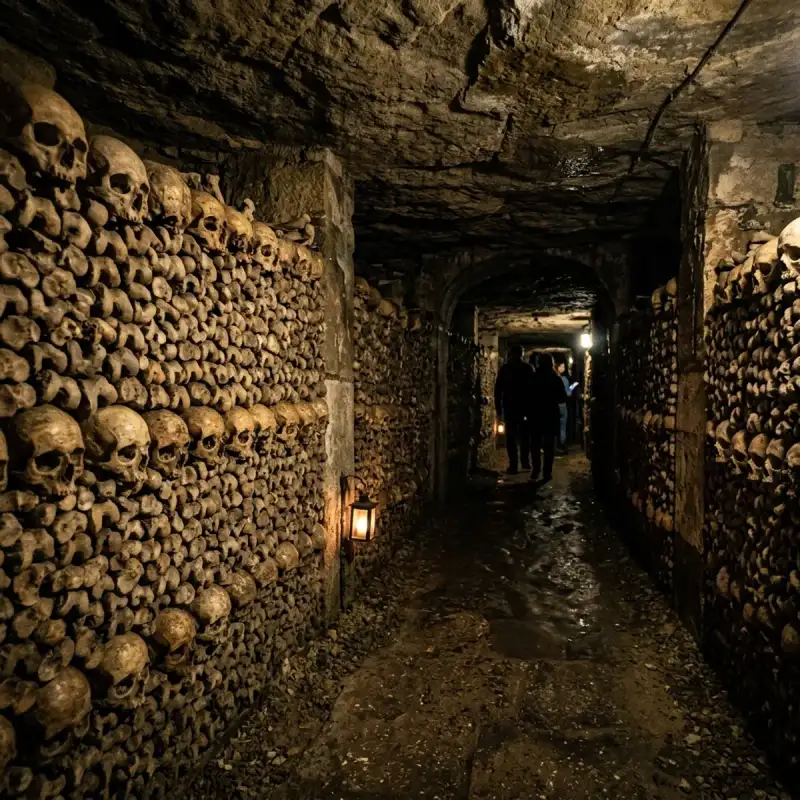
Bienvenue! Let us embark on an unforgettable #journey to the heart of #France. The Catacombs of #Paris (French: Catacombes de Paris, ) are underground ossuaries in Paris, #France, which hold the remains of more than six million people. Built to consolidate Paris's #ancient stone quarries, they extend south from the Barrière d'Enfer ("Gate of Hell") former city gate. The ossuary was created as part of the effort to eliminate the effects of the city's overflowing cemeteries. Preparation work began shortly after a 1774 series of basement wall collapses around the Holy Innocents' Cemetery added a sense of urgency to the cemetery-eliminating measure, and from 1788, nightly processions of covered wagons transferred remains from most of Paris's cemeteries to a mine shaft opened near the Rue de la Tombe-Issoire. The ossuary remained largely forgotten until it became a novelty-place for concerts and other private events in the early 19th century; after further renovations and the construction of accesses around Place Denfert-Rochereau, it was opened to public visitation from 1874. Since 2013, the Catacombs have numbered among the fourteen City of Paris Museums managed by Paris Musées. Although the ossuary comprises only a small section of the underground mines of Paris, Parisians often refer to the entire tunnel network as the catacombs. #history Paris's cemeteries Paris's earliest burial grounds were to the southern outskirts of the Roman-era Left Bank city. In ruins after the Western Roman #empire's 5th-century end and the ensuing Frankish invasions, this settlement was eventually abandoned for the marshy Right Bank: from the 4th century, the first known settlement there was on higher ground around a Saint-Etienne church and burial ground (behind the present Hôtel de Ville), and urban expansion on the Right Bank began in earnest after other ecclesiastical landowners filled in the marshlands from the late 10th century. Thus, instead of burying its dead away from inhabited areas as usual, the Paris Right Bank settlement began with cemeteries near its centre. The most central of these cemeteries, a burial ground around the 5th-century Notre-Dame-des-Bois church, became the property of the Saint-Opportune parish after the original church was demolished by the 9th-century Norman invasions. When it became its own parish associated with the church of the "Saints Innocents" from 1130, this burial ground, filling the land between the present rue Saint-Denis, rue de la Ferronnerie, rue de la Lingerie and the rue Berger, had become the city's principal cemetery. By the end of the same century, Saints Innocents was neighbour to the principal Parisian marketplace Les Halles, and already filled to overflowing. To make room for more burials, the long-dead were exhumed and their bones packed into the roofs and walls of "charnier" galleries built inside the cemetery walls. By the end of the 18th century, the central burial ground was a two-metre-high (6.6-foot) mound of earth filled with centuries of Parisian dead, plus the remains from the Hôtel-Dieu hospital and the Morgue; other Parisian parishes had their own burial grounds, but the conditions in Saints Innocents were the worst. A series of ineffective decrees limiting the use of the cemetery did little to remedy the situation, and it was not until the late 18th century that it was decided to create three new large-scale suburban burial grounds on the outskirts of the city, and to condemn all existing parish cemeteries within city limits. The future ossuary: Paris's former mines Much of the Left Bank area rests upon rich Lutetian limestone deposits. This stone built much of the city, but it was extracted in suburban locations away from any habitation. Because of the post 12th-century haphazard mining technique of digging wells down to the deposit and extracting it horizontally until depletion, many of these (often illicit) mines were uncharted, and when depleted, often abandoned and forgotten. Paris had annexed its suburbs many times over the centuries, and by the 18th century many of its arrondissements (administrative districts) were or included previously mined territories. The undermined state of the Left Bank was known to architects as early 17th-century construction of the Val-de-Grâce hospital (most of its building expenses were due to its foundations), but a series of mine cave-ins beginning 1774 with the collapse of a house along the "rue d'Enfer" (near today's crossing of the Avenue Denfert-Rochereau and the boulevard Saint-Michel) caused King Louis XVI to name a commission to investigate the state of the Parisian underground. This resulted in the creation of the inspection Générale des Carrières (General Inspection of Mines) service. Ossuary creation The need to eliminate Les Innocents gained urgency from May 31, 1780, when a basement wall in a property adjoining the cemetery collapsed under the weight of the mass grave behind it. The cemetery was closed to the public and all intra muros (Latin: "within the [city] walls") burials were forbidden after 1780. The problem of what to do with the remains crowding intra muros cemeteries was still unresolved. Mine consolidations were still occurring and the underground around the site of the 1777 collapse that had initiated the project had already become a series of stone and masonry inspection passageways that reinforced the streets above. The mine renovation and cemetery closures were both issues within the jurisdiction of the Police Prefect Police Lieutenant-General Alexandre Lenoir, who had been directly involved in the creation of a mine inspection service. Lenoir endorsed the idea of moving Parisian dead to the subterranean passageways that were renovated during 1782. After deciding to further renovate the "Tombe-Issoire" passageways for their future role as an underground sepulchre, the idea became law in late 1785. A well within a walled property above one of the principal subterranean passageways was dug to receive Les Innocents' unearthed remains, and the property itself was transformed into a sort of museum for all the headstones, sculptures and other artifacts recovered from the former cemetery. Beginning from an opening ceremony on 7 April the same year, the route between Les Innocents and the "Clos de la Tombe-Issoire" became a nightly procession of black cloth-covered wagons carrying the millions of Parisian dead. It would take two years to empty the majority of Paris's cemeteries. Cemeteries whose remains were moved to the Catacombs include Saints-Innocents (the largest by far with about 2 million buried over 600 years of operation), Saint-Étienne-des-Grès (one of the oldest), Madeleine Cemetery, Errancis Cemetery (used for the victims of the French Revolution), and Notre-Dame-des-Blancs-Manteaux. By this way the skeletal remains of several notable victims of the French Revolution were transferred to the Catacombs, including (the date is the date of death): Charlotte Corday (18 July 1793) 22 Girondists (31 October 1793); among them Jacques Pierre Brissot and Pierre Victurnien Vergniaud Louis Philippe II, Duke of Orléans (6 November 1793), father of king Louis Philippe I Madame Roland (8 November 1793) Madame du Barry (8 December 1793) Jacques Hébert (24 March 1794) Georges Jacques Danton (April 5, 1794) Camille Desmoulins (April 5, 1794) Philippe Fabre d'Églantine (April 5, 1794) Marie-Jean Hérault de Séchelles (April 5, 1794) Lucile Duplessis (April 13, 1794), widow of Camille Desmoulins Marie Marguerite Françoise Hébert (April 13, 1794), widow of Jacques Hébert Antoine-Laurent de Lavoisier (May 8, 1794) Madame Élisabeth (May 10, 1794), sister of kings Louis XVI, Louis XVIII and Charles X François Hanriot (July 28, 1794) Maximilien Robespierre (July 28, 1794) Louis Antoine de Saint-Just (July 28, 1794) Georges Couthon (July 28, 1794) Antoine Simon (July 28, 1794) Renovation and ossuary decor Catacombs in their first years were a disorganized bone repository, but Louis-Étienne Héricart de Thury, director of the Paris Mine Inspection Service (Inspection générale des carrières) from 1810, had renovations done that would transform the caverns into a visitable mausoleum. In addition to directing the stacking of skulls, femurs and tibias into the patterns seen in the catacombs today he used the cemetery decorations he could find (formerly stored on the Tombe-Issoire property; many had disappeared after the 1789 Revolution) to complement the walls of bones. A room dedicated to the display of the various minerals found under Paris was also created, in addition to another showing various skeletal deformities found during the catacombs' creation and renovation. He also added monumental tablets and archways bearing ominous warning inscriptions, and added stone tablets bearing descriptions or other comments about the #nature of the ossuary, and to ensure the safety of eventual visitors, it was walled from the rest of Paris's Left Bank's already-extensive tunnel network. Modern During World War II, Parisian members of the French Resistance used the tunnel system and established the headquarters from where Colonel Rol-Tanguy led the insurrection for the liberation of Paris in June 1944. The Wehrmacht established an underground bunker below Lycée Montaigne, a high school in the 6th arrondissement. In 2004, police discovered a fully equipped movie theater in an area of the catacombs underneath the Trocadéro. It was equipped with a giant cinema screen, seats for the audience, projection equipment, film reels of recent thrillers and film noir classics, a fully stocked bar, and a complete restaurant with tables and chairs. The group les UX took responsibility for the installation. The film As Above, So Below, released in 2014, was the first production that secured permission from the French government to film in the catacombs. They aimed to use no alterations to the environment with the exception of a piano and a car which were hauled into the catacombs and set on fire. In 2015, Airbnb paid €350,000 as part of a publicity stunt offering customers the chance to stay overnight in the Catacombs. In August 2017, thieves broke into a cellar from the catacombs and stole more than €250,000 of wine. In 2025, American desert rock band Queens of the Stone Age released an acoustic live performance entitled Alive in the Catacombs, recorded in 2024 while on the European leg of The End Is Nero World Tour. On the WTF with Marc Maron podcast, frontman Joshua Homme described how it took 18 years to secure permission to record in the catacombs. Deaths Only one death has officially been confirmed in the Catacombs. In 1793, Philibert Aspairt, a door keeper for the Val-de-Grâce hospital, died in the catacombs. It is thought that he lost his light source and was left to die in the darkness. In 1804, 11 years later, his body was found, only a few meters from a staircase that led to an exit. He was only identified by his hospital key ring and the buttons on his jacket. Visits As one visits the catacombs, a sign above reads Arrête! C'est ici l'empire de la Mort ("Stop! The empire of Death lies here"). The Catacombs of Paris became a curiosity for more privileged Parisians from their creation, an early visitor being the Count of Artois (later Charles X of France) in 1787. Public visits began after its renovation into a proper ossuary and the 1814–1815 War. Initially, visitors were allowed only a few times a year with the permission of an authorized mines inspector, but later more frequently and permitted by any mine overseer. A flow of visitors degraded the ossuary to a point where the permission-only rule was restored from 1830, and the catacombs were closed completely from 1833 because of church opposition to exposing human remains to public display. The catacombs were open again for four visits a year from 1850, and public demand caused the government to allow monthly visits from 1867, bi-weekly visits on the first and third Saturday of each month from 1874 (with an extra opening for the November 1 toussaint holiday), and weekly visits during the 1878, 1889 (the most visitors yet that year) and 1900 World's Fair Expositions. Later, they opened for regular daily visits. After an incident of vandalism, the catacombs were closed to the public during September 2009 and reopened on 19 December of the same year. Disruption of surface structures Because the catacombs are directly under the Paris streets, large foundations cannot be built above them and cave-ins have destroyed buildings. For this reason, there are few tall buildings in this area. #france #travel #history #europe #culture Related InsightsEchoes in the Clouds: A Pilgrimage Through Meteora’s Forgotten Monasteries Exploring Ani, City of 1001 Churches Dive Into a Hidden World: The Most Breathtaking Underwater Museums and Sculpture Parks{ "@context": "https://schema.org", "@type": "FAQPage", "mainEntity": [ { "@type": "Question", "name": "What is the main focus of The Dark Heart of Paris: Exploring the Catacombs?", "acceptedAnswer": { "@type": "Answer", "text": "Join Camille Dubois on a journey exploring The Dark Heart of Paris and its incredible history." } }, { "@type": "Question", "name": "Who authored the comprehensive guide on The Dark Heart of Paris: Exploring the Catacombs?", "acceptedAnswer": { "@type": "Answer", "text": "This detailed article and its insights were carefully researched and authored by Camille Dubois." } }, { "@type": "Question", "name": "Where can I find more related content about Travel?", "acceptedAnswer": { "@type": "Answer", "text": "You can explore more articles, detailed reviews, and similar insights by browsing the Related Insights section at the bottom of this article or visiting our dedicated Travel category page." } } ] }
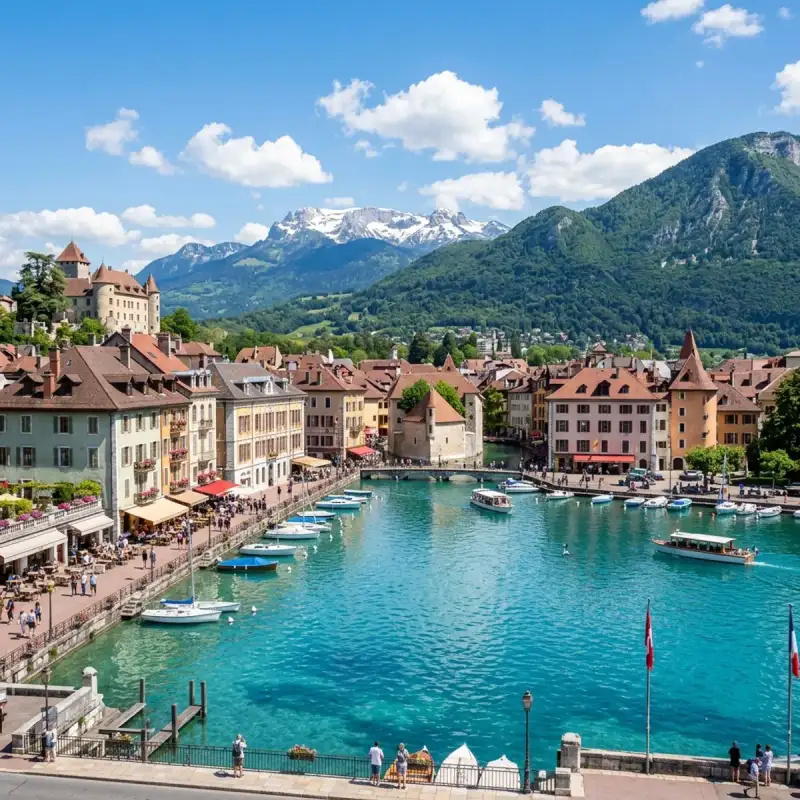
Bienvenue! Let us embark on an unforgettable #journey to the heart of #France. Annecy (US: AN-ə-SEE, ahn-SEE; French: [an(ə)si] ) is the prefecture and largest city of the Haute-Savoie department in the Auvergne-Rhône-Alpes region of Southeastern #France. It lies on the northern tip of Lake Annecy, 35 kilometres (22 mi) south of Geneva, Switzerland. Nicknamed the "Pearl of the French Alps" in Raoul Blanchard's monograph describing its location between lake and mountains, the town controls the northern entrance to the lake gorge. Due to a lack of available building land between the lake and the protected Semnoz mountain, its population has remained stable, around 50,000 inhabitants, since 1950. However, the 2017 merger with several ex-communes extended the population of the city to 128,199 inhabitants and that of the urban area to 177,622, placing Annecy seventh in the Auvergne-Rhône-Alpes region. Switching from the counts of Geneva's dwelling in the 13th century, to the counts of Savoy's in the 14th century, the city became Savoy's capital in 1434 during the Genevois-Nemours prerogative until 1659. Its role increased in 1536, during the Calvinist Reformation in Geneva, while the bishop took refuge in Annecy. Saint Francis de Sales gave Annecy its advanced Catholic citadel role known as Counter-Reformation. The annexation of Savoy merged the city to France in 1860. Sometimes called "Venice of the Alps", this idyllic and touristic representation comes from the three canals and the Thiou river, which passes through the old city. The city experienced an industrial development in the 19th century with silk manufacturing. Some of its industrial legacy remains today with the headquarters of NTN-SNR bearings, Salomon and Dassault Aviation. From the end of the 20th century, Annecy developed tourism around its lake summer facilities, winter resorts proximity and cultural attraction with its castle renovation and fine art museum opening in 1956 and the Animated Film Festival since 1963, hosted in Bonlieu's cultural centre. The municipal environmental policy managed to keep 40.3% of green spaces, and the city was awarded the "Golden Flower" in 2015, given to the nine most-flowered French cities. #history Early history Le vieil Annecy ("Old Annecy"; not to be confused with Annecy-le-Vieux, formerly a neighboring town but now merged into Annecy), was a settlement from the time of the Romans. Annecy was the court of the counts of Geneva or Genevois from the 10th century. It passed to the counts of Savoy in 1401. In 1444, it became the regional capital of the provinces of Genevois, Faucigny and Beaufortain. Counter-Reformation With the advance of Calvinism, Annecy became a centre for the Counter-Reformation, the old Bishopric of Geneva being transferred to it in 1535. Francis of Sales was born in Sales, France in 1567 and served as bishop of Annecy from 1602 to 1622; his relics are preserved in the #cathedral. During the French Revolution, the Savoy region was conquered by France. Annecy became attached to the department of Mont Blanc, whose capital was Chambéry. The Catholic diocese was suppressed in 1801. 1815–present After the Bourbon Restoration in 1815, Annecy was returned to the King of Sardinia and the Catholic diocese restored in 1822. The Hôtel de Ville (city hall) was completed in 1851. When Savoy was annexed to France in 1860 with the Treaty of Turin, it became the capital of the new department of Haute-Savoie. Annecy was the site of the second round of General Agreement on Tariffs and Trade (GATT) talks in 1949. In 2012, a multiple murder occurred in the Annecy area. A new municipality was established on 1 January 2017 with the merger of the former communes of Annecy-le-Vieux, Cran-Gevrier, Meythet, Pringy and Seynod. Administration Annecy is part of four cantons (Annecy-1, Annecy-2, Annecy-3 and Annecy-4); it is the prefecture of Haute-Savoie. Since 2017, Annecy has consisted of six delegate cities: Annecy; Annecy-le-Vieux; Cran-Gevrier; Meythet; Pringy; and Seynod. Local government consists of a city council with 202 members. The number of members in each commune delegate depends upon its population. The Mayor is François Astorg (LE) since 2020. The intercommunality of Annecy, Communauté d'agglomération du Grand Annecy, includes 34 municipalities. Geography The Fier forms part of the commune's northwestern border. The surrounding mountains are Mont Veyrier, Mont Semnoz, La Tournette and Parmelan. Climate Annecy has an oceanic climate (Köppen: Cfb) despite its relatively far inland position. Influenced by its elevation, summers are rather moderate on average, although they can be highly variable with extreme heat spikes. Winters see occasional freezing temperatures, but temperatures most often stay in the single-digits centigrade during the daytime with frequent cold rain. Air frosts are normal during the night and snowfall is not uncommon. #culture Annecy has hosted the Annecy International Animated Film Festival since 1960 and the Rencontres Internationales d'Annecy Cinéma & #architecture since 1999 and it was one of the oldest festivals in France. Sport On 23 July 2009, Annecy played host to Stage 18 of the Tour de France, as the start/finish point for an individual time trial around Lake Annecy. It was also the start town for stage 10 of the 2018 Tour de France on 17 July 2018. Annecy launched a bid to host the 2018 Winter Olympics but lost to Pyeongchang. If they had been chosen, Annecy would have been the fourth French city to host the Winter Olympic Games, after Chamonix (1924), Grenoble (1968), and Albertville (1992). Ligue 1 former team Évian Thonon Gaillard F.C. played their home matches in Annecy. The club was founded in 2007, they grew up to reach Ligue 1, and stayed for four years in the division, thanks to their emblematic manager Pascal Dupraz. The Annecy basin is one of the world's leading locations for the sport of paragliding, an activity of some economic importance to the region. The area regularly hosts major competitions, most recently a leg of the Paragliding World Cup in 2012. Due to its proximity with the lake and the mountains, Annecy is also popular for watersports (sailing, rowing, wakeboarding, water skiing) and wintersports (alpine skiing, snowboarding, Nordic skiing). Le Semnoz, a relatively small ski resort, is 35 minutes away from Annecy. Other bigger ski resorts, La Clusaz and Le Grand Bornand, are only 40 minutes away. Annecy is also very popular among trail runners and many races are organized year round, such as the World Trail Running Championships in 2015. Main sights The Palais de l'Isle is a 12th-century castle on an island in the river Thiou in Annecy's administrative headquarters. It mostly served as a prison and courthouse until the French Revolution. It again was a prison during World War II. The Palais de l'Isle was classified as a Historical Monument in 1900, and today houses a local history museum. The Château d'Annecy (Annecy Castle) was the home of the Counts of Geneva and the Dukes of Genevois-Nemours, an offshoot The 15th century Église Saint-Maurice Education Université Savoie Mont Blanc Polytech'Savoie Population Research organisations LAPP Laboratoire d'Annecy-le-Vieux de Physique des Particules specialized in Physics LISTIC The Computer Science, Systems, Information and Knowledge Processing Laboratory Mecatronics department of CETIM Different R&D activities in the Université de Savoie and its École Polytechnique d'Ingénieurs: Polytech'Savoie. Economy In the 19th century, the primary manufactures were linen and cotton goods, glass, cutlery, earthenware, and leather. The area also carried on linen bleaching and iron mining. By the First World War, it was connected by rail to Aix-les-Bains and there were factories for linen and cotton goods, felt hats, and paper, as well as a "celebrated" bell foundry at Annecy-le-Vieux. Companies located in and around Annecy include: Salomon Group adixen Vacuum Products Sopra Group Ubisoft Annecy Transport The Gare d'Annecy railway station offers connections with Lyon, Geneva, #Paris, Grenoble and several regional destinations. Annecy – Haute-Savoie – Mont Blanc Airport currently used for private air transport only. The nearest passenger airports to Annecy are Chambéry Airport which is 35 km away, Geneva Airport is 45 km away and Lyon Airport which is also 125 km away from Annecy. Twin towns – sister cities Annecy is twinned with: Bayreuth, Germany Cheltenham, England, United Kingdom Liptovský Mikuláš, Slovakia Sainte-Thérèse, Canada Vicenza, Italy Associations Together with other Alpine towns Annecy engages in the Alpine Town of the Year Association for the implementation of the Alpine Convention to achieve sustainable development in the Alpine Arc. Annecy was also Alpine Town of the Year 2012. Notable people Bernard Accoyer (born 1945), politician, President of the National Assembly 2007 to 2012 and Mayor of Annecy-le-Vieux. Bernard Bosson (1948–2017), politician, Govt. minister & Mayor of Annecy Jules Bouyer (born 2002), diver Eustace Chapuys (c. 1490–1556), Imperial ambassador to the English Court of Henry VIII Francis de Sales (1567–1622), bishop of Geneva / Annecy and Catholic Saint. André Dussollier (born 1946), actor Emmanuel Leducq-Barôme (born 1971), conductor, works in Russia Jacques Leveugle (born 1946), retired teacher charged with 89 cases of pedophilia and 2 murders Bernard Miège (born 1941), a media theorist and academic administrator. Guillaume Perret (born 1980), jazz musician and composer Emmanuel Tarpin (born 1992), contemporary jewelry designer Cécile Vogt-Mugnier (1875–1962), brain researcher Sport Louis Lachenal (1921–1955), alpinist, one of the first two mountaineers to climb a summit of more than 8,000 meters. Bernard Collomb (1930–2011), racing driver Vincent Vittoz (born 1975), cross-country skier Johan Clarey (born 1981), alpine skier, silver medallist at the 2022 Winter Olympics Thomas Fanara (born 1981), alpine skier, competed in three Winter Olympics Bernard Grosfilley (1949–2020), alpine skier, competed at the Alpine Ski World Cup David Poisson (born 1982), alpine skier, competed in two Winter Olympics Steve Missillier (born 1984), alpine skier, silver medallist at the 2014 Winter Olympics Jonathan Midol (born 1988), freestyle skier, bronze medallist at the 2014 Winter Olympics Christophe Lemaitre (born 1990), sprinter, bronze medallist at the 2016 Summer Olympics Côme Ledogar (born 1991), racing driver Axelle Mollaret (born 1992), physiotherapist, skyrunner and ski mountaineer Hugo Lapalus (born 1998), cross-country skier, team bronze medallist at the 2022 Winter Olympics Sacha Fenestraz (born 1999), French-Argentine racing driver Loana Lecomte (born 1999), cross-country mountain bike cyclist Sébastien Baud (born 2000), racing driver Associated with the city Jane Frances de Chantal (1572–1641), Holy of the Catholic Church, founded in Annecy the Order of Salesian Sisters Jean Coppier, of the Coppier family, notary in Annecy in 1396. Claude Favre de Vaugelas (1585–1650), man of letters, philologist and grammarian. Jean-Jacques Rousseau (1712–1778), writer and philosopher, spent some time in Annecy. Claude Louis Berthollet (1748–1822), physician and chemist, began medical studies locally in 1760. Eugène Sue (1804–1857), writer, spent his last years in exile in Annecy and died there. References Baynes, T. S., ed. (1878), "Annecy" , Encyclopædia Britannica, vol. 2 (9th ed.), New York: Charles Scribner's Sons, p. 64 Coolidge, William Augustus Brevoort (1911), "Annecy" , in Chisholm, Hugh (ed.), Encyclopædia Britannica, vol. 2 (11th ed.), Cambridge University Press, p. 72 Cultural Impact and Heritage (Part 2) Annecy (US: AN-ə-SEE, ahn-SEE; French: [an(ə)si] ) is the prefecture and largest city of the Haute-Savoie department in the Auvergne-Rhône-Alpes region of Southeastern France. It lies on the northern tip of Lake Annecy, 35 kilometres (22 mi) south of Geneva, Switzerland. Nicknamed the "Pearl of the French Alps" in Raoul Blanchard's monograph describing its location between lake and mountains, the town controls the northern entrance to the lake gorge. Due to a lack of available building land between the lake and the protected Semnoz mountain, its population has remained stable, around 50,000 inhabitants, since 1950. However, the 2017 merger with several ex-communes extended the population of the city to 128,199 inhabitants and that of the urban area to 177,622, placing Annecy seventh in the Auvergne-Rhône-Alpes region. Switching from the counts of Geneva's dwelling in the 13th century, to the counts of Savoy's in the 14th century, the city became Savoy's capital in 1434 during the Genevois-Nemours prerogative until 1659. Its role increased in 1536, during the Calvinist Reformation in Geneva, while the bishop took refuge in Annecy. Saint Francis de Sales gave Annecy its advanced Catholic citadel role known as Counter-Reformation. The annexation of Savoy merged the city to France in 1860. Sometimes called "Venice of the Alps", this idyllic and touristic representation comes from the three canals and the Thiou river, which passes through the old city. The city experienced an industrial development in the 19th century with silk manufacturing. Some of its industrial legacy remains today with the headquarters of NTN-SNR bearings, Salomon and Dassault Aviation. From the end of the 20th century, Annecy developed tourism around its lake summer facilities, winter resorts proximity and cultural attraction with its castle renovation and fine art museum opening in 1956 and the Animated Film Festival since 1963, hosted in Bonlieu's cultural centre. The municipal environmental policy managed to keep 40.3% of green spaces, and the city was awarded the "Golden Flower" in 2015, given to the nine most-flowered French cities. History Early history Le vieil Annecy ("Old Annecy"; not to be confused with Annecy-le-Vieux, formerly a neighboring town but now merged into Annecy), was a settlement from the time of the Romans. Annecy was the court of the counts of Geneva or Genevois from the 10th century. It passed to the counts of Savoy in 1401. In 1444, it became the regional capital of the provinces of Genevois, Faucigny and Beaufortain. Counter-Reformation With the advance of Calvinism, Annecy became a centre for the Counter-Reformation, the old Bishopric of Geneva being transferred to it in 1535. Francis of Sales was born in Sales, France in 1567 and served as bishop of Annecy from 1602 to 1622; his relics are preserved in the cathedral. During the French Revolution, the Savoy region was conquered by France. Annecy became attached to the department of Mont Blanc, whose capital was Chambéry. The Catholic diocese was suppressed in 1801. 1815–present After the Bourbon Restoration in 1815, Annecy was returned to the King of Sardinia and the Catholic diocese restored in 1822. The Hôtel de Ville (city hall) was completed in 1851. When Savoy was annexed to France in 1860 with the Treaty of Turin, it became the capital of the new department of Haute-Savoie. Annecy was the site of the second round of General Agreement on Tariffs and Trade (GATT) talks in 1949. In 2012, a multiple murder occurred in the Annecy area. A new municipality was established on 1 January 2017 with the merger of the former communes of Annecy-le-Vieux, Cran-Gevrier, Meythet, Pringy and Seynod. Administration Annecy is part of four cantons (Annecy-1, Annecy-2, Annecy-3 and Annecy-4); it is the prefecture of Haute-Savoie. Since 2017, Annecy has consisted of six delegate cities: Annecy; Annecy-le-Vieux; Cran-Gevrier; Meythet; Pringy; and Seynod. Local government consists of a city council with 202 members. The number of members in each commune delegate depends upon its population. The Mayor is François Astorg (LE) since 2020. The intercommunality of Annecy, Communauté d'agglomération du Grand Annecy, includes 34 municipalities. Geography The Fier forms part of the commune's northwestern border. The surrounding mountains are Mont Veyrier, Mont Semnoz, La Tournette and Parmelan. Climate Annecy has an oceanic climate (Köppen: Cfb) despite its relatively far inland position. Influenced by its elevation, summers are rather moderate on average, although they can be highly variable with extreme heat spikes. Winters see occasional freezing temperatures, but temperatures most often stay in the single-digits centigrade during the daytime with frequent cold rain. Air frosts are normal during the night and snowfall is not uncommon. Culture Annecy has hosted the Annecy International Animated Film Festival since 1960 and the Rencontres Internationales d'Annecy Cinéma & Architecture since 1999 and it was one of the oldest festivals in France. Sport On 23 July 2009, Annecy played host to Stage 18 of the Tour de France, as the start/finish point for an individual time trial around Lake Annecy. It was also the start town for stage 10 of the 2018 Tour de France on 17 July 2018. Annecy launched a bid to host the 2018 Winter Olympics but lost to Pyeongchang. If they had been chosen, Annecy would have been the fourth French city to host the Winter Olympic Games, after Chamonix (1924), Grenoble (1968), and Albertville (1992). Ligue 1 former team Évian Thonon Gaillard F.C. played their home matches in Annecy. The club was founded in 2007, they grew up to reach Ligue 1, and stayed for four years in the division, thanks to their emblematic manager Pascal Dupraz. The Annecy basin is one of the world's leading locations for the sport of paragliding, an activity of some economic importance to the region. The area regularly hosts major competitions, most recently a leg of the Paragliding World Cup in 2012. Due to its proximity with the lake and the mountains, Annecy is also popular for watersports (sailing, rowing, wakeboarding, water skiing) and wintersports (alpine skiing, snowboarding, Nordic skiing). Le Semnoz, a relatively small ski resort, is 35 minutes away from Annecy. Other bigger ski resorts, La Clusaz and Le Grand Bornand, are only 40 minutes away. Annecy is also very popular among trail runners and many races are organized year round, such as the World Trail Running Championships in 2015. Main sights The Palais de l'Isle is a 12th-century castle on an island in the river Thiou in Annecy's administrative headquarters. It mostly served as a prison and courthouse until the French Revolution. It again was a prison during World War II. The Palais de l'Isle was classified as a Historical Monument in 1900, and today houses a local history museum. The Château d'Annecy (Annecy Castle) was the home of the Counts of Geneva and the Dukes of Genevois-Nemours, an offshoot The 15th century Église Saint-Maurice Education Université Savoie Mont Blanc Polytech'Savoie Population Research organisations LAPP Laboratoire d'Annecy-le-Vieux de Physique des Particules specialized in Physics LISTIC The Computer Science, Systems, Information and Knowledge Processing Laboratory Mecatronics department of CETIM Different R&D activities in the Université de Savoie and its École Polytechnique d'Ingénieurs: Polytech'Savoie. Economy In the 19th century, the primary manufactures were linen and cotton goods, glass, cutlery, earthenware, and leather. The area also carried on linen bleaching and iron mining. By the First World War, it was connected by rail to Aix-les-Bains and there were factories for linen and cotton goods, felt hats, and paper, as well as a "celebrated" bell foundry at Annecy-le-Vieux. Companies located in and around Annecy include: Salomon Group adixen Vacuum Products Sopra Group Ubisoft Annecy Transport The Gare d'Annecy railway station offers connections with Lyon, Geneva, Paris, Grenoble and several regional destinations. Annecy – Haute-Savoie – Mont Blanc Airport currently used for private air transport only. The nearest passenger airports to Annecy are Chambéry Airport which is 35 km away, Geneva Airport is 45 km away and Lyon Airport which is also 125 km away from Annecy. Twin towns – sister cities Annecy is twinned with: Bayreuth, Germany Cheltenham, England, United Kingdom Liptovský Mikuláš, Slovakia Sainte-Thérèse, Canada Vicenza, Italy Associations Together with other Alpine towns Annecy engages in the Alpine Town of the Year Association for the implementation of the Alpine Convention to achieve sustainable development in the Alpine Arc. Annecy was also Alpine Town of the Year 2012. Notable people Bernard Accoyer (born 1945), politician, President of the National Assembly 2007 to 2012 and Mayor of Annecy-le-Vieux. Bernard Bosson (1948–2017), politician, Govt. minister & Mayor of Annecy Jules Bouyer (born 2002), diver Eustace Chapuys (c. 1490–1556), Imperial ambassador to the English Court of Henry VIII Francis de Sales (1567–1622), bishop of Geneva / Annecy and Catholic Saint. André Dussollier (born 1946), actor Emmanuel Leducq-Barôme (born 1971), conductor, works in Russia Jacques Leveugle (born 1946), retired teacher charged with 89 cases of pedophilia and 2 murders Bernard Miège (born 1941), a media theorist and academic administrator. Guillaume Perret (born 1980), jazz musician and composer Emmanuel Tarpin (born 1992), contemporary jewelry designer Cécile Vogt-Mugnier (1875–1962), brain researcher Sport Louis Lachenal (1921–1955), alpinist, one of the first two mountaineers to climb a summit of more than 8,000 meters. Bernard Collomb (1930–2011), racing driver Vincent Vittoz (born 1975), cross-country skier Johan Clarey (born 1981), alpine skier, silver medallist at the 2022 Winter Olympics Thomas Fanara (born 1981), alpine skier, competed in three Winter Olympics Bernard Grosfilley (1949–2020), alpine skier, competed at the Alpine Ski World Cup David Poisson (born 1982), alpine skier, competed in two Winter Olympics Steve Missillier (born 1984), alpine skier, silver medallist at the 2014 Winter Olympics Jonathan Midol (born 1988), freestyle skier, bronze medallist at the 2014 Winter Olympics Christophe Lemaitre (born 1990), sprinter, bronze medallist at the 2016 Summer Olympics Côme Ledogar (born 1991), racing driver Axelle Mollaret (born 1992), physiotherapist, skyrunner and ski mountaineer Hugo Lapalus (born 1998), cross-country skier, team bronze medallist at the 2022 Winter Olympics Sacha Fenestraz (born 1999), French-Argentine racing driver Loana Lecomte (born 1999), cross-country mountain bike cyclist Sébastien Baud (born 2000), racing driver Associated with the city Jane Frances de Chantal (1572–1641), Holy of the Catholic Church, founded in Annecy the Order of Salesian Sisters Jean Coppier, of the Coppier family, notary in Annecy in 1396. Claude Favre de Vaugelas (1585–1650), man of letters, philologist and grammarian. Jean-Jacques Rousseau (1712–1778), writer and philosopher, spent some time in Annecy. Claude Louis Berthollet (1748–1822), physician and chemist, began medical studies locally in 1760. Eugène Sue (1804–1857), writer, spent his last years in exile in Annecy and died there. References Baynes, T. S., ed. (1878), "Annecy" , Encyclopædia Britannica, vol. 2 (9th ed.), New York: Charles Scribner's Sons, p. 64 Coolidge, William Augustus Brevoort (1911), "Annecy" , in Chisholm, Hugh (ed.), Encyclopædia Britannica, vol. 2 (11th ed.), Cambridge University Press, p. 72 #france #travel #history #europe #culture Related InsightsBhutan: Unveiling the Hidden Gem of Gross National Happiness The Glamour and Secrets of the French Riviera The Silent Chronicles of the Steppe: Unearthing the Enigma of Mongolia's Deer Stone Sentinels at Uushgiin Ovor{ "@context": "https://schema.org", "@type": "FAQPage", "mainEntity": [ { "@type": "Question", "name": "What is the main focus of Annecy: The Venice of the Alps?", "acceptedAnswer": { "@type": "Answer", "text": "Join Camille Dubois on a journey exploring Annecy and its incredible history." } }, { "@type": "Question", "name": "Who authored the comprehensive guide on Annecy: The Venice of the Alps?", "acceptedAnswer": { "@type": "Answer", "text": "This detailed article and its insights were carefully researched and authored by Camille Dubois." } }, { "@type": "Question", "name": "Where can I find more related content about Travel?", "acceptedAnswer": { "@type": "Answer", "text": "You can explore more articles, detailed reviews, and similar insights by browsing the Related Insights section at the bottom of this article or visiting our dedicated Travel category page." } } ] }
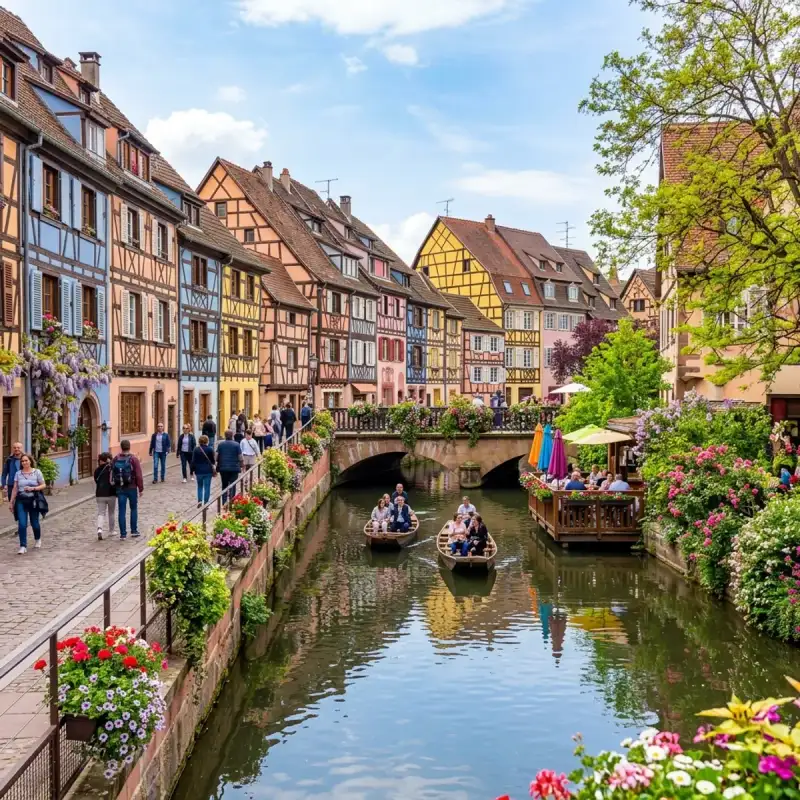
Bienvenue! Let us embark on an unforgettable #journey to the heart of #France. Colmar (French pronunciation: [kɔlmaʁ]; Alsatian: Colmer [ˈkolməʁ]; German: Colmar or Kolmar) is a city and commune in the Haut-Rhin department and Alsace region of north-eastern #France. The third-largest commune in Alsace (after Strasbourg and Mulhouse), it is the seat of the prefecture of the Haut-Rhin department and of the subprefecture of the Colmar-Ribeauvillé arrondissement. Colmar was first mentioned in the 9th century and grew into an important medieval trading town within the Holy Roman #empire. In the 17th century it was annexed by France under Louis XIV, though it retained a distinct German character due to its location, predominant language, and #culture. The city shifted between French and German control multiple times, before being permanently restored to France in 1945. The city is known for its well-preserved old town, numerous architectural landmarks, its blend of French and German heritage and its museums, among which is the Unterlinden Museum, which houses the Isenheim Altarpiece. Colmar is located on the Alsatian Wine Route and considers itself to be the capital of Alsatian wine (capitale des vins d'Alsace). #history Colmar was first mentioned by Charlemagne in his chronicle about Saxon wars. This was the location where the Carolingian Emperor Charles the Fat held a diet in 884. Colmar was granted the status of a free imperial city by Emperor Frederick II in 1226. In 1354 it joined the Décapole city league. The city adopted the Protestant Reformation in 1575, long after the northern neighbours of Strasbourg and Sélestat. During the Thirty Years' War, it was taken by the Swedish army in 1632, which held it for two years. In 1634, the Schoeman family arrived and started the first town library. In 1635, the city's harvest was spoiled by Imperialist forces while the residents shot at them from the walls. The city was conquered by France under King Louis XIV in 1673 and officially ceded by the 1679 Treaties of Nijmegen. In 1854 a cholera epidemic killed many in the city. With the rest of Alsace, Colmar was ceded to the newly formed German Empire in 1871 as a result of the Franco-Prussian War and incorporated into the Alsace–Lorraine province. It returned to France after World War I according to the 1919 Treaty of Versailles, was annexed by Nazi Germany in 1940, and then reverted to French control after the battle of the "Colmar Pocket" in 1945. Colmar has been continuously governed by conservative parties since 1947, the Popular Republican Movement (1947–1977), the Union for French Democracy (1977–1995) and the Union for a Popular Movement (since 1995), and has had only three mayors during that time. The Colmar Treasure, a hoard of precious objects hidden by Jews during the Black Death, was discovered here in 1863. Geography Colmar is 64 kilometres (40 mi) south-southwest of Strasbourg, at 48.08°N, 7.36°E, on the River Lauch, a tributary of the Ill. It is located immediately to the east of the Vosges and connected to the Rhine in the east by a canal. In 2022 the commune of Colmar had a population of 67,360, and the metropolitan area of Colmar had a population of 199,627. Colmar is the centre of the arrondissement of Colmar-Ribeauvillé. Climate Colmar has an oceanic climate (Köppen: Cfb) but it is significantly modified by the city's location far inland, with cold, dry winters and warm to hot, wetter summers. The city has a sunny microclimate and is one of the driest cities in France, with an annual precipitation of just 595 mm (23.4 in), making it ideal for Alsace wine. It is considered the capital of the Alsatian wine region. The town's dryness is due to its location near the mountains, which force clouds arriving from the west to rise. Most of their moisture condenses and falls over the higher ground, leaving the air warm and dry by the time it reaches Colmar. The city therefore has more of a continental climate and winter and summer temperatures can sometimes be the lowest or highest in France. Population Main sights Mostly spared from the destructions of the French Revolution and the wars of 1870–1871, 1914–1918 and 1939–1945, the cityscape of old-town Colmar is homogeneous and renowned among tourists. An area that is crossed by canals of the river Lauch (which formerly served as the butcher's, tanner's and fishmonger's quarter) is now called "little Venice" (la Petite Venise). Architectural landmarks Colmar's secular and religious architectural landmarks reflect eight centuries of Germanic and French #architecture and the adaptation of their respective stylistic language to the local customs and building materials (pink and yellow Vosges sandstone, timber framing). =### Secular buildings= Maison Adolph – 14th century (German #gothic) Koïfhus, also known as Ancienne Douane – 1480 (German Gothic) Maison Pfister – 1537 (German Renaissance). Ancien Corps de garde – 1575 (German Renaissance) Maison des Chevaliers de Saint-Jean – 1608 (German Renaissance) Maison des Têtes – 1609 (German Renaissance) Poêle des laboureurs – 1626 (German Baroque) Ancien Hôpital – 1736–1744 (French Classicism) Tribunal de grande instance – 1771 (French Classicism) Hôtel de Ville – 1790 (French Classicism) Colmar prison – 1791, formerly a convent built in 1316. Cour d'Assises – 1840 (French Neoclassicism) Théâtre municipal – 1849 (French Neoclassicism) Marché couvert – 1865 (French Neo-Baroque). The city's covered market, built in stone, bricks and cast iron, still serves today. Préfecture – 1866 (French Neo-Baroque) Water tower – 1886. Oldest still preserved water tower in Alsace. Out of use since 1984. Gare SNCF – 1905 (German Neo-Baroque) Cour d'appel – 1906 (German Neo-Baroque) =### Religious buildings= Église Saint-Martin – 1234–1365. The largest church of Colmar and one of the largest in Haut-Rhin. Displays some early stained glass windows, several Gothic and Renaissance sculptures and altars, a grand Baroque organ case. The choir is surrounded by an ambulatory opening on a series of Gothic chapels, a unique feature in Alsatian churches. Église des Dominicains – 1289–1364. Now deconsecrated as a church, displays Martin Schongauer's masterwork Madonna of the Rose Bower as well as 14th century stained glass windows and baroque choir stalls. The adjacent convent buildings house a section of the municipal library. Église Saint-Matthieu – 13th century. Gothic and Renaissance stained glass windows and mural paintings, as well as a wooden and painted ceiling. Couvent des Antonins – 13th century. Deconsecrated church and convent buildings notable for a richly ornate cloister. Now housing the Unterlinden Museum (see below). Église Sainte-Catherine – 1371. Deconsecrated church and convent buildings now used as an assembly hall and festival venue (Salle des Catherinettes). Chapelle Saint-Pierre – 1742–1750. Classicist chapel of a former Jesuit college. Synagogue – 1843 (Neoclassicism) =### Fountains= Fontaine de l'Amiral Bruat – 1864 (Statue by Bartholdi) Fontaine Roeselmann – 1888 (Statue by Bartholdi) Fontaine Schwendi – 1898 (Statue by Bartholdi) =### Monuments= Monument du Général Rapp – 1856 (first shown 1855 in #Paris. Statue by Bartholdi, his earliest major work) Monument Hirn – 1894 (Statue by Bartholdi) Statue Les grands soutiens du monde − 1902 (in the courtyard of the Bartholdi Museum) Statue of Liberty (Liberty Enlightening the World) replica Museums Unterlinden Museum – one of the main museums in Alsace. Displays the Isenheim Altarpiece, a large collection of medieval, Renaissance and baroque Upper-Rhenish paintings and sculptures, archaeological artefacts, design and international modern art. Musée Bartholdi – the birthplace of Frédéric Auguste Bartholdi shows his life and work through paintings, drawings, family objects and furniture as well as numerous plaster, metal and stone sculptures. A section of the museum is further dedicated to the local Jewish community's heritage. Musée d'histoire naturelle et d'ethnographie – the zoological and ethnographic museum of Colmar was founded in 1859. Besides a large collection of taxidermied animals, and artefacts from former French and German colonies in Africa and Polynesia, it also houses a collection of #ancient Egyptian items. Musée du jouet – the town's toy museum, founded 1993. Musée des usines municipales – industrial and technological museum in a former factory, dedicated to the history of everyday technology. Choco-Story Colmar - museum presenting the history of chocolate, with regional history displays, the ability to taste different chocolates and artworks made of chocolate Library The Municipal Library of Colmar (Bibliothèque municipale de Colmar) owns one of the richest collections of incunabula in France, with more than 2,300 volumes. This is quite an exceptional number for a city that is neither the main seat of a university, nor of a college, and has its explanation in the dissolution of local monasteries, abbeys and convents during the French Revolution and the subsequent gift of their collections to the town. Transport The small regional Colmar Airport serves Colmar. The nearest international airports are EuroAirport Basel Mulhouse Freiburg which is located 52 km away and Strasbourg Airport located 68 km away from Colmar. The railway station Gare de Colmar offers connections to Strasbourg, Mulhouse, Besançon, Zürich and several regional destinations. Colmar was also once linked to Freiburg im Breisgau, in Germany and on the other side of the Rhine, by the Freiburg–Colmar international railway. However the railway bridge over the Rhine between Breisach and Neuf-Brisach was destroyed in 1945 and never replaced. Education Senior high schools in Colmar include: Lycée Bartholdi Lycée Camille Sée Lycée polyvalent Blaise Pascal Lycée polyvalent Martin Schongauer Lycée privé Saint-André Lycée professionnel privé Saint-Jean École privée Mathias Grunewald Colmar shares the Université de Haute-Alsace (Upper Alsace University) with the neighbouring, larger city of Mulhouse. Of the approximately 8,000 students of the UHA, around 1,500 study at the Institut universitaire de technologie (IUT) Colmar, at the Colmar branch of the Faculté des Sciences et Techniques and at the Unité de Formation et de Recherche Pluridisciplinaire d'Enseignement Professionalisé Supérieur (UFR PEPS). The École Compleméntaire Pour L'Enseignement Japonaise à Colmar (コルマール補習授業校 Korumāru Hoshū Jugyō Kō), a part-time supplementary Japanese school, is held in Colmar. At one time classes were held at the Centre Cultural de Seijo. Music Since 1980, Colmar is home to an international summer festival of classical music Festival de Colmar (also known as Festival international de musique classique de Colmar). In its first version (1980 to 1989), it was placed under the artistic direction of the German conductor Karl Münchinger. Since 1989, it is helmed by the Russian violinist and conductor Vladimir Spivakov. Economy Colmar is an affluent city whose primary economic strength lies in the flourishing tourist industry. But it is also the seat of several large companies: Timken (European seat), Liebherr (French seat), Leitz (French seat), Capsugel France (A division of Pfizer). Every year since 1947, Colmar is host to what is now considered as the biggest annual commercial event as well as the largest festival in Alsace, the Foire aux vins d'Alsace (Alsacian wine fair). When Air Alsace existed, its head office was on the grounds of Colmar Airport. Parks and recreation By 1991 Lycée Seijo, a Japanese boarding high school in Kientzheim, had established a Japanese cultural center. It housed books and printed materials in Japan and hosted lectures and film screenings. Sports Colmar has the following notable sports organizations, accommodations and events. SR Colmar, a football club Ladhof Stadium, a football field Paris-Colmar, a racewalking competition Notable people Caspar Isenmann (1410? – 1484?), painter Martin Schongauer (1450–1491), painter and engraver Georg Wickram (1502–1562), poet and novelist Jean-François Rewbell (1747–1807), diplomat and revolutionist Jean Rapp (1771–1821), lieutenant general Conrad Berg (1785–1852), composer Charles Xavier Thomas (1785–1870), inventor Marie Bigot (1786–1820), musician, pianist and composer, friend of Haydn and Beethoven Armand Joseph Bruat (1796–1855), admiral Georges-Charles de Heeckeren d'Anthès (1812–1895), politician, killer of Alexander Pushkin in a duel Auguste Nefftzer (1820–1876), journalist Frédéric Auguste Bartholdi (1834–1904), sculptor. He created Liberty Enlightening the World (the Statue of Liberty). Camille Sée (1847–1919), politician Jean-Baptiste Lemire (1867–1945), composer Jean-Jacques Waltz (1873–1951), drawer and caricaturist Ernst Stadler (1883–1914), Alsatian poet Paul Wormser (1905–1944), Olympic épée fencer Hans Loewald (1906–1993), psychoanalyst and theorist Jean-Pierre Muller (1924–2008), Olympic epee fencer Bernard Schmitt (1929–2014), economist and founder of the "Quantum Economics" Christian de Chergé (1937-1996), Trappist monk and one of the Tibhirine monks Guy Roux (born 1938), football coach Pierre Moerlen (1952–2005), musician, drummer and composer Pierre Hermé (born 1961), confectioner, entrepreneur and pastry chef Thomas Bloch (born 1962), musician Éric Straumann (born 1964), politician Pascal Elbé (born 1967), actor, director and screenwriter Marc Keller (born 1968), football player Cendrine Wolf (born 1969), children's author Pascal Johansen (born 1979), football player Nicolas Armindo (born 1982), racing driver Amaury Bischoff (born 1987), football player Fabien Schmidt (born 1989), professional cyclist Ryad Boudebouz (born 1990), Algerian-French footballer International relations Twin towns – sister cities Colmar is twinned with: Replicas of historical buildings in Malaysia Bukit Tinggi Resort Colmar Tropicale which is situated in Bentong district, State of Pahang, Malaysia is a resort-theme historical village inspires from the original Colmar commune in France. Colmar Tropicale located 60 km north-east of Kuala Lumpur. North of it, a rebuild of Château du Haut-Kœnigsbourg is in the Berjaya Hills, hosting an organic resort hotel. In popular culture Colmar's cityscape (and that of neighbouring Riquewihr) served as inspiration for the design of the Japanese animated film Howl's Moving Castle. Scenes in the anime Is the Order a Rabbit? are also based on this location. Colmar appears as a map in Day of Defeat: Source set in 1944. Germans and American soldiers try to blow up each other's objectives. #france #travel #history #europe #culture Related InsightsMount Ararat Mysteries Mahoma: El Profeta del Islam Beyond Merv's Veil: Unearthing Turkmenistan's Ghost Oases of the Silk Road{ "@context": "https://schema.org", "@type": "FAQPage", "mainEntity": [ { "@type": "Question", "name": "What is the main focus of Colmar and the Alsace Wine Route: A Colorful Escape?", "acceptedAnswer": { "@type": "Answer", "text": "Join Camille Dubois on a journey exploring Colmar and the Alsace Wine Route and its incredible history." } }, { "@type": "Question", "name": "Who authored the comprehensive guide on Colmar and the Alsace Wine Route: A Colorful Escape?", "acceptedAnswer": { "@type": "Answer", "text": "This detailed article and its insights were carefully researched and authored by Camille Dubois." } }, { "@type": "Question", "name": "Where can I find more related content about Travel?", "acceptedAnswer": { "@type": "Answer", "text": "You can explore more articles, detailed reviews, and similar insights by browsing the Related Insights section at the bottom of this article or visiting our dedicated Travel category page." } } ] }