Showing Posts From
Magical
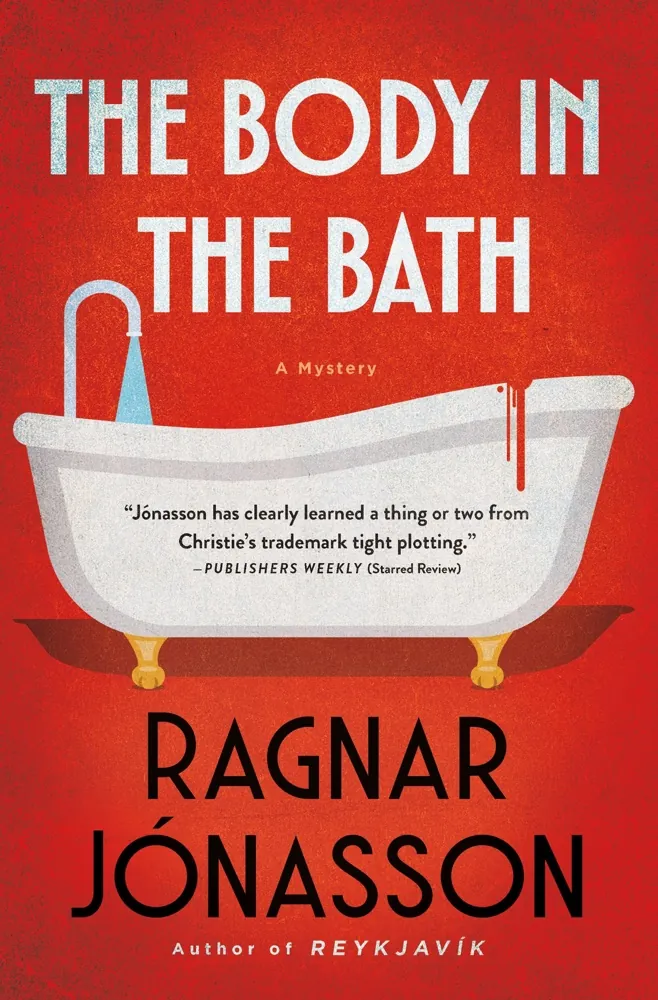
Author: Ragnar JónassonPage Count: UnknownPublication Date: Expected publication 2026-11-10 APL Staring at yet another press release about a Nordic noir involving snow, a dead body, and a brooding detective with a tragic backstory makes me want to throw my espresso cup through the triple-glazed windows of this overpriced flat. Honestly, I agreed to write this preview purely because the wire transfer cleared, and frankly, my landlord lacks a sense of humor about rent. Or wait, let me backtrack on that—actually, the rent check bounced this morning, so I am writing this out of sheer, unadulterated panic while watching a delivery cyclist wipe out on the slush outside. The Frigid Geography of Cliché Ragnar Jónasson is back with The Body in the Bath, the third installment in the Helgi series, because apparently, Iceland’s crime rate in fiction is quadruple that of actual Chicago. According to the marketing copy provided to me by an exhausted publicist who clearly hates life as much as I do, our hero Helgi wants a quiet Christmas. But alas. Snow blankets Reykjavík. The plotting relies on the oldest trick in the lazy writer's handbook: the detective's personal life gets aggressively detonated so he has a motive to care about a case. His girlfriend dies in a car crash driven by his abusive, alcoholic ex—who then walks free, because legal systems in fiction exist solely to torment protagonists. Ghostly Predecessors and Bathtubs To cope with this staggering level of daytime soap opera melodrama, Helgi pivots. He investigates the mysterious disappearance of his predecessor, Hulda—a retired officer presumed dead, because in these books, nobody ever just retires to a nice villa in Spain to grow tomatoes. Naturally, the lines between past and present blur. Because narrative cohesion is optional when you have a moody atmosphere. Then, the abusive ex turns up lifeless in a bath, and our boy Helgi is immediately the prime suspect. Shocker. I didn't see that coming at all. Give the man a Pulitzer for predictability. Wait, let me take that back—maybe the predictability is a comfort. Like a warm blanket, if the blanket were woven from discarded manuscripts by Jo Nesbø and Gillian Flynn copycats. The synopsis leans entirely on tropes we have all digested a thousand times over cheap airport gin. We get the haunted investigator. We get the institutional betrayal where colleagues suddenly turn hostile. We get the corpse in a bathroom. It is a paint-by-numbers exercise in grimdark Scandinavian misery porn. Yet, millions will buy it. They will consume it while sitting under heated blankets, pretending they understand the existential dread of living in a country with universal healthcare and a functioning social safety net. God, I need a drink. And to make matters worse, I just checked my notifications and my private flight to London has been delayed by an exact, excruciating hour. #nordicnoir #bookstagram #publishinglife #ragnarjonasson Related InsightsBared to You Book Review and Summary Música, sólo música Book Review and Summary Clockwork Prince Book Review and Summary{ "@context": "https://schema.org", "@type": "FAQPage", "mainEntity": [ { "@type": "Question", "name": "What is the main focus of The Body in the Bath (Helgi, #3) Book Review and Summary?", "acceptedAnswer": { "@type": "Answer", "text": "Everything you need to know about The Body in the Bath (Helgi, #3) with our detailed review." } }, { "@type": "Question", "name": "Who authored the comprehensive guide on The Body in the Bath (Helgi, #3) Book Review and Summary?", "acceptedAnswer": { "@type": "Answer", "text": "This detailed article and its insights were carefully researched and authored by Carmen Martinez." } }, { "@type": "Question", "name": "Where can I find more related content about Books?", "acceptedAnswer": { "@type": "Answer", "text": "You can explore more articles, detailed reviews, and similar insights by browsing the Related Insights section at the bottom of this article or visiting our dedicated Books category page." } } ] }

Author: Jenny HollanderPage Count: UnknownPublication Date: Expected publication 2026 APL Oh, Famous Last Lies—because nothing says "I’ve read the synopsis" like a title that sounds like a bad rom-com plot twist, except it’s a murder mystery, and the murderer is a pop star, and the murder is of a producer, and the producer’s bones are in the desert, and the pop star’s sister is involved—or maybe not—and the whole thing is just a glittery, toxic, very British-American love letter to the idea that fame is a kind of slow-motion car crash, but with better lighting. The synopsis is so deliciously vague it’s almost a crime—like a movie trailer that only shows a woman in a sequin dress and a man in a suit, both looking suspicious, but never actually says what happens. Is this a Gone Girl for pop stars? A Big Little Lies but with more autotune? Or just another iteration of the "sisterhood as both bond and blade" trope that’s been bleeding out of thrillers since The Sisterhood of the Traveling Pants decided to go full Breaking Bad? The fact that we’re told Hayley was "a nobody" eight years ago and now she’s a "global sensation" with a "fairytale beginning" is chef’s kiss—because nothing says "red flag" like a fairytale that starts with a producer’s corpse. The real question is: is this a Fleabag meets Sharp Objects vibe, where the glamour is just a mask for something rotten, or is it more of a The Night Of energy, where the glamour is the rot? The synopsis leans into the "glitz and gore" tagline like it’s a punchline, which is either genius or lazy—depending on whether Hollander actually delivers on the "gore" part. Because let’s be real, if this is just another "famous person did something sketchy" thriller, it’s going to feel like it’s been mined from the same well as The Woman in the Window’s less interesting cousin. But if Hollander—who, let’s remember, wrote The Unhoneymooners—can make the sister dynamic as sharp as her dialogue, then maybe this isn’t just another Famous for the Famous’ sake. The desert setting is chef’s kiss—because nothing says "dark secrets" like a desert, especially when you’re talking about a producer’s bones. But the synopsis doesn’t even try to explain why Julian Reeves’ body is out there, just that it is, which is either a masterclass in leaving the reader hungry or a cop-out. Either way, it’s a gambit. And gambits are what keep us reading, aren’t they? The fact that Hayley’s rise is framed as a "fairytale" is so 2023, but in a way that feels like it’s trying too hard to be ironic, like a TikTok caption that’s been over-edited. Is this a satire of fame culture, or is it just another book that thinks "glamour = evil"? The sister dynamic is the real hook here—Hayley and Anna were a duo, which immediately makes me think of Thelma & Louise but with more harmonies. But the synopsis doesn’t tell us if Anna is the innocent victim, the reluctant accomplice, or the one who’s been gaslighting Hayley this whole time. That’s the fun part—Hollander’s leaving it to us to decide who’s the villain, who’s the victim, and who’s just really good at PR. Because in the world of Famous Last Lies, everyone’s a suspect, and the only thing more toxic than the industry is the family. But here’s the thing—this synopsis is so barebones it’s almost a crime against the reader. It’s like being handed a menu with only the appetizer listed. Is this a slow-burn thriller, or a fast-paced whodunit? Is Hayley the protagonist or the antagonist? Is Anna even still alive? The vagueness is deliberate, I assume, but it also feels like Hollander is playing a game of literary telephone with the reader, and we’re all just waiting for the next call to come through. And now I’m stuck trying to write this review because my dog ate my chapter outline—again—and I have to wing it like a pop star who forgot her lyrics. But hey, at least I can say I’ve got the Famous Last Lies synopsis down to a T. Or at least to a very confusing T. #BookTok #ThrillerSeason #PopStarProblems #SisterhoodOfTheChord #DesertBones Related InsightsStory of My Life Book Review and Summary Stations Book Review and Summary Resonance Surge Book Review and Summary{ "@context": "https://schema.org", "@type": "FAQPage", "mainEntity": [ { "@type": "Question", "name": "What is the main focus of Famous Last Lies Book Review and Summary?", "acceptedAnswer": { "@type": "Answer", "text": "Everything you need to know about Famous Last Lies with our detailed review." } }, { "@type": "Question", "name": "Who authored the comprehensive guide on Famous Last Lies Book Review and Summary?", "acceptedAnswer": { "@type": "Answer", "text": "This detailed article and its insights were carefully researched and authored by Carmen Martinez." } }, { "@type": "Question", "name": "Where can I find more related content about Books?", "acceptedAnswer": { "@type": "Answer", "text": "You can explore more articles, detailed reviews, and similar insights by browsing the Related Insights section at the bottom of this article or visiting our dedicated Books category page." } } ] }
-
 Carmen Martinez
 - 09 Sep, 2026 16:54
Existential Despair: A Guide to Sad Books Book Review and Summary
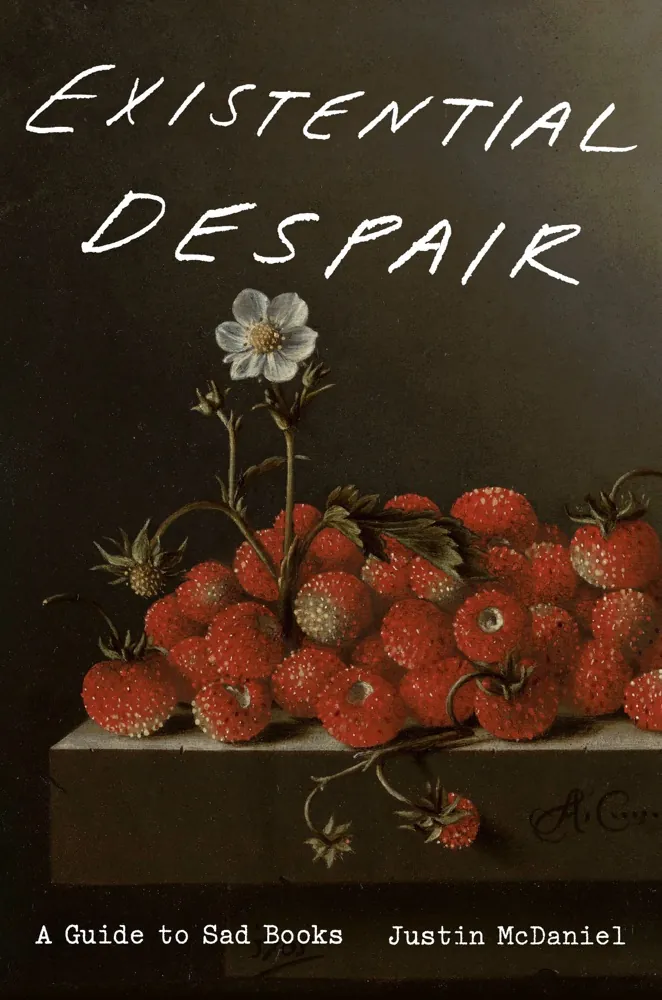
Author: Justin McDanielPage Count: UnknownPublication Date: Expected publication 2026 APL The coffee in this styrofoam cup tastes like battery acid filtered through a dirty gym sock, which feels entirely appropriate for previewing a text about existential dread. Justin McDaniel—an ex-monk with a tenure track at Penn, because of course—has packaged his viral syllabus into Existential Despair. It’s a book promising sixteen weeks of radical reading designed to make elite undergrads sweat through their Patagonia fleeces. No phones, no prep, just raw literary suffering. But let us be entirely serious for a second. The man makes students read whole novels in one sitting while staring blankly into space like lobotomized Victorian orphans. Peak performance academia, folks. No notes. The Curriculum of Suffering The premise leans hard on the modern allergy to silence. We are drowning in algorithmic dopamine soup, so tossing James Baldwin, Ottessa Moshfegh, and Yukio Mishima at over-caffeinated kids is frankly a genius psyop. Yet, let us backtrack for a moment—actually, scrap that, McDaniel’s syllabus is totally derivative garbage masquerading as pedagogical bravery. Every depressed sophomore in Brooklyn already reads Moshfegh while chain-smoking American Spirits in their overpriced walk-ups. Do we really need an Ivy League professor to curate our collective panic attacks? Apparently yes, because the culture demands commodified misery packaged with a sleek academic bow. The Gutter-Level Aesthetic of Gloom The promotional copy insists this isn't a self-help manual, which is industry-speak for "buy this so you can look smart reading it on the subway." We are promised a masterclass in living alongside grief, meaning, and survival without cheap resolutions. No silver linings. No toxic positivity. Just pure, unadulterated literary gut-punches. Baldwin and Mishima do not care about your personal growth; they want to drag your psyche behind a rusty pickup truck. McDaniel apparently wants to recreate that exact vibe for the tuition-paying masses. The Anticipated Trainwreck Prediction time. The publishing industrial complex will turn this into the ultimate lifestyle accessory for people who post screenshots of their Kindle progress bars on Instagram. It will sell a metric ton of copies to tech bros pretending they have inner lives. Then again, maybe stripping away the PowerPoint slides and forcing people to sit with actual prose is the exact kind of high-brow asceticism we desperately need right now. Or maybe it is just incredibly pretentious theater for people who peaked in high school AP Lit. I need to close this laptop before the waitress realizes I have been nursing the same lukewarm tap water for three hours, mostly because I have to go debate the merits of absurdism with a sketchy stranger in a dimly lit dive bar across the street. #existentialdespair #reading #literaryfiction #academia Related InsightsCrown of Midnight Book Review and Summary The Hope Effect: The Science of Healing, Achieving, and Breaking Through Book Review and Summary Cars on the Road (Disney/Pixar Cars on the Road) Book Review and Summary{ "@context": "https://schema.org", "@type": "FAQPage", "mainEntity": [ { "@type": "Question", "name": "What is the main focus of Existential Despair: A Guide to Sad Books Book Review and Summary?", "acceptedAnswer": { "@type": "Answer", "text": "Everything you need to know about Existential Despair: A Guide to Sad Books with our detailed review." } }, { "@type": "Question", "name": "Who authored the comprehensive guide on Existential Despair: A Guide to Sad Books Book Review and Summary?", "acceptedAnswer": { "@type": "Answer", "text": "This detailed article and its insights were carefully researched and authored by Carmen Martinez." } }, { "@type": "Question", "name": "Where can I find more related content about Books?", "acceptedAnswer": { "@type": "Answer", "text": "You can explore more articles, detailed reviews, and similar insights by browsing the Related Insights section at the bottom of this article or visiting our dedicated Books category page." } } ] }
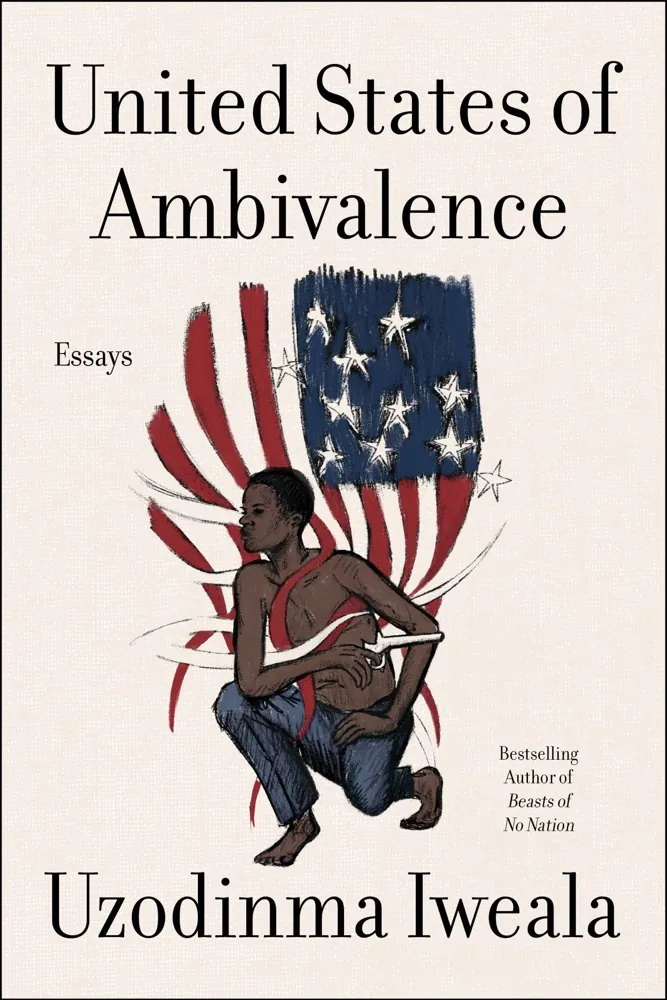
Author: Uzodinma IwealaPage Count: UnknownPublication Date: Expected publication 2026 APL Another publisher email, another frantic mandate to squeeze meaning out of a press release while the floorboards shake from the bass downstairs and someone in 4B vacuums at three in the morning. Let us talk about United States of Ambivalence. Uzodinma Iweala is dropping a collection of essays in 2026 because apparently, we need a novelist-slash-doctor to diagnose the national psyche while we all collectively stare into the glowing rectangles of our doom. The marketing copy leans hard on the heavy-hitting buzzwords — race, civil rights, culture wars, Black Lives Matter, abortion, immigration. Oh joy. Another book telling us that things are complicated. Diagnosing the National Malaise The synopsis promises piercing clarity. A doctor’s touch for a sick country. But let us be entirely real for a second — I am typing this at a desk littered with cold espresso and half-smoked cigarettes just to hit a word count for an editor who thinks culture is something you buy at an airport bookstore. Do I actually believe a trio of essays penned by someone living abroad can untangle the hyper-capitalist mess of modern America? Please. We are beyond essays. We need an exorcist. Yet, Iweala has chops. Beasts of No Nation was not exactly a gentle bedtime story. If he brings that same unflinching cruelty to the American obsession with self-mythology, we might actually get something worth reading instead of another centrist lament about how we just need to listen to each other across the aisle. God, the mere thought of bipartisan dialogue makes my teeth itch. The Expat Gaze and Other Convenient Stances There is always a distinct literary tourism to books written about America by people who currently reside somewhere else. James Baldwin did it with style. Ta-Nehisi Coates circled the globe while interrogating the machinery of citizenship. Iweala positions himself as the insider-outsider — a Black American of Nigerian descent holding the stethoscope to a thrashing patient. Expect the prose to be sharp. The synopsis guarantees maturity. But watch out for the inevitable trap of essayistic hand-wringing. Every literary critic in New York is going to call it essential and timely because those are the only two adjectives allowed in the trades anymore. They will compare it to Joan Didion or Baldwin without pausing to ask if essays can still pierce a culture that has successfully commodified its own collapse. Will it capture the doubt and uncertainty? Absolutely. Doubt is very profitable right now. Confusion is a genre. We package our national neurosis into hardcovers and put them on coffee tables next to artisanal candles that smell like cedar and regret. I just hope the essays have some actual bite rather than floating away on the safe, lofty clouds of transnational academia. We do not need another sophisticated shrug about the state of our union. We need someone to kick the tires. And now the radiator in this pre-war deathtrap is banging like a disgruntled percussionist, meaning I have to spend the next twenty minutes bleeding the valve or freeze to death.
- Carmen Martinez
- 02 Sep, 2026 20:07
Out of Colditz: My Father the POW and the Nazi Who Controlled His Fate Book Review and Summary
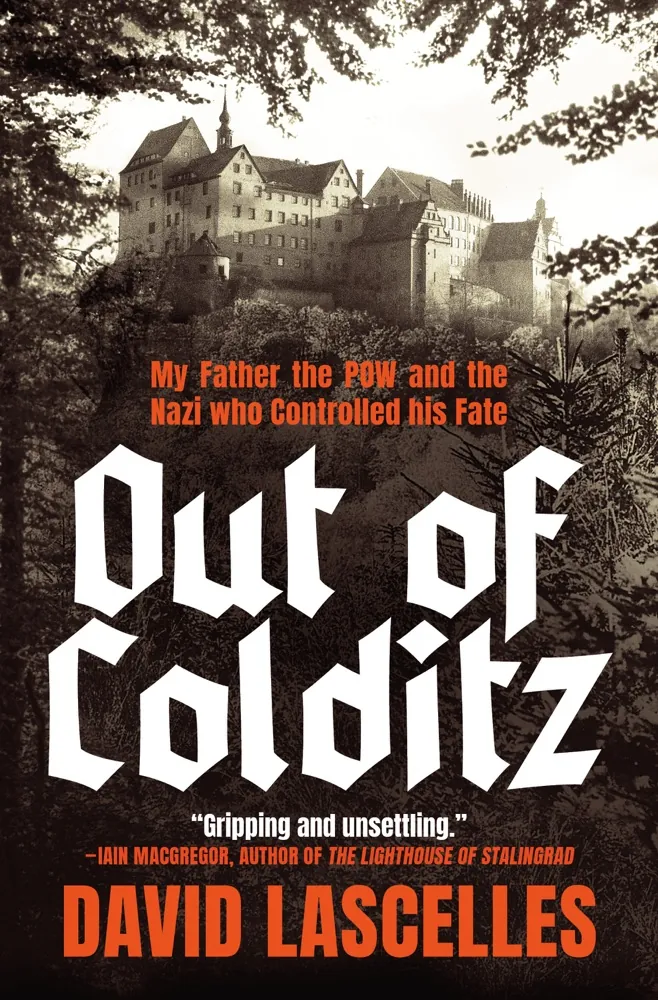
Author: David Lascelles YorkshirePage Count: UnknownPublication Date: Expected publication 2026 APL The universe has officially decided to test my remaining shreds of sanity by dangling yet another prestige-biscuit about British blue-bloods surviving World War II. Out of Colditz: My Father the POW and the Nazi Who Controlled His Fate arrives courtesy of David Lascelles Yorkshire, which reads less like a historical monograph and more like the ultimate flex for someone whose lineage involves a lot of inherited silver and very little actual suffering. We are talking about the Prominente—nephews of kings, sons of viceroys, and Winston bloody Churchill’s own flesh and blood cooling their heels in a Gothic fortress while the commoners got pulverized in the Blitz. The Aristocratic Privilege of Not Being Shot And yet, here we are, staring down an anticipated 2026 release that hinges on a classic moral cop-out. An SS commander named Gottlob Berger decides to play nice at the eleventh hour because he realizes the Nuremberg trials are going to be a massive vibe-killer for his career. Wow. Revolutionary ethics. Wait. Let me rephrase that entirely. Berger's calculated self-preservation is actually a towering monument to nuanced bureaucratic psychology, proving that even genocidal maniacs appreciate a solid networking strategy for the postwar Hague era. Lascelles supposedly retraces this journey eighty years later, wondering if the Nazi boss acted out of compassion, remorse, or pure unadulterated self-interest. Spoiler alert: It was self-interest, you absolute spoon. Nobody gives up high-profile hostages out of a sudden pang of Franciscan charity when the Red Army is pounding on the eastern suburbs of Berlin. But sure, let’s write three hundred pages interrogating the inner emotional landscape of a war criminal because the author wouldn't exist otherwise. It gives off major "my dad survived a heavily curated hostage crisis" energy, perfectly pitched for the same demographic that buys commemorative tea towels celebrating royal weddings. Historical True-Crime for the Country House Set This whole enterprise smells suspiciously like a prestige television pitch disguised as literature—think Ben Macintyre writing for Tatler, stripped of any genuine grit and dipped in ancestral nostalgia. We get it. Your lineage is bulletproof. The literary market is already aggressively oversaturated with these glossy, upper-crust historical excavations that treat human catastrophe like an eccentric family heirloom to be dusted off for the Sunday supplements. Except the synopsis leaves us hanging on actual narrative substance. We get zero details on how these posh prisoners actually lived, what they thought, or how much caviar was smuggled in via the Red Cross packages. It is all high-concept scaffolding and zero architectural integrity. Just a bunch of titled prisoners sitting around a medieval castle waiting for their uncle the King to win the war for them, while modern descendants cash in on the cinematic rights. Sickening. Absolutely tragic. I need to log off this cursed terminal right now and sprint down three flights of concrete stairs because my vintage 1974 Peugeot roadster is currently drowning in an ungodly flash flood while some neighborhood feral cat uses the leather saddle as a scratching post. #Colditz #History #Monarchy #BookTwitter Related InsightsDon't Let Him In Book Review and Summary For Whom the Bell Tolls Book Review and Summary How to Resist Guilt: On What's Holding Women Back Book Review and Summary{ "@context": "https://schema.org", "@type": "FAQPage", "mainEntity": [ { "@type": "Question", "name": "What is the main focus of Out of Colditz: My Father the POW and the Nazi Who Controlled His Fate Book Review and Summary?", "acceptedAnswer": { "@type": "Answer", "text": "Everything you need to know about Out of Colditz: My Father the POW and the Nazi Who Controlled His Fate with our detailed review." } }, { "@type": "Question", "name": "Who authored the comprehensive guide on Out of Colditz: My Father the POW and the Nazi Who Controlled His Fate Book Review and Summary?", "acceptedAnswer": { "@type": "Answer", "text": "This detailed article and its insights were carefully researched and authored by Carmen Martinez." } }, { "@type": "Question", "name": "Where can I find more related content about Books?", "acceptedAnswer": { "@type": "Answer", "text": "You can explore more articles, detailed reviews, and similar insights by browsing the Related Insights section at the bottom of this article or visiting our dedicated Books category page." } } ] }
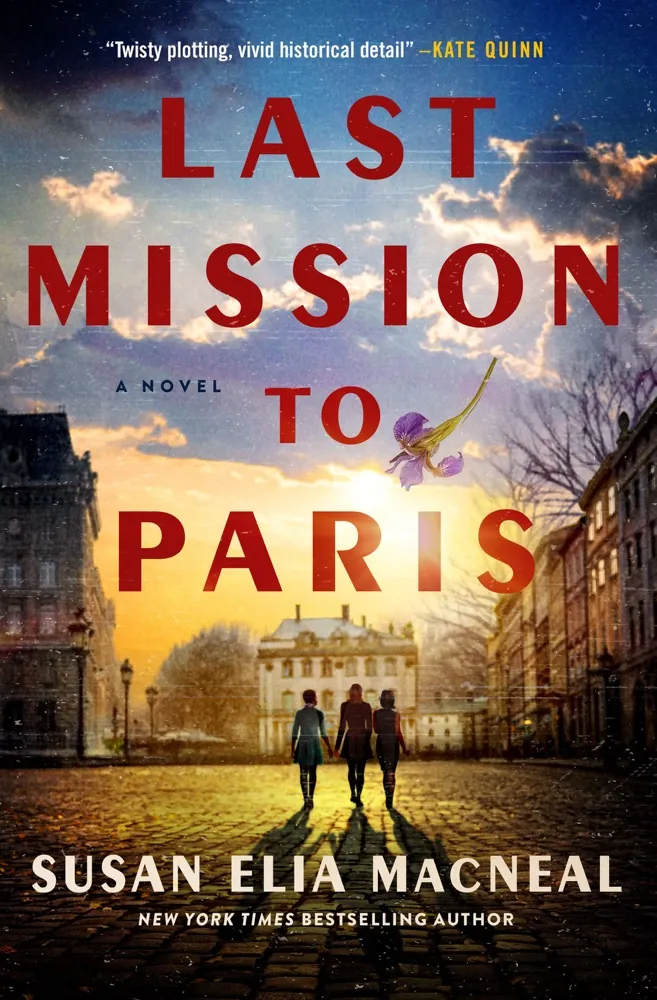
Author: Susan Elia MacNealPage Count: UnknownPublication Date: Expected publication 2026 APL Sweat is currently dripping off my nose and pooling right on the keyboard while a distant siren wails a flatulent three-note harmony against the brick facade across the alley. God, the concrete radiates heat like a pizza oven left on broil until midnight. Yet here I am, staring at a screen, evaluating Susan Elia MacNeal’s forthcoming Last Mission to Paris—a title that sounds less like a WWII espionage thriller and more like a tax-deductible vacation for a mid-list historical fiction author who got tired of writing about bookshops. The Nostalgia Industrial Complex Look at this lineup. Flip the Southern Belle. Zaina the dreamy Indian princess. Bella the stage star. Gabrielle the London shopgirl. It reads less like an espionage unit and more like a painfully diverse casting call for a prestige streaming limited series designed to win Emmys through sheer demographic arithmetic. We are supposed to buy that these four disparate archetypes parachuted into Nazi-occupied France and became inseparable before a tragic betrayal. Because nothing says covert operational efficacy like a stage actress yelling lines in a Parisian bistro. Or maybe I am being too harsh on the character dynamics—wait, no, let me walk that back entirely. The premise actually hits that sweet spot of high-concept middlebrow escapism that feels like Kate Quinn and Ken Follett had a baby in a gift shop at the Imperial War Museum. Swinging Sixties Meet Historical Trauma Twenty years later, we leap to the vibrantly commercialized London of the Swinging Sixties where a statue goes up, a historian drops dead, and Chloe the daughter steps in. The thematic machinery here relies entirely on structural irony. The public gets bronze monuments on the Thames, but the actual truth rots in a damp archive. MacNeal leans hard into the legacy of generational trauma, though she wraps it in the kind of genre tropes that scream airport bookstore display. The prose promises a trajectory from London to Paris to Berlin. But let us be honest with ourselves. This book is going to coast entirely on middle-aged female empowerment vibes disguised as a gritty spy hunt. It is historical gaslighting with a feminist gloss. The betrayal wasn't just a failure; it was deliberately sabotaged. Groundbreaking stuff. Truly a paradigm shift in how we conceptualize the Third Reich. Lexical whiplash aside, this narrative trajectory is basically the literary equivalent of a nostalgia-bait reboot nobody asked for, yet suburban book clubs are going to stan this absolute nonsense until the paperbacks disintegrate. Drop the mic. I have to go scream at a developer who is trying to turn the 1920s vaudeville house down the block into an artisanal matcha dispensary. Related InsightsGone Girl Book Review and Summary Primal Mirror Book Review and Summary Sharpe's Assassin Book Review and Summary{ "@context": "https://schema.org", "@type": "FAQPage", "mainEntity": [ { "@type": "Question", "name": "What is the main focus of Last Mission to Paris Book Review and Summary?", "acceptedAnswer": { "@type": "Answer", "text": "Everything you need to know about Last Mission to Paris with our detailed review." } }, { "@type": "Question", "name": "Who authored the comprehensive guide on Last Mission to Paris Book Review and Summary?", "acceptedAnswer": { "@type": "Answer", "text": "This detailed article and its insights were carefully researched and authored by Carmen Martinez." } }, { "@type": "Question", "name": "Where can I find more related content about Books?", "acceptedAnswer": { "@type": "Answer", "text": "You can explore more articles, detailed reviews, and similar insights by browsing the Related Insights section at the bottom of this article or visiting our dedicated Books category page." } } ] }
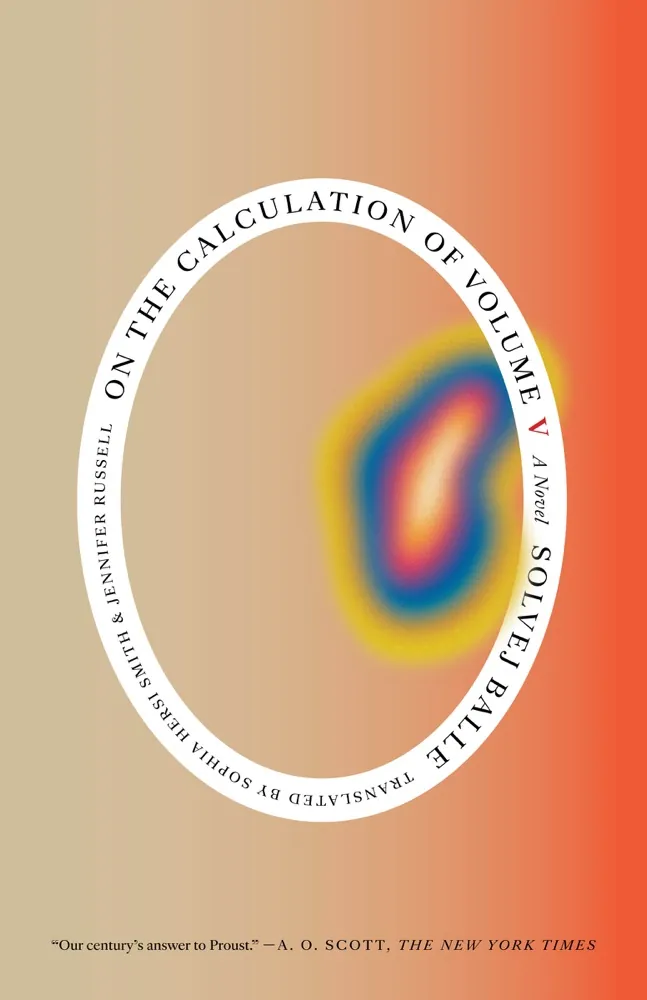
Author: Solvej BallePage Count: UnknownPublication Date: Expected publication 2026-11-17 APL The humidity tonight is so thick you could slice it with a rusted bread knife, provided you don't mind a little tetanus. I am sweating through my shirt just sitting here above the asphalt, staring at a blinking neon sign that has been flickering the exact same buzzing red pulse for the last four hours. Perfect. It matches my current state of mind while looking at yet another publisher’s press release for On the Calculation of Volume V. Solvej Balle is doing something entirely absurd. Seven volumes about a single woman stuck in the exact same Tuesday, or whatever miserable twenty-four-hour loop she is trapped in. Normally, I despise the serialized bloated carcass of modern literary fiction. Give me the sharp, jagged economy of Thomas Bernhard or the dry, bruising detachment of early Houlellebecq. But Balle? Balle has managed to wedge a crowbar into the concept of linear time and left us all hanging off the edge of a fire escape waiting for volume five. The Geometry of Monotony The synopsis tells us the hazy days of confusion are gone. Tara has habits now. She has people. Other escapees have joined her little purgatory. But wait, it gets better. Are they even going to want to leave the trap? Oh, spare me. The existential dread of the comfortable cage. It is the literary equivalent of realizing your air conditioning unit died in July and you have completely forgotten how to sweat. Actually, scratch that entire thought process. Forget the air conditioning metaphor. It is stupid and smells like cheap prose. Let's talk about the sheer gall of stretching a metaphysical crisis across a seven-part septology. Nobody asked for a septology about a time loop. We asked for punchy novellas that don't require a luggage cart to carry home from the bookstore. Yet here we are. I am contractually obligated to care about this French-translated-into-English or Danish-imported philosophical marathon because my editor threatened to pay me in grocery store coupons if I miss this deadline. I just need to hit a word count, people. Just feed the beast. The Anatomy of a Loop Balle treats time not as a river, but as a heavily worn linoleum floor. You pace back and forth across it until the pattern rubs off completely. The synopsis leans heavily on words like parable, mortality, and marital loneliness. Classic European gloom. It’s heavy, it’s humorless, and it probably won a Scandinavian prize that comes with a slab of smoked fish and a crown of thorns. Yet—and this is where the quiet awe creeps in beneath the cynicism—there is a terrifying precision to how she maps out repetition. Most writers would use a time loop for cheap sci-fi mechanics or comedic montages Groundhog Day style. Balle uses it as an MRI machine for the human soul. She measures the exact millimeter of decay in a marriage when neither person has anywhere left to go. Will they escape? Who cares. The trap is the point. The asphalt is hot, the neon sign won't stop blinking, and the synopsis promises us another deep dive into the void. I really need to go inside and water my small forest of desperately thirsty houseplants before they stage a full-scale rebellion and eat my spare keys. Related InsightsWinterveil Book Review and Summary Fried Green Tomatoes at the Whistle Stop Cafe Book Review and Summary Choke Book Review and Summary{ "@context": "https://schema.org", "@type": "FAQPage", "mainEntity": [ { "@type": "Question", "name": "What is the main focus of On the Calculation of Volume V Book Review and Summary?", "acceptedAnswer": { "@type": "Answer", "text": "Everything you need to know about On the Calculation of Volume V with our detailed review." } }, { "@type": "Question", "name": "Who authored the comprehensive guide on On the Calculation of Volume V Book Review and Summary?", "acceptedAnswer": { "@type": "Answer", "text": "This detailed article and its insights were carefully researched and authored by Carmen Martinez." } }, { "@type": "Question", "name": "Where can I find more related content about Books?", "acceptedAnswer": { "@type": "Answer", "text": "You can explore more articles, detailed reviews, and similar insights by browsing the Related Insights section at the bottom of this article or visiting our dedicated Books category page." } } ] }
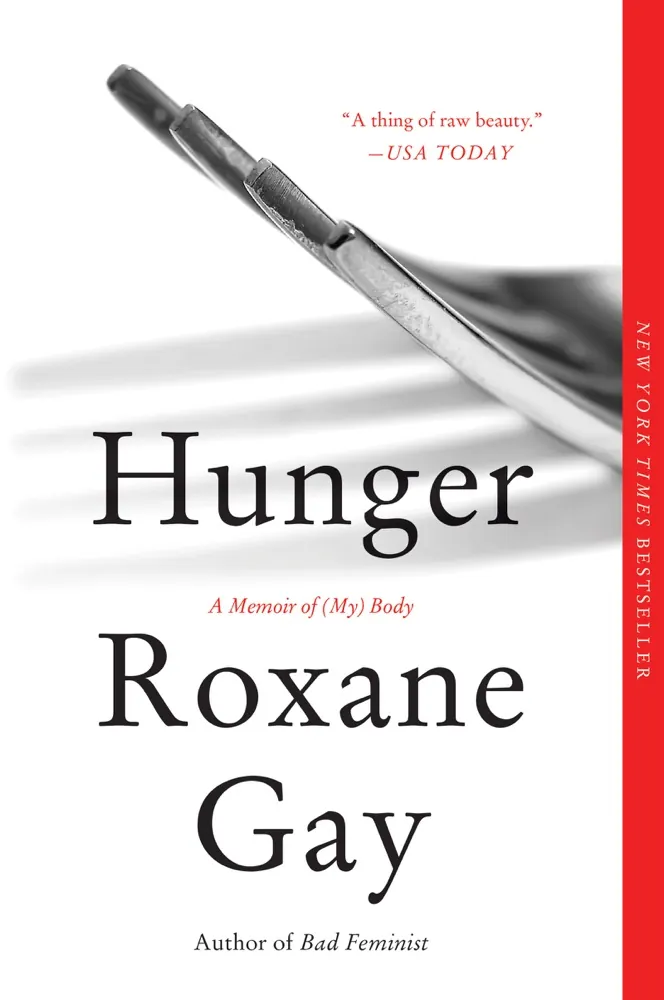
Author: Roxane GayPage Count: UnknownPublication Date: Expected publication 2026 APL —The Unrelenting Hunger of the Body— Roxane Gay's forthcoming memoir, How to Be Heard, promises to be a searingly honest exploration of the author's struggles with food, weight, self-image, and the arduous process of learning to feed one's hunger while taking care of oneself. But what does this mean, exactly? Is this a story of triumph, of overcoming the odds and emerging victorious? No, it is not. It is, instead, a story of a body, a life, and a hunger that demands to be heard. Gay's past works have demonstrated her ability to tackle the complexities of body image and mental health with unflinching honesty, and this memoir appears to be no exception. The synopsis hints at a devastating act of violence that served as a turning point in her young life, shaping her relationship with her body for decades to come. But how will she explore this trauma, and what insights will she offer into the ways in which our bodies are both a source of comfort and a site of pain? One thing is certain: How to Be Heard will not be a simple weight-loss narrative. It will be a deeply personal and psychological exploration of the ways in which we feed our hungers—both physical and emotional. Gay's writing has always been characterized by its bracing candor, and this memoir promises to be no exception. She will reflect on the devastating act of violence that became a turning point in her life, and she will examine the ways in which our culture's obsession with appearance and conformity can be both suffocating and liberating. But what of the feminist cultural criticism that has become a hallmark of Gay's work? How will she critique the ways in which our society polices women's bodies, and what solutions will she offer for those seeking to break free from the constraints of societal expectations? These are the questions that How to Be Heard promises to answer, and it is here that the memoir will likely prove most compelling. And yet, despite the promise of this memoir, one cannot help but feel a sense of trepidation. Will How to Be Heard be a memoir that truly breaks new ground, or will it be a rehashing of familiar themes and tropes? Only time will tell, but one thing is certain: Roxane Gay's writing has always been characterized by its unflinching honesty, and this memoir promises to be no exception. As I sit here, surrounded by the detritus of a chaotic urban existence, I am reminded of the works of authors like Maggie Nelson and Eula Biss, who have also explored the complexities of body image and mental health in their writing. Will How to Be Heard prove to be a worthy addition to this canon, or will it falter under the weight of its own ambition? I, for one, am eager to find out. But for now, I shall put on a Coltrane vinyl and forget about this book. #RoxaneGay #BodyImage #MentalHealth Related InsightsThe Aeneid Book Review and Summary Clara Poole and the Long Way Round Book Review and Summary Don't Let Him In Book Review and Summary{ "@context": "https://schema.org", "@type": "FAQPage", "mainEntity": [ { "@type": "Question", "name": "What is the main focus of How to Be Heard Book Review and Summary?", "acceptedAnswer": { "@type": "Answer", "text": "Everything you need to know about How to Be Heard with our detailed review." } }, { "@type": "Question", "name": "Who authored the comprehensive guide on How to Be Heard Book Review and Summary?", "acceptedAnswer": { "@type": "Answer", "text": "This detailed article and its insights were carefully researched and authored by Carmen Martinez." } }, { "@type": "Question", "name": "Where can I find more related content about Books?", "acceptedAnswer": { "@type": "Answer", "text": "You can explore more articles, detailed reviews, and similar insights by browsing the Related Insights section at the bottom of this article or visiting our dedicated Books category page." } } ] }
- Carmen Martinez
- 25 Aug, 2026 17:54
The Hope Effect: The Science of Healing, Achieving, and Breaking Through Book Review and Summary
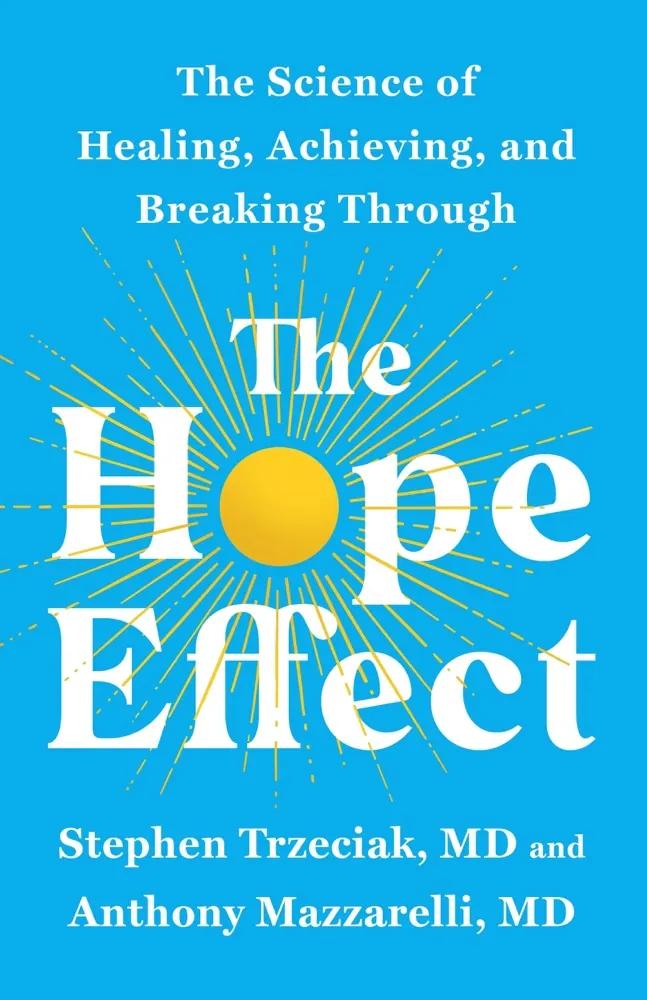
Author: Stephen TrzeciakPage Count: UnknownPublication Date: Expected publication 2026 APL Oh, The Hope Effect—because nothing says "radical premise" like a book that treats hope like a gym membership you can finally afford after years of just wishing you were stronger. The synopsis is so aggressively vague it reads like a TED Talk outline someone scribbled on a napkin during a particularly lucid moment of existential dread. "Hope is measurable!"—congratulations, you’ve just rebranded the placebo effect as a self-help cult. But let’s dissect this before it gets too far into the wellness-industrial complex. The real kicker? This isn’t just another The Power of Now knockoff—it’s a The Four Agreements for people who’ve already maxed out on the "just think positive" hustle. The author’s got the audacity to claim hope is a skill, not some ethereal byproduct of a particularly well-lit Instagram feed. Yet the synopsis doesn’t even tell us how this works—just that it does. Where’s the data? The case studies? The part where they prove this isn’t just another self-help book written by someone who once took a workshop at a retreat in Bali? The synopsis reads like a press release for a new vitamin gimmick: "Hope is real! (And now you can buy it in pill form.)" But here’s the thing—this isn’t The Secret 2.0. It’s more like Atomic Habits if James Clear had a nervous breakdown and decided to write about the psychology of not giving up when your life is a dumpster fire. The synopsis mentions "physical health and longevity," which is either a very bold claim or a very lazy way to imply that if you just hope harder, you’ll outlive your bad decisions. And don’t even get me started on the "performance and achievement" bit—because let’s be real, hope is just the emotional equivalent of a white-knuckle grip on the steering wheel while you’re driving straight into a brick wall. The real question is: does this book actually break through the noise, or is it just another entry in the "science-backed self-help" genre that’s so overused it’s starting to feel like a corporate wellness mandate? Compare it to The Body Keeps the Score—where trauma and healing are dissected with clinical precision—or The Upward Spiral—where depression is treated like a systems failure, not a personal failing. The Hope Effect feels more like a motivational poster with a PhD. It’s the difference between saying, "You can do this," and saying, "Here’s the neuroscience of why you should do this, but also, just believe in yourself." And yet—there’s a certain charm to the vagueness. It’s like the synopsis is a tease, a promise that the book will deliver something sharper, something that doesn’t just pat you on the back but actually shows you how to build a better engine. The problem is, the synopsis doesn’t give us enough to judge whether it’s a masterclass or a timeshare pitch. It’s all "hope is measurable" and "you can train it"—but where’s the proof? Where’s the meat? I can already hear the backlash: "But it’s evidence-based!"—yeah, and so was The Emotion Code, which is now just a meme about how your childhood trauma is your fault. The real test will be whether this book does more than just repackage old ideas with a new label. Because if it’s just another "hope is a muscle" metaphor, then it’s not breaking through—it’s just another cog in the self-improvement machine. Now, if you’ll excuse me, I have to select the floral arrangements for my upcoming book launch—because apparently, even the flowers need to have a hope effect. #SelfHelpSeason #BookTok #HopeIsABusiness #FloralTherapy #WhyAmIStillReadingThis Related InsightsReacher 30 Book Review and Summary Her Kind Book Review and Summary Au Pair Affair Book Review and Summary{ "@context": "https://schema.org", "@type": "FAQPage", "mainEntity": [ { "@type": "Question", "name": "What is the main focus of The Hope Effect: The Science of Healing, Achieving, and Breaking Through Book Review and Summary?", "acceptedAnswer": { "@type": "Answer", "text": "Everything you need to know about The Hope Effect: The Science of Healing, Achieving, and Breaking Through with our detailed review." } }, { "@type": "Question", "name": "Who authored the comprehensive guide on The Hope Effect: The Science of Healing, Achieving, and Breaking Through Book Review and Summary?", "acceptedAnswer": { "@type": "Answer", "text": "This detailed article and its insights were carefully researched and authored by Carmen Martinez." } }, { "@type": "Question", "name": "Where can I find more related content about Books?", "acceptedAnswer": { "@type": "Answer", "text": "You can explore more articles, detailed reviews, and similar insights by browsing the Related Insights section at the bottom of this article or visiting our dedicated Books category page." } } ] }
- Carmen Martinez
- 24 Aug, 2026 09:15
Red, White & Royal Blue: The Private Correspondence (Red, White & Royal Blue, #1.5) Book Review and Summary
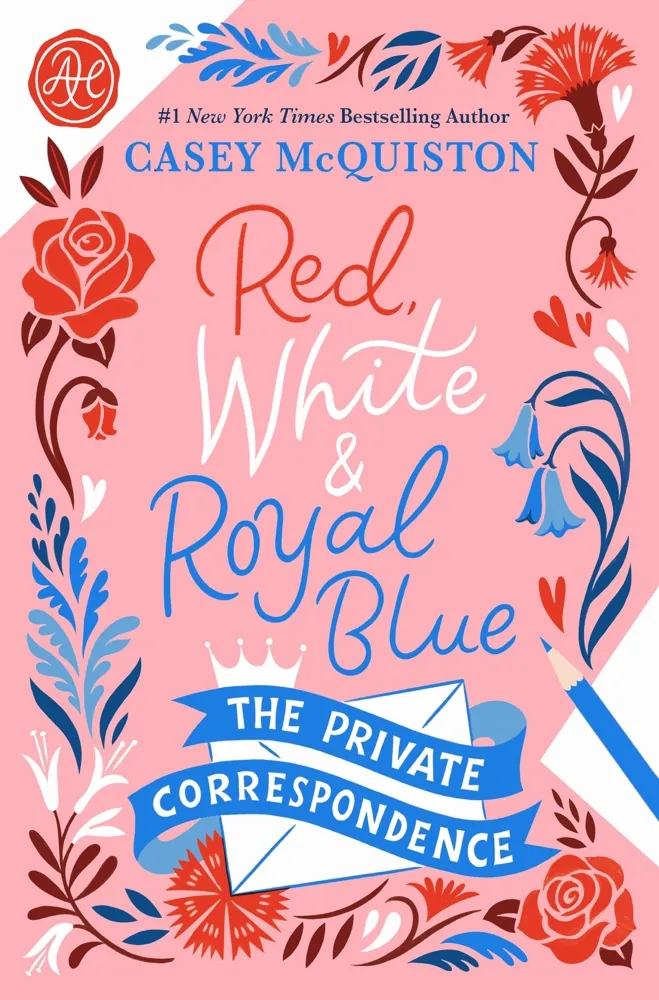
Author: Casey McQuistonPage Count: UnknownPublication Date: Expected publication 2026-12-01 APL What's next for the saccharine power couple of Red, White & Royal Blue? The official synopsis of Casey McQuiston's upcoming novella, Red, White & Royal Blue: The Private Correspondence, reads like a glossy promotional pamphlet, touting "gorgeous designed edges" and "floral endpapers" as if the very aesthetic of the book is what will propel readers through its pages — but we know better. We're here for the dirty laundry, the whispered secrets, and the occasional bout of existential dread that can only come from being in love with a prince. And what better way to excavate these tender moments than through the intimate, handwritten correspondence between Alex Claremont-Diaz and Prince Henry? It's a clever move, one that recalls the epistolary charm of The Color Purple or Dracula, but with the added bonus of being able to fetishize the physical act of writing itself. Who needs the cold glow of a screen when you can have the tactile thrill of paper and ink? But let's not get ahead of ourselves. The real question on everyone's mind is: what's the narrative arc of this novella? Are we getting a straightforward, chronological retelling of Alex and Henry's relationship, or is this going to be a more fragmented, impressionistic exploration of their inner lives? The synopsis hints at a "twenty-year" span, which suggests that we might be in for a more sprawling, epic treatment of their love story. One thing's for certain: Casey McQuiston is playing to her strengths here. The Red, White & Royal Blue series has always been about the performative aspects of love and identity, and what better way to explore those themes than through the carefully curated, deeply personal letters that Alex and Henry exchange? It's a chance for McQuiston to dig deeper into the psychological nuances of her characters, to excavate the hidden vulnerabilities and desires that make them tick. And yet, despite the promise of this setup, I have thoughts. Most of them bad. Specifically, I'm worried that this novella might be too focused on the aesthetic trappings of its epistolary format, rather than the actual emotional depth of its characters. Will we get a genuine exploration of Alex and Henry's inner lives, or will this just be a series of cute, superficial missives strung together with a few well-placed sentimental moments? Only time will tell. Still, I'm willing to give McQuiston the benefit of the doubt. After all, she's proven herself to be a master of the romance genre, and her fans will undoubtedly devour this latest installment with gusto. And who knows? Maybe Red, White & Royal Blue: The Private Correspondence will surprise us all, revealing a more nuanced, more vulnerable side to Alex and Henry's relationship. Maybe it'll be a game-changer for the series, a bold new direction that will leave readers breathless. Or maybe it'll just be a bunch of sappy love letters. Either way, I'm here for it. Now, if you'll excuse me, I need to dye a vintage dress in the bathtub. #romance #epistolary #royalfamilydrama Related InsightsMagic Claims Book Review and Summary El problema de los tres cuerpos (Edición ilustrada) / The Three-Body Problem (Illustrated Edition) Book Review and Summary Ethical Public Leadership Book Review and Summary{ "@context": "https://schema.org", "@type": "FAQPage", "mainEntity": [ { "@type": "Question", "name": "What is the main focus of Red, White & Royal Blue: The Private Correspondence (Red, White & Royal Blue, #1.5) Book Review and Summary?", "acceptedAnswer": { "@type": "Answer", "text": "Everything you need to know about Red, White & Royal Blue: The Private Correspondence (Red, White & Royal Blue, #1.5) with our detailed review." } }, { "@type": "Question", "name": "Who authored the comprehensive guide on Red, White & Royal Blue: The Private Correspondence (Red, White & Royal Blue, #1.5) Book Review and Summary?", "acceptedAnswer": { "@type": "Answer", "text": "This detailed article and its insights were carefully researched and authored by Carmen Martinez." } }, { "@type": "Question", "name": "Where can I find more related content about Books?", "acceptedAnswer": { "@type": "Answer", "text": "You can explore more articles, detailed reviews, and similar insights by browsing the Related Insights section at the bottom of this article or visiting our dedicated Books category page." } } ] }
- Carmen Martinez
- 23 Aug, 2026 15:14
Going the Distance: Stallone, Philly, and the Story of Rocky Book Review and Summary
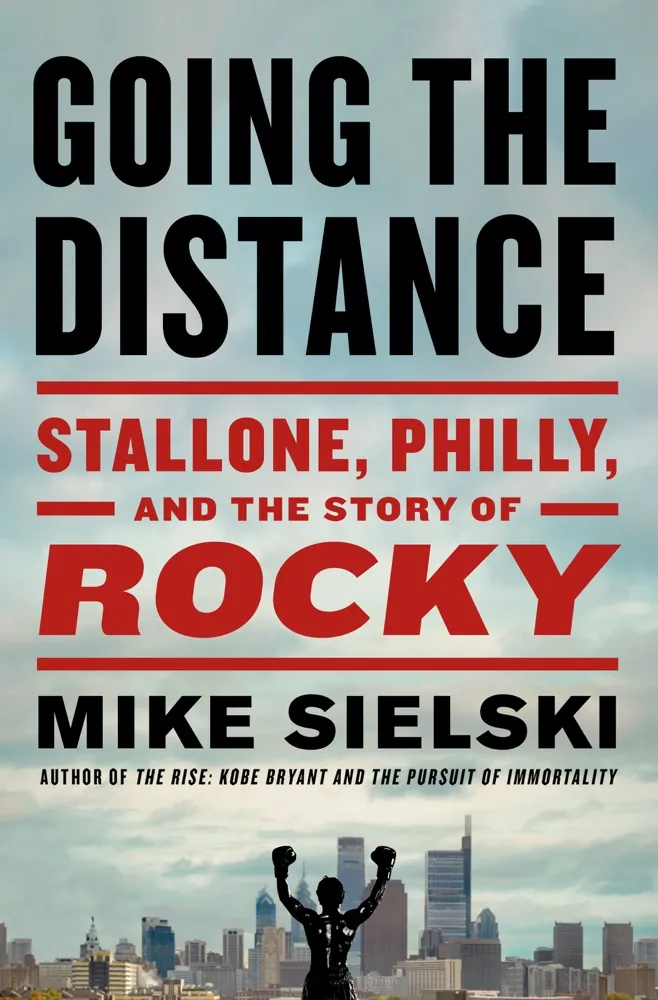
Author: Mike SielskiPage Count: UnknownPublication Date: Expected publication 2026-11-10 APL A love letter to Philadelphia, the city of brotherly love, and the birthplace of a cinematic icon – Rocky. Mike Sielski's Going the Distance promises to deliver the definitive account of the film's making, and I, for one, cannot wait to dive into the story behind one of the most beloved underdog stories in movie history. The fact that Rocky turns 50 this year only adds to the allure of this book. Yet, the synopsis remains vague about the specific details that Sielski will reveal – a clever marketing ploy, perhaps, but one that leaves me with more questions than answers. —What exactly does Sielski mean by "fresh details and anecdotes" that will surprise even the film's biggest fans? Are we talking about behind-the-scenes drama, or will he shed new light on the creative process that brought Rocky to life? The vagueness is almost palpable, and I find myself wondering if Sielski is simply teasing us with promises of exclusivity, or if he truly has uncovered something groundbreaking. But, I must admit, the prospect of reading about Sylvester Stallone's rise from an aimless kid to a Hollywood powerhouse is nothing short of captivating. The fact that Sielski has conducted extensive research and gathered insights from the likes of Irwin Winkler and Bill Conti only adds to the book's credibility. That’s certainly an opinion. One that I'm willing to bet on, given the author's intimate knowledge of Philadelphia's culture and history. In many ways, Going the Distance reminds me of books like The Kid Stays in the Picture, Robert Evans's memoir about the making of The Godfather. Both share a common thread – the story of an underdog's rise to fame, and the unrelenting passion that drives them to succeed. And, just as Evans's book is more than just a behind-the-scenes account of a film's making, Sielski's Going the Distance promises to be a dramatic and fascinating ride in its own right. Or so I hope. At this point, I'm willing to take a chance on Sielski's book, if only because the story of Rocky is one that continues to captivate audiences to this day. The fact that it's been 50 years since the film's release only adds to the nostalgia factor – a factor that Sielski is no doubt counting on to drive interest in his book. But, what about the book's themes? How will Sielski explore the emotional connection between Rocky and the city of Philadelphia? Will he delve into the psychological aspects of Stallone's character, and the ways in which he drew inspiration from his own life experiences? These are questions that I hope Going the Distance will answer, and ones that will ultimately determine the book's success. And, on a completely unrelated note – the rising cost of film for my analog camera is a serious concern. #FilmIsNotDead Related InsightsHorny: A Novel Book Review and Summary The Witch Book Review and Summary Free Falling (Sweetwater Peak #2) Book Review and Summary{ "@context": "https://schema.org", "@type": "FAQPage", "mainEntity": [ { "@type": "Question", "name": "What is the main focus of Going the Distance: Stallone, Philly, and the Story of Rocky Book Review and Summary?", "acceptedAnswer": { "@type": "Answer", "text": "Everything you need to know about Going the Distance: Stallone, Philly, and the Story of Rocky with our detailed review." } }, { "@type": "Question", "name": "Who authored the comprehensive guide on Going the Distance: Stallone, Philly, and the Story of Rocky Book Review and Summary?", "acceptedAnswer": { "@type": "Answer", "text": "This detailed article and its insights were carefully researched and authored by Carmen Martinez." } }, { "@type": "Question", "name": "Where can I find more related content about Books?", "acceptedAnswer": { "@type": "Answer", "text": "You can explore more articles, detailed reviews, and similar insights by browsing the Related Insights section at the bottom of this article or visiting our dedicated Books category page." } } ] }
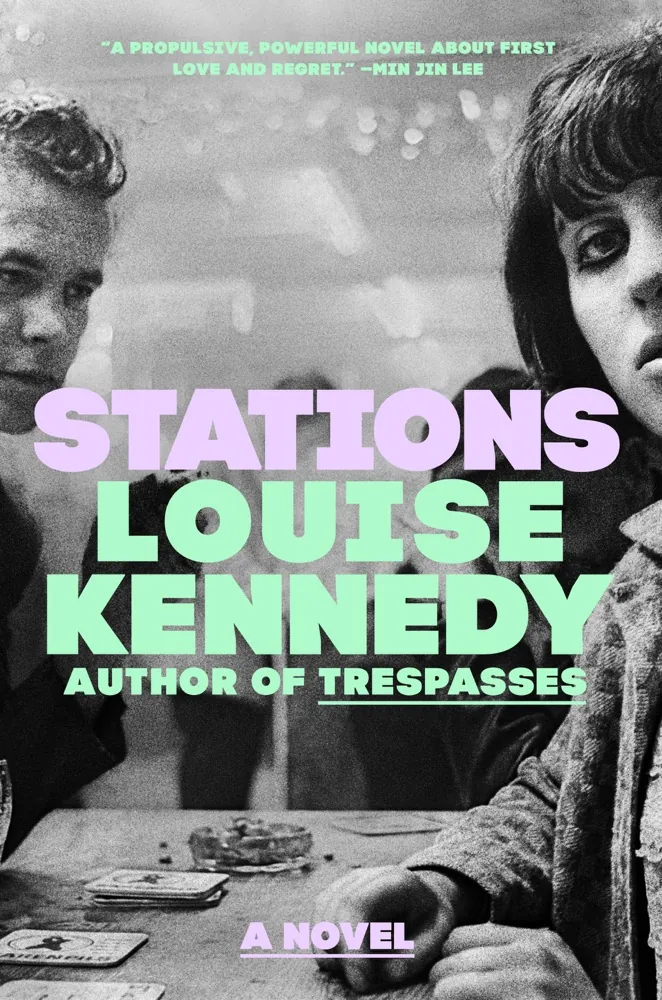
Author: Louise KennedyPage Count: UnknownPublication Date: Expected publication 2026-11-03 APL What is it about the trope of the unrequited, all-consuming first love that continues to captivate authors and readers alike — And yet, here we are, about to embark on yet another journey down this well-trodden path with Louise Kennedy's Stations. A novel that promises to be a "gorgeous, wrenching" exploration of the past's lingering presence in the present. The setup is familiar: a chance encounter between two misfit teenagers, Róisín and Red, in 1980s Ireland. They bond over their shared disillusionment with the world around them, and soon, Red becomes privy to the dark secrets of Róisín's troubled home life. But what about Red's own mysterious past — The synopsis hints at a privileged upbringing, but also a sense of disconnection, a feeling of being adrift. And then, of course, there's the inevitable drifting apart, leaving Róisín to grapple with the "great, never-consummated passion" of her youth. One can't help but think of other authors who have tackled similar themes with varying degrees of success — Emma Donoghue's own Room comes to mind, with its exploration of the complex, often fraught relationships between parents and children. And then, of course, there's the inimitable voice of Sally Rooney, who has made a career out of dissecting the intricacies of millennial relationships. But I digress. The real question is: what does Stations bring to the table that we haven't seen before — Is it simply another iteration of the same tired tropes, or does Kennedy manage to breathe new life into this familiar narrative. The synopsis is frustratingly vague, leaving us to wonder about the specifics of Róisín and Red's relationship, and how Kennedy plans to subvert or complicate our expectations. But, I suppose that's the point — We're meant to be drawn in by the promise of a "propulsive, powerful" narrative, one that will presumably keep us guessing until the very end. And yet, as I sit here, staring at this blank page, I find myself growing increasingly restless. The draft from my window is making it impossible to focus, and I'm starting to wonder if I'll ever be able to string together a coherent thought. Ugh, the struggle is real. Why must I always be stuck writing about books I haven't even read yet — Can't I just be left alone to enjoy a quiet cup of coffee, without the weight of a looming deadline hanging over my head. Anyway, I suppose Stations will be a hit with fans of character-driven fiction, particularly those who enjoy a good, old-fashioned romance. But for me, at least, the jury's still out. I'll have to reserve judgment until I've actually had a chance to read the thing. In the meantime, I'll just be over here, trying to warm up my frozen fingers, and wondering why I always seem to get stuck with the most poorly insulated window in the building. #bookreview #upcomingreleases #literaryfiction Related InsightsWe Chase Shadows (We Solve Murders, #2) Book Review and Summary The Idiot Book Review and Summary Regenesis Book Review and Summary{ "@context": "https://schema.org", "@type": "FAQPage", "mainEntity": [ { "@type": "Question", "name": "What is the main focus of Stations Book Review and Summary?", "acceptedAnswer": { "@type": "Answer", "text": "Everything you need to know about Stations with our detailed review." } }, { "@type": "Question", "name": "Who authored the comprehensive guide on Stations Book Review and Summary?", "acceptedAnswer": { "@type": "Answer", "text": "This detailed article and its insights were carefully researched and authored by Carmen Martinez." } }, { "@type": "Question", "name": "Where can I find more related content about Books?", "acceptedAnswer": { "@type": "Answer", "text": "You can explore more articles, detailed reviews, and similar insights by browsing the Related Insights section at the bottom of this article or visiting our dedicated Books category page." } } ] }
- Carmen Martinez
- 21 Aug, 2026 19:27
Eleven Days: The Fascinating True Account of Agatha Christie's Mysterious Disappearance Book Review and Summary
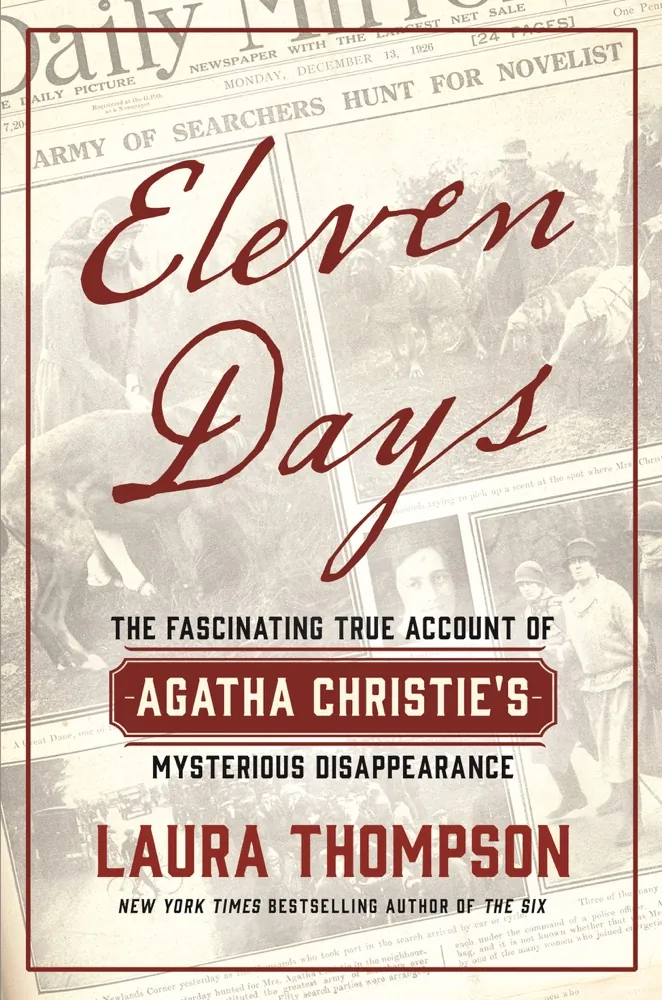
Author: Laura ThompsonPage Count: UnknownPublication Date: Expected publication 2026-12-01 APL A century after Agatha Christie's infamous disappearance, the world's most famous mystery author remains an enigma - and the genre she defined is still replete with unanswered questions. Eleven Days, Laura Thompson's forthcoming book, attempts to penetrate the blank space in Christie's life, to shed light on a myth that has tantalizingly remained unsolved. But what can we really expect from this re-examination of Christie's movements? Thompson's decision to re-enact Christie's journey, from abandoning her car to arriving at a hotel in the north of England, seems like an intriguing approach - but will it yield any real insights? The synopsis is maddeningly vague, and I'm left wondering if Thompson's conversations with people close to Christie, including her daughter Rosalind, will amount to anything more than speculation. And yet, I'm drawn to Thompson's exploration of the notion of disappearance itself - how it might feel to wander like a ghost through one's own life, to be oneself yet without identity. This is the stuff of which mysteries are made, after all. What sort of person has the capacity to disappear? Many of us may have longed to do so, but actually to go through with it? What courage or daring does it take, what desperation or deviousness? But I'm getting ahead of myself. The real question is, will Eleven Days deliver the final word on the greatest mystery ever created by the greatest writer of mysteries? I have my doubts. Thompson's approach seems too focused on re-enactment, too reliant on speculation - and not enough on the actual facts of Christie's disappearance. Still, I suppose that's the nature of the beast - the truth about Christie's disappearance may never be fully known, and so we're left to pick at the edges of the mystery, to speculate and theorize. And that's precisely what Thompson seems to be doing - exploring the various theories about Christie's disappearance, from the plausible to the outlandish. I'm reminded of Ruth Rendell's own explorations of the human psyche, her willingness to probe the darker corners of the human experience. Will Thompson's Eleven Days be a similarly nuanced exploration of the human condition? I'm not so sure. But what I do know is that Thompson's book will be a must-read for fans of Christie, and for anyone interested in the art of mystery itself. And who knows? Maybe Thompson will surprise us all, and shed some real light on the mystery that has haunted us for so long. —But I'm not holding my breath. The more I think about it, the more I'm convinced that Eleven Days will be a fascinating, if ultimately unsatisfying, exploration of Christie's disappearance. It's a bit like trying to grasp a handful of sand - the more you squeeze, the more it slips through your fingers. And speaking of slippery things, I'm starting to get a little worried about the rising cost of film for my analog camera. It's becoming a serious concern, really - I mean, how am I supposed to capture the beauty of the world when it costs an arm and a leg to do so? #filmphotography #analogcamera #costofart Related InsightsRebelión en la granja (edición definitiva avalada por The Orwell Estate) / Animal Farm (Definitive Text Endorsed by The Orwell Foundation Book Review and Summary From the Grave Book Review and Summary Dear Heart: A Sweet and Spicy, London-Set, Friends-to-Lovers Romance Book Review and Summary{ "@context": "https://schema.org", "@type": "FAQPage", "mainEntity": [ { "@type": "Question", "name": "What is the main focus of Eleven Days: The Fascinating True Account of Agatha Christie's Mysterious Disappearance Book Review and Summary?", "acceptedAnswer": { "@type": "Answer", "text": "Everything you need to know about Eleven Days: The Fascinating True Account of Agatha Christie's Mysterious Disappearance with our detailed review." } }, { "@type": "Question", "name": "Who authored the comprehensive guide on Eleven Days: The Fascinating True Account of Agatha Christie's Mysterious Disappearance Book Review and Summary?", "acceptedAnswer": { "@type": "Answer", "text": "This detailed article and its insights were carefully researched and authored by Carmen Martinez." } }, { "@type": "Question", "name": "Where can I find more related content about Books?", "acceptedAnswer": { "@type": "Answer", "text": "You can explore more articles, detailed reviews, and similar insights by browsing the Related Insights section at the bottom of this article or visiting our dedicated Books category page." } } ] }
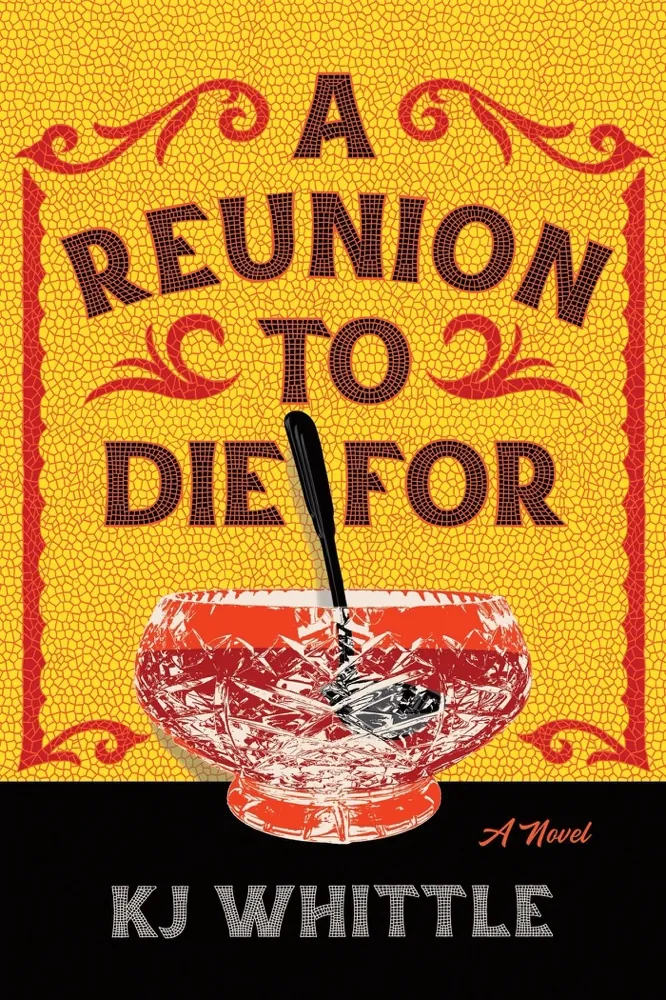
Author: K.J. WhittlePage Count: UnknownPublication Date: Expected publication 2026-10-20 APL Another autumn, another twenty-thousand words generated about fictional people drinking bad pints in dingy pubs. Honestly, staring at this blinking cursor is a distinct form of urban penance, especially when my neighbors are aggressively rearranging heavy furniture upstairs at two in the morning. Let us talk about A Reunion to Die For by K.J. Whittle because the publishing complex has apparently decided that geriatric millennials murdering their high school tormentors is the new cozy crime. Or maybe it is a thriller. The blurbs cannot quite decide, throwing Benjamin Stevenson and We Solve Murders into the blender like a cheap smoothie at a terminal railway station. The Nostalgia Trap The premise rests on a universally exhausted trope. Five battered adults walk into a bar, dredge up twenty-year-old trauma involving a golden-boy bully named Eric Stewart, and drunkenly workshop a murder blueprint over cheap lager. Naturally, the bully turns up deceased the very next morning, perfectly stage-managed to match their blackout brainstorming session. How dreadfully convenient. Whittle clearly wants a piece of that Agatha Christie-meets-Richard Osman market share—the sort of sanitized, middle-class carnage that suburban book clubs devour with a glass of warm Pinot Grigio. Yet, the thematic architecture here feels suspiciously paper-thin. We get the classic locked-room paranoia mixed with the 'did we actually do it while blacked out' amnesia trope. Groundbreaking stuff. Truly. Who needs genuine psychological depth when you can just throw in an anonymous text message containing incriminating audio? Technology is the real villain, as always. Actually, No, Give Me More Chaos Wait. Let me retract that cheap swipe about paper-thin plots. Perhaps dismissing the premise as derivative is missing the point of urban cynicism entirely. Maybe the sheer laziness of the plotting is precisely the satirical engine. If everyone hates their local sports star enough to brainstorm a homicide, the book might actually lean into the sheer, unadulterated absurdity of middle-aged regret. We live in a society of perpetual adolescence where grown adults still measure their self-worth against prom-night hierarchies. If Whittle commits to the farce—if the anonymous blackmail turns out to be a ridiculous prank orchestrated by a bartender or a jealous spouse—then this might actually bypass the sterile boredom of modern whodunits. Or it will just be three hundred pages of people gasping in dimly lit kitchens while checking their smartphones. That is usually the safe bet. The synopsis breathlessly warns us that the suspects must share their dark secrets from back then or risk taking the fall. Secrets. Right. Because the deep, haunting trauma of a high school prom gone wrong usually involves something mildly embarrassing rather than actual criminal conspiracies. But we must satisfy the word count, so let us pretend this digital breadcrumb trail of cryptic games represents a sweeping examination of collective guilt in the digital age. Excuse me for a second. The bass from the apartment overhead just rattled a teacup off my desk, and I need to go scream into the hallway before I finish this contractual obligation. Actually, forget the hallway. I have to go mediate a brutal sibling rivalry over the remote control in the next room before someone pulls an Eric Stewart. Related InsightsPressure Point (National Parks Thriller #3) Book Review and Summary A Madness of Sunshine Book Review and Summary Dead Take the a Train Book Review and Summary{ "@context": "https://schema.org", "@type": "FAQPage", "mainEntity": [ { "@type": "Question", "name": "What is the main focus of A Reunion to Die For: A Novel Book Review and Summary?", "acceptedAnswer": { "@type": "Answer", "text": "Everything you need to know about A Reunion to Die For: A Novel with our detailed review." } }, { "@type": "Question", "name": "Who authored the comprehensive guide on A Reunion to Die For: A Novel Book Review and Summary?", "acceptedAnswer": { "@type": "Answer", "text": "This detailed article and its insights were carefully researched and authored by Carmen Martinez." } }, { "@type": "Question", "name": "Where can I find more related content about Books?", "acceptedAnswer": { "@type": "Answer", "text": "You can explore more articles, detailed reviews, and similar insights by browsing the Related Insights section at the bottom of this article or visiting our dedicated Books category page." } } ] }
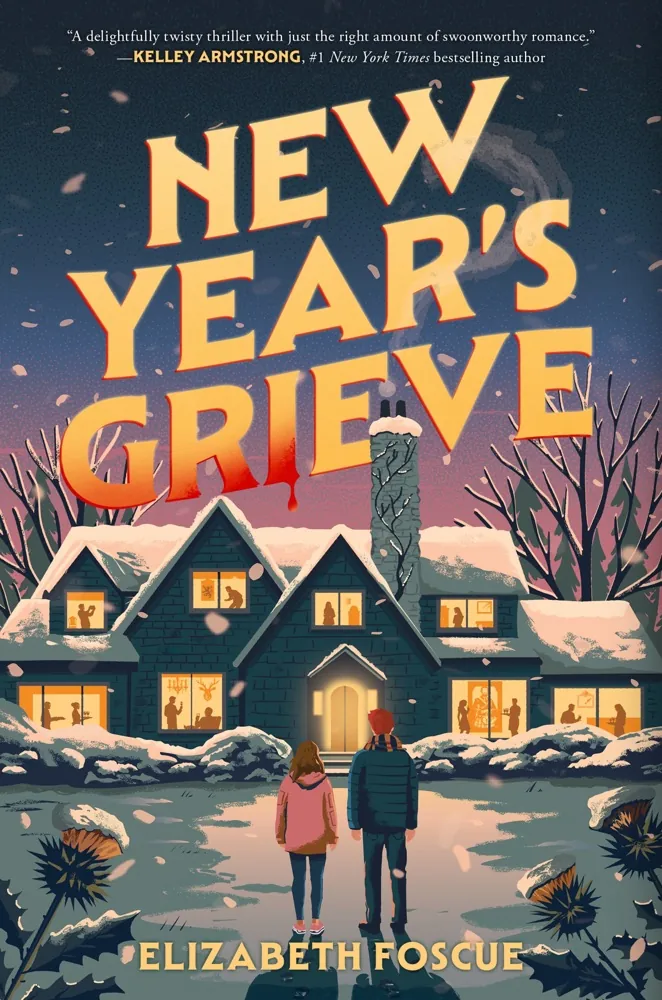
Author: Elizabeth FoscuePage Count: UnknownPublication Date: Expected publication 2026-11-17 APL A country house mystery for the Truly Devious and Knives Out crowd, how quaint. New Year's Grieve, Elizabeth Foscue's latest, promises a romp of a whodunit, replete with all the makings of a classic genre piece: a sprawling estate, a snowed-in cast of suspects, and a plucky protagonist determined to unravel the mystery of her grandfather's untimely demise. Yet, as I read through the synopsis, I couldn't help but feel a creeping sense of déjà vu – haven't we seen this all before? Let's get the obvious out of the way: Jojo, our intrepid heroine, is a veritable amalgamation of every "feisty" YA protagonist to have ever graced the pages of a Twilight-esque thriller. Her "maddening ex-boyfriend," Fritz, is, of course, the requisite love interest cum suspect, and their tortured past is already telegraphing a romance rekindled amidst the mayhem. It's a tired trope, one that's been done to death in the likes of Gossip Girl and Pretty Little Liars. And don't even get me started on the "horrible relatives" – I'm sure they'll all be suitably one-dimensional and cartoonishly evil. But, I suppose that's the point – New Year's Grieve is, by all accounts, a genre piece, content to revel in the tropes and conventions of the country house mystery. And, if done well, it could be a fun, if forgettable, romp. After all, who doesn't love a good whodunit? The problem lies in the fact that the synopsis is so maddeningly vague – what, exactly, sets New Year's Grieve apart from its genre brethren? Is it merely a rehashing of the same old tropes, or is there something more at play? My patience is wearing notoriously thin as I ponder these questions. The more I read, the more I'm struck by the overwhelming sense of familiarity that pervades the synopsis. It's all so... predictable. And, yet, I'm drawn to it, like a moth to a flame – perhaps it's the promise of a fun, if unoriginal, thriller that's got me hooked. But, I digress. New Year's Grieve will, no doubt, find its audience among fans of the genre. It's a book that will, I'm sure, be devoured in a single sitting, its twists and turns sufficiently surprising to keep readers guessing until the very end. And, who knows, maybe it'll even subvert some of the genre's more tired tropes – though, based on the synopsis, I wouldn't hold my breath. As I type, the draft from my poorly insulated window is making it impossible to concentrate – the words are blurring together on the page, and I'm starting to lose my train of thought. Ah, well. I suppose I'll just have to wait and see how New Year's Grieve turns out. Will it be a clever, genre-bending thriller, or just another rehashing of the same old tropes? Only time will tell. #CountryHouseMystery #YAthriller #NewYearsGrieve Related InsightsSincerely, Your Murderer Book Review and Summary Norse Mythology Volume 2 (Graphic Novel) Book Review and Summary El problema de los tres cuerpos (Edición ilustrada) / The Three-Body Problem (Illustrated Edition) Book Review and Summary{ "@context": "https://schema.org", "@type": "FAQPage", "mainEntity": [ { "@type": "Question", "name": "What is the main focus of New Year's Grieve Book Review and Summary?", "acceptedAnswer": { "@type": "Answer", "text": "Everything you need to know about New Year's Grieve with our detailed review." } }, { "@type": "Question", "name": "Who authored the comprehensive guide on New Year's Grieve Book Review and Summary?", "acceptedAnswer": { "@type": "Answer", "text": "This detailed article and its insights were carefully researched and authored by Carmen Martinez." } }, { "@type": "Question", "name": "Where can I find more related content about Books?", "acceptedAnswer": { "@type": "Answer", "text": "You can explore more articles, detailed reviews, and similar insights by browsing the Related Insights section at the bottom of this article or visiting our dedicated Books category page." } } ] }
- Carmen Martinez
- 17 Aug, 2026 20:39
Return to Breakneck Island (The Treasure Hunters Club #2) Book Review and Summary
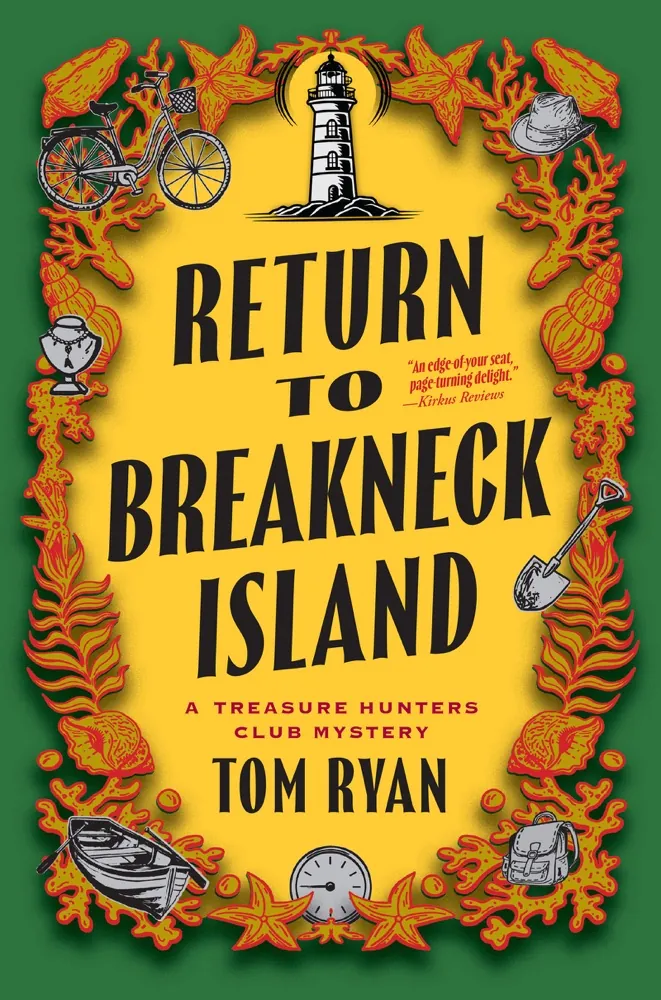
Author: Tom RyanPage Count: UnknownPublication Date: Expected publication 2026-10-13 APL The art of constructing an entire novel around a single, isolated setting — in this case, Breakneck Island, a foreboding outcrop off the coast of Maple Bay. Tom Ryan's Return to Breakneck Island promises an alluring mystery, replete with long-buried secrets and the requisite small-town charm. One can almost smell the saltwater and decay emanating from the crumbling lighthouse that stands sentinel over the rocky shores. But let's get real for a second — I'm stuck writing this review, and I'm already feeling the weight of my impending word count. The synopsis is a masterclass in vagueness, leaving me to fill in the blanks with my own fevered imagination. I mean, what's the deal with the MacLeary family? They just... disappeared? Without a trace? It's a bit too convenient, if you ask me. And don't even get me started on the "ruthless storm" that apparently precipitated their vanishing act. It's a bit too on-the-nose, a bit too... obvious. And yet, despite my reservations, I find myself drawn to the disparate cast of characters that Ryan has assembled. There's Peter Barnett, the brooding transplant trying to piece his life back together; Dandy Feltzen, the wistful teenager searching for new beginnings; and Cass Jones, the successful author with a cryptic tip for a haunting new story. It's a veritable melting pot of angst and creative energy, all swirling together in a maelstrom of mystery and suspense. But what's the real story here? Is it the MacLearys' disappearance, or is it something more sinister? Something that's been lurking just beneath the surface of Maple Bay's idyllic facade? I'm reminded of the works of Laura Lippman, who's also mastered the art of crafting intricate, small-town mysteries that are equal parts character study and whodunit. And let's not forget the obligatory nod to Agatha Christie, whose influence is evident in the isolated setting and the gathering storm of secrets and lies. The Island as a Character Breakneck Island itself is a character, a brooding presence that looms large over the proceedings. It's a place of rugged beauty, where the rocky shores meet the unforgiving sea. And yet, it's also a place of darkness and foreboding, where the past and present collide in unexpected ways. I'm intrigued by the way Ryan has woven the island's history into the fabric of the narrative, hinting at a deeper, more sinister truth that's waiting to be uncovered. But I'm getting ahead of myself. I still have no idea what the actual plot of this book entails, beyond the vague hints and teasers that Ryan has provided. And honestly, I'm not sure I care. Sometimes, it's the journey that matters, not the destination. Sometimes, it's the atmosphere and the characters that make a book worth reading, rather than the plot itself. I'll stop here, because I'm running out of words and patience. I'm going to spend the evening reading Sylvia Plath by candlelight, and I couldn't be more excited. #MysteryLovers #SmallTownSecrets #IslandOfDoom Related InsightsPassions in Death Book Review and Summary The Notebook Book Review and Summary The Bones Beneath My Skin Book Review and Summary{ "@context": "https://schema.org", "@type": "FAQPage", "mainEntity": [ { "@type": "Question", "name": "What is the main focus of Return to Breakneck Island (The Treasure Hunters Club #2) Book Review and Summary?", "acceptedAnswer": { "@type": "Answer", "text": "Everything you need to know about Return to Breakneck Island (The Treasure Hunters Club #2) with our detailed review." } }, { "@type": "Question", "name": "Who authored the comprehensive guide on Return to Breakneck Island (The Treasure Hunters Club #2) Book Review and Summary?", "acceptedAnswer": { "@type": "Answer", "text": "This detailed article and its insights were carefully researched and authored by Carmen Martinez." } }, { "@type": "Question", "name": "Where can I find more related content about Books?", "acceptedAnswer": { "@type": "Answer", "text": "You can explore more articles, detailed reviews, and similar insights by browsing the Related Insights section at the bottom of this article or visiting our dedicated Books category page." } } ] }
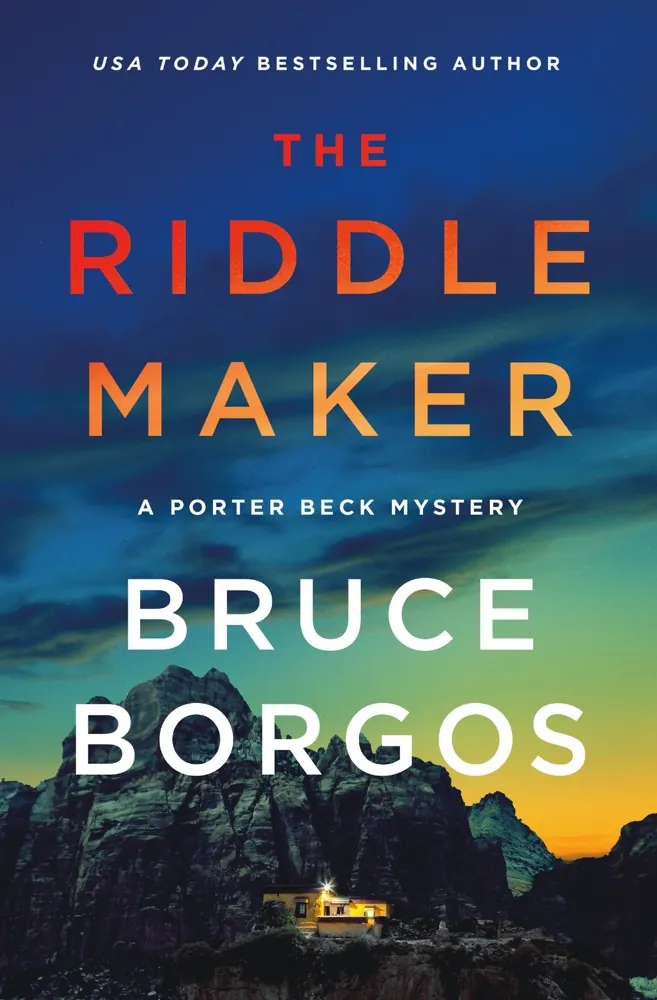
Author: Bruce BorgosPage Count: UnknownPublication Date: Expected publication 2026-11-17 APL The obligatory review. Always a thrill. A chance to dissect the next big nothing. The Riddle Maker (Porter Beck, #4) by Bruce Borgos promises to be a thrilling ride, but will it be more than just a shallow echo of the same tired tropes? And so, we dive into a world where anonymous riddles are the new norm. A world where, apparently, our sheriff, Porter Beck, isn't too busy solving his local murders to receive cryptic messages from the great unknown. A world where, somehow, this riddle is connected to a decades-old serial killer. Oh, the originality. It's like Borgos took a deep breath and thought, "You know what would be a great idea? A riddle-filled thriller!" In the deserts of Nevada, the shrinking waters of Lake Mead, and the red rock wilderness of Utah, Beck and his team will chase a trail of riddles that may or may not lead to the truth. A pint-sized, yet fearless, FBI profiler, Jett Lowell, joins the fray, bringing with her a riddle received seventeen years earlier. Because, of course, she needs to be a pint-sized, fearless profiler. The archetype is tired, yet, for some reason, it still works. The real question here is: will The Riddle Maker be a mindless thrill ride or a thought-provoking exploration of the human condition? One thing's for sure—it'll be a wild ride. And by wild ride, I mean a predictable, genre-specific romp. Riddle Me This, Mr. Borgos But what really gets my goat is the setup. The vagueness of it all raises so many questions. What's the true nature of the riddle? Is it just a clever MacGuffin, or does it hold the key to something deeper? Is Beck's involvement simply a plot device or a genuine connection to the past? We'll have to wait and see. I suppose that's the beauty of it all: the anticipation. As if that wasn't enough, Borgos weaves in familiar tropes and clichés. A small-town sheriff with a troubled past, a pint-sized FBI agent with a personal stake in the case...yawn. It's a tired, overused formula. Yet, somehow, it still works. Maybe it's because the riddle-filled, desert landscapes will sweep us off our feet? Or maybe it's because we're just too jaded to care. — I'm stuck in this never-ending cycle of reviews, reviews, reviews. Where's the art in this? But let's assume The Riddle Maker breaks free from its predictable mold. Let's pretend it's more than just another thriller. Let's say Borgos actually takes the time to craft a compelling narrative, one that challenges the riddle genre and forges new paths. In that case, I'd say The Riddle Maker is reminiscent of Thomas Harris's The Silence of the Lambs. A thrilling, thought-provoking puzzle that keeps you guessing until the very end. Meta-Review I'm starting to get a little bored with this review. The words just seem to blend together. My thoughts are fragmenting, and I'm losing sight of what I'm trying to say. Maybe that's the point? Maybe The Riddle Maker is a reflection of our current culture's obsession with mindless thrills and predictable conclusions. Perhaps it's Borgos's subtle commentary on our shallow world, where the only thing that truly matters is the chase, the riddle, the next fix. As the lights dim, and the evening falls, I'll be spending it reading Sylvia Plath by candlelight. Related InsightsThe Wind in the Willows Book Review and Summary The Gods Will Sing Our Song Book Review and Summary Secretly Yours Book Review and Summary{ "@context": "https://schema.org", "@type": "FAQPage", "mainEntity": [ { "@type": "Question", "name": "What is the main focus of The Riddle Maker (Porter Beck, #4) Book Review and Summary?", "acceptedAnswer": { "@type": "Answer", "text": "Everything you need to know about The Riddle Maker (Porter Beck, #4) with our detailed review." } }, { "@type": "Question", "name": "Who authored the comprehensive guide on The Riddle Maker (Porter Beck, #4) Book Review and Summary?", "acceptedAnswer": { "@type": "Answer", "text": "This detailed article and its insights were carefully researched and authored by Carmen Martinez." } }, { "@type": "Question", "name": "Where can I find more related content about Books?", "acceptedAnswer": { "@type": "Answer", "text": "You can explore more articles, detailed reviews, and similar insights by browsing the Related Insights section at the bottom of this article or visiting our dedicated Books category page." } } ] }
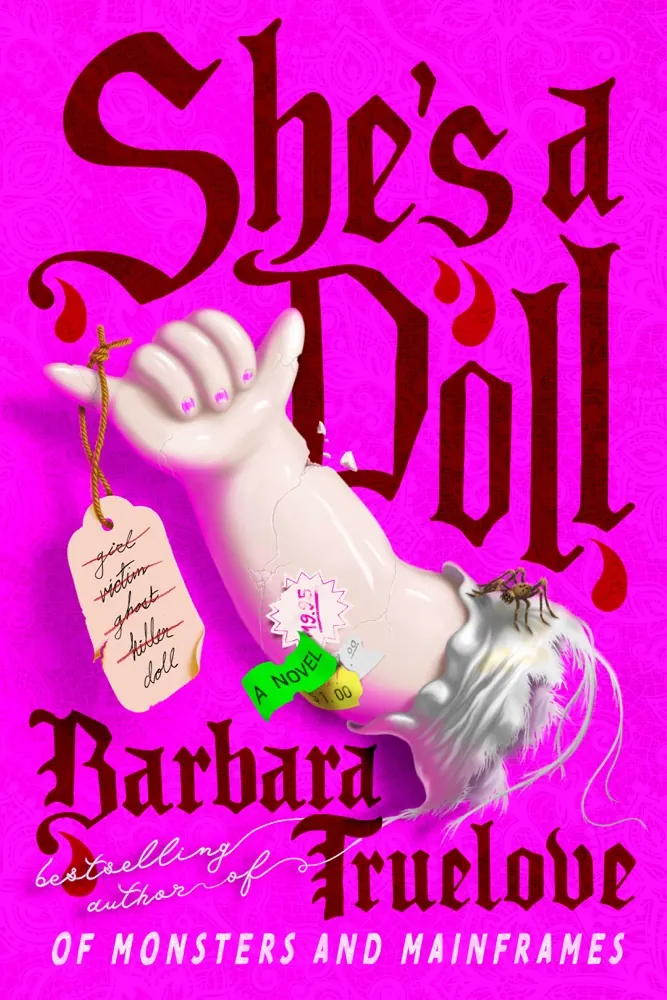
Author: Barbara TruelovePage Count: UnknownPublication Date: Expected publication 2026-09-08 APL My knees are currently molding into the cracked pleather of seat forty-two while some absolute goblin two rows up blasts TikTok at four in the morning, which means it is prime time to dissect Barbara Truelove’s upcoming She's a Doll before my phone battery drops to zero and I have to resort to staring blankly at the highway median like a lobotomized Victorian child. The Porcelain Pipeline of Vengeance Truelove apparently decided that standard psychological thrillers are for cowards. Instead, we get an eighteen-inch ceramic homicide enthusiast possessing an antique plaything to settle a score with a guy named Kyle. Because nothing screams righteous retribution quite like structural integrity issues and brittle limbs. Yet the synopsis leans hard into that hyper-marketed brand of capital-R Rage that every publishing house is currently shoving down our throats to appease the book-tok demographic. Small-Town Gaslighting and Lacy Sleeves And what a predictable suburban backdrop we have here. An idyllic town where the locals refuse to believe that a promising young man—probably named something aggressively basic like Chad or Kyle—could possibly be a murderer. Groundbreaking. Truly a sociological critique of our era. Lucy has to roll up her lacy little sleeves and murder him herself because the local constabulary is apparently too busy eating donuts and ignoring structural misogyny to notice an eighteen-inch porcelain murder-toddler rolling down Main Street. One must wonder if Truelove is actually doing anything subversive here, or if this is just another mid-tier IP mill-product designed to be optioned by a streamer before the galley proofs even dry. Genre Slop and Word-Count Sadism Look, I am typing this on a frozen screen while inhaling the distinct chemical aroma of toilet deodorizer wafting from the back of the bus just to make rent this month, so forgive me if my patience for quirky posthumous vengeance narratives is running dangerously low. This whole enterprise smells like a corporate boardroom brainstorm where someone yelled, What if Barbie was John Wick, but make it feminist? We are drowning in high-concept gimmickry. Authors refuse to write about actual human behavior anymore without wrapping it in a supernatural metaphorical onesie just to secure a blurb from the LA Times. Truelove probably delivers a fun, unhinged ride—comparable to Grady Hendrix crashing into a Christopher Moore novel after three too many espresso martinis—but let’s be entirely real here. The synopsis reads like a pitch deck written by an algorithm that ingested every horror-comedy published since 2018. But hey, it beats watching the scenery blur past the grease-smeared window. I am going to go sit on a park bench and aggressively people-watch. Related InsightsThe Cat in the Hat Book Review and Summary The Amazing Adventures of Kavalier & Clay Book Review and Summary Portrait of a Haunting Book Review and Summary{ "@context": "https://schema.org", "@type": "FAQPage", "mainEntity": [ { "@type": "Question", "name": "What is the main focus of She's a Doll Book Review and Summary?", "acceptedAnswer": { "@type": "Answer", "text": "Everything you need to know about She's a Doll with our detailed review." } }, { "@type": "Question", "name": "Who authored the comprehensive guide on She's a Doll Book Review and Summary?", "acceptedAnswer": { "@type": "Answer", "text": "This detailed article and its insights were carefully researched and authored by Carmen Martinez." } }, { "@type": "Question", "name": "Where can I find more related content about Books?", "acceptedAnswer": { "@type": "Answer", "text": "You can explore more articles, detailed reviews, and similar insights by browsing the Related Insights section at the bottom of this article or visiting our dedicated Books category page." } } ] }
- Carmen Martinez
- 14 Aug, 2026 03:39
Dead Before Tea Time: An Agatha Raisin Mystery (Agatha Raisin Mysteries, 37) Book Review and Summary
Author: M.C. BeatonPage Count: UnknownPublication Date: Expected publication 2026-10-13 APL Sweat is slowly dripping down my collar onto an expensive linen shirt while this relentless August heatwave turns the concrete outside into a frying pan, yet I am expected to care about the Cotswolds. The thirty-seventh installment of Dead Before Tea Time has arrived via press release, offering precisely what the geriatric cozy-mystery industrial complex demands: a geriatric harridan, a local watering hole facing gentrification, and a corpse conveniently dumped behind some shrubbery just in time to interrupt a historically inaccurate sword fight. Gentrification and Ale-Soaked Homicides The thematic architecture here is delightfully derivative. We have the sacred Red Lion pub falling victim to ruthless corporate predation because some soulless brewery decided rural alcoholism isn't profitable enough unless it is packaged into minimalist flats for London commuters. It is pure, unadulterated NIMBYism dressed up as a murder investigation. M.C. Beaton’s posthumous assembly line—or whoever is currently rattling the skeleton keys of this intellectual property—relies entirely on the comforting illusion that rural England is populated by quirky archetypes rather than xenophobic dullards hoarding real estate. And then, naturally, we get the romantic circus. Sir Charles Fraith versus James. Two aging, emotionally stunted aristocrats treating Agatha Raisin like the last discount bottle of gin at a provincial country club. They are duking it out during a seventeenth-century reenactment—because nothing screams high-stakes libido quite like middle-aged men in polyester doublets swinging blunt iron. The juxtaposition of feudal cosplay with contemporary zoning disputes is peak lazy plotting. Agatha ignores the swordplay because she smells a homicide, proving once again that her superpower is pathological nosiness mixed with absolute interpersonal toxicity. The Aesthetics of Mediocrity Let us discuss the literary hygiene of the synopsis itself. It reads like it was generated by an algorithm fed exclusively on reruns of Midsomer Murders and old copies of Country Life. Someone gets poisoned or bludgeoned near a brewery, Agatha takes a poorly aimed blow to her own skull, and we are supposed to gasp in absolute horror wondering if the titular protagonist will survive to eat another finger sandwich. Spoiler alert: she will. She possesses the unkillable cockroach energy of a soap opera villain who refuses to sign off. It gives off major Danielle Steel meets a Sunday afternoon television slot that your grandmother falls asleep to after three sherries. No one is asking for James Joyce when picking up a paperback featuring a cartoonish amateur sleuth on the cover, but holy hell, the narrative scaffolding is rotting. The synopsis explicitly tells us the victim had brewery connections as if it were a colossal detective breakthrough rather than the most glaringly obvious narrative neon sign since Agatha Christie invented the genre. The dialogue will inevitably feature words like blimey and posh groans, and everyone will drink entirely too much tea while avoiding therapy. Yet, here we are, staring down the barrel of another autumn reading season choked with the exact same cozy garbage. It is the literary equivalent of eating wet cardboard while pretending it's artisan sourdough. I have to go translate a particularly stubborn piece of French existential poetry about despair before the AC unit gives up entirely. #AgathaRaisin #CozyMystery #LiteraryTrash #Cotswolds Related InsightsEverything's Not Lost Book Review and Summary City of God Book Review and Summary Compensation Book Review and Summary{ "@context": "https://schema.org", "@type": "FAQPage", "mainEntity": [ { "@type": "Question", "name": "What is the main focus of Dead Before Tea Time: An Agatha Raisin Mystery (Agatha Raisin Mysteries, 37) Book Review and Summary?", "acceptedAnswer": { "@type": "Answer", "text": "Everything you need to know about Dead Before Tea Time: An Agatha Raisin Mystery (Agatha Raisin Mysteries, 37) with our detailed review." } }, { "@type": "Question", "name": "Who authored the comprehensive guide on Dead Before Tea Time: An Agatha Raisin Mystery (Agatha Raisin Mysteries, 37) Book Review and Summary?", "acceptedAnswer": { "@type": "Answer", "text": "This detailed article and its insights were carefully researched and authored by Carmen Martinez." } }, { "@type": "Question", "name": "Where can I find more related content about Books?", "acceptedAnswer": { "@type": "Answer", "text": "You can explore more articles, detailed reviews, and similar insights by browsing the Related Insights section at the bottom of this article or visiting our dedicated Books category page." } } ] }
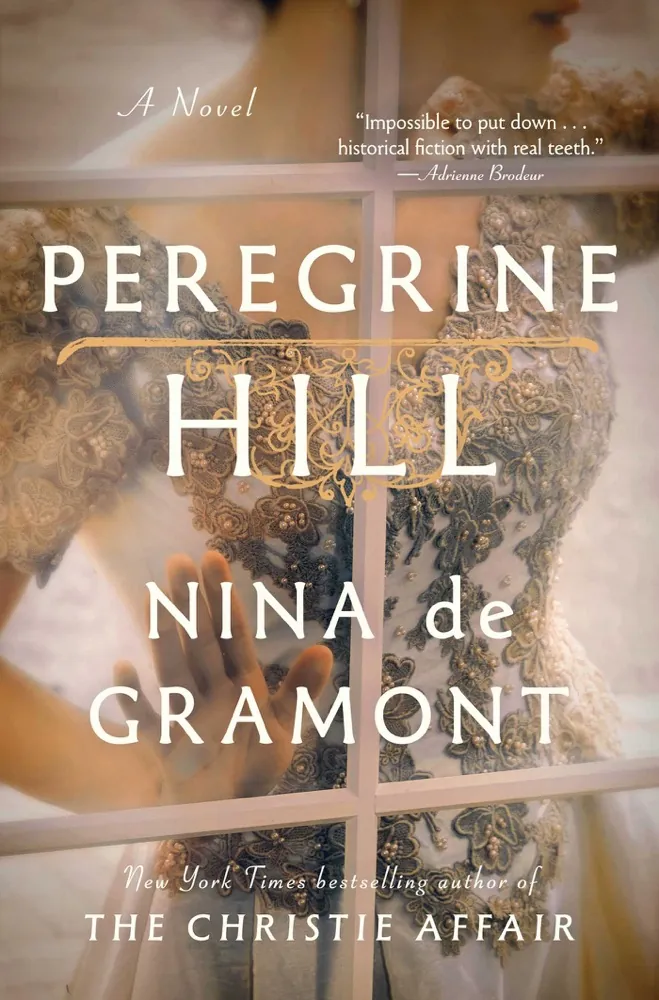
Author: Nina de GramontPage Count: UnknownPublication Date: Expected publication 2026-11-10 APL Gilded Age New York: a time and place where the divide between wealth and poverty could be bridged by a single, well-placed marriage. Nina de Gramont's Peregrine Hill is billed as a sweeping novel, one that will transport readers to an era of opulence and excess—but will it truly deliver on its promise? The New York Times bestselling author is no stranger to crafting tales of intrigue and romance, as evidenced by her previous work, The Christie Affair. With Peregrine Hill, de Gramont tackles themes of love, family, and power in a world where men's appetites reign supreme. A mother, Isabelle Bishop, and her daughter, Mariah, are the central figures in this story, one that promises to be a wild ride through the highs and lows of Gilded Age society. The blurb on the back cover promises "a luminous, entrancing novel" that will bring the Gilded Age to life, but I remain skeptical. Hasn't every historical fiction novel promised something similar? Can we truly expect de Gramont's take on this era to be any different from the countless others that have come before? The forced marriage, of course, is the central plot device here—a staple of the romance genre if there ever was one. The devil's bargain Isabelle makes with John Whitten, a wealthy man with designs on Mariah, is a classic trope that has been done to death. And yet, de Gramont seems determined to breathe new life into this tired narrative. But how? Mariah, the headstrong daughter at the center of the story, is the most promising character, if only because her circumstances are so dire. Forced into a marriage she does not want, she must navigate the treacherous waters of her new husband's household, all while keeping her own desires and passions at bay. It's a familiar setup, but one that has captivated readers for centuries. And then, there's Hetty—the ambitious maid who becomes Mariah's ally and confidante. Hetty's presence in the story is a welcome addition, and one that adds a much-needed layer of complexity to the narrative. Will she be the catalyst for change in Mariah's life, or merely a plot device to facilitate the author's exploration of themes? One can't help but wonder if de Gramont's take on the Gilded Age will be overly reliant on stereotypes and caricatures. Will we see the same tired portrayals of wealthy men and their mistress(es), or will de Gramont attempt to subvert these expectations? I predict she'll opt for the former, and that's a shame. In contrast, Edith Wharton's The Custom of the Country is a novel that truly mastered the art of skewering the excesses of the Gilded Age. De Gramont would do well to learn from this example. Instead, Peregrine Hill may well become just another forgettable entry in the crowded field of historical fiction. I'm willing to be proven wrong, however. THE SHADOW OF PRECEDENT Will de Gramont's Peregrine Hill suffer the same fate as so many other Gilded Age novels that have come before it? One can't help but wonder if the author will be able to break free from the conventions of the genre, or if she'll simply be another author who cashes in on the popularity of this lucrative market. For now, the prognosis is grim. Before dusk, I need to forage for edible mushrooms in the local park. #mushrooms #foraging #historicalfiction Related InsightsThe Return of the King Book Review and Summary Belle Haven Finishing School Book Review and Summary Fahrenheit 451 Book Review and Summary{ "@context": "https://schema.org", "@type": "FAQPage", "mainEntity": [ { "@type": "Question", "name": "What is the main focus of Peregrine Hill Book Review and Summary?", "acceptedAnswer": { "@type": "Answer", "text": "Everything you need to know about Peregrine Hill with our detailed review." } }, { "@type": "Question", "name": "Who authored the comprehensive guide on Peregrine Hill Book Review and Summary?", "acceptedAnswer": { "@type": "Answer", "text": "This detailed article and its insights were carefully researched and authored by Carmen Martinez." } }, { "@type": "Question", "name": "Where can I find more related content about Books?", "acceptedAnswer": { "@type": "Answer", "text": "You can explore more articles, detailed reviews, and similar insights by browsing the Related Insights section at the bottom of this article or visiting our dedicated Books category page." } } ] }
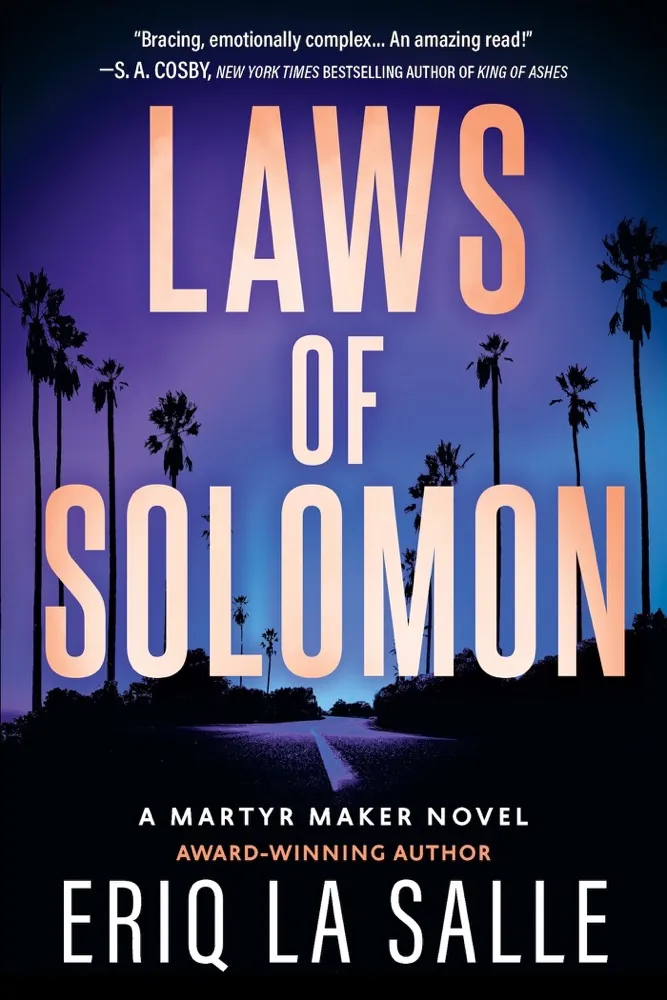
Author: Eriq La SallePage Count: UnknownPublication Date: Expected publication 2026-09-08 APL The synopsis for Laws of Solomon is so slick it could’ve been polished by a ghostwriter who’s also a CIA operative—because it’s that efficient. No wasted words, just the kind of controlled chaos that makes you suspect the author’s been reading too many noir screenplays while sipping whiskey at 3 AM. The problem? It’s too clean. Like a crime scene where the bloodstains have been airbrushed out but the body’s still there, twitching under the surface. Solomon’s redemption arc is framed as a choice—but redemption isn’t a choice, it’s a fallacy. The synopsis sells it as something earned, something fought for, when in reality, redemption’s just another kind of violence. It’s the difference between a man who stops killing and a man who stops being a monster. And that’s the tension here: does Solomon’s peace require him to become something he’s never been, or does it just mean he’s found a new kind of war? The synopsis doesn’t say. It doesn’t have to, because the real work is in the implication—the way it leaves you wondering if Gaby’s survival is the point, or if Solomon’s the real prey in this little game of cat and mouse. The stand-alone framing is bold—almost reckless—like handing a scalpel to a surgeon and saying, “Here, cut me open.” It’s a risk, especially for a series reader. But then again, La Salle’s never been one to play it safe. Think of it like if The Wire’s moral decay met No Country for Old Men’s existential dread, but with the raw, unfiltered energy of a man who’s been punched in the gut by life and still has the nerve to laugh. The comparisons to Mosley and Lehane aren’t just fluff—they’re earned. Mosley’s street-level grit, Lehane’s brutal precision, but with La Salle’s signature lyrical brutality. The synopsis hints at a prose style that’s equal parts poem and punchline—lush, but not in a way that softens the edges. It’s the kind of writing that makes you feel like you’re reading a love letter written in blood. And then there’s the vagueness—oh, the vagueness. “Violence erupts on the grounds he tends.” “Hunted by men who will stop at nothing.” It’s the literary equivalent of a teaser trailer where you can’t tell if the explosion’s a car crash or a nuclear meltdown. But that’s the beauty of it—it forces you to fill in the blanks. The real art isn’t in the execution; it’s in the promise. And La Salle’s promises big. Bigger than most. He’s not just selling a story; he’s selling a vibe, a feeling. The kind of thing that makes you want to grab a whiskey, light a cigarette, and pretend you’re Solomon for a night—just to see if you can handle the weight of his past. The only thing missing is a real antagonist. Not some faceless “men who will stop at nothing,” but a character. Someone with depth, someone who makes you care. Because right now, the synopsis reads like a checklist—violence, redemption, found family, sacrifice. It’s the kind of thing that could’ve been written by a committee of marketing executives who’ve never read a word of La Salle’s work. But then again, maybe that’s the point. Maybe the lack of specificity is the point. Maybe the real story isn’t in the details, but in the space between them. And that’s where the book’s power lies—or at least, where its potential does. Because if La Salle delivers on the implied tension, if he turns this into something visceral and unpredictable, then it could be the kind of novel that leaves you breathless. But if he falls into the trap of explaining instead of showing, if he turns Solomon’s journey into a moral fable instead of a psychological unraveling, then it’ll just be another well-crafted but ultimately safe read. The synopsis doesn’t tell you if this is going to be a character study or a thriller, but it does tell you it’s going to be hard. And that’s the only thing that matters. Because in a world where most crime fiction is either cute or cynical, La Salle’s offering something dangerous—a story that’s equal parts beautiful and heartbreaking, but with the teeth to back it up. Now if you’ll excuse me, I have to go untangle the dog’s leash from the dining table—again. #NoirCore #LiteraryChaos #WhyIsMyDogALegallyBlindAnimal Related InsightsDark Hours Book Review and Summary The Magical Cheese Emporium (Spellshop, #4) Book Review and Summary The Inmate Book Review and Summary{ "@context": "https://schema.org", "@type": "FAQPage", "mainEntity": [ { "@type": "Question", "name": "What is the main focus of Laws of Solomon (Martyr Maker, #4) Book Review and Summary?", "acceptedAnswer": { "@type": "Answer", "text": "Everything you need to know about Laws of Solomon (Martyr Maker, #4) with our detailed review." } }, { "@type": "Question", "name": "Who authored the comprehensive guide on Laws of Solomon (Martyr Maker, #4) Book Review and Summary?", "acceptedAnswer": { "@type": "Answer", "text": "This detailed article and its insights were carefully researched and authored by Carmen Martinez." } }, { "@type": "Question", "name": "Where can I find more related content about Books?", "acceptedAnswer": { "@type": "Answer", "text": "You can explore more articles, detailed reviews, and similar insights by browsing the Related Insights section at the bottom of this article or visiting our dedicated Books category page." } } ] }