Mount Ararat Mysteries
-
 Cemre Seyyah
 - 24 Jun, 2026 10:12
The world holds few landscapes as profoundly enigmatic and majestically silent as Mount Ararat. It rises from the high Anatolian plateau like a colossal sentinel, its snow-crowned summit piercing the azure sky with an almost mythical defiance. For millennia, this dormant stratovolcano, Turkey’s highest peak at 5,137 meters (16,854 feet), has captivated human imagination, serving as a beacon for spiritual seekers, ambitious climbers, and relentless truth-finders. It is more than just a mountain; it is a repository of #ancient lore, a testament to geological power, and a crucible of enduring mysteries that beckon the curious soul.
My #journey to the shadow of Ağrı Dağı, as it is known in Turkish, was not merely a physical trek but an expedition into the depths of legend itself. The crisp, thin air carried whispers of ages past, of floods and ancient mariners, of empires that rose and fell in its gaze. Standing at its base, the sheer scale is overwhelming. Its twin peaks – Greater Ararat and the slightly smaller, equally imposing Lesser Ararat – dominate the horizon, a perpetually frosted vision that feels both ancient and eternally young. It is here, amidst this stark beauty, that the most compelling of Ararat’s mysteries begins to unfurl: the enduring quest for Noah’s Ark.
The Biblical Quest: On the Trail of Noah’s Ark
Few biblical narratives grip the modern imagination with the force of the Great Flood and the epic voyage of Noah’s Ark. The Book of Genesis (8:4) famously states that “the ark rested in the seventh month, on the seventeenth day of the month, upon the mountains of Ararat.” This single verse has spawned centuries of fervent expeditions, meticulous research, and passionate belief, turning Mount Ararat into the ultimate archaeological treasure hunt.
The allure is undeniable. Imagine, for a moment, stumbling upon the petrified remains of an immense wooden vessel, a relic from a time before recorded #history, perched precariously on a high, remote flank of the mountain. Such a discovery would not only rewrite archaeological textbooks but profoundly impact theological understanding globally. This dream has fueled countless adventurers, from the earliest Byzantine chroniclers to contemporary satellite imagery analysts.
One of the earliest recorded claims comes from the 5th-century Armenian historian Faustus of Byzantium, who spoke of a fragment of the Ark kept in a monastery. Marco Polo, in his 13th-century travelogue, The Travels of Marco Polo, noted that “on the top of it [Ararat] no man can ever stay… for it is always covered with snow, and no one can ascend it; and they say that Noah’s Ark is there.” Such accounts cemented Ararat’s place in the collective consciousness as the Ark’s most probable resting place.
Modern searches gained significant traction in the 20th century. In 1916, Russian aviator Vladimir Roskowitsky reportedly sighted an ark-like structure while flying over Ararat during World War I, although his claims lack concrete verification. Later, in the 1950s, French industrialist Fernand Navarra claimed to have found hand-hewn timbers on the mountain, which radiocarbon dating placed at around 5,000 years old – a date that, tantalizingly, aligns with flood narratives. Navarra’s findings, however, were small fragments and their origin on the mountain remains debated by critics.
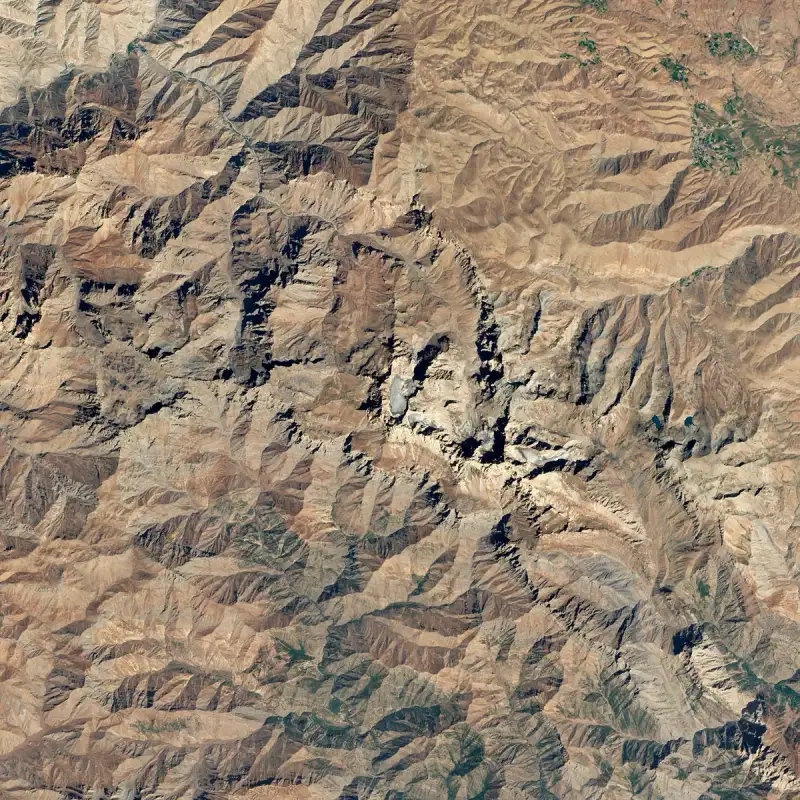
Perhaps the most famous modern “sightings” revolve around the “Ararat Anomaly” – a distinct, boat-shaped formation captured in aerial photographs taken by the US Air Force in 1949 and later by satellite imagery. Located on the northwestern plateau of Greater Ararat at an altitude of approximately 4,724 meters (15,500 ft), this anomaly has been a persistent target for expeditions. While its shape is undeniably suggestive, geological studies largely attribute it to natural rock formations, possibly shaped by glacial erosion or mudflows. The area is notoriously difficult to access, and permissions for thorough on-site investigations are often complex due to the mountain’s sensitive geopolitical location.
Another prominent figure in the Ark quest was Ron Wyatt, an American adventurer who claimed to have found the Ark at a site called Durupınar, in the Tendürek Mountains, approximately 29 kilometers (18 miles) south of Mount Ararat’s summit. This site, a boat-shaped depression, has also been widely investigated, with some proponents citing geological anomalies and “deck timber” patterns. However, mainstream geologists and archaeologists have consistently dismissed the Durupınar formation as a natural geological feature, with no evidence of ancient timber or human construction. The scientific consensus remains that these features are natural formations, and the absence of definitive, verifiable proof continues to plague all Ark claims.
The challenges in finding the Ark are immense. If a wooden vessel did survive, it would have endured millennia of extreme weather, glacial movements, seismic activity (Ararat is a volcano in an active fault zone), and decay. Wood exposed to these conditions would likely have petrified or disintegrated long ago. Furthermore, the term “mountains of Ararat” in Genesis might not refer to the specific peak we know today, but rather to the wider Urartu region – an ancient kingdom spanning parts of modern-day Turkey, Armenia, and Iran. This geographical ambiguity further complicates the search.
Regardless of the scientific skepticism, the quest for Noah’s Ark continues to draw people to Ararat, imbuing the mountain with a unique spiritual charge. For many, the very act of seeking is a pilgrimage, a reaffirmation of faith in the face of colossal odds.
A Geological Marvel: Ararat’s Volcanic Heart
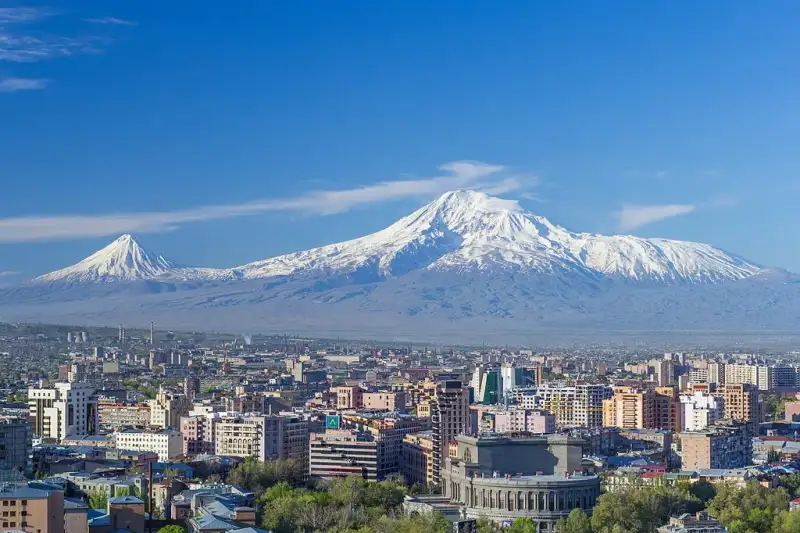
Beyond its mythical mantle, Mount Ararat stands as a profound testament to the Earth’s raw, formative power. It is a stratovolcano, a conical volcano built up by many layers of hardened lava, tephra, pumice, and volcanic ash. Its sheer size and symmetrical form are products of millions of years of geological activity, an architect of its own destiny.
Greater Ararat is the largest single-mass mountain in Turkey, rising dramatically from a plateau that is already around 800 meters (2,600 feet) above sea level. Its younger sibling, Lesser Ararat (3,896 meters / 12,782 feet), lies southeast of the main peak, separated by the Sardarbulak pass, a saddle at about 2,687 meters (8,816 feet). Both are considered dormant, though not entirely extinct.
Ararat’s last known significant eruption occurred in 1840, an event that ravaged the region around the village of Akhuri, which lay on its northern slope. This catastrophic eruption, accompanied by a major earthquake, caused devastating mudslides and avalanches, burying the village and a monastery, killing hundreds. This event serves as a stark reminder of the mountain’s inherent power and its capacity for destruction, even in its slumber.
The geology of Ararat also plays a role in the Ark mystery. The mountain is composed primarily of Cenozoic volcanic rocks, including basalt, andesite, and dacite. Its slopes are scarred by ancient lava flows and glacial valleys, some of which persist year-round above 3,500 meters (11,500 feet). The ever-present snow and ice caps are vital for local ecosystems, feeding streams and rivers that flow through the arid landscape below. The dynamic #nature of these glaciers and the mountain’s seismic activity mean that any ancient wooden structure would have been subjected to immense pressures, potentially crushed, covered, or moved significantly over the millennia. The landscape itself is a living, changing entity, not a static stage.
Exploring the lower flanks of Ararat, one encounters a diverse range of microclimates. The arid steppe gives way to sparse shrubland, then alpine meadows teeming with unique flora and fauna during the short summer months. Higher up, the terrain becomes increasingly barren, a desolate realm of scree, rock, and eternal ice. This ecological transition paints a vivid picture of the mountain’s immense vertical relief and its role as an ecological island in a vast, dry region.
Climbing Ararat: A Pilgrim’s Journey
For many, including myself, the true way to connect with Ararat’s essence is to ascend its formidable slopes. The climb is not merely an athletic endeavor; it is a pilgrimage, a communion with nature, and a profound personal challenge. It requires respect, preparation, and an understanding of the mountain’s unpredictable temperament.
Permits are essential for climbing Ararat, and they must be obtained through licensed Turkish #travel agencies. The mountain lies within a sensitive border region, and security considerations are paramount. Most expeditions depart from the dusty, bustling town of Doğubayazıt, a gateway town steeped in its own history, dominated by the magnificent Ishak Pasha Palace. Here, local Kurdish guides, who possess an unparalleled knowledge of the mountain and its moods, become indispensable companions. Their wisdom, passed down through generations, is as valuable as any piece of high-tech gear.
My own ascent, or at least the imagined journey I’ve crafted from extensive research and the accounts of those who have reached its summit, begins with the familiar rumble of a four-wheel drive traversing rough tracks. The initial climb passes through a stark, almost lunar landscape, punctuated by the occasional yurt of semi-nomadic shepherds tending their flocks. The air, initially warm, begins to thin and cool perceptibly.
Base camp, typically around 3,200 meters (10,500 feet), is a humble affair of tents, warmed by the camaraderie of fellow climbers from across the globe. Here, the sheer scale of the mountain becomes even more apparent, its summit still a distant, intimidating goal. Acclimatization is key; the “climb high, sleep low” principle is strictly adhered to, with day hikes to higher altitudes followed by descents back to base camp to allow the body to adjust to the reduced oxygen levels.
The real challenge begins with the push to high camp, often around 4,200 meters (13,800 feet). This involves navigating rockfall-prone scree slopes and steep ascents. The air is noticeably colder, the wind more biting. Each step is a conscious effort, a dialogue between mind and body. The simplicity of life at high camp – hot tea, freeze-dried meals, and the shared anticipation – fosters a unique bond among climbers.
The summit push is the climax, usually starting in the early hours of the morning, long before dawn. Under a canopy of brilliant stars, headlamps bob rhythmically as climbers begin their slow, steady ascent. The lower slopes of the summit pyramid are often a mix of loose scree and patches of hard-packed snow. As one ascends higher, crampons and ice axes become essential as the terrain transitions to steep, icy slopes. The oxygen deprivation is palpable, each breath a struggle, but the reward awaiting at the top fuels the determination.

Finally, as the sun begins to paint the eastern sky in hues of orange and purple, the world unfurls beneath you. From the summit of Greater Ararat, the view is nothing short of transcendent. The plains of Iran stretch eastward, the distant peaks of Armenia to the north, and the vast Anatolian plateau to the west. Lesser Ararat stands proud beside you, now a fellow peak rather than a distant goal. The curvature of the Earth is almost visible, and the feeling of standing atop this legendary mountain, touching the sky where myth and history converge, is a profound and humbling experience. It is a moment of pure, unadulterated awe, a memory etched deeply into the soul.
The Cultural Tapestry and Geopolitical Significance
Mount Ararat is more than a geographical feature or a biblical enigma; it is a cultural touchstone woven into the fabric of multiple nations and peoples. Its presence in this volatile corner of the world – where Turkey, Armenia, and Iran converge – imbues it with a complex geopolitical significance.
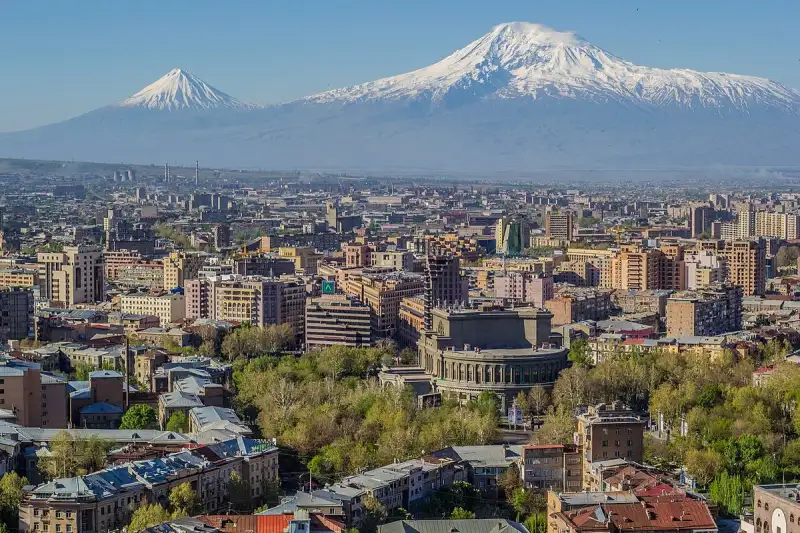
For Armenians, Mount Ararat is a sacred national symbol. Although it lies within the borders of modern Turkey, it is indelibly etched into Armenian identity and history. From virtually any vantage point in Yerevan, the capital of Armenia, the majestic twin peaks of Ararat dominate the horizon, a constant, poignant reminder of ancestral lands and a rich, often turbulent, past. It appears on Armenian coats of arms, banknotes, and countless works of art. Its presence serves as both a source of pride and a symbol of longing.
In Turkey, Ararat is known as Ağrı Dağı, the “Mountain of Ağrı” (after the province) or sometimes colloquially as the “Mountain of Pain,” perhaps referencing its formidable nature or the historical events that have unfolded around it. It is a source of national pride, the country’s highest point, and a challenging frontier for adventure tourism. The region around it, particularly the provinces of Ağrı and Iğdır, is predominantly Kurdish, and the local Kurdish population plays a crucial role in expeditions, providing guiding services, porters, and logistical support. Their intimate knowledge of the mountain, its weather patterns, and its hidden paths is invaluable.
Historically, the area surrounding Ararat has been a crossroads of civilizations. The ancient Urartian kingdom (9th-6th centuries BCE) thrived in this region, building impressive fortresses and cities. Later, Persians, Romans, Byzantines, Arabs, Mongols, and Ottomans all cast their shadow upon the mountain, each leaving an indelible mark on the cultural landscape. The strategic importance of this high ground, overlooking vital trade routes and fertile plains, meant it was continuously contested.
Today, the mountain’s proximity to international borders adds layers of complexity to any travel or research. Permissions are tightly controlled, and travelers are advised to adhere strictly to regulations. The cultural interactions, however, are deeply enriching. Engaging with local villagers, sharing chai in their humble homes, and witnessing their resilient, pastoral way of life offers a window into a world deeply connected to the land and the rhythms of nature, a world largely unchanged by the clamor of the modern age.
Other Myths, Legends, and the Enduring Spirit
While Noah’s Ark dominates the narrative of Ararat’s mysteries, the mountain is also home to a myriad of other myths and legends, reflecting the diverse cultures that have revered it over millennia. Before the advent of Abrahamic religions, mountains were often seen as dwelling places of gods, conduits to the heavens, or sacred sanctuaries. Ararat, with its imposing height and dramatic presence, was undoubtedly considered such a place.
Local folklore speaks of spirits guarding its slopes, of hidden treasures, and of mystical properties attributed to its waters and rocks. Kurdish legends sometimes connect the mountain to ancient heroes and mythical beasts, echoing the deep animistic beliefs that predate organized religions. These stories, passed down through generations, paint a picture of a living, breathing entity, not just a geological mass.
The enduring spirit of Ararat lies not just in its unsolved puzzles or its physical grandeur, but in its capacity to inspire awe and introspection. It forces a confrontation with the ancient, with the vastness of time and the power of natural forces. Whether viewed from the bustling streets of Yerevan, the arid plains of Eastern Turkey, or from its own snow-swept summit, Ararat compels us to look beyond the immediate, to ponder the origins of humanity, the forces that shape our world, and the stories we tell ourselves to make sense of it all.
The Experience of Being There: A Profound Resonance
To truly grasp the essence of Mount Ararat is to experience it, to feel the wind whip across its slopes, to gaze up at its impossibly distant summit, or to stand atop it and survey the world. The sensory impact is profound: the thin, sharp air that bites at exposed skin, the blinding brilliance of snow under a relentless sun, the deep, echoing silence broken only by the crunch of boots on ice or the distant cry of a raptor.
There is a humility that comes with being in the presence of such an ancient and monumental landscape. It strips away the superficial concerns of daily life, inviting contemplation on a grander scale. The very act of traveling to this remote corner of the world, of undertaking the physical and mental challenge of the climb, becomes a transformative experience.
As Cemre Seyyah, I have chased stories across continents, but few places have resonated with the primal force of Mount Ararat. It is a place where faith and science dance a delicate, unresolved ballet; where history is etched into the very rock; and where the human spirit is tested and often, renewed. It is a reminder that some mysteries are perhaps meant to remain, to keep us curious, to keep us searching, and to keep us dreaming of what lies beyond the visible horizon. Mount Ararat is not just a mountain; it is an invitation to explore the deepest recesses of our planet and ourselves.
To visit Ararat is to step into a living legend, to trace the footsteps of explorers and pilgrims, and to feel the heartbeat of an ancient land. Whether you seek the biblical Ark, the geological wonders, or simply the unparalleled adventure of a high-altitude climb, Ararat promises an unforgettable journey into the heart of an enduring mystery. It challenges, it inspires, and it remains, forever, shrouded in a captivating veil of snow, sky, and stories untold.
#MountArarat #TravelTurkey #Noah’sArk #AdventureTravel #MysteryExploration
#travel #explore #guide