Emerald Veins of the Hajar: A Journey Through Oman’s Living Wadis
-
 Zola Ndlovu
 - 10 Oct, 2026 12:59
Emerald Veins of the Hajar: The Genesis of Oman’s Wadis
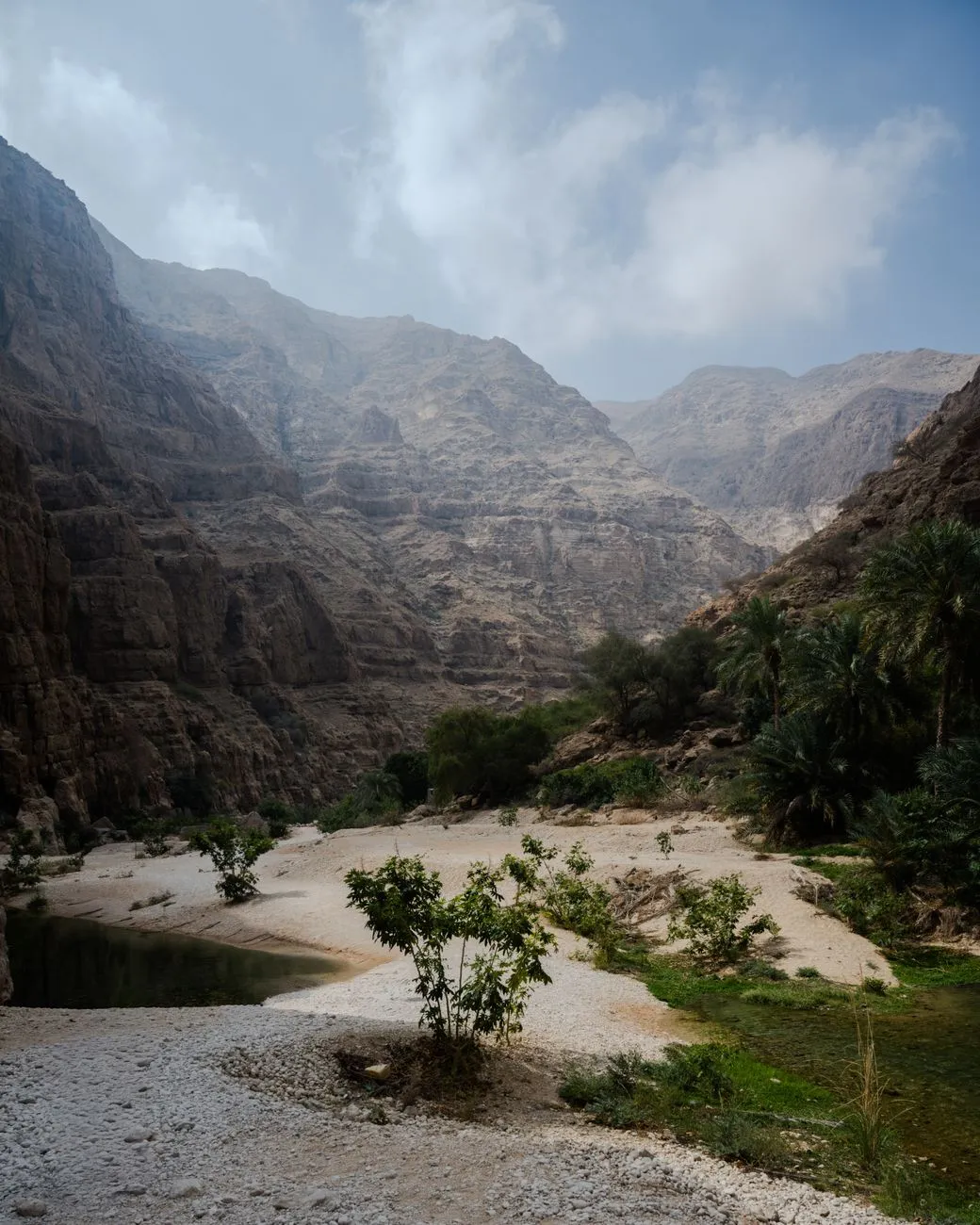
The Hajar Mountains rise like a jagged spine across northern Oman, their limestone ribs folded by millennia of tectonic pressure. When winter rains sweep in from the Arabian Sea, they do not simply run off the slopes; they infiltrate fissures, dissolve carbonate rock, and emerge as perennial springs that stitch together a network of wadis — Arabic for “valley” — each a living artery of fresh water. Unlike the seasonal torrents that scar desert basins elsewhere, many Omani wadis retain water year‑round, forming natural pools that shimmer in shades of turquoise, jade, and deep sapphire.
Geologically, the process is a textbook example of karst hydrology. Rainwater, slightly acidic from dissolved CO₂, widens fractures into conduits. Over thousands of years these conduits become caves and underground rivers. When the roof of a conduit collapses, a surface pool appears, often framed by sheer cliffs and draped with date palms. The result is a landscape where geology, climate, and biology converge: endemic fish such as Garra barreimiae dart among submerged roots, while the rare Arabian tahr grazes on the upper slopes.
Human history has been written in these corridors. Ancient copper traders followed the wadi floors, leaving petroglyphs that still whisper of caravans laden with frankincense. In the 20th century, the British explorer Wilfred Thesiger documented the Bedouin’s intimate knowledge of each pool, noting how they timed migrations to the rhythm of water availability. Today, the wadis remain a cultural touchstone; families picnic under the shade of Ziziphus trees, and children learn to swim in the same basins that sustained their ancestors.
For the modern traveller, the wadis offer a rare blend of adventure and accessibility. A 4×4 can reach the mouth of most major wadis, but the most rewarding pools often require a short hike — sometimes a scramble over boulders, sometimes a gentle walk through date‑palm groves. The reward is a plunge into water that stays a constant 24‑26 °C, a natural air‑conditioner in a region where summer highs regularly exceed 45 °C.
Understanding the hydrology and heritage of these corridors transforms a simple swim into a dialogue with deep time. As you step into the cool embrace of a wadi pool, you are literally immersing yourself in a system that has filtered rain through limestone for eons, a living museum of Earth’s patient sculpting.
Wadi Shab: Where Canyons Meet Crystal Waters
If Oman’s wadis were a symphony, Wadi Shab would be its soaring crescendo. Located roughly 150 km southeast of Muscat, the wadi opens onto a narrow coastal plain before funneling into a dramatic gorge. The approach is an experience in itself: a short boat ride across a turquoise inlet deposits you at the trailhead, where the path weaves between towering cliffs and lush vegetation.
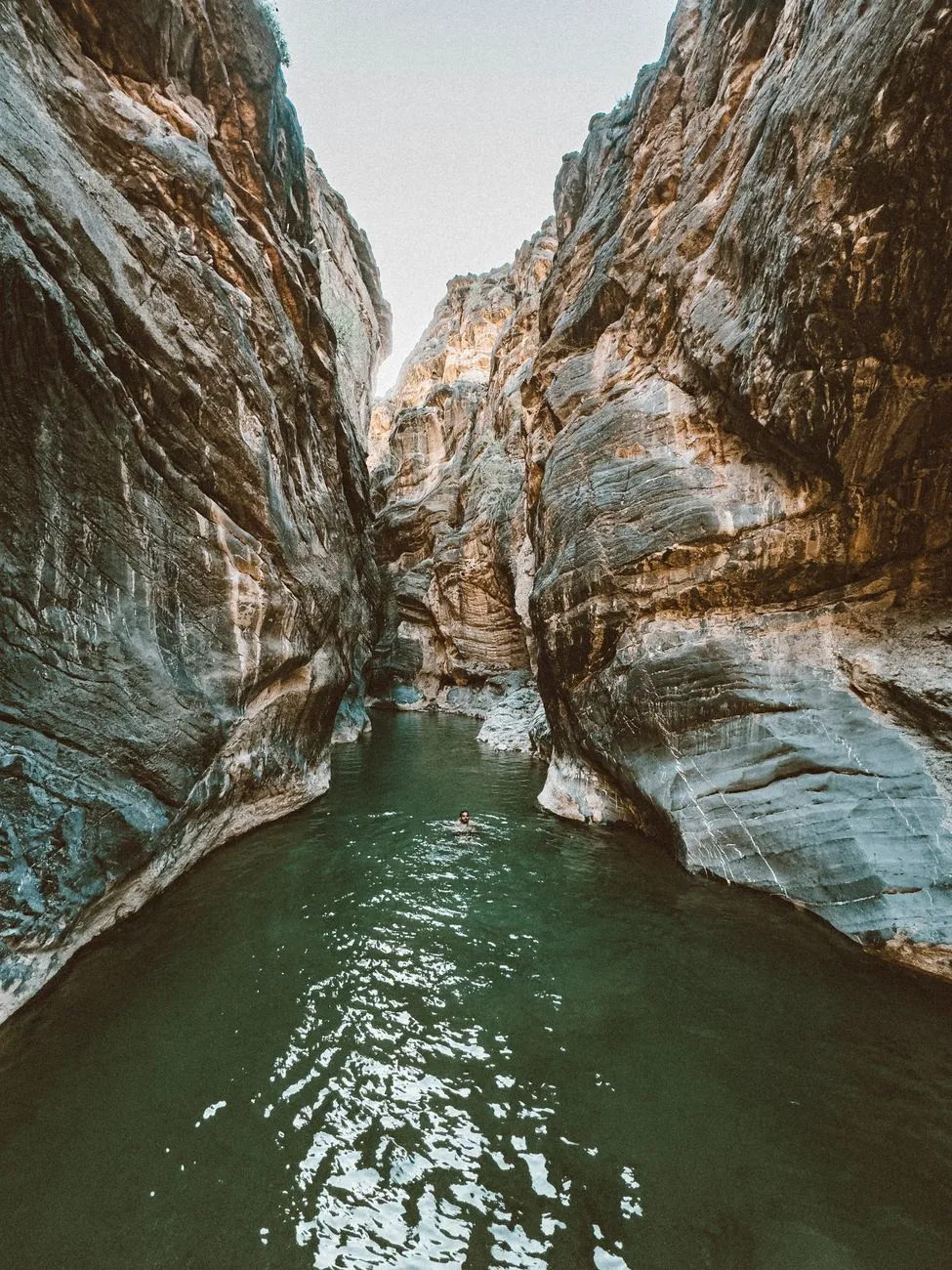
The first pool greets you within ten minutes — a shallow, sun‑dappled basin perfect for acclimatizing. Continue upstream and the canyon tightens; sheer walls rise 50 m, their faces stained by mineral deposits that paint the rock in ochre and rust. After a 30‑minute trek, the trail opens into a cavernous chamber where a waterfall cascades into a deep, circular pool. Light filters through a natural skylight, turning the water into liquid emerald. This is the “Hidden Pool,” a name earned because the entrance is concealed behind a curtain of vines.
Swimming here feels like entering a cathedral. The acoustics amplify the splash of each stroke, and the water’s clarity reveals a sandy bottom dotted with smooth pebbles. Adventurous souls can dive through a submerged tunnel that leads to a second, smaller chamber — a secret grotto where the only sound is the drip of stal