Ethiopia's Danakil Depression: The Hottest Place on Earth's Alien Landscapes (Part 2)
-
 Chloe Tremblay
 - 16 Jul, 2026 14:48

This is Part 2 of the series. Read Part 1 here.
The Afar People: Surviving in Earth’s Most Harsh Environment
The Afar people are the true survivors of the Danakil Depression. For centuries, they have called this hellish landscape home, adapting to its extreme conditions with remarkable ingenuity and resilience. The Afar, also known as the Danakil, are a nomadic pastoralist people who have traditionally relied on camel herding, salt mining, and trade to sustain their communities. Their way of life is a testament to human adaptability, offering a glimpse into how life can thrive even in the most inhospitable environments.
The Afar people live in small, scattered settlements across the Danakil Depression, often in temporary huts made of palm fronds and animal hides. Their diet consists primarily of milk, meat, and flatbread, supplemented by dates and wild plants when available. Water is a precious resource, and the Afar have developed ingenious methods for collecting and storing it. They dig shallow wells in dry riverbeds, relying on the seasonal rains to replenish their supplies. In times of drought, they may travel hundreds of kilometers in search of water, following ancient trade routes that have been used for generations.
Salt is the lifeblood of the Afar economy. The Danakil Salt Plain is one of the richest sources of salt in the world, and the Afar have mined it for centuries. The process is labor-intensive and dangerous, with workers cutting blocks of salt from the crust of the plain and loading them onto camel caravans for transport. These caravans, known as azibo, can stretch for miles, with hundreds of camels carrying salt to markets in Mekelle and other Ethiopian cities. The salt is not just a commodity—it’s a currency, used in trade and barter across the region.
Despite the harsh conditions, the Afar people have a rich cultural heritage. Their society is matrilineal, with women playing a central role in decision-making and trade. Music and dance are integral parts of their culture, with traditional instruments like the tanbura (a lyre-like instrument) and the krar (a five-stringed lyre) accompanying celebrations and rituals. The Afar are also known for their elaborate body adornments, including beaded necklaces, brass arm rings, and intricate hairstyles, which serve as markers of identity and status.
Yet, life in the Danakil Depression is not without its challenges. The region is chronically underdeveloped, with limited access to healthcare, education, and clean water. Droughts, famine, and conflict are constant threats, and many Afar people live in poverty, relying on subsistence farming and seasonal labor. The extreme heat and lack of infrastructure make it difficult to attract investment or development, leaving the Afar people to fend for themselves in one of the most extreme environments on Earth.
For travelers who visit the Danakil Depression, interacting with the Afar people is a humbling experience. Their warmth, hospitality, and resilience are unforgettable, and their knowledge of the land is invaluable for navigating the region. Many guided tours include cultural exchanges, allowing visitors to learn about the Afar way of life, sample traditional foods, and even participate in salt mining or camel caravans. These interactions are not just educational—they’re a reminder of the universal human spirit that thrives even in the most challenging circumstances.
The Afar people are guardians of a disappearing way of life. As climate change and modernization encroach on their traditional lands, their culture and livelihoods are under threat. For those who visit the Danakil Depression, supporting the Afar people—whether through fair trade, responsible tourism, or donations to local organizations—is a way to ensure that their story continues to be told.
The Science Behind the Danakil Depression: A Window into Earth’s Violent Past
The Danakil Depression is more than just a tourist destination—it’s a scientific goldmine. Geologists, volcanologists, and astrobiologists flock to this region to study its unique geological features, which offer insights into the early Earth, the origins of life, and even the potential for life on other planets. The depression is a natural laboratory, where the forces that shape our planet are on full display.
At the heart of the Danakil Depression’s scientific significance is its tectonic activity. The region sits at the Afar Triple Junction, where three tectonic plates are pulling apart. This rifting process is creating a new ocean basin, a phenomenon that has occurred only a handful of times in Earth’s history. By studying the Danakil Depression, scientists can gain a better understanding of continental drift, seafloor spreading, and the formation of new crust. The Erta Ale volcano, with its continuous lava lake, is a prime example of this process in action, offering a glimpse into the mechanisms of volcanic activity that shape our planet.
The hydrothermal systems of the Danakil Depression are another area of intense scientific interest. These acidic, mineral-rich pools are home to extremophiles—microorganisms that thrive in conditions that would be lethal to most life forms. The Dallol hydrothermal field, in particular, is one of the most acidic and saline environments on Earth, with pH levels as low as -1.6 and temperatures exceeding 100°C (212°F). These conditions are similar to those that may have existed on early Earth, or even on Mars, making the Danakil Depression a key site for astrobiological research.
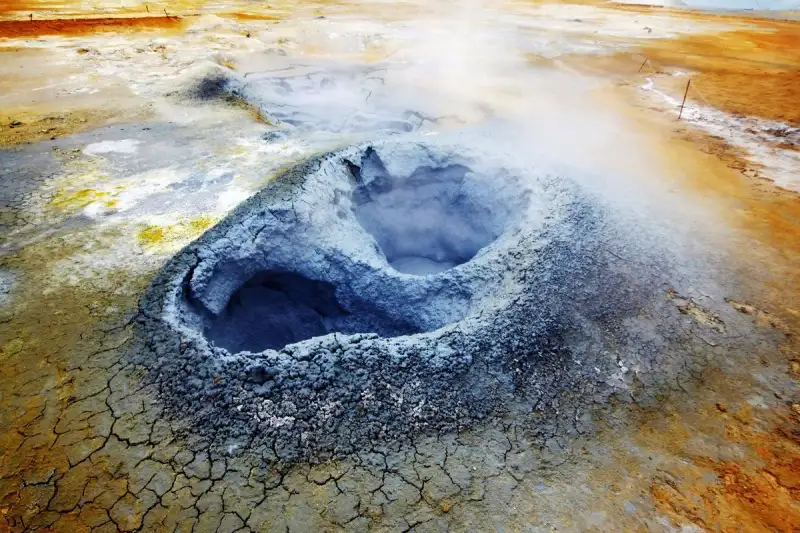
Scientists believe that the extremophiles found in the Danakil Depression could provide clues about the origins of life on Earth. These microorganisms, which survive in extreme heat, acidity, and salinity, may represent some of the earliest forms of life on our planet. By studying their metabolic processes and genetic makeup, researchers hope to gain insights into how life could have emerged in the hostile conditions of the early Earth—or even on other planets.
The Danakil Depression is also a window into the future. As climate change accelerates, the region’s extreme conditions are becoming more pronounced. The rising temperatures, prolonged droughts, and increased volcanic activity are all signs of a changing planet. By studying the Danakil Depression, scientists can better understand how Earth’s systems respond to stress, and what the future may hold for other extreme environments around the world.
For volcanologists, the Danakil Depression is a living textbook. The Erta Ale lava lake is one of the few places on Earth where a continuous lava lake can be observed, providing a rare opportunity to study magma dynamics, gas emissions, and volcanic hazards. The frequent earthquakes in the region are another area of focus, as they offer insights into the tectonic forces that shape the Earth’s crust.
The scientific community is not the only group interested in the Danakil Depression. Space agencies, including NASA and ESA, have taken note of the region’s Mars-like landscapes, using it as a testing ground for equipment and experiments intended for future missions to the Red Planet. The acidic, mineral-rich terrain of Dallol, in particular, has been compared to Martian landscapes, making it an ideal site for rover testing and astrobiological research.
The Danakil Depression is a reminder of Earth’s violent past—a place where the planet’s inner forces are laid bare. It’s a testament to the power of geology, and a window into the origins of life. For scientists, it’s a dream destination. For the rest of us, it’s a humbling reminder of the forces that shape our world—and the resilience of life in even the most extreme environments.
The Danakil Depression on a Budget: How to Experience the Extreme Without Breaking the Bank
The Danakil Depression is often dismissed as a luxury adventure, reserved for those with deep pockets and a taste for the extreme. But with the right planning, it’s possible to experience this otherworldly landscape without spending a fortune. While guided tours from Addis Ababa can cost $1,000 to $2,500 USD, there are budget-friendly alternatives for those willing to put in the effort. Here’s how to explore the Danakil Depression on a shoestring budget.
1. Travel Independently (But Safely)
The most cost-effective way to visit the Danakil Depression is to organize your own trip, rather than booking a guided tour. This requires more planning and risk tolerance, but it can save you hundreds, if not thousands, of dollars. The key is to hire a local guide and driver in Mekelle, who can navigate the region’s treacherous roads and political sensitivities.
- Transportation: Rent a 4x4 vehicle with a driver in Mekelle. Prices vary, but you can expect to pay $100 to $150 USD per day for the vehicle and driver. Splitting costs with other travelers can reduce the price significantly.
- Accommodation: Camping is the cheapest option, with basic campsites available near Erta Ale and Dallol. Bring your own tent, sleeping bag, and cooking supplies to save money. Alternatively, some local guides offer homestays with Afar families, which can cost as little as $10 to $20 USD per night.
- Food: Pack non-perishable meals (e.g., rice, pasta, canned goods) and a portable stove to cook your own food. Local guides can also arrange meals, but they may charge extra.
2. Join a Group Tour (But Choose Wisely)
If you prefer the safety and convenience of a guided tour but want to save money, consider joining a group tour rather than booking a private one. Group tours are cheaper per person and often include shared transportation, accommodation, and meals.
- Cost: Group tours typically cost $500 to $1,500 USD per person, depending on the length of the trip and the level of comfort.
- Where to Book: Look for local tour operators in Addis Ababa or Mekelle, rather than international companies. Websites like Ethiopia Travel, Tour Ethiopia, or local Facebook groups can help you find reputable guides.
- What’s Included: Most group tours cover transportation, accommodation, meals, and a local guide. Some may also include park fees and camping equipment.
#EthiopiaTravel #ExtremeAdventure #VolcanicExploration #DanakilDepression #AfarRegion