The Colosseum: Echoes of Eternity in the Heart of Rome
-
 Liam Carter
 - 15 Jun, 2026 10:00
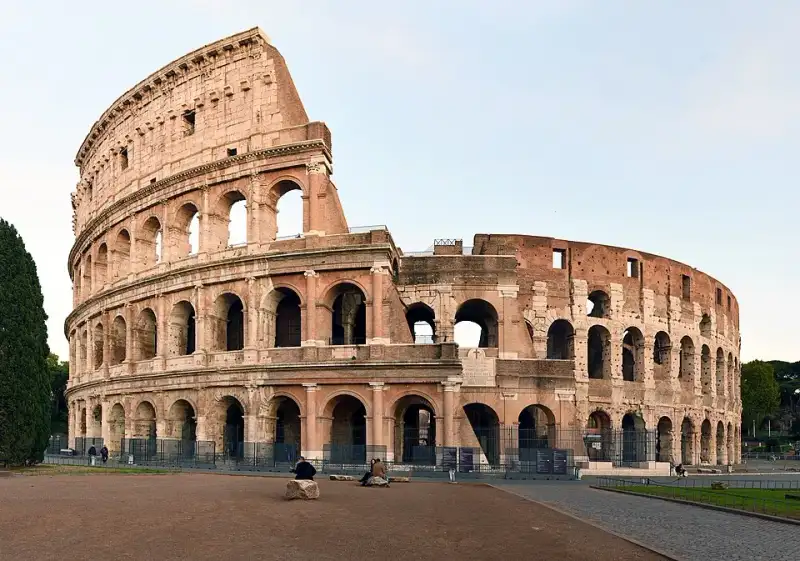
In the very center of the Eternal City, amidst the bustling streets of modern Rome, stands a monument that defies the relentless march of time. The Colosseum, originally known as the Flavian Amphitheatre, is not merely a ruin; it is a profound testament to the ambition, engineering prowess, and complex societal fabric of the Roman Empire. For nearly two millennia, this colossal structure of stone and concrete has captured the imagination of travelers, historians, and artists alike. Its massive, scarred walls whisper tales of glorious triumphs, agonizing defeats, and the roaring crowds that once filled its tiers. To stand before the Colosseum is to stand before the crystallized essence of an empire that once ruled the known world.
The story of the Colosseum #Colosseum is inextricably linked to the narrative of Rome itself. It is a story of political maneuvering, architectural innovation, and a cultural obsession with spectacle and violence. From its foundation by Emperor Vespasian to its eventual decline and modern resurrection as a global icon, the Colosseum’s journey is a microcosm of human history. This comprehensive exploration will delve into the origins, construction, architectural genius, and the bloody reality of the games that defined this magnificent structure, shedding light on why it remains one of the most recognizable and revered landmarks on the planet #AncientRome.
Out of the Ashes: The Origins and Construction
The genesis of the Colosseum is rooted in chaos and revolution. Following the suicide of the infamous Emperor Nero in 68 AD, the Roman Empire plunged into a period of violent instability known as the Year of the Four Emperors. Out of this civil war emerged Vespasian, a seasoned military commander who founded the Flavian dynasty. Vespasian was a pragmatic ruler, keenly aware of the need to consolidate his power and appease a populace weary of turmoil and the excesses of his predecessor. Nero had alienated the Roman citizens by confiscating a vast tract of prime real estate in the city center—devastated by the Great Fire of Rome in 64 AD—to build his opulent Domus Aurea, or Golden House. This sprawling palace complex, complete with a massive artificial lake, was a symbol of Nero’s tyranny and extravagance #RomanHistory.
In a masterstroke of political propaganda, Vespasian decided to dismantle the Domus Aurea and return the land to the people. At the site of Nero’s private lake, he decreed the construction of a colossal public amphitheater. This was a clear message: whereas Nero built for his own pleasure, the Flavian emperors would build for the entertainment and benefit of the Roman citizens. The financing for this immense project came from a grim source: the spoils of the First Jewish-Roman War. Following the brutal sack of Jerusalem in 70 AD, immense wealth was brought back to Rome, alongside tens of thousands of Jewish captives who would provide the backbreaking labor required to raise the amphitheater from the ground #AncientEngineering.
Construction began around 70-72 AD and proceeded at a remarkable pace, driven by the sheer will of the emperor and the limitless supply of slave labor. The engineering challenges were immense. The site of the former lake had to be drained, a feat accomplished by constructing a massive network of underground drains that channeled the water to the river Tiber. Once the ground was stabilized, the foundations—massive concrete rings up to 13 meters deep—were poured to support the immense weight of the structure.
The building materials were sourced from across the region. Over 100,000 cubic meters of travertine limestone, quarried in Tivoli, were transported to Rome along a specially built road. This gleaming white stone was used for the exterior facade and the main load-bearing pillars. Tuff, a softer volcanic rock, and brick-faced concrete were used extensively for the inner walls and vaults, demonstrating the Romans’ mastery of concrete (opus caementicium)—a material that revolutionized ancient architecture by allowing for the construction of vast, soaring spaces without the need for internal supports #Architecture.
Vespasian did not live to see the completion of his great project. He died in 79 AD, and the amphitheater was inaugurated by his son and successor, Titus, in 80 AD. The inaugural games were an extravagant affair, lasting 100 days and resulting in the slaughter of thousands of wild animals and gladiators. The Colosseum was further modified by Titus’s brother, Domitian, who added the highest tier and, crucially, constructed the complex underground network known as the hypogeum.
A Symphony of Stone: Architectural Grandeur and Design
The sheer scale of the Colosseum is staggering, even by modern standards. It is an elliptical structure, measuring 189 meters (615 feet) long, 156 meters (510 feet) wide, and originally rising to a height of nearly 50 meters (164 feet). It is estimated that it could hold between 50,000 and 80,000 spectators, making it the largest amphitheater ever built. The design is a triumph of functionality and aesthetics, a perfect marriage of form and purpose #MonumentalArchitecture.
The exterior facade is perhaps the most iconic element of the Colosseum. It consists of three arcaded tiers, surmounted by a solid, un-arcaded attic story. What makes the facade particularly fascinating is the deliberate progression of architectural orders. The half-columns on the ground floor are of the sturdy, simple Doric order; the second floor features the more elegant Ionic order; and the third floor is adorned with the ornate Corinthian order. The top story features Corinthian pilasters framing rectangular windows. This upward progression, from the heaviest to the most delicate, gives the massive structure a sense of lightness and upward thrust, drawing the eye toward the sky #RomanArchitecture.
Inside the amphitheater, the seating arrangement, known as the cavea, was a rigid reflection of Roman social hierarchy. The Colosseum was a microcosm of Roman society, where every citizen knew their place.
- The podium, the lowest and best tier, was reserved for the Emperor, the Vestal Virgins, senators, and visiting dignitaries. Their seats were inscribed with their names, some of which can still be seen today.
- The maenianum primum was situated above the podium and was occupied by the equestrian class (knights) and noblemen.
- The maenianum secundum, divided into an upper and lower section, was for the ordinary Roman citizens (plebeians). The lower part was for wealthier citizens, while the upper part was for poorer individuals.
- Finally, the maenianum summum in ligneis, added by Domitian, was a steep wooden gallery at the very top of the structure, designated for the lowest classes, including women and slaves #AncientSocieties.
One of the most impressive functional aspects of the Colosseum’s design was its crowd control system. The architects incorporated 80 numbered arched entrances on the ground level, 76 of which were for the general public. These led into a complex network of vaulted corridors, staircases, and passageways that allowed tens of thousands of spectators to enter and exit the building with astonishing efficiency. These exit points were called vomitoria—not because they were places to regurgitate, as a popular myth suggests, but from the Latin word vomere, meaning “to spew forth,” accurately describing how the amphitheater could rapidly empty its vast crowds into the streets of Rome #UrbanPlanning.
To protect the spectators from the blistering Roman sun, the Colosseum was equipped with a velarium, an immense retractable awning. This marvel of ancient engineering consisted of a vast canvas suspended from a network of ropes, supported by 240 wooden masts set into corbels around the top cornice. The velarium was operated by a specialized detachment of sailors from the Roman imperial fleet, stationed at the nearby Castra Misenatium. They used complex rigging, similar to that used on a ship, to unfurl and retract the awning, providing shade while allowing a cooling breeze to circulate through the arena #EngineeringMarvel.
The Hypogeum: The Beating Heart of the Arena
While the soaring arches and tiered seating are the most visible aspects of the Colosseum, its true technological marvel lay hidden beneath the sandy floor of the arena. This subterranean world, known as the hypogeum (Greek for “underground”), was added by Emperor Domitian shortly after the inauguration. It transformed the Colosseum from a simple amphitheater into a highly sophisticated machine designed for death and spectacle #Hypogeum.
The hypogeum was a complex, two-level labyrinth of tunnels, chambers, and holding pens. It served as the staging area for the games, a place of frenzied activity where gladiators prepared for battle and exotic beasts were kept in darkness before being thrust into the blinding light of the arena. The logistics of managing this underground city were immense. Hundreds of workers—animal handlers, stagehands, guards, and engineers—toiled in the stifling, foul-smelling darkness to ensure the smooth running of the spectacles above #HiddenHistory.
The most ingenious feature of the hypogeum was its intricate system of elevators, pulleys, and trapdoors. The Romans constructed at least 28 sophisticated wooden elevators, powered by capstans turned by slaves. These elevators were used to hoist wild animals—lions, bears, leopards, and wolves—from their cages up to the arena floor. The simultaneous release of dozens of predators from hidden trapdoors across the arena would have created a terrifying and awe-inspiring effect for the audience.
Furthermore, the hypogeum was used to raise elaborate stage sets (sylvae). Trees, rocks, and entire buildings could be hoisted into the arena to recreate mythological landscapes or exotic locales, providing a dramatic backdrop for the hunts and executions. The sheer theatricality of these mechanisms demonstrates that the Roman games were not merely bloody slaughters, but highly produced, immersive theatrical events designed to shock, amaze, and entertain #AncientTech.
Blood and Sand: The Spectacles of the Colosseum
The events held within the Colosseum were central to Roman culture. The games, or ludi, were sponsored by the emperor or wealthy politicians as a means of gaining popularity, demonstrating power, and placating the masses—a strategy famously summarized by the poet Juvenal as “bread and circuses” (panem et circenses). The games were multi-day festivals, and a typical day at the Colosseum followed a structured, gruesome schedule #Gladiators.
The morning was typically dedicated to the venationes, or wild animal hunts. The Roman Empire stretched from the deserts of Africa to the forests of Northern Europe, and the emperors used the games to showcase their dominion over the natural world. Exotic beasts—elephants, rhinos, hippos, crocodiles, ostriches, and big cats—were imported at enormous expense and systematically slaughtered. Specially trained hunters, called venatores and bestiarii, armed with spears and bows, would battle the beasts in recreated natural settings. The scale of the slaughter was staggering; it is said that 9,000 animals were killed during the 100-day inaugural games alone, driving some species to the brink of local extinction #RomanEmpire.
The midday slot was reserved for the ludi meridiani, the public executions. This was a brutal demonstration of Roman justice, designed to deter crime and reinforce the authority of the state. Criminals, prisoners of war, and, during periods of persecution, Christians, were put to death in increasingly theatrical and sadistic ways. The most common method was damnatio ad bestias, where the condemned were thrown unarmed to starved predators. Others were forced to participate in fatal reenactments of mythological stories, ensuring their deaths were both agonizing and entertaining to the bloodthirsty crowd #AncientJustice.
The climax of the day, held in the late afternoon, was the munera—the gladiatorial combats. Gladiators were the superstars of the ancient world. Though predominantly slaves, prisoners of war, or condemned criminals, successful gladiators could achieve immense fame, wealth, and even freedom. They lived in specialized barracks (such as the Ludus Magnus, located near the Colosseum) and underwent rigorous training under the harsh discipline of a lanista #GladiatorLife.
There were many distinct types of gladiators, each with specialized armor and weapons, designed to create thrilling and balanced match-ups. The heavily armored Murmillo, with his fish-crested helmet and large rectangular shield, often fought the Thraex, who carried a small square shield and a curved sword. Perhaps the most iconic was the Retiarius, who fought with minimal armor, relying on a weighted net and a trident to entangle and spear his opponent, typically a heavily armored Secutor.
The combats were not always chaotic brawls; they were highly regulated martial arts contests overseen by referees. While death was a common outcome, it was not inevitable. Gladiators were expensive investments, and organizers often spared the lives of brave but defeated fighters. The fate of a vanquished gladiator rested in the hands of the emperor, who would heed the roar of the crowd, signaling their preference with a gesture—the infamous “thumbs up” or “thumbs down,” though the exact nature of this gesture remains debated among historians #HistoryFacts.
There are also ancient accounts of naumachiae, or mock sea battles, being held in the Colosseum. Writers such as Cassius Dio report that the arena was flooded to recreate famous naval engagements. However, the logistics of waterproofing the arena and the subsequent construction of the complex hypogeum make it highly likely that if these sea battles did occur, they happened only in the earliest years of the Colosseum’s history, before Domitian’s underground renovations made flooding impossible.
The Long Twilight: Decline, Fall, and Transformation
The bloody spectacles of the Colosseum continued for over four centuries, but the turning point came with the gradual transformation of the Roman Empire. The rise of Christianity, which prioritized the sanctity of human life, increasingly clashed with the brutality of the games. In 325 AD, Emperor Constantine I, the first Christian emperor, issued an edict condemning gladiatorial combat, though the practice persisted. It was not until the early 5th century, under Emperor Honorius, that gladiatorial games were definitively banned, largely due to the martyrdom of a monk named Telemachus, who was stoned to death by the crowd when he tried to intervene in a fight #ChristianHistory.
The venationes continued for another century, but as the Western Roman Empire crumbled under economic strain and barbarian invasions, the enormous cost of importing animals and maintaining the vast structure became unsustainable. The last recorded animal hunt took place in 523 AD.
Following the cessation of the games, the Colosseum fell into a long period of decline and transformation. It was battered by the forces of nature; a series of devastating earthquakes, particularly a massive tremor in 1349, caused the collapse of the southern side of the outer ring. The ruined structure ceased to be an entertainment venue and was repurposed by the pragmatic citizens of Rome #MiddleAges.
During the medieval period, the vast interior was transformed into a bustling neighborhood. The vaulted corridors beneath the seating were walled off and rented out as housing, workshops, and even stables. A small church was built into the structure, and the arena floor was used as a cemetery. In the 12th century, the powerful Frangipani family fortified the Colosseum, turning the ancient monument into a formidable castle to assert their dominance over Rome.
Perhaps the greatest damage to the Colosseum was inflicted not by nature, but by humans. For centuries, the building was treated as a vast, convenient quarry. The massive blocks of travertine that had tumbled down during earthquakes were carted away to build palaces, churches, and hospitals throughout Rome, including St. Peter’s Basilica. The iron and bronze clamps that held down the stones were meticulously chipped out, leaving the pockmarked facade that is visible today. It is estimated that nearly two-thirds of the original structure was destroyed or removed during this period #HistoricalRuins.
Resurrection: The Colosseum in the Modern Era
The systematic plundering of the Colosseum only ceased in the mid-18th century. In a bid to preserve the monument, Pope Benedict XIV consecrated the arena in 1749, declaring it a sacred site sanctified by the blood of Christian martyrs—a historically dubious claim, as most early Christian martyrdoms likely occurred in the Circus Maximus or other arenas, but a crucial turning point for the building’s survival. The Pope erected the Stations of the Cross around the arena floor, establishing a tradition that continues to this day, with the current Pope leading the Good Friday procession at the Colosseum #Vatican.
The 19th and 20th centuries saw concerted efforts to stabilize and restore the ruins. French architects under Napoleon began the first modern excavations of the arena floor, uncovering the forgotten hypogeum. Subsequent Italian governments continued the restoration, shoring up the collapsing outer walls with massive brick buttresses that remain visible today. Under the Fascist regime of Benito Mussolini, the area around the Colosseum was radically altered with the construction of the Via dei Fori Imperiali, an imposing boulevard that cuts through the ancient forums, intended to link Mussolini’s new Rome with the glories of the imperial past.
Today, the Colosseum stands as one of the most visited archaeological sites on earth, drawing millions of tourists annually. In 1980, it was designated a UNESCO World Heritage Site, and in 2007, it was overwhelmingly voted as one of the New Seven Wonders of the World. Recent restoration projects, funded both by the Italian state and private luxury brands, have meticulously cleaned the facade, restoring the travertine to its original gleaming hue, and opened up new areas of the hypogeum and the upper tiers to the public #WonderOfTheWorld.
The cultural impact of the Colosseum is immeasurable. It is a ubiquitous symbol of Rome and Italy, instantly recognizable across the globe. It has served as the dramatic backdrop for countless films, from the classic Roman Holiday to the epic Gladiator, continuing to shape our modern perception of ancient Rome. It remains a powerful muse for artists, writers, and architects, a testament to the enduring power of monumental architecture to inspire awe and reflection #TravelRome.
Conclusion
The Colosseum is far more than a pile of ancient stones; it is a profound monument to the complexities of human nature. It stands as a pinnacle of Roman engineering, a structure of breathtaking scale and ingenuity that has survived earthquakes, fires, and centuries of plunder. Yet, it is also a chilling reminder of the cruelty and bloodlust that characterized Roman society, an arena where the suffering of men and beasts was consumed as entertainment.
To walk through the shadowed archways of the Colosseum is to step back in time. One can almost hear the roar of the eighty thousand spectators, the clash of steel, and the desperate cries of the condemned. It is a place where glory and horror are inextricably linked. As long as its towering walls remain standing, the Colosseum will continue to dominate the skyline of Rome, serving as an eternal bridge between the modern world and the faded, bloody grandeur of the Roman Empire. As the 8th-century English monk the Venerable Bede famously prophesied: “While the Colosseum stands, Rome shall stand; when the Colosseum falls, Rome shall fall; when Rome falls, the world shall fall.” #EternalCity #RomeHistory
#Colosseum #Rome #AncientHistory #Gladiators