The Arctic's Whispering Skies: Your Ultimate Guide to Unlocking Scandinavia's Northern Lights Mystique
-
 Aisha Sharma
 - 12 Jul, 2026 19:38
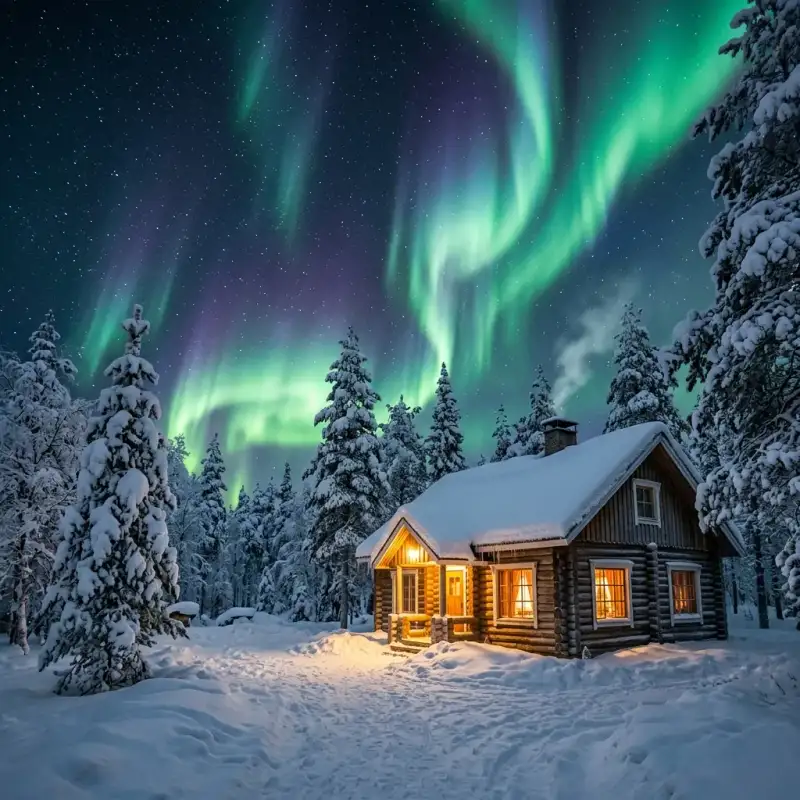
Greetings, fellow adventurers and dreamers! It’s Aisha Sharma, and today, we’re diving headfirst into one of the most breathtaking spectacles our planet has to offer: the Aurora Borealis. Imagine standing under a canvas of infinite stars, as ethereal ribbons of green, pink, and purple dance across the night sky, whispering ancient tales. This isn’t a scene from a fantasy novel; it’s a very real, very accessible phenomenon that awaits you in the pristine wilderness of Scandinavia. For decades, I’ve traversed the globe, seeking out wonders that ignite the soul, and few experiences compare to the profound awe inspired by the Northern Lights.
Scandinavia, comprising Norway, Sweden, and Finland, is not just a region; it’s a pilgrimage site for aurora chasers. Its unique geographical position within the “auroral oval” – a ring around the magnetic North Pole – combined with vast, unpolluted dark skies, makes it a prime viewing destination. From the dramatic fjords of Norway to the serene forests of Finnish Lapland and the icy wilderness of Swedish Lapland, each country offers a distinct backdrop to this celestial ballet. But simply showing up isn’t enough. Chasing the aurora requires strategic planning, a keen understanding of the science, and a readiness to embrace the Arctic environment. This comprehensive guide, born from countless nights under the Arctic sky, will equip you with everything you need to transform your dream of seeing the Northern Lights into an unforgettable reality, backed by factual insights and actionable advice. Prepare to unlock the secrets to a truly magical experience.
Understanding the Aurora Borealis: The Science Behind the Spectacle
To truly appreciate the Northern Lights, it helps to understand the incredible cosmic mechanics that orchestrate their appearance. The aurora is, at its heart, a magnificent solar-terrestrial interaction. It begins over 150 million kilometers away, on the surface of our sun. Solar flares and coronal mass ejections (CMEs) release a torrent of charged particles – primarily electrons and protons – into space. This phenomenon, known as solar wind, travels at speeds ranging from 400 to 800 kilometers per second, taking between two and five days to reach Earth.
Upon arrival, these energized particles encounter Earth’s magnetic field. Most are deflected, but some manage to penetrate the magnetic shield near the poles, where the field lines converge. As these solar particles collide with atoms and molecules in Earth’s upper atmosphere, typically at altitudes between 80 and 500 kilometers, they excite these atmospheric gases. When these excited atoms and molecules return to their original, lower energy state, they emit photons of light – creating the vibrant glow we know as the aurora. The specific color depends on the type of gas molecule and the altitude at which the collision occurs. Oxygen atoms, for instance, are responsible for the most common green-yellow hues (at lower altitudes, ~100-200 km) and the rarer red auroras (at higher altitudes, ~200-400 km). Nitrogen molecules produce blue or purple light.
The intensity of the aurora is often quantified by the Kp-index, a global geomagnetic activity index that ranges from 0 to 9. A Kp-index of 0-1 indicates very weak activity, while a Kp of 5 or higher signifies a geomagnetic storm, leading to highly visible and widespread auroras. While a Kp of 2-3 can yield beautiful displays, higher values drastically increase your chances and the aurora’s vibrancy. Forecasting is crucial, with organizations like NOAA’s Space Weather Prediction Center providing short-term (30-minute) and long-term (3-day) forecasts. Understanding these scientific underpinnings allows for more strategic planning, ensuring you’re in the right place at the right time to witness this celestial masterpiece. The magnetic poles, specifically within the auroral oval, are where these field lines are weakest, acting like a funnel for the charged particles, which is precisely why Scandinavia, particularly its northern regions, offers such consistent and spectacular shows.
Prime Locations in Scandinavia for Aurora Chasing
Scandinavia offers an unparalleled array of destinations for aurora hunters, each with its unique charm and viewing advantages. The key to successful aurora chasing lies in venturing above the Arctic Circle, minimizing light pollution, and choosing locations known for their clear skies and auroral activity.
Norway: Often considered the jewel of aurora tourism, Norway’s long coastline stretches deep into the auroral oval, offering dramatic backdrops of fjords and mountains.
- Tromsø: Dubbed the “Gateway to the Arctic,” Tromsø (69.6°N) is arguably Norway’s most popular aurora destination. It’s a bustling city with excellent infrastructure, including an international airport, numerous tour operators, and a variety of accommodation options. While the city itself has some light pollution, most tours take you just outside to darker areas. Data from local weather stations indicates that Tromsø experiences an average of 200 aurora nights per year between September and March.
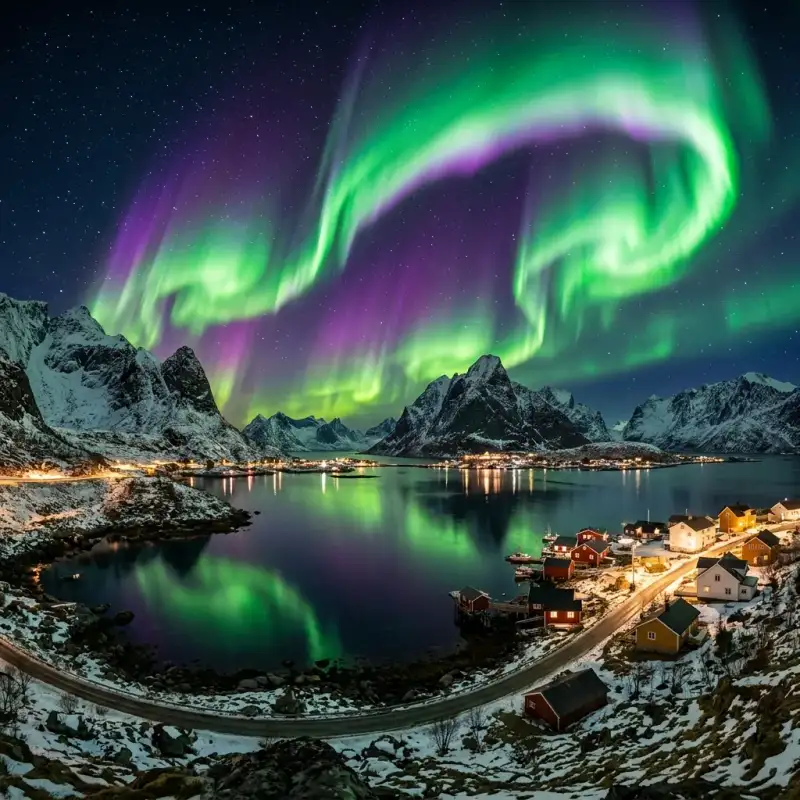
- Lofoten Islands: Further south (around 68°N), the Lofoten Islands offer arguably the most scenic aurora backdrop, with rugged mountains rising directly from the sea. Less crowded than Tromsø, but requiring more self-sufficiency. Viewings are frequent, though weather can be more variable due to coastal proximity.
- North Cape (Nordkapp): At 71°N, this is continental Europe’s northernmost point. It’s remote, wild, and incredibly dark, offering unimpeded views of the northern sky. Best accessed from Honningsvåg.
Sweden: Swedish Lapland is characterized by vast, unspoiled wilderness and consistent cold, dry weather, often leading to clearer skies than coastal Norway.
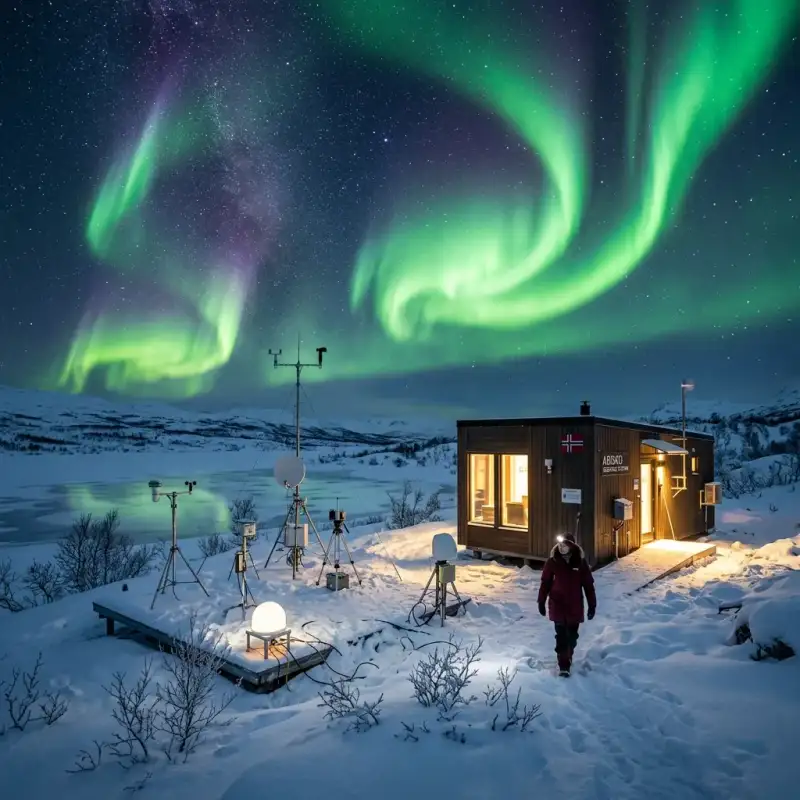
- Abisko National Park: Widely hailed as one of the very best places on Earth to see the Northern Lights. Abisko (68.3°N) benefits from a unique microclimate created by the surrounding mountains that keep the skies clear. The “Blue Hole of Abisko” is a local phenomenon where the sky over Lake Torneträsk often remains clear even when surrounding areas are cloudy. The Aurora Sky Station, accessible by chairlift, offers an elevated, light-pollution-free viewing platform. Statistical data from the Swedish Institute of Space Physics (IRF) confirms a significantly higher number of clear nights in Abisko compared to other Arctic locations.
- Kiruna: Sweden’s northernmost city, Kiruna (67.8°N), serves as a major hub for Swedish Lapland and is close to the iconic ICEHOTEL in Jukkasjärvi. It offers a good balance of accessibility and proximity to dark skies.
Finland: Finnish Lapland provides a magical, snowy wonderland experience, synonymous with Santa Claus and winter activities, alongside incredible aurora displays.
- Rovaniemi: While known as the official hometown of Santa Claus (66.5°N, just on the Arctic Circle), Rovaniemi is also a solid base for aurora hunting, especially in its surrounding dark areas. It offers excellent air connections and a wide range of activities.
- Levi, Saariselkä, and Inari: These fell villages (all around 68-69°N) are further north than Rovaniemi and offer exceptionally dark skies. Saariselkä is famous for its “Kaamos” or polar night period, ensuring prolonged darkness. Inari, located by Lake Inari, Finland’s third-largest lake, provides vast, open views over the frozen expanse, minimizing light obstruction. These areas are particularly popular for glass igloo accommodations, offering a unique viewing experience directly from your bed. Choosing your prime location depends on your travel style, budget, and desired activities beyond aurora chasing.
Optimal Timing & Weather Considerations
Successfully chasing the Northern Lights is as much about timing and understanding weather patterns as it is about choosing the right location. Patience and flexibility are paramount.
Best Season: The aurora season generally spans from late August/early September to early April. Within this window, the prime months are typically September through October and February through March.
- September-October: The autumn months offer slightly milder temperatures, making outdoor waiting more comfortable. The landscapes are often vibrant with autumn colors, and frozen lakes haven’t yet locked down, allowing for different transportation options like boat tours. However, rain or snow can be more frequent, potentially obscuring views.
- November-January: These are the darkest months, including the polar night period (Kaamos) above the Arctic Circle, where the sun doesn’t rise for weeks. This means maximum darkness, increasing viewing opportunities in terms of hours. However, temperatures plummet, often reaching -20°C to -30°C or even colder, and heavy snowfall can lead to increased cloud cover.
- February-March: As spring approaches, daylight hours gradually lengthen, but there’s still ample darkness for aurora viewing. Temperatures remain cold but often less extreme than deep winter. This period frequently offers a good balance of cold, clear nights and manageable temperatures, making it a very popular time for visitors.
Daily Timing: The best time to see the aurora is typically between 9:00 PM and 2:00 AM local time, though it can appear anytime from sunset to sunrise. Most tour operators schedule their chases during these hours. It’s crucial to stay vigilant throughout the night, as displays can intensify or fade rapidly.
Moon Phases: While the aurora is bright enough to be seen even under a full moon, a new moon phase or a crescent moon provides the darkest skies, allowing fainter auroras to be more visible and stars to shine more brightly, enhancing the overall experience. Check moon phase calendars when planning your trip.
Cloud Cover: This is the single biggest factor beyond solar activity that can make or break your aurora hunt. Even with a strong Kp-index, if the sky is overcast, you won’t see anything.
- Local Weather Forecasts: Constantly monitor local weather forecasts for cloud cover. Websites like Yr.no (for Norway and globally), AccuWeather, or local meteorological services are invaluable.
- Aurora Apps: Use dedicated aurora forecasting apps (e.g., My Aurora Forecast, Aurora Alerts) that combine Kp-index data with cloud cover maps, often showing satellite imagery of clear patches.
- Mobility: Being mobile is a significant advantage. Aurora chase tours specialize in driving to areas known for clear skies, sometimes crossing borders into different weather zones. If you rent a car, be prepared to do the same, but always prioritize safety on icy roads.
Remember, the aurora is a natural phenomenon, and guarantees are impossible. However, by selecting the optimal time window and remaining flexible with your viewing locations based on real-time weather, you significantly increase your chances of witnessing this celestial marvel.
#AuroraBorealis #NorthernLights #ScandinaviaTravel #ArcticAdventures #TravelGuide #SustainableTourism