-
 Elena Volkova
- 27 Jan, 2026 08:52
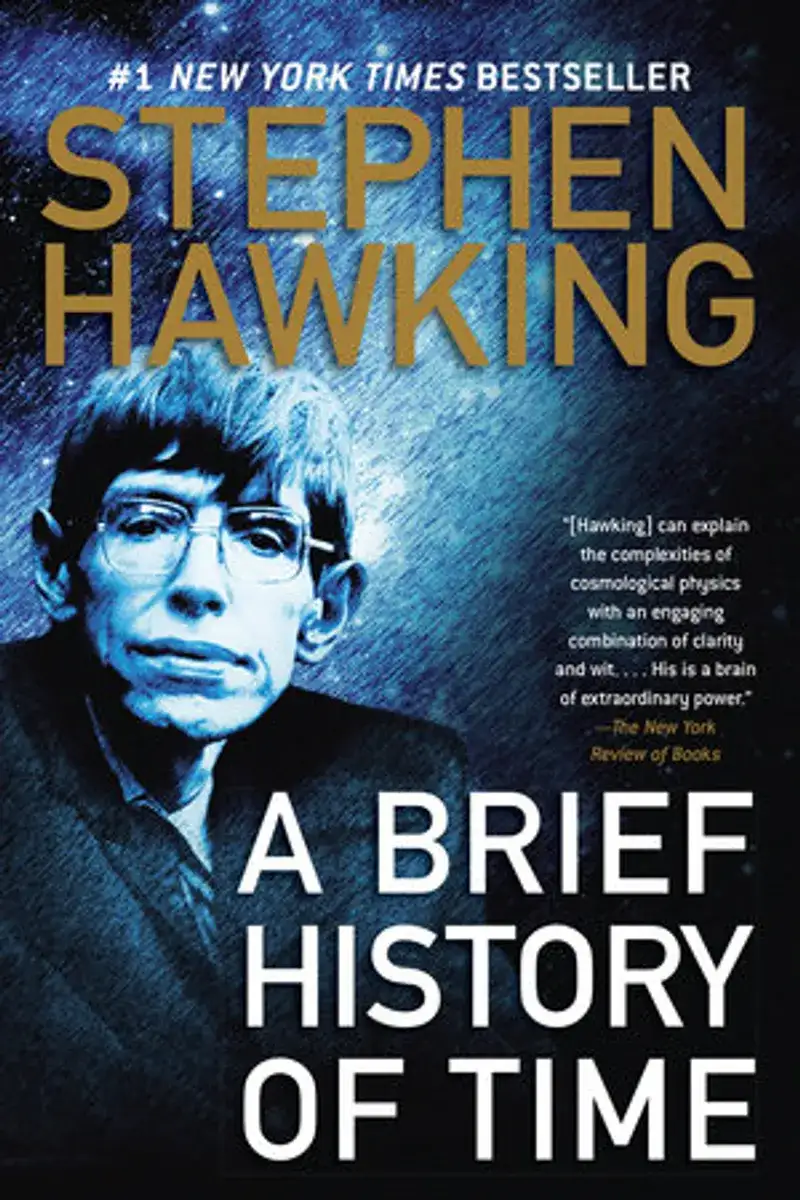
A Brief History of Time Book Review and Summary
A Brief History of Time Author: Stephen HawkingPage Count: UnknownPublication Date: 1998-PRH Stephen Hawking’s A Brief History of Time is not just a book—it’s a voyage into the deepest mysteries of the universe, written by one of the most brilliant minds of our era. Published in 1988, this masterpiece has endured as a cornerstone of popular science, blending profound cosmological theories with Hawking’s signature clarity and wit. Unlike dense textbooks that alienate non-scientists, Hawking invites readers into a world of black holes, quantum mechanics, and the origins of time itself, making complex ideas feel almost tangible. The book’s enduring appeal lies in its ability to turn abstract science into a gripping narrative, where each chapter peels back another layer of cosmic wonder. At its core, A Brief History of Time tackles the grandest questions humanity has ever asked: How did the universe begin? Will it end? Are there other dimensions beyond our own? Hawking approaches these inquiries not as a dry academic but as a storyteller, weaving together the Big Bang, the nature of time, and the enigmatic pull of gravity with a conversational ease. He doesn’t shy away from the mind-bending concepts—like the warping of spacetime or the possibility of a universe with no boundaries—but his genius lies in stripping them down to their essence. For instance, his explanation of black holes isn’t a labyrinth of equations but a vivid analogy: imagine space as a stretched rubber sheet, and a black hole as a bowling ball sinking into it, warping everything around it. It’s a trick only Hawking could pull off—making the incomprehensible feel intimate. Hawking’s style is deceptively simple yet rigorously precise. He avoids jargon where possible, substituting it with vivid imagery and patient analogies. When discussing the "arrow of time"—why we remember the past but not the future—he compares it to a cup of spilled coffee that never spontaneously reassembles. The tone is never condescending; even when tackling topics like the no-boundary proposal (his collaboration with Jim Hartle), he maintains a sense of awe that’s infectious. His humor sneaks in, too—like when he quips that the discovery of black holes was "a triumph of pure reason" or muses that asking what came before the Big Bang is "like asking for a point one mile north of the North Pole." It’s this blend of intellectual rigor and dry wit that makes the book so engrossing. Yet, what truly sets A Brief History of Time apart is its philosophical undertone. Hawking doesn’t just explain science; he reflects on its implications. He ponders whether a unified theory of physics could one day answer why the universe exists at all, and whether God—a concept he revisits with nuance—has a place in a cosmos governed by mathematical laws. His agnosticism isn’t preachy; it’s exploratory. He writes, "If we find a complete theory, it would be the ultimate triumph of human reason—for then we would know the mind of God." The line is both poetic and loaded, hinting at the awe Hawking himself felt toward the universe’s mysteries. It’s a reminder that science, for him, is not just about cold facts but about the human quest for meaning. The book’s structure is another triumph. Hawking guides the reader from the basics of relativity and quantum mechanics to the frontiers of theoretical physics, building knowledge incrementally. Early chapters lay the groundwork, while later ones delve into cutting-edge ideas like superstring theory and the holographic principle. Even when the material grows challenging, Hawking’s clarity keeps the reader anchored. It’s as if he’s holding your hand, saying, "Trust me, we’ll figure this out together." The result is a book that rewards both casual readers and those with a deeper scientific curiosity. That said, A Brief History of Time isn’t without its critics. Some argue that the 1998 edition (the one referenced here) feels slightly dated, as advancements like the detection of gravitational waves or the James Webb Space Telescope’s discoveries have since expanded our understanding. Yet, the book’s core ideas remain timeless. Hawking’s insights into black holes, the Big Bang, and the nature of time are foundational, and his ability to convey them transcends the passage of years. The book is less about the latest data and more about the eternal questions—questions that feel just as urgent today as they did in 1988. Ultimately, A Brief History of Time is a testament to Hawking’s genius—not just as a physicist, but as a communicator. He transforms the cosmos from an abstract void into a living, breathing entity, full of drama and possibility. The book doesn’t just inform; it inspires. It leaves you staring at the night sky with a new sense of wonder, wondering about the invisible forces shaping everything we see—and don’t see. In an era where science is often reduced to headlines or soundbites, Hawking’s work is a rare gem: a bridge between the ivory tower and the everyday mind. If you’ve ever gazed up at the stars and wondered how it all began, or what lies beyond the edge of the observable universe, this book will not just answer your questions—it will ignite your imagination. #StephenHawking #Cosmology #BlackHoles #BigBang #ScienceWriting #UniverseSecrets Related InsightsEmily Henry 3-Book Boxed Set Book Review and Summary The Heart of the Deal Book Review and Summary Fifty Shades Darker Book Review and Summary{ "@context": "https://schema.org", "@type": "FAQPage", "mainEntity": [ { "@type": "Question", "name": "What is the main focus of A Brief History of Time Book Review and Summary?", "acceptedAnswer": { "@type": "Answer", "text": "Everything you need to know about A Brief History of Time with our detailed review." } }, { "@type": "Question", "name": "Who authored the comprehensive guide on A Brief History of Time Book Review and Summary?", "acceptedAnswer": { "@type": "Answer", "text": "This detailed article and its insights were carefully researched and authored by Elena Volkova." } }, { "@type": "Question", "name": "Where can I find more related content about Books?", "acceptedAnswer": { "@type": "Answer", "text": "You can explore more articles, detailed reviews, and similar insights by browsing the Related Insights section at the bottom of this article or visiting our dedicated Books category page." } } ] }


They Carry a Promise Author: Janusz SzuberPage Count: UnknownPublication Date: 2015-PRH Janusz Szuber’s They Carry a Promise is a revelation—a collection that arrives decades late yet feels timeless, like a voice that has always existed in the margins of poetry, waiting for the right moment to speak. Published in English translation in 2015, this book introduces Szuber as a master of quiet intensity, a poet whose work feels both ancient and urgently modern. Wisława Szymborska and Zbigniew Herbert recognized him early as something special, and their praise is fully justified. Szuber’s poetry is not a shout but a whisper that lingers, a delicate balance between the precision of language and the chaos of existence. At its core, They Carry a Promise is a meditation on memory, history, and the fragile act of bearing witness. Szuber’s poems are steeped in the weight of the past—personal, historical, linguistic—but they never succumb to despair. Instead, they offer a kind of stubborn hope, a promise carried through time despite the inevitable erosion of time itself. The book’s title suggests this: something is being passed down, something that persists even as it is fragile. In one poem, Szuber writes, "Who will carve her fragile profile / in ivory... Who in truthful verse will briefly tell / of eternity, impermanent as a broken fan?" The question is haunting, but the act of asking it—of attempting to capture the fleeting in words—is an act of defiance. Szuber’s style is deceptively simple. His poems are short, often no more than a few stanzas, but each word feels deliberate, each image carefully chosen. There’s a precision here that belies the emotional depth of his work. He writes about nature—the flight of a heron, the blossoming of apple trees—but these are not mere observations. They are metaphors for something larger, something human. In "The Heron", he describes the bird’s takeoff as "a slow scream / of white wings", transforming a moment of natural beauty into something almost mythic. The heron becomes a symbol of both grace and fragility, much like the poetry itself. One of the most striking aspects of Szuber’s work is his relationship with language. He calls grammar his "adopted country", acknowledging the artificial yet necessary structures we use to make sense of the world. Yet he also yearns for something more immediate, something less ambiguous. In "I’d prefer something less ambiguous", he writes: "The bony parachutes of leaves, The flame of goosefoot, from a frosty page A star bent over me." Here, language is both a prison and a liberation. The images—"bony parachutes", "flame of goosefoot", "a star bent over me"—are visceral, almost tactile. Szuber’s poetry is rooted in the physical world, even as it grapples with abstraction. He doesn’t just describe a scene; he makes you feel it in your bones. The historical weight of Szuber’s work is also impossible to ignore. Poland’s turbulent 20th century looms in the background of many poems, though Szuber never indulges in overt political commentary. Instead, he finds the personal in the historical. In "Old Photo Album", he writes about the faces in faded photographs, the way time has blurred them but not erased them entirely. The poem is a quiet lament for what is lost, but also a celebration of what persists. "They carry a promise," he writes, and that line could serve as an epigraph for the entire collection. The translations by Ewa Hryniewicz-Yarbrough are nothing short of brilliant. Szuber’s Polish is known for its lyrical density, and Hryniewicz-Yarbrough captures that density without sacrificing clarity. The English versions feel like they were written in the same language, with the same urgency and elegance. It’s a testament to the translator’s skill that Szuber’s voice feels so immediate and alive in English. They Carry a Promise is a book that rewards slow reading. It’s not the kind of poetry that demands attention through sheer force; it invites you in, gently but insistently. Szuber’s poems are like stones in a stream—small, unassuming, but with a weight that shapes the water around them. They linger in the mind long after you’ve turned the last page, leaving you with the sense that you’ve witnessed something rare: poetry that is both deeply personal and universally resonant. If you’ve ever felt the weight of history, the fragility of memory, or the quiet beauty of the world around you, this book will speak to you. Szuber doesn’t offer easy answers, but he offers something just as valuable: a promise that even in the face of impermanence, there is meaning to be found. #Szuber #PolishPoetry #PoetryInTranslation #ContemporaryPoets #LiteraryDiscovery #PoetryCollection Related InsightsI Put a Spell on You (Fableview #2) Book Review and Summary Edge Book Review and Summary A Deal in Death (Immortal Desires, #2) Book Review and Summary{ "@context": "https://schema.org", "@type": "FAQPage", "mainEntity": [ { "@type": "Question", "name": "What is the main focus of They Carry a Promise Book Review and Summary?", "acceptedAnswer": { "@type": "Answer", "text": "Everything you need to know about They Carry a Promise with our detailed review." } }, { "@type": "Question", "name": "Who authored the comprehensive guide on They Carry a Promise Book Review and Summary?", "acceptedAnswer": { "@type": "Answer", "text": "This detailed article and its insights were carefully researched and authored by Piotr Nowak." } }, { "@type": "Question", "name": "Where can I find more related content about Books?", "acceptedAnswer": { "@type": "Answer", "text": "You can explore more articles, detailed reviews, and similar insights by browsing the Related Insights section at the bottom of this article or visiting our dedicated Books category page." } } ] }
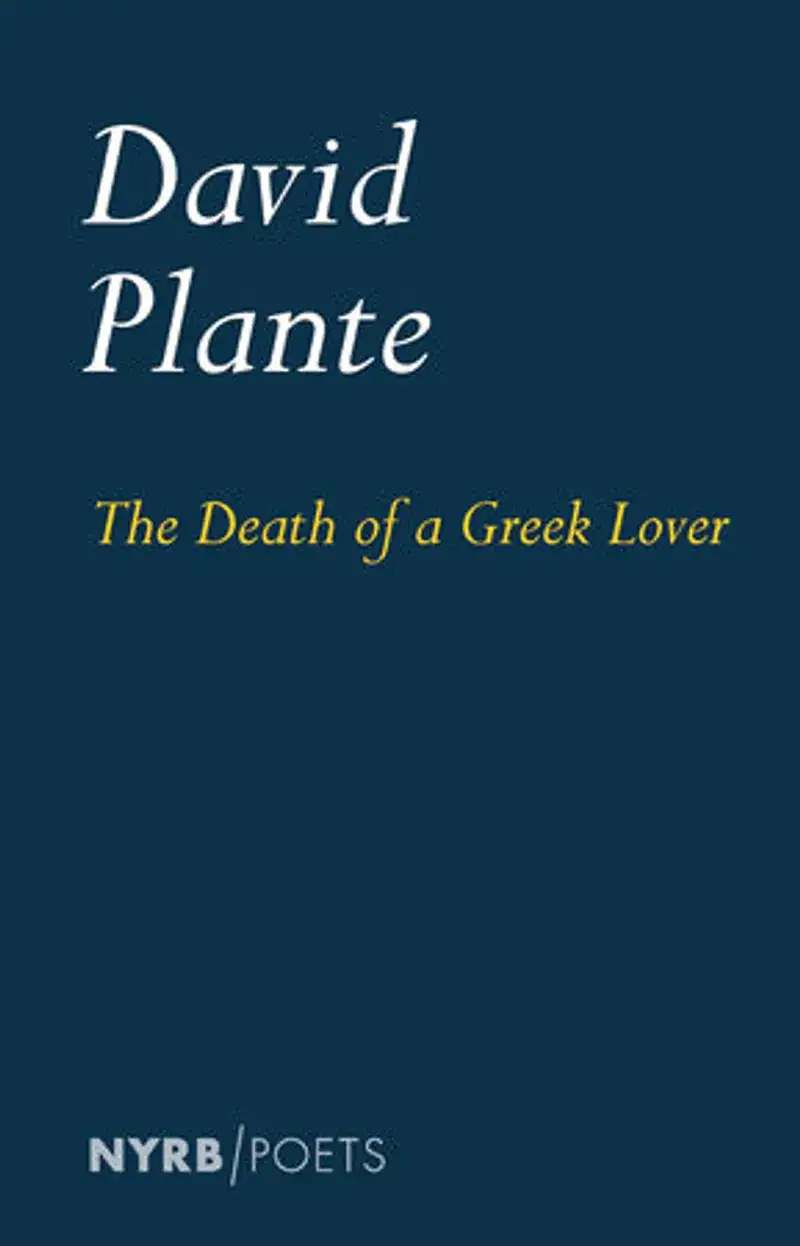

The Death of a Greek Lover Author: David PlantePage Count: UnknownPublication Date: 2026-PRH In the midst of a literary landscape often dominated by familiar voices, David Plante emerges with a work that promises to shatter the complacency of contemporary fiction: "The Death of a Greek Lover". This latest offering from the acclaimed author is a masterful exploration of the human condition, delving into the intricacies of love, loss, and the search for identity. From the outset, it is evident that Plante's writing style has evolved, yet remains unmistakable. His prose is as lyrical as ever, weaving a tapestry of words that transport the reader to the sun-drenched landscapes of Greece. The author's use of language is deliberate, each sentence carefully crafted to evoke a sense of longing and nostalgia. This is a writer who understands the power of subtlety, often conveying more through what is left unsaid than what is explicitly stated. At its core, "The Death of a Greek Lover" is a meditation on the fleeting nature of human connection. Plante's protagonist, a Greek lover whose life is marked by a series of intense, all-consuming relationships, serves as a conduit for the author's exploration of love in all its forms. Through this character's journey, Plante raises fundamental questions about the human experience: What is it to love? To lose? To be left behind? One of the most striking aspects of the book is its use of the Greek landscape as a metaphor for the human condition. The rugged, unforgiving terrain serves as a backdrop for the protagonist's emotional struggles, underscoring the idea that our inner lives are often as turbulent as the natural world. Plante's descriptions of the Greek countryside are vivid and evocative, imbuing the narrative with a sense of timelessness. Throughout the book, Plante's writing is marked by a sense of restraint, a willingness to let the reader fill in the gaps. This is a bold move, one that requires a high degree of trust between author and reader. Yet, it is a risk that pays off, as the narrative unfolds with a sense of inevitability, drawing the reader into its world with ease. If there is a criticism to be made, it is that the book's themes and motifs may be overly familiar to some readers. Plante's exploration of love and loss is certainly not new, and some may find themselves wishing for a more radical departure from the norm. However, it is in the execution that "The Death of a Greek Lover" truly shines, offering a nuanced and deeply moving portrayal of the human experience. Ultimately, "The Death of a Greek Lover" is a book that will resonate with readers long after the final page has been turned. It is a powerful exploration of the human condition, one that lingers in the mind like the ghost of a lost love. For fans of literary fiction, this is a must-read, a work that promises to leave an indelible mark on the literary landscape. #TheDeathOfAGreekLover #DavidPlante #LiteraryFiction #GreekLiterature #LoveAndLoss #ContemporaryFiction Related InsightsCarrie Book Review and Summary From Goethe to the Silver Screen: The Ever‑Evolving Journey of the Bildungsroman Estuche especial de 'Los habitantes del aire' Book Review and Summary{ "@context": "https://schema.org", "@type": "FAQPage", "mainEntity": [ { "@type": "Question", "name": "What is the main focus of The Death of a Greek Lover Book Review and Summary?", "acceptedAnswer": { "@type": "Answer", "text": "Everything you need to know about The Death of a Greek Lover with our detailed review." } }, { "@type": "Question", "name": "Who authored the comprehensive guide on The Death of a Greek Lover Book Review and Summary?", "acceptedAnswer": { "@type": "Answer", "text": "This detailed article and its insights were carefully researched and authored by Isabella Moore." } }, { "@type": "Question", "name": "Where can I find more related content about Books?", "acceptedAnswer": { "@type": "Answer", "text": "You can explore more articles, detailed reviews, and similar insights by browsing the Related Insights section at the bottom of this article or visiting our dedicated Books category page." } } ] }
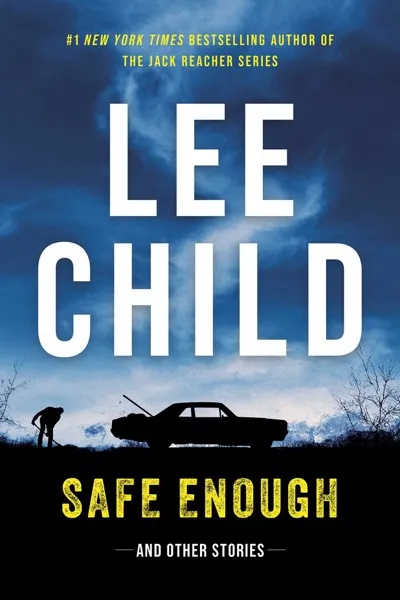

Safe Enough and Other Stories Author: Lee ChildPage Count: UnknownPublication Year: 2024-GB Lee Child’s Safe Enough and Other Stories: A Masterclass in Tension, Twists, and Timeless Thrills Few names in thriller fiction command the same level of instant recognition as Lee Child. For decades, his Jack Reacher novels have redefined the genre, blending razor-sharp suspense with an unshakable sense of justice. But what happens when Child steps outside the confines of his iconic series? The answer lies in his latest collection, Safe Enough and Other Stories—a dazzling showcase of his storytelling prowess, proving that his genius isn’t limited to a single protagonist. This book is a must-read for fans of taut narratives, moral ambiguity, and the kind of storytelling that lingers long after the last page. At its core, Safe Enough and Other Stories is a testament to Child’s ability to craft short fiction that feels as expansive as a novel. The collection spans a variety of settings and scenarios, from high-stakes heists to quiet, psychological confrontations, each one a microcosm of tension. What unites these stories is Child’s signature style: relentless pacing, razor-edged dialogue, and protagonists who are as flawed as they are formidable. Whether it’s a lone wolf navigating a labyrinth of betrayal or an ordinary person thrust into extraordinary circumstances, Child’s characters feel real—flawed, desperate, and utterly human. One of the most striking aspects of this collection is its exploration of the theme of safety—or the illusion of it. The title story, Safe Enough, sets the tone with a protagonist who believes they’ve outsmarted their pursuers, only to discover that danger is far more persistent than expected. This theme of precarious security runs through the book, challenging the idea that any situation is truly under control. Child plays with the reader’s expectations, delivering twists that are both surprising and inevitable, a hallmark of his craft. It’s a reminder that in a world where danger lurks in the most mundane places, true safety is often an illusion. Child’s writing style is deceptively simple yet devastatingly effective. His prose is clean and uncluttered, allowing the tension to build organically without relying on purple prose or over-description. Dialogue crackles with authenticity, and his ability to convey emotion through sparse, impactful sentences is nothing short of masterful. Whether he’s describing a tense standoff or a moment of quiet introspection, Child’s words carry weight, making every scene feel visceral and immediate. The diversity of stories in this collection is another testament to Child’s versatility. Some tales, like The Fourth Man, lean into the classic thriller format, while others, such as The Last Stand, explore deeper, more philosophical questions about loyalty and sacrifice. This range ensures that there’s something for every reader, whether they’re in the mood for a pulse-pounding chase or a slow-burning mystery. Child’s ability to shift tones and genres while maintaining his distinctive voice is a rare talent, and it’s on full display here. What makes Safe Enough and Other Stories particularly compelling is its exploration of moral gray areas. Child’s protagonists are rarely one-dimensional heroes; they’re often flawed individuals making difficult choices in impossible situations. This moral complexity adds depth to the stories, elevating them beyond mere entertainment into something more thought-provoking. It’s a reminder that in the world of thrillers, the line between right and wrong is often blurred, and the real question isn’t whether someone is good or bad, but how far they’re willing to go to survive. For fans of Lee Child’s work, this collection is a treasure trove of familiar elements—sharp wit, relentless pacing, and protagonists who refuse to back down. But it’s also a chance to see Child at his most experimental, playing with structure and perspective in ways that keep the reader guessing. The stories are standalone, yet they feel interconnected, as if each one is a piece of a larger puzzle about human nature and resilience. If there’s one criticism to be leveled at Safe Enough and Other Stories, it’s that some tales might feel slightly familiar to long-time readers of Child’s work. His signature tropes—lone heroes, high-stakes confrontations, and a healthy dose of dark humor—are present throughout, which could make the collection feel repetitive for those who’ve devoured his entire bibliography. However, this is a minor quibble in an otherwise stellar collection. Child’s ability to reinvent these tropes with fresh energy and creativity ensures that even the most seasoned readers will find something to love. In an era where thrillers often prioritize shock value over substance, Safe Enough and Other Stories is a refreshing reminder of what makes the genre great. It’s a book that respects the intelligence of its readers, delivering stories that are as intellectually satisfying as they are entertaining. Whether you’re a longtime fan of Lee Child or a newcomer to his work, this collection is a must-read—a testament to the enduring power of a master storyteller. #LeeChild #ThrillerBooks #ShortStoryCollection #MustRead #CrimeFiction Related InsightsThe Best American Mystery Stories 2020 Book Review and Summary Fear and Loathing in Las Vegas: A Savage Journey to the Heart of the American Dream Book Review and Summary Are You There God? It’s Me, Margaret Book Review and Summary{ "@context": "https://schema.org", "@type": "FAQPage", "mainEntity": [ { "@type": "Question", "name": "What is the main focus of **Safe Enough and Other Stories** Book Review and Summary?", "acceptedAnswer": { "@type": "Answer", "text": "Everything you need to know about **Safe Enough and Other Stories** with our detailed review." } }, { "@type": "Question", "name": "Who authored the comprehensive guide on **Safe Enough and Other Stories** Book Review and Summary?", "acceptedAnswer": { "@type": "Answer", "text": "This detailed article and its insights were carefully researched and authored by Klaus Weber." } }, { "@type": "Question", "name": "Where can I find more related content about Books?", "acceptedAnswer": { "@type": "Answer", "text": "You can explore more articles, detailed reviews, and similar insights by browsing the Related Insights section at the bottom of this article or visiting our dedicated Books category page." } } ] }
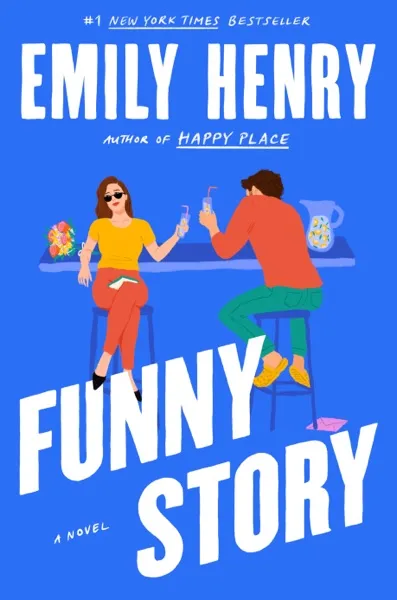

Funny Story Author: Emily HenryPage Count: UnknownPublication Year: 2024-GB Love, Laughter, and the Messy Art of Letting Go: A Review of Emily Henry’s Funny Story There’s a special kind of magic in a book that makes you laugh out loud one moment and ache for the characters the next—all while feeling like you’re peering into a mirror held up to your own romantic misadventures. Emily Henry’s Funny Story (2024) is that kind of book: a razor-sharp, heartfelt comedy about love, self-sabotage, and the absurdity of trying to outrun your own feelings. If you’ve ever dated someone who was almost right, or stayed in a relationship longer than you should have just to avoid the dreaded "what if," this novel will feel like a conversation with your most brutally honest friend—one who also happens to be a master storyteller. At its core, Funny Story is a romance, but not the kind that follows a neat, predictable script. Instead, it’s a story about two people who are terrible at love—at least, that’s how they see themselves. The protagonist, Daphne, is a recent college graduate stuck in a dead-end relationship with a man who treats her like an afterthought. When she impulsively moves to New York City to start over, she crosses paths with Miles, a struggling comedian whose own love life is a dumpster fire of bad dates and half-hearted flings. Their meet-cute is so cringe-inducingly awkward it’s brilliant, and their dynamic from the start is less "will they, won’t they" and more "why are we like this?" What makes Funny Story stand out is its refusal to romanticize either character’s flaws. Daphne isn’t just a "strong female lead" waiting for a man to validate her; she’s messy, indecisive, and prone to overthinking. Miles isn’t the brooding, emotionally unavailable love interest with a hidden soft side—he’s a hot mess of contradictions, equal parts charming and infuriating. Their chemistry isn’t built on grand gestures or instant attraction, but on the kind of banter that only comes from two people who get each other’s worst traits. Henry excels at writing dialogue that crackles with wit and authenticity, making their conversations feel like eavesdropping on a real friendship (or, let’s be honest, a toxic but addictive cycle of texting at 2 AM). The novel’s themes revolve around the universal struggle of growing up—specifically, the painful realization that the stories we tell ourselves about love, success, and happiness are often just elaborate excuses to avoid doing the hard work of change. Daphne’s journey isn’t about finding the "right" person; it’s about learning to trust herself enough to walk away from what isn’t serving her. Miles’s arc is equally compelling: a man who hides behind humor and self-deprecation because facing his own mediocrity feels like a fate worse than bad dates. Their relationship isn’t a fairy tale, but it is a deeply human one—messy, imperfect, and ultimately hopeful. Henry’s writing style is a masterclass in balancing humor and heartache. She has a knack for crafting sentences that land like punchlines one moment and gut punches the next, often within the same paragraph. Her prose is effortlessly readable, with a conversational tone that makes Funny Story feel less like a novel and more like a series of late-night confessions. Whether she’s describing the claustrophobic dread of a bad relationship or the giddy, terrifying freedom of starting over, her words have a way of lingering long after the last page. What truly elevates this book, however, is its unflinching honesty about the ways we sabotage ourselves in love. It’s not just about romantic relationships, either—it’s about the friendships, career choices, and self-perceptions that keep us stuck. Daphne’s journey is as much about learning to say "no" as it is about learning to say "yes" to something better. Miles’s story is a reminder that growth doesn’t always look like success; sometimes, it looks like admitting you were wrong and trying again. If Funny Story has a flaw, it’s that its pacing occasionally stumbles in the middle, as if Henry herself is as unsure as her characters about where the story is headed. But this is a minor quibble in a novel that otherwise delivers exactly what it promises: a story that’s as funny as it is poignant, as sharp as it is tender. By the end, you’ll close the book with a sigh, a laugh, and the distinct feeling that you’ve just witnessed something real. Emily Henry has done it again—crafted a romance that’s equal parts hilarious and heartbreaking, a story that reminds us that love isn’t about finding someone perfect, but about finding someone who’s willing to stumble through the mess with you. Funny Story isn’t just a love story; it’s a story about the kind of love that saves us from ourselves. #EmilyHenry #FunnyStory #RomanceBooks #BookReview #NewRelease Related InsightsClassic Christmas Stories Book Review and Summary The Pythagorean Book Review and Summary Clear Water Book Review and Summary{ "@context": "https://schema.org", "@type": "FAQPage", "mainEntity": [ { "@type": "Question", "name": "What is the main focus of **Funny Story** Book Review and Summary?", "acceptedAnswer": { "@type": "Answer", "text": "Everything you need to know about **Funny Story** with our detailed review." } }, { "@type": "Question", "name": "Who authored the comprehensive guide on **Funny Story** Book Review and Summary?", "acceptedAnswer": { "@type": "Answer", "text": "This detailed article and its insights were carefully researched and authored by Emma Thompson." } }, { "@type": "Question", "name": "Where can I find more related content about Books?", "acceptedAnswer": { "@type": "Answer", "text": "You can explore more articles, detailed reviews, and similar insights by browsing the Related Insights section at the bottom of this article or visiting our dedicated Books category page." } } ] }
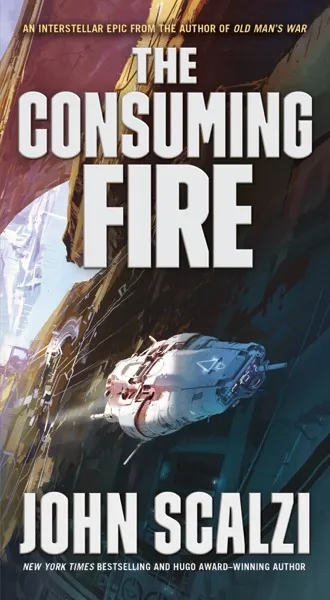

The consuming fire Author: John ScalziPage Count: UnknownPublication Year: 2018-GB John Scalzi’s The Consuming Fire is a cosmic spectacle wrapped in sharp wit and relentless energy, a novel that proves why the author remains one of science fiction’s most vital voices. Published in 2018, this installment in the Interdependency series (though it functions as a standalone adventure) ignites a narrative that is as much about the fragility of human ambition as it is about the vast, indifferent machinery of the universe. Scalzi doesn’t just build worlds—he dismantles them with gleeful precision, leaving readers to marvel at the wreckage. At its core, The Consuming Fire explores the illusion of control. The Interdependency, a fragile network of human colonies held together by a near-magical technology called the Flow, is a metaphor for any system built on fragile assumptions. The Flow, a system of instantaneous travel between star systems, is the Interdependency’s lifeline—and its Achilles’ heel. When the Flow begins to collapse, the colonies face an existential crisis: do they cling to their delusions of stability, or do they adapt in a universe that cares nothing for their survival? Scalzi’s genius lies in framing this crisis not as a grand, operatic tragedy, but as a bureaucratic nightmare where politicians, scientists, and ordinary people scramble to make sense of a reality that has just shattered. It’s Deep Impact meets The Office, if the office were on the brink of annihilation. Scalzi’s style is the novel’s greatest asset. His prose is muscular and unpretentious, a conversational rhythm that belies the complexity of his ideas. He writes with the ease of a storyteller who knows exactly how much detail to withhold, how much to reveal, and when to hit the reader with a gut-punch line. The dialogue crackles with humor, even in moments of high tension, a hallmark of Scalzi’s work that keeps his books from ever feeling ponderous. His characters—whether the cynical politician Natch, the idealistic physicist Marce, or the ruthless merchant Kiva—are flawed, relatable, and often hilarious, their personalities emerging as much from their banter as from their actions. One of the book’s most compelling themes is the tension between tradition and innovation. The Interdependency’s ruling class, the Nohansan Empire, thrives on the status quo, their authority built on the Flow’s reliability. But when the Flow fails, their power crumbles, exposing a rotten core of corruption and short-sightedness. Meanwhile, the "Flowbreakers"—outsiders who understand the system’s flaws—are dismissed as radicals until it’s too late. Scalzi doesn’t moralize; he simply presents the consequences of inertia, making the reader squirm as they recognize echoes of real-world stagnation in the story’s politics. The novel’s structure is another triumph. Scalzi juggles multiple perspectives without ever losing focus, each thread weaving into a tapestry of desperation and discovery. The chapters alternate between high-stakes political maneuvering, tense scientific investigations, and the quiet desperation of ordinary people caught in the collapse. The pacing is relentless, yet the book never feels rushed—every scene earns its place, whether it’s a witty exchange in a tavern or a desperate flight through a dying colony. If there’s a weakness, it’s that the novel’s scope occasionally outpaces its emotional depth. The sheer number of characters and locations can feel overwhelming, and some relationships—particularly romantic subplots—feel underdeveloped. But this is a minor quibble in a book that delivers so much: big ideas, sharp dialogue, and a plot that never lets up. Scalzi’s genius is in making the apocalyptic feel intimate, the cosmic feel personal. The Consuming Fire is more than just a sci-fi adventure; it’s a meditation on how societies cling to comfort even as the ground beneath them gives way. It’s a story about the moment when the illusion of safety collapses, and the terrifying, exhilarating freedom that follows. Scalzi doesn’t just ask what happens when the universe changes—he asks what we do about it, and whether we’re even capable of change. In an era where so much science fiction retreats into escapism, The Consuming Fire is refreshingly grounded. It’s a book that respects its readers enough to challenge them, to make them laugh, and to leave them thinking long after the last page. If you’ve ever watched a system you trusted crumble before your eyes, this novel will resonate. If you haven’t, it might make you question everything you take for granted. #SciFi #JohnScalzi #Interdependency #SpaceOpera #SFF #ApocalypticFiction Related InsightsA Little Life Book Review and Summary From the Grave Book Review and Summary Duke and I and the Viscount Who Loved Me Book Review and Summary{ "@context": "https://schema.org", "@type": "FAQPage", "mainEntity": [ { "@type": "Question", "name": "What is the main focus of The consuming fire Book Review and Summary?", "acceptedAnswer": { "@type": "Answer", "text": "Everything you need to know about The consuming fire with our detailed review." } }, { "@type": "Question", "name": "Who authored the comprehensive guide on The consuming fire Book Review and Summary?", "acceptedAnswer": { "@type": "Answer", "text": "This detailed article and its insights were carefully researched and authored by Camille Dubois." } }, { "@type": "Question", "name": "Where can I find more related content about Books?", "acceptedAnswer": { "@type": "Answer", "text": "You can explore more articles, detailed reviews, and similar insights by browsing the Related Insights section at the bottom of this article or visiting our dedicated Books category page." } } ] }
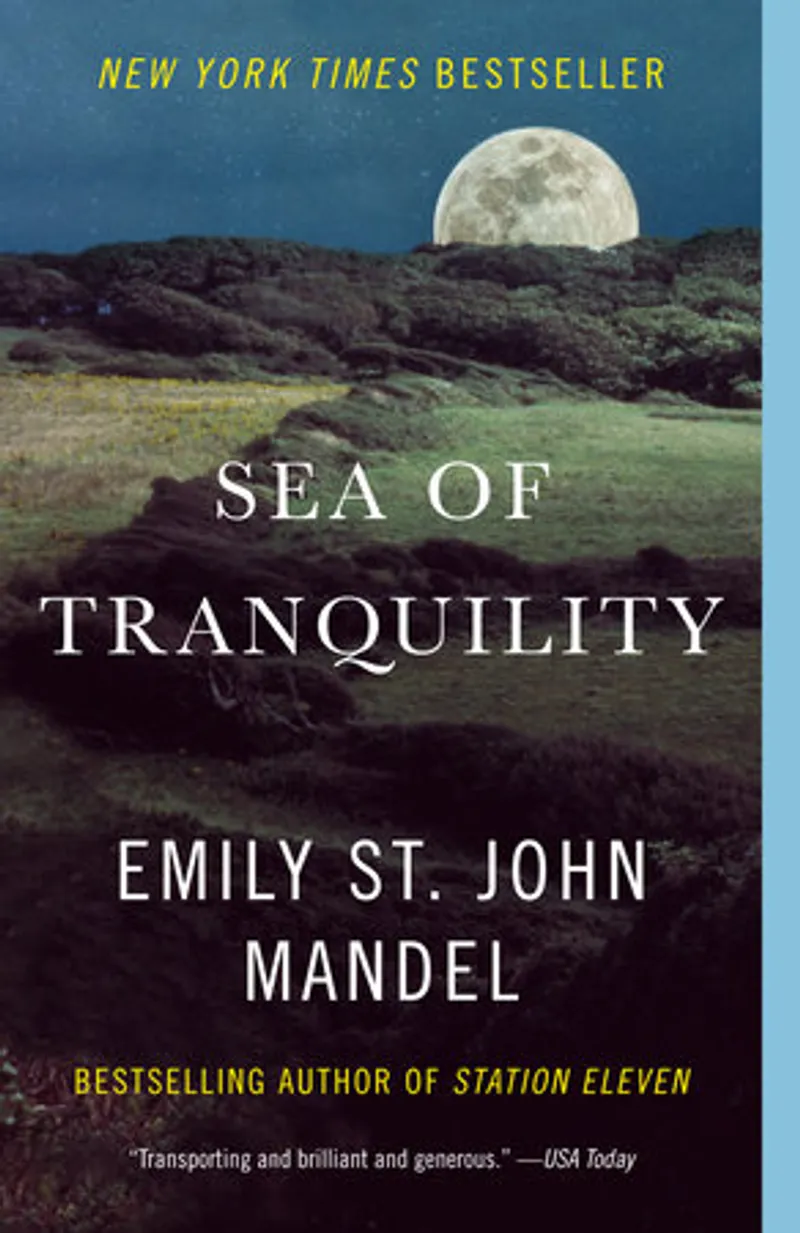
Sea of Tranquility Author: Emily St. John MandelPage Count: UnknownPublication Date: 2023-PRH Emily St. John Mandel’s Sea of Tranquility is a masterclass in speculative fiction, weaving together time travel, existential dread, and quiet human resilience into a narrative that feels both timeless and urgently contemporary. Published in 2023, this novel cements Mandel’s reputation as a writer who can elevate genre fiction into something profound, blending the intimate with the cosmic in a way that lingers long after the last page. At its core, Sea of Tranquility is a meditation on the fragility of reality and the ways in which art—whether a violin’s melody, a novel’s passage, or a detective’s investigation—can ripple through time, altering lives in ways both grand and imperceptible. The story unfolds across centuries, from a 1912 Vancouver Island forest where Edwin St. Andrew, a disgraced young aristocrat, hears an impossible violin tune in an airship terminal, to a 25th-century moon colony where writer Olive Llewellyn’s pandemic novel contains a cryptic reference to that same moment. Between these poles, Mandel introduces Gaspery-Jacques Roberts, a detective in a dystopian Night City, tasked with uncovering the truth behind anomalies that defy the laws of physics. What connects these disparate lives is a single, recurring question: Is time a fixed line, or is it a sea of possibilities, endlessly shifting? Mandel’s genius lies in her ability to balance the speculative with the deeply human. The novel’s time-travel mechanics are never the focus; instead, they serve as a lens to examine how people endure, create, and find meaning in chaos. The 1912 prologue, with its lush descriptions of wilderness and Edwin’s disorientation, feels like a gothic ghost story, while the moon colony’s sterile, artificial beauty in Olive’s era evokes a sterile, controlled future where nature has been replaced by human design. Gaspery’s world, meanwhile, is a noir-tinged nightmare of neon and decay, where the past and future bleed into one another in ways that feel both thrilling and unsettling. What makes Sea of Tranquility so compelling is Mandel’s prose, which is at once elegant and unadorned. She has a knack for capturing the quiet moments—the way a character’s breath catches in their throat, the weight of a single decision that alters a life. The novel’s structure is deceptively simple, moving between timelines with a precision that feels effortless, but the cumulative effect is one of inevitability. Each character’s arc is a thread in a larger tapestry, and by the time the threads converge, the reader is left with a sense of awe at how perfectly everything fits together. The pandemic subplot, woven through Olive’s novel within the novel, adds a layer of prescient dread, grounding the story in the anxieties of our own time. Mandel doesn’t dwell on the horror of disease, but rather on how people adapt, create, and find solace in art and connection. It’s a reminder that even in the face of collapse, humanity persists—and that persistence is what makes us extraordinary. Sea of Tranquility is not just a book about time travel; it’s a book about the stories we tell ourselves to make sense of existence. Mandel’s characters are not heroes or villains, but ordinary people caught in extraordinary circumstances, forced to confront the idea that their lives might be part of something larger than themselves. The novel’s title, taken from the lunar mare where the first moon landing occurred, is a perfect metaphor: tranquility is an illusion, a fleeting moment of stillness in an ever-shifting sea. In the end, Sea of Tranquility is a novel that will appeal to fans of literary fiction and speculative readers alike. It’s a book that makes you think, but it’s also a book that makes you feel—deeply, viscerally. Mandel has crafted a story that is both a puzzle and a revelation, one that lingers in the mind like a half-remembered dream. #SeaOfTranquility #EmilyStJohnMandel #TimeTravelFiction #SpeculativeFiction #LiterarySciFi #BookReview Related InsightsHarbinger Book Review and Summary The Norton Introduction to Literature--Shorter thirteenth edition Book Review and Summary Dream Town Book Review and Summary{ "@context": "https://schema.org", "@type": "FAQPage", "mainEntity": [ { "@type": "Question", "name": "What is the main focus of Sea of Tranquility Book Review and Summary?", "acceptedAnswer": { "@type": "Answer", "text": "Everything you need to know about Sea of Tranquility with our detailed review." } }, { "@type": "Question", "name": "Who authored the comprehensive guide on Sea of Tranquility Book Review and Summary?", "acceptedAnswer": { "@type": "Answer", "text": "This detailed article and its insights were carefully researched and authored by Emily St. John Mandel." } }, { "@type": "Question", "name": "Where can I find more related content about Books?", "acceptedAnswer": { "@type": "Answer", "text": "You can explore more articles, detailed reviews, and similar insights by browsing the Related Insights section at the bottom of this article or visiting our dedicated Books category page." } } ] }
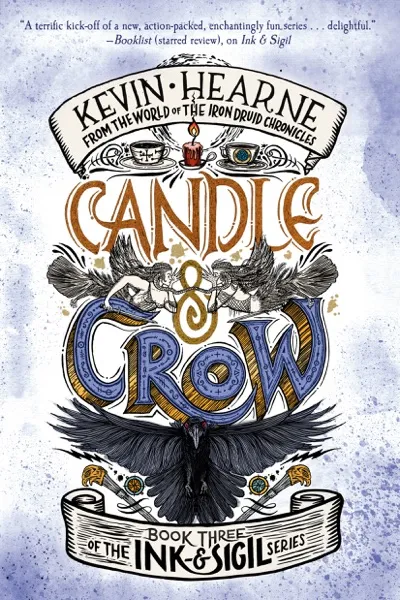
Candle and Crow Author: Kevin HearnePage Count: UnknownPublication Year: 2024-GB Kevin Hearne’s Candle and Crow arrives in 2024 as the latest installment in a saga that has captivated millions worldwide. With the weight of a global bestseller already behind it, this book promises to deepen the mythos of a universe where ancient magic clashes with modern chaos—where gods walk among mortals, and the line between destiny and defiance blurs into something raw and unpredictable. At its core, Candle and Crow is a story about legacy and rebellion. Hearne, known for his razor-sharp wit and genre-defying creativity, once again blends mythology, urban fantasy, and dark humor into a narrative that feels both timeless and urgently modern. The book likely follows characters like Atticus O’Sullivan, the last of the Druids, as they navigate a world where old powers refuse to die and new threats rise with terrifying ease. But beneath the surface-level adventure, the theme that resonates most is the struggle to define oneself outside the shadows of the past. Whether it’s a reluctant hero, a fallen deity, or an ancient artifact pulling strings from the shadows, Candle and Crow seems poised to ask: Can you ever truly escape what you were meant to be? What sets Hearne apart is his unapologetic embrace of contradiction. His prose is muscular yet playful, balancing visceral action with banter so sharp it could cut glass. Dialogue crackles with irreverence, even when the stakes are life-and-death—because in Hearne’s world, gods and monsters aren’t just terrifying; they’re also ridiculous. This tonal duality isn’t just stylistic flair; it’s a deliberate choice to ground the fantastical in the human. The reader laughs, then gasps, then laughs again, all while the ground beneath them shifts unpredictably. It’s a high-wire act, and few writers pull it off with as much confidence or charm as Hearne does. The book’s structure likely mirrors its themes. Expect nonlinear storytelling, flashbacks that reveal hidden motives, and a narrative that darts between perspectives with the agility of a seasoned trickster. Hearne isn’t afraid to let his characters contradict themselves, to evolve in messy, unpredictable ways. The result is a story that feels alive—less a crafted tale and more a living, breathing entity that demands your attention. If Candle and Crow follows the pattern of Hearne’s previous works, it will also feature a deep dive into lore that rewards longtime fans while still welcoming newcomers. The world-building in his series is encyclopedic but never overwhelming, served up in digestible morsels that whet the appetite without drowning the reader. Gods of every pantheon mingle in a cosmic cocktail, their rivalries and alliances reshaping the very fabric of reality. It’s a playground for the imagination, and Hearne is the guide who makes sure you never lose your way—even when the path twists into the absurd. What makes Candle and Crow more than just another urban fantasy romp is its emotional undercurrent. Beneath the jokes and the lightning-fast swordplay, there’s a melancholy that lingers. The characters—whether immortal or fleeting—carry the weight of centuries. They’ve seen empires rise and fall, loved and lost, and now they’re forced to confront the cost of their own existence. It’s a theme that resonates in a world where change is the only constant, and legacy can be both a prison and a weapon. Hearne’s style is deceptively accessible. His sentences move with the rhythm of a seasoned raconteur, luring you in with humor and then gutting you with pathos when you least expect it. He understands the power of silence as much as he does the punchline, and it’s in those quiet moments—between battles, between revelations—that the book’s heart beats strongest. If there’s a criticism to be leveled, it might be that Hearne’s world can sometimes feel too crowded. With gods, monsters, and magical artifacts piling up like a mythological buffet, there’s a risk of losing the emotional thread in the sheer spectacle. But Hearne’s gift is in making even the most outlandish elements feel personal. Whether it’s a god’s petty feud or a cursed artifact’s whisper, everything ties back to the characters—and to the reader’s investment in their fates. Candle and Crow isn’t just a book; it’s an experience. It’s for those who crave adventure wrapped in razor-wit, who want their fantasy served with a side of existential dread and a heaping helping of laughs. Kevin Hearne has crafted a tale that’s as much about the stories we tell ourselves as it is about the ones we’re handed down. And in a world where so many narratives feel recycled, that’s a rare and precious thing. #UrbanFantasy #MythologyRetold #DruidAdventures #KevinHearne #FantasyBooks #NextInSeries Related InsightsPersuasion Book Review and Summary J.R.R. Tolkien 4-Book Boxed Set: The Hobbit and The Lord of the Rings Book Review and Summary Big Math: The Hidden Codes That Run Our World Book Review and Summary{ "@context": "https://schema.org", "@type": "FAQPage", "mainEntity": [ { "@type": "Question", "name": "What is the main focus of Candle and Crow Book Review and Summary?", "acceptedAnswer": { "@type": "Answer", "text": "Everything you need to know about Candle and Crow with our detailed review." } }, { "@type": "Question", "name": "Who authored the comprehensive guide on Candle and Crow Book Review and Summary?", "acceptedAnswer": { "@type": "Answer", "text": "This detailed article and its insights were carefully researched and authored by Isabella Moore." } }, { "@type": "Question", "name": "Where can I find more related content about Books?", "acceptedAnswer": { "@type": "Answer", "text": "You can explore more articles, detailed reviews, and similar insights by browsing the Related Insights section at the bottom of this article or visiting our dedicated Books category page." } } ] }


Solo el fin del mundo otra vez Author: Neil GaimanPage Count: UnknownPublication Year: 2022-GB Neil Gaiman’s Solo el fin del mundo otra vez: A Masterclass in Myth, Memory, and the End of All Things Few authors can weave the mundane and the mythic into a single, haunting tapestry like Neil Gaiman. His latest novel, Solo el fin del mundo otra vez—a title that lingers like a whispered prophecy—is no exception. Published in 2022, this book has already cemented itself as a global bestseller, not just for its gripping narrative but for its profound exploration of endings, both personal and cosmic. If you’ve ever wondered what it feels like to stand at the precipice of the world’s last breath, Gaiman doesn’t just show you—he makes you feel it. At its core, Solo el fin del mundo otra vez is a story about the stories we tell ourselves to make sense of existence. The novel follows an unnamed protagonist, a man who has lived through countless apocalypses—some real, some imagined—only to find himself once again on the brink of annihilation. But this isn’t just another doomsday tale. Gaiman’s genius lies in his ability to blur the lines between myth and reality, making the reader question what is truly ending and what is merely a cycle repeating itself. The prose is lush, poetic, and at times disorienting, mirroring the protagonist’s own fractured sense of time and memory. One of the most striking aspects of the book is its exploration of identity and legacy. The protagonist is not just a survivor; he is a living archive of human history, carrying within him the echoes of every civilization that has ever risen and fallen. Gaiman delves deep into the idea of how we define ourselves when the world is ending—not just once, but repeatedly. Is the protagonist a man, a god, a metaphor? The ambiguity is deliberate, inviting readers to project their own fears and hopes onto his shoulders. This is quintessential Gaiman: a story that feels both ancient and urgently modern, a myth for the age of climate anxiety and existential dread. The supporting cast is equally compelling, though deliberately enigmatic. A mysterious woman who may or may not be Death herself. A child who speaks in riddles. A stranger who claims to have known the protagonist in another life. These characters serve as mirrors, reflecting back the protagonist’s own fragmented psyche. Their dialogues are sharp, often cryptic, and laced with a dark humor that cuts through the heaviness of the themes. Gaiman’s dialogue has always been one of his greatest strengths, and here, it shines in its ability to evoke both intimacy and unease. Gaiman’s writing style in Solo el fin del mundo otra vez is a masterclass in restraint and revelation. He doesn’t over-explain; instead, he trusts the reader to sit with the ambiguity, to embrace the unease. The prose is rich with sensory detail—smells of rain on ancient stone, the weight of a forgotten language on the tongue—but it never feels indulgent. Every word serves a purpose, whether it’s to deepen the atmosphere or to nudge the reader toward a revelation. The pacing is deliberate, building toward a climax that is as much about emotional reckoning as it is about narrative resolution. Thematically, the novel grapples with the cyclical nature of history and the human obsession with endings. Gaiman has long been fascinated by myths of the apocalypse, from Norse legends to modern dystopian fiction, and here, he synthesizes those influences into something entirely new. The book asks: What does it mean to be the last person alive? Is it a curse or a gift? And perhaps most importantly, how do we find meaning in a world that seems determined to erase itself? For readers who appreciate literary fiction with a speculative edge, Solo el fin del mundo otra vez is a must-read. It’s a book that lingers, that demands to be revisited, much like the protagonist’s own endless cycle of endings. Gaiman doesn’t offer easy answers, but he does offer something far more valuable: a story that feels like a living thing, one that breathes and shifts with each reading. If you’re looking for a novel that challenges, haunts, and ultimately rewards, look no further. Neil Gaiman has done it again—crafting a tale that is as much about the end of the world as it is about the stories we tell to keep the darkness at bay. #NeilGaiman #ApocalypticFiction #LiteraryMyth #EndOfTheWorld #BookReview Related InsightsThe English Patient Book Review and Summary My Violent Muse Book Review and Summary Murder Unabridged: An Old Juniper Bookshop Mystery Book Review and Summary{ "@context": "https://schema.org", "@type": "FAQPage", "mainEntity": [ { "@type": "Question", "name": "What is the main focus of **Solo el fin del mundo otra vez** Book Review and Summary?", "acceptedAnswer": { "@type": "Answer", "text": "Everything you need to know about **Solo el fin del mundo otra vez** with our detailed review." } }, { "@type": "Question", "name": "Who authored the comprehensive guide on **Solo el fin del mundo otra vez** Book Review and Summary?", "acceptedAnswer": { "@type": "Answer", "text": "This detailed article and its insights were carefully researched and authored by Sofia Bianchi." } }, { "@type": "Question", "name": "Where can I find more related content about Books?", "acceptedAnswer": { "@type": "Answer", "text": "You can explore more articles, detailed reviews, and similar insights by browsing the Related Insights section at the bottom of this article or visiting our dedicated Books category page." } } ] }

-
 Chloé Laurent
- 26 Jan, 2026 07:38
My Useless Cuddle Skill Awakened, and Now Im Building the Ultimate Harem! Book Review and Summary
My Useless Cuddle Skill Awakened, and Now Im Building the Ultimate Harem! Author: UnknownPage Count: UnknownPublication Date: Unknown-PRH In the realm of harem fiction, it's not often that a title so unabashedly proclaims its intentions as "My Useless Cuddle Skill Awakened, and Now I'm Building the Ultimate Harem!" does. This enigmatic novel, penned by an unknown author, delves into the world of a protagonist who discovers an unexpected talent for cuddling, and subsequently leverages this skill to construct a harem of devoted admirers. From the onset, it's clear that the author is unapologetic about the book's themes and content. The narrative is forthright in its exploration of the protagonist's newfound abilities and the consequences that follow. The writing style is conversational, with a touch of humor that adds a lighthearted tone to the story. This approach makes the book an entertaining, if not always subtle, read. One of the most striking aspects of the novel is its examination of the concept of "uselessness" and how it can be redefined. The protagonist's cuddle skill, initially perceived as useless, becomes the key to their success in building a harem. This subversion of expectations is a clever commentary on the way society often values certain skills over others. The author's handling of this theme is noteworthy, as it adds a layer of depth to what could have been a straightforward, shallow narrative. The character development in the book is also worth mentioning. The protagonist, while not always the most complex or nuanced character, undergoes significant growth as they navigate their new circumstances. Their interactions with the harem members are often humorous and revealing, providing insight into the protagonist's personality and motivations. The harem members themselves are a diverse and intriguing cast of characters. Each one has their own distinct personality, backstory, and motivations for joining the harem. The author does a commendable job of fleshing out these characters, making them more than just one-dimensional love interests. If there's one area where the book falters, it's in its pacing. At times, the narrative feels rushed, with key events and plot twists unfolding at a breakneck speed. This can make it difficult to fully invest in the story, as the reader is often left struggling to keep up with the developments. In conclusion, "My Useless Cuddle Skill Awakened, and Now I'm Building the Ultimate Harem!" is a captivating, if imperfect, novel that explores the themes of identity, relationships, and the power of unexpected skills. The author's style is engaging, and the characters are well-developed and memorable. While the pacing may be an issue, the book's strengths make it a worthwhile read for fans of harem fiction and those looking for a lighthearted, entertaining story. #HaremFiction #CuddleSkill #RomCom #LightNovel #Ecchi #HaremBuilding Related InsightsReacher Book Review and Summary Man's Search for Meaning Book Review and Summary Echo Ridge Book Review and Summary{ "@context": "https://schema.org", "@type": "FAQPage", "mainEntity": [ { "@type": "Question", "name": "What is the main focus of My Useless Cuddle Skill Awakened, and Now Im Building the Ultimate Harem! Book Review and Summary?", "acceptedAnswer": { "@type": "Answer", "text": "Everything you need to know about My Useless Cuddle Skill Awakened, and Now Im Building the Ultimate Harem! with our detailed review." } }, { "@type": "Question", "name": "Who authored the comprehensive guide on My Useless Cuddle Skill Awakened, and Now Im Building the Ultimate Harem! Book Review and Summary?", "acceptedAnswer": { "@type": "Answer", "text": "This detailed article and its insights were carefully researched and authored by Chloé Laurent." } }, { "@type": "Question", "name": "Where can I find more related content about Books?", "acceptedAnswer": { "@type": "Answer", "text": "You can explore more articles, detailed reviews, and similar insights by browsing the Related Insights section at the bottom of this article or visiting our dedicated Books category page." } } ] }
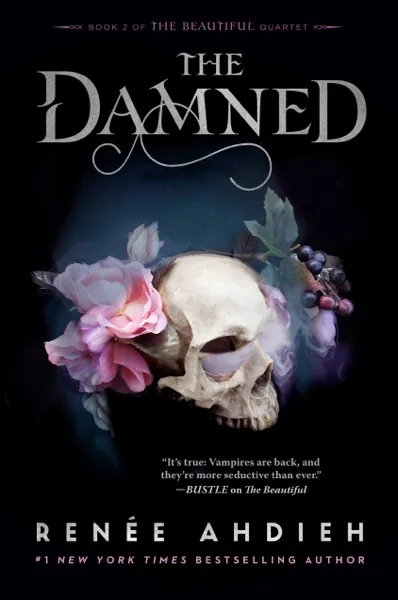

The Damned Author: Renée AhdiehPage Count: UnknownPublication Year: 2020-GB Renée Ahdieh’s The Damned is a luminous, haunting tapestry of gothic romance, political intrigue, and supernatural vengeance—woven with the precision of a master storyteller. Published in 2020, this novel cements Ahdieh’s reputation as a modern architect of dark, lush tales where passion and peril walk hand in hand. Though the exact page count remains elusive, the depth of its narrative is anything but short. The Damned is not merely a book; it is an experience—one that lingers long after the final sentence, like the echo of a ghostly whisper in a crumbling mansion. At its heart, The Damned is a story of forbidden love set against the backdrop of a cursed world, where the living and the dead are bound by ancient debts. The novel follows two star-crossed protagonists, bound by fate, family, and a shared legacy of betrayal. Ahdieh crafts a world where vampiric aristocrats rule over mortal courts with velvet-gloved cruelty, where every smile might hide a fang, and every alliance could be a snare. The central theme is resilience in the face of destiny—a meditation on whether love can conquer even the most immutable curses. The novel asks: Can two souls, one already dead in all but name, defy the gods who decreed their doom? Ahdieh’s writing style is a masterclass in atmospheric storytelling. Her prose is rich, poetic, and unapologetically lush, dripping with sensory detail that immerses the reader in opulent salons, shadowed forests, and candlelit ballrooms teetering on the edge of ruin. She doesn’t just describe a setting—she evokes its scent, its texture, its emotional weight. A ballroom isn’t just a place; it’s a stage for power plays, where glances are weapons and silences are screams. This attention to detail extends to her characters, who are rendered with psychological nuance and emotional complexity. The protagonists are not merely victims or heroes; they are flawed, conflicted individuals shaped by centuries of pain, privilege, and prejudice. Ahdieh’s dialogue sparkles with wit and tension, often laced with subtle menace or undercurrents of longing. There’s a Shakespearean cadence to her exchanges, full of double meanings and half-spoken truths—perfect for a story steeped in gothic drama and doomed romance. The pacing is deliberate, allowing the tension to simmer before boiling over into moments of breathtaking intensity. The supernatural elements are integrated seamlessly into the historical framework, blurring the line between myth and reality. Vampires here are not monsters in the traditional sense but tragic figures, cursed to an eternity of hunger and guilt, their power a burden as much as a gift. One of the novel’s most compelling strengths is its exploration of power and identity. The characters exist in a world where lineage dictates survival, where the past is an inescapable prison, and where love is both salvation and damnation. Ahdieh deftly examines themes of colonialism, class, and Otherness, weaving them into the narrative without ever feeling didactic. The cursed elite are both predators and prey, their humanity slipping through their fingers like sand. The mortal world, meanwhile, is portrayed with equal complexity—beautiful, fragile, and often complicit in its own oppression. The Damned also excels in its worldbuilding. The setting—a decaying, alternate-history Europe where the undead rule from gilded cages—feels both familiar and fantastical. Palaces crumble into ruin, not from neglect, but from the weight of centuries of sin. Forests whisper with the voices of the dead. The moon is not just a celestial body but a silent witness to centuries of violence. Ahdieh doesn’t just create a world; she creates a mood—a gothic reverie that lingers in the mind like a half-remembered dream. What makes The Damned truly unforgettable, however, is its emotional core. Beneath the velvet and blood, beneath the political machinations and supernatural stakes, lies a story about connection. About two lost souls finding something to hold onto in a universe that wants them erased. The love story here is not one of grand gestures but of quiet, stubborn devotion. It’s messy, painful, and ultimately redemptive—a testament to the idea that even the damned can find grace. Ahdieh’s writing is not without its critics. Some may find her prose overly ornate, her pacing occasionally slow. But for those who surrender to its rhythm, The Damned is a revelation. It’s a novel that demands to be read slowly, savored like aged wine, and returned to again and again, each time uncovering new layers of meaning. In a literary landscape crowded with quick thrills and disposable romance, The Damned stands apart as a work of substance and style. It’s gothic fiction at its finest—dark, decadent, and deeply human. #TheDamned #RenéeAhdieh #GothicRomance #DarkFantasy #VampireNovel #BookReview Related InsightsBlue Jean Summer (Wilder Estate #1) Book Review and Summary Beloved Book Review and Summary American Gods Book Review and Summary{ "@context": "https://schema.org", "@type": "FAQPage", "mainEntity": [ { "@type": "Question", "name": "What is the main focus of The Damned Book Review and Summary?", "acceptedAnswer": { "@type": "Answer", "text": "Everything you need to know about The Damned with our detailed review." } }, { "@type": "Question", "name": "Who authored the comprehensive guide on The Damned Book Review and Summary?", "acceptedAnswer": { "@type": "Answer", "text": "This detailed article and its insights were carefully researched and authored by Maximilian Fischer." } }, { "@type": "Question", "name": "Where can I find more related content about Books?", "acceptedAnswer": { "@type": "Answer", "text": "You can explore more articles, detailed reviews, and similar insights by browsing the Related Insights section at the bottom of this article or visiting our dedicated Books category page." } } ] }


Siu Mai, the quintessential Cantonese dim sum, has been a staple in Chinese cuisine for centuries. These delicate, open-faced pork dumplings have captivated the hearts and taste buds of people worldwide with their intricate balance of flavors and textures. As a classic representation of traditional Chinese cooking, Siu Mai embodies the country's rich cultural heritage and history. Introduction to Siu Mai Siu Mai is a type of steamed dumpling that originated in the southern province of Guangdong, China. The name "Siu Mai" literally translates to "cook and sell," which refers to the traditional method of cooking and selling these dumplings on the streets. Over time, Siu Mai has evolved to become a beloved dish in Chinese cuisine, with various regional twists and adaptations.The traditional recipe for Siu Mai consists of a mixture of ground pork, shrimp, and various seasonings, wrapped in a thin dough wrapper. The dumplings are then steamed to perfection, resulting in a tender and flavorful treat. The combination of pork and shrimp provides a delightful harmony of textures, while the seasonings add a depth of flavor that is both savory and umami. History of Siu Mai The history of Siu Mai dates back to the Qing dynasty, when it was served as a snack to travelers on the Silk Road. The dumplings were originally filled with a mixture of pork and vegetables, but over time, shrimp was added to the filling to give it a more luxurious flavor. As Chinese immigrants traveled to other parts of the world, they brought their culinary traditions with them, including Siu Mai.In the early 20th century, Siu Mai became a popular dish in Chinese restaurants worldwide, particularly in areas with large Chinese populations. The dish was often served as part of a dim sum spread, which typically included a variety of steamed and fried dumplings, as well as other small plates. Regional Variations of Siu Mai While the traditional recipe for Siu Mai remains the same, regional variations have emerged over time. In Hong Kong, for example, Siu Mai is often served with a side of soy sauce and chili oil, while in mainland China, it is commonly served with a dipping sauce made from vinegar and ginger.In other parts of the world, such as the United States and Australia, Siu Mai has been adapted to suit local tastes. Some restaurants may add non-traditional ingredients, such as vegetables or eggs, to the filling, while others may serve the dumplings with a side of Western-style sauces, such as ketchup or mayonnaise. Authentic Recipe for Siu Mai For those interested in trying their hand at making Siu Mai at home, here is a traditional recipe to follow: Ingredients:1 package of round wonton wrappers 1/2 pound ground pork 1/2 pound peeled and deveined shrimp 1/4 cup finely chopped scallions 1/4 cup finely chopped cilantro 2 cloves garlic, minced 1 tablespoon soy sauce 1 tablespoon oyster sauce (optional) 1 tablespoon sesame oil Salt and pepper to tasteInstructions:In a large bowl, combine the ground pork, shrimp, scallions, cilantro, garlic, soy sauce, oyster sauce (if using), and sesame oil. Mix well until all the ingredients are fully incorporated. Lay a wonton wrapper on a clean surface and place a small spoonful of the pork and shrimp mixture in the center of the wrapper. Dip your finger in a small amount of water and run it along the edges of the wrapper. Fold the wrapper into a triangle by bringing the two opposite corners together to form a point. Press the edges together to seal the dumpling. Repeat with the remaining wrappers and filling. Steam the Siu Mai over boiling water for 10-12 minutes, or until the dumplings are cooked through and the wrappers are tender.Conclusion Siu Mai, the classic open-faced pork dumpling, is a true representation of Chinese cuisine's rich cultural heritage and history. With its delicate balance of flavors and textures, Siu Mai has become a beloved dish worldwide, with various regional twists and adaptations. Whether you're a seasoned foodie or just looking to try something new, Siu Mai is definitely worth exploring.#SiuMai #DimSum #ChineseCuisine #TraditionalFood #StreetFood #CulturalHistory #Foodie #AsianFood #Dumplings Related InsightsPani Puri: Explosive Flavors in a Bite Puttu and Kadala Curry: A Breakfast of Champions Time‑Kissed Flesh: Decoding Umami Across Global Charcuterie Traditions{ "@context": "https://schema.org", "@type": "FAQPage", "mainEntity": [ { "@type": "Question", "name": "What is the main focus of Siu Mai: The Classic Open-Faced Pork Dumpling?", "acceptedAnswer": { "@type": "Answer", "text": "Discover the deep cultural roots, authentic flavors, and history of Siu Mai: The Classic Open-Faced Pork Dumpling." } }, { "@type": "Question", "name": "Who authored the comprehensive guide on Siu Mai: The Classic Open-Faced Pork Dumpling?", "acceptedAnswer": { "@type": "Answer", "text": "This detailed article and its insights were carefully researched and authored by Lin Yao." } }, { "@type": "Question", "name": "Where can I find more related content about Food?", "acceptedAnswer": { "@type": "Answer", "text": "You can explore more articles, detailed reviews, and similar insights by browsing the Related Insights section at the bottom of this article or visiting our dedicated Food category page." } } ] }
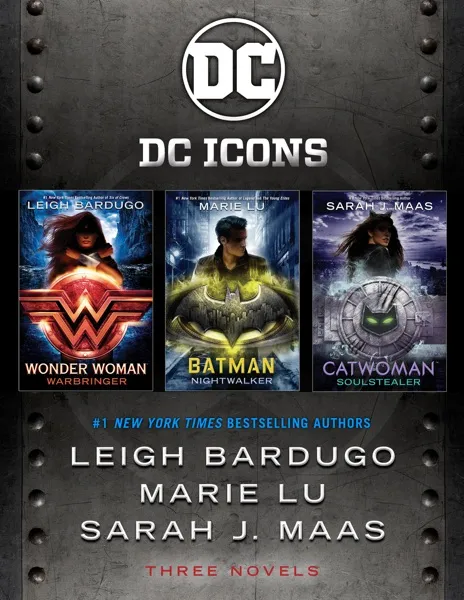

DC Icons Series Author: Marie LuPage Count: UnknownPublication Year: 2018-GB DC Icons Series: A Modern Mythology Reimagined for a New Generation What if the greatest heroes of DC Comics weren’t born in the pages of comic books but walked among us today? That’s the electrifying premise of the DC Icons series, a bold reimagining of iconic characters like Batman, Superman, and Wonder Woman as young adults navigating the complexities of identity, power, and destiny. Spearheaded by bestselling author Marie Lu, this series breathes fresh life into timeless legends, blending high-stakes drama with emotional depth. For fans of superhero sagas and literary reinvention alike, DC Icons isn’t just a collection of stories—it’s a cultural reset. At its core, the DC Icons series explores the universal struggle between destiny and choice. Each book in the series—starting with Wonder Woman: Warbringer (2017) by Leigh Bardugo, Batman: Nightwalker (2018) by Marie Lu, Superman: Dawnbreaker (2019) by Matt de la Peña, and Catwoman: Soulstealer (2018) by Sarah J. Maas—reimagines its protagonist as a flawed, relatable teenager grappling with extraordinary circumstances. The themes of legacy, morality, and self-discovery resonate deeply, particularly in an era where young readers crave stories that reflect their own uncertainties. Lu’s Batman: Nightwalker, in particular, dives into the psychological toll of Bruce Wayne’s early vigilantism, framing his transformation into the Dark Knight as a series of calculated risks rather than inevitable heroism. The characters in DC Icons are meticulously crafted, stripped of their mythic armor to reveal raw humanity. Marie Lu’s Batman is a privileged but haunted teen, his wealth a double-edged sword that both isolates and empowers him. His internal conflict—balancing justice with vengeance—mirrors the moral ambiguities of modern superhero narratives. Wonder Woman, in Bardugo’s hands, is a warrior torn between her divine heritage and her mortal emotions, while Superman’s Clark Kent grapples with the weight of his alien origins in de la Peña’s Dawnbreaker. These aren’t just superheroes; they’re adolescents on the cusp of greatness, their struggles as relatable as they are extraordinary. Lu’s writing style is a masterclass in pacing and atmosphere. Her prose crackles with tension, seamlessly blending action sequences with introspective moments. She excels at creating vivid, immersive worlds—Gotham’s neon-lit underbelly in Nightwalker feels as tangible as the emotional turmoil of its protagonist. The dialogue is sharp, the stakes are sky-high, and the emotional beats land with precision. Lu’s ability to balance high-concept superhero elements with grounded, character-driven storytelling is what elevates DC Icons above typical genre fare. Beyond its literary merits, the DC Icons series is a cultural phenomenon. It bridges the gap between comic book fandom and mainstream YA literature, attracting readers who might not typically pick up a superhero novel. The series’ success lies in its accessibility—it’s a gateway drug for DC’s rich lore, introducing new audiences to characters they’ll love for a lifetime. Moreover, the series’ diverse cast and modern sensibilities reflect the evolving face of heroism, making it a standout in an increasingly competitive market. For critics and readers alike, DC Icons represents a triumph of reinvention. It proves that superhero stories can be more than just spectacle; they can be profound explorations of identity, power, and the human condition. Marie Lu’s contribution to the series is a testament to her skill as a storyteller, cementing her place as a defining voice in contemporary YA fiction. Whether you’re a lifelong DC devotee or a newcomer to the world of superheroes, DC Icons is a must-read—a series that redefines what it means to be a hero in the 21st century. #DCComics #MarieLu #SuperheroBooks #YAFantasy #ModernMythology Related InsightsTake a Chance, Sasha Sinclair (Clover Lake #3) Book Review and Summary King of Scars Book Review and Summary Glass Houses Book Review and Summary{ "@context": "https://schema.org", "@type": "FAQPage", "mainEntity": [ { "@type": "Question", "name": "What is the main focus of **DC Icons Series** Book Review and Summary?", "acceptedAnswer": { "@type": "Answer", "text": "Everything you need to know about **DC Icons Series** with our detailed review." } }, { "@type": "Question", "name": "Who authored the comprehensive guide on **DC Icons Series** Book Review and Summary?", "acceptedAnswer": { "@type": "Answer", "text": "This detailed article and its insights were carefully researched and authored by Olivia Harris." } }, { "@type": "Question", "name": "Where can I find more related content about Books?", "acceptedAnswer": { "@type": "Answer", "text": "You can explore more articles, detailed reviews, and similar insights by browsing the Related Insights section at the bottom of this article or visiting our dedicated Books category page." } } ] }
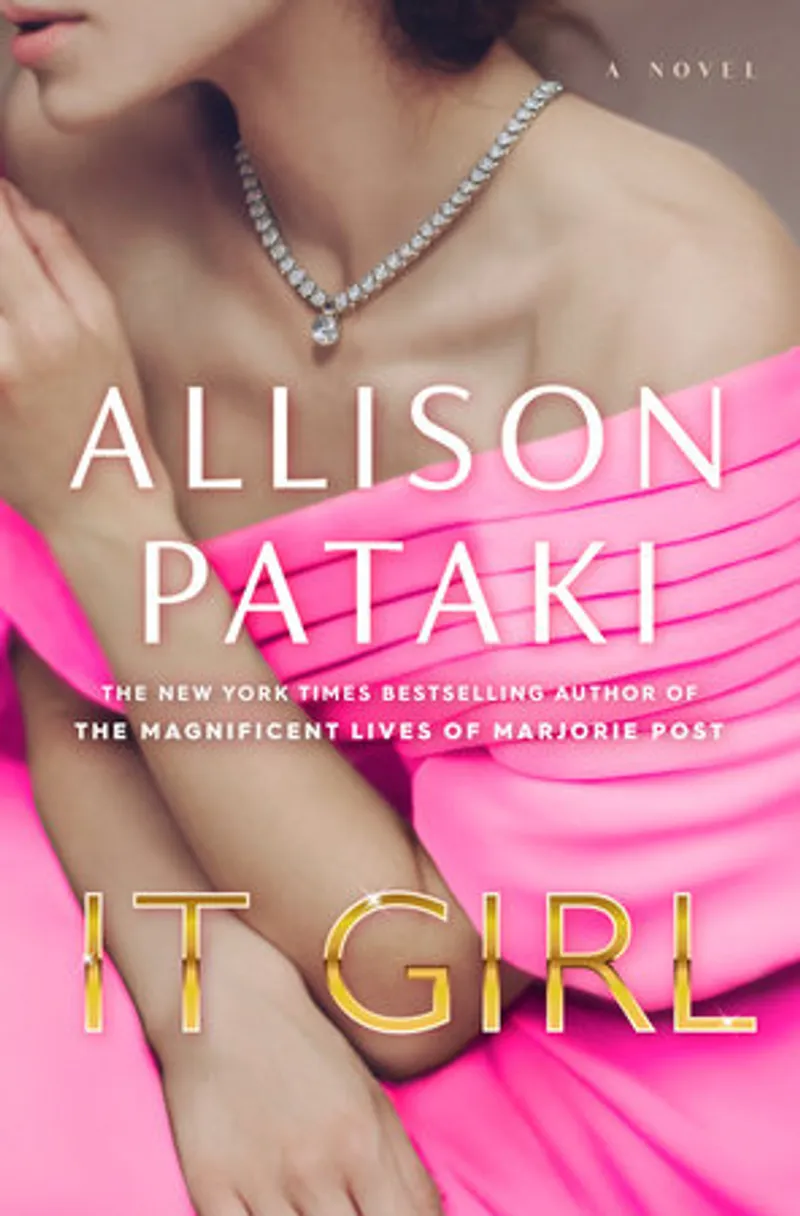

It Girl Author: Allison PatakiPage Count: UnknownPublication Date: 2026-PRH It Girl, the latest novel from Allison Pataki, is a mesmerizing exploration of identity, ambition, and the enduring power of women's voices. Released in 2026, this book marks a significant milestone in Pataki's career, showcasing her mastery of storytelling and character development. Although the page count remains unknown, one thing is clear: Pataki has woven a narrative that will captivate readers from start to finish. At the heart of It Girl lies a profound examination of the human experience, delving into themes that resonate deeply with contemporary audiences. Pataki's writing is a testament to her skill as a wordsmith, navigating complex emotions and relationships with the ease of a seasoned expert. Her characters are multidimensional and relatable, embodying the contradictions and nuances that make us human. Throughout the book, Pataki employs a lyrical prose that is both evocative and economical. Her descriptions are vivid and immersive, painting a picture of the world that is at once familiar and fresh. The author's use of language is deliberate and calculated, every word and phrase carefully chosen to convey the depths of her characters' inner lives. One of the most striking aspects of It Girl is its thoughtful exploration of the female experience. Pataki sheds light on the intricate web of relationships, desires, and societal expectations that shape women's lives. Her characters are strong and flawed, navigating the challenges of their worlds with courage, wit, and vulnerability. As they struggle to find their place in the world, they embody the contradictions and paradoxes that define modern womanhood. Pataki's writing is also notable for its nuance and subtlety. She approaches her themes with a thoughtful sensitivity, recognizing the complexity of human emotions and the fragility of relationships. Her characters are never reduced to simplistic archetypes or stereotypes; instead, they are fully realized individuals with their own distinct voices and perspectives. It Girl is a testament to Allison Pataki's growth as a writer and her ability to craft compelling narratives that resonate with readers. Her writing is a masterclass in subtlety and restraint, conveying the depths of human emotion through the simplest of gestures and words. As we delve into the world of It Girl, we are reminded of the power of storytelling to transform and uplift us, to challenge our assumptions and broaden our understanding of the world. In short, It Girl is a triumph, a novel that will linger in readers' minds long after they finish the final page. With its thoughtful exploration of identity, ambition, and the human experience, it is a must-read for anyone looking for a compelling and emotionally resonant story. Allison Pataki has outdone herself with this latest offering, cementing her position as one of the most exciting and innovative writers of our time. #ItGirl #AllisonPataki #WomenInLiterature #NewRelease #BookLovers #FeministFiction Related InsightsKing of Envy Book Review and Summary The Soul Mate Book Review and Summary Brideshead Revisited Book Review and Summary{ "@context": "https://schema.org", "@type": "FAQPage", "mainEntity": [ { "@type": "Question", "name": "What is the main focus of It Girl Book Review and Summary?", "acceptedAnswer": { "@type": "Answer", "text": "Everything you need to know about It Girl with our detailed review." } }, { "@type": "Question", "name": "Who authored the comprehensive guide on It Girl Book Review and Summary?", "acceptedAnswer": { "@type": "Answer", "text": "This detailed article and its insights were carefully researched and authored by Victoria Smith." } }, { "@type": "Question", "name": "Where can I find more related content about Books?", "acceptedAnswer": { "@type": "Answer", "text": "You can explore more articles, detailed reviews, and similar insights by browsing the Related Insights section at the bottom of this article or visiting our dedicated Books category page." } } ] }

La pareja de al lado / The Couple Next Door Author: Shari LapenaPage Count: UnknownPublication Date: 2018-PRH Shari Lapena’s The Couple Next Door is a masterclass in domestic suspense, a genre that thrives on the unsettling gap between appearances and reality. With razor-sharp pacing and a narrative that unravels like a tightly coiled spring, Lapena crafts a thriller that lingers long after the final page, leaving readers questioning not just the characters’ motives, but their own capacity for deception. This isn’t just a story about a missing baby—it’s a psychological dissection of marriage, trust, and the lies we tell to survive. At its core, The Couple Next Door explores the fragility of human relationships under pressure. Anne and Marco Conti seem like the perfect couple: affluent, loving, with a precious six-month-old daughter, Cora. But when they attend a dinner party next door, leaving Cora alone in their house (monitor in hand, as per their neighbor’s odd request), the unthinkable happens—Cora vanishes. The police arrive, suspicion falls on the parents, and what follows is a harrowing descent into paranoia, guilt, and mutual betrayal. Lapena doesn’t just ask who took the baby; she asks what would you do to get her back? The answer, disturbingly, is: almost anything. Lapena’s genius lies in her ability to make the ordinary terrifying. The premise—leaving a baby alone for a few minutes—isn’t inherently shocking, but the way she frames it as a calculated risk (or even a necessary one) forces readers to confront their own moral boundaries. Is it negligent to leave a child unattended, even briefly? The book doesn’t judge; it simply presents the consequences, and the fallout is devastating. The Contis’ marriage, once a source of stability, becomes a minefield of secrets. Marco’s affair, Anne’s hidden past, the neighbors’ suspicious behavior—every revelation chips away at the illusion of their perfect life. Lapena’s prose is deceptively simple, but that’s part of its power. The writing doesn’t call attention to itself; it lets the tension simmer, building until it boils over in a series of jaw-dropping twists. What sets The Couple Next Door apart from other domestic thrillers is its refusal to offer easy answers. The police, led by the astute Detective Rasbach, are no heroes; they’re flawed, sometimes ruthless, and just as capable of manipulation as the suspects. The narrative shifts between Anne and Marco’s perspectives, revealing how each is hiding something—sometimes from the other, sometimes from themselves. The result is a story where every character is a potential liar, and every secret could be the key to solving the crime—or the reason it happened in the first place. Lapena’s style is relentless, propelling the reader forward with short, punchy chapters that end on cliffhangers. The dialogue crackles with tension, and the domestic settings—suburban homes, cozy dinner parties—only heighten the unease. When the action moves to the police station or the interrogation room, the stakes feel even higher because the real danger isn’t out there; it’s in the quiet, unspoken truths between Anne and Marco. The book’s structure mirrors the unraveling of their marriage: just when you think you’ve pieced together the puzzle, Lapena introduces a new variable, a new lie, a new betrayal. The themes of The Couple Next Door resonate because they’re universal. How well do we really know our partners? How far would we go to protect our family—or our secrets? Lapena doesn’t just tell a gripping story; she forces us to confront uncomfortable questions about love, loyalty, and the masks we wear in public. The final twist isn’t just shocking—it’s a gut-punch that recontextualizes everything that came before, leaving readers stunned and eager to reread the book to catch the clues they missed. If you’re looking for a thriller that keeps you guessing until the last page, The Couple Next Door delivers in spades. It’s not just a mystery; it’s a psychological thriller that preys on the fears we all have about the people closest to us. Lapena doesn’t just write suspense—she weaponizes it, turning the familiar into something sinister. By the time you reach the final revelation, you’ll be questioning not just the characters, but your own relationships. And that, perhaps, is the most terrifying thing of all. #TheCoupleNextDoor #DomesticThriller #ShariLapena #MissingBaby #PsychologicalSuspense #BookReview Related InsightsEmpire of Storms Book Review and Summary 'The Need for Speed: The Ultimate Guide to the High-Flying World of Drone Racing' Holy Bible: New International Version Book Review and Summary{ "@context": "https://schema.org", "@type": "FAQPage", "mainEntity": [ { "@type": "Question", "name": "What is the main focus of The Couple Next Door Book Review and Summary?", "acceptedAnswer": { "@type": "Answer", "text": "Everything you need to know about The Couple Next Door with our detailed review." } }, { "@type": "Question", "name": "Who authored the comprehensive guide on The Couple Next Door Book Review and Summary?", "acceptedAnswer": { "@type": "Answer", "text": "This detailed article and its insights were carefully researched and authored by Shari Lapena." } }, { "@type": "Question", "name": "Where can I find more related content about Books?", "acceptedAnswer": { "@type": "Answer", "text": "You can explore more articles, detailed reviews, and similar insights by browsing the Related Insights section at the bottom of this article or visiting our dedicated Books category page." } } ] }
Don Quijote de la Mancha (Edición conmemorativa) / Don Quixote (Commemorative Edition) Author: Miguel de CervantesPage Count: UnknownPublication Date: 2025-PRH In the commemorative edition of Don Quijote de la Mancha, published in 2025, Miguel de Cervantes' timeless masterpiece continues to captivate readers with its enduring themes and masterful storytelling. This iconic novel, widely regarded as the first modern novel, has been a cornerstone of world literature for centuries, and its allure remains unwavering. At its core, Don Quixote is a thought-provoking exploration of the human condition, delving into the intricacies of reality, madness, and the power of imagination. Cervantes' ingenious narrative follows the journey of the nobleman Alonso Quixano, who, driven by his passion for chivalric romances, reinvents himself as the knight-errant Don Quixote. As he embarks on a series of misadventures, accompanied by his trusty squire, Sancho Panza, the lines between reality and fantasy become increasingly blurred. Cervantes' writing style is characterized by its remarkable depth, nuance, and wit. His use of language is at once poetic and accessible, weaving a rich tapestry of humor, satire, and philosophical introspection. The author's mastery of character development is equally impressive, as he breathes life into a diverse cast of characters, each with their own distinct voice and perspective. The dynamic between Don Quixote and Sancho Panza is particularly noteworthy, as their contrasting worldviews and personalities create a compelling dialectic that drives the narrative forward. One of the most striking aspects of Don Quixote is its ability to balance lighthearted comedy with profound insight into the human experience. Cervantes' clever use of irony, absurdity, and social commentary adds layers of complexity to the narrative, making it a work that can be appreciated on multiple levels. As readers, we are invited to laugh at Don Quixote's antics, while also reflecting on the societal norms and cultural values that shape our own perceptions of reality. The commemorative edition of Don Quijote de la Mancha is a testament to the enduring power of Cervantes' vision, a work that continues to inspire and influence literature, art, and popular culture to this day. As we delve into the world of 17th-century Spain, we are reminded of the universality of human emotions, desires, and frailties. Don Quixote's quest for chivalric honor, his unwavering dedication to his ideals, and his ultimate confrontation with reality serve as a poignant reminder of the complexities and contradictions that define us as human beings. In conclusion, the 2025 commemorative edition of Don Quijote de la Mancha is a must-read for anyone interested in exploring the rich literary heritage of the Western world. Cervantes' magnum opus is a work of genius that will continue to captivate, inspire, and challenge readers for generations to come. With its universal themes, masterful storytelling, and unforgettable characters, Don Quixote remains an indispensable part of our shared cultural landscape. #DonQuixote #MiguelDeCervantes #ClassicLiterature #SpanishLiterature #ChivalricRomance #LiteraryMasterpiece Related InsightsThe Chain Between Worlds Book Review and Summary A Song of Sugar Sparrows (Wayward Children, #12) Book Review and Summary Nothing More to Tell Book Review and Summary{ "@context": "https://schema.org", "@type": "FAQPage", "mainEntity": [ { "@type": "Question", "name": "What is the main focus of Don Quixote Book Review and Summary?", "acceptedAnswer": { "@type": "Answer", "text": "Everything you need to know about Don Quixote with our detailed review." } }, { "@type": "Question", "name": "Who authored the comprehensive guide on Don Quixote Book Review and Summary?", "acceptedAnswer": { "@type": "Answer", "text": "This detailed article and its insights were carefully researched and authored by Miguel de Cervantes Saavedra." } }, { "@type": "Question", "name": "Where can I find more related content about Books?", "acceptedAnswer": { "@type": "Answer", "text": "You can explore more articles, detailed reviews, and similar insights by browsing the Related Insights section at the bottom of this article or visiting our dedicated Books category page." } } ] }
Shantaram Author: Gregory David RobertsPage Count: UnknownPublication Date: 2004-OL In "Shantaram", Gregory David Roberts weaves a mesmerizing tale of self-discovery, love, and transformation, set against the vibrant backdrop of 1980s Bombay. This sweeping narrative follows Lin, a man on the run from an Australian prison, as he leaves behind his past and embarks on a journey of redemption in the bustling streets of India. Through Lin's eyes, Roberts masterfully captures the essence of Bombay, a city of stark contrasts, where opulence and poverty coexist in an intricate dance. The author's vivid descriptions of the city's labyrinthine alleys, its kaleidoscopic markets, and its resilient people, transport the reader to a world that is both familiar and foreign. At the heart of the novel lies the complex and often fraught relationship between Lin and Karla, a mysterious and alluring woman with a troubled past. Their love story, marked by intense passion and deep emotional connection, is expertly intertwined with the narrative's broader themes of identity, belonging, and the search for meaning. Roberts' writing style is characterized by its lyricism, wit, and philosophical depth. His prose is often poetic, with a keen attention to detail that brings the characters and their surroundings to life. The author's use of language is deliberate and evocative, conjuring the sights, sounds, and smells of Bombay with uncanny precision. One of the novel's greatest strengths lies in its ability to balance the epic and the intimate, the grand and the mundane. Roberts seamlessly shifts between sweeping descriptions of Bombay's cityscape and quiet moments of introspection, creating a narrative that is both expansive and deeply personal. Through Lin's journey, Roberts explores the human condition in all its complexity, grappling with fundamental questions about the nature of identity, morality, and the search for transcendence. The novel is a powerful exploration of the human spirit, with all its flaws, contradictions, and aspirations. Ultimately, "Shantaram" is a love letter to Bombay, a city that is both a character and a backdrop in the novel. Roberts' tribute to this vibrant metropolis is a testament to the transformative power of place and culture, and the ways in which they can shape and redefine us. In short, "Shantaram" is a masterpiece of contemporary literature, a novel that will captivate, inspire, and haunt readers long after they finish reading it. With its richly textured prose, its memorable characters, and its profound themes, this book is an absolute must-read for anyone who loves great storytelling. #Shantaram #GregoryDavidRoberts #BombayNovel #LiteraryFiction #TravelFiction #EpicLoveStory Related InsightsIn Cold Blood Book Review and Summary The Hunger Games Magnetic Bookmark Set of 3 - Magnetic Bookmarks Book Review and Summary Critical Role: The Mighty Nein—Children of Empire Book Review and Summary{ "@context": "https://schema.org", "@type": "FAQPage", "mainEntity": [ { "@type": "Question", "name": "What is the main focus of Shantaram Book Review and Summary?", "acceptedAnswer": { "@type": "Answer", "text": "Everything you need to know about Shantaram with our detailed review." } }, { "@type": "Question", "name": "Who authored the comprehensive guide on Shantaram Book Review and Summary?", "acceptedAnswer": { "@type": "Answer", "text": "This detailed article and its insights were carefully researched and authored by Gregory David Roberts." } }, { "@type": "Question", "name": "Where can I find more related content about Books?", "acceptedAnswer": { "@type": "Answer", "text": "You can explore more articles, detailed reviews, and similar insights by browsing the Related Insights section at the bottom of this article or visiting our dedicated Books category page." } } ] }

The Widow Author: John GrishamPage Count: UnknownPublication Year: 2025-GB In the world of thriller novels, few authors have managed to captivate readers quite like John Grisham, and his latest release, "The Widow", is no exception. This gripping tale of love, loss, and deceit has already taken the literary world by storm, and for good reason. With its breakneck pace, complex characters, and shocking twists, "The Widow" is a must-read for fans of the genre. At its core, "The Widow" is a story about the power of secrets and the devastating consequences of uncovering them. The novel centers around a woman whose life is turned upside down when her husband's dark past comes back to haunt her. As she delves deeper into the mystery surrounding his death, she begins to realize that nothing is as it seems, and that the truth is far more sinister than she ever could have imagined. One of the standout features of "The Widow" is its cast of complex, multi-dimensional characters. Grisham has always been known for his ability to craft relatable, believable protagonists, and this novel is no exception. The widow at the center of the story is a particularly well-crafted character, with a rich inner life and a deep sense of vulnerability. As she navigates the treacherous landscape of her husband's secrets, she must also confront her own demons, and the result is a deeply human, deeply compelling portrayal. Of course, no John Grisham novel would be complete without a healthy dose of suspense and intrigue, and "The Widow" delivers in spades. The pacing is expertly managed, with a steady stream of twists and turns that will keep even the most seasoned thriller reader guessing. Grisham's writing is, as always, crisp and engaging, with a keen eye for detail and a deep understanding of the human psyche. One of the most impressive aspects of "The Widow" is its thoughtful exploration of themes that are both timely and timeless. Grisham tackles issues like grief, trauma, and the complexities of human relationships with sensitivity and nuance, never shying away from the tough questions or the difficult emotions. The result is a novel that is both a gripping page-turner and a thoughtful, introspective exploration of the human condition. In terms of style, "The Widow" is classic Grisham, with a keen sense of pacing and a deep understanding of the thriller genre. The writing is lean and mean, with a focus on propelling the plot forward and keeping the reader on the edge of their seat. At the same time, however, Grisham never sacrifices character development or thematic depth for the sake of speed, and the result is a novel that is both a wild ride and a deeply satisfying read. Overall, "The Widow" is a triumph, a gripping, thought-provoking thriller that will appeal to fans of Grisham's previous work and newcomers alike. With its breakneck pace, complex characters, and shocking twists, it's a must-read for anyone who loves a good thriller. So if you're looking for a novel that will keep you up late at night, turning pages and guessing until the very end, look no further than "The Widow". #JohnGrisham #TheWidow #ThrillerNovels #BookReview #BestSeller Related InsightsMidnight in the Garden of Good and Evil Book Review and Summary La chronique des Bridgerton Book Review and Summary Cat’s Cradle Book Review and Summary{ "@context": "https://schema.org", "@type": "FAQPage", "mainEntity": [ { "@type": "Question", "name": "What is the main focus of **The Widow** Book Review and Summary?", "acceptedAnswer": { "@type": "Answer", "text": "Everything you need to know about **The Widow** with our detailed review." } }, { "@type": "Question", "name": "Who authored the comprehensive guide on **The Widow** Book Review and Summary?", "acceptedAnswer": { "@type": "Answer", "text": "This detailed article and its insights were carefully researched and authored by James Miller." } }, { "@type": "Question", "name": "Where can I find more related content about Books?", "acceptedAnswer": { "@type": "Answer", "text": "You can explore more articles, detailed reviews, and similar insights by browsing the Related Insights section at the bottom of this article or visiting our dedicated Books category page." } } ] }

Tunnel of Bones Author: V.E. SchwabPage Count: UnknownPublication Year: 2019-GB Tunnel of Bones: V.E. Schwab’s Haunting Masterpiece of Urban Fantasy Few books linger in the mind like a ghost—lingering just beyond sight, whispering secrets you can’t quite decipher. V.E. Schwab’s Tunnel of Bones, the second installment in the Shades of Magic series, is one such book. A global bestseller that cements Schwab’s reputation as a master of atmospheric storytelling, this novel blends history, horror, and heart in a way that feels both timeless and urgently fresh. If you thought the first book, A Darker Shade of Magic, was a revelation, prepare to be even more enchanted—or perhaps, more unsettled. At its core, Tunnel of Bones is a story about legacy, both personal and magical. The protagonist, Kell Maresh, is a rare Antari—one of the few who can travel between parallel Londons, each with its own distinct magic and danger. After the events of the first book, Kell is struggling with the weight of his choices, the scars of his past, and the looming threat of a power-hungry enemy. Schwab doesn’t waste time easing us into the narrative; instead, she plunges us into a world where magic is as perilous as it is beautiful, and where every decision could unravel the very fabric of reality. One of the most compelling aspects of Schwab’s writing is her ability to weave multiple perspectives seamlessly. Kell’s internal conflict is mirrored by the perspectives of other characters, each with their own motivations and secrets. Delilah Bard, the rogue thief from the first book, returns with a vengeance, her sharp wit and sharper instincts making her a standout presence. Then there’s Rhy Maresh, Kell’s brother and the royal heir of Red London, whose charm and vulnerability add depth to the story. Schwab’s character development is meticulous, ensuring that even secondary figures feel fully realized, their arcs intertwined with the central plot in ways that feel organic and satisfying. Themes of identity and belonging permeate the novel. Kell, who has always been an outsider—first as a foreigner in Red London, then as a rare Antari—grapple with where he truly belongs. His journey is one of self-discovery, but it’s also a meditation on the cost of power and the burden of responsibility. Schwab doesn’t shy away from the darker aspects of Kell’s character, making him a deeply flawed yet compelling protagonist. His struggles feel real, his triumphs hard-won, and his failures haunting. It’s this complexity that elevates Tunnel of Bones from a mere fantasy novel to a story that resonates on a deeper level. Schwab’s prose is another standout feature. Her writing is lush and evocative, painting vivid pictures of the different Londons—from the opulent streets of Red London to the eerie, fog-shrouded alleys of White London. The world-building is rich and immersive, with every detail serving a purpose. Whether it’s the intricate politics of the royal court or the supernatural dangers lurking in the shadows, Schwab ensures that the setting feels alive and tangible. Her ability to balance action, dialogue, and introspection is masterful, keeping the pacing tight while still allowing room for emotional depth. But what truly sets Tunnel of Bones apart is its blend of genres. Schwab seamlessly merges urban fantasy with horror, creating a story that is as thrilling as it is unsettling. The novel’s title isn’t just a metaphor; the tunnels beneath London serve as a literal and symbolic space where the past and present collide. The horror elements are understated but effective, adding a layer of tension that keeps readers on the edge of their seats. Schwab’s use of atmosphere is particularly noteworthy, with the claustrophobic tunnels and the ever-present sense of dread creating a palpable tension that lingers long after the book is closed. For fans of the Shades of Magic series, Tunnel of Bones delivers everything they loved about the first book and more. For newcomers, it’s a gateway into a world that is as enchanting as it is dangerous. Schwab’s storytelling is addictive, her characters unforgettable, and her world a place you won’t want to leave. Whether you’re a seasoned fantasy reader or a casual enthusiast, this book is a must-read. In a genre often criticized for its lack of depth, Tunnel of Bones stands out as a shining example of what urban fantasy can achieve. It’s a story about the bonds that tie us together, the choices that define us, and the magic that both saves and destroys us. Schwab has crafted a novel that is as thought-provoking as it is entertaining, a book that will leave you breathless and eager for more. If you haven’t yet experienced the magic of Tunnel of Bones, now is the time. You won’t just read this book—you’ll live it. #ShadesOfMagic #VESchwab #UrbanFantasy #FantasyBooks #BookReview Related InsightsThe Driver's Seat Book Review and Summary Del cosmos a la vida / From the Cosmos to Life Book Review and Summary Electric Idol Book Review and Summary{ "@context": "https://schema.org", "@type": "FAQPage", "mainEntity": [ { "@type": "Question", "name": "What is the main focus of **Tunnel of Bones** Book Review and Summary?", "acceptedAnswer": { "@type": "Answer", "text": "Everything you need to know about **Tunnel of Bones** with our detailed review." } }, { "@type": "Question", "name": "Who authored the comprehensive guide on **Tunnel of Bones** Book Review and Summary?", "acceptedAnswer": { "@type": "Answer", "text": "This detailed article and its insights were carefully researched and authored by Lucia Garcia." } }, { "@type": "Question", "name": "Where can I find more related content about Books?", "acceptedAnswer": { "@type": "Answer", "text": "You can explore more articles, detailed reviews, and similar insights by browsing the Related Insights section at the bottom of this article or visiting our dedicated Books category page." } } ] }
Dungeons & Dragons Host Tower Escape Author: Official Dungeons & Dragons LicensedPage Count: UnknownPublication Date: 2027-PRH In the realm of Dungeons & Dragons, few adventures have captured the imagination of players and Dungeon Masters alike as the Host Tower Escape. This latest offering from the official Dungeons & Dragons licensed publishing arm promises to deliver a thrilling experience, and I am excited to dive into the world of Faerun and uncover the secrets that lie within. As a seasoned reviewer, I must admit that I approached this book with a mix of excitement and trepidation. The Host Tower Escape is a notoriously challenging adventure, and I was curious to see how the authors would choose to present it to a new generation of players. I am pleased to report that the end result is a masterclass in adventure design, weaving together intricate plot threads, memorable NPCs, and pulse-pounding action sequences. From the outset, it is clear that the authors have a deep understanding of the Forgotten Realms setting and the lore that underpins it. The writing is evocative and immersive, conjuring vivid images of the mist-shrouded towers and crumbling ruins that dot the landscape. The attention to detail is impressive, with a clear love for the source material shining through on every page. One of the standout features of the Host Tower Escape is its focus on player agency. Rather than presenting a linear narrative, the authors have crafted an adventure that is highly adaptable, allowing players to forge their own path and shape the story through their choices. This approach not only adds replay value but also encourages creativity and collaboration at the table. The adventure itself is expertly paced, building from a gentle introduction to a heart-pumping climax that will leave even the most seasoned players breathless. The encounters are cleverly designed, requiring a combination of brawn, brains, and cunning to overcome. I was particularly impressed by the variety of challenges on offer, ranging from social interactions and puzzle-solving to good old-fashioned combat. If I have any criticisms, it is that the book assumes a certain level of familiarity with the Forgotten Realms setting. While the authors do provide a brief primer on the world and its lore, I worry that new players may feel overwhelmed by the sheer volume of information presented. Additionally, some of the encounters feel slightly overpowered, which may result in a few too many character deaths for my taste. In conclusion, the Host Tower Escape is a must-play adventure for any serious Dungeons & Dragons fan. With its engaging storyline, memorable NPCs, and pulse-pounding action sequences, this book is sure to provide countless hours of entertainment at the table. While it may not be perfect, the authors' passion and dedication to the source material shine through on every page, making this a truly unforgettable experience. #DungeonsAndDragons #HostTowerEscape #ForgottenRealms #DnDAdventure #TabletopGaming #FantasyRolePlaying Related InsightsOkumanın Sihirli Dünyasına Bir Yolculuk: Neden Kitaplar Hala En İyi Dostumuz? Close to Midnight Book Review and Summary Cold Sunset: A Gabriel Dax Novel Book Review and Summary{ "@context": "https://schema.org", "@type": "FAQPage", "mainEntity": [ { "@type": "Question", "name": "What is the main focus of Hidden Bodies Book Review and Summary?", "acceptedAnswer": { "@type": "Answer", "text": "Everything you need to know about Hidden Bodies with our detailed review." } }, { "@type": "Question", "name": "Who authored the comprehensive guide on Hidden Bodies Book Review and Summary?", "acceptedAnswer": { "@type": "Answer", "text": "This detailed article and its insights were carefully researched and authored by Caroline Kepnes." } }, { "@type": "Question", "name": "Where can I find more related content about Books?", "acceptedAnswer": { "@type": "Answer", "text": "You can explore more articles, detailed reviews, and similar insights by browsing the Related Insights section at the bottom of this article or visiting our dedicated Books category page." } } ] }


The streets of Szechuan, a province in southwestern China, are renowned for their bold flavors, vibrant culture, and rich history. Among the numerous culinary delights that Szechuan has to offer, one dish stands out for its simplicity, complexity, and sheer deliciousness: Dan Dan Noodles. This beloved street food has been a staple of Szechuan cuisine for centuries, with its origins dating back to the Qing dynasty. In this article, we will delve into the history, cultural significance, and authentic recipe of Dan Dan Noodles, the ultimate Szechuan street bowl. Introduction to Dan Dan Noodles Dan Dan Noodles, also known as Dan Dan Mian, are a type of noodle dish that originated in the Szechuan province. The name "Dan Dan" literally means "peddler" or "street vendor," which refers to the traditional way of serving this dish. Street vendors, or peddlers, would carry a bamboo pole with two baskets, one containing noodles and the other containing sauces and toppings. This unique method of serving allowed customers to customize their noodles to their liking, creating a personalized and flavorful experience. History and Cultural Significance The history of Dan Dan Noodles is deeply rooted in the cultural and social context of Szechuan. During the Qing dynasty, Szechuan was a major hub for trade and commerce, attracting people from all over China. As a result, the cuisine in Szechuan became a melting pot of different flavors and cooking techniques. Dan Dan Noodles, in particular, reflect the influence of various regional cuisines, including Szechuan, Cantonese, and Islamic Chinese cuisine.The cultural significance of Dan Dan Noodles lies in its ability to bring people together. In Szechuan, mealtimes are often seen as opportunities to socialize and bond with family and friends. Dan Dan Noodles, with its customizable nature, encourages interaction and communal eating. The dish is often served at social gatherings, festivals, and special occasions, further solidifying its importance in Szechuan culture. Authentic Recipe A traditional Dan Dan Noodle recipe consists of several key components: noodles, sauce, and toppings. The noodles are typically made from wheat flour, water, and salt, and are cooked to a perfect texture that is both chewy and firm. The sauce is where the magic happens. A combination of Szechuan peppercorns, chili oil, soy sauce, vinegar, and garlic creates a flavor profile that is both numbing and spicy. The Szechuan peppercorns, in particular, add a unique numbing sensation that is characteristic of Szechuan cuisine. Toppings can vary depending on personal preference, but common additions include braised pork, pickled mustard greens, scallions, and toasted peanuts. The braised pork is typically cooked in a mixture of soy sauce, sugar, and Shaoxing wine, resulting in a tender and flavorful texture.Preparing Dan Dan Noodles To prepare an authentic Dan Dan Noodle dish, start by cooking the noodles according to the package instructions. While the noodles are cooking, prepare the sauce by combining Szechuan peppercorns, chili oil, soy sauce, vinegar, and garlic in a blender or food processor. Blend the mixture until smooth and adjust the seasoning to taste. For the toppings, braise the pork in a mixture of soy sauce, sugar, and Shaoxing wine until tender. Slice the pork into thin strips and set aside. Pickle the mustard greens in a mixture of vinegar, sugar, and salt, and chop the scallions and toast the peanuts for added texture and flavor. Assembling the Dish To assemble the Dan Dan Noodles, place a portion of cooked noodles in a bowl. Add a spoonful of the sauce, followed by a few slices of braised pork, some pickled mustard greens, chopped scallions, and toasted peanuts. Customize the dish to your liking by adding or subtracting toppings, and enjoy the complex and harmonious flavors of Dan Dan Noodles.Conclusion Dan Dan Noodles are a true reflection of Szechuan's rich culinary heritage and cultural diversity. This beloved street food has been a staple of Szechuan cuisine for centuries, with its unique flavor profile and customizable nature making it a favorite among locals and visitors alike. By understanding the history, cultural significance, and authentic recipe of Dan Dan Noodles, we can appreciate the depth and complexity of this iconic dish.#DanDanNoodles #SzechuanStreetFood #TraditionalChineseCuisine #StreetFoodLovers #FoodieAdventures #SzechuanPeppercorns #ChiliOil #AuthenticRecipe #CulturalSignificance #FoodHistory Related InsightsThe Emerald Symphony of the Levant: Unveiling the Soul of Authentic Tabbouleh Il Segreto Dolce e Antico: Svelare l'Anima della Sapa e del Mosto Cotto tra Storia, Territorio e Rinascita Gastronomica High‑Pressure Culinary Science: Exploring Hydrothermal Cooking Techniques{ "@context": "https://schema.org", "@type": "FAQPage", "mainEntity": [ { "@type": "Question", "name": "What is the main focus of Dan Dan Noodles: The Ultimate Szechuan Street Bowl?", "acceptedAnswer": { "@type": "Answer", "text": "Discover the deep cultural roots, authentic flavors, and history of Dan Dan Noodles: The Ultimate Szechuan Street Bowl." } }, { "@type": "Question", "name": "Who authored the comprehensive guide on Dan Dan Noodles: The Ultimate Szechuan Street Bowl?", "acceptedAnswer": { "@type": "Answer", "text": "This detailed article and its insights were carefully researched and authored by Wei Chen." } }, { "@type": "Question", "name": "Where can I find more related content about Food?", "acceptedAnswer": { "@type": "Answer", "text": "You can explore more articles, detailed reviews, and similar insights by browsing the Related Insights section at the bottom of this article or visiting our dedicated Food category page." } } ] }