
-
 Emily Page
 - 15 Oct, 2026 20:42
Letters in Ink: Unraveling the Secret Life of the Epistolary Novel
Whispered Pages: The Birth of a Letter‑Bound Narrative The first flicker of the epistolary form sparked in the twilight of the medieval manuscript, when authors began stitching together real‑world missives into a single, unfolding drama. The Spanish Cárcel de amor (c. 1485) by Diego de San Pedro is widely recognized as the earliest true epistolary novel, a daring experiment that let letters dominate the narrative canvas. Scholars debate whether the genre grew out of novels that simply inserted letters, or from miscellanies of correspondence and poetry that were later welded into a plot. Both pathways left a shared legacy: a story that lives inside the private ink of its characters. From Courtly Missives to Public Satire The 17th century saw the epistolary novel mature into a literary staple. Edmé Boursault’s Letters of Respect, Gratitude and Love (1669) gave rise to a miniature novel, Letters to Babet, when a string of letters to a girl named Babet grew distinct from the surrounding collection. The same year, Letters of a Portuguese Nun—attributed to Gabriel‑Joseph de La Vergne—captivated readers with its passionate, supposedly authentic voice. Across the Channel, James Howell’s Familiar Letters (1645‑50) is credited as the English pioneer, offering vivid snapshots of prison life, foreign adventure, and romantic longing. A landmark moment arrived with the anonymously published Love‑Letters Between a Nobleman and His Sister (1684‑87). Though authorship is still contested, many point to Aphra Behn. The three‑volume work stripped away the omniscient narrator, allowing each character’s perspective to pulse directly from the page. It also introduced intrigue: misplaced letters, forged notes, and withheld messages—all tools that would become hallmarks of the genre. The 18th‑Century Golden Age The epistolary novel burst into mainstream popularity during the Enlightenment. Samuel Richardson’s Pamela (1740) and Clarissa (1749) turned the format into a vehicle for moral exploration and social critique, selling thousands of copies across Europe. John Cleland’s Fanny Hill (1748) pushed boundaries further, presenting erotic confession through a series of letters addressed to an anonymous reader. In France, Montesquieu’s Lettres persanes (1721) used the format to satirize Western customs through the eyes of Persian travelers. Rousseau’s Julie, ou la nouvelle Héloïse (1761) wove love and philosophy into an intimate exchange of letters, while Choderlos de Laclos’ Les Liaisons dangereuses (1782) wielded epistolary manipulation as a weapon of social destruction. Germany contributed Goethe’s The Sorrows of Young Werther (1774), a tragic love story that sparked a wave of “Werther fever” across the continent. North America was not left untouched. Frances Brooke’s The History of Emily Montague (1769) holds the distinction of being Canada’s first novel, and William Hill Brown’s The Power of Sympathy (1789) earned the title of the United States’ first novel—both written entirely in letters. Satire, Parody, and the Rise of the Mock Epistolary The very popularity of the form invited ridicule. Henry Fielding’s Shamela (1741) lampooned Richardson’s moral earnestness, presenting a heroine who pens a diary under absurd circumstances. Oliver Goldsmith’s The Citizen of the World (1760‑61) adopted a Chinese philosopher’s voice to critique English society, and Fanny Burney’s Evelina (1788) turned the epistolary into a comic debutante’s adventure. Even Jane Austen flirted with the style in her early writings and the novella Lady Susan (1794). Though she abandoned the format for her later masterpieces, literary scholars suspect that her lost manuscript First Impressions—the seed of Pride and Prejudice—may have been epistolary, given the novel’s unusually high number of fully quoted letters. 19th‑Century Persistence: From Gothic Chills to Scientific Dreams While the 19th century saw the epistolary form wane in popularity, it persisted in strategic bursts. Honoré de Balzac’s Letters of Two Brides traced a 17‑year friendship through exchanged missives, and Mary Shelley’s Frankenstein (1818) layered letters within letters, framing the monster’s tragic confession inside a sea captain’s log. Anne Brontë’s The Tenant of Wildfell Hall (1848) framed its narrative as a retrospective letter, embedding the titular tenant’s diary within. Bram Stoker’s Dracula (1897) remains the most iconic example of the modern epistolary novel. Constructed from letters, diary entries, newspaper clippings, telegrams, and ship logs, the novel creates a mosaic of perspectives that heightens suspense and realism. Stoker’s technique demonstrates the genre’s capacity to fuse disparate documents into a cohesive, chilling whole. The Digital Age: Emails, Blogs, and Virtual Correspondence The epistolary tradition did not halt at the turn of the century. Contemporary writers now harness emails, text messages, blog posts, and social‑media feeds to recreate the immediacy of personal correspondence. The term “epistolary” has broadened to encompass any fictional document that mimics authentic communication, whether it arrives as a recorded podcast, a video chat transcript, or a series of Instagram DMs. This evolution honors the genre’s original promise: to embed the story within the lived, diegetic experiences of its characters. Why the Letter Still MattersAuthentic Voice – Letters bypass the omniscient narrator, allowing readers direct access to a character’s thoughts, biases, and emotions. Multiple Perspectives – A chorus of correspondents can present conflicting truths, inviting readers to piece together the “real” story. Historical Texture – The physicality of ink, paper, or digital timestamps adds a tactile realism that immersive prose alone struggles to achieve. Narrative Suspense – Misplaced or withheld letters create natural tension, as seen in Les Liaisons dangereuses and Dracula.These strengths explain why the epistolary form continues to inspire novelists, screenwriters, and even game designers seeking fresh ways to tell stories. Crafting an Epistolary Novel Today If you’re tempted to write your own letter‑bound saga, consider these practical steps:Define the Correspondents – Choose distinct voices with clear motivations. Map the Chronology – Plot each letter’s date to maintain logical progression. Insert Non‑Letter Documents – Diary excerpts, newspaper clippings, or text messages can enrich texture. Use a Fictional Editor – A framing device (e.g., “found letters compiled by…”) lends credibility. Balance Exposition and Action – Letters should reveal plot, not merely recount it.A Gallery of Epistolary Milestones The tactile allure of 18th‑century correspondence that inspired Richardson and Rousseau. Stoker’s Dracula assembled from fragmented documents, each piece adding to the horror. Today's epistolary novels often begin with an email notification. The Enduring Echo From the cramped chambers of a Spanish court to the flickering glow of a smartphone screen, the epistolary novel has proved remarkably adaptable. Its core promise—letting characters speak directly to one another—remains a potent tool for intimacy, intrigue, and authenticity. As readers continue to crave stories that feel both personal and expansive, the humble letter will undoubtedly keep finding new homes in the ever‑shifting landscape of literature.#EpistolaryNovel #LiteraryHistory #LetterWriting #HistoricalFiction #ReadingCommunity Related InsightsThe Silent Urban Revolution: Architecting Agentic Societies for Autonomous Last-Mile Delivery How to Make a Friend: A Modern Guide to Friendship Book Review and Summary American Psycho Book Review and Summary

Author: Jasmine GuilloryPage Count: UnknownPublication Date: Expected publication 2026-10-06 APL Fluorescent bulbs hum a cruel, low-frequency torture tune while the espresso machine hisses its two-AM death rattle, leaving my brain practically vibrating against the inside of my skull. It is freezing cold outside this wretched little booth—crisp October winds are currently beating the asphalt into submission—yet here I am, staring down Jasmine Guillory’s YA debut, It's Only Dancing. The Desert Heat and Aesthetic Plagiarism Let us be completely honest with ourselves—the premise drips with the kind of derivative nostalgia that makes a caffeinated nocturnal cynic want to throw their keyboard across the laminate floor. A girl named Kitty gets dragged to a desert camp for the summer, hates it, and instantly runs into a brooding dance instructor named Jordan. Groundbreaking. We are basically recycling Dirty Dancing for a generation whose attention span has been systematically fried by short-form video algorithms. But wait. Guillory usually writes adult rom-coms about adult professionals eating artisanal cheese and having mature, emotionally regulated conversations. Shifting gears into teenage angst—high school senior year, college apps, sneaking around—feels like a midlife pivot into the YA industrial complex just to secure a shiny badge from the morning-show book club. Do not get me wrong; the YA market is a massive cash-cow right now, brimming with authors like Jenny Han or Nicola Yoon printing money off of teenage yearning. Still, reducing an entire demographic’s emotional landscape to a retread of Patrick Swayze shaking his hips in the Catskills is peak capitalist laziness. The Psychology of Abandoned Pointe Shoes Yet beneath the eye-rolling setup, the core trauma here actually slaps. Kitty was forced to quit ballet two years prior, abandoning her entire identity because of some unspecified catastrophe. And that is where the book might actually save itself from pure mediocrity. The grief of lost physical mastery—when your body used to speak a language you loved, and suddenly you are struck mute—is deeply real. Guillory throws in hip-hop dance as the forbidden fruit, dragging Kitty out of her academic self-exile and straight into the realm of messy, uninhibited motion. The thematic engine isn't just about a cute boy with magnetic abs. It is about bodily autonomy, teenage rebellion, and the terrifying process of forgiving yourself when a dream violently dies. The Inevitable Verdict Will it be predictable? Absolutely, fam. You can smell the third-act misunderstanding and the inevitable tearful reconciliation from three chapters away. The synopsis is painfully vague about the actual mechanics of the plot, relying entirely on the weight of the tropes to carry the momentum. But if Guillory leans into the somatic devastation of losing one's artistic passion instead of just leaning on the cheap dopamine hit of a YA romance, it might actually transcend its own marketing. Or maybe I am just projecting my own desperate desire to escape this fluorescent-lit purgatory onto a fictional teenager sweating in a southern California desert. I have to jet. I am ridiculously late for a fiercely intellectual philosophical debate at a smoky underground jazz club downtown. Related InsightsNight Book Review and Summary The Murder Party Book Review and Summary Nightjars Book Review and Summary{ "@context": "https://schema.org", "@type": "FAQPage", "mainEntity": [ { "@type": "Question", "name": "What is the main focus of It's Only Dancing Book Review and Summary?", "acceptedAnswer": { "@type": "Answer", "text": "Everything you need to know about It's Only Dancing with our detailed review." } }, { "@type": "Question", "name": "Who authored the comprehensive guide on It's Only Dancing Book Review and Summary?", "acceptedAnswer": { "@type": "Answer", "text": "This detailed article and its insights were carefully researched and authored by Beatriz Costa." } }, { "@type": "Question", "name": "Where can I find more related content about Books?", "acceptedAnswer": { "@type": "Answer", "text": "You can explore more articles, detailed reviews, and similar insights by browsing the Related Insights section at the bottom of this article or visiting our dedicated Books category page." } } ] }
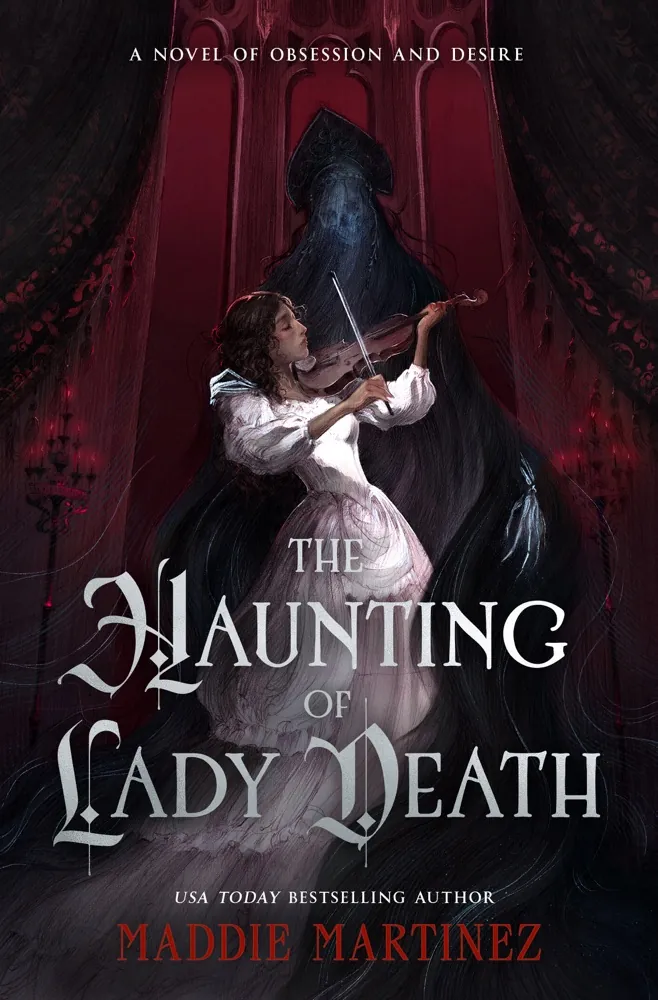

Author: Maddie MartinezPage Count: UnknownPublication Date: Expected publication 2026 APL October winds are currently rattling the French paned glass of my study, bringing the distinct scent of decaying foliage and damp asphalt. Perfect weather for morbidity. Or at least, perfect weather for Maddie Martinez’s upcoming 2026 release, The Haunting of Lady Death. The publishing world continues its relentless obsession with sapphic creature-fleshing, yet this particular Slavic folklore-drenched iteration of The Phantom of the Opera demands a raised eyebrow and a glass of heavily oaked Chardonnay. The Architecture of Desperation We find ourselves stranded in the glittering city of Larzeg. Kasia is your standard-issue ambitious violinist—starving, overlooked, and relentlessly beaten down by institutional xenophobia regarding her Azjarian heritage. But let us pause. Actually, scratch that entire critique of institutional roadblocks. The synopsis implies these barriers are merely cardboard props waiting to be kicked aside the second a skeletal hand emerges from the wings. Mortality and Melody The central bargain is deliciously transactional. Death wrapped in a veil offers upward mobility in exchange for a soul-tethered plus-one. A grim romance for the girlies, truly. Martinez leverages the Nectar Performance House as a pressure cooker where patriarchal power structures collide with primeval mythologies. Yet, one must wonder if the social commentary here will possess any real teeth, or if it will simply dissolve into aestheticized vibes for BookTok. No cap, the prose needs to slap hard to keep this from feeling like a basic ass Gothic fanfiction. The promise of music as a weapon—an entrancing magic that bends audiences to a mortal’s whim—offers a fascinating exploration of artistic complicity. Kasia trades her autonomy for prestige, stepping willingly into the thrall of an entity who demands total possession. It is Faustian, yes, but filtered through a queer lens that trades divine damnation for dark, velvety seduction. Ava Reid and S.T. Gibson fans will undoubtedly devour the gothic calories, though I personally remain skeptical of whether the pacing can sustain the atmospheric dread without collapsing under the weight of its own melodrama. The omission of Digital Rights Management software by the publisher feels entirely appropriate for a book about unchaining suppressed desires. Read it on your battered tablet while drinking expensive scotch, or do not read it at all. Now, excuse me while I log onto the bird app to issue a frantically worded statement because my dryly sarcastic tweet about a debut novelist's comma usage was just screenshotted and quoted by a horde of chronically online teenagers. #TheHauntingOfLadyDeath #BookTwitter #GothicRomance Related InsightsYour Lips on Mine Book Review and Summary Siddhartha Book Review and Summary Regretting You Book Review and Summary{ "@context": "https://schema.org", "@type": "FAQPage", "mainEntity": [ { "@type": "Question", "name": "What is the main focus of The Haunting of Lady Death Book Review and Summary?", "acceptedAnswer": { "@type": "Answer", "text": "Everything you need to know about The Haunting of Lady Death with our detailed review." } }, { "@type": "Question", "name": "Who authored the comprehensive guide on The Haunting of Lady Death Book Review and Summary?", "acceptedAnswer": { "@type": "Answer", "text": "This detailed article and its insights were carefully researched and authored by Lucia Garcia." } }, { "@type": "Question", "name": "Where can I find more related content about Books?", "acceptedAnswer": { "@type": "Answer", "text": "You can explore more articles, detailed reviews, and similar insights by browsing the Related Insights section at the bottom of this article or visiting our dedicated Books category page." } } ] }
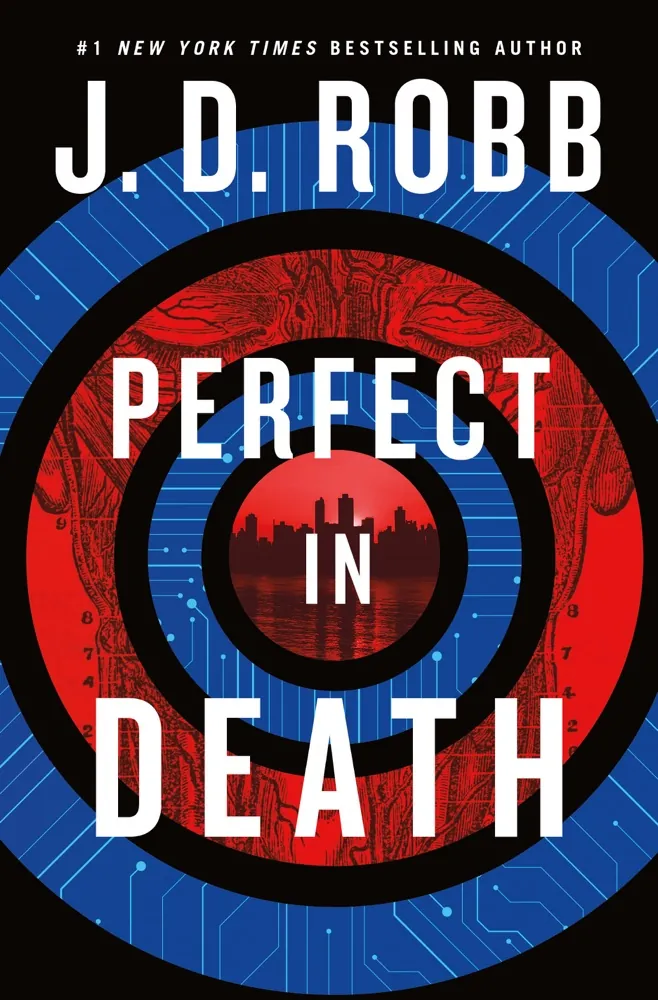

Author: J.D. RobbPage Count: UnknownPublication Date: Expected publication 2026 APL Thirty-two dollars for a textbook that was last updated when George Bush was in office. That is the actual financial ruin funding my coffee black enough to melt concrete while I dissect Perfect in Death. Because J.D. Robb—or Nora Roberts wearing her futuristic precinct badge—is back at it again with Lieutenant Eve Dallas. Sixty-four books. Read that number out loud and try not to experience immediate somatic dread. Scalpels, Cobblestones, and God Complexes The synopsis gives us a headless corpse on a dark cobblestoned street. Classic noir beats, sure, but let us talk about the actual biological plausibility here. The blurb tosses around phrases like "illegal organ harvesting" and "medical knowledge" right before dragging us into the hallowed halls of academia. If you are going to write a forensic thriller involving surgical precision, for the love of ATP, explain the cellular preservation window. You cannot just casually misappropriate transplant logistics for dramatic effect without accounting for ischemic times. Actually, wait. The medical angle is completely secondary to the institutional rot anyway. Never mind the cellular necrosis; what we are really looking at is yet another tired allegory about elite hubris. The Pursuit of Absolute Perfection Or maybe not. Let me walk that back because the pursuit of perfection is literally the engine running this entire sprawling dystopia. Manicured campus lawns masking feral ambition. Manhattan doctors playing God because their prefrontal cortexes are fried on ambition and designer stimulants. Eve Dallas walks into these ivory towers like a human garbage disposal for dirty secrets. She hates elitism almost as much as I hate my landlord charging twenty-five dollars a month for a basement storage locker that leaks sewage. And Peabody will be there, rolling her eyes and eating some synthetic pastry while Eve threatens a neurosurgeon with a badge and a glare. The thematic weight here rests on the friction between raw, bloody biology and the sterile aesthetic of high-society achievement. But let us be real. This reads like Michael Connelly crossed with a cyberpunk soap opera. We all know the drill by now. The victim seemed too good to be true. The family is hiding something mundane yet tawdry. Some arrogant academic is going to monologues about transhumanism or cellular immortality right before the cuffs click. Yet I will still pre-order it on my phone while sitting in the back of a three-hundred-person lecture hall listening to an adjunct drone on about molecular pathways. Because sometimes you just need a caffeine-addled homicide detective to remind you that rich people are garbage. The bodega on the corner just turned into a cold-pressed juice boutique charging eight dollars for celery water, and honestly, losing the last decent dive bar in this ZIP code hurts worse than failing organic chemistry. Related InsightsZen and the Art of Motorcycle Maintenance: An Inquiry Into Values Book Review and Summary Lochbound Book Review and Summary Clear Water Book Review and Summary{ "@context": "https://schema.org", "@type": "FAQPage", "mainEntity": [ { "@type": "Question", "name": "What is the main focus of Perfect in Death (In Death, #64) Book Review and Summary?", "acceptedAnswer": { "@type": "Answer", "text": "Everything you need to know about Perfect in Death (In Death, #64) with our detailed review." } }, { "@type": "Question", "name": "Who authored the comprehensive guide on Perfect in Death (In Death, #64) Book Review and Summary?", "acceptedAnswer": { "@type": "Answer", "text": "This detailed article and its insights were carefully researched and authored by Marco Conti." } }, { "@type": "Question", "name": "Where can I find more related content about Books?", "acceptedAnswer": { "@type": "Answer", "text": "You can explore more articles, detailed reviews, and similar insights by browsing the Related Insights section at the bottom of this article or visiting our dedicated Books category page." } } ] }
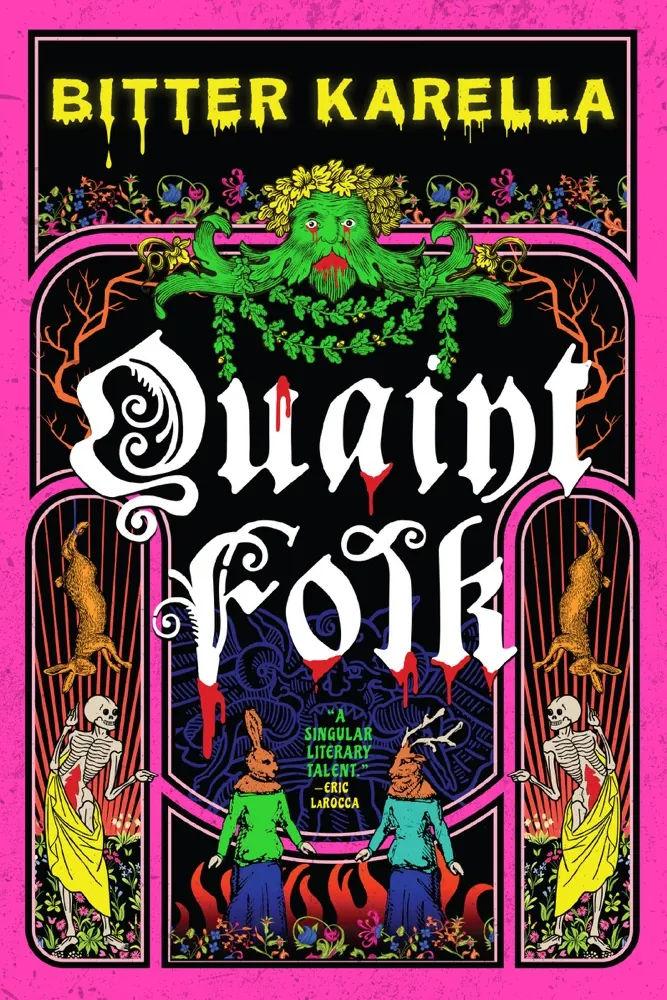
Author: Bitter KarellaPage Count: UnknownPublication Date: Expected publication 2026-10-06 APL It is freezing outside, and my landlord still refuses to turn on the radiator, leaving me to shiver over a lukewarm mug of instant coffee while staring at another PR pitch for Bitter Karella’s upcoming Quaint Folk. Another day, another stack of queer horror manuscripts hitting my desk—because apparently, every publishing house in New York decided that what we really need this October is yet another satirical takedown of rural isolation. The Suburban Pretension Trap Jessica has the all-American pie life. Or so the copywriters claim before slapping us with the mandatory trauma dump about how she cannot escape her past. Groundbreaking stuff. We are supposed to believe that moving to Hasenhurst—a remote island where people aggressively make their own jam and trade in folksy superstition—will offer a fresh start. And naturally, beneath the idyllic veneer of homemade herbs and quiet domesticity, something sickly-sweet and rotten lies buried. Wow. Color me shocked. Did Shirley Jackson patent this plot in 1948 only for every mid-tier indie darling to run it straight into the ground? Karella clearly channels the unhinged domestic dread of Eric LaRocca and the biting, satirical camp of Laura Cranehill. Yet, relying entirely on the "wholesome town hides dark secrets" trope feels painfully lazy for a writer of this caliber. The Weaponization of Jam and Folklore The thematic weight here rests heavily on the absurdity of heteronormative suburban expectations crashing headfirst into ancient, blood-soaked mythologies. Jessica desperately wants to be the "right kind of person" for a quaint life, which is just academic-speak for the desperate yearning to belong in a system that will inevitably try to skin you alive. It gives heavy vibes of The Wicker Man meets Stepford Wives, but make it queer. The synopsis promises something funny, bloody, and outrageous. But let us be real. The synopsis always promises a riot. What we usually get is two hundred pages of moody atmosphere followed by a third-act bloodbath that forgets to actually say anything new about the trauma of domesticity. Marketing Aesthetic Versus Actual Substance The blurbs are doing some heavy lifting here. LaRocca calls it a bold, potent brew of mythical weirdness, which is industry code for the protagonist is going to hallucinate heavily while chopping vegetables. And honestly? I am tired. I am so damn tired of books coasting on vibes and vibe-adjacent queer trauma. Give me actual structural bite instead of just throwing around words like satirical and unhinged to distract readers from the fact that the plot is basically a Mad Libs sheet filled out by a chronically online goth. If Karella actually leans hard into the surrealism without pulling any punches, this might just survive the brutal autumn release cycle. Otherwise, it is just another piece of aesthetic content destined to be posted on BookTok next to a cup of chamomile tea and an amber-colored reading light. I have to go scream into a pillow and then debate the merits of absurdism with a stranger in a dive bar. Related InsightsBridge to Bat City 6c Signed Solid Prepack Book Review and Summary Adam and Eve Book Review and Summary Ivanhoe Book Review and Summary{ "@context": "https://schema.org", "@type": "FAQPage", "mainEntity": [ { "@type": "Question", "name": "What is the main focus of Quaint Folk Book Review and Summary?", "acceptedAnswer": { "@type": "Answer", "text": "Everything you need to know about Quaint Folk with our detailed review." } }, { "@type": "Question", "name": "Who authored the comprehensive guide on Quaint Folk Book Review and Summary?", "acceptedAnswer": { "@type": "Answer", "text": "This detailed article and its insights were carefully researched and authored by Irina Ivanova." } }, { "@type": "Question", "name": "Where can I find more related content about Books?", "acceptedAnswer": { "@type": "Answer", "text": "You can explore more articles, detailed reviews, and similar insights by browsing the Related Insights section at the bottom of this article or visiting our dedicated Books category page." } } ] }
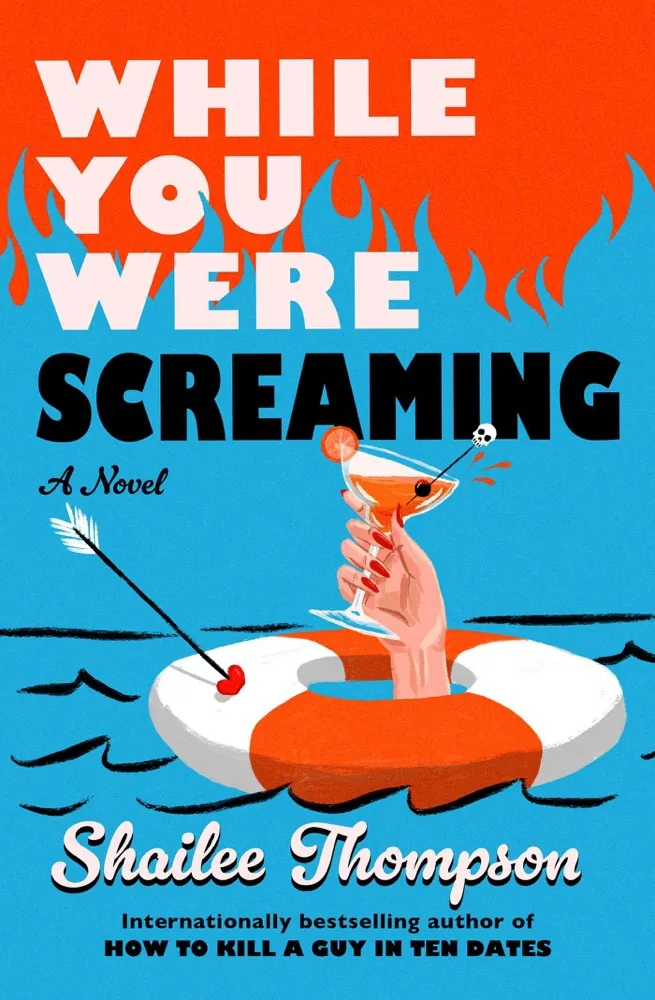
Author: Shailee ThompsonPage Count: UnknownPublication Date: Expected publication 2026 APL The synopsis for While You Were Screaming reads like a corporate press release for a horror rom-com that’s been so carefully crafted it might as well be a TikTok algorithm’s wet dream—equal parts schmaltzy and self-aware, but with the emotional depth of a Hallmark card left in the rain. The problem? It’s too polished. The vagueness isn’t just a stylistic choice; it’s a cop-out. You could swap in any number of "couples retreat gone wrong" tropes—think The Guest meets The Love Hypothesis if The Love Hypothesis had been directed by Ari Aster—and the synopsis wouldn’t blink. It’s the literary equivalent of a fast-food menu where every item says "surprise ingredient." The fake-dating trope is so overworked it’s practically a genre unto itself—The Hating Game, Book Lovers, The Kiss Quotient—but here it’s not just a setup, it’s a ticking time bomb. The idea of infiltrating a couples retreat as a "perfect match" is such a tired conceit that it’s almost funny if it weren’t so predictable. And yet, the synopsis leans into the absurdity with a wink, as if to say, "Yeah, we know it’s dumb, but watch us make it funny." But here’s the thing: dark humor and genuine tension don’t mix like oil and water. The synopsis hints at escalating stakes—"increasingly dangerous tests of devotion"—but it never clarifies what those tests are. Are we talking psychological manipulation? Physical endurance? A literal game of "truth or dare" with a chainsaw? The ambiguity is either genius or laziness, and at this point, it’s hard to tell which. The thematic core seems to revolve around the idea of love as both salvation and damnation—classic horror-rom-com territory, sure, but the execution risks feeling like it’s borrowing from The Shining’s "family is a trap" energy while trying to sell itself as a rom-com. The synopsis drops the line "deciding who deserves it" like it’s some deep, existential revelation, but in reality, it’s just the kind of vague, cinematic phrasing that makes you wonder if the author’s ever actually read a horror novel. Compare that to Mexican Gothic’s razor-sharp critique of toxic relationships or The Only Good Indians’ unflinching look at grief—here, the emotional weight feels like it’s been slapped on after the fact, like a last-minute CGI enhancement. And let’s talk about the characters. Laurie Hamilton, the "filmmaker with red flags for days," is the kind of protagonist who exists solely to be the audience’s proxy for skepticism. Connor Kincaid, the "dangerously handsome podcaster," is the kind of love interest who’d make a Bachelor contestant blush. The dynamic between them is set up as a slow-burn, but the synopsis doesn’t even attempt to sell it—it just says, "she’s secretly falling for him." Falling for him? Really? After what, three paragraphs of exposition? The chemistry here is being treated like a plot device, not a character arc. It’s the literary equivalent of a Netflix show where the romance is just there to distract you from the fact that the writing is actually terrible. But here’s the kicker: the synopsis knows it’s playing fast and loose with expectations. It’s not trying to be serious; it’s trying to be fun. And in a market where horror-rom-coms are either The Last of Us meets The Notebook or Euphoria meets The Ring, While You Were Screaming is positioning itself as the latter—sleazy, self-aware, and just desperate enough to work. The name-dropping of Brynne Weaver and Grady Hendrix is a smart move, because those authors straddle the line between genre and literary fiction with a precision that this synopsis lacks. Weaver’s The Last Time I Lied has the same kind of dark humor and psychological tension, but where Weaver’s work feels earned, this synopsis feels like it’s just trying to imitate. I’m not even sure what to make of it. Is this a book that’s going to deliver the kind of subversive, genre-bending fun of The Only Good Indians? Or is it going to be the kind of rom-com that makes you want to unsubscribe from the author’s newsletter? The synopsis doesn’t tell you. It just leaves you with the nagging suspicion that you’re about to read a book that’s so confident in its own cleverness that it’s forgotten how to actually write. And now I have to stop writing this because I just remembered I was supposed to be at the gallery, trying to decide whether to buy that Monet replica or just accept that my life choices are already questionable. #BookTok #HorrorRomCom #WhyAmIStillReadingThis
-
 James Miller
 - 15 Oct, 2026 16:33
Up to No Good: The Complete Elderly Lady Stories Book Review and Summary
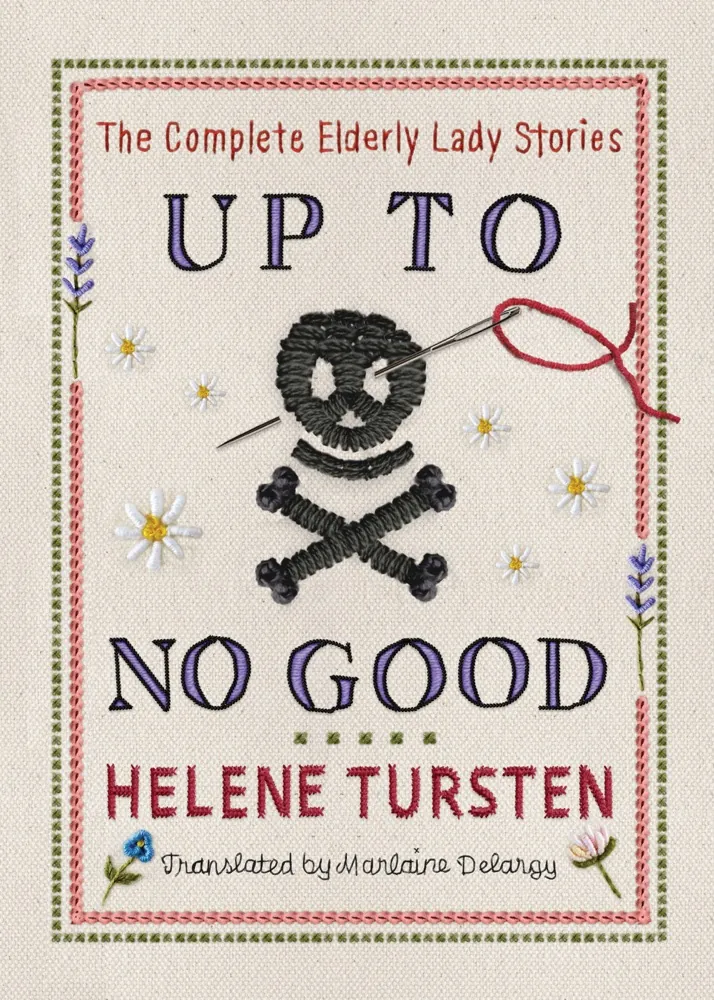
Author: Helene TurstenPage Count: UnknownPublication Date: Expected publication 2026-10-06 APL One must marvel at the modern penchant for dressing up petty criminality as geriatric whimsy, as if a rusted cleaver becomes charming simply because it is held by someone with advanced cataracts. We are expected to swoon over a collection titled Up to No Good: The Complete Elderly Lady Stories by Helene Tursten, a compilation of murderous exploits involving an octogenarian squatter in Gothenburg who apparently handles lease disputes with a shovel. How delightfully quaint. One can practically smell the decomposing bodies beneath the begonias, perfectly paired with the bonus cross-stitch patterns. One wonders if Marie Antoinette would have kept her head had she simply embroidered a scenic cottage while ridding Versailles of her creditors. The Aristocratic Right of Eminent Domain Maud lives rent-free in a sizable apartment because of a seventy-year-old contract clause. Let us pause and reflect on the absolute vulgarity of squatting, regardless of whether the perpetrator uses a walker. Property rights are the bedrock of civilization, inherited through bloodlines of proper breeding—not secured through illicit graves and clandestine landscaping. Yet, the contemporary reading public eats this up, preferring their matriarchs unhinged and homicidal rather than dignified and heavily in debt. It is the literary equivalent of the House of Windsor letting Prince Andrew choose the interior decor for Balmoral. Simply indefensible. Detectives are circling. Suspense is meant to be generated. But the synopsis admits right away that she has evaded detection thus far, rendering the entire endeavor as toothless as the protagonist claims not to be. Culinary Crimes and Domestic Treason Recipes included in a volume of murder mysteries. What a tired, pedestrian gimmick. Agatha Christie never felt the need to include a scone recipe after poisoning Lord Peter's aunt, because true art requires no domestic bribe to hold the reader's attention. But here we are, catering to the same demographic that treats the Harrods food hall like a contact sport. We are sliding backward into barbarism, trading proper character development for folksy Scandinavian noir that reads like a cookbook edited by Jeffrey Dahmer. The Inevitable Cinematic Degradation Naturally, Hollywood must sink its manicured claws into this nonsense. An upcoming series starring Glenn Close. Perfect. Because if there is one thing missing from our cultural landscape, it is another vehicle for an esteemed actress to ham her way through a caricature of domestic psychopathy while wearing oversized knitwear. It gives off strong Sunset Boulevard meets the Ikea catalog energy, and frankly, Norma Desmond had better posture. My corporate lawyer is calling me on the secure line about a rather messy litigation issue involving a disputed land grant in the south of France, so I must cut this short before my blood pressure reaches the levels of a taxed commoner. #HeleneTursten #CozyCrime #LiteraryDecline #RealEstateDisputes
-
 Klaus Weber
 - 15 Oct, 2026 16:31
Witches of Questionable Intent (Books of Dubious Origin #2) Book Review and Summary
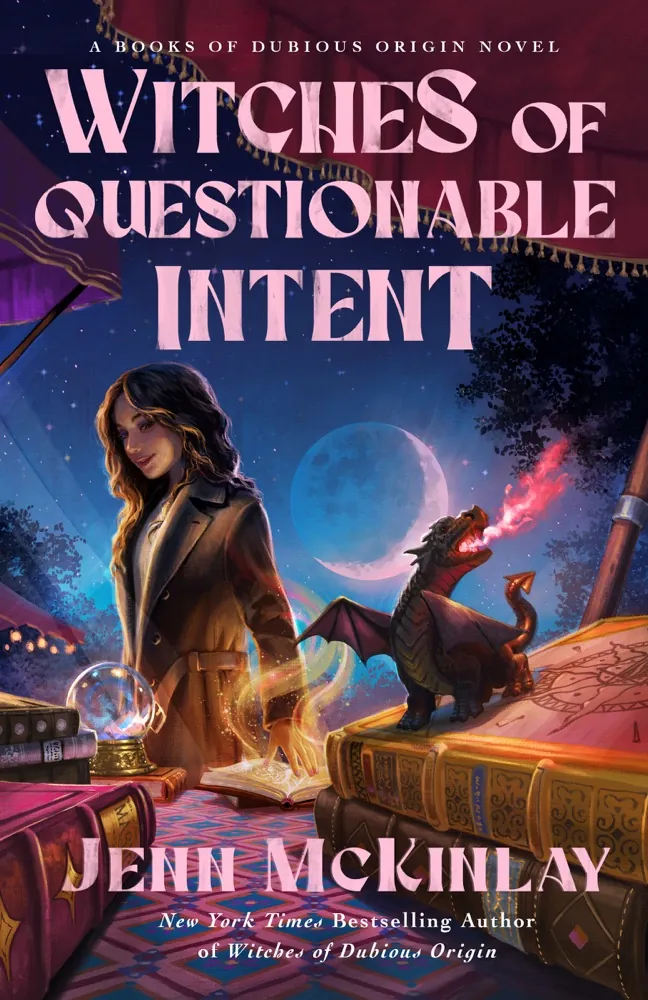
Author: Jenn McKinlayPage Count: UnknownPublication Date: Expected publication 2026-11-10 APL The aristocracy of the written word has always treated librarians with a quiet, patronizing condescension, as if their primary function is merely shushing patrons while hoarding paper cuts. Yet, Jenn McKinlay returns with Witches of Questionable Intent to glean some much-needed chaos from the stacks, plunging her protagonist Zoe Ziakas into a metaphysical panic where the Dewey Decimal System is entirely useless. And honestly? We love a bureaucratic nightmare disguised as speculative fiction. Let us dissect the epistemological arrogance at play here. When The Book of Shadows vanishes from the Museum of Literature, we are not simply looking at a standard artifact retrieval mission. No. We are witnessing the ultimate post-modern crisis: an ontological threat where textuality itself dictates reality. This is what happens when librarianship meets absolute power. But wait—actually, let me walk that back entirely because looking closely at the synopsis, the inclusion of an unruly hellhound puppy completely derails any pretension of high-art deconstruction. It is pure, unadulterated genre pandering, and quite frankly, the juxtaposition of existential dread with canine comedy is aggressively mid. On one hand, McKinlay taps into that delightful urban fantasy vein perfected by luminaries like Patricia Briggs or Jim Butcher, wherein municipal archives double as literal battlegrounds for cosmic equilibrium. On the other hand, throwing a hellhound into the mix gives major YA-adjacent, TikTok-brain rot energy, which honestly slaps if you are trying to sell paperbacks to people who buy crystals at urban outposts. Cataloging the Void The thematic core relies entirely on the premise that truth and illusion are interchangeable commodities. A dangerous concept in our current geopolitical climate. Yet, the synopsis keeps the mechanics frustratingly vague—relying on stock phrases about reality being rewritten without giving us the intellectual meat of how these spells actually manipulate semiotics. How does a syntactic curse alter a streetlamp? Does grammar become violent? We are left guessing. And yet, the epistemic anxiety remains delicious. When the line between fact and fiction dissolves, every archivist becomes a frontline combatant against total erasure. McKinlay understands the quiet terror of misfiled data, elevating it to an apocalyptic stakes-raising exercise. One expects nothing less from a practitioner of the craft who knows that paper can be sharper than any obsidian blade. The persistent draft coming from my poorly insulated window is unbearable. #BooksOfDubiousOrigin #UrbanFantasy #BookSky
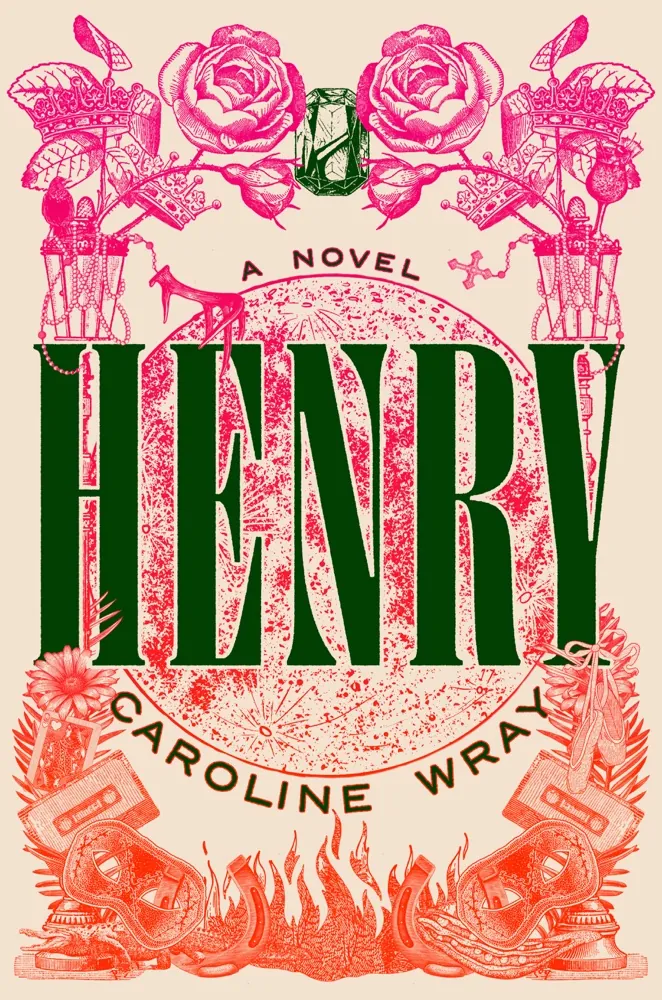

Author: Caroline WrayPage Count: UnknownPublication Date: Expected publication 2026 APL October winds are rattling the loose windowpanes of this cursed rental again, blowing a steady chill across the floorboards while I stare at yet another pile of unsolicited galleys that cost seventy cents more to ship than they are worth. Caroline Wray is attempting something genuinely unhinged with Henry, and honestly? I am so seated for the carnage. The Geometry of Oblivion A blazing contemporary reimagining of the Tudor dynasty's greatest marital sport, relocated across a century and a half of American and English anxieties. Because why write historical fiction when you can just drop Tudor trauma into 1966 New Orleans and let the humidity rot the velvet? Susan Choi calls Wray an unsparing observer of the human heart — a blurb that usually means everyone in this book is going to behave like an absolute feral rat for the sake of validation. And frankly? We love to see it. We are talking about six distinct archetypes orbiting a singular, gravitational black hole of male ego. Lina, Anne, Hannah, Katy, Jane, Parker. A whole constellation of women trying to figure out how to be the main character of a narrative where they were merely cast as the side-piece prop. The Architecture of Desperation The premise hinges on a terrifyingly simple, devastatingly relatable question: how much dignity are you willing to trade on the open market just to feel perceived by someone who fundamentally views you as disposable real estate? Wray tracks this pathetic descent from a reluctant Mardi Gras queen in the sixties to a headspring ballerina in Manhattan, sliding right down into a crumbling English castle where a reality TV producer is orchestrating synthetic affection. It gives major The Girlfriend Experience meets Hilary Mantel on an bender. Yet the synopsis remains delightfully vague about the exact mechanics of how these women intersect — do they share the same monster, or is Henry just a systemic virus mutating through different decades? The structural ambition alone is giving me vertigo, mostly because I am currently dizzy from living off stale black coffee and cheap cigarettes while watching the autumn light fade before four in the afternoon. And if Wray actually pulls off this multi-temporal, multi-class vivisection of patriarchal collateral damage without devolving into pretentious structural bloat, she might just out-do every other cynical domestic thriller currently clogging up the bestseller lists. Or it will completely implode under the weight of its own cleverness. Either way, the vibes are immaculate. I have to bolt right now or I am going to miss the start of the midnight philosophical showdown down at the smoky basement jazz joint where nobody asks about your overdue rent. Related InsightsThe Jungle Book Review and Summary For the Wolf Book Review and Summary Invisible Monsters Book Review and Summary{ "@context": "https://schema.org", "@type": "FAQPage", "mainEntity": [ { "@type": "Question", "name": "What is the main focus of Henry Book Review and Summary?", "acceptedAnswer": { "@type": "Answer", "text": "Everything you need to know about Henry with our detailed review." } }, { "@type": "Question", "name": "Who authored the comprehensive guide on Henry Book Review and Summary?", "acceptedAnswer": { "@type": "Answer", "text": "This detailed article and its insights were carefully researched and authored by Olya Shevchenko." } }, { "@type": "Question", "name": "Where can I find more related content about Books?", "acceptedAnswer": { "@type": "Answer", "text": "You can explore more articles, detailed reviews, and similar insights by browsing the Related Insights section at the bottom of this article or visiting our dedicated Books category page." } } ] }
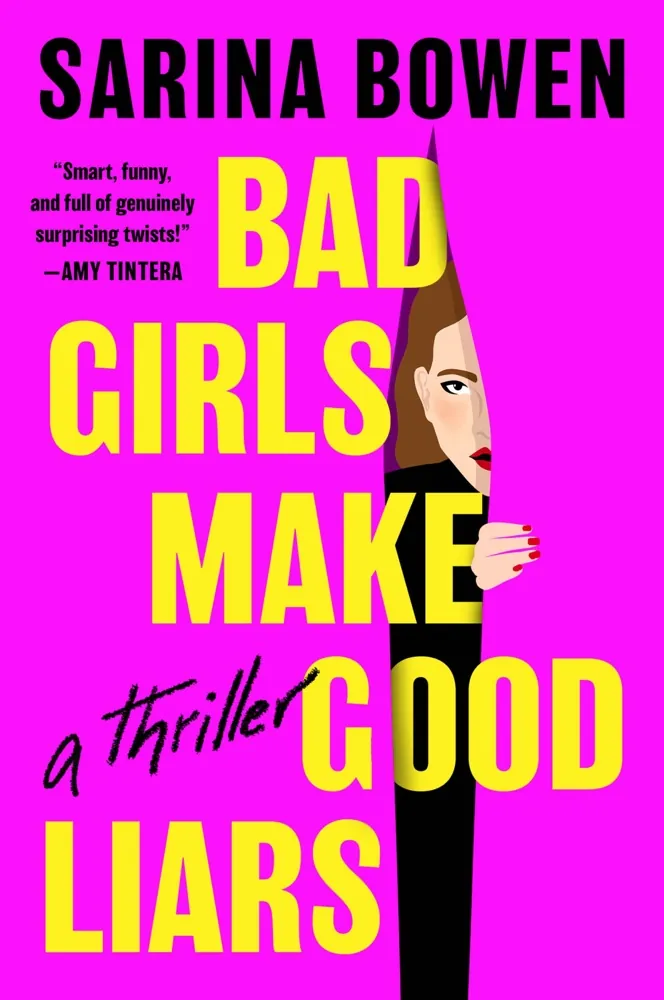

Author: Sarina BowenPage Count: UnknownPublication Date: Expected publication 2026 APL The provenance of a paperback matters less to me than the crispness of an untrimmed deckle edge, yet here we are, staring down Sarina Bowen’s forthcoming Bad Girls Make Good Liars with the casual dread of a trust-funder opening a tax audit. Is it Friday yet? God, I hope so, because the algorithmic pulp-peddlers are at it again. Doppelgängers and Disposable Income Private investigators with mysterious pasts in Maine are the pumpkin spice lattes of contemporary suspense. Give me a break. Ivy Quillan spends a decade hiding in the pine trees—very chic, very rustic—only to have her peace shattered by an ex-boyfriend hauling out a missing influencer who happens to possess her exact face. A doppelgänger plot. Groundbreaking. One expects the digital proletariat to eat this up on BookTok while waiting for their DoorDash. Bowen previously gave us The Five Year Lie, which played fast and loose with domestic paranoia. Now we pivot to identity theft via aesthetic cloning. The Aesthetics of Impposture Let us dissect the prose economy here. We are told the missing girl, Kelsey Chillingham, has the same voice, the same laugh, the same everything. It is peak parasocial horror. The internet is obsessed. Naturally. Because nothing terrifies the terminally online quite like a girlboss duplicate stealing your brand equity. Yet the synopsis reads like a masterclass in high-concept hand-waving. Ivy finds people for a living. Oh, the irony! She is a sleuth who gets sleuthed by her own genetics. Absolute brain-rot territory. It lacks the understated psychological claustrophobia of Patricia Highsmith or the acidic domesticity of early Gillian Flynn. Instead, we get a thriller engineered in a lab for maximum airport bookstore velocity. The Romance Industrial Complex And then, of course, there is the requisite romantic entanglements. Frazier Morello. The man she never forgave, who conveniently drags her back into the narrative meat-grinder. Because a woman simply cannot solve her own existential crisis without a brooding ex standing in the periphery looking moody in a flannel shirt. It is aggressively predictable. I would bet a vintage first-edition Nabokov that the third act involves a dramatic confrontation in a remote cabin while a nor'easter blows out the cell service. Yet, I will read it. I always do, if only to sneer at the pacing over my morning espresso. We all have our vices. Mine just happen to cost thirty-four dollars a hardcover and require a leather bookmark. Time to escape this digital squalor. I am going to browse real estate listings in Tuscany to cleanse my palate. Related InsightsRhythm of War Part Two Book Review and Summary Champagne Problems (In the Paddock, #1) Book Review and Summary Kane & Abel Book Review and Summary{ "@context": "https://schema.org", "@type": "FAQPage", "mainEntity": [ { "@type": "Question", "name": "What is the main focus of Bad Girls Make Good Liars Book Review and Summary?", "acceptedAnswer": { "@type": "Answer", "text": "Everything you need to know about Bad Girls Make Good Liars with our detailed review." } }, { "@type": "Question", "name": "Who authored the comprehensive guide on Bad Girls Make Good Liars Book Review and Summary?", "acceptedAnswer": { "@type": "Answer", "text": "This detailed article and its insights were carefully researched and authored by Olivia Harris." } }, { "@type": "Question", "name": "Where can I find more related content about Books?", "acceptedAnswer": { "@type": "Answer", "text": "You can explore more articles, detailed reviews, and similar insights by browsing the Related Insights section at the bottom of this article or visiting our dedicated Books category page." } } ] }

Author: Leslie JamisonPage Count: UnknownPublication Date: Expected publication 2026 APL The synopsis for The Daughters reads like a literary Ouija board—three women, three eras, one myth’s shadow stretching across millennia. Jamison, who’s spent her career dissecting the way stories twist into monsters (see: The Empathy Exams), is clearly playing with the same bones here. But the problem? The synopsis is so broad it could apply to a dozen books. Where’s the specificity? Where’s the bite? Because right now, it feels like a menu at a buffet where the only thing guaranteed is that someone’s going to eat something sad. Pasiphaë, the witch queen of Knossos, is the most intriguing hook—because let’s be real, the Minotaur is gold for a writer who loves exploring the grotesque and the sacred. But the synopsis doesn’t tell us if Jamison’s going to lean into the myth’s psychological horror (like The Song of Achilles’ take on Achilles’ mother) or if she’s just going to serve up a historical romance with a side of labyrinthine metaphor. And Beth in 1944? Suburban discontent is a trope so old it’s practically a fossil, but if Jamison’s going to make it fresh, she’ll need to do more than just dangle an "ancient image" like a cheap horror movie plot device. The real question is: Is this a story about myth as curse, or myth as escape? Then there’s Jac in 1997, because of course there’s a cult. But why Crete? Why now? The synopsis doesn’t say. Is this a love letter to the island’s real-life cults (like the infamous Dionysus sects) or just another iteration of the "women in the woods" narrative that’s been mined since The Handmaid’s Tale? The danger here is that Jamison, who’s so sharp about female rage (Grimsdyke), might get lost in the same old well of "dangerous women" tropes unless she digs deeper than "charismatic leader" and "dark secrets." The real test will be whether Jamison can make these three women feel like more than vessels for myth. Because right now, the synopsis reads like a Game of Thrones synopsis—three women, three timelines, one big payoff. But Jamison’s not George R.R. Martin. She’s not writing about dragons or political intrigue. She’s writing about the way myths stick to us, the way they fester under our skin like an old scar. If she can make Pasiphaë’s grief feel as visceral as The Night Circus’s atmosphere, or Beth’s suburban ennui as suffocating as The Bell Jar, then this could be something. But if she just serves up three women reacting to the same old mythic punchline, we’re all just waiting for the next American Gods knockoff. And let’s not forget—Jamison’s nonfiction is brutal in its honesty. The Empathy Exams isn’t just about medical school; it’s about the way trauma rewrites you. Make This Your World isn’t just about travel; it’s about the way desire and despair collide. So if The Daughters is going to work, it can’t just be about monsters. It has to be about the monsters inside the women who love them. But here’s the thing—why am I even writing this? Because I have to. Because some part of me thinks this book might actually be good, and I need to pretend I care enough to dissect it. And also because I’m running out of things to do before my shift at the coffee shop, and I’d rather argue about literary tropes than argue with the barista about whether their beans are actually fair trade. #bookstagram #mythology #lesliejamison #womenslit #labyrinthine Related InsightsNew Ruth Ware Thriller Book Review and Summary Jane Austen's The Watsons Book Review and Summary Freakonomics (Spanish Edition) Book Review and Summary{ "@context": "https://schema.org", "@type": "FAQPage", "mainEntity": [ { "@type": "Question", "name": "What is the main focus of The Daughters Book Review and Summary?", "acceptedAnswer": { "@type": "Answer", "text": "Everything you need to know about The Daughters with our detailed review." } }, { "@type": "Question", "name": "Who authored the comprehensive guide on The Daughters Book Review and Summary?", "acceptedAnswer": { "@type": "Answer", "text": "This detailed article and its insights were carefully researched and authored by Diego Lopez." } }, { "@type": "Question", "name": "Where can I find more related content about Books?", "acceptedAnswer": { "@type": "Answer", "text": "You can explore more articles, detailed reviews, and similar insights by browsing the Related Insights section at the bottom of this article or visiting our dedicated Books category page." } } ] }
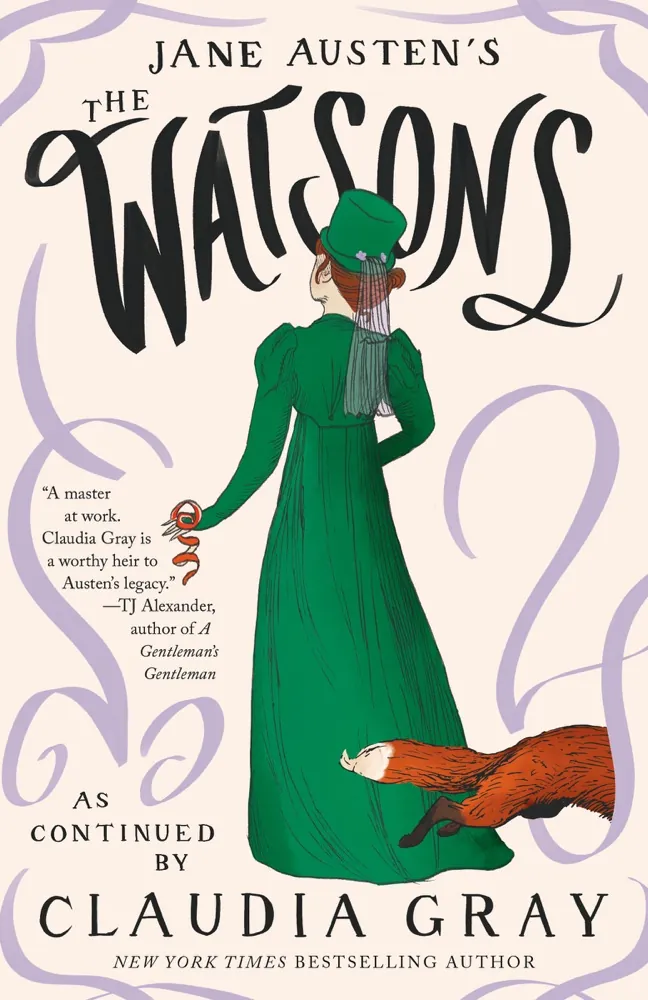

Author: Claudia GrayPage Count: UnknownPublication Date: Expected publication 2026-11-17 APL Smelling stale beer through the heavy fire exit door while flicking an ash into a puddle of October slush is preferable to listening to another thirty-something in a beanie explain the subtext of a podcast. Let us talk about Regency tropes instead. Specifically, Claudia Gray taking a crack at Jane Austen’s half-baked trunk scrap, The Watsons. The Ghost of Austen Past You already know the drill. Girl gets booted from her cushy upper-class digs back to the chaotic, impoverished biological family unit because her uncle kicked the bucket and her aunt made a catastrophically bad second marriage. Classic setup. It screams Sandra Cisneros meets early-period Georgette Heyer, except with the added pressure of finishing someone else's literary homework. Or wait, no, Heyer is entirely the wrong comparison here; this feels much closer to P.D. James tinkering with Pride and Prejudice bones. And honestly, why do we keep exhuming literary corpses just to slap a glossy modern cover on them? Are we reading the same book? No, because nobody has actually read the whole thing yet since the original is literally just a hundred pages of notes and false starts. Gray is leaning hard into the class anxiety and romantic push-and-pull between a haughty, eligible local lord and a sensible clergyman. Groundbreaking. Truly shocking stuff for a period piece. The Economics of Affection Look, I am just sitting here trying to stretch this out to meet a stupid word count because the rent is due and my editor is a ghost who only communicates via threatening emails about word processors. So let us dissect the synopsis like hungry vultures. The core tension relies entirely on whether our protagonist should chase bags or feelings. A tale as old as time. Or at least as old as 1804. Money talks, especially when you are a Regency woman with zero legal rights and a family financial safety net made entirely of wet tissue paper. Yet Gray promises humor and social commentary alongside the bodice-ripping angst. I take it back—maybe the clergy-versus-lord dynamic won't be entirely insufferable if the prose has enough bite. Austen always excelled at making pettiness look like high art. Can an author known for clever mystery tie-ins pull off that exact brand of social scalpel work? Questionable. Actually, scratch that last part. Gray usually knows how to pace a narrative better than the nineteenth-century masters ever did when they were getting paid by the word. Maybe the pacing will save us from the usual polite-society parlor boredom. Or maybe it will just be another bloated cash grab riding on the coattails of dead geniuses who cannot sue for copyright infringement. I am going to finish this cheap cigarette, ditch this terrible rooftop party where nobody knows how to roll their own tobacco, and go read a battered copy of Kerouac until the sun comes up. Related InsightsWhen the Pen Becomes a Mirror: The Secret Architecture of Self-Narration Beautiful Disaster Book Review and Summary Kingdom of Ash Book Review and Summary{ "@context": "https://schema.org", "@type": "FAQPage", "mainEntity": [ { "@type": "Question", "name": "What is the main focus of Jane Austen's The Watsons Book Review and Summary?", "acceptedAnswer": { "@type": "Answer", "text": "Everything you need to know about Jane Austen's The Watsons with our detailed review." } }, { "@type": "Question", "name": "Who authored the comprehensive guide on Jane Austen's The Watsons Book Review and Summary?", "acceptedAnswer": { "@type": "Answer", "text": "This detailed article and its insights were carefully researched and authored by Piotr Nowak." } }, { "@type": "Question", "name": "Where can I find more related content about Books?", "acceptedAnswer": { "@type": "Answer", "text": "You can explore more articles, detailed reviews, and similar insights by browsing the Related Insights section at the bottom of this article or visiting our dedicated Books category page." } } ] }


Dawn Over the Tien Shan: Arriving in Kyrgyzstan The first light that kisses the jagged ridges of the Tien Shan feels like a promise. I stepped off the plane in Bishkek with a backpack, a laptop, and a 60‑day visa‑free stamp that covers roughly seventy nationalities — no formal digital‑nomad visa exists, but the eVisa portal lets you extend to ninety days for a modest government fee. The capital’s wide boulevards, Soviet‑era mosaics, and bustling bazaars serve as a practical launchpad before you trade concrete for felt. Bishkek’s median monthly cost sits at $1,210 according to Numbeo’s 2026 snapshot, a figure that already includes a modest apartment, utilities, and the fiber‑optic broadband that most landlords bundle in. Coworking spaces such as Ololo or Bishkek Hub charge $50‑$150 per month, and a local prepaid SIM with 10 GB of data costs $5‑$10, giving you instant 4G/LTE coverage across the city and most major highways. I spent my first week mapping the route to the high pastures, downloading offline maps, and testing the latency on a video call — consistently under 80 ms, more than enough for synchronous work. The transition from urban rhythm to nomadic tempo begins the moment you board a shared marshrutka toward Kochkor or Naryn, where the road climbs into valleys that have hosted shepherds for millennia.Setting Up Camp in a Felt Fortress: The Yurt Homestay Experience A Kyrgyz yurt — locally called a “boz ui” — is more than a shelter; it is a portable cosmos woven from felt, wood, and tradition. Families who open their winter camps to travelers typically provide a central stove, layered felt insulation, and a low wooden platform for sleeping. The host will greet you with a bowl of kumis (fermented mare’s milk) and a stack of fresh boorsok, the golden fried dough that fuels long days on horseback. Privacy is communal: you share the central space with the family, but a curtained alcove can be arranged for a laptop and a power strip. Electricity comes from a small solar array or a generator that runs a few hours each evening — enough to charge devices and run a portable router. Water is fetched from a nearby spring, and the toilet is a simple pit latrine screened by a felt flap. The rhythm of the day follows the herd: milking at dawn, cheese‑making mid‑morning, and a communal dinner of beshbarmak (boiled meat with noodles) under a sky dense with stars. I learned to respect the unwritten etiquette — never step on the threshold, always accept the first sip of tea, and offer a small gift (a pack of tea or a flashlight) when you depart. The experience is raw, unfiltered, and profoundly grounding for anyone used to sterile hotel rooms.Connectivity in the Steppe: Internet, SIMs, and Coworking Staying productive while the wind whistles through the felt walls demands a deliberate connectivity strategy. In the high valleys, 4G coverage is surprisingly robust along the main arteries — Bishkek‑Osh, Bishkek‑Karakol — but drops sharply once you leave the paved road. I carry two SIMs: a Beeline plan for the city and a Megacom “Tourist” package that includes 15 GB for $12, valid for 30 days. Both operators support tethering, turning a phone into a mobile hotspot for a laptop. For bandwidth‑heavy tasks (video editing, large repo pulls) I schedule a weekly “city sprint” in Bishkek, where fiber‑to‑the‑home delivers 200‑300 Mbps symmetric speeds — well above the 25 Mbps threshold most remote‑work policies require. Coworking hubs in the capital also provide meeting rooms, printing, and a community of fellow nomads who exchange trail intel. When the signal fades, I rely on offline‑first tools: Git with local commits, Notion’s offline mode, and pre‑downloaded reference PDFs. A compact 10,000 mAh power bank and a foldable 30 W solar panel keep the laptop alive during multi‑day treks. The key Related InsightsExploring the Antioxidant-Rich Delights of Borscht with Kefir and Dill A Map to Murder: A Serial Killer Guide to San Francisco Mystery Book Review and Summary Illicit Temptations Book Review and Summary


Author: Keaton McGruderPage Count: UnknownPublication Date: Expected publication 2026 APL The pitch is standard-issue thriller-industrial complex pabuchum—give me a break. A screenwriter wins a grant to McMurdo Station just as her climate-scientist brother vanishes into the icy void. Oh, the irony! She writes fiction, but now she must investigate reality because everyone in Antarctica is apparently a sketchy weirdo hiding behind a parka. It reeks of John Carpenter’s The Thing meets a glossy airport paper-pusher special, trading genuine claustrophobia for convenient plot mechanics. We get it. Extreme cold makes people emotionally frigid. The Geography of Despair Let us dissect this premise before the ink even dries on the galley proofs. Keaton McGruder relies on the oldest crutch in the suspense manual: geographical isolation as a lazy substitute for actual character development. Put people in the dark for six months and watch them devolve into a "tangled web" of lovers and enemies. Wait, let me check my notes—did I just use a banned word? Sue me. The synopsis leans hard into the whole dual-perspective gimmick: Leo enduring the polar winter in absolute darkness while Ellie braves the austral summer in perpetual light. A temporal yin-yang. How delightfully profound. Tropes on Ice We are meant to tremble at the synergy between a fictional screenplay and a real-life deadly fire on the base. Meta-narrative bullshit at its finest. It is giving high-concept thriller garbage designed purely to be optioned by Netflix before the paperback hits discount bins. Where is the messiness of real human desperation? Instead, we get a sanitized protagonist who is somehow simultaneously a struggling artist—oh wait, a screenwriter with a "coveted grant," which means she is actually just a corporate hack with good funding—and a fearless detective. Pick a lane. Either she is broke and drinking lukewarm tap water while questioning her entire existence, or she is an action hero dodging base fires. You cannot be both, people. The Verdict Expect this to land squarely on the bestseller lists right next to the latest Riley Sager thriller. It is completely derivative, aggressively plotted, and emotionally sterile. But hey, maybe the prose will slap hard enough to distract us from the fact that missing siblings in frozen landscapes are the new dead girls in domestic noir. Let's just hope the twist isn't some ridiculous carbon-monoxide-induced fever dream. I have to go argue with an art history drop-out about the aesthetic merits of urinal placement in a dive bar down the street. #books #thriller #antarctica #reading #publishing Related InsightsHoudini Heart Book Review and Summary Small Odysseys Book Review and Summary Love Felt Like This Book Review and Summary{ "@context": "https://schema.org", "@type": "FAQPage", "mainEntity": [ { "@type": "Question", "name": "What is the main focus of On the Ice: A Mystery Book Review and Summary?", "acceptedAnswer": { "@type": "Answer", "text": "Everything you need to know about On the Ice: A Mystery with our detailed review." } }, { "@type": "Question", "name": "Who authored the comprehensive guide on On the Ice: A Mystery Book Review and Summary?", "acceptedAnswer": { "@type": "Answer", "text": "This detailed article and its insights were carefully researched and authored by Giulia Ricci." } }, { "@type": "Question", "name": "Where can I find more related content about Books?", "acceptedAnswer": { "@type": "Answer", "text": "You can explore more articles, detailed reviews, and similar insights by browsing the Related Insights section at the bottom of this article or visiting our dedicated Books category page." } } ] }


The Silent Crisis in Our Repositories Technical debt has long been the quiet saboteur of velocity, hiding in tangled inheritance hierarchies, duplicated logic, and outdated APIs. Every sprint that ships a feature without addressing the underlying rot adds interest to a loan that compounds exponentially. Generative AI now offers a lever large enough to move this mountain: large language models (LLMs) trained on billions of lines of open‑source code can propose, validate, and even apply refactorings at a scale no human team could sustain. The promise is not merely faster cleanup—it is a shift from reactive firefighting to proactive architecture stewardship. Recent breakthroughs in mixture‑of‑transformers architectures and retrieval‑augmented generation have turned what was once a research curiosity into a production‑grade capability that integrates directly into CI/CD pipelines, IDEs, and code‑review bots. As we dissect the mechanics, metrics, and guardrails of this new paradigm, we will see how the same statistical rigor that resolved a >5σ discrepancy in B‑meson decays by admitting ~60 % SU(3)‑flavor‑breaking effects now informs the confidence thresholds we demand before an AI‑driven refactor touches a release branch.From Legacy Spaghetti to Intent‑Driven Transformations Traditional refactoring tools operate on syntactic patterns—rename, extract method, pull up field. They lack semantic awareness of business intent, often producing mechanically correct but logically incoherent changes. Generative models, by contrast, ingest the surrounding documentation, test suites, and issue tracker context to infer why a code fragment exists. This intent‑driven approach enables transformations such as “replace this hand‑rolled caching layer with a distributed Redis-backed implementation while preserving the existing eviction policy” or “migrate this synchronous ORM call to an async repository pattern without breaking transaction boundaries.” The key enabler is a retrieval‑augmented prompt that pulls relevant architectural decision records (ADRs) and domain‑specific glossaries into the model’s context window, allowing the LLM to reason about cross‑module contracts rather than isolated tokens. Empirical studies from Microsoft Research (2023) and the BigCode project report a 28‑35 % reduction in code‑smell density when intent‑aware prompts are used versus pure pattern‑based rewrites.The Anatomy of an AI‑Powered Refactoring Pipeline A production‑grade pipeline consists of four stages: context assembly, candidate generation, verification, and application. Context assembly uses a vector database (e.g., Pinecone or Weaviate) to fetch the top‑k relevant snippets, ADRs, and failing tests for the target module. Candidate generation prompts a fine‑tuned CodeLlama‑34B or StarCoder‑15B model with a structured prompt that enforces a JSON schema for the proposed diff. Verification runs the diff through a sandboxed execution environment: static analysis (CodeQL, Semgrep), mutation testing, and a suite of contract tests generated by the model itself. Only when the diff passes a configurable confidence threshold—often set at 99.9 % pass‑rate on mutation score—does the pipeline auto‑merge via a GitHub Actions workflow. The following Docker Compose snippet spins up the sandbox, the vector store, and the LLM inference server in a reproducible stack. version: "3.9" services: vector-db: image: weaviate:1.24.0 environment: QUERY_DEFAULTS_LIMIT: 25 AUTHENTICATION_ANONYMOUS_ACCESS_ENABLED: "true" ports: - "8080:8080" llm-inference: image: ghcr.io/huggingface/text-generation-inference:1.4.0 command: --model-id codellama/CodeLlama-34b-Instruct-hf --max-concurrent-requests 8 deploy: resources: reservations: devices: - driver: nvidia count: 1 capabilities: [gpu] ports: - "8000:8000" sandbox: image: python:3.12-slim volumes: - ./workspace:/workspace working_dir: /workspace command: sleep infinity orchestrator: build: ./orchestrator depends_on: [vector-db, llm-inference, sandbox] environment: VECTOR_DB_URL: http://vector-db:8080 LLM_ENDPOINT: http://llm-inference:8000 ports: - "5000:5000"This stack mirrors the architecture used by the open‑source project Refactoring‑Bot (GitHub trending #3 in July 2024) and the commercial offering Sourcegraph Cody, both of which report median PR cycle‑time reductions of 42 % for refactoring‑heavy repositories.Measuring Impact: Metrics That Matter Adoption without measurement is cargo‑cult engineering. Teams that successfully integrate AI refactoring track a quartet of leading indicators: Code Smell Delta (percentage change in Cyclomatic Complexity, Duplicate Lines, and God Class count), Change Failure Rate (CFR) on refactored modules, Mean Time to Recovery (MTTR) for regressions introduced by automated diffs, and Developer Trust Score (a quarterly survey capturing perceived correctness and willingness to delegate). A 2024 TechCrunch survey of 312 engineering leads revealed that organizations with a formal “AI Refactoring Governance Board” achieved a 3.2× higher Trust Score and a 19 % lower CFR compared to ad‑hoc adopters. Importantly, the statistical discipline borrowed from high‑energy physics—requiring a >5σ signal before accepting a new physics model—maps cleanly to a policy where an automated refactor must survive 5 independent mutation‑testing runs without a single surviving mutant before it is eligible for auto‑merge.Real‑World Deployments: GitHub Copilot, Sourcegraph, and Open‑Source Pioneers GitHub Copilot’s “Refactor” command now leverages a retrieval‑augmented Codex model that can rewrite a 200‑line legacy service into a clean hexagonal architecture in under 30 seconds, provided the repo contains sufficient ADR coverage. Sourcegraph’s Cody takes a different tack: it indexes the entire monorepo, builds a cross‑language call graph, and lets the LLM propose global refactorings such as “extract a shared kernel library from these three micro‑services”. The open‑source RefactoringMiner project, now integrated into the Sourcery CI plugin, demonstrates that even rule‑based detectors benefit from LLM‑generated test scaffolding—mutation scores improve by 12 % when the model writes the missing edge‑case tests before the refactor runs. Y Combinator’s Winter 2024 batch featured CodeMend, a startup that packages the entire pipeline as a managed service, reporting a 27 % reduction in on‑call incidents for a fintech client after a three‑month rollout Related InsightsThe Oxford Guide to Scandal and Lies Book Review and Summary The Complete Maus Book Review and Summary Revenge Plot Book Review and Summary

- Klaus Weber
- 15 Oct, 2026 10:33
Die stille Revolution auf dem Teller: Wie Carlo Petrini den Geschmack der Welt zurückeroberte
Es war der Duft von gebratenem Knoblauch und sanft geschmortem Ragù, der sich an jenem Nachmittag 1986 nicht mit dem Geruch von Frittierfett und standardisierten Burgern vertrug. Als Carlo Petrini und seine Mitstreiter von Arcigola – dem Vorläufer der heutigen Bewegung – vor der Spanischen Treppe in Rom demonstrierten, hielten sie keine plumpen Transparente hoch. Sie verteilten Pasta. Sie servierten Wein. Sie feierten die dolce vita als politischen Akt des Widerstands. Es war die Geburtsstunde einer Bewegung, die nicht laut brüllte, sondern genüsslich schluckte und dabei die Welt veränderte. Der Funke an der Spanischen Treppe: Wenn Pasta zur Waffe wird Die Eröffnungsfiliale von McDonald's am Fuße der Scalinata di Trinità dei Monti war mehr als nur ein neuer Fast-Food-Standort. Sie war ein Symbol für die drohende Homogenisierung der globalen Esskultur. Petrini, ein linker Journalist und Gastronomie-Kritiker aus der piemontesischen Kleinstadt Bra, erkannte: Man kann die Industrialisierung des Essens nicht mit Paragraphen aufhalten, sondern nur mit Lust. Die Gründung von Arcigola 1986 war ein Akt der kulinarischen Notwehr. Drei Jahre später, im November 1989 – während in Berlin die Mauer fiel – unterzeichneten Delegierte aus 15 Ländern in Paris das Gründungsmanifest der internationalen Slow-Food-Bewegung. Der Gegenentwurf zum "Fast Food" war geboren: nicht "Slow" im Sinne von träge, sondern im Sinne von bedächtig, bewusst, tief. Heute, fast vier Jahrzehnte später, zählt die Organisation über 100.000 Mitglieder in mehr als 150 Ländern. Doch die Seele der Bewegung schlägt immer noch in Bra, nahe Turin, wo das globale Hauptquartier residiert. Die Struktur ist bewusst dezentral: Über 1.300 lokale Convivia (in Italien Condotte genannt) bilden das Rückgrat. Allein in Italien organisieren 360 Condotte rund 35.000 Mitglieder. Jedes Convivium wird von einem Leiter geführt, der Handwerker, Bauern und lokale Aromen durch Taste Workshops, Weinverkostungen und Bauernmärkte sichtbar macht.Die Trilogie des Guten: Gut, Sauber, Fair Was als Protest begann, kristallisierte sich zu einer Philosophie, die Petrini in drei prägnante Adjektive fasste: "Gut, sauber, fair".Gut bedeutet nicht nur "lecker". Es meint ein qualitativ hochwertiges Produkt, das Identität stiftet, das nach seiner Herkunft schmeckt – nach dem Boden, dem Mikroklima, der Hand, die es formte. Sauber beschreibt die Natürlichkeit der Produktion und des Transports. Es ist die Absage an Chemie, an Pestizide, an die Ausbeutung der Ressourcen. Die Bewegung lobbyiert aktiv gegen den Einsatz von Pestiziden und gegen staatliche Finanzierung von Gentechnik. Fair ist der soziale Vertrag. Es fordert angemessene Preise und Würde für Erzeuger und Konsumenten. Es bedeutet, politische Programme zu entwickeln, die Familienbetriebe erhalten, und für die Einbindung ökologischer Landwirtschaft in die Agrarpolitik zu kämpfen.Diese Trias ist der Kompass, der alle Aktivitäten steuert: von der Ark of Taste (Arche des Geschmacks), die für jede Ökoregion lokale kulinarische Traditionen und vom Aussterben bedrohte Lebensmittel katalogisiert, bis zu den Praesidia (Bastionen) – graswurzelartigen Strukturen, die konkrete Produkte, Rassen oder Anbaumethoden vor dem Verschwinden bewahren. Die Arche und die Bastionen: Rettungsschiffe für die Biodiversität Stellen Sie sich eine Arche vor, die keine Tiere vor der Sintflut rettet, sondern Sorten: den Mais von Roverella, die Bohnensorte 'Zolfino', alte Schafskäse aus roher Milch, die nur in einem einzigen Tal gereift werden. Die Ark of Taste ist dieser Katalog der bedrohten Köstlichkeiten. Sie dokumentiert nicht nur Zutaten, sondern das Wissen um ihre Zubereitung – die Lore, die mündlich überlieferten Handgriffe. Parallel dazu entstehen Praesidia. Das sind konkrete Projekte vor Ort: Eine Kooperative, die eine fast vergessene Apfelsorte wieder anbaut. Ein Metzger, der alte Schweinerassen hält und traditionell schlachtet. Hier organisieren sie kleinmaßstäbliche Verarbeitung, errichten Schlachteinrichtungen für kurze Wege und betreiben Samenbanken, um alte Sorten (heirloom varieties) in Kooperation mit lokalen Lebensmittelsystemen zu bewahren. Es ist aktiver Artenschutz auf dem Teller.Die Universität des Geschmacks: Wo Wissenschaft auf Sensorik trifft Ein Meilenstein, der die Ernsthaftigkeit der Bewegung unterstreicht, war die Gründung der Universität der Gastronomischen Wissenschaften (UNISG) im Jahr 2004. An zwei Standorten – Pollenzo in Piemont und Colorno in der Emilia-Romagna (letzterer wurde später nach Pollenzo verlegt) – schufen Petrini und der Historiker Massimo Montanari einen Ort, an dem Agrarwissenschaft, Soziologie, Anthropologie und sensorische Analyse verschmelzen. Ziel ist nicht die Ausbildung von Starköchen, sondern die Förderung von Bewusstsein für gutes Essen und Ernährung. Hier lernen Studenten, die globale Lebensmittelsysteme verstehen, die Risiken von Monokulturen und der Abhängigkeit von wenigen Genomen analysieren können. Es ist die intellektuelle Keimzelle für die nächste Generation von "Food Activists". Die großen Bühnen: Turin, Bra, Genua – und die Welt Slow Food inszeniert seine Botschaft auf großen, sinnlichen Bühnen. Der Salone del Gusto in Turin ist die weltgrößte Messe für Essen und Wein. Alle zwei Jahre verwandelt sich Bra zum Cheese-Festival, einer Hommage an Rohmilchkäse. In Genua feiert SlowFish die nachhaltige Fischerei. Und dann ist da Terra Madre ("Mutter Erde") – das weltweite Treffen der Lebensmittelgemeinschaften. Hier treffen sich Hirten aus der Mongolei, Kaffeebauern aus Äthiopien, Käser aus den Alpen und Fischer aus der Adria. Sie tauschen Samen, Geschichten und Strategien aus. Es ist das Parlament der Kleinen, die gemeinsam groß sind.Der amerikanische Weg: Vom Hype zur Basisarbeit Die Geschichte von Slow Food USA ist ein Spiegel der Bewegung selbst: stürmischer Aufstieg, schmerzhafter Absturz, stille Neugründung. 2008 inszenierte Alice Waters (Chefköchin des legendären Chez Panisse, Mitbegründerin der "Edible Schoolyard"-Bewegung) mit Slow Food Nation in San Francisco ein Mammutevent. Über 50.000 Besucher strömten in den Civic Center und das Fort Mason Center. Ein "Victory Garden" vor dem Rathaus, Panels mit Michael Pollan, Eric Schlosser und Carlo Petrini selbst. Es war der Zenit: 30.000 Mitglieder, 225 Chapters. Doch die Finanzkrise 2008, interne Streitigkeiten und der Verlust Schlüsselfiguren ließen die Zahlen schmelzen. 2011: massive Entlassungen. 2013: nur noch 12.000 Mitglieder. 2024: 200 Chapters (down from 225 in 2011). Aber: Die Struktur hält. Die Chapters sind lokal basierte, gemeinnützige 501(c)3-Organisationen. Sie machen Bildungsarbeit, betreiben Urban Gardening, bringen Farm-to-University-Programme an Hochschulen (wie der University of Wisconsin-Madison mit ihren fünf Projekten: Family Dinner Night, wöchentliches Café, Farm-to-Uni). Mittlerweile gibt es 46 Campus-Chapters an US-Universitäten. Die Exekutivdirektorin Anna Mulé (Stand 2021) steuert das Schiff zurück in ruhigeres Fahrwasser. Ein bemerkenswerter, umstrittener Schritt war die 15-monatige Partnerschaft mit Chipotle Mexican Grill ab Oktober 2014. Ein Fast-Food-Riese, der "Food with Integrity" propagiert, als Partner der Slow-Food-Bewegung? Es zeigte die Gratwanderung: Globalisierung als Prozess, in dem kleine Bauern und Produzenten gleichzeitig geschützt und in das globale System eingebunden werden sollen. Petrini nennt es "Inklusion ohne Assimilation". Bildung als schärfste Waffe: Vom Schulgarten bis in den Knast Slow Food versteht sich als Bildungsbewegung. Geschmacksbildung (Taste Education) ist ein Kernziel. Es geht darum, Kinder (und Erwachsene) wieder an den Geschmack echter Erdbeere, echten Brotes, echter Milch zu gewöhnen – fern von Aromen und Zucker. Das Spektrum ist radikal inklusiv:Schulgärten und Victory Gardens (wie in SF 2008). Gartenarbeit für Schüler – und für Gefangene. Resozialisierung über die Erde, über das Wachsenlassen, über Geduld. Ethischer Konsum auf lokalen Märkten fördern. Aufklärung über die Risiken von Fast Food, die Nachteile von Agrarindustrien und Massentierhaltung, die Gefahren der Monokultur.Die neue Globalisierung: Schutzschirm statt Dampfwalze Petrinis Vision einer "neuen Globalisierung" ist der vielleicht radikalste Gedankenbau der Bewegung. Er lehnt Autarkie ab. Er sagt: Kleine Bauern müssen Zugang zu globalen Märkten haben, um zu überleben. Aber die Regeln dieses Marktes müssen so gestaltet sein, dass sie nicht zerrieben werden. Daher:Lobbying für Familienbetriebe. Lobbying für Bio-Standards in der Agrarpolitik. Lobbying gegen Gentechnik-Subventionen. Lobbying gegen Pestizide. Förderung lokaler Kleinunternehmen und nachhaltiger Lebensmittel. Fokus auf Qualität statt Quantität. Kampf gegen Überproduktion und Lebensmittelverschwendung.Ein Netzwerk, das wächst: Büros in der Welt Die physische Präsenz der Bewegung spiegelt ihre globale Relevanz wider. Nach dem Hauptsitz in Bra (1989/Gründung) folgten Büros in der Schweiz (1995), Deutschland (1998), New York City (2000), Frankreich (2003), Japan (2005), Vereinigtes Königreich und Chile. Jedes Büro ist Brückenkopf für die lokale Bewegung, Übersetzer der Philosophie in lokale Rechtssysteme und Agrarstrukturen. Mehr als Essen: Eine Kulturtechnik des Überlebens Wenn wir heute über Slow Food sprechen, reden wir nicht über einen Kochklub. Wir reden über eine Kulturtechnik des Überlebens. In einer Welt, in der 75 % der pflanzlichen genetischen Vielfalt im letzten Jahrhundert verloren gingen (FAO-Daten, implizit im Kontext der Samenbanken), in der Böden erodieren, Wasser knapper wird und das Klima kippt, ist die Bewahrung einer alten Weizensorte, das Halten einer robusten lokalen Kuhrasse, das Wissen um die Fermentation von Gemüse ohne Kühlkette keine Nostalgie. Es ist Resilienz. Die Feast of Fields in Kanada, die Taste Workshops in einem piemontesischen Keller, der Bauernmarkt in einer japanischen Kleinstadt, der Urban Garden in Detroit – sie sind alle Knoten in einem Netz, das die industrielle Nahrungskette nicht ersetzen will, aber korrigieren. Ein Korrektiv, das schmeckt. Der Geschmack der Zukunft Carlo Petrini sagte einmal: "Das Recht auf Vergnügen ist ein Menschenrecht." Aber er meinte nicht den schnellen Dopamin-Kick des Zucker-Fett-Salz-Dreiklangs. Er meinte die tiefe, narrative Befriedigung, wenn man ein Stück Brot isst, das von dem Weizen erzählt, der auf jenem Feld stand, gemahlen in jener Mühle, gebacken von jener Hand. Slow Food ist die vielleicht einzige globale Bewegung, die ihre Waffe nicht in der Hand, sondern im Mund trägt. Und sie gewinnt – Bissen für Bissen.#SlowFood #CarloPetrini #Biodiversität #NachhaltigeErnährung #GastronomieKultur Related InsightsLove in the Time of Cholera Book Review and Summary The Architecture of Trust: Deconstructing the Post-Cookie Web3 Paradigm A Dance with Dragons Book Review and Summary
-
 Camille Dubois
 - 15 Oct, 2026 10:30
Meet Me at Midnight: A Novel (Love in Seattle, 3) Book Review and Summary
Author: Sophie SullivanPage Count: UnknownPublication Date: Expected publication 2026-12-08 APL Midnight kisses always seem like a brilliant idea until the morning light exposes the absolute chaos of poor decision-making—especially when that midnight mistake happens to be your sibling's best friend. Sophie Sullivan is returning to the well in Meet Me at Midnight, dragging us back into the familiar, sun-drenched and emotionally constipated confines of her Seattle universe. And honestly? I am exhausted by the trope. Why must every contemporary romance hinge entirely on the sacred code of male friendship versus a woman's bodily autonomy? Let us look at the structural bones of this synopsis. Kyra Grand wants independence. Fine. Groundbreaking. But then she stumbles into the oldest cliché in the modern romance playbook: the forbidden proximity of a brother's confidant. It reminds me entirely of that godforsaken animated movie my youngest watches on loop where the protagonist stares into a swamp for three hours singing about leaving home, only to learn the true treasure was the emotional trauma they made along the way. Honestly, the badger puppet in that movie has more character depth than half of these paper-thin male leads who are allegedly "scared of settling down." Ethan Reynolds claims he is not the settling type. Yet, he immediately panics over a single night of intimacy because it might ruffle the feathers of another man. The priorities here are fascinatingly misplaced. Menaces. The thematic undercurrents of Meet Me at Midnight rely heavily on the tired juxtaposition between familial obligation and personal reinvention—a dynamic explored with vastly superior bite in Emily Henry’s earlier work or even a gritty contemporary domestic drama that actually trusts its audience to understand stakes without needing a brother's glaring oversight. Sullivan is playing it safe. She knows her demographic wants sparkling banter and predictable emotional friction. But romance needs teeth. It needs actual stakes. When the biggest obstacle in a relationship is a fragile bro-code pact rather than systemic or internal psychological ruin, I find myself checking the page count with profound skepticism. Will they overcome the tragic burden of mutual attraction? Or will they simply stare at each other across holiday dinner tables until someone finally confesses their feelings over dry turkey? I am placing my bets on the latter, delivered with at least three forced miscommunications and a grand gesture at an airport or coffee shop. Predictable. My daughter's science project is currently on fire. Related InsightsCamp Jupiter Classified - A Probatio's Journal Book Review and Summary Don't Stop Snowing Book Review and Summary The Exorcism of Faeries (Morbid Realities, #1) Book Review and Summary{ "@context": "https://schema.org", "@type": "FAQPage", "mainEntity": [ { "@type": "Question", "name": "What is the main focus of Meet Me at Midnight: A Novel (Love in Seattle, 3) Book Review and Summary?", "acceptedAnswer": { "@type": "Answer", "text": "Everything you need to know about Meet Me at Midnight: A Novel (Love in Seattle, 3) with our detailed review." } }, { "@type": "Question", "name": "Who authored the comprehensive guide on Meet Me at Midnight: A Novel (Love in Seattle, 3) Book Review and Summary?", "acceptedAnswer": { "@type": "Answer", "text": "This detailed article and its insights were carefully researched and authored by Camille Dubois." } }, { "@type": "Question", "name": "Where can I find more related content about Books?", "acceptedAnswer": { "@type": "Answer", "text": "You can explore more articles, detailed reviews, and similar insights by browsing the Related Insights section at the bottom of this article or visiting our dedicated Books category page." } } ] }

Author: Rose TremainPage Count: UnknownPublication Date: Expected publication 2026-10-06 APL The engine is idling, the heater is blowing that distinct scent of stale french fries and burning dust from the vents, and I am staring through a windshield smeared with someone else's sticky fingerprints while the middle school swarm hasn't even emerged from the double doors yet. Perfect time to dissect Rose Tremain manufacturing the secret gay origin story of Rebecca because apparently, nobody is allowed to let a gothic masterpiece just breathe in its own dark Cornish fog without turning the estate staff into a romantic conduit for Daphne du Maurier’s repressed desires. Manderville Hall. Lord Grenville-Whithers. Mrs. Danowski—affectionately or suspiciously dubbed Danni—sweeping the drafty corridors while nursing childhood abandonment issues and waiting for a cinematic meet-cute on the cliffs. And look, I love a good subversion of domestic hierarchy as much as the next exhausted organizer trying to pass a zoning amendment for the community garden against three retired accountants named Gary, but the sheer predictability of using the housekeeper as a vessel for forbidden queer awakening feels like screen-test engineering disguised as historical fiction, especially since Anthony Hopkins and Helena Bonham Carter are already fitted for their period wardrobe in whatever glossy prestige adaptation is dropping next autumn to sweep the BAFTAs. Or maybe it is a brilliant structural hijacking of the canon. Wait. Let me walk that back entirely. Actually, using the narrative ghost of Mrs. Danvers—reimagined here as a lonely working-class romantic rather than a shrieking pyromaniac obsessed with a dead first wife—is a genuinely sharp way to interrogate class friction and the theft of female desire by the literary elite. Tremain is a prose heavyweight; she wrote The Gustav Sonata and she knows how to build an interior life without leaning on cheap melodrama, even if this specific premise sounds suspiciously engineered for a prestige streaming platform's Sunday night slot. Cinematic. The Cliffside Blueprint Power dynamics in isolated mansions always rely on the invisible labor of women who see everything and own nothing, and if this book avoids turning du Maurier into a standard biographical caricature, it might just salvage the tired trope of the writer mining her working-class lover for plot points. Yet the synopsis reads like a screenplay treatment written by an algorithm that ingested three seasons of The Crown and a biography of the Bloomsbury group. Unoriginal. We are perpetually doomed to retread the ghosts of twentieth-century women writers instead of commissioning something entirely feral and new. Give me a sci-fi epic about municipal zoning board corruption instead of another prestige historical drama where wealthy people weep in the rain near the Atlantic ocean. Right on cue, the dismissal bell rings and forty packs of neon-colored synthetic backpacks are currently stampeding toward the parking lot, meaning I have to pretend I didn't spend the last twenty minutes aggressively judging British literary trends while trying to scrape dried strawberry jam off the laminate kitchen island at home. #RoseTremain #DaphneDuMaurier #HistoricalFiction #LiteraryGossip Related InsightsChampion Book Review and Summary Atmosphere Book Review and Summary As I Lay Dying Book Review and Summary{ "@context": "https://schema.org", "@type": "FAQPage", "mainEntity": [ { "@type": "Question", "name": "What is the main focus of The Housekeeper Book Review and Summary?", "acceptedAnswer": { "@type": "Answer", "text": "Everything you need to know about The Housekeeper with our detailed review." } }, { "@type": "Question", "name": "Who authored the comprehensive guide on The Housekeeper Book Review and Summary?", "acceptedAnswer": { "@type": "Answer", "text": "This detailed article and its insights were carefully researched and authored by Hannah Schmidt." } }, { "@type": "Question", "name": "Where can I find more related content about Books?", "acceptedAnswer": { "@type": "Answer", "text": "You can explore more articles, detailed reviews, and similar insights by browsing the Related Insights section at the bottom of this article or visiting our dedicated Books category page." } } ] }
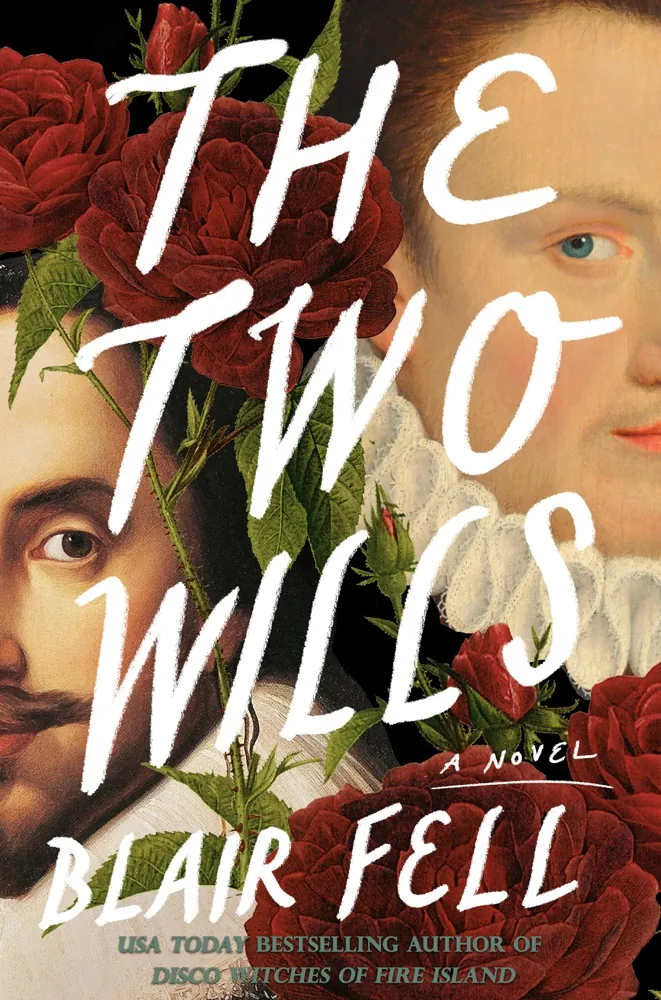

Author: Blair FellPage Count: UnknownPublication Date: Expected publication 2026-10-20 APL The synopsis for The Two Wills is so tantalizingly vague it makes me want to scream—like when you’re halfway through a Bluey episode and suddenly the plotline about the dog who won’t share his toys gets derailed by a random commercial for organic baby wipes. One minute you’re invested in the emotional core of a child’s tantrum, the next you’re being sold a product you didn’t know you needed. Blair Fell’s book, meanwhile, promises a love story so layered it could double as a Renaissance-era Shark Tank—except instead of investors, we’re dealing with a poet who’s either a genius or a fraud, and the stakes are whether or not he’ll finally admit he’s in love with a cross-dressing toilet cleaner. The synopsis leans hard into the "queer love story for fans of Hamnet and The Song of Achilles" angle, which is either a masterstroke or a desperate bid for algorithmic love. Because let’s be real—if you’re going to compare your book to Maggie O’Farrell and Madeline Miller, you’d better have the emotional gut-punch of a sonnet written by a man who just lost his wife and child, or the mythic weight of a Greek tragedy rewritten for the modern queer canon. The synopsis doesn’t even hint at the depth of Willy’s grief over Barnaby Stubb—just that he’s "heartbroken" and "desperate to escape." That’s the literary equivalent of saying a character is "angry" and then expecting us to care. Where’s the why? Why does Willy’s heartbreak manifest as a career in theft and impersonation? Is it trauma? Is it defiance? Is it just really good at selling the illusion of femininity to drunk men? The synopsis doesn’t say, and that’s a crime against narrative tension. Then there’s the poet Will—because of course he’s named Will, like every other Shakespearean stand-in since The King Must Die. The synopsis drops hints like breadcrumbs for a cat who’s already eaten the whole loaf: "Why does he look at Willy that way?" "Private love sonnets arrive." "Mistress who’s blocking Willy’s quest." It’s all there, but it’s all implied, which is either genius or lazy. If Fell pulls this off, it’ll be the kind of book where every line of dialogue feels like a sonnet in disguise, where the subtext is so thick you could spread it on toast. If she doesn’t, we’re left with a love triangle so predictable it could be plotted by a Teen Choice Awards algorithm—Will’s wife, Will’s mistress, and Willy, the poor sap who’s just trying to get laid by the greatest writer of his time. The Marlowe subplot is the cherry on top of this literary sundae, because nothing says "I’m a queer love story" like throwing in a real-life historical figure who was probably bisexual, possibly murdered, and definitely wrote some of the most scandalous poetry of the era. The synopsis doesn’t explain how Marlowe fits in, but I’ll wager it’s either a rival poet who’s also in love with Willy (because why not?) or a mentor figure who’s just here to remind us that art is always a little bit stolen. Either way, it’s a gambit that could either elevate the book into the realm of The Night Circus or reduce it to the level of a Doctor Who spin-off where every character is named after a famous writer. The real question is whether Fell can make this work without resorting to the kind of melodrama that makes Outlander fans weep into their porridge. The synopsis suggests a story about love that’s "not really lost," which sounds like the kind of romantic nonsense that would make Virginia Woolf roll her eyes in her grave. But if Fell can balance the historical weight of Shakespeare’s sonnets with the raw, messy reality of queer desire in the 16th century, she might just pull off something special. And if she doesn’t? Well, at least we’ll have another book to blame on the fact that people still think "historical romance" is a genre and not just a way to sell the same old stories with different names. Now, if you’ll excuse me, I have to go patch a hole in the drywall from last night’s indoor football incident. The drywall is holding, but my patience is not. #BookTok #QueerFiction #HistoricalRomance #ShakespeareProblems #WhyIsEverythingSoMessy Related InsightsThe Kingdom of Back Book Review and Summary Lover Unbound Book Review and Summary Meet Me at Midnight: A Novel Book Review and Summary{ "@context": "https://schema.org", "@type": "FAQPage", "mainEntity": [ { "@type": "Question", "name": "What is the main focus of The Two Wills: A Novel Book Review and Summary?", "acceptedAnswer": { "@type": "Answer", "text": "Everything you need to know about The Two Wills: A Novel with our detailed review." } }, { "@type": "Question", "name": "Who authored the comprehensive guide on The Two Wills: A Novel Book Review and Summary?", "acceptedAnswer": { "@type": "Answer", "text": "This detailed article and its insights were carefully researched and authored by Antoine Leroy." } }, { "@type": "Question", "name": "Where can I find more related content about Books?", "acceptedAnswer": { "@type": "Answer", "text": "You can explore more articles, detailed reviews, and similar insights by browsing the Related Insights section at the bottom of this article or visiting our dedicated Books category page." } } ] }
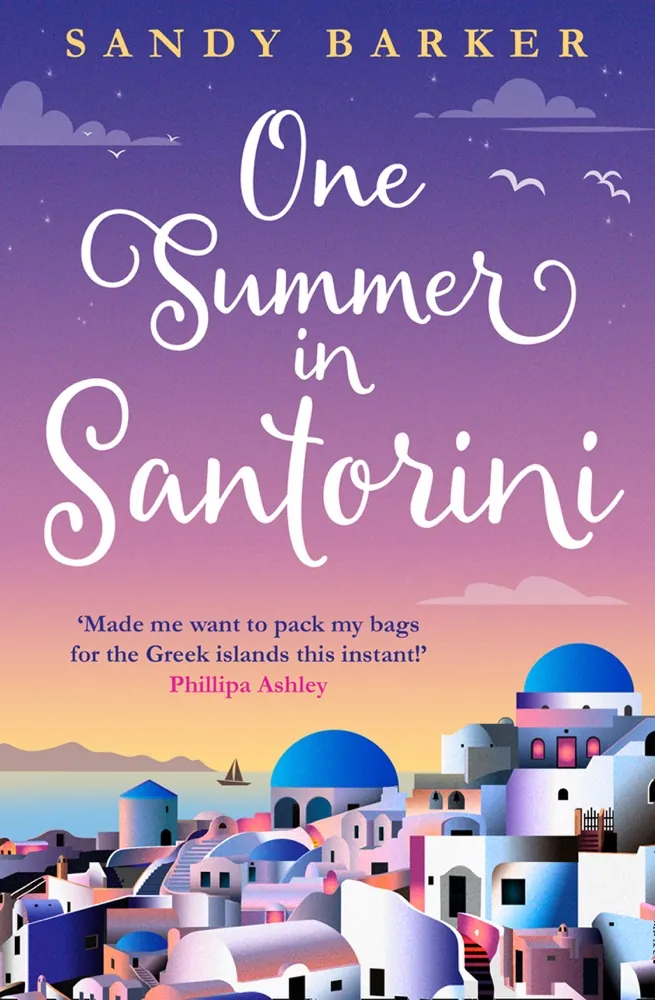
-
 Maximilian Fischer
 - 15 Oct, 2026 04:39
Just One More Chapter (Story Lake, #3) Book Review and Summary
Author: Lucy ScorePage Count: UnknownPublication Date: Expected publication 2026 APL October winds are currently rattling the windowpanes against the glass while I sit wrapped in a woolen cardigan, staring at a synopsis that feels less like a narrative promise and more like a desperate cry for summer sunshine during a very gray, very chilly Tuesday afternoon. We are looking at a text that carries all the structural integrity of a house built entirely out of wet sand, courtesy of a metadata mix-up involving Lucy Score, Sandy Barker, and a revolving door of blurbs that read like frantic endorsements from people who owe the publisher a massive favor. The Geography of Broken Promises Sarah wants to rekindle her romance with travel instead of men, which is the literary equivalent of walking into a bakery specifically to stare at the sugar-free water display before someone shoves two distinct pastries directly into your face. But let us pause for a second to acknowledge the sheer audacity of a premise where a woman attempts emotional isolation on a floating vessel with strangers, only to immediately encounter a dual threat of romantic complication consisting of an American and a silver fox. Actually, strike that entire thought about isolation. It is clearly a tired trope anyway. The underlying architecture here rests entirely on the eternal human fatigue concerning dating apps, transforming a contemporary vacation into a localized battleground of romantic indecision, feta cheese consumption, and nautical anxiety. Escapism requires friction. Without it, we are just reading travel brochures disguised as prose, leaning heavily into the kind of coastal wish-fulfillment popularized by Mandy Baggot or Annie Robertson, where every minor inconvenience can be solved by an azure wave and a handsome stranger with questionable boundaries. Boring. The Weight of the Aegean Sea There is an unspoken melancholy to these books, buried beneath the cheerful cries of saltwater and sun-drenched deck shoes. The thirty-something single traveler seeking absolution on a Greek island is a modern archetype of exhaustion, fleeing the mundane horrors of modern romance for the democratic simplicity of a catamaran. Yet, the synopsis gives us so very little to anchor our teeth into. We get names of endorsers—Julie Houston, Phillipa Ashley, Samantha Tonge—sprawled out across the page like confetti at a party nobody remembered to plan, drowning out the actual narrative pulse of Sarah and her supposed culinary rebellion against heartache. Perhaps the feta will save us. The PTA Crisis Hard pass. I have forty-five minutes before I have to drive down to the elementary school gymnasium and listen to Brenda drone on about the bake sale fund allocation while pretending I care about industrial dishwasher warranties, which honestly sounds infinitely more thrilling than reading another manufactured triangle on the Aegean. #sandybarker #romcom #octoberreads Related InsightsEnlightenment Now Book Review and Summary Cher: Part Two (The Cher Memoir, #2) Book Review and Summary In Too Deep Book Review and Summary{ "@context": "https://schema.org", "@type": "FAQPage", "mainEntity": [ { "@type": "Question", "name": "What is the main focus of Just One More Chapter (Story Lake, #3) Book Review and Summary?", "acceptedAnswer": { "@type": "Answer", "text": "Everything you need to know about Just One More Chapter (Story Lake, #3) with our detailed review." } }, { "@type": "Question", "name": "Who authored the comprehensive guide on Just One More Chapter (Story Lake, #3) Book Review and Summary?", "acceptedAnswer": { "@type": "Answer", "text": "This detailed article and its insights were carefully researched and authored by Maximilian Fischer." } }, { "@type": "Question", "name": "Where can I find more related content about Books?", "acceptedAnswer": { "@type": "Answer", "text": "You can explore more articles, detailed reviews, and similar insights by browsing the Related Insights section at the bottom of this article or visiting our dedicated Books category page." } } ] }
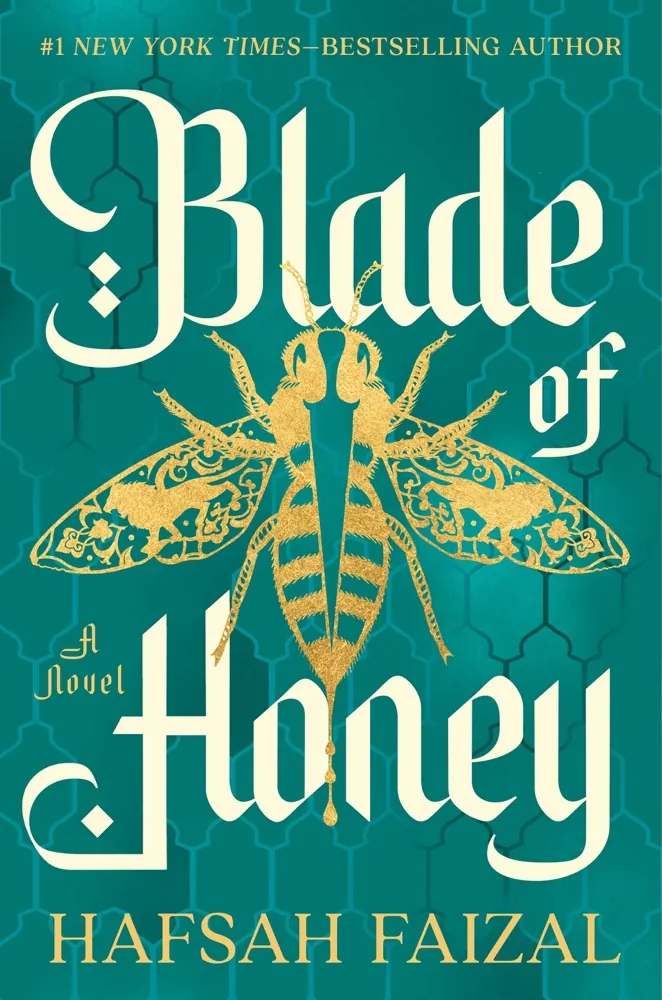

Author: Hafsah FaizalPage Count: UnknownPublication Date: Expected publication 2026 APL A damp chill presses against the glass tonight, smelling faintly of rotting pumpkin carcasses left too long on suburban porches and the sharp bite of October wind. Perfect weather to dissect yet another piece of derivative fantasy slop. Hafsah Faizal returns with Blade of Honey, and honestly, the literary world is about to suffer through the exact creative bankruptcy that ruined the final season of Succession. The Architecture of Despair Let us examine the scaffolding of this alleged narrative. We have a wounded bee. We have a cornered lion. We possess all the poetic subtlety of a high school diary locked with a cheap brass padlock. The synopsis tells us Yasmine Ra’ad wants revenge against the king because his throne rests on the bones of her family. Groundbreaking. Has any protagonist in speculative fiction ever sought vengeance for anything less than familial structural demolition? And the king himself—Altair al-Badawi—is cursed with a ticking clock. He faces execution by the next full moon unless he finds a bride. Naturally, his captain of the guard suggests a matchmaking bloodsport. Because nothing screams sovereign stability quite like turning royal matrimony into a broadcasted gauntlet that reads like a desperate cross between Jeff Probst’s worst nightmare and the Hapsburg family tree. The Aesthetic of the Grift Faizal leans hard into the romantic-fantasy industrial complex here. We are promised a dark and deadly twist on reality television dating. A girl angling for a throat who accidentally stumbles into an artery of affection. Play the doting suitor. Do it well. Too well! I can already taste the recycled adrenaline. It is the literary equivalent of serving mass-produced boxed wine at a Sotheby’s provenance auction. Everyone pretends to admire the vintage while quietly checking their watches to see when the coats can be retrieved. Yet, the synopsis relies entirely on mood boards rather than mechanics. We know nothing of the actual world-building beyond tired animal metaphors. Bees and lions. How aggressively banal. One expects the dialogue to drip with manufactured angst, characters whispering promises of ruin while brushing their knuckles together in a dimly lit corridor draped in sheer fabric. The Inevitable Verdict This book will inevitably dominate the bestseller lists for weeks, fueled entirely by readers who think The Cruel Prince was the pinnacle of Western letters. They will pre-order the special edition spray-edged copies and post dramatic aesthetic videos online with heavy synth tracks playing in the background. It is manufactured longing engineered in a boardroom. Give me a genuine structural flaw in a seventeenth-century Dutch masterwork any day over this predictable, focus-grouped romantic pandering. I need to appraise some heirloom jewelry my aunt bequeathed to you. Wait, no—bequeathed to me. My apologies. The drafty autumn air always messes with my syntax. Related InsightsCaptive in the Dark Book Review and Summary Archangel's Sun Book Review and Summary Being a Witch, and Other Things I Didn't Ask For Book Review and Summary{ "@context": "https://schema.org", "@type": "FAQPage", "mainEntity": [ { "@type": "Question", "name": "What is the main focus of Blade of Honey (The Lion & the Bee, #1) Book Review and Summary?", "acceptedAnswer": { "@type": "Answer", "text": "Everything you need to know about Blade of Honey (The Lion & the Bee, #1) with our detailed review." } }, { "@type": "Question", "name": "Who authored the comprehensive guide on Blade of Honey (The Lion & the Bee, #1) Book Review and Summary?", "acceptedAnswer": { "@type": "Answer", "text": "This detailed article and its insights were carefully researched and authored by Emma Thompson." } }, { "@type": "Question", "name": "Where can I find more related content about Books?", "acceptedAnswer": { "@type": "Answer", "text": "You can explore more articles, detailed reviews, and similar insights by browsing the Related Insights section at the bottom of this article or visiting our dedicated Books category page." } } ] }