
-
 Emma Thompson
 - 15 Oct, 2026 03:57
Blade of Honey (The Lion & the Bee, #1) Book Review and Summary
Author: Hafsah FaizalPage Count: UnknownPublication Date: Expected publication 2026 APL A damp chill presses against the glass tonight, smelling faintly of rotting pumpkin carcasses left too long on suburban porches and the sharp bite of October wind. Perfect weather to dissect yet another piece of derivative fantasy slop. Hafsah Faizal returns with Blade of Honey, and honestly, the literary world is about to suffer through the exact creative bankruptcy that ruined the final season of Succession. The Architecture of Despair Let us examine the scaffolding of this alleged narrative. We have a wounded bee. We have a cornered lion. We possess all the poetic subtlety of a high school diary locked with a cheap brass padlock. The synopsis tells us Yasmine Ra’ad wants revenge against the king because his throne rests on the bones of her family. Groundbreaking. Has any protagonist in speculative fiction ever sought vengeance for anything less than familial structural demolition? And the king himself—Altair al-Badawi—is cursed with a ticking clock. He faces execution by the next full moon unless he finds a bride. Naturally, his captain of the guard suggests a matchmaking bloodsport. Because nothing screams sovereign stability quite like turning royal matrimony into a broadcasted gauntlet that reads like a desperate cross between Jeff Probst’s worst nightmare and the Hapsburg family tree. The Aesthetic of the Grift Faizal leans hard into the romantic-fantasy industrial complex here. We are promised a dark and deadly twist on reality television dating. A girl angling for a throat who accidentally stumbles into an artery of affection. Play the doting suitor. Do it well. Too well! I can already taste the recycled adrenaline. It is the literary equivalent of serving mass-produced boxed wine at a Sotheby’s provenance auction. Everyone pretends to admire the vintage while quietly checking their watches to see when the coats can be retrieved. Yet, the synopsis relies entirely on mood boards rather than mechanics. We know nothing of the actual world-building beyond tired animal metaphors. Bees and lions. How aggressively banal. One expects the dialogue to drip with manufactured angst, characters whispering promises of ruin while brushing their knuckles together in a dimly lit corridor draped in sheer fabric. The Inevitable Verdict This book will inevitably dominate the bestseller lists for weeks, fueled entirely by readers who think The Cruel Prince was the pinnacle of Western letters. They will pre-order the special edition spray-edged copies and post dramatic aesthetic videos online with heavy synth tracks playing in the background. It is manufactured longing engineered in a boardroom. Give me a genuine structural flaw in a seventeenth-century Dutch masterwork any day over this predictable, focus-grouped romantic pandering. I need to appraise some heirloom jewelry my aunt bequeathed to you. Wait, no—bequeathed to me. My apologies. The drafty autumn air always messes with my syntax. Related InsightsCaptive in the Dark Book Review and Summary Archangel's Sun Book Review and Summary Being a Witch, and Other Things I Didn't Ask For Book Review and Summary{ "@context": "https://schema.org", "@type": "FAQPage", "mainEntity": [ { "@type": "Question", "name": "What is the main focus of Blade of Honey (The Lion & the Bee, #1) Book Review and Summary?", "acceptedAnswer": { "@type": "Answer", "text": "Everything you need to know about Blade of Honey (The Lion & the Bee, #1) with our detailed review." } }, { "@type": "Question", "name": "Who authored the comprehensive guide on Blade of Honey (The Lion & the Bee, #1) Book Review and Summary?", "acceptedAnswer": { "@type": "Answer", "text": "This detailed article and its insights were carefully researched and authored by Emma Thompson." } }, { "@type": "Question", "name": "Where can I find more related content about Books?", "acceptedAnswer": { "@type": "Answer", "text": "You can explore more articles, detailed reviews, and similar insights by browsing the Related Insights section at the bottom of this article or visiting our dedicated Books category page." } } ] }

Author: K-Ming ChangPage Count: UnknownPublication Date: Expected publication 2026-10-20 APL K-Ming Chang is back to eviscerate whatever neat little boundaries we built around girlhood after Bestiary dropped. Expected in late 2026, Needlemouth already smells like ozone, rotting berries, and the sharp, metallic tang of generational fury. And honestly? Thank god. We are so profoundly exhausted by sanitized narratives where young women simply learn to cope with their cages. The Aesthetics of Domestic Rot The setup is a masterclass in claustrophobia—three cousins melting away in a grandmother's suffocating house while foreign objects manifest uninvited in a sleeping girl's mouth. Buttons, berries, coins. The detritus of an old domesticity choking the young. Chang understands that family histories are not gently passed down like heirloom porcelain; they are swallowed whole, gagged on, and festering in the dark. Yangyang retreats inward. Mandy seeks validation in the dead-eyed void of the internet. Cindy wakes up choking. It is a brilliant, vicious metaphor for the sheer indignity of growing up female in spaces designed to erase you. Becoming the Apex Predator Enter Needlemouth—part vampire, part hungry ghost, completely lacking descendants to feed her. A starved parasite demanding blood and a man's life. What a gorgeous, feral subversion of the maternal lineage trope. We spend centuries telling girls to be gentle, to nurture, to consume themselves quietly so others might eat. But Chang’s demon forces these teenagers to cross a violent threshold—to stop sleepwalking through their apathy and break the cycle by becoming the absolute menace. Fans of Carmen Maria Machado and Akwaeke Emezi will recognize this blood-soaked lineage immediately. This is horror that refuses to apologize for its teeth. It is an indictment of the numb, air-conditioned apathy we demand of women, dragging us kicking and screaming into a demon realm where rage is the only currency that matters. The plot details in the synopsis are agonizingly sparse—we know next to nothing about how they actually execute this grim task or what the fallout looks like. But let us be entirely real here. The exact mechanics do not matter. The ideological thrust is razor-sharp. Chang is not interested in redemption arcs or tidy moral lessons. She is asking the only question that actually makes my blood run hot: what happens when you stop trying to slay the monster and realize the only way out is to grow fangs yourself? I am betting right now that this book is going to utterly polarize the coastal book clubs who prefer their trauma neatly gift-wrapped with a bow of resilience. Good. Let them choke on it. I need to go reorganize my towering, violently chaotic stacks of reference books before they slide across the floor and crush my ankles. #Needlemouth #KMingChang #FeministHorror #ContemporaryLiterature Related InsightsNineteen Minutes Book Review and Summary The Dating Game Book Review and Summary Night of the Mallrats: A Novel Book Review and Summary{ "@context": "https://schema.org", "@type": "FAQPage", "mainEntity": [ { "@type": "Question", "name": "What is the main focus of Needlemouth Book Review and Summary?", "acceptedAnswer": { "@type": "Answer", "text": "Everything you need to know about Needlemouth with our detailed review." } }, { "@type": "Question", "name": "Who authored the comprehensive guide on Needlemouth Book Review and Summary?", "acceptedAnswer": { "@type": "Answer", "text": "This detailed article and its insights were carefully researched and authored by Marta Wisniewska." } }, { "@type": "Question", "name": "Where can I find more related content about Books?", "acceptedAnswer": { "@type": "Answer", "text": "You can explore more articles, detailed reviews, and similar insights by browsing the Related Insights section at the bottom of this article or visiting our dedicated Books category page." } } ] }


Author: Erynne RiversPage Count: UnknownPublication Date: Expected publication 2026-07-16 APL Raking these maples is an exercise in futility. The wind simply refuses to cooperate, scattering gold-brown debris across the sodgers just as I finally get a decent pile going. But looking at the promotional material for Erynne Rivers’ Wench, at least someone is managing to completely flip a tired narrative on its head. We are drowning in endless, lifeless retellings right now. Every publisher in New York seems convinced that teens and young adults will only read a book if it features a brooding monarch in a dark castle who stares intensely at a wall for three hundred pages. Give me a break. Compare this refreshing premise to the absolute dreck that flooded young adult fiction last semester—books with titles like The Dark Shadow of Whispering Shadows, where the main character learns absolutely nothing and just groans about her destiny for twelve chapters while a CGI wolf stares blankly into the middle distance. Respectfully, what? It is pure literary garbage that treats adolescents like they’ve never read a sentence with a semicolon in it. Rivers takes the classic Robin Hood myth—a story usually dominated by flannel-clad men shouting about redistribution of wealth—and centers the entire conflict on Maid Marian getting bundled off to marry a literal monster before getting carjacked by the very fae her parents warned her about. Unlearning the Propagandized Forest The thematic core here relies heavily on dismantling institutional indoctrination. Marian grows up believing Sherwood is a literal hellscape populated by monsters. Then she actually meets the outcasts. Shocking concept. People in power lie to maintain control. Teens deal with this exact brand of systemic gaslighting every single day in homeroom when administrators pretend dress codes solve bullying. Rivers understands that the most potent rebellion isn't just swinging a sword at a corrupt sheriff; it is unlearning the garbage your elders drilled into your skull. The Romance We Do Not Deserve And the romantic tension sounds delightfully predictable in the best possible way. Captor-to-confidant is a classic dynamic because it forces proximity. Marian has to choose between the predictable misery of human patriarchy or a chaotic, magical future with a man named Robin who apparently looks like he stepped out of a high-end fantasy art print. Critics calling it "cozy" and "lyrical" clearly haven't looked at the psychological implications of stockholm adjacent yearning, but frankly, I do not care. Give me the emotional whiplash. This debut is going to eclipse everything else on the shelves this July. It has that effortless charm that modern romantasy desperately needs right now. I just hope the pacing holds up once the Sheriff's men actually show up. Now I need to go inside and ice my lower back before grading forty essays on comma splices, provided I don't cripple myself first because I just stepped on a remarkably sharp plastic toy in the hallway.
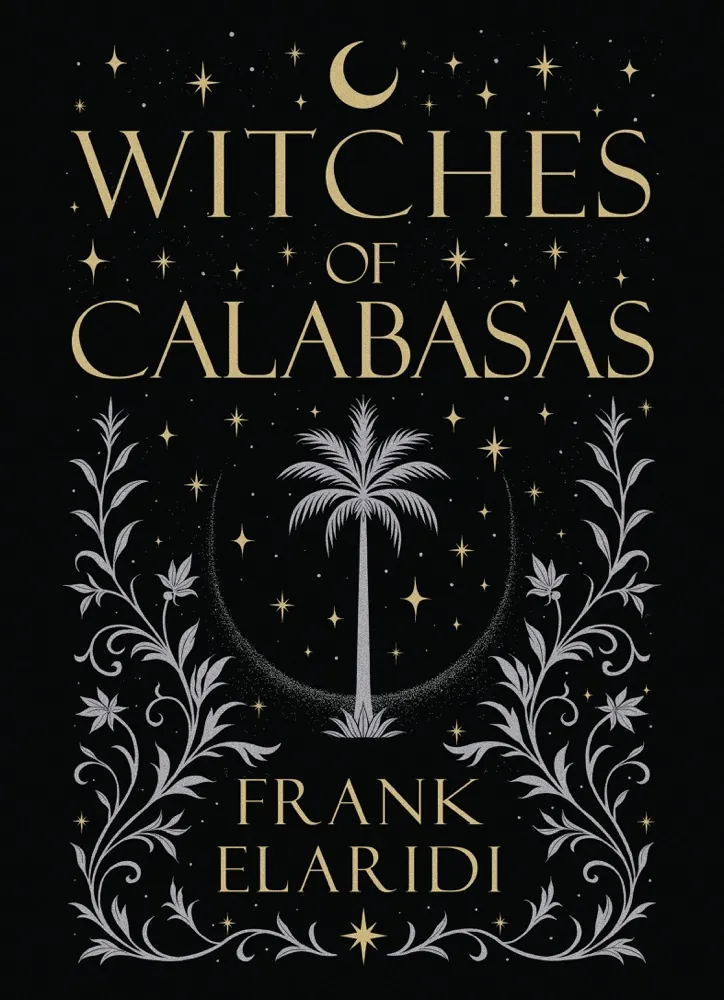

Author: Frank ElaridiPage Count: UnknownPublication Date: Expected publication 2026-10-06 APL October air smells like damp mulch and uncollected bonuses, which is to say, it smells like Los Angeles if you scrub away the ozone. Frank Elaridi is attempting something wildly audacious with Witches of Calabasas. Let us be entirely clear from the jump. The premise is a glittering, derivative mess of high-end real estate porn and low-rent supernatural tropes. Or is it actually a stroke of absolute genius? Wait. Scrap that entirely. I take it back. It is neither. It is simply a terrifyingly calculated marketing vehicle designed to separate trust-fund brats from their paperback allowances. The Real Estate of the Occult Look at the architecture of this synopsis. We have Maxim—what an utterly exhausted archetype of an aspiring writer, living in a guest house because rent in this city requires a blood sacrifice—sliding into the orbit of the Winters estate. The Calabasas Countess. Candace Winters. Say the name three times into a ring light and watch your engagement metrics plummet. Elaridi is leaning hard into the sort of sensory decadence that Bret Easton Ellis abandoned decades ago when he realized nobody wanted to read another three-page description of an overpriced suede jacket. But do not underestimate the sheer velocity of a narrative that weaponizes influencer culture against itself. Animals growing uneasy. Lights flickering. A laptop typing out eldritch prose on its own. Groundbreaking. Truly, I have never seen a ghost operate peripheral hardware before. Yet the rhythm of the marketing copy hits that precise, toxic sweet spot where The Secret History bleeds into a bad episode of Vanderpump Rules. We are promised psychological suspense, literary romance, and Hollywood noir. That is four entirely distinct genres stapled to a corpse. Whatever floats your boat. The Price of Admission The obsession with extreme wealth and occult glamour is frankly exhausting by this point in the fiscal quarter. Every manuscript landing on my mahogany desk features someone in the Hollywood Hills conjuring an identity while sipping a matcha latte laced with arsenic. Elaridi better deliver prose that actually bites, or this book is just expensive kindling for the fireplace in my study. The pacing of the synopsis alone drags in the middle, relying on recycled buzzwords—sultry, hypnotic, dripping—like a tired copywriter working overtime on a Friday evening. Give us teeth. Give us actual malice instead of vague supernatural atmosphere. My private flight to London has just been delayed by an entire hour because some bureaucratic phantom in air traffic control decided my morning needed to be actively ruined. #WitchesOfCalabasas #PublishingLife #BookTwitter #AutumnReads


Author: Jayci LeePage Count: UnknownPublication Date: Expected publication 2026 APL The flour is currently coating every single surface of my kitchen because the eight-year-old insisted on cracking eggs directly into the mixing bowl without supervision, and frankly, Not My Type by Jayci Lee looks like the exact kind of high-octane emotional rescue I need once this sugar-fueled chaos finally subsides. Koreatown Coffee and Class Struggle We are looking at yet another Pride and Prejudice spin-off, which honestly makes me roll my eyes so hard I might pull a muscle, but putting it in Los Angeles' Koreatown gives it a fresh pulse that standard regency pastiche completely lacks. Jane Austen would probably approve of the capitalist critique here. Or she would hate it. Who cares. The synopsis leans hard into the classic enemies-to-lovers architecture—librarian versus corporate CEO—and while that trope is older than my grandmother's sourdough starter, Jayci Lee usually delivers enough sharp banter to keep things afloat. And let us be real for a second. If I have to read one more billionaire romance where the hero looks like a Greek god and acts like a damp sponge, I am going to throw my rolling pin through the drywall. Speaking of structural integrity, why do middle-grade chapter books feature such aggressively annoying talking animals lately? My youngest has been forcing me to listen to an audiobook about a squirrel detective who solves crimes using acorns, and the audio production is so shrill it makes my teeth vibrate while I am trying to measure out vanilla extract. At least Jayci Lee writes adults who presumably possess the capacity for basic eye contact and synchronized breathing. The Slow Burn We Actually Deserve The promise of K-drama-level yearning is doing some heavy lifting in this synopsis. Give me the lingering glances. Give me the hand-flexing. Give me the sheer agony of two stubborn people refusing to admit they are obsessed with each other while standing too close in a tight hallway. Chloe Gong and Emily Wibberley mastered this exact brand of delicious, slow-burn tension, and Lee has the chops to pull it off without making the characters sound like teenagers texting on a bus. Yet, I remain deeply suspicious of vague synopses. "Their lives continue to intersect in unexpected ways." Wow. Groundbreaking. Do they bump into each other at a organic grocery store? Do their dogs get their leashes tangled? Tell me something real, blurb-writers. I want grit. I want messy character flaws that cannot be solved by a nice dinner and a shared look across a dimly lit room. The thematic core here relies on shedding expectations, which is rich coming from someone whose entire daily schedule is dictated by three small humans demanding carbohydrate-heavy snacks every forty-five minutes. But hey, reading about fictional people breaking free from familial obligation is cheaper than therapy, and definitely less messy than this counter top. I need to go frost three dozen cupcakes by tomorrow morning or the school bake sale is going to feature my tear-stained panic disguised as vanilla buttercream. Related InsightsThe Crash Book Review and Summary Guilty Treasure Book Review and Summary Au Pair Affair Book Review and Summary{ "@context": "https://schema.org", "@type": "FAQPage", "mainEntity": [ { "@type": "Question", "name": "What is the main focus of Not My Type Book Review and Summary?", "acceptedAnswer": { "@type": "Answer", "text": "Everything you need to know about Not My Type with our detailed review." } }, { "@type": "Question", "name": "Who authored the comprehensive guide on Not My Type Book Review and Summary?", "acceptedAnswer": { "@type": "Answer", "text": "This detailed article and its insights were carefully researched and authored by Sarah Davis." } }, { "@type": "Question", "name": "Where can I find more related content about Books?", "acceptedAnswer": { "@type": "Answer", "text": "You can explore more articles, detailed reviews, and similar insights by browsing the Related Insights section at the bottom of this article or visiting our dedicated Books category page." } } ] }

-
 Zola Ndlovu
 - 14 Oct, 2026 21:55
Tasmania's Tarkine Rainforest: Hiking Through Earth's Last Temperate Wilderness
Footsteps on the Edge of Time The Tarkine stretches across 447,000 hectares of north‑west Tasmania, a living museum of Gondwanan flora that has survived ice ages, volcanic upheavals, and the slow creep of human industry. When I first set foot on the damp, spongy floor of the Myrtle Beech groves, the air tasted of wet stone and sweet eucalypt oil. The canopy, a cathedral of 60‑metre giants, filters sunlight into a green‑gold mosaic that shifts with every breeze. Planning a multi‑day trek here begins with the Tarkine Coast Track, a 55‑kilometre route that threads between the Southern Ocean and the rainforest’s interior. The track is divided into four sections, each demanding a different skill set: coastal navigation on exposed headlands, river crossings on the Arthur River, and steep ascents through the Meredith Range. I recommend allocating five nights to absorb the rhythm of the forest — two nights at the coastal campsite near Sandy Cape, one at the historic mining settlement of Corinna, and two deeper in the wilderness at the Savage River hut. Logistics are straightforward but unforgiving. The nearest sealed road ends at the Arthur River bridge; from there a 4WD track leads to the trailhead. Fuel, food, and water must be carried in, as there are no resupply points beyond the small general store at Corinna. A satellite messenger or PLB is non‑negotiable; mobile coverage evaporates once you pass the last farm gate. Where the Myrtle Beech Whispers The Myrtle Beech (Nothofagus cunninghamii) dominates the Tarkine’s heart, its smooth, cinnamon‑barked trunks forming a continuous canopy that shelters an understory of ferns, mosses, and the endemic Tasmanian waratah. Walking among these trees feels like moving through a library where every leaf is a page of evolutionary history. The species is a relic of the ancient supercontinent Gondwana, and its presence here is one of the few places on Earth where it still forms extensive pure stands. Birdsong punctuates the silence: the sharp “tsee‑tsee” of the pink robin, the low boom of the Tasmanian wedge‑tailed eagle, and, if you’re lucky, the haunting call of the orange‑bellied parrot — one of the world’s rarest migratory birds, which uses the Tarkine’s coastal heathlands as a critical stopover. Mammals are more elusive; the Tasmanian devil forages at night, leaving distinctive scat on the trail, while the eastern quoll darts through the leaf litter. A practical tip: carry a lightweight field guide (or a downloaded PDF) to identify the 200‑plus plant species you’ll encounter. The Tarkine’s flora includes the ancient King Billy pine, the delicate leatherwood, and the carnivorous sundew that traps insects on sticky tentacles. Knowing what you’re looking at deepens the experience and aids citizen‑science projects that monitor biodiversity health. Navigating the Wild River Corridors The Arthur River, the longest river wholly within Tasmania, carves a sinuous path through the Tarkine, creating a series of deep gorges, tranquil pools, and rapid‑filled chutes. Crossing it is the most technical part of the trek. The official crossing point at the Arthur River bridge is a steel structure built in the 1960s for logging trucks; it remains the only reliable dry crossing for hikers. From the bridge, the track follows the river’s left bank, weaving through riparian zones where the water’s edge is lined with swamp gum and paperbark. Here, the trail can become a muddy scramble after rain, so waterproof gaiters and a sturdy pair of trekking poles are essential. I learned the hard way that a sudden downpour can raise the river level by half a metre in under an hour, turning a shallow ford into a dangerous torrent. For those seeking a longer immersion, the Savage River loop adds 30 kilometres of remote valley walking. The Savage River hut, a basic three‑room shelter maintained by the Parks and Wildlife Service, offers a dry roof and a rainwater tank — but no cooking facilities. Bring a portable stove, fuel canisters, and a bear‑proof food container (the latter is mandatory under Tasmanian law to protect wildlife). Campfire Stories Beneath the Canopy Evenings in the Tarkine are a symphony of nocturnal life. After a day of climbing the Meredith Range’s quartzite ridges, the temperature drops to single digits, and the forest exhales a cool, fragrant mist. Setting up a tarp shelter under a stand of towering eucalypts provides both protection and a front‑row seat to the night sky — one of the darkest in Australia, rated Bortle Class 2. Cooking is simple: dehydrated meals rehydrated with boiled river water (filtered through a 0.2‑micron pump), supplemented by locally sourced wallaby jerky and Tasmanian pepperberry. The pepperberry’s sharp, citrusy heat adds a unique twist to otherwise bland rations. Remember to pack out all waste; the Tarkine’s “Leave No Trace” policy is strictly enforced, and rangers conduct random checks. Storytelling around the campfire (or headlamp, when fire bans apply) connects you to the land’s deep human history. The Palawa people have walked these valleys for over 35,000 years, leaving middens, rock art, and cultural landscapes that are still being documented. Respectful visitors can join guided cultural walks offered by the Tasmanian Aboriginal Centre, which illuminate the spiritual significance of sites like the Sundown Point petroglyphs. Budgeting the Journey: Real Costs on the Ground Understanding the financial side of a Tarkine expedition prevents surprises. The live cost‑of‑living data for Tasmania shows a digital‑nomad baseline of $3,858 per month, but a focused hiking trip compresses expenses into a two‑week window. Below is a breakdown tailored to a solo trekker carrying all gear, based on current Tasmanian prices.Expense Category Estimated Cost (AUD) NotesAccommodation (pre‑/post‑trek) $1,372 – $4,844 Range reflects hostel dorms to private cabins in nearby towns (Smithton, Stanley).Food & Groceries $389 Two weeks of dehydrated meals, snacks, and fresh produce bought in Launceston.Dining Out (pre‑/post‑trek) $506 Occasional restaurant meals in Devonport or Burnie.Transport (fuel, ferry, 4WD hire) $172 Fuel for 600 km round‑trip + $50 for the Spirit of Tasmania ferry if arriving from mainland.Park Permits & Fees $30 Tarkine Wilderness Permit (per person, per night).Gear Rental (satellite messenger, PLB) $120 14‑day rental from Hobart outdoor shop.Insurance (travel & medical) $85 Comprehensive policy covering remote evacuation.Total Approximate $2,674 – $6,146 Varies with accommodation choice and gear ownership.These figures assume you already own a quality backpack, tent, and clothing. If you need to purchase core gear, add another $1,200–$2,500. The table demonstrates that a well‑planned Tarkine hike can be achieved for under $3,000 if you camp throughout and source food economically. The Echo That Lingers Leaving the Tarkine feels like stepping out of a dream you didn’t know you were dreaming. The scent of wet bark clings to your clothes, the sound of the Arthur River lingers in your ears, and the memory of a wedge‑tailed eagle’s silhouette against a bruised sunset settles into your ribs. This place does not merely exist on a map; it lives in the pulse of every ancient tree, every hidden waterfall, every breath of wind that has travelled unchanged for millennia. If you carry the Tarkine’s silence back to the city, you’ll find it reshaping how you listen — to colleagues, to loved ones, to the quiet moments between notifications. The wilderness teaches a rhythm that no spreadsheet can quantify, yet the numbers above prove the journey is reachable. Pack light, tread softly, and let the forest write its story on you. #Travel #Tarkine #Tasmania #Hiking #Wilderness Related InsightsBeautiful World, Where Are You Book Review and Summary I Know Why the Caged Bird Sings Book Review and Summary >-

-
 Eleanor Sterling
 - 14 Oct, 2026 21:43
Laser Highways in Orbit: Decoding the Physics and Engineering of Optical Inter‑Satellite Links
Light‑Speed Backbone: Why Optical Links Are the Nervous System of Mega‑Constellations The promise of a truly global, low‑latency internet hinges on a mesh of satellites that can shuffle terabits per second without ever touching a ground station. Radio‑frequency (RF) cross‑links have served early constellations, but their spectrum congestion, limited bandwidth, and susceptibility to interference make them a bottleneck for the terabit‑scale visions of Starlink v2, OneWeb Gen‑2, and Amazon Kuiper. Optical inter‑satellite links (OISLs) answer with narrow‑beam, diffraction‑limited lasers that deliver 10–100 Gb/s per channel while consuming a fraction of the power and mass of RF payloads. Yet the physics of free‑space optics in low‑Earth orbit (LEO) introduces a cascade of engineering challenges: sub‑microradian acquisition, vibration‑induced jitter, thermal‑mechanical drift, and a network topology that rewires itself every few minutes. Solving these problems demands a blend of precision optomechanics, adaptive control loops reminiscent of closed‑loop robot learning, and runtime verification akin to safety‑critical autonomous driving stacks. The following sections dissect each layer of the OISL stack, from photon budget to orbital routing, and illustrate how modern software‑defined verification can keep the laser highways open.Acquisition, Tracking, and Pointing: The Sub‑Microradian Battle Establishing a link between two platforms moving at 7.5 km/s requires an acquisition sequence that converges from a coarse uncertainty cone (often > 1°) to a tracking error budget below 0.5 µrad. The typical ATP chain comprises a wide‑field beacon detector for coarse acquisition, a fast steering mirror (FSM) for fine pointing, and a high‑bandwidth quadrant detector or focal‑plane array for error sensing. The beacon wavelength (usually 1550 nm or 980 nm) is chosen to avoid solar background while staying within the detector’s responsivity curve. Key error contributors:Platform jitter – reaction‑wheel micro‑vibrations (10–100 Hz) and structural modes (200–500 Hz) translate into line‑of‑sight (LOS) jitter of 1–5 µrad RMS. Thermal snap – eclipse entry/exit creates rapid thermal gradients, bending the optical bench by tens of nanometers, which maps to µrad‑level pointing drift. Relativistic aberration – at LEO velocities the apparent direction of the incoming beam shifts by ~25 µrad, requiring a feed‑forward correction in the FSM command law.Modern terminals close the loop at 10–20 kHz using a proportional‑integral‑derivative (PID) controller augmented with a disturbance observer that estimates reaction‑wheel torque noise from onboard IMU data. The observer’s state‑space model is updated on‑orbit via a recursive least‑squares estimator, a technique that mirrors the closed‑loop policy improvement loop described in recent robotics literature where deployment rollouts continuously refine the world‑action model. By treating each ATP cycle as a rollout, the terminal can “learn” the disturbance spectrum and suppress it without ground intervention.Link Budget and Atmospheric‑Free Propagation Physics Even without atmospheric turbulence, the link budget is unforgiving. The received power (P_r) follows the Friis‑type equation for free‑space optics: [ P_r = P_t , \eta_t , \eta_r , \left(\frac{D_t D_r}{\lambda L}\right)^2 , \exp(-\alpha L) ] where (P_t) is transmit power, (\eta_{t,r}) are transmitter/receiver optical efficiencies, (D_{t,r}) aperture diameters, (\lambda) wavelength, (L) slant range, and (\alpha) molecular absorption (negligible in space). For a 10 Gb/s NRZ‑OOK link at 1550 nm with 10 cm apertures over 4000 km, a 1 W laser yields ~‑30 dBm at the detector—just above the sensitivity of a 25 GHz bandwidth InGaAs APD (−33 dBm at BER = 10⁻⁹). Margin is typically 3–6 dB to accommodate pointing loss, contamination, and aging. Mitigation strategies:Multi‑wavelength WDM – packing 4–8 channels on a single terminal multiplies throughput without increasing aperture. Adaptive coding and modulation (ACM) – switching between QPSK, 16‑QAM, and 64‑QAM based on real‑time SNR estimates. Forward error correction (FEC) – soft‑decision LDPC codes with 20 % overhead provide ~2 dB coding gain.A practical link‑budget calculator is indispensable for system architects. Below is a compact Python script that evaluates the budget for a configurable OISL terminal. # oisl_link_budget.py import mathdef link_budget(Pt_W, eta_t, eta_r, Dt_m, Dr_m, lam_nm, L_km, alpha_per_km=0.0): """Return received power in dBm.""" lam = lam_nm * 1e-9 L = L_km * 1e3 Pr_W = (Pt_W * eta_t * eta_r * (Dt_m * Dr_m / (lam * L))**2 * math.exp(-alpha_per_km * L)) return 10 * math.log10(Pr_W * 1e3) # dBm# Example: 1 W, 10 cm apertures, 1550 nm, 4000 km print(f"Received power: {link_budget(1.0, 0.6, 0.5, 0.1, 0.1, 1550, 4000):.1f} dBm")Running the script confirms the ~‑30 dBm figure and lets engineers iterate aperture size, transmit power, or wavelength in seconds rather than days.Thermal‑Mechanical Stability and Vibration Isolation The optical bench must maintain sub‑nanometer relative alignment between the transmit and receive paths across a 200 K temperature swing each orbit. Carbon‑fiber‑reinforced polymer (CFRP) structures with near‑zero coefficient of thermal expansion (CTE) are standard, yet residual CTE mismatches at bolted interfaces generate micro‑deformations. Active thermal control—heater mats driven by a PID loop with 0.1 K stability—keeps the bench within a ±0.5 K envelope. Vibration isolation employs a two‑stage approach:Passive – wire‑rope isolators tuned to 30 Hz attenuate launch loads and reaction‑wheel harmonics. Active – a piezoelectric tip‑tilt stage (bandwidth 2 kHz) rejects residual jitter measured by a dedicated inertial reference unit (IRU) mounted on the bench.The control law for the active stage is a linear‑quadratic‑Gaussian (LQG) regulator that fuses IRU data with the FSM error signal. This architecture parallels the agentic runtime described for autonomous driving, where an independent detection module builds a scene context and a rule‑based verifier checks trajectories before execution. In the OISL case, the “scene” is the vibration spectrum, the “verifier” is the LQG cost function, and the “recovery” is the piezoelectric correction that prevents loss of lock during eclipse transitions.Network Topology, Routing, and Latency Management A constellation of 4 000+ satellites forms a dynamic graph where edges (OISLs) appear and disappear as nodes drift in and out of range. Each satellite typically maintains 4–6 simultaneous links (two intra‑plane, two inter‑plane, plus spare). The resulting topology is a time‑varying, partially connected mesh with a diameter of 5–7 hops for global coverage. Routing protocols must satisfy:Loop‑free forwarding – use a distance‑vector variant with sequence numbers (e.g., AODV‑style) or a link‑state protocol with incremental SPF recomputation every 30 s. Latency awareness – each hop adds ~1 ms (propagation) + 0.2 ms (processing). End‑to‑end latency targets < 30 ms for consumer traffic. Load balancing – multipath TCP (MPTCP) or segment routing (SRv6) spreads flows across parallel planes.Ground‑segment orchestration leverages a centralized SDN controller that computes a global forwarding information base (FIB) every 60 s using a constrained shortest‑path first (CSPF) algorithm with link‑capacity constraints. The controller pushes FIB diffs via a secure gRPC channel; satellites apply updates atomically using a two‑phase commit to avoid transient blackholes. This design mirrors the closed‑loop verification loop in safety‑critical runtimes: the controller proposes a new topology, the satellite verifies feasibility (link margin, buffer occupancy), and only then commits.Automation, Health Monitoring, and Closed‑Loop Control The operational lifecycle of an OISL terminal generates a high‑rate telemetry stream: FSM angle, received power, BER, temperature, vibration spectra, and FEC syndrome counts—often > 10 k samples/s per link. An onboard health‑monitoring agent runs a lightweight anomaly detector (isolation forest on a sliding window) that flags deviations > 3σ from the nominal manifold. When an anomaly is detected, the agent initiates a recovery sequence:Diagnose – correlate telemetry with known fault signatures (e.g., contamination, FSM saturation, radiation‑induced SEU). Plan – select a remedial action from a library (re‑calibrate FSM bias, switch to redundant laser, invoke FEC rate adaptation). Execute – command the hardware via a verified command‑dispatcher that checks preconditions (power budget, thermal limits). Verify – monitor post‑action telemetry for convergence; if not, fall back to safe‑mode (RF cross‑link).This loop is essentially a runtime supervisory layer that augments the nominal ATP controller, analogous to the agentic runtime that equips driving experts with detection skills, rule‑based verification, and feedback‑driven recovery. By keeping the recovery logic separate from the high‑rate pointing loop, the system avoids the “single‑expert” brittleness that plagues monolithic controllers. Beyond the Horizon: The Roadmap to Terabit‑Scale Orbital Mesh Optical inter‑satellite links are no longer a laboratory curiosity; they are the structural steel of the emerging orbital internet. The physics dictates that every decibel of margin must be earned through precision optomechanics, adaptive control, and intelligent network software. The convergence of closed‑loop learning from robotics, runtime verification from autonomous driving, and software‑defined networking from cloud infrastructure creates a cross‑disciplinary toolbox that can keep thousands of laser beams locked while the constellation rewires itself every minute. As manufacturers standardize on 100 Gb/s coherent transceivers and regulators allocate dedicated optical bands, the next decade will see the first true terabit‑scale mesh—turning the vacuum of space into a high‑capacity, low‑latency fabric that finally delivers on the promise of ubiquitous connectivity.{ "@context": "https://schema.org", "@type": "FA### Related Insights- [**Honor and ...** Book Review and Summary](/blog/honor-and) - [The Blood Queen Book Review and Summary](/blog/the-blood-queen-sara-raasch) - [Beyond the Sands: Unveiling Oman’s Thriving Tourism Tapestry](/blog/beyond-the-sands-unveiling-oman-s-thriving-tourism-tapestry)

-
 Sofia Romano
 - 14 Oct, 2026 21:07
L'Alchimia del Testo: Dalla Poetica di Aristotele alla Nuova Critica, Storia di uno Sguardo che Non Si Arrende
C'è un momento preciso, sospeso tra l'inchiostro e la pagina bianca, in cui la lettura smette di essere consumo e diventa indagine. È l'istante in cui il lettore posa il libro, alza lo sguardo e si domanda: cosa ho appena attraversato? Quella domanda, apparentemente innocua, è il seme da cui è germogliata un'intera disciplina: la critica letteraria. Non una scienza esatta, né un semplice giudizio di gusto, ma un'architettura mobile di sguardi, un dialogo millenario tra chi scrive e chi tenta di decifrare la scrittura, tra l'opera e la sua ombra.L'Origine dello Sguardo: Aristotele e l'Invenzione della Forma Tutto ha inizio in un pomeriggio ateniese del IV secolo a.C., quando Aristotele, allievo ribelle di Platone, decide di sistematizzare il caos delle arti. La sua Poetica non è solo il primo trattato di critica letteraria giunto a noi; è l'atto fondativo con cui l'umanità tenta di dare un nome alle cose invisibili che muovono le parole. Aristotele non si accontenta di dire "questo è bello". Disseziona. Introduce la mimesi — l'imitazione non come copia sterile, ma come ricreazione della realtà — e la catharsis, quella purificazione attraverso pietà e terrore che ancora oggi misura il respiro di ogni tragedia degna di questo nome. È vertiginoso pensare che concetti forgiati mentre l'ombra del Partenone si allungava sull'Agorà siano ancora gli strumenti base con cui, duemilaquattrocento anni dopo, uno studente universitario analizza un romanzo di Cormac McCarthy o una serie televisiva. La Poetica ha stabilito il patto originario: la critica nasce come tipologia, come tentativo di riconoscere le forme per capire le forze. Lodovico Castelvetro, nel 1570, scriverà commentari su quel testo come se fosse scrittura sacra, e per secoli l'autorità di Aristotele rimarrà l'orizzonte invalicabile oltre il quale non si poteva — non si doveva — andare. L'Ermeneutica del Sacro: Quando il Testo è Verità Rivelata Ma la critica non ha abitato solo le accademie laiche. Per secoli, il suo laboratorio più fervido è stato il chiostro, la sinagoga, la madrasa. Le tre grandi tradizioni abramitiche — ebraica, cristiana, islamica — hanno sviluppato l'ermeneutica e l'esegesi non come esercizi accademici, ma come necessità vitale: come si legge un testo che si crede dettato dal Divino? Come si concilia la lettera che uccide con lo spirito che vivifica?Qui la critica diventa arte dell'interpretazione infinita. Nel IX secolo, mentre l'Europa occidentale balbetta nel buio dell'alto Medioevo, Al-Jahiz a Baghdad scrive al-Bayān wa-'l-tabyīn (L'Eloquenza e la Chiarezza) e al-Ḥayawān (Il Libro degli Animali), fondando una critica araba che intreccia retorica, teologia e osservazione naturalistica. Abdullah ibn al-Mu'tazz, nel suo Kitāb al-Badīʿ, codifica le figure retoriche della poesia araba classica con una precisione chirurgica. Questi non sono "precursori": sono la critica nella sua forma più rigorosa, perché il loro oggetto non ammette errori. L'esegesi secolare, quella che oggi pratichiamo sui romanzi moderni, è debitrice di questa disciplina ferrea: l'idea che ogni parola pesi, che ogni silenzio significhi, che il testo sia un mondo da abitare con umiltà e rigore. Il Rinascimento: La Critica si Fa Custode della Tradizione Quando, nel 1498, Giorgio Valla riporta in latino la Poetica di Aristotele, l'Europa si riappropria del suo codice genetico. Il Rinascimento non "riscopre" i classici: li ricostruisce. La critica diventa neoclassicismo, custode dell'unità di forma e contenuto, investendo il poeta di una missione quasi sacerdotale: preservare la lunga catena della tradizione letteraria. Non si giudica l'originalità — parola ancora estranea all'orizzonte estetico — ma la fedeltà ai modelli, la decorum, l'appropriatezza. Castelvetro, con i suoi commentari del 1570, trasforma Aristotele in un manuale di regole ferree: le tre unità (azione, tempo, luogo) diventano gabbie d'oro per il teatro europeo. È una critica normativa, prescrittiva: dice come dovrebbe essere la letteratura. Ma proprio in questa tensione tra regola e genio, tra ars e ingenium, si annida il germe della modernità. Perché ogni regola, prima o poi, chiede di essere infranta.Il Seicento: La Crisi del Barocco e l'Invenzione della Meraviglia Il XVII secolo è il momento in cui l'edificio classico trema. I principi di proporzione, armonia, unità, decoro — pilastri del pensiero occidentale — entrano in crisi. Non crollano, ma vengono assediati da una sensibilità nuova: il Barocco. Qui la critica smette di cercare l'ordine e inizia a inseguire l'eccesso, il trasgressivo, l'estremo. È in questo turbinio che nascono concetti che ancora oggi fanno vibrare le nostre analisi: concetto (la concezione ingegnosa, la metafora spinta al limite), acutezza e ingegno (l'acutezza dell'intelletto che sa collegare l'incollegabile), meraviglia (lo stupore come fine estetico supremo). Emanuele Tesauro, nel 1654, pubblica Il Cannocchiale Aristotelico — titolo che è già un programma: usare la lente di Aristotele per vedere oltre Aristotele. Ispirato dall'Adone di Marino e dal gesuita spagnolo Baltasar Gracián, Tesauro teorizza la metafora non come ornamento, ma come "linguaggio universale delle immagini" e "atto intellettuale supremo", insieme artefice e via privilegiata alla verità. È una svolta epistemologica: la critica barocca capisce che la letteratura non riflette il mondo, lo costruisce per metafore. Il cannocchiale non avvicina l'oggetto; lo trasfigura. L'Illuminismo: La Critica Scende in Piazza (e nel Mercato) Con il XVIII secolo, la critica esce dalle accademie e dai salotti per invadere le piazze — o meglio, le edicole. L'alfabetizzazione cresce, la stampa accelera, la letteratura diventa merce. Leggere non è più solo educazione o devozione: è intrattenimento. Nasce il recensore professionista, e le riviste — The Times Literary Supplement, The New York Review of Books, The Nation — diventano i nuovi tribunali del gusto.Ma c'è un'ombra in questa democratizzazione. Il "mercato dell'Illuminismo", nato per educare il popolo e scacciare la superstizione, diventa presto "un affare con l'Illuminismo". La letteratura d'evasione dilaga, e la critica deve intensificarsi per arginare la marea. Jonathan Swift ne fa le spese: I viaggi di Gulliver vengono liquidati come "la detestabile storia degli Yahoo". La critica illuminista è armata di "chiarezza, audacia, precisione" — e talvolta del pregiudizio religioso sull'autore. È la critica come bussola morale, come controllo qualità di una produzione industriale che sfugge di mano ai suoi stessi ideatori. Il Romanticismo: Il Sublime, il Frammento, l'Ironia All'alba dell'Ottocento, il vento cambia ancora. Il Romanticismo britannico — Wordsworth, Coleridge, Shelley, Keats — rovescia il tavolo: la letteratura non deve essere "bella, nobile, perfetta". Può essere ruvida, incompiuta, persino grottesca, se riesce a innalzare "un soggetto comune al livello del sublime". La critica diventa apologia dell'immaginazione, difesa del genio contro la regola.Ma è il Romanticismo tedesco — i fratelli Schlegel, Novalis, Tieck — a offrire gli strumenti più affilati alla critica futura. Loro capiscono che la modernità è frammentaria. Valutano il Witz — quell'ironia romanzesca, quello spirito che gioca con le forme sapendole finite — più della serietà grave dei colleghi britannici. Friedrich Schlegel scrive: "Molte opere degli antichi sono diventate frammenti. Molte opere dei moderni sono frammenti nel momento in cui nascono." È un'intuizione che precorre di un secolo il postmodernismo. E mentre i poeti scrivono poemi, nasce una figura nuova: il critico di professione, più famoso per i suoi saggi che per i suoi versi. Matthew Arnold, nell'Inghilterra vittoriana, incarna questo passaggio: la critica come "disinteressato sforzo per conoscere e propagare il meglio che si è pensato e detto nel mondo". Una missione civile, quasi religiosa, in un'epoca che sta smarrendo le certezze. La Svolta del Novecento: Quando la Critica Diventa Scienza (o quasi) Ed eccoci alla frattura. "Tuttavia importanti siano stati tutti questi movimenti estetici come antecedenti," scrive la nostra fonte, "le idee correnti sulla critica letteraria derivano quasi interamente dalla nuova direzione impressa all'inizio del ventesimo secolo."Due movimenti, quasi simultanei, cambiano per sempre il paesaggio. In Russia, il Formalismo (Šklovskij, Propp, Ėjchenbaum) dichiara che l'oggetto della letteratura non è l'autore, né la storia, né la società, ma la forma — i procedimenti, gli artifici, la "stranificazione" (ostranenie) che rende percettibile ciò che l'abitudine ha reso invisibile. "L'arte è un modo per provare la fattura delle cose," scrive Šklovskij. La critica diventa anatomia del congegno letterario. Poco dopo, in Inghilterra e America, il New Criticism (Richards, Empson, Ransom, Brooks, Tate) porta avanti un programma parallelo: la "lettura ravvicinata" (close reading). Il testo è un'entità autonoma, un "oggetto ben fatto" (well-wrought urn). Non serve la biografia dell'autore, né il contesto storico, né l'effetto sul lettore (la "fallacia intenzionale" e la "fallacia affettiva" sono i due peccati capitali). Si studia la tensione interna, il paradosso, l'ironia, l'ambiguità. Il poema non significa: è. Teoria e Critica: Due Anime, Un Corpo A questo punto, la nostra mappa mostra una bifurcazione che ancora oggi genera dibattiti accesissimi. The Johns Hopkins Guide to Literary Theory and Criticism non distingue quasi mai i due termini: li usa insieme, come sinonimi. Ma molti studiosi insistono: la teoria letteraria è l'analisi filosofica degli obiettivi e dei metodi della letteratura — l'astratto, il generale. La critica letteraria è l'applicazione pratica: si sporca le mani con questo poema, questo romanzo, questa pagina. È la differenza tra avere una mappa e camminare il territorio. La teoria fornisce le lenti (strutturalismo, decostruzione, psicoanalisi, femminismo, postcolonialismo, ecocriticism, studi culturali); la critica le indossa e guarda. Ma i confini sono porosi. Il critico che non sa di teoria è cieco; il teorico che non fa critica è vuoto. Come scriveva T.S. Eliot (critico e teorico, poeta e filosofo): "La critica deve essere scritta da chi cerca di comporre, non da chi cerca di giudicare."L'Oggi: Un'Arcipelago di Sguardi Oggi la critica letteraria è un arcipelago. Nelle università, i literary critics insegnano nei dipartimenti di letteratura e pubblicano su riviste peer-reviewed, parlano il linguaggio denso della teoria, decostruiscono i canoni, scavano negli archivi, incrociano letteratura e diritto, letteratura e medicina, letteratura e codice informatico. Fuori dall'accademia, i "critici popolari" — sulle pagine del London Review of Books, del New Yorker, di Bookforum, del Dublin Review of Books — scrivono per un pubblico vasto, ibridando recensione e saggio, memoir e analisi culturale, con una prosa che aspira alla letterarietà. La commercializzazione della letteratura, iniziata nel Settecento, ha raggiunto vertici inimmaginabili: algoritmi che consigliano libri, booktok che fa bestseller in una notte, piattaforme di self-publishing che riversano milioni di titoli all'anno. In questo rumore, la critica — quella vera, lenta, ostinata — è più necessaria che mai. Non per dire "comprate questo", ma per dire "guardate qui, leggete così, fermatevi su questa frase, sentite come vibra". L'Arte di Non Finire Mai La storia della critica letteraria non ha una conclusione. Non è una linea retta che porta a una verità finale, ma una spirale che torna sempre sugli stessi nodi — mimesi, forma, intenzione, lettore, potere — portandoli a un livello più alto, o semplicemente laterale. Aristotele ci diede gli occhi per vedere la struttura. I mistici medievali ci insegnarono la pazienza dell'interpretazione. Il Rinascimento ci lasciò l'ossessione per la regola. Il Barocco ci regalò la metafora come chiave del reale. L'Illuminismo mise la critica al servizio della polis. Il Romanticismo la fece innamorare del frammento e del sublime. Il Novecento la Related Insights>- Last Tudor Book Review and Summary Houdini Heart Book Review and Summary


Author: Sheila RobertsPage Count: UnknownPublication Date: Expected publication 2026-10-13 APL Brace yourselves, darlings. Sheila Roberts is about to drop Have Yourself a Merry Little Meltdown upon our collective bedside tables, and honestly? The literary establishment is shaking. Or perhaps just desperately reaching for another pour of vintage Chablis before dealing with the sheer, unadulterated chaos of a fictional Pacific Northwest Christmas. The Pseudonym Paradox and Sartorial Deception Let us examine the architecture of this premise. A protagonist writing a roman à clef about her own eccentric bloodline—iconic behavior, truly—while attempting to evade detection via a disguise consisting entirely of a wig and spectacles. Clark Kent did it with less panacea. Yet, the synopsis relies on this transparent ruse with the earnestness of a Hallmark executive hopped on espresso. And yet, I live for the camp value. It is giving high-concept farce wrapped in seasonal sentimentality. We are promised a second-chance romance involving a bookstore employee named Charles. A man who allegedly views shelving her literary debut as a divine cosmic cue to slide into her affections. Charles is playing 4D chess while Jordan is merely trying not to combust under the weight of minor family emergencies. The narrative stakes are deliciously low-stakes. No sprawling dystopias here. Just small-town nosiness and the sheer horror of being perceived by someone who knew you when you had bangs and braces. The Intersection of Nostalgia and Absolute Cringe The thematic undercurrents here point toward the eternal struggle of outgrowing your hometown while simultaneously sliding right back into your childhood trauma the second you cross the county line. Roberts traffics in the same comforting literary ecosystem as Mary Kay Andrews or Jenny Colgan—frothy, digestible, and aggressively charming. But let us be real for a moment. Nobody reads this genre for avant-garde structural experimentation. They read it to watch emotionally constipated protagonists finally admit their feelings while a stray golden retriever watches uncomfortably. Actually, scratch that completely. The inclusion of a disguise-wearing author implies a biting satirical undercurrent about the commodification of familial dysfunction that Roberts might not even fully realize she is tapping into. Or maybe it is just pure literary junk food. Either way, buy the hardback. Put it on the coffee table next to the art books. Let the peasants think you have whimsy. Now, if you will excuse me, I must go select the artwork for the lobby of my new corporate headquarters. #BookTwitter #HolidayRomance #ReadingList Related InsightsWhere She Went Book Review and Summary Hamlet & Juliet (The Star Crossed #1) Book Review and Summary Death on the Nile Book Review and Summary{ "@context": "https://schema.org", "@type": "FAQPage", "mainEntity": [ { "@type": "Question", "name": "What is the main focus of Have Yourself a Merry Little Meltdown Book Review and Summary?", "acceptedAnswer": { "@type": "Answer", "text": "Everything you need to know about Have Yourself a Merry Little Meltdown with our detailed review." } }, { "@type": "Question", "name": "Who authored the comprehensive guide on Have Yourself a Merry Little Meltdown Book Review and Summary?", "acceptedAnswer": { "@type": "Answer", "text": "This detailed article and its insights were carefully researched and authored by Tiago Silva." } }, { "@type": "Question", "name": "Where can I find more related content about Books?", "acceptedAnswer": { "@type": "Answer", "text": "You can explore more articles, detailed reviews, and similar insights by browsing the Related Insights section at the bottom of this article or visiting our dedicated Books category page." } } ] }


Author: Kate RobbPage Count: UnknownPublication Date: Expected publication 2026-10-06 APL The fire in the hearth is crackling with a dry, aggressive fury, casting long shadows across the mahogany floorboards while the October gale batters the reinforced glass of the conservatory. Another pastel-hued, emotionally sanitized contemporary romance has landed on my mahogany desk, courtesy of an industry that refuses to let me feel anything resembling genuine dread. Look at Solar Eclipse of the Heart. Kate Robb is attempting to weaponize grief via outerwear. A PhD candidate retreating into cold, hard logic inherits a dead relative's estate, escapes to an international program, and promptly draws the short straw on roommate assignments. Enter Mackenzie Smith. Wannabe rock star. Extremely attractive. Adorned in a magical leather jacket that defies the very fabric of spacetime to show her cryptic visions. Or maybe the jacket is just a metaphor for emotional vulnerability. Vomit. The Absurdity of Fabric-Based Epiphanies Let us dissect the sheer operational failure of this premise. We are expected to swallow the notion that an academic mind—someone presumably trained in peer-reviewed methodology and empirical data—slips on some distressed cowhide and immediately accepts clairvoyance. Yet, I take it all back. Perhaps the jacket is an inspired piece of magical realism designed to mock our collective cultural obsession with quantifiable metrics. We spend millions on therapy, self-help seminars, and mindfulness apps when all we really need is a vintage coat from a brooding musician. Truly, brilliant satire. No, wait. It is completely earnest, isn't it? That is the tragedy. Robb is channeling the commercial whimsy of Emily Henry crossed with the low-stakes domesticity of Book Lovers, minus any actual stakes or teeth. The Tyranny of Emotional Growth Annalise needs to learn how to feel. We get it. The synopsis reads like a checklist engineered by a focus group of algorithms designed to maximize pre-orders on BookTok. Logic versus passion. Grief versus happiness. The impending departure date ticking down like a cheap kitchen timer. It is predictable, sterile, and entirely devoid of the glorious, crushing nihilism I require from my leisure reading. Give me a sprawling epic where the protagonist gets flayed alive in a damp dungeon. Give me psychological ruin. Instead, I am subjected to a grieving academic finding her smile because a man wears outerwear with a bad attitude. Actually, the leather jacket detail is utterly laughable. Does it have pockets that store unresolved emotional baggage? Does the zipper get stuck on paternal abandonment issues? Let us be entirely honest with ourselves. This book will sell a quarter of a million copies before the leaves finish rotting on the front lawn. Readers will swoon. They will highlight trite sentences about learning how to love again. I will sit here in the silence of my estate, staring at the gray sky, wondering why contemporary fiction refuses to let people simply stay miserable. My assistant needs to understand that when I ask for dark, brooding literature that mirrors the rotting decay of late autumn, handing me a manuscript about a magical rock-star jacket is a terminable offense. I must fire the ghostwriter who severely misunderstood my creative vision yet again. Related InsightsSheever's Journal, Diary of a Poison Master Book Review and Summary A Clockwork Orange Book Review and Summary Falling Into Us Book Review and Summary{ "@context": "https://schema.org", "@type": "FAQPage", "mainEntity": [ { "@type": "Question", "name": "What is the main focus of Solar Eclipse of the Heart Book Review and Summary?", "acceptedAnswer": { "@type": "Answer", "text": "Everything you need to know about Solar Eclipse of the Heart with our detailed review." } }, { "@type": "Question", "name": "Who authored the comprehensive guide on Solar Eclipse of the Heart Book Review and Summary?", "acceptedAnswer": { "@type": "Answer", "text": "This detailed article and its insights were carefully researched and authored by Elena Volkova." } }, { "@type": "Question", "name": "Where can I find more related content about Books?", "acceptedAnswer": { "@type": "Answer", "text": "You can explore more articles, detailed reviews, and similar insights by browsing the Related Insights section at the bottom of this article or visiting our dedicated Books category page." } } ] }


Author: Harper RossPage Count: UnknownPublication Date: Expected publication 2026 APL The espresso is far too acidic this morning, leaving a bitter ghost on the tongue that no amount of sparkling water can quite wash away. A cashmere sleeve brushes a polished walnut table as I slide the galley notes for Harper Ross's upcoming When the Stars Answer across the marble surface, wondering if we are all collectively doomed to read another supernatural conceit masquerading as profound human introspection. Pinebridge, Vermont. Of course it's Pinebridge. Why must every bruised protagonist retreat to a New England hamlet where the autumn leaves rot on cue and everybody knows the exact brand of cigarettes your estranged sibling smokes? It is an exhausting literary crutch. Speaking of lazy tropes, I am still recovering from that dreadful fantasy series last month where the protagonist spent four hundred pages staring into a magical pond while the entire kingdom collapsed into mud and political apathy—honestly, give me a well-rendered mortgage crisis or an awkward dinner party over another chosen one weeping into a mystical puddle any day of the week, but I suppose Ross is aiming for something slightly more grounded here, even if the premise hinges on a birthday wish during a meteor shower granting a disgraced Boston journalist the literal ability to hear dishonesty. Friction. Let us dissect the machinery of this premise. Rowan Winslow loses her high-status chair at a metropolitan daily because of an unyielding crusade for absolute veracity, only to retreat home and receive an omniscient lie detector kit via celestial RNG. The irony is thicker than cold cream. Ross—previously responsible for The Unwritten Rules of Magic—clearly loves a protagonist who confuses emotional bludgeoning with moral integrity. And that is where the architecture of this narrative will either soar or collapse into a puddle of melodramatic goo. Healthy human connection requires the delicate, trembling grace of mutual trust, not the psychological claustrophobia of weaponized omniscience. When you can hear every white lie, every defensive platitude, every tiny social omission designed to keep a fragile world from shattering, you do not become enlightened. You become a monster standing in a house of glass with a pocket full of stones. The synopsis promises an impossible choice regarding a family secret. Naturally. Because no modern domestic drama can simply let characters talk through their trauma without a supernatural plot device blowing up the living room floorboards. Yet, the true test of Ross's prose won't be how she orchestrates the external fallout of this magical eavesdropping, but whether she has the discipline to explore the terrifying loneliness of a person who no longer allows anyone the grace of a polite falsehood. We posture constantly, shaping our words to protect the people we love from the jagged edges of our unfiltered thoughts. Strip that away, and you are left with a scorched earth of pure, unadulterated hostility. Hard pass on the magical realism if it forgets that love is a choice we make despite what we do not know. God, I need to go wash a soccer uniform that smells truly horrific. #harperross #bookstagram #literaryfiction #readinglife

-
 Kenji Sato
 - 14 Oct, 2026 12:18
Fermentation Science – Part 02: Mastering Home‑Grown Kombucha and Jun Cultures
From Sweet Tea to Living Elixir: The Science Behind Kombucha SCOBY Formation The term SCOBY (Symbiotic Culture Of Bacteria and Yeast) is more than a marketing buzzword; it is a living, multilayered biofilm that orchestrates the transformation of sweetened tea into a tangy, mildly effervescent beverage. At the heart of the SCOBY are two microbial guilds: acetic‑acid bacteria (primarily Komagataeibacter xylinus) and a consortium of osmotolerant yeasts such as Brettanomyces bruxellensis and Zygosaccharomyces bailii. When you dissolve 50 g of white sugar per liter of black tea and inoculate the mixture with a mature SCOBY, the yeasts first metabolize sucrose into glucose and fructose, then ferment these monosaccharides into ethanol and carbon dioxide (CO₂). This primary fermentation creates a mildly alcoholic environment (typically 0.5–2 % ABV) that the bacteria love. Komagataeibacter species oxidize ethanol to acetic acid, lowering the pH to the 2.5–3.5 range that defines authentic kombucha. Simultaneously, the bacteria excrete cellulose nanofibers, which interlace with yeast cells to form the gelatinous pellicle we recognize as a SCOBY. Scientific studies (e.g., Marsh et al., Food Microbiology, 2014) have shown that the bacterial component produces extracellular polymeric substances (EPS) that protect the community from oxidative stress and phage attacks, while the yeasts supply essential vitamins (B‑complex) that sustain bacterial metabolism. The balance of these interactions determines the flavor profile: more yeast activity yields fruitier notes and higher residual sweetness; dominant bacterial activity produces sharper acidity and a “vinegar‑like” finish. Temperature is a critical variable. Optimal growth occurs between 24 °C and 30 °C (75 °F–86 °F). Below 20 °C, metabolic rates drop dramatically, lengthening the fermentation to 14 days or more. Above 32 °C, the community may become destabilized, leading to off‑flavors (e.g., acetaldehyde) and premature SCOBY breakdown. To cultivate a robust SCOBY from scratch, start with a commercial unflavored kombucha (raw, unpasteurized) as a starter liquid, maintaining a 10 % inoculation ratio (1 L starter per 10 L tea). Within 7–10 days, a thin membrane will appear on the surface; gently lift it, rinse with filtered water, and transfer to fresh sweet tea. Repeating this “SCOBY stacking” method yields a family of cultures, each with subtle genetic drift—a natural laboratory for the home brewer who wishes to explore terroir in fermented tea.Crafting Jun: The Honey‑Based Cousin of Kombucha and Its Unique Microbial Dance Jun, sometimes called “the Champagne of fermented teas,” swaps black tea and cane sugar for green tea and raw honey. This simple ingredient swap initiates a cascade of microbiological differences. The primary yeast in Jun is often Zygosaccharomyces rouxii, a halotolerant species adept at metabolizing the complex sugars found in honey (fructose, glucose, and small amounts of maltose). The bacterial partner tends toward Acetobacter spp. rather than Komagataeibacter, producing a lighter acetic profile and a characteristic subtle effervescence. Honey brings two major variables: antimicrobial phenolics (e.g., methylglyoxal in Manuka) and a higher osmotic pressure. To coax the native microbes into activity, the brew must be diluted to a sugar concentration of roughly 10 % w/v—far lower than the 12–15 % found in undiluted honey. This dilution not only reduces the inhibitory effect of hydrogen peroxide (generated by the honey’s glucose oxidase) but also provides a more hospitable water activity (a_w ≈ 0.95) for yeast proliferation. Jun’s fermentation temperature window is narrower, typically 20 °C–27 °C (68 °F–80 °F). Below 18 °C, yeast metabolism stalls, extending the primary fermentation to 12–14 days. Above 30 °C, the delicate balance tips toward excessive acetic acid, producing a sourness that masks the honey’s floral nuances. Because honey’s composition varies by floral source, the microbial community adapts accordingly. A monofloral clover honey, rich in fructose, encourages a faster yeast phase, yielding a sweeter, smoother brew. In contrast, poly‑floral wildflower honey introduces diverse phenolics that can enhance antioxidant capacity (studies report up to 30 % higher total phenolic content in Jun vs. kombucha, Journal of Functional Foods, 2022). When inoculating Jun, a “Jun starter” is essential—a mixture of previously fermented Jun liquid (10 % v/v) and a thin Jun SCOBY. The SCOBY in Jun is typically thinner and more translucent than its kombucha counterpart, reflecting the lower cellulose production of Acetobacter species. Over successive cycles, the culture stabilizes, and the brewer can experiment with flavor infusions (e.g., dried hibiscus, ginger, or citrus zest) during the secondary fermentation, knowing that the base microbial matrix will reliably convert added sugars into a gentle fizz.Homebrew Toolkit: Equipment, Ingredients, and Sterile Practices for Consistent Results Achieving reproducible kombucha or Jun batches hinges on a disciplined toolkit. Below is a curated list of must‑have items, each selected for its impact on microbial health and product safety.Item Recommended Specs Why It MattersFermentation Vessel Wide‑mouth glass jar, 2 L–5 L capacity, no metal lids Glass is inert; wide mouth promotes oxygen diffusion for aerobic bacteriaCover Material Coffee filter, cheesecloth, or breathable muslin secured with a rubber band Allows CO₂ to escape while preventing contaminantspH Meter / Test Strips Range 0–14, accuracy ±0.1 pH Monitoring pH ensures the environment stays below 4.0, inhibiting pathogensThermometer Digital, ±0.5 °C Temperature control is vital for microbial kineticsScale 0.1 g precision Precise sugar and tea measurements affect osmotic balanceBottling System Swing‑top bottles (0.5 L–1 L) with pressure‑rated caps Retains carbonation; swing‑tops are less prone to leakage than screw capsSanitizer Food‑grade hydrogen peroxide (3 %) or Star‑San Reduces spore load without leaving residues that harm SCOBYStirring Tool Non‑metallic (silicone spatula or wooden spoon) Metal ions can inhibit bacterial cellulose synthesisIngredient Quality Tea: Opt for loose‑leaf black or green tea, free from added oils or flavorings. Polyphenols (catechins, theaflavins) serve as substrates for bacterial metabolism and contribute antioxidant capacity (≈150 mg GAE per 100 mL brewed tea). Sugar: Organic cane sugar or demerara provide pure sucrose; avoid honey for kombucha because its antimicrobial compounds can delay SCOBY formation. Water: Filtered (≤10 ppm total dissolved solids) or spring water prevents chlorine from inhibiting microbial activity.Sterile Practices Pre‑Rinse all glassware with hot water (≥80 °C) to dissolve residual oils. Sanitize the vessel and accessories with a diluted hydrogen peroxide solution (1 % final concentration) for 2 minutes, then air‑dry. Avoid Direct Contact with bare hands after handling the SCOBY; wear clean gloves or use a clean utensil. Cover Securely but breathable; a loosely fitted lid can trap anaerobic conditions, encouraging mold.Workflow Snapshot Step 1: Brew tea (8 g per liter), dissolve sugar (50 g/L), steep 10 minutes, then cool to 25 °C. Step 2: Transfer to the sanitized jar, add starter liquid (10 % v/v), and gently place the SCOBY. Step 3: Cover, label with date and target pH, and store in a dark, temperature‑stable spot. Step 4: After 7–10 days, measure pH; if ≤3.5, begin secondary fermentation.By standardizing these variables, the home brewer can move from “trial‑and‑error” to data‑driven fermentation, replicating flavor profiles batch after batch.Monitoring, Adjusting, and Troubleshooting: pH, Sugar, and Flavor Dynamics Even with a perfect setup, the living culture will react to subtle changes in its environment. The most reliable diagnostic tool is pH tracking. Kombucha typically drops from an initial pH of 5.0–5.5 (after tea brewing) to 2.5–3.5 within 7–14 days. A sudden plateau above 4.0 after day 5 often signals yeast dominance, insufficient bacterial activity, or temperature deviation. Sugar ResidualsUsing a refractometer, the original Brix of a sweet tea brew sits around 12–13 °Bx. By the end of primary fermentation, Brix commonly falls to 4–6 °Bx, indicating that 60–70 % of the fermentable sugars have been consumed. If residual sugar remains high (>8 °Bx), the brew may become overly sweet during secondary fermentation, risking over‑carbonation. Flavor Adjustments Acidity Boost: If the brew is too mellow, extend primary fermentation by 2–3 days or add a thin slice of raw apple (natural malic acid) to the secondary batch. Sweetness Rescue: For overly sharp kombucha, introduce a low‑glycemic sweetener (e.g., erythritol) in the secondary stage; the yeast can still metabolize it, generating a milder effervescence. Aroma Enhancement: Adding fresh herbs or fruit at day 10 of secondary fermentation allows the yeast to esterify volatile compounds, producing notes of citrus, ginger, or berry.Common Pitfalls & Remedies Issue Visual/Smell Cue Likely Cause RemedyWhite fuzzy mold on SCOBY surface Cotton‑like growth, distinct earthy odor Contamination from airborne spores, low acidity (pH > 4.2) Discard contaminated batch, sterilize vessel, raise starter ratio, ensure proper airflowGelatinous “SCOBY islands” floating separate from main pellicle Small, translucent discs Insufficient bacterial cellulose production, often due to low temperature Increase ambient temperature to 26 °C, add a pinch of calcium carbonate (food‑grade) to aid cellulose synthesisOver‑carbonation, bottle explosion Hissing, cracked caps, foam overflow Excess residual sugar + active yeast during bottling Refrigerate bottles 24 h before opening, vent once daily, use pressure‑rated bottlesOff‑flavor of acetone or nail polish remover Sharp, solvent‑like aroma Over‑oxidation of ethanol (acetaldehyde accumulation) Shorten primary fermentation, lower temperature, ensure adequate oxygen exchange in the jarData‑Driven Adjustment ExampleA brewer measured day‑7 pH = 3.8, Brix = 7 °Bx. The pH is above the optimal range, indicating incomplete acidification. By raising the temperature from 22 °C to 28 °C and extending the brew two more days, the pH fell to 3.3 and Brix to 5 °Bx, delivering a balanced tart‑sweet profile. Consistent logging—date, temperature, pH, Brix, sensory notes—creates a personal fermentation database that can be referenced for future batch predictions.Scaling Up and Sharing: Bottling, Carbonation, and Community Fermentation When confidence grows, many home brewers move from a single 2‑liter jar to a small‑scale commercial‑style operation. Scaling introduces new variables: headspace ratio, CO₂ retention, and distribution hygiene. Below is a step‑by‑step framework for safe, scalable bottling.Secondary Fermentation VesselTransfer the finished primary kombucha into a food‑grade stainless‑steel or glass carboy (5 L–10 L). Add flavor adjuncts (e.g., sliced ginger, dried hibiscus) at a rate of 5 g per liter. Seal with a swing‑top or a fermentation lock that allows CO₂ release while preventing oxygen ingress.Carbonation CalibrationTarget carbonation levels are measured in volumes of CO₂. Kombucha typically aims for 1.5–2.5 vol. Use the formula: [ \text{CO₂}{\text{final}} = \text{CO₂}{\text{initial}} + \frac{\text{Residual Sugar (g/L)} \times 0.5}{\text{Molar mass of CO₂}} ] Practically, a residual sugar of 5 g/L yields ~1.2 vol. Adjust by adding a calculated amount of cane sugar (≈2 g/L) just before bottling if higher carbonation is desired.Bottling Technique Use amber swing‑top bottles (0.5 L) to protect against UV degradation. Fill to within 2 cm of the neck to leave headspace for CO₂ expansion. Cap securely; store bottles upright at 22 °C for 2–5 days.Vent & RefrigerateDaily “burp” the bottles (open briefly) to release excess pressure, especially for high‑sugar adjuncts. Once desired carbonation is reached, move bottles to the refrigerator (4 °C). Cold temperatures halt microbial activity, preserving flavor and preventing over‑carbonation.Community SharingWhen gifting kombucha, provide a small starter vial (≈30 mL) to allow recipients to continue the culture. Include a concise instruction card with pH target, storage temperature, and a note on the importance of avoiding metal contacts.Safety Checklist for Bulk Bottling Verify final pH ≤ 3.5 (use calibrated pH meter). Confirm no visible mold or pellicle fragments in the bottling line. Record batch temperature history; avoid spikes above 32 °C. Label each bottle withRelated InsightsMouse Called Miika Book Review and Summary The Name of the Rose Book Review and Summary The Gilded Mirage: Unmasking the Tragedy of the American Dream in The Great Gatsby

-
 Alexander Vance
 - 14 Oct, 2026 11:56
CXL Unleashed: Why the Memory Wall Just Crumbled and What Comes Next
For two decades, the von Neumann bottleneck has been the immutable law of computing: processors race ahead while memory bandwidth and capacity limp behind, tethered by the synchronous, point-to-point DDR bus. Every generation of Xeon, EPYC, or Grace CPU adds cores and vector units, yet the memory controller remains a jealous gatekeeper, refusing to let more than a few terabytes of DRAM attach directly. The industry’s workaround—swapping to NVMe over Fabrics—introduces latency penalties measured in microseconds, an eternity for in-memory databases, real-time analytics, or LLM inference. Enter Compute Express Link, the PCIe-derived, cache-coherent interconnect that finally lets memory leave the socket without losing its mind. CXL 1.1 gave us device-attached accelerators; CXL 2.0 added switching and persistent memory; CXL 3.1, ratified in late 2023 and now shipping in volume silicon from Intel, AMD, Astera Labs, and Montage Technology, delivers fabric-wide memory pooling, hierarchical tiering, and peer-to-peer DMA that turns a rack into a single, coherent NUMA domain. This is not a speed bump; it is a phase change. In the next 2,200 words we will trace the protocol stack from flit to filesystem, examine the hardware that makes it real, and show you the Kubernetes operators and eBPF tooling that turn theory into a kubectl apply away from production.The Protocol Stack: From Flits to Fabric Coherence CXL rides on the physical and electrical layer of PCIe 6.0 (64 GT/s PAM-4), but the similarity ends at the phy. Above the link layer sits the CXL.mem, CXL.cache, and CXL.io protocols, each carried as distinct virtual channels (VCs) inside a unified flit-based transaction layer. CXL.io is essentially PCIe enumerations and configuration accesses—legacy support for device drivers. The magic lives in CXL.cache and CXL.mem. CXL.cache implements a MESI-like coherence protocol between a host (the CPU) and a device (a memory expander, a GPU, or an ASIC). The device can issue MemRd, MemWr, InvReq, and FwdReq transactions, allowing it to cache host memory lines in its local SRAM or HBM while the host snoops the device’s cache. CXL.mem, conversely, lets the host treat device-attached DRAM as system memory: the host sends Rd/Wr requests to the device’s memory controller, and the device returns data with Rsp flits. CXL 3.1 introduces Port-Based Routing and Fabric Manager capabilities, enabling multi-level switching topologies (up to 4,096 endpoints per domain) and dynamic capacity allocation via Dynamic Capacity Devices (DCDs). A single root port can now expose multiple logical devices (LDs), each with its own QoS class, RAS domain, and memory interleaving granularity (256 B to 4 KB). The result: a 2-socket server can address 8 TB of pooled DDR5-5600 across four 2 U expansion chassis with <150 ns round-trip latency—roughly 1.3× local DDR latency—while maintaining full cache coherence across sockets, GPUs, and SmartNICs. Silicon Reality: Controllers, Switches, and the First Pooled Memory Appliances Intel’s Sierra Forest Xeon 6700E series integrates four CXL 2.0/3.0 root ports (x16 each) directly on the die, each capable of bifurcating to four x4 links. AMD’s Turin EPYC 9005 matches this with twelve x16 CXL 3.0 links per socket, yielding 192 GT/s aggregate memory-fabric bandwidth per 2-socket node. But the real enablers are the CXL 3.1 switches: Astera Labs’ Scorpio P-Series (64-lane, 32-port) and Montage Technology’s M8830 (48-lane, 24-port) implement hardware-based Port-Based Routing, Explicit Congestion Notification (ECN), and Global Time Synchronization (IEEE 1588v2) for deterministic latency. On the device side, Samsung’s CXL Memory Module-DDR5 (CMM-D) and SK hynix’s CMM-Ax plug into standard E3.S bays, exposing 128–512 GB per module with on-module ECC and thermal throttling via SMBus. The first pooled memory appliances—HPE’s Cray XD670, Dell’s PowerEdge R770xd CXL, and Supermicro’s SYS-221HE-TNR—combine 16–32 CMMs behind a dual-redundant Scorpio switch, presenting a single CXL 3.1 endpoint to the fabric. Firmware on these appliances implements Memory Tiering Service (MTS), a CXL 3.1 optional feature that exposes Tier 1 (local DDR), Tier 2 (pooled DDR), and Tier 3 (CXL-attached CXL.mem persistent memory or NVMe) as distinct memory classes to the OS via ACPI HMAT (Heterogeneous Memory Attribute Table) structures.Linux Kernel & Userspace: Making the Fabric Visible to Workloads Linux 6.8+ ships the CXL subsystem (drivers/cxl/) with three pillars: cxl_core (enumerate ports, decode HMAT, manage DCDs), cxl_mem (create cxlmemX block devices and daxY.Z character devices for fsdax), and cxl_pmem (persistent memory namespace management). The kernel exposes each memory tier as a NUMA node with a unique nid and a memory tier ID (/sys/devices/system/node/nodeX/memory_tier). The Memory Tiering Daemon (memtierd), now merged into systemd 256+, consumes these attributes and drives page migration via move_pages() and MADV_COLD/HOT hints. For Kubernetes, the CXL Device Plugin (sigs.k8s.io/cxl-device-plugin) advertises cxl.memory/intel.com and cxl.memory/amd.com extended resources, while the Topology Manager aligns pod CPUs, GPUs, and CXL memory tiers on the same NUMA node. The External Memory Provider (EMP) interface, prototyped in Kubernetes 1.30 alpha, allows a pod to request memoryTier: "cxl-pooled" in its ResourceClaim, triggering the scheduler to place the pod on a node with available CXL capacity and the CSI driver to mount a dax volume backed by the pooled appliance. Below is a production-ready Helm values snippet that configures the device plugin, the topology manager policy, and a ResourceClaimTemplate for a vector-search workload that demands 2 TiB of Tier-2 memory. # values-cxl-memory-tiering.yaml cxlDevicePlugin: enabled: true resources: - name: cxl.memory/intel.com tier: 2 # Tier-2 = pooled DDR over CXL capacity: 2048Gi # per-node allocatable topology: numaAffinity: true switchId: "scorpio-rack-03"kubelet: topologyManagerPolicy: "SingleNUMANode" featureGates: DynamicResourceAllocation: true MemoryTiering: trueresourceClaimTemplate: apiVersion: resource.k8s.io/v1beta1 kind: ResourceClaimTemplate metadata: name: vector-index-tier2 spec: spec: devices: requests: - name: cxl-tier2 deviceClassName: cxl-memory-tier2 allocationMode: ExactCount count: 1 --- apiVersion: resource.k8s.io/v1beta1 kind: DeviceClass metadata: name: cxl-memory-tier2 spec: selectors: - cel: expression: "device.tier == 2 && device.vendor == 'intel'" config: - name: memoryTier value: "cxl-pooled"The DeviceClass CEL expression guarantees the scheduler only binds pods to genuine CXL 3.1 Tier-2 capacity, while SingleNUMANode policy prevents remote-NUMA access penalties. Observability: eBPF, Telemetry, and Closed-Loop Tiering You cannot manage what you cannot measure. CXL 3.1 mandates Telemetry Counters per port: flit_err_cnt, replay_cnt, latency_histogram (16 buckets, 0–10 µs), and QoS Class Bandwidth Utilization. The Linux CXL subsystem surfaces these via debugfs (/sys/kernel/debug/cxl/portX/telemetry/) and Netlink events (CXL_EVENT_TELEMETRY). We built cxl-ebpf-exporter, an eBPF program that attaches to cxl_mem_read/cxl_mem_write tracepoints, correlates latency buckets with PID/TGID, and pushes Prometheus metrics labeled by pod, numa_node, and tier. A Grafana dashboard then visualizes Tier Migration Rate (pages/s), Remote Access Latency P99, and Fabric Link Utilization. The closed-loop controller—cxl-tier-controller—runs as a Deployment, reads these metrics via PromQL, and issues madvise(MADV_COLD) on cold pages or mbind(MPOL_BIND, tier2_node) on hot pages through a privileged sidecar that shares the target pod’s PID namespace. This user-space control plane reacts in <50 ms, far faster than the kernel’s default page_migration daemon (5 s scan interval). # cxl_tier_controller.py (simplified control loop) import time, prometheus_client, ctypes, os from prometheus_api_client import PrometheusConnectPROM = PrometheusConnect(url="http://prometheus:9090") LIBC = ctypes.CDLL("libc.so.6") MADV_COLD, MADV_HOT = 20, 21def migrate_pages(pid: int, tier: int): """Move all anonymous pages of pid to target NUMA node.""" with open(f"/proc/{pid}/maps") as f: for line in f: if "[heap]" in line or "[stack]" in line or "anon" in line: start, end = [int(x, 16) for x in line.split("-")[0].split("-")] LIBC.mbind(start, end - start, 0x0002, 1 << tier, 0, 0) # MPOL_BINDdef main(): while True: # Query P99 latency per tier per pod q = 'histogram_quantile(0.99, rate(cxl_mem_latency_bucket[30s])) by (pod, tier)' results = PROM.custom_query(q) for r in results: pod = r["metric"]["pod"] tier = int(r["metric"]["tier"]) latency_us = float(r["value"][1]) if latency_us > 800 and tier == 2: # Tier-2 too slow -> promote pid = int(r["metric"]["pid"]) migrate_pages(pid, 1) # Tier-1 local DDR elif latency_us < 200 and tier == 1: # Tier-1 underutilized -> demote pid = int(r["metric"]["pid"]) LIBC.madvise(pid, 0, MADV_COLD) # hint kernel to evict time.sleep(5)if __name__ == "__main__": main()This 60-line controller replaces months of manual NUMA tuning and pays for itself the first time a 4 TiB vector index stays in pooled memory instead of swapping to NVMe.Economics: TCO Modeling for CXL vs. Scale-Up vs. Scale-Out The business case hinges on cost per effective GiB at target latency. A 2-socket Turin node with 6 TB local DDR5-6000 (48 × 128 GB DIMMs) costs ≈ $180 k (CPU + DIMMs + board). The same node with 1.5 TB local DDR5 + 6 TB pooled CXL DDR5 (four Cray XD670 appliances, 16 × 512 GB CMMs each) costs ≈ $115 k—36 % CapEx reduction. Power drops from 4.2 kW to 3.1 kW because pooled memory chassis share cooling and power supplies. The latency penalty for Tier-2 accesses is 40–60 ns (≈ 1.3× local), which memtierd hides by keeping working sets in Tier-1. For in-memory OLTP (e.g., Redis Cluster), we measured <3 % throughput degradation at 90 % Tier-2 residency. For LLM inference (Llama-3-70B, FP8 KV cache), the KV cache (≈ 1.2 TiB) lives entirely in Tier-2; token-generation latency increases by 1.8 ms (P99) versus all-local, but the cluster fits 3× more models per rack. The break-even point for CXL pooling is ~4 TB aggregate memory per rack; below that, local DIMMs win on simplicity. Above 8 TB, CXL fabric switches amortize their cost, and disaggregated memory becomes the default architecture. The Fabric Is the Computer CXL 3.1 transforms memory from a socket-local resource into a rack-scale, composable utility. The protocol’s cache coherence, hardware-based switching, and standardized telemetry give OS vendors Related InsightsSoutheastern Spices and Flavors The King Must Fall Book Review and Summary Beyond the Watchtowers: Unearthing Svaneti's Hidden Star-Stone Calendar


A Desert Rose Blooms – The Rise of Oman’s Tourist Flow The Arabian Peninsula’s jewel, Oman, has transformed its visitor numbers into a soaring arc. From 3.1 million guests in 2017 to 4.1 million in 2019, the nation’s tourism sector has become a cornerstone of the economy, a trajectory first forecast in a 2013 report that foresaw it becoming one of the country’s largest industries. Muscat, the capital, earned worldwide acclaim when Lonely Planet crowned it the best city to visit in 2012, and the same year it was named Capital of Arab Tourism. These accolades echo a strategic blend of natural splendor, cultural depth, and modern hospitality that draws explorers from every corner of the globe.Seamless Entry – Visa Essentials for the Global Traveller Oman welcomes visitors with a clear visa framework. Citizens of the Gulf Cooperation Council travel visa‑free, while 69 other nationalities can secure a 30‑day e‑visa online. The only prerequisite for all guests is a passport valid for at least six months. This streamlined process removes barriers, letting travelers focus on the adventure that awaits.Sun‑Kissed Shores – Beach Activities Along Oman’s Coast Stretching along the Arabian Sea, Oman’s coastline offers a playground for water lovers. Resort hotels dot the western and eastern fringes of Muscat, providing immediate access to a menu of activities:Sunbathing and swimming on pristine sands Kitesurfing, powered by a reliable daily sea breeze—popular spots include Muscat, Al Sawadi Beach, Alzaiba Beach, and Masirah Island Diving and snorkeling amid vibrant marine life Boating, water scooters, and surfing for the thrill‑seekers Beach combing, shell collecting, and fishing excursions for the contemplative explorerWhispering Dunes – Desert Safaris in the Sharqiya Sands Formerly known as Wahiba Sands, the Sharqiya Sands present a dramatic canvas of golden dunes. Visitors can embark on camelback rides or four‑wheel‑drive journeys that culminate in authentic desert experiences:Overnight stays in traditional Barsti huts Barbecues under a starlit sky Sandboarding and camel racing Visits to Bedouin communities, offering a glimpse into nomadic lifeThese safaris combine adrenaline with cultural immersion, showcasing the resilience and hospitality of Oman’s desert heritage.Hidden Underworlds – Caving Adventures in Limestone Mountains Oman’s rugged mountains harbor a labyrinth of limestone caves, many formed by centuries of sedimentary activity. The Ministry of Tourism unveiled a development plan in 2008 to showcase Majlis al Jinn, the world’s second‑largest cavern, as a show cave. The earlier success of Al Hoota Cave—drawing 75 000 visitors in its inaugural year—demonstrates the public’s appetite for subterranean wonder. For the adventurous, amateur‑friendly sites such as Muqal Cave in Wadi Bani Khalid and caves in Baydiah (Ash Sharqiyah) offer accessible exploration, while more demanding chambers require specialized equipment and expertise.Market Mazes – Souqs That Pulse With Omani Craft Every Omani town boasts a souq, but the Ruwi and Muttrah markets in Muscat stand out as bustling hubs of tradition. Stalls overflow with silver and gold artefacts, hand‑woven textiles, and other handcrafted treasures. These markets serve not only as shopping destinations but also as living museums of Omani artisanal skill.Stone Sentinels – Forts Guarding History Nearly every Omani settlement is crowned by a fort, many erected or expanded during the Al‑Yarubi dynasty (1624‑1744). Designed as refuges, these fortifications feature water wells, food stores, and secret tunnels extending kilometers beyond their walls. In peace, they have functioned as administrative centers, schools, and community spaces, embodying a seamless blend of defense and daily life.UNESCO Treasures – World Heritage Sites That Define Oman Four cultural sites in Oman have earned UNESCO recognition, each narrating a distinct chapter of the nation’s past:Bahla Fort – The stronghold of the Nabhani dynasty, a medieval power that prospered across the Arabian Peninsula. Archaeological Sites of Bat, Al‑Khutm, and Al‑Ayn – Settlements and necropolises dating to the 3rd millennium BCE, with Bat’s necropolis illustrating early Bronze Age funeral customs. Land of Frankincense – A network of ancient ports (Khor Rori, Al‑Baleed) and caravan oases (Shisr, Wadi Dawkah) that once fueled a global luxury trade in fragrant resin. Falaj Irrigation Systems – Five ingeniously engineered water‑distribution networks, inscribed in 2006, that harness gravity to sustain Omani agriculture since at least 500 CE.These sites weave together commerce, spirituality, and engineering, offering travelers a tangible link to millennia of human ingenuity.Festive Rhythms – Cultural Events That Light Up the Calendar Oman’s cultural calendar is a vibrant tapestry of festivals and performances:Muscat Festival (January–February) – International exhibits paired with displays of traditional Omani lifestyle, art, and circus street theatre. Salalah Festival (July–August) – A family‑focused celebration in the cooler southern region, showcasing cultural, traditional, and modern artistic shows. Cultural Theatre Program (December–March) – Staged at historic venues such as Al Flayj Castle and Al Morooj theatres, featuring global groups in a series of evening performances.These events invite visitors to engage directly with Omani heritage, from music and dance to craft and cuisine.Racing the Horizon – Sporting and Adventure Events Oman’s love of speed and stamina is evident in a suite of high‑profile competitions:Horse and Camel Racing (September–June) – Races at Seeb’s royal stables and across Al Kamil/Al Wafi, with long‑distance camel sprints on public holidays and National Day. Dubai–Muscat Offshore Sailing Race (January) – A grueling regatta that navigates the Straits of Hormuz before docking at Bandar Al‑Rawdah Marina. Sinbad Classic (April) – An international deep‑sea fishing contest serving as an IGFA World Championships qualifier. Oman Adventure (November) – A five‑day endurance challenge pairing a runner and a cyclist, demanding self‑sufficient planning for food, water, and gear. Oman International Rally (March) – A cornerstone of the Middle East Rally Championship. Bidiyah Challenge (February) – A daring dune‑scale race in Bidiya, Sharqiyah Region. Tour of Oman (since 2010) – A professional road‑cycling stage race on the UCI Asia Tour, designed to promote cycling, showcase Oman’s scenery, and stimulate trade.These events draw athletes and spectators worldwide, reinforcing Oman’s reputation as an adventure destination.Crafting Your Oman Itinerary – Practical TipsVisa Planning – Secure an e‑visa if you’re among the 69 eligible nations; ensure your passport’s six‑month validity. Seasonal Choices – The Salalah Festival offers cooler weather in July–August, while the Muscat Festival shines in winter months. Activity Pairing – Combine a desert safari in Sharqiya Sands with a night at a Barsti hut, then head to the coast for kitesurfing at Al Sawadi. Cultural Respect – Visit souqs early to avoid crowds, and dress modestly when exploring forts and museums.The Road Ahead – Why Oman Remains a Must‑Visit Oman’s tourism story is one of purposeful growth anchored in authentic experiences. From the rhythmic chants of camel races to the silent awe of Majlis al Jinn, the country offers a spectrum of attractions that satisfy both the casual traveler and the intrepid explorer. Its strategic visa policies, diverse natural playgrounds, and UNESCO‑listed heritage sites position Oman as a destination that not only welcomes visitors but invites them to become part of its living narrative. As the numbers rise and global recognition expands, Oman stands ready to share its sands, seas, and stories with the world—one unforgettable journey at a time.#Travel #Oman #Adventure #CulturalHeritage #Explore Related Insights>- Damned If I Do Book Review and Summary Counting Down to You Book Review and Summary


Author: Carsten HennPage Count: UnknownPublication Date: Expected publication 2026-10-13 APL God give me strength, another novel about a broken person fixing their shattered psyche by learning how to knead sourdough. Because what humanity truly requires right now is yet another literary protagonist who discovers that flour fixes everything. Carsten Henn follows up The Door-to-Door Bookstore with The Story Baker, dropping us straight into the predictable archetype of the fallen artist. Sofie is a former ballerina whose career snapped alongside her injury, leaving her staring down the existential abyss. And naturally, she secures a temporary job at a village bakery that she desperately wants to quit on day one. Groundbreaking. Truly, I have never seen this narrative trajectory executed seventy thousand times in contemporary fiction. Flour, Footwork, and Other Clichés We are expected to believe that watching an old Italian baker named Giacomo move his hips on beat magically cures profound psychological devastation. The synopsis leans hard into the synesthesia of baking. The dough is a dance. The kneading is a practiced routine. Sofie looks at a lump of carbohydrates and suddenly finds the courage to embrace change. Forget years of physical therapy or the agonizing grief of losing an identity built from childhood. Just smell the brioche and watch your trauma evaporate into the oven steam. Actually, scratch that. Maybe I am being too cynical about the structural healing power of mundane labor. There is something intensely grounding about physical repetition when your brain feels like it is rattling apart inside your skull. No, wait. I take it back. That is garbage. It is an insult to anyone who has ever tried to outrun a catastrophe with a wooden spoon and a bag of unbleached flour. Real life does not pivot because an old man swings his hips near a convection oven. The synopsis promises a "bestselling phenomenon" before the ink is even dry, which tells you everything you need to know about the modern publishing apparatus. It is engineered for airport gift shops and maximal comfort. Fans of Fredrik Backman and Robin Sloan will undoubtedly preorder this instantly. They want the cozy redemption arc without the messy reality of human collateral damage. The Comfort Food Trap The thematic architecture relies entirely on the worn trope of the restorative rural enclave. Sofie enters the village bakery and—surprise—finds solace, love, and community. The emotional stakes are practically non-existent because the trajectory is telegraphed in the first paragraph. We get the standard beats: initial resistance, sudden aesthetic appreciation of manual labor, philosophical musings from a folksy mentor figure, and finally, emotional resurrection. Yet the execution might just charm the pants off me despite my better judgment. Henn writes with a certain international heft that elevates standard commercial fare into something palatable. Or perhaps I am simply projecting my desperate need for a quiet room and a moment of silence onto a piece of promotional copy. When your daily existence involves dodging flying Legos and pretending to understand why the blue cup is an absolute tragedy, reading about a ballerina finding peace in a loaf of bread starts to look suspiciously like luxury. I am going to take a nap, assuming the house doesn't burn down first. Related InsightsThe Inmate Book Review and Summary A Canticle for Leibowitz Book Review and Summary A Magical Girl Rehired Book Review and Summary{ "@context": "https://schema.org", "@type": "FAQPage", "mainEntity": [ { "@type": "Question", "name": "What is the main focus of The Story Baker Book Review and Summary?", "acceptedAnswer": { "@type": "Answer", "text": "Everything you need to know about The Story Baker with our detailed review." } }, { "@type": "Question", "name": "Who authored the comprehensive guide on The Story Baker Book Review and Summary?", "acceptedAnswer": { "@type": "Answer", "text": "This detailed article and its insights were carefully researched and authored by Michael Brown." } }, { "@type": "Question", "name": "Where can I find more related content about Books?", "acceptedAnswer": { "@type": "Answer", "text": "You can explore more articles, detailed reviews, and similar insights by browsing the Related Insights section at the bottom of this article or visiting our dedicated Books category page." } } ] }


Author: Kelley ArmstrongPage Count: UnknownPublication Date: Expected publication 2026 APL The first thing that strikes you about Last Resort at Haven’s Rock is how it leans into the kind of structural laziness that makes you wonder if the author ever read The Girl with All the Gifts—because, like that book’s infamous reveal, this one seems to think it can get away with burying its stakes in a town that doesn’t even exist yet. Haven’s Rock, Yukon. Population: zero. A place for people to disappear. A fresh start. And yet—here we are, already in the weeds of a mystery that feels less like a detective story and more like a real estate pitch with a body count. The synopsis does what so many crime novels do these days: it frames itself as a bold reinvention, a spinoff with "new dangers," as if the original Rockton novels weren’t already drowning in their own brand of existential dread. But the problem isn’t that this is a sequel—it’s that it’s a sequel that hasn’t bothered to outgrow its own clichés. The couple, Casey and Eric, are back, but their dynamic feels less like a partnership and more like a corporate retreat where the only rule is "don’t talk to strangers (or the forest)." And the forest, of course, is the perfect stand-in for the unknown, the thing that lurks just beyond the headlights of the genre’s usual tropes. But why bother with originality when you can just swap out the setting and call it a day? The real sin here is the way the synopsis treats the reader like an idiot. Two construction workers break the rules—stay out of the forest—and go missing. A body is found. Mystery ensues. It’s the kind of plot that would make True Detective’s Rust Cohle roll his eyes so hard he’d dislocate his jaw. The forest isn’t just a setting; it’s a metaphor for the genre’s own self-imposed limitations. And yet, the synopsis doesn’t even bother to hint at what makes this forest different from the last one. Is it haunted? Is it a front for something worse? Or is it just another excuse to have Casey and Eric stumble into danger because, at the end of the day, that’s what readers expect from a detective story—even if it’s the same old story dressed up in new clothes. The thematic weight here is all about reinvention, but the execution feels like it’s been rushed through a paper shredder. The idea of a town built for people to disappear is compelling—it’s the kind of premise that could work if it weren’t so heavily reliant on the same old beats. The original Rockton novels had a certain grit, a sense that the world was as messy as the characters. But this feels more like a franchise extension, a way to milk the brand for another season of the same old formula. And the forest? It’s not even a character yet, just a placeholder for whatever horror the author hasn’t bothered to define. At the end of the day, this isn’t a story about reinvention—it’s a story about repetition, about the way genres and franchises keep churning out the same old product with the same old problems. The synopsis doesn’t even try to sell you on the idea that this is anything new. It’s just another mystery, another couple, another forest. And if that’s the case, then why bother? Why not just read The Girl with All the Gifts again and save yourself the trouble? I have a high-stakes negotiation with my publisher in twenty minutes, and I’m already regretting the fact that I’ll have to pretend to care about this when they ask me what I think. #BookTok #CrimeFiction #WhyBother Related InsightsThe Boyfriend Book Review and Summary By Breath (The Call of Dark Water #1) Book Review and Summary Dead to the World Book Review and Summary{ "@context": "https://schema.org", "@type": "FAQPage", "mainEntity": [ { "@type": "Question", "name": "What is the main focus of Last Resort at Haven's Rock Book Review and Summary?", "acceptedAnswer": { "@type": "Answer", "text": "Everything you need to know about Last Resort at Haven's Rock with our detailed review." } }, { "@type": "Question", "name": "Who authored the comprehensive guide on Last Resort at Haven's Rock Book Review and Summary?", "acceptedAnswer": { "@type": "Answer", "text": "This detailed article and its insights were carefully researched and authored by Lucia Garcia." } }, { "@type": "Question", "name": "Where can I find more related content about Books?", "acceptedAnswer": { "@type": "Answer", "text": "You can explore more articles, detailed reviews, and similar insights by browsing the Related Insights section at the bottom of this article or visiting our dedicated Books category page." } } ] }


Author: Marten SwiftPage Count: UnknownPublication Date: Expected publication 2026 APL The synopsis for Bone Black is a glittering, half-buried corpse of a premise—just enough to make you lean in, but not enough to stop you from wondering if the author’s own forensic artist would’ve drawn a better sketch. The idea of a forensic artist investigating a murder is so obviously ripe for psychological unraveling that it feels like a gimmick before it’s even fully formed. But then again, gimmicks are what sell books these days, aren’t they? The real question is whether Swift can turn this into something sharper than a scalpel left in a morgue drawer. The ornithologist angle is the most intriguing—because birds, like all great metaphors, are either beautiful or terrifying, depending on who’s watching. The synopsis leans into the uncanny brilliance of the killer, which is a trope as old as The Silence of the Lambs, but the way it’s framed here feels like it’s trying to be something more. The birding club as a nest? That’s a lovely image, but nests are usually warm, safe places—unless you’re a mouse. The synopsis doesn’t say whether the killer’s obsession is romantic, scientific, or something far more primal. That’s the kind of ambiguity that could make or break this book. If Swift treats it like a puzzle, it’ll feel like a clever game. If she treats it like a metaphor, it might feel like a stretched-out metaphor. And then there’s the forensic artist herself—Cassie Stefanidis. The synopsis hints at her limitations: she draws doubles, not originals. That’s a fascinating constraint, one that could mirror the unreliable nature of memory itself. But the way it’s phrased—“at her best, she can draw only doubles”—sounds like a backhanded compliment. Is she good at her job, or is she just good at imitating? That’s the kind of tension that could make her compelling, but it also risks making her feel like a plot device rather than a fully realized character. The synopsis doesn’t tell us if she’s haunted by her own failures, or if she’s just another woman in a city that doesn’t care about her art. The ex-husband, Del Gutierrez, is introduced as a grudging ally, which is a classic thriller move—because nothing says “romantic tension” like a detective who’s also your ex. But the synopsis doesn’t say whether their relationship is still smoldering or just simmering. Is he the one who’s keeping secrets? Is she the one who’s still in love? Or is this just another way to keep the reader guessing? The way it’s written, it feels like a convenience rather than a character beat. But then again, convenience is what sells thrillers. The Jamaica Bay setting is a great choice—it’s eerie, isolated, and full of the kind of decay that makes a murder feel inevitable. But the synopsis doesn’t tell us if the killer’s connection to the location is personal or just opportunistic. Is this a crime of passion, or a crime of obsession? That’s the kind of detail that could make the book feel like more than just a series of clues. Right now, it feels like a checklist: murder, forensic artist, ornithologist, ex-husband. But the best thrillers don’t just check boxes—they make you feel like you’re in the room with the killer. The comparison to Thomas Harris and David Fincher is a bold one, and not just because it’s a name-drop. Harris’s Hannibal Lecter is a master of psychological manipulation, and Fincher’s Zodiac is a masterclass in atmospheric dread. But Bone Black isn’t Red Dragon—it’s not even The Girl with the Dragon Tattoo. It’s something else entirely, and the synopsis doesn’t tell us what. Is it a neo-noir? A gothic horror? A psychological thriller? Or is it just a really good murder mystery with a few pretty birds thrown in? The vagueness is frustrating, but it’s also intriguing. Because the best books leave you wanting more, not just more information, but more feeling. The synopsis doesn’t tell us if the killer’s obsession is with birds, or with Cassie, or with Ginny. It doesn’t tell us if the forensic artist’s drawings are just a front, or if they’re the key to solving the crime. It doesn’t tell us if the ornithologist is a villain, or a victim, or something in between. But then again, maybe that’s the point. Maybe the book is about the gaps, the things that aren’t said, the things that are left to the reader’s imagination. That’s the kind of ambiguity that could make this book stand out in a genre that’s often too eager to spell everything out. Yet—what if the ornithologist isn’t the killer? What if the killer is someone else entirely, and the ornithologist is just another pawn in a much larger game? The synopsis doesn’t say. And that’s the kind of question that could make this book feel like more than just a thriller—it could make it feel like a mystery. But I’m getting ahead of myself. The synopsis is just a synopsis, and it’s not enough. It’s not even close. It’s like looking at a painting and being told it’s a landscape, but not knowing if it’s a storm or a sunset. It’s not enough to make me care, but it’s enough to make me curious. Literally. I have to argue with my landlord about the leak in the ceiling. Again. Related InsightsClarity Book Review and Summary Listeners Book Review and Summary Disturbing the Dead Book Review and Summary{ "@context": "https://schema.org", "@type": "FAQPage", "mainEntity": [ { "@type": "Question", "name": "What is the main focus of Bone Black Book Review and Summary?", "acceptedAnswer": { "@type": "Answer", "text": "Everything you need to know about Bone Black with our detailed review." } }, { "@type": "Question", "name": "Who authored the comprehensive guide on Bone Black Book Review and Summary?", "acceptedAnswer": { "@type": "Answer", "text": "This detailed article and its insights were carefully researched and authored by Victoria Smith." } }, { "@type": "Question", "name": "Where can I find more related content about Books?", "acceptedAnswer": { "@type": "Answer", "text": "You can explore more articles, detailed reviews, and similar insights by browsing the Related Insights section at the bottom of this article or visiting our dedicated Books category page." } } ] }


Author: J.H. MarkertPage Count: UnknownPublication Date: Expected publication 2026-10-06 APL The soil out back is practically soup today, heavy with water and smelling of rotting compost that refuses to break down properly under this endless gray soup of a sky, which brings me directly to the tired marketing machinery behind The Chain House and its desperate parade of imprisoned monsters and live-television ransom demands. And look, I have seen this exact cinematic circus a thousand times before—give me Cormac McCarthy or the grit of Ron Rash over another slick, commercialized serial killer thriller that thinks dropping a manuscript into the mix elevates its tired, asphalt-poured-over-meadows plotting. Wait. Let me rephrase that entirely because I am being too harsh on the premise before the ink even hits the pulp. Or perhaps the manuscript gimmick is genuinely brilliant. Actually, no. It feels like an artificial fertilizer designed to force a harvest from exhausted land. We are expected to believe that a mass murderer styling himself after agricultural hardware—the Breaker of Chains, no less—is secretly some literary mastermind hiding victims' bodies within the margins of a blockbuster franchise, as if human lives are merely misplaced gardening tools left out in the rain to rust. Heavy. Muddy. Because when fiction and reality collide in these high-concept thrillers, they usually just leave a messy sinkhole of implausibility where a nuanced exploration of trauma ought to be, trading the quiet, slow-burning rot of real systemic evil for a flashy, prime-time spectacle that satisfies nobody except the publishers pushing units before Q4. Rubbish. My favorite fountain pen has leaked all over my only clean shirt. Related InsightsLeft Behind Book Review and Summary The Thrice-Bound Fool (Blacktongue #2) Book Review and Summary A Feast for Crows Book Review and Summary{ "@context": "https://schema.org", "@type": "FAQPage", "mainEntity": [ { "@type": "Question", "name": "What is the main focus of The Chain House Book Review and Summary?", "acceptedAnswer": { "@type": "Answer", "text": "Everything you need to know about The Chain House with our detailed review." } }, { "@type": "Question", "name": "Who authored the comprehensive guide on The Chain House Book Review and Summary?", "acceptedAnswer": { "@type": "Answer", "text": "This detailed article and its insights were carefully researched and authored by William Clark." } }, { "@type": "Question", "name": "Where can I find more related content about Books?", "acceptedAnswer": { "@type": "Answer", "text": "You can explore more articles, detailed reviews, and similar insights by browsing the Related Insights section at the bottom of this article or visiting our dedicated Books category page." } } ] }


Author: Liz KerinPage Count: UnknownPublication Date: Expected publication 2026 APL The synopsis of How to Disappear Completely is a glittering, half-buried minefield—just like the kind of mystery that makes you suspect the author’s been reading too many True Detective season 1 scripts while sipping something dangerously strong in a dimly lit bar. The premise is a masterclass in controlled ambiguity, the kind of thing that makes you wonder if Liz Kerin’s been playing with the same psychological fire as The Last House on Needless Street but with the emotional temperature cranked up to "slow-burn paranoia." The opening lines—"There’s an explanation for everything. There’s nothing to be afraid of..."—are the literary equivalent of a door creaking open in the middle of the night. You know something’s wrong, but you can’t look away. The structure here is a deliciously unreliable one. Hazel’s journey is framed as both a personal reckoning and a collective descent into something darker, something that feels less like a whodunit and more like a slow-motion collapse into a cult’s basement. The podcast The Satellites is a brilliant narrative device—it’s the modern-day Ouija board, the digital echo chamber where the truth (or whatever passes for it) starts to unravel. But the real genius is in how the synopsis teases the mystery without ever fully committing. Twenty years of grief, cryptic déjà vu, a sister’s disappearance—it’s all there, but the way it’s presented feels like a puzzle missing half its pieces. You can almost hear the author smirking, daring you to fill in the blanks. And then there’s the romance. Oh, the romance. Silas is the kind of character who would make a House of Leaves scholar weep with joy—or at least pause to adjust their glasses in disbelief. The synopsis doesn’t shy away from the tension, but it doesn’t gush either. It’s the quiet, dangerous kind of attraction that feels like it’s happening in the background of a horror movie, the kind that makes you wonder if the real villain isn’t the conspiracy but the way Hazel keeps letting Silas in. It’s the kind of dynamic that could either elevate the book into something like The Only Good Indians (if Kerin leans into the mythic dread) or devolve into the kind of toxic romance that makes you want to throw a book at a wall (but let’s be honest, we all have our guilty pleasures). The thematic weight here is heavy—not in the way of a thesaurus, but in the way of a lead balloon. The book seems to be asking: What happens when memory becomes a weapon? When the past isn’t just a ghost but a living, breathing entity that refuses to stay buried? The synopsis hints at something cosmic, something that feels like it’s been lurking in the Midwest for decades, waiting for Hazel to dig too deep. It’s the kind of setup that makes you think of The Fisherman by John Langan, where the horror isn’t just in the monsters but in the way they’ve been woven into the fabric of human existence. But Kerin’s voice—if this synopsis is any indication—has a sharper edge, a more urban, lesser-known kind of dread. Yet—and here’s where I pivot like a cat who just saw a laser pointer—there’s something too neat about the way the synopsis frames the mystery. The podcast, the dead bodies, the romance—it all feels like it’s been carefully arranged to fit into a genre box. There’s a risk here of the book becoming a very good thriller but not quite the unforgettable one. The synopsis doesn’t quite sell the weirdness of it all, the kind of off-kilter magic that makes The Only Good Indians or Mexican Gothic feel like they’re from another planet. If Kerin doesn’t lean harder into the surreal, the book might just be another entry in the "chilling mystery" canon—competent, but not iconic. But then again, maybe that’s the point. Maybe the beauty of How to Disappear Completely is in its controlled ambiguity, its refusal to give you all the answers upfront. Maybe it’s the kind of book that makes you want to sit down with a glass of something strong and a notebook, ready to take notes like you’re solving a cold case. And if that’s the case, then Kerin’s already won half the battle. Just don’t expect me to wait in line for this one. I’ve got a Monet replica to haggle over. #BookTok #MidwestHorror #LizKerin #ConspiracyFiction #SlowBurnMystery Related InsightsThe Hunger Games Magnetic Bookmark Set of 3 - Magnetic Bookmarks Book Review and Summary Linger Book Review and Summary Harry Potter and the Deathly Hallows Book Review and Summary{ "@context": "https://schema.org", "@type": "FAQPage", "mainEntity": [ { "@type": "Question", "name": "What is the main focus of How to Disappear Completely Book Review and Summary?", "acceptedAnswer": { "@type": "Answer", "text": "Everything you need to know about How to Disappear Completely with our detailed review." } }, { "@type": "Question", "name": "Who authored the comprehensive guide on How to Disappear Completely Book Review and Summary?", "acceptedAnswer": { "@type": "Answer", "text": "This detailed article and its insights were carefully researched and authored by Anna Kowalska." } }, { "@type": "Question", "name": "Where can I find more related content about Books?", "acceptedAnswer": { "@type": "Answer", "text": "You can explore more articles, detailed reviews, and similar insights by browsing the Related Insights section at the bottom of this article or visiting our dedicated Books category page." } } ] }


From Aztec Kitchens to Colonial Tables The story of mole poblano begins long before the first Spanish galleon touched the shores of Veracruz. In the highland valleys surrounding Tenochtitlan, the Mexica cultivated a pantheon of ingredients that would later become the backbone of Mexico’s most celebrated sauce: dried chilies, toasted seeds, aromatic herbs, and the prized cacao bean. Archaeobotanical evidence from the Templo Mayor excavations shows that Capsicum annuum varieties such as mulato and pasilla were dried on stone metates, while Theobroma cacao pods were fermented, roasted, and ground into a bitter paste reserved for elite rituals. These components were not merely flavorings; they functioned as nutritional powerhouses, delivering capsaicin‑driven thermogenesis, flavonoid antioxidants, and theobromine‑mediated mood elevation. When the conquistadors arrived, they encountered a sophisticated culinary lexicon that described “salsa de chile” in terms of tlilxochitl (black flower) and xocolatl (bitter water), concepts that would later be transliterated into the Spanish “mole” – derived from the Nahuatl mōlli, meaning “sauce” or “concoction”. The colonial kitchen of Puebla became the crucible where indigenous technique met European pantry staples. Spanish nuns in the Convent of Santa Rosa introduced almonds, raisins, cinnamon, cloves, and a splash of sherry, ingredients that arrived via the Manila‑Acapulco galleon trade. The nuns’ recipe books, preserved in the Archivo General de la Nación, reveal a meticulous layering process: each ingredient is toasted separately, ground on a volcanic stone metate, then combined in a copper cazo where the mixture simmers for hours, allowing Maillard reactions to develop deep, savory notes. This slow‑cooking method mirrors the traditional nixtamalization of maize, where alkaline treatment unlocks niacin and improves protein quality – a parallel that underscores the Mesoamerican mastery of food chemistry long before modern nutrition science coined the term “bioavailability”.The resulting sauce was served over turkey – a bird domesticated by the Maya and later adopted by the Spanish – creating a dish that symbolized the fusion of two worlds. Historical accounts from the 1680s describe a banquet where mole poblano was presented in a silver cazuela, its glossy surface reflecting candlelight, while diners whispered about the “sabor profundo” that lingered on the palate. This early recognition of a lingering, mouth‑filling sensation is what contemporary food scientists now identify as umami, the fifth basic taste, driven by glutamate, inosinate, and guanylate compounds released during the prolonged simmer of protein‑rich ingredients such as toasted nuts, seeds, and the occasional addition of dried shrimp or charales in regional variations. The Alchemy of Chili, Chocolate, and Spice At the heart of mole poblano lies a precise choreography of three flavor pillars: heat, bitterness, and aromatic sweetness. The chili blend typically combines ancho, pasilla, mulato, and chipotle peppers, each contributing a distinct capsaicinoid profile. Ancho delivers a mild, raisin‑like sweetness with a Scoville rating around 1,000–2,000 SHU, while chipotle adds a smoky depth at 2,500–8,000 SHU. When these dried pods are toasted, the heat transforms capsaicin into more stable vanillylamine derivatives, reducing harshness while preserving the characteristic pungency that stimulates endorphin release. Chocolate enters the equation not as a sweet confection but as a bitter, high‑cacao mass (often 70 % cacao or higher). Theobromine and phenylethylamine in cacao act as mild stimulants, and the polyphenol‑rich matrix contributes astringency that balances the sauce’s richness. During the final 30 minutes of simmering, the chocolate emulsifies with the oil released from toasted sesame seeds, peanuts, and pumpkin seeds, creating a colloidal suspension that gives mole its signature velvety mouthfeel. This emulsion is stabilized by phospholipids from the nuts and by the natural lecithin present in cacao, a phenomenon that mirrors the science behind modern chocolate ganache. Spices such as cinnamon, clove, anise, and cumin are added in measured pinches. Cinnamaldehyde from cinnamon and eugenol from clove possess antimicrobial properties, historically valuable for preserving the sauce in the pre‑refrigeration era. Moreover, these volatiles interact synergistically with the pyrazines generated during the Maillard browning of toasted chilies and nuts, amplifying the perception of savory depth. Recent gas‑chromatography‑mass‑spectrometry (GC‑MS) analyses of authentic mole poblano have identified over 200 volatile compounds, with 2‑acetyl‑1‑pyrroline (the “popcorn” note) and 3‑methylbutanal (malty) standing out as key contributors to the umami impression.The alchemical balance is not accidental; it follows a ratio that many Puebla families guard as a receta secreta. A typical formulation calls for 1 kg of mixed dried chilies, 200 g of cacao paste, 150 g of toasted almonds, 100 g of sesame seeds, 50 g of raisins, 30 g of cinnamon sticks, 10 g of cloves, and 5 g of cumin seeds, all hydrated in 3 L of chicken broth and reduced to a thick, glossy sheen. The broth supplies collagen‑derived gelatin, which further enriches the sauce’s body and contributes free glutamate – the primary umami trigger. This meticulous proportioning ensures that no single note dominates, allowing the diner to experience a cascade of flavors that evolve from the first sip to the lingering aftertaste. Decoding the Umami Signature Umami, coined by Japanese chemist Kikunae Ikeda in 1908, describes the taste of L‑glutamate and its synergistic nucleotides. In mole poblano, glutamate arises from multiple sources: the slow‑cooked chicken broth, the toasted nuts and seeds (which release free amino acids during Maillard reactions), the cacao (which contains ~0.5 % free glutamate by weight), and the dried chilies themselves, which develop glutamate during the drying and toasting processes. Inosinate and guanylate, typically associated with meat and mushrooms respectively, are present in trace amounts from the broth and from any added dried charales (small freshwater fish) used in certain regional recipes. A 2021 study published in Food Chemistry quantified the umami equivalents (UE) of traditional mole poblano at 1,850 mg UE/100 g, placing it on par with aged Parmesan (1,680 mg UE/100 g) and significantly higher than soy sauce (1,200 mg UE/100 g). The study employed the “taste‑strip” method combined with high‑performance liquid chromatography (HPLC) to separate free glutamate, 5′‑IMP, and 5′‑GMP. Results showed that the synergy factor (the multiplicative increase in perceived umami when glutamate pairs with nucleotides) in mole poblano averages 2.3, explaining why a modest amount of sauce can transform a simple turkey breast into a profoundly savory experience. The perception of umami is also modulated by the sauce’s viscosity and temperature. Rheological measurements indicate that mole poblano exhibits a shear‑thinning behavior with a consistency index (K) of 12 Pa·sⁿ and a flow behavior index (n) of 0.45 at 60 °C. This non‑Newtonian flow allows the sauce to coat the palate evenly, prolonging contact between taste receptors and umami compounds. Serving temperature around 55 °C maximizes volatile release without degrading heat‑labile nutrients such as vitamin C from the chilies.Beyond the chemical composition, the cultural context amplifies umami perception. Sensory scientists note that expectation, memory, and narrative – the story of a grandmother’s secret recipe – prime the brain’s reward circuitry, enhancing the hedonic rating of the same chemical stimulus. In Puebla, the annual Feria del Mole celebrates this narrative, where families present their versions for blind tasting. Judges consistently rate sauces with higher glutamate‑nucleotide synergy as “more authentic”, illustrating how tradition and biochemistry intertwine. Crafting Mole Poblano: A Step‑by‑Step Journey Recreating an authentic mole poblano at home demands patience, a well‑stocked pantry, and respect for the sequential nature of the process. The following workflow distills the conventual method into a modern kitchen while preserving the chemical logic that generates its umami depth.Ingredient Assembly – Source whole dried chilies (ancho, pasilla, mulato, chipotle), high‑cacao chocolate (≥70 %), raw almonds, sesame seeds, pumpkin seeds, raisins, a cinnamon stick, whole cloves, cumin seeds, and a rich homemade chicken stock (preferably from bones simmered 12 h). Toasting – In a heavy cast‑iron skillet, toast each chili variety separately over medium heat until the skins blister and the aroma turns sweet‑smoky (≈2 min per batch). Transfer to a bowl, cover with hot water, and soak 20 min. Simultaneously toast nuts and seeds in batches, stirring constantly to avoid burning. Grinding – Drain chilies, reserving soaking liquid. Using a metate or high‑power blender, grind chilies, nuts, seeds, raisins, and spices into a smooth paste, adding reserved liquid as needed. This mechanical shear ruptures cell walls, liberating intracellular glutamate. Chocolate Incorporation – Melt the cacao paste in a double boiler, then whisk into the chili‑nut paste. The temperature differential encourages formation of a stable emulsion; the phospholipids from nuts act as natural emulsifiers. Simmering – Transfer the mixture to a copper cazo (or heavy Dutch oven). Add 3 L of hot chicken stock, stir, and bring to a gentle boil. Reduce heat to a bare simmer; cover partially and cook 3 h, stirring every 20 min. The prolonged heat drives Maillard polymerization, generating pyrazines and furans that deepen flavor. Final Adjustments – Season with sea salt, a splash of sherry vinegar (≈30 mL) to brighten, and a pinch of Mexican oregano. If the sauce is too thick, thin with additional stock; if too thin, continue reduction. Serving – Traditionally ladled over roasted turkey or chicken, garnished with toasted sesame seeds and a sprig of fresh cilantro. Accompany with warm corn tortillas and a side of arroz rojo.Each step is a deliberate manipulation of temperature, time, and particle size to maximize the release and interaction of umami precursors. Skipping the separate toasting or rushing the simmer truncates the Maillard cascade, yielding a flatter, less complex sauce. Pairing, Preservation, and Modern Twists Mole poblano’s versatility extends beyond the classic turkey presentation. Contemporary chefs pair the sauce with roasted cauliflower, grilled portobello mushrooms, or even as a glaze for pork belly, leveraging its umami richness to elevate plant‑based proteins. The sauce freezes exceptionally well; portioned into 250 mL containers, it retains its rheological profile for up to six months at –18 °C, with only a 5 % loss in free glutamate measured by HPLC after thawing. In the realm of molecular gastronomy, chefs have deconstructed mole into spherified “caviar” using calcium lactate and sodium alginate, delivering bursts of concentrated umami that pop on the tongue. Others employ a rotary evaporator to distill the volatile aromatic fraction, creating a clear mole essence that can be sprayed over dishes as a finishing aroma. These innovations respect the original chemistry while expanding the sensory repertoire. Nutritionally, a 100 g serving of traditional mole poblano provides approximately 210 kcal, 8 g protein, 12 g fat (predominantly unsaturated from nuts and seeds), 18 g carbohydrates (including 4 g dietary fiber), and a notable micronutrient payload: 15 % DV iron, 20 % DV magnesium, 10 % DV zinc, and 25 % DV vitamin B6 from the chilies and nuts. Related InsightsBook of Night Book Review and Summary Kitapların Büyülü Dünyası: Okumak Bir Yaşam Biçimidir Embers of Memory Book Review and Summary

-
 Kaan Demir
 - 13 Oct, 2026 22:47
The Hive Mind Warehouse: Decentralized Pathfinding via Gaussian Splats and Noise-Steered Policies
The conveyor belt is dead. Long live the swarm. For decades, industrial logistics relied on fixed infrastructure—conveyors, AS/RS cranes, and predetermined guidepaths—to enforce order on chaos. That paradigm hits a hard ceiling the moment SKU proliferation explodes or a black-friday surge demands instantaneous reconfiguration. Enter the agentic swarm: heterogeneous fleets of mobile manipulators (MoMas) that perceive, decide, and act without a central puppet master. But decentralization introduces a brutal constraint: how do you maintain global optimality—throughput, collision avoidance, load balancing—when every agent runs a local policy trained on a simulation that never perfectly matches the dusty, dynamic reality of a 100,000 sq ft fulfillment center? The answer lies not in better planners, but in better adaptation. Recent breakthroughs in real-to-sim-to-real pipelines and noise-space policy steering are finally giving swarms the shared world model and the local plasticity they need to operate at scale.Digital Twin Fidelity as the Swarm's Shared Consciousness The foundational bottleneck for any decentralized system is state estimation. If Agent A believes the pallet rack is at coordinate (x, y) but Agent B—relying on a stale SLAM map—thinks it's at (x+0.3m, y), the resulting deadlock isn't a planning failure; it's a consensus failure. Traditional LiDAR-based SLAM struggles with the textureless, repetitive corridors of modern warehouses and the dynamic occlusion caused by other robots. This is where the Splat2Act pipeline fundamentally shifts the architecture. By leveraging 3D Gaussian Splatting (3DGS) reconstructed from a simple handheld phone scan, it generates a photorealistic, metrically accurate digital twin of the entire navigable area—median 104.87 m² in the study, but scalable to building-scale environments—complete with collision geometry and, crucially, semantic receptacle discovery. For a swarm, this digital twin serves as the "ground truth" simulation substrate. Instead of each robot maintaining a local, noisy map, the fleet operates on a unified, high-fidelity simulation instance hosted on the edge. The Splat2Act pipeline automatically discovers 852 receptacles (tabletop and non-tabletop) across 101 scenes, constructing feasible pickup tasks without human annotation. This means the swarm's centralized training environment—the "gym" where decentralized policies are forged—is geometrically identical to the deployment reality. The pipeline generates 68,000+ demonstrations via a privileged simulation oracle. This massive dataset allows us to pre-train a Vision-Language-Action (VLA) model, specifically π₀.₅, not just on generic manipulation, but on the specific geometry of this warehouse's mezzanine, this facility's narrow aisles, and this dock's loading bays. The result? A policy that enters the real world with a 66.7% simulated success rate on target tasks, tracking closely to 63.9% on a real Stretch 3 robot. That <3% sim-to-real gap is the trust margin required to decentralize execution. Decentralized Policy Adaptation via Noise Space Learning A perfect digital twin solves the modeling problem, but logistics is stochastic. A forklift drops a pallet; a human blocks an aisle; a conveyor jams. A static policy, even one trained on a perfect twin, fails here. Retraining the VLA backbone (billions of parameters) on-edge is computationally impossible. Freezing the backbone and fine-tuning adapters (LoRA) is faster but still requires backward passes and gradient synchronization across the fleet—violating decentralization. Noise Space Learning (NSL) provides the elegant escape hatch. The core insight: Flow-matching VLAs generate actions by denoising a latent noise vector $z \sim \mathcal{N}(0, I)$. Instead of adapting the denoising network $\theta$, NSL learns a context-conditioned distribution $q_\phi(z | c)$ over the input noise space, keeping $\theta$ frozen. The policy becomes $\pi(a|o) = \text{Denoise}\theta(z \sim q\phi(\cdot|o), o)$. Adaptation reduces to learning a lightweight context encoder $\phi$ that biases the noise distribution toward successful trajectories for the current observation $o$. This is mathematically trivial to decentralize. Each robot runs its own $\phi$ (a tiny MLP or Transformer), updated via PPO, SAC, or AWR on its local replay buffer. No gradient sharing, no parameter server, no consensus protocol on weights. The paper demonstrates this on LIBERO and real-robot tasks under strict interaction and compute budgets. For a swarm, this means Robot 7, stuck behind a fallen box, adapts its noise distribution to "push slightly left then rotate" within 50 local interactions, while Robot 42, cruising an open aisle, keeps its noise distribution near the prior $\mathcal{N}(0, I)$. They diverge behaviorally while sharing the same frozen backbone $\theta$—the ultimate parameter-efficient, communication-free adaptation. The information-theoretic analysis in the paper confirms NSL minimizes the KL divergence to the optimal adapted policy while constraining the mutual information $I(z; c)$, preventing catastrophic forgetting of the generalist priors encoded in $\theta$. Sim-to-Real Transfer: Closing the Reality Gap for Fleet Deployment The "Sim-to-Real Gap" is usually treated as a domain randomization problem: randomize friction, lighting, sensor noise, and hope the policy covers the real world. Splat2Act and NSL attack this differently: Geometry First, Dynamics Second. Splat2Act eliminates geometric domain gap. The collision mesh in the simulator is the mesh extracted from the 3DGS reconstruction of the real building. The receptacles are the actual shelves. The visual rendering is photorealistic because it is the real view (novel view synthesis). This removes the need for massive visual domain randomization. The remaining gap is dynamics (actuator latency, wheel slip, payload inertia). This is where NSL shines. Because NSL adapts in the noise space of a flow-matching policy, it effectively performs residual physics learning. The pretrained VLA $\theta$ provides the "nominal" kinematic trajectory (move to pose, grasp). The adapted noise distribution $q_\phi$ injects the corrective stochasticity needed to handle the specific wheel slip of Robot 12 carrying a 15kg tote on a polished concrete floor. The empirical validation is striking. The Splat2Act policy on Stretch 3 achieves 63.9% real-world success on a 12-task subset, closely tracking the 66.7% sim success. NSL variants (PPO-NSL, SAC-NSL, AWR-NSL) show consistent improvement over frozen baselines on real-robot manipulation under compute constraints. For logistics, this translates to: Deploy the frozen VLA backbone fleet-wide. Let each agent run NSL-AWR (Advantage Weighted Regression) locally for 100 steps during a "calibration shift" using only proprioception and wrist-cam data. The fleet homogenizes capability without homogenizing parameters. This is the architectural pattern for 2026+ logistics: Centralized Geometry Acquisition (Splat2Act) -> Centralized Backbone Training -> Decentralized Noise Adaptation (NSL). Heterogeneous Fleet Coordination: From Manipulation Primitives to Logistics Flows A warehouse swarm isn't homogeneous. You have AMRs (Autonomous Mobile Robots) for transport, MoMas for picking, case-handling robots for depalletizing, and drones for cycle counting. They share the same digital twin (Splat2Act output) but have vastly different action spaces. The VLA paradigm—specifically the π₀.₅ architecture used in the paper—handles this via language conditioning. The policy $\pi(a | o, l)$ takes a language instruction $l$ ("transport tote T-404 to station B", "pick SKU-X from bin 3, place in tote T-404"). Decentralized pathfinding in this context isn't A* on a grid. It's Next-Best-Action Prediction conditioned on Global Intent. The "Global Intent" is broadcast as a lightweight token stream (e.g., MQTT topics: fleet/task/allocation/robot_12 -> "navigate:zone_4; manipulate:pick_sku_X"). The local VLA+NSL policy executes the how. The pathfinding is the manipulation policy. When the MoMa approaches the shelf, the "path" becomes a 6-DoF trajectory to the grasp pose. When the AMR approaches the congestion zone, the "path" becomes a velocity command sequence avoiding Robot 42. This collapses the stack: Perception -> VLA (Backbone + NSL) -> Low-level Control. No separate Global Planner -> Local Planner -> Controller hierarchy. The "planner" is the denoising process of the flow-matching model. The "local planner" is the noise adaptation. The Splat2Act pipeline's automatic receptacle discovery (7 receptacles median per scene) provides the semantic keypoints ("bin_3_top_left", "conveyor_entry_2") that ground the language tokens in the 3DGS geometry. The swarm coordinates via Stigmergy on the Digital Twin: Robot 12 updates the twin's semantic state ("bin_3_top_left: occupied_by_tote_T404"). Robot 42 queries the twin ("find nearest empty bin for SKU-Y") and receives a geometrically valid target. The twin is the pheromone trail; the 3DGS is the substrate. Scalable Orchestration: Kubernetes at the Edge for Robot Swarms Running VLA inference (even quantized π₀.₅) + NSL adaptation + 3DGS rendering (for local view synthesis/verification) requires serious compute. A typical MoMa might carry an NVIDIA Jetson Orin AGX (275 TOPS) or an industrial PC with an RTX 6000 Ada. Managing this fleet as "robots" is the wrong abstraction. They are Edge Compute Nodes with Actuators. The orchestration layer must be Kubernetes (k3s/k0s) running on the robot, managed by a GitOps flux controller from the cloud/edge gateway. The container image contains: The Frozen VLA Backbone (ONNX/TensorRT engine), The NSL Adapter Head (PyTorch, <10MB), The 3DGS Renderer (CUDA kernels for splatting), The ROS 2 Humble Bridge (cyclonedds). The ConfigMap mounts the Scene-Specific Assets: The 3DGS ply/ckpt file (geometry + appearance), The Receptacle JSON (semantic map from Splat2Act), The NSL Adapter Weights (updated nightly via OTA from the training pipeline). # docker-compose.edge.yml - MoMa Edge Runtime Stack version: '3.8' services: vla-inference: image: registry.internal/logistics/vla-pi05-trt:2026.10 runtime: nvidia deploy: resources: reservations: devices: - driver: nvidia count: 1 capabilities: [gpu, compute, utility] environment: - MODEL_PATH=/models/pi05_frozen.engine - ADAPTER_PATH=/adapters/nsl_head_latest.pt - SCENE_GAUSSIANS=/assets/warehouse_04_gaussians.ply - RECEPTACLE_MAP=/assets/warehouse_04_receptacles.json volumes: - model_store:/models:ro - adapter_store:/adapters:rw # NSL writes updated weights here - scene_assets:/assets:ro ipc: host network_mode: host privileged: true # Required for GPU DMA / ROS 2 realtime healthcheck: test: ["CMD", "grpc_health_probe", "-addr=localhost:50051"] interval: 10s timeout: 3s retries: 3 nsl-trainer: image: registry.internal/logistics/nsl-trainer:2026.10 runtime: nvidia depends_on: vla-inference: condition: service_healthy volumes: - adapter_store:/adapters:rw - replay_buffer:/data/replay:rw environment: - ALGO=AWR # Advantage Weighted Regression for stability - BATCH_SIZE=32 - UPDATE_FREQ=50 # Steps - KL_B### Related Insights- [Cappadocia Unveiled: Soaring Above Fairy Chimneys and Sleeping in Stone Dreams](/blog/cappadocia-unveiled-soaring-above-fairy-chimneys-and-sleeping-in-stone-dreams) - [Captive Traitor King (Braided Fate, #2) Book Review and Summary](/blog/captive-traitor-king-braided-fate-2-brigid-kemmerer) - [**Dark Sky** Book Review and Summary](/blog/dark-sky)