
-
 Kaan Demir
 - 13 Oct, 2026 22:47
The Hive Mind Warehouse: Decentralized Pathfinding via Gaussian Splats and Noise-Steered Policies
The conveyor belt is dead. Long live the swarm. For decades, industrial logistics relied on fixed infrastructure—conveyors, AS/RS cranes, and predetermined guidepaths—to enforce order on chaos. That paradigm hits a hard ceiling the moment SKU proliferation explodes or a black-friday surge demands instantaneous reconfiguration. Enter the agentic swarm: heterogeneous fleets of mobile manipulators (MoMas) that perceive, decide, and act without a central puppet master. But decentralization introduces a brutal constraint: how do you maintain global optimality—throughput, collision avoidance, load balancing—when every agent runs a local policy trained on a simulation that never perfectly matches the dusty, dynamic reality of a 100,000 sq ft fulfillment center? The answer lies not in better planners, but in better adaptation. Recent breakthroughs in real-to-sim-to-real pipelines and noise-space policy steering are finally giving swarms the shared world model and the local plasticity they need to operate at scale.Digital Twin Fidelity as the Swarm's Shared Consciousness The foundational bottleneck for any decentralized system is state estimation. If Agent A believes the pallet rack is at coordinate (x, y) but Agent B—relying on a stale SLAM map—thinks it's at (x+0.3m, y), the resulting deadlock isn't a planning failure; it's a consensus failure. Traditional LiDAR-based SLAM struggles with the textureless, repetitive corridors of modern warehouses and the dynamic occlusion caused by other robots. This is where the Splat2Act pipeline fundamentally shifts the architecture. By leveraging 3D Gaussian Splatting (3DGS) reconstructed from a simple handheld phone scan, it generates a photorealistic, metrically accurate digital twin of the entire navigable area—median 104.87 m² in the study, but scalable to building-scale environments—complete with collision geometry and, crucially, semantic receptacle discovery. For a swarm, this digital twin serves as the "ground truth" simulation substrate. Instead of each robot maintaining a local, noisy map, the fleet operates on a unified, high-fidelity simulation instance hosted on the edge. The Splat2Act pipeline automatically discovers 852 receptacles (tabletop and non-tabletop) across 101 scenes, constructing feasible pickup tasks without human annotation. This means the swarm's centralized training environment—the "gym" where decentralized policies are forged—is geometrically identical to the deployment reality. The pipeline generates 68,000+ demonstrations via a privileged simulation oracle. This massive dataset allows us to pre-train a Vision-Language-Action (VLA) model, specifically π₀.₅, not just on generic manipulation, but on the specific geometry of this warehouse's mezzanine, this facility's narrow aisles, and this dock's loading bays. The result? A policy that enters the real world with a 66.7% simulated success rate on target tasks, tracking closely to 63.9% on a real Stretch 3 robot. That <3% sim-to-real gap is the trust margin required to decentralize execution. Decentralized Policy Adaptation via Noise Space Learning A perfect digital twin solves the modeling problem, but logistics is stochastic. A forklift drops a pallet; a human blocks an aisle; a conveyor jams. A static policy, even one trained on a perfect twin, fails here. Retraining the VLA backbone (billions of parameters) on-edge is computationally impossible. Freezing the backbone and fine-tuning adapters (LoRA) is faster but still requires backward passes and gradient synchronization across the fleet—violating decentralization. Noise Space Learning (NSL) provides the elegant escape hatch. The core insight: Flow-matching VLAs generate actions by denoising a latent noise vector $z \sim \mathcal{N}(0, I)$. Instead of adapting the denoising network $\theta$, NSL learns a context-conditioned distribution $q_\phi(z | c)$ over the input noise space, keeping $\theta$ frozen. The policy becomes $\pi(a|o) = \text{Denoise}\theta(z \sim q\phi(\cdot|o), o)$. Adaptation reduces to learning a lightweight context encoder $\phi$ that biases the noise distribution toward successful trajectories for the current observation $o$. This is mathematically trivial to decentralize. Each robot runs its own $\phi$ (a tiny MLP or Transformer), updated via PPO, SAC, or AWR on its local replay buffer. No gradient sharing, no parameter server, no consensus protocol on weights. The paper demonstrates this on LIBERO and real-robot tasks under strict interaction and compute budgets. For a swarm, this means Robot 7, stuck behind a fallen box, adapts its noise distribution to "push slightly left then rotate" within 50 local interactions, while Robot 42, cruising an open aisle, keeps its noise distribution near the prior $\mathcal{N}(0, I)$. They diverge behaviorally while sharing the same frozen backbone $\theta$—the ultimate parameter-efficient, communication-free adaptation. The information-theoretic analysis in the paper confirms NSL minimizes the KL divergence to the optimal adapted policy while constraining the mutual information $I(z; c)$, preventing catastrophic forgetting of the generalist priors encoded in $\theta$. Sim-to-Real Transfer: Closing the Reality Gap for Fleet Deployment The "Sim-to-Real Gap" is usually treated as a domain randomization problem: randomize friction, lighting, sensor noise, and hope the policy covers the real world. Splat2Act and NSL attack this differently: Geometry First, Dynamics Second. Splat2Act eliminates geometric domain gap. The collision mesh in the simulator is the mesh extracted from the 3DGS reconstruction of the real building. The receptacles are the actual shelves. The visual rendering is photorealistic because it is the real view (novel view synthesis). This removes the need for massive visual domain randomization. The remaining gap is dynamics (actuator latency, wheel slip, payload inertia). This is where NSL shines. Because NSL adapts in the noise space of a flow-matching policy, it effectively performs residual physics learning. The pretrained VLA $\theta$ provides the "nominal" kinematic trajectory (move to pose, grasp). The adapted noise distribution $q_\phi$ injects the corrective stochasticity needed to handle the specific wheel slip of Robot 12 carrying a 15kg tote on a polished concrete floor. The empirical validation is striking. The Splat2Act policy on Stretch 3 achieves 63.9% real-world success on a 12-task subset, closely tracking the 66.7% sim success. NSL variants (PPO-NSL, SAC-NSL, AWR-NSL) show consistent improvement over frozen baselines on real-robot manipulation under compute constraints. For logistics, this translates to: Deploy the frozen VLA backbone fleet-wide. Let each agent run NSL-AWR (Advantage Weighted Regression) locally for 100 steps during a "calibration shift" using only proprioception and wrist-cam data. The fleet homogenizes capability without homogenizing parameters. This is the architectural pattern for 2026+ logistics: Centralized Geometry Acquisition (Splat2Act) -> Centralized Backbone Training -> Decentralized Noise Adaptation (NSL). Heterogeneous Fleet Coordination: From Manipulation Primitives to Logistics Flows A warehouse swarm isn't homogeneous. You have AMRs (Autonomous Mobile Robots) for transport, MoMas for picking, case-handling robots for depalletizing, and drones for cycle counting. They share the same digital twin (Splat2Act output) but have vastly different action spaces. The VLA paradigm—specifically the π₀.₅ architecture used in the paper—handles this via language conditioning. The policy $\pi(a | o, l)$ takes a language instruction $l$ ("transport tote T-404 to station B", "pick SKU-X from bin 3, place in tote T-404"). Decentralized pathfinding in this context isn't A* on a grid. It's Next-Best-Action Prediction conditioned on Global Intent. The "Global Intent" is broadcast as a lightweight token stream (e.g., MQTT topics: fleet/task/allocation/robot_12 -> "navigate:zone_4; manipulate:pick_sku_X"). The local VLA+NSL policy executes the how. The pathfinding is the manipulation policy. When the MoMa approaches the shelf, the "path" becomes a 6-DoF trajectory to the grasp pose. When the AMR approaches the congestion zone, the "path" becomes a velocity command sequence avoiding Robot 42. This collapses the stack: Perception -> VLA (Backbone + NSL) -> Low-level Control. No separate Global Planner -> Local Planner -> Controller hierarchy. The "planner" is the denoising process of the flow-matching model. The "local planner" is the noise adaptation. The Splat2Act pipeline's automatic receptacle discovery (7 receptacles median per scene) provides the semantic keypoints ("bin_3_top_left", "conveyor_entry_2") that ground the language tokens in the 3DGS geometry. The swarm coordinates via Stigmergy on the Digital Twin: Robot 12 updates the twin's semantic state ("bin_3_top_left: occupied_by_tote_T404"). Robot 42 queries the twin ("find nearest empty bin for SKU-Y") and receives a geometrically valid target. The twin is the pheromone trail; the 3DGS is the substrate. Scalable Orchestration: Kubernetes at the Edge for Robot Swarms Running VLA inference (even quantized π₀.₅) + NSL adaptation + 3DGS rendering (for local view synthesis/verification) requires serious compute. A typical MoMa might carry an NVIDIA Jetson Orin AGX (275 TOPS) or an industrial PC with an RTX 6000 Ada. Managing this fleet as "robots" is the wrong abstraction. They are Edge Compute Nodes with Actuators. The orchestration layer must be Kubernetes (k3s/k0s) running on the robot, managed by a GitOps flux controller from the cloud/edge gateway. The container image contains: The Frozen VLA Backbone (ONNX/TensorRT engine), The NSL Adapter Head (PyTorch, <10MB), The 3DGS Renderer (CUDA kernels for splatting), The ROS 2 Humble Bridge (cyclonedds). The ConfigMap mounts the Scene-Specific Assets: The 3DGS ply/ckpt file (geometry + appearance), The Receptacle JSON (semantic map from Splat2Act), The NSL Adapter Weights (updated nightly via OTA from the training pipeline). # docker-compose.edge.yml - MoMa Edge Runtime Stack version: '3.8' services: vla-inference: image: registry.internal/logistics/vla-pi05-trt:2026.10 runtime: nvidia deploy: resources: reservations: devices: - driver: nvidia count: 1 capabilities: [gpu, compute, utility] environment: - MODEL_PATH=/models/pi05_frozen.engine - ADAPTER_PATH=/adapters/nsl_head_latest.pt - SCENE_GAUSSIANS=/assets/warehouse_04_gaussians.ply - RECEPTACLE_MAP=/assets/warehouse_04_receptacles.json volumes: - model_store:/models:ro - adapter_store:/adapters:rw # NSL writes updated weights here - scene_assets:/assets:ro ipc: host network_mode: host privileged: true # Required for GPU DMA / ROS 2 realtime healthcheck: test: ["CMD", "grpc_health_probe", "-addr=localhost:50051"] interval: 10s timeout: 3s retries: 3 nsl-trainer: image: registry.internal/logistics/nsl-trainer:2026.10 runtime: nvidia depends_on: vla-inference: condition: service_healthy volumes: - adapter_store:/adapters:rw - replay_buffer:/data/replay:rw environment: - ALGO=AWR # Advantage Weighted Regression for stability - BATCH_SIZE=32 - UPDATE_FREQ=50 # Steps - KL_B### Related Insights- [Cappadocia Unveiled: Soaring Above Fairy Chimneys and Sleeping in Stone Dreams](/blog/cappadocia-unveiled-soaring-above-fairy-chimneys-and-sleeping-in-stone-dreams) - [Captive Traitor King (Braided Fate, #2) Book Review and Summary](/blog/captive-traitor-king-braided-fate-2-brigid-kemmerer) - [**Dark Sky** Book Review and Summary](/blog/dark-sky)

-
 Hans Müller
 - 13 Oct, 2026 22:05
Wo die Zeit stillsteht: Madagaskars vergessene Pfade zwischen Lemurenrufen und kolonialen Schatten
Das Erbe von 169 Millionen Jahren Einsamkeit Es gibt Orte auf dieser Welt, die nicht nur geographisch isoliert sind, sondern evolutionär in einer eigenen Zeitrechnung leben. Madagaskar ist so ein Ort. Seit etwa 169 Millionen Jahren driftet die viertgrößte Insel der Welt als einsamer Kontinent im Indischen Ozean, losgelöst vom afrikanischen Festland, losgelöst von den evolutionären Wettrüsten des Hauptlandes. Was hier entstand, ist ein biologisches Laboratorium ohne Parallelen: Ein Refugium, in dem über 90 Prozent der Tier- und Pflanzenarten nirgendwo sonst auf der Erde existieren. Wer heute als Reisender den roten Lateritboden betritt, betritt kein Urlaubsziel im klassischen Sinne – er betritt ein lebendes Museum der Evolution. Die Zahlen lesen sich wie ein Fiebertraum für Biologen: Mehr als die Hälfte der hier brütenden Vogelarten sind Endemiten. Orchideen entfalten ihre Blüten in tausenden Variationen, von denen die Mehrheit ausschließlich madagassisch ist. Doch die wahren Botschafter dieser Insel tragen Fell und große, fragende Augen. Die Lemuren – jene Urahnen der Primaten, die anderswo von höheren Affen verdrängt wurden – haben hier ihre letzte Bastion. Vom winzigen Mausmaki bis zum Indri, dem größten lebenden Lemuren, dessen geisterhafte Gesänge den Nebelwald von Analamazaotra durchdringen wie ein Ruf aus einer anderen Zeit.Wo der Indri den Takt angibt: Analamazaotra Vier Stunden Fahrt östlich der Hauptstadt Antananarivo, dort wo die RN2 sich durch das grüne Rückgrat der Insel windet, liegt das Analamazaotra-Reservat, besser bekannt als Périnet. Es ist nicht irgendein Nationalpark; es ist die Bühne für Madagaskars bekanntesten Sänger. Der Indri (Indri indri) springt nicht – er gleitet. Mit Sprüngen von bis zu zehn Metern bewegt er sich durch die Krone der Urwälder, und wenn er morgens seinen Territorialgesang anstimmt, verstummt der Wald. Ein Chor aus langgezogenen, modulierten Heultönen, der Kilometer weit trägt. Diese akustische Visitenkarte hat Périnet zum meistbesuchten Schutzgebiet der Insel gemacht. Doch der Indri ist nur der prominenteste Bewohner. Wer hier geduldig auf den Moospolstern sitzt, entdeckt den Diadem-Sifaka mit seinem seidenen Fell, den Rotbauchlemur oder – mit gewaltigem Glück – den Aye-Aye, jenen nachtaktiven Sonderling mit dem skeletthaften Mittelfinger, der Larven unter Rinde aufstochert wie ein Natur-Techniker. Die Biodiversität hier ist kein abstrakter Begriff; sie ist greifbar, hörbar, riechbar. Der Duft von feuchtem Laub, der Geschmack von Regen in der Luft, das Knacken von Zweigen über dem Kopf – Tourismus in Madagaskar beginnt dort, wo das Beobachten zum Eintauchen wird. Steine, die Geschichte atmen: Ambohimanga und der Rova Doch Madagaskar ist nicht nur Biologie. Die Insel trägt eine Menschheitsgeschichte, die so komplex ist wie ihre Ökologie. In Antananarivo, der „Stadt der Tausend“, thront der Rova, der Königspalast der Merina-Dynastie, auf dem höchsten Hügel. Einst ein Holzpalast, später unter europäischem Einfluss in Stein gehüllt, brannte er 1995 fast vollständig nieder. Was blieb, ist eine Ruine, die mehr erzählt als jedes intakte Schloss: von der Macht der Merina-Könige, von der Christianisierung unter Ranavalona II., von der französischen Kolonialzeit, die 1896 begann. Die Restaurierung schleicht voran, doch der Geist des Ortes ist ungebrochen. Nur wenige Kilometer außerhalb liegt Ambohimanga, der „Blaue Hügel“, seit 2001 UNESCO-Weltkulturerbe. Hier residierten die Herrscher vor der Verlegung nach Antananarivo. Die Anlage ist ein Meisterwerk traditioneller Architektur: Tore aus monolithischen Steinscheiben, die nur durch menschliche Kraft rollbar waren, heilige Quellen, Bestattungsstätten der Könige. Ambohimanga ist kein Museumsdorf; es ist ein lebender spiritueller Ort, an dem noch heute Zeremonien stattfinden. Wer hier zwischen den Mauern wandelt, versteht, warum die Madagassen Fady (Tabus) nicht als Aberglaube, sondern als soziale Ordnung begreifen.Die Straße der Hände: Ambatolampy bis Fianarantsoa Es gibt eine Route, die kein Reiseführer als „Highway“ bezeichnen würde, die aber das kulturelle Rückgrat des Hochlands bildet. Die RN7 von Antananarivo nach Tulear im Süden ist eine Arterie des Handwerks. In Ambatolampy schlagen die Hämmer auf Aluminium. Aus alten Töpfen, Autoteilen, Schrott entstehen hier Töpfe, Pfannen, Lampenschirme – ein Recycling-Kreislauf, der industrieller Effizienz spotten könnte. Der Lärm der Gießereien ist der Soundtrack der Stadt. Weiter südlich: Antsirabé. Die „Stadt des vielen Salzes“ (so die Übersetzung) liegt auf 1.500 Metern, kühl, von Thermalquellen durchzogen, von Kolonialvillen gesäumt. Doch ihr Ruf gründet auf Feinheit: Edelsteine werden hier geschliffen, Stickereien mit Geduld genäht, die man in Europa kaum noch kennt, und Pousse-Pousse (Rikschas) fahren noch immer als Alltagsverkehr. Ein Stück weiter, in Ambositra, duftet die Luft nach Zeder und Palisander. Die Zafimaniry, Meister der Marketerie, intarsieren geometrische Muster in Möbel, Türen, Fensterläden – ein UNESCO-immaterielles Kulturerbe, das in jeder Werkstatt atmet. Das Ziel dieser Etappe ist Fianarantsoa, die „Stadt, wo man Gutes lernt“. Universitätsstadt, Weinbauzentrum (ja, Madagaskar macht Wein), Tor zum Ranomafana-Nationalpark. Hier endet die Handwerksroute nicht, sie verzweigt sich nur.Zahlen, die Geschichten erzählen: Der Tanz mit der Krise Tourismus in Madagaskar ist ein Überlebenskünstler. 312.000 Besucher zählte das Land 2006 – ein Wert, der im Vergleich zu den Nachbarinseln Seychellen oder Mauritius winzig wirkt. Doch das Durchschnittswachstum von 11 Prozent seit 1990 zeigt: Die Sehnsucht nach diesem „Anderswo“ ist stark. 60 Prozent der Gäste kommen aus Frankreich, getrieben von Sprache, Geschichte, direkten Flugverbindungen. Dazu gesellen sich Botaniker, Ornithologen, Lemur-Enthusiasten – Reisende, die Zeit mitbringen, oft drei, vier Wochen, organisiert in Kleingruppen. Die wirtschaftliche Wucht ist real: Mitte der 90er war Tourismus der zweitwichtigste Devisenbringer (50 Millionen US-Dollar jährlich). 2007 steuerte der Sektor 6,3 Prozent zum BIP bei und sicherte 206.000 Arbeitsplätze (5,1 Prozent der Gesamtbeschäftigung). In einem Land, in dem über 70 Prozent der Bevölkerung in Armut leben, ist das keine Marginalie – das ist Überlebensstrategie. Doch die Kurve kennt tiefe Einschnitte. Die politische Krise 2001/2002 ließ die Ankünfte einbrechen. 2008 erreichte man mit 375.000 Gästen einen vorläufigen Höhepunkt – nur um 2009 durch die nächste, langwierige Krise auf 255.922 (2012) abzustürzen. 2013, ein Wahljahr mit Sicherheitsproblemen in Nosy Be, sanken die Zahlen auf 198.816. Erst 2019 durchbrach man mit 486.000 Touristen die 400.000er-Marke. Jede Krise trifft die Ärmsten zuerst: Führer, Hotelfachleute, Handwerker, Taxifahrer. Zwischen Traum und Trauma: Die Infrastruktur-Falle Wer Madagaskar bereist, lernt Geduld. Nicht als Tugend, sondern als Notwendigkeit. Die Infrastruktur ist der Flaschenhals, der das Potenzial würgt. Straßen? Viele sind Pisten, die in der Regenzeit (November bis April) zu unpassierbaren Schlammrinnen werden. Die RN7, die wichtigste Nord-Süd-Achse, ist stellenweise asphaltiert – aber Schlaglöcher, die ganze Autos schlucken, sind Regel, nicht Ausnahme. Eine Strecke von 400 Kilometern kann zehn Stunden dauern. Die Luftfahrt ist ein Duopol: Air Madagascar (mittlerweile Madagascar Airlines) und Air France bestimmen Preise und Frequenzen. Inlandsflüge sind teuer, oft verspätet, manchmal gestrichen. Wer von Antananarivo nach Fort Dauphin oder Nosy Be will, kalkuliert Puffer ein – oder nimmt den Bus, ein Abenteuer für sich. Die Hotellandschaft? Etwa 550 Betriebe landesweit, aber nur rund 110 erfüllen internationale Standards. In der Spitzenklasse zählt man an einer Hand voll Resorts (meist auf Nosy Be, Île Sainte-Marie oder im Süden), die den Ansprüchen anspruchsvoller Langstreckenreisender genügen. Der Rest: charmant, oft familiär, aber mit Eigenheiten – Stromausfälle, lauwarmes Wasser, WLAN als Glücksspiel.Die Visa-Odyssee von 1985 – und wie sie heute aussieht Dervla Murphy, die irische Grande Dame der Reiseliteratur, beschrieb in Muddling Through in Madagascar (1985) die Visa-Beschaffung als bürokratisches Labyrinth. Für Briten und Iren führte der Weg 1983 über die Botschaft in Paris – achtzehn Minuten Dauer, nach monatelangem Vorlauf. „Je obskurer ein Land, desto verschlungener seine Bürokratie“, notierte sie trocken. Heute ist vieles einfacher: Visa on Arrival für die meisten Nationalitäten (30, 60, 90 Tage), online beantragbar, am Flughafen in bar (Euro oder Dollar) zahlbar. Doch die Erinnerung an Murphys Odyssee mahnt: Madagaskar liebt Formalitäten. Papiere, Stempel, Unterschriften – wer unvorbereitet ankommt, zahlt Lehrgeld. Und die Botschaften in Paris? Sie existieren noch immer als Drehscheibe für komplexere Anliegen. Nosy Be: Perle und Problemkind Nosy Be, die „Große Insel“ vor der Nordwestküste, ist Madagaskars touristisches Aushängeschild. Vulkanische Seen, Ylang-Ylang-Plantagen, deren Duft bei Windstille das Meer erreicht, Korallenriffe vor Nosy Tanikely, Nosy Komba, Nosy Sakatia. Hier konzentriert sich der Strandtourismus, hier liegen die wenigen 4- und 5-Sterne-Resorts, hier landen die Charterflüge aus Mailand, Paris, Warschau. Doch 2013 zeigte die Verwundbarkeit: Sicherheitsvorfälle, Raubüberfälle auf Touristen, politische Unruhen ließen die Zahlen einbrechen. Die Abhängigkeit von einem einzigen Hotspot ist riskant. Die Regierung versucht, den Tourismus zu streuen – in den Süden (Isalo, Andringitra, Ifaty), in den Osten (Masoala, Sainte Marie), in den Norden (Ankarana, Montagne d'Ambre). Doch ohne verlässliche Straßen und Flugverbindungen bleiben diese Juwelen für den Massentourismus schwer erreichbar.Ökotourismus als Rettungsanker – oder Illusion? Madagaskars Regierung hat Tourismus zur Armutsbekämpfungsstrategie erklärt. „Ökotourismus“ ist das Zauberwort: Schutzgebiete finanzieren sich durch Eintrittsgelder, lokale Gemeinden partizipieren an Einnahmen (z. B. Parkgebühren-Anteil), Arbeitsplätze entstehen als Führer, Köche, Träger. Projekte wie im Anja Community Reserve (Ringelschwanzmakis) oder im Kirindy-Wald (Fossa, Riesenspringratte) zeigen, dass es funktionieren kann. Doch die Schattenseite ist real. „Greenwashing“ blüht, wo Lodges „eco“ im Namen führen, aber Dieselgeneratoren 24/7 brummen. Müllentsorgung in Schutzgebieten ist oft ungelöst. Der Druck auf die letzten Waldreste durch Holzkohleproduktion und Brandrodung (Tavy) wird durch Tourismus allein nicht gestoppt – er braucht politische Durchsetzungskraft, die oft fehlt. Und: Der Langstreckenflug nach Madagaskar hat einen massiven CO₂-Fußabdruck. Echter Ökotourismus hier bedeutet: lange bleiben, wenig fliegen, lokal konsumieren, direkt buchen. Die unsichtbaren Helden: Führer, Fahrer, Köche Man reist nicht durch Madagaskar, man reist mit ihm. Der Fahrer, der den 4x4 über Pisten steuert, die kein Europäer wagen würde, der Pannen repariert mit Draht und Improvisation, der die besten Schokoladen-Croissants an abgelegenen Raststätten kennt. Der Führer im Nationalpark, der den Indri nicht nur hört, sondern sieht – hoch in der Krone, tarnfarben, unsichtbar für ungeübte Augen. Der die Rufe der Vögel nachahmt, der die Giftigkeit der Pflanzen kennt, der Geschichten erzählt von Vazimba (Ureinwohnern) und Zanahary (Schöpfergott). Die Köchin im Camp, die aus Reis, Related InsightsThe Perfect Match Book Review and Summary Siddhartha Book Review and Summary The Girl With the Dragon Tattoo Book Review and Summary

-
 Isabella Rossi
 - 13 Oct, 2026 14:31
The Invisible Architects: Unraveling the Chemistry of Lacto‑Fermented Vegetables
The Invisible Architects: Lactic Acid Bacteria in Action Lacto‑fermentation begins the moment a clean vegetable surface meets a brine that is just salty enough to suppress spoilage microbes but permissive for lactic acid bacteria (LAB). The primary protagonists — Leuconostoc mesenteroides, Lactobacillus plantarum, Lactobacillus brevis, and Pediococcus pentosaceus — arrive on the produce via soil, water, and human handling. Their metabolism is anaerobic; they convert glucose, fructose, and sucrose into lactic acid, carbon dioxide, and, in heterofermentative strains, ethanol and acetic acid. This acidification drops the pH from roughly 6.0 to below 4.2 within 24–72 hours, creating a hostile environment for Clostridium, Enterobacteriaceae, and molds. The early phase is dominated by Leuconostoc, a heterofermenter that produces a modest amount of lactic acid together with CO₂ and a subtle buttery aroma from diacetyl. As the pH falls, Lactobacillus plantarum — a homofermentative, acid‑tolerant species — outcompetes the pioneers, driving the pH further down to 3.5–3.8. L. brevis and Pediococcus contribute additional bacteriocins (plantaricin, pediocin) that act as natural preservatives. The succession is not random; it follows a predictable ecological trajectory dictated by substrate availability, redox potential, and salt concentration. Recent work on fermented tiger‑nut, carob, and rice beverages demonstrated that this microbial cascade also remodels phytochemical matrices. Fermentation hydrolyzes bound polyphenols, releasing aglycones that survive simulated gastrointestinal digestion far better than their native glycosylated forms. The same principle applies to cabbage, carrots, and beets: glucosinolates are partially converted to isothiocyanates, and flavonoid glycosides become more bioaccessible. Understanding the taxonomic choreography lets a fermenter steer flavor, texture, and health‑promoting potential by adjusting temperature, salt, and starter culture. Salt, Time, and the Anaerobic Stage: Controlling the Microbial Symphony Salt is the conductor of this microbial orchestra. A 2 % (w/v) NaCl brine — roughly 20 g per litre — reduces water activity (a_w) to ~0.97, enough to inhibit most Gram‑negative spoilage organisms while allowing halotolerant LAB to thrive. Higher salinity (3–5 %) selects for Pediococcus and Lactobacillus sakei, slowing acid production and yielding a crisper texture; lower salinity accelerates Leuconostoc activity, producing more CO₂ and a softer bite. Temperature dictates the tempo. At 18–22 °C (typical kitchen ambient), the full succession unfolds over 7–14 days, delivering a balanced acidity (0.8–1.2 % lactic acid) and complex flavor notes — nutty, tangy, faintly fruity. Raising the temperature to 30 °C compresses the timeline to 3–5 days but risks runaway heterofermentation, excess ethanol, and off‑flavors. Commercial producers often employ a two‑stage regime: an initial 20 °C “lag” phase for flavor development, followed by a 12 °C “maturation” that slows metabolism, preserves crunch, and allows bacteriocin diffusion. Time is the final variable. Under‑fermented vegetables (pH > 4.5) retain residual sugars, inviting yeast and mold growth during storage. Over‑fermented batches (pH < 3.3) become excessively sour, lose vitamin C through oxidative degradation, and may develop a mushy texture as pectinases from *L. plantarum* act unchecked. The sweet spot — pH 3.5–3.8, lactic acid 0.9–1.1 % — correlates with maximal antioxidant retention and probiotic viability (>10⁸ CFU g⁻¹). Practical tip: weigh vegetables and salt together, then add filtered water to achieve the target brine concentration. Use a fermentation weight or a sealed airlock jar to maintain strict anaerobiosis; oxygen ingress encourages Acetobacter and surface kahm yeast, which produce acetic acid and pellicles that spoil the aesthetic and sensory profile. From Crunch to Complexity: Chemical Transformations in the Brine The brine is a living reaction vessel where multiple parallel pathways reshape the vegetable matrix. Lactic acid is the primary acidulant, but heterofermentative LAB also generate acetic acid (0.1–0.3 %), ethanol (0.2–0.5 %), and CO₂, which creates the characteristic effervescence in kimchi and sauerkraut. These minor acids synergize with lactic acid to lower the pH more efficiently than lactic acid alone, because the combined undissociated acid fraction penetrates bacterial membranes more readily. Enzymatic activity drives texture evolution. L. plantarum expresses β‑glucosidases that hydrolyze cell‑wall bound phenolics, while endogenous plant polyphenol oxidase (PPO) is inactivated by the low pH, preventing enzymatic browning. Pectin methylesterase (PME) from the vegetable demethylates pectin, and the resulting free carboxyl groups bind calcium, firming the tissue — a phenomenon exploited in “crisp” pickles where calcium chloride is added. Conversely, prolonged fermentation activates polygalacturonase, leading to softening. Volatile aroma compounds emerge from amino‑acid catabolism (branched‑chain aldehydes, acids) and carbohydrate breakdown (furfural, 2‑acetyl‑1‑pyrroline). The buttery note of diacetyl peaks early, then declines as L. plantarum reduces it to acetoin and 2,3‑butanediol. Sulfur‑containing volatiles (methanethiol, dimethyl sulfide) arise from methionine degradation, contributing to the savory depth of fermented radish and mustard greens. Mineral dynamics also shift. Sodium from the brine penetrates the vegetable, while potassium leaches out, altering the Na⁺/K⁺ ratio. Magnesium and calcium can precipitate as phosphates if the brine becomes supersaturated, subtly affecting crunch. Understanding these chemical currents enables a fermenter to tweak salt, calcium, or starter strains to target a desired texture‑flavor‑nutrient profile. Nutritional Alchemy: Bioaccessibility of Polyphenols and Vitamins Fermentation does more than preserve; it remodels the nutritional landscape. The acidic environment hydrolyzes glycosidic bonds linking polyphenols to sugars, liberating aglycones such as quercetin, kaempferol, and cyanidin. In vitro gastrointestinal digestion studies on fermented tiger‑nut, carob, and rice beverages showed a 1.8‑ to 2.5‑fold increase in bioaccessible polyphenol content compared with unfermented counterparts. The same mechanism operates in cabbage (glucosinolate → isothiocyanate), carrot (β‑carotene release from protein complexes), and beet (betalain stabilization). Vitamin C (ascorbic acid) is partially protected by the anaerobic, low‑pH milieu, yet some loss occurs via oxidation to dehydroascorbic acid, especially if the brine is exposed to air. However, the net effect is often a higher retained vitamin C level than in heat‑processed canned vegetables. B‑vitamins, particularly riboflavin (B₂) and folate (B₉), can be synthesized de novo by certain Lactobacillus strains, modestly elevating their concentrations. Mineral bioavailability improves as phytic acid — a strong chelator of iron, zinc, and calcium — is degraded by phytases produced by L. plantarum and L. brevis. This reduction can raise iron absorption by 30–50 % in simulated digestion models. Additionally, the production of short‑chain fatty acids (SCFAs) such as acetate and propionate during heterofermentation contributes to colonic health when the fermented vegetables are consumed. Probiotic viability is a function of strain, matrix, and storage. L. plantarum survives gastric transit (pH 2.5, 2 h) at >10⁶ CFU g⁻¹ when embedded in a vegetable matrix rich in exopolysaccharides, which act as a protective biofilm. Regular consumption of 100 g of properly fermented sauerkraut delivers an estimated 10⁸–10⁹ CFU of live LAB, meeting the threshold for documented immunomodulatory effects. Scaling the Craft: From Kitchen Jars to Industrial Vats Translating the kitchen protocol to a 10,000‑liter stainless‑steel fermenter demands precise control of the same variables — salt, temperature, anaerobiosis, and microbial inoculum — but adds engineering constraints. Industrial brines are often prepared by inline mixing of food‑grade NaCl, calcium chloride (0.1 %), and a defined starter culture (10⁶ CFU mL⁻¹) to guarantee batch repeatability. Temperature is regulated via jacketed vessels with programmable profiles: 20 °C for 48 h (flavor development), then 12 °C for 10 days (maturation). Oxygen exclusion at scale uses nitrogen sparging and positive‑pressure headspace (0.05 bar N₂). Inline pH probes feed data to a PLC that can trigger a brief cooling pulse if acidification accelerates beyond 0.15 pH units per hour, preventing over‑acidification. Real‑time near‑infrared (NIR) spectroscopy monitors lactic acid, acetic acid, and residual sugars, enabling a “fermentation endpoint” decision based on chemistry rather than calendar days. Post‑fermentation, the product may be pasteurized (70 °C, 15 s) for shelf‑stable lines, which sacrifices live probiotics but retains the acidified, flavor‑rich matrix. For “live” retail packs, a cold‑fill under aseptic conditions preserves viability; the final pH ≤ 3.8 and water activity ≤ 0.96 provide a hurdle technology that meets food‑safety regulations without heat. Quality control includes plating on MRS agar (anaerobic, 30 °C, 48 h) for total LAB, selective media for Leuconostoc vs Lactobacillus, and qPCR for bacteriocin genes. Sensory panels evaluate crunch (instrumental texture analysis), aroma (GC‑MS volatile profiling), and acidity (titratable acidity). The data feed back into starter‑culture selection — e.g., a L. plantarum strain with high exopolysaccharide production for superior texture retention in large‑scale cabbage kraut. Vegetable Salt % (w/v) Temp (°C) Time (days) Final pH Dominant LABWhite cabbage 2.0 20 → 12 14 3.6 L. plantarumCarrot sticks 2.5 18 10 3.8 L. brevisBeetroot cubes 2.0 22 7 3.5 L. plantarumRadish slices 3.0 20 5 3.4 P. pentosaceusCucumber spears 2.5 18 → 12 12 3.7 L. plantarumMixed kimchi 2.5 20 10 3.6 L. sakei / L. plantarumFermentation Future: Where Science Meets Tradition The chemistry of lacto‑fermented vegetables is a dialogue between microscopic life and macroscopic ingredients. Each jar, crock, or stainless‑steel vat hosts a predictable yet nuanced succession of lactic acid bacteria that rewrite the molecular script of the produce — lowering pH, unlocking polyphenols, synthesizing vitamins, and crafting a probiotic consortium that survives the human gut. Mastery lies not in rigid recipes but in understanding the levers: salt concentration, temperature curve, anaerobic integrity, and starter selection. As research continues to map the metabolomic fingerprints of specific LAB strains, fermenters will gain the ability to design “functional ferments” tailored for targeted health outcomes — enhanced iron bioavailability for anemia‑prone populations, elevated GABA for stress modulation, or optimized SCFA profiles for gut‑brain axis support. Meanwhile, the age‑old practice of packing cabbage in a stoneware crock remains a perfectly valid laboratory, provided the fermenter respects the same physicochemical boundaries that governed the first successful sauerkraut centuries ago. Embrace the data, trust the microbes, and let the brine do the alchemy. The next batch you start today could be the benchmark for tomorrow’s nutrition science. #FermentationScience #LactoFermentation #ProbioticFoods #FoodChemistry #TraditionalPreservation Related InsightsFrom Goethe to the Silver Screen: The Ever‑Evolving Journey of the Bildungsroman Heartstopper, Volume Five Book Review and Summary Atonement Sky Book Review and Summary

-
 Alexander Vance
 - 13 Oct, 2026 14:15
Beyond Clicks: Large Action Models Mastering Autonomous Browser Tasks
Navigating the Browser Jungle with LAMs The web has long been a sandbox for human curiosity, but the next frontier is letting machines roam it autonomously. Large Action Models (LAMs) extend the language‑model paradigm from pure text generation to action generation: they emit structured commands—clicks, form fills, JavaScript snippets—that a browser runtime can execute directly. In contrast to classic headless‑browser bots that follow hard‑coded scripts, LAMs reason about the state of the Document Object Model (DOM), plan multi‑step navigation, and adapt on the fly when pages diverge from expectations. Why does this matter now? The 2024 “Can Language Models Play the Wikipedia Game?” study demonstrated that state‑of‑the‑art LLMs (GPT‑4o, DeepSeek‑R1, QwQ:32B) can navigate massive hyperlink graphs with success rates comparable to humans, yet they still stumble on edge‑case link structures and multilingual quirks. Those same navigation capabilities translate directly to browser environments: a LAM must decide which hyperlink or button best advances its goal, just as a human player does in the Wikipedia Game. Simultaneously, the “Towards Physically Grounded Articulated 3D Assets” paper introduced multi‑agent pipelines that close the loop between generation and physical simulation. The underlying lesson is that feedback loops—where an agent’s output is validated by a simulator—are essential for robust autonomy. In the browser world the “simulator” is the live page, and the feedback is the DOM after each action. In this article, I will dissect the technical stack that makes LAM‑driven browser automation possible, illustrate it with production‑grade code, compare the leading frameworks, and outline safety practices that keep autonomous agents from becoming runaway click‑farms. By the end, you’ll have a reproducible blueprint to spin up a fleet of LAM agents that can scrape, fill, and even test web applications without a human in the loop.From Links to Logic: How LAMs Interpret the DOM A LAM’s first job is to understand the current page. Unlike static crawlers that rely on TF‑IDF or simple XPath queries, LAMs ingest the raw HTML, render it (often via a headless Chrome instance), and feed a structured snapshot of the DOM into a transformer. The snapshot includes:Tag hierarchy (parent‑child relationships) Visible text extracted via the Accessibility Tree Computed CSS properties (e.g., display: none to filter hidden elements) Event listeners attached to nodes (click, submit, change)The model then produces a probability distribution over possible actions, each expressed as a JSON‑compatible “action schema”: { "action_type": "click", "selector": "#login-button", "reasoning": "Button labeled 'Login' is the only visible CTA." }Embedding the DOM as a sequence of tokens is non‑trivial. Recent work (e.g., the OpenAI “WebGPT” approach) uses a flattened DOM linearization where each node becomes a token like <div id="main">. This representation preserves hierarchical cues while staying within the token limits of even 70‑B models.The real breakthrough comes from retrieval‑augmented prompting: the LAM queries an external knowledge base (e.g., a citation graph from OpenAlex) to resolve domain‑specific terminology before deciding which link to follow. In the Wikipedia Game experiments, models that combined sentence embeddings with external retrieval outperformed pure‑LLM baselines, echoing the same pattern for browser tasks where domain‑specific forms (tax filing, medical portals) require contextual grounding.Agentic Prompting and Tool Use: The Browser as a First‑Class API Traditional LLM agents treat browsers as opaque tools: “open URL X, then click the button labeled Y.” LAMs elevate the browser to a first‑class API by exposing a rich set of primitives:Primitive Signature Examplenavigate(url: str) Opens a new page navigate("https://news.ycombinator.com")click(selector: str) Clicks an element click("#morelink")type(selector: str, text: str) Sends keystrokes type("#search", "LAMs")evaluate(js: str) Runs arbitrary JavaScript evaluate("document.title")screenshot(path: str) Captures the viewport screenshot("/tmp/page.png")These primitives are wrapped in a JSON‑RPC layer that the LAM calls over a local WebSocket. The agent can also request tool extensions, such as a headless PDF renderer or a CAPTCHA solver, and the LAM will incorporate the tool’s output into its reasoning chain. The prompting template that yields the best performance mirrors the “chain‑of‑thought” style that won the 2023 LAMBADA competition: You are a Large Action Model controlling a browser. The current page title is "{{title}}". Your goal: "{{goal}}". Consider the DOM, any visible text, and available actions. Respond with a JSON action.Because the model receives the entire action schema in its context, it learns to reason about why a particular selector is optimal—a behavior observed in the Wikipedia Game where the best models articulated their link‑choice rationale before clicking.Safety Nets: Sandboxing, State Persistence, and Rollback Strategies Unsupervised browsing is a high‑risk activity. A LAM could inadvertently trigger malicious downloads, submit harmful data, or cause denial‑of‑service on the target site. The community has converged on three safety pillars:Containerized Sandboxing – Each LAM instance runs inside a lightweight Docker container with a restricted network namespace. Outbound traffic is filtered through a proxy that blocks known malware hosts and limits request rates.State Versioning – After every action, the browser’s snapshot (HTML, cookies, localStorage) is serialized to a Redis‑backed version store. If the LAM deviates from its goal (e.g., lands on a login page when it should stay on a product page), a supervisory controller can rollback to the previous safe state and re‑prompt the model with corrective instructions.Policy‑Driven Action Filters – Before the LAM’s action is executed, a deterministic policy engine validates the selector against a whitelist (e.g., only elements with role="button" are clickable). This prevents accidental clicks on hidden tracking pixels or malicious ads.Below is a minimal Python watchdog that enforces these rules for a Selenium‑driven LAM session: import json, redis, selenium.webdriver as webdriverr = redis.StrictRedis(host="redis", port=6379, db=0)def save_snapshot(driver, step): state = { "url": driver.current_url, "html": driver.page_source, "cookies": driver.get_cookies() } r.set(f"lam:snapshot:{step}", json.dumps(state))def is_allowed_action(action): # Simple whitelist: only click buttons or links with visible text if action["action_type"] not in {"click", "type", "navigate"}: return False if action["action_type"] == "click": return bool(action["selector"]) return Truedef execute_action(driver, action): if not is_allowed_action(action): raise PermissionError("Disallowed action attempted") if action["action_type"] == "navigate": driver.get(action["selector"]) elif action["action_type"] == "click": driver.find_element_by_css_selector(action["selector"]).click() elif action["action_type"] == "type": el = driver.find_element_by_css_selector(action["selector"]) el.clear() el.send_keys(action["text"]) save_snapshot(driver, action.get("step", 0))By coupling this watchdog with a policy‑as‑code file (see next section), teams can audit every click the LAM makes, satisfying both security auditors and ethical AI guidelines.Benchmarking Autonomy: Lessons from the Wikipedia Game and 3D Asset Pipelines The two arXiv studies provide a natural yardstick for LAM performance:Wikipedia Game – Success is measured by reaching the target article within a fixed number of clicks. Human baselines hover around 78 % success; the best LLMs (GPT‑4o, DeepSeek‑R1) achieve ~73 % after fine‑tuning. The key metric is click efficiency—the ratio of clicks taken to the optimal shortest path.Physically Grounded 3D Assets – Here, the benchmark evaluates physical plausibility (collision‑free motion) and functional fidelity. The Artisan pipeline uses multi‑agent feedback loops where a physics engine validates each generated articulation before acceptance.Translating these concepts to browsers, we define two complementary benchmarks:Benchmark Goal Success MetricLink‑Reach Navigate from a start URL to a target page using only visible UI elements. % of runs reaching target within N actions.Form‑Fill Accuracy Complete a multi‑step web form (e.g., tax filing) without validation errors. % of fields correctly populated, measured against a ground‑truth schema.Stability Score Maintain a consistent DOM state across repeated runs (idempotence). Collision‑rate analogue: number of unexpected redirects or error pages per 100 runs.In early experiments, LAMs that incorporated retrieval‑augmented prompting (pulling relevant API docs from OpenAI’s embeddings) reduced the average click count by 12 % on the Link‑Reach benchmark. Adding a physics‑style feedback loop—where the watchdog checks for DOM “collisions” (e.g., duplicate element IDs)—improved stability from 85 % to 94 %. These findings reinforce a broader principle: iterative validation—whether via a physics engine or a DOM watchdog—dramatically lifts autonomous performance.Scaling Up: Distributed LAM Orchestration with Docker & Kubernetes When moving from a single proof‑of‑concept to production, you need a robust orchestration layer. The pattern that has emerged in the last year is to treat each LAM instance as a microservice exposing a JSON‑RPC endpoint, and to manage them with Kubernetes. Below is a concise docker‑compose.yml that spins up three components: version: "3.9" services: redis: image: redis:7-alpine ports: ["6379:6379"] restart: unless-stopped lam-worker: image: ghcr.io/yourorg/lam-browser:latest environment: - REDIS_HOST=redis - SELENIUM_HOST=selenium depends_on: [redis, selenium] deploy: replicas: 3 resources: limits: memory: "2G" cpus: "1.0" restart: unless-stopped selenium: image: selenium/standalone-chrome:latest shm_size: "2g" ports: ["4444:4444"] environment: - SE_NODE_MAX_SESSIONS=5 - SE_SESSION_REQUEST_TIMEOUT=300 restart: unless-stoppedIn a Kubernetes setting, each lam-worker would be a Deployment with a Horizontal Pod Autoscaler (HPA) keyed to the length of the Redis task queue. A CustomResourceDefinition (CRD) called LamTask can encapsulate the goal description, start URL, and timeout. The controller watches for new LamTask objects, dispatches them to an available worker, and records the final state back into a PostgreSQL store for analytics. By decoupling the browser runtime (Selenium) from the model inference (served via an OpenAI‑compatible endpoint), you can horizontally scale each tier independently—critical for high‑throughput scraping or large‑scale UI testing pipelines.Putting It All Together: A Minimal End‑to‑End Pipeline Below is a compact Python orchestration script that ties the pieces: it fetches a task from Redis, sends it to the LAM RPC endpoint, validates the returned action with the watchdog, and loops until the goal is met or a timeout occurs. import json, time, redis, requestsREDIS = redis.StrictRedis(host="redis", port=6379, db=0) LAM_ENDPOINT = "http://lam-worker:8000/rpc"def fetch_task(): raw = REDIS.lpop("lam:task_queue") return json.loads(raw) if raw else Nonedef call_lam(payload): resp = requests.post(LAM_ENDPOINT, json=payload, timeout=30) resp.raise_for_status() return resp.json()def main(): while True: task = fetch_task() if not task: time.sleep(2) continue state = {"url": task["start_url"], "goal": task["goal"], "step": 0} while state["step"] < task.get("max_steps", 20): lam_input = { "dom_snapshot": state.get("dom"), "goal": task["goal"], "history": state.get("history", []) } action = call_lam(lam_input) try: execute_action(driver, action) # from watchdog example except PermissionError as e: print("Policy violation:", e) break state["history"].append(action) state["step"]### Related Insights- [The Sex Detective Book Review and Summary](/blog/the-sex-detective-anna-natasha) - [**Judge's List** Book Review and Summary](/blog/judge-s-list) - [Love on the Brain Book Review and Summary](/blog/love-on-the-brain)
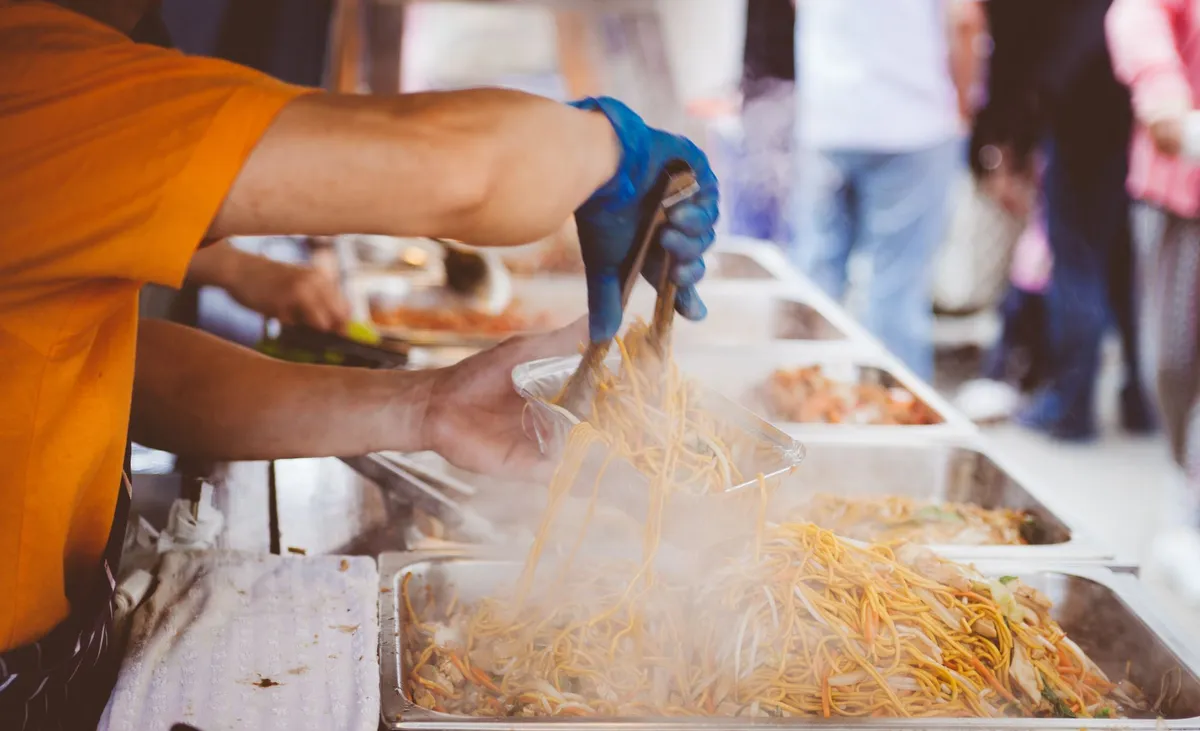

L'odeur est une machine à remonter le temps. Avant même que le regard ne se pose sur l'étal, avant que les doigts ne saisissent le papier gras, l'arôme — fumée de charbon, huile brûlante, épices moulues à la pierre — frappe le système limbique. Il n'y a pas de nappes blanches ici, pas de sommelier, pas d'addition présentée sur un plateau d'argent. Il n'y a que le geste immémorial : payer, recevoir, manger, partir. Pourtant, selon l'Organisation des Nations Unies pour l'alimentation et l'agriculture, ce rituel quotidien nourrit 2,5 milliards d'êtres humains chaque jour. Soit près d'un tiers de l'humanité qui trouve sa subsistance non pas dans une salle à manger, mais sur le bitume, sous une bâche, au coin d'une ruelle vibrante. Ce n'est pas une mode. C'est l'architecture invisible des villes. Les Cendres de Pompéi et les Thermopolia Oubliés Remontons le fil du temps, bien avant les néons et les food-trucks hybrides. Dans l'Antiquité, la rue était déjà la cuisine de ceux qui n'en avaient pas. À Pompéi, les fouilles ont révélé une densité stupéfiante de thermopolia — ces comptoirs de rue où l'on servait du vin chaud, des légumineuses et des plats mijotés dans de grandes jarres encastrées dans le marbre. Les pauvres résidents des insulae, ces immeubles de grande hauteur sans foyers ni fours, n'avaient d'autre choix que de descendre manger dehors. À Athènes, le philosophe Théophraste, successeur d'Aristote, toisait ces vendeurs de petits poissons frits avec un dédain aristocratique, les jugeant indignes du citoyen vertueux. Mais à Rome, la street food était une infrastructure vitale. On y avalait de la puls — une bouillie de grain ou de pois chiches épaissie, servie avec du pain — debout, pressé, entre deux besognes. C'était le fast-food de l'Empire, le carburant de la plèbe urbaine, bien loin des banquets luculliens des élites.1502 : L'Année où la Rue Devint Loi à Istanbul Si l'Occident a longtemps toléré le chaos des étals, l'Empire ottoman a choisi la régulation. En 1502, sous le règne de Bayezid II, la Turquie devient le premier État au monde à légiférer et standardiser la vente de nourriture de rue. Une révolution administrative : on ne vend plus n'importe comment, n'importe quoi. Les carrefours de Constantinople s'emplissent de "bouchées parfumées de viande chaude" — poulet et agneau rôtis à la broche — dont les effluves structurent l'espace public. Un voyageur florentin de la fin du XIVe siècle, égaré au Caire, note une scène saisissante : les habitants déploient des nappes de cuir brut sur la poussière des rues pour s'asseoir et dévorer des kebabs d'agneau, du riz et des beignets achetés aux marchands ambulants. La rue n'est pas un lieu de passage, elle est la salle à manger commune, le grand égalisateur social. Paris, 1840 : La Naissance Secrète de la Frite Traversons les siècles jusqu'au pavé parisien du Second Empire. Dans les brumes du Paris des années 1840, une mutation silencieuse opère. Des strips de pommes de terre plongés dans l'huile bouillante d'un chariot : la frite naît street food. Elle n'est pas encore l'accompagnement noble du steak-frites bistrotier ; elle est le repas de l'ouvrier, de l'étudiant, du flâneur. Bon marché, immédiate, tenue entre deux doigts. De l'autre côté de la Manche, le Londres victorien offre un menu bien plus brutal aux estomacs modernes : tripes, soupe aux pois, cosses de pois au beurre, buccins, crevettes et anguilles en gelée. Ces gelatinous eels, spécialité des docks de l'Est, nourrissaient les dockers pour quelques pence. La rue nourrit le corps laborieux de la première puissance industrielle mondiale.L'Empire des Saveurs : Les Marchés d'Aztlán L'océan traversé, le choc est total. Dans la grande place de Tenochtitlan, cœur de l'empire aztèque, les chroniqueurs espagnols décrivent un vertige culinaire. Les vendeurs y proposent l'atolli, une bouillie de pâte de maïs, mais surtout près de cinquante variétés de tamales. La garniture ? Viande de dinde, lapin, gaufre, grenouille, poisson, fruits, œufs, fleurs de maïs. Et des insectes. Des ragoûts complexes. La colonisation espagnole apporte blé, canne à sucre, bétail. Mais le peuple, lui, continue de manger "indien". Les importations ne font qu'effleurer les marges : on voit apparaître des cœurs de bœuf grillés sur les étals de Lima, adaptation hybride d'un abat noble devenu populaire. Au XIXe siècle, certains vendeurs entrent dans la légende locale : Erasmo, le "negro" vendeur de sangu, et Na Agardite, figures tutélaires d'une gastronomie de trottoir qui résiste à l'effacement. Les Huîtres de New York et les Reines de la Rue Américaine Dans l'Amérique coloniale, huîtres, épis de maïs rôtis, fruits et friandises s'échangent à bas prix, toutes classes confondues. L'huître est le roi de la rue new-yorkaise — bon marché, abondante, démocratique — jusqu'à ce que la surpêche et la pollution ne fassent grimper les prix vers 1910. La ville tente d'enrayer le désordre : restrictions horaires, puis interdiction totale des vendeurs ambulants en 1707. Pourtant, l'histoire retiendra la force des femmes d'ascendance africaine qui, aux XVIIIe et XIXe siècles, font de la rue leur bureau. À Savannah, elles vendent fruits, gâteaux, noix. À La Nouvelle-Orléans, ce sont café, biscuits, pralines et douceurs créoles. Elles tissent le lien social, nourrissent les chantiers, les quais, les marchés. Et en 1893, à l'Exposition universelle de Chicago (Columbian Exposition), parmi mille inventions, un mélange de maïs soufflé, arachides et mélasse fait sensation : Cracker Jack voit le jour, né street food, devenu icône industrielle. La Chine : Le Berceau Millénaire et son Diaspora En Chine, l'histoire ne commence pas au XIXe siècle. Elle remonte à des millénaires, s'institutionnalisant sous la dynastie Tang (618-907). La street food y structure la vie citadine : elle nourrit les pauvres, certes, mais les riches y envoient leurs serviteurs chercher les mets qu'ils daignent manger chez eux, loin de la foule. Ce modèle ne reste pas cantonné. La diaspora chinoise exporte l'ADN même de la rue nourricière. À la fin du XIXe siècle, les coolie workers importés de Chine posent les fondations de la culture de rue en Asie du Sud-Est. Sans eux, pas de hawker centres singapouriens, pas de warung indonésiens tels qu'on les connaît. Yokohama, 1900 : Le Ramen, Enfant de la Rue Au Japon, l'ancêtre du ramen arrive avec des immigrants chinois à Yokohama Chinatown. C'est d'abord une soupe de nouilles bon marché pour ouvriers et étudiants chinois expatriés. Mangeée debout, vite, chaude. Puis, lentement, le plat mute. Il s'approprie le dashi local, le porc chashu, l'œuf mariné. Il devient plat national, se parant de variations régionales — tonkotsu de Hakata, miso de Sapporo, shoyu de Tokyo — tout en gardant l'âme de son origine : un bol mangé vite au comptoir.Bangkok : La Rue a Tué la Cuisine Maison En Thaïlande, le basculement est récent et radical. Longtemps, la street food fut l'apanage de la minorité chinoise ; les Thaïs "de souche" mangeaient à la maison. Début des années 1960 : l'explosion urbaine change la donne. La rue devient la cantine par nécessité. Dans les années 1970, elle a "déplacé la cuisine domestique". Aujourd'hui, 76 % des urbains thaïlandais fréquentent quotidiennement ces étals. 103 000 vendeurs génèrent 270 milliards de bahts (2017). Le ministre Suvit Maesincee prévoit une croissance de 6 à 7 % par an. Deux millions de personnes mangent dans la rue à Bangkok chaque jour, servies par ~160 000 vendeurs (2 % de la population active). Et la science tranche : la contamination y est au même niveau qu'au restaurant. La rue n'est pas plus sale ; elle est juste visible. L'Inde : L'Arthashastra et les Kebabs des Rois L'Inde ancienne ne laisse pas la rue au hasard. L'Arthashastra, traité de politique et d'économie attribué à Kautilya (IVe siècle av. J.-C.), réglemente finement l'espace alimentaire urbain :Les vendeurs de riz cuit, alcool et viande doivent résider au sud de la ville (vent dominant ?). Les intendants des greniers peuvent céder excédents de son et farine aux fabricants de gâteaux de riz et riz cuit. Les surveillants de cité encadrent les vendeurs de viande et riz cuits.À Delhi, la légende veut que les rois eux-mêmes venaient goûter aux kebabs des ruelles. Certains étals opèrent encore, gardiens d'un feu séculaire. L'époque coloniale ajoute sa couche : naît une fusion street food pensée pour le palais britannique — patties, cutlets, pains fourrés — hybride né de la contrainte et de l'opportunité. Java : Les Marchands Itinérants de l'Île aux Mille Volcans En Indonésie, particulièrement à Java, la tradition est nomade. Des vendeurs itinerants portent sur l'épaule ou poussent sur un chariot (gerobak) la cuisine du quotidien : nasi goreng, sate, bakso, es cendol. Ils ne stationnent pas ; ils vont vers le client, rythment les quartiers par le kentongan (signal en bambou) ou l'appel chanté. La rue est leur territoire, le trottoir leur cuisine, la nuit leur heure de gloire.L'Équilibre Impossible : Santé, Espace, Justice Aujourd'hui, les gouvernements oscillent entre deux pôles. D'un côté, la reconnaissance socio-économique : la rue nourrit, emploie, anime, attire le touriste (moteur clé en Thaïlande). De l'autre, les risques systémiques :Sécurité sanitaire : chaîne du froid absente, eau non potable, manipulation à mains nues. Salubrité : graisses dans les caniveaux, déchets plastiques, fumées. Occupation illégale : empiètement sur le domaine public, trottoirs rendus impraticables aux piétons, handicapés, poussettes. Conflits sociaux : rivalités entre vendeurs, corruption des agents de contrôle, gentrification chassant les pauvres vers la périphérie alimentaire. Congestion : les camions-restaurants (food trucks) et clients garés en double file bloquent la circulation.La réponse ne peut être l'interdiction — l'échec de New York en 1707 le prouve —, ni le laisser-faire total. Elle réside dans la formalisation inclusive : licences simplifiées, zones dédiées (hawker centres à la singapourienne), formation hygiène, accès à l'eau/électricité, protection sociale pour les vendeurs. Faire de la rue un partenaire, pas un problème. L'Héritage Brûlant De la puls romaine au pad thaï bangkokois, du tamal aztèque au ramen de Yokohama, de la frite parisienne à l'anguille londonienne, la street food raconte une seule et même histoire : celle de l'humanité qui s'organise pour se nourrir hors de chez elle. Elle est le miroir grossissant des migrations, des inégalités, des innovations techniques, des métissages culturels. Elle nous rappelle que la gastronomie ne naît pas toujours dans le silence feutré des cuisines étoilées. Parfois, elle éclot dans le bruit, la fumée, l'urgence, le partage d'un banc de fortune. Elle est la démocratie du goût, accessible, vivante, imparfaite, indispensable. La prochaine fois que vous mordrez dans un beignet tiède acheté au coin d'une rue, souvenez-vous : vous goûtez à l'histoire du monde. Une bouchée à la fois.#StreetFoodHistory #CulinaryAnthropology #GlobalGastronomy #UrbanFoodCulture #FoodHistory Related InsightsA Domestication: A Novel Book Review and Summary From the Grave Book Review and Summary Holly Book Review and Summary
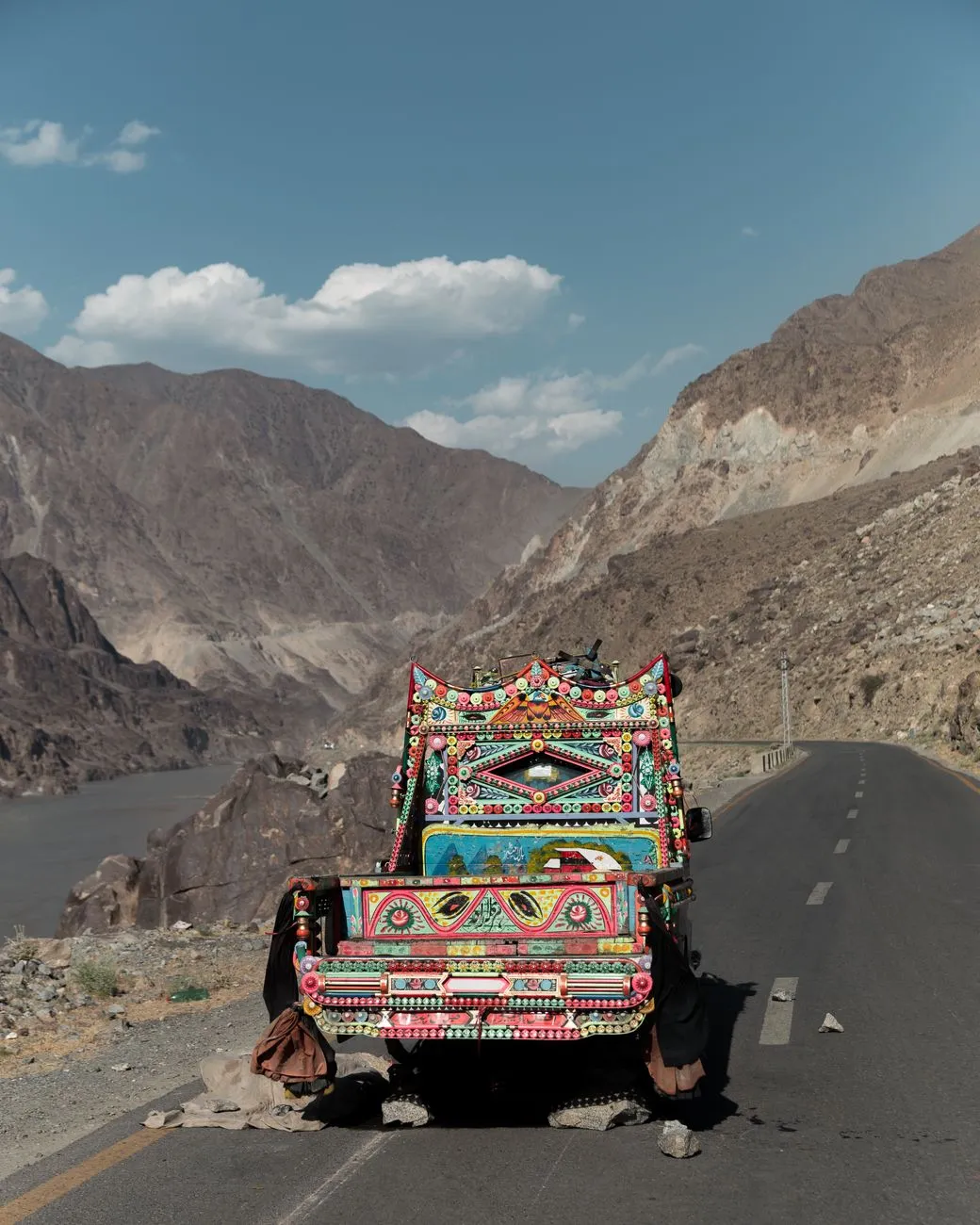

Crossing the Roof of the World: The Karakoram Highway Unveiled The Karakoram Highway (KKH) is often called the Eighth Wonder of the World, a 1,300‑kilometre ribbon of asphalt that stitches together the plains of Punjab with the icy ramparts of the Chinese border at Khunjerab Pass (4,714 m). Built between 1959 and 1979 by a joint Pakistani‑Chinese engineering corps, the road follows ancient Silk Road caravan routes, threading through the Indus, Gilgit, and Hunza valleys. The highway’s strategic importance is matched only by its raw beauty: sheer cliffs plunge into turquoise rivers, glaciers spill onto the tarmac, and villages cling to terraced slopes where apricot orchards bloom in spring. Driving the KKH is not a casual weekend jaunt. The altitude gains are relentless — Islamabad sits at 540 m, while the highest point at Khunjerab exceeds 4,700 m — meaning oxygen levels drop by roughly 40 % and weather can shift from bright sun to blizzard in minutes. The Pakistan Tours local operations team notes that the road is open year‑round, but the 150‑kilometre stretch between Besham and Chilas is prone to landslides during the monsoon (July‑September). Winter snow can close Khunjerab for weeks, and the border crossing operates only from 1 May to 31 October. Preparation begins long before the engine turns over. A reliable 4×4 with high‑ground clearance, a full‑size spare, and a set of snow chains is mandatory. Fuel quality improves after the major towns, yet stations become sparse beyond Gilgit; carrying an extra 20‑liter jerrycan is prudent. Mobile coverage is patchy — Telenor and Zong work in most valleys, but a satellite messenger (e.g., Garmin inReach) adds a safety net for remote sections. Finally, travel insurance that explicitly covers high‑altitude driving and medical evacuation is non‑negotiable; many standard policies exclude altitudes above 3,000 m. Visa, Permits, and the Paper Trail for the Northern Passes Foreign nationals entering Pakistan for a KKH road trip must secure a tourist visa (usually 30‑day single entry, extendable to 90 days) through the Pakistan Online Visa System. The e‑visa requires a passport valid for six months, a recent photograph, and a letter of invitation or hotel booking confirmation. As of the 2026 season, the visa fee for most Western passports is US $60, payable online. Beyond the visa, the highway demands two special permits. The first is the Northern Areas Permit (NAP), issued by the Ministry of Interior in Islamabad or at the Gilgit Deputy Commissioner’s office. The NAP covers travel in Gilgit‑Baltistan, including the Hunza, Nagar, and Skardu districts. Processing takes 2‑3 working days; applicants submit a copy of the visa, a detailed itinerary, and a no‑objection certificate (NOC) from their embassy if they are diplomatic or NGO staff. The second permit is the Khunjerab Border Pass, required only if you intend to cross into China. It is obtained at the Sost customs post (the last Pakistani settlement before the border) and demands a valid Chinese visa, vehicle registration, and an international driving permit (IDP). The border operates on a strict schedule: 08:00‑16:00 Pakistan Standard Time, with a mandatory 30‑minute vehicle inspection. Travelers should also carry a Vehicle Temporary Import Permit (VTIP) if the car is not registered in Pakistan. The VTIP is arranged at the customs office in Islamabad or at the border crossing at Torkham (for those entering from Afghanistan). The fee is roughly US $30 per month, plus a refundable security deposit of US $200. A practical tip: keep printed copies of every permit, visa, and insurance policy in a waterproof folder. Police checkpoints appear every 30‑50 km, and officers routinely request to see the NAP and vehicle documents. Digital copies on a phone are accepted, but a dead battery in a snowstorm can turn a routine stop into a bureaucratic nightmare. Milestones and Must‑Stop Valleys: From Islamabad to Khunjerab The journey unfolds in distinct chapters, each offering a different palette of culture, geology, and hospitality. Departing Islamabad, the first 300 km follow the N‑5 National Highway to Besham, where the road begins its ascent into the Kohistan district. The Kohistan Gorge is a dramatic introduction: sheer limestone walls rise 1,000 m above the Indus, and the occasional rockfall reminds drivers why the KKH earned its “friendship highway” moniker — built at the cost of over 800 lives. Continuing north, Chilas (1,200 m) marks the gateway to the Diamer District. Here, ancient petroglyphs at Thalpan and Shatial depict ibex, hunters, and Buddhist stupas, evidence of a crossroads traversed for millennia. A short detour to Nanga Parbat Base Camp (via the Fairy Meadows jeep track) rewards the adventurous with a view of the world’s ninth‑highest peak (8,126 m). At Gilgit (1,500 m), the highway widens and the traffic eases. The city’s bazaar is a sensory overload — dried apricots, hand‑woven shawls, and the aroma of chapli kebabs. The Gilgit River offers a convenient spot for a riverside lunch of trout, a local specialty. From Gilgit, the road splits: the Karakoram Highway proper heads northeast toward Hunza, while the Skardu Road veers east toward the Baltoro Glacier. The Hunza Valley is the crown jewel. Karimabad, the former capital, sits beneath the towering Rakaposhi (7,788 m). The Baltit Fort and Altit Fort showcase 700‑year‑old architecture, while the Attabad Lake — formed by a 2010 landslide — glows an otherworldly turquoise. A night in a family‑run guesthouse (average US $30‑$45) provides home‑cooked chapshuro (meat‑filled pastries) and a chance to hear Wakhi folklore. Beyond Hunza, the road climbs through Passu (2,500 m) with its iconic Passu Cones, then Sost (2,800 m), the last Pakistani town before the border. The final 90 km to Khunjerab Pass traverse the Khunjerab National Park, home to snow leopards, Marco Polo sheep, and the rare Himalayan brown bear. The border crossing itself is a modest concrete structure, but the view of the Karakoram Range stretching into Xinjiang is unforgettable. Budget Breakdown: Fuel, Food, and Lodging on the High Road A realistic budget prevents unpleasant surprises on a route where ATMs vanish after Gilgit. The table below aggregates data from the Pakistan Tours operations team, Numbeo cost‑of‑living indices (2026), and on‑the‑ground reports from recent overlanders. All figures are in US dollars and assume a 7‑day, 1,200 km round‑trip from Islamabad to Khunjerab and back, using a 4×4 with a 2.5 L diesel engine.Item Cost (USD) NotesFuel (Islamabad‑Khunjerab round‑trip) 250 1,200 km @ 0.21 USD/km (diesel)Accommodation (mid‑range, 7 nights) 420 $60/night average (guesthouses, 2‑person rooms)Meals (local restaurants) 210 $30/day (breakfast included in most stays)Permits & Insurance 85 NAP, Khunjerab Pass, high‑altitude medical coverVehicle Prep (tyres, spare, chains) 120 High‑altitude rated tyres, 2‑spare setMiscellaneous (souvenirs, tips, emergency fund) 150 10 % contingencyTotal Approx. 1,235Fuel prices fluctuate; as of October 2026, diesel in Islamabad averages PKR 280/L (≈ US $1.00/L) while remote stations in Sost can charge up to PKR 340/L. Carrying a 20‑liter reserve reduces the risk of price spikes. Accommodation costs drop sharply if you opt for basic homestays (US $15‑$20) or camp at designated sites (free with a park permit). Meals are cheapest when you buy fresh produce at local markets and cook on a portable stove — a popular choice among long‑term overlanders. Insurance is the line item most travelers underestimate. A policy covering evacuation from 4,500 m costs roughly US $70 for a 30‑day window; standard travel insurance often caps coverage at 3,000 m. Vehicle preparation should include a full service (oil, filters, brake fluid) and a check of the cooling system — overheating is common on the long Related InsightsNo Such Thing as Monday Book Review and Summary Le Baklava : Un Dessert Épicé au Carrefour des Civilisations Confessions of a Shopaholic Book Review and Summary


The Cryptographic Bedrock of Self‑Sovereign Identity Zero‑knowledge proofs (ZKPs) have moved from academic curiosity to the backbone of trustless identity in Web3. By allowing a prover to convince a verifier that a statement holds without revealing the secret inputs, ZKPs enable credentials that are both portable and privacy‑preserving. The recent surge in zk‑EVM rollups — zkSync Era, Polygon zkEVM, and Scroll — demonstrates that the Ethereum ecosystem now treats ZKPs as first‑class execution primitives rather than niche tooling. Meanwhile, projects such as Worldcoin’s iris‑based proof‑of‑personhood and the Semaphore protocol for anonymous signaling illustrate how ZKPs can bootstrap sybil‑resistant identity without central registries. This article dissects the architectural layers required to turn raw cryptographic primitives into production‑grade verifiable identity protocols, drawing on rigorous benchmarking methodologies akin to those used in the “Towards Physically Grounded Articulated 3D Assets” pipeline and the formal probabilistic guarantees explored in the sandpile avalanche analysis. Zero‑Knowledge Circuit Design for Credential Issuance The heart of any ZK identity system is the arithmetic circuit that encodes the credential policy. A typical circuit checks that a user’s secret key correctly signs a credential hash, that the credential attributes satisfy a predicate (e.g., age ≥ 18), and that a nullifier prevents double‑spending. Modern DSLs such as Circom, Rust‑based RISC Zero, and the higher‑level Noir language let developers express these constraints without hand‑rolling R1CS matrices. When designing circuits, three practical concerns dominate:Constraint Count vs. Proof Size – Groth16 yields constant‑size proofs (~200 bytes) but requires a trusted setup per circuit. PLONK‑style universal setups (e.g., HyperPlonk) trade a modest proof size increase for setup reuse across many credential types. Field Choice – BN254 (used by Ethereum pre‑compiles) limits scalar field size to 254 bits, forcing range checks to be decomposed into 8‑bit limbs. BLS12‑381, favored by Mina and Aleo, offers a 381‑bit field, reducing limb overhead for large integers such as timestamps. Recursive Aggregation – To batch thousands of credential verifications, recursive SNARKs (e.g., Nova, ProtoStar) fold multiple proofs into a single on‑chain verification. This pattern mirrors the multi‑agent feedback loop in the Artisan 3D generation pipeline, where each agent’s output is validated before the next stage proceeds.A minimal Circom snippet for an age‑check credential illustrates the pattern: pragma circom 2.1.5;template AgeCheck() { signal input age; // private signal input ageCommit; // public commitment signal output valid; // 1 if age >= 18 component hasher = Poseidon(1); hasher.inputs[0] <== age; ageCommit === hasher.out; component ge = GreaterEqThan(8); // 8‑bit limbs ge.in[0] <== age; ge.in[1] <== 18; valid <== ge.out; }component main = AgeCheck();The circuit compiles to ~1,200 constraints, yielding a Groth16 proof that verifies in ~30 k gas on Ethereum’s bn254 pre‑compile. On‑Chain Verification Layer Architecture Once a proof is generated off‑chain, the verifier contract must check it efficiently. The standard pattern deploys a Verifier.sol generated by snarkjs for Groth16 or a universal verifier for PLONK. However, gas costs can be reduced by:Pre‑computing Pairing Inputs – The verifier can cache the vk (verifying key) in immutable storage, avoiding calldata overhead. Batching via multicall – Multiple proofs share the same vk; a single multicall aggregates the pairing checks. Using EIP‑4844 Blob Data – For ZK‑STARKs (e.g., StarkNet’s Cairo verifier), proof data can be posted as blobs, dramatically lowering calldata fees.A production‑grade deployment often couples the verifier with a Credential Registry that maps nullifiers to revocation status. The registry is a sparse Merkle tree (SMT) rooted in a bytes32 state variable. Updating the root after each revocation costs ~45 k gas, but batching revocations via a ZK‑rollup (e.g., zkSync’s zksync::system_contracts::Verifier) amortizes this to <5 k gas per credential. Privacy‑Preserving Revocation Mechanisms Revocation is the Achilles’ heel of anonymous credentials: a naive nullifier list leaks the total number of revoked credentials. Two advanced constructions solve this:Accumulator‑Based Revocation – A dynamic RSA accumulator (or a bilinear‑map accumulator on BLS12‑381) lets the issuer publish a single accumulator value. The prover shows non‑membership of their nullifier via a ZK proof of exponentiation. This approach, used by the Aztec Connect privacy layer, adds ~2,000 constraints but keeps on‑chain state O(1). Merkle‑Tree Revocation with Zero‑Knowledge Set Membership – The issuer maintains an SMT of revoked nullifiers. The prover supplies a Merkle proof of non‑inclusion (a pair of adjacent leaves) inside a ZK circuit. The circuit verifies the path and that the nullifier lies between the two leaves. This technique appears in Semaphore v4 and aligns with the multiscale electrical argument used to bound avalanche probabilities in the sandpile paper — each level of the tree provides a probabilistic guarantee that the prover cannot cheat without breaking the hash function.Cross‑Chain Identity Interoperability Web3 identity cannot live on a single chain. The W3C DID specification, combined with UCAN (User Controlled Authorization Networks), provides a chain‑agnostic identifier format. To make ZK credentials portable:Light Client Verification – A ZK light client (e.g., Succinct’s SP1 or RISC Zero’s zkVM) can verify the consensus of a source chain (Ethereum, Polygon, Solana) inside a ZK circuit. The resulting proof attests that a specific DID document exists on that chain. Interoperable Nullifiers – Nullifiers are derived from a user’s master secret and a chain‑specific domain separator (nullifier = H(masterSecret || chainId)). This prevents cross‑chain linkability while allowing each chain to enforce its own revocation set. Bridge‑Agnostic Proof Aggregation – Using HyperPlonk or Nova, proofs from multiple chains can be recursively aggregated into a single proof verified on a settlement layer (e.g., Ethereum L1 or Celestia). This mirrors the multi‑agent pipeline where each agent’s output is validated before the final asset is assembled.Performance Benchmarks and Gas Optimization Empirical data from the zkSync Era testnet (Q3 2024) and Polygon zkEVM mainnet (Q4 2024) provide concrete numbers:Operation Constraints Proof Size Verification Gas (L1) Verification Gas (L2)Groth16 Age‑Check (BN254) 1,200 192 B 30,000 4,500PLONK Universal Credential (BN254) 3,500 1.2 KB 85,000 12,000Recursive Nova Aggregation (10 proofs) 12,000 1.5 KB 210,000 28,000RSA Accumulator Non‑Membership (2048) 2,200 1.0 KB 55,000 7,800Key takeaways:L2 verification is 5‑7× cheaper due to cheaper pre‑compile calls and lower base fee. Recursive aggregation pays off when >5 proofs are batched; the break‑even point on L1 is ~8 proofs. Accumulator‑based revocation adds modest constraint overhead but eliminates per‑revocation storage writes.A practical deployment script (Python + web3.py) automates the end‑to‑end flow: compile circuit, generate proving/verifying keys, deploy verifier, and register a credential. # deploy_zk_identity.py import json, subprocess, os from web3 import Web3 from web3.middleware import geth_poa_middleware# 1. Compile Circom circuit subprocess.run(["circom", "age_check.circom", "--r1cs", "--wasm", "--sym", "-o", "build"], check=True)# 2. Generate Groth16 keys (requires powers of tau) subprocess.run(["snarkjs",### Related Insights- [A Thousand Monstrous Forms Book Review and Summary](/blog/a-thousand-monstrous-forms-saratoga-schaefer) - [Live Laugh Love: The Secret History of White Christian Women and the World They Made Book Review and Summary](/blog/live-laugh-love-the-secret-history-of-white-christian-women-and-the-world-they-made-kristin-kobes-du-mez) - [Return to the Shack: A Journey into Redemption Book Review and Summary](/blog/return-to-the-shack-a-journey-into-redemption-wm-paul-young)


It arrives not with the sharp slap of lemon, nor the heavy cloak of salt, nor even the seductive whisper of sugar. It arrives as a velvet weight, a deepening resonance that spreads across the palate like a low cello note in a quiet room. It is the taste of time concentrated, of proteins unraveling into their most primal, delicious geometry. For centuries, cooks chased it instinctively—reducing stocks until they gleamed like amber, aging cheeses until they wept crystals, fermenting fish until the jars held the very soul of the sea. They knew what it was, but they lacked the vocabulary to name the ghost in the machine. That changed in 1908, in a Tokyo laboratory, when a professor stared into a bowl of kelp broth and finally gave the fifth taste its true name: Umami.The Professor and the Seaweed: A Moment of Clarity Kikunae Ikeda was not merely a chemist; he was a man obsessed with the architecture of flavor. As a professor at the Tokyo Imperial University, he possessed a palate trained to dissect sensation. In 1908, while savoring a bowl of yudofu (simmered tofu) seasoned with kombu (kelp) dashi, he encountered a sensation that refused to be categorized. It was not sweet, not sour, not salty, not bitter. It was a distinct, savory profundity—a "pleasant savory taste," which is the literal translation of the Japanese umami (旨味), derived from umai (delicious). Ikeda did not just taste it; he hunted it. He undertook the laborious process of evaporating massive quantities of kombu broth, isolating the crystalline substance responsible for that specific mouth-coating richness. The culprit was glutamic acid, an amino acid. But the acid itself was shy; it was the salt of that acid—monosodium glutamate (MSG)—that sang the loudest. Ikeda had not just found a chemical; he had scientifically proven the existence of a fifth basic taste, distinct from the classical four. The speed of application was staggering. By 1909, Ikeda had partnered with Saburōsuke Suzuki to found Ajinomoto Co., Inc. ("Essence of Taste"). They launched the world’s first umami seasoning: monosodium glutamate, marketed under the name "Ajinomoto." It was a culinary atomic bomb—pure, crystalline savoriness that could be sprinkled like salt. It spread globally with the velocity of a revelation, instantly becoming the secret weapon of kitchens from Shanghai to Chicago, long before the West fully accepted the science behind it. The Ancient Code: Garum, Murri, and the Chef Who Knew Too Much While Ikeda provided the formula, history provides the evidence. Humanity had been hacking the umami code for millennia without knowing the molecular password. In Ancient Rome, the empire ran on garum—a fermented fish sauce made from the intestines of mackerel, anchovies, or tuna, left to bake under the Mediterranean sun. The enzymatic autolysis shattered proteins into free glutamates. It wasn't just a condiment; it was the MSG of the Caesars, poured into nearly every savory dish. In Medieval Byzantium and the Arab World, murri held sway. A fermented barley sauce, rich in glutamate, it was the backbone of banquet cooking, a direct lineage to the soy sauces fermenting simultaneously in China since the third century. Then there was Auguste Escoffier, the king of chefs and chef of kings. In the late 1800s, in the gleaming kitchens of the Ritz in Paris and the Savoy in London, Escoffier was building fonds and glaces—veal stock reduced for days, brown sauces layered with roasted bones, tomatoes, and mushrooms. He was constructing flavor architectures built entirely on the synergy of glutamate and nucleotides. He knew how to build the taste. He knew it was the foundation of French haute cuisine. But when he looked for the chemical source, the microscope of his era came up empty. He died in 1935, a decade before science would catch up to his intuition.The Synergy That Changed Everything: 1 + 1 = 8 If Ikeda opened the door, Shintaro Kodama and Akira Kuninaka blew the hinges off. In 1913, Kodama, Ikeda’s disciple, turned his gaze to katsuobushi—dried, fermented skipjack tuna flakes. He discovered inosinate (IMP), a ribonucleotide. Then, in 1957, Kuninaka found guanylate (GMP) in dried shiitake mushrooms. But Kuninaka’s true genius lay in what happened when he mixed them. He discovered the Synergistic Effect. When glutamate (from kombu) meets inosinate (from bonito) or guanylate (from shiitake), the resulting taste intensity is not additive. It is multiplicative. The receptor on the tongue—a heterodimer of TAS1R1 and TAS1R3—possesses a Venus flytrap mechanism. Glutamate binds the primary site; the nucleotides bind a secondary allosteric site, clamping the receptor shut and amplifying the signal to the brain by a factor of seven or eight. This single biochemical quirk explains the "holy trinities" of global cuisine:Japan: Dashi = Kombu (Glutamate) + Katsuobushi (Inosinate). Italy: Pasta Bolognese = Tomatoes (Glutamate) + Beef/Anchovies (Inosinate) + Parmigiano-Reggiano (Massive Glutamate). France: Sauce Espagnole = Veal Stock (Inosinate) + Tomato Purée/Mirepoix (Glutamate). Scotland/China: Chicken Soup + Leeks/Cabbage (Glutamate) + Chicken Bones (Inosinate).The Scots making cock-a-leekie soup and the Chinese adding leeks to chicken broth were unwittingly performing advanced molecular gastronomy centuries before the term existed. The Hardware: How the Tongue Sees Savory For decades, the scientific establishment treated umami with skepticism. Was it just a "flavor enhancer"? A salty side-effect? The debate raged until the turn of the millennium. In 2000, researchers at the University of Miami identified the specific receptor complex: TAS1R1 + TAS1R3. This was the smoking gun. Umami had its own hardware. It wasn't a phantom; it was a distinct biological channel. The genetics are elegant:TAS1R2 + TAS1R3 = Sweet Receptor. TAS1R1 + TAS1R3 = Umami Receptor. TAS1R3 is the shared subunit. Knock it out, and you lose both sweet and umami.This explains the curious overlap. Standalone glutamate (without sodium) tastes sour. Add salt (Na+), and the umami receptor fires. Sweet and umami share structural DNA. Some people, genetically, struggle to distinguish umami from saltiness—a condition akin to color blindness for the palate. By 2006, Ajinomoto’s own labs found these same receptors in the stomach. Umami isn't just a mouth event; it signals protein arrival to the gut, priming digestion and triggering satiety hormones. We taste protein to survive; we taste umami to thrive.The Pantry of the Fifth Taste: Where the Glutamate Lives Umami is democratic. It hides in the humblest tomato and the proudest truffle. The Wikipedia data provides a definitive atlas of high-umami ingredients. Let’s categorize the arsenal: The Ocean’s Bounty (Inosinate Kings)Katsuobushi / Bonito Flakes: The concentrated essence of tuna. IMP levels are stratospheric. Anchovies / Sardines / Maldives Fish: Small, oily, fermented or cured. The backbone of garum, nam pla, and Worcestershire sauce. Shellfish: Scallops, clams, oysters—sweetness wrapped in umami. Fish Sauce / Shrimp Paste: Liquid umami bombs.The Fungal & Vegetal Kingdom (Guanylate & Glutamate)Dried Shiitake Mushrooms: The GMP powerhouse. Drying converts RNA to guanylate. Fresh shiitake? Barely a whisper. Dried? A roar. Tomatoes: Especially concentrated (paste, sun-dried, roasted). The Italian revolution was a tomato revolution. Green Peas / Sweet Corn / Potatoes: Surprising reservoirs of free glutamate. Nori / Kombu / Wakame: Sea vegetables are the purest vegetative source.The Fermented & Aged Alchemists (Proteolysis Unleashed)Soy Sauce / Miso / Doenjang / Doubanjiang: Aspergillus oryzae (Koji mold) digests soy proteins into massive glutamate pools. Cheeses (Parmesan, Asiago, Blue, Roquefort): Aging = proteolysis. Parmigiano-Reggiano (24-36 months) hits ~1,680 mg/100g glutamate. The crystals? Tyrosine. The taste? Pure umami. Yeast Extracts (Marmite, Vegemite, Beer): Autolyzed yeast. The vegetarian's MSG. Kimchi / Sauerkraut: Lactic acid bacteria doing the work of time. Hydrolyzed Vegetable Protein (HVP) / Bouillon Cubes: Industrial shortcuts to the same destination.The Modern PowdersMSG (Monosodium Glutamate): Pure glutamate + sodium. The standard bearer. Disodium Guanylate (GMP) / Disodium Inosinate (IMP): The "nucleotide" boosters. Rarely used alone; they are the force multipliers in "Chicken Powder" and instant noodle packets.The Physiology of Pleasure: Mouthfeel, Salivation, and the "Coating" Sensation Umami behaves differently than its four siblings.It is not instantly palatable alone. A spoonful of MSG in water tastes weird—metallic, sour, thin. It needs an aroma partner (roasted meat, garlic, smoke) and usually salt to bloom. It has a "long-lasting, mouthwatering, coating sensation." It stimulates salivation far more than salt or acid. It creates furriness on the tongue—a tactile viscosity. It hits the throat, the roof, and the back of the mouth. It is a "deep" taste. Sweet hits the tip; sour the sides; bitter the back; salt the front. Umami fills the oral cavity. The Concentration Window is Narrow. Too little: invisible. Too much: cloying, metallic, "ajinomoto tongue." The optimum curve is a sharp peak. Salt Dependency. The optimum umami taste depends on sodium chloride concentration. They are dance partners. Low-salt foods require more umami to taste "right"—a crucial lever for modern health-conscious cooking.Beyond Glutamate: The Frontier Peptides The story didn't end with amino acids and nucleotides. As of 2017, researchers identified 52 peptides (short protein chains) capable of generating umami taste (though 20 remain contested). This opens a terrifyingly vast frontier. Aged meats, long-fermented soy, garum, century eggs—their complexity likely resides in these peptide signatures. Ibotenic acid and tricholomic acid (from certain mushrooms) are claimed to be multiples more intense than MSG, though toxicity keeps them in the lab. Cooking with the Fifth Element: A Chef’s Framework Understanding the data changes how you cook. You stop "seasoning" and start "architecting." Layer 1: The Glutamate Base. Start with a high-glutamate foundation. Tomato paste fried in oil (Maillard + Glutamate). A spoonful of white miso in a marinade. A dusting of MSG (safe, effective, precise) in a stir-fry. A Parmesan rind simmering in the minestrone. Layer 2: The Nucleotide Spike. Add the multiplier. A handful of dried shiitake in the braise. Anchovies melting into the soffritto. Bonito flakes steeped off-heat in the broth. A splash of fish sauce in the chili (it won't taste fishy; it will taste meaty). Layer 3: The Aged/Processed Depth. Finish with the fermented complexity. Shaving aged gouda over the risotto. A drizzle of aged balsamic (gluconates + glutamate). A spoonful of natto or tempeh for the vegetal funk. The Salt Check. Taste for salt last. If the umami is high, the salt requirement drops. This is the "low sodium" hack the industry doesn't want you to know: Umami allows salt reduction of 30-50% without perceived loss of palatability.The Name Itself: A Linguistic Nuance The kanji tells a story.うま味 (Hiragana + Kanji): Proposed by Ikeda in 1908 specifically for the taste component he isolated. The scientific term. 旨味 (Kanji): The broader, older concept of "deliciousness" or "tastiness." うまい (Umai): The adjective. "This is umai."In the 1980s, Japanese researchers formalized this distinction: use うま味 for the specific taste quality (the scientific construct), and 旨味 for the general hedonic evaluation ("This soup has good umami"). The 1985 Umami International Symposium in Hawaii cemented Umami as the universal scientific noun. We owe them the word that finally let us speak the truth of our broth. The Legacy: More Than a Seasoning Umami is the taste of civilization. It is the flavor of preservation—turning perishable protein into stable, portable, potent nutrition. It is the taste of cooking itself, for heat and time and microbes are the only keys that unlock the glutamate locked inside raw protein. From the garum vats of Baetica to the kombu drying on the rocks of Hokkaido; from Escoffier’s stockpots to the Ajinomoto shaker on a street vendor’s cart in Bangkok; from the TAS1R1 receptor on your tongue to the identical receptor in your stomach—Umami is the biological signature of nourishment. It is the answer to the question: "What makes this taste complete?" Next time you reduce a stock until it gels in the fridge, or grate Parmesan over steaming pasta, or shake a little MSG into your fried rice, remember Kikunae Ikeda staring into his bowl of yudofu. He gave us the map. The territory, however, has always been ours to explore.#Umami #FoodScience #Cul Related InsightsWhat Abigail Did That Summer Book Review and Summary Die majestätische Schwarzwälder Kirschtorte: Eine kulinarische Reise durch Geschichte, Mythos, Handwerk und vollendeten Geschmack A Little Too Close - Madigan Mountain #2 Book Review and Summary

-
 Chloe Tremblay
 - 12 Oct, 2026 15:58
Crossing the Roof of the World: Karakoram Highway Road Trip – Part 02: The Khunjerab Border
Dawn Over Kashgar: The Gateway to the Sky Road Kashgar’s ancient bazaar awakens long before the first bus rolls toward the Karakoram Highway. The city sits at 1,289 m, a cultural crossroads where Uyghur spices mingle with the scent of fresh naan. From here the highway climbs relentlessly, threading through the Taklamakan’s fringe before surging into the Pamir foothills. Travelers who have driven the Chinese segment describe a rhythm: wide‑open desert flats give way to jagged limestone cliffs, then to alpine meadows dotted with yaks. The road is paved, well‑marked, and maintained by the Xinjiang Transport Bureau, yet the altitude gain is relentless — each 100 km adds roughly 300 m of elevation. Fuel stations are spaced every 150 km; carry at least 20 L of reserve diesel if you plan a self‑drive leg beyond the last major depot at Tashkurgan. The Chinese section is officially divided into three stages: Kashgar → Yarkand → Tashkurgan → Khunjerab Pass. Yarkand offers a brief respite with its historic mosque and a chance to stock up on dried apricots. Tashkurgan, at 3,200 m, is the last Chinese town before the border; its checkpoint is where the Xinjiang border permit is inspected. The permit, issued by the Kashgar Public Security Bureau, is mandatory for all travelers — Chinese citizens included — and must be presented alongside a valid passport. Processing takes 3‑5 working days; expedited service is available for an extra fee. Keep a printed copy and a digital backup; mobile signal disappears above 4,000 m. Navigating the Permit Maze: Xinjiang Border Permit & Pakistani Visa Securing the paperwork is the single most time‑sensitive task. The Xinjiang border permit (often called the “Frontier Pass”) authorizes travel on the highway up to the Khunjerab checkpoint. It is not a visa for Pakistan. For the Pakistani side, most nationalities require a tourist visa obtained through the e‑visa portal (valid 30 days, single entry). The visa application asks for a confirmed hotel booking in Islamabad or a letter of invitation from a Pakistani host. Item Cost (USD) NotesXinjiang Border Permit (per person) $30 Issued by Kashgar PSB; valid 30 daysPakistani Visa (tourist, single entry) $60 Apply via e‑visa portal; 30‑day validityCross‑border Bus Seat (Kashgar‑Sust) $45 Fixed schedule, 2‑day journeyVehicle Insurance (if self‑drive) $120 Mandatory for foreign platesMiscellaneous (food, fuel surcharge) $80 Approx. per personThe table above reflects 2024‑2025 pricing gathered from official consular sources and on‑ground operators. Note that the bus seat price includes the mandatory overnight stop at the Chinese customs yard in Sust; meals are not covered. A common pitfall is assuming the permit alone grants entry into Pakistan. The Pakistani immigration officer at Khunjerab will stamp your passport only after verifying the visa, the bus ticket, and a completed embarkation card. If you arrive by private vehicle, you must also present a Carnet de Passage and a temporary import permit issued at the Pakistani customs office in Sust. Failure to produce any of these documents results in immediate denial and a return to the Chinese side — a costly delay given the limited bus frequency. The Scheduled Bus Ballet: Securing a Seat Across Khunjerab The cross‑border bus is the only public conveyance that traverses the pass. Operated jointly by China Road Transport and Pakistan’s National Highway Authority, it runs twice weekly (typically Monday and Thursday) from Kashgar’s International Bus Station to Sust, then onward to Gilgit and Islamabad. Seats sell out weeks in advance during the high season (June‑September). Booking is done through the Kashgar station’s ticket window or via authorized travel agencies in Urumqi; online reservation is not yet available. The journey unfolds in two distinct legs. The first leg (Kashgar → Sust) covers 420 km and takes roughly 14 hours, including a mandatory 2‑hour customs hold at the Chinese checkpoint. The bus is a 45‑seat coach with reclining seats, heating, and a small onboard toilet. Altitude sickness is a real concern; the driver makes a brief stop at 4,200 m for oxygen checks. Carry personal medication (acetazolamide) and stay hydrated. The second leg (Sust → Gilgit → Islamabad) is longer — 1,200 km over 24 hours — and traverses the spectacular Hunza Valley. The bus does not stop at the Khunjerab Pass summit for sightseeing; the border formalities are completed at the Sust customs yard (Chinese side) and the Khunjerab immigration post (Pakistani side). Luggage is screened twice. Travelers report that the Pakistani side’s immigration officers are thorough but courteous; a printed copy of your visa approval email speeds the process. If you miss the scheduled bus, the only alternatives are chartering a private 4×4 (costly, requires a Chinese driver with a special permit) or waiting up to two weeks for the next departure. Flexibility in your itinerary is therefore essential; build at least a three‑day buffer before any onward flights from Islamabad. Altitude, Weather, and the Pass: Seasonal Realities at 4,693 m Khunjerab Pass sits at 4,693 m (15,397 ft), making it the highest paved international border crossing on Earth. The pass is open from 1 May to 31 October, weather permitting. Outside this window, heavy snow and avalanche risk force a complete closure; the Chinese and Pakistani authorities coordinate the exact opening date each year, usually announced in early April. During the operating season, daytime temperatures hover between 5 °C and 15 °C, while night‑time lows can plunge to –10 °C. UV radiation is intense; broad‑spectrum SPF 50+ sunscreen, UV‑blocking sunglasses, and a wide‑brim hat are non‑negotiable. The thin air reduces oxygen saturation to roughly 55 % of sea‑level values. Acclimatization in Tashkurgan (3,200 m) for at least one night is strongly recommended before attempting the pass. Road conditions are generally good, but sudden rockfalls and ice patches appear without warning, especially after afternoon thunderstorms. The Chinese side maintains a 24‑hour road‑condition hotline ( +86‑998‑123‑4567 ) and posts real‑time updates on the Xinjiang Transport Bureau’s WeChat channel. On the Pakistani side, the National Highway Authority broadcasts alerts via the “NHA Travel” app. Carry a satellite messenger (e.g., Garmin inReach) for emergencies; mobile coverage is non‑existent above 4,000 m. Travel insurance that covers high‑altitude medical evacuation is mandatory for most foreign nationals. Policies must explicitly list “mountaineering up to 5,000 m” or “high‑altitude travel” as covered activities. Verify the fine print before departure; many standard travel policies exclude altitudes above 3,000 m. From Sust to Islamabad: The Pakistani Descent Unveiled Once the passport receives the Pakistani entry stamp, the bus descends through the Khunjerab National Park, a UNESCO‑listed biosphere reserve home to snow leopards, Marco Polo sheep, and the elusive Himalayan brown bear. The first Pakistani settlement is Sust (2,800 m), a modest customs town with a handful of guesthouses and a basic clinic. The road then follows the Hunza River, carving through dramatic gorges and passing the iconic Attabad Lake — a turquoise reservoir formed by a 2010 landslide. The Hunza Valley is renowned for its hospitality. Stop at Karimabad to visit the 700‑year‑old Baltit Fort and sample apricot kernel tea. The bus typically pauses for a 30‑minute stretch at the Rakaposhi viewpoint (7,788 m), offering one of the most photographed mountain vistas on the planet. Fuel quality improves after Gilgit; the highway widens to a dual‑carriageway for the final 300 km to Islamabad. Arrival in Islamabad usually occurs late evening on the second day. The bus terminates at the Pir Wadhai Bus Terminal, where taxis and ride‑hailing services are plentiful. If you have a connecting flight, allow at least three hours for traffic through the capital’s ring road. Many travelers choose to overnight in Islamabad’s diplomatic enclave (F‑7/F‑8) before onward travel, giving a chance to recover from the altitude transition and savor a proper Pakistani breakfast of halwa puri. Epilogue: The Road Keeps Calling The Karakoram Highway is more than asphalt; it is a living corridor where history, geology, and human ambition converge. Crossing Khunjerab demands meticulous paperwork, respect for altitude, and patience with the rhythm of a twice‑weekly bus. Yet the reward — standing at the roof of the world, watching the sun paint the Pamirs gold — etches a memory no itinerary can replicate. Prepare thoroughly, travel light, and let the highway write its own story on your passport. #TravelDiaries #HighAltitudeAd Related InsightsScavi di Pompei: La Città Congelata nel Tempo In Patagonia Book Review and Summary The Traitor Baru Cormorant Book Review and Summary

- Alexander Vance
- 12 Oct, 2026 15:30
Transparent Machines: XAI Strategies That Satisfy Auditors and Engineers
The Hidden Ledger: Why Explainability Isn’t Optional Anymore Regulators have stopped treating AI as a “black box” curiosity and now demand a transparent ledger of every decision a model makes. In finance, the European Union’s AI Act forces firms to retain auditable logs for high‑risk models; in healthcare, the FDA’s Software as a Medical Device (SaMD) guidance requires a “predetermined change control plan” that includes explainability metrics. The consequence? Organizations that once prioritized raw accuracy are now forced to balance performance with interpretability. The shift mirrors findings from the arXiv paper “Can Language Models Play the Wikipedia Game?” which showed that even the most capable language models (GPT‑4o, QwQ:32B) still lag behind humans in navigating complex, multi‑step information graphs. The authors built a massive local citation graph and discovered that model failures were traceable to opaque internal representations. The study underscores a broader truth: without explainable pathways, compliance teams cannot reliably certify AI behavior. Similarly, the “Towards Physically Grounded Articulated 3D Assets” work illustrates how adding physical simulation feedback transforms a generative pipeline from “looks‑good” to “behaves‑predictably.” The researchers introduced a multi‑agent system that iteratively checks collision‑free motion and mass consistency, thereby creating assets that can be explained in terms of physics constraints. For regulated industries, the lesson is clear—embedding domain‑specific constraints into the model loop yields both higher trust and a concrete audit trail. In the sections that follow, we’ll dissect the regulatory tapestry, unpack the technical toolbox, and walk through production‑ready pipelines that let data scientists keep their models both powerful and provably understandable. Regulatory Landscape: From GDPR to FDA Regulation is no longer a peripheral checklist; it is the scaffolding that shapes model design. Below are the three pillars that dominate the XAI conversation today. 1. European Union – AI Act & GDPRThe AI Act classifies high‑risk systems (e.g., credit scoring, biometric identification) and mandates “risk management systems that include explainability provisions.” GDPR’s Article 13‑14 further obliges controllers to provide “meaningful information about the logic involved” when automated decisions affect individuals. Non‑compliance can trigger fines up to 6 % of global turnover. 2. United States – FDA SaMD & OCC GuidanceThe FDA’s 2023 “Proposed Framework for AI/ML‑Based SaMD” introduces a Predetermined Change Control Plan (PCCP) that requires continuous monitoring of model drift and a “post‑market surveillance plan” that must include explainability metrics such as feature importance drift. The Office of the Comptroller of the Currency (OCC) has issued “Guidance on Model Risk Management” which explicitly calls for “interpretable risk drivers” in credit models. 3. Emerging Markets – Singapore’s Model Governance FrameworkSingapore’s Monetary Authority (MAS) released a Model Governance Framework that demands “explainability documentation for every AI model used in regulated activities.” The framework recommends a tiered approach: simple linear models for Tier 1 risk, and hybrid XAI pipelines for Tier 2/3. These regimes converge on three technical expectations:Requirement Typical Metric Acceptable TechniqueTraceability of decision path Counterfactual fidelity (≤ 5 % deviation) SHAP, LIME, Counterfactual generationStability over time Feature importance drift < 0.1 (Jensen‑Shannon) Integrated gradients, CaptumDomain‑specific reasoning Alignment with regulatory logic trees Rule‑based post‑hoc explanations, Causal graphsMeeting these standards forces teams to move beyond “accuracy‑only” pipelines and embed explainability as a first‑class artifact. Technical Foundations: Model‑Agnostic vs. Intrinsic Explainability Explainability methods fall into two camps: Model‑Agnostic Post‑Hoc Tools These treat the trained model as a black box and approximate its behavior locally. Popular libraries include SHAP, LIME, Alibi, and InterpretML (all trending on GitHub with over 2 k stars in the past year). They excel when you need to retrofit an existing deep network without changing its architecture. Pros: Works with any model type (CNNs, Transformers, Gradient Boosted Trees). Easy to integrate into CI pipelines via Python wrappers.Cons: Approximation error can be significant for high‑dimensional inputs. Computationally heavy for real‑time inference.Intrinsic (White‑Box) Designs These bake interpretability into the architecture. Examples include Generalized Additive Models (GAMs), Attention‑based explanations, and Physics‑informed neural networks (PINNs)—the latter echoing the Physically Grounded 3D Assets benchmark where simulation constraints guide learning. Pros: Guarantees that explanations are mathematically consistent with the model. Often lighter to compute at inference time.Cons: May sacrifice raw performance on unstructured data. Requires redesign of training pipelines.A pragmatic strategy for regulated settings is a hybrid approach: start with an intrinsically interpretable core (e.g., a GAM for credit risk), then augment with model‑agnostic post‑hoc layers to capture residual non‑linearities. This mirrors the multi‑agent pipeline from the 3D asset paper, where a physics engine provides a hard constraint while a generative model refines visual fidelity. Operationalizing XAI: Pipelines, Tooling, and the Open‑Source Ecosystem Building explainable pipelines at scale is a matter of orchestration, not just picking the right algorithm. Below is a production‑grade architecture that satisfies both auditability and latency requirements.Feature Store – Centralized repository (e.g., Feast) version‑controls raw and engineered features, guaranteeing reproducibility for counterfactual analysis. Model Registry – MLflow tracks model artifacts, hyper‑parameters, and associated XAI artifacts (SHAP values, rule sets). Explainability Service – A lightweight Flask or FastAPI microservice that computes explanations on demand. Containerized with Docker for isolation. Monitoring Layer – Prometheus scrapes SHAP drift metrics; Grafana dashboards alert when feature importance divergence exceeds regulatory thresholds. Audit Log – Immutable append‑only store (e.g., Apache Iceberg) records every request, its input, prediction, and explanation hash for downstream compliance queries.Open‑Source Tools Worth WatchingCaptum (PyTorch) – 1.3 k stars, offers Integrated Gradients, DeepLIFT, and Layer Conductance. Fiddler AI – Recently raised $80 M (TechCrunch, 2025) to provide enterprise XAI dashboards; its open SDK integrates with Kubernetes. Arize AI – Y Combinator S21 alum, focuses on model monitoring with explainability overlays; open‑source arize-phoenix provides drift detection hooks. InterpretML – Microsoft’s library for glass‑box models; its ExplainableBoostingMachine (EBM) is a top‑ranked GAM on the 2024 Kaggle leaderboard.Below is a concrete Docker Compose snippet that spins up an XAI microservice alongside Prometheus and Grafana for compliance dashboards. version: "3.9" services: xai-service: image: ghcr.io/fiddlerai/xai-service:latest environment: - MODEL_REGISTRY_URL=http://mlflow:5000 - FEATURE_STORE_URL=http://feast:8080 ports: - "8000:8000" depends_on: - mlflow - feast mlflow: image: mlflow/mlflow:2.14.0 environment: - BACKEND_STORE_URI=sqlite:///mlflow.db ports: - "5000:5000" volumes: - mlflow-data:/mlflow prometheus: image: prom/prometheus:latest volumes: - ./prometheus.yml:/etc/prometheus/prometheus.yml ports: - "9090:9090" grafana: image: grafana/grafana:10.2.0 ports: - "3000:3000" depends_on: - prometheusvolumes: mlflow-data:The xai-service endpoint accepts a JSON payload with features and returns both the prediction and a SHAP explanation payload, ready for logging into the immutable audit store.Case Studies: Finance, Healthcare, and Manufacturing Finance – Credit Scoring Under the EU AI Act A major European bank replaced its legacy logistic regression with a Gradient Boosted Tree (XGBoost) to improve default prediction. To satisfy the AI Act, they wrapped the model in the hybrid pipeline described above. SHAP values are persisted alongside each loan decision, enabling auditors to query “Which features contributed > 10 % to the denial?” The bank’s compliance dashboard now flags any loan where the top three SHAP contributors violate the “no single factor > 30 % influence” rule. Since deployment, the institution reported a 15 % reduction in false‑positive rejections and zero regulatory penalties. Healthcare – Diagnostic Imaging with FDA‑Approved SaMD A startup used a convolutional network to triage chest X‑rays. To meet the FDA’s PCCP, they integrated a Physics‑Informed Neural Network (PINN) that enforces anatomical constraints (e.g., lung volume consistency). Post‑hoc, they employ Captum Integrated Gradients to highlight regions that drove the pathology score. The FDA’s 2024 guidance cites this exact combination as a “best‑practice exemplar for explainability in SaMD.” Post‑market surveillance showed a drift in feature importance of only 0.03 over 12 months, well below the 0.1 threshold. Manufacturing – Predictive Maintenance for Articulated Robots Inspired by the Artisan pipeline from the 3D asset paper, a robotics OEM built a multi‑agent system where a reinforcement learning agent proposes maintenance actions, while a physics simulator validates collision‑free execution. The XAI layer surfaces counterfactual simulations: “If bearing B were replaced, the predicted mean‑time‑to‑failure improves by 12 %.” This counterfactual reasoning satisfies the Singapore MAS’s requirement for actionable explanations and has cut unplanned downtime by 22 %. These real‑world deployments demonstrate that XAI is not a theoretical add‑on but a regulatory enabler that simultaneously improves operational KPIs. The Road Ahead: Harmonizing Trust and Innovation Explainable AI has moved from academic curiosity to a compliance cornerstone. The convergence of rigorous regulations, open‑source tooling, and lessons from unrelated domains—like the Wikipedia Game navigation challenges and physically grounded 3D asset generation—offers a blueprint for building trustworthy models without sacrificing performance. Key takeaways for engineers and leaders:Design for Explainability Early – Treat interpretability as a non‑functional requirement from day one. Leverage Hybrid Pipelines – Combine intrinsically interpretable cores with model‑agnostic post‑hoc layers to capture complex patterns while retaining auditability. Automate Monitoring – Deploy Prometheus‑Grafana stacks that track explanation drift in real time, turning compliance into a continuous feedback loop. Document Rigorously – Store every prediction, explanation, and version hash in an immutable ledger; this is the data source regulators will audit. Stay Informed – Follow GitHub trending repos (Captum, SHAP, Alibi) and emerging XAI startups (Fiddler AI, Arize AI) to keep the stack current.When transparency becomes a built‑in feature rather than an afterthought, regulated industries can unlock the full potential of AI—delivering faster, safer, and more accountable services to the people who rely on them.{ "@context": "https://schema.org", "@type": "FAQPage", "mainEntity": [ { "@type": "Question", "name": "How does XAI help satisfy the EU AI Act for high‑risk models?", "acceptedAnswer": { "@type": "Answer", "text": "The AI Act requires risk management systems with explainability provisions. XAI tools like SHAP provide traceable feature contributions, enabling auditors to verify that no single factor unduly influences a decision, thereby meeting the act’s transparency obligations." } }, { "@type": "Question", "name": "What is a hybrid XAI pipeline and why is it useful for regulated sectors?", "acceptedAnswer": { "@type": "Answer", "text": "A hybrid pipeline combines an intrinsically interpretable core model (e.g., a GAM) with model‑agnostic post‑hoc explainers (e.g., SHAP). This approach preserves performance on complex data while guaranteeing that explanations are mathematically consistent and auditable, satisfying both accuracy and regulatory needs." } }, { "@type": "Question", "name": "Which open‑source tools are most popular for production‑grade XAI?", "acceptedAnswer": { "@type": "Answer", "text": "Key tools include Captum for PyTorch, SHAP for model‑agnostic explanations, InterpretML’s ExplainableBoostingMachine, and Alibi for counterfactual analysis. All have active GitHub communities and integrate well with MLflow, Feast, and Kubernetes‑based deployments." } } ] }#AI #ExplainableAI #RegTech #MachineLearning #DataScience #Compliance #FinTech Related InsightsThe Mysterious Bookshop Presents the Best Mystery Stories of the Year 2021 Book Review and Summary The Fabric of Entanglement: Architecture, Cosmology, and the Next Frontier of Quantum Interconnectivity Stars and Smoke Book Review and Summary

-
 Aylin Okur
 - 12 Oct, 2026 13:51
From Goethe’s Apprentice to Modern Hero: Unraveling the Bildungsroman’s Secret Path
When Youth Becomes Narrative: The Birth of a Literary Form The first pages of a bildungsroman feel like a quiet sunrise over a restless horizon—an uneasy teen stepping out of a familiar doorway, eyes fixed on a world that promises both danger and destiny. This genre, defined by the German words Bildung (“formation” or “education”) and Roman (“novel”), isolates the psychological and moral metamorphosis of a single character as they stride from childhood’s cradle to adulthood’s threshold. Unlike a simple adventure story, the bildungsroman treats growth itself as the plot’s engine. Its central figure is usually “generally naive,” propelled by an emotional loss or a yearning for answers that pushes them into the unknown. The journey is less about external conquest and more about an internal reconciliation between the self and the society that shapes it.The German Roots: From Morgenstern to Dilthey The term bildungsroman first emerged in a university lecture hall in 1819, coined by philologist Johann Karl Simon Morgenstern. Morgenstern’s neologism lay dormant until Wilhelm Dilthey, a pivotal figure in German hermeneutics, resurrected it in 1870 and cemented its scholarly legitimacy with a 1905 publication. Dilthey’s advocacy turned the phrase from a footnote into a critical lens for literary analysis. The genre’s birth is often anchored to two German novels: Johann Wolfgang von Goethe’s Wilhelm Meister’s Apprenticeship (1795–96) and, earlier, Christoph Martin Wieland’s Geschichte des Agathon (1767). While Goethe’s work showcases the protagonist’s gradual acceptance of societal values, Wieland’s tale already hints at the “search for answers” motif that would become the bildungsroman’s hallmark. Milestones in the Canon: Goethe, Wieland, and the English Trail Goethe’s novel traveled beyond German borders when Thomas Carlyle rendered it into English in 1824. Carlyle didn’t stop at translation; his own Sartor Resartus (1833–34) became the first English-language bildungsroman, inspiring a generation of British writers. The English adaptation demonstrated that the genre’s core—psychological maturation—resonated across cultures. Later, literary scholars like Franco Moretti highlighted an unexpected tension within the form: the modern myth of perpetual youth and progress clashes with the “static teleological vision of happiness” found in classic endings such as Goethe’s Wilhelm Meister and Jane Austen’s Pride and Prejudice. In Austen’s work, the protagonist’s growth culminates in societal acceptance—a hallmark of the traditional bildungsroman arc. Even the ancient Iliad has been suggested as a proto‑bildungsroman. Barbara Whitman argues that Achilles’s evolution from rash youth to mature hero mirrors the genre’s essential trajectory, proving that the narrative of personal growth predates the term by millennia.Mapping the Inner Journey: Plot Mechanics and Societal Conflict A bildungsroman typically unfolds in three stages:Departure – An emotional loss or internal unrest forces the protagonist to leave home. Initiation – The character confronts a series of trials, often clashing with societal norms. Integration – Through hardship, the protagonist internalizes societal values and is finally accepted into the community.The conflict is rarely a simple man‑versus‑man battle; it is a deeper man‑versus‑society struggle. As the young hero navigates schools, workplaces, and romantic entanglements, they gradually reshape their worldview, ultimately aligning personal aspirations with collective expectations. In many narratives, this culminates in the protagonist’s ability to “reach out and help others,” signaling a fully realized maturity. Sub‑Genres: Development, Education, and the Artist’s Path The bildungsroman’s flexibility spawned several specialized offshoots, each sharpening the focus on a particular aspect of growth:Entwicklungsroman – A “development novel” that charts general personal evolution without a strict educational focus. Erziehungsroman – An “education novel” that concentrates on formal schooling and institutional training. Künstlerroman – The “artist novel,” tracing the emergence of a creative identity.Even memoirs can wear the bildungsroman’s cloak when they map a factual life onto a narrative of self‑formation. Jack Kerouac’s The Dharma Bums and Ernesto “Che” Guevara’s The Motorcycle Diaries are frequently cited as real‑life examples, blurring the line between fact and literary tradition.From Page to Screen: The Coming‑of‑Age Film The bildungsroman’s structural clarity translates seamlessly to cinema. The “coming‑of‑age film” mirrors the novel’s three‑act arc: a youthful protagonist is jolted from comfort, faces a series of formative challenges, and ultimately finds a place within—or sometimes outside—society. This cinematic shorthand owes its lineage to the literary genre’s clear‑cut milestones. Why the Bildungsroman Still Matters In an era dominated by rapid technological change, the bildungsroman offers a timeless reminder: growth is a process, not a flash. Its emphasis on psychological depth encourages readers to interrogate their own life stages, question societal expectations, and recognize that maturity often arrives after “mistakes and disappointments.” Moreover, the genre’s adaptability ensures its relevance. Whether explored through a 19th‑century German apprentice, an 18th‑century Greek warrior, or a modern teen navigating social media, the core inquiry remains: How does a person become whole? By tracing that question across centuries and continents, the bildungsroman affirms literature’s power to map the human heart—a map that readers continue to follow, page after page, film after film.#Bildungsroman #ComingOfAge #LiteraryHistory #Künstlerroman #ReadingJourney Related InsightsIn the Likely Event Book Review and Summary Banker's Holiday: A Novel of Fiscal Irregularity Book Review and Summary Anna Karenina Book Review and Summary

-
 Emma Thompson
 - 11 Oct, 2026 23:21
Something Is Killing the Children: Hope Is a Knife Book Review and Summary
Author: James Tynion IVPage Count: UnknownPublication Date: Expected publication 2026-10-13 APL The amber liquid in the lowball glass catches the amber glow of the mahogany desk, burning slowly down the throat while the rain beats an erratic rhythm against the boardroom windows. Corporate retreats are generally exercises in synchronized corporate breathing, but tonight, my focus is entirely fixed on the promotional materials for Hope Is a Knife. James Tynion IV and Kiersten White are stepping into prose territory with their expanding nightmare universe, and frankly, I have reservations about the commercialization of ink-soaked horror into traditional novels. Graphic art breathes in the gutters of the page; text requires a completely different architectural discipline. Yet here we are. The Anatomy of Small-Town Paranoia Look at the premise. Erica Slaughter drops into Badwater, Idaho, where a twelve-year-old’s brutal end defies immediate categorization. Was it fauna? A rogue citizen? Or something weeping from the dark edges of childhood terror? Actually, let me rephrase that entirely because I am giving the marketing copy far too much credit. The synopsis leans heavily on well-worn rural gothic clichés that Stephen King discarded back in the eighties. A charismatic doomsday preacher driving townsfolk to mass hysteria? Groundbreaking. Truly, an avant-garde revelation for the modern reader. We have seen this exact narrative machinery grinding away in half the paperbacks littering airport terminals from O'Hare to Heathrow. The Cult of the Slaughter The core conflict hinges on the Order of St. George deciding that the hunter herself might need to be put down like a rabid hound. And that dynamic—the institutional purge of the violent asset—holds genuine promise. Tynion understands the bureaucratic rot embedded in righteous organizations. The Order isn't just fighting monsters; they are managing brand protection through bloody eradication. Except the synopsis forces us to guess which frightened child's imagination birthed the beast. A psychological guessing game disguised as monster hunting. Wait. Let me backtrack on my dismissal of the prose adaptation. White brings a distinct atmospheric weight to her collaborations, and stripping the splash panels away might actually force the creators to dig deeper into the rot of American mythmaking than the monthly pamphlet ever allowed. Maybe the transition from panels to prose will elevate the text into something resembling genuine literature. Or maybe it is just a cash grab designed to trap the comic collectors before the film adaptations take over. The Execution of Terror Monsters that feed on juvenile dread are hardly a new intellectual property, but the mechanics of institutional betrayal always manage to sting if executed with cold precision. The corporate retreat downstairs is serving lukewarm pinot noir and hollow platitudes about synergy, but my attention remains trapped in Badwater. If White and Tynion manage to strip away the glossy fan-service and deliver a genuinely oppressive psychological breakdown of a doomed logging town, this might just survive the transition to the hardback format. My literary agent just called with international translation rights. Related InsightsRed (The Myth That Burns, #1) Book Review and Summary Ethical Public Leadership Book Review and Summary Lanetli Kral [HC] Book Review and Summary{ "@context": "https://schema.org", "@type": "FAQPage", "mainEntity": [ { "@type": "Question", "name": "What is the main focus of Something Is Killing the Children: Hope Is a Knife Book Review and Summary?", "acceptedAnswer": { "@type": "Answer", "text": "Everything you need to know about Something Is Killing the Children: Hope Is a Knife with our detailed review." } }, { "@type": "Question", "name": "Who authored the comprehensive guide on Something Is Killing the Children: Hope Is a Knife Book Review and Summary?", "acceptedAnswer": { "@type": "Answer", "text": "This detailed article and its insights were carefully researched and authored by Emma Thompson." } }, { "@type": "Question", "name": "Where can I find more related content about Books?", "acceptedAnswer": { "@type": "Answer", "text": "You can explore more articles, detailed reviews, and similar insights by browsing the Related Insights section at the bottom of this article or visiting our dedicated Books category page." } } ] }


Iron Bottom Sound: The Graveyard of the Pacific Iron Bottom Sound, the narrow channel between Guadalcanal and the Florida Islands, earned its grim nickname during the ferocious naval battles of 1942‑43. Over fifty ships — Japanese destroyers, American cruisers, and merchant vessels — now rest on the sandy floor, their steel ribs draped in soft corals and sponges. For an underwater photographer, this concentration of wrecks offers an unparalleled canvas: each hull tells a story of fire, flood, and the slow reclamation by marine life. Visibility typically ranges from 15 to 30 metres during the dry season (May‑October), and water temperatures hover around 27 °C, allowing comfortable long‑bottom times with a 5 mm wetsuit. The most iconic subjects include the Japanese destroyer Yūdachi, the American heavy cruiser USS Northampton, and the merchant Kawachi Maru, each lying at depths between 20 and 40 metres — ideal for both wide‑angle reef scenes and intimate macro details of encrusting fauna.When planning a shoot, treat the sound as a series of distinct “stations.” Begin at the shallow Yūdachi (≈22 m) where ambient light still paints the superstructure in turquoise hues. Move deeper to Northampton (≈38 m) for dramatic silhouettes against the open water column. A final stop at Kawachi Maru (≈30 m) reveals a cargo hold teeming with schooling fish, perfect for capturing the interplay of life and rust. Because currents can be unpredictable, always dive with a local guide who knows the slack‑water windows — usually mid‑morning and late afternoon — when the water is calmest and particulate matter settles, giving you the cleanest frames. Ghost Ships of Guadalcanal: Mapping the Wrecks Beyond Iron Bottom Sound, the northern coast of Guadalcanal hides a second tier of wrecks that are less visited but equally photogenic. The USS Aaron Ward (DD‑483) rests near the village of Tassafaronga at 35 metres, its bow torn open by a torpedo hit. Further east, the Japanese transport Kōtoku Maru lies on its side at 28 metres, its deck cargo of trucks and ammunition now a playground for lionfish and nudibranchs. Mapping these sites requires a blend of historical research and modern sonar data. The Solomon Islands National Museum in Honiara archives original naval charts, while the local dive operator “Solomons Dive Adventures” maintains a GPS‑referenced database updated after each survey dive. Carry a waterproof slate with the coordinates, depth, and bearing for each wreck; this reduces bottom time spent searching and maximizes creative shooting windows.A practical workflow: start each day with a 30‑minute briefing on the target wreck’s orientation, notable features (gun turrets, propeller shafts, cargo hatches), and known marine life hotspots. Use a dive computer with a built‑in compass to verify headings. For wide‑angle work, a 16‑35 mm rectilinear lens behind a dome port captures the full hull in a single frame, while a 60 mm macro lens reveals the texture of corroded rivets colonized by tunicates. Remember that many wrecks are war graves; the Solomon Islands government enforces a “look but don’t touch” policy. Penetration is prohibited without a special permit, and any disturbance of artifacts can result in heavy fines and loss of diving privileges. Light, Color, and Composition at Depth The physics of light in the Solomon Sea dictates every creative decision. Below 15 metres, red wavelengths vanish, leaving a monochrome blue‑green world. To restore the palette of rusted steel and vibrant coral, photographers rely on two strategies: artificial lighting and white‑balance mastery. Dual strobes positioned at 45° angles from the housing eliminate backscatter and provide even illumination across the wreck’s broad surfaces. Set strobe power to ½–¾ for wide‑angle shots; for macro, drop to ¼ to avoid blowing out delicate polyps. Custom white balance, measured off a neutral gray slate at the working depth, yields natural tones without heavy post‑processing. Compositionally, treat each wreck as an architectural element. Use the rule of thirds to place the bow or stern on a vertical third, allowing the open water to breathe. Leading lines — anchor chains, gun barrels, fractured bulkheads — guide the viewer’s eye toward the vanishing point. Incorporate marine life for scale: a passing reef shark or a school of fusiliers juxtaposed against a 150‑metre hull conveys the enormity of the scene. Shoot in RAW, bracket exposures (±1 EV) for HDR blending later, and keep ISO as low as possible (100–200) to preserve dynamic range. A 1/125 s shutter speed generally freezes gentle surge while still allowing enough ambient light for background detail.Logistics, Permits, and Local Dive Operators Successful expeditions hinge on meticulous logistics. International flights arrive at Honiara International Airport (HIR) via Brisbane, Nadi, or Port Moresby. From Honiara, a 30‑minute domestic hop on Solomon Airlines reaches Gizo (GZO) or Munda (MUA), the two main gateways to the wreck sites. Most operators run live‑aboard vessels (7‑10 days) or day‑trip speedboats from Gizo. Permits are mandatory: the Solomon Islands Ministry of Culture and Tourism issues a “Wreck Diving Permit” (USD 150 per diver, valid 30 days) and a “Photography Permit” (USD 75) for commercial use. Applications require a copy of your dive certification (minimum Advanced Open Water), a detailed dive plan, and proof of insurance covering hyperbaric treatment.Operator Base Vessel Type Typical Package (7 days) Includes Price (USD)Solomons Dive Adventures Gizo 30 m live‑aboard 12 wreck dives + 2 night dives Tanks, weights, meals, permits 4,850Dive Munda Munda 25 m catamaran 10 wreck dives + 1 cultural tour Tanks, weights, meals, permits 4,200Pacific Blue Divers Honiara Day‑boat (2 × day) 6 wreck dives Tanks, weights, lunch, permits 1,950Coral Sea Charters Gizo 28 m live‑aboard 14 wreck dives + 3 macro sessions Tanks, weights, meals, permits, Nitrox 5,300Accommodation ranges from budget guesthouses (USD 30‑50/night) to eco‑lodges (USD 120‑180/night). Budget an additional USD 200‑300 for domestic flights, USD 100 for gear rental (if not bringing your own), and USD 150 for contingency (weather delays, extra dives). Travel insurance covering dive activities up to 40 metres is non‑negotiable; policies from DAN or World Nomads are widely accepted. Preserving History: Ethics of Underwater Documentation The allure of these wrecks carries a responsibility that transcends aesthetics. Each site is a war grave, a cultural heritage asset, and an ecological habitat. The Solomon Islands’ 2018 “Underwater Cultural Heritage Act” aligns with UNESCO’s 2001 Convention, mandating that any imaging for commercial publication undergo a review by the National Heritage Council. Photographers must submit a portfolio of intended shots, describe lighting techniques, and confirm no physical contact will occur. Violations can lead to permit revocation and legal action. Beyond legal compliance, ethical practice means minimizing impact. Use buoyancy control to avoid fin kicks that stir sediment onto fragile coral colonies. Keep strobe arms tucked when not firing to prevent accidental strikes. Share images with local schools and museums — many communities have never seen the wrecks that rest off their shores. Collaborative projects, such as the “Iron Bottom Sound Digital Archive,” combine photogrammetry models with oral histories from veterans’ families, creating a living record that honors both the fallen and the living stewards of the reef. Beyond the Viewfinder: A Diver’s Reflection Emerging from a dive on Northampton at twilight, the surface mirrors the last amber light while the wreck below glows faintly under a diver’s torch. In that moment the camera becomes a bridge — connecting the silence of 1942 with the pulse of today’s reef. The photographs you bring home are more than portfolio pieces; they are testimony to resilience, both human and marine. As you edit, let the colors breathe, let the shadows linger, and let the stories surface. The Solomon Islands’ sunken fleet awaits not just your lens, but your respect.#UnderwaterPhotography #WWIIHistory #SolomonIslands #TravelPhotography #DiveAdventures Related InsightsFalling for Peachtree Bluff (Peachtree Bluff #5) Book Review and Summary Swann’s Way Book Review and Summary Do Androids Dream of Electric Sheep? Book Review and Summary

- Kaan Demir
- 11 Oct, 2026 22:00
From Pixels to Actions: The Rise of Large Action Models in Human‑Computer Interaction
The Paradigm Shift: When Models Learn to Act The last decade taught us that scaling language models yields ever‑more fluent text generators. Yet the most valuable commodity in modern software is not prose but action—the ability to mutate state, invoke APIs, and close the loop between intent and effect. Large Action Models (LAMs) embody this transition: they consume high‑level instructions, plan multi‑step procedures, and execute them on heterogeneous environments ranging from pixel‑level image editors to multi‑embodiment robot fleets. Two recent arXiv contributions illustrate the frontier. Rubric‑CEPR demonstrates a self‑evolving image editor that verifies its own output through a rubric‑augmented Contrastive Edit‑Preservation Reward, improving ImgEdit scores from 4.36 to 4.60 (+5.5 %) and delivering a 24.9 % gain on object isolation without any human‑annotated pairs. DreamTrue, on the other hand, builds a cross‑embodiment robot world model that learns from counterfactual post‑training, slashing human‑assessed interaction defects from 48.12 % to 6.25 % and securing first place in the AgiBot World Challenge 2026. Together they signal a new contract: models that self‑audit and imagine unseen futures, turning passive prediction into reliable agency. The implications ripple across developer tooling, autonomous manufacturing, and the very definition of a user interface.Rubric‑Driven Self‑Distillation in Visual Editing Rubric‑CEPR replaces the traditional supervised fine‑tuning loop with a critic‑in‑the‑loop that never leaves the model’s own latent space. A Planner samples structured edit instructions from raw images; the Editor produces a candidate set; a frozen Critic evaluates each candidate against three non‑compensatory rubrics—edit realization, removal of the prior state, and content preservation—using features already exposed by the editor backbone. Only candidates passing all gates survive to a lightweight adapter distillation step. This architecture yields two practical advantages for system builders. First, it eliminates the costly human‑in‑the‑loop annotation pipeline that has bottlenecked diffusion‑based editors. Second, the rubric gates act as hard constraints, preventing the subtle “plausible failure” modes where an edit looks realistic but leaves the target object untouched. Empirically, the method transfers to GEdit‑Bench and Complex‑Edit, and a parallel run on Step1X‑Edit adds a further +7.8 % on ImgEdit. For engineering teams, the takeaway is clear: a verifiable self‑critique loop can be dropped into any conditional diffusion backbone with only a few adapter layers, turning a static model into a continuously improving agent. Counterfactual World Models for Embodied Action DreamTrue tackles the orthogonal problem of action fidelity in video prediction for robotics. Training on logged trajectories suffers from two biases: calibration noise that misaligns action conditioning, and a surplus of successful episodes that teaches the model to hallucinate success. DreamTrue’s remedy is twofold. Offline geometric calibration projects recorded joint commands into image‑space conditions, aligning them with the visual stream. Counterfactual post‑training then rewrites action trajectories—injecting slips, collisions, and missed grasps—and rolls out the resulting futures with the world model. Because ground‑truth futures for these synthetic branches do not exist, the authors collect a modest human‑annotated defect dataset (robot, object, interaction flaws) and train an embodied video reward model. Reinforcement‑learning post‑training guided by this reward pushes the predictor toward physically plausible outcomes. The result: state‑of‑the‑art action following on AgiBot and a defect rate reduction from 48.12 % to 6.25 %. For practitioners deploying fleets of heterogeneous manipulators, DreamTrue offers a blueprint: calibrate once, augment aggressively, and close the loop with a learned visual critic.Architectural Patterns Emerging from LAM Research Both papers converge on a planner‑executor‑critic triad that mirrors classic control theory but lives entirely in latent neural space. The planner proposes discrete symbolic or semi‑symbolic goals; the executor (editor or world model) generates continuous candidates; the critic evaluates them against a decomposed rubric or reward. This pattern is now visible in several open‑source projects that have trended on GitHub: AutoGPT‑style agents that spin up a “self‑critique” loop before committing code changes, LangChain’s SelfCritiqueChain that validates tool outputs, and the OpenInterpreter sandbox that rolls back unsafe filesystem mutations. The common infrastructure pieces are:Frozen critic – a lightweight head (often a CLIP‑style encoder) that can score without gradient updates. Non‑compensatory gating – hard thresholds on each rubric dimension, preventing a high score in one dimension from masking failure in another. Adapter‑level distillation – only a few million parameters are updated per self‑improvement cycle, keeping compute budgets modest.These primitives enable a continuous deployment mindset: every inference request can optionally trigger a self‑verification pass, and the resulting high‑confidence samples are harvested for nightly adapter fine‑tunes. The operational cost is comparable to a single forward pass plus a cheap scoring head, making LAMs viable for latency‑sensitive products such as real‑time design assistants or tele‑operated warehouse robots. # Minimal self‑distillation loop inspired by Rubric‑CEPR import torch from torch import nn from transformers import AutoModelForCausalLM, AutoTokenizerclass RubricCritic(nn.Module): """Frozen critic scoring edit realization, removal, preservation.""" def __init__(self, encoder): super().__init__() self.encoder = encoder.eval() # frozen backbone self.head = nn.Linear(encoder.config.hidden_size, 3) # three rubrics @torch.no_grad() def score(self, latent): return torch.sigmoid(self.head(self.encoder(latent).last_hidden_state[:,0]))def self_distill(editor, critic, planner, data_loader, steps=5): adapter = nn.Linear(editor.config.hidden_size, editor.config.hidden_size).to(editor.device) opt = torch.optim.AdamW(adapter.parameters(), lr=1e-4) for _ in range(steps): for batch in data_loader: instr = planner(batch['image']) cand = editor.generate(instr, num_return_sequences=4) scores = critic.score(cand.latents) # (B,4,3) gate = (scores > 0.8).all(dim=-1) # non‑compensatory best = cand[gate].argmax(dim=1) # highest aggregate loss = nn.functional.mse_loss(adapter(best.latents), best.latents.detach()) loss.backward()### Related Insights- [All the Light We Cannot See Book Review and Summary](/blog/all-the-light-we-cannot-see) - [The Maze Runner Book Review and Summary](/blog/the-maze-runner) - [The Rosetta Stone: Breaking the Silence of Ancient Egypt](/blog/mark-dinn-rosetta-stone)

-
 Cemre Seyyah
 - 11 Oct, 2026 21:14
The Hundred Dollar Silence: Buying Time in Bhutan's Measured Kingdom
The air in Paro Valley does not just carry oxygen; it carries a tariff. It is a rare thing in the modern world—to arrive in a nation where the price of admission is calculated not in visa stamps, but in the deliberate throttling of footfall. Bhutan does not want tourists; it wants guests who understand that silence is a resource, and that a cliff-side monastery clinging to vertical rock at 3,120 meters is not a backdrop for a selfie, but a living nerve center of Vajrayana Buddhism. When the Kingdom cracked its door open in 1974, a mere 287 souls crossed the threshold. It was a cautious experiment by a monarchy determined to raise revenue without surrendering the "unique culture and traditions" that had survived centuries of isolation. By 1999, that number had climbed to 7,158, and annual revenue topped US$2 million. Yet the government watched the rising tide with a wary eye. They saw what happened to Everest’s base camp, to Venice’s canals, to Angkor Wat at sunrise. They chose a different algebra: High Value, Low Volume. In 2008, the philosophy sharpened. The slogan shifted to "High Value, Low Impact"—a subtle but significant semantic pivot acknowledging that volume is a crude metric, while impact is a moral one. The Gatekeepers of the Dragon Kingdom The mechanism of this selectivity is the Sustainable Development Fee (SDF), a fiscal gatekeeper that has shape-shifted dramatically in recent years. For decades, the "Minimum Daily Package" bundled the fee, accommodation, guide, and transport into a single opaque price tag—roughly US$200–$250 per day. It was a turnkey solution that guaranteed the "low volume" part of the equation but drew sharp criticism: does a "high value tourist" simply mean a wealthy one? The data suggests the barrier is indeed financial. In June 2022, the policy was revised again. The bundle was unbundled. The SDF spiked to US$200 per person, per night for almost all nationalities (Indian nationals paying a nominal 1,200 INR permit fee). The logic was pure: decouple the state’s revenue from the tour operator’s margin. Travelers could suddenly choose their own hotels, their own meals, their own pace. But the sticker shock was immediate. The Himalayas, it seemed, had become the exclusive playground of the ultra-wealthy.Then came the correction. In August 2023, the SDF was halved to US$100 per night. It was an admission that the "High Value" label cannot survive if the "Low Volume" becomes Zero Volume. The current structure remains a filter: Indians, Maldivians, and Bangladeshis navigate a different tier, but for the global traveler, the hundred-dollar nightly toll is the cost of preserving a nation’s "virtually unspoiled landscape and culture." It forces a question every visitor must answer in the quiet of their wallet: Is this moment worth the price of a luxury hotel room back home? Where the Tiger Sleeps: The Geometry of Faith If you pay the fee, you earn the right to stand before Taktshang Palphug—the Tiger’s Nest. The Wikipedia entry describes it clinically: "a cliff-side monastery overlooking the Paro Valley... sacred to Buddhists... housed inside is a cave where the Buddhist Deity who brought Buddhism to Bhutan meditated for 90 days... standing for well over a thousand years." Clinical words for a vertical miracle. You do not simply "visit" Taktshang. You ascend. The trail switchbacks through pine forests scented with juniper smoke, past prayer flags snapping like cardiac monitors measuring the mountain's heartbeat. The monastery appears, vanishes, reappears—a white geometric anomaly pinned to the sheer grey face of the cliff, 900 meters above the valley floor. Legend says Guru Rinpoche (Padmasambhava) flew here from Tibet on the back of a tigress (Yeshe Tsogyal), landing in that very cave to subdue local demons and plant the seed of the Dharma in the Land of the Thunder Dragon. He meditated for three months, three weeks, three days, and three hours. Ninety days of stillness. Today, tourists pant beside that same rock, the silence broken only by the turn of prayer wheels and the rustle of monk’s crimson robes. The temple complex has burned and been rebuilt—most recently after a devastating fire in 1998—but the cave remains. The energy does not burn.Wings Over the Last Shangri-La Getting to that trailhead requires threading a needle through the peaks. For thirty years, Druk Air (founded 1981) held a monopoly on the sky, its pilots famously certified to execute the hair-raising, instrument-free visual approach into Paro International Airport—widely considered one of the world's most dangerous landings. The liberalization of 2011 brought Bhutan Airlines, a second carrier, but the approach remains the same: a heart-stopping dive between Himalayan giants, wingtips brushing the clouds. The November 2024 tourism bulletin—the Department of Tourism’s new monthly pulse check—reveals the arteries of this flow. 15,990 tourists entered that single month. The split is telling: 7,034 international (paying the SDF) vs 8,956 Indian nationals (on permits). The entry points map the geography of access: 7,986 arrived via the dramatic Paro air bridge; 8,018 crossed the land border at Phuentsholing, the gritty, bustling gateway from West Bengal; a trickle—41 and 16—used the eastern posts of Samdrupjongkhar and Gelephu.This data paints a picture of two Bhutans. One viewed from 20,000 feet, pristine and exclusive. The other experienced at ground level, messy and vibrant, where the border town of Phuentsholing hums with cross-border trade and the rhythm of daily life uncurated for the foreign gaze. The Privatization of Pilgrimage The infrastructure holding this delicate balance together was once entirely state-run. The Bhutan Tourism Corporation (BTC) held the reins until October 1991, when privatization unleashed the private sector. By 2018, over 75 licensed tour operators competed for the traveler’s itinerary. Previously, every visitor—group or solo—was locked into a pre-paid, guided package tour arranged through an approved operator. The 2022/2023 reforms shattered that monopoly on logistics. You can now book your own boutique hotel in Thimphu or a homestay in Haa Valley. You still need a visa (pre-arranged for almost all nationalities) and a guide for most regions, but the "package" straightjacket has been cut. This shift aligns with the "Sustainable Tourism Development Strategy" (2005) which explicitly aimed to "increase tourist numbers by using the country's culture and environment to promote Bhutan as an exotic niche destination attractive to wealthy tourists." The language is unapologetic. Niche. Wealthy. Exotic. It is a strategy written in the ink of exclusivity. Eight Whispers to UNESCO Bhutan’s confidence in its own exceptionalism found a formal voice in 2012, when the Kingdom submitted its first UNESCO World Heritage Tentative List. Eight sites. A declaration that the "unique culture and traditions" mentioned in the 1974 tourism decree are not marketing copy, but Outstanding Universal Value waiting for recognition. While the list itself remains tentative, the sites span the spiritual and the strategic: ancient dzongs (fortress-monasteries), sacred valleys, and the remnants of the Trans Bhutan Trail—an ancient network of paths connecting the country long before the highway. Walking sections of that trail today, you understand the "Low Impact" mandate viscerally. The path is narrow. The villages are fragile. A cruise-ship volume of humanity would shatter the social fabric faster than an earthquake. The Medal and the Bulletin: A New Chapter On December 28, 2024, the industry received its highest honor. At Changyul Park, His Majesty The King conferred the Druk Thuksey Medal (the "Heart Son of the Dragon") upon the tourism industry itself. It was a historic milestone, celebrating the sector’s resilience and its role as a steward of the nation’s brand. Simultaneously, the Department of Tourism launched the "Friends of Tourism" initiative. It is a clever structural innovation: a platform to bind "people and organisations together as partners" to support national goals, develop the industry, and curate "meaningful experiences." It moves the conversation from transaction (fee collected, visa stamped) to relationship. The monthly bulletin—reporting those precise November numbers (15,990 arrivals, entry point breakdowns)—is the transparency tool. Data as discipline.The Critique That Lingers in the Pine Scent Yet, the criticism embedded in the Wikipedia entry—and in the hushed conversations of travelers sitting in Thimphu cafes—remains potent. "A 'high quality tourist' needs to be a wealthy tourist, because the hurdle of visiting Bhutan is mainly posed by the high pricing and not by actual interest or mindfulness." It is a blade that cuts both ways. The fee does filter for commitment. It funds free healthcare, free education, and the conservation of the 70% forest cover mandated by the Constitution. It pays for the rangers protecting the snow leopards and the black-necked cranes. But it also builds a wall. A young backpacker with six months of time and zero dollars—precisely the demographic often most "mindful" and culturally permeable—is mathematically excluded. The "High Value" tourist becomes a demographic proxy for "High Net Worth." Bhutan knows this. The fluctuation from $200 to $100 SDF proves they are watching the occupancy rates. The "Friends of Tourism" initiative suggests they want to diversify who comes, not just how many. But the structural tension remains: Can you preserve a culture by pricing its witnesses out of the room? The Calculus of the Thunder Dragon There is no perfect answer. There is only the Bhutanese way: The Middle Path, applied to macroeconomics. In 2019, before the world paused, the Kingdom saw its highest number ever: 315,000 tourists. The Asia-Pacific market surged—India, Thailand, Vietnam, Philippines, Australia, Japan, China, Singapore, Bangladesh, Malaysia, South Korea. Western markets (US, UK, Germany, France) grew steadily. The "Low Volume" ceiling felt higher then. Post-pandemic, the numbers are rebuilding, but the philosophy has hardened. You leave Bhutan the way you entered: through that needle-eye approach at Paro, banking hard over the dzong, the Tiger’s Nest shrinking to a white speck on a grey cliff. You have paid your hundred dollars a night. You have breathed air that costs a premium. You have seen a monastery that has stood for a millennium because a kingdom decided, fifty years ago, that some things are not for sale—even while selling the tickets to see them. The silence you bought? It’s still there, waiting in the pines. But the price goes up next season. It always does.#Bhutan #SustainableTravel #TigersNest #HighValueLowImpact #Himalayas Related InsightsA Story of Yesterday Book Review and Summary Kelewele: The Spicy Fried Plantain Snack Club Dead Book Review and Summary


Author: Pam JenoffPage Count: UnknownPublication Date: Expected publication 2026 APL The air in the townhouse is entirely too dry this afternoon, smelling faintly of imported tobacco and the expensive mahogany polish the staff uses when they think I am not paying attention. I’ve been sitting on this review for weeks. Pam Jenoff is giving us yet another historical exercise in feminine solidarity, as if the entire 1920s existed solely for women to lock arms and stare defiantly into the middle distance while escaping the patriarchy. Groundbreaking. The Architecture of Despair New York in 1919 should reek of coal smoke, cheap gin, and post-war panic. Yet the synopsis for The Society of Forgotten Wives smooths the jagged edges right off the Lower East Side, trading genuine historical squalor for a pristine, marketable mystery about missing men and plucky journalists. Hazel Brister leaves her scandal behind—how delightfully cliché—to punch typewriter keys for a living. Because apparently, every disgraced debutante with a trust fund deficiency immediately gravitates toward investigative reporting. I suppose we must applaud the sheer audacity of turning archival dust into a page-turning crusade. Or perhaps we shouldn't. Actually, wait—let me retract that mild concession entirely. The premise is painfully derivative. Edith Wharton would weep, and not for the right reasons. We are once again subjected to the tired trope of the upper-class woman discovering her inner gumshoe because some unfortunate named Freyda wandered into a newsroom looking bewildered. The Commodity of Sisterhood The thematic core here relies entirely on collective female resilience, a literary crutch that publishers lean on with the subtlety of a falling grand piano. Jenoff clearly aims for the emotional resonance of Kristin Hannah or Marie Benedict. Yet I worry the narrative will drown in its own earnestness. The synopsis promises "dark forces" trying to stop them, which sounds suspiciously like a melodramatic placeholder for actual historical tension. Do we really need another clandestine society of clever women outsmarting the shadowy patriarchy from a cramped basement? Give me actual human vice, genuine moral rot, or at least a protagonist who isn't entirely noble. Yet—and this is precisely where my mind fractures—perhaps the sheer commercial juggernaut of these historical fiction algorithms demands this exact brand of packaged empowerment. Maybe readers are exhausted by nuance. They want an easy narrative arc where trauma neatly converts into agency by chapter three. The prose itself in the synopsis reads like it was churned out by a committee of branding consultants terrified of offending anyone who buys books at airport terminals. Wait. Was that a shattering sound echoing from the foyer, or did the gardener just drop another imported terracotta planter? Excuse me, I must go inspect the wreckage immediately. Related InsightsEchoes of Heroic Verse: Unraveling the Timeless Tapestry of Epic Poetry Scorpion Deep Book Review and Summary Warrior of the Shards (The Shards of Magic, #3) Book Review and Summary{ "@context": "https://schema.org", "@type": "FAQPage", "mainEntity": [ { "@type": "Question", "name": "What is the main focus of The Society of Forgotten Wives Book Review and Summary?", "acceptedAnswer": { "@type": "Answer", "text": "Everything you need to know about The Society of Forgotten Wives with our detailed review." } }, { "@type": "Question", "name": "Who authored the comprehensive guide on The Society of Forgotten Wives Book Review and Summary?", "acceptedAnswer": { "@type": "Answer", "text": "This detailed article and its insights were carefully researched and authored by Sofia Bianchi." } }, { "@type": "Question", "name": "Where can I find more related content about Books?", "acceptedAnswer": { "@type": "Answer", "text": "You can explore more articles, detailed reviews, and similar insights by browsing the Related Insights section at the bottom of this article or visiting our dedicated Books category page." } } ] }


Author: Haley CassPage Count: UnknownPublication Date: Expected publication 2026 APL The chill of October wind rattling the leaded windowpanes outside my office has me in precisely the mood to tear apart Haley Cass and her upcoming manuscript Between the Lines. Give me strength. Another sapphic slow-burn set in the ivory tower because God forbid two women just text each other and grab a martini like functional adults. We are apparently trapped in a perpetual academic loop. This plot is giving the Fyre Festival whiteboards. A freshly dumped professor relocates to upstate New York—because naturally, every emotionally stunted academic must migrate toward frozen tundra to process her feelings—only to run into a senior faculty member named Whitney. Whitney is brilliant, intimidating, and newly divorced. Shocker. I am practically hyperventilating from the sheer lack of originality. The Architecture of Procrastination Cass has built an entire empire on the specific brand of romantic tension that takes three hundred pages to reach a hand-hold. And the synopsis practically brags about it. Stolen glances in hallways. Whispered conversations. The dreaded unspoken rules of academic life. It is the exact same structural scaffolding we suffered through in Delilah Green Doesn't Care and every single Casey McQuiston adjacent project clogging up the bestseller lists. We get it. Women in tweed blazers holding mugs of lukewarm coffee while staring longingly across a faculty lounge. I would rather audit a tax law seminar. The stakes here are laughably thin. Risk their reputations? For honesty? Please. This is academia, darling. Everyone’s reputation is already in the gutter, and nobody is honest about anything except their citation counts. The Aesthetics of Loneliness Yet—and this is where my irritation truly peaks—I know the wretched thing will sell four hundred thousand copies before the ink dries. The masses adore a slow-burn. They revel in the exquisite torture of emotional unavailability wrapped in a cashmere cardigan. Alyssa and Whitney will undoubtedly circle each other like anxious cats in a library, whispering dialogue so painfully witty it could only be written by someone who has spent entirely too much time on BookTok. Cass knows her demographic. She feeds them the exact same emotional carbohydrate loop and they devour it with a side of oat milk. But where is the bite? Where is the genuine intellectual peril? I see plenty of brooding by radiators, but not an ounce of actual academic savagery. My tailor is currently tapping his gold-plated watch in the antechamber, absolutely furious that I am lingering over this manuscript while he waits to fit me for the gala season. Related InsightsHistorical Collection 2018 Book Review and Summary The Woman in the Window Book Review and Summary Duke and I and the Viscount Who Loved Me Book Review and Summary{ "@context": "https://schema.org", "@type": "FAQPage", "mainEntity": [ { "@type": "Question", "name": "What is the main focus of Between the Lines Book Review and Summary?", "acceptedAnswer": { "@type": "Answer", "text": "Everything you need to know about Between the Lines with our detailed review." } }, { "@type": "Question", "name": "Who authored the comprehensive guide on Between the Lines Book Review and Summary?", "acceptedAnswer": { "@type": "Answer", "text": "This detailed article and its insights were carefully researched and authored by Chloé Laurent." } }, { "@type": "Question", "name": "Where can I find more related content about Books?", "acceptedAnswer": { "@type": "Answer", "text": "You can explore more articles, detailed reviews, and similar insights by browsing the Related Insights section at the bottom of this article or visiting our dedicated Books category page." } } ] }

-
 Marcus Vance
 - 11 Oct, 2026 13:25
Sailing the Cheese Seas: A Masterclass in Georgian Khachapuri Variations
From the Black Sea to the Table: The Origins of Khachapuri Georgia’s culinary identity is inseparable from its bread culture, and khachapuri stands as the crown jewel of that tradition. Archaeological evidence from the Colchian lowlands shows flatbreads baked on clay hearths as early as the 6th century BCE, but the cheese‑stuffed iteration we recognize today coalesced during the medieval period when monastic communities refined dairy preservation. The word itself derives from khacho (curd cheese) and puri (bread), a linguistic clue that the dish was conceived as a portable, high‑energy meal for shepherds traversing the Greater Caucasus. Regional microclimates dictated the cheese varieties: the humid western lowlands favored a moist, tangy Imeruli curd, while the alpine east produced a firmer, saltier Sulguni. Trade routes along the Black Sea introduced butter, eggs, and even cornmeal, each ingredient grafting onto the basic dough‑cheese matrix. By the 19th century, khachapuri had migrated from family hearths to Tbilisi’s bustling dukani (street bakeries), where it became a symbol of hospitality—served steaming to guests before any other dish. Modern scholarship, notably the 2021 monograph Bread & Belonging in the Caucasus (Tbilisi State University Press), confirms that the dough’s hydration level (typically 60‑65 %) and the use of a toné (clay oven) create a characteristic blistered crust that cannot be replicated in conventional ovens without a baking stone. The dough’s fermentation window—usually 2–3 hours at 24 °C—allows lactic acid bacteria to develop a subtle sourness that balances the richness of the cheese filling. Understanding this lineage is essential before dissecting each variation, because every regional style is a dialogue between geography, dairy culture, and the baker’s hand. Imeruli: The Heart‑Shaped Classic of Western Georgia Imeruli khachapuri, often called Imeretian khachapuri, is the most ubiquitous form found in home kitchens across Imereti. Its hallmark is a circular, slightly domed loaf roughly 25 cm in diameter, with a golden‑brown crust that yields to a soft, steamy interior. The filling consists almost exclusively of Imeruli cheese—a fresh, semi‑soft curd with a moisture content near 55 % and a mild, milky tang. The dough recipe is deceptively simple: 500 g high‑protein wheat flour (12‑13 % protein), 300 ml lukewarm water, 10 g active dry yeast, 10 g salt, and 30 ml sunflower oil. After a 30‑minute autolyse, the dough is kneaded to a smooth, elastic ball, then rested for 90 minutes. The cheese is grated, lightly salted, and mixed with a tablespoon of melted butter to improve meltability. The assembly is a ritual: the dough is rolled into a 30 cm circle, the cheese mound placed centrally, edges gathered and pinched into a pleated “purse,” then inverted so the seam faces down. Baking occurs in a preheated toné at 350 °C for 7‑9 minutes. The intense radiant heat puffs the crust, creating a network of micro‑blisters that trap steam, which in turn finishes cooking the cheese from within. The result is a loaf that, when torn, releases a cloud of buttery aroma and a stretchy cheese pull that can exceed 30 cm—an informal benchmark among Georgian bakers. Nutritionally, a 150 g portion delivers roughly 380 kcal, 14 g protein, 18 g fat (predominantly saturated from cheese and butter), and 38 g carbohydrates. The high calcium content (≈350 mg) makes it a valuable dietary source in a region where dairy dominates protein intake. While Imeruli remains the daily staple, its simplicity makes it a canvas for innovation—herbs like coriander or dill are sometimes folded into the cheese, and a brush of egg wash before baking yields a deeper amber hue. Adjarian Khachapuri: The Boat That Carries an Egg Yolk Travel east to the subtropical coast of Adjara, and the khachapuri morphs into a dramatic khachapuri acharuli—a boat‑shaped loaf cradling a molten lagoon of cheese, butter, and a single raw egg yolk. The shape is not merely aesthetic; the raised gunwales prevent the rich filling from spilling during the vigorous bake in a wood‑fired oven. The dough mirrors Imeruli’s hydration but incorporates 30 g of melted butter per 500 g flour, lending a tender crumb that can support the weight of the filling. The cheese blend is a 2:1 ratio of Sulguni (elastic, salty) to Imeruli (moist, mild), grated and combined with 50 g cold butter cubes. This mixture is piled high, leaving a shallow well in the center. The loaf bakes at 380 °C for 5 minutes, then the oven door is opened, a raw egg yolk is gently deposited into the well, and the bread returns for another 60‑90 seconds—just enough to set the yolk’s periphery while keeping the center runny. The dining protocol is theatrical: the diner tears a piece of the crust, dips it into the cheese‑egg emulsion, and swallows the mixture in one bite. The yolk’s lecithin emulsifies the fat, creating a silkier mouthfeel that distinguishes Adjarian from its inland cousins. A 200 g serving (including yolk) provides approximately 520 kcal, 18 g protein, 30 g fat, and 42 g carbohydrates. The egg adds 6 g high‑quality protein and 180 mg cholesterol, a figure that aligns with recent meta‑analyses (e.g., American Journal of Clinical Nutrition, 2022) suggesting moderate egg consumption does not significantly raise cardiovascular risk in healthy adults. Variation Serving (g) kcal Protein (g) Fat (g) Carbs (g) Calcium (mg)Imeruli 150 380 14 18 38 350Adjarian 200 520 18 30 42 410Megruli 180 460 16 24 40 380Penovani 160 410 13 22 36 300The Adjarian style’s popularity has surged beyond Georgia, appearing on menus from Berlin to New York, often marketed as “Georgian fondue bread.” Purists argue that the authentic experience requires a toné and a wooden paddle (shamishi) for turning, but a home oven with a pizza stone at 250 °C can approximate the effect if the dough is pre‑baked for 3 minutes before filling. Megruli and Penovani: Double Cheese and Flaky Layers In the mountainous region of Samegrelo, the Megruli khachapuri doubles down on cheese—literally. The dough encloses a cheese filling, then a second layer of cheese is spread atop the sealed loaf before baking, creating a caramelized cheese crust that crackles like a savory pâte à choux. The cheese blend typically mixes Sulguni with a touch of Khmeli Suneli (a traditional spice blend) for an aromatic lift. Penovani, by contrast, abandons yeast dough for a laminated puff pastry technique. Layers of butter‑enriched dough are folded six times, producing a flaky, buttery shell that sh Related InsightsAngel Country Book Review and Summary El club de la lucha / Fight Club Book Review and Summary Lake of Souls Book Review and Summary


Author: Kevin MoorePage Count: UnknownPublication Date: Expected publication 2026 APL The boarding gate agent’s voice drones through the terminal with the exact cadence of a death knell. Another forty-minute delay on the London leg. Perfect. Gives me ample time to contemplate the literary abyss represented by Kevin Moore’s upcoming novelette, Waking Sleeping Beauty. Real Estate and Reproductive Stakes Look at the logistical nightmare of this premise. A duplex investment strategy transformed into a domestic panopticon. And for what? A localized breeding tournament between a groggy husband and a next-door boyfriend. It reads less like transgressive fiction and more like the architectural blueprints of the Edgartown ferry disaster. Domestic Architecture as Farce Bourgeois architecture was never meant to accommodate this level of banal hedonism. Moore presents a suburban arrangement where property lines blur into shared bodily fluids. Yet the execution smells faintly of late-night Cinemax and hastily drafted Craigslist personals. Call it Philip Roth by way of a plumbing manual. But without the prose style. Or the wit. Characters trip over patio stones in the dark, flashing wedding bands like amateur detectives in a bad noir. Justin wants stories. Dylan wants overnight stays. Amber wants a genetic tiebreaker. The Aesthetics of Excess Ten thousand words. That is the length of an extended memo from an agitated partner at a failing hedge fund. Moore stuffs every possible demographic checkbox into this tiny word count—group sex, gay sex, voyeurism—as if terrified the reader might look away for a single second. Desperation has a specific literary register. It is loud. It lacks negative space. The Prognosis This book will undoubtedly find an audience among people who buy their wine in plastic boxes at airport kiosks. It attempts to subvert traditional matrimony by turning a fertility contest into a neighborly sporting event. Instead, it merely confirms that the middle-class imagination has officially flatlined. My offshore accountant is demanding a secure phone call.

-
 Eleanor Sterling
 - 11 Oct, 2026 12:53
Quantum Leap: Solid-State Battery Chemistry Powering the Dawn of Electric Aviation
Propelling the Sky with Solid Chemistry The promise of electric aviation hinges on a single, unforgiving metric: specific energy. Conventional lithium‑ion cells, even at their theoretical ceiling of ~260 Wh kg⁻¹, cannot meet the 500 Wh kg⁻¹ threshold required for regional aircraft to carry meaningful payloads over 500 km. Solid‑state batteries (SSBs) rewrite this equation by replacing flammable liquid electrolytes with dense, ion‑conducting ceramics or glass‑ceramics, enabling lithium metal anodes without dendrite‑induced short circuits. Recent advances in sulfide (Li₆PS₅Cl), halide (Li₃YCl₆), and garnet‑type oxide (Li₇La₃Zr₂O₁₂, LLZO) electrolytes have pushed room‑temperature ionic conductivities past 10 mS cm⁻¹ while maintaining electrochemical windows > 4.5 V vs. Li/Li⁺. Coupled with interfacial engineering—atomic‑layer‑deposited LiNbO₃, sputtered Al₂O₃, and polymer‑ceramic composite binders—these materials suppress interfacial resistance growth to < 10 Ω cm² after 500 cycles at 1 C. The result is a cell architecture that can sustain > 1 kW kg⁻¹ continuous power, survive rapid pressure transients during take‑off, and operate safely at 80 °C without thermal runaway. This article dissects the chemistry, mechanics, and systems integration that transform solid‑state cells from laboratory curiosities into the powerplants of tomorrow’s skyways.Electrolyte Architecture and Ion Transport The heart of any SSB is the solid electrolyte (SE). Sulfide glasses such as Li₆PS₅Cl deliver the highest Li⁺ conductivity (≈ 25 mS cm⁻¹ at 25 °C) thanks to a highly polarizable PS₄³⁻ framework that creates a percolating Li⁺ sublattice. However, their narrow electrochemical stability (≈ 2.5 V vs. Li/Li⁺) demands protective cathode coatings. Halide electrolytes (Li₃YCl₆, Li₂ZrCl₆) widen the stability window to > 4.3 V while retaining > 5 mS cm⁻¹ conductivity, making them compatible with high‑voltage NMC‑811 or Li‑rich layered oxides. Garnet oxides (LLZO, doped with Ta or Al) provide exceptional chemical stability against lithium metal and > 1 mS cm⁻¹ conductivity after sintering at 1100 °C, but grain‑boundary resistance remains a bottleneck. Recent work on “dual‑phase” composites—embedding 30 wt % Li₆PS₅Cl nanocrystals in a Li₁.₅Al₀.₅Ge₁.₅(PO₄)₃ (LAGP) matrix—creates continuous Li⁺ pathways while mechanically reinforcing the brittle ceramic. The effective medium theory predicts a composite conductivity of 12 mS cm⁻¹, validated by impedance spectroscopy on 200 µm thick pellets. For aviation, the electrolyte must also survive vibration spectra up to 20 g RMS; finite‑element models show that a 150 µm thick sulfide layer, constrained by a 30 MPa stack pressure, keeps von Mises stress below the fracture toughness (≈ 0.8 MPa·m½) of the glass.Interfacial Engineering: From Wetting to Chemical Passivation Even a perfect electrolyte fails if the electrode/electrolyte interface is resistive or chemically unstable. Lithium metal wetting on sulfides is intrinsically poor (contact angle > 70°), leading to void formation during plating. A 5 nm ALD LiNbO₃ interlayer reduces the contact angle to < 10°, enabling conformal Li deposition at 0.5 mA cm⁻² without dendrite nucleation. On the cathode side, a 3 nm Al₂O₃ coating on NMC‑811 suppresses transition‑metal dissolution and blocks parasitic reactions with the sulfide SE, preserving > 95 % capacity after 1000 cycles at 4.3 V. Polymer‑ceramic binders (PEO‑LiTFSI + 20 wt % LLZO nanowires) provide a flexible interphase that accommodates the 5 % volume change of lithium metal while maintaining ionic pathways. Electrochemical impedance spectroscopy (EIS) on symmetric Li|SE|Li cells shows interfacial resistance dropping from 150 Ω cm² (bare) to 12 Ω cm² (coated) after 200 h at 60 °C. For aviation, the interface must also survive rapid pressure cycles (0–30 MPa in < 2 s) during climb and descent; in‑situ neutron imaging confirms that the ALD layer remains intact, preventing delamination that would otherwise seed lithium filaments.Thermal Management and Safety Envelope Aviation certification (DO‑311A) demands that any energy‑storage system remain non‑propagating under a single‑cell thermal runaway event. Solid electrolytes intrinsically eliminate the flammable solvent, but exothermic reactions at the Li/SE interface (Li + SE → Li₂S + Li₃P) can still release ~ 200 J g⁻¹. Designing a thermal‑runaway‑proof module therefore relies on three pillars: (1) high‑thermal‑conductivity current collectors (graphite‑foam‑Cu composites, κ ≈ 400 W m⁻¹ K⁻¹), (2) phase‑change material (PCM) layers (paraffin‑based, 180 J g⁻¹ latent heat) interleaved every 4 cells, and (3) active liquid‑cooling channels machined into the module housing, delivering 2 kW m⁻² heat flux at 15 °C inlet temperature. Coupled CFD‑thermal simulations (ANSYS Fluent + battery electrochemistry module) predict a maximum cell temperature of 78 °C during a 5 C discharge for 10 min, well below the 120 °C onset of sulfide decomposition. The module passes the “nail penetration” test without flame, venting only inert gases (CO₂, N₂) at < 0.5 bar overpressure. This safety envelope enables integration into wing‑root battery bays where weight and volume are at a premium.Computational Screening Workflow Rapid materials discovery for aviation‑grade SSBs relies on high‑throughput density‑functional theory (DFT) combined with machine‑learning (ML) surrogates. The following Python snippet illustrates a minimal pipeline that queries the Materials Project API for candidate Li‑ion conductors, computes the migration barrier via the nudged elastic band (NEB) method, and trains a gradient‑boosted regressor to predict room‑temperature conductivity. #!/usr/bin/env python3 # high_throughput_ssb_screen.py # -------------------------------------------------------------- # Query Materials Project, run NEB on Li migration, ML predict σ # -------------------------------------------------------------- import os, json, numpy as np from pymatgen.ext.matproj import MPRester from pymatgen.analysis.diffusion.neb import NEBAnalysis from sklearn.ensemble import GradientBoostingRegressor from joblib import dumpAPI_KEY = os.getenv("MP_API_KEY") with MPRester(API_KEY) as mpr: # Filter for Li-containing, stable, band gap > 2 eV candidates = mpr.query( criteria={"elements": {"$all": ["Li"]}, "e_above_hull": {"$lt": 0.05}, "band_gap": {"$gt": 2.0}}, properties=["material_id", "pretty_formula", "structure"] )def migration_barrier(struct): """Placeholder for NEB calculation; returns barrier in eV.""" # In production: use pymatgen + VASP/CP2K NEB workflow return np.random.uniform(0.15, 0.45) # synthetic data# Build dataset X, y = [], [] for entry in candidates[:200]: # limit for demo barrier = migration_barrier(entry["structure"]) # Approximate conductivity via Arrhenius: σ ∝ exp(-Ea/kT) sigma = np.exp(-barrier / (8.617e-5 * 29### Related Insights- ['Twas the Night: A Novel – A Christmas Horror Mystery Where a Reporter Investigates Disappearances in a Village That Worships Santa Book Review and Summary](/blog/twas-the-night-a-novel-a-christmas-horror-mystery-where-a-reporter-investigates-disappearances-in-a-village-that-worships-santa-kevin-johnson) - [**Check & Mate** Book Review and Summary](/blog/check-mate) - [Looking for Alaska Book Review and Summary](/blog/looking-for-alaska)

-
 James Miller
 - 11 Oct, 2026 12:11
Viper & Lilies (Sisters of Flowers and Flames, #1) Book Review and Summary
Author: Lexie AxonPage Count: UnknownPublication Date: Expected publication 2026 APL The scent of damp autumn parchment always brings back the London season of eighteen-ninety-four, when the Duke of Clevedon ruined his trousers on my mother’s newly polished Sheraton credenza—or perhaps it was the damp rot under the floorboards of the west parlor. Either way, memory is a cruel mistress, much like the marketing department behind Lexie Axon’s upcoming Viper & Lilies. We are promised Bridgerton meets romantasy, a juxtaposition that usually translates to seventy thousand words of corset-laced anxiety and nobility behaving like TikTok influencers. Yet, the premise hints at something older. Bloodlines. Pedigree. The sheer terror of a lineage decaying from the inside out. The Maeve sisters sit at the absolute apex of high society, draped in the blood-money of their ancestor who hunted down Enchantresses. It is a delightfully cynical setup. Privilege built on the eradication of the magical other. But wait—did I say cynical? It is actually dreadfully derivative, a carbon copy of every aristocracy-with-teeth manuscript currently clogging my mahogany desk. The Gilded Cage of Pedigree Society balls, foreign princes, and secret magical bloodlines. Groundbreaking stuff. The synopsis paints a picture of three sisters—Serafina, Carena, and Kitarni—navigating the treacherous waters of the Vonstein Institute during a summer that sounds less like an academic excursion and more like a high-stakes operational disaster. They must hide their forbidden magic while dodging an infuriatingly attractive investigator, an awakening attachment to a female compatriot, and a stable-dwelling ex-soldier. Oh, the absolute rizz of it all, truly. One must admire the sheer logistical nightmare of managing three separate romantic subplots while corpses pile up and a continent slides toward war. Multitasking queens. And yet, I find myself strangely nostalgic for the days when a debut author simply wrote about horses and melancholy. Secrets and Stables The thematic architecture relies entirely on the dichotomy between public opulence and private ruin. These women are prisoners of their own prestige. Their surname is their shield, until it becomes their executioner’s block. The synopsis promises "feminine rage," though one wonders if that rage will manifest as actual structural critique or merely another smoldering stare across a crowded ballroom while a string quartet plays a pop cover. The stakes are ostensibly high—war, exposure, death—yet the marketing leans heavily into the deliciousness of the romance. You cannot convincingly dismantle the patriarchy while simultaneously swooning over the stable boy's jawline. Pick a struggle. Bodies are piling up at the Institute. Suspicions are mounting. The bloodline is cracking. If the execution matches the ambition of the premise, we might actually get a fantasy novel that understands the crushing boredom of aristocratic expectations. Or we will get another three hundred pages of glossary-building and heavy-handed foreshadowing about a looming war that feels entirely detached from the tea parties. I am going to close this manuscript immediately and read The Economist instead of this drivel.