
-
 Hans Müller
 - 15 Jun, 2026 10:00
Der Bienenstich: Ein himmlischer Genuss mit geschichtlichen Wurzeln und süßen Geheimnissen
Die deutsche Backtradition ist weltweit berühmt und wird oft für ihre Präzision, ihre unvergleichliche Vielfalt und ihre unwiderstehlichen Geschmackskombinationen gelobt. Neben der majestätischen Schwarzwälder Kirschtorte, dem feinen, vielschichtigen Baumkuchen oder dem klassischen, bodenständigen Marmorkuchen gibt es jedoch ein weiteres Gebäck, das in den Herzen und auf den Kaffeetafeln der Deutschen einen unangefochtenen Spitzenplatz einnimmt: der Bienenstich. Dieser Kuchen ist eine wahre Symphonie der Texturen und Aromen. Wenn man an einem Sonntagmittag bei den Großeltern am Tisch sitzt und der Duft von gerösteten Mandeln, süßem, karamellisiertem Honig und frischem Hefeteig durch den Raum zieht, dann weiß man tief im Inneren, dass ein ganz besonderer Moment bevorsteht. Der Bienenstich verkörpert auf meisterhafte Weise den brillanten Kontrast zwischen einem fluffigen, bodenständigen Hefeteig, einer samtig-weichen, geradezu dekadenten Vanillecreme und einer knusprig-karamelligen Mandelkruste, die bei jedem Biss herrlich kracht. #BienenstichLiebe #DeutscheBackkunst #Kuchenzeit Doch was macht diesen Kuchen eigentlich so einzigartig, dass er seit unzähligen Generationen fast jede Bäckereiauslage im deutschsprachigen Raum ziert? Es ist bei Weitem nicht nur der himmlische Geschmack, sondern auch die große Faszination, die von seiner Entstehungsgeschichte, seiner perfekten anatomischen Zusammensetzung und seiner tief verwurzelten kulturellen Bedeutung ausgeht. In diesem umfassenden Artikel tauchen wir tief in die Welt des Bienenstichs ein – wir beleuchten die historischen Legenden, erklären die komplexe Wissenschaft hinter den einzelnen Backschichten, verraten die bestgehüteten Geheimnisse für das heimische Backen und betrachten eingehend, wie dieser urtraditionelle Kuchen den ambitionierten Sprung in die moderne Haute Cuisine geschafft hat. Schnappen Sie sich eine Tasse guten Filterkaffee, lehnen Sie sich zurück und begleiten Sie mich auf dieser außergewöhnlich süßen Reise. #Backkultur #KaffeeUndKuchen #Sonntagsgefühl Die Legende aus dem 15. Jahrhundert: Wie der Kuchen zu seinem ungewöhnlichen Namen kam Der Name "Bienenstich" ist ebenso ungewöhnlich wie einprägsam. Übersetzt bedeutet er wörtlich genau das, was er sagt – den Stich einer Biene. Was bei einem feinen Dessert zunächst vielleicht nicht unmittelbar die Assoziation von Genuss weckt, verbirgt jedoch eine der charmantesten, spannendsten und faszinierendsten Legenden der deutschen Kulinarikgeschichte. #MythenUndLegenden #GeschichteHautnah Um die Ursprünge dieser Geschichte zu finden, müssen wir das Rad der Zeit weit zurückdrehen, genau genommen in das Jahr 1474 (manche historische Quellen sprechen auch vom Jahr 1472, die Details verschwimmen leicht im Nebel der Jahrhunderte). Wir befinden uns in der malerischen, von dicken, abweisenden Stadtmauern umgebenen rheinischen Stadt Andernach. Zu dieser Zeit herrschte eine bittere, hasserfüllte Rivalität zwischen Andernach und der benachbarten Stadt Linz am Rhein. Es ging, wie so oft in der europäischen Geschichte dieser Ära, um Zölle, territoriale Einnahmen und die absolute Vorherrschaft am Rheinstrom. Die Bewohner von Linz planten einen heimtückischen Überraschungsangriff auf Andernach, um die Stadt im frühen Morgengrauen, noch bevor die Stadtwachen vollends wach waren, zu überfallen und gewaltsam einzunehmen. Doch die Linzer Angreifer hatten ihre Rechnung ohne zwei junge, hellwache Bäckerlehrlinge aus Andernach gemacht. Diese beiden Jungen, die aufgrund ihrer schweißtreibenden Arbeit am heißen Backofen naturgemäß schon in den allerfrühesten Morgenstunden auf den Beinen waren, schlenderten nach getaner Arbeit an der Stadtmauer entlang und genossen ein wenig kühle, frische Luft und vielleicht auch heimlich etwas Honig von den zahlreichen Bienenkörben, die von den Bürgern auf der Mauer platziert waren. Plötzlich vernahmen sie verdächtige, metallische Geräusche und entdeckten kurz darauf die herannahenden feindlichen Truppen aus Linz im Halbdunkel. Anstatt in blinde Panik zu geraten und wegzulaufen, handelten die Bäckerjungen geistesgegenwärtig, schnell und äußerst couragiert: Sie griffen sich die schweren, brummenden Bienenkörbe, die prall gefüllt mit wütenden Bienen waren, und warfen sie gezielt hinab auf die heranstürmenden Angreifer. #Heldenmut #Bäckerjungen #Andernach Die Bienen, durch den harten Aufprall auf dem steinernen Boden in höchste Alarmbereitschaft versetzt und äußerst erzürnt, schwärmten in einer riesigen Wolke aus und stachen wild auf die Invasoren ein. Die Linzer Soldaten, wehrlos gegenüber dieser fliegenden Armee und gepeinigt von unzähligen schmerzhaften Bienenstichen in Gesicht und Händen, gerieten in heillose Panik, ließen ihre Waffen fallen und ergriffen augenblicklich die Flucht. Die Stadt Andernach war gerettet, und zwar ohne dass ein einziger Schuss gefallen oder ein Schwert im Nahkampf gezogen worden war. Zur Feier dieses glorreichen, aber auch kuriosen Sieges, so erzählt es die Legende liebevoll, veranstalteten die dankbaren Bürger von Andernach ein gigantisches, mehrtägiges Fest. Die Bäcker der Stadt kreierten für dieses Festgeschehen einen besonderen Kuchen – gebacken mit einem goldenen, honiggetränkten Mandelbelag, der optisch und geschmacklich an die rettenden Bienen und ihren Honig erinnern sollte. Zu Ehren der wehrhaften Insekten und in Gedenken an die schreiend davonlaufenden Feinde tauften sie ihr neues Meisterwerk schlicht und ergreifend "Bienenstich". Auch wenn nüchterne Historiker heute berechtigterweise anmerken, dass diese Geschichte eher in das faszinierende Reich der Folklore gehört und das Rezept für den modernen Bienenstich, insbesondere mit der hochgradig verderblichen Sahne- oder Puddingfüllung, erst Anfang des 20. Jahrhunderts durch die Erfindung zuverlässiger und erschwinglicher Kühlmethoden eine flächendeckende Verbreitung in den deutschen Haushalten fand, so bleibt die Legende von Andernach doch ein wunderschöner, identitätsstiftender kultureller Mythos. Er verleiht dem reinen Genuss dieses Kuchens eine zusätzliche, heroische und romantische Dimension, die man bei jedem Bissen förmlich mitschmeckt. #LebendigeGeschichte #Kuchenmythos #Rheinland Die Anatomie eines Meisterwerks: Die drei tragenden Säulen des Bienenstichs Ein klassischer Bienenstich ist nicht einfach nur ein Kuchen; er ist ein architektonisches Wunderwerk der Pâtisserie. Er besteht aus drei deutlich voneinander getrennten, essenziellen Komponenten, die in perfekter, ausbalancierter Harmonie zusammenarbeiten müssen. Wenn auch nur eine dieser Komponenten misslingt – wenn der Teig zu trocken ist, die Kruste verbrennt oder die Creme zerfließt –, gerät das gesamte filigrane Geschmackserlebnis aus dem Gleichgewicht. Lassen Sie uns die drei tragenden Säulen des Bienenstichs im Detail anatomisch betrachten. #Backkunst #Meisterwerk #Patisserie Säule 1: Der Hefeteig – Das atmende Fundament In einer modernen Ära, in der viele hochpreisige Torten auf fluffigen, schwerelosen Biskuitböden oder bröseligen, buttrigen Mürbeteigen aufbauen, geht der Bienenstich bewusst einen sehr traditionellen, bodenständigen Weg: Er verwendet einen angereicherten Hefeteig. Dieser Teig, der in seiner Zusammensetzung und Handhabung stark einem französischen Brioche-Teig ähnelt, enthält neben den Grundzutaten Mehl, Hefe und lauwarmer Milch auch eine sehr ordentliche Portion weicher Butter, feinem Zucker und frischen Eiern. Diese gezielte Anreicherung (im Fachjargon der Bäcker als "schwerer Hefeteig" bezeichnet) sorgt dafür, dass der Teig nach dem Backen nicht wie trockenes, einfaches Brot schmeckt, sondern eine unvergleichlich zarte, feinporige und saftige Krume entwickelt, die den perfekten Träger für die üppige Creme bildet. #Hefeteig #Brioche #BackFundament Das Backen mit Hefe erfordert vor allem eines: immense Geduld und ein intuitives Gespür für Temperatur und Zeit. Die Backhefe ist ein lebender, mikroskopisch kleiner Organismus, der bei wohliger Wärme (idealerweise zwischen 30 und 35 Grad Celsius) am besten und effizientesten arbeitet, bei zu großer Hitze (etwa über 45 Grad Celsius) jedoch unwiderruflich abstirbt, was zu einem flachen, harten Fladen führt. Der Teig muss ausgiebig, am besten maschinell für mindestens zehn Minuten, geknetet werden, um das essenzielle Glutennetzwerk im Weizenmehl zu entwickeln. Dieses dehnbare Netzwerk ist absolut entscheidend, denn es schließt die von der fleißigen Hefe produzierten Gärgase wie kleine Luftballons ein und sorgt so dafür, dass der Kuchen im Ofen wunderbar hochgeht und seine typische Fluffigkeit erhält. Nach dem intensiven Kneten braucht der Teig eine ausgiebige Ruhezeit an einem warmen, zugluftfreien Ort – Zeit, in der sich die komplexen Aromen entwickeln und die Protein-Struktur entspannen kann. Ein perfekt gebackener Bienenstichboden ist weich, leicht federnd auf Druck und duftet zart und verlockend nach zerlassener Butter und frischer Hefe. #Teigruhe #Backwissenschaft #Glutennetzwerk Säule 2: Die Mandel-Honig-Kruste – Das goldene, knusprige Dach Die zweite, und optisch wohl markanteste Schicht des Bienenstichs, ist seine glänzende Kruste. Sie ist das, was man als erstes sieht, was das Licht reflektiert und was beim Hineinbeißen den ersten grandiosen Textureindruck liefert. Die Zubereitung dieser Florentiner-ähnlichen Masse erfordert Präzision am Herd. Reichlich gute Butter, feiner Zucker, ein großzügiger Schuss flüssige Sahne und natürlich das flüssige Gold – der Honig – werden in einem Topf sanft erhitzt, bis sie schmelzen, aufwallen und eine homogene, blubbernde Masse bilden. In diese kochend heiße Flüssigkeit werden dann vorsichtig die feinen, gehobelten Mandeln eingerührt, bis sie vollständig vom süßen Sirup ummantelt sind. #Karamellkruste #Mandeln #HonigLiebe Der absolute Clou beim Backen eines Bienenstichs ist, dass diese Mandelmasse noch warm und extrem klebrig auf den ungebackenen, aber bereits in der Form aufgegangenen Hefeteig gestrichen wird. Dies erfordert ein leichtes Händchen, um die Luft nicht wieder aus dem Teig zu drücken. Im heißen Backofen geschieht dann die wahre, chemische Magie: Die sogenannte Maillard-Reaktion setzt mit voller Wucht ein. Der Zucker und die hitzeempfindlichen Aminosäuren aus den Mandeln und der Sahne reagieren bei hohen Temperaturen miteinander und bilden Hunderte von völlig neuen, hochkomplexen Aromaverbindungen. Die Kruste karamellisiert unter der Ofenhitze, erhält eine tiefgoldene, verführerische bernsteinartige Farbe und entwickelt ein intensives nussiges, leicht röstiges Aroma. Gleichzeitig wird sie beim Abkühlen wunderbar knusprig, während der enthaltene Honig dafür sorgt, dass sie nicht steinhart wird, sondern einen gewissen, unverwechselbaren "Chew" (also eine ganz leichte, angenehme Zähigkeit) behält. Die punktgenaue Balance zwischen der intensiven Süße des Zuckers, der floralen, erdigen Note des Honigs und den herzhaften, wärmenden Röstaromen der Mandeln ist absolut essenziell für den perfekten, unvergesslichen Biss. #MaillardReaktion #PerfekterBiss #Röstaromen Säule 3: Die üppige Vanillecreme – Das kühlende, cremige Herz Die dritte, aber keinesfalls unwichtigere Komponente ist die Füllung. Historisch betrachtet, also in den Zeiten, als der Bienenstich erfunden wurde, wurde er oft als reiner Blechkuchen ohne jegliche Füllung serviert. Das war vor allem der mangelnden Haltbarkeit von Milchprodukten ohne Kühlschrank geschuldet. Doch in der modernen Zeit, spätestens seit den 1950er Jahren, ist die üppige Cremeschicht das absolute Herzstück, das den Kuchen von einem guten zu einem wahrhaft grandiosen, unschlagbaren Gebäck macht. #Vanillecreme #Pâtisserie #CremeLiebe Unter Bäckern und Konditoren gibt es zahllose, teils hitzige Debatten darüber, was denn nun die einzig "richtige" und authentische Bienenstich-Füllung ist. Es gibt verschiedene, alle auf ihre Art köstliche Herangehensweisen an diese Füllung. Die klassischste und zweifellos edelste Variante ist eine sogenannte "Crème Diplomate", in Deutschland oft auch als Bayerische Creme ohne den Einsatz von Gelatine oder einfach als Diplomatcreme bekannt. Hierbei wird zunächst mit viel Sorgfalt eine echte Crème Pâtissière (eine reichhaltige Konditorcreme) gekocht – bestehend aus vollfetter Milch, Eigelb, Zucker, etwas Speisestärke und, ganz wichtig, dem ausgekratzten Mark echter, fleischiger Vanilleschoten. Diese leuchtend gelbe, duftende Creme muss dann vollständig auskühlen, bevor ganz vorsichtig steif geschlagene Sahne mit einem Spatel untergehoben wird. Dies verleiht der fertigen Füllung eine unvergleichliche, wolkenartige Leichtigkeit und gleichzeitig eine erstaunliche Schnittfestigkeit und Stabilität. Manche traditionelle Landbäckereien bevorzugen hingegen eine etwas simplere, leichtere Füllung aus reiner, mit reichlich Sahnesteif und echtem Vanillezucker aufgeschlagener Sahne. Andere, besonders in bestimmten regionalen Traditionen verwurzelte Konditoreien, schwören auf eine wesentlich reichhaltigere, schwere Deutsche Buttercreme (Vanillepudding gemischt mit aufgeschlagener, weicher Butter). Unabhängig von der genauen Zusammensetzung und Philosophie des jeweiligen Bäckers ist der Kontrast zwischen der kühlen, seidenweichen Creme in der Mitte und der knackigen, karamelligen Mandelkruste am Dach das, was den Bienenstich zu einer absoluten multisensorischen Offenbarung macht. #DessertTräume #EchteVanille #CremigerGenuss Kaffee und Kuchen: Ein tief verwurzeltes deutsches Kulturphänomen Man kann unmöglich in dieser Ausführlichkeit über den Bienenstich schreiben, ohne das bedeutende kulturelle Phänomen des "Kaffee und Kuchen" zu erwähnen und zu würdigen. Ähnlich wie der weltberühmte britische Afternoon Tea ist "Kaffee und Kuchen", insbesondere am Sonntagnachmittag, eine feste, fast schon sakrale Institution in der deutschen Kultur. Es ist die heilige Zeit, meist zwischen 15:00 und 16:00 Uhr, in der die ansonsten oft hektische Welt für einen kurzen Moment stillzustehen scheint. Familienmitglieder aus mehreren Generationen, enge Freunde oder alte Nachbarn versammeln sich gemütlich um einen festlich gedeckten Tisch. Dieser Tisch wird oft mit größter Sorgfalt mit dem guten, geblümten Sonntagsgeschirr, edlen Papierservietten und vielleicht einer frischen Blumenvase dekoriert – Dinge, die an Werktagen sicher verstaut in der Anrichte ruhen. #KulturGut #KaffeeZeit #TraditionPflegen In unzähligen kleinen Dörfern und gemütlichen Kleinstädten war und ist der rituelle Gang zum örtlichen Handwerksbäcker am frühen Sonntagmorgen ein festes, unverrückbares Ritual des Familienoberhaupts. Der Bienenstich nimmt dabei in den beleuchteten Auslagen der Bäckerei zumeist einen unübersehbaren Ehrenplatz ein. Traditionell wird er dort in riesigen, rechteckigen, schweren Schwarzblechen gebacken und dann mit einem großen Messer in sehr großzügige, mächtige Quadrate geschnitten. Wenn der Kuchen dann am Nachmittag auf den Tisch kommt, symbolisiert er Gemütlichkeit ("Hygge", lange bevor es dieses trendige Wort in Lifestyle-Magazinen überhaupt gab), familiäre Verbundenheit, Heimat und tiefe Geborgenheit. Die ganz leichte, erfrischende Bitternote eines klassischen, stark gebrühten deutschen Filterkaffees schneidet aromatisch perfekt durch die enorme Süße der klebrigen Honigkruste und die cremige Reichhaltigkeit der Vanillefüllung, wodurch auf dem Gaumen ein kulinarisches Yin und Yang entsteht, das den Nachmittag einfach perfekt und rund macht. Heute, im Zeitalter der Baristas, wird der Bienenstich zwar oft von modernen, milchschaumgekrönten Kaffeespezialitäten wie Cappuccino, Latte Macchiato oder Flat White begleitet, aber die fundamentale emotionale Bedeutung dieses Rituals ist in den letzten 100 Jahren völlig unverändert geblieben. #SonntagsRitual #Familientradition #KaffeePause Das größte Problem beim Bienenstich: Die hohe Kunst des Anschneidens Jeder, der in seinem Leben schon einmal einen Bienenstich gebacken, stolz serviert oder auch nur gegessen hat, kennt mit Sicherheit das schreckliche Dilemma: Der Kuchen sieht im Ganzen fantastisch, glänzend und unversehrt aus, aber sobald man versucht, mit einem Messer am Tisch vor den Augen der Gäste ein Stück abzuschneiden, passiert eine kleine kulinarische Katastrophe. Die wunderschön karamellisierte Mandelkruste ist abgekühlt oft so hart und widerspenstig, dass man starken, physikalischen Druck auf das Schneidewerkzeug ausüben muss. Dieser starke Druck überträgt sich direkt nach unten auf den nachgiebigen, weichen Hefeteig und vor allem auf die dazwischenliegende, zarte Creme. Das unvermeidliche Resultat? Die mühsam zubereitete, köstliche Vanillecreme quetscht sich an allen vier Seiten unschön heraus, die Kruste splittert wild durch die Gegend, und das auf dem Teller landende Kuchenstück gleicht eher einem Schlachtfeld nach einem Bombenangriff als einem feinen, eleganten Dessert der Pâtisserie. #BienenstichDesaster #BackFails #KuchenKatastrophe Doch es gibt glücklicherweise einen genialen, fast schon zwingend notwendigen Trick, den erfahrene Profibäcker seit Jahrzehnten anwenden und der in vielen modernen Rezepten leider oft unerwähnt bleibt. Das einfache Geheimnis liegt darin, den Kuchen schlichtweg nicht im vollständig zusammengebauten Zustand zu schneiden! Nachdem der Hefeteigboden gemeinsam mit der Mandelkruste fertig gebacken und vollständig auf einem Kuchengitter ausgekühlt ist, wird der Teig zunächst extrem vorsichtig horizontal mit einem langen Messer halbiert. Der untere Boden bleibt als Ganzes erhalten und bildet die stabile Basis. Der obere Boden, also der empfindliche Deckel mit der harten, splitternden Mandelkruste, wird nun vor dem Aufsetzen auf die Creme mit einem sehr scharfen Sägemesser (am besten einem großen, hochwertigen Brotmesser) auf einem soliden Schneidebrett in die gewünschten Portionsstücke (z. B. 12 saubere Quadrate oder akkurate Tortenstücke) geschnitten. Erst nachdem dieser kritische Schritt erledigt ist, wird die dicke Schicht Creme gleichmäßig auf den unteren Boden gestrichen. Die bereits fertig vorgeschnittenen Mandeldeckel-Stücke werden dann anschließend wie bei einem Puzzle passgenau und ohne jeglichen Druck wieder auf der Creme platziert. Wenn man nun später am Nachmittag den Kuchen am Kaffeetisch final servieren möchte, muss man mit dem Buttermesser oder dem Tortenheber nur noch sanft und völlig widerstandslos durch die weiche Creme und den unteren Hefeboden gleiten – ohne Druck, ohne Quetschen der Creme und mit einem makellosen, perfekten, sauberen Anschnitt als Resultat, der jeden Gast beeindrucken wird. Ein an sich simpler Lifehack, der den Kuchengenuss jedoch absolut revolutioniert. #Profitipp #BackHack #LifeHacksFürBäcker Zutatenqualität: Wenn das scheinbar Gute einfach nicht gut genug ist Bei einem Kuchen wie dem Bienenstich, der aus verhältnismäßig wenigen, sehr klar definierten Komponenten besteht und der seine Fehler nicht hinter einer dicken Schicht Schokoladenglasur oder Fondant verstecken kann, tritt die spezifische Qualität jeder einzelnen Zutat extrem in den Vordergrund. Ein Bienenstich kann und wird logischerweise niemals besser schmecken als seine schlechteste Zutat. Es ist die Summe der Premiumprodukte, die den Unterschied zwischen einem mäßigen und einem phänomenalen Kuchen ausmacht. #QualitätSpieltEineRolle #Feinkost #BackZutaten Fangen wir bei der elementarsten Zutat an: der Butter. Anstelle der standardmäßigen, industriell in riesigen Mengen gefertigten, oft geschmacklosen Süßrahmbutter empfiehlt sich dringend die Verwendung von hochwertiger Sauerrahmbutter aus irischer oder alpenländischer Weidemilch. Sie bringt eine ganz subtile, angenehme Säure und ein tiefes, komplexes, fast schon grasiges Aroma mit, das den Hefeteig ungemein veredelt und auflockert. Der Honig, der die Kruste maßgeblich formt und ihr den Namen gibt, sollte auf gar keinen Fall ein flacher, geschmacksneutraler, aus verschiedenen Ländern gemischter Industrie-Supermarkthonig aus der Plastiktube sein. Ein kräftiger, bernsteinfarbener Waldhonig oder ein extrem floraler, heller Akazienhonig, idealerweise direkt vom vertrauenswürdigen lokalen Imker auf dem Wochenmarkt bezogen, gibt der Kruste eine unglaubliche aromatische Tiefe, die an blühende Sommerwiesen erinnert. Auch bei den Mandeln lohnt sich finanziell der Griff zu den teureren, aber weitaus hochwertigeren kalifornischen oder spanischen Marcona-Mandeln, die im besten Fall ganz frisch gehobelt werden. Sie enthalten von Natur aus deutlich mehr ätherische Öle, sind knackiger und schmecken weitaus intensiver als die blassen Mandeln, die oft schon monatelang in Plastik verpackt im warmen Supermarktregal lagen und ihr Aroma längst verloren haben. Das mit Abstand wichtigste Qualitätsmerkmal ist jedoch die Vanille. In die Creme eines echten, ehrlichen Bienenstichs gehört auf gar keinen Fall künstliches, synthetisch hergestelltes Vanillin-Pulver aus der Tüte, sondern zwingend das ausgekratzte Mark einer echten, dicken, öligen und feuchten Vanilleschote – sei es die Sorte aus Madagaskar (bekannt für ihre sehr klassischen, runden, cremigen Noten) oder die teurere Variante aus Tahiti (mit ihrem leicht floralen, fruchtigen und außergewöhnlichen Profil). Die vielen kleinen schwarzen Pünktchen, die dann wie kleine Sterne in der weißen Creme schwimmen, sind nicht nur ein sofortiges, sichtbares optisches Gütesiegel für den Kenner, sondern sie garantieren auch eine wahre Geschmacksexplosion auf der Zunge, die künstliche Laboraromen in hundert Jahren niemals replizieren könnten. #EchteVanille #PremiumZutaten #Handwerk Moderne Interpretationen und die Einflüsse der zeitgenössischen Pâtisserie In den letzten Jahren hat der traditionsreiche Bienenstich eine höchst bemerkenswerte und erfreuliche Renaissance erlebt. Lange Zeit galt er bei der jüngeren Generation fälschlicherweise als ein etwas verstaubter "Oma-Kuchen", der irgendwie aus der Mode gekommen war und in den Großstädten von hippen, bunten Cupcakes, eleganten französischen Macarons, glasierten Donuts und mächtigen amerikanischen Cheesecakes zunehmend verdrängt wurde. Doch junge, kreative Konditoren und innovative Bäcker haben das immense Potenzial dieses absoluten Klassikers der deutschen Backkunst wiederentdeckt und ihn mit neuen Ideen, Techniken und Geschmacksnuancen erfolgreich in das 21. Jahrhundert katapultiert. #ModernePâtisserie #FoodTrends #BackEvolution In stylischen Szene-Cafés in Metropolen wie Berlin, München oder Hamburg findet man heute aufregende, dekonstruierte Variationen des Bienenstichs auf den Speisekarten. Um der doch recht massiven Süße und der Fettigkeit des Kuchens eine neue Dimension zu verleihen, wird beispielsweise für die fruchtige Note oft eine extrem dünne Schicht aus leicht säuerlichem, leuchtend rotem Himbeerkompott, Maracujacurd oder sogar einem herben Rhabarber-Gelee direkt unter oder über die klassische Vanillecreme gestrichen. Die frische, lebendige Säure dieser Früchte balanciert die enorme, schwere Süße der Honig-Mandel-Kruste absolut perfekt aus und verleiht dem Gebäck eine unerwartete, sommerliche Leichtigkeit. Auch in handlichen, modernen Formaten ist das Bienenstich-Konzept mittlerweile anzutreffen. Beispielsweise in Form von kleinen, feinen Bienenstich-Cupcakes, die sich perfekt für Fingerfood-Buffets eignen, oder als elegant servierter "Bienenstich im Glas". Bei letzterem handelt es sich um eine Art englisches Trifle, bei dem weiche Hefeteigwürfel, fließende Vanillecreme und separat in der Pfanne knusprig karamellisierte Mandelsplitter kunstvoll und abwechselnd in einem durchsichtigen Dessertglas geschichtet werden. Selbst für die rasant wachsende Zielgruppe der Veganer gibt es mittlerweile absolut herausragende, meisterhafte Bienenstich-Kreationen, die dem Original in nichts nachstehen. Der Hefeteig lässt sich physikalisch hervorragend mit pflanzlicher Milch (z. B. einer cremigen Hafer- oder Mandelmilch) und einer hochwertigen veganen Butteralternative zubereiten, ohne an Fluffigkeit zu verlieren. Die traditionelle Honigkruste wird durch den Einsatz von Agavendicksaft, Ahornsirup oder Reissirup tierleidfrei ersetzt, und die üppige Füllung entsteht aus meisterhaft aufgeschlagener, eiskalter Kokoscreme oder einer auf Mandelmilch basierenden Konditorcreme, die fachmännisch mit Agar-Agar anstelle von Gelatine abgebunden wird. Auf diese Weise bleibt die geliebte Tradition geschmacklich und emotional erhalten, wird aber nahtlos und ethisch vertretbar an moderne Ernährungsbedürfnisse angepasst. #VeganBacken #Innovation #VeganerBienenstich Sogar in der elitären, strengen Sternegastronomie hat der ehemals rustikale Blechkuchen Bienenstich mittlerweile triumphalen Einzug gehalten. Dort wird er jedoch selten am Stück serviert, sondern oft in seine Einzelteile zerlegt und intellektuell "dekonstruiert" auf dem Teller präsentiert: Stellen Sie sich ein winziges, extrem luftiges, noch warmes Brioche-Brötchen vor, das auf dem Teller ruht. Daneben liegt ein perfekt geformter, schmelzender Nocken aus extrem konzentriertem, hausgemachtem Vanille-Bohnen-Eis. Darüber thront ein hauchdünnes, filigranes und knuspriges Honig-Mandel-Tuile (ein Hippengebäck), abgerundet vielleicht durch ein modern texturiertes Gel aus säuerlicher Aprikose und einem Tropfen purem Waldhonig. Die unterschiedlichen Texturen – heiß und eiskalt, cremig und knusprig, süß und säuerlich – spielen auf dem Teller ein faszinierendes Spiel miteinander, doch wenn man als Gast alle diese Komponenten zusammen auf dem Löffel in den Mund befördert, schließt man instinktiv die Augen und ist sofort, wie durch eine Zeitmaschine transportiert, wieder zurück am gemütlichen, sonntäglichen Kaffeetisch der eigenen Großmutter in der Kindheit. Genau das ist die unvergleichliche, emotionale Macht der großen Kulinarik. #SterneKüche #DekonstruiertesDessert #GourmetErlebnis Die exakte Wissenschaft des Backens: Warum der Bienenstich in der heimischen Küche manchmal scheitert Trotz aller romantischen Poesie, Tradition und Kindheitserinnerungen ist und bleibt das Backen letztlich angewandte, präzise Chemie und Physik. Der Bienenstich ist aufgrund seiner drei völlig unterschiedlichen, chemisch komplexen Komponenten in der Herstellung durchaus anfällig für diverse Fehler, die zur Frustration führen können. Hier ist ein fundierter, kurzer "Troubleshooting"-Guide für ambitionierte Hobbybäcker, um die häufigsten Stolpersteine zu vermeiden: #BackWissen #Troubleshooting #BäckerTippsDer Hefeteig geht im Ofen oder beim Ruhen einfach nicht auf: Dies ist der klassischste aller Fehler. Sehr oft wurde die Milch zu stark erhitzt, weil man den Prozess beschleunigen wollte. Hefe ist jedoch eine Diva und extrem temperaturempfindlich; ab etwa 45°C sterben die essenziellen Pilzkulturen unwiderruflich ab, und der Teig bleibt für immer ein schwerer Klumpen. Die Flüssigkeit sollte stets wirklich nur "lauwarm" sein – also etwa Körpertemperatur haben (wenn man einen Finger hineinhält, sollte es sich weder warm noch kalt anfühlen). Auch zu wenig oder zu kurzes Kneten kann die Ursache für einen kompakten Teig sein, da sich das stützende Glutengerüst dann nicht ausreichend ausbilden konnte. Die Mandelkruste wird fast schwarz und bitter, noch bevor der Hefeteig darunter durchgebacken ist: Honig und Zucker verbrennen in einem heißen Ofen extrem schnell, besonders wenn man die Oberhitze eingeschaltet hat. Die Maillard-Reaktion kippt dann schnell in Pyrolyse (Verkohlung) um. Ein bewährter Trick ist es, den Kuchen von Anfang an nur im unteren Drittel des Ofens zu backen, um ihn von den oberen Heizstäben fernzuhalten. Alternativ kann und sollte man den Kuchen nach etwa der halben Backzeit sehr locker mit einem Bogen Aluminiumfolie oder Backpapier abdecken. Dies erlaubt es der Hitze, den Teigkern vollständig und sanft durchzugaren, blockiert aber die direkte Strahlungshitze und verhindert, dass die empfindliche Kruste verbrennt. Die mühsam gekochte Creme gerinnt, wird flockig oder flüssig: Wenn man sich für eine schwere, auf Pudding basierende Creme (die sogenannte Buttercreme oder Mousseline) entscheidet und diese mit zimmerwarmer Butter vermengt, gibt es eine eiserne Regel der Physik: Beide Komponenten – der ausgekühlte Pudding und die Butter – müssen zwingend auf den Grad genau dieselbe Temperatur haben! Ist der Pudding auch nur ein wenig zu kalt, erstarrt die weiche Butter sofort und flockt in hässlichen weißen Klümpchen aus, weil die Emulsion bricht. Ist der Pudding hingegen noch zu warm, schmilzt die Butter restlos und die ehemals luftige Creme wird zu einer unrettbaren, flüssigen Suppe, die vom Kuchen fließt. Geduld und das exakte Messen mit einem Küchenthermometer sind hier die absolut höchsten Tugenden des Bäckers. #BäckerTricks #PerfektesErgebnis #EmulsionFazit und Schlusswort: Ein Kuchen für die Ewigkeit Der Bienenstich ist weitaus mehr als einfach nur ein Stück Kuchen, das man am Nachmittag konsumiert. Er ist ein echtes, lebendiges Stück deutsches Kulturgut, das Stürme, Kriege und Epochen souverän überdauert hat. Er erzählt uns durch seine Aromen Geschichten von mittelalterlichen feindlichen Angriffen und wehrhaften Bienen in Andernach, von der beeindruckenden handwerklichen Entwicklung der modernen Pâtisserie und von endlosen, sonntäglichen Familienritualen in gemütlichen, warmen Stuben, an die wir uns alle mit einem Lächeln erinnern. Die perfekte, durchdachte Symbiose aus einem watteweichen Hefeteig, knusprig-süßem, splitterndem Mandel-Karamell und einer dekadenten, samtigen Vanillecreme ist der ultimative, schmackhafte Beweis dafür, dass die besten kulinarischen Kreationen der Menschheit sehr oft auf dem simplen, aber genialen Prinzip des physikalischen und geschmacklichen Kontrasts beruhen. Ihn selbst von Grund auf in der eigenen Küche zu backen, erfordert ohne Frage etwas Zeit, handwerkliche Hingabe, Geduld und vor allem großen Respekt vor den hochwertigen Zutaten. Aber jede investierte Minute und jede Mühe zahlt sich tausendfach in reinem Glück aus, wenn man den Kuchen an einem Sonntag endlich aufschneidet, das sanfte, befriedigende Knacken der Mandelkuste unter der Klinge hört und schließlich den ersten, unbeschreiblich perfekten Bissen genießt. Ob Sie nun ein höchst erfahrener Hobbybäcker mit jahrelanger Praxis sind oder sich heute das allererste Mal an das Mysterium Hefeteig heranwagen – der Bienenstich ist ein durch und durch lohnendes Projekt, das Freude bereitet, die Wohnung mit dem besten Duft der Welt erfüllt und garantiert jedes Kaffeekränzchen oder Festtagstreffen krönt. Trauen Sie sich ruhig an dieses historische Rezept heran, scheuen Sie die kleinen Hürden nicht. Laden Sie Ihre liebsten Menschen ein, decken Sie den Tisch schön ein, brühen Sie eine Kanne richtig guten Kaffee auf und feiern Sie gemeinsam die unbestreitbar süße Seite des Lebens. Denn am Ende des Tages ist ein frisch gebackener Bienenstich so viel mehr als nur eine Aneinanderreihung von Mehl, Butter und Zucker auf einem Rezeptblatt – er ist eine süße, klebrige, tröstende Umarmung für die Seele. #BienenstichLiebe #Selbstgebacken #BackenMachtGlücklich #KuchenTraum #GenussPur #Seelenfutter Related InsightsDie ultimative Geschichte und Kunst des Käsekuchens: Eine kulinarische Reise Die Magie des Sauerteigbrots: Eine tiefgehende Reise in das traditionelle Backhandwerk{ "@context": "https://schema.org", "@type": "FAQPage", "mainEntity": [ { "@type": "Question", "name": "What is the main focus of Der Bienenstich: Ein himmlischer Genuss mit geschichtlichen Wurzeln und süßen Geheimnissen?", "acceptedAnswer": { "@type": "Answer", "text": "Erfahren Sie alles über den legendären Bienenstich. Von der faszinierenden Entstehungsgeschichte über die Wissenschaft des perfekten Hefeteigs bis hin zur cremigen Vanillefüllung." } }, { "@type": "Question", "name": "Who authored the comprehensive guide on Der Bienenstich: Ein himmlischer Genuss mit geschichtlichen Wurzeln und süßen Geheimnissen?", "acceptedAnswer": { "@type": "Answer", "text": "This detailed article and its insights were carefully researched and authored by Hans Müller." } }, { "@type": "Question", "name": "Where can I find more related content about Backen?", "acceptedAnswer": { "@type": "Answer", "text": "You can explore more articles, detailed reviews, and similar insights by browsing the Related Insights section at the bottom of this article or visiting our dedicated Backen category page." } } ] }
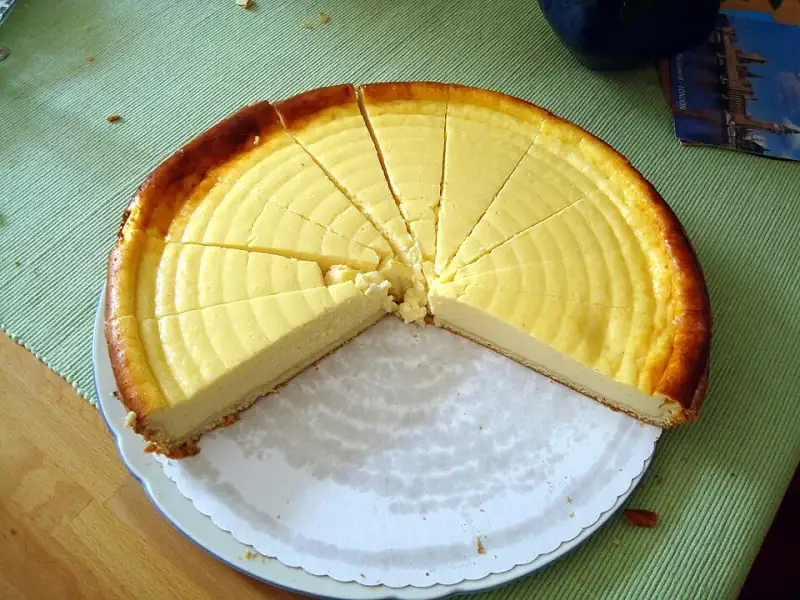
- Hans Müller
- 15 Jun, 2026 10:00
Die ultimative Geschichte und Kunst des Käsekuchens: Eine kulinarische Reise
Die ultimative Geschichte und Kunst des Käsekuchens: Eine kulinarische Reise durch die Jahrtausende Es gibt nur wenige Dinge auf dieser Welt, die eine derart universelle Anziehungskraft besitzen wie ein frisch gebackener Käsekuchen. Wenn der süße, leicht säuerliche Duft von gebackenem Quark, feiner Vanille und einem Hauch von Zitrone durch das Haus zieht, werden unweigerlich Kindheitserinnerungen wach. Man denkt an sonntägliche Nachmittage bei den Großeltern, an liebevoll gedeckte Kaffeetafeln und an das wohlige Gefühl der Geborgenheit, das nur ein perfektes Stück Kuchen vermitteln kann. Doch was genau ist es, das den Käsekuchen zu einem solch zeitlosen Klassiker macht? Ist es die cremige Textur, die auf der Zunge zergeht? Ist es der mürbe Boden, der einen herrlichen Kontrast zur weichen Füllung bildet? Oder ist es vielleicht die unglaubliche Vielseitigkeit, die dieses Gebäck im Laufe der Jahrhunderte entwickelt hat? In diesem umfassenden Essay möchte ich, Hans Müller, Sie auf eine faszinierende Reise durch die Zeit und um den Globus mitnehmen. Wir werden die antiken Wurzeln dieses Backwerks ergründen, seine Evolution durch verschiedene Kulturen verfolgen und schließlich die Geheimnisse lüften, die hinter dem perfekten, rissfreien und himmlisch leckeren Käsekuchen stecken. Machen Sie sich bereit für eine geschmackliche und historische Expedition, die Ihre Liebe für dieses Dessert – und Ihr Wissen darüber – auf eine völlig neue Ebene heben wird. #KäsekuchenLiebe #Backkunst #Genuss Kapitel 1: Die antiken Wurzeln – Von den griechischen Göttern bis ins Römische Reich Wenn wir heute in ein cremiges Stück New York Cheesecake oder einen klassischen deutschen Käsekuchen mit Quark beißen, machen wir uns selten Gedanken darüber, dass wir eine Tradition fortsetzen, die Jahrtausende alt ist. Die Geschichte des Käsekuchens beginnt nicht, wie man vielleicht vermuten könnte, in einer modernen europäischen oder amerikanischen Bäckerei, sondern im antiken Griechenland. Bereits lange vor unserer Zeitrechnung verstanden die Griechen die Kunst, aus Milch, Käse und Honig nahrhafte und schmackhafte Speisen zuzubereiten. Es wird weithin angenommen, dass der erste Käsekuchen auf der griechischen Insel Samos entstand. Physische Beweise in Form von Käseformen wurden von Archäologen gefunden und auf das Jahr 2000 vor Christus datiert. Diese frühen "Käsekuchen" waren allerdings weit entfernt von dem raffinierten Gebäck, das wir heute kennen. Sie bestanden zumeist aus einer einfachen, aber energiereichen Mischung aus gestampftem Käse, Weizenmehl und Honig, die zu kleinen Patties geformt und gebacken wurden. Interessanterweise galt der Käsekuchen in der Antike als exzellente Energiequelle. Es ist historisch belegt, dass während der ersten Olympischen Spiele im Jahr 776 vor Christus den Athleten Käsekuchen gereicht wurde, um ihnen Kraft für ihre Wettkämpfe zu geben. Der Käsekuchen war also quasi der antike Vorläufer des modernen Energy-Riegels! Aber er war nicht nur Nahrung für Sportler; er war auch ein fester Bestandteil von Hochzeitszeremonien und ein beliebtes Opfergewächs für die Götter. Der Respekt und die Liebe der Griechen zum Käsekuchen gingen sogar so weit, dass der Arzt Aegimus im 5. Jahrhundert vor Christus ein ganzes Buch über die Kunst der Käsekuchenzubereitung verfasste – ein Werk, das die Bedeutung dieses Gerichts in der antiken Kultur unterstreicht. #CheesecakeHistory #AntikeKüche Mit der Ausweitung des Römischen Reiches und der Eroberung Griechenlands adaptierten die Römer viele kulturelle und kulinarische Errungenschaften der Griechen, darunter auch das Rezept für den Käsekuchen. Die Römer verfeinerten die Zubereitung, indem sie Eier hinzufügten und den Kuchen heiß servierten. Sie kreierten verschiedene Variationen, die sie libum, savillum und placenta nannten. Das libum war ein kleiner, süßer Kuchen, der oft als Opfergabe an die Hausgötter in den Tempeln verwendet wurde. Das placenta hingegen ähnelte schon eher einem modernen Kuchen; es bestand aus einem Teigboden, auf dem eine Schicht aus Käse und Honig platziert wurde, und wurde oftmals mit Lorbeerblättern aromatisiert. Marcus Porcius Cato, besser bekannt als Cato der Ältere, überlieferte uns im 2. Jahrhundert vor Christus in seinem Werk De agri cultura das älteste erhaltene römische Rezept für libum. Die römische Expansion sorgte schließlich dafür, dass das Konzept des Käsekuchens über ganz Europa bis nach Britannien verbreitet wurde. Kapitel 2: Das Mittelalter und die Reise durch Europa Nach dem Fall des Römischen Reiches entwickelte sich Europa in viele verschiedene kulturelle und kulinarische Richtungen. Doch die Idee, Käse in gebackenen Desserts zu verwenden, blieb bestehen und passte sich den regional verfügbaren Zutaten an. Im Mittelalter begann der Käsekuchen, langsam die Formen anzunehmen, die wir in der heutigen europäischen Küche wiedererkennen. In England finden sich Aufzeichnungen aus dem Jahr 1390 im Kochbuch Forme of Cury, das von den Meisterköchen von König Richard II. verfasst wurde. Dort wird eine Tarte beschrieben, die aus einer Mischung von Käse, Eiern, und Gewürzen in einem Teigmantel gebacken wurde. Zu dieser Zeit wurden Käsekuchen oft als "Tartys in Applis" oder ähnliche Variationen bezeichnet, bei denen der Käse mit Früchten, Nüssen und exotischen Gewürzen wie Safran und Muskatnuss vermischt wurde, die durch den wachsenden Handel mit dem Orient in Europa verfügbar wurden. Im Laufe der Jahrhunderte begann fast jede europäische Nation, ihre eigene Version des Käsekuchens zu entwickeln, stark geprägt von der Art des Käses, der in der jeweiligen Region produziert wurde. In Italien wurde Ricotta zur Basis des Kuchens, was zu einer leichten, oft zitronigen und trockeneren Textur führte. In Frankreich hingegen präferierte man cremigen Neufchâtel-Käse, der dem Gebäck eine unvergleichliche Fülle und Eleganz verlieh. #Backgeschichte #KulturKulinarik In den osteuropäischen Ländern entwickelte sich der Sernik, ein polnischer Käsekuchen, der traditionell aus Tworóg, einem trockenen, körnigen Frischkäse, hergestellt wird. Dieser Kuchen ist oft fester in der Konsistenz und wird gerne mit Rosinen, Orangeat oder einer Schokoladenglasur verfeinert. All diese regionalen Unterschiede zeigen, wie anpassungsfähig und vielseitig das Grundkonzept des Käsekuchens ist. Es ist ein Gericht, das die Seele der jeweiligen regionalen Molkereiprodukte und landwirtschaftlichen Traditionen einfängt. Kapitel 3: Der Stolz der deutschen Backkunst – Der Käsekuchen mit Quark Für uns im deutschsprachigen Raum ist der Käsekuchen nicht einfach nur ein Dessert – er ist eine Institution. Wenn man hierzulande von Käsekuchen spricht, meint man fast immer die Variante, die mit Quark (oft Speisequark oder Schichtkäse) hergestellt wird. Der deutsche Käsekuchen unterscheidet sich in Geschmack, Textur und Zubereitung grundlegend von seinen internationalen Verwandten und verdient eine eingehende Betrachtung. #DeutscherKäsekuchen #QuarkMachtStark Der traditionelle deutsche Käsekuchen basiert auf einem knusprigen Mürbeteig, der nicht nur den Boden, sondern oft auch den Rand der Springform auskleidet. Dieser Teig, bestehend aus Mehl, Butter, Zucker und gelegentlich einem Ei, bildet das stabile Fundament für die saftige Füllung. Die Füllung selbst ist ein Meisterwerk der Balance. Der Quark verleiht dem Kuchen eine ausgeprägte, erfrischende Säure, die verhindert, dass das Gebäck zu süß oder zu schwer wird. Um der Füllung Standhaftigkeit und eine fluffige Textur zu verleihen, werden Eier getrennt. Das Eigelb wird mit Quark, Zucker, etwas Butter, einem Hauch Vanille und oft der abgeriebenen Schale einer unbehandelten Zitrone glattgerührt. Das Eiweiß hingegen wird zu einem festen Eischnee geschlagen und vorsichtig unter die Quarkmasse gehoben. Dieser entscheidende Schritt ist es, der dem deutschen Käsekuchen seine charakteristische Leichtigkeit und sein herrliches Volumen im Ofen verleiht, selbst wenn er nach dem Backen beim Abkühlen oft ein wenig zusammensinkt – ein Phänomen, das so typisch ist, dass es fast als Qualitätsmerkmal gilt. Variationen dieses Klassikers gibt es in Deutschland wie Sand am Meer. Im Süden Deutschlands findet man oft Rezepte, bei denen Rosinen in die Quarkmasse gerührt werden, manchmal vorher in Rum eingelegt, um eine zusätzliche Geschmacksdimension zu schaffen. In anderen Regionen wird frisches Obst wie Mandarinen, Kirschen oder Pfirsiche in den Kuchen eingearbeitet. Dann gibt es den berühmten Zupfkuchen, eine geniale Kombination aus russischem Schokoladenteig und deutscher Quarkfüllung, bei der dunkle Teigfetzen (das "Gezupfte") malerisch auf der hellen Füllung verteilt werden und so für eine unwiderstehliche Optik sorgen. Der deutsche Käsekuchen ist mehr als nur ein Rezept; er ist ein zentraler Bestandteil der Kaffeekultur. Das nachmittägliche Ritual "Kaffee und Kuchen", das in Deutschland zelebriert wird, wäre ohne einen ordentlichen Käsekuchen kaum denkbar. Er ist rustikal, bodenständig, aber gleichzeitig unglaublich befriedigend und tief verwurzelt in der kulinarischen Identität der Nation. #KaffeeUndKuchen #TraditionBauen Kapitel 4: Die amerikanische Revolution – Frischkäse, William Lawrence und der New York Style Während sich in Europa der Käsekuchen rund um Quark und Ricotta entwickelte, schlug die Geschichte dieses Gebäcks auf der anderen Seite des Atlantiks ein völlig neues, cremiges Kapitel auf. Die amerikanische Käsekuchen-Revolution ist eng mit einer ganz bestimmten Zutat verbunden: dem modernen Frischkäse (Cream Cheese). Die Geschichte des Cream Cheese ist ein faszinierendes Beispiel für eine glückliche "Fehlentwicklung". Im Jahr 1872 versuchte ein amerikanischer Molkereibesitzer namens William Lawrence im Bundesstaat New York, den französischen Neufchâtel-Käse nachzumachen. Lawrence experimentierte mit der Zugabe von schwerer Sahne zum traditionellen Rezept. Das Resultat war kein französischer Weichkäse, sondern ein unheimlich reichhaltiger, ungreifter Frischkäse mit einer seidigen Textur, die sich als perfekt für die Kuchenherstellung erweisen sollte. Lawrence begann, diesen Käse in Folie verpackt unter dem Namen "Philadelphia Cream Cheese" zu vertreiben – ein Name, der bis heute Synonym für diese Käseart ist. Mit der Verfügbarkeit dieses neuen Frischkäses begann die Transformation des amerikanischen Käsekuchens. Anstelle der leichten Säure des Quarks trat die dichte, buttrige Reichhaltigkeit des Cream Cheese. Der unangefochtene König dieser neuen Ära ist der New York Cheesecake. #NewYorkCheesecake #CreamCheese Der Legende nach war es Arnold Reuben, ein deutsch-jüdischer Einwanderer und Besitzer des berühmten Turf Restaurants in New York City (der auch den Reuben Sandwich erfunden haben soll), der in den 1920er Jahren den echten New York Style Cheesecake kreierte. Er war auf einer Dinnerparty, kostete einen Käsekuchen und war davon so fasziniert, dass er das Rezept modifizierte, indem er den Frischkäse zum Hauptdarsteller machte. Was den New York Cheesecake auszeichnet, ist seine extreme Dichte und Reichhaltigkeit. Er kommt ohne Füllstoffe wie Mehl oder Speisestärke aus (oder verwendet sie nur in sehr geringen Mengen). Die Füllung besteht primär aus Unmengen an Vollfett-Frischkäse, Zucker, Eiern, schwerer Sahne oder saurer Sahne, und einem Hauch Vanille oder Zitrone. Der Boden ist traditionell kein Mürbeteig, sondern eine Schicht aus zerstoßenen Graham Crackern (eine Art amerikanischer Vollkornkeks), die mit zerlassener Butter und etwas Zucker vermischt und am Boden der Springform festgedrückt wird. Das Backen eines New York Cheesecakes ist eine Kunst für sich. Um die unglaublich glatte, fast schon cremige Konsistenz zu erreichen, wird der Kuchen oft in einem Wasserbad (Bain-Marie) gebacken. Die hohe Luftfeuchtigkeit im Ofen und die sanfte, indirekte Hitze verhindern, dass die Ränder zu schnell garen, während die Mitte noch flüssig ist. Das Ergebnis ist ein Dessert von solcher Intensität, dass oft schon ein kleines Stück ausreicht, um in den absoluten Geschmackshimmel aufzusteigen. Kapitel 5: Eine Weltreise des Geschmacks – Von San Sebastian bis Tokyo Die Evolution des Käsekuchens ist nie stehen geblieben. Im späten 20. und frühen 21. Jahrhundert haben wir eine Globalisierung der Backkunst erlebt, die sensationelle neue Variationen dieses Klassikers hervorgebracht hat. Wenn wir unseren Blick heute über die Landesgrenzen schweifen lassen, entdecken wir eine unglaubliche Vielfalt, die die Kreativität von Bäckern auf der ganzen Welt demonstriert. #FoodPorn #BakingAroundTheWorld Der Basque Burnt Cheesecake Einer der spektakulärsten kulinarischen Exporte der letzten Jahrzehnte ist der Basque Burnt Cheesecake, auch bekannt als Tarta de Queso, der in den 1990er Jahren in der Bar La Viña in San Sebastian, Spanien, kreiert wurde. Dieser Kuchen stellt quasi alle Regeln des traditionellen Käsekuchenbackens auf den Kopf. Während man beim New York Style verzweifelt versucht, jede noch so kleine Bräunung oder Rissbildung zu vermeiden, wird der baskische Käsekuchen bei extremer Hitze (oft bei 220°C oder mehr) gebacken. Das Ziel ist es, die Oberfläche absichtlich zu karamellisieren, ja fast schon kontrolliert verbrennen zu lassen. Diese dunkle, bittere und rauchige Kruste bildet einen dramatischen Kontrast zu dem unglaublich weichen, fast flüssigen und extrem cremigen Inneren. Der Basque Cheesecake hat keinen Boden; der Teig wird einfach in eine mit zerknülltem Backpapier ausgelegte Form gegossen, was dem Kuchen sein charakteristisches, rustikales Aussehen verleiht. Er ist das perfekte Beispiel für die Schönheit der Unvollkommenheit in der Küche. #BasqueCheesecake #SanSebastian Der Japanese Cotton Cheesecake Gänzlich anders, aber nicht weniger beeindruckend, ist der Japanese Cotton Cheesecake (japanischer Baumwoll-Käsekuchen). Dieser Kuchen ist die Antithese zur schweren Dichte des New York Styles. Er ähnelt mehr einem Soufflé als einem klassischen Kuchen. Um diese unvergleichlich luftige und wackelige Konsistenz zu erreichen, werden die Eier getrennt und das Eiweiß zu einer steifen Meringue geschlagen, bevor es extrem vorsichtig unter eine warme Masse aus Frischkäse, Butter und Milch gehoben wird. Der Kuchen wird streng im Wasserbad bei niedrigerer Temperatur gebacken, wodurch er wunderbar aufgeht und eine Textur entwickelt, die buchstäblich im Mund schmilzt. Das Geräusch, wenn man in einen frisch gebackenen japanischen Käsekuchen schneidet – ein leises, knisterndes "Pssss" –, ist unter Backenthusiasten legendär. #JapaneseCheesecake #FluffyCake Italienischer Ricotta-Käsekuchen und mehr Vergessen wir nicht die italienischen Variationen, die oft auf Ricotta basieren und mit Pinienkernen, kandierten Früchten oder einem Hauch von Orangenblütenwasser verfeinert werden. Sie sind weniger fettig als ihre amerikanischen Gegenstücke und besitzen eine leicht körnige Textur, die von Feinschmeckern sehr geschätzt wird. Und dann gibt es da noch moderne vegane Variationen, die auf Cashewnüssen oder Seidentofu basieren und beweisen, dass der Geist des Käsekuchens nicht an tierische Produkte gebunden ist. Kapitel 6: Die Wissenschaft und Kunst – Wie man den perfekten Käsekuchen backt Als leidenschaftlicher Bäcker, der unzählige Stunden in der Küche verbracht hat, kann ich Ihnen versichern: Käsekuchen backen ist keine bloße Tätigkeit, es ist eine Alchemie. Es ist die perfekte Verschmelzung von Kunst und Wissenschaft. Obwohl die Zutaten meist simpel sind, liegt das Geheimnis im Prozess. Hier sind die fundamentalen Regeln, die Sie beachten müssen, wenn Sie den perfekten Käsekuchen erschaffen wollen, der nicht reißt, nicht zusammenfällt und eine Textur wie Samt besitzt. #BackTipps #KäsekuchenPerfektion 1. Die goldene Regel der Temperatur Das vielleicht größte Geheimnis für eine perfekte Textur ist, dass alle Zutaten – insbesondere der Frischkäse oder Quark und die Eier – Zimmertemperatur haben müssen. Kalter Frischkäse lässt sich nicht klümpchenfrei verrühren. Wenn man kalten Käse schlägt, neigt man dazu, ihn zu überschlagen, was bedeutet, dass man zu viel Luft in die Masse einarbeitet. Beim Backen dehnt sich diese Luft aus und lässt den Kuchen wie einen Ballon aufblähen, der beim Abkühlen unweigerlich kollabiert und tiefe Risse bildet. 2. Behutsames Rühren Anders als bei einem Biskuitteig, in den man viel Luft einschlagen möchte, gilt beim Käsekuchen (mit Ausnahme der soufflierten Varianten wie dem deutschen oder japanischen) die Devise: So viel rühren wie nötig, so wenig wie möglich. Sobald die Eier in der Masse sind, sollte nur noch auf niedrigster Stufe gerührt werden, gerade so lange, bis sie integriert sind. 3. Das Wasserbad (Bain-Marie) Für amerikanische Frischkäsekuchen ist das Wasserbad essenziell. Käsekuchen ist im Grunde kein Kuchen, sondern ein gebackener Pudding (Custard). Das Wasserbad sorgt dafür, dass die Temperatur um den Kuchen herum niemals 100°C übersteigt. Diese sanfte, gleichmäßige Hitze verhindert, dass die Proteine in den Eiern zu schnell gerinnen. Das Ergebnis ist eine samtige Füllung ohne körnige Textur und ohne übermäßig gebräunte Ränder. Um ein Durchweichen des Bodens zu verhindern, muss die Springform sorgfältig mit mehreren Schichten extrabreiter Aluminiumfolie abgedichtet werden. 4. Der Rüttel-Test und langsames Abkühlen Einer der häufigsten Fehler ist es, den Kuchen zu lange zu backen. Ein Käsekuchen ist fertig, wenn der Rand fest ist, aber die Mitte (etwa die inneren 5-7 Zentimeter) beim leichten Rütteln der Form noch wackelt wie Wackelpudding. Er zieht durch die Resthitze beim Abkühlen noch nach. Und apropos Abkühlen: Dies ist der kritischste Moment! Der drastische Temperatursturz vom heißen Ofen in die kühle Küche verursacht Risse. Lassen Sie den Kuchen stattdessen für eine Stunde im ausgeschalteten Ofen mit leicht geöffneter Tür (klemmen Sie einfach einen Holzlöffel dazwischen) abkühlen. Danach sollte er bei Raumtemperatur vollständig auskühlen, bevor er für mindestens 12 Stunden in den Kühlschrank wandert, um seine endgültige Konsistenz zu erreichen. Fazit: Mehr als nur ein Dessert Wenn wir die epische Reise des Käsekuchens von den antiken Ritualen auf griechischen Inseln über die Mittelalter-Tafeln Englands bis hin zu den geschäftigen Delis in New York City und den trendigen Bäckereien Tokios betrachten, wird eines überdeutlich: Der Käsekuchen ist ein kulinarisches Chamäleon. Er passt sich an, er entwickelt sich weiter, und doch behält er stets seinen fundamentalen Charakter, der uns so ungemein tröstet und erfreut. Egal, ob Sie den frischen, säuerlichen Geschmack eines traditionellen deutschen Quark-Käsekuchens bevorzugen, der Sie an die Küche Ihrer Großmutter erinnert, oder ob Sie der sündhaften Cremigkeit eines echten New York Cheesecakes verfallen sind – in jedem Stück steckt ein Stück Kulturgeschichte. Das Backen eines Käsekuchens ist eine Lektion in Geduld und Sorgfalt, und das Teilen eines Käsekuchens ist ein universeller Akt der Zuneigung. Ich hoffe, dieser tiefe Einblick in die Geschichte und die Technik dieses wundervollen Gebäcks inspiriert Sie dazu, selbst in die Küche zu gehen, die Zutaten auf Zimmertemperatur kommen zu lassen und Ihr eigenes Stück Kuchengeschichte zu backen. Denn am Ende des Tages gibt es wenige Probleme auf dieser Welt, die sich nicht mit einem guten Stück Käsekuchen, einer Tasse Kaffee und einem netten Gespräch zumindest für einen Moment vergessen ließen. Guten Appetit! #Genussmoment #BakingLove Von Hans Müller – Geschrieben mit Hingabe, Butter und viel Quark. #Ksekuchen #Cheesecake #Backkunst #Rezepte Related InsightsDie Magie des Sauerteigbrots: Eine tiefgehende Reise in das traditionelle Backhandwerk Der Bienenstich: Ein himmlischer Genuss mit geschichtlichen Wurzeln und süßen Geheimnissen{ "@context": "https://schema.org", "@type": "FAQPage", "mainEntity": [ { "@type": "Question", "name": "What is the main focus of Die ultimative Geschichte und Kunst des Käsekuchens: Eine kulinarische Reise?", "acceptedAnswer": { "@type": "Answer", "text": "Eine tiefgehende Reise durch die Geschichte des Käsekuchens, von den antiken Griechen bis zum modernen New York Cheesecake, inklusive der Geheimnisse des deutschen Quark-Käsekuchens." } }, { "@type": "Question", "name": "Who authored the comprehensive guide on Die ultimative Geschichte und Kunst des Käsekuchens: Eine kulinarische Reise?", "acceptedAnswer": { "@type": "Answer", "text": "This detailed article and its insights were carefully researched and authored by Hans Müller." } }, { "@type": "Question", "name": "Where can I find more related content about Backen?", "acceptedAnswer": { "@type": "Answer", "text": "You can explore more articles, detailed reviews, and similar insights by browsing the Related Insights section at the bottom of this article or visiting our dedicated Backen category page." } } ] }

- Hans Müller
- 15 Jun, 2026 10:00
Die majestätische Schwarzwälder Kirschtorte: Eine kulinarische Reise durch Geschichte, Mythos, Handwerk und vollendeten Geschmack
Die majestätische Schwarzwälder Kirschtorte: Eine kulinarische Reise durch Geschichte, Mythos, Handwerk und vollendeten Geschmack Es gibt auf der ganzen Welt nur sehr wenige Desserts, Backwaren oder Süßspeisen, die eine derart ikonische, unverkennbare und fast schon mythische Stellung erreicht haben wie die Schwarzwälder Kirschtorte. Sie ist weit mehr als nur ein einfaches Stück Kuchen für den sonntäglichen Kaffeetisch. Sie ist ein stolzes Meisterwerk der klassischen Pâtisserie, ein globales Symbol für deutsche Backkunst, für Behaglichkeit, Tradition und absolute handwerkliche Perfektion. Wenn man an einem verregneten oder verschneiten Nachmittag ein traditionelles Café betritt, den wohligen Duft von frisch gebrühtem, starkem Filterkaffee in der Nase hat und in der hell erleuchteten Vitrine dieses prächtige, imposante Kunstwerk aus dunkelbraunem, fast schwarzem Schokoladenbiskuit, schneeweißer, fluffiger Sahne, leuchtend dunkelroten Kirschen und feinen, zarten Schokoladenraspeln erblickt, dann weiß man tief im Inneren: Hier wartet ein Moment des reinen, unverfälschten kulinarischen Glücks. #SchwarzwälderKirschtorte #Kuchenspezialität Die Faszination für dieses Gebäck geht jedoch weit über den reinen, unbestreitbar grandiosen Geschmack hinaus. Die Schwarzwälder Kirschtorte ist ein tief verwurzeltes Stück europäischer Kulturgeschichte, ein charmanter und mächtiger Botschafter der Region des Schwarzwaldes und ein kulinarisches Phänomen von beispielloser Tragweite, das auf wirklich allen Kontinenten unserer Erde treue und passionierte Liebhaber gefunden hat. In diesem umfassenden, detaillierten Essay werden wir uns auf eine ausgedehnte Reise begeben. Eine Reise, die uns von den tiefen, nebligen Tälern des deutschen Schwarzwaldes über die lebhaften, vom Jazz erfüllten Cafés der 1910er und 1920er Jahre bis hin zu den experimentellen und modernen Sterneküchen der heutigen Zeit führt. Wir werden die gut gehüteten Geheimnisse ihrer wertvollen Zutaten entschlüsseln, die faszinierenden Mythen um ihre tatsächliche Entstehung genau beleuchten und verstehen lernen, warum gerade diese spezifische, meisterhaft ausbalancierte Kombination aus süß, sauer, herb und cremig die Menschen seit nunmehr über einem Jahrhundert ununterbrochen in ihren Bann zieht. #Genussmomente #Kulturgeschichte Die Anatomie eines kulinarischen Meisterwerks: Ein Spiel der Texturen und Aromen Um die Magie der Schwarzwälder Kirschtorte wirklich zu begreifen, muss man sie zunächst mit dem Auge und dem Verstand in ihre Einzelteile zerlegen. Wie bei einer klassischen Sinfonie, in der jedes noch so kleine Instrument eine wesentliche, tragende Rolle für die Harmonie spielt, ist auch hier jede Zutat unverzichtbar für das vollendete Gesamtkunstwerk. Fehlt eine Komponente oder ist sie von minderwertiger Qualität, bricht das gesamte Gefüge in sich zusammen. Die Basis und das Fundament bildet der dunkle Schokoladenbiskuit. Er darf auf keinen Fall zu süß konzipiert sein, denn er muss den herben, erdigen Kontrapunkt zu den sehr fruchtigen und cremigen Elementen des Aufbaus bilden. Ein perfekter Biskuitteig für diese Torte ist extrem luftig, leicht, elastisch und fungiert physikalisch wie ein feiner Schwamm, der förmlich darauf wartet, die kostbaren, aromatischen Flüssigkeiten aufzusaugen, die ihm im weiteren Herstellungsprozess zugeführt werden. Die Verwendung von außergewöhnlich hochwertigem, ungesüßtem Kakaopulver verleiht ihm eine tiefe, komplexe und leicht bittere Note, die dem Gebäck Schwere und Ernsthaftigkeit verleiht. #Backkunst #Schokolade Darauf folgt die Fruchtkomponente, die für den Frischekick sorgt: Die Kirschen. Hier greift der wahre Meister nicht zu irgendwelchen banalen, süßen Früchten aus der Dose, sondern idealerweise zu frischen oder sorgfältig eingeweckten Schattenmorellen. Diese leicht säuerlichen Sauerkirschen bringen jene entscheidende, vibrierende Frische und Fruchtigkeit mit, die die opulente Schwere der Sahne und die Dichte der Schokolade durchbricht. Sie werden oft in ihrem eigenen Saft mit etwas Stärke leicht angedickt, sodass sie eine samtige, fast schon marmeladenartige, glänzende Konsistenz erhalten, die sich sanft an den dunklen Biskuit schmiegt, ohne ihn jedoch aufzuweichen oder matschig zu machen. Das absolute Herzstück und gleichzeitig die unsterbliche Seele der Torte ist das Schwarzwälder Kirschwasser. Dies ist bei weitem kein gewöhnlicher, billiger Alkohol, sondern ein hochprozentiges, edles Destillat, das in traditionellen Kupferkesseln aus speziellen, regionalen Schwarzwälder Brennkirschen gebrannt wird. Es verleiht der gesamten Torte jene unverwechselbare, feurig-scharfe und gleichzeitig leicht mandelartige, ätherische Note, die sie von einem simplen, harmlosen Kindergeburtstagskuchen in ein höchst anspruchsvolles, tiefgründiges Dessert für Erwachsene verwandelt. Der Biskuitboden wird nach dem Erkalten großzügig und mit viel Respekt für das Produkt mit diesem Lebenswasser getränkt. #Kirschwasser #Aroma Die frisch aufgeschlagene Sahne fungiert als das bindende, verbindende und weichzeichnende Element in dieser Komposition. Sie bringt eine milde, milchige, unaufdringliche Süße und eine unglaubliche, fast schwerelose Leichtigkeit in das massive Gefüge. Ohne sie wäre die Torte aromatisch zu intensiv, zu scharf und zu schwer. Die Sahne hüllt alle anderen Aromen wie eine weiche Decke ein, mildert die aggressive Säure der Kirschen und den beißenden Alkohol des Kirschwassers ab und sorgt für jenes luxuriös schmelzende, cremige Mundgefühl, das wir an klassischen Torten so sehr lieben und schätzen. Den krönenden Abschluss, sozusagen die Kirsche auf der Torte (in diesem Fall im wahrsten Sinne des Wortes), bilden die handgehobelten Schokoladenraspeln. Sie sind keineswegs nur bloße Dekoration für das Auge, sondern bringen eine zarte, fragile Textur, einen ganz leichten Knackpunkt, der beim Kauen für Spannung und Abwechslung sorgt. Zusammen mit den kunstvoll aufgesetzten, makellosen ganzen Kirschen, die auf gleichmäßigen, aus dem Spritzbeutel geformten cremigen Sahnerosetten ruhen, ergeben sie das weltberühmte, majestätische Erscheinungsbild der Torte. #Pâtisserie #FoodPorn Der historische Ursprung: Wer hat dieses Genie-Werk wirklich erfunden? Wie bei vielen wahrhaft großen und weltberühmten kulinarischen Erfindungen (man denke an die Pizza Margherita, den Hamburger oder die Sachertorte) gibt es auch bei der Schwarzwälder Kirschtorte keine absolut eindeutige, von allen Historikern unwiderlegbare Geburtsurkunde. Ihre Entstehung ist von zahllosen Mythen, charmanten Legenden und zum Teil erbittert geführten, konkurrierenden Ansprüchen umrankt. Der wohl bekannteste, am meisten zitierte und oft als offiziell anerkannte Anspruch auf die alleinige Erfindung der Torte kommt von dem ambitionierten Konditormeister Josef Keller (1887–1981). Keller behauptete zeitlebens mit großem Stolz, die Torte im Frühjahr des Jahres 1915 erfunden zu haben, als er als junger Pâtissier im damals sehr renommierten Café Agner im rheinischen Bad Godesberg – einer Stadt, die interessanterweise geografisch weit entfernt vom eigentlichen Schwarzwald liegt – arbeitete. Seine persönliche Version der Geschichte besagt, dass er der allererste war, der frische Kirschen, aufgeschlagene Sahne und dunkle Schokolade mit dem hochprozentigen Kirschwasser in einem einzigen, geschichteten Gebäck kombinierte. Kellers Originalrezept, das bis heute von puristischen Bäckern verehrt wird, enthielt zudem einen dünnen, krossen Mürbeteigboden, der heute noch oft und gerne als unterster, stabilisierender Boden unter dem ersten Biskuit verwendet wird, um der feuchten Torte Standfestigkeit zu verleihen. Sein detailliertes Rezept wurde 1927 zum ersten Mal in geschriebener Form an Auszubildende weitergegeben und hat bis heute zahllose, treue Anhänger. #JosefKeller #Erfindergedanke Eine andere, aus historischer und regionaler Sicht jedoch fast ebenso überzeugende und faszinierende Theorie führt uns direkt in den malerischen Süden Deutschlands, an den Rand des Schwarzwaldes. Der renommierte Tübinger Stadtarchivar Udo Rauch argumentierte vor einigen Jahren nach intensiven Archivrecherchen sehr schlüssig, dass der Konditormeister Erwin Hildenbrand die Torte erst etwas später, nämlich im Frühjahr 1930, im Café Walz in der schwäbischen Universitätsstadt Tübingen kreierte. Hildenbrand hatte zuvor eine lange Zeit direkt im Schwarzwald gearbeitet und war dort tiefgreifend mit den regionalen Spezialitäten, insbesondere dem Obstbau und der Schnapsbrennerei, vertraut geworden. Tübingen gehörte in der damaligen Zeit genau zu dem gastronomischen Einzugsgebiet, in dem hervorragendes Schwarzwälder Kirschwasser sehr weit verbreitet und geschätzt war. Diese geografische und kulturelle Nähe zum Produkt macht Hildenbrands Anspruch für viele Lokalhistoriker und Gastronomiekritiker extrem plausibel und nachvollziehbar. Eine weitere, sehr spannende soziokulturelle Erklärung leitet den tatsächlichen Ursprung gar nicht von der genialen Eingebung einer einzelnen Person ab, sondern sieht die Torte als logische Evolution einer historischen Nachspeise aus der bäuerlichen Tradition der Schwarzwaldregion. Im 19. Jahrhundert war es auf den Bauernhöfen im tiefen Schwarzwald weithin üblich, an Festtagen stark eingekochte Schattenmorellen mit frischem, fettem Rahm und einem kräftigen Schuss selbstgebranntem Kirschwasser als einfaches, löffelbares Dessert in Schalen zu servieren. Die heutige Schwarzwälder Kirschtorte wäre demnach lediglich die konsequente Weiterentwicklung, Veredelung und bürgerliche Urbanisierung dieser traditionellen, rustikalen Speise durch geschickte, in Städten arbeitende Konditoren, die diesem einfachen bäuerlichen Gericht durch den anspruchsvollen Schokoladenbiskuit und die kunstvolle Dekoration eine repräsentative, städtische und kaffehaustaugliche Form gaben. #Traditionsküche #Historie Der mysteriöse Name und die Symbolik des Bollenhuts: Ein starkes visuelles Statement Woher genau der weltbekannte Name "Schwarzwälder Kirschtorte" stammt, ist ebenso Teil vieler hitziger Diskussionen am Kaffeetisch. Es gibt in der Folklore und der Etymologie im Wesentlichen drei Haupttheorien, die alle ihren ganz eigenen, unwiderstehlichen Charme haben. Die pragmatischste und naheliegendste Theorie bezieht sich direkt auf die wichtigste, unersetzliche und absolut charaktergebende Zutat: das Schwarzwälder Kirschwasser. Da dieses spezielle Destillat nach strengen Vorgaben zwingend aus dem Schwarzwald stammen muss und der gesamten Torte ihren unverkennbaren, berauschenden Geschmack verleiht, wurde die Torte kurzerhand nach dieser flüssigen Schlüsselzutat benannt. Diese Namensgebung nach der alkoholischen Basis ist in der Geschichte der Desserts nicht unüblich. Eine zweite, sehr romantische, heimatverbundene und visuell äußerst ansprechende Theorie zieht direkte Parallelen zur berühmtesten traditionellen Tracht des Schwarzwaldes, dem weltweit bekannten Bollenhut. Dieser markante, große Hut, der traditionell von unverheirateten Frauen in nur drei spezifischen Tälern des Schwarzwaldes (Gutach, Wolfach-Kirnbach und Hornberg-Reichenbach) zu festlichen Anlässen getragen wird, zeichnet sich durch große, leuchtend rote Wollbollen auf einem strahlend weißen, mit feinem Stroh geflochtenen Untergrund aus. Die schneeweißen Sahnerosetten mit den akkurat darauf aufgesetzten roten Kirschen der Torte erinnern visuell geradezu frappierend an dieses markante und auffällige Kleidungsstück. Zudem könnte der dunkle Schokoladenbiskuit und die Raspeln die tiefen, dunklen und dichten Tannenwälder der Region symbolisieren. #Bollenhut #Schwarzwaldliebe Die dritte, etwas prosaischere Theorie besagt, dass die Torte schlichtweg deshalb "Schwarzwälder" genannt wird, weil ihre zerklüftete, dunkle, von tausenden kleinen Schokoladenraspeln bedeckte Oberfläche optisch stark an die dunklen, unzugänglichen und fast mystischen Wälder des echten Schwarzwaldes an einem schattigen Tag erinnert. Welche dieser drei Theorien letztendlich auch den wahren Kern der Geschichte trifft, steht wohl für immer in den Sternen. Fest steht jedoch, dass die Torte und die mystische Region des Schwarzwaldes in der kollektiven Vorstellung der Welt untrennbar zu einer Einheit verschmolzen sind. #Wanderlust #Heimat Das strenge deutsche Lebensmittelrecht und die Torte: Klare Regeln für perfekten Genuss In der Bundesrepublik Deutschland nimmt man seine traditionellen Backwaren und die Handwerkskunst sehr ernst. So ernst tatsächlich, dass es hochoffizielle, behördliche Richtlinien gibt, die exakt und unmissverständlich definieren, was als Schwarzwälder Kirschtorte hergestellt und verkauft werden darf und was bei Zuwiderhandlung als Verbrauchertäuschung gilt. Das ehrwürdige "Deutsche Lebensmittelbuch", in dem die Leitsätze für feine Backwaren penibel festgehalten sind, hat eine sehr klare, juristisch bindende Definition für dieses kulinarische Kunstwerk. Laut diesen strengen Leitsätzen muss eine echte Schwarzwälder Kirschtorte zwingend aus ganz bestimmten, klar definierten Elementen bestehen. Dazu gehören helle und/oder dunkle Biskuitböden, eine reichhaltige Füllung aus echten Kirschen und einer spezifischen Kirschwasser-Sahne (oder historisch bedingt Buttercreme, wobei letzteres heute aufgrund der Schwere extrem selten bis gar nicht mehr zu finden ist), sowie ein vollständiger Überzug aus Sahne und echten Schokoladenraspeln. Der wohl absolut wichtigste, strittigste und unverhandelbare Punkt in dieser gesetzlichen Definition ist und bleibt das Kirschwasser. Eine Torte, die kein echtes Kirschwasser enthält, darf in Deutschland unter keinen Umständen offiziell unter dem geschützten Namen "Schwarzwälder Kirschtorte" in den Handel oder in die Gastronomie gebracht werden. Sie muss dann ehrlicherweise, aber weitaus weniger klangvoll als "Kirsch-Sahne-Torte", "Schokoladen-Kirsch-Torte" oder ähnlich profan deklariert werden. Das eingesetzte Schwarzwälder Kirschwasser selbst ist als Produkt ebenfalls streng herkunftsgeschützt (Geografische Herkunftsangabe). Es muss unter sehr spezifischen Bedingungen aus bestimmten Süß- oder Sauerkirschsorten hergestellt werden, die im Schwarzwald oder dem direkten, klimatisch ähnlichen Vorland wachsen. Die anschließende Destillation ist ein aufwendiger, meisterlicher Prozess. Die Kirschen werden hierbei mitsamt ihrem harten Kern eingemaischt und vergoren. Genau dieser Kern ist es, der dem fertigen Schnaps während der Destillation seine charakteristische, leicht an Bittermandel und feines Marzipan erinnernde Note verleiht. Genau dieses komplexe Aroma ist es, das in der innigen Kombination mit der dunklen Schokolade und der fetten Sahne eine geradezu magische, unvergessliche Alchemie im Mund des Genießers erzeugt. #Lebensmittelrecht #Qualitätssicherung Ein beispielloser globaler Siegeszug und skurrile internationale Variationen Ab den späten 1930er Jahren begann der völlig unaufhaltsame Siegeszug der Torte. Sie verbreitete sich wie ein Lauffeuer in den Konditoreien in ganz Deutschland, Österreich und der Schweiz und war in den wirtschaftlichen Boomjahren der 1950er Jahre die wohl mit Abstand bekannteste, beliebteste und am meisten bestellte Torte im gesamten deutschsprachigen Raum. Mit den ersten großen Touristenströmen nach dem Krieg, den Auswanderern und der zunehmenden globalen Vernetzung trat die Torte schließlich ihren triumphalen Weg in die weite Welt an. In den Vereinigten Staaten von Amerika wurde sie als "Black Forest Cake" schnell landesweit berühmt und zu einem Standardrepertoire in vielen Bäckereien. Allerdings passte man sie dort recht schnell den lokalen, oft etwas süßeren Geschmacksgewohnheiten und den strengeren, puritanischeren Gegebenheiten an. Oftmals fehlt in der typisch amerikanischen Version der für Deutsche so essenzielle Alkohol vollständig, um die Torte massen- und vor allem absolut familientauglicher für Kinder zu machen. Statt des herben, starken Kirschwassers wird dort dann bedauerlicherweise oft extrem süßer Kirschsirup, künstliches Kirscharoma oder Vanilleextrakt verwendet. Auch die Sahne ist in den USA oft deutlich süßer, künstlich stabilisiert und massiver aufgeschlagen als in der feinen, leichten deutschen Originalversion. #BlackForestCake #Weltreise Noch weitaus faszinierender, ja fast schon kurios, ist die unabhängige Entwicklung in Skandinavien, insbesondere in Schweden. Wenn man in einem modernen Café in Stockholm eine traditionell klingende "Schwarzwaldtårta" bestellt, bekommt man ein Gebäck serviert, das mit unserem klassisch-deutschen Verständnis der Torte absolut nichts, aber auch gar nichts zu tun hat. Die schwedische Variante dieses Namens besteht überraschenderweise aus mehreren dünnen, knusprigen Schichten Haselnussbaiser (einer Meringue-Masse mit Nüssen), die lediglich mit ungesüßter, reiner Schlagsahne gefüllt und bedeckt sind. Obenauf wird sie großzügig mit großen, quadratischen Schokoladenplatten dekoriert. Keine einzige fruchtige Kirsche und nicht der kleinste Tropfen feuriges Kirschwasser sind in diesem Gebäck zu finden. Der Name entstand in Schweden vermutlich lediglich aufgrund der schokoladigen, rustikalen Dekoration, die schwedische Konditoren wohl an einen wilden, dunklen, unordentlichen Wald erinnerte. #Schwarzwaldtarta #Kulturaustausch Auch in Großbritannien erlebte die "Black Forest Gateau" in den glamourösen 1970er und 1980er Jahren einen wirklich enormen, fast hysterischen Boom. Sie wurde dort in kürzester Zeit zum absoluten Inbegriff des retro-schicken, kontinentalen Desserts und war auf unzähligen feinen Dinnerpartys und in gehobenen Restaurants der absolute, obligatorische Höhepunkt. Nach einer längeren Phase in den 90er Jahren, in der sie plötzlich als klischeehaft und etwas altmodisch, ja fast bieder galt, erlebt sie derzeit – getragen von einer riesigen Welle der kulinarischen Nostalgie und dem starken gesellschaftlichen Trend zu ehrlichen, authentischen, handwerklichen Rezepten – ein fulminantes, hochgelobtes Comeback. #RetroFood #VintageBaking Die pure Wissenschaft der Perfektion: Exklusive Tipps für den ambitionierten Hobbykonditor Eine echte, makellose Schwarzwälder Kirschtorte selbst zu Hause in der heimischen Küche zu backen, ist eine wahre Meisterprüfung für jeden passionierten Heimbäcker. Es erfordert nicht nur viel Liebe zum Detail und Geduld, sondern auch ein sehr profundes, fast physikalisches Verständnis für die ablaufenden Prozesse in der Küche. Der Biskuit, für viele Anfänger oft der erste und schwerste Stolperstein, gelingt am besten, wenn man die frischen Eier und den feinen Zucker über einem sehr sanft warmen Wasserbad extrem schaumig, hell und voluminös aufschlägt, bevor man das sorgfältig gesiebte Mehl, die feine Stärke und das aromatische Kakaopulver mit einem großen Teigschaber äußerst vorsichtig und in großen Bewegungen unterhebt. Der Teig darf auf keinen Fall zu stark oder zu schnell gerührt werden, da sonst die in mühevoller Arbeit eingearbeitete Luft sofort entweicht und der gebackene Boden am Ende extrem kompakt, zäh und fest wird. Ein wirklich guter Schokoladenbiskuit sollte nach dem schonenden Backen leicht federnd und locker sein. Viele alteingesessene Experten raten dringend dazu, den Biskuit bereits am Vortag zu backen und ihn über Nacht ruhen zu lassen. Er hat dann Zeit, sich zu setzen, und lässt sich am nächsten Tag viel besser, gleichmäßiger und vor allem krümelfreier mit einem langen Messer in die drei oder vier notwendigen, dünnen Schichten schneiden. #BackTipps #Handarbeit Die Sahne ist ein weiteres, extrem kritisches Element, das über Triumph oder Desaster entscheidet. Sie muss kalt sein – wirklich eisig kalt. Auch das Rührgefäß und der Schneebesen sollten im Idealfall vor dem Schlagen für einige Zeit im Kühlschrank oder gar im Gefrierfach vorgekühlt werden. Zu langes oder zu schnelles Schlagen führt unweigerlich dazu, dass die wertvolle Sahne ausflockt, grieselig wird und sich im schlimmsten Fall in süße Butter verwandelt. Um die zarte Sahne für den Aufbau der Torte stabil zu halten, insbesondere an warmen, schwülen Sommertagen, empfiehlt sich in der Heimbäckerei die vorsichtige Verwendung von etwas Sahnesteif oder, wie in Profiküchen üblich, von aufgelöster, temperierter Blattgelatine. Das Tränken der Biskuitböden erfordert höchstes Fingerspitzengefühl. Die Böden müssen fühlbar feucht, dürfen aber keineswegs tropfend nass oder durchnässt sein. Die raffinierte Mischung aus dem aromatischen Fruchtsaft der angedickten Kirschen und einem wirklich großzügigen, ehrlichen Schuss echten Kirschwassers bildet hier das perfekte, unvergleichliche Elixier. Beim aufwendigen Schichten der Torte gibt es verschiedene, philosophisch diskutierte Techniken. Die klassischste und optisch ansprechendste Methode sieht vor, dass man auf den ersten, unteren Boden mit einem Spritzbeutel mehrere konzentrische Ringe aus Sahne spritzt und in die leeren Zwischenräume dieser Ringe die abgekühlte Kirschfüllung präzise verteilt. Darauf folgt der nächste feuchte Boden, der wiederum glatt mit Sahne bestrichen wird, und so weiter. Dies erfordert absolute Konzentration, Liebe zur Geometrie und eine sehr ruhige Hand, belohnt den Bäcker und die Gäste beim späteren Anschnitt jedoch mit einem wahrlich spektakulären, architektonisch perfekten Bild, bei dem sich klare, scharf definierte Schichten aus Schwarz, Weiß und Rot zeigen. #Konditorei #Tortenkunst Der Anbau und die Ernte: Die oft vergessene landwirtschaftliche Basis der Perfektion Sehr oft wird bei der andächtigen Betrachtung und dem Genuss der fertigen Torte die harte landwirtschaftliche Arbeit vergessen, die ihre existenziellen, hochwertigen Zutaten überhaupt erst hervorbringt. Die Schattenmorelle (botanisch: Prunus cerasus) ist eine sehr anspruchsvolle, pflegeintensive Frucht. Anders als süße, pralle Herzkirschen, die man im Hochsommer direkt vom Baum nascht, entfalten diese speziellen Sauerkirschen ihr wahres, kulinarisches Potenzial erst bei der professionellen Verarbeitung. Ihre tief dunkle, fast schwarz-purpurrote Farbe und ihr intensiv saurer, kräftiger Geschmack sind das beeindruckende Ergebnis monatelanger, sorgfältiger Pflege und des exakt richtigen Mikroklimas. Im deutschen Schwarzwald und den direkt angrenzenden landwirtschaftlichen Regionen finden diese speziellen Bäume oft absolut ideale, naturbelassene Bedingungen: sehr kalte, schneereiche Winter, die für die wichtige Blütenbildung im Frühjahr zwingend nötig sind, und gemäßigte, nicht zu heiße Sommer. Die Erntezeit im Hochsommer ist ein extrem harter, schweißtreibender und arbeitsintensiver Prozess. Die delikaten Früchte müssen zum exakt richtigen, perfekten Zeitpunkt meist von Hand geerntet werden, um das absolut perfekte, empfindliche Gleichgewicht von natürlichem Fruchtzucker und markanter Säure zu gewährleisten. Auch die speziell für das Kirschwasser verwendeten "Brennkirschen" sind ganz eigene, charakterstarke Sorten. Sie sind rein optisch häufig wesentlich kleiner, dunkler und aromatischer als normale Tafelkirschen für den Supermarkt. Sie werden oft erst dann geerntet, wenn sie fast schon überreif sind und beinahe von selbst vom Baum fallen. Nur in diesem späten Stadium haben sie den enorm hohen, notwendigen Zuckergehalt, der später bei der komplexen Gärung und Destillation in wertvollen Alkohol umgewandelt wird. Jede einzelne Flasche echten Schwarzwälder Kirschwassers enthält das konzentrierte, destillierte Aroma von buchstäblich Tausenden solcher kleiner Kirschen. Dieses immense Ausmaß an landwirtschaftlicher Arbeit, Tradition, Wissen und Hingabe an die Natur steckt völlig unsichtbar in jedem noch so kleinen Stück der fertig dekorierten Torte. Wenn man sich dies beim Essen bewusst macht, wächst der Respekt vor diesem Dessert ins fast Unermessliche. #Landwirtschaft #RegionaleProdukte #Schattenmorelle Moderne Interpretationen, Innovationen und die spannende Zukunft der Torte Die traditionelle Schwarzwälder Kirschtorte ist ein kulinarisches Monument, aber sie ist glücklicherweise nicht in der Zeit erstarrt. Moderne, hochkreative Pâtissiers und Sterneköche haben dieses klassische, perfekte Geschmacksprofil (die göttliche Dreifaltigkeit aus dunkler Schokolade, saurer Kirsche und cremiger Sahne, akzentuiert durch das Kirschwasser) begeistert aufgegriffen und in unzählige, atemberaubende neue Formen übersetzt. In der gehobenen, modernen Gastronomie sieht man heutzutage sehr oft sogenannte "dekonstruierte" Varianten dieses Klassikers. Hierbei werden die bekannten Elemente in einer völlig neuen, avantgardistischen Form auf dem Porzellanteller präsentiert – vielleicht als extrem leichter Kirschwasserschaum aus dem Siphon, essbare Schokoladenerde mit Meersalz, in Balsamico eingelegte, wilde Sauerkirschen und einem giftgrünen Pistazien- oder tiefschwarzem Biskuit-Sponge, der sekundenschnell in der Mikrowelle gebacken wurde. Solche höchst avantgardistischen Interpretationen spielen ganz bewusst mit den visuellen Erwartungen des überraschten Gastes, bieten ihm am Gaumen aber im selben Moment genau das vertraute, wohlige und wärmend-nostalgische Geschmackserlebnis, das er sucht. #FineDining #Avantgarde Auch der massive, weltweite Trend hin zur pflanzenbasierten und tierleidfreien Ernährung hat vor dem Heiligtum der Schwarzwälder Kirschtorte natürlich nicht haltgemacht. Hochtalentierte vegane Bäcker haben mittlerweile brillante, innovative Wege gefunden, diese mächtige Torte komplett ohne jegliche tierische Produkte herzustellen, ohne dabei Abstriche beim Geschmack zu machen. Mit neuartiger, perfekt aufschlagbarer veganer Sahne (oft auf Soja-, Mandel- oder Haferbasis), natürlichem Agar-Agar anstelle von Schweinegelatine als rein pflanzlichem Geliermittel für die Fruchtfüllung und einem unglaublich saftigen, rein veganen Schokoladenbiskuit beweisen sie eindrucksvoll, dass jahrhundertealte Tradition und modernste, nachhaltige Ernährungsweisen wunderbar, ja geradezu perfekt harmonieren können. Interessanterweise lässt der bewusste Verzicht auf schwere tierische Milchfette oftmals die feinen, subtilen Nuancen des teuren Kakaos und des fruchtigen Kirschwassers auf der Zunge sogar noch viel prägnanter und klarer hervortreten. #VeganBaking #PlantBased Darüber hinaus findet man die geniale aromatische DNA der Torte heute in endlos vielen Abwandlungen: in winzigen Cupcakes, eleganten französischen Macarons, zartschmelzender Eiscreme, edlen Pralinen und sogar in flüssiger Form als aufwendig gemixte Cocktails in den Metropolen der Welt. Es gibt in gut sortierten Feinkostläden Schwarzwälder-Kirsch-Marmelade für das Frühstücksbrötchen und Schwarzwälder-Trüffel. All diese kreativen Derivate zeigen deutlich, wie unfassbar stark, universell verständlich und unverwüstlich die grundlegende aromatische Grundidee dieser Kreation tatsächlich ist. Kulinarischer Tourismus: Eine emotionale Reise zum Ursprung des Geschmacks Für zahllose, passionierte Liebhaber der Torte auf der ganzen Welt reicht es schlichtweg nicht aus, sie nur im heimischen Café an der Ecke oder zu Hause zu essen. Die Anziehungskraft ist so groß, dass die Schwarzwälder Kirschtorte zu einem echten, wirtschaftlich enorm relevanten Motor für den internationalen kulinarischen Tourismus geworden ist. Jedes Jahr reisen zigtausende von Menschen, oft aus fernen Ländern wie Japan oder den USA, in den Schwarzwald, um die berühmte Torte exakt dort zu probieren, wo sie ihre unbestrittene historische und spirituelle Heimat hat. In pittoresken, idyllischen Orten wie Triberg, am Ufer des Titisees oder im tiefen Tal von Todtnau gibt es traditionsreiche Cafés, die sich seit Generationen fast ausschließlich auf die perfekte Herstellung traditioneller Schwarzwälder Kirschtorten spezialisiert haben und in denen begeisterte Touristen den stoischen Konditoren durch große Glasscheiben bei der filigranen Arbeit zusehen können. In der Gemeinde Todtnauberg findet sogar in regelmäßigen Abständen das weltberühmte, große Schwarzwälder Kirschtortenfestival statt. Hier treten mit großem Ernst hochdekorierte Profis und leidenschaftliche Amateure in einem freundschaftlichen Wettstreit gegeneinander an, um die schönste, die handwerklich perfekteste, die größte oder die verrücktest-kreativste Torte des Jahres zu kreieren. Es ist ein ausgelassenes, farbenfrohes Volksfest der Kalorien, der Sahne, des Handwerks und der puren badischen Lebensfreude. #SchwarzwaldTourismus #Festival Dieser stetige gastronomische Tourismus ist existenziell wichtig für die gesamte wirtschaftliche Struktur der Region. Und dies gilt nicht nur für die florierende Gastronomie und Hotellerie, sondern in ganz besonderem Maße auch für die lokalen, landwirtschaftlichen Erzeuger, insbesondere die kleinen Traditions-Brennereien. Die hochqualitative, handwerkliche Herstellung von echtem, reinem Kirschwasser in kleinen Auflagen ist extrem zeit-, arbeits- und kostenintensiv. Die finanzielle Absicherung und die hohe gesellschaftliche Wertschätzung, die den hart arbeitenden Obstbauern und Brennern durch den globalen Erfolg und den Mythos der Torte zuteilwird, trägt entscheidend und maßgeblich zum langfristigen Erhalt dieser alten, schützenswerten Handwerkstradition im Schwarzwald bei. Die tiefenpsychologische Wirkung: Warum lieben wir dieses Dessert so abgöttisch? Was genau löst dieses wohlige, beruhigende Gefühl der totalen Zufriedenheit aus, wenn wir an einem verregneten Sonntag ein großes Stück dieser mächtigen Torte essen? Aus ernährungspsychologischer und neurobiologischer Sicht drückt eine handwerklich gut gemachte Schwarzwälder Kirschtorte geradezu meisterhaft fast alle verfügbaren Knöpfe unseres menschlichen Belohnungssystems im Gehirn. Die Architektur der Torte bietet unserem Mundraum einen extrem starken, befriedigenden sensorischen Kontrast. Wir Menschen lieben evolutionsbedingt Nahrungsmittel, die verschiedene, aufregende Texturen in einem einzigen Bissen kombinieren. Die schmelzende Weichheit der gekühlten Sahne, die sättigende Feuchtigkeit und Substanz des getränkten Biskuits, der leichte, knackige Biss der Frucht und der zarte, kühle Schmelz der dünnen Schokoladenraspeln – dieser ständige, hochkomplexe Wechsel von Konsistenzen hält unseren Gaumen durchgehend interessiert und verhindert die sensorische Langeweile, die bei monotonen Desserts schnell eintritt. Rein aromatisch ist es die wohl perfekteste denkbare Balance aus wohltuend süß (Sahne, Schokolade), erfrischend sauer (die tiefroten Schattenmorellen) und elegant bitter (reiner Kakao, hochprozentiger Alkohol). Die spritzige Säure der Kirschen und die leichte, erwachsene Bitterkeit des Kakaos verhindern auf geniale Weise, dass die schiere Süße und das viele Fett der Sahne den Esser überwältigen oder ermüden. Sie "reinigen" den Gaumen nach jedem Bissen buchstäblich wie ein kleines Sorbet und machen unweigerlich sofort wieder große Lust auf die nächste Gabel. Das Schwarzwälder Kirschwasser fügt dem Ganzen dann noch eine hochflüchtige, ätherische, fast medizinisch-reinigende Komponente hinzu, die die ohnehin schon starken Aromen der Frucht förmlich in unsere Rezeptoren in der Nase hebt und das gesamte Geschmackserlebnis raumgreifend und absolut dreidimensional macht. #Geschmacksprofil #Neurogastronomie Darüber hinaus spielt, insbesondere im deutschsprachigen Raum, das Konzept der tiefen Nostalgie eine riesige, nicht zu unterschätzende Rolle für den Erfolg der Torte. Für unzählige Menschen in Deutschland ist dieses spezielle Gebäck fest und untrennbar mit warmen, emotionalen Kindheitserinnerungen an feierliche, sonntägliche Familienkaffees bei den Großeltern, an ausgelassene Geburtstage, Hochzeiten, Taufen und andere glückliche, festliche Anlässe des Lebens verbunden. Wenn wir heute als Erwachsene ein Stück davon essen, schmecken wir nicht nur Mehl, Eier, Sahne und Zucker, sondern wir schmecken in erster Linie absolute Geborgenheit, familiäre Tradition und die unbeschwerten, sicheren Zeiten unserer eigenen Vergangenheit. Die Begleitung zur Torte: Die richtige Wahl des Getränks Ein Meisterwerk dieser Größenordnung verlangt nach dem richtigen Begleiter. Da die Torte selbst bereits sehr mächtig, alkoholisch, süß und cremig ist, bedarf es eines Getränks, das dieses Profil nicht noch weiter beschwert, sondern vielmehr ausbalanciert und kontert. Die klassischste, deutscheste und wohl auch passendste Begleitung ist ein frisch aufgebrühter, starker Filterkaffee. Die Röst- und Bitterstoffe des heißen Kaffees durchschneiden das Fett der Sahne perfekt, während die Temperatur des Getränks hilft, die Schokolade am Gaumen zum Schmelzen zu bringen. Ein starker schwarzer Tee (wie ein kräftiger Assam oder Darjeeling) mit seiner adstringierenden Wirkung erfüllt einen ähnlichen Zweck und reinigt den Mundraum hervorragend für den nächsten Bissen. Von extrem süßen Begleitgetränken wie Dessertweinen, Portwein oder gar heißen Schokoladen ist eher abzuraten, da dies zu einer völligen aromatischen und zuckrigen Überladung der Sinne führt, die der Komplexität der Torte nicht gerecht wird. Wer jedoch mutig ist und das Thema Alkohol unterstreichen möchte, kann ein kleines, handwarmes Glas des exakt selben Schwarzwälder Kirschwassers, das auch zum Tränken der Böden verwendet wurde, als Digestif dazu servieren. Dies schlägt eine aromatische Brücke und vollendet das Geschmackserlebnis auf höchstem Niveau. #Kaffeekultur #FoodPairing Fazit: Ein unsterbliches, zeitloses Monument der europäischen Patisserie Die majestätische Schwarzwälder Kirschtorte ist, wie wir nun ausgiebig gesehen haben, weit, weit mehr als nur die profane Summe ihrer einzelnen, wenn auch hochwertigen Zutaten. Sie ist ein echtes, lebendiges historisches Denkmal, das man auf einem schönen Porzellanteller serviert bekommt. Sie erzählt uns fesselnde, köstliche Geschichten von findigen, hart arbeitenden Konditoren aus den unruhigen Zeiten des frühen 20. Jahrhunderts, von den tiefen, geheimnisvollen und wunderschönen Wäldern Süddeutschlands und von der Jahrhunderte alten, bäuerlichen Tradition des respektvollen Obstbaus und des kunstvollen Schnapsbrennens. Obwohl sie im Laufe der langen Jahrzehnte unzählige Höhen und Tiefen, modische Variationen, liebgemeinte Abwandlungen und leider auch viele furchtbare, industrielle Fehlinterpretationen ertragen musste, bleibt das klassische, perfekte Original in seiner Brillanz völlig unantastbar. Wenn die Proportionen der einzelnen Schichten absolut stimmen, wenn ausschließlich hochwertige, frische und natürliche Zutaten mit Respekt verwendet werden und wenn das entscheidende Schwarzwälder Kirschwasser mutig, aber gekonnt dosiert ist, dann ist und bleibt diese Torte ein triumphales, unübertroffenes Geschmackserlebnis, das weltweit seinesgleichen sucht. Sie erinnert uns in einer immer hektischeren Zeit nachdrücklich daran, warum die klassische, traditionelle Patisserie eine derart wertvolle, erhaltenswerte Kunstform ist. Sie erfordert echtes, ehrliches Handwerk, viel Geduld, wahre Leidenschaft und einen tiefen Respekt vor dem landwirtschaftlichen Produkt. In einer hochmodernen Welt, in der alles immer schneller, billiger und industrieller verfügbar sein muss, ist die gute, alte Schwarzwälder Kirschtorte eine stumme, aber überzeugende Einladung zur dringend benötigten Entschleunigung. Sie verlangt förmlich danach, bewusst, in bester Gesellschaft und mit großer Andacht genossen zu werden – Gabel für zarte Gabel, Schicht für köstliche Schicht. Möge dieses glorreiche, leuchtende Monument aus dunklem Biskuit, sauren Kirschen und weißer Sahne uns, unsere Kultur und unsere Kaffeetafeln noch viele, viele weitere Jahrhunderte treu begleiten und noch unzählige, nachfolgende Generationen auf der ganzen Welt mit seinem einzigartigen, unwiderstehlichen Charme verführen. Die Schwarzwälder Kirschtorte ist nicht einfach nur ein Stück Kuchen auf einem Teller – sie ist eine echte, lebendige und unsterbliche Institution. #Kuchenliebe #Meisterwerk #Patisserie #SchwarzwlderKirschtorte #Deutschland #Kultur #Backen #Torte Related InsightsDer Kaiserschmarrn: Ein Meisterwerk aus zerrissenem Teig, kaiserlichen Legenden und purer Gemütlichkeit Die Vollkommenheit der Brezel: Eine tiefgehende Reise durch Geschichte, Handwerk und Kultur Der Mythos Sachertorte: Ein süßes Meisterwerk der Wiener Kaffeehauskultur{ "@context": "https://schema.org", "@type": "FAQPage", "mainEntity": [ { "@type": "Question", "name": "What is the main focus of Die majestätische Schwarzwälder Kirschtorte: Eine kulinarische Reise durch Geschichte, Mythos, Handwerk und vollendeten Geschmack?", "acceptedAnswer": { "@type": "Answer", "text": "Ein umfassender und tiefgehender Blick auf die berühmteste Torte Deutschlands. Erfahren Sie alles über ihre Ursprünge, ihre komplexe Anatomie, die Kunst der Zubereitung und ihren weltweiten Siegeszug." } }, { "@type": "Question", "name": "Who authored the comprehensive guide on Die majestätische Schwarzwälder Kirschtorte: Eine kulinarische Reise durch Geschichte, Mythos, Handwerk und vollendeten Geschmack?", "acceptedAnswer": { "@type": "Answer", "text": "This detailed article and its insights were carefully researched and authored by Hans Müller." } }, { "@type": "Question", "name": "Where can I find more related content about Kulinarik?", "acceptedAnswer": { "@type": "Answer", "text": "You can explore more articles, detailed reviews, and similar insights by browsing the Related Insights section at the bottom of this article or visiting our dedicated Kulinarik category page." } } ] }

-
 John Doe
 - 15 Jun, 2026 10:00
The Need for Speed: The Ultimate Guide to the High-Flying World of Drone Racing
The Genesis of a Futuristic Motorsport In the ever-evolving landscape of modern sports, few spectacles can rival the visceral thrill, technological sophistication, and sheer velocity of drone racing. What began as a niche, almost underground hobby among radio-control enthusiasts in open fields and abandoned warehouses has rapidly metamorphosed into a professional, globally recognized motorsport. At its core, drone racing is an aviation sport where pilots control small, custom-built multirotor aircraft—commonly known as drones or quadcopters—around three-dimensional obstacle courses at dizzying speeds. These machines are not your average photography drones; they are highly tuned, aerodynamic projectiles capable of reaching speeds in excess of 120 miles per hour in a matter of seconds. The magic of drone racing lies in its unique fusion of physical reality and immersive digital perspective, a paradigm known as First Person View (FPV). Through FPV, pilots wear specialized goggles that stream live, low-latency video directly from a camera mounted on the nose of the drone. When a pilot straps on these goggles, they are visually teleported into the cockpit of their aircraft. Every bank, dive, roll, and high-speed corner is experienced firsthand, creating a sensory experience that blurs the line between human and machine. It is as close to being a bird of prey—or a fighter pilot—as one can get without leaving the ground. As we delve deep into the universe of #DroneRacing, we will explore the intricate technology that powers these aerial rockets, the profound level of skill required to pilot them, the evolution of course design, the rise of professional leagues, and the vibrant culture that sustains this high-flying community. Whether you are a seasoned FPV veteran, an aspiring pilot looking to take your first flight, or simply an intrigued spectator, the world of FPV racing offers a fascinating glimpse into the future of competitive sports. The Anatomy of a Racing Drone: Engineering for Extreme Speed To truly appreciate the sport, one must understand the anatomy of a racing drone. Unlike commercial camera drones, which are designed for stability, ease of use, and automated flight (using GPS and optical flow sensors), racing drones are built entirely for speed, agility, and durability. They are stripped of all non-essential components, relying entirely on the pilot's manual input and a sophisticated array of electronics. The typical FPV racing drone is a masterclass in miniaturized engineering. #FPVTechnology The Frame: The Skeleton of the Beast The foundation of any racing drone is its frame. Traditionally constructed from high-grade carbon fiber, the frame must be exceptionally rigid to eliminate vibrations that can confuse the flight controller, yet light enough to maximize the thrust-to-weight ratio. The arms of the frame must also be incredibly durable to withstand the inevitable high-speed crashes into concrete pillars, metal gates, and the ground. Modern frames often employ a true-X or stretched-X geometry to ensure balanced flight characteristics and optimal aerodynamics. The thickness of the carbon fiber plates, the arrangement of standoffs, and the overall geometry are meticulously debated by frame designers to shave off mere grams of weight while maintaining structural integrity. #CarbonFiber Motors and Propellers: The Propulsion System The raw power of a racing drone comes from its brushless DC motors. These motors are incredibly powerful for their size, capable of spinning at tens of thousands of revolutions per minute. Paired with the motors are polycarbonate propellers. The pitch, length, and number of blades on the propellers dictate how the drone "grips" the air. A steeper pitch provides higher top speed but requires more torque from the motor, whereas a lower pitch offers better efficiency and low-end control. The delicate balance between motor size, stator volume (commonly expressed in numbers like 2207 or 2306), and propeller configuration is a constant subject of optimization among pilots depending on whether the track is tight and technical or fast and flowing. The Flight Controller (FC): The Brain If the frame is the skeleton and the motors are the muscle, the flight controller is the central nervous system. The FC is a tiny circuit board equipped with a microprocessor and an inertial measurement unit (IMU) containing a gyroscope and an accelerometer. The FC runs highly specialized open-source firmware, such as Betaflight, EmuFlight, or KISS, which interprets the pilot's commands from the radio receiver and calculates exactly how fast each of the four motors must spin to achieve the desired movement. These calculations occur thousands of times per second (loop times), allowing for incredibly crisp, responsive, and locked-in flight characteristics. Pilots spend hours tuning the PID (Proportional, Integral, Derivative) controllers to ensure the drone responds perfectly to stick inputs without oscillating. Electronic Speed Controllers (ESCs): The Nervous System Sitting between the flight controller and the motors are the Electronic Speed Controllers. The ESCs translate the digital signals from the flight controller into the precise pulses of alternating current required to spin the brushless motors. In modern racing drones, these are often combined into a single 4-in-1 board to save weight and simplify wiring. They must be capable of handling massive spikes in electrical current—often over 40 to 50 amps per motor during a full-throttle punch-out. The protocol used to communicate between the FC and the ESC, such as DShot, ensures incredibly fast and reliable data transfer. The Battery: The Powerhouse Racing drones are powered by High-Voltage Lithium Polymer (LiPo) batteries. These batteries are chosen for their ability to discharge massive amounts of energy almost instantaneously. The standard voltage for modern racing drones is 6S (six cells in series, totaling 22.2 volts nominal), though some still use 4S configurations. Because of the intense power draw, flight times in a typical race are astonishingly short—often lasting between 60 seconds and three minutes before the battery is completely depleted. Managing battery voltage mid-race is a crucial skill; pushing the battery too hard for too long can result in a catastrophic failure or permanent damage to the cells. #LiPoBattery The FPV System: The Eyes The most defining component of a racing drone is its FPV system, comprising an FPV camera and a Video Transmitter (VTX). The camera is usually an analog or low-latency digital camera designed to handle rapid changes in lighting, such as transitioning from the dark shadows of a forest into bright sunlight. The VTX broadcasts the video signal over a specific radio frequency—usually 5.8 GHz—to the pilot's goggles. Historically, analog video has been the standard due to its absolute zero-latency performance and consistent degradation (static) at the edge of range, which warns pilots before a complete signal loss. However, digital systems developed by companies like DJI, HDZero, and Walksnail have revolutionized the sport. These systems offer crystal-clear, high-definition video with latency low enough for competitive racing, allowing pilots to spot tiny branches or course markers from much further away. #DigitalFPV The Art of Piloting: Flying on the Razor's Edge Piloting a racing drone is fundamentally different from flying a stabilized consumer drone. FPV pilots fly in what is known as "Acro Mode" (acrobatic mode) or "Rate Mode." In this mode, the flight controller makes no attempt to auto-level the aircraft. If the pilot pitches the drone forward 45 degrees and lets go of the stick, the drone will maintain that 45-degree angle indefinitely until another command is given. This requires constant, minute adjustments on the control sticks just to keep the drone airborne, let alone race it through a dense obstacle course. The control scheme on a standard radio transmitter consists of two highly sensitive joysticks. #DronePilot The Left Stick: Throttle and Yaw In the standard "Mode 2" configuration used by most pilots globally, the left stick controls throttle (vertical axis) and yaw (horizontal axis). Throttle dictates the overall speed of all four motors simultaneously. It controls altitude and forward speed depending on the angle of the drone. Pushing the stick forward increases power. Yaw rotates the drone around its vertical axis, much like the rudder on an airplane. It is used to point the nose of the drone in the desired direction while maintaining a flat horizon relative to the drone's tilt. The Right Stick: Pitch and Roll The right stick controls pitch (vertical axis) and roll (horizontal axis). Pitch tilts the nose of the drone up or down. Tilting the nose down directs the thrust backward, accelerating the drone forward. Pulling the nose up slows the drone down or accelerates it backward. Roll tilts the drone left or right, allowing it to bank into turns, perform aileron rolls, or correct for wind drift. Mastering the interaction between these four axes requires thousands of hours of practice. To execute a smooth, fast turn at 80 miles per hour, an FPV pilot must simultaneously roll into the turn, pull back slightly on pitch to maintain altitude, adjust throttle to counteract the loss of vertical lift, and add just enough yaw to keep the camera pointed precisely where they are going. The mental bandwidth required is staggering, demanding intense focus, deep flow states, and lightning-fast reflexes that border on the superhuman. #AcroMode Telemetry and On-Screen Display (OSD): Information at the Speed of Light In the heat of a race, a pilot cannot afford to take their eyes off the course for even a fraction of a second to check a screen or look at their radio. This is where the On-Screen Display (OSD) and telemetry become vital. The OSD overlays critical flight data directly onto the video feed inside the pilot's goggles, much like a heads-up display in a modern fighter jet. Crucial information such as battery voltage, current draw, flight time, artificial horizon, and radio link quality (RSSI or LQ) are constantly visible. If a pilot sees their battery voltage sagging dangerously low, they know they must finish the lap quickly or risk a mid-air power failure, colloquially known as "falling out of the sky." Advanced telemetry systems also send this data back to the pilot's radio transmitter, allowing it to vibrate or call out audible voice warnings, further enhancing the pilot's situational awareness. #OSD Course Design: The Three-Dimensional Racetrack Unlike Formula 1 or MotoGP, where racers are bound to a two-dimensional ribbon of asphalt, drone racing takes place in three dimensions. Course designers exploit this freedom to create complex, mind-bending tracks that challenge every aspect of a pilot's skill. The track is not just about left and right turns; it is about managing altitude, momentum, and spatial awareness in a fully 3D environment. A typical track consists of various elements:Gates: Large illuminated squares, circles, or arches that the drone must pass through. Missing a gate usually results in a severe penalty or requires the pilot to turn around and complete it, effectively destroying their lap time. Flags: Vertical pylons that pilots must navigate around, often used to create tight, high-speed slaloms. Dive Gates: Gates positioned vertically, sometimes attached to the ceilings of stadiums or the tops of tall structures, forcing the pilot to climb high and perform a controlled free-fall directly downward through the opening. Tunnels and Corridors: Enclosed spaces that severely restrict the pilot's ability to correct mistakes, punishing any deviation from the perfect racing line. Split-S and Immelmann Turns: Complex aerobatic maneuvers explicitly required by the track layout to transition between different elevations or directions smoothly.Tracks are often illuminated with bright LED lights to help the cameras see the obstacles and to create a visually stunning, cyberpunk-esque experience for spectators. The environment can be anything from a massive football stadium or an intricate forest canopy to an abandoned shopping mall, an underground parking garage, or a specially constructed neon-lit indoor arena. #RacetrackDesign The Rise of Professional Organizations As the grassroots community grew, it was inevitable that formal organizations would emerge to structure and monetize the sport. Today, several major leagues dominate the professional landscape, each offering a slightly different flavor of competition. The Drone Racing League (DRL) The Drone Racing League is perhaps the most recognizable professional organization in the world. Founded in 2015, DRL operates on a unique model: rather than having pilots build and bring their own drones, DRL engineers design and manufacture a fleet of identical, custom-built racing drones (such as the Racer3 and Racer4 models). This ensures that the competition is entirely based on pilot skill rather than technological superiority or access to better parts. DRL events are highly produced, million-dollar spectacles, held in iconic locations around the world, and broadcast on major television networks like NBC, Sky Sports, and various streaming platforms. The league has been instrumental in bringing drone racing to a mainstream audience, framing the pilots as the cyberpunk athletes of the future. #DRL MultiGP While DRL is the premier invitational and highly produced league, MultiGP is the lifeblood of the grassroots and competitive community. MultiGP is the largest drone racing league in the world, boasting hundreds of local chapters across the globe. They provide standard rules, uniform timing systems, and globally standardized track designs, allowing pilots of all skill levels to compete locally and earn points to qualify for regional and national championships. The annual MultiGP Championship is considered the definitive test of the best "bring-your-own-drone" pilots on the planet, where technological innovation and pilot skill are tested in equal measure. #MultiGP Drone Champions League (DCL) Operating primarily in Europe, the Drone Champions League blurs the lines between physical and virtual racing. DCL features team-based competition, where teams of pilots compete in breathtaking, high-profile locations, such as the salt mines of Romania, the ruins of a castle in Austria, or the Champs-Élysées in Paris. Furthermore, DCL places a heavy emphasis on their official simulator, DCL - The Game, allowing gamers to compete virtually and even draft their way onto a real-world professional team based on their simulator performance. #DCL Historic Milestones and Past Major Events The journey from a hobbyist pastime to a global sport has been marked by several key events. The 2016 World Drone Prix in Dubai was a watershed moment. Boasting a staggering $1 million prize pool, it attracted the best pilots from around the world to compete on a futuristic, custom-built outdoor track set against the backdrop of the Dubai skyline. The event was won by a 15-year-old British pilot, Luke Bannister, proving early on that in drone racing, reaction times and hand-eye coordination trumped age, background, and traditional piloting experience. In 2018, the FAI (Fédération Aéronautique Internationale), the world governing body for air sports, officially recognized drone racing as a legitimate sporting discipline and began hosting the FAI World Drone Racing Championship. This gave the sport legitimate international backing and standardized the rules globally, further cementing its status alongside traditional aviation sports like aerobatics and gliding. The Simulator Revolution: Merging Virtual and Reality One of the most fascinating aspects of drone racing is the critical role of flight simulators. Because crashing a real drone is expensive and repairing them is time-consuming, simulators have become the primary training ground for both amateurs and professionals. Simulators like Velocidrone, Liftoff, and Uncrashed use advanced physics engines to replicate the exact aerodynamic properties, weight distribution, and thrust characteristics of a racing drone. Pilots plug their actual radio transmitters into their computers via USB and fly virtual representations of real-world tracks. The physics have become so accurate that the muscle memory and spatial awareness skills learned in the simulator translate directly to the real world with minimal adjustment. In fact, many of today's top-tier professional pilots began their careers purely on simulators, only picking up a real drone after they had already mastered the virtual realm. This accessibility has democratized the sport, allowing anyone with a computer and a controller to learn how to fly before making a significant financial investment in hardware. #DroneSimulator #eSports The Economics of the Sport: Funding, Sponsorship, and Prize Money The rapid professionalization of drone racing has brought significant capital into the ecosystem. The Drone Racing League, for instance, has raised tens of millions of dollars from high-profile investors including RSE Ventures, Liberty Media (owners of Formula 1), and Sky. Sponsorships have also become a major revenue stream, with tech giants, telecommunications companies, and even traditional aerospace firms eager to associate their brands with the cutting-edge, high-tech image of drone racing. For the pilots, making a living solely from racing is still challenging but increasingly possible for the top echelon. Top pilots earn salaries from their leagues, command significant prize money at major events, and supplement their income through sponsorships from component manufacturers, YouTube ad revenue, and Patreon supporters. The "influencer" aspect of the sport is massive, with pilots regularly uploading their high-octane DVR (Digital Video Recorder) and HD action camera footage to social media platforms to showcase their skills, review new parts, and build their personal brands. #SportsEconomics The Future Horizon: AI and the Next Evolution As technology continues to advance at an exponential rate, the future of drone racing looks incredibly exciting and slightly terrifying. One of the most significant developments on the horizon is the integration of Artificial Intelligence. In recent years, researchers and engineers have been developing autonomous racing drones that navigate the course without any human input, relying entirely on onboard cameras, LiDAR, and deep neural networks to calculate the optimal racing line. In a landmark achievement, an AI-driven drone developed by researchers at the University of Zurich successfully defeated world champion human pilots on a real-world track. While human pilots still hold the edge in adaptability and dealing with unpredictable environmental factors (such as wind gusts, changing lighting conditions, or moving obstacles), the gap is closing rapidly. Organizations like the Artificial Intelligence Racing League (AIRL) are already exploring formats where AI and humans can compete side-by-side or in separate autonomous categories. Furthermore, advancements in battery technology, specifically the anticipated development of solid-state batteries, promise to drastically increase flight times and reduce weight, fundamentally altering the physics and pacing of the sport. We are also likely to see further miniaturization of components, allowing for races in incredibly tight, intricate micro-environments that are currently impossible to navigate. #AI #AutonomousDrones Conclusion: The Ultimate Test of Man and Machine Drone racing is more than just an emerging sport; it is a profound celebration of human ingenuity, superhuman reflexes, and the relentless pursuit of speed. It represents the perfect symbiosis of the pilot's physical skill and the engineer's technological prowess. When a pilot dons their FPV goggles and pushes the throttle to the absolute maximum, they transcend the physical limitations of the human body and experience the pure, unadulterated freedom of flight. From the quiet workbench smelling of flux where carbon fiber frames are assembled and firmware is meticulously tuned, to the dazzling lights of a multi-million-dollar stadium event, the community surrounding drone racing is passionate, fiercely innovative, and deeply dedicated. As the technology continues to mature, latency drops to zero, and the global audience expands, drone racing is poised to become one of the defining spectator sports of the 21st century. It is a sport where the sky is not the limit, but merely the starting line. The high-speed revolution has only just begun, and the world is strapping in for the ride. #FutureOfSports #AviationSports #FPVRacing #DroneRacing #FPV #Technology #eSports Related Insights{ "@context": "https://schema.org", "@type": "FAQPage", "mainEntity": [ { "@type": "Question", "name": "What is the main focus of The Need for Speed: The Ultimate Guide to the High-Flying World of Drone Racing?", "acceptedAnswer": { "@type": "Answer", "text": "Discover the exhilarating sport of drone racing, from cutting-edge First Person View (FPV) technology to the global leagues transforming this hobby into a futuristic motorsport." } }, { "@type": "Question", "name": "Who authored the comprehensive guide on The Need for Speed: The Ultimate Guide to the High-Flying World of Drone Racing?", "acceptedAnswer": { "@type": "Answer", "text": "This detailed article and its insights were carefully researched and authored by John Doe." } }, { "@type": "Question", "name": "Where can I find more related content about Sports?", "acceptedAnswer": { "@type": "Answer", "text": "You can explore more articles, detailed reviews, and similar insights by browsing the Related Insights section at the bottom of this article or visiting our dedicated Sports category page." } } ] }

- John Doe
- 15 Jun, 2026 10:00
The Dawn of Cognitive Machinery: A Comprehensive Exploration of Large Language Models
The story of human civilization is inextricably linked to our ability to communicate. From the earliest cave paintings to the development of written scripts, the printing press, and the global expanse of the internet, every leap forward in our collective progress has been driven by new ways to share, store, and process information. Today, we stand on the precipice of what may be the most profound revolution in communication yet: the advent of Artificial Intelligence that can understand, generate, and interact with human language in ways that were once strictly the domain of science fiction. At the very heart of this technological renaissance lies a marvel of modern computer science known as the Large Language Model. #ArtificialIntelligence #TechInnovation #HistoryOfTech But what exactly is a Large Language Model, often abbreviated as an LLM? To grasp the magnitude of this technology, we must first break down the terminology. At its core, a language model is a type of artificial intelligence system designed to understand and generate text. It operates on the principles of probability, attempting to predict the next word or sequence of words based on the context provided by the preceding text. However, the "Large" in Large Language Models is what truly sets them apart from their predecessors. This largeness refers to two critical dimensions: the astronomical volume of data they are trained on, and the immense complexity of their underlying neural network architectures, which often comprise billions or even trillions of parameters. #LLM #MachineLearning #DeepLearning The journey to developing these massive models has been decades in the making. For many years, Natural Language Processing (NLP) relied on rules-based systems and smaller statistical models that struggled to grasp the nuance, context, and ambiguity inherent in human language. They could parse simple sentences, but ask them to summarize a complex document or write a coherent essay, and they would quickly fall apart. The true paradigm shift occurred with the intersection of big data, exponential increases in computational power, and a revolutionary breakthrough in neural network design. Today's LLMs are not just tools for processing text; they are sophisticated engines of cognition that can write code, compose poetry, diagnose medical conditions, and simulate human reasoning. In this comprehensive exploration, we will delve deep into the mechanics, training paradigms, emergent capabilities, real-world applications, and the profound ethical challenges presented by Large Language Models. #NLP #TechRevolution #FutureIsNowThe Architecture of Intelligence: The Transformer Revolution To truly appreciate the power of Large Language Models, one must look under the hood at the architectural engine that drives them. For a long time, the dominant architectures for sequence-to-sequence tasks in natural language processing were Recurrent Neural Networks (RNNs) and Long Short-Term Memory networks (LSTMs). These architectures processed text sequentially, word by word. While this mimicked the way humans read, it presented a massive bottleneck for machine learning. Sequential processing meant that training could not be easily parallelized across multiple graphic processing units (GPUs). Furthermore, RNNs and LSTMs suffered from the "vanishing gradient" problem, which made it incredibly difficult for the models to retain context over long passages of text. By the time an RNN reached the end of a long paragraph, it had essentially "forgotten" the beginning. #NeuralNetworks #TechHistory #ComputerScience This all changed in 2017 when a team of researchers at Google published a seminal paper titled "Attention Is All You Need." This paper introduced the Transformer architecture, a radical departure from sequential processing. The core innovation of the Transformer is the "self-attention" mechanism. Instead of processing text linearly, the self-attention mechanism allows the model to look at an entire sequence of words simultaneously. For every word in a sentence, the Transformer calculates an attention score that determines how heavily that word should weigh or "attend to" every other word in the sequence, regardless of their physical distance from one another in the text. #TransformerArchitecture #GoogleResearch #Innovation Imagine reading a complex legal document. The word "bank" could refer to a financial institution, or the side of a river. In an RNN, the context might be lost if the clues defining "bank" were several sentences away. In a Transformer, the self-attention mechanism instantly draws connections between "bank" and words like "deposit," "interest," or "loan" located elsewhere in the text, immediately disambiguating the meaning. This ability to capture long-range dependencies is what gives LLMs their remarkable contextual awareness. #DataScience #ContextMatters #AIAlgorithms Moreover, because Transformers do not process data sequentially, their training can be massively parallelized. This means that researchers could suddenly feed unprecedented amounts of data into the network and train it across sprawling clusters of powerful GPUs. The architecture itself is made up of encoders and decoders, though many modern generative LLMs—like the famed GPT (Generative Pre-trained Transformer) series—rely primarily on deep stacks of decoder blocks. The text is broken down into "tokens," which can be whole words, syllables, or even single characters. These tokens are then converted into high-dimensional mathematical vectors called "embeddings." Within this high-dimensional space, words with similar meanings are positioned closer together. The Transformer manipulates these embeddings through dozens or hundreds of layers of self-attention and feed-forward neural networks, refining its understanding of the text with each layer. The sheer mathematical elegance of the Transformer is the bedrock upon which the modern AI revolution is built. #Mathematics #DeepTech #AlgorithmsThe Training Paradigm: From Pre-training to Human Alignment The creation of a Large Language Model is an arduous, multi-stage process that requires staggering amounts of computational resources, often costing tens of millions of dollars in electricity and hardware alone. The lifecycle of an LLM typically unfolds in three distinct phases: pre-training, supervised fine-tuning, and alignment. #AITraining #TechInfrastructure #BigData The first and most resource-intensive phase is pre-training. During this stage, the model is exposed to a vast, unfiltered corpus of text scraped from the internet. This dataset includes everything from Wikipedia articles and digitized books to scientific papers, forum discussions, and open-source code repositories. We are talking about hundreds of billions, sometimes trillions, of words. The objective during pre-training is deceptively simple: next-word prediction. The model is given a sequence of tokens and asked to predict the next token. Initially, its guesses are entirely random. But through a process called backpropagation, the model compares its prediction to the actual word in the text, calculates its error, and incrementally adjusts its billions of internal parameters to improve its accuracy for the next time. #DataMining #InternetScraping #DeepLearning Over months of continuous training, something remarkable happens. In its quest to minimize the prediction error, the model is forced to learn the underlying structure of human language. It learns grammar, syntax, and vocabulary. But more profoundly, because language is a reflection of the world, the model also learns facts about history, science, geography, and human psychology. It learns how to structure a logical argument, how to write functional Python code, and how to mimic the prose of Shakespeare. By the end of pre-training, we have a "base model." This base model is incredibly knowledgeable but highly unpredictable. If you prompt it with a question, it might answer it, but it might just as easily generate a list of related questions, because it is merely continuing the pattern of the text it has seen. #KnowledgeGraph #MachineLearningModels #AIResearch To turn this raw statistical engine into a useful assistant, it must undergo Supervised Fine-Tuning (SFT). In this phase, human experts write thousands of high-quality prompt-and-response pairs. The model is trained on these specific examples to learn the format of a helpful conversation. It learns that when asked a question, it should provide a direct, informative answer rather than completing a pattern. #FineTuning #DataAnnotation #TechDevelopment However, supervised fine-tuning is not enough to ensure the model behaves safely and aligns with human values. This brings us to the final, crucial phase: Reinforcement Learning from Human Feedback (RLHF). During RLHF, the model generates multiple different responses to a single prompt. Human evaluators rank these responses based on criteria such as helpfulness, accuracy, and safety (e.g., avoiding hate speech or instructions for illegal activities). These rankings are used to train a separate "reward model," which is then used to automatically score and guide the LLM's behavior via reinforcement learning algorithms like Proximal Policy Optimization (PPO). This alignment process is what gives modern chatbots their polite, helpful, and generally safe demeanor. It bridges the gap between raw computational power and human-centric usability. #RLHF #AIAlignment #SafeAIEmergent Abilities: The Illusion of Understanding? As Large Language Models have scaled up in parameter count and training data, researchers have observed a fascinating and somewhat bewildering phenomenon: emergent abilities. In the study of complex systems, emergence occurs when quantitative changes lead to qualitative leaps—when a system exhibits properties that cannot be predicted by analyzing its individual parts. In the context of LLMs, as models cross certain thresholds of scale, they suddenly demonstrate capabilities they were never explicitly trained to perform. #EmergentAbilities #CognitiveScience #ComplexityTheory Smaller language models are generally only good at the specific tasks they were fine-tuned for. But massive models exhibit zero-shot learning, meaning they can successfully perform a task they have never seen before, simply by following the instructions in the prompt. They can translate between obscure languages, summarize complex technical documents, or format data into tables without needing explicit examples. Even more impressive is their capacity for few-shot learning, where providing just two or three examples in the prompt dramatically boosts their performance on highly specialized tasks. #ZeroShotLearning #FewShotLearning #AIAdvancements One of the most profound emergent abilities is reasoning, or at least the simulation thereof. Researchers discovered that by simply adding the phrase "Let's think step by step" to a prompt, an LLM's ability to solve complex math word problems or logic puzzles skyrocketed. This technique, known as Chain of Thought (CoT) prompting, encourages the model to break down a problem into intermediate logical steps before arriving at a final answer. The fact that a model trained purely on next-word prediction can articulate a logical chain of reasoning has sparked intense debate within the AI and cognitive science communities. #ChainOfThought #Logic #ProblemSolving This brings us to a philosophical crossroads: do these models actually "understand" what they are saying, or are they merely "stochastic parrots," mindlessly regurgitating statistical correlations from their training data? Skeptics argue that LLMs possess no grounding in the physical world; they manipulate symbols without grasping their meaning. They do not know what an apple tastes like; they only know that the token "apple" is frequently associated with tokens like "red," "fruit," and "crisp." Proponents, however, argue that meaning is entirely relational. If a model can perfectly manipulate language to simulate reasoning, solve novel problems, and construct coherent worldviews, is that not a form of functional understanding? Whether LLMs possess true cognition or merely a hyper-sophisticated simulation of it, their practical utility remains undeniable. #StochasticParrots #PhilosophyOfAI #CognitionReal-World Applications: Transforming the Global Economy The transition of Large Language Models from research laboratories into commercial products has unleashed a wave of disruption across virtually every sector of the global economy. We are witnessing the automation of cognitive labor on a scale previously thought impossible. #FutureOfWork #Economy #DigitalTransformation In the realm of software development, LLMs have become indispensable companions. AI coding assistants, powered by models trained on millions of repositories of source code, can now write entire functions, debug complex errors, and translate code between programming languages. Developers report massive increases in productivity, allowing them to focus on high-level system architecture while the AI handles boilerplate code. This democratization of coding is lowering the barrier to entry, enabling non-programmers to build applications simply by describing what they want in natural language. #SoftwareEngineering #Coding #DevTools The healthcare industry is also undergoing a profound transformation. LLMs are being deployed to analyze vast quantities of unstructured medical data, including patient histories, clinical notes, and research papers. They can assist doctors in diagnosing rare diseases by cross-referencing patient symptoms with global medical literature in seconds. Furthermore, specialized LLMs are accelerating the process of drug discovery. By understanding the "language" of biology—such as amino acid sequences in proteins or chemical structures—these models can predict how molecules will fold and interact, drastically reducing the time and cost required to bring life-saving medications to market. #HealthTech #MedTech #BioInformatics In the creative and marketing sectors, generative AI has fundamentally altered the content creation pipeline. LLMs are drafting marketing copy, writing blog posts, scripting videos, and even helping authors brainstorm plot points for novels. While purists debate the artistic merit of machine-generated prose, the commercial efficiency is indisputable. Marketing agencies can now generate highly personalized ad campaigns tailored to specific demographics in real-time, operating at a scale that human copywriters could never match. #MarketingDigital #ContentCreation #GenerativeArt Education and customer service are experiencing similar revolutions. LLMs are powering intelligent tutoring systems that can adapt to a student's individual learning pace, explaining complex concepts in multiple ways until the student understands. In customer service, the frustrating, rule-based chatbots of the past are being replaced by conversational agents capable of resolving nuanced customer disputes with empathy and precision. The overarching theme is that any industry reliant on the processing, synthesis, or generation of text is being irrevocably altered by LLM technology. #EdTech #CustomerExperience #InnovationInEducationThe Dark Side: Hallucinations, Bias, and Existential Risks For all their miraculous capabilities, Large Language Models are fraught with significant vulnerabilities and ethical perils. The very nature of their statistical generation makes them susceptible to a phenomenon known as hallucination. Because an LLM's primary objective is to predict the most likely next word, it can confidently generate information that is entirely false, citing non-existent research papers, inventing historical events, or providing fabricated legal precedents. In contexts like medical diagnosis or legal counsel, a hallucinating AI can have catastrophic, real-world consequences. Ensuring factual accuracy and "grounding" the models in verifiable truth remains one of the greatest unsolved challenges in AI research. #AIHallucinations #FactChecking #TechEthics Equally concerning is the issue of bias. An LLM is only as objective as the data it was trained on. Because these models are fed massive swathes of the internet, they inevitably absorb and amplify the prejudices, stereotypes, and toxic language embedded in human history and online discourse. Without rigorous alignment and safety filtering, LLMs can generate sexist, racist, or politically biased outputs. Mitigating this requires a delicate balancing act; attempts to aggressively filter models can lead to "over-refusal," where the AI becomes unhelpfully constrained, or "woke-washing," where the model forcibly inserts diversity in historically inaccurate contexts. #BiasInAI #EthicalTech #SocialJustice The environmental impact of Large Language Models is another hidden cost. The compute power required to train a state-of-the-art model consumes thousands of megawatt-hours of electricity, generating a carbon footprint equivalent to hundreds of transcontinental flights. As companies race to build ever-larger models, the strain on global energy grids and the associated carbon emissions are becoming a critical environmental concern. #GreenTech #Sustainability #ClimateAction Furthermore, there is the specter of malicious use and cybersecurity. Bad actors are leveraging LLMs to industrialize cybercrime. The technology can generate highly convincing, personalized phishing emails at scale, automate the creation of polymorphic malware, and power massive disinformation campaigns capable of swaying democratic elections. The ability of LLMs to generate realistic deepfake audio and text is blurring the line between truth and fiction, eroding public trust in digital media. #CyberSecurity #InfoSec #DeepFakes This litany of risks has prompted a frantic scramble for global regulation. Governments around the world are grappling with how to govern a technology that is evolving faster than the legislative process. Initiatives like the European Union's AI Act attempt to classify AI systems by risk, imposing strict transparency and safety requirements on the most powerful foundation models. However, striking the right balance between protecting the public and fostering innovation remains a deeply contentious geopolitical issue. #AIAct #TechPolicy #GovernanceThe Future Horizon: Towards General Intelligence As we look toward the future, the trajectory of Large Language Models points toward even greater integration and capability. The current frontier is multimodality. The next generation of models are not just "language" models; they are natively multimodal, capable of processing and generating text, images, audio, and video simultaneously. A multimodal LLM can look at a photograph of the contents of your refrigerator and instantly generate a recipe, or watch a video of a mechanical failure and diagnose the problem. By grounding their text-based knowledge in visual and auditory data, these models are moving closer to a holistic understanding of the physical world. #MultimodalAI #ComputerVision #NextGenTech Simultaneously, there is a push towards efficiency and Edge AI. While massive models dominate the headlines, researchers are developing highly optimized, smaller models (often called Small Language Models, or SLMs) that can run locally on smartphones and laptops. This shift toward edge computing enhances user privacy, reduces latency, and decreases reliance on energy-hungry cloud servers. Techniques like quantization and model distillation are proving that you don't necessarily need a trillion parameters to achieve exceptional performance on specific tasks. #EdgeAI #MobileTech #Efficiency Ultimately, the relentless advancement of LLMs is fueling the pursuit of Artificial General Intelligence (AGI)—a hypothetical AI that can understand, learn, and apply knowledge across a wide range of tasks at a level equal to or surpassing human capabilities. Whether LLMs are the direct path to AGI, or merely an impressive stepping stone requiring fundamentally new architectures, is a subject of fierce debate. #AGI #ArtificialGeneralIntelligence #FutureTech What is certain, however, is that Large Language Models have forever altered the trajectory of human progress. They are not merely sophisticated software; they represent the dawn of cognitive machinery. As we continue to refine, scale, and integrate these systems into the fabric of society, our greatest challenge will not be technical, but philosophical. We must learn to navigate a world where intelligence is no longer exclusively human, ensuring that as we build machines that can think, we guide them to think in ways that elevate and preserve the human spirit. The conversation between humanity and its greatest creation has just begun. #HumanityAndTech #TechPhilosophy #TheFutureIsNow #LLM #NLP #GenerativeAI #Transformers #DeepLearning Related InsightsHolographic Displays: The Silent Revolution Reshaping AR/VR, 3D Visualization, and Human-Computer Interaction The Quantum Leap: Unlocking the Secrets of Next-Gen Qubit Architectures Unlocking the Potential of Extended Reality (XR): Enterprise Applications and Digital Collaboration{ "@context": "https://schema.org", "@type": "FAQPage", "mainEntity": [ { "@type": "Question", "name": "What is the main focus of The Dawn of Cognitive Machinery: A Comprehensive Exploration of Large Language Models?", "acceptedAnswer": { "@type": "Answer", "text": "Dive deep into the world of Large Language Models (LLMs). Explore their architecture, training processes, real-world applications, and the ethical challenges they present." } }, { "@type": "Question", "name": "Who authored the comprehensive guide on The Dawn of Cognitive Machinery: A Comprehensive Exploration of Large Language Models?", "acceptedAnswer": { "@type": "Answer", "text": "This detailed article and its insights were carefully researched and authored by John Doe." } }, { "@type": "Question", "name": "Where can I find more related content about Technology?", "acceptedAnswer": { "@type": "Answer", "text": "You can explore more articles, detailed reviews, and similar insights by browsing the Related Insights section at the bottom of this article or visiting our dedicated Technology category page." } } ] }

- John Doe
- 15 Jun, 2026 10:00
The Heartbeat of the Modern World: A Deep Dive into the Lithium-Ion Battery
The Heartbeat of the Modern World: A Deep Dive into the Lithium-Ion Battery In the grand tapestry of human technological advancement, certain inventions stand out as fundamental pillars that have irreversibly altered the trajectory of our civilization. The wheel, the printing press, the steam engine, and the semiconductor all hold their rightful places in the pantheon of human ingenuity. Yet, as we navigate the complexities of the 21st century, another ubiquitous but often overlooked marvel silently powers our daily existence: the lithium-ion battery. From the smartphones nestled in our pockets to the electric vehicles silently gliding down our highways, and the massive grid storage facilities balancing renewable energy sources, the lithium-ion battery is the unsung hero of the modern era. It is the lifeblood of our increasingly portable, connected, and electrified world. #LithiumIon #TechRevolution #ModernEnergy To truly appreciate the magnitude of this technology, one must look beyond the sleek exterior of our modern devices and delve into the fascinating microscopic dance of ions that makes it all possible. This comprehensive exploration will unravel the rich history of the lithium-ion battery, demystify its intricate electrochemical workings, dissect the various chemical formulations that tailor it to specific applications, and address the pressing environmental and geopolitical challenges that accompany its global dominance. Furthermore, we will cast our gaze toward the horizon, examining the future of energy storage and the innovations poised to revolutionize the industry once again. #BatteryTech #EnergyStorage #ScienceExplained The Genesis: From Dream to Commercial Reality The journey of the lithium-ion battery is a testament to the power of perseverance, international collaboration, and the relentless pursuit of scientific understanding. The narrative begins in the tumultuous decade of the 1970s, an era defined by geopolitical instability and a global oil crisis that starkly highlighted the vulnerabilities of fossil fuel dependency. It was against this backdrop that researchers worldwide intensified their search for alternative energy storage solutions, recognizing that a sustainable future required a dramatic shift in how we harness and deploy power. #BatteryHistory #EnergyCrisis #Innovation At the forefront of this scientific endeavor was British chemist M. Stanley Whittingham, working at Exxon. Whittingham was exploring the concept of superconductivity when he discovered an extremely energy-rich material: titanium disulfide. He realized that this material could house lithium ions within its molecular structure—a process known as intercalation. Whittingham ingeniously paired a titanium disulfide cathode with an anode made of metallic lithium. The resulting battery was revolutionary, boasting an unprecedented voltage and the ability to operate at room temperature. However, the use of pure metallic lithium presented a catastrophic flaw: the formation of needle-like structures called dendrites. As the battery was repeatedly charged and discharged, these dendrites grew from the anode, eventually piercing the separator and causing short circuits that frequently led to spectacular and dangerous fires. Exxon ultimately deemed the technology too hazardous for commercialization. #ScienceHistory #Whittingham #Chemistry The torch was subsequently passed to John B. Goodenough, an American physicist working at the University of Oxford in the 1980s. Goodenough possessed a profound understanding of solid-state physics and reasoned that metal oxides would offer a superior alternative to metal sulfides for the cathode material. After rigorous experimentation, Goodenough's team discovered that lithium cobalt oxide (LCO) could serve as an exceptional cathode. This material not only safely housed lithium ions but also nearly doubled the voltage potential of Whittingham's earlier design. Goodenough's breakthrough was a watershed moment, providing the high energy density necessary to power portable electronics. #NobelPrize #JohnGoodenough #MaterialsScience Yet, the danger of the metallic lithium anode remained unresolved. Enter Akira Yoshino, a Japanese chemist at the Asahi Kasei Corporation. In 1985, Yoshino completely eliminated pure lithium from the battery, substituting the metallic anode with a carbonaceous material—specifically, petroleum coke—that could safely intercalate lithium ions just like the Goodenough cathode. This momentous modification birthed the first safe, viable prototype of the modern lithium-ion battery. It was no longer a fire hazard, but a robust, rechargeable power source capable of enduring hundreds of cycles. Recognizing the monumental commercial potential, Sony partnered with Asahi Kasei to release the world's first commercial lithium-ion battery in 1991. This trio of visionaries—Whittingham, Goodenough, and Yoshino—was rightfully awarded the Nobel Prize in Chemistry in 2019, cementing their legacy as the architects of the wireless revolution. #AkiraYoshino #Sony #NobelLaureates The Anatomy of a Powerhouse: How It Works To understand the magic of a lithium-ion battery, one must visualize it not as a static reservoir of power, but as a dynamic, microscopic ecosystem where billions of ions engage in a continuous, synchronized migration. At its core, every lithium-ion cell is composed of four primary components: the cathode (positive electrode), the anode (negative electrode), the electrolyte, and the separator. The fundamental operating principle is eloquently simple and is often referred to as the "rocking-chair" mechanism, describing the gentle back-and-forth movement of lithium ions between the two electrodes. #Electrochemistry #RockingChairMechanism #BatteryScience The cathode is the source of the lithium ions and dictates the battery's voltage and overall capacity. It is typically composed of a lithium metal oxide structure. The anode, conversely, is responsible for storing the lithium ions when the battery is fully charged and is almost universally constructed from graphite, a crystalline form of carbon. Separating these two electrodes is a microscopically thin, porous polymer membrane known as the separator. This vital component prevents physical contact between the anode and cathode—which would cause a catastrophic short circuit—while simultaneously allowing the infinitesimally small lithium ions to pass through its pores. #BatteryComponents #GraphiteAnode #Cathode Bathing the entire internal structure is the electrolyte, a chemical medium that facilitates the transport of ions. In traditional lithium-ion batteries, this electrolyte is a liquid solution comprising lithium salts, such as lithium hexafluorophosphate (LiPF6), dissolved in organic carbonate solvents. #Electrolyte #LiPF6 #ChemicalEngineering When you plug your device into a charger, an external electrical current is applied to the cell. This energy forces the lithium ions to detach from the cathode lattice. They dive into the liquid electrolyte, swim through the pores of the separator, and embed themselves within the layered atomic structure of the graphite anode. This process is known as intercalation. The battery is now in a charged state, akin to a coiled spring brimming with potential energy. #Intercalation #ChargingCycle #TechExplained When you unplug the device and begin to use it, the process reverses. The lithium ions, seeking a more stable energy state, spontaneously release themselves from the graphite anode and travel back across the electrolyte and separator to nestle once again within the cathode. As they make this internal journey, electrons—which cannot pass through the electrically insulating separator—are forced to travel through the external circuit of your device, providing the electrical current that illuminates your screen, powers your processor, or turns the wheels of an electric vehicle. #DischargeCycle #Electricity #PowerGeneration A Symphony of Materials: Chemistries and Trade-offs While the fundamental "rocking-chair" mechanism remains constant, not all lithium-ion batteries are created equal. The specific performance characteristics of a battery—its energy density, power output, lifespan, safety profile, and cost—are heavily dictated by the precise chemical composition of its cathode. This has led to the development of a diverse family of lithium-ion chemistries, each tailored to excel in distinct applications. There is no universally perfect battery; there are only calculated trade-offs. #BatteryChemistries #MaterialsEngineering #Innovation The pioneer of the commercial era, Lithium Cobalt Oxide (LCO), remains a staple in the realm of portable electronics. LCO boasts an exceptionally high specific energy, meaning it can store a tremendous amount of power in a very compact, lightweight package. This makes it the undisputed champion for smartphones, tablets, and laptops, where every millimeter of space and gram of weight is fiercely contested. However, LCO is hampered by a relatively short lifespan, poor thermal stability (making it prone to overheating), and a heavy reliance on cobalt—a toxic, expensive, and ethically fraught metal. #LCO #ConsumerElectronics #Smartphones For applications demanding high power and greater stability, such as power tools, e-bikes, and the vast majority of modern electric vehicles (EVs), the industry has pivoted toward Lithium Nickel Manganese Cobalt Oxide (NMC). NMC is the workhorse of the EV revolution. By blending the high energy density of nickel, the structural stability of manganese, and the conductive properties of cobalt, engineers can fine-tune the cathode's performance. The automotive industry is constantly pushing for lower cobalt and higher nickel content (such as NMC 811) to increase driving range and reduce costs, though this requires highly sophisticated battery management systems to maintain safety. #NMC #ElectricVehicles #EVRevolution A close cousin to NMC is Lithium Nickel Cobalt Aluminum Oxide (NCA), famously championed by Tesla and Panasonic. NCA shares many of the high-energy characteristics of NMC but substitutes manganese with aluminum to enhance the battery's overall lifespan and structural integrity. It offers exceptional driving range and fast-charging capabilities, cementing its status in the premium EV market. #NCA #Tesla #CleanEnergy Contrasting sharply with the nickel-based chemistries is Lithium Iron Phosphate (LFP). While LFP possesses a significantly lower energy density than NMC or NCA—meaning an LFP battery will be heavier and bulkier for the same amount of power—it compensates with an unmatched safety profile and an extraordinary cycle life. The robust chemical bond between iron, phosphorus, and oxygen makes LFP highly resistant to thermal runaway, even when punctured or severely damaged. Furthermore, LFP entirely eliminates the need for expensive nickel and controversial cobalt, utilizing abundant, low-cost materials. Originally confined to heavy-duty applications like electric buses and grid-scale storage, LFP has experienced a massive resurgence in recent years, increasingly powering standard-range passenger EVs due to its cost-effectiveness and unparalleled longevity. #LFP #EnergyStorage #SustainableTech On the anode side of the equation, the pursuit of greater energy capacity is leading researchers away from traditional graphite and toward silicon. A single silicon atom can theoretically bind with four lithium ions, offering a staggering tenfold increase in capacity compared to graphite. However, silicon undergoes severe volumetric expansion—swelling by up to 300% during charging—which causes the anode to physically fracture and degrade rapidly. The current industry compromise involves blending small amounts of silicon into graphite anodes, a delicate balancing act that incrementally boosts capacity without compromising structural integrity. #SiliconAnode #NextGenBatteries #MaterialScience The Manufacturing Odyssey The transformation of raw metallic powders and chemical solvents into a precision-engineered, high-performance battery cell is a marvel of modern industrial manufacturing. The process is remarkably complex, demanding exacting tolerances, hyper-clean environments, and sophisticated automation. #ManufacturingProcess #IndustrialTech #Engineering The odyssey begins in the mixing room, where the active cathode or anode powders are meticulously blended with specialized polymer binders and conductive carbon additives. This dry mixture is then combined with a solvent to create a viscous, ink-like substance known as a slurry. The consistency and homogeneity of this slurry are paramount; even microscopic agglomerations can create "hot spots" that severely degrade battery performance. #BatterySlurry #ChemicalProcessing #QualityControl Next, the slurry undergoes a coating process. It is continuously pumped onto a massive, rapidly moving roll of ultra-thin metallic foil—aluminum for the cathode and copper for the anode. The coated foil passes through sprawling, multi-stage drying ovens that meticulously evaporate the solvent, leaving behind a solid, uniform layer of electrode material firmly adhered to the metal current collector. To maximize the battery's energy density, the coated foils are subsequently fed through massive, highly pressurized rollers in a process called calendering. This compresses the electrode material to an exact porosity, ensuring optimal electrical conductivity and ion transport. #RollToRoll #ElectrodeCoating #PrecisionManufacturing The giant rolls of calendered electrodes are then slit into precise widths and transferred to an ultra-dry environment, as even trace amounts of ambient humidity can fatally react with the battery's internal components. In the assembly phase, the anode, cathode, and polymeric separator are layered together. In cylindrical cells (like those ubiquitous in laptops and many EVs), these layers are tightly wound together into a spiral structure known as a "jelly roll." In pouch or prismatic cells, the layers are stacked individually or continuously z-folded. #JellyRoll #CellAssembly #DryRoom The assembled internal structure is inserted into its final casing—a steel cylinder, a rigid aluminum rectangle, or a flexible polymer pouch. The cell is securely welded, leaving only a tiny port open. Through this port, the liquid electrolyte is vacuum-injected, completely saturating the internal pores of the electrodes and separator. Finally, the cell is permanently sealed. #ElectrolyteFilling #CellSealing #BatteryProduction However, the manufacturing process is not yet complete. The freshly sealed cell is essentially dormant; it must be brought to life through a critical, time-consuming process known as "formation." During formation, the battery undergoes its very first, carefully controlled charge and discharge cycles at highly specific voltages and temperatures. This initial charging process electrochemically decomposes a small fraction of the electrolyte, forming a protective microscopic shield on the surface of the graphite anode called the Solid Electrolyte Interphase (SEI). A stable, robust SEI layer is absolutely critical for the battery's long-term safety and lifespan. Once formation is complete, the cells undergo rigorous quality assurance testing and a period of aging to identify any latent defects before they are shipped to power the world. #SEILayer #BatteryFormation #QualityAssurance The Shadows: Degradation, Safety, and Thermal Runaway Despite its transformative capabilities, the lithium-ion battery is not invincible. It is inherently a consumable component, subject to irreversible electrochemical wear and tear over time. Furthermore, the immense amount of energy densely packed within these cells necessitates profound respect for safety protocols. Understanding the mechanisms of degradation and failure is crucial for pushing the boundaries of battery technology. #BatteryDegradation #SafetyFirst #TechChallenges The primary culprit behind a battery's gradual loss of capacity is the continuous thickening of the SEI layer. While the initial SEI layer formed during manufacturing is essential for protection, it slowly but inexorably continues to grow with every charge and discharge cycle. This parasitic growth consumes active lithium ions, permanently removing them from the rocking-chair mechanism, and simultaneously increases the internal electrical resistance of the cell. Eventually, the battery can no longer hold a practical charge. #CapacityFade #LithiumLoss #BatteryLife Another severe degradation mechanism is lithium plating. If a battery is charged too rapidly (fast charging) or at excessively low temperatures, the lithium ions may not be able to intercalate into the graphite structure fast enough. Instead, they pile up on the surface of the anode, reverting to metallic lithium. This not only causes a massive loss of usable capacity but also seeds the growth of dendrites. #LithiumPlating #FastCharging #ColdWeather Dendrites are the terrifying specter haunting the lithium-ion industry. These microscopic, needle-like metallic projections grow from the anode towards the cathode. If a dendrite manages to pierce the incredibly thin polymer separator, it creates an internal short circuit. The massive, uncontrolled flow of electrical current generates intense, localized heat. Because the liquid electrolyte is highly flammable and the metal oxide cathode readily releases oxygen when heated, this short circuit can trigger a catastrophic chain reaction known as thermal runaway. #Dendrites #ShortCircuit #ThermalRunaway During thermal runaway, the temperature inside the cell surges exponentially in seconds, causing the electrolyte to boil and rupture the casing, resulting in violent venting, smoke, and self-sustaining fires that are notoriously difficult to extinguish. To mitigate these risks, modern battery packs—especially in EVs—are equipped with sophisticated Battery Management Systems (BMS). The BMS acts as the brain of the battery, continuously monitoring the voltage, current, and temperature of every individual cell, dynamically adjusting charging rates, and actively cooling the pack to prevent dangerous conditions. #BMS #BatterySafety #EngineeringSolutions The Geopolitical and Environmental Equation The exponential surge in demand for lithium-ion batteries has precipitated a global scramble for the raw materials necessary to build them. This insatiable appetite has profoundly reshaped global supply chains and brought complex geopolitical and environmental issues to the forefront. The metals required—lithium, cobalt, nickel, and manganese—are heavily concentrated in specific geographic regions, creating strategic vulnerabilities and intense international competition. #Geopolitics #SupplyChain #CriticalMinerals Lithium, often dubbed "White Petroleum," is primarily extracted in two ways. In the arid salt flats of the "Lithium Triangle" (Chile, Argentina, and Bolivia), lithium-rich brine is pumped to the surface and left to evaporate in massive, colorful ponds over several months. While relatively low-cost, this method consumes vast amounts of scarce water resources in already parched ecosystems, negatively impacting indigenous communities and local agriculture. Alternatively, lithium is mined from hard rock spodumene deposits, predominantly in Australia. This process is faster but significantly more energy-intensive, leaving a larger carbon footprint. #LithiumMining #WhitePetroleum #WaterScarcity Cobalt presents the most profound ethical and geopolitical challenges. Over 70% of the world's cobalt supply is mined in the Democratic Republic of the Congo (DRC). While large-scale industrial mining accounts for the majority of output, a significant portion is extracted by artisanal miners operating in horrific, unregulated conditions. Reports of child labor, severe human rights abuses, and devastating environmental degradation have plagued the DRC's cobalt industry. Consequently, battery manufacturers and automakers are aggressively engineering new chemistries to reduce or entirely eliminate cobalt from their supply chains. #CobaltMining #HumanRights #DRC Nickel, essential for high-energy EV batteries, carries its own environmental baggage. The processing of laterite nickel ores, predominantly found in Indonesia, relies heavily on High-Pressure Acid Leaching (HPAL)—a complex, capital-intensive process that generates massive quantities of toxic tailings. Disposing of this waste safely in tropical, seismically active regions is an ongoing environmental challenge. Furthermore, the processing of these metals is heavily dominated by China, granting them immense geopolitical leverage over the global energy transition. The realization of a truly sustainable, electrified future demands not only technological innovation but also a complete paradigm shift towards responsible, transparent, and diversified global mining practices. #Nickel #EnvironmentalImpact #GlobalTrade The Afterlife: Recycling and the Circular Economy As the first generation of mass-market electric vehicles approaches the end of its operational lifespan, the world is facing a looming wave of spent lithium-ion batteries. Disposing of these incredibly dense, chemically complex, and potentially hazardous modules in landfills is both an environmental disaster and a catastrophic waste of valuable resources. Consequently, establishing a robust, efficient recycling infrastructure is arguably the most critical hurdle facing the battery industry today. The goal is to forge a "circular economy" where the metals from old batteries are continuously recovered and repurposed to build new ones. #BatteryRecycling #CircularEconomy #Sustainability Currently, battery recycling is a technologically daunting and economically challenging endeavor. Traditional methods predominantly rely on pyrometallurgy, a process that involves literally tossing whole batteries into massive, energy-intensive smelting furnaces. While pyrometallurgy effectively recovers valuable heavy metals like cobalt, nickel, and copper in a mixed alloy form, the crucial lithium, aluminum, and organic electrolytes are completely destroyed or lost in the slag. #Pyrometallurgy #RecyclingChallenges #Ewaste The industry is rapidly pivoting toward more sophisticated hydrometallurgical techniques. In hydrometallurgy, the spent batteries are meticulously discharged, mechanically shredded into a substance known as "black mass," and then subjected to a series of chemical leaching processes using potent acids and solvents. This complex chemical separation allows for the highly efficient recovery of battery-grade lithium, cobalt, nickel, and manganese salts, which can then be directly reintegrated into the manufacturing supply chain. However, hydrometallurgy requires massive chemical inputs, generates highly toxic wastewater, and demands extensive purification steps. #Hydrometallurgy #BlackMass #GreenTech A nascent but highly promising frontier is "direct recycling." Instead of destroying the complex crystalline structure of the cathode material only to rebuild it from scratch, direct recycling seeks to physically separate the cathode powder, clean it, and "heal" its degraded structure by re-injecting fresh lithium. If successfully scaled, direct recycling promises to drastically reduce the energy consumption, chemical waste, and overall cost of recycling. #DirectRecycling #Innovation #CleanEnergyTransition Beyond chemical recycling, a vibrant market is emerging for "second-life" applications. An EV battery is typically considered at the end of its automotive life when its capacity drops to around 80%. While no longer capable of providing sufficient driving range, these batteries still possess a vast amount of viable energy storage capacity. Instead of being immediately recycled, these degraded packs can be repurposed for stationary grid storage, absorbing excess solar and wind power during the day and discharging it during peak evening hours, effectively extending their useful life by a decade or more. #SecondLifeBatteries #GridStorage #RenewableEnergy Beyond Lithium-Ion: The Horizon of Energy Storage While the lithium-ion battery will undoubtedly remain the bedrock of global energy storage for the foreseeable future, the inherent physical limitations of the technology are coming into sharp focus. The quest for greater energy density, faster charging speeds, superior safety, and absolute independence from critical, scarce minerals is driving intense research into next-generation battery architectures. The horizon is teeming with innovative contenders vying to dethrone, or at least supplement, the lithium-ion sovereign. #NextGenBatteries #FutureTech #EnergyInnovation The most highly anticipated breakthrough is the Solid-State Battery. As the name suggests, this architecture entirely replaces the highly flammable, unstable liquid electrolyte and polymer separator with a solid, ion-conducting ceramic or polymer layer. This fundamental shift eliminates the risk of catastrophic thermal runaway, creating a fundamentally safer cell. Furthermore, a solid electrolyte provides sufficient physical resistance to suppress the growth of dendrites, allowing for the use of a pure metallic lithium anode. This substitution theoretically doubles the energy density of the battery, promising electric vehicles that can travel over a thousand miles on a single charge and recharge in mere minutes. While solid-state technology remains extremely challenging to manufacture at scale, monumental billions are being poured into its commercialization. #SolidStateBatteries #QuantumScape #FutureOfEVs Another major avenue of research is the Lithium-Sulfur (Li-S) battery. By pairing a lithium metal anode with a sulfur-based cathode, engineers can achieve theoretical energy densities up to five times greater than traditional lithium-ion. Sulfur is abundant, extremely cheap, and environmentally benign. However, Li-S batteries are currently plagued by the "polysulfide shuttle effect," a complex chemical reaction that rapidly degrades the battery's capacity within just a few dozen cycles. Solving this electrochemical puzzle remains one of the holy grails of materials science. #LithiumSulfur #MaterialScience #Chemistry Simultaneously, the industry is witnessing the rapid rise of the Sodium-Ion (Na-ion) battery. Sodium sits directly below lithium on the periodic table and behaves in a remarkably similar electrochemical manner. However, sodium is thousands of times more abundant than lithium, readily extractable from the world's oceans, and completely immune to the geopolitical constraints associated with the Lithium Triangle. While sodium ions are larger and heavier than lithium ions—resulting in a lower energy density that makes them unsuitable for long-range EVs or lightweight electronics—sodium-ion batteries are exceptionally cheap to produce, perform remarkably well in extreme cold, and are perfectly positioned to dominate the massive, rapidly expanding market for stationary grid storage and low-cost urban transit. #SodiumIon #AbundantEnergy #GridScale Conclusion: The Pulse of Tomorrow The story of the lithium-ion battery is a magnificent narrative of human curiosity intersecting with desperate necessity. From a fragile, dangerous experiment in an oil company laboratory to the ubiquitous, indispensable powerhouse that defines our daily lives, its evolution has been nothing short of miraculous. It has untethered us from the wall socket, empowered the telecommunications revolution, and provided the critical technological foundation necessary to finally break our century-long addiction to fossil fuels. #LithiumBattery #EnergyTransition #ClimateAction As we stand on the precipice of a completely electrified global economy, the challenges are undeniable. We must untangle complex, ethically fraught supply chains, minimize ecological destruction, and conquer the monumental task of establishing a truly circular battery economy. Yet, the same relentless spirit of innovation that guided Whittingham, Goodenough, and Yoshino continues to drive thousands of brilliant minds worldwide. Whether through the perfection of solid-state architecture, the mastery of abundant sodium, or the relentless optimization of existing lithium-ion chemistries, the pursuit of superior energy storage remains the most critical technological endeavor of our time. The lithium-ion battery is not merely an invention; it is the beating heart of a cleaner, more sustainable, and infinitely more connected tomorrow. #TheFutureIsElectric #SustainableFuture #InnovationJourney #LithiumIon #Batteries #ElectricVehicles #EnergyStorage #Tech Related InsightsAI’s Alchemy in Pharma: How Generative Models Are Brewing the Next Blockbuster Drugs Fusing the Senses: The Integration of LiDAR and Computer Vision in Level 4 Autonomy Beyond the Fingerprint: Unlocking Identity with Iris, Vein, and Behavioral Biometrics{ "@context": "https://schema.org", "@type": "FAQPage", "mainEntity": [ { "@type": "Question", "name": "What is the main focus of The Heartbeat of the Modern World: A Deep Dive into the Lithium-Ion Battery?", "acceptedAnswer": { "@type": "Answer", "text": "An exhaustive exploration of the lithium-ion battery, unraveling its history, intricate chemistry, manufacturing processes, environmental impacts, and what the future holds for energy storage." } }, { "@type": "Question", "name": "Who authored the comprehensive guide on The Heartbeat of the Modern World: A Deep Dive into the Lithium-Ion Battery?", "acceptedAnswer": { "@type": "Answer", "text": "This detailed article and its insights were carefully researched and authored by John Doe." } }, { "@type": "Question", "name": "Where can I find more related content about Technology?", "acceptedAnswer": { "@type": "Answer", "text": "You can explore more articles, detailed reviews, and similar insights by browsing the Related Insights section at the bottom of this article or visiting our dedicated Technology category page." } } ] }

The Symphony of Keystrokes: The Ultimate Guide to Mechanical Keyboards There is a distinct, almost romantic rhythm to the sound of a well-tuned mechanical keyboard. It is a symphony of plastic, metal, and springs—a staccato drumbeat that accompanies the flow of thoughts onto a digital canvas. For decades, the ubiquitous, mushy rubber-dome keyboard dominated the desks of offices and homes around the world, treating typing as a purely utilitarian chore. But in recent years, a massive cultural and technological renaissance has taken place. The mechanical keyboard has returned from the annals of computing history to claim its rightful throne, captivating enthusiasts, gamers, and writers alike. #MechanicalKeyboards #TechRenaissance But what exactly is a mechanical keyboard? Why are people willing to spend hundreds, if not thousands, of dollars on a peripheral that comes free with most pre-built computers? This comprehensive guide will take you on a journey through the intricate, obsessive, and endlessly fascinating world of mechanical keyboards. Whether you are a competitive gamer looking for an edge, a programmer looking to save your fingers from fatigue, or simply an aesthetically minded desk-setup enthusiast, this guide will serve as your ultimate resource. #DeskSetup #PCGaming A Brief History: From Typewriters to Membranes and Back Again To appreciate the modern mechanical keyboard, one must briefly look back at the history of typing interfaces. The earliest typewriters were entirely mechanical marvels of levers, arms, and ink ribbons. They required immense physical force to operate but provided undeniably clear feedback. As the world transitioned to electronic computers in the mid-20th century, early terminals carried over this robust mechanical ethos. Keyboards in the 1970s and 1980s, such as the legendary IBM Model F and Model M, used incredibly complex and heavy physical switch mechanisms. They were built like tanks and cost a small fortune to manufacture. However, as the personal computing revolution exploded in the 1990s, manufacturers faced intense pressure to slash costs. The solution was the membrane and rubber-dome keyboard. By replacing dozens of individual mechanical switches with a single sheet of printed circuitry and a layer of molded rubber domes, manufacturers reduced the cost of a keyboard from a hundred dollars to mere pennies. The world embraced this cheaper alternative, and for two decades, the "mushy" typing experience became the global standard. The tactile magic of the early PC era was all but forgotten by the mainstream. #RetroTech #ComputingHistory The resurgence of mechanical keyboards began in the late 2000s and early 2010s, spearheaded almost entirely by the PC gaming community. Brands like Razer, SteelSeries, and Corsair realized that gamers needed precise, durable, and highly responsive inputs. They resurrected the Cherry MX mechanical switch—a design that had quietly survived in industrial point-of-sale systems—and wrapped it in aggressive, RGB-lit "gamer" aesthetics. Soon after, purists and typing enthusiasts splintered off from the gaming mainstream, creating the "Custom Mechanical Keyboard" community we know today. This subculture focused intensely on acoustics, premium materials, minimalist aesthetics, and the joy of DIY building. The Fundamentals: Anatomy of a Mechanical Switch To understand the appeal of mechanical keyboards, one must understand what happens beneath the keycaps. Most modern, budget-friendly keyboards use the aforementioned membrane technology. When you press a key, you collapse a rubber dome, which then pushes down on a membrane to complete an electrical circuit. This design has a fatal flaw: it offers no distinct tactile feedback until the key has "bottomed out" (hit the very bottom of the plastic housing). It feels like typing on a wet sponge. #KeyboardAnatomy #TechExplained A mechanical keyboard uses individual, self-contained physical switches beneath every single key. The classic MX-style mechanical switch is composed of four primary parts:The Housing: Divided into a top housing and a bottom housing, usually made of plastics like Nylon, Polycarbonate, or POM. The housing holds all the components together and significantly influences the switch's sound signature. The Stem: The moving plastic piece inside the switch. Its shape determines whether the switch is linear, tactile, or clicky. The top of the stem features a cross-shaped mount that holds the keycap. The Spring: A coiled metal spring that dictates the "weight" of the keystroke. Springs are measured in grams of force required to bottom out (e.g., a 62g spring vs. an 80g spring). The Contact Leaf: Two tiny pieces of metal inside the bottom housing. When the stem moves downward, it pushes the leaves together, completing the electrical circuit and registering the keystroke.This mechanism offers profound advantages. Mechanical switches are incredibly durable, often rated for 50 million to 100 million keystrokes. They offer absolute consistency, ensuring the keys feel identical year after year. Most importantly, because the actuation point (where the key registers) happens before the key bottoms out, typists can learn to strike keys with just enough force, floating over the keyboard and reducing long-term finger and wrist fatigue. #Ergonomics #TypingTips The Holy Trinity of Switches: Linear, Tactile, and Clicky If the mechanical keyboard is a musical instrument, the switches are its strings. They are the heart and soul of the typing experience. While there are hundreds of different boutique switches on the market today, almost all of them fall into three primary categories based on their feel and sound profile. #MechanicalSwitches Linear Switches Linear switches are the smoothest of the bunch. As the name implies, their travel path is a straight, uninterrupted line from top to bottom. There is no bump, no click, and no resistance other than the steady, linear pushback of the coil spring. Gamers heavily favor linear switches because the lack of a tactile bump allows for rapid, successive keystrokes without any physical friction interrupting the flow. Double-tapping keys in a fast-paced shooter feels effortless. The most famous example is the Cherry MX Red. However, the custom community has pushed the envelope far beyond basic Cherry switches. Enthusiasts now seek out boutique linear switches like the Gateron Ink Black V2, NovelKeys Cream, C³ Tangerines, and Alpaca switches. These switches are engineered with proprietary plastic blends to offer unprecedented, frictionless smoothness, especially when carefully lubricated by hand. #LinearSwitches #PCGamer Tactile Switches For software developers, copywriters, and anyone who types thousands of words a day, tactile switches are often the holy grail. Partway through the downward keypress, the stem of a tactile switch features a physical protrusion that brushes past the metal contact leaf. This creates a small, satisfying bump that you can feel in your fingertips, letting you know exactly when the keystroke has been registered. This feedback allows touch typists to stop pressing down the moment they feel the bump, preventing bottom-outs and increasing overall typing speed. The Cherry MX Brown is the quintessential entry-level tactile switch, often recommended to beginners as a middle-ground between gaming and typing. But for enthusiasts seeking a much more pronounced, sharp, and satisfying tactile event, switches like the Drop Holy Panda, Zealios V2, and Gazzew Boba U4T have become legendary gold standards. These "hyper-tactile" switches deliver a massive, rounded bump that makes typing feel incredibly rhythmic and purposeful. #TypingEnthusiast #TactileFeedback Clicky Switches Clicky switches take the tactile bump and add an intentional, audible, high-pitched "click" sound. This acoustic feedback is achieved either via a "click jacket" (a two-part plastic stem where the bottom sleeve slides down and violently snaps against the housing) or a "click bar" (a tiny metal bar stretched across the housing that gets pinged by the passing stem like a guitar string). Clicky switches offer the most sensory feedback of any switch type. You feel the sharp bump, and you hear the crisp click. The Cherry MX Blue is the most famous clicky switch, producing a nostalgic, typewriter-esque clatter. However, Kailh's Box Jade and Box Navy switches have revolutionized the clicky market with their thick click-bar mechanisms, producing a crisper, heavier, and far more satisfying acoustic signature. A crucial word of caution: clicky switches are notoriously loud. They are universally considered unacceptable for open-plan offices, quiet libraries, or shared living spaces. Bring them to work at your own peril. #ClickClack #OfficeEtiquette Beyond the Basics: Alternative Switch Technologies While the traditional MX-style mechanical switch dominates the current landscape, history and modern innovation have provided several fascinating alternative technologies that eschew traditional metal contact leaves. #VintageTech #KeyboardInnovation Buckling Springs (The IBM Legacy) No deep dive into mechanical keyboards is complete without paying respect to the grandfather of them all: the IBM Model M. Introduced in the 1980s, this massive, indestructible beige behemoth used patented "buckling spring" technology. Beneath each keycap sits a long coil spring. When pressed, the spring compresses until it literally buckles and folds outward, violently striking the side of the plastic barrel and completing a capacitive or membrane circuit below. This buckling action creates a massive, resonant metallic "PING" and a sharp, incredibly heavy tactile bump. It is a legendary, aggressive typing experience that many purists argue has never been surpassed by modern plastics. Topre (Electro-Capacitive) Hailing from Japan, Topre switches are a fascinating, highly premium hybrid. They utilize a rubber dome, but not in the cheap, mushy way budget keyboards do. Beneath a high-quality, perfectly tuned rubber dome sits a conical metal spring over a printed circuit board. As you press the key, the dome collapses (providing a beautifully rounded tactile bump), and the coil spring compresses. The PCB reads the change in capacitance generated by the spring's proximity and registers the keystroke well before the key bottoms out. Topre switches offer a deeply satisfying, thumping "thock" sound and a pillowy feel that is often described as typing on rain drops. Keyboards featuring Topre switches, such as the Happy Hacking Keyboard (HHKB) and Realforce lines, are extremely expensive but possess a fiercely loyal cult following. #Topre #HHKB Optical and Hall Effect Switches Modern competitive gaming has driven innovation toward hyper-fast response times and absolute durability. Optical switches eliminate metal contacts entirely, instead using a beam of infrared light inside the switch housing. When the stem moves down, it breaks (or allows) the light beam, instantly registering the key at the speed of light. Because there are no physical metal leaves to bounce against each other, optical switches don't require software "debouncing" algorithms, reducing input latency. Even more revolutionary are Hall Effect switches, like those utilized by Wooting and SteelSeries. These switches use magnets embedded in the stem and sensors on the PCB to measure the exact, analog distance the key has traveled in real-time. This allows users to dynamically set custom actuation points via software. You can set your WASD keys to an ultra-sensitive 0.1mm actuation for split-second strafing in a shooter, and your typing keys to a deeper 2.0mm actuation to prevent typos. It even enables true analog input, where pressing a key halfway makes a game character walk, and pressing it fully makes them sprint, much like the analog stick on a console controller. #GamingTech #HallEffect Form Factors: How Many Keys Do You Really Need? When you picture a keyboard, you likely visualize a standard "Full-Size" board with 104 or 108 keys. This includes the alphanumeric cluster, a function row (F1-F12), navigation keys (Home, End, Page Up), arrow keys, and a dedicated number pad on the far right. But in the mechanical keyboard world, bigger is rarely considered better. Removing rarely used keys frees up valuable desk real estate, allows you to bring your mouse closer to the center of your body for superior ergonomics, and vastly improves the aesthetic balance of a desk setup. #Ergonomics #Minimalism #DeskSetupTenkeyless (TKL / 80%): The most popular alternative layout. It simply chops off the number pad on the right side, leaving the arrow keys and navigation cluster perfectly intact. This is the ideal layout for gamers who need more sweeping space for their mouse but cannot live without dedicated arrow and function keys. 75%: A slightly more compact evolution of the TKL. It retains the function row and arrow keys but squishes everything together into a single, contiguous block without any gaps, saving an extra inch or two of width. 65%: The function row is completely removed, relegated to a secondary "layer" accessed by holding a "Fn" key (pressing Fn + 1 outputs F1). Dedicated arrow keys and a vertical column of essential navigation keys (like Delete and Page Up) remain. This is widely considered the perfect sweet spot for enthusiasts. 60%: The true minimalist standard. No function row, no number pad, no navigation cluster, and no dedicated arrow keys. Everything outside the alphanumeric cluster and modifiers is accessed via layers. It is highly portable, perfectly symmetrical, and incredibly popular among hardcore custom builders. 40% and Ortholinear: The extreme, uncompromising end of the spectrum. These tiny keyboards strip away the number row entirely, leaving only letters and a few modifiers. Typists use complex "chords" and multiple deeply programmed layers to type numbers and symbols. Furthermore, many of these boards are "Ortholinear," meaning the keys are aligned in a perfect, un-staggered grid. Proponents argue this vertical alignment is vastly superior for finger ergonomics, as it mimics the natural curling motion of the human hand rather than the slanted stagger inherited from mechanical typewriters. #Ortholinear #CustomLayoutsKeycaps: The Crown Jewels of Customization A keyboard's switches dictate how it feels, but its keycaps dictate how it looks and, to a surprisingly massive extent, how it sounds. Upgrading keycaps is the easiest and most profound visual transformation you can apply to a keyboard. #Keycaps #CustomPC The Plastics: ABS, PBT, and Beyond Keycaps are almost exclusively injection-molded from two types of plastic: Acrylonitrile Butadiene Styrene (ABS) and Polybutylene Terephthalate (PBT). ABS is the standard plastic used on almost all mass-market consumer keyboards. It is relatively cheap, easy to mold perfectly, and allows for extremely vibrant, saturated colors. However, ABS has a significant downside for typists: it degrades and wears quickly. Over time, the mild friction and natural oils from your fingertips polish the surface of the plastic, causing the keycaps to develop an unappealing, greasy-looking "shine." PBT is the discerning enthusiast's plastic of choice. It is a denser, vastly harder plastic that strongly resists finger oils and almost never develops a shine, even after years of heavy use. PBT keycaps typically feature a slightly textured, matte, sandy feel and produce a deeper, lower-pitched, "bassier" sound when struck. While PBT historically struggled to hold bright colors without warping during manufacturing, modern techniques have largely closed the color-vibrancy gap. In recent years, experimental materials have entered the fray. POM (Polyoxymethylene) keycaps offer a slick, buttery feel, while boutique artisan manufacturers have even produced entire keycap sets cast out of cold, heavy Ceramic, offering an acoustic signature unlike anything else on earth. The Legends: Double-Shot vs. Dye-Sublimation How the letters and symbols (the "legends") are applied to the keycaps is just as important as the material. Cheap, mass-market keyboards use pad printing or laser etching. These methods essentially paint the letters onto the surface, meaning they will inevitably chip, fade, and wear off entirely with heavy use, leaving you with blank plastic nubs. High-end enthusiast keycaps utilize two premium manufacturing methods to ensure the legends last forever. Double-shot injection molding is an incredibly complex process where the inner legend is molded out of one color of plastic, and then the outer shell of the keycap is molded entirely around it in a second color. Because the legend is a physical, three-dimensional piece of plastic running all the way through the cap, it is literally impossible for it to ever wear away. Dye-sublimation (Dye-Sub) is a process used primarily on PBT keycaps where intense heat is used to vaporize ink, sinking it deep into the molecular structure of the plastic itself, staining it permanently rather than resting on top. Both methods ensure that your keyboard will look pristine for decades to come. #Design #Engineering The Profiles: Sculpting the Typing Experience Keycaps are not perfectly flat cubes. They are sculpted into different vertical "profiles" designed to cradle your fingers and reduce reaching. The OEM profile is standard on most pre-built boards, featuring a medium height and a cylindrical top row angled toward the user. The legendary "Cherry" profile is similar but slightly lower in height, and is universally beloved by enthusiasts for its supreme comfort and fast typing angle. For those who love vintage aesthetics, high-profile sets like SA (Spherical All) and MT3 dominate the market. These towering, retro-looking keycaps feature deep, bowl-like spherical indents on the top that violently hug your fingertips. Because of the massive amount of empty plastic space inside them, high-profile caps act like acoustic echo chambers, producing a massive, cavernous, booming "thock" sound. Conversely, flat, "uniform" profiles like DSA and XDA feature all rows at the exact same height and angle. While some find them less ergonomic, their uniformity makes them incredibly versatile for mixing and matching keycaps across bizarre custom layouts like 40% and split ergonomic boards. Case Materials, Plates, and Mounting Styles Once you step past entry-level keyboards, the chassis (or case) itself becomes a primary focus of engineering. Budget keyboards use cheap, hollow, injection-molded ABS plastic cases that rattle and amplify high-pitched pinging noises. Premium custom keyboards are precision CNC-milled from massive, solid blocks of aircraft-grade 6063 Aluminum, Polycarbonate (for a frosted, translucent look that diffuses RGB lighting beautifully), or even solid brass and exotic woods. A heavy, dense case absorbs harsh vibrations and anchors the keyboard to the desk, creating a premium, luxurious heft. Inside the case sits the "Plate," the rigid sheet that holds the switches in place above the PCB. The material of the plate drastically changes the typing feel. Aluminum is the standard, offering a stiff, bright typing experience. Brass plates are incredibly rigid and produce a high-pitched, musical bottom-out sound. Polycarbonate and POM plates are soft and flexible, offering a bouncy, forgiving typing feel that reduces finger fatigue. FR4 (the same fiberglass material used to make PCBs) offers a highly desirable middle-ground: softer than aluminum, but crisper than polycarbonate. How the plate and PCB are mounted to the external case—the "Mounting Style"—is the deepest rabbit hole in modern keyboard design. Tray Mount: The oldest and cheapest method. The PCB is screwed directly into standoffs at the bottom of the case. This creates an uneven, stiff typing feel, as keys near the screws are rock hard, while keys in the middle flex. Top Mount: The plate features tabs that are screwed into the top frame of the case. This offers a much more consistent, even typing feel and a clean sound profile. Gasket Mount: The current industry obsession. The plate is sandwiched between the top and bottom case using thick strips of poron foam, silicone, or rubber gaskets. The plate and PCB never touch the hard metal of the case directly. This isolates vibrations and creates a remarkably soft, bouncy, and acoustically muted typing experience that is highly sought after. #KeyboardBuild #DIYThe Art of Tuning: Lubing, Filming, and Modding For the true mechanical keyboard enthusiast, simply buying expensive parts and snapping them together is not enough. A keyboard is not finished until it has been meticulously tuned. This is where the hobby transcends mere consumerism and becomes an exercise in obsessive craftsmanship. #Modding #DIYProject The single most impactful modification one can perform is switch lubrication. Using tiny paintbrushes and highly specialized, expensive industrial lubricants like Krytox 205g0 or TriboSys 3203, enthusiasts painstakingly open each individual switch and coat the internal friction points—the stem rails, the spring, and the bottom housing. This intensely tedious process, which can easily take three to four hours for a single keyboard, completely transforms the switch. It eliminates the scratchy acoustic sound of plastic rubbing against plastic, entirely kills metallic spring "ping," and makes the keystroke feel as smooth as gliding on warm glass. Many builders also add "Switch Films"—paper-thin gaskets placed between the top and bottom housing of the switch—to eliminate any microscopic wobble and tighten the sound profile. Stabilizers—the wire mechanisms that keep long keys like the Spacebar, Shift, and Enter key from wobbling left to right—also require immense attention. An un-tuned spacebar produces a horrific, high-pitched rattling noise that can ruin the acoustic profile of an entire $500 keyboard. Enthusiasts will "clip" the plastic feet off the stabilizer stems to make them strike the PCB perfectly flat. They will heavily lubricate the metal wire with thick dielectric grease (or specialized Krytox XHT-BDZ) to eliminate metal-on-plastic rattle. They may even perform the "Holee Mod"—inserting tiny, microscopic strips of medical fabric tape inside the stabilizer stem to completely cushion the wire. Furthermore, acoustic dampening has become an esoteric art form. Builders pour liquid silicone into the bottom of their cases to add weight and kill hollowness. They carefully cut and layer dense neoprene, Poron foam, or even PE foam (the packing material) directly under the switches to manipulate the acoustics. A popular and highly accessible trick is the "Tape Mod," which involves covering the entire back of the PCB in layers of blue painter's tape. The tape acts as an acoustic low-pass filter, absorbing high-pitched pings and accentuating a deep, creamy, "marbly" sound signature that has taken platforms like YouTube and TikTok by storm. #SoundDesign #Thock #Marbly The Custom Community and the Group Buy Ecosystem If you want to enter the highest echelons of this hobby, you cannot simply log onto Amazon and add a premium custom keyboard to your digital cart. The high-end, boutique market operates almost entirely on a crowdfunding model known as the "Group Buy." #Community #GroupBuy Because boutique keyboard cases and custom keycap sets require massive upfront manufacturing and tooling costs, independent designers must crowdsource the funding. A designer will create highly detailed 3D renders of a keyboard or keycap set and run an "Interest Check" (IC) on community forums like Geekhack, KeebTalk, or the massive /r/MechanicalKeyboards subreddit. If there is enough community interest and feedback, the Group Buy officially opens for a window of a few weeks, allowing people to pre-order. Once the Group Buy closes, the collected funds are sent to overseas manufacturers. Because these are highly complex, low-volume manufacturing runs requiring strict color-matching and quality control, the wait times are substantial. Waiting six to twelve months for a milled aluminum keyboard case, or up to two years for a highly sought-after GMK double-shot ABS keycap set, is considered entirely normal in this hobby. It requires immense patience and trust, but the ultimate reward is a piece of functional, bespoke art that is entirely unique, highly personalized, and built to incredibly exacting standards that mass-market brands simply cannot replicate. The Artisan Touch No custom board is truly finished without the addition of an artisan keycap. These are singular, custom-made keycaps—usually placed on the Escape key or in the top right corner of the board—that serve as a focal point of intense artistic expression. Hand-sculpted from clay and painstakingly cast in multicolored resin, or intricately CNC-machined from exotic metals like titanium and copper, artisan keycaps are the ultimate flex in the keyboard world. They can resemble anything from menacing demonic skulls and cute animals, to incredibly detailed miniature dioramas containing tiny snow-capped mountains or koi ponds suspended in clear, polished resin. They are highly collectible, strictly limited in production, and often sold exclusively via random-draw "raffle" sales. A highly coveted artisan keycap from makers like Keyforge, Artkey, or GAF can easily fetch hundreds, or even thousands, of dollars on the aftermarket. #ArtisanKeycaps #FunctionalArt Conclusion: A Tactile Revelation Diving headfirst into the world of mechanical keyboards can be overwhelming. The endless sea of acronyms, the esoteric switch names, the fierce debates over mounting styles, and the agonizing wait times of group buys can seem entirely absurd to an outsider. Why on earth would anyone put so much effort, time, and money into a device whose sole, basic purpose is to input text into a computer? The answer is surprisingly simple: because we touch our keyboards more than almost any other object in our modern lives. For software developers, writers, data entry clerks, and dedicated gamers, the keyboard is the primary interface between the physical human mind and the digital realm. It is the tool through which we work, play, create, and communicate. To upgrade from a cheap, mushy, unsatisfying rubber dome to a bespoke, heavy, perfectly tuned mechanical keyboard is to profoundly elevate the mundane. It transforms every email you send, every line of code you compile, and every late-night gaming session from a repetitive chore into a deeply satisfying, tactile, and auditory experience. A custom mechanical keyboard is not just a computer peripheral; it is an instrument. It is a testament to the belief that the tools we use every single day should be beautiful, durable, and an absolute joy to interact with. So take the plunge, do your research, find your perfect switch, and discover the symphony of keystrokes waiting at your fingertips. Your hands will thank you. #KeyboardBuild #TechEnthusiast #MechanicalKeyboards #MechanicalKeyboards #Tech #Typing #Gaming Related InsightsThe Robotics & Autonomous Systems Engineer: Architecting the Future of Intelligent Machines Fusing the Senses: The Integration of LiDAR and Computer Vision in Level 4 Autonomy Digital Twins in Precision Medicine: Real-Time Health Monitoring and Adaptive Therapy{ "@context": "https://schema.org", "@type": "FAQPage", "mainEntity": [ { "@type": "Question", "name": "What is the main focus of The Symphony of Keystrokes: The Ultimate Guide to Mechanical Keyboards?", "acceptedAnswer": { "@type": "Answer", "text": "Discover the captivating world of mechanical keyboards. From switch types and keycap profiles to the intricate art of custom building and tuning, explore why the click-clack revolution is here to stay." } }, { "@type": "Question", "name": "Who authored the comprehensive guide on The Symphony of Keystrokes: The Ultimate Guide to Mechanical Keyboards?", "acceptedAnswer": { "@type": "Answer", "text": "This detailed article and its insights were carefully researched and authored by John Doe." } }, { "@type": "Question", "name": "Where can I find more related content about Technology?", "acceptedAnswer": { "@type": "Answer", "text": "You can explore more articles, detailed reviews, and similar insights by browsing the Related Insights section at the bottom of this article or visiting our dedicated Technology category page." } } ] }

The modern world is an undeniable cacophony. From the relentless, droning hum of commercial HVAC systems and the roar of jet engines to the chaotic, overlapping chatter of open-plan offices and the blaring, sudden sirens of urban streetscapes, our human ears are constantly under an unrelenting siege. In this era of perpetual and often inescapable auditory stimulation, true silence has transitioned from a natural, expected state of being into a profound luxury. It has become a rare and precious commodity that we must actively seek out, cultivate, and often purchase. Enter the unsung hero of the modern soundscape: the noise-cancelling headphone. This ingenious piece of technology has fundamentally revolutionized the way we experience audio and interact with our environments, allowing us to carve out personal, portable sanctuaries of quiet amidst the absolute loudest of circumstances. #AudioSanctuary #TechInnovation But how exactly do these marvels of audio engineering manage to literally erase the chaotic noise of the outside world, leaving us with nothing but the pure, unadulterated sounds of our favorite music, immersive podcasts, or simply, profound and restorative silence? The story of noise-cancelling headphones is not just a straightforward tale of consumer electronics; it is a fascinating, multi-layered intersection of wave physics, human biology, computer science, and relentless engineering determination. It is a compelling narrative that begins in the deafening cockpits of mid-century aircraft and culminates in the sleek, true-wireless earbuds that millions of urban commuters wear today as a shield against the world. In this comprehensive exploration, we will dive deep into the fundamental mechanics of sound, unravel the intricate, high-speed magic of active noise control, trace its fascinating historical evolution from military necessity to consumer staple, and look ahead to the highly intelligent future of auditory augmented reality. Strap in, put your metaphorical headphones on, and let us journey together into the symphony of silence. #SymphonyOfSilence #ModernTech The Nature of Sound and the Epidemic of Noise Before we can begin to comprehend how engineers manage to destroy noise, we must first understand what sound actually is on a fundamental, physical level. Sound is a mechanical wave. It is a vibration that propagates through a transmission medium—whether that be a gas like the air we breathe, a liquid like water, or a solid mass. When you strike a piano key or pluck a guitar string, it vibrates rapidly, pushing against the immediate air molecules surrounding it. These molecules then push against their neighbors, creating a continuous, microscopic domino effect of high-pressure zones (known as compressions) and low-pressure zones (known as rarefactions). This alternating pressure wave travels through the air at roughly 767 miles per hour until it reaches your ear drum, which vibrates in perfect sympathy, translating those mechanical waves into complex electrical signals that your brain instantly interprets as sound. #PhysicsOfSound #Acoustics Noise, within this context, is simply defined as unwanted sound. But its impact on the human body goes far beyond mere annoyance or a disruption of concentration. The World Health Organization (WHO) and numerous global health bodies have long recognized environmental noise as a severe and pervasive public health hazard. Chronic exposure to high levels of noise pollution has been clinically linked to a myriad of serious physiological and psychological health issues. These include elevated levels of cortisol and other stress hormones, an increased risk of cardiovascular disease, chronic sleep disturbances, and, perhaps most obviously and irreversibly, permanent noise-induced hearing damage. In a purely evolutionary context, our human auditory system is perfectly designed to alert us to danger—the sudden snap of a twig in a quiet forest, or the deep roar of an approaching predator. Constant, inescapable modern noise tricks our nervous systems into remaining in a perpetual state of low-grade, subconscious alert, leading directly to a modern epidemic of auditory fatigue and pervasive anxiety. #NoisePollution #HealthTech For decades, the primary, and indeed only, defense against this acoustic onslaught was passive isolation. If you wanted to block out sound, you physically blocked its path to your ear canal. This meant utilizing dense foam earplugs, heavy industrial earmuffs, or thick, sound-absorbing materials to create an impenetrable barrier between the delicate mechanisms of the inner ear and the loud outside world. While passive isolation is remarkably effective against mid-to-high-frequency sounds (such as human chatter, the clink of glassware, or the clatter of a mechanical keyboard), it is notoriously inefficient against low-frequency rumbles. Low-frequency sound waves, such as the persistent drone of an airplane engine, the hum of a refrigerator, or the deep rumble of a passing freight train, have extremely long wavelengths. These powerful waves possess the sheer kinetic energy to easily penetrate solid barriers, vibrating the very materials meant to stop them, and traveling directly through the bones of your skull to reach your inner ear. To stop these pervasive, deep-frequency invaders, a completely different, highly active approach was desperately needed. The Magic of Physics: Destructive Interference and ANC The brilliant, almost magical solution to the problem of low-frequency noise lies in a fundamental principle of wave physics known as "destructive interference," which is a subset of the principle of superposition. If sound is a wave characterized by its peaks (the high-pressure compressions) and troughs (the low-pressure rarefactions), what happens if you introduce a second, artificially generated wave that is the exact, mirrored opposite of the first? Imagine a continuous wave traveling on the smooth surface of a pond. If the peak of one wave perfectly aligns with the trough of another wave of equal amplitude (height) and frequency, they physically cancel each other out, leaving the surface of the water perfectly flat. In acoustics and audio engineering, this phenomenon is called phase inversion. By utilizing microphones and microprocessors to create a sound wave that is exactly 180 degrees out of phase with the incoming environmental noise, the two sound waves physically collide in the space inside your headphone ear cup and annihilate each other. The result is pure, astonishing silence. This is the core scientific magic driving Active Noise Cancellation (ANC). #ScienceIsMagic #ActiveNoiseCancellation To achieve this feat of physics in real-time within a consumer device requires an astonishingly rapid and flawless sequence of events, orchestrated by a highly sophisticated array of microelectronics. The process always begins with microphones. Modern ANC headphones employ tiny, highly sensitive omnidirectional microphones strategically and precisely placed on the device's chassis. Within the industry, there are three primary architectural designs for placing these microphones, each with distinct advantages:Feedforward ANC: In this configuration, microphones are placed entirely on the outside of the headphone ear cup. They "hear" the environmental noise moments before it physically breaches the ear cup and reaches your ear. The analog audio signal from the mic is instantly converted to digital and sent to the headphones' onboard Digital Signal Processor (DSP). The DSP analyzes the noise profile, calculates the precise inverse sound wave (the "anti-noise"), and instructs the headphone's internal speaker drivers to play it. Because the microphone is situated on the exterior, it gains a fraction of a millisecond head start. This makes feedforward systems remarkably excellent at neutralizing predictable, steady mid-frequency noises. Feedback ANC: Here, the microphones are placed inside the ear cup, right next to the speaker driver itself. This intimate placement allows the system to hear exactly what the user's ear is actually hearing, which includes both the music being played and any external noise that has managed to bypass the physical barrier of the headphone materials. The DSP then corrects the audio signal on the fly. Feedback systems are incredibly effective at cancelling the deepest, lowest-frequency drones, but they require immensely fast processing speeds to prevent audio distortion, artificial compression, or a highly unpleasant, screeching feedback loop. Hybrid ANC: This is the undisputed gold standard found in today's premium flagship headphones and earbuds. Hybrid systems utilize both external (feedforward) and internal (feedback) microphones simultaneously. This complex dual-sensor approach perfectly combines the preemptive strike capabilities of the external mic with the precise, self-correcting, real-time auditory capabilities of the internal mic. The result is a vastly broader frequency range of noise cancellation and a significantly quieter, more natural overall listening experience. #AudioEngineering #SmartTechThe undisputed, unsung hero in this intricate dance of waveforms is the DSP. This dedicated microchip must process the incoming audio signal from multiple microphones, perform complex mathematical calculations to generate the inverse wave, and output the anti-noise all in less than a millisecond. If the anti-noise is delayed by even a fraction of a millisecond, it will no longer be perfectly 180 degrees out of phase. Instead of destructive interference, you might accidentally achieve constructive interference—meaning the headphones would actually amplify the horrible noise you are trying to escape! The sheer computational power squeezed into the tiny, battery-powered space of a modern headphone ear cup is a staggering testament to the marvels of modern digital engineering and miniaturization. A Journey Through Time: The High-Flying History of ANC The relentless pursuit of active noise cancellation is not a recent, 21st-century endeavor. In fact, the theoretical concept dates all the way back to the 1930s. In 1936, a visionary inventor named Paul Lueg patented a theoretical system utilizing crude loudspeakers and microphones to cancel out low-frequency noise in air conditioning ducts. However, the technology required to practically realize his brilliant vision—specifically, the high-speed miniaturized digital signal processors and compact microphones—simply did not exist during his lifetime. The physics were sound, but the computing power was decades away. The true, urgent catalyst for the development of modern noise-cancelling headphones was the aerospace industry. In the mid-20th century, the rapid advent of powerful jet engines and the massive expansion of global commercial aviation brought a severe new problem to light: the deafening, bone-rattling roar of the cockpit. Pilots, navigators, and crew members were subjected to hours of relentless, extremely low-frequency engine noise on every flight. This not only caused severe auditory fatigue, headaches, and permanent hearing loss over a career, but it also severely impaired radio communication with air traffic control, posing a massive and unacceptable safety risk to the flight. #AviationHistory #PioneeringTech The historical turning point occurred in 1978 during a routine trans-Atlantic flight from Europe to Boston. Dr. Amar Bose, a brilliant professor of electrical engineering at the Massachusetts Institute of Technology (MIT) and the founder of the already successful Bose Corporation, was handed a pair of new, supposedly state-of-the-art electronic aviation headsets provided by the airline for in-flight entertainment. While the headsets were meant to significantly improve audio quality over previous pneumatic tube designs, Dr. Bose quickly found that the overwhelming, droning cabin noise rendered the classical music he was trying to enjoy practically inaudible. He acutely realized that traditional passive isolation, no matter how thick the foam, was utterly insufficient against the deep, vibrating drone of the commercial aircraft. Legend has it that Dr. Bose pulled out a legal notepad right then and there on the airplane, furiously sketching the complex mathematical equations and system architecture for a headphone system that could actively listen to the ambient ambient noise and generate a perfectly opposing wave to cancel it out in real-time. Upon his return to MIT and his company headquarters, Dr. Bose assembled a specialized team of elite engineers, and the highly secretive "Project Noise Reduction" was officially born. It took over a decade of exhaustive research, countless failed prototypes, and over $50 million in private investment before the first genuinely practical active noise-cancelling headset was finally produced. In 1986, the experimental technology had its ultimate trial by fire: intrepid pilots Dick Rutan and Jeana Yeager wore early prototype Bose noise-cancelling headsets during their historic, incredibly dangerous non-stop, unrefueled flight around the world in the specialized Voyager aircraft. The headphones successfully protected their hearing and allowed them to communicate clearly over the deafening, unshielded engine noise during the grueling, sleepless nine-day journey. By 1989, Bose finally introduced the first commercially available active noise reduction headset. However, it was bulky, incredibly expensive, and primarily targeted strictly at aviation professionals, helicopter pilots, and the military. It wasn't until the year 2000 that the technology was finally refined, cheapened, and miniaturized enough to be introduced to the broader general consumer market with the release of the legendary Bose QuietComfort series. Since that watershed moment, the consumer floodgates have blown wide open. Today, massive tech giants like Sony, Apple, Sennheiser, and Bowers & Wilkins have fiercely entered the fray, pouring billions into research and development. They are each relentlessly pushing the absolute boundaries of what is acoustically possible, transforming a bulky, niche aviation safety tool into a sleek, indispensable modern lifestyle accessory. #TechEvolution #BoseHistory The Synergy of Passive Isolation and Active Electronics While the "active" in active noise cancellation naturally steals the marketing spotlight and consumer fascination, it is absolutely crucial to understand that ANC electronics alone cannot create a perfect vacuum of silence. The most effective, highly-rated noise-cancelling headphones on the market rely on a masterful, highly engineered combination of both active computational electronics and traditional passive acoustic design. #DesignExcellence #AcousticEngineering As previously discussed, ANC algorithms are phenomenally effective at combating low-frequency, sustained, and predictable sounds. However, ANC fundamentally struggles with sudden, highly transient noises, particularly those occurring in the upper, higher frequency ranges. A dog barking sharply, a baby crying suddenly on a bus, the crash of a dropped plate, or even nearby human speech produces highly irregular, rapidly changing high-frequency sound waves. These waves fluctuate far too quickly for even the most advanced modern DSP chip to perfectly map, invert, and cancel in real-time. This is exactly where passive acoustic isolation steps in to save the day and complete the illusion of total silence. The physical design and material science of the headphone chassis are utterly critical. Premium over-ear headphones utilize high-density injection-molded plastics, specialized acoustic dampening foams, and ultra-plush, memory-foam ear pads meticulously clad in high-grade synthetic leather or breathable fabrics. These premium materials act as a formidable physical acoustic barrier. Furthermore, the precise, calculated clamping force of the headphone headband ensures a tight, unbroken seal around the human ear, physically preventing high-frequency sound waves from leaking into the acoustic chamber. In the rapidly growing realm of true wireless earbuds, passive isolation is entirely achieved through the use of flexible silicone or expanding polyurethane foam ear tips. These tips must physically expand to perfectly seal the ear canal, creating an airtight barrier. Without this physical seal, the active ANC system would be forced to work in chaotic overdrive, struggling against acoustic leakage, and the user would still clearly hear a significant amount of ambient environmental chatter. The absolute perfect pair of noise-cancelling headphones represents a beautiful, harmonious marriage of disciplines: the physical, tangible materials block out the sharp, unpredictable high notes of life, while the advanced, invisible digital algorithms erase the deep, persistent, exhausting low notes. The Sweet Sound of Benefits and the Reality of Drawbacks The societal impact of noise-cancelling headphones on our daily modern lives simply cannot be overstated. Beyond the simple, delightful pleasure of listening to your favorite music or a gripping audiobook without annoying background interference, these advanced devices offer profound, measurable benefits to our health and productivity. First and foremost is the vital aspect of hearing protection. In a highly noisy environment like a subterranean subway system or a busy city avenue, people wearing standard, passive earbuds often instinctively crank the volume of their music up to dangerously high levels—sometimes routinely exceeding 90 or even 100 decibels—just to overpower and drown out the environmental noise. This common practice is an absolute fast track to permanent, irreversible noise-induced hearing loss and tinnitus. By drastically and artificially lowering the ambient noise floor, ANC headphones allow users to hear every subtle detail of their audio clearly at vastly reduced, entirely safe volume levels, preserving their auditory health for decades to come. #HearingProtection #HealthyListening Furthermore, the psychological and cognitive benefits of user-induced silence are magnificent. For university students studying in chaotic dorms, professional writers seeking deep focus, and office workers trapped in the cacophony of open-plan architectural nightmares, ANC headphones serve as a highly visible, socially accepted, wearable "Do Not Disturb" sign. They instantly create an invisible, private environment that dramatically boosts concentration, flow-state working, and overall productivity. For frequent domestic and international travelers, the sheer reduction of low-frequency aircraft cabin noise massively mitigates the physical stress, cortisol spikes, and profound exhaustion commonly associated with flying, effectively curing the phenomenon known as "travel fatigue." However, no technology is entirely without its drawbacks. The most obvious barrier to entry is financial cost. The necessary incorporation of multiple, high-quality microphones, advanced proprietary DSP chips, and high-capacity rechargeable lithium-ion batteries makes premium ANC headphones significantly more expensive than their standard, passive counterparts. Additionally, some users experience a highly unusual physiological phenomenon colloquially known as "eardrum suck" or "cabin pressure." This is a fascinating sensory illusion. Human brains are deeply evolutionary conditioned to naturally associate a sudden drop in low-frequency background noise with a rapid change in physical atmospheric pressure (such as when rapidly ascending in a high-speed elevator or taking off in an airplane). When ANC headphones instantly and unnaturally eliminate all low-frequency rumble in a room, the human brain temporarily misinterprets this sudden absence of sound as a sudden drop in barometric pressure, causing a bizarre, phantom sensation of pressure, fullness, or suction in the inner ears. While medically harmless, it can be quite uncomfortable or disorienting for highly sensitive individuals. Finally, there are genuine physical safety considerations. Total, uncompromised acoustic isolation can be highly dangerous in certain dynamic environments. Walking or cycling through a busy, chaotic city street while entirely deaf to the warning sounds of approaching traffic, bicycle bells, or the shouts of pedestrians poses a tangible, potentially fatal risk. Recognizing this critical flaw, audio manufacturers have brilliantly introduced "Transparency" or "Ambient" modes. This incredibly clever feature utilizes the exact same external ANC microphones not to cancel the noise, but to actively capture, process, and pipe the outside world directly into your ears in real-time, allowing you to easily have a conversation or maintain full situational awareness without ever needing to physically remove your headphones. #SituationalAwareness #SmartAudio The Future of Silence: Where Do We Go From Here? As we peer eagerly to the technological horizon, the future of noise-cancelling technology is incredibly exciting, driven primarily by the rapid integration of Artificial Intelligence (AI) and Machine Learning algorithms into portable audio processors. The next generation of ANC will not just dumbly cancel noise; it will actively understand, analyze, and curate it. #FutureOfAudio #AI We are rapidly moving towards the era of "Adaptive ANC," where headphones utilize onboard, low-latency AI to analyze the user's surrounding environment hundreds of times per single second, seamlessly and invisibly adjusting the equalization and cancellation profile on the fly. Imagine walking out of a dead-quiet library, out onto an incredibly windy, bustling street, and then descending down into a roaring, metallic subway station; the headphones of tomorrow will autonomously and instantly alter their internal algorithms to provide the absolute optimal acoustic response and wind-reduction for each specific, changing environment, without the user ever touching a single button. Moreover, advanced machine learning algorithms are currently being trained to accurately distinguish between highly specific types of sounds. In the very near future, you will be able to completely customize your "audio reality." You could verbally instruct your smart headphones to aggressively block out all mechanical, engine, and construction noise, but selectively allow human voices to pass through crystal clear, enabling you to work peacefully in a busy cafe while still easily hearing the barista call out your specific coffee order. You could program them to filter out absolutely everything in a city except the specific, urgent high-frequency wail of an ambulance siren, ensuring your physical safety on the street. This groundbreaking concept of "Selective Noise Cancellation" or "Augmented Audio Reality" represents a profound paradigm shift. We are boldly transitioning from merely blocking the entire world out with a blunt instrument to actively, surgically curating the exact soundscape we wish to inhabit. Miniaturization also continues at a breathtaking, relentless pace. True wireless earbuds are becoming astonishingly smaller, far more ergonomically comfortable, and infinitely more powerful with each hardware iteration. The severe battery constraints and connectivity drops that plagued early wireless models are rapidly being overcome with hyper-efficient silicon chips and revolutionary high-density micro-batteries, promising true, all-day silence in an invisible package no larger than a kidney bean. Conclusion Noise-cancelling headphones represent an absolute triumph of human engineering ingenuity over the rising tide of environmental chaos. Born out of the dire medical and safety necessities to protect military and commercial pilots in the deafening, high-altitude skies, they have rapidly evolved into an indispensable, everyday tool for comfortably navigating the modern, incessantly noisy world. By brilliantly harnessing the elegant, mathematical physics of destructive wave interference, they offer each of us a desperately needed, portable oasis of calm. They protect our vital long-term hearing, preserve our daily mental sanity, and allow us to connect far more deeply and emotionally with the audio art we love. As mobile technology continues its relentless, accelerating march forward, the rigid boundary between our digital audio feeds and our physical reality will become increasingly blurred and highly malleable. The smart headphones of tomorrow will not just be passive shields against the noise of the city; they will be highly sophisticated, AI-driven conductors, allowing us to orchestrate and perfect the soundtrack of our daily lives with unprecedented, surgical precision. Until that sci-fi future fully arrives, we can happily slip on our current headphones, flip the ANC switch, take a deep breath, and revel deeply in the beautiful, highly engineered symphony of silence. #SymphonyOfSilence #EmbraceTheQuiet #AudioFuture #NoiseCancelling #Headphones #AudioEngineering #ANC Related InsightsSmart Materials Rewired: From Self‑Healing Concrete to Adaptive Textiles Holographic Displays: The Silent Revolution Reshaping AR/VR, 3D Visualization, and Human-Computer Interaction Beyond Pixels: How VR/AR is Rewriting the Rules of Learning{ "@context": "https://schema.org", "@type": "FAQPage", "mainEntity": [ { "@type": "Question", "name": "What is the main focus of The Symphony of Silence: A Deep Dive into Noise-Cancelling Headphones?", "acceptedAnswer": { "@type": "Answer", "text": "Explore the fascinating world of noise-cancelling headphones. Understand the science of active noise control, their historical origins, and what the future holds for this transformative audio technology." } }, { "@type": "Question", "name": "Who authored the comprehensive guide on The Symphony of Silence: A Deep Dive into Noise-Cancelling Headphones?", "acceptedAnswer": { "@type": "Answer", "text": "This detailed article and its insights were carefully researched and authored by John Doe." } }, { "@type": "Question", "name": "Where can I find more related content about Technology?", "acceptedAnswer": { "@type": "Answer", "text": "You can explore more articles, detailed reviews, and similar insights by browsing the Related Insights section at the bottom of this article or visiting our dedicated Technology category page." } } ] }

The Future is Illuminating: A Deep Dive into OLED Technology When you hold your smartphone in the palm of your hand, you are likely looking at a technological marvel that has taken decades to perfect. The deep, inky blacks, the vibrant, almost surreal colors, and the incredibly thin profile of the screen—these are all hallmarks of a display technology that has fundamentally changed the way we interact with our digital world. This is the magic of OLED, or Organic Light-Emitting Diode technology. #OLED #TechTrends For many years, the display market was dominated by Cathode Ray Tubes (CRTs) and, later, Liquid Crystal Displays (LCDs). While these technologies served us well, they had their inherent limitations. CRTs were bulky and heavy, while LCDs required a backlight to function, which meant they could never truly achieve perfect black levels. Enter OLED, a technology that essentially allows each individual pixel to generate its own light. This simple yet profound difference has paved the way for screens that are thinner, lighter, and more flexible than ever before. #DisplayTech #Innovation But what exactly is an OLED? How does it work on a microscopic level? And what does the future hold for this glowing revolution? In this comprehensive exploration, we will dive deep into the fascinating world of OLED technology, unraveling its complexities, celebrating its triumphs, and examining the challenges it faces as it continues to evolve. Whether you are a tech enthusiast, a gadget aficionado, or simply someone curious about the screen you stare at every day, this journey will shed light on the brilliant science behind the pixels. Unraveling the Acronym: What is an OLED? To understand OLED, we must first break down the acronym. OLED stands for Organic Light-Emitting Diode. Let us take this piece by piece. A diode is a basic electronic component that allows electrical current to flow in only one direction. A light-emitting diode (LED) is a specific type of diode that emits light when an electric current passes through it. #Electronics #LED The crucial word in OLED is "Organic." In chemistry, the term "organic" refers to compounds that contain carbon molecules. Therefore, an Organic Light-Emitting Diode is an LED in which the emissive electroluminescent layer is a film of organic compound that emits light in response to an electric current. This layer of organic semiconductor is situated between two electrodes; typically, at least one of these electrodes is transparent so that the light can escape and be seen by the human eye. The concept of electroluminescence—the phenomenon where a material emits light in response to the passage of an electric current—is not new. It was first observed in the early 20th century. However, the specific application of organic materials for this purpose was pioneered much later. In the 1950s, researchers began experimenting with organic compounds, but it wasn't until the late 1980s that significant breakthroughs were made. Scientists at Eastman Kodak developed the first practical OLED device in 1987, utilizing a novel two-layer structure that significantly reduced the operating voltage and improved efficiency. #ScienceHistory #TechInnovation This breakthrough laid the foundation for the commercialization of OLED technology. Unlike traditional LEDs, which are typically made from inorganic semiconductor materials like gallium arsenide or gallium phosphide, OLEDs utilize thin films of organic molecules or polymers. These materials can be deposited on a variety of substrates, including flexible plastics, which is what gives OLED its unique advantages in form factor and design. #MaterialScience The Inner Workings: Anatomy of an OLED To truly appreciate the brilliance of OLED technology, we must zoom in and examine its microscopic anatomy. An OLED is essentially a multi-layered sandwich, with each layer playing a critical role in the generation of light. Let us dissect this sandwich layer by layer. #TechExplained #EngineeringThe Substrate: This is the foundation of the OLED. It provides structural support for the entire device. In traditional displays, the substrate is typically made of rigid glass. However, one of the most exciting aspects of OLED technology is its compatibility with flexible substrates, such as clear plastic or metal foil. This allows for the creation of bendable, rollable, and foldable screens. #FlexibleDisplaysThe Anode (Positive Terminal): The anode is typically made of a transparent material, such as Indium Tin Oxide (ITO). When an electrical current flows through the device, the anode removes electrons (adds electron "holes") to the organic molecules it is in contact with. Transparency is key here, as it allows the light generated within the device to pass through and reach the viewer.The Organic Layers: This is where the magic happens. Early OLEDs used a simple two-layer organic structure, but modern devices often employ multiple layers to improve efficiency and performance. These layers are extremely thin—often thousands of times thinner than a human hair. They are typically composed of:The Hole Injection Layer (HIL) and Hole Transport Layer (HTL): These layers facilitate the movement of positive charges (holes) from the anode toward the emissive layer. The Emissive Layer: This is the heart of the OLED. It is made of organic plastic molecules that transport electrons from the cathode. This is where light is actually produced. Different organic molecules are used to produce different colors of light (red, green, and blue). #ColorScience The Electron Transport Layer (ETL) and Electron Injection Layer (EIL): These layers facilitate the movement of electrons from the cathode toward the emissive layer.The Cathode (Negative Terminal): Depending on the type of OLED, the cathode may or may not be transparent. Its primary function is to inject electrons into the organic layers when a current is applied. Common materials used for the cathode include metals like barium, calcium, or aluminum. #ChemistrySo, how do these layers work together to create light? When a voltage is applied across the OLED, electrical current flows from the cathode to the anode. The cathode injects electrons into the emissive layer, while the anode removes electrons (injects holes) from the conductive layer. These electrons and holes move towards each other due to electrostatic forces. When an electron and a hole meet in the emissive layer, they combine to form an exciton—a bound state of an electron and a hole. This recombination process releases energy in the form of a photon, which we perceive as visible light. The color of the light depends on the specific type of organic molecule used in the emissive layer. By carefully selecting and tuning these molecules, manufacturers can create OLEDs that emit pure, vibrant reds, greens, and blues, which can then be combined to produce any color in the visible spectrum. #Physics #Optics The Clear Advantages: Why OLED Triumphs Over LCD For many years, LCD (Liquid Crystal Display) technology, particularly when backed by LED lighting (often confusingly marketed simply as "LED TVs"), has been the standard for televisions, monitors, and smartphones. However, OLED offers several distinct advantages that have allowed it to challenge and, in many high-end applications, supersede LCD technology. #OLEDvsLCD #TechBattle 1. Perfect Blacks and Infinite Contrast Perhaps the most celebrated advantage of OLED is its ability to produce true, perfect blacks. In an LCD panel, a backlight illuminates the entire screen (or large zones of it). Liquid crystals act as shutters, blocking the light where black is needed. However, these shutters are never perfectly opaque; some light always bleeds through, resulting in a dark gray rather than a true black. In contrast, OLED pixels are self-emissive. Each pixel generates its own light. When a pixel needs to display black, it simply turns off completely. No light is emitted, resulting in an absolute, ink-like black. This ability to completely shut down individual pixels gives OLED displays an effectively infinite contrast ratio—the difference between the brightest white and the darkest black. This unparalleled contrast produces images with incredible depth, "pop," and realism that LCDs simply cannot match. #VisualQuality #HomeTheater 2. Superior Viewing Angles If you have ever looked at an older LCD screen from the side, you have likely noticed a degradation in color and brightness. This is due to the way liquid crystals manipulate light. OLED displays do not suffer from this limitation. Because the pixels themselves emit light in all directions, the picture quality remains remarkably consistent, even at extreme viewing angles. This makes OLED an excellent choice for large living room TVs where multiple people may be watching from different positions. 3. Faster Response Times Response time refers to how quickly a pixel can change from one state to another (e.g., from gray to white and back to gray). LCD pixels rely on the physical twisting and untwisting of liquid crystals, a mechanical process that takes time. While modern LCDs have significantly improved, they can still struggle with fast-moving content, resulting in motion blur or ghosting. OLED pixels, on the other hand, change state almost instantaneously through electrical stimulation of the organic compounds. This results in incredibly fast response times—often measured in microseconds rather than milliseconds. This rapid response makes OLED displays exceptionally well-suited for fast-paced action movies, sports broadcasting, and high-framerate competitive gaming. #GamingMonitor #Esports 4. Thinner, Lighter, and Flexible Form Factors Because OLED displays do not require a bulky backlight assembly or complex liquid crystal matrices, they can be manufactured to be astonishingly thin and light. Some OLED TVs are literally as thin as a pane of glass. Furthermore, as mentioned earlier, the organic materials used in OLEDs can be deposited on flexible substrates like plastic. This has opened the door to entirely new form factors that were previously impossible. We now have smartphones with screens that fold in half, televisions that roll up into a discrete box when not in use, and curved displays that wrap around the dashboard of a car. The design flexibility of OLED is unmatched. #ProductDesign #FoldablePhones 5. Improved Power Efficiency (With a Catch) In certain scenarios, OLED displays can be more power-efficient than their LCD counterparts. Because OLED pixels generate their own light, a predominantly dark image requires very little power, as most of the pixels are turned off or dimmed. This is why "Dark Mode" on an OLED smartphone actually saves battery life. However, displaying a mostly white, bright image (like a word processing document or a snow-covered landscape) requires all pixels to be fully illuminated, which can draw significantly more power than an LCD displaying the same image. #EnergyEfficiency The Inherent Challenges: Burn-in, Lifespan, and Costs Despite its many incredible advantages, OLED technology is not perfect. It faces several significant challenges that manufacturers have been working tirelessly to mitigate. Understanding these limitations is crucial for anyone considering investing in an OLED device. #TechProblems 1. The Threat of Burn-In The most widely discussed issue with OLED displays is the risk of "burn-in," also known as permanent image retention. Because each pixel generates its own light, pixels that are used more frequently or driven at higher brightness levels will degrade faster than pixels that are used less. Over time, this uneven degradation can result in a faint, permanent ghost image of static elements that have been displayed on the screen for long periods. #OLEDburnin For example, if you watch a news channel with a static logo in the corner for many hours a day, the pixels displaying that logo may degrade faster than the rest of the screen, leaving a permanent shadow of the logo even when you change the channel. The same applies to HUDs (Heads-Up Displays) in video games or the taskbar on a computer monitor. Manufacturers have implemented various software and hardware mitigation strategies to combat burn-in. These include "pixel shifting" (imperceptibly moving the image by a few pixels periodically to distribute wear), automatic logo dimming, and "pixel refresher" routines that run when the display is turned off to even out pixel wear. While these features have significantly reduced the risk of burn-in under normal usage conditions, it remains a concern for extreme use cases, such as using an OLED screen as a dedicated PC monitor with static toolbars. #TechTips 2. Lifespan and the "Blue Pixel Problem" The organic materials used in OLEDs degrade over time, which means the overall brightness of the display will gradually decrease as it ages. However, not all colors degrade at the same rate. Historically, the organic materials used to produce blue light have been significantly less efficient and have had a shorter lifespan than the red and green materials. To compensate for this "blue pixel problem," manufacturers have had to drive the blue pixels harder to achieve color balance, which only accelerates their degradation. This uneven aging can lead to a shift in color balance over the lifespan of the device. While continuous advancements in material science have drastically improved the longevity of blue OLED materials, achieving parity with red and green remains an ongoing area of research. #MaterialsEngineering 3. Manufacturing Complexity and Cost Manufacturing OLED panels, particularly large ones for televisions, is a highly complex and delicate process. The organic materials are extremely sensitive to moisture and oxygen, requiring them to be deposited and sealed in meticulously controlled vacuum environments. Even tiny imperfections or contaminants can result in defective pixels or entire panel failures. This manufacturing complexity historically resulted in low yield rates (the percentage of usable panels produced) and high production costs. While manufacturing techniques have vastly improved and economies of scale have brought prices down considerably, OLED displays still generally carry a premium price tag compared to traditional LCD panels. #Manufacturing #SupplyChain 4. Brightness Limitations While OLEDs offer infinite contrast due to their perfect blacks, they have traditionally struggled to reach the peak brightness levels achievable by the brightest high-end LED-backlit LCD TVs (often referred to as QLEDs or Mini-LEDs). To protect the organic materials from premature degradation and burn-in, OLED panels employ an Automatic Brightness Limiter (ABL) that dims the screen when a large portion of it is displaying bright white. While modern OLEDs are more than bright enough for typical indoor viewing, they may not be the optimal choice for incredibly sunlit rooms where sheer brightness is required to combat glare. #HomeCinema Applications: Beyond TVs and Smartphones When we think of OLED, smartphones and high-end televisions are the first devices that come to mind. These two markets have indeed driven the mass commercialization of the technology. Companies like Samsung Display dominate the small-to-medium OLED market (smartphones, tablets, smartwatches), while LG Display has been the primary champion of large-format OLED panels for TVs. #Smartphones #ConsumerElectronics However, the unique properties of OLED—its thinness, flexibility, and vibrant colors—have enabled its application in a much broader range of industries. 1. Wearable Technology: The low power consumption of OLED (particularly when displaying dark UI themes) and its ability to be shaped make it perfect for smartwatches and fitness trackers. Devices like the Apple Watch rely on OLED screens to provide clear, vibrant displays that conform to the curve of the wrist. #Wearables 2. Automotive Displays: The automotive industry is rapidly adopting OLED technology for digital dashboards, infotainment systems, and even exterior lighting. The high contrast ensures readability in varying lighting conditions, and the flexibility allows designers to integrate screens seamlessly into the curved contours of a car's interior. Furthermore, OLED taillights offer unique, customizable lighting signatures that improve visibility and aesthetics. #AutomotiveTech #CarDesign 3. Virtual Reality (VR) and Augmented Reality (AR): VR headsets require displays with incredibly fast response times to prevent motion sickness and high pixel densities to eliminate the "screen door effect." OLED's microsecond response times and excellent contrast make it a preferred technology for premium VR headsets. Micro-OLED displays, which are built on silicon wafers rather than glass substrates, offer massive pixel densities perfect for AR and VR applications. #VirtualReality #AugmentedReality 4. Lighting Applications: Beyond displays, OLED technology is also being used for general illumination. OLED lighting panels produce a soft, diffuse, and glare-free light that is pleasing to the eye. Because they are thin, flat, and generate very little heat, they can be integrated into walls, ceilings, and furniture in ways that traditional bulbs cannot. While currently an expensive niche, OLED lighting has the potential to revolutionize architectural and interior lighting design. #LightingDesign #Architecture The Future of OLED and Beyond: QD-OLED and MicroLED The display industry never stands still, and OLED technology is continuously evolving to address its limitations and push the boundaries of visual performance. #FutureTech #Innovation One of the most significant recent advancements is the development of QD-OLED (Quantum Dot OLED) technology. Traditional OLED TVs (specifically those manufactured by LG Display, known as WRGB OLED) use white OLED pixels combined with color filters to produce red, green, and blue light. While effective, the color filters block a significant amount of light, limiting peak brightness and color volume. QD-OLED, pioneered by Samsung Display, takes a different approach. It uses a blue OLED emissive layer as the light source. To create red and green light, the blue light is passed through a layer of Quantum Dots—nanocrystals that absorb the blue light and re-emit it as incredibly pure red or green light. Because quantum dots are highly efficient and do not rely on absorptive color filters, QD-OLED panels can achieve significantly higher peak brightness and a much wider, more vibrant color gamut than traditional WRGB OLEDs. #QuantumDots #QDOLED Another exciting development is the push towards PHOLED (Phosphorescent OLED). Currently, most commercial OLED displays use fluorescent materials for the blue subpixels. Fluorescent materials are inherently inefficient, converting only about 25% of electrical energy into light, with the rest lost as heat. Phosphorescent materials, on the other hand, can achieve nearly 100% internal quantum efficiency. While red and green PHOLED materials have been used for years, developing a stable, long-lasting blue PHOLED has proven incredibly difficult. However, major breakthroughs have been announced recently, and the commercialization of blue PHOLED is expected in the near future. This will drastically improve the power efficiency and brightness of all OLED displays. #PHOLED While OLED continues to evolve, it is also facing a formidable challenger on the horizon: MicroLED. Like OLED, MicroLED is a self-emissive technology where each pixel generates its own light. However, instead of using organic compounds, MicroLED uses microscopic inorganic LEDs (typically gallium nitride). Because it uses inorganic materials, MicroLED theoretically offers all the advantages of OLED (perfect blacks, infinite contrast, fast response times) without any of the drawbacks. Inorganic LEDs are immune to burn-in, do not degrade over time in the same way organic materials do, and can be driven to incredibly high brightness levels far exceeding anything an OLED can produce. The challenge with MicroLED lies in manufacturing. A 4K display requires over 24 million individual microscopic LEDs (8 million pixels x 3 subpixels each) to be flawlessly manufactured and transferred onto a backplane. This process, known as "mass transfer," is incredibly difficult, slow, and expensive to perform at scale. While massive, extremely expensive MicroLED displays currently exist for commercial applications (like Samsung's "The Wall"), it will likely be many years before MicroLED can be cost-effectively manufactured for consumer smartphones and televisions. Until then, OLED remains the undisputed king of consumer display technology. #MicroLED #NextGenDisplays Conclusion: A Bright and Flexible Horizon From its humble beginnings in research laboratories to its current status as the pinnacle of consumer display technology, OLED has undergone a remarkable journey. It has fundamentally shifted our expectations of what a screen should look like, proving that deep, inky blacks and vibrant, lifelike colors are not just luxury features, but essential components of an immersive visual experience. #TechEvolution While challenges like burn-in and manufacturing costs remain, the continuous pace of innovation—evidenced by advancements like QD-OLED and the imminent arrival of blue PHOLED materials—suggests that OLED's best days are still ahead. It is a technology that has freed screens from the rigid confines of glass and backlights, allowing them to bend, fold, and conform to our lives in entirely new ways. As we look toward the future, whether it's through the lens of an ultra-thin smart TV, the folding screen of a pocket-sized communicator, or the immersive visor of a VR headset, it is clear that organic light-emitting diodes will continue to illuminate our path forward. The revolution is televised, and its pixels are glowing brighter than ever. #TheFutureIsBright #OLEDRevolution Related InsightsFlash Forward: Navigating the QLC‑to‑PLC Transition in Modern SSDs The Rise of Liquid Neural Networks: Adapting AI for Real-Time Dynamic Environments Beyond the Electron: Harnessing the Power of Photons for Optical Computing{ "@context": "https://schema.org", "@type": "FAQPage", "mainEntity": [ { "@type": "Question", "name": "What is the main focus of The Future is Illuminating: A Deep Dive into OLED Technology?", "acceptedAnswer": { "@type": "Answer", "text": "Explore the fascinating world of OLED technology, from its fundamental workings to its impact on displays, lighting, and the future of electronics." } }, { "@type": "Question", "name": "Who authored the comprehensive guide on The Future is Illuminating: A Deep Dive into OLED Technology?", "acceptedAnswer": { "@type": "Answer", "text": "This detailed article and its insights were carefully researched and authored by John Doe." } }, { "@type": "Question", "name": "Where can I find more related content about Technology?", "acceptedAnswer": { "@type": "Answer", "text": "You can explore more articles, detailed reviews, and similar insights by browsing the Related Insights section at the bottom of this article or visiting our dedicated Technology category page." } } ] }

The Timeless Appeal of Retro Gaming: Preserving the Pixels In an era where video games boast photorealistic graphics, massive open worlds, and Hollywood-level production values, it might seem counterintuitive that millions of players are actively choosing to spend their time with chunky pixels, rudimentary sound chips, and 8-bit color palettes. Yet, retro gaming has evolved from a niche hobby into a massive, thriving cultural phenomenon. Whether it is a gamer in their forties revisiting the cherished titles of their youth or a teenager discovering the unforgiving challenge of an early 90s platformer for the very first time, the allure of classic video games has never been stronger. #RetroGaming #VideoGameHistory Retro gaming, sometimes known as classic gaming or old-school gaming, encompasses the playing and collecting of older personal computer, console, and arcade video games. But what exactly qualifies as "retro"? The definition is a moving target. In the late 1990s, retro gaming meant dusting off an Atari 2600 or a Commodore 64. Today, consoles from the early 3D era, such as the original PlayStation, the Nintendo 64, and even the PlayStation 2 and Nintendo GameCube, are firmly categorized as retro. As technology marches forward, the boundary of what we consider classic continues to advance, absorbing subsequent generations of gaming hardware. The question remains: why do we return to the past? What is the undeniable draw of these outdated systems in the face of modern technological marvels? To understand the retro gaming movement, we must delve into the psychology of nostalgia, the mechanics of game preservation, the various methods by which these classics are enjoyed, and the vibrant community that keeps the arcade spirit alive. #Nostalgia #GamingCulture The Allure of Nostalgia and Pure Gameplay At the heart of the retro gaming boom is a profound sense of nostalgia. For many, booting up a Super Nintendo Entertainment System (SNES) or a Sega Genesis is akin to opening a time capsule. The distinct startup sounds, the tactile sensation of sliding a cartridge into the slot, and the glow of a cathode-ray tube (CRT) television instantly transport players back to simpler times. Video games are uniquely evocative; they are tied to memories of childhood afternoons spent huddled around a screen with friends, the triumph of finally beating a notoriously difficult boss, or the sheer wonder of exploring virtual worlds for the first time. #RetroAesthetics #CRTGaming However, nostalgia alone cannot sustain a movement of this magnitude. If the games themselves were genuinely terrible, the rose-tinted glasses would quickly slip off. The truth is that many classic games possess an enduring quality of design. Early game developers were constrained by severe hardware limitations. They had precious few kilobytes of memory to work with, forcing them to prioritize tight, responsive, and engaging gameplay loops over cinematic flair. This emphasis on core mechanics resulted in games that are easy to learn but exceptionally difficult to master. Without the luxury of lengthy tutorials or saving progress at any moment, classic arcade and console games relied on pattern recognition, quick reflexes, and sheer perseverance. There is a purity to the challenge found in titles like Pac-Man, Super Mario Bros., or Mega Man. When a player fails in a retro game, it is rarely due to a convoluted control scheme or an unfair camera angle; it is almost always due to their own lack of skill, which drives the "just one more try" mentality. #ArcadeGames #ClassicGaming Furthermore, the aesthetic limitations of early gaming hardware gave birth to distinct art styles that are now celebrated rather than merely tolerated. Pixel art, once a necessity, is now recognized as a legitimate and highly stylized form of digital illustration. Similarly, chiptune music—synthesized audio created by the sound chips of vintage computers and consoles—has transcended its origins to become a recognized musical genre. The creative ingenuity required to compose memorable, emotionally resonant melodies using only three or four channels of sound is nothing short of remarkable, and those soundtracks continue to inspire musicians today. #PixelArt #Chiptunes The Three Pillars of Retro Gaming The modern retro gaming landscape can be broadly divided into three main categories based on how the games are accessed and played: vintage retro gaming, retro game emulation, and ported retro gaming. 1. Vintage Retro Gaming: The Authentic Experience For the purist, there is simply no substitute for original hardware. Vintage retro gaming involves collecting, restoring, and playing games on the consoles, computers, and arcade cabinets for which they were originally designed. This is the most authentic way to experience classic games, exactly as the developers intended. Collecting original cartridges, discs, and consoles has become a massive subculture in its own right. Flea markets, garage sales, and specialized retro gaming stores are battlegrounds for collectors seeking rare or pristine items. The market for vintage games has exploded, with certain rare titles, pristine boxed copies, or prototype cartridges fetching thousands—or even hundreds of thousands—of dollars at auction. The physical artifact of the game, complete with original manuals and box art, holds significant historical and emotional value. #GameCollecting #VintageGaming A crucial component of the vintage setup is the display. Modern flat-screen LCD and OLED televisions struggle to correctly display the low-resolution, analog signals output by older consoles. They often introduce input lag and upscale the image in a way that makes pixel art look blurry or jagged. Consequently, vintage enthusiasts actively seek out CRT televisions and monitors. CRTs handle these analog signals perfectly, providing zero input lag and softening the pixels through the natural properties of the screen's phosphors and scanlines, creating the distinctive, glowing aesthetic that defined early gaming. #CRT #RetroSetup 2. Retro Game Emulation: Preservation and Accessibility While original hardware is prized for its authenticity, it is undeniably subject to the ravages of time. Consoles break down, capacitors leak, and game cartridges suffer from "bit rot" where the data degrades and is permanently lost. This is where emulation comes in as a vital tool for both accessibility and preservation. #Emulation #GamePreservation Emulation involves writing software for modern computers, smartphones, or dedicated devices that accurately mimics the hardware of a vintage system. This allows modern machines to run the original game files, known as ROMs (Read-Only Memory images of cartridges) or ISOs (images of optical discs). Emulators like RetroArch, Dolphin, and countless others have made it possible to play thousands of classic titles without needing to own a mountain of aging plastic and silicon. Emulation offers significant quality-of-life improvements over original hardware. Players can use "save states" to save their progress at any exact moment—a godsend for notoriously punishing games. They can also apply visual filters to simulate CRT scanlines on modern displays, upscale 3D graphics to high definition, and even play local multiplayer games over the internet. More importantly, emulation is the frontline of video game preservation. Without the efforts of the emulation community, thousands of obscure titles, prototypes, and region-exclusive games would be lost to history forever. By digitizing the code and ensuring it can run on modern architecture, preservationists are ensuring that the interactive art of the 20th and early 21st centuries remains accessible to future generations. #DigitalPreservation #SoftwareEngineering 3. Ported Retro Gaming, Remakes, and Re-releases The gaming industry itself has recognized the lucrative potential of its back catalog. Publishers frequently re-release their classic titles on modern storefronts like the Nintendo eShop, PlayStation Network, and Steam. These official ports offer a legal and convenient way for players to access retro games on the hardware they already own. In recent years, the market has seen a surge in "plug-and-play" microconsoles. Devices like the NES Classic Edition, the SNES Classic, and the Sega Genesis Mini are miniaturized replicas of the original hardware, pre-loaded with a curated selection of iconic games. These devices rely on internal emulation but offer an officially licensed, user-friendly, and highly nostalgic package that appeals strongly to casual consumers who want a taste of their childhood without the hassle of configuring emulators or hunting for vintage hardware. #MiniConsoles #Nintendo #Sega Beyond direct ports and emulation, developers often create remakes and remasters of classic games. Remasters typically involve taking the original code and updating the graphics for high-definition displays, perhaps tweaking the controls or adding quality-of-life features. Remakes, on the other hand, involve rebuilding the game from the ground up using modern technology, often reimagining the gameplay mechanics while attempting to stay true to the spirit of the original. Titles like Final Fantasy VII Remake and the Resident Evil remakes blur the line between retro and modern gaming, bringing classic narratives to entirely new audiences. #Remakes #Remasters A Thriving, Passionate Community Retro gaming is far from an isolated activity. It has fostered a massive, interconnected global community that celebrates gaming history through various avenues. #GamingCommunity The Online Hubs The internet is the lifeblood of the retro gaming community. Forums, subreddits, and Discord servers act as gathering places where enthusiasts discuss hardware modifications, trade games, share restoration tips, and debate the merits of obscure titles. YouTube and Twitch have given rise to a legion of content creators dedicated to retro gaming. Channels focus on reviewing classic games, exploring the history of defunct consoles, documenting the repair of broken hardware, and analyzing the intricate programming tricks used by early developers. #RetroGamingCommunity #YouTubeGaming The Phenomenon of Speedrunning One of the most fascinating offshoots of retro gaming is the speedrunning community. Speedrunning involves attempting to complete a video game as quickly as humanly possible, often exploiting glitches, sequence breaks, and incredibly precise inputs to shave seconds off a world record time. #Speedrunning #Esports Retro games, particularly those from the 8-bit and 16-bit eras, are immensely popular among speedrunners because their code is entirely deterministic. The physics and enemy patterns behave the exact same way every time, rewarding absolute precision and memorization. Events like Games Done Quick (GDQ) gather speedrunners to showcase their incredible skills in marathon broadcasts, raising millions of dollars for charity while celebrating classic gaming on a massive scale. Exhibitions, Conventions, and Museums The passion for classic games frequently spills over into the physical world. Retro gaming conventions and expos, such as the Portland Retro Gaming Expo (PRGE) and MAGFest, draw tens of thousands of attendees. These events feature massive free-play arcades, console tournaments, vendor halls filled with vintage merchandise, and panels featuring legendary game developers. Furthermore, video games are increasingly recognized as significant cultural artifacts worthy of academic study and preservation. Institutions like the Museum of Art and Digital Entertainment (MADE) in Oakland, the National Videogame Museum in Frisco, Texas, and the Computerspielemuseum in Berlin are dedicated to archiving hardware, software, and the surrounding ephemera of gaming history. They aim to protect this history just as traditional museums protect literature, film, and fine art. #VideoGameMuseum #GamingHistory The Legal and Ethical Landscape The world of retro gaming, particularly regarding emulation, is fraught with complex legal and ethical issues. The primary point of contention revolves around copyright law and the distribution of ROM files. #CopyrightLaw #VideoGameLaw While emulation software itself is generally considered legal—as established by landmark cases like Sony Computer Entertainment v. Connectix Corp., which ruled that reverse engineering a console's BIOS for the purpose of creating an emulator qualifies as fair use—the downloading and sharing of copyrighted ROMs without the publisher's permission is a violation of copyright law. Companies like Nintendo are famously protective of their intellectual property and have aggressively pursued legal action against websites that host ROMs, resulting in multi-million dollar judgments and the closure of major emulation hubs. The industry argues that protecting their IP is necessary to maintain control over their characters and to ensure the profitability of official re-releases and subscription services like Nintendo Switch Online. Conversely, game preservationists and many retro gamers argue that the strict enforcement of copyright law is actively harming video game history. A vast majority of classic games are "abandonware"—titles whose original publishers have gone out of business, leaving the rights in legal limbo. Without illegal distribution via ROM sites, these games would simply vanish. The debate highlights the ongoing tension between corporate intellectual property rights and the cultural imperative to preserve digital heritage before physical media degrades beyond repair. #Abandonware #PiracyVsPreservation The Modern "Retro" Indie Scene Perhaps the greatest testament to the enduring power of retro gaming is its profound influence on modern game development. Over the past decade, the independent (indie) gaming scene has experienced a massive renaissance of titles that deliberately adopt the aesthetics, mechanics, and design philosophies of classic games. #IndieGames #ModernRetro Developers are using modern game engines to create love letters to the past. Games like Shovel Knight meticulously replicate the visual constraints and color palettes of the NES while offering tighter, modernized controls. Stardew Valley channels the spirit of classic Harvest Moon with stunning 16-bit era pixel art. Celeste offers the brutal, precision-based platforming of classic hardcore games combined with a deeply modern narrative about mental health. These games are not merely cashing in on nostalgia; they are proving that the design principles of the 80s and 90s are fundamentally sound and timeless. They demonstrate that you do not need 4K resolution, ray tracing, or massive budgets to create an emotionally engaging, wildly successful video game. The "retro" aesthetic is no longer just a sign of technological limitation; it is a deliberate, highly respected artistic choice. #GameDesign #PixelArt Conclusion: A Legacy Carved in Pixels Retro gaming is far more than a fleeting trend or a desperate grasp at childhood memories. It is a vibrant, multifaceted movement dedicated to the celebration and preservation of a relatively young but incredibly impactful medium. Whether it is the collector hunting for a pristine cartridge in a dusty thrift store, the engineer meticulously writing emulator code to save a forgotten arcade board, the speedrunner dedicating thousands of hours to perfect a specific route, or the indie developer finding inspiration in the limitations of the past, the community surrounding classic video games is passionate and dedicated. As we look toward a future of virtual reality, cloud gaming, and artificial intelligence, the appeal of retro gaming provides a necessary grounding. It reminds us of the roots of interactive entertainment. It proves that beneath the ever-evolving layers of graphical fidelity and technological complexity, the core of gaming—the simple joy of pressing a button and seeing an action unfold on a screen, the thrill of overcoming a challenge, the artistry of a well-crafted melody—remains absolutely timeless. The pixels may be large and the colors may be limited, but the magic of retro gaming is permanent. #VideoGames #ClassicGaming #PreservingThePixels #RetroGaming #Nostalgia #Emulation #VideoGames #PixelArt Related InsightsOrbital Power Plants: The Physics, Economics, and Code Behind Humanity's Next Energy Leap Charting the Void: AI‑Driven Autonomy for Deep‑Space Probes Beyond the Electron: Harnessing the Power of Photons for Optical Computing{ "@context": "https://schema.org", "@type": "FAQPage", "mainEntity": [ { "@type": "Question", "name": "What is the main focus of The Timeless Appeal of Retro Gaming: Preserving the Pixels?", "acceptedAnswer": { "@type": "Answer", "text": "Explore the fascinating world of retro gaming, from original hardware and game preservation to the modern indie scene inspired by classic pixel art." } }, { "@type": "Question", "name": "Who authored the comprehensive guide on The Timeless Appeal of Retro Gaming: Preserving the Pixels?", "acceptedAnswer": { "@type": "Answer", "text": "This detailed article and its insights were carefully researched and authored by John Doe." } }, { "@type": "Question", "name": "Where can I find more related content about Technology?", "acceptedAnswer": { "@type": "Answer", "text": "You can explore more articles, detailed reviews, and similar insights by browsing the Related Insights section at the bottom of this article or visiting our dedicated Technology category page." } } ] }
- John Doe
- 15 Jun, 2026 10:00
The Invisible Canvas of the Digital Age: A Deep Dive into Silicon Wafers
The Invisible Canvas of the Digital Age: A Deep Dive into Silicon Wafers In an era defined by the breathtaking pace of digital transformation, it is easy to become captivated by the gleaming exteriors of our smartphones, the sleek profiles of our laptops, and the awe-inspiring capabilities of artificial intelligence. Yet, beneath the glass screens and aluminum chassis of almost every electronic device lies a singular, unassuming marvel of modern engineering: the silicon wafer. This ultra-flat, impeccably pure disk of crystalline silicon serves as the foundational canvas upon which the complex masterpieces of integrated circuits are etched. Without the silicon wafer, the modern world as we know it—with its instantaneous communication, boundless computational power, and interconnected global infrastructure—would simply cease to exist. #SiliconWafer #TechHistory The story of the silicon wafer is a fascinating convergence of chemistry, physics, and extreme precision engineering. It is a tale of transforming one of the Earth's most abundant materials—ordinary sand—into the most meticulously crafted objects ever produced by human hands. As we delve into the intricate world of semiconductor manufacturing, we will uncover the monumental efforts required to synthesize, shape, and refine these foundational disks, exploring their historical evolution, their underlying physical properties, and the exotic new materials threatening to usurp their throne. #Semiconductors #MaterialScience From Sand to Symmetry: The Genesis of a Wafer The journey of a silicon wafer begins with silica sand, composed primarily of silicon dioxide. While silicon is the second most abundant element in the Earth's crust, it rarely exists in its pure elemental form in nature. The initial step in wafer production involves extracting elemental silicon from silica through a highly energy-intensive carbothermic reduction process. The resulting metallurgical-grade silicon is then subjected to a rigorous purification process, typically involving its conversion into a volatile liquid compound like trichlorosilane, which is subsequently distilled and decomposed back into hyper-pure polycrystalline silicon. However, polycrystalline silicon, with its chaotic arrangement of microscopic crystal grains, is wholly unsuitable for modern microelectronics. The boundaries between these grains would inevitably disrupt the flow of electrons, rendering any resulting transistors unreliable. To serve as the substrate for integrated circuits, the silicon must be transformed into a single, flawless, uninterrupted crystal lattice. This is where the Czochralski process, invented by Polish chemist Jan Czochralski in 1915, enters the picture. #Engineering #Microchips In the Czochralski process, the highly purified polycrystalline silicon is melted down in a quartz crucible at a blistering temperature of 1,425 degrees Celsius (2,597 degrees Fahrenheit). The environment within the pulling chamber is strictly controlled, typically flooded with an inert gas like argon to prevent any unwanted oxidation or contamination. Once the melt has stabilized, a precisely oriented "seed crystal" of monocrystalline silicon is carefully lowered until it barely touches the surface of the molten pool. As the seed crystal is slowly rotated and drawn upwards, the molten silicon adheres to it, cooling and solidifying as it is pulled away from the heat source. The atoms in the liquid silicon align themselves perfectly with the crystalline structure of the seed, effectively extending the single crystal lattice. Through meticulous control of the pulling speed, rotation rate, and temperature gradient, engineers can grow massive cylindrical ingots, known as boules, that consist of a single, continuous silicon crystal. These modern boules can weigh several hundred kilograms and measure up to two meters in length, representing a triumph of materials science and process control. The purity of these ingots is staggering, often reaching "nine nines" (99.9999999%) purity, meaning there is less than one non-silicon atom for every billion silicon atoms. #Nanotechnology #Innovation The Art of Slicing and Polishing: Achieving Flawless Perfection Once the massive monocrystalline boule has been successfully grown and cooled, it must be transformed into the thin, flat wafers that semiconductor foundries demand. The ends of the boule are first trimmed off, and the cylinder is ground down to a precise, uniform diameter. The slicing process itself is a delicate operation. Historically, wire saws using an abrasive slurry were employed, but modern facilities increasingly rely on diamond-coated wire saws. These ultra-thin wires, moving at high speeds, carefully slice through the silicon ingot, producing hundreds of individual wafers. The thickness of these raw wafers is typically less than a millimeter—around 775 micrometers for a standard 300 mm wafer. Despite the precision of the diamond saws, the slicing process inevitably leaves the wafer surfaces rough and inflicts microscopic damage to the crystalline lattice near the surface. To become a viable canvas for nanoscale transistors, the wafers must undergo a grueling series of refining steps. #DigitalAge #Electronics First, the edges of the wafers are rounded to prevent chipping and minimize the accumulation of stress, which could lead to catastrophic breakage later in the manufacturing process. Next, the wafers are subjected to lapping, a mechanical grinding process that uses counter-rotating cast iron plates and an abrasive slurry to remove the saw marks and ensure the wafers are perfectly flat and parallel. Following lapping, the wafers undergo a chemical etching process, typically using a mixture of nitric and hydrofluoric acids. This aggressive chemical bath strips away the outermost layer of silicon, completely removing any lingering crystal damage induced by the mechanical slicing and lapping. The final and arguably most critical step in wafer preparation is Chemical Mechanical Planarization (CMP), or polishing. The wafers are pressed against a rotating polishing pad while a slurry containing ultra-fine silica particles and chemical reagents is applied. The chemical reagents subtly soften the silicon surface, while the abrasive particles sheer away the softened material. This process is repeated until the wafer achieves a mirror-like finish, with surface variations measuring less than a few nanometers. At this stage, the silicon wafer is quite literally one of the flattest objects in the known universe, ready to receive the microscopic architectures of modern microprocessors. #Manufacturing #HighTech Size Matters: The Historical Evolution of Wafer Dimensions Throughout the history of the semiconductor industry, there has been a relentless, economic drive toward larger and larger wafer sizes. The fundamental economics of microchip fabrication dictate that processing a larger wafer costs only marginally more than processing a smaller one, but a larger wafer yields a significantly greater number of usable chips (or "dies"). #TechTrends #SemiconductorIndustry In the dawn of the integrated circuit era during the 1960s, silicon wafers were minuscule, measuring a mere 1 inch (25.4 mm) in diameter. As manufacturing techniques improved and the demand for electronics skyrocketed, the industry rapidly transitioned to larger formats. By the 1970s, 2-inch and 3-inch wafers were standard. The 1980s saw the rise of 4-inch (100 mm) and 6-inch (150 mm) wafers. The transition to 8-inch (200 mm) wafers in the 1990s marked a significant milestone, necessitating entirely new generations of automated fabrication equipment. However, the most profound shift occurred in the early 2000s with the introduction of the 12-inch (300 mm) wafer. A 300 mm wafer offers more than twice the surface area of a 200 mm wafer, drastically increasing the number of chips that can be produced in a single batch. Furthermore, larger wafers reduce the "edge loss" effect. Because chips are rectangular and the wafer is circular, the chips near the edge are often incomplete and unusable. As the wafer diameter increases, the ratio of perimeter to area decreases, meaning a smaller percentage of the silicon is wasted. For over two decades, the 300 mm wafer has reigned supreme as the industry standard for leading-edge semiconductor foundries. There was, for a time, a concerted industry effort to push toward the next logical step: the 450 mm (18-inch) wafer. Consortia were formed, prototypes were developed, and the potential economic benefits were hotly debated. A 450 mm wafer would offer more than double the area of a 300 mm wafer, theoretically promising massive cost reductions per chip. However, the transition to 450 mm stalled and was ultimately abandoned. The primary hurdle was not necessarily physical—growing 450 mm ingots is difficult but possible—but rather economic. The cost of researching, developing, and deploying entirely new fab equipment capable of handling these colossal, fragile wafers proved to be prohibitively expensive. The tooling required for lithography, etching, and deposition on such a massive scale demanded unprecedented engineering feats. Faced with multi-billion dollar price tags for new 450 mm fabs, the major semiconductor manufacturers collectively decided to stick with 300 mm and instead focus their massive capital expenditures on advancing lithographic nodes (shrinking the transistors themselves) and exploring advanced packaging techniques, such as chiplets and 3D stacking. #MooreLaw #SiliconWafers Crystalline Orientation and the Secret Language of Notches To the untrained eye, a polished silicon wafer is simply a shiny, featureless disk. However, at the atomic level, it possesses a rigid, highly ordered structure that profoundly dictates its electrical and mechanical behavior. Silicon crystallizes in a diamond cubic lattice structure. The orientation of this lattice relative to the flat surface of the wafer is a crucial parameter in semiconductor manufacturing. Wafers are intentionally sliced along specific crystallographic planes, most commonly denoted by their Miller indices as (100) or (111). The choice of orientation is not arbitrary. Wafers with a (100) orientation are overwhelmingly preferred for fabricating the metal-oxide-semiconductor field-effect transistors (MOSFETs) that make up the vast majority of digital logic circuits, such as computer processors and memory chips. The atomic arrangement on the (100) plane allows for fewer structural defects at the interface between the silicon and the insulating silicon dioxide layer, resulting in faster and more reliable transistor performance. Conversely, (111) oriented wafers are often utilized for bipolar junction transistors and certain types of power electronics. #Physics #Crystallography Because the crystalline orientation is invisible to the naked eye, wafers have historically utilized physical features to communicate this vital information to both human operators and automated machinery. In smaller wafers (under 200 mm), this was achieved through "flats"—straight edges ground into the perimeter of the wafer. A primary flat indicated the principal crystalline orientation, while the presence and position of a secondary, smaller flat indicated the wafer's doping type (p-type or n-type). As wafers grew to 200 mm and 300 mm, the use of large flats became inefficient, as they wasted a significant amount of valuable silicon real estate. Modern wafers instead feature a single, tiny, precisely machined V-shaped notch on their perimeter. This notch serves as an alignment guide for the robotic handlers within the fab, allowing the equipment to orient the crystal lattice perfectly before initiating critical steps like lithography. The specific details of the wafer's doping and orientation are now primarily tracked via laser-engraved alphanumeric barcodes or Data Matrix codes located near the notch, readable by specialized scanners throughout the fabrication process. #Automation #FabLife Doping: Breathing Life into the Silicon Lattice In its absolute purest state, silicon is essentially an insulator at room temperature. Its valence electrons are tightly bound within the covalent bonds of the crystal lattice, leaving very few free charge carriers to conduct electricity. To transform this beautiful but electronically inert crystal into the dynamic, switchable semiconductor that powers the digital world, engineers must intentionally introduce specific impurities into the lattice—a process known as doping. #Chemistry #SolidStatePhysics Doping involves substituting a minute fraction of the silicon atoms with atoms of a different element. If a group V element from the periodic table, such as phosphorus, arsenic, or antimony, is introduced, it is known as an n-type (negative) dopant. These atoms have five valence electrons, compared to silicon's four. When a phosphorus atom integrates into the lattice, four of its electrons form bonds with neighboring silicon atoms, leaving the fifth electron loosely bound and free to roam the crystal. This creates an abundance of negative charge carriers (electrons), dramatically increasing the material's conductivity. Conversely, if a group III element, such as boron, is used, it acts as a p-type (positive) dopant. Boron has only three valence electrons. When it substitutes for a silicon atom, it creates a "hole" in the crystal lattice—a missing electron where a bond should be. An adjacent electron can easily jump into this hole, effectively moving the hole to a new location. These holes act as positive charge carriers, and their movement also allows electrical current to flow. The ability to precisely control the type, concentration, and spatial distribution of these dopants across the wafer surface is the fundamental basis of creating p-n junctions, the microscopic boundaries that form the building blocks of diodes and transistors. A standard silicon wafer is usually "bulk doped" during the initial Czochralski growth process to provide a uniform baseline conductivity, which is then further modified locally through ion implantation during chip fabrication. #Microfabrication #Science Beyond Silicon: The Rise of Compound Semiconductors While the silicon wafer has dominated the electronics industry for more than half a century, it is not without its limitations. As engineers push the boundaries of power, frequency, and efficiency, they are increasingly turning to alternative substrates known as compound semiconductors. Unlike silicon, which is an elemental semiconductor, compound semiconductors are formed by combining two or more elements from the periodic table. #FutureTech #AdvancedMaterials One of the most prominent challengers is Silicon Carbide (SiC). SiC boasts a much wider "bandgap" than silicon, meaning it requires significantly more energy for an electron to jump from the valence band to the conduction band. This property allows SiC devices to operate at much higher voltages, temperatures, and frequencies than traditional silicon components. SiC wafers are rapidly becoming the substrate of choice for the power electronics inside electric vehicles (EVs), solar inverters, and high-capacity industrial power supplies. While SiC wafers are notoriously difficult and expensive to manufacture—requiring extreme temperatures and specialized sublimation growth techniques—their superior performance is driving massive investments in SiC infrastructure. Gallium Nitride (GaN) is another powerful compound semiconductor making waves. GaN exhibits an even wider bandgap and incredibly high electron mobility, making it ideal for high-frequency, high-power applications. GaN is revolutionizing the world of Radio Frequency (RF) amplifiers, enabling the rollout of high-speed 5G networks, and is also shrinking the size of consumer power adapters and chargers. However, creating large, pure bulk GaN wafers remains incredibly challenging. Consequently, GaN is often grown as a thin epitaxial layer on top of a more readily available substrate, such as silicon (GaN-on-Si) or silicon carbide (GaN-on-SiC). #5G #ElectricVehicles Other compound semiconductors serve entirely different niches. Gallium Arsenide (GaAs) and Indium Phosphide (InP) have direct bandgaps, allowing them to efficiently emit and absorb light. These wafers are the bedrock of the optoelectronics industry, forming the lasers that drive fiber optic communications, the LEDs in our displays, and the advanced sensors used in aerospace and defense. Looking even further into the future, researchers are aggressively pursuing diamond substrates. Diamond, a crystalline form of carbon, possesses the highest thermal conductivity of any bulk material and an exceptionally wide bandgap. A diamond wafer could theoretically support electronics that handle immense power levels without requiring complex cooling systems. While large-area, single-crystal diamond wafers are currently more science fiction than commercial reality, the relentless pursuit of ultimate performance keeps them firmly in the sights of materials scientists. #Optoelectronics #DiamondSubstrate Conclusion: The Enduring Legacy of the Silicon Wafer Despite the rapid ascent of exotic compound semiconductors in specialized applications, the elemental silicon wafer remains the undisputed heavyweight champion of the global technology ecosystem. Its abundance, its highly refined manufacturing processes, and the astronomical scale of the existing silicon infrastructure ensure that it will continue to serve as the primary engine of computation for decades to come. From the humblest microcontrollers embedded in our home appliances to the colossal, massively parallel processors training the next generation of artificial intelligence, the silicon wafer provides the stable, flawless canvas upon which human ingenuity is written. It is a testament to our ability to manipulate the natural world at the atomic level, transforming the sand beneath our feet into the very fabric of the digital universe. As long as there is a need to calculate, communicate, and connect, the silicon wafer will quietly and reliably bear the immense weight of the modern era. #Innovation #SiliconEra #TechRevolution #SiliconWafer #Semiconductors #Microelectronics #Nanotechnology Related InsightsRISC-V Revolution: How Open-Source Hardware is Redefining the CPU Landscape Edge Cloud Continuum: Data Management and Security at the Edge The Kinetic Classroom: Merging Diffusion Transformers and Cosmological Reconstruction in Educational AI{ "@context": "https://schema.org", "@type": "FAQPage", "mainEntity": [ { "@type": "Question", "name": "What is the main focus of The Invisible Canvas of the Digital Age: A Deep Dive into Silicon Wafers?", "acceptedAnswer": { "@type": "Answer", "text": "Explore the fascinating world of silicon wafers, the foundation of modern electronics. Discover how sand is transformed into the ultra-pure canvas for microchips." } }, { "@type": "Question", "name": "Who authored the comprehensive guide on The Invisible Canvas of the Digital Age: A Deep Dive into Silicon Wafers?", "acceptedAnswer": { "@type": "Answer", "text": "This detailed article and its insights were carefully researched and authored by John Doe." } }, { "@type": "Question", "name": "Where can I find more related content about Technology?", "acceptedAnswer": { "@type": "Answer", "text": "You can explore more articles, detailed reviews, and similar insights by browsing the Related Insights section at the bottom of this article or visiting our dedicated Technology category page." } } ] }

在广袤无垠的中国大西北,新疆维吾尔自治区那片充满神秘色彩的土地上,横亘着一条令人瞩目的红色山脉。它不以奇峰突兀而闻名,也不以郁郁葱葱而著称,而是以其仿佛永不熄灭的“烈焰”和极端酷热的严酷气候,深深地烙印在每一位旅人、历史学家和文化探索者的心中。这就是举世闻名的火焰山(Flaming Mountains)。#新疆旅游 #火焰山 #大西北探秘 每当盛夏的骄阳无情地炙烤着吐鲁番盆地(Turpan Depression),这座绵延不绝的山脉便在热浪的扭曲中,呈现出如同一条巨龙般腾飞的火红色光芒。在那一刻,现实与神话的边界变得模糊不清,人们仿佛真的能看到那燃烧了千年的八卦炉余烬,感受到孙悟空大闹天宫时的惊天动地。在这篇文章中,我将带您深入剖析这座横跨天山山脉(Tian Shan)的奇特地貌,从它的地理成因、极端气候,到《西游记》赋予它的不朽神话,再到丝绸之路(Silk Road)上那段辉煌而沧桑的历史,甚至追溯到数千万年前白垩纪时期恐龙们在这里繁衍生息的壮丽画卷。让我们一起踏上这场穿越神话、历史与烈焰的奇幻之旅。#奇幻之旅 #历史地理 地理与自然奇观:燃烧的红砂岩 火焰山,当地维吾尔语称之为“克孜勒塔格”(意为红山),主要由侏罗纪、白垩纪和第三纪的红色砂岩(sandstone)和泥岩组成。它坐落在巨大的塔克拉玛干沙漠(Taklamakan Desert)的北缘,吐鲁番市的东面,宛如一道天然的红色屏障横卧在盆地之中。整座山脉东西长约100公里,南北宽约5到10公里,平均海拔高度约为500米,其中部分主峰的海拔则超过了800米。#地质奇观 #红砂岩 #自然奥秘 这片贫瘠的土地经历了千万年的风化和雨水冲刷,大自然这位鬼斧神工的雕刻家,在红色的砂岩基岩上刻画出了无数道纵横交错的沟壑与堑壕。在烈日的照射下,这些奇特的沟壑投射出深浅不一的阴影,而红色的山体则反射出耀眼的光芒,使得整座山脉在一天中的特定时刻,特别是夕阳西下或者烈日当空时,看起来就像是熊熊燃烧的烈火。这种视觉上的错觉,正是火焰山得名的最直观原因,也是大自然赋予人类最壮丽的视觉盛宴之一。 然而,火焰山的“火”并不仅仅停留在视觉上,它的物理温度更是令人望而生畏。吐鲁番盆地本就是中国最热的地方之一,素有“火洲”之称,而火焰山则是这火洲的绝对核心。这里的山体气候极其恶劣,夏季气温经常飙升至常人难以忍受的极高水平。在2008年,一项通过卫星进行的高精度测量数据显示,这里的地表辐射温度竟然达到了惊人的66.8摄氏度(152.2华氏度)。这是当年整个地球上记录到的最高地表温度之一。在这样的高温下,沙子里甚至可以烤熟鸡蛋。 为了让游客更直观地感受到这种酷热,景区内在山脚下特意竖立了一根巨大的温度计,它被巧妙地设计成孙悟空的“金箍棒”造型。这根巨型温度计实时记录并显示着周围的地表温度,如今已经成为了所有游客来到火焰山必定会去竞相打卡的热门地标。无数人站在这个巨大的温度计前,感受着脚底下仿佛要沸腾的红色沙土,惊叹于大自然那种极端而又原始的狂暴力量。#极端天气 #世界记录 #高温挑战 神话传说的摇篮:《西游记》与铁扇公主 如果说红色的地貌赋予了火焰山骨骼,那么浩瀚的中国神话传说则赋予了它灵魂。提到火焰山,绝大多数中国人的第一反应必然是明代小说家吴承恩所著的古典文学名著《西游记》(Journey to the West)。在这部充满奇幻色彩的神魔小说中,火焰山成为了唐僧师徒四人西天取经路上最为艰难险阻的关卡之一,其知名度甚至超越了山脉本身的地理意义。#西游记 #古典名著 #传统文化 根据小说的生动描述,这座山脉之所以会终年燃烧着八百里连天大火,是因为当年齐天大圣孙悟空大闹天宫时,一脚蹬翻了太上老君炼丹的八卦炉。炉中的几块带有余火的砖块跌落凡间,正好落在了如今的吐鲁番盆地,从而化作了这片永远燃烧、阻挡去路的火焰山。这个充满奇思妙想的起源故事,不仅赋予了火焰山一种神圣而又叛逆的神秘色彩,也将大自然令人敬畏的地质奇观与人类璀璨的文学创作完美地融合在了一起。 为了能够平安翻越这座烈焰冲天的山脉,保护师傅顺利西行,孙悟空不得不去向牛魔王的妻子——铁扇公主(Princess Iron Fan)借取那把能够扇灭大火的芭蕉扇。铁扇公主的这把芭蕉扇是一件极其强大的法宝,扇一下能够灭火,扇两下能够生风,扇三下则能降下甘霖。然而,由于火焰山的火势太过猛烈,铁扇公主每次只肯扇灭一年的火。她利用这一优势,让附近的百姓向她献上丰厚的供品,将她奉为神明般敬仰。这也是为什么在神话中,这里的生态系统能够勉强维系的原因。 小说中孙悟空“三调芭蕉扇”的故事,情节跌宕起伏、曲折离奇,充满了智慧、勇气与力量的较量。这不仅是《西游记》中最精彩、最脍炙人口的篇章之一,更使得火焰山、铁扇公主、牛魔王这些名字在中国文化中家喻户晓,代代相传。每年都有成千上万的游客慕名而来,他们站在滚烫的红色砂岩前,闭上眼睛,仿佛就能听到孙悟空那凌厉的金箍棒撕裂空气的风声,看到铁扇公主挥舞巨大芭蕉扇时卷起的遮天蔽日的狂风。这种深厚的文化底蕴,赋予了火焰山超越自然景观的、永恒的生命力。#神话传说 #文化遗产 #文化之旅 维吾尔族民间传说:屠龙勇士的壮歌 如果说《西游记》为火焰山披上了一层道教与佛教交织的中原神话外衣,那么当地维吾尔族(Uyghur)的民间传说,则为这座山脉注入了更加原始、粗犷且充满血性的本土英雄主义色彩。不同的民族在面对同一片壮丽山河时,展现出了截然不同但同样精彩的想象力。#维吾尔族 #民间传说 #英雄史诗 在维吾尔族古老而世代相传的口耳传说中,火焰山的形成与一条代表着灾难与毁灭的邪恶毒龙息息相关。传说在很久很久以前,雄伟的天山深处潜伏着一条凶残无比的恶龙。这条恶龙不仅体型极其庞大,能够喷吐足以熔化岩石的烈焰,而且生性嗜血残忍,经常飞下深山,吞食当地的牲畜和幼童,让整片原本宁静祥和的绿洲陷入了无尽的恐慌和深重的悲痛之中。 为了拯救无辜的百姓,恢复绿洲的和平,一位名叫哈拉和卓的勇敢维吾尔族青年英雄挺身而出。他手持锋利的宝剑,跋山涉水,历经千辛万苦,终于在天山的重山峻岭中找到了这条恶龙的巢穴。经过三天三夜惊心动魄、天昏地暗的殊死搏斗,这位英雄凭借着过人的勇气、非凡的武艺和超群的智慧,最终一剑刺穿了恶龙的心脏,将其斩杀。为了防止这只恐怖的妖兽日后复活,英雄挥舞长剑,将恶龙庞大的身躯硬生生地砍成了八截。 令人无比震撼的是,恶龙体内喷涌而出的滚烫鲜血流淌在山野间,染红了整片连绵的山脉,使得原本光秃秃的石头变成了刺目的猩红色,这便形成了今天我们所看到的如鲜血般赤红的火焰山。而那被英雄砍成八截的恶龙躯体,则化作了火焰山脉中那八条深邃的沟谷,其中包括了后来因盛产甜美葡萄而闻名遐迩的葡萄沟,以及充满历史沧桑的吐峪沟等。这个充满悲壮色彩的屠龙故事,不仅以一种极其浪漫主义的方式解释了火焰山红色地貌和沟壑纵横的自然成因,更深刻地反映了古代维吾尔族人民不畏强暴、勇于抗争、征服自然的伟大精神。#屠龙勇士 #传奇故事 #民族精神 历史的见证:丝绸之路与高昌古城 然而,火焰山的魅力绝不仅仅存在于虚幻的神话和奔放的传说中,它更是一座实实在在、见证了人类文明交汇融合的历史丰碑。在古代,火焰山脚下的吐鲁番盆地是连接中原大地与广袤西域,乃至中亚、中东和欧洲的咽喉要道。那条改变了世界历史进程、举世闻名的丝绸之路(Silk Route)便在这里蜿蜒穿过。#丝绸之路 #历史遗迹 #文明交汇 对于那些长途跋涉在丝绸之路上的疲惫商人、肩负使命的使节和充满好奇的探险家来说,火焰山那极端酷热的气候和寸草不生的荒凉地貌,无疑是一道极其危险、难以逾越的死亡屏障。为了避开这片令人绝望的生命禁区,聪明的古代旅行者和当地先民们选择在广袤沙漠的边缘、天山纯净雪水滋润的绿洲地带,建立起了一座座生机勃勃的补给站和繁华的贸易集散地。在这些绿洲明珠中,最为著名的,莫过于依傍在火焰山南麓脚下、扼守着重要交通隘口的高昌古城(Gaochang)。 高昌古城曾经是丝绸之路上一颗璀璨夺目的明珠,它是东西方物质财富和精神思想交汇的熔炉。浩浩荡荡的商队们在这里停歇,用来自中原的精美丝绸、华丽瓷器和先进铁器,交换西域及更远地方的珍贵香料、奇异珠宝、优良马匹和异域农作物。这种极其繁荣的商业贸易不仅为当地带来了巨大的物质财富,更重要的是,它极大地促进了各种思想、艺术、语言和宗教在这里的碰撞与传播。 在那个贸易空前繁荣的时代,满怀信仰的佛教传教士们也常常跟随着商队的步伐,沿着这条繁忙的国际贸易路线不辞辛劳地向东跋涉。他们在繁华的贸易中心和偏远寂静的山口建立起了数量众多的佛教寺院和修行的庙宇。历史上的唐代高僧玄奘法师,在公元627年为了追求佛法真理前往印度求取佛经时,就曾途经高昌国,并受到了高昌国王麴文泰的极高礼遇和盛情款待。玄奘离开高昌后,正是穿越了天山的一处险峻山口继续西行。这段真实、艰辛而又充满传奇色彩的旅行经历,正是后来吴承恩创作《西游记》火焰山等章节最核心的历史事实原型。现实中的高僧与小说中的神话在这里交汇,使得火焰山的历史维度变得更加丰满。#玄奘西行 #高昌故城 #文化交流 信仰的印记:柏孜克里克千佛洞 在古丝绸之路文化交融的鼎盛时期,信仰的力量在火焰山那看似冰冷坚硬的红色绝壁上,留下了令人惊叹、不可磨灭的深刻印记。在火焰山中段、木头沟河谷西岸的一条幽深峡谷中断崖绝壁上,隐藏着一处令人叹为观止的佛教艺术宝库——柏孜克里克千佛洞(Bezeklik Thousand Buddha Caves)。#柏孜克里克千佛洞 #佛教艺术 #石窟文化 “柏孜克里克”在维吾尔语中的意思是“山腰”或是“修饰描绘的地方”。这处庞大的石窟群主要开凿于公元5世纪至9世纪之间,正值高昌国及随后回鹘王国统治的鼎盛繁荣时期。整个石窟群由七十多个大大小小的佛教洞窟依山势而建组成,它们如同错落有致的蜂巢般镶嵌在险峻的悬崖绝壁上,静静地俯瞰着下方如今已经干涸的古老河谷。 在这些洞窟的内部,曾经绘制着数以千计、色彩极其鲜艳夺目的佛陀(Buddha)壁画。这些壁画(murals)不仅展现了当时工匠极高的艺术造诣,更完美地融合了中原传统的绘画技法与西域本土的艺术风格,如果仔细观察,甚至还能从中清晰地看到波斯、印度、希腊等多地文化交流融合的深刻影响。壁画的内容极其丰富,涵盖了佛经故事、菩萨造像、供养人画像、各类瑞兽以及当时的世俗生活场景等。这些都是后人研究古代丝绸之路沿线宗教历史、民族演变、古代服饰、音乐舞蹈等极其珍贵的一手视觉资料。 试着想象一下,在千百年前的某个酷热难耐的盛夏之日,当外面的火焰山被无情的烈日烤得如同太上老君的炼丹炉一般炙热时,那些无比虔诚的僧侣和长途跋涉、疲惫不堪的商旅们走进了这片阴凉、肃穆的石窟。在摇曳生姿的酥油灯微弱的光芒下,他们仰望着墙壁上那些悲悯众生的慈悲佛像,聆听着空谷回音般的梵音诵唱,内心该是何等的宁静与巨大的慰藉。柏孜克里克千佛洞不仅是高超艺术技巧的结晶,更是人类在极端恶劣的自然环境下,对精神高度寄托和崇高信仰追求的伟大历史见证。尽管在漫长的岁月中经历了千年的风沙侵蚀,以及近代西方探险家的大规模切割与盗劫,这些残存的精美壁画依然在红色的断崖间,用无声的语言诉说着往昔那段不可复制的辉煌岁月。#文化瑰宝 #信仰的力量 #世界遗产 白垩纪的失落世界:远古恐龙的乐园 如果你认为火焰山的历史仅仅局限于这几千年的人类文明史,那你就大错特错了,大自然的日记本远比这厚重得多。在这片看似死寂、了无生机的荒凉山丘之下,其实深埋着一个数千万年前、生机勃勃的失落世界。在现代古生物学(Palaeontology)家的眼中,火焰山地区绝不仅是一片焦土,而是一个名副其实、蕴藏丰富的远古化石宝库。#古生物学 #恐龙化石 #远古探秘 在火焰山及其周边广阔的区域内,地质学家和古生物学家们经过长期的勘探,发现了多个含有丰富化石的古老地层。其中最为著名的,当属连木沁组(Lianmuqin Formation)和苏巴什组(Subashi Formation)。这两个地层的地质年代可以分别追溯到遥远的白垩纪早期(Early Cretaceous)和晚期(Late Cretaceous),也就是距今大约一亿四千万年到六千六百万年前的那段漫长岁月。 在那个极其遥远的史前时代,这里的地理环境和气候绝不是今天我们所看到的这般酷热与干旱。相反,地质证据表明,曾经的吐鲁番盆地是一片气候温暖湿润、巨大湖泊密布、蕨类和裸子植物极其茂盛的生命乐园。优越的环境使其成为了各类史前巨兽繁衍生息的天堂。古生物学家们在连木沁组的红色岩层中,发掘出了属于鲨齿龙科(Carcharodontosaurid)的兽脚亚目(theropod)恐龙化石,例如极其著名且残暴的克拉玛依龙(Kelmayisaurus)。这是一种体型极其庞大、异常凶猛的顶级肉食掠食者,它们凭借着强壮的后肢和满嘴犹如锯齿般的利齿,在这片土地上横行霸道,毫无争议地处于当时食物链的最顶端。 而在年代稍晚一些的苏巴什组地层中,科学家们的发现则更加令人兴奋。他们不仅在这里发现了属于暴龙科(Tyrannosaurid)的特暴龙(Tarbosaurus)化石,还发现了属于泰坦巨龙类(Titanosaurian)的极其庞大的蜥脚类(sauropod)恐龙——捏梅盖特龙(Nemegtosaurus)。特暴龙是大名鼎鼎的霸王龙的亚洲近亲,拥有极其强壮的下颚、惊人的咬合力和锋利如刀的牙齿,是晚白垩世的恐怖统治者;而捏梅盖特龙则是拥有极其长长的脖颈、挥舞着鞭子般长尾巴、身躯如同一座小山般的温和植食性巨兽,它们成群结队地在森林边缘游荡,啃食着高处的树叶。 当我们今天顶着烈日,站在滚烫得几乎可以煎鸡蛋的红色砂岩上,凝视着那些被岁月无情风化、深不见底的沟壑时,真的很难想象,就在我们此时此刻脚下的这片土地深处,曾经是一个各种恐龙成群结队漫步、充满各种奇妙史前生物叫声的葱郁世界。从生机勃勃、绿意盎然的恐龙乐园,演变到如今寸草不生、飞鸟难渡的火焰山,地球环境的沧海桑田、地质板块的剧烈碰撞与抬升以及气候环境的沧桑巨变,在这里被展现得淋漓尽致。这种极其强烈的跨时空巨大反差对比,不仅让人对大自然那种摧枯拉朽的伟岸力量心生无限敬畏,也让火焰山的科学考察价值和科普意义得到了极大的提升。#地球历史 #生命演化 #白垩纪霸主 结语:燃烧在岁月深处的永恒奇观 新疆吐鲁番的火焰山,绝不仅仅是一座红色的、温度极高的地质山脉那么简单。它是大自然这位伟大的艺术家,用亿万年的漫长时间、以风霜雨雪为刻刀,精心雕刻出的一件无与伦比的地质奇观;它是气候极端到令人咋舌、名副其实的“火洲”核心标志;它是中原古典文学巅峰之作《西游记》中那段瑰丽神话最完美的现实载体;也是维吾尔族古老英雄史诗中一处充满热血与悲壮的壮丽丰碑;它是古老而漫长的丝绸之路上,见证过无数商贾云集、多元文明碰撞与交融的不可替代的历史坐标;更是深深埋藏着亿万年前远古恐龙庞大足迹和生命密码的失落世界。#深度旅行 #自然奇观 #历史文化遗产 无论是被它那如熊熊烈火般燃烧、震撼人心的视觉冲击所强烈吸引,还是被它背后那深厚得如同百科全书般的文化底蕴和神秘莫测的科学谜团所深深迷醉,火焰山都以其在这颗星球上独一无二的非凡魅力,持续不断地吸引着全世界探索者的目光。在这片被烈日无情炙烤的红色砂岩之上,虚幻的神话与真实的现实在这里奇妙交织,厚重的历史与未知的未来在这里轻声对话。当你亲身踏足这片传奇的土地,闭上双眼,用心感受那扑面而来、仿佛能将灵魂点燃的热浪时,你不仅是在欣赏一处举世罕见的自然风景,更是在一页一页地阅读一部融合了天地造化神功与人类文明光辉的宏大史诗。火焰山,这座在远古神话中熊熊燃烧、在漫长现实中巍然屹立的奇幻之山,将永远以其最炙热、最奔放的姿态,等待着下一位充满好奇心的探索者的到来。#探索未知 #一生必去 #中国最美的地方 #FlamingMountains #Xinjiang #JourneytotheWest #SilkRoad #Turpan Related InsightsThe Serengeti: A Timeless Rhythm of Life and Survival The Faroe Islands: Where Nordic Wilderness Meets Photographic Magic L'Orizzonte Senza Fine: Viaggio nell'Anima e nel Motore del Turismo Australiano{ "@context": "https://schema.org", "@type": "FAQPage", "mainEntity": [ { "@type": "Question", "name": "What is the main focus of 新疆火焰山:穿越神话、历史与烈焰的奇幻之旅?", "acceptedAnswer": { "@type": "Answer", "text": "深入探秘新疆吐鲁番火焰山。从《西游记》的神话传说,到丝绸之路的历史遗迹,再到白垩纪的恐龙化石,这是一篇带你领略火焰山独特魅力的长文。" } }, { "@type": "Question", "name": "Who authored the comprehensive guide on 新疆火焰山:穿越神话、历史与烈焰的奇幻之旅?", "acceptedAnswer": { "@type": "Answer", "text": "This detailed article and its insights were carefully researched and authored by Li Wei." } }, { "@type": "Question", "name": "Where can I find more related content about Travel?", "acceptedAnswer": { "@type": "Answer", "text": "You can explore more articles, detailed reviews, and similar insights by browsing the Related Insights section at the bottom of this article or visiting our dedicated Travel category page." } } ] }
嘉峪关:天下第一雄关的壮丽史诗 在广袤无垠的中国大西北,黄沙漫漫的戈壁滩上,矗立着一座见证了数百年风霜雨雪的古代军事堡垒。当西风吹过祁连山的白雪,卷起河西走廊的阵阵狂沙时,这座雄关依然静静地横亘在天地之间,宛如一位披甲执锐的老将军,默默守望着神州大地的西部边陲。这,就是被誉为“天下第一雄关”的嘉峪关。 嘉峪关不仅是明长城最西端的起点,更是古丝绸之路上的重要咽喉。它不仅承载着金戈铁马的厚重历史,更浓缩了古代劳动人民的建筑智慧与艺术结晶。今天,让我们一起走进这座黄土与青砖交织的历史丰碑,去聆听那些被岁月掩埋在风沙深处的壮丽史诗。 #嘉峪关 #天下第一雄关 #大美中国 一、 历史溯源:大明王朝的边关锁钥 时光回溯到公元1372年(明洪武五年),大明王朝刚刚建立不久,元朝的残余势力依然在北方和西北地区频频游弋,对新生的明政权构成了巨大的威胁。为了巩固西北边防,切断蒙古骑兵南下与西域势力的联系,明朝开国名将征虏大将军冯胜在平定河西之后,敏锐地察觉到了嘉峪山西麓这片土地的战略价值。 这里南依终年积雪的祁连山,北接险峻陡峭的黑山,两山之间形成了一道天然的狭窄通道。冯胜决定在此地选址建关,嘉峪关由此诞生。起初的嘉峪关,只是一个简单的土城,随着明朝边患的不断加剧,以及丝绸之路贸易的逐渐恢复,嘉峪关经历了长达一百六十多年的扩建与修缮,最终在明正德年间形成了一座由内城、外城、罗城、瓮城、护城河以及长城墩台等组成的严密军事防御体系。 这座雄关的建立,不仅在军事上有效地抵御了帖木儿帝国及其他游牧民族的潜在侵扰,更为明朝在西北地区的屯田、经贸与文化交流提供了强有力的安全保障。嘉峪关,这座大明王朝的边关锁钥,从此在历史的长河中留下了浓墨重彩的一笔。 #明朝历史 #军事堡垒 #历史长河 二、 地理奇观:河西走廊的绝对咽喉 要真正理解嘉峪关的伟大,就必须将它置于宏大的地理坐标系中去考量。河西走廊,这条夹在青藏高原与蒙古高原之间的狭长通道,自古以来就是中原文明通往中亚、西亚乃至欧洲的必经之路。而嘉峪关,正好处在河西走廊最狭窄的“蜂腰”地带。 站立在嘉峪关的城楼上极目远眺,南面是连绵起伏、白雪皑皑的祁连山脉,北面是如同黑铁般冷峻的黑山(马鬃山支脉)。这两座大山就像是两道天然的屏障,将广袤的荒漠硬生生地挤压出一条仅有十五公里宽的通道。嘉峪关就卡在这条通道的咽喉之处,大有“一夫当关,万夫莫开”之势。 这里的自然环境极其严酷。常年干旱少雨,风沙肆虐,“长风几万里,吹度玉门关”的景象在这里是家常便饭。然而,正是这种苍凉与悲壮,赋予了嘉峪关一种无法言喻的崇高美学。在蓝天白云的映衬下,黄土夯筑的城墙与远处的雪山交相辉映,构成了一幅绝美的边塞风光画卷。这种独特的地理奇观,让每一个来到这里的旅人都能深刻感受到自然与人力的完美结合。 #河西走廊 #大漠风光 #祁连山雪 三、 建筑艺术:黄土与青砖交织的奇迹 嘉峪关的建筑艺术,是中国古代冷兵器时代防御工程的巅峰之作。整座关城平面呈梯形,分为内城、外城和瓮城三重,防线层层叠叠,森严壁垒。 内城是嘉峪关的核心防御区,城墙高达九米,下宽上窄,主要由黄土层层夯筑而成。在古代,为了保证城墙的坚固,工匠们对黄土的要求极其苛刻,甚至有“击土不散,方可筑墙”的说法。在内城的东、西两面,分别建有光化门和柔远门。“光化”意为紫气东升、光华普照;“柔远”则取“怀柔远人”之意,彰显了大国对西域各邦的包容与安抚。两座城门之上,各建有一座高达十七米的三层歇山顶式城楼,飞檐凌空,气势恢宏。 除了宏伟的城门楼,内城的四角还建有两层歇山顶的角楼,用于瞭望和防守。南北城墙的中部还设有敌楼,城墙外侧则是一圈连续的垛墙,射孔与瞭望孔密布,形成了一个没有任何火力死角的立体防御网络。 在关城的两端,长城向南北两个方向延伸。向北,是顺着山势蜿蜒而上、如巨龙般盘踞在陡峭山脊上的“悬壁长城”;向南,则是直抵讨赖河畔、绝壁之上的“长城第一墩”。这三者共同构成了一个进可攻、退可守的宏大防御体系。漫步在青砖铺就的马道上,抚摸着那些历经数百年风雨侵蚀的城砖,人们仿佛还能听到当年守城将士的巡逻脚步声和战马的嘶鸣声。 #中国古建筑 #长城奇观 #工匠精神 四、 传奇与神话:一块定城砖的千古绝唱 一座拥有深厚底蕴的历史名胜,总是少不了动人的传奇故事。在嘉峪关,最脍炙人口的莫过于“一块定城砖”的传说。 相传在明朝正德年间,负责修筑嘉峪关的主管官员名叫李端澄,他为了确保工程质量和不浪费物料,要求工匠们必须精确计算出修关所需的每一块砖。当时有一位技艺极其高超的建筑工匠,名叫易开占,他经过缜密的计算,报出了一个精确到个位的砖石数量:九万九千九百九十九块。 监工对此半信半疑,甚至有意刁难,威胁说如果完工后多出一块或少了一块砖,就要将易开占及全体工匠斩首示众。工程历经漫长而艰辛的岁月,终于宣告竣工。然而,当工匠们在西瓮城门楼的后檐台上清点剩余物料时,竟然发现还剩下一块砖! 监工见状,立刻大喜过望,准备以此为借口治罪。面对生死关头,易开占不慌不忙地指着那块砖说:“那是神仙放置的定城砖,如果有谁敢轻易搬动它,整座关城就会轰然倒塌。”监工虽然满腹狐疑,但宁可信其有不可信其无,最终不敢妄动。 如今,这块神奇的“定城砖”依然安安稳稳地放置在西瓮城门楼的后檐台上,成为游人争相目睹的一大奇观。这个故事虽然带有明显的神话色彩,但它从一个侧面反映了古代工匠们卓越的建筑才华、严谨的敬业精神,以及他们在强权面前的机智与反抗。 #神话传说 #定城砖 #智慧结晶 五、 丝路明珠:东西方文化的交汇枢纽 如果我们仅仅把嘉峪关看作是一座军事堡垒,那就大大低估了它的历史价值。在古丝绸之路上,嘉峪关更扮演着海关、驿站与国际贸易枢纽的重要角色。 作为大明帝国最西端的官方出入境口岸,嘉峪关见证了无数商队、使节、僧侣和探险家的身影。从长安、洛阳出发的商队,满载着精美的丝绸、芬芳的茶叶、细腻的瓷器和先进的技术,经过这里走向中亚、波斯和欧洲;而来自西域的骆驼客们,则驮着汗血宝马、香料、玉石、琉璃以及葡萄、核桃等异域特产,穿过嘉峪关的大门,源源不断地输入中原大地。 当时,嘉峪关内设有专门的游击将军府和关帝庙,关外则有驿站供过往行人歇息。出关与入关的通关文牒(古人的护照)都在这里严格查验。在这片黄土地上,不同肤色、不同语言、不同信仰的人们汇聚一堂。汉族的商贾、回回的使臣、蒙古的牧民、西域的客商,带来了各自的文化与习俗,使嘉峪关成为了一个真正意义上的文化熔炉。 当夜幕降临,商队在关外扎营,悠扬的驼铃声伴随着羌笛的呜咽,混合着篝火烤肉的香气,在戈壁滩上随风飘荡。那是一幅何等繁华而又充满异域风情的历史画卷啊!嘉峪关,就如同丝绸之路上的一颗璀璨明珠,照亮了东西方文明交流的漫长道路。 #丝绸之路 #文化交流 #东西方交汇 六、 边塞诗情:文人墨客笔下的孤城长河 “黄河远上白云间,一片孤城万仞山。羌笛何须怨杨柳,春风不度玉门关。”唐代诗人王之涣的这首绝句,虽然写的是玉门关,但其描绘的苍凉悲壮意境,同样适用于数百里之外的嘉峪关。自古以来,雄奇险峻的边关总是能激发起文人墨客无尽的情思。 对于古代的文人官员来说,出嘉峪关往往意味着离开故土、被贬流放或者是艰苦的西征。因此,在描绘嘉峪关的诗词中,常常交织着悲凉、豪迈与深沉的家国情怀。清代名臣林则徐在虎门销烟后,被道光皇帝革职流放新疆伊犁。途经嘉峪关时,面对着高耸的城墙和漫漫黄沙,他写下了悲愤而又雄浑的诗句:“严关百尺界天西,万里征人驻马蹄。飞阁遥连秦树直,缭垣斜压陇云低。”这首诗不仅生动地描绘了嘉峪关巍峨险峻的地势,也流露出了他“苟利国家生死以,岂因祸福避趋之”的赤子之心和对国家命运的深深忧虑。 走在嘉峪关的城墙上,耳边仿佛还能听到那些古老诗句的吟唱。风沙吹老了岁月,却吹不散这些文化基因中流淌的诗情画意。嘉峪关,不仅是一座用砖土砌成的物理城池,更是一座由诗词歌赋筑起的精神堡垒。 #边塞诗 #林则徐 #家国情怀 七、 岁月沧桑:晚清与近代的兴衰更迭 进入清朝以后,随着中国版图的扩大,特别是清政府平定新疆、设立新疆行省之后,国家边防线大幅向西推移,嘉峪关逐渐失去了它作为边疆第一线军事堡垒的战略地位。然而,它作为交通枢纽和关税卡口的功能依然存在。 晚清时期,国力衰微,内忧外患不断。西北地区先后经历了回乱、左宗棠收复新疆等一系列重大历史事件。嘉峪关在这一时期也遭受了不同程度的战火洗礼和自然风化。很多古老的建筑因为年久失修而逐渐颓败,甚至被黄沙掩埋了一部分。 到了近代,特别是在抗日战争时期,河西走廊成为了中国大后方与苏联进行物资交流的国际大通道。大批军用物资通过这条“现代丝绸之路”源源不断地运往前线。嘉峪关再次见证了中华民族在生死存亡之际的不屈抗争。那些从城楼下驶过的卡车扬起的尘土,与古代商队的驼铃声跨越时空,形成了一种奇妙的共振。 #近代历史 #岁月沧桑 #文化印记 八、 当代传承:跨越时空的永恒守望 时间车轮滚滚向前,新中国成立后,嘉峪关这颗蒙尘的明珠终于迎来了它的新生。从20世纪80年代开始,中国政府对嘉峪关进行了大规模的抢救性修缮,本着“修旧如旧”的原则,最大程度地恢复了这座天下第一雄关的昔日风采。1987年,嘉峪关作为中国长城的重要组成部分,被联合国教科文组织列入《世界遗产名录》,成为了全人类共同的文化瑰宝。 今天的嘉峪关,已经发展成为一座现代化的旅游工业城市。而那座古老的关城,则是这座城市最耀眼的灵魂。每天,都有来自世界各地的成千上万名游客慕名而来。他们在这里租赁古代的通关文牒,体验一次穿越时空的“出关”仪式;他们骑着骆驼走在茫茫戈壁上,重温丝绸之路的苍凉与浪漫;他们站在城楼上俯瞰壮美的西北风光,用镜头记录下夕阳下长城那令人心悸的剪影。 更令人欣慰的是,随着数字化技术的应用,嘉峪关的文物保护工作也迈上了一个新的台阶。通过三维激光扫描、无人机航拍监测等高科技手段,这处珍贵的文化遗产得到了更为全面和精准的呵护。同时,诸如《天下雄关》等大型实景演出,通过现代声光电技术,将沉睡的历史生动地呈现在观众面前,让古老的文化焕发出了新的勃勃生机。 #世界文化遗产 #文旅融合 #文化传承 九、 结语:风沙洗尽后的文化烙印 “前不见古人,后不见来者。念天地之悠悠,独怆然而涕下。”陈子昂的《登幽州台歌》虽然写于异地,却极好地诠释了站立在嘉峪关城头的那种旷达与悲凉。 嘉峪关,是石头与泥土谱写的一首凝固的史诗。它沉默不语,却比任何史书都更加真实地震撼人心。它见证过中原王朝的盛衰兴亡,聆听过丝绸之路的繁华喧闹,抵御过金戈铁马的血雨腥风,也承载着无数戍边将士和行旅商贾的悲欢离合。 当我们在夕阳西下时,看着那抹余晖将嘉峪关的城墙染成金黄,看着远处的祁连雪山在夜幕降临前散发出最后的光芒,我们不禁会陷入深深的思考:在浩瀚的历史长河和无尽的时间面前,人类的生命或许如白驹过隙般短暂,但人类所创造的文明、所彰显的勇气和智慧,却能像这座雄关一样,跨越千年的风沙,屹立不倒。 天下第一雄关,它不仅仅是一个地理坐标,更是中华民族坚韧不拔、包容开放精神的永恒图腾。 #历史遗迹 #中国梦 #不朽丰碑 #Jiayuguan #GreatWall #SilkRoad #ChineseHistory Related Insights西安城墙:穿越千年的守护与荣耀{ "@context": "https://schema.org", "@type": "FAQPage", "mainEntity": [ { "@type": "Question", "name": "What is the main focus of 嘉峪关:天下第一雄关的壮丽史诗?", "acceptedAnswer": { "@type": "Answer", "text": "深入探索嘉峪关的历史、文化与建筑奇迹,感受天下第一雄关的无尽魅力。在这篇长文中,我们将带您穿越时光,领略河西走廊咽喉的苍凉与雄伟。" } }, { "@type": "Question", "name": "Who authored the comprehensive guide on 嘉峪关:天下第一雄关的壮丽史诗?", "acceptedAnswer": { "@type": "Answer", "text": "This detailed article and its insights were carefully researched and authored by Li Wei." } }, { "@type": "Question", "name": "Where can I find more related content about 历史与文化?", "acceptedAnswer": { "@type": "Answer", "text": "You can explore more articles, detailed reviews, and similar insights by browsing the Related Insights section at the bottom of this article or visiting our dedicated 历史与文化 category page." } } ] }
(引言) “不到喀什,就不算到过新疆。”这句在旅行者中广为流传的谚语,不仅是对这座位于中国最西端城市的最高赞誉,更是对其深厚文化底蕴和独特地理位置的精准概括。喀什,全称“喀什噶尔”,意为“玉石般的地方”。它静静地依偎在帕米尔高原的群峰脚下,塔克拉玛干沙漠的边缘。这里是东西方文明的十字路口,是古代 #丝绸之路 上最耀眼的明珠。当清晨的第一缕阳光洒在古老的土石建筑上,当宣礼塔上传来悠扬的诵经声,你会瞬间被拉回到那个驼铃声声、商贾云集的辉煌时代。在这片神奇的土地上,时间仿佛放慢了脚步,历史与现实在这里交织成一幅绚丽多姿的画卷。#喀什 #新疆旅游 #丝绸之路 (地理与历史的交汇) 喀什的地理位置极其特殊。它西接塔吉克斯坦、阿富汗、巴基斯坦,南邻喀喇昆仑山,北倚天山,东部则是浩瀚无垠的塔克拉玛干沙漠。正是这样独特的地理位置,使得喀什自古以来就是中西交通的咽喉枢纽。早在两千多年前的汉代,张骞出使西域,便在史书上留下了关于“疏勒国”(喀什古称)的记载。那时的疏勒,已经是丝绸之路南道和中道的交汇点,无数满载着丝绸、瓷器、茶叶的东方驼队,与运送着香料、琉璃、珠宝的西方商队在这里相遇。他们在这里交换商品,也在这里交流文化、宗教与思想。#历史名城 #文化交融 翻开喀什厚重的历史画卷,我们会看到各种文明在这里碰撞与融合。在佛教传入中原之前,喀什曾是西域著名的佛教中心。后来,随着历史的演进,伊斯兰教逐渐在这片土地上扎根,并最终成为这里的主流信仰。公元10世纪至13世纪,喀喇汗王朝在这里建都,喀什迎来了其历史上的一个黄金时期。著名的《突厥语大词典》和长诗《福乐智慧》便诞生于这一时期,它们不仅是维吾尔族文学的瑰宝,也是世界文化遗产的重要组成部分。无数的王朝兴替、战火洗礼,都没有将这座城市抹去,反而赋予了它更加坚韧和包容的品格。#丝路重镇 #文化遗产 (漫步老城:活着的千年古城) 要真正读懂喀什,就必须走进喀什老城(Kashgar Old City)。这是一座“活着的”千年古城,也是世界上现存规模最大的生土建筑群之一。老城内的街道犹如迷宫般错综复杂,曲径通幽。如果不熟悉地形,很容易在其中迷失方向。然而,正是这种“迷失”,让漫步老城成为一种充满惊喜的体验。#喀什老城 #古城漫步 老城的民居多为土木结构,土黄色的外墙在阳光的照耀下散发着温暖而古朴的气息。许多房屋都有着精美的木雕门窗,阳台上种满了各色花草,绿意盎然。这里的建筑格局十分独特,有的房屋跨街而建,形成半掩蔽的“过街楼”;有的则是层层叠叠,依地形而建,错落有致。近年来,为了改善居民的生活条件和消除地震隐患,当地政府对老城进行了大规模的保护性改造。改造后的老城不仅保留了原有的风貌和肌理,还通了水电、天然气和互联网,让古老的街区焕发出了新的生机。#生土建筑 #历史街区 走在老城的石板路上,你会感受到浓浓的生活气息。街边的老茶馆里,几位戴着花帽的维吾尔族大爷正围坐在一起,喝着砖茶,聊着家常;铁匠铺里,炉火熊熊,铁匠师傅正挥舞着铁锤,敲打着各式各样的铜器和铁器;木雕坊里,手艺人正屏气凝神,在木板上雕刻着繁复的几何图案。这里没有大城市的喧嚣与浮躁,只有岁月静好的安逸与祥和。如果你有幸遇到当地人的婚礼,还会被邀请加入欢快的麦西热甫(维吾尔族传统舞蹈)中,感受那份淳朴与热情。#民俗风情 #非遗手艺 (信仰的见证:艾提尕尔清真寺与香妃墓) 在喀什,宗教信仰不仅是人们精神世界的寄托,也深深融入了他们的日常生活和建筑艺术中。位于市中心的艾提尕尔清真寺,是全疆乃至全中国最大的清真寺之一,也是喀什的精神地标。这座始建于公元1442年的宏伟建筑,融合了维吾尔族传统建筑与伊斯兰建筑的艺术风格。巨大的黄色砖砌大门高耸入云,两侧的宣礼塔巍峨挺拔。走进清真寺内部,宽敞的庭院里绿树成荫,给人一种宁静肃穆之感。每逢古尔邦节、肉孜节等重要节日,数以万计的穆斯林会从四面八方涌来,在这里举行盛大的会礼,场面极其壮观。#艾提尕尔清真寺 #伊斯兰建筑 除了艾提尕尔清真寺,位于喀什市东郊的阿帕克霍加墓(Afaq Khoja Mausoleum),即人们熟知的“香妃墓”,也是喀什不可错过的历史遗迹。这座始建于公元1640年的家族陵墓,是新疆现存最大、最精美的伊斯兰圆顶建筑。陵墓的外部全部用绿色、黄色和蓝色的琉璃砖镶嵌,拼凑出各种美丽的花纹,在阳光下熠熠生辉。传说中,这里安葬着清朝乾隆皇帝的宠妃——身上带有异香的“香妃”(即容妃)。虽然历史学家对此仍有争议,但这凄美的传说无疑为这座古老的陵墓增添了几分浪漫与神秘的色彩。#香妃墓 #传说与历史 (舌尖上的喀什:巴扎里的烟火气) 旅行的意义,不仅在于看风景,更在于品尝当地的美食。而要寻找喀什最地道的美食,就必须去巴扎(Bazaar,即集市)。喀什的巴扎历史悠久,规模宏大,其中最著名的当属“星期天大巴扎”(Kashgar Sunday Market)。每到星期天,周边的农牧民就会赶着牛羊、带着自家的农副产品来到这里交易。整个巴扎人山人海,叫卖声、讨价还价声此起彼伏,热闹非凡。#喀什大巴扎 #巴扎文化 喀什的美食,充满了浓郁的西域风情,是肉食者和碳水爱好者的天堂。首先不容错过的就是抓饭(Polo)。一大锅金黄色的抓饭,米粒饱满,油光发亮,里面混合着软烂的羊肉、甜美的胡萝卜和葡萄干,吃上一口,满嘴留香。烤肉(烤羊肉串)更是喀什街头最常见的美食,大块的羊肉在炭火上烤得滋滋作响,撒上孜然和辣椒面,外焦里嫩,鲜美无比。#新疆美食 #吃货日记 此外,还有烤包子(Samsa),金黄酥脆的面皮里包裹着羊肉洋葱馅,刚出炉时一口咬下去,汁水四溢,令人回味无穷。拉条子(Laghman,即手拉面)也是当地人的主食之一,筋道的面条配上由羊肉、西红柿、辣椒、皮芽子(洋葱)等炒制的菜码,酸辣开胃。当然,喀什也是著名的“瓜果之乡”。无论是甜过初恋的哈密瓜、无花果,还是汁多味美的石榴、葡萄,都能让你的味蕾得到极大的满足。在喀什的街头,随处可见卖鲜榨石榴汁的小摊,一杯红宝石般的石榴汁下肚,清凉解渴,沁人心脾。#烤包子 #手抓饭 (现代与传统的交响) 如今的喀什,不仅是一座历史悠久的古城,也是一座充满活力的现代化都市。作为中国设立的第六个经济特区,喀什正迎来前所未有的发展机遇。在共建“一带一路”倡议的推动下,喀什的交通基础设施得到了极大的改善。喀什机场已经开通了多条国内国际航线,南疆铁路和喀和铁路将喀什与中国内地紧密连接在一起,而中巴经济走廊的建设更是让喀什成为了中国向西开放的重要窗口。#一带一路 #经济特区 走在喀什的新城区,宽阔的马路、高耸的写字楼、现代化的购物中心与古老的老城区形成了鲜明的对比。然而,这种现代与传统的交汇并不是割裂的,而是和谐共生的。年轻一代的喀什人,既能熟练地使用智能手机、在互联网上冲浪,又能弹奏着都塔尔,唱着古老的木卡姆。他们穿着时尚的服装,但也绝不会忘记在重大节日穿上传统的艾德莱斯绸。这种对传统的坚守与对现代的拥抱,使得喀什散发出一种独特的时代魅力。#城市发展 #传统与现代 (民俗与艺术:木卡姆的悠扬) 如果不提及维吾尔族木卡姆艺术,对喀什的描述就是不完整的。木卡姆是一种集歌、舞、乐于一体的大型综合艺术形式,被称为“维吾尔族音乐的灵魂”。在喀什的许多茶馆或庭院里,你经常能听到琴师拨动热瓦普或弹拨尔的琴弦,歌手唱起高亢而悲怆的木卡姆曲调。这些曲调中,既有对爱情的赞美,也有对生活苦难的倾诉,充满了深邃的哲学意蕴和浓烈的情感力量。2005年,“中国新疆维吾尔木卡姆艺术”被联合国教科文组织列入“人类口头和非物质遗产代表作”名录,这不仅是喀什的骄傲,也是全人类的文化财富。#木卡姆 #非物质文化遗产 #艺术之美 喀什的民间手工艺同样令人叹为观止。在老城的手工业街(职人街),你可以看到世代相传的手艺人如何用灵巧的双手化腐朽为神奇。从精美的铜器、华丽的陶器、绚丽的艾德莱斯绸,到手工打制的民族乐器,每一件手工艺品都凝聚着工匠们的心血和智慧,承载着维吾尔族深厚的文化底蕴。购买一件当地的手工艺品,不仅是带走了一份纪念,更是带走了一段关于喀什的文化记忆。#工匠精神 #手工艺品 (周边探索:大自然的鬼斧神工) 喀什的魅力不仅在于城市本身,其周边壮丽的自然风光同样令人心驰神往。从喀什出发,沿着蜿蜒的中巴友谊公路(喀喇昆仑公路)向南行驶,你将进入壮美的帕米尔高原。在这里,你可以看到波光粼粼的白沙湖,宛如镶嵌在群山之中的一块翡翠;你可以仰望海拔7546米的“冰山之父”慕士塔格峰,感受大自然的雄浑与伟大;你还可以探访位于塔什库尔干的石头城遗址,寻觅古代丝绸之路的苍凉印记。#帕米尔高原 #慕士塔格峰 #自驾游 在帕米尔高原上,世代居住着被称为“高山之鹰”的塔吉克族。他们热情好客,民风淳朴。如果你有幸在春天来到这里,或许还能赶上塔吉克族的传统节日——引水节或播种节,感受他们独特的民俗风情。大自然的鬼斧神工与丰富的人文景观在这里完美结合,使得喀什周边的旅行路线成为了无数户外爱好者和摄影师的终极梦想。#新疆自驾 #塔吉克族 (结语) 喀什,这座被时光眷顾的古城,犹如一部厚重而迷人的史书。每一条小巷,每一座建筑,每一张笑脸,都在诉说着过去、现在与未来的故事。在这里,你可以跨越千年的时空,触摸历史的脉搏;在这里,你可以品味多元文化的交融,感受信仰的力量;在这里,你可以品尝人间烟火的美味,体验生活的美好。 旅行至此,你会明白,喀什不仅是一个地理意义上的目的地,更是一个精神意义上的归宿。它让你在喧嚣的世界中找到内心的宁静,让你在浩瀚的宇宙中感受到人类文明的伟大。随着“一带一路”的深入推进,喀什这座昔日的丝路重镇,正以更加开放和包容的姿态,迎接来自世界各地的旅人。李伟在此强烈推荐,如果你的一生只有一次去新疆的机会,请把留给喀什,因为喀什,永远值得你跨越千山万水,奔赴而来。#旅行推荐 #大美新疆 #一生必去 #Kashgar #Xinjiang #SilkRoad #China #Travel Related InsightsExploring the Aegean Coast The Stone Dreams of Kings: Unveiling the Loire Valley’s Living Tapestry The Maldives: Where Overwater Bungalows Meet Coral Reef Conservation{ "@context": "https://schema.org", "@type": "FAQPage", "mainEntity": [ { "@type": "Question", "name": "What is the main focus of 喀什:丝绸之路上的明珠与时光交错的古城?", "acceptedAnswer": { "@type": "Answer", "text": "跟随李伟的脚步,深入探索新疆喀什,这座拥有两千多年历史的丝路重镇,感受其独特的维吾尔族文化、迷人的老城风光以及现代与传统的交融。" } }, { "@type": "Question", "name": "Who authored the comprehensive guide on 喀什:丝绸之路上的明珠与时光交错的古城?", "acceptedAnswer": { "@type": "Answer", "text": "This detailed article and its insights were carefully researched and authored by Li Wei." } }, { "@type": "Question", "name": "Where can I find more related content about Travel?", "acceptedAnswer": { "@type": "Answer", "text": "You can explore more articles, detailed reviews, and similar insights by browsing the Related Insights section at the bottom of this article or visiting our dedicated Travel category page." } } ] }

云上佛国,人间仙山:峨眉山的历史、自然与信仰之旅 峨眉山,这座傲然挺立于中国四川盆地西南边缘的雄伟山峰,自古以来便以“峨眉天下秀”的美誉名扬四海。作为中国四大佛教名山之一,峨眉山不仅是普贤菩萨(Samantabhadra)的道场,更是一座汇聚了深厚历史底蕴、绝美自然风光与璀璨宗教文化的巨大宝库。1996年,峨眉山与相邻的乐山大佛共同被联合国教科文组织列入《世界遗产名录》,成为全人类共同珍视的自然与文化双重遗产。站在这片神奇的土地上,无论是虔诚朝圣的信徒还是寻幽探秘的游人,都会被其拔地而起的磅礴气势与云雾缭绕的仙境氛围所深深折服。在这篇文章中,我们将踏上一场穿越千年的时空之旅,全方位解读峨眉山的宗教历史、生态奇观以及它在现代旅游中的无限魅力。 #峨眉山 #四川旅游 #世界文化遗产 1. 亿万年的造化:峨眉山的地理与生态奇观 峨眉山的最高峰万佛顶海拔高达3099米,从秀丽的山麓到巍峨的山巅,巨大的高差造就了这座名山极为复杂的垂直气候带和异常丰富的生物多样性。古人常言“一山有四季,十里不同天”,这句话在峨眉山得到了最完美的印证。从山脚的亚热带常绿阔叶林,到半山腰的温带针阔混交林,再到接近金顶的亚高山针叶林,游客在短短几个小时的攀登过程中,仿佛跨越了数千公里的纬度变化。 #自然生态 #生物多样性 峨眉山被誉为“植物的王国”和“动物的乐园”。这里孕育了超过3200多种植物,约占中国植物总数的十分之一。在这片广袤的原始森林中,你可以看到与恐龙同时代的“植物活化石”——珙桐(鸽子树),每当春夏之交,洁白的花朵如白鸽展翅,微风拂过,宛如群鸽飞舞,令人叹为观止。此外,峨眉山的杜鹃花也堪称一绝,春季时节,漫山遍野的杜鹃花竞相绽放,将山林点缀得如火如荼。 而在茂密的林间,生活着多达2300多种野生动物。其中最著名的莫过于峨眉山藏酋猴(Tibetan macaques)。这些精灵古怪、灵气十足的野生猴群,早已成为峨眉山旅游的一大亮点。它们不仅不惧怕人类,反而经常在游步道旁向游客“化缘”讨要食物。与猴群的互动虽然充满乐趣,但也提醒着我们必须对野生动物保持敬畏,做到人与自然和谐共处。除了灵猴,这里还栖息着小熊猫、枯叶蝶以及独特的峨眉弹琴蛙,这些珍稀生灵共同构筑了峨眉山生机勃勃的生态画卷。 #峨眉灵猴 #植物王国 除了丰富的动植物资源,峨眉山的独特地质构造同样令人惊叹。经过数亿年的地壳运动,尤其是强烈的造山运动,原本沉睡在海底的二叠纪玄武岩与石灰岩岩层被推向高空,形成了如今陡峭的断崖、深邃的峡谷与险峻的绝壁。唐代大诗人李白曾在诗中惊叹:“蜀国多仙山,峨眉邈难匹”,其险峻与秀美并存的独特地貌,是自然界留给人类最珍贵的馈赠。 #地质奇观 #峨眉天下秀 2. 佛光普照:两千年的宗教传承与普贤道场 峨眉山不仅是一座自然之山,更是一座信仰之山。追溯其宗教历史,峨眉山早期的文化渊源其实与道教息息相关。在先秦及魏晋时期,这里曾被视为道家的洞天福地——“第七洞天”,许多修道之士隐居于此,寻仙问道,炼丹修真。然而,随着公元1世纪佛教自印度传入中国,峨眉山的命运迎来了深刻的转折。相传东汉时期,佛教在峨眉山开始生根发芽,并在此建成了中国最早的佛教寺庙之一——普光殿(今万年寺前身)。 #佛教名山 #信仰之旅 到了晋代,高僧慧持在此建寺弘法,进一步奠定了峨眉山作为佛教圣地的基础。而真正让峨眉山名扬天下的,是其作为“普贤菩萨道场”的确立。普贤菩萨在佛教中代表着“大行”(即伟大的实践与行动力),与五台山文殊菩萨的“大智”、普陀山观音菩萨的“大悲”、九华山地藏菩萨的“大愿”共同构成了中国佛教的四大核心精神。据佛经与民间传说记载,普贤菩萨常骑六牙白象,在此山中示现,度化众生。因此,唐宋时期,峨眉山的佛教文化发展到了鼎盛阶段,全山上下寺庙林立,僧侣众多,香火鼎盛,吸引了无数帝王将相与文人墨客前来朝拜。 #普贤菩萨 #佛教历史 明清两代,峨眉山的佛教建筑规模更是达到了巅峰。历史上,这里曾有过上百座规模宏大的寺庙,如今虽然岁月更迭、朝代兴替,但仍有约30座古刹保存完好。漫步在古木参天的山道上,钟磬之声不绝于耳,诵经之音在林间回荡。每一座寺庙、每一尊佛像、每一块历经风雨的碑刻,都在无声地诉说着那些关于信仰、慈悲与坚持的动人故事。峨眉山不仅是中国佛教徒心中的圣地,也吸引着全球各地的朝圣者与文化学者前来礼佛祈福,感受那份超脱尘世的宁静与洗礼。 #佛教文化 #朝圣者 3. 古刹探幽:峨眉山的寺庙建筑与人文景观 峨眉山的寺庙建筑依山就势,巧妙地将自然景观与宗教文化融为一体,展现了中国古代建筑艺术的极高造诣。从山脚到山顶,几座标志性寺庙如同明珠般串联起整条朝圣之路。 #古建筑 #寺庙文化 报国寺(Baoguo Temple):位于峨眉山麓,是游览峨眉山的起点,也是全山最大的一座寺庙。报国寺始建于明代,清代康熙皇帝曾亲笔御题“报国寺”匾额。寺内古木掩映,殿宇宏伟,不仅是峨眉山佛教协会的所在地,更是信徒与游客进入佛国净土的第一道山门。在这里,你可以听到悠远的晨钟暮鼓,观赏到珍贵的明代彩釉瓷佛与高耸的紫铜华严塔,感受到浓厚的佛教氛围。 #报国寺 清音阁(Qingyin Pavilion):向上攀登,便来到了风景如画的清音阁。这里被称为峨眉山的第一胜景。清音阁建在险峻的牛心岭下,两条清澈的溪水——黑龙江与白龙江在此交汇,水流激荡,拍打着溪中状如牛心的巨石,发出的声音如同古琴奏鸣,故名“双桥清音”。在这里,山水相依,亭台楼阁与自然风光完美契合,是无数文人墨客流连忘返的吟咏之地。 #清音阁 #自然山水 万年寺(Wannian Temple):万年寺是峨眉山历史最悠久的古刹之一。其最大的镇寺之宝,是一尊铸造于北宋时期的普贤菩萨骑六牙白象铜像。这尊铜像重达62吨,造型精美,比例匀称,工艺极其高超,被视为中国古代铸造艺术的巅峰之作。万年寺内的无梁砖殿也是一大建筑奇观,整座大殿受印度建筑风格启发,完全由砖块砌筑穹窿顶,未使用一根木柱,历经明清以来的多次强烈地震依然安然无恙,堪称中国建筑史上的奇迹。 #万年寺 #古代铸造艺术 洗象池与九老洞:继续向高海拔进发,会经过充满神秘色彩的九老洞与洗象池。相传洗象池是普贤菩萨骑象经过时,让白象在此池中沐浴洗心的地方。每当皓月当空,清辉照耀池水,“象池夜月”便成了峨眉山极具诗意的经典景观。而九老洞则是峨眉山最大的天然溶洞,传说曾有九位仙人在此修道,洞内深邃莫测,常有蝙蝠栖息,给人以无限遐想。 金顶(Golden Summit):位于海拔3077米的金顶,是每一位峨眉山攀登者心中的终极目标。这里有金碧辉煌的华藏寺,以及高达48米、重达600吨的十方普贤金像。这尊雄伟的金像不仅是现代青铜雕塑的杰作,更是峨眉山信仰的最高象征。当晨曦的阳光洒在这尊巨大的金像上,折射出耀眼夺目的光芒,仿佛佛光普照人间。 #峨眉金顶 #十方普贤 在金顶,游客还可以欣赏到峨眉山名扬天下的“四大奇观”——日出、云海、佛光与圣灯。当浩瀚的云海在脚下如波涛般翻腾,一轮红日从云层中喷薄而出,那一刻的壮阔足以让人热泪盈眶。而当阳光从背后照射过来,在云雾上形成彩色的光环,将人的身影投射其中,这便是神奇的“峨眉佛光”。古人认为这是菩萨显灵,实则是阳光与云雾水滴相互作用的物理光学现象,但这丝毫不影响它带给人们的震撼与敬畏。置身金顶,远处的贡嘎雪山若隐若现,顿生一种“会当凌绝顶,一览众山小”的豪情,足以让人忘记尘世的所有烦恼。 #日出云海 #峨眉佛光 4. 峨眉武术与茶文化:融于山水的生活哲学 除了深邃的宗教与绝美的自然,峨眉山还孕育了独特的武术与茶文化,构成了这座仙山独有的人文生活哲学。 #峨眉武术 #中国功夫 **峨眉武术(Emei Wushu)**与少林、武当并称为中国三大武术流派。它起源于先秦,成型于南宋,深受峨眉山佛教与道教思想的双重影响。峨眉武术讲究“刚柔并济、内外兼修”,动作如灵猴般敏捷,发力如猛虎般刚烈,既有道家的导引吐纳之术,又有佛家的禅定修心之法。金庸先生的武侠小说中,“峨眉派”女侠们的飒爽英姿更是让峨眉武术名扬海内外。如今,许多武术爱好者慕名而来,在这深山古刹中寻访高人,体验中国传统武术的博大精深与修身养性的智慧。 此外,峨眉山的茶文化同样源远流长。高海拔的云雾环境与肥沃的土壤,为茶叶的生长提供了得天独厚的条件。早在唐代,峨眉山的茶叶便被列为贡茶,白居易等大文豪都曾留下品茗的佳句。如今的“峨眉雪芽”与“竹叶青”更是闻名遐迩的高山名茶。在长达数十公里、近六万级石阶的攀登途中,若是疲惫了,找一处临崖的茶社,泡上一杯清香四溢的峨眉绿茶,看着杯中茶叶如刀剑般挺立,品味着茶汤中的甘甜与山林间的清气,这无疑是对疲惫身心最好的慰藉。茶禅一味,在这座仙山中得到了最完美的诠释。 #峨眉茶文化 #竹叶青 #峨眉雪芽 5. 现代旅游与可持续发展:在传承中前行 随着现代旅游业的高速发展,峨眉山早已成为中国乃至世界最受欢迎的旅游目的地之一。作为一个国家5A级旅游景区,峨眉山在旅游基础设施建设上投入了巨大精力。如今,游客的游览方式变得更加丰富多元:你既可以选择传统的徒步登山路线,沿着古人留下的石阶,历经两到三天的跋涉,体验“朝圣”的艰辛与虔诚;也可以乘坐便捷的环保观光车穿越山林,再换乘现代化的高山大索道,只需几分钟便能轻松穿云破雾直达金顶。这种多样化的游览方式,极大地便利了不同年龄与体能的游客,让更多人有机会一睹金顶的绝世风光。 #现代旅游 #索道观光 然而,庞大的游客数量也给峨眉山的生态环境保护带来了巨大的挑战。如何在开发旅游的同时,保护好这片脆弱的高山生态系统与珍贵的文化遗产,成为了重中之重。为此,当地管理部门采取了一系列严格的可持续发展措施。从限制法定节假日的单日游客接待量,到全山推行“无痕山林”与垃圾分类的环保理念;从设立自然保护区对珍稀动植物进行严密监控与繁育保护,到运用数字化技术对古建筑、碑刻进行三维扫描与建档修缮,每一个细节都体现了对自然法则的敬畏与对历史遗产的尊重。峨眉山不仅仅是属于我们这一代人的财富,更是需要我们用心守护、传承给子孙后代的无价瑰宝。 #生态保护 #可持续旅游 #遗产保护 结语:一场涤荡心灵的旅程 李白曾留下“峨眉山月半轮秋,影入平羌江水流”的千古绝唱,苏东坡也曾对这座家乡的名山魂牵梦绕。峨眉山,就像是一部厚重的史书,需要你用双脚去丈量它的厚度,用心灵去阅读它的深邃。 从山麓报国寺的郁郁葱葱,到金顶之上的云海佛光;从清音阁的潺潺流水,到万年寺的晨钟暮鼓。这里有自然造化鬼斧神工的神奇,有历史岁月大浪淘沙的沉淀,更有超越世俗、抚慰人心的信仰力量。无论你是为了追寻那绚丽震撼的日出,还是为了探访那神秘悠远的佛国净土,亦或是仅仅想在喧嚣的都市生活中寻找一片宁静的避风港,峨眉山都会以它那博大的胸怀与无尽的秀美,为你留下此生难忘的印记。 旅行的意义,往往不在于到达终点,而在于沿途的风景与心境的蜕变。下一次规划旅行时,不妨将目光投向四川这片神奇的土地,亲自踏上那条通往云端的石阶,去揭开峨眉山那层神秘而美丽的面纱,体验一场真正意义上涤荡心灵的旅程。 #旅行目的地 #探秘峨眉山 #人文之旅 #心灵洗礼 #MountEmei #Buddhism #Sichuan #UNESCO #Nature #China Related InsightsHistorical Mardin Streets Beyond Merv's Veil: Unearthing Turkmenistan's Ghost Oases of the Silk Road Istanbul: Two Continents{ "@context": "https://schema.org", "@type": "FAQPage", "mainEntity": [ { "@type": "Question", "name": "What is the main focus of 云上佛国,人间仙山:峨眉山的历史、自然与信仰之旅?", "acceptedAnswer": { "@type": "Answer", "text": "跟随李伟的脚步,深度探索中国四大佛教名山之一——峨眉山。从金顶的普贤菩萨到清音阁的灵猴,为您全景展现这座世界文化与自然双重遗产的魅力。" } }, { "@type": "Question", "name": "Who authored the comprehensive guide on 云上佛国,人间仙山:峨眉山的历史、自然与信仰之旅?", "acceptedAnswer": { "@type": "Answer", "text": "This detailed article and its insights were carefully researched and authored by Li Wei." } }, { "@type": "Question", "name": "Where can I find more related content about Travel?", "acceptedAnswer": { "@type": "Answer", "text": "You can explore more articles, detailed reviews, and similar insights by browsing the Related Insights section at the bottom of this article or visiting our dedicated Travel category page." } } ] }
在中华大地的地理几何中心,有这样一座城市:它的名字承载着十三朝古都的辉煌,它的土壤里埋藏着秦砖汉瓦,它的空气中似乎至今仍回荡着大唐盛世的钟鼓声。这座城市,便是西安(古称长安)。而在西安这座现代化大都市的中心,横亘着一道青灰色的巨型回环——西安城墙。它不仅是分割西安“城内”与“城外”的地理标志,更是将中国古代军事防御智慧、建筑美学与历史沧桑完美融合的宏大实体。今天,我们将拨开历史的尘烟,深度探索这座世界上现存规模最大、保存最完整的古代军事防御设施。#西安城墙 #中国历史 #十三朝古都 第一章:历史的画卷——从隋唐遗梦到大明重镇 要读懂西安城墙,必须将时间的指针拨回到一千四百多年前的隋唐时期。公元582年,隋文帝杨坚下令修建大兴城(即后来的唐长安城),奠定了这座城市的宏大骨架。当时长安城的皇城,正是如今西安城墙的雏形所在。然而,真正塑造了我们今天所见之城墙轮廓的,是几百年后的大明王朝。 公元1368年,明太祖朱元璋在南京建立明朝。面对北方残余的元朝势力(北元)以及西北地区潜在的动荡,朱元璋深知巩固西北边防的重要性。次子朱樉被封为秦王,镇守西安。在一位名叫朱升的隐士提出“高筑墙,广积粮,缓称王”的著名战略指导下,朱元璋下令在原唐代长安城皇城的基础上,向东、向北扩建,修建了宏伟的西安城墙。浩大的筑城工程始于公元1370年,历经八个寒暑的艰辛建设,终于在1378年竣工。 值得一提的是,明代初期的城墙主要是用黄土夯筑而成。古代工匠们将黄土、生石灰、麦秸等混合在一起,采用极其严格的版筑夯土技术,一层层夯实,使其坚硬如石。据说,如果在夯打后的土墙上能将铁钉钉入哪怕一寸,负责夯土的工匠便面临杀头之罪。这种近乎残酷的严苛标准,造就了城墙坚不可摧的内核。 然而,黄土虽坚,终究难敌长年累月的风雨侵蚀。到了16世纪的明朝隆庆年间,地方官员主持了首次大规模的包砖工程,为原本黄土裸露的城墙披上了坚固的青砖铠甲。到了清代,城墙又经历了多次修葺和完善,增加了完善的排水系统和内侧的女墙。而在近代,1983年中国政府开展了浩大的环城建设工程,对城墙进行了历史上的又一次大规模全面修复,这不仅挽救了差点毁于历史尘埃的古迹,更形成了我们今天所看到的恢弘样貌。#明代建筑 #历史文化遗产 第二章:宏大的尺度与极致的防御美学 当你真正站在这座巨型屏障脚下时,首先感受到的必定是强烈的视觉震撼与压迫感。西安城墙的整体轮廓呈现为一个封闭的长方形,周长达到惊人的13.74公里(约8.5英里),将占地约14平方公里的西安老城区紧紧环抱。 它不仅长,而且异常厚实。城墙的平均高度约为12米(近40英尺),底部的宽度在15至18米之间,顶部的宽度也达到了12至14米。如此“底宽顶窄”的梯形截面结构,极大地增强了墙体的稳定性。而异常宽阔的顶部设计,在古代更是有着极其现实的军事考量:它不仅能够让驻防的军队在城墙上迅速调动步兵,甚至允许军马和战车在城墙上并排疾驰,极大地提高了各个防御点之间的机动能力。#军事防御 #古建筑之美 在长达13.74公里的主城墙外侧,均匀地分布着98座向外凸出的敌台(古代兵法中称为“马面”)。每两座敌台之间的距离约为120米。这个距离的设定绝非随意,而是经过了古代军事家精确的射击计算:古代弓箭和弩具的有效致命射程大约在60米左右。这意味着,当敌人试图扛着云梯攀爬主城墙时,站在相邻两座敌台上防守的士兵,可以从侧面形成致命的交叉火力网,让任何试图攻城的敌人都无死角地暴露在箭雨之中。 此外,城墙的最外侧建有高达近2米的雉堞(又称垛口),共计5984个。每个垛口上都开有瞭望孔和射击孔,供士兵在严密的掩护下向外射击。而城墙的内侧则建有较低的、连续不断的女墙,以防止士兵在激战、奔跑或夜间巡逻时意外坠落。在城墙的最外围,是一条宽阔深邃的护城河,河上设有升降自如的吊桥。在平时,吊桥放下供百姓和商贾通行;一旦战火燃起,吊桥高高扬起,不仅瞬间切断了敌人的进攻路线,高耸的桥板还成为了保护城门的第一道厚重盾牌。#古代智慧 #冷兵器时代 第三章:四方城门——镇守八方的精神坐标 西安城墙最引人入胜、结构最复杂的构件,莫过于它的城门系统。在明代初建时,城墙仅设有东、西、南、北四座主城门,它们分别被赋予了极具祈愿色彩的名字:长乐门(东门)、安定门(西门)、永宁门(南门)和安远门(北门)。这四个名字的首字连在一起,便寄托了历代统治者“长安永安”的美好政治愿景。 在中国古代防御体系中,城门往往是防守最薄弱的环节,但西安城墙的设计者却通过建筑将其变成了最致命的陷阱。每一座主城门都不是一个简单的通道,而是一座极其复杂的立体防御堡垒——瓮城系统。一个完整的城门系统通常由三重城楼依次排开: 最外侧的是闸楼,悬挂在护城河之上,主要负责升降吊桥、控制咽喉; 中间的是箭楼,墙体外侧开有密密麻麻的箭窗,内部却如同迷宫,是射杀敌人的主要火力输出阵地; 最内侧、也是最高大宏伟的是正楼,作为主将指挥作战的司令部,也是俯瞰全城的制高点。 在箭楼和正楼之间,有一片被城墙半包围的封闭空地,这便是著名的“瓮城”。它的战术逻辑十分残忍而高效:如果敌军用重兵攻破了第一道城门(闸楼)和第二道城门(箭楼),冲破木门后,他们会绝望地发现自己并没有进入富庶的市区,而是被困在了一个四周皆是十几米高墙的封闭天井里。此时,内门紧闭,守城将士便可从四面八方的城墙上居高临下,滚木礌石、火箭沸油一齐倾泻而下。这种战术被中国兵法形象地称为“瓮中捉鳖”,是古代城市防御战术的巅峰之作。#永宁门 #瓮城 #战术智慧 四座大门中,尤以**永宁门(南门)**最为著名。这是西安城墙四座主门中资格最老、沿用时间最长、建制最完整的一座。作为古城的正南门,永宁门自古以来便是迎接帝王将相、外国使节的礼仪之门。直到今天,这一传统依然被保留着。无论是国际政要的国事访问,还是重大的节庆活动,永宁门外著名的“仿古迎宾入城仪式”都会在这里隆重上演,身着唐代铠甲的金甲武士列队相迎,重现大唐盛世的磅礴气象。 **安定门(西门)**的意义则更为深远。向西敞开的安定门,被普遍视为古丝绸之路在长安的起点象征。千百年前,满载丝绸、瓷器、茶叶和东方智慧的商队,便是伴着清脆的驼铃声,从这里缓缓走出长安城,踏上漫漫西行路,穿越河西走廊与茫茫戈壁,将中华文明带向中亚、中东乃至遥远的罗马。站在西城门上,抚摸着被岁月风化的青砖,闭上眼睛,似乎仍能听见历史深处传来的悠悠驼铃与胡人商贾的喧闹。#丝绸之路 #文化传承 第四章:历史与现代的交响——城墙的当代新生 随着工业革命的浪潮席卷全球以及现代城市人口的剧增,仅靠古老的四座城门早已无法满足西安市民日益繁重的交通出行需求。在20世纪的中叶,世界上许多古都的城墙都面临了被拆除以让路于城市发展的悲惨命运(例如欧洲诸多名城和北京古城墙)。然而,西安却走出了一条独特的保护与发展并重之路。 为了在保护历史遗产和发展现代城市之间寻找平衡,西安市在原有四座大门的基础上,在不破坏城墙整体气脉的前提下,又陆续新开了十四座城门,使得如今的西安城墙共拥有十八座城门。像中山门、玉祥门、建国门、和平门等,都是在民国及新中国成立后为了交通便利而开辟的豁口或新门。这种将古老城墙与现代立体交通网络无缝衔接、穿城而过的做法,堪称世界城市遗产保护的典范。 今天的西安城墙,已经彻底褪去了它充满血雨腥风与肃杀之气的军事外衣,转而成为了这座城市最亮丽的一张文化名片、最具活力的公共休闲空间。它不再是阻挡人们入城的障碍,而是一座横跨十几公里的露天历史博物馆,是西安市民乃至全球游客文化生活不可或缺的一部分。 试想一下这样奇妙的体验:当你租下一辆自行车,在宽阔平坦的城墙顶上迎风驰骋时,你会感受到一种难以言喻的、强烈的时空交错感。在你的内侧,是青瓦飞檐、古色古香的钟鼓楼、传统的四合院和烟火气十足的回民街巷;而在你的外侧,则是玻璃幕墙闪耀、高楼林立、车水马龙的现代都市商业区。十三朝古都的厚重历史与新时代的繁华活力,被这道13.74公里的城墙完美地分隔在两边,却又奇妙地统一在这片苍穹之下。 此外,西安城墙还是诸多世界级文化和体育活动的绝佳举办地。自1993年起,“西安城墙国际马拉松赛”已成功举办了数十届。这是世界上唯一一个在完整古城墙上进行的马拉松赛事。每年,来自全球各地的数万名跑者在这条见证了千年历史的古砖道上尽情奔跑,感受着现代体育的汗水与古代文明的激情碰撞。而在每逢农历新年的正月里,城墙上更是会举办盛大无比的新春灯会。流光溢彩、造型各异的巨大花灯,将原本略显苍凉的古墙装点得如梦似幻、犹如天宫,吸引着成千上万的游客拾阶而上,在此祈福赏灯,感受浓郁的中国年味。#西安城墙马拉松 #新春灯会 #现代生活与古老遗产 第五章:守望与传承——未来的历史名片 作为1961年中国国务院公布的第一批全国重点文物保护单位,西安城墙的保护工作一直受到国家乃至世界的高度重视。它不仅是中国古代城垣建筑的孤本,更在2008年被成功列入联合国教科文组织世界文化遗产的预备名单之中。在粗暴的快速城市化进程中,西安之所以能够在一片拆迁的声浪中完整保留下如此宏大的一圈古城墙,离不开一代代有着长远目光的文物工作者、城市规划专家和普通市民的誓死守护。 如今的文物保护工作已经进入了高科技时代。保护专家们利用现代传感技术、激光扫描和卫星定位系统,对城墙的沉降、裂缝、位移进行着24小时不间断的实时精密监测。而在日常的修缮维护中,相关部门更是严格坚持“修旧如旧”、“最少干预”的科学原则,尽可能地保留历史遗留下来的原始风貌。即使是用来替换破损古砖的每一块新城砖,也都经过了极其严格的传统烧制工艺把控,甚至会在砖面上烙印上烧制年份与工匠所在的窑厂,这既是对古人“物勒工名”责任制的致敬,也是对未来历史的负责。#文物保护 #修旧如旧 #世界遗产 结语 著名学者余秋雨先生在漫步古都时曾感慨道:“看西安城墙,看的是一种气度,一种从容。”历经六百多年的风雨洗礼,历经王朝兴衰与近代炮火,西安城墙依然如同一条青色巨龙般,傲立于八百里秦川的关中平原之上。 它曾以坚不可摧的姿态阻挡过金戈铁马,曾以沉默的视角见证过朝代更迭,也曾经历过战火纷飞与岁月无情的侵蚀。但如今的它,敞开了古老而宽广的怀抱,不再拒绝外来的视线,而是以一种更加包容、和平、从容的姿态,向全世界娓娓道来那些关于中国、关于长安的古老传奇。 这座城墙,是凝固的历史,是无言的史书。它是每一个西安人心中不可替代的骄傲与底气,更是全人类共同拥有的宝贵财富。漫步在落日余晖下的西安城墙上,抚摸着那些斑驳不平、长满青苔的青砖,我们不仅仅是在用指尖触摸历史的温度,更是在与那些穿越千年的工匠、守将与帝王的灵魂进行一场深沉的跨时空对话。在未来的无数个世纪里,我们有理由相信,西安城墙必将继续稳稳地矗立在这里,作为一座永恒的精神灯塔,指引着我们探寻人类文明的来路与归途。#西安古都 #文化之旅 #LiWei专栏 #建筑奇迹 #深度长文 Related Insights嘉峪关:天下第一雄关的壮丽史诗{ "@context": "https://schema.org", "@type": "FAQPage", "mainEntity": [ { "@type": "Question", "name": "What is the main focus of 西安城墙:穿越千年的守护与荣耀?", "acceptedAnswer": { "@type": "Answer", "text": "深入探索世界上现存规模最大、保存最完整的古代军事防御设施——西安城墙的历史沿革、建筑结构及其在现代的文化象征意义。跟随作者Li Wei,穿越千年,感受这座十三朝古都的厚重底蕴。" } }, { "@type": "Question", "name": "Who authored the comprehensive guide on 西安城墙:穿越千年的守护与荣耀?", "acceptedAnswer": { "@type": "Answer", "text": "This detailed article and its insights were carefully researched and authored by Li Wei." } }, { "@type": "Question", "name": "Where can I find more related content about 历史与文化?", "acceptedAnswer": { "@type": "Answer", "text": "You can explore more articles, detailed reviews, and similar insights by browsing the Related Insights section at the bottom of this article or visiting our dedicated 历史与文化 category page." } } ] }
In the very center of the Eternal City, amidst the bustling streets of modern Rome, stands a monument that defies the relentless march of time. The Colosseum, originally known as the Flavian Amphitheatre, is not merely a ruin; it is a profound testament to the ambition, engineering prowess, and complex societal fabric of the Roman Empire. For nearly two millennia, this colossal structure of stone and concrete has captured the imagination of travelers, historians, and artists alike. Its massive, scarred walls whisper tales of glorious triumphs, agonizing defeats, and the roaring crowds that once filled its tiers. To stand before the Colosseum is to stand before the crystallized essence of an empire that once ruled the known world. The story of the Colosseum #Colosseum is inextricably linked to the narrative of Rome itself. It is a story of political maneuvering, architectural innovation, and a cultural obsession with spectacle and violence. From its foundation by Emperor Vespasian to its eventual decline and modern resurrection as a global icon, the Colosseum's journey is a microcosm of human history. This comprehensive exploration will delve into the origins, construction, architectural genius, and the bloody reality of the games that defined this magnificent structure, shedding light on why it remains one of the most recognizable and revered landmarks on the planet #AncientRome. Out of the Ashes: The Origins and Construction The genesis of the Colosseum is rooted in chaos and revolution. Following the suicide of the infamous Emperor Nero in 68 AD, the Roman Empire plunged into a period of violent instability known as the Year of the Four Emperors. Out of this civil war emerged Vespasian, a seasoned military commander who founded the Flavian dynasty. Vespasian was a pragmatic ruler, keenly aware of the need to consolidate his power and appease a populace weary of turmoil and the excesses of his predecessor. Nero had alienated the Roman citizens by confiscating a vast tract of prime real estate in the city center—devastated by the Great Fire of Rome in 64 AD—to build his opulent Domus Aurea, or Golden House. This sprawling palace complex, complete with a massive artificial lake, was a symbol of Nero's tyranny and extravagance #RomanHistory. In a masterstroke of political propaganda, Vespasian decided to dismantle the Domus Aurea and return the land to the people. At the site of Nero's private lake, he decreed the construction of a colossal public amphitheater. This was a clear message: whereas Nero built for his own pleasure, the Flavian emperors would build for the entertainment and benefit of the Roman citizens. The financing for this immense project came from a grim source: the spoils of the First Jewish-Roman War. Following the brutal sack of Jerusalem in 70 AD, immense wealth was brought back to Rome, alongside tens of thousands of Jewish captives who would provide the backbreaking labor required to raise the amphitheater from the ground #AncientEngineering. Construction began around 70-72 AD and proceeded at a remarkable pace, driven by the sheer will of the emperor and the limitless supply of slave labor. The engineering challenges were immense. The site of the former lake had to be drained, a feat accomplished by constructing a massive network of underground drains that channeled the water to the river Tiber. Once the ground was stabilized, the foundations—massive concrete rings up to 13 meters deep—were poured to support the immense weight of the structure. The building materials were sourced from across the region. Over 100,000 cubic meters of travertine limestone, quarried in Tivoli, were transported to Rome along a specially built road. This gleaming white stone was used for the exterior facade and the main load-bearing pillars. Tuff, a softer volcanic rock, and brick-faced concrete were used extensively for the inner walls and vaults, demonstrating the Romans' mastery of concrete (opus caementicium)—a material that revolutionized ancient architecture by allowing for the construction of vast, soaring spaces without the need for internal supports #Architecture. Vespasian did not live to see the completion of his great project. He died in 79 AD, and the amphitheater was inaugurated by his son and successor, Titus, in 80 AD. The inaugural games were an extravagant affair, lasting 100 days and resulting in the slaughter of thousands of wild animals and gladiators. The Colosseum was further modified by Titus's brother, Domitian, who added the highest tier and, crucially, constructed the complex underground network known as the hypogeum. A Symphony of Stone: Architectural Grandeur and Design The sheer scale of the Colosseum is staggering, even by modern standards. It is an elliptical structure, measuring 189 meters (615 feet) long, 156 meters (510 feet) wide, and originally rising to a height of nearly 50 meters (164 feet). It is estimated that it could hold between 50,000 and 80,000 spectators, making it the largest amphitheater ever built. The design is a triumph of functionality and aesthetics, a perfect marriage of form and purpose #MonumentalArchitecture. The exterior facade is perhaps the most iconic element of the Colosseum. It consists of three arcaded tiers, surmounted by a solid, un-arcaded attic story. What makes the facade particularly fascinating is the deliberate progression of architectural orders. The half-columns on the ground floor are of the sturdy, simple Doric order; the second floor features the more elegant Ionic order; and the third floor is adorned with the ornate Corinthian order. The top story features Corinthian pilasters framing rectangular windows. This upward progression, from the heaviest to the most delicate, gives the massive structure a sense of lightness and upward thrust, drawing the eye toward the sky #RomanArchitecture. Inside the amphitheater, the seating arrangement, known as the cavea, was a rigid reflection of Roman social hierarchy. The Colosseum was a microcosm of Roman society, where every citizen knew their place. The podium, the lowest and best tier, was reserved for the Emperor, the Vestal Virgins, senators, and visiting dignitaries. Their seats were inscribed with their names, some of which can still be seen today. The maenianum primum was situated above the podium and was occupied by the equestrian class (knights) and noblemen. The maenianum secundum, divided into an upper and lower section, was for the ordinary Roman citizens (plebeians). The lower part was for wealthier citizens, while the upper part was for poorer individuals. Finally, the maenianum summum in ligneis, added by Domitian, was a steep wooden gallery at the very top of the structure, designated for the lowest classes, including women and slaves #AncientSocieties.One of the most impressive functional aspects of the Colosseum's design was its crowd control system. The architects incorporated 80 numbered arched entrances on the ground level, 76 of which were for the general public. These led into a complex network of vaulted corridors, staircases, and passageways that allowed tens of thousands of spectators to enter and exit the building with astonishing efficiency. These exit points were called vomitoria—not because they were places to regurgitate, as a popular myth suggests, but from the Latin word vomere, meaning "to spew forth," accurately describing how the amphitheater could rapidly empty its vast crowds into the streets of Rome #UrbanPlanning. To protect the spectators from the blistering Roman sun, the Colosseum was equipped with a velarium, an immense retractable awning. This marvel of ancient engineering consisted of a vast canvas suspended from a network of ropes, supported by 240 wooden masts set into corbels around the top cornice. The velarium was operated by a specialized detachment of sailors from the Roman imperial fleet, stationed at the nearby Castra Misenatium. They used complex rigging, similar to that used on a ship, to unfurl and retract the awning, providing shade while allowing a cooling breeze to circulate through the arena #EngineeringMarvel. The Hypogeum: The Beating Heart of the Arena While the soaring arches and tiered seating are the most visible aspects of the Colosseum, its true technological marvel lay hidden beneath the sandy floor of the arena. This subterranean world, known as the hypogeum (Greek for "underground"), was added by Emperor Domitian shortly after the inauguration. It transformed the Colosseum from a simple amphitheater into a highly sophisticated machine designed for death and spectacle #Hypogeum. The hypogeum was a complex, two-level labyrinth of tunnels, chambers, and holding pens. It served as the staging area for the games, a place of frenzied activity where gladiators prepared for battle and exotic beasts were kept in darkness before being thrust into the blinding light of the arena. The logistics of managing this underground city were immense. Hundreds of workers—animal handlers, stagehands, guards, and engineers—toiled in the stifling, foul-smelling darkness to ensure the smooth running of the spectacles above #HiddenHistory. The most ingenious feature of the hypogeum was its intricate system of elevators, pulleys, and trapdoors. The Romans constructed at least 28 sophisticated wooden elevators, powered by capstans turned by slaves. These elevators were used to hoist wild animals—lions, bears, leopards, and wolves—from their cages up to the arena floor. The simultaneous release of dozens of predators from hidden trapdoors across the arena would have created a terrifying and awe-inspiring effect for the audience. Furthermore, the hypogeum was used to raise elaborate stage sets (sylvae). Trees, rocks, and entire buildings could be hoisted into the arena to recreate mythological landscapes or exotic locales, providing a dramatic backdrop for the hunts and executions. The sheer theatricality of these mechanisms demonstrates that the Roman games were not merely bloody slaughters, but highly produced, immersive theatrical events designed to shock, amaze, and entertain #AncientTech. Blood and Sand: The Spectacles of the Colosseum The events held within the Colosseum were central to Roman culture. The games, or ludi, were sponsored by the emperor or wealthy politicians as a means of gaining popularity, demonstrating power, and placating the masses—a strategy famously summarized by the poet Juvenal as "bread and circuses" (panem et circenses). The games were multi-day festivals, and a typical day at the Colosseum followed a structured, gruesome schedule #Gladiators. The morning was typically dedicated to the venationes, or wild animal hunts. The Roman Empire stretched from the deserts of Africa to the forests of Northern Europe, and the emperors used the games to showcase their dominion over the natural world. Exotic beasts—elephants, rhinos, hippos, crocodiles, ostriches, and big cats—were imported at enormous expense and systematically slaughtered. Specially trained hunters, called venatores and bestiarii, armed with spears and bows, would battle the beasts in recreated natural settings. The scale of the slaughter was staggering; it is said that 9,000 animals were killed during the 100-day inaugural games alone, driving some species to the brink of local extinction #RomanEmpire. The midday slot was reserved for the ludi meridiani, the public executions. This was a brutal demonstration of Roman justice, designed to deter crime and reinforce the authority of the state. Criminals, prisoners of war, and, during periods of persecution, Christians, were put to death in increasingly theatrical and sadistic ways. The most common method was damnatio ad bestias, where the condemned were thrown unarmed to starved predators. Others were forced to participate in fatal reenactments of mythological stories, ensuring their deaths were both agonizing and entertaining to the bloodthirsty crowd #AncientJustice. The climax of the day, held in the late afternoon, was the munera—the gladiatorial combats. Gladiators were the superstars of the ancient world. Though predominantly slaves, prisoners of war, or condemned criminals, successful gladiators could achieve immense fame, wealth, and even freedom. They lived in specialized barracks (such as the Ludus Magnus, located near the Colosseum) and underwent rigorous training under the harsh discipline of a lanista #GladiatorLife. There were many distinct types of gladiators, each with specialized armor and weapons, designed to create thrilling and balanced match-ups. The heavily armored Murmillo, with his fish-crested helmet and large rectangular shield, often fought the Thraex, who carried a small square shield and a curved sword. Perhaps the most iconic was the Retiarius, who fought with minimal armor, relying on a weighted net and a trident to entangle and spear his opponent, typically a heavily armored Secutor. The combats were not always chaotic brawls; they were highly regulated martial arts contests overseen by referees. While death was a common outcome, it was not inevitable. Gladiators were expensive investments, and organizers often spared the lives of brave but defeated fighters. The fate of a vanquished gladiator rested in the hands of the emperor, who would heed the roar of the crowd, signaling their preference with a gesture—the infamous "thumbs up" or "thumbs down," though the exact nature of this gesture remains debated among historians #HistoryFacts. There are also ancient accounts of naumachiae, or mock sea battles, being held in the Colosseum. Writers such as Cassius Dio report that the arena was flooded to recreate famous naval engagements. However, the logistics of waterproofing the arena and the subsequent construction of the complex hypogeum make it highly likely that if these sea battles did occur, they happened only in the earliest years of the Colosseum's history, before Domitian's underground renovations made flooding impossible. The Long Twilight: Decline, Fall, and Transformation The bloody spectacles of the Colosseum continued for over four centuries, but the turning point came with the gradual transformation of the Roman Empire. The rise of Christianity, which prioritized the sanctity of human life, increasingly clashed with the brutality of the games. In 325 AD, Emperor Constantine I, the first Christian emperor, issued an edict condemning gladiatorial combat, though the practice persisted. It was not until the early 5th century, under Emperor Honorius, that gladiatorial games were definitively banned, largely due to the martyrdom of a monk named Telemachus, who was stoned to death by the crowd when he tried to intervene in a fight #ChristianHistory. The venationes continued for another century, but as the Western Roman Empire crumbled under economic strain and barbarian invasions, the enormous cost of importing animals and maintaining the vast structure became unsustainable. The last recorded animal hunt took place in 523 AD. Following the cessation of the games, the Colosseum fell into a long period of decline and transformation. It was battered by the forces of nature; a series of devastating earthquakes, particularly a massive tremor in 1349, caused the collapse of the southern side of the outer ring. The ruined structure ceased to be an entertainment venue and was repurposed by the pragmatic citizens of Rome #MiddleAges. During the medieval period, the vast interior was transformed into a bustling neighborhood. The vaulted corridors beneath the seating were walled off and rented out as housing, workshops, and even stables. A small church was built into the structure, and the arena floor was used as a cemetery. In the 12th century, the powerful Frangipani family fortified the Colosseum, turning the ancient monument into a formidable castle to assert their dominance over Rome. Perhaps the greatest damage to the Colosseum was inflicted not by nature, but by humans. For centuries, the building was treated as a vast, convenient quarry. The massive blocks of travertine that had tumbled down during earthquakes were carted away to build palaces, churches, and hospitals throughout Rome, including St. Peter's Basilica. The iron and bronze clamps that held down the stones were meticulously chipped out, leaving the pockmarked facade that is visible today. It is estimated that nearly two-thirds of the original structure was destroyed or removed during this period #HistoricalRuins. Resurrection: The Colosseum in the Modern Era The systematic plundering of the Colosseum only ceased in the mid-18th century. In a bid to preserve the monument, Pope Benedict XIV consecrated the arena in 1749, declaring it a sacred site sanctified by the blood of Christian martyrs—a historically dubious claim, as most early Christian martyrdoms likely occurred in the Circus Maximus or other arenas, but a crucial turning point for the building's survival. The Pope erected the Stations of the Cross around the arena floor, establishing a tradition that continues to this day, with the current Pope leading the Good Friday procession at the Colosseum #Vatican. The 19th and 20th centuries saw concerted efforts to stabilize and restore the ruins. French architects under Napoleon began the first modern excavations of the arena floor, uncovering the forgotten hypogeum. Subsequent Italian governments continued the restoration, shoring up the collapsing outer walls with massive brick buttresses that remain visible today. Under the Fascist regime of Benito Mussolini, the area around the Colosseum was radically altered with the construction of the Via dei Fori Imperiali, an imposing boulevard that cuts through the ancient forums, intended to link Mussolini's new Rome with the glories of the imperial past. Today, the Colosseum stands as one of the most visited archaeological sites on earth, drawing millions of tourists annually. In 1980, it was designated a UNESCO World Heritage Site, and in 2007, it was overwhelmingly voted as one of the New Seven Wonders of the World. Recent restoration projects, funded both by the Italian state and private luxury brands, have meticulously cleaned the facade, restoring the travertine to its original gleaming hue, and opened up new areas of the hypogeum and the upper tiers to the public #WonderOfTheWorld. The cultural impact of the Colosseum is immeasurable. It is a ubiquitous symbol of Rome and Italy, instantly recognizable across the globe. It has served as the dramatic backdrop for countless films, from the classic Roman Holiday to the epic Gladiator, continuing to shape our modern perception of ancient Rome. It remains a powerful muse for artists, writers, and architects, a testament to the enduring power of monumental architecture to inspire awe and reflection #TravelRome. Conclusion The Colosseum is far more than a pile of ancient stones; it is a profound monument to the complexities of human nature. It stands as a pinnacle of Roman engineering, a structure of breathtaking scale and ingenuity that has survived earthquakes, fires, and centuries of plunder. Yet, it is also a chilling reminder of the cruelty and bloodlust that characterized Roman society, an arena where the suffering of men and beasts was consumed as entertainment. To walk through the shadowed archways of the Colosseum is to step back in time. One can almost hear the roar of the eighty thousand spectators, the clash of steel, and the desperate cries of the condemned. It is a place where glory and horror are inextricably linked. As long as its towering walls remain standing, the Colosseum will continue to dominate the skyline of Rome, serving as an eternal bridge between the modern world and the faded, bloody grandeur of the Roman Empire. As the 8th-century English monk the Venerable Bede famously prophesied: "While the Colosseum stands, Rome shall stand; when the Colosseum falls, Rome shall fall; when Rome falls, the world shall fall." #EternalCity #RomeHistory #Colosseum #Rome #AncientHistory #Gladiators Related InsightsEchoes from the Ash: The Rise, Fall, and Resurrection of Pompeii The Acropolis of Athens: A Timeless Citadel of Human Triumph The Whispering Stones of Chichen Itza: Echoes of the Maya{ "@context": "https://schema.org", "@type": "FAQPage", "mainEntity": [ { "@type": "Question", "name": "What is the main focus of The Colosseum: Echoes of Eternity in the Heart of Rome?", "acceptedAnswer": { "@type": "Answer", "text": "Discover the fascinating history, architectural brilliance, and enduring legacy of the Colosseum, Rome's greatest monument and an icon of the ancient world." } }, { "@type": "Question", "name": "Who authored the comprehensive guide on The Colosseum: Echoes of Eternity in the Heart of Rome?", "acceptedAnswer": { "@type": "Answer", "text": "This detailed article and its insights were carefully researched and authored by Liam Carter." } }, { "@type": "Question", "name": "Where can I find more related content about History?", "acceptedAnswer": { "@type": "Answer", "text": "You can explore more articles, detailed reviews, and similar insights by browsing the Related Insights section at the bottom of this article or visiting our dedicated History category page." } } ] }
The Rose Red City: Unveiling the Mysteries of Petra There are few places on this planet where the very earth seems to whisper the tales of millennia past, where the marriage of human ingenuity and raw natural beauty is so profoundly realized that it leaves even the most seasoned traveler breathless. Petra is one such place. Tucked away in the rugged, sun-scorched mountains of southern Jordan, this ancient metropolis, often referred to as the Rose City due to the color of the stone out of which it is carved, stands as a testament to the brilliance of a civilization that flourished against all odds. It is a destination that transcends mere tourism; it is a pilgrimage into the depths of human history, an immersion into a world where stone and spirit are inextricably bound. #Petra #Jordan #TravelHistory As you embark on the journey to Petra, the modern world rapidly fades away, replaced by a landscape of stark, unforgiving majesty. The entrance to the city is guarded by the Siq, a narrow, winding gorge that snakes its way through towering cliffs of sandstone. The Siq is not merely a path; it is an experience, a geological wonder shaped by tectonic forces and smoothed by thousands of years of water erosion. The walls soar up to eighty meters high, casting long, cool shadows that provide respite from the blistering desert sun. With every step along the ancient, worn paving stones, anticipation builds. The air is still, save for the occasional echo of footsteps, the snort of a horse, and the distant murmur of voices bouncing off the undulating rock. And then, as if by magic, the narrow canyon walls part, revealing a sliver of sunlight and the breathtaking, sunlit facade of Al-Khazneh—the Treasury. Seeing the Treasury for the first time is a moment etched into the soul of every visitor. The sheer scale of the monument, standing nearly forty meters tall, carved intricately from the sheer rock face, defies belief. It is a masterpiece of Hellenistic architecture, adorned with Corinthian columns, intricate friezes, and statues of mythical figures, including Castor and Pollux. Yet, the Treasury is merely the prologue to a sprawling epic. Beyond it lies a vast city of tombs, temples, theaters, and dwellings, scattered across a rugged landscape that stretches as far as the eye can see. To truly understand Petra, one must delve deep into the history of the people who conceptualized and created it: the enigmatic Nabataeans. #AncientWonders #RoseCity #BucketList The Enigmatic Nabataeans: From Nomads to Masters of Stone The story of Petra is inextricably linked to the Nabataeans, an ancient Arab people whose origins are still shrouded in a degree of mystery. Believed to have migrated from the harsh expanses of the Arabian Peninsula around the 6th century BCE, the Nabataeans were initially nomadic pastoralists. They roamed the vast deserts, surviving in an unforgiving environment through their deep, almost supernatural knowledge of hidden water sources and their sheer resilience. However, as they settled in the region of Edom, they underwent a remarkable transformation. Within a few centuries, they transitioned from tent-dwelling nomads to sophisticated urbanites, master builders, and the foremost traders of the ancient world. #Nabataeans #AncientCivilizations What set the Nabataeans apart from their contemporaries was their extraordinary adaptability. They did not simply conquer the landscape; they collaborated with it. When they chose the site of Petra, originally known to them as Raqmu, they selected a location that was naturally fortified by towering mountains and deep, labyrinthine canyons. It was a fortress city, virtually impregnable to foreign invaders, yet perfectly positioned at the strategic crossroads of the lucrative trade routes that connected Arabia, Egypt, the Levant, and the Mediterranean. The societal structure of the Nabataeans was also notably advanced for its time. Historical accounts by Greek historians like Strabo suggest a relatively egalitarian society, where slavery was uncommon, and kings interacted freely with their subjects, even to the point of serving them at banquets. Women held significant status, evident from the fact that queens were featured alongside kings on Nabataean coinage, and women could inherit and own property. This progressive societal framework fostered a culture of innovation, art, and commerce that propelled Petra into a golden age of unparalleled prosperity. #HistoryFacts #Archaeology Engineering an Oasis: The Mastery of Water To build a grand city in the middle of a desert is a formidable challenge; to sustain a population of over twenty thousand people in such an environment requires sheer genius. The true miracle of Petra lies not just in its magnificent, photogenic facades, but in the highly sophisticated hydrological engineering that made life possible in the arid wasteland. The region receives only a few inches of rain annually, mostly in the form of sudden, violent winter storms that unleash deadly flash floods through the narrow canyons. The Nabataeans, rather than succumbing to these terrifying natural disasters, devised ingenious methods to harness them. They transformed Petra into an artificial oasis through an incredibly complex, city-wide system of dams, cisterns, rock-carved channels, and ceramic pipes. Before the raging floodwaters could tear through the Siq and destroy the city center, they were intercepted by a massive, expertly constructed dam and redirected through a tunnel known as the Muthlim. This not only protected the city from catastrophic destruction but also captured the precious water, storing it safely in vast, subterranean reservoirs. #EngineeringMarvels #WaterManagement Every drop of rain that fell on the surrounding mountains was collected and channeled into the city. The Nabataeans carved intricate conduits along the walls of the Siq, precisely angled—dropping only a few centimeters per kilometer—to maintain a steady, gentle flow of water without causing erosion. They built public fountains, lush, sprawling gardens, and even a massive swimming pool, complete with an island pavilion, in the heart of the desert. This absolute mastery over water was the foundation of Petra's power. It allowed them to provide sustenance and refreshment to weary caravans, solidifying their monopoly over the trade routes. The Nabataeans were not just masters of stone; they were the undisputed lords of water. #DesertOasis #NabataeanIngenuity Carved in Colors: The Architectural Tapestry Walking through the heart of Petra is akin to wandering through a colossal, open-air museum where the canvas is the earth itself. The Nabataeans were a profoundly syncretic people, actively absorbing and integrating the cultural and architectural influences of the many civilizations they encountered through their extensive, globe-spanning trade networks. This cosmopolitan worldview is vividly reflected in the architecture of Petra, a breathtakingly unique fusion of indigenous Arabian styles with Egyptian, Assyrian, Hellenistic, and later, Roman elements. Beyond the awe-inspiring Treasury lies the Street of Facades, a sweeping, dramatic valley lined with towering monumental tombs. The facades here range from simple, unadorned doorways cut into the rock to elaborate, multi-story structures featuring crow-stepped parapets, a distinctively Nabataean architectural motif that represented a stairway to heaven for the departed soul. As the valley opens up, the eye is drawn to the Theatre, a massive amphitheater carved directly into the living bedrock. Capable of seating over 8,000 spectators, it is a testament to the city's vibrant, bustling civic life. What is particularly striking about the Theatre is that its construction involved slicing mercilessly through pre-existing tombs, demonstrating the continuous, dynamic evolution and expansion of the city over centuries. #ArchitectureLovers #MonumentalTombs High above the city floor, carved into the sheer face of the Jabal al-Khubtha mountain, are the spectacular Royal Tombs. This impressive row of massive mausoleums includes the Urn Tomb, recognizable by the giant urn crowning its pediment and its vast, echoing interior; the Silk Tomb, famous for the mesmerizing, swirling colors of its sandstone, which look like draped silk; the Corinthian Tomb, which bears a striking, albeit heavily weathered, resemblance to the Treasury; and the massive Palace Tomb, an ambitious imitation of a Roman palace facade that was so large it required the builders to augment the natural rock with constructed masonry. The colors of the stone in this area—vibrant, shifting hues of red, pink, yellow, orange, and deep purple—change constantly with the movement of the sun, creating a dynamic, living landscape that is never the same from one hour to the next. #RoyalTombs #Geology For those willing to brave the arduous, winding ascent of over 800 rock-cut steps, the ultimate architectural reward awaits: Ad Deir, the Monastery. Larger and arguably more majestic in its raw power than the Treasury, the Monastery stands high in the remote mountains, overlooking the vast expanse of the Wadi Araba. Measuring fifty meters wide and forty-five meters high, its massive, relatively unadorned facade exudes a palpable, imposing grandeur. Originally built as a Nabataean temple, perhaps dedicated to the deified King Obodas I, it later served as a Christian chapel during the Byzantine era, complete with crosses carved into the interior walls, hence its modern name. #AdDeir #TheMonastery #HikingAdventures Little Petra: The Ancient Suburb A short distance from the main city lies Siq al-Barid, commonly known as Little Petra. This narrower, cooler gorge served as an important agricultural center, a trading suburb, and a resupply station for incoming caravans before they entered the main capital. Little Petra is renowned for its well-preserved, multi-story buildings carved into the rock, which include dining halls (triclinia) where merchants likely hosted lavish banquets. One of the most extraordinary discoveries in Little Petra is a remarkably preserved Nabataean fresco found on the ceiling of one of the rock-cut biclinia. Dating back to the 1st century CE, this exquisite painting depicts vines, flowers, birds, and mythological figures, revealing the refined artistic sensibilities of the Nabataeans. It stands as a rare surviving example of Hellenistic painting in the region and provides a vivid glimpse into the opulent, colorful interiors that once characterized the now-bare stone chambers of Petra. #LittlePetra #AncientArt #Frescoes The Crossroads of the Ancient World: Wealth Built on Incense The breathtaking, monumental architecture of Petra was bankrolled by an unimaginable accumulation of wealth, derived directly from the city's highly strategic position on the ancient trade routes. For centuries, the Nabataeans held a virtual monopoly on the trade of frankincense and myrrh, highly prized, aromatic tree resins harvested in the distant lands of southern Arabia (modern-day Yemen and Oman). These precious resins were absolutely essential for religious rituals, cremations, medicinal purposes, and cosmetics across the Egyptian, Greek, and Roman worlds, often commanding prices higher than their weight in gold. In addition to incense, the endless trains of camel caravans passing through Petra carried a dazzling, exotic array of luxury goods: pungent spices from India, shimmering silk from China, fine ivory from Africa, precious metals, and even bitumen from the nearby Dead Sea, which was used by the Egyptians in the mummification process. Petra became a bustling, cosmopolitan hub, a melting pot of cultures where merchants from across the known world converged, negotiated, and traded. The Nabataeans capitalized on this incredible flow of wealth not just by trading, but by providing crucial, life-saving services. They offered safe passage, abundant water, food, and secure shelter to the exhausted caravans after their treacherous desert crossings, in exchange for exorbitant tolls and taxes. Their wealth became the stuff of legend, attracting the envy and ire of neighboring empires. Yet, for a long time, their deep, unparalleled knowledge of the desert terrain and their impenetrable, hidden fortress city kept them safe from subjugation. #SilkRoad #SpiceRoute #AncientEconomy Gods of the Rock: Spirituality and Sacrifice To truly comprehend the essence of Petra, one must look beyond the grand, classical facades and understand the deep spiritual life of its inhabitants. The Nabataean religion was a complex, fascinating tapestry of ancient, indigenous Arabian beliefs seamlessly intertwined with the deities of the cultures they interacted with. Their chief god was Dushara, "the Lord of the Shara Mountain," a powerful deity associated with the sun, storms, and the mountains themselves. His female counterpart was Al-Uzza, an ancient Arabian goddess of power, fertility, and the morning star, who was often equated by visiting merchants with the Greek goddess Aphrodite or the Egyptian Isis. Unlike the Greeks and Romans, who depicted their gods in idealized human form, the Nabataeans originally, and persistently, worshiped their deities through aniconic representations known as betyls—literally translating to "houses of god." These were unadorned, rectangular blocks of stone carved directly into the rock face or set upon prominent altars. Walking through the narrow, hidden side canyons of Petra, an observant visitor can find hundreds of these betyls, silent, enduring witnesses to a deeply rooted, highly abstract form of spirituality that prioritized the divine presence over physical form. #Spirituality #NabataeanGods #Betyls The undisputed religious heart of Petra was the High Place of Sacrifice (Jebel Madhbah). Reached by a steep, exhausting, yet deeply rewarding climb up the mountain, this artificially leveled plateau offers stunning, panoramic views of the entire city below. Here, the Nabataeans carved a massive, chillingly practical altar, complete with intricate channels designed to drain the blood of sacrificed animals—typically sheep or goats—during elaborate religious ceremonies. Two massive obelisks, representing the divine duality of Dushara and Al-Uzza, stand nearby. Astoundingly, these obelisks were not built; they were created by quarrying away the entire top of the mountain until only the two pillars remained. The atmosphere atop the High Place is thick with an ancient, palpable energy, a profound connection to the divine forged in the high, silent, windswept peaks of the desert. #HighPlaceOfSacrifice #AncientRituals The Slow Fade and the Roman Era Despite their vast wealth, diplomatic cunning, and strategic brilliance, the Nabataeans could not hold out against the relentless, expanding power of the Roman Empire forever. In 106 CE, following the death of the last Nabataean King, Rabbel II Soter, the Roman Emperor Trajan annexed the Nabataean kingdom, incorporating it into the newly formed province of Arabia Petraea. The transition appears to have been relatively peaceful, without the destructive sieges that characterized other Roman conquests, and Petra continued to prosper under Roman rule for a considerable time. The Romans inevitably left their indelible mark on the city's urban planning, building a grand colonnaded street, an ornate public fountain known as a nymphaeum, and a monumental arched gate. However, the Roman annexation ultimately marked the beginning of Petra's slow, tragic decline. The Romans increasingly favored and developed sea routes for trade, bypassing the arduous desert journey and shifting the flow of wealth away from the overland caravan routes that had sustained the city for centuries. As maritime trade through the Red Sea and the port of Alexandria flourished, Petra's economic lifeblood slowly drained away. Nature, too, played a devastating role in the city's demise. A catastrophic earthquake in 363 CE destroyed many of the free-standing structures, homes, and, crucially, crippled the city's vital, life-sustaining water management systems. While Petra continued to be inhabited well into the Byzantine era, functioning as a provincial center of Christianity with several large, mosaic-floored churches constructed, its glorious days of immense wealth and power were over. Following another massive, devastating earthquake in 551 CE, and the subsequent Islamic conquest of the region in the 7th century, the city gradually slipped into obscurity. By the time of the Crusades in the 12th century, when Crusaders built a few small outposts in the area, Petra was largely abandoned, its magnificent, rock-cut monuments left to the shifting sands, the howling winds, and the local Bedouin tribes who used the caves for shelter. #RomanEmpire #Earthquake #DeclineAndFall "Rediscovery" and the Romantic Gaze of the West For centuries, the Rose City was "lost" to the Western world, its exact location a closely guarded secret of the local Bedouin tribes who fiercely protected their territory and used Petra's numerous caves for shelter and its hidden valleys for grazing their flocks. It wasn't until the year 1812 that Petra was dramatically reintroduced to the global stage by a daring, brilliant Swiss explorer named Johann Ludwig Burckhardt. Fluent in Arabic and deeply knowledgeable about Islamic customs, Burckhardt disguised himself as a Muslim scholar from India, traveling under the assumed name Sheikh Ibrahim Ibn Abdallah. Hearing persistent, tantalizing rumors of a magnificent, ancient city hidden deep in the impenetrable mountains of Edom, he convinced a local guide to take him there. He used the clever pretext of wishing to sacrifice a goat at the revered tomb of the Prophet Aaron (Jabal Haroun), which is located on a high peak overlooking Petra. As Burckhardt walked through the winding, claustrophobic Siq and laid eyes on the stunning facade of the Treasury, he became the first Westerner in over a millennium to behold the lost city. Though he had to conceal his overwhelming excitement to maintain his disguise and avoid being robbed or killed, his subsequent writings, published posthumously, ignited a firestorm of interest, fascination, and archaeological curiosity in Europe. Petra quickly became the ultimate symbol of the "lost city," a heavily romanticized ideal of ancient, mysterious grandeur. It inspired generations of artists, poets, and adventurers. In 1845, the British poet John William Burgon, who had ironically never even visited the site, immortalized Petra in his famous Newdigate Prize-winning poem, describing it with the now-iconic phrase: "Match me such marvel save in Eastern clime, a rose-red city half as old as time." #Exploration #JohannLudwigBurckhardt #LostCity Cinematic Immortality and Pop Culture In the modern era, Petra's otherworldly beauty has not only captured the attention of archaeologists and tourists but also the imaginations of filmmakers. The city's dramatic landscapes and imposing monuments provide a cinematic backdrop unlike any other on earth. Petra was catapulted into the global pop culture stratosphere in 1989 when it was featured in the climax of Steven Spielberg's blockbuster film, Indiana Jones and the Last Crusade. The iconic shots of Harrison Ford and Sean Connery riding through the Siq and arriving at the Treasury, presented in the film as the secret temple housing the Holy Grail, forever cemented Petra's status as a place of adventure and myth in the public consciousness. Since then, Petra has appeared in numerous other films and television series, including The Mummy Returns, Transformers: Revenge of the Fallen, and Mortal Kombat: Annihilation. This cinematic immortality has undoubtedly fueled the massive surge in tourism, bringing millions of people who wish to step into the frame of their favorite adventures. However, this level of fame brings with it the heavy burden of managing unprecedented crowds in a fragile, ancient environment. #IndianaJones #CinematicHistory #PopCulture The Living City: Bedouins, Tourism, and Conservation Today, Petra is far from lost; it is fiercely found. It is the undisputed jewel in Jordan's tourism crown, designated a UNESCO World Heritage site in 1985 and overwhelmingly voted as one of the New Seven Wonders of the World in 2007. Hundreds of thousands of visitors flock to the site annually, eager to walk in the footsteps of the Nabataeans, to marvel at the stone-carved wonders, and to experience the unique magic of the Rose City. However, the modern era has brought complex, unprecedented challenges. Petra is not merely a sterile, fenced-off archaeological site; it is a living, breathing, dynamic environment. The Bdoul Bedouin tribe inhabited the caves of Petra for centuries, living a traditional pastoral lifestyle until they were relocated to a nearby, purpose-built village (Umm Sayhoun) by the Jordanian government in the 1980s to facilitate tourism and preservation. Today, the Bdoul remain an absolute, integral part of the Petra experience. They run the myriad of souvenir stalls, offer camel, horse, and donkey rides through the sprawling site, and share their deep, ancestral knowledge of the land with visitors. The relationship between heritage preservation, the demands of mass tourism, and the economic livelihoods and cultural rights of the local Bedouin community is deeply complex and requires constant, delicate balancing. #BedouinLife #CulturalHeritage #SustainableTourism The physical preservation of Petra's majestic monuments is an urgent, massive, and incredibly challenging ongoing battle. The soft, porous sandstone that allowed the Nabataeans to carve such intricate, soaring masterpieces is also incredibly vulnerable to the ravages of time and the elements. Salt weathering, a destructive process caused by moisture drawing natural salts to the surface of the stone, is causing the delicate carvings on the facades to blister, crumble, and flake away. Severe wind erosion, increasingly unpredictable and sudden flash floods exacerbated by climate change, and the sheer, physical impact of millions of footsteps, touching hands, and animal hooves are taking a heavy toll. Conservation organizations, such as the Petra National Trust, in close partnership with the Jordanian government and international archaeological teams, are working tirelessly to study the decay, reinforce unstable structures, restore ancient water channels to divert floodwaters, and implement sustainable tourism practices. These efforts are crucial to ensure that Petra endures, not just as a memory, but as a physical reality for future generations to marvel at. #Conservation #UNESCO #ProtectOurHeritage The Flora and Fauna of the Shara Mountains While the awe-inspiring stone monuments are the primary draw, the natural environment of Petra is a wonder in its own right. The rugged Shara Mountains, despite their barren appearance, host a surprising diversity of flora and fauna, adapted to the harsh desert conditions. In the spring, following the winter rains, the valleys and crevices burst into a brief but spectacular bloom. Bright red anemones, delicate wild tulips, and hardy desert shrubs add sudden flashes of vibrant color to the red-rock landscape. The area is also a vital habitat for numerous animal species. The Nubian ibex, with its magnificent, sweeping horns, can occasionally be spotted navigating the impossibly steep cliff faces with casual grace. Rock hyraxes dart among the boulders, while the elusive Blanford's fox hunts in the cool of the night. The skies above Petra are patrolled by majestic birds of prey, including the Bonelli's eagle and the griffon vulture, riding the thermal currents that rise from the deep canyons. This rich biodiversity adds another layer of profound beauty to the Petra experience, reminding visitors that the Rose City is nestled within a living, breathing, ancient ecosystem. #Wildlife #DesertFlora #NatureLovers Conclusion: Echoes in the Canyon To visit Petra is to be profoundly humbled by the vastness of time and the indomitable, soaring spirit of human endeavor. It is a place where history is not confined to the dry pages of textbooks, but is vividly, permanently etched into the very fabric of the earth. From the awe-inspiring, colossal monuments that speak of untold wealth and worldly power to the silent, hidden, wind-scoured betyls that whisper of ancient gods and forgotten prayers, Petra is a breathtaking symphony composed entirely in stone. As the sun begins to set over the sprawling Wadi Musa, casting the towering rock faces into deepening, fiery shades of crimson, burnt orange, and rich violet, a profound, heavy silence descends upon the ancient city. The crowds thin, the heat of the day dissipates, and in that magical, twilight quietude, if you stand still and listen closely, you can almost hear the echoes of the vibrant past. You can imagine the loud, polyglot chatter of merchants haggling in the dusty marketplace, the rhythmic clatter of chariot wheels on the paved Roman streets, the smell of roasting meats and burning frankincense, and the steady, rhythmic chipping of the sculptor's iron chisel against the sandstone. The Nabataeans may be long gone, their empire absorbed into the vast, unforgiving tapestry of the empires that followed, but their legacy stands eternally, boldly and beautifully carved into the rose-red mountains of Jordan. Petra remains, as it always has been, a staggering testament to a civilization that dared to dream in stone, a people who turned a harsh, unyielding desert into an oasis of culture and commerce. They left behind a wonder that will continue to captivate, inspire, and deeply move the hearts of humanity until the very end of time. #TravelInspiration #Wanderlust #UnforgettableJourneys There is an enduring, almost mystical magic to the Rose City, a magnetic pull that draws travelers, dreamers, and seekers from every corner of the globe. It serves as a powerful reminder that even in the harshest, most desolate of environments, human creativity, resilience, and ambition can flourish, creating profound beauty that transcends the ages and speaks to the universal human soul. Whether you are a dedicated archaeology enthusiast, an intrepid explorer seeking the thrill of the unknown, or simply a seeker of beauty and history, Petra promises an experience that is nothing short of transformative. It is a physical journey into the heart of antiquity, and an emotional adventure that leaves an indelible, rose-tinted mark upon the soul. #ExploreTheWorld #HistoryLovers #PetraJordan #MiddleEastTravel Related InsightsUnraveling the Mysteries of Stonehenge: A Monolithic Marvel of the Ancient World 千古绝唱,江水悠悠:探秘乐山大佛的沧桑与辉煌 The Great Pyramid of Giza: A Timeless Monument to Human Ingenuity{ "@context": "https://schema.org", "@type": "FAQPage", "mainEntity": [ { "@type": "Question", "name": "What is the main focus of The Rose Red City: Unveiling the Mysteries of Petra?", "acceptedAnswer": { "@type": "Answer", "text": "Explore the ancient, rock-cut city of Petra in Jordan. Discover the ingenious Nabataean architecture, water management, and the rich history of the Rose City." } }, { "@type": "Question", "name": "Who authored the comprehensive guide on The Rose Red City: Unveiling the Mysteries of Petra?", "acceptedAnswer": { "@type": "Answer", "text": "This detailed article and its insights were carefully researched and authored by Liam Carter." } }, { "@type": "Question", "name": "Where can I find more related content about History?", "acceptedAnswer": { "@type": "Answer", "text": "You can explore more articles, detailed reviews, and similar insights by browsing the Related Insights section at the bottom of this article or visiting our dedicated History category page." } } ] }
Echoes from the Ash: The Rise, Fall, and Resurrection of Pompeii By Liam Carter Nestled in the sun-drenched shadow of Mount Vesuvius, the ancient city of Pompeii stands as one of the most profound and evocative testaments to the fragility of human existence. It is a place where time did not merely stop; it was violently and abruptly suspended, encased in layers of suffocating volcanic ash and pumice. To walk the cobbled streets of Pompeii today is to step directly into the year 79 AD, to breathe the phantom air of a bustling Roman metropolis that was extinguished in a matter of hours. The story of Pompeii is not merely a tale of geological catastrophe; it is an intimate, unparalleled window into the daily lives, the ambitions, the loves, and the ordinary routines of a civilization long vanished. For centuries, Pompeii has captured the imagination of historians, archaeologists, artists, and travelers alike, offering a paradoxical immortality born from unimaginable devastation. The very mountain that destroyed the city also preserved it, creating an archaeological treasure trove that continues to reveal its secrets to this day. #Pompeii #AncientHistory #MountVesuvius Origins and Early History of a Vesuvian Jewel Before the mountain awoke from its prolonged slumber, Pompeii was a thriving, cosmopolitan hub with a deep and complex history. Situated in the fertile region of Campania in southern Italy, the city was a jewel of the Roman Empire, though its cultural and architectural roots stretched back much further. Long before the Romans claimed the Italian peninsula, the Oscans, an ancient Italic people, founded Pompeii in the 8th century BC. They recognized the strategic value of the location, perched on a volcanic plateau overlooking the Sarno River, which offered excellent access to both the sea and the inland trading routes. Over the centuries, Pompeii became a melting pot of Mediterranean cultures. The Etruscans, with their advanced engineering and urban planning skills, asserted their influence over the region, followed by the ancient Greeks, who established powerful coastal colonies nearby. The Hellenistic influence is still visible in the city's oldest temples and architectural styles. During the Samnite Wars, Pompeii fell under the control of the Samnites, fiercely independent mountain warriors who expanded the city and constructed grand new public buildings. Finally, in the early 1st century BC, after the bloody Social War, the Roman general Sulla besieged and conquered Pompeii, officially transforming it into a Roman colony. Veterans of Sulla's army were settled in the city, bringing with them Roman laws, customs, and language. By the 1st century AD, Pompeii had seamlessly integrated into the Roman world, evolving into a prosperous, vibrant resort town and agricultural center. #RomanEmpire #AncientRome #Campania #ClassicalAntiquity The Architecture of Life and Death: Urban Planning in Pompeii Walking through the excavated ruins today, the sheer vitality and sophisticated urban planning of Pompeian life remain palpable. The city was laid out in a modified grid system, characteristic of Roman urban planning but adapted to the uneven volcanic terrain. The Forum, once the beating political, religious, and commercial heart of the city, was a grand, colonnaded rectangular piazza flanked by the city's most important buildings. Here, politicians debated fiercely, merchants haggled over the price of grain, and citizens gathered to exchange news and local gossip. Dominating the Forum was the grand Temple of Jupiter, a testament to the supreme Roman deity, alongside temples dedicated to Apollo and Venus, the city’s beloved patron goddess. The streets themselves are a marvel of ancient engineering. Paved with massive, tightly fitting polygonal blocks of dark volcanic basalt, they still bear the deep, enduring ruts carved by countless chariot and wagon wheels, a physical imprint of heavy ancient traffic. Elevated stepping stones were strategically placed at intersections. These ingenious stones allowed pedestrians to cross the streets without dirtying their feet in the inevitable muck, animal waste, and rainwater that flowed down the roads, acting as an open sewer and drainage system during heavy rains. Pompeii's public baths, such as the impressive Stabian Baths and the Forum Baths, were architectural marvels and absolutely central to the daily social ritual of a Roman citizen. Citizens from all walks of life—wealthy patricians and humble plebeians alike—would gather here not just to bathe, but to exercise, conduct business, and socialize. The bathing ritual was a complex process moving through the varying temperatures of elaborately decorated chambers: the tepidarium (warm room), caldarium (hot room), and frigidarium (cold room). The walls were adorned with intricate frescoes, and the floors were covered in stunning geometric mosaics that remain remarkably vibrant even after two millennia. Advanced hypocaust systems—underfloor heating systems powered by roaring wood fires—kept the hot rooms sweltering, demonstrating the remarkable technological prowess of Roman engineers. #Archaeology #HistoryBuff #AncientArchitecture #RomanEngineering Economy and Trade: The Lifeblood of the Vesuvian Region The wealth of Pompeii was inextricably linked to the very geological forces that would ultimately destroy it. The rich volcanic soil surrounding the city—fertilized by previous, unrecorded eruptions of Vesuvius over millennia—was incredibly fertile. This lush agricultural hinterland yielded abundant crops of grapes, olives, wheat, and fruit. Wine and olive oil were the cornerstones of the Pompeian economy. The city was renowned for its garum, a pungent, highly prized fermented fish sauce that was exported across the Roman Empire, a testament to Pompeii's thriving trade networks. The city's port, located at the mouth of the Sarno River, hummed with the arrival and departure of merchant vessels from across the Mediterranean world. These ships brought exotic goods, spices, silks, and cultural influences from Egypt, Greece, and the Levant, blending seamlessly into the local fabric. Within the city walls, the economy was highly commercialized and remarkably recognizable. The city was dotted with countless thermopolia—ancient Roman fast-food joints—where locals and visitors could purchase hot food, stews, and wine from large terracotta jars (dolia) embedded in decorated masonry counters. Fulleries (fullonicae), ancient laundries and cloth-dyeing workshops, were big business in Pompeii, processing the wool produced in the surrounding countryside. Bakeries, complete with massive stone mills turned by donkeys or slaves, mass-produced the distinctive round loaves of Roman bread. Taverns and brothels catered to the desires of locals and visiting sailors alike, their walls famously adorned with explicit frescoes that reflect a culture with a far more relaxed and pragmatic attitude toward sexuality than subsequent centuries. Every corner of Pompeii pulsated with the energy of human endeavor, a thriving microcosm of the broader Roman economy. #AncientEconomy #TradeRoutes #RomanLife #HistoricalFacts Gods and Mortals: Religion and Cults in the Doomed City Religion in Pompeii, as in the rest of the Roman world, was deeply intertwined with every aspect of daily life, both public and private. The Romans were polytheistic, worshiping a vast pantheon of gods and goddesses, and they were famously syncretic, eagerly adopting foreign deities that appealed to them. The official state religion was centered around the Capitoline Triad—Jupiter, Juno, and Minerva—who were venerated in the grand temples of the Forum. The Pompeians also held a special devotion to Venus, the goddess of love and beauty, whom the Roman dictator Sulla had installed as the patron deity of the city following his conquest. Beyond the official state cults, Pompeii was a hotbed of religious diversity and mystery cults. The excavation of the spectacular Temple of Isis stands as a testament to the immense popularity of Egyptian cults in the Roman Empire. Following the devastating earthquake of 62 AD, the Temple of Isis was one of the very first public buildings to be entirely rebuilt, funded by a wealthy freedman, highlighting the cult's influence and the social mobility available within the city. Perhaps most famously, the magnificent Villa of the Mysteries, located just outside the city walls, houses some of the most stunning and well-preserved frescoes in the ancient world. These hauntingly beautiful, life-sized paintings depict the secretive, vibrant initiation rites of the Dionysian cult—mysteries dedicated to Bacchus, the god of wine, ecstasy, and ritual madness. On a more domestic level, every Pompeian home, from the humblest dwelling to the grandest villa, contained a lararium—a small household shrine dedicated to the Lares (ancestral spirits) and Penates (spirits of the pantry). Daily offerings of food, wine, and incense were made at these shrines to ensure the protection and prosperity of the household. This deeply personal, pervasive religious worldview shaped how the Pompeians interpreted the terrifying signs that began to plague their city in its final years. #RomanMythology #AncientReligion #TempleOfIsis #CultOfDionysus Tremors and Portents: The Warning Signs of 62 AD and Beyond The tragedy of Pompeii is dramatically amplified by the sheer, terrifying ignorance of its inhabitants regarding the true nature of the looming peak that dominated their skyline. To the Pompeians, Vesuvius was not a volcano; the very concept of an erupting mountain was entirely alien to their experience. The word "volcano" did not even exist yet, later derived from the island of Vulcano and the Roman god of fire, Vulcan. To them, Vesuvius was simply a benign, exceptionally fertile mountain, its gently sloping sides blanketed in lush vineyards and luxurious patrician estates. Yet, the mountain was a sleeping giant, and its violent awakening was preceded by ominous signs that the ancients, lacking modern geological understanding, fundamentally misinterpreted. #Volcano #Geology #Vesuvius In 62 AD, a devastating, massive earthquake rocked the Campanian region, causing widespread, catastrophic destruction in Pompeii, nearby Herculaneum, and other surrounding towns. Grand public buildings collapsed, subterranean water pipes burst, and ferocious fires broke out in the aftermath. The renowned philosopher and statesman Seneca the Younger meticulously documented the event, noting the absolute terror it instilled in the population, causing some to temporarily abandon the city. In the years following, Pompeii underwent massive reconstruction efforts. Temples were rebuilt to be grander, luxurious homes were lavishly redecorated, and the city was still very much a chaotic construction site when the final cataclysm struck seventeen years later. The inhabitants attributed these violent tremors to the restlessness of the gods, or subterranean winds trapped in caverns, as theorized by ancient philosophers like Aristotle. They did not realize that the earthquake of 62 AD, and the smaller, increasingly frequent tremors that plagued the region in the days leading up to the eruption, were the direct result of molten magma aggressively forcing its way up into the stratovolcano's chamber. In the days immediately preceding the disaster, ancient springs inexplicably dried up, and fish washed ashore dead as toxic sulfurous gases began to seep into the local water supply. Dogs howled relentlessly, and an unsettling, heavy stillness hung in the air. Yet, life in Pompeii continued its rhythmic pace. Bakers continued to bake their bread, leaving loaves in the ovens; politicians continued their fervent campaigns, painting electoral slogans on exterior walls; and lovers continued their trysts, all entirely oblivious to the apocalyptic fury building just beneath the earth's crust. #Earthquake #NaturalDisaster #HistoryInFocus #PompeiiRuins The Fury of the Mountain: The Eruption of 79 AD The eruption of Mount Vesuvius in 79 AD remains one of the most famous, devastating, and well-documented natural disasters in recorded human history. Traditionally dated to August 24th, based on the surviving copies of letters written by the Roman administrator and poet Pliny the Younger, modern archaeological evidence has challenged this timeline. The discovery of autumnal fruits like pomegranates, the heavier woolen clothing worn by the victims, and a crucial charcoal inscription found in 2018 strongly suggest the eruption more likely occurred in late October. Regardless of the exact date, the sequence of events was terrifying, unrelenting, and absolute. #PlinyTheYounger #Eruption #MountVesuviusEruption Around midday, the summit of Vesuvius exploded with unimaginable, earth-shattering force, blowing its ancient top and sending a massive, terrifying column of ash, pumice, and highly toxic volcanic gases shooting roughly 20 miles (32 kilometers) into the stratosphere. This massive column, which Pliny the Younger famously described from his vantage point across the Bay of Naples in Misenum as resembling an umbrella pine tree—"for it rose to a great height on a sort of trunk and then split off into branches"—blocked out the sun entirely. The entire region was plunged into an eerie, unnatural darkness in the middle of the afternoon. This specific type of highly explosive, towering volcanic event is now known in modern volcanology as a "Plinian eruption," named in lasting honor of the young Roman's vivid and scientifically accurate eyewitness account. As the massive column reached its atmospheric peak, it began to cool and collapse, unleashing a deadly, relentless rain of pumice lapilli and ash over Pompeii, which tragically lay directly in the path of the prevailing winds. The sheer volume of falling debris was staggering, accumulating in the streets and on rooftops at a terrifying rate of roughly six inches per hour. Roofs began to groan and eventually collapse under the immense weight, crushing those who had foolishly sought shelter inside. Panic erupted in the pitch-black streets, illuminated only by the fiery flashes of the volcano and the burning of collapsed buildings. Some residents grabbed their most precious belongings—gold jewelry, hoards of coins, bronze lanterns—and fled into the terrifying darkness, desperately trying to outrun the fallout. Others chose to wait out the storm, barricading themselves in the perceived safety of their homes, desperately hoping the nightmare would soon pass. It was a fatal miscalculation. #VolcanicAsh #Catastrophe #RomanHistory The true horror, however, came during the night and into the early morning of the second day. As the eruption column continued to violently collapse upon itself, it triggered a series of catastrophic pyroclastic surges and flows. These were massive, ground-hugging avalanches of superheated toxic gas, ash, and pulverized rock that raced down the slopes of the volcano at hurricane speeds, reaching temperatures of up to 700 degrees Celsius (1,300 degrees Fahrenheit). The first surges destroyed the neighboring, wealthier coastal town of Herculaneum, instantaneously vaporizing the organic matter of its inhabitants and turning their brains to glass. When the fourth and fifth surges finally reached Pompeii, they delivered the definitive death blow to anyone who had not yet fled. The superheated cloud moved at hundreds of miles per hour, instantaneously asphyxiating and thermally shocking anyone left in the city. The intense heat caused instant death; bodily fluids boiled instantly, skulls exploded from the pressure, and muscles contracted violently into the "pugilistic stance" so often seen in the victims' remains. The city was then blanketed in a final, thick layer of fine ash, sealing the dead and their beautiful, vibrant city in a silent, suffocating tomb. The once-thriving Roman colony was violently erased from the face of the earth, buried under more than 20 feet of hardened volcanic debris. #PyroclasticFlow #Tragedy #LostCity #Volcanology Frozen in Agony: The Victims and the Casts Perhaps the most haunting and emotionally resonant aspect of Pompeii is the visceral, intensely human connection we feel when confronted with the victims of the eruption. Unlike other ancient archaeological sites where human remains are typically reduced to skeletal fragments, Pompeii offers a terrifyingly detailed, three-dimensional glimpse into the agonizing final moments of individual lives. This profound emotional connection is made possible through a brilliant, yet deeply unsettling, technique developed in the 19th century by the renowned Italian archaeologist Giuseppe Fiorelli. #GiuseppeFiorelli #ArchaeologicalDiscovery #HistoryMystery As the volcanic ash and pumice hardened over the bodies of the victims in the immediate aftermath of the eruption, it formed a rigid, unyielding shell. Over the centuries, the organic matter contained within—flesh, internal organs, clothing, and even wooden furniture—eventually decomposed and vanished, leaving behind perfect hollow voids in the compressed ash, containing only the victims' skeletons. During excavations in the 1860s, Fiorelli realized that by carefully pouring liquid plaster of Paris into these hidden cavities before fully excavating the surrounding material, he could create exact, life-like casts of the victims at the precise, horrifying moment of their deaths. The resulting casts are harrowing, unforgettable, and deeply moving. They capture the agonizing final seconds of Pompeii's citizens with unbearable, photographic clarity. We see mothers desperately shielding their young children; strong men curled into tight fetal positions, clutching tunics to their mouths in a futile attempt to filter the toxic, scorching air; dogs writhing in unimaginable agony, chained to their posts, unable to escape the rising ash. The facial expressions of sheer terror, the intricate folds of their Roman garments, the intricate leather straps of their sandals—all are perfectly, tragically preserved in stark white plaster. These casts transform abstract historical statistics and distant events into deeply personal, relatable tragedies. They compel us to recognize the shared humanity of the victims, bridging the vast chasm of two thousand years. We see the "Muleteer," crouching helplessly against a wall in the Great Palaestra; the "Lovers," two figures locked in a final, poignant embrace as the end approached; and the tragic group found in the Garden of the Fugitives, a heartbreaking tableau of thirteen individuals, including several small children, who fell together while desperately trying to flee across the ash-choked vineyards. These silent figures serve as powerful, enduring reminders of the indiscriminate cruelty of nature and the fundamental vulnerability of the human condition. They are not merely archaeological artifacts; they are monuments to an unimaginable suffering that commands our silent respect. #HumanHistory #TragicPast #HistoricalArtifacts #PompeiiCasts Unearthed from Oblivion: The Archaeological Journey For nearly 1,500 years, Pompeii lay undisturbed, perfectly sealed, and largely forgotten beneath the Italian soil. While local legends occasionally whispered of a buried city called "La Civita," the exact location and the true, monumental scale of the site were lost to time. It wasn't until the late 16th century, during the construction of an underground aqueduct canal by the architect Domenico Fontana, that ancient walls and beautifully painted frescoes were first accidentally uncovered. However, the significance of the find was not immediately recognized, and the ruins were covered back up. Serious exploration did not begin until 1748, initiated by the Bourbon King Charles III of Naples. However, this was not an archaeological endeavor in the modern sense; it was primarily an organized treasure hunt designed to unearth valuable artifacts to enrich the royal collections and impress foreign dignitaries. Early excavations, led by the Spanish military engineer Rocque Joaquín de Alcubierre, were chaotic, haphazard, and often highly destructive. Workers tunneled blindly through the ash, prioritizing the rapid extraction of valuable statues, gold jewelry, and intact mosaics over careful historical preservation, often destroying priceless frescoes in the process. #Excavation #ArchaeologicalDig #BourbonKings The methodology slowly evolved, particularly under the guidance of Karl Weber, a meticulous Swiss architect who introduced more systematic mapping, detailed floor plans, and rigorous documentation of where objects were found. But it was Giuseppe Fiorelli in the late 19th century who truly revolutionized the excavation of Pompeii. Fiorelli halted the haphazard tunneling and plundering, instead mandating that the city be systematically cleared from the top down, layer by layer. He divided the entire city into distinct, logical regions, insulae (blocks), and individual buildings, establishing a meticulous grid system that is still used by archaeologists today. Fiorelli's tenure marked the definitive transition of Pompeii from a mere quarry of antiquities into a rigorous, scientific archaeological site where context was just as important as the artifacts themselves. Throughout the 20th and 21st centuries, extraordinary discoveries continued to emerge from the ash. The sheer volume of material recovered is staggering—from bronze gladiator helmets and delicate surgical instruments to carbonized wooden furniture, scrolls, and loaves of bread perfectly preserved in the oven. Pompeii has provided historians with an unmatched, encyclopedic understanding of everyday Roman life. It is the ultimate, indispensable primary source for the classical world. #RomanArt #AncientDiscoveries #ArchaeologyDaily The Paradox of Preservation: Modern Challenges Today, Pompeii faces a profound and deeply ironic existential threat: the very excavation that brought it miraculously back to light is now accelerating its rapid destruction. For two millennia, the thick layer of volcanic ash acted as a perfect, protective seal, shielding the city's delicate frescoes, intricate mosaics, and fragile masonry from the ravages of weather, sunlight, and destructive human interference. Once exposed to the elements, however, the ancient structures immediately began to deteriorate at an alarming rate. The challenges of conserving a site as massive as Pompeii—spanning over 160 acres, of which roughly two-thirds have been excavated—are practically staggering. The relentless Mediterranean sun and pounding winter rains fade the vibrant, ancient pigments of the frescoes. Weeds, roots, and aggressive vegetation burrow deeply into the ancient mortar, causing massive stone walls to crumble and collapse. Modern pollution blowing over from the densely populated, heavily industrialized city of Naples slowly degrades the porous volcanic stone. Furthermore, the sheer volume of tourists—millions every single year—takes a heavy, undeniable toll, as thousands of footsteps wear down ancient pavements, and careless hands constantly touch fragile surfaces. In 2010, the spectacular and heartbreaking collapse of the Schola Armaturarum (the House of the Gladiators) following exceptionally heavy rains served as a brutal, international wake-up call. It highlighted the chronic mismanagement, catastrophic neglect, and severe underfunding that had plagued the archaeological site for decades. #Conservation #CulturalHeritage #Preservation #SavePompeii In response to global outcry and the threat of losing UNESCO World Heritage status, the Italian government, bolstered by over 100 million euros in funding from the European Union, launched the "Great Pompeii Project." This ambitious, wide-ranging initiative aimed to secure the dangerous unexcavated borders, stabilize thousands of at-risk structures, restore vital ancient drainage systems to prevent water pooling, and implement state-of-the-art laser mapping and monitoring technologies. The project has been a resounding, much-needed success, not only halting the rapid decay but also leading to incredible new discoveries in the previously unexplored regions of the site, known as Regio V. Archaeologists have recently unearthed stunning new frescoes depicting vivid mythological scenes, intricate mosaics, ancient thermopolia with food residue still in the jars, and poignant new victims. This proves unequivocally that Pompeii still holds many secrets waiting to be uncovered. Yet, the battle for preservation is endless and unforgiving. The dedicated caretakers of Pompeii are locked in a perpetual, exhausting struggle against time, weather, and nature, striving to ensure that this invaluable window into the past remains open for future generations. #GreatPompeiiProject #ArchaeologyNews #HeritageSite Conclusion: The Enduring Legacy of the Frozen City The enduring, universal fascination with Pompeii lies not merely in the dramatic, terrifying circumstances of its destruction, but in the profound juxtaposition of the extraordinary and the deeply mundane. The eruption of Mount Vesuvius was a cosmic tragedy of epic proportions, an apocalyptic display of nature's terrifying power and total indifference to human endeavor and civilization. Yet, what the suffocating ash ultimately preserved was the deeply, intimately ordinary: a simple loaf of bread left in a bakery oven, a politically charged piece of graffiti hastily scrawled on a tavern wall complaining about a rival, a beautiful silver cup dropped in a garden, a loyal dog chained to a door. #HistoricalFascination #TimeCapsule #AncientLife #PompeiiLegacy Pompeii strips away the grandiose, marble-clad, heavily mythologized facade of the Roman Empire that we often read about in dry history textbooks. It replaces it with the noisy, colorful, flawed, and instantly recognizable reality of daily life. The citizens of Pompeii worried intensely about local elections, complained bitterly about their noisy neighbors, sought cheap entertainment in the amphitheater, pursued wealth in the forum, and loved fiercely behind the walls of their homes. They were, in essence, exactly like us. When we look at the crumbling ruins of their homes or stare into the agonizing plaster faces of their final, terrified moments, we do not see distant, unrelatable historical figures; we see a direct reflection of our own humanity, our own vulnerabilities, and our own mortality. The ashes of Mount Vesuvius violently extinguished the vibrant life of Pompeii, but in doing so, they granted the city an unexpected, tragic, and paradoxical immortality. It is a city that died a horrifying death so that it might live forever in the historical consciousness of humanity. As long as we continue to carefully unearth its ancient secrets, to walk its worn cobbled streets, and to fiercely preserve its fragile remains against the relentless ravages of time, the echoes of Pompeii will continue to resonate loudly. It stands as a timeless, haunting reminder of a vibrant, complex civilization silenced in a single, fiery afternoon. The story of Pompeii is far from over; with every careful brushstroke of the modern excavator's tool, the city speaks to us anew from across the centuries, continuously whispering the vibrant, tragic tale of the shadows locked forever in the ash. #PompeiiForever #LivingHistory #AncientWonders #HistoryMatters Related InsightsThe Fall of the Spanish Armada: The Sea Battle That Changed History Ghosts of the Tower of London: Betrayal, Blood, and Royal Secrets Roman Gladiators: Glory, Fame, and Certain Death in the Arena{ "@context": "https://schema.org", "@type": "FAQPage", "mainEntity": [ { "@type": "Question", "name": "What is the main focus of Echoes from the Ash: The Rise, Fall, and Resurrection of Pompeii?", "acceptedAnswer": { "@type": "Answer", "text": "Discover the tragic yet mesmerizing story of Pompeii, from its vibrant days as a Roman commercial hub to its catastrophic destruction by Mount Vesuvius and its ongoing archaeological legacy." } }, { "@type": "Question", "name": "Who authored the comprehensive guide on Echoes from the Ash: The Rise, Fall, and Resurrection of Pompeii?", "acceptedAnswer": { "@type": "Answer", "text": "This detailed article and its insights were carefully researched and authored by Liam Carter." } }, { "@type": "Question", "name": "Where can I find more related content about History?", "acceptedAnswer": { "@type": "Answer", "text": "You can explore more articles, detailed reviews, and similar insights by browsing the Related Insights section at the bottom of this article or visiting our dedicated History category page." } } ] }
-
 Liam Carter
 - 15 Jun, 2026 10:00
Unraveling the Mysteries of Stonehenge: A Monolithic Marvel of the Ancient World
Unraveling the Mysteries of Stonehenge: A Monolithic Marvel of the Ancient World Stand upon the windswept chalk plateaus of Salisbury Plain in the waning light of a summer evening, and you will see it: a stark, jagged silhouette rising against the twilight sky. It is a structure that defies time, logic, and the very limits of prehistoric human capability. This is Stonehenge, Britain’s most iconic antiquity, a globally recognized symbol of the Neolithic age, and one of the most thoroughly studied, yet fiercely debated, archaeological sites on the planet. For millennia, these towering megaliths have stood as silent sentinels, guarding the secrets of the ancient Britons who labored to haul, shape, and erect them. #Stonehenge is not merely a collection of big rocks in a field; it is a masterpiece of engineering, a monumental astronomical calendar, a sacred cemetery, and the heart of a vast, complex ritual landscape. To understand Stonehenge is to embark on a journey that stretches back over five thousand years, venturing into the minds of our ancestors and exploring a world where the earth, the sky, and the ancestors were inextricably intertwined. As we unravel the layers of history, folklore, and scientific discovery surrounding this remarkable site, we begin to appreciate not just how Stonehenge was built, but why it continues to capture the imagination of millions around the globe. #AncientHistory The Stage is Set: The Landscape of Salisbury Plain To comprehend the significance of Stonehenge, one must first look at the landscape that surrounds it. Located in the county of Wiltshire, England, Salisbury Plain is a vast, rolling expanse of chalk downland. Long before the first stone was ever placed, this area was already a nexus of human activity. #Wiltshire #SalisburyPlain During the early Holocene epoch, following the retreat of the last Ice Age glaciers, the plain was covered in open woodland. Mesolithic hunter-gatherers roamed this area, erecting massive pine posts in the vicinity of what is now the Stonehenge car park as far back as 8000 BC. This indicates that the landscape held some form of ritual or navigational importance thousands of years before the Neolithic farmers arrived. By the time the first monuments were constructed, the environment had changed. The dense forests had been cleared by early agriculturalists to create pasture for cattle and sheep, and to cultivate crops. The white chalk bedrock, lying just beneath a thin layer of topsoil, offered a stark, brilliant canvas for earthwork monuments. When a ditch was dug in this landscape, the upcast chalk would gleam with a blinding whiteness, creating gleaming monuments that could be seen for miles. It was upon this ancient, hallowed ground that the story of Stonehenge began. A Masterpiece in Phases: The Chronology of Construction Stonehenge was not built in a day, nor was it the product of a single, unified vision. It is the result of multiple phases of construction, modification, and reimagining that spanned roughly 1,500 years. Archaeologists generally divide its development into three broad, incredibly complex stages. Phase 1: The Earthwork Enclosure (c. 3000 BC) The earliest iteration of Stonehenge lacked the iconic giant stones we associate with it today. Around 3000 BC, the Neolithic inhabitants of Britain constructed a circular ditch and an inner and outer bank, forming an enclosure approximately 360 feet (110 meters) in diameter. Inside this bank, they dug a ring of 56 pits, now known as the Aubrey Holes, named after the 17th-century antiquarian John Aubrey who first identified them. Initially, these holes may have held large timber posts, or perhaps smaller stones. However, they soon took on a more somber purpose. Over the next few centuries, the site became the largest known cremation cemetery in Neolithic Britain. The cremated remains of at least 64 individuals—likely the elite of their society—were interred within and around the Aubrey Holes. #Archaeology Phase 2: The Timber Era (c. 2900 – 2600 BC) Following the initial phase, the site seems to have been modified with the addition of intricate timber structures. Postholes discovered near the center of the monument and at the north-eastern entrance suggest the presence of wooden buildings, screens, or perhaps narrow, roofed corridors designed to control movement and obscure the view into the sacred center. The monument at this stage was a dynamic, evolving space, largely centered around the veneration of the dead. Phase 3: The Arrival of the Megaliths (c. 2600 – 1600 BC) It was during this third, multi-part phase that Stonehenge acquired its monumental stone architecture. Around 2600 BC, the builders radically transformed the site, hauling massive stones from hundreds of miles away to create a permanent, petrified reflection of their cosmological beliefs. This phase saw the introduction of both the smaller "bluestones" and the gigantic "sarsen" stones, erected in a complex arrangement of circles and horseshoes. Over the subsequent millennium, these stones were repeatedly rearranged, reflecting shifting religious beliefs or social structures, until the monument was eventually abandoned around 1600 BC. #Megalith The Anatomy of the Circle: Deciphering the Stones When we gaze at the ruins of Stonehenge today, we are looking at the eroded skeleton of a vastly more complex structure. The monument consists of two primary types of stone, arranged in a highly specific geometric pattern. The outer circle is composed of Sarsen stones. These are enormous blocks of hard silcrete sandstone, some weighing upwards of 25 to 30 tons. Originally, 30 upright sarsens formed a continuous outer ring, capped by a continuous ring of horizontal lintels. The engineering precision here is staggering: the uprights are tapered to create an optical illusion of straightness, and the lintels are curved to match the arc of the circle. Furthermore, they are locked together using woodworking techniques—mortise and tenon joints to secure the lintels to the uprights, and tongue and groove joints to interlock the lintels themselves. Inside the outer circle sits the Sarsen Horseshoe, an arrangement of five massive trilithons (two upright stones capped by a single lintel). The Great Trilithon at the head of the horseshoe was the largest, its tallest upright standing over 24 feet (7.3 meters) high. Interspersed among the sarsens are the Bluestones. Much smaller in size (weighing between 2 and 5 tons), these are a variety of igneous and volcanic rocks. Originally, there may have been up to 80 bluestones, arranged in a circle between the sarsen ring and the sarsen horseshoe, and in a smaller inner oval. Beyond the central arrangement lie several key solitary stones. The Heel Stone, a massive, unworked sarsen, stands outside the north-eastern entrance. The Slaughter Stone (a misnomer derived from Victorian romanticism; there is no evidence of human sacrifice here) lies flat at the entrance. At the very heart of the monument lies the Altar Stone, a large, purplish-green micaceous sandstone that currently lies flat and largely buried beneath the fallen remains of the Great Trilithon. #History The Epic Journey of the Stones Perhaps the most awe-inspiring aspect of Stonehenge is the sheer logistical triumph of acquiring its building materials. The prehistoric builders undertook journeys of unimaginable scale, demonstrating an organizational capacity that rivaled any ancient civilization. For centuries, the origin of the mighty sarsen stones was a subject of intense debate. It was generally assumed they came from the Marlborough Downs, a region roughly 20 miles (32 kilometers) to the north. However, it wasn't until 2020 that scientific analysis—aided by the return of a core sample taken during restoration work in the 1950s—pinpointed the exact source of 50 of the 52 remaining sarsens to a specific area called West Woods. How the Neolithic people transported these 30-ton behemoths across the undulating Wiltshire landscape remains a mystery. It likely involved massive wooden sledges, log rollers, greased tracks, and the coordinated brute strength of hundreds, if not thousands, of people. The story of the bluestones is even more remarkable. Geological sourcing has definitively traced the majority of these stones to the Preseli Hills in Pembrokeshire, Wales—a staggering distance of over 150 miles (240 kilometers) from Salisbury Plain. Theories abound as to how they made the journey. Some suggest they were carried over land; others propose a coastal route, rafting the stones along the Bristol Channel and up the River Avon. Some geologists have even argued that advancing glaciers transported the stones during the Ice Age, though most archaeologists dismiss this, citing a lack of glacial debris and the precise selection of specific rock types. However, the most stunning revelation in recent Stonehenge history concerns the Altar Stone. For decades, it was lumped in with the Welsh bluestones. But in late 2023 and early 2024, groundbreaking geological analysis revealed that the Altar Stone did not originate in Wales. Its chemical and isotopic signature matches perfectly with the Orcadian Basin—in the extreme northeast of Scotland, including the Orkney Islands. This means this six-ton stone was transported an astonishing 460 miles (750 kilometers) over sea or land. This discovery completely rewrites our understanding of Neolithic Britain, suggesting a highly interconnected society with extensive maritime networks stretching from the south of England to the northernmost tips of Scotland. The Architects: Who Built Stonehenge? For centuries, the construction of Stonehenge was attributed to everyone from the Romans and the Danes to aliens and the wizard Merlin. The most enduring myth, popularized in the 17th and 18th centuries by antiquarians like John Aubrey and William Stukeley, is that Stonehenge was a temple built by the Druids, the Celtic priestly class. Modern archaeology has thoroughly debunked the Druid theory. The Celtic culture and their Druid priests did not emerge in Britain until the Iron Age, over a thousand years after the last stones were erected at Stonehenge. The true architects were the native Neolithic and Bronze Age inhabitants of Britain. The first phase of earthworks was constructed by early farming communities, people who lived in timber houses, cultivated wheat and barley, and raised livestock. By the time the giant sarsen stones were being erected around 2500 BC, Britain was experiencing the arrival of the "Beaker people," migrants from continental Europe known for their distinctive bell-shaped pottery and the introduction of copper and gold metallurgy. Isotopic analysis of teeth and bones found in the burials around Stonehenge has revealed a startlingly cosmopolitan population. Many of the individuals buried near the monument during its early phases had grown up in western Britain, possibly Wales, suggesting they may have migrated with the bluestones. Other remains, like the famous "Amesbury Archer" found nearby, belonged to individuals who grew up in the Alpine region of central Europe. Stonehenge, it seems, was an international pilgrimage site, drawing people from across the known world. #Neolithic The Purpose: A Multitude of Meanings Why did these ancient people expend such colossal effort to build Stonehenge? Because there are no written records from Neolithic Britain, we can only interpret the physical evidence. Consequently, Stonehenge has served as a Rorschach test for succeeding generations, with theories reflecting the preoccupations of the times. The Astronomical Observatory One of the most undeniable aspects of Stonehenge is its alignment with the heavens. The main axis of the monument is deliberately aligned with the solstices. On the summer solstice, the longest day of the year, an observer standing in the center of the circle can watch the sun rise just to the left of the Heel Stone. Conversely, on the winter solstice, the shortest day, the sun sets directly between the uprights of the Great Trilithon. #Solstice This celestial alignment was essential for early agricultural societies. Tracking the turning of the seasons was vital for knowing when to plant and harvest crops. However, Stonehenge was more than just a giant stone calendar. In recent years, archaeoastronomers have placed increasing emphasis on the winter solstice. In prehistoric times, the midwinter sunset may have been the most important time of the year—a time of death and rebirth, when the community gathered to feast, slaughter excess livestock, and pray for the return of the sun. A Healing Center Some prominent archaeologists, such as Geoffrey Wainwright and Timothy Darvill, have argued that Stonehenge functioned as a prehistoric Lourdes—a center for healing. They base this theory on the bluestones. In later folklore, stones from the Preseli Hills were believed to possess magical, healing properties. The high number of burials in the Stonehenge area showing signs of traumatic injury or severe illness suggests that people may have traveled great distances seeking a cure from the power of the stones. The Domain of the Dead An alternative theory, championed by Professor Mike Parker Pearson, interprets Stonehenge as the "Domain of the Dead." He points to the stark contrast between the stone architecture of Stonehenge and the timber architecture of the nearby Durrington Walls settlement. In many cultures around the world, stone—permanent and unchanging—is associated with the ancestors and the afterlife, while wood—temporary and decaying—is associated with the living. According to this theory, the journey from Durrington Walls to Stonehenge via the River Avon represented a ritual passage from life to death. A Symbol of Unity Perhaps the most pragmatic theory is that Stonehenge was a massive political project. The construction of the stone circles occurred during a period when the disparate tribes and farming communities of Britain were beginning to coalesce into larger, more complex societies. The sheer effort required to build the monument—coordinating the labor of thousands, securing food, organizing transport across hundreds of miles—would have required a highly centralized authority. In this view, Stonehenge was a unifying endeavor, a colossal public works project designed to bond different regions (such as the sarsen-rich south and the bluestone-rich west) together in a shared spiritual and political ideology. The Greater Stonehenge Landscape It is a common mistake to view Stonehenge in isolation. The monument is actually the focal point of a sprawling, dense archaeological landscape that covers thousands of acres. Just two miles away lies Durrington Walls, a massive henge enclosure that once housed a vast Neolithic village. Excavations have revealed evidence of huge communal feasts here, particularly around the time of the winter solstice. Within Durrington Walls stands Woodhenge, a complex array of concentric timber rings that may have mirrored the layout of Stonehenge. Stretching out from Stonehenge is The Avenue, a pair of parallel banks and ditches that form a processional pathway connecting the stone circle to the River Avon. To the north lies the Cursus, a massive, mysterious rectangular earthwork over a mile and a half long, which predates Stonehenge by centuries. The landscape is also studded with hundreds of tumuli, or burial mounds (barrows). These range from long barrows built by early Neolithic farmers to the round barrows constructed by the Bronze Age elites who sought to be buried within sight of the sacred stones, much like modern people wishing to be buried near a great cathedral. #Archaeology Legends, Lore, and Modern Custodianship Over the centuries, as the true origins of Stonehenge faded from memory, myth and legend rushed in to fill the void. The 12th-century cleric Geoffrey of Monmouth famously chronicled that the wizard Merlin flew the stones from Ireland to build a memorial for slain British nobles. In medieval times, the stones were believed to be giants turned to rock by magic. In the modern era, Stonehenge has become a focal point for alternative spiritualities. Modern Druids, Wiccans, and Neo-Pagans view the site as a living temple, gathering by the thousands every solstice to drum, chant, and celebrate the turning of the wheel of the year. #Paganism This clash between the spiritual significance of the site and its status as a protected heritage monument has occasionally sparked conflict. In 1985, the "Battle of the Beanfield" saw violent clashes between police and a convoy of New Age travelers attempting to hold a free festival at the stones. Today, managed access allows for peaceful, organized celebrations during the solstices. Conservation remains a critical challenge. The stones are subjected to weathering, erosion, and the sheer impact of over a million visitors a year. English Heritage, the organization that manages the site, constantly balances the need for public access with the preservation of the delicate archaeological remains. Currently, Stonehenge is at the center of a fierce, ongoing debate regarding the A303, a major highway that runs right past the monument, causing significant noise and visual pollution. A controversial government plan to dig a two-mile tunnel to hide the road has pitted heritage organizations, who argue it will restore the tranquility of the landscape, against archaeologists and environmentalists, who fear the massive engineering project will destroy undiscovered archaeological sites and irreparably damage the broader Stonehenge landscape. The Enduring Legacy Stonehenge is more than a ruin; it is a mirror reflecting the ingenuity, spirituality, and ambition of prehistoric humanity. It stands as a testament to the power of collective human effort, a reminder that thousands of years ago, people without metal tools or the wheel possessed the intellect and determination to move mountains. As new technologies like ground-penetrating radar, isotopic analysis, and ancient DNA sequencing continue to strip away the veils of the past, the story of Stonehenge only grows more complex and fascinating. The recent discovery of the Scottish origins of the Altar Stone proves that this ancient monument still holds the capacity to surprise us. Whether it was a temple, a calendar, a cemetery, or a symbol of political unity—or perhaps all of these things combined—Stonehenge continues to exert a gravitational pull on the human soul. It is a monolithic marvel that bridges the gap between the ancient and the modern, a silent enigma that challenges us to look up at the stars, dig deep into the earth, and ponder the timeless mysteries of our own human origins. #Stonehenge #History #Neolithic #UK Related InsightsThe Whispering Stones of Chichen Itza: Echoes of the Maya Roman Gladiators: Glory, Fame, and Certain Death in the Arena 千古绝唱,江水悠悠:探秘乐山大佛的沧桑与辉煌{ "@context": "https://schema.org", "@type": "FAQPage", "mainEntity": [ { "@type": "Question", "name": "What is the main focus of Unraveling the Mysteries of Stonehenge: A Monolithic Marvel of the Ancient World?", "acceptedAnswer": { "@type": "Answer", "text": "Dive deep into the prehistoric marvel of Stonehenge. Explore the complex history, captivating theories, and enduring legacy of Britain's most famous stone circle." } }, { "@type": "Question", "name": "Who authored the comprehensive guide on Unraveling the Mysteries of Stonehenge: A Monolithic Marvel of the Ancient World?", "acceptedAnswer": { "@type": "Answer", "text": "This detailed article and its insights were carefully researched and authored by Liam Carter." } }, { "@type": "Question", "name": "Where can I find more related content about History?", "acceptedAnswer": { "@type": "Answer", "text": "You can explore more articles, detailed reviews, and similar insights by browsing the Related Insights section at the bottom of this article or visiting our dedicated History category page." } } ] }


Julius Caesar: The Ambitious Soldier Behind the Myth "Alea iacta est." The die is cast. These four words, muttered on the banks of a muddy, insignificant river in northern Italy, shattered the greatest Republic the ancient world had ever seen. They belong to a man whose name has transcended history to become synonymous with absolute power: Gaius Julius Caesar. Yet, behind the marble busts, the Shakespearean tragedy, and the millennia of mythological accretion, who was the real Julius Caesar? He was not born an emperor. He was not destined for godhood. He was, first and foremost, an ambitious soldier, a political chameleon, and a man who understood that in Rome, power belonged not to the virtuous, but to the audacious. Join me, Mark Dinn, as we peel back the layers of antiquity, dust off the cobwebs of romanticized folklore, and step onto the blood-soaked soil of the #RomanEmpire. We are about to journey into the heart of the first century BC, a time of gladiators and legions, of treacherous senators and scheming generals, to uncover the visceral truth of the man who dared to conquer the known world. #AncientHistory #JuliusCaesar #HistoricalFiction The Crucible of Youth: Patrician Blood, Plebeian Sympathies To understand Caesar, one must first understand the volatile furnace of the late Roman Republic. It was a state tearing itself apart, polarized by extreme wealth inequality and the fierce rivalry between two political factions: the Optimates, who favored the traditional aristocratic Senate, and the Populares, who sought power by appealing directly to the plebeian masses. Gaius Julius Caesar was born in 100 BC into the Julian clan (the gens Julia), a patrician family of impeccable lineage that claimed direct descent from Iulus, son of the Trojan prince Aeneas, and through him, the goddess Venus herself. It was a pedigree that commanded immense respect, yet, surprisingly, his family was not particularly wealthy or politically dominant at the time of his birth. They lived in the Subura, a crowded, noisy, and notoriously rough lower-class neighborhood in Rome. This geographical reality—growing up a patrician in the slums—profoundly shaped the young Caesar. He learned the language of the streets, he understood the grievances of the poor, and he recognized the latent, terrifying power of the mob. His early years were forged in the fires of civil war. His uncle by marriage, Gaius Marius, a champion of the Populares, waged a brutal conflict against Lucius Cornelius Sulla, the ruthless defender of the Optimates. When Sulla emerged victorious and declared himself Dictator, he instituted horrific proscriptions—lists of enemies to be executed on sight. The teenage Caesar, because of his family ties, found himself squarely in Sulla’s crosshairs. Stripped of his inheritance and his priesthood, Caesar was forced to go into hiding, fleeing into the Sabine hills, ravaged by malaria, constantly moving to stay one step ahead of Sulla’s bounty hunters. It was a lesson in the fragility of power and the ruthlessness required to hold it. Eventually, Sulla pardoned the young man, supposedly remarking, "In this Caesar, there are many Mariuses." It was a chilling prophecy. The Forging of a Centurion: The Eastern Campaigns Knowing Rome was still too dangerous, Caesar joined the army and traveled east. It was here, far from the suffocating intrigues of the Senate, that the myth began to crystallize into reality. He served in Asia and Cilicia, displaying conspicuous bravery. At the Siege of Mytilene, he won the Civic Crown (Corona Civica), an immensely prestigious military decoration awarded for saving the life of a fellow citizen in battle. The laurel wreath was more than a medal; it was a political talisman that guaranteed him a seat in the Senate and immunity from certain physical punishments. But the defining anecdote of his early career occurred when he was captured by Cilician pirates while traveling across the Aegean Sea. The pirates, unaware of the tiger they held by the tail, demanded a ransom of twenty talents of silver. Caesar, insulted by the paltry sum, demanded they increase it to fifty talents, boasting that twenty was an insult to his worth. While his associates gathered the silver, Caesar lived among his captors not as a prisoner, but as a king. He demanded they keep quiet when he slept, forced them to listen to his poetry, and jokingly promised that once he was freed, he would return and crucify them all. They laughed. They thought it was the arrogant bluster of a pampered Roman aristocrat. But Caesar never made idle threats. Upon his release, he immediately raised a small fleet, hunted down the pirates, reclaimed his silver, and, true to his word, had them all crucified. This was the essence of Caesar: boundless confidence, absolute ruthlessness, and an unwavering commitment to his own perceived destiny. #MilitaryHistory #RomanRepublic The Political Gladiator: Bribery, Debt, and the First Triumvirate Returning to Rome after Sulla's death, Caesar threw himself into the gladiatorial arena of Roman politics. The Cursus Honorum (the sequential order of public offices) was a treacherous path, requiring not just talent, but immense wealth. Caesar, understanding that visibility was paramount, borrowed astronomical sums of money to fund lavish public games, banquets, and infrastructure projects. He essentially bought the love of the Roman mob, plunging himself into a debt so staggering it threatened to crush him. His creditors howled at his gates, but Caesar gambled on his own upward trajectory. He knew that if he could attain the highest offices, the spoils of war and governance would wipe his slates clean. He became Pontifex Maximus (chief priest), a lifelong position that carried immense prestige and political leverage. However, to truly dominate, he needed allies. In 60 BC, he orchestrated one of the most brilliant and consequential political maneuvers in ancient history: The First Triumvirate. He forged a secret alliance with the two most powerful men in Rome: Gnaeus Pompeius Magnus (Pompey the Great), the Republic's most celebrated general, and Marcus Licinius Crassus, the wealthiest man in Rome. It was a three-headed monster that effectively hijacked the Roman Republic. Crassus brought the gold, Pompey brought the soldiers, and Caesar brought the political acumen and the favor of the mob. Together, they bypassed the Senate, passed their own legislation, and divided the Roman world among themselves. For Caesar, the prize was the consulship in 59 BC, followed by the governorship of Gaul (modern-day France, Belgium, and northern Italy). Gaul was his proving ground. It was the anvil upon which he would forge an army loyal not to Rome, but to Caesar alone. The Conquest of Gaul: Mud, Blood, and Genius The Gallic Wars (58–50 BC) are where the ambitious politician transformed into one of the greatest military commanders in human history. Gaul was a vast, untamed wilderness inhabited by fiercely independent Celtic tribes. For centuries, the Gauls had been the boogeymen of the Roman psyche, ever since they had sacked Rome itself in 390 BC. Caesar did not just defeat the Gauls; he annihilated them, subjected them, and incorporated their vast territories into the Roman Empire. Over eight grueling years, he waged a campaign of staggering brutality and tactical brilliance. He fought the Helvetii, the Belgae, the Nervii, and the Veneti. He bridged the mighty Rhine River in just ten days to terrorize the Germanic tribes, proving that nowhere was safe from Roman engineering and Roman steel. He even launched two punitive expeditions to the misty, mysterious island of Britannia, becoming the first Roman general to cross the English Channel. His tactical genius was matched only by his logistical mastery. He moved his legions with terrifying speed, often appearing days before the enemy thought possible, catching them disorganized and unawares. He fought in the freezing mud of winter and the sweltering heat of summer. He suffered setbacks and near-disasters, but he possessed an uncanny ability to read the battlefield, to inspire his men to superhuman feats of endurance, and to snatch victory from the jaws of defeat. The defining moment of the Gallic Wars came at the Siege of Alesia in 52 BC. A united Gallic army under the charismatic chieftain Vercingetorix had retreated into the heavily fortified hilltop town of Alesia. Caesar, commanding a much smaller force, laid siege. He ordered his men to build an immense ring of circumvallation (inward-facing fortifications) around the town to starve the defenders. But then, word arrived that a massive Gallic relief army, hundreds of thousands strong, was marching to crush the Romans against the walls of Alesia. Caesar was trapped. The sensible, conventional decision would have been to retreat. Instead, Caesar ordered his men to build a second ring of fortifications, this one facing outward (contravallation). The Romans were now besieged while laying siege. When the relief army attacked, the fighting was apocalyptic. The Roman lines were stretched to the breaking point. But Caesar, wearing his trademark red cloak, rode into the thickest part of the fray, rallying his exhausted legionaries. The Gallic assault broke, Vercingetorix surrendered, and Gaul was irrevocably conquered. The human cost was staggering. Plutarch estimates that in Gaul, Caesar conquered three hundred tribes, took eight hundred cities, fought against three million men, killed one million in battle, and took another million as slaves. It was a genocide by modern standards, a triumph of civilization by Roman ones. Through it all, Caesar chronicled his victories in his Commentarii de Bello Gallico (Commentaries on the Gallic War), a masterpiece of propaganda written in crisp, third-person prose, ensuring the Roman populace knew exactly who their greatest hero was. #GallicWars #MilitaryStrategy #HistoryNerd The Rubicon: "Let the Die be Cast" While Caesar was subjugating Gaul, the political landscape in Rome had shifted dramatically. Crassus had been killed in a disastrous campaign against the Parthians, destroying the equilibrium of the Triumvirate. Pompey, growing increasingly jealous and fearful of Caesar’s rising star, aligned himself with the conservative Senate faction (the Optimates). The Senate, terrified of Caesar’s veteran army and his immense popularity with the plebeians, ordered him to disband his legions and return to Rome as a private citizen to face prosecution for alleged war crimes and political irregularities during his consulship. Caesar knew that returning to Rome without his army meant political annihilation, exile, or death. He faced an impossible choice: surrender his destiny to his enemies, or plunge the Republic into a catastrophic civil war. On January 10, 49 BC, Caesar stood on the banks of the Rubicon River, the northern boundary of Italy proper. Roman law strictly forbade a general from crossing the Rubicon with a standing army. To do so was an act of treason. According to the historian Suetonius, Caesar hesitated. He stared at the dark, rushing water, contemplating the magnitude of his actions. Finally, he turned to his officers and uttered the immortal words: “Alea iacta est.” The die is cast. He spurred his horse into the freezing water. The XIII Legion followed. The Roman Republic, effectively, died in that moment. What replaced it was a brutal, empire-spanning conflict between Caesar and Pompey. The Civil War: Pharsalus and the Fall of Pompey The ensuing civil war was a clash of titans. Pompey, boasting that he only had to stamp his foot on the ground of Italy for armies to appear, was caught off guard by Caesar's lightning-fast advance. Unprepared, Pompey and the majority of the Senate fled Rome, retreating to Greece to gather their massive Eastern legions. Caesar secured Rome, stabilized the economy, and then relentlessly pursued his former ally. The defining clash occurred on the dusty plains of Pharsalus in Greece in 48 BC. Pompey’s army was significantly larger, well-rested, and well-supplied. Caesar’s men were exhausted, hungry, and outnumbered almost two-to-one. But Caesar’s veterans were hardened by a decade of slaughter in Gaul. When Pompey’s vaunted cavalry charged, expecting to sweep the Roman flanks, Caesar revealed a hidden line of infantry armed with pila (javelins). He ordered them not to throw the javelins, but to use them as spears and thrust them directly into the faces of the aristocratic cavalrymen. The shock tactic worked. The cavalry panicked and broke, exposing Pompey’s flank. Caesar’s veterans rolled up the enemy line, and Pompey’s army disintegrated. Pompey fled to Egypt, seeking refuge with the young Pharaoh Ptolemy XIII. But the Egyptian king’s advisors, wishing to curry favor with the victorious Caesar, had Pompey assassinated the moment he stepped ashore. When Caesar arrived in Egypt and was presented with the severed head of his great rival, he did not rejoice. He wept. Pompey had been his son-in-law, his ally, and a fellow Roman. The assassination was a barbaric indignity that offended Caesar’s sense of Roman honor. #CivilWar #Pharsalus #JuliusCaesarHistory The Egyptian Interlude: Cleopatra and the Siege of Alexandria Caesar’s intervention in Egypt became one of the most romanticized and politically fraught chapters of his life. He found himself embroiled in a civil war between Ptolemy XIII and his sister-wife, the brilliant and alluring Cleopatra VII. Legend dictates that Cleopatra had herself smuggled into Caesar’s presence rolled in a carpet (or a linen sack). However it happened, the 52-year-old Roman dictator was instantly captivated by the 21-year-old Egyptian queen. She possessed a formidable intellect, a silver tongue, and the political ambition to match his own. Caesar sided with Cleopatra. For months, he was besieged in the royal palace of Alexandria by Ptolemy’s forces. It was a desperate struggle, during which the Great Library of Alexandria allegedly caught fire. Caesar fought in the streets, even swimming for his life in the harbor at one point, holding a valuable manuscript above the water with one hand. Eventually, Roman reinforcements arrived, Ptolemy was defeated, and Cleopatra was installed as the undisputed ruler of Egypt. Caesar remained in Egypt much longer than was militarily necessary, indulging in a lavish cruise down the Nile with his new lover. She bore him a son, Caesarion, the only known biological son of the great dictator. "Veni, Vidi, Vici": Consolidating Absolute Power Caesar tore himself away from the seductions of the East to extinguish the remaining fires of Pompeian resistance in Asia Minor, North Africa, and Spain. It was after a lightning-fast, five-day campaign against Pharnaces II in Pontus that Caesar sent his famously laconic report to the Senate: “Veni, vidi, vici.” I came, I saw, I conquered. By 45 BC, Caesar had defeated all his enemies. He returned to Rome the undisputed master of the Mediterranean world. He was appointed Dictator Perpetuo (Dictator for Life). Unlike Sulla, who had used his dictatorship to bathe Rome in the blood of his enemies, Caesar instituted a policy of clementia (clemency). He forgave those who had fought against him, restoring them to positions of power. It was a noble gesture, but a fatally flawed one. The men he pardoned were staunch republicans who could not abide the destruction of their ancient constitution. As dictator, Caesar initiated a staggering array of reforms. He relieved debt, reformed the calendar (creating the Julian calendar, the basis of the one we use today), built magnificent public works, founded colonies for his veterans, and expanded the Senate to include provincials from Gaul and Spain. He was a visionary who saw that the corrupt, inefficient republican system could no longer govern an empire spanning three continents. He centralized power, laid the groundwork for an imperial administration, and brought stability to a world fractured by decades of war. But his ambition was terrifying. He wore purple robes (the color of ancient kings), he allowed his face to be minted on coins (an unprecedented honor for a living Roman), and he sat on a gilded chair in the Senate. To the proud, aristocratic senators, Caesar was no longer a first citizen; he was a tyrant who threatened the very soul of Rome. #Dictator #RomanRepublic #AncientRome The Ides of March: The Bloody Price of Ambition The conspiracy against Caesar was born not in the slums, but in the highest echelons of Roman society. It was led by Gaius Cassius Longinus and Marcus Junius Brutus. Brutus was a particularly agonizing figure; he was the son of Caesar’s long-time mistress, Servilia, and Caesar loved him like a son. But Brutus claimed descent from Lucius Junius Brutus, the man who had expelled the last king of Rome centuries earlier. The weight of his ancestry compelled him to strike down the new tyrant. On March 15, 44 BC—the Ides of March—Caesar was scheduled to attend a Senate meeting at the Theatre of Pompey. The air was thick with omens. A soothsayer named Spurinna had warned him to beware the Ides of March. His wife, Calpurnia, had suffered a terrifying nightmare of his murder and begged him to stay home. Caesar, arrogant and fatalistic, ignored the warnings. "It is better to die once than to live in constant fear of death," he reportedly said. As he took his seat in the Senate, the conspirators crowded around him, under the pretense of presenting a petition. Tillius Cimber grabbed Caesar’s toga, pulling it down from his neck—the signal to attack. Publius Servilius Casca struck the first blow, a glancing knife wound to the neck. Caesar, the hardened soldier, fought back, driving his stylus into Casca’s arm. But he was surrounded by sixty men, their daggers flashing in the dim light. He fought like a trapped lion, bleeding from multiple wounds. But then, he saw Brutus step forward, dagger in hand. This was the ultimate betrayal. Whether he spoke the Greek phrase “Kai su, teknon?” (And you, my child?) or the Shakespearean “Et tu, Brute?” is heavily debated by historians. But what is universally agreed upon is that upon seeing Brutus, Caesar covered his face with his toga and stopped fighting. He collapsed at the base of the statue of Pompey, his great rival, bleeding out from twenty-three stab wounds. Only one, a blow to the chest, was deemed fatal by the physician Antistius. The dictator was dead. The Republic, the conspirators believed, was saved. The Aftermath: The Legacy that Birthed an Empire The assassins, calling themselves the "Liberators," expected to be hailed as heroes. They rushed into the streets holding their bloody daggers aloft, shouting that the tyrant was dead. Instead, they were met with stunned silence. Caesar was beloved by the plebeians and his veterans. His death did not restore the Republic; it plunged Rome into thirteen more years of apocalyptic civil war. Caesar’s right-hand man, Mark Antony, delivered a masterful funeral oration (dramatized brilliantly by Shakespeare) that incited the mob to riot, forcing the conspirators to flee Rome. But the greatest shock came when Caesar’s will was read. He had not named Antony as his primary heir, nor his son with Cleopatra, Caesarion. Instead, he adopted his obscure 18-year-old great-nephew, Gaius Octavius, leaving him his name, his vast fortune, and his political legacy. It was a stroke of posthumous genius. Octavius—soon to be known as Octavian, and eventually Augustus—proved to be an even more cunning and ruthless politician than his adoptive father. He allied with Antony to hunt down and destroy the assassins at the Battle of Philippi, and then, inevitably, turned on Antony and Cleopatra, defeating them at Actium. Augustus achieved what Caesar could not: he permanently dismantled the Republic and established the Roman Empire, ruling as its first Emperor for over forty years. But he did so standing on the shoulders of the giant who had paved the blood-soaked way. Conclusion: The Immortal Caesar Julius Caesar was a man of staggering contradictions. He was a populist who claimed divine lineage; a ruthless conqueror who pardoned his deadliest enemies; a brilliant writer, a legendary lover, and a military genius whose tactical doctrines are still studied in war colleges today. He recognized that the institutions of his era were decaying, and he possessed the audacity, the vision, and the terrible will to tear them down and build something new. He crossed the Rubicon knowing there was no turning back, embracing the chaos that would either elevate him to the heavens or cast him into oblivion. In the end, he achieved both. He was murdered on the Senate floor, a victim of his own unchecked ambition and his failure to understand the deep-rooted republican pride of his peers. Yet, in death, he became a god. A comet appeared in the sky shortly after his assassination, which Augustus declared was Caesar’s soul ascending to the heavens (Sidus Iulium). He gave his name to the month of July, and his family name became the title for emperors (Kaiser, Czar) for two thousand years. The Republic died with him, but the Empire he envisioned shaped the trajectory of Western civilization. As a writer of historical fiction, I find Caesar endlessly fascinating not because he was perfect, but because he was profoundly human, driven by an elemental fire that burned hotter and brighter than anyone else of his age. He was the ambitious soldier who looked at the known world and decided it belonged to him. And for a fleeting, glorious, terrifying moment in history, it did. Mark Dinn is a best-selling author of historical fiction. His latest novel, "The Blood of the Rubicon," explores the intimate political betrayals leading up to the Ides of March. Follow Mark for more deep dives into the shadows of antiquity. #HistoricalWriter #HistoryBlogger #RomanHistory #Antiquity #JuliusCaesarLife #DictatorPerpetuo Related InsightsThe Rosetta Stone: Breaking the Silence of Ancient Egypt Ghosts of the Tower of London: Betrayal, Blood, and Royal Secrets The Great Fire of London (1666): An Empire Reborn from Ashes{ "@context": "https://schema.org", "@type": "FAQPage", "mainEntity": [ { "@type": "Question", "name": "What is the main focus of Julius Caesar: The Ambitious Soldier Behind the Myth?", "acceptedAnswer": { "@type": "Answer", "text": "A dramatic deep dive into Julius Caesar: The Ambitious Soldier Behind the Myth. Mark Dinn explores the untold history, drama, and legacy of this fascinating subject." } }, { "@type": "Question", "name": "Who authored the comprehensive guide on Julius Caesar: The Ambitious Soldier Behind the Myth?", "acceptedAnswer": { "@type": "Answer", "text": "This detailed article and its insights were carefully researched and authored by Mark Dinn." } }, { "@type": "Question", "name": "Where can I find more related content about History?", "acceptedAnswer": { "@type": "Answer", "text": "You can explore more articles, detailed reviews, and similar insights by browsing the Related Insights section at the bottom of this article or visiting our dedicated History category page." } } ] }