Hidden Gems of Eastern Anatolia
-
 Cemre Seyyah
 - 03 Mar, 2026 19:38

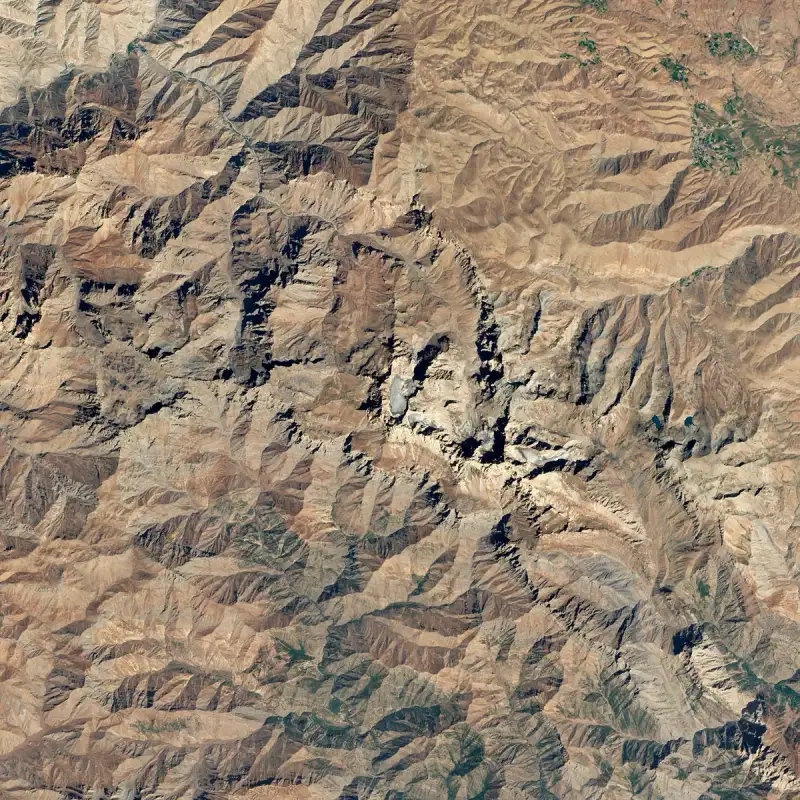
There are places on Earth that whisper secrets, corners of the map that refuse to yield their magic easily. Eastern Anatolia is one such realm – a land of epic scale, where #history is etched into every mountain, every #ancient ruin, and every face encountered. It is not the Anatolia of sun-drenched Aegean beaches or the bustling bazaars of #Istanbul, nor the whimsical moonscapes of Cappadocia that grace countless postcards. No, this is a different Turkey, one that demands a deeper curiosity, a willingness to wander off the well-trodden path, and an open heart to absorb the raw, unfiltered beauty of its #AncientLandscapes and #TimelessCulture.
As Cemre Seyyah, I have spent decades chasing horizons, but few regions have captivated my spirit as completely as the sprawling, majestic east. It is here, nestled between towering peaks and vast, mirror-like lakes, that the very cradle of civilization unfolded. Empires rose and fell, leaving behind a staggering legacy of archaeological wonders, spiritual sanctuaries, and a human story so rich it feels woven into the very fabric of the earth. For those who yearn for true discovery, for an adventure that transcends mere sightseeing, Eastern Anatolia presents an unparalleled invitation to explore #UndiscoveredTurkey, a #journey into the heart of authenticity. Forget the guidebooks that merely skim the surface; prepare to dive deep into a region where every corner holds a revelation.
The Mystical Heart: Lake Van and Akdamar Island
Imagine a body of water so vast it feels like an inland sea, its deep sapphire hues reflecting the colossal peaks that guard its shores. This is Lake Van, the largest lake in Turkey, an alkaline marvel that has cradled civilizations for millennia. It’s a place of profound geological and historical significance, often overlooked by those rushing between more famous sites, yet it offers an experience that is both visually stunning and deeply moving. The city of Van itself, though scarred by earthquakes and conflicts, serves as a vibrant hub, boasting the impressive Van Fortress (Van Kalesi) – a towering rock formation crowned with #ancient ruins that offer panoramic views of the lake and the surrounding plains, especially breathtaking at #SunsetViews.
But the true jewel of Lake Van lies a short ferry ride across its placid waters: Akdamar Island. As your boat glides towards the island, the 10th-century Holy Cross #cathedral (Akdamar Kilisesi) slowly emerges, a magnificent edifice of pink volcanic tuff stone, standing in solemn grandeur against the backdrop of the azure lake and distant mountains. This Armenian Apostolic #cathedral is an extraordinary example of medieval Armenian #architecture, its exterior intricately carved with biblical scenes, animal motifs, and grotesque figures. Each stone tells a story, the bas-reliefs depicting episodes from the Old Testament, from Adam and Eve to Jonah and the whale, alongside portrayals of earthly life – hunters, musicians, and kings. It’s a stunning outdoor art gallery, a testament to a rich cultural heritage that once thrived here.
The interior, though now largely stripped of its former glory, still retains an air of sanctity, with frescoes dimly visible in the apse. Walking around Akdamar Island, particularly in spring when almond blossoms paint the landscape pink and white, feels like stepping back in time. The silence, broken only by the gentle lapping of waves and the cries of gulls, allows for deep reflection on the passage of time and the enduring power of faith. This island is not just a historical site; it’s a spiritual sanctuary, a poignant reminder of the Armenian presence in Anatolia and a powerful symbol of resilience. The unique ecosystem of Lake Van, home to the Van Cat with its distinctive heterochromatic eyes, adds another layer of intrigue to this captivating destination. It’s a place that whispers tales of #ArmenianHistory, #SacredSites, and #ArchitecturalWonders, inviting contemplation and awe in equal measure.
The City of 1001 Churches: Ani, the Ghost City
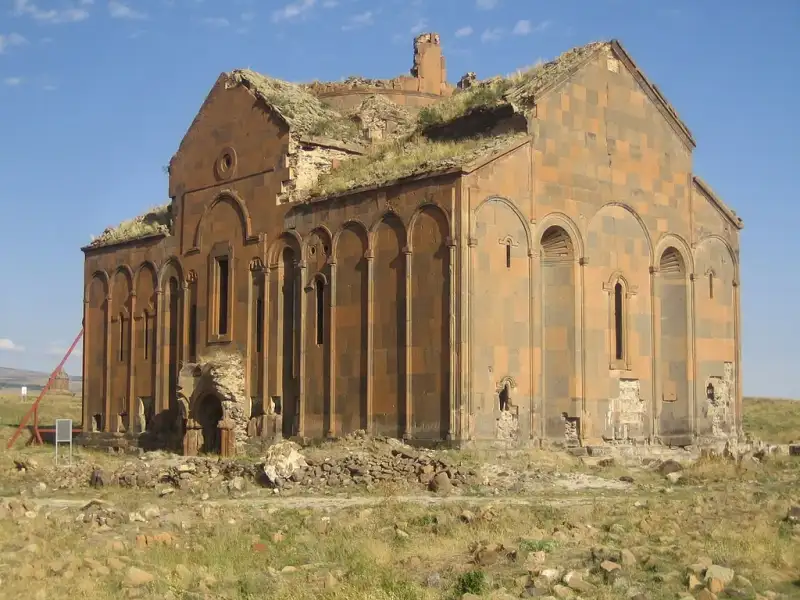
Journeying further east, close to the Armenian border, one encounters a landscape that feels almost apocalyptic in its stark beauty. Here, on a desolate plateau overlooking a deep gorge that separates Turkey from Armenia, lie the haunting ruins of Ani. Once the thriving capital of the medieval Armenian Bagratid kingdom, a city of immense wealth and power often referred to as “the City of 1001 Churches,” Ani now stands as a poignant ghost city, its skeletal remains whispering tales of bygone glory and sudden decline. This is one of the most profoundly evocative archaeological sites I have ever visited, a place that demands silent reverence.
Walking through the collapsed city gates and along the double walls, you immediately sense the scale of Ani’s past importance. Imagine a bustling metropolis, a major stop on the Silk Road, adorned with countless churches, mosques, and palaces. Today, the biting winds sweep across empty fields where houses once stood, and only a handful of monumental structures remain, defying the ravages of time and earthquakes. The Cathedral of Ani, with its soaring proportions and intricate stonework, is perhaps the most impressive, a masterpiece of Armenian ecclesiastical #architecture, even in its ruined state. Nearby, the Church of St. Gregory, known as the Church of Tigran Honents, boasts incredibly well-preserved frescoes depicting the life of Christ and St. Gregory the Illuminator, their vibrant colours still visible after centuries.
Other notable structures include the Church of the Redeemer, split down the middle by an earthquake, and the remarkable Seljuk Palace, a testament to the city’s later Islamic period. The Minuchihr Mosque, believed to be the first mosque built in Anatolia, stands proudly near the edge of the gorge, offering commanding views. The sense of isolation here is profound, yet invigorating. You are not just observing ruins; you are walking through the very footsteps of #history, feeling the echoes of countless lives lived within these walls. Ani is a powerful pilgrimage for anyone interested in #MedievalHistory, #ArmenianArchitecture, and #SilkRoadMysteries. It’s a photographer’s dream and a historian’s delight, a place where the past feels palpably alive, urging you to uncover its many secrets.
Commagene’s Colossal Legacy: Mount Nemrut
High in the Anti-Taurus mountains, at an altitude of 2,134 meters, lies one of Eastern Anatolia’s most iconic, yet still remarkably secluded, archaeological sites: the summit of Mount Nemrut. This is the hierothesion (a sacred burial complex) of King Antiochus I Theos of Commagene, a Hellenistic kingdom that existed between the Roman and Persian empires. Nemrut Dagi, as it is known locally, is famous for the colossal stone heads of gods and kings that punctuate its Eastern and Western Terraces. Visiting this #UNESCO World Heritage site is an experience that borders on the surreal, a spiritual pilgrimage to witness a king’s audacious attempt at deification.
The #journey to the summit typically begins in the pre-dawn hours or late afternoon to catch either the sunrise or sunset, moments when the golden light bathes the massive stone heads in an otherworldly glow. As you ascend the well-maintained path, the anticipation builds. And then, there they are: the immense, stylized heads of Apollo, Zeus-Oromasdes, Heracles, Tyche, and Antiochus himself, once part of colossal statues that sat enthroned, their bodies now crumbling piles of stone. Each head, some over two meters tall, gazes out with a serene yet commanding expression, their classical Greek and Persian influences clearly visible.
On the Eastern Terrace, the heads stand proudly on their original bodies, while on the Western Terrace, they have toppled to the ground, scattered amidst the ruins, creating an even more dramatic and evocative scene. The sheer scale and ambition of Antiochus’s project are mind-boggling, a testament to his syncretic vision of blending Persian and Greek deities to forge a unique Commagenian identity. He declared himself a living god and sought to establish a new cult centered around himself and the gods, securing his place in eternity. Standing among these silent, monumental witnesses as the sun paints the sky in fiery hues is an unforgettable experience, a powerful connection to #AncientKings, #HellenisticArt, and #DivineAmbition. It’s an essential pilgrimage for anyone exploring the #HiddenGemsOfEasternAnatolia, offering both a profound historical insight and a breathtaking natural spectacle.
The Walls of Ages: Diyarbakır and the Cradle of Civilizations
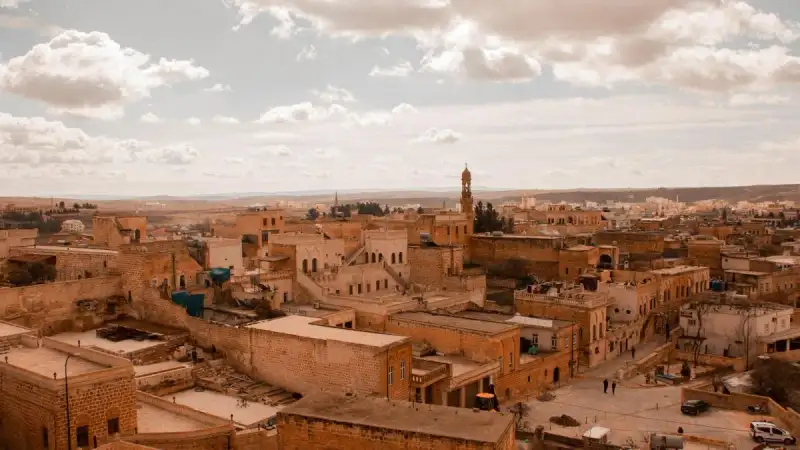
Venturing deeper into the southeastern reaches of Anatolia brings us to Diyarbakır, a city whose history is as layered as the volcanic rock on which it stands. Known as the “Black City” due to its formidable basalt walls, Diyarbakır is a living museum, a city that has witnessed the rise and fall of countless empires – Hurrians, Urartians, Assyrians, Romans, Byzantines, Seljuks, Ottomans – each leaving an indelible mark. Its UNESCO-listed city walls, the second longest continuous defensive walls in the world after the Great Wall of China, are a marvel of ancient engineering, stretching over five kilometers and punctuated by numerous towers and gates.
Walking along the top of these ancient walls, especially at sunrise or sunset, offers a sweeping panorama of the Tigris River plains, the sprawling modern city, and the historical heart within. The Hevsel Gardens, a lush cultivated area between the city walls and the Tigris, also a #UNESCO site, represent a vital link between the city and its life-giving river, a sustainable agricultural system that has fed the city for thousands of years. Within the walls, the old city is a labyrinth of narrow alleys, bustling bazaars, and historic mosques and churches. The Great Mosque (Ulu Cami), one of Anatolia’s oldest and most impressive mosques, stands as a testament to the city’s early Islamic heritage, incorporating elements of Roman and Byzantine architecture.
The Four-Legged Minaret (Dört Ayaklı Minare), built on four basalt columns, is another architectural curiosity, while the historic caravanserais like Hasan Pasha Han offer a glimpse into the city’s past as a vital trading post. Diyarbakır pulsates with a vibrant Kurdish #culture, its markets overflowing with spices, textiles, and traditional crafts. The warmth and resilience of its people are palpable, and a visit here offers an authentic dive into a rarely seen side of Turkey. It’s a place for intrepid travelers seeking to understand the deep historical currents of the region, to connect with #KurdishCulture, #AncientWalls, and the #TigrisRiverLegacy, uncovering a story that resonates with millennia of human endeavour.
#nature’s Untamed Splendor: Munzur Valley National Park
For those who crave unspoiled #nature and a genuine escape from the modern world, the Munzur Valley National Park, nestled primarily within the Tunceli province, is a revelation. This spectacular wilderness, often overlooked even by domestic tourists, is a haven of biodiversity, a land of crystal-clear rivers, glacial lakes, soaring peaks, and dense forests. It’s a region deeply significant to Turkey’s Alevi population, who hold the Munzur River and its surrounding mountains sacred.
The Munzur River, famed for its pristine waters and numerous springs (Munzur Gözeleri), cascades through dramatic gorges, creating a landscape of breathtaking beauty. Hiking trails wind through ancient forests, past hidden waterfalls, and up to high alpine meadows ablaze with wildflowers in spring and summer. The park is home to a rich array of wildlife, including brown bears, wild goats, and various bird species, making it a paradise for #WildlifePhotography and #Ecotourism enthusiasts. The air here is crisp, the silence profound, interrupted only by the rustling of leaves or the roar of the river.
Beyond its natural beauty, Munzur Valley offers a unique cultural immersion. The Alevi people, with their distinct religious and cultural practices, are known for their hospitality and reverence for nature. Visiting a local village or sharing a meal with a family provides an intimate glimpse into a way of life that is deeply connected to the land. This is not a place with grand monuments but a destination where the landscape itself is the monument, a living testament to #PristineNature, #AleviHeritage, and #MountainAdventures. It’s an ideal spot for trekking, rafting, and simply reconnecting with the wild heart of Anatolia, offering a serene escape for the #SoulfulTraveler.
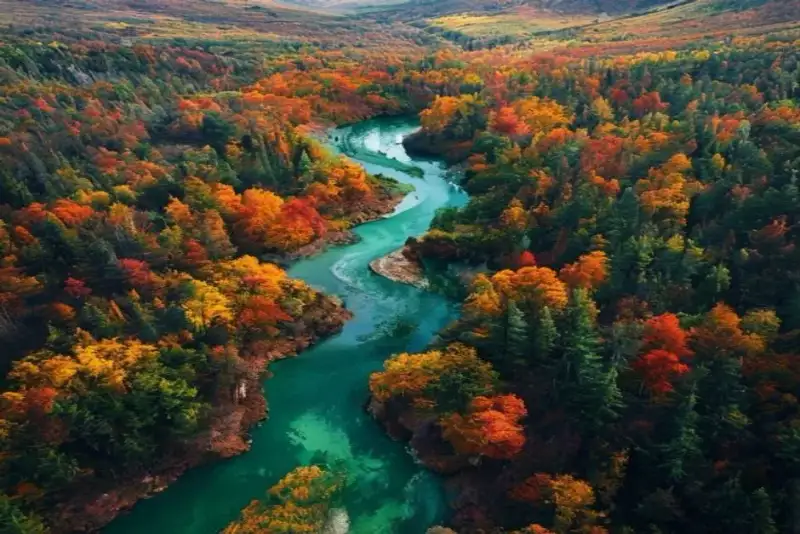 . Majestic, rugged mountains rise on either side under a clear blue sky, with rays of late afternoon sunlight illuminating patches of the valley floor, creating dramatic contrasts of light and shadow.)
Kars and Erzurum: Gateways to a Storied Past
While Ani and Munzur are specific destinations, the cities of Kars and Erzurum serve as crucial gateways and themselves offer a wealth of historical and cultural experiences that contribute to the tapestry of Eastern Anatolia. Kars, with its distinct Russian-era architecture, feels like a city plucked from a different continent. Its grid-like streets and charming stone buildings contrast sharply with the more organically grown cities of Turkey. The Kars Castle, perched high above the city, offers commanding views, while the stone bridge and the Armenian Church of the Apostles (now a mosque) speak of its diverse past. Kars is also the heartland of delicious local goose meat, a must-try culinary experience, and a base for exploring Ani. The region around Kars is also famous for its cheese production, particularly #KarsGravyer, a taste of its #CulinaryHeritage.
Erzurum, the largest city in Eastern Anatolia, is a historical powerhouse. Its skyline is dominated by the twin-minaret seminary (Çifte Minareli Medrese), an exquisite example of Seljuk architecture, alongside the Grand Mosque (Ulu Cami) and the Three Tombs (Üç Kümbetler). The city’s rich history as a strategic stronghold and a center of learning is evident in its numerous historical buildings. Erzurum is also famous for its Oltu taşı (Oltu stone), a unique black amber-like stone used for prayer beads and jewelry, making it a great place to find unique #LocalSouvenirs. The local specialty, cağ kebabı, a horizontally rotisseried lamb skewer, is a culinary delight not to be missed. Both Kars and Erzurum offer insights into the complex layers of Anatolian history, from Seljuk to Ottoman, and serve as excellent bases for deeper exploration of the region’s #ArchitecturalTreasures and #RegionalCuisine.
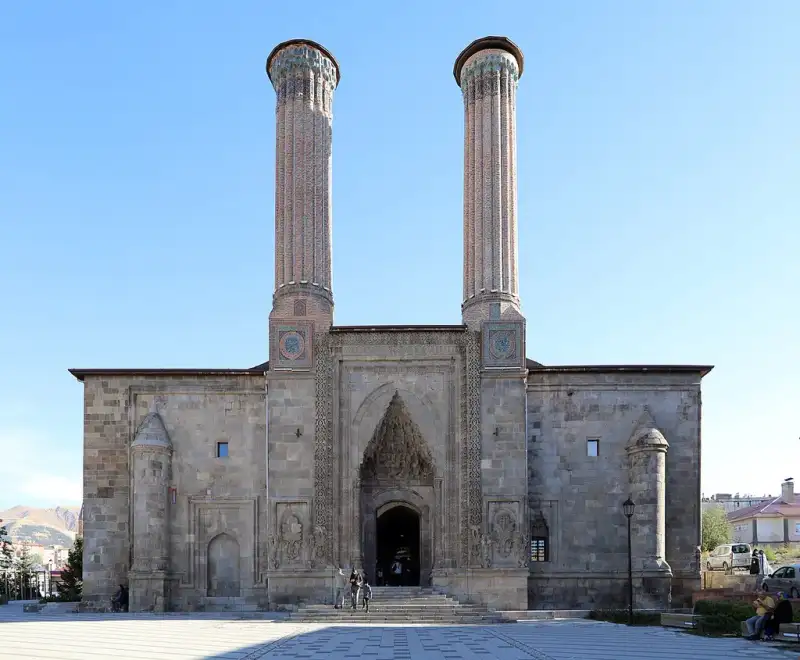 at twilight. The two ornate fluted brick minarets with their distinct blue tile work are illuminated against a deep blue sky. Below, the intricate Seljuk portal facade is softly lit, creating a mystical and historical ambiance. The foreground features subtle hints of the bustling city life.)
The Flavorful Journey: Culinary Delights of the East
No exploration of Eastern Anatolia is complete without a deep dive into its unique and hearty cuisine. This is a region where food is not just sustenance but an expression of hospitality, tradition, and the rugged landscape. Influences from Central Asia, the Caucasus, and the Middle East converge here, creating a distinct gastronomic identity.
The aforementioned cağ kebabı from Erzurum is a revelation – tender lamb cooked slowly on a horizontal spit, carved into thin slices and served with piping hot lavash bread and fresh onions. In Kars, the kaz etli pilav (rice with goose meat) is a winter staple, rich and flavourful, often accompanied by local cheeses like Kars Gravyer. The city of Van boasts a legendary breakfast #culture (Van Kahvaltısı), a sprawling feast of local cheeses, herbs, honeys, jams, fresh bread, murtuğa (flour and butter fried egg dish), and sucuklu yumurta (eggs with spicy sausage), providing a true taste of local bounty. #VanBreakfast is an institution.
Further south, in Diyarbakır, the cuisine takes on a more Middle Eastern flair. Dishes like lebeni çorbası (yogurt and rice soup), kaburga dolması (stuffed ribs), and various kebabs made with spicy local meats are common. The region is also famous for its robust bulgur-based dishes and incredible pistachios, especially from Gaziantep (though slightly west, its culinary influence extends here). Everywhere you go, you’ll find incredible pekmez (grape molasses), honey, and a dazzling array of dried fruits and nuts. Sampling these local delicacies is an integral part of the #travel experience, connecting you directly to the land and its people. It’s an exploration of #TurkishCuisine, #AuthenticFlavors, and #GastronomicAdventures that will linger long after your journey ends.
The Warmth of the People and Practicalities of #travel
What truly elevates a journey through Eastern Anatolia beyond its spectacular sights is the extraordinary warmth and hospitality of its people. Despite the historical hardships and the rugged terrain, the smiles are genuine, the invitations to tea frequent, and the desire to share their culture palpable. You will encounter a deep sense of pride in their heritage, an unwavering resilience, and a generosity that is humbling. Learning a few basic Turkish phrases will undoubtedly open doors and hearts, though many young people in urban centers will speak English. This personal connection is the real #HeartOfAnatolia.
Traveling through Eastern Anatolia requires a spirit of adventure and a degree of flexibility. Infrastructure has improved significantly, with reliable bus networks connecting major cities. For more remote sites, hiring a local driver or joining a tour is advisable. Accommodation ranges from comfortable hotels in cities like Erzurum, Van, and Diyarbakır to more modest guesthouses in smaller towns. The best times to visit are late spring (May-June) when the landscapes are lush and green, and early autumn (September-October) for pleasant temperatures and vibrant foliage, avoiding the harsh winters and scorching summers. Dress modestly, especially when visiting religious sites, and always carry small cash for local purchases. Embrace the unexpected, allow for spontaneous detours, and you will be richly rewarded. This is not a rushed holiday; it is an #ImmersiveTravel experience, a #CulturalExchange, and a journey of profound personal discovery.
A Call to the Adventurous Spirit
Eastern Anatolia is not just a collection of historical sites or #beautiful landscapes; it is a tapestry woven from myth and reality, ancient civilizations and enduring traditions. It is a region that challenges preconceptions, rewards curiosity, and leaves an indelible mark on the soul. From the sacred island in Lake Van to the silent stones of Ani, from the colossal deities of Nemrut to the vibrant streets of Diyarbakır and the pristine wilderness of Munzur, this vast expanse offers a travel experience unlike any other.
It is a journey for those who seek to understand the deeper narratives of humanity, to witness the power of nature in its rawest form, and to connect with a people whose generosity knows no bounds. So, pack your bags, shed your expectations, and answer the call of the wild east. The #EasternAnatolia awaits, ready to unveil its #HiddenTreasures and etch unforgettable memories into your traveler’s heart. This is more than a trip; it’s an odyssey into the soul of Turkey, a testament to the enduring power of history and the breathtaking beauty of an #UntamedFrontier.
#travel #explore #guide