The Architecture of Flavor: Deconstructing the Empire of Haute Cuisine
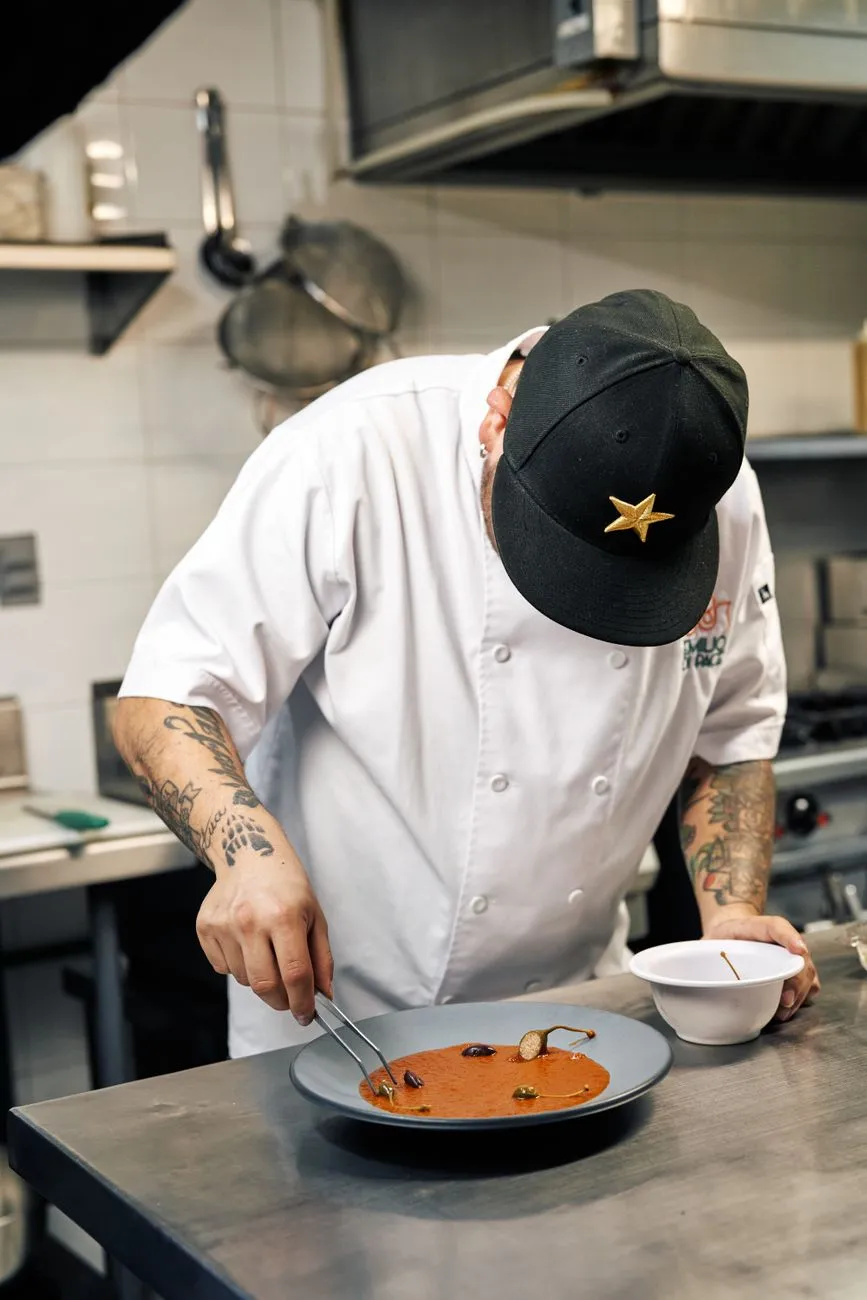
There is a specific silence that falls over a dining room when a plate of haute cuisine arrives. It is not merely the hush of anticipation; it is the sound of a social contract being honored. The diner has paid not just for sustenance, but for the accumulated weight of centuries—the ghosts of monarchs, the sweat of brigades, the geometry of a sauce reduced until it catches the light like amber. This is cooking as architecture, where the blueprint is written in butter, cream, and flour, and the builders wear white jackets stitched with hierarchy.The Gilded Cage: Origins in Excess and Exclusion Before the term haute cuisine crystallized into a doctrine, it existed as a privilege. The Wikipedia records remind us that this style was historically "accessible to a small demographic of rich and powerful individuals." It was the cuisine of the monarchy and the bourgeoisie, a theater where the ability to serve fruit out of season or ingredients "not typically found in France" was the ultimate flex of power. In the 17th century, the kitchen was a fortress. The food was "very rich and opulent," anchored by decadent sauces—mother sauces built on foundations of butter, cream, and flour—that still undergird French technique today. It was a cuisine of mass and volume. Service followed the service à la française: a staggering parade where all dishes hit the table at once, a landscape of silver and porcelain meant to overwhelm the senses before the first bite was taken. But even in this rigidity, evolution stirred. François Pierre La Varenne (1615–1678) pivoted the needle, dragging cookery out of the Middle Ages toward "somewhat lighter dishes, and more modest presentations." He began the long, slow work of subtraction—removing the heavy spice masks of the medieval palate to let the ingredient speak, however softly. Then came the architect: Marie-Antoine Carême (1784–1833). If La Varenne edited, Carême codified. He treated the kitchen like a drawing office. His pièces montées—edible architectural wonders replicating temples and ruins—turned the chef into an engineer. He "simplified and codified an earlier and even more complex cuisine," writing the first true grammar of the profession. It is a delicious irony that the man who built cathedrals of spun sugar and lard also tried to simplify the language of the stove. Across the Channel, the French influence colonized the British aristocracy. The data reveals a figure often lost to pop history: Jassinton Rozea (1721–1783). Master chef to the Duke of Somerset and later the Earl of Hopetoun in Edinburgh, Rozea authored The Gift of Comus (1752) and The Compleat Cook (1756). His "glorious banquets attended by European aristocrats in the expected French tradition" prove that haute cuisine was an early global export, a diplomatic language spoken in the dining rooms of power from London to Edinburgh. And let us dispel a persistent myth while we are here: Catherine de' Medici did not import Italian cooking to create French haute cuisine. The data is explicit. The French tradition was already simmering; it needed no foreign queen to light the fire. The General and the Brigade: Escoffier’s Cuisine Classique If Carême was the architect, Georges Auguste Escoffier was the general who modernized the army. Around 1900, he dragged the chaos of the grand hotel kitchens into the industrial age. His masterstroke was not a recipe, but a flowchart: the brigade de cuisine. He replaced the chaotic service à la française with service à la russe—serving meals in sequential courses. This changed the rhythm of dining forever. It allowed the kitchen to cook à la minute, plating hot food for one table at a time, rather than holding a banquet hostage to the slowest roast. It introduced the pacing we now take for granted: amuse-bouche, entrée, main, dessert. But the brigade system was the true revolution. Escoffier organized the kitchen into a military hierarchy: Chef de Cuisine, Sous-Chef, Chefs de Partie (saucier, poissonnier, pâtissier, etc.), Commis, and Plongeurs. Every hand knew its station. Every station knew its duty. This "system of cookery, based on Escoffier's Le Guide Culinaire," formalized the preparation of sauces and dishes into a replicable standard. Cuisine classique became the gold standard for the grand restaurants and hotels of Europe for much of the 20th century. It was distinct from cuisine bourgeoise (the cooking of affluent city dwellers), the bistro, and the provincial hearth. It was a high-wire act of consistency. A Sauce Béchamel in the Ritz Paris had to be structurally identical to one in the Carlton London. Escoffier gave the profession a spine.The Rebellion: When the Students Burned the Textbooks By the 1960s, the orthodoxy had calcified. Escoffier’s Guide had become a bible, and bibles invite heresy. Enter nouvelle cuisine. The term wasn't new—it had floated in culinary circles for centuries—but the modern iteration was forged by critics André Gayot, Henri Gault, and Christian Millau. They used it to describe a cohort of young lions: Paul Bocuse, Alain Chapel, Jean and Pierre Troisgros, Michel Guérard, Roger Vergé, and Raymond Oliver. Crucially, many were students of Fernand Point, the legendary chef of La Pyramide, who famously said, "Cooking is not chemistry, it is an art. It requires instinct and taste rather than exact measurements." Point’s disciples took that instinct and weaponized it against the Guide Culinaire. The manifesto of nouvelle cuisine reads like a declaration of independence:Natural Flavors: The freshest possible ingredients became non-negotiable. Simplified Preparation: The fussy, multi-day mise en place was slashed. Rejection of Heavy Sauces: The roux-thickened, cream-laden sauces brunes and blanches were banished. In their place: reductions, emulsions, vegetable coulis, the essence of the ingredient itself. No Strong Marinades: Meat tasted of meat. Reduced Cooking Times: Vegetables retained crunch and color; fish stayed translucent.It was a movement toward "conceptualism and minimalism," a "direct juxtaposition to earlier haute cuisine styles." Menus shrank. The pièce montée died. In its place rose inventive pairings—regional dishes elevated to the grand stage. A frog’s leg mousseline from Lyon. A salmon with sorrel sauce from the Troisgros brothers. The plate became a canvas for negative space.The Pendulum Swings Back: The Synthesis History rarely stays at the extremes. Within two decades, the pendulum began its return swing. Chefs realized that nouvelle cuisine, in its dogmatic pursuit of lightness, had thrown the baby out with the bathwater. The "richness and opulence" of the classics—the unctuous depth of a demi-glace, the comfort of a braise—had been lost. The modern era of haute cuisine is not a choice between Escoffier and Bocuse; it is a synthesis. Today’s three-Michelin-star kitchens run on Escoffier’s brigade discipline but plate with Bocuse’s minimalism. They use Guérard’s vegetable purity but finish with Carême’s structural elegance. The "high cooking" of the 21st century is defined by that original Wikipedia definition: "meticulous preparation, elaborate presentation, and the use of high quality ingredients," executed by "highly skilled gourmet chefs" at "premium prices." The Kaiseki tradition of Japan stands as a parallel summit—proof that the pursuit of "high cooking" is a universal human impulse, not merely a French monopoly. Both demand seasonality, knife skills that border on surgery, and a pacing that respects the guest’s palate. The Modern Plate: Where We Stand Now Walk into a top-tier restaurant today. You will see the brigade moving in silent synchrony—a legacy of 1900. You will taste a sauce that remembers Escoffier’s roux but wears the lightness of a nouvelle reduction. You will see a presentation that echoes Carême’s architecture but respects the negative space demanded by the Troisgros brothers. The "financial wherewithal" remains a barrier, yes. But the technique has democratized. The home cook now knows what a mise en place is. The culinary student learns the five mother sauces before they learn to boil an egg. The language of haute cuisine has escaped the palace and the grand hotel; it lives in the food truck that braises short ribs for 12 hours, in the bakery that laminates croissants by hand. The architecture of flavor stands taller because its foundations are deeper. We cook on the shoulders of generals and rebels, architects and poets. And when that plate arrives, demanding that specific, reverent silence? We understand exactly why.#HauteCuisine #CulinaryHistory #FrenchGastronomy #Escoffier #NouvelleCuisine #FineDining Related InsightsMumbai’s Edible Soul: The Spice, Chaos, and Unmatched Flavor of Its Street Food From Ancient Fields to Modern Crusts: Mastering Emmer & Spelt Sourdough „Die Architektur des Geschmacks: Wie Gastronomie zur Wissenschaft der Zivilisation wurde“{ "@context": "https://schema.org", "@type": "FAQPage", "mainEntity": [ { "@type": "Question", "name": "What is the main focus of The Architecture of Flavor: Deconstructing the Empire of Haute Cuisine?", "acceptedAnswer": { "@type": "Answer", "text": "Journey through the gilded kitchens of history where butter, hierarchy, and rebellion forged the world's most exacting culinary standard." } }, { "@type": "Question", "name": "Who authored the comprehensive guide on The Architecture of Flavor: Deconstructing the Empire of Haute Cuisine?", "acceptedAnswer": { "@type": "Answer", "text": "This detailed article and its insights were carefully researched and authored by Demir Şef." } }, { "@type": "Question", "name": "Where can I find more related content about Food?", "acceptedAnswer": { "@type": "Answer", "text": "You can explore more articles, detailed reviews, and similar insights by browsing the Related Insights section at the bottom of this article or visiting our dedicated Food category page." } } ] }

-
 Zola Ndlovu
 - 25 Sep, 2026 21:47
Beyond the Great Wall: Uncovering the Ming Dynasty Watchtowers in Hebei
Stone Sentinels of the Northern Frontier The Ming Dynasty (1368‑1644) erected a sprawling network of watchtowers along the northern frontier to guard the empire against Mongol incursions and to relay military signals across vast distances. In Hebei province, this defensive spine reaches its most dramatic expression: a chain of stone and brick towers that cling to ridgelines, peer over river valleys, and punctuate the skyline like silent guardians. Each tower was engineered with a two‑story layout — lower chambers for garrison troops and storage, an upper platform crowned with a beacon brazier that could be lit within minutes. The walls themselves combine kiln‑fired bricks, locally quarried limestone, and tamped‑earth cores, a composite that has resisted centuries of freeze‑thaw cycles and seismic tremors. Strategically, the towers functioned as a visual telegraph. By day, smoke signals rose from the beacon platforms; by night, firelight pierced the darkness, allowing commanders in Beijing to receive intelligence from the frontier within hours rather than days. The spacing — roughly 10 to 15 kilometres apart — was calculated to maintain line‑of‑sight across the undulating topography of the Yanshan and Taihang ranges. This geometry turned the landscape itself into a communication grid, a precursor to modern optical‑fiber networks. Today, many of these sentinels survive in varying states of preservation. The most intact examples — such as the twin towers at Jinshanling and the solitary beacon at Huangyaguan — showcase original crenellations, arrow‑slit windows, and internal staircases that still bear the wear of centuries of boots. Others exist only as foundations, their stones repurposed for village homes during the Qing and Republican eras. Preservation efforts led by the Hebei Cultural Heritage Bureau, in partnership with UNESCO’s “Great Wall Conservation Programme”, have stabilized several at‑risk structures using reversible mortar and discreet steel reinforcements, ensuring that the towers remain both authentic and safe for visitors.Walking among these towers feels like stepping into a living manuscript. The wind whistles through arrow slits, carrying the scent of pine and loess, while the distant hum of modern highways reminds you that the past and present share the same ridge. For the traveler willing to stray from the heavily restored Badaling sector, Hebei’s watchtowers offer an unfiltered encounter with Ming military genius and the raw beauty of northern China’s mountains. Mapping the Hidden Watchtower Trails Beyond the well‑trodden tourist loops, a lattice of footpaths links dozens of lesser‑known towers, creating a multi‑day hiking corridor that rewards the intrepid with solitude and panoramic vistas. The principal arteries run through four clusters: Jinshanling‑Simatai in the northeast, Gubeikou‑Xifengkou in the central corridor, Huangyaguan‑Taipingzhai in the west, and the coastal terminus at Shanhaiguan where the wall meets the Bohai Sea. Each cluster presents distinct terrain — Jinshanling’s steep, brick‑capped ridges; Simatai’s dramatic cliff‑side staircases; Gubeikou’s rolling grasslands dotted with watchtower ruins; Huangyaguan’s restored fortress‑like gatehouse. Navigating these trails demands preparation. Official topographic maps (scale 1:50 000) published by the Chinese State Bureau of Surveying and Mapping mark every numbered tower (e.g., Tower 7‑3, Tower 9‑1) and indicate gradient, water sources, and restricted military zones. GPS tracks downloaded from the “Great Wall Hiking” community forum (verified by local rangers) supplement paper maps, especially where vegetation obscures the path. A permit is required for overnight stays in the “core protection zones” — typically obtained online via the Hebei Tourism Administration portal at least 48 hours before departure. Day‑hikers can enter most sections freely, but the Simatai night‑tour segment mandates a guided group and a separate ticket. A recommended five‑day itinerary begins in Chengde (accessible by high‑speed rail from Beijing in 55 minutes). Day 1: transfer to Jinshanling, hike 12 km to Simatai, overnight in a family‑run guesthouse. Day 2: descend to Gubeikou, explore the twin towers and the ancient “Mongol‑Pass” trail. Day 3: bus to Huangyaguan, climb the restored gatehouse and walk the “Heavenly Ladder” stairway. Day 4: continue west to Taipingzhai, a quieter stretch with wild apricot blossoms in spring. Day 5: travel to Shanhaiguan, visit the “First Pass Under Heaven” museum, then return to Beijing via high‑speed train from Qinhuangdao. This route balances iconic scenery with off‑the‑beaten‑path discovery, allowing you to trace the Ming signal line from mountain to sea.Trail conditions vary seasonally. Spring (April‑May) brings mild temperatures (12‑20 °C) and blooming wildflowers, but occasional rain can make stone steps slick. Summer (June‑August) sees higher heat (25‑30 °C) and thunderstorms; early‑morning starts are advisable. Autumn (September‑October) offers crisp air (10‑18 °C) and spectacular foliage — ideal for photography. Winter (November‑March) transforms the wall into a snow‑clad sculpture; temperatures plunge below ‑10 °C, and some high passes close due to Related InsightsL'Eclissi del Re Sole: Tra gli Specchi e l'Oro di Versailles L'Eterna Seduzione della Costa Azzurra: Tra Scogliere di Porfido e Misteri Belle Époque 新疆火焰山:穿越神话、历史与烈焰的奇幻之旅{ "@context": "https://schema.org", "@type": "FAQPage", "mainEntity": [ { "@type": "Question", "name": "What is the main focus of Beyond the Great Wall: Uncovering the Ming Dynasty Watchtowers in Hebei?", "acceptedAnswer": { "@type": "Answer", "text": "Explore the hidden Ming-era watchtowers of Hebei, their history, hiking routes, and practical travel costs." } }, { "@type": "Question", "name": "Who authored the comprehensive guide on Beyond the Great Wall: Uncovering the Ming Dynasty Watchtowers in Hebei?", "acceptedAnswer": { "@type": "Answer", "text": "This detailed article and its insights were carefully researched and authored by Zola Ndlovu." } }, { "@type": "Question", "name": "Where can I find more related content about Travel?", "acceptedAnswer": { "@type": "Answer", "text": "You can explore more articles, detailed reviews, and similar insights by browsing the Related Insights section at the bottom of this article or visiting our dedicated Travel category page." } } ] }

-
 Zeynep Kaya
 - 25 Sep, 2026 21:37
Algorithmic Sovereignty: Deconstructing the DAO Paradox in On-Chain Governance
The Genesis Block of Collective Intelligence The promise of Decentralized Autonomous Organizations (DAOs) has always been seductive: a coordination layer where code replaces bureaucracy, where stake aligns with voice, and where the "principal-agent problem" is solved not by regulation, but by immutable logic. Yet, as we stand in late 2026, the landscape is littered with the wreckage of governance attacks, voter apathy spirals, and the ironic recentralization of "decentralized" protocols. The theoretical elegance of a DAO—essentially a state machine transitioning based on weighted token votes—collides violently with the messy reality of human coordination, MEV (Maximal Extractable Value) predation, and the computational limits of the EVM (Ethereum Virtual Machine). We are witnessing a shift from "DAO 1.0" (simple token voting on treasury spending) to "DAO 2.0" (modular governance frameworks, ZK-proof verification, and optimistic execution). This evolution demands we treat governance not as a feature, but as a critical infrastructure layer requiring the same rigor as consensus mechanisms. The arXiv literature on quantum cryptographic primitives—specifically the impossibility results surrounding pseudorandom state generation without one-way functions—offers a surprising metaphor: just as quantum cryptography cannot easily escape complexity-theoretic assumptions, on-chain governance cannot escape the sociological and economic assumptions of its participants. You cannot "code away" politics; you can only constrain its attack surface. Cryptoeconomic Attack Vectors and the Cost of Corruption The fundamental security model of a token-weighted DAO rests on the Cost of Corruption (CoC) exceeding the Profit from Corruption (PfC). In a naive implementation—if (votesFor > votesAgainst) execute()—the CoC is simply the market price of 51% of the governance token supply. This model is catastrophically fragile. It ignores vote buying markets (like those facilitated by protocols such as Hidden Hand or Votium), where the CoC drops to the rental cost of tokens for a single block height, not the purchase price. It ignores flash loan governance attacks, where an attacker borrows millions in governance tokens, votes maliciously, executes, and repays the loan in a single atomic transaction.Modern DAO frameworks (OpenZeppelin Governor, Compound Bravo, Aragon OSx) mitigate this via Vote Escrowing (veTokenomics) and Time-Weighted Voting. The Curve Finance veCRV model pioneered this: locking tokens for up to 4 years grants voting power proportional to lock duration and amount. This raises the CoC significantly because the attacker must lock capital long-term, exposing them to market risk (slashing via price drop) and opportunity cost. However, this introduces Liquidity Fragmentation and Governance Capture by Whales. Entities like Convex Finance and Yearn aggregated veCRV, effectively becoming "meta-governors," recentralizing the very layer designed to prevent it. The technical solution space is moving toward Quadratic Voting (QV) and Conviction Voting. QV (cost = votes^2) makes buying marginal votes exponentially expensive, aligning cost with preference intensity. Conviction Voting (used by 1Hive/Gardens) allows voting power to accumulate over time on a specific proposal, decaying if support is withdrawn. This resists flash loans entirely—you cannot "flash" conviction. Implementing QV on-chain requires identity verification (Sybil resistance) via Proof-of-Humanity, Gitcoin Passport, or ZK-SBTs (Soulbound Tokens), moving the trust assumption from "capital" to "unique humanity." Modular Governance Architecture: The Separation of Powers Monolithic governor contracts are anti-patterns. The current best practice, championed by DAOhaus, Tally, and the Optimism Collective, is Modular Governance. This decomposes the governance lifecycle into swappable, auditable modules:Proposal Module: Defines who can propose and what is proposable (parameter changes, code upgrades, treasury transfers). Voting Module: Implements the decision rule (Token Weighted, Quadratic, Holographic Consensus). Execution Module: Handles the execute() logic (TimelockController, Safe Multi-sig, ZK-Timelock). Dispute/Resolution Module: Kleros courts, Optimistic Oracle (UMA), or Aragon Court for subjective disputes.This modularity allows a DAO to upgrade its voting mechanism without migrating treasury or contracts. For example, a protocol can start with Token Voting for speed, migrate to Holographic Consensus (where predictors stake on proposal outcomes to filter spam) for scaling, and finally settle on ZK-Quadratic Voting for credentialed democracy.The Optimism Collective implements a bicameral structure: the Token House (OP token weighted) and the Citizens' House (Soulbound NFT / Attestation based). This separates capital allocation (Token House) from public goods funding/retroactive rewards (Citizens' House). It is a sophisticated admission that "one token, one vote" is optimal for capital efficiency but toxic for public goods provision. The technical implementation relies heavily on the AttestationStation contract (EAS - Ethereum Attestation Service) to verify citizenship criteria off-chain and submit proofs on-chain. Execution Latency, Optimism, and the ZK-Timelock The "Timelock" is the final safety valve. After a proposal passes, a mandatory delay (e.g., 48 hours) allows users to exit (ragequit) or developers to audit the calldata. But 48 hours is an eternity in DeFi; it freezes capital and prevents rapid response to critical bugs. Optimistic Execution flips this: proposals execute immediately after passing, but can be vetoed during a challenge window by a designated Security Council or a ZK-Proof of Maliciousness. Consider a ZK-Timelock design. The execution calldata is committed to a Merkle root. A ZK-SNARK circuit verifies that the calldata only interacts with an allowlist of safe functions (e.g., setFeeBps, updateOracle) and does not call selfdestruct, delegatecall, or transfer treasury assets. If the proof verifies, execution is instant (Optimistic). If the proposal involves arbitrary calldata (high risk), it falls back to the standard Timelock. This requires a Recursive ZK-VM (like RISC Zero or SP1) or a specialized circuit (like those written in Circom/Rust for SP1) to verify EVM execution traces. // SPDX-License-Identifier: MIT pragma solidity ^0.8.24;interface IZKTimelock { struct Proposal { bytes calldata; bytes32 calldataHash; uint256 executionDelay; // 0 for optimistic/zk-verified bool isOptimistic; } function propose(Proposal calldata proposal) external returns (uint256 proposalId); function execute(uint256 proposalId, bytes calldata zkProof) external; function veto(uint256 proposalId, bytes calldata fraudProof) external; }contract ZKGovernor is IZKTimelock { mapping(uint256 => Proposal) public proposals; address public verifierContract; // Verifies SP1/RISC0 receipts address public securityCouncil; uint256 public constant OPTIMISTIC_WINDOW = 2 hours; function execute(uint256 proposalId, bytes calldata zkProof) external { Proposal storage prop = proposals[proposalId]; require(block.timestamp >= prop.proposedAt + prop.executionDelay, "Delay not met"); if (prop.isOptimistic) { // Verify ZK Proof that calldata is safe (allowlisted targets/selectors) require(IZKVerifier(verifierContract).verify(prop.calldataHash, zkProof), "Invalid ZK Proof"); // Optimistic execution: immediate, but vetoable _executeCalldata(prop.calldata); prop.executedAt = block.timestamp; prop.status = Status.OptimisticExecuted; } else { // Standard Timelock execution _executeCalldata(prop.calldata); prop.status = Status.Executed; } } function veto(uint256 proposalId, bytes calldata fraudProof) external { Proposal storage prop = proposals[proposalId]; require(prop.status == Status.OptimisticExecuted, "Not optimistic"); require(block.timestamp < prop.executedAt + OPTIMISTIC_WINDOW, "Window closed"); // Fraud proof could be a trace showing state mutation violating invariants require(ISecurityCouncil(securityCouncil).validateVeto(fraudProof), "Invalid Veto"); // Revert logic requires a "Safety Module" pattern (e.g., MakerDAO End) // Usually implemented via a proxy upgrade to a "paused" implementation // or a pre-signed "cancel" transaction by the timelock admin. } function _executeCalldata(bytes memory data) internal { // Low-level call execution logic (bool success, ) = address(this).call(data); require(success, "Execution failed"); } }Data Availability, Voter Apathy, and the Participation Paradox A DAO is only as decentralized as its active participant set. Voter Apathy is the silent killer. In major DAOs (Uniswap, ENS, Aave), participation rates often hover below 5-10% of circulating supply. This creates a Participation Paradox: low turnout lowers the CoC for attackers, which discourages honest participation further. Solutions are converging on Delegation Markets and Incentivized Participation.Delegation: Token holders delegate voting power to active "Delegates" (professional governance actors). Protocols like Tally and Boardroom provide analytics on delegate performance (voting consistency, rationale quality, conflict of interest disclosure). Gasless Voting / Off-chain Signaling (Snapshot): Using EIP-712 signed messages verified off-chain (Snapshot) or via ERC-20 Votes / ERC-6372 (Clock extension) for historical balance lookups. This removes the gas friction. Vote Incentives (Gauge Weights / Bribes): Protocols like Hidden Hand allow protocols to bribe voters for specific gauge weights (Curve) or proposals. While effective for turnout, it re-introduces plutocracy.The technical frontier is ZK-Delegation. A delegate proves they voted according to their published mandate (e.g., "Always vote against treasury diversification > 10%") without revealing their specific vote on every proposal, using ZK-SNARKs over the voting history. This preserves delegate privacy while enforcing accountability. The Legal Entity Wrapper: Bridging Code and Law Code is not law; jurisdiction is law. A DAO without a legal wrapper is a General Partnership in most jurisdictions (Wyoming, Marshall Islands, Cayman, Panama, Switzerland being exceptions). This means unlimited joint and several liability for every member for the DAO's debts and actions. The DAO LLC (Wyoming, Tennessee, Utah) and UNA (Unincorporated Nonprofit Association) structures are the current standard for on-chain entities needing off-chain bank accounts, IP ownership, and limited liability. The technical implementation of the "Legal Wrapper" requires Oracle Bridges between on-chain governance and off-chain legal execution.Signer Selection: The DAO elects a Service Provider / Registered Agent via on-chain vote. Action Proposals: Proposals requiring off-chain action (signing a lease, hiring counsel) emit events. Attestation: The Service Provider uses an EAS Schema to attest "Action X completed per Proposal Y". Accountability: If the Provider fails, the DAO triggers a slashing mechanism on their bonded stake (held in a TimelockController or Safe).# docker-compose.yml for a DAO Infrastructure Stack # Runs: Snapshot Sequencer, Governance Indexer (Subgraph), ZK-VM Prover, Legal Oracle Bridge version: '3.8'services: snapshot-sequencer: image: snapshotlabs/sequencer:v0.4.0 environment: - NODE_ENV=production - RPC_URL=${MAINNET_RPC} - DB_URL=postgres://user:pass@db:5432/snapshot - SIGNER_PK=${SEQ_PK} ports: ["3000:3000"] depends_on: [db, redis] restart: unless-stopped governance-subgraph: image: graphprotocol/graph-node:v0.30.0 environment: - postgres_host=db - postgres_user=user - postgres_pass=pass - postgres_db=governance - ethereum_rpc_mainnet=${MAINNET_RPC} - IPFS_ENDPOINT=http://ipfs:5001 ports: ["8000:8000", "8001:8001", "8020:8020"] volumes: - ./subgraph-manifest.yaml:/manifest.yaml command: ["--config", "/manifest.yaml"] depends_on: [db, ipfs] restart: unless-stopped zk-prover-sp1: image: succinctlabs/sp1-prover:latest # Requires GPU for performant proving (CUDA) deploy: resources: reservations: devices: - driver: nvidia count: 1 capabilities: [gpu] environment: - SP1_PROVER_PRIVATE_KEY=${PROVER_PK} - RUST_LOG=info volumes: - ./circuits:/circuits restart: on-failure legal-oracle-bridge: build: ./legal-bridge environment: - DAO_ADDRESS=${DAO_GOVERNOR} - EAS_SCHEMA_UID=${LEGAL_ACTION_SCHEMA} - PRIVATE_KEY=${ORACLE_SIGNER_PK} - RPC_URL=${MAINNET_RPC} depends_on: [governance-subgraph] restart: unless-stopped db: image: postgres:16-alpine environment: - POSTGRES_DB=governance - POSTGRES_USER=user - POSTGRES_PASSWORD=pass volumes: [pgdata:/var/lib/postgresql/data] redis: image: redis:7-alpine volumes: [redisdata:/data] ipfs: image: ipfs/kubo:latest ports: ["4001:4001", "5001:5001", "8080:8080"] volumes: [ipfsdata:/data/ipfs]volumes: pgdata: redisdata: ipfsdata:This stack represents the minimum viable infrastructure for a serious DAO in 2026: off-chain voting (Snapshot), on-chain indexing (Subgraph), ZK-proving for optimistic execution (SP1), and a legal bridge. Running this requires DevOps maturity equivalent to a Layer Related InsightsThe Metaverse Economy: How NFTs, Virtual Real Estate, and DeFi Are Redefining Digital Ownership The Ultimate Guide to Custom PC Building: Forging Your Digital Masterpiece The Immutable Ledger of Discovery: Architecting the Future of Global Research via DeSci{ "@context": "https://schema.org", "@type": "FAQPage", "mainEntity": [ { "@type": "Question", "name": "What is the main focus of Algorithmic Sovereignty: Deconstructing the DAO Paradox in On-Chain Governance?", "acceptedAnswer": { "@type": "Answer", "text": "A deep technical dive into the cryptographic primitives, game-theoretic vulnerabilities, and infrastructure requirements defining the future of Decentralized Autonomous Organizations." } }, { "@type": "Question", "name": "Who authored the comprehensive guide on Algorithmic Sovereignty: Deconstructing the DAO Paradox in On-Chain Governance?", "acceptedAnswer": { "@type": "Answer", "text": "This detailed article and its insights were carefully researched and authored by Zeynep Kaya." } }, { "@type": "Question", "name": "Where can I find more related content about Technology?", "acceptedAnswer": { "@type": "Answer", "text": "You can explore more articles, detailed reviews, and similar insights by browsing the Related Insights section at the bottom of this article or visiting our dedicated Technology category page." } } ] }
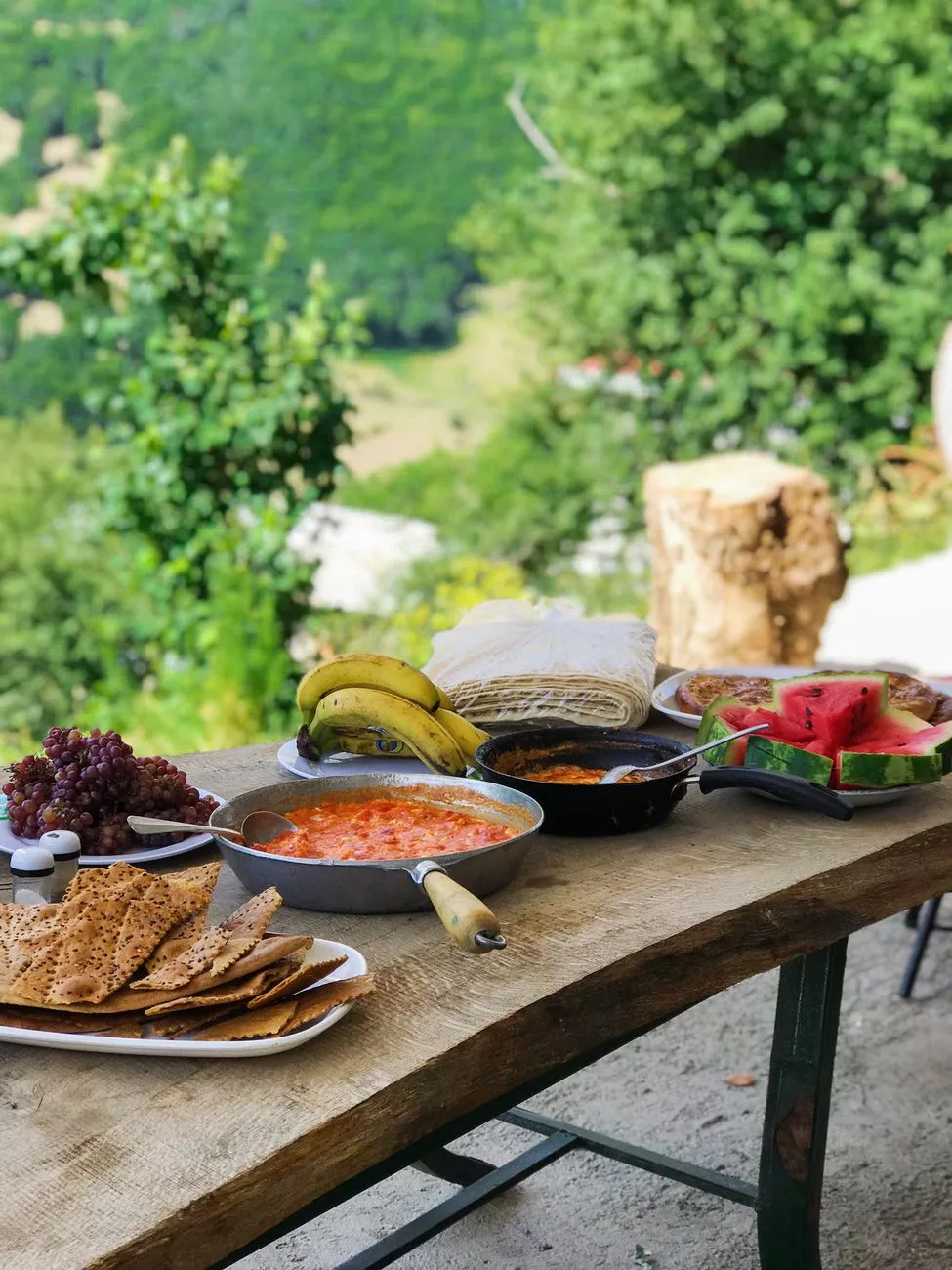

L'odeur du cumin grillé qui s'échappe d'une ruelle marocaine à l'aube. Le bruit sec d'une baguette qui craque entre les mains d'un boulanger parisien. La vapeur qui danse au-dessus d'un bol de pho vietnamien, portant avec elle l'histoire d'une nation. Depuis toujours, le voyageur mange pour survivre. Mais depuis le tournant du millénaire, une mutation silencieuse s'est opérée : le voyageur mange désormais pour comprendre. Le tourisme culinaire n'est plus une niche pour gourmets fortunés ; il est devenu le poumon vibrant de l'industrie du voyage, une boussole qui guide 93 % des touristes modernes vers l'authenticité. La Naissance d'un Mouvement : L'Année Zéro du Goût Tout bascule en 2001. Erik Wolf, président de la World Food Travel Association, pose sur le papier blanc les fondements théoriques d'une évidence : la nourriture n'est pas un accessoire du voyage, elle en est le cœur battant. Ce white paper ne se contente pas de définir un secteur ; il légitime une passion universelle. Il établit une distinction cruciale, souvent floue dans l'esprit du grand public : le tourisme culinaire est un enfant de la tourisme culturel, tandis que l'agritourisme relève du tourisme rural. Pourquoi cette nuance change-t-elle tout ? Parce que la cuisine est une « manifestation de la culture ». Quand vous goûtez un ceviche à Lima, vous ne mangez pas du poisson cru ; vous ingérez l'histoire précolombienne, l'apport japonais, la géographie de l'Humboldt et l'identité péruvienne contemporaine. L'agritourisme, lui, vous montre la racine ; le tourisme culinaire vous en fait goûter le fruit. Pourtant, comme le souligne si justement la définition, les deux sont « inextricablement liés » : les graines de la gastronomie germent dans le sillon de l'agriculture.L'Économie de l'Assiette : Quand le Touriste Devient Investisseur Les chiffres donnent le vertige. Selon la World Food Travel Association, les dépenses en nourriture et boissons représentent 15 % à 35 % de la totalité du budget touristique. Ce n'est pas une dépense contrainte, c'est un choix stratégique. Une étude de 2019 révèle une vérité brutale pour l'hôtellerie classique : 82 % des voyageurs dépensent davantage en restauration en voyage qu'à leur domicile. Le repas n'est plus une pause technique ; c'est l'événement principal. Des pays entiers ont pivoté leur stratégie nationale sur ce constat. L'Irlande, le Pérou, le Canada injectent des millions dans le développement de produits touristiques culinaires. Le retour sur investissement est mesurable : hausse du nombre de visiteurs, augmentation des nuitées, recettes fiscales accrues et, peut-être le plus précieux, une fierté communautaire ravivée. Quand une région valorise son terroir pour le voyageur, elle le réapprend à ses propres enfants. L'Immersion par le Feu : L'Essor des Cours de Cuisine Si le restaurant reste la vitrine, le cours de cuisine en est le backstage. Ce segment explose, offrant des formats allant de l'atelier de deux heures à la résidence immersive de plusieurs jours. La dynamique est fascinante : le touriste international cherche la cuisine du pays (le pad thai à Bangkok, la pasta à Bologne), tandis que le touriste local (le domestic tourist) cherche l'exotisme dans son pays (un cours de cuisine éthiopienne à Lyon, un atelier bbq coréen à Montréal). La vraie magie opère souvent hors des cuisines professionnelles. De plus en plus d'expériences s'invitent dans les foyers privés. Franchir le seuil d'une maison locale, s'asseoir à une table de cuisine formica, éplucher l'ail aux côtés d'une grand-mère qui ne parle pas votre langue : c'est là que se joue la diplomatie gastro-nomique la plus puissante. L'hôte et l'invité bénéficient d'un « échange interculturel » brut, sans filtre Instagrammable, où le geste culinaire devient langue universelle.La Ville se Mange à Pied : L'Épopée des Food Tours Paris, Rome, Florence, Toronto, Kuala Lumpur, Barcelone, Londres... La liste des capitales du food tour ressemble au palmarès des villes les plus visitées au monde. Mais le phénomène dépasse les métropoles. Le concept est souple : une déambulation guidée, ponctuée d'arrêts chez des artisans — fromager, boulanger, torréfacteur, distillateur — que le touriste seul n'aurait jamais osé pousser la porte. L'institutionnalisation de cette pratique passe par des dates symboliques. Le 10 juin 2017 marque la première National Food Tour Day. Le 18 avril 2018, la World Food Travel Association lance le World Food Travel Day. Ces journées ne sont pas de simples opérations marketing ; elles portent une mission gravée dans le marbre : « Préserver et promouvoir les cultures culinaires par l'hospitalité et le tourisme ». Chaque bouchée partagée lors de ces tours est un acte de résistance contre l'uniformisation du goût mondialisé.Au-Delà de l'Assiette : Le Spectre Infini de l'Expérience Alimentaire Réduire le tourisme culinaire au restaurant ou au cours de cuisine serait une erreur fatale. La définition officielle dresse un inventaire vertigineux d'activités :Les festivals (de la truffe d'Alba au homard du Maine) qui transforment un village en capitale éphémère. Les expériences de restauration spécialisée : dîner dans le noir, table du chef, pop-up éphémères en pleine nature. Le shopping de spécialités : marchés couverts, épiceries fines, caves à vin, où l'achat devient souvenir gustatif. La visite des sources : fermes, vignobles, oliveraies, ruchers, ports de pêche. Toucher la terre, sentir la cave, voir le filet se lever.Cette diversité prouve que le tourisme culinaire est bien une sous-catégorie du voyage expérientiel. Il ne s'agit pas de « manger bien », mais de « vivre à travers le manger ». Chaque touriste mange en moyenne trois fois par jour. Trois opportunités quotidiennes de connecter, d'apprendre, de dépenser localement. C'est ce qui en fait « l'un des moteurs économiques fondamentaux du tourisme ». Le Voyageur Gourmand : Nouveau Profil, Nouvelles Attentes Le profil du « foodie » touristique a muté. Il ne cherche plus seulement le macaron parfait ou l'étoile Michelin. Il traque l'unique, le mémorable, le « near and far » (proche et lointain). Il accepte de faire la queue deux heures pour un ramen dans un garage à Osaka, mais exige la traçabilité du bœuf dans son burger à Austin. Il veut rencontrer le producteur, comprendre la saisonnalité, respecter le terroir. Cette exigence force l'industrie à se professionnaliser. Les guides touristiques deviennent des sommeliers du territoire. Les offices de tourisme recrutent des chefs comme ambassadeurs. La signalétique des marchés s'adapte aux langues étrangères. L'écosystème entier — du producteur au serveur, en passant par le guide et le chauffeur de taxi — se restructure autour de la valeur « nourriture ». L'Avenir se Cuisine au Présent Alors que le tourisme de masse fait face à ses démons — surtourisme, empreinte carbone, déshumanisation —, le tourisme culinaire apparaît comme une voie de rédemption. Il oblige à la lenteur. Il valorise le local, le circuit court, le saisonnier. Il crée de la valeur là où l'agriculture peine à en générer. Il tisse du lien social là où le numérique l'effiloche. Les défis restent immenses : formation des acteurs, standardisation de la qualité sans perte d'âme, gestion des flux dans les ruelles étroites des marchés historiques, lutte contre le foodwashing (le greenwashing version food). Mais la trajectoire est tracée. Le voyageur du XXIe siècle ne demande plus « Qu'y a-t-il à voir ? » mais « Qu'y a-t-il à goûter ? ». Et dans cette question simple réside la promesse d'un tourisme plus humain, plus durable, infiniment plus savoureux.#TourismeCulinaire #VoyageGastronomique #FoodTravel #CultureAlimentaire #ExpérienceImmersive Related InsightsRatatouille with Herbs de Provence: A Symphony of Flavors and Antioxidants Koshari: The Ultimate Egyptian Street Food Bowl Char Siu Bao: The Fluffy BBQ Pork Bun{ "@context": "https://schema.org", "@type": "FAQPage", "mainEntity": [ { "@type": "Question", "name": "What is the main focus of Quand le Voyage se Déguste : L'Art Invisible du Tourisme Culinaire?", "acceptedAnswer": { "@type": "Answer", "text": "Explorez l'essor du tourisme culinaire, de ses racines agricoles aux expériences immersives qui redéfinissent l'économie du voyage mondial." } }, { "@type": "Question", "name": "Who authored the comprehensive guide on Quand le Voyage se Déguste : L'Art Invisible du Tourisme Culinaire?", "acceptedAnswer": { "@type": "Answer", "text": "This detailed article and its insights were carefully researched and authored by Chloe Blanc." } }, { "@type": "Question", "name": "Where can I find more related content about Food?", "acceptedAnswer": { "@type": "Answer", "text": "You can explore more articles, detailed reviews, and similar insights by browsing the Related Insights section at the bottom of this article or visiting our dedicated Food category page." } } ] }


The smoke rising from a clay comal in a Oaxacan kitchen carries more than aroma; it carries a payload of volatile organic compounds synthesized through rigorous thermal degradation. To the uninitiated, mole is a sauce. To the chemist, it is a colloidal suspension stabilized by emulsified lipids and plant mucilages, flavored by the Maillard reaction’s deepest notes. I have spent years chasing the ghost of mole negro across the valleys of Oaxaca, watching abuelas manipulate thermodynamics with nothing but a wooden paddle and generational intuition. What follows is a deconstruction of that intuition, translated into the language of molecules. The Alchemy of the Comal: Toasting the FoundationThe journey of mole begins not with liquid, but with the aggressive dehydration and carbonization of raw ingredients on the comal. This is where the Maillard reaction—technically a non-enzymatic browning reaction between reducing sugars and amino acids—does its heavy lifting. When dried chilhuacle negro, mulato, and pasilla chilies hit the hot clay, surface temperatures exceed 150°C (302°F) rapidly. Water activity ($a_w$) plummets, concentrating precursors. The reaction cascades through Amadori rearrangement into advanced glycation end-products (AGEs), generating pyrazines, furans, and thiophenes. These heterocyclic compounds are the architects of the "roasted" descriptor: 2-acetyl-1-pyrroline (popcorn/nutty), 2,3-diethyl-5-methylpyrazine (earthy/roasted), and 2-furfurylthiol (coffee/meaty). Simultaneously, pyrolysis of pectin and cellulose in the chili skins creates phenolic volatiles—guaiacol and syringol—imparting that unmistakable smoke signature. But control is paramount. A chilhuacle burns in seconds; its thin pericarp offers zero insulation. The abuela’s hand speed modulates the thermal flux, preventing the formation of acrid, bitter benzopyrenes while maximizing flavor-active pyrazines. This is precision thermodynamics executed without a thermocouple. The toasted chilies are then rehydrated, a process governed by Fickian diffusion. Water penetrates the glassy matrix of the dried tissue, plasticizing the cell walls and allowing the solubilization of capsaicinoids and colorants (capsanthin, capsorubin) into the soaking liquid—liquid that is never discarded, for it holds the water-soluble fraction of the flavor architecture. Chilhuacle Negro: The Soul of Oaxaca’s Black Gold If mole is a symphony, the chilhuacle negro (Capsicum annuum var. chilhuacle) is the solo violin—rare, expensive, and irreplaceable. Endemic to the Cañada region of Oaxaca, this chili possesses a unique phytochemical profile driven by terroir-specific stressors: high UV radiation, mineral-rich volcanic soils, and water scarcity. These stressors upregulate the phenylpropanoid pathway, boosting flavonoid and capsanthin production far beyond commercial varieties like ancho or pasilla. Analytically, chilhuacle negro presents a capsaicinoid profile heavily skewed toward dihydrocapsaicin and nordihydrocapsaicin rather than capsaicin itself. This structural nuance—specifically the saturation of the vanillyl amide side chain—alters the binding kinetics to the TRPV1 receptor. The result is a "flatter," more persistent heat that lingers in the throat rather than exploding on the tongue, a critical sensory attribute for a sauce meant to be eaten by the spoonful over turkey. Furthermore, the pericarp contains exceptionally high levels of chlorophyll derivatives (pheophytins) which, upon the alkaline nixtamalization of the corn tortillas often served alongside, or the simple heat of the mole, degrade into the deep, inky black pigments that give mole negro its name. Substituting ancho chilies yields a reddish-brown sauce lacking the spectral absorption properties—the true "black"—that defines the dish visually and chemically. Seeds, Nuts, and the Architecture of BodyA mole without body is merely a spicy broth. The viscosity and mouthfeel—the "cuerpo"—are engineered through a sophisticated lipid-polysaccharide matrix. The traditional trio: pepitas (pumpkin seeds), cacahuates (peanuts), and ajonjolí (sesame seeds), contributes distinct rheological modifiers. Pumpkin seeds are rich in globulin proteins and phospholipids (lecithin). When toasted and ground on the metate (volcanic stone), the mechanical shear forces rupture oleosomes (oil bodies), releasing triglycerides and exposing phospholipid membranes. These phospholipids act as natural emulsifiers, stabilizing the oil-in-water emulsion against coalescence via steric hindrance and electrostatic repulsion (zeta potential). Peanuts contribute arachidic and behenic acids—long-chain saturated fatty acids (C20:0, C22:0)—which crystallize in the $\beta'$ polymorph upon cooling, providing a structured fat network that resists syneresis (weeping) during the long simmer. Sesame seeds bring lignans (sesamin, sesamolin) and high-molecular-weight polysaccharides. These polysaccharides hydrate into a weak gel network, increasing the continuous phase viscosity. The metate is not merely a grinder; it is a high-shear homogenizer. The stone’s porosity absorbs excess oil, while the curved motion creates elongational flow, aligning polysaccharide chains and reducing particle size to sub-50 microns—below the threshold of human tactile detection (grittiness). This particle size reduction exponentially increases the surface area for enzymatic hydrolysis during the simmer, releasing bound phenolics and free fatty acids that further modulate flavor release kinetics. Chocolate’s Late Arrival: Bitterness as Balance The inclusion of chocolate (cacao) in mole is a post-Columbian synthesis, yet it is now chemically indispensable. We are not talking about Swiss milk chocolate. We speak of chocolate de metate: roasted cacao nibs, sugar, cinnamon, and almonds, ground to a paste where particle size hovers around 20-30 microns. The chemistry here revolves around theobromine (3,7-dimethylxanthine) and polyphenol polymerization. Cacao contributes roughly 1-2% theobromine by weight. Theobromine is a competitive antagonist at adenosine receptors and a phosphodiesterase inhibitor, but in the context of mole, its primary role is sensory: a clean, alkaloid bitterness that counters the sweetness of the chilhuacle’s natural sugars and the raisins/plantains often added. More critically, cacao brings procyanidins (condensed tannins). These oligomeric flavan-3-ols interact with salivary proline-rich proteins (PRPs), causing astringency—a tactile "drying" sensation. In mole, this astringency is tamed by the high lipid content (peanut/sesame oil) and the mucilaginous polysaccharides from the seeds and chili skins. Lipids bind tannins via hydrophobic interactions, precipitating them out of the saliva interaction pathway. This molecular "quenching" transforms a harsh astringency into a velvety, coating mouthfeel—what food rheologists term "lubrication efficacy." The cinnamon (Cinnamomum verum) added to the chocolate paste contributes cinnamaldehyde and eugenol, volatile phenylpropanoids that lift the heavy base notes into the nasal cavity via retronasal olfaction, completing the flavor circle. The Molecular Dance: Hydrocolloids and Flavor ReleaseThe final simmer—often three to four hours—is a reactor vessel for hydrocolloid chemistry. The primary thickeners are not added starches (flour, cornstarch) but endogenous polysaccharides: pectin from chili skins and tomatillos/tomatoes, galactomannans from pepitas, and arabinoxylans from the tortillas or bolillos (bread) used as thickeners. At a simmer (95-98°C), these polymers undergo conformational changes. Pectin demethoxylation (catalyzed by the sauce's natural acidity, pH ~4.5-5.0) allows calcium cross-linking (egg-box model), forming a weak gel network. Simultaneously, starch granules from the bread/tortillas swell and burst (gelatinization), leaching amylose into the continuous phase. This creates a "dual-network" gel: a particulate network of swollen starch granules embedded in a continuous polysaccharide mesh. This structure dictates flavor release. Hydrophobic volatiles (pyrazines, terpenes from spices like clove, cumin, anise) partition into the lipid droplets. Their release is governed by the partition coefficient ($K_{oil/water}$) and the diffusion path length through the gel matrix. The gel slows diffusion, creating a sustained release profile—flavors arrive in waves: first the high-volatility top notes (cinnamon, clove), then the mid-palate earthiness (cumin, chili), finishing with the persistent bitterness of theobromine and the capsaicin burn. Mechanical shear from stirring aligns the polymers, inducing shear-thinning (non-Newtonian behavior). The sauce flows under the spoon but clings to the turkey. This rheological fingerprint—yield stress ~5-10 Pa, viscosity ~500-1000 cP at 50 s⁻¹—is the gold standard of mole negro. Chemical Fingerprint of Core Mole Negro IngredientsIngredient Key Volatile Compounds (GC-MS) Primary Non-Volatile Actives Functional Role in MatrixChilhuacle Negro Guaiacol, Syringol, 2-Isobutyl-3-methoxypyrazine Capsanthin, Capsorubin, Dihydrocapsaicin Color (Black), Heat (Persistent), Smoky AromaPasilla de Oaxaca β-Damascenone, 3-Methylbutanal, Hexanal Quercetin glycosides, Chlorogenic acid Fruity/Floral notes, Antioxidant capacityPepitas (Pumpkin Seeds) 2-Acetyl-1-pyrroline, Pyrazines (toasted) Δ7-Sterols, Tocopherols, Lecithin Emulsification (Lecithin), Nutty Aroma, Oil BodyCacao (Metate) 2-Phenylethanol, 3-Methylbutanal, Dimethylpyrazine Theobromine, Epicatechin, Procyanidins B2/B5 Bitterness, Astringency modulation, Flavor depthSesame Seeds 2-Furfurylthiol, Pyrroles (toasted) Sesamin, Sesamolin, Mucilage (Galactomannan) Oxidative stability (Lignans), Viscosity (Mucilage)Clove (Clavo) Eugenol (70-85%), β-Caryophyllene, Eugenyl acetate Eugenol glycosides Antimicrobial, Potent spicy/top note, TRPV1 agonistPlantain (Macho) Esters (Isoamyl acetate), Lactones Resistant Starch, Pectin Sweetness, Body/Thickening (Starch/Pectin)Serving the Legacy: A Bowl of History The bowl placed before you—a dark, glistening mirror reflecting the kitchen light—is the culmination of a multi-variable optimization problem solved over centuries. It represents a masterclass in colloidal science, enzymatic management, and volatile organic chemistry, executed without a single laboratory instrument. The turkey leg submerged in that sauce is not merely protein; it is a substrate for the sauce’s proteases (from chili, tomatillo) to slowly hydrolyze collagen into gelatin, further enriching the matrix. To eat mole is to participate in a chemical reaction. Your saliva introduces amylases that attack the starch network, thinning the sauce on the tongue. Your tongue’s TRPV1 receptors fire in response to dihydrocapsaicin. Your olfactory epithelium captures the retronasal plume of pyrazines and eugenol. It is a full-spectrum sensory event, engineered by the women of Oaxaca who understood that flavor is not in the ingredient, but in the transformation. They manipulated time, temperature, shear, and pH to coax flavor from reluctance. When I taste it now, I do not just taste chocolate and chili. I taste the Maillard reaction on a clay griddle. I taste the phospholipid bilayer of a pumpkin seed rupturing under volcanic stone. I taste the polymerization of procyanidins tamed by peanut oil. I taste chemistry, perfected by love.#Oaxaca #MoleNegro #FoodScience #CulinaryChemistry #MexicanCuisine Related InsightsSalsify: The Oyster Plant's Whispering Secret Through Culinary Eras The Obscure Origins and Transcendent Transformation of Cacao's Dark Heart Savor the World: The Ultimate Guide to the Planet’s Most Exquisite Food Markets{ "@context": "https://schema.org", "@type": "FAQPage", "mainEntity": [ { "@type": "Question", "name": "What is the main focus of The Alchemy of Oaxaca: Decoding the Molecular Symphony of Mole Negro?", "acceptedAnswer": { "@type": "Answer", "text": "Explore the rigorous biochemistry behind Oaxaca's Mole Negro, from Maillard reactions on the comal to the hydrocolloid matrix that defines its legendary texture." } }, { "@type": "Question", "name": "Who authored the comprehensive guide on The Alchemy of Oaxaca: Decoding the Molecular Symphony of Mole Negro?", "acceptedAnswer": { "@type": "Answer", "text": "This detailed article and its insights were carefully researched and authored by Kenji Sato." } }, { "@type": "Question", "name": "Where can I find more related content about Food?", "acceptedAnswer": { "@type": "Answer", "text": "You can explore more articles, detailed reviews, and similar insights by browsing the Related Insights section at the bottom of this article or visiting our dedicated Food category page." } } ] }

-
 Omar Al-Hassan
 - 25 Sep, 2026 11:54
Quantum Machine Learning for Drug Discovery: Accelerating Molecular Simulation
The Quantum Leap in Molecular Design The convergence of quantum information theory and machine learning is reshaping the landscape of pharmaceutical research. Recent advances in quantum channel discrimination, epitomized by the Quantum Channel Stein Theorem beyond definite causal order, demonstrate that adaptive measurement strategies confer no asymptotic advantage over parallel protocols when distinguishing memoryless quantum channels. This result, rooted in the continuity of the regularized sandwiched Rényi channel divergence at order one, provides a rigorous foundation for designing quantum‑enhanced classifiers that operate at the fundamental limits of hypothesis testing. Simultaneously, the study of disorder‑driven Weyl semimetal‑to‑metal transitions reveals an upper critical dimension of four, where correlation‑length exponents approach 0.5 and dynamic scaling exponents lock to z≈d/2. These insights into critical phenomena guide the construction of noise‑resilient ansätze for molecular Hamiltonians, because the same renormalization‑group machinery that govern Related InsightsThe Dawn of Cognitive Machinery: A Comprehensive Exploration of Large Language Models Beyond the Horizon of 5G: Unlocking the Secrets of 6G Wireless Standards Mind Meld: Unlocking the Potential of Brain-Computer Interfaces{ "@context": "https://schema.org", "@type": "FAQPage", "mainEntity": [ { "@type": "Question", "name": "What is the main focus of Quantum Machine Learning for Drug Discovery: Accelerating Molecular Simulation?", "acceptedAnswer": { "@type": "Answer", "text": "Exploring how quantum channel theory and variational algorithms converge to accelerate molecular simulation for pharmaceutical breakthroughs." } }, { "@type": "Question", "name": "Who authored the comprehensive guide on Quantum Machine Learning for Drug Discovery: Accelerating Molecular Simulation?", "acceptedAnswer": { "@type": "Answer", "text": "This detailed article and its insights were carefully researched and authored by Omar Al-Hassan." } }, { "@type": "Question", "name": "Where can I find more related content about Technology?", "acceptedAnswer": { "@type": "Answer", "text": "You can explore more articles, detailed reviews, and similar insights by browsing the Related Insights section at the bottom of this article or visiting our dedicated Technology category page." } } ] }

-
 Hans Müller
 - 25 Sep, 2026 10:48
Wenn Heilung Reisen Lernt: Die Alte Und Neue Welt Des Medizintourismus
Der Wind über dem Saronischen Golf trägt noch heute den Duft von Pinien und altem Stein. Vor tausenden Jahren war es nicht der Ruf nach billigeren Preisen oder kürzeren Wartezeiten, der Pilger an diese Küste trieb – es war die nackte Hoffnung. Sie kamen nach Epidauria, zum Heiligtum des Asklepios, dem Gott der Heilkunst. Hier, in den Schatten der Tempel, schliefen die Kranken in der Enkoimesis, dem heiligen Traumschlaf, in der Erwartung, dass der Gott selbst im Traum die Therapie offenbare. Es war der Ursprung einer Bewegung, die die Menschheit bis heute nicht loslässt: die Suche nach Heilung jenseits der eigenen Haustür. Was einst ein Akt tiefer Spiritualität war, hat sich zu einem globalen Wirtschaftszweig von atemberaubender Dimension gewandelt. Der Medizintourismus – oder präziser: der Health Tourism – ist längst keine Randerscheinung mehr. Er ist ein Spiegelbild globaler Ungleichgewichte, ein Seismograf für die Versäumnisse nationaler Gesundheitssysteme und gleichzeitig ein Treiber medizinischer Innovation. Die Datenlage ist eindeutig: Patienten strömen über Grenzen, getrieben von einer Mischung aus Notwendigkeit, Kalkül und dem ur menschlichen Wunsch nach Unversehrtheit. Die Wiege Der Heilkunst: Von Epidauria Zu Den Kurorten Europas Die Geschichte kennt keine harten Schnitte, nur fließende Übergänge. Nachdem der Kult um Asklepios verblasste, übernahmen im 18. Jahrhundert die europäischen Spa-Towns die Rolle der Hoffnungsträger. Orte wie Bath, Baden-Baden oder Karlsbad wurden zu Magneten für das adelige und bürgerliche Europa. Man trank und badete in mineralhaltigen Quellen, um Gicht, Leberleiden und Bronchitis zu lindern. Es war "Medical Tourism" avant la lettre – exklusiv, sozial codiert, aber strukturell identisch mit dem heutigen Phänomen: Reisen zum Zwecke der Gesundheitswiederherstellung, weil die lokale Versorgung als unzureichend oder schlicht nicht existent galt. Doch die Pole haben sich verschoben. Historisch gesehen war die Route klar definiert: Vom globalen Süden in den Norden, von den weniger entwickelten Regionen in die High-Tech-Zentren der westlichen Welt. Man reiste hin zur Expertise. Heute? Heute ist die Landkarte der Patientenströme ein wildes Durcheinander aus Nord-Süd, Süd-Nord, Ost-West und allen Richtungen dazwischen.Die Ökonomie Der Wartezeit: Warum Der Westen In Den Osten Schaut Die Treiber dieser Umkehr sind so profan wie mächtig: Kosten und Zeit. In den Vereinigten Staaten, dem teuersten Gesundheitssystem der Welt, ist der Preisunterschied der wohl stärkste Magnet. Ein Beispiel, das wie ein Donnerschlag wirkt: Eine Lebertransplantation, die in den USA rund 300.000 US-Dollar verschlingt, kostet in Taiwan lediglich etwa 91.000 US-Dollar. Ein Bruchteil. Kein Wunder also, dass Prognosen – wie jene von Deloitte Consulting aus dem Jahr 2008 – bereits vor über einem Jahrzehnt eine Verzehnfachung des aus den USA ausgehenden Medizintourismus vorhersagten. 750.000 Amerikaner suchten 2007 im Ausland Behandlung; für 2008 wurden bereits 1,5 Millionen erwartet. Das Potenzial, dem US-Gesundheitssystem Milliarden an Einnahmen zu entziehen, war und ist real. In Europa, insbesondere im Vereinigten Königreich, tickt die Uhr anders. Hier ist es nicht primär der Preis – der NHS ist für den Patienten am Point of Service kostenlos –, es ist die Wartezeit. Die Vermeidung von Wartelisten ist der führende Faktor für britischen Medizintourismus. Man zahlt mit Geld, um Zeit zu kaufen. Zeit, die in öffentlichen Systemen oft Mangelware ist. Kanada liefert dazu das paradigmatische Beispiel: 2005 warteten schätzungsweise 782.936 Patienten durchschnittlich 9,4 Wochen. Für eine Hüftprothese standen 26 Wochen Wartezeit an, für eine Katarakt-OP 16 Wochen. In einem System, das Wartezeit-Benchmarks für nicht-dringende Eingriffe festlegt, wird die Flucht ins Ausland zur rationalen Überlebensstrategie. Die Globale Landkarte Der Heilung: Wo Die Welt Operieren Lässt Die Liste der Zielländer liest sich wie ein "Who is Who" der aufstrebenden und etablierten Medizinmächte. Kanada, Kuba, Costa Rica, Indien, Israel, Jordanien, Malaysia, Mexiko, Singapur, Südkorea, Taiwan, Thailand, Türkei, Vereinigte Staaten – sie alle buhlen um den internationalen Patienten. Doch die Spezialisierung ist feingliedriger. Für ästhetische Chirurgie – ein gewaltiger Marktsegment – verschiebt sich der Fokus: Brasilien, Kolumbien, Costa Rica, Tschechien, Dominikanische Republik, Ägypten, Griechenland, Iran, Indien, Italien, Libanon, Malaysia, Mexiko, Polen, Südkorea, Türkei, Thailand. Hier mischen sich medizinische Exzellenz mit touristischen Annehmlichkeiten. Der "Recovery-Urlaub" am Strand von Phuket oder in den Anden wird Teil des Therapieplans.Indien nimmt dabei eine Sonderstellung ein. Manish Chandra, Mitbegründer von Vaidam Health, beschreibt den Subkontinent als "rasant expandierenden Sektor". Die Projektion, dass die indische Gesundheitsindustrie bis 2020 die Marke von 280 Milliarden Dollar erreichen würde, unterstreicht den Anspruch: Kosteneffizienz, Geschwindigkeit, spezialisierte Fachkräfte und fortschrittliche Behandlungsoptionen, die anderswo fehlen oder unerschwinglich sind. Auch die Harvard Business School konstatierte bereits, dass Medizintourismus im Vereinigten Königreich weit aggressiver beworben werde als in den USA – ein Zeichen dafür, wie sehr öffentliche Systeme unter Druck geraten, Alternativen zu legitimieren. Jenseits Des Skalpells: Fruchtbarkeit, Seltene Leiden & Die Letzte Reise Doch Medizintourismus ist kein reines Domäne der Chirurgen. Dental Tourism und Fertility Tourism sind gewaltige Säulen. Paare reisen für In-vitro-Fertilisation (IVF), Leihmutterschaft oder das Einfrieren von Embryonen ("retro-production") über halbe Kontinente. Rechtliche Rahmenbedingungen sind hier oft der eigentliche Kompass. Wenn die Heimat die Eizellspende verbietet oder Leihmutterschaft kriminalisiert, wird die Grenze zur Brücke. Menschen mit seltenen Erkrankungen (Orphan Diseases) werden zu unfreiwilligen Globetrottern. Sie pilgern dorthin, wo die Fallzahlen hoch genug sind, damit Ärzte Routine entwickeln – wo die "Behandlung besser verstanden wird". Und das Spektrum reicht bis zum Lebensende: Psychiatrie, Alternativmedizin, Rehabilitationspflege und sogar Bestattungsdienstleistungen fallen unter den weiten Begriff des Health Tourism. Wellness-Tourismus als präventiver Bruder rundet das Bild ab: Von der Kur zur Prävention, von der OP zur Reha, von der Geburt bis zur Beerdigung – der Gesundheitsmarkt kennt keine nationalen Grenzen mehr. Das Graue Gebiet: Circumvention Tourism & Rechtliche Schatten Hier betreten wir minenreiches Terrain. Circumvention Tourism – Umgehungstourismus – bezeichnet das Reisen, um medizinische Leistungen in Anspruch zu nehmen, die im Heimatland illegal sind, am Zielort aber legal. Das ist der Punkt, an dem Medizin zu Politik wird.Fruchtbarkeitsbehandlungen, die im Heimatland (noch) nicht zugelassen sind. Schwangerschaftsabbrüche. Besonders in Europa, wo offene Grenzen kurze Wege ermöglichen, ist "Abortion Tourism" Realität. Polen, mit seinen extrem restriktiven Abtreibungsgesetzen, weist eine der höchsten Raten an Circumvention Tourism auf. Frauen reisen nach Deutschland, Tschechien oder die Niederlande. Es ist ein stiller Exodus, getrieben von Gesetzen, nicht von medizinischer Notwendigkeit allein. Arztbeistellter Suizid. Ein Tabuthema, das Destinationen wie die Schweiz (mit Organisationen wie Dignitas) zu Zielen für einen endgültigen "medizinischen" Trip macht.Diese Form des Tourismus legt die Widersprüche globaler Rechtsordnungen schonungslos offen. Der Körper wird zum Schlachtfeld nationaler Souveränität.Vertrauen Als Währung: Intermediäre, US-Chirurgen In Mexiko & Nachsorge Wer sich in ein fremdes Gesundheitssystem begibt, braucht einen Lotse. Medical Tourism Provider haben sich als Intermediäre etabliert. Sie vernetzen Patienten mit Chirurgen, Kliniken und Organisationen. Ein faszinierendes Modell: US-Chirurgen, die sich bei diesen Providern registrieren, um in Mexiko amerikanische Patienten zu operieren. Die Logik ist bestechend: Die Kostenstruktur Mexikos nutzen, aber das Vertrauen in die US-amerikanische Ausbildung und Zertifizierung (Board Certification) als Verkaufsargument nutzen. Ziel: Selbstversicherte US-Arbeitgeber (Self-insured Employers) davon zu überzeugen, diese Option ihren Mitarbeitern anzubieten – Kostensenkung bei angeblich gleichbleibender Qualität. Professionelle Anbieter stellen Nurse Case Manager zur Seite, die prä- und postoperativ betreuen. Die Nachsorge nach der Rückkehr ("Follow-up care") ist der kritische Punkt, an dem viele Modelle scheitern oder glänzen. Wer operiert in Bangkok, muss in Boston nachkontrollieren lassen – ein logistischer und haftungsrechtlicher Drahtseilakt. Regulatorische Hürden: FDA, EMA & Der Zugang Zur Innovation Ein oft übersehener Treiber ist die Regulatorik. Die Food and Drug Administration (FDA) in den USA oder die European Medicines Agency (EMA) entscheiden über Leben und Tod neuer Medikamente und Therapien – aber nur für ihre Jurisdiktion. Wenn ein lebensverlängerndes Medikament in Japan oder der EU zugelassen ist, in den USA aber noch in Phase 3 steckt, wird der Flug nach Tokio oder Frankfurt zur Überlebensstrategie. Patienten werden zu "Regulatory Refugees". Sie reisen nicht, weil es billiger ist, sondern weil es möglich ist. Der Zugang zu nicht-lizenzierten oder nicht-verfügbaren Therapien ist ein mächtiger, oft lebenswichtiger Motor. Risikowahrnehmung & Politische Stürme Die Wahrnehmung ist gespalten. In den USA, wo Qualitätsstandards (Joint Commission, CMS) als Goldstandard gelten, wird Medizintourismus oft als riskant betrachtet. Infektionsraten, Nachsorgelücken, rechtliche Durchsetzbarkeit bei Kunstfehlern – die Skepsis sitzt tief. Hinzu kommen geopolitische Faktoren. Politische Instabilität, Sanktionen, Reisebeschränkungen oder diplomatische Krisen können Patientenströme über Nacht umlenken. Ein Land, das gestern Top-Destination für Schönheits-OPs war, ist morgen wegen Reisehinweisen tabu. Die Gesundheit des Patienten wird zur Geisel der Außenpolitik. Die Zwei Gesichter Der Qualität: Akkreditierung Als Anker Wie navigiert man als Patient durch diesen Dschungel? Internationale Akkreditierung (z. B. Joint Commission International - JCI) ist zum Qualitätssiegel geworden. Kliniken in Bangkok, Neu-Delhi, Istanbul oder Mexiko-Stadt investieren Millionen, um westliche Standards zertifizieren zu lassen. Sie bauen "Hospitals within Hospitals" – luxuriöse Flügel für internationale Patienten, getrennt von der oft überlasteten Regelversorgung der Einheimischen. Das wirft ethische Fragen auf: Two-Tier Medicine im eigenen Land, finanziert durch ausländische Devisen. Doch für den einzelnen Patienten ist das Zertifikat oft der einzige Anker in der Unsicherheit.Quo Vadis, Medicus Viator? Die Daten zeigen eine ungebrochene Dynamik. Die Alterung der westlichen Gesellschaften, die Kostenexplosion bei neuen Therapien (Gen-, Zelltherapien), der globale Fachkräftemangel und die Digitalisierung (Telemedizin als Vor- und Nachbereitung) werden den Medizintourismus weiter befeuern. Wir stehen erst am Anfang einer Ära, in der der Patientenfluss so selbstverständlich wird wie der Warenfluss. Die Reise nach Epidauria dauerte Wochen, der Traumschlaf Nächte. Heute bucht man den Flug per App, die Videokonsultation mit dem Chirurgen in Seoul findet am Laptop statt, und die OP ist für nächsten Dienstag terminiert. Die Technologie hat sich radikal gewandelt, der Kern aber nicht: Ein Mensch in Not sucht einen Ort, an dem Heilung versprochen wird. Ob dieser Ort ein Marmortempel in Griechenland, ein Kurhaus im Schwarzwald oder eine High-Tech-Klinik in Bangkok ist – die Sehnsucht nach Unversehrtheit kennt keine Grenzen. Wir sollten aufhören, Medizintourismus als "Ausweichmanöver" zu betrachten. Er ist ein Korrektiv. Er zwingt nationale Systeme zur Effizienz, treibt Transparenz bei Preisen und Qualitäten voran und democratisiert den Zugang zu Spitzenmedizin – wenn auch unvollkommen und ungleich verteilt. Die Aufgabe der Zukunft ist nicht, ihn zu stoppen, sondern ihn sicher, ethisch und fair zu gestalten. Damit der Traum von der Heilung nicht zum Albtraum wird.#MedicalTourism #HealthTravel #GlobalHealthcare #PatientJourney #MedicalTravel

-
 Aisha Sharma
 - 24 Sep, 2026 21:44
The Silk Road Rediscovered: Navigating the Ancient Caravanserais of Central Asia
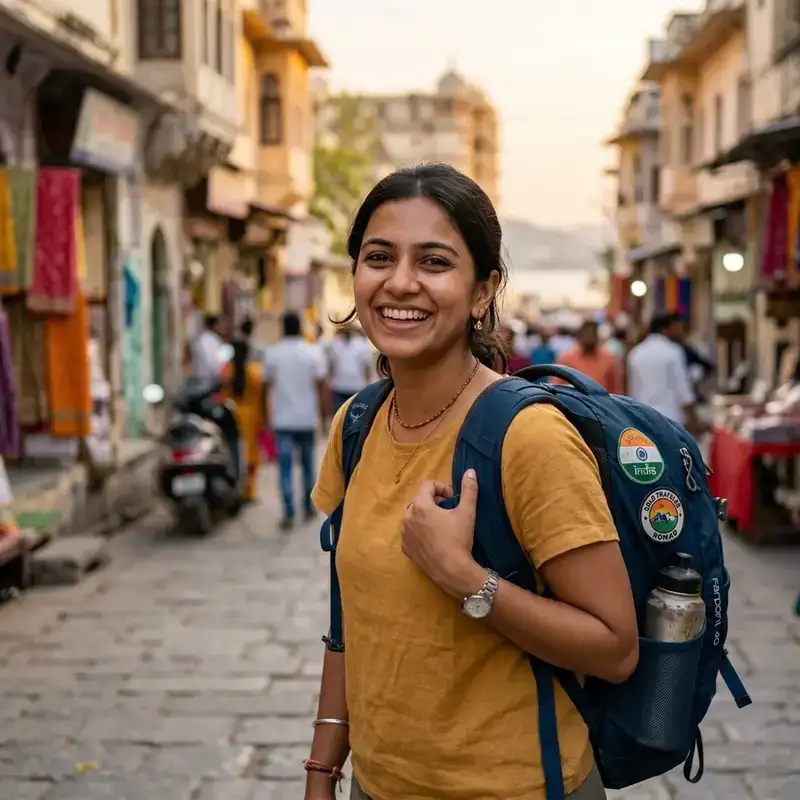
The Silk Road was never a single highway; it was a living network of oases, mountain passes, and bustling markets stitched together by the humble caravanserai. These fortified inns offered shelter, fresh water, and a place to trade news as readily as silk, spices, or ideas. Today, the stone arches of those waystations still stand across Uzbekistan, Kyrgyzstan, Kazakhstan, Turkmenistan, and Tajikistan, inviting modern travelers to step into a narrative that spans millennia. Whether you are a history‑obsessed backpacker, a digital nomad chasing reliable Wi‑Fi in a courtyard of turquoise tiles, or a photographer hunting the perfect light on a domed roof, the surviving caravanserais deliver an authentic pulse of the past that no museum replica can replicate. Whispers of the Dunes: Khiva’s Living MuseumKhiva, a UNESCO World Heritage site, feels less like a city and more like a time capsule from the Silk Road era. The inner fortress, Ichan Kala, houses a cluster of restored caravanserais that once accommodated camel caravans laden with Chinese porcelain and Persian carpets. The most iconic, the Kalta Minor Minaret complex, includes a vaulted courtyard where merchants tethered their beasts beneath a canopy of blue‑glazed bricks. Walking the narrow lanes, you can still see the original “suv” (water) channels that fed both humans and animals, a hydraulic ingenuity that predates modern plumbing by centuries. For the digital nomad, Khiva offers a rare blend of atmosphere and connectivity. According to Numbeo’s crowdsourced data, a modest one‑bedroom apartment in the historic centre rents for roughly $250‑$300 per month, while a high‑speed internet package averages $15‑$20. Cafés tucked into former caravanserai cells serve strong Uzbek coffee and reliable Wi‑Fi, making deep‑work sessions feel like a scholarly retreat. Safety scores on Numbeo place Khiva well above the regional average, with a crime index below 20, so evening strolls through the moonlit arches are both inspiring and secure. Beyond the main tourist circuit, the Kunya‑Ark Citadel houses a lesser‑known caravanserai that now functions as a craft workshop. Artisans demonstrate silk‑weaving techniques unchanged since the 14th century, and visitors can purchase hand‑loomed fabrics directly from the loom. The site’s preservation plan, funded jointly by the Uzbek government and UNESCO, emphasizes adaptive reuse—keeping the stones alive with contemporary purpose rather than fossilizing them behind glass. Practical tip: Arrive early (before 9 am) to avoid tour groups and capture the courtyard’s geometric shadows at their sharpest. A local guide can unlock the “hidden hammam” beneath the main hall, a subterranean bathhouse once reserved for high‑ranking merchants. Bring a reusable water bottle; the ancient “suv” channels still run, and the water is potable after a quick filter. Stone Sentinels of the Steppe: Tash Rabat and the Kyrgyz HighlandsPerched at 3,200 meters on the ancient “Great Silk Road” branch that linked Kashgar to Lake Issyk‑Kul, Tash Rabat is a stone‑built caravanserai that feels more like a fortress than an inn. Its massive basalt walls, each over a meter thick, enclose a central courtyard flanked by 31 vaulted chambers—each designed to house a merchant, his goods, and a pair of camels. The structure’s orientation follows the cardinal points, a deliberate design that maximized solar gain in winter and shade in summer. Reaching Tash Rabat requires a 4‑hour drive from Naryn on a partially paved mountain road that climbs through the “Kyzyl‑Art” pass. The journey itself is a pilgrimage: yurts dot the valleys, herders wave from horseback, and the air carries the scent of juniper and fermented mare’s milk (kumis). Numbeo lists Naryn’s cost of living at roughly $350‑$400 per month for a modest lifestyle, with internet packages around $25—slightly higher than Khiva due to the remote terrain. The caravanserai’s interior remains remarkably intact. Archaeologists have uncovered “tandoor” ovens, grain silos, and a sophisticated “qanat” drainage system that channeled meltwater away from the sleeping quarters. Recent restoration, financed by the World Monuments Fund, replaced collapsed roof sections with locally quarried stone, preserving the original “corbelled” vaulting technique. Visitors can now spend a night in a restored chamber, sleeping on felt mats while the wind whistles through the stone lintels—a rare chance to experience the Silk Road as a traveler, not a spectator. For those planning a multi‑day trek, the nearby “Kara‑Kul” lake offers a high‑altitude campsite with basic facilities. Local tour operators provide “horse‑back” packages that follow the historic caravan trail to “Kashgar” (now in China), though border permits are required. Digital nomads should note that mobile coverage is spotty; a satellite hotspot is advisable if uninterrupted connectivity is essential. Blueprint of Hospitality: Bukhara’s Timeless InnsBukhara, the “City of a Thousand Minarets,” boasts a concentration of caravanserais unmatched anywhere on the route. The “Caravanserai of Sayfuddin” (also known as “Tim‑Abdullah”) sits directly opposite the “Kalyan Minaret”, its massive wooden gates still swinging on iron hinges forged in the 16th century. Inside, a double‑height arcade runs the length of the courtyard, each bay once rented to a different guild—spice merchants, textile traders, metalworkers—creating a micro‑economy that mirrored the macro‑trade of the Silk Road. Modern Bukhara has leveraged this heritage for tourism without sacrificing authenticity. The “Bukhara Silk Road Festival” each May transforms the caravanserai courtyards into open‑air galleries, where calligraphers, miniature painters, and “dutar” musicians perform. Numbeo data shows a comfortable one‑bedroom in the old town averages $300‑$350, while coworking spaces like “Silk Hub” charge $80‑$100 per month for a dedicated desk and high‑speed fiber. A hidden gem lies beneath the “Mir-i-Arab Madrasa”: a subterranean “sardoba” (water reservoir) that once supplied the entire caravanserai complex. Guided tours reveal the “karez” engineering—vertical shafts linked by gently sloping tunnels—that transported groundwater from the “Zarafshan” mountains over 30 kilometers. The system’s resilience is a testament to the hydraulic mastery that sustained desert commerce for centuries. Food lovers should not miss the “Plov” prepared in a “kazan” (cast‑iron cauldron) within the caravanserai’s communal kitchen. The recipe, passed down through generations of “oshpaz” (master chefs), includes “devzira” rice, “quince”, and a secret blend of “cumin, coriander, and barberries”. Sharing a plate with local artisans offers a direct line to the oral histories that no guidebook can capture. Crossroads of Empires: Samarkand’s Merchant HallsSamarkand’s “Registan” square is framed by three madrasas, but tucked behind the “Sher‑Dor” façade lies the “Caravanserai of the Silk Merchants”, a sprawling complex that once housed up to 500 camels. Its layout follows a “four‑iwan” plan—four vaulted halls opening onto a central courtyard—allowing separate zones for “wholesale”, “retail”, “storage”, and “rest”. The “iwan” arches are adorned with “muqarnas” (stalactite vaulting) that diffuse sunlight into a soft, golden glow, a design later echoed in Mughal architecture across the subcontinent. Today, the complex hosts the “International Craft Center”, where master ceramists fire “blue‑white” tiles using the same “cobalt” pigments that colored the “Bibi‑Khanym Mosque” dome. Numbeo lists Samarkand’s average rent for a centrally located apartment at $350‑$420, with internet at $18‑$22. The city’s “Silk Road Co‑Working” space, housed in a restored caravanserai wing, offers $90 monthly memberships and a community of freelance developers, translators, and travel writers. A practical itinerary for a two‑day deep dive: Day 1 – morning tour of the “Ulugbek Observatory”, then lunch at the caravanserai’s “chaikhana” (tea house) sampling “shashlik” grilled over apricot Related InsightsExploring the Aegean Coast Svalbard: Arctic Adventures Beyond the Northern Lights – A Remote Paradise for Explorers and Digital Nomads (Part 2) Rusting Rails of the Sahara: The Forgotten Iron Spine of a Colonial Dream{ "@context": "https://schema.org", "@type": "FAQPage", "mainEntity": [ { "@type": "Question", "name": "What is the main focus of The Silk Road Rediscovered: Navigating the Ancient Caravanserais of Central Asia?", "acceptedAnswer": { "@type": "Answer", "text": "Journey through the restored caravanserais that once powered the world’s greatest trade route, with practical tips, cost insights, and hidden gems." } }, { "@type": "Question", "name": "Who authored the comprehensive guide on The Silk Road Rediscovered: Navigating the Ancient Caravanserais of Central Asia?", "acceptedAnswer": { "@type": "Answer", "text": "This detailed article and its insights were carefully researched and authored by Aisha Sharma." } }, { "@type": "Question", "name": "Where can I find more related content about Travel?", "acceptedAnswer": { "@type": "Answer", "text": "You can explore more articles, detailed reviews, and similar insights by browsing the Related Insights section at the bottom of this article or visiting our dedicated Travel category page." } } ] }
-
 Nandini Patel
 - 24 Sep, 2026 21:33
The Algorithmic Muse: Deconstructing Authorship and Bias in the Age of Generative AI
The Ghost in the Latent Space We stand at a peculiar inflection point in the history of human expression. For the first time, the machinery of creation—previously an exclusive extension of biological cognition—has been abstracted into a probabilistic function operating over a high-dimensional latent manifold. Large Language Models (LLMs) and their multimodal cousins (Diffusion Transformers, Flow Matching models) do not merely retrieve; they synthesize. They navigate a compressed representation of human cultural output—terabytes of text, code, imagery, and audio—to generate novel sequences that possess the statistical texture of intent without the phenomenological experience of it. This shift ruptures the ontological framework underpinning copyright law, moral rights, and the economics of the creative industries. The "author" is no longer a singular locus of intent but a distributed system: the curator of the training corpus, the architect of the architecture (Transformer, Mixture-of-Experts, State Space Models), the engineer aligning the model via RLHF (Reinforcement Learning from Human Feedback), and the prompter steering the inference trajectory. Simultaneously, the "mirror" these models hold up to society is not flat; it is a funhouse mirror ground by the optics of web-scale scraping, reflecting and amplifying the biases inherent in the training distribution. Understanding this requires moving beyond philosophical hand-waving into the mechanics of token prediction, representation learning, and the geometry of high-dimensional vector spaces.The Anatomy of Synthetic Authorship The legal fiction of "authorship" relies on the Romantic ideal of the solitary genius imprinting personality onto a medium. LLMs shatter this by operationalizing creativity as next-token prediction conditioned on a context window. When a model like GPT-4, Claude 3 Opus, or an open-weights variant like Mixtral 8x22B generates a sonnet or a Python script, it is executing a deterministic (or stochastic, given temperature > 0) walk through a probability distribution $P(x_t | x_{<t}; \theta)$ parameterized by weights $\theta$ learned from a corpus $D$. The critical technical distinction lies in the mechanism of generalization. These models do not store a database of training documents; they learn compressed, compositional representations of linguistic structure and world knowledge. This is the "compression is intelligence" hypothesis: minimizing the cross-entropy loss $L = -\sum \log P(x_t | x_{<t})$ forces the model to discover the underlying generative factors of the data. Consequently, the output is not a collage (k-nearest neighbors retrieval) but a synthesis—a novel point on the learned data manifold. This creates a "Ship of Theseus" problem for intellectual property. If a model trained on the complete works of Hemingway generates a paragraph stylistically indistinguishable from Hemingway but semantically novel, who holds the copyright? The current legal consensus (e.g., Thaler v. Perlmutter, USCO guidance) denies copyright to purely AI-generated works, requiring "human authorship." Yet, the boundary is porous. A human writing a detailed prompt, iterating via inpainting/outpainting, selecting from beam search candidates, and post-editing the output exerts significant curational control. The resulting artifact is a hybrid: a human-guided trajectory through the model's latent space. Technically, we can quantify this control. Consider the conditional entropy $H(X|C)$ where $X$ is the output and $C$ is the prompt/control signal. As the specificity of $C$ increases (longer prompts, ControlNet conditioning, LoRA adapters), $H(X|C)$ decreases. The human contribution shifts from generative (high entropy, creating from nothing) to directive (low entropy, selecting a specific manifold region). Current copyright frameworks lack the vocabulary to grade this spectrum of agency. Bias as Geometry: The Topology of Prejudice Bias in LLMs is not merely "bad data in, bad data out." It is a structural property of the embedding geometry. When we train a model on a corpus $D$ reflecting historical power structures, the resulting embedding space $\mathcal{E} \subset \mathbb{R}^d$ encodes these structures as directions and distances. Consider the classic analogy task: $\vec{king} - \vec{man} + \vec{woman} \approx \vec{queen}$. This works because the "gender" direction is linearly separable in the embedding space. However, the same linearity encodes stereotypes: $\vec{doctor} - \vec{man} + \vec{woman}$ often drifts toward $\vec{nurse}$ in older static embeddings (Word2Vec, GloVe). In modern LLMs, bias manifests more subtly in the conditional probability distributions over sequences. Representation Bias (Erasure) If a demographic group $G$ is underrepresented in $D$, the model's prior $P(x | G)$ is weak. The model "hallucinates" generic, often stereotypical representations for $G$ because the high-probability regions of the manifold for that group are sparse. This is a density estimation failure in the tails of the distribution. Association Bias (Stereotyping) This arises from spurious correlations in $D$. If "programmer" co-occurs with "he" 90% of the time in the training code/documentation corpus, the conditional probability $P(\text{"he"} | \text{"The programmer said"})$ will be skewed. The model learns the statistical regularity of the corpus, not the ground truth of the world. Quality of Service Bias (Disparate Performance) Models exhibit lower perplexity (higher fluency/accuracy) for dialects and languages dominant in $D$ (Standard American English, Python) compared to low-resource languages (Wolof, Scots) or non-standard dialects (AAVE). This is a direct consequence of the loss function weighting: $L = \mathbb{E}_{x \sim D}[-\log P(x)]$. The optimizer minimizes average loss, effectively ignoring low-density regions of the data manifold. Mitigation strategies like RLHF (RL from Human Feedback) act as a post-hoc projection onto a "safe" submanifold. However, alignment taxes often degrade performance on the very marginalized groups they aim to protect (the "alignment tax" disparity), and "safety" filters frequently over-censor legitimate discourse from minority communities (false positives on toxicity classifiers trained on majority-norm data).The Alignment Paradox: RLHF and the Homogenization of Voice Reinforcement Learning from Human Feedback (RLHF) is the dominant paradigm for steering LLM behavior. It involves three stages: Supervised Fine-Tuning (SFT) on demonstration data, training a Reward Model (RM) on ranked comparisons, and optimizing the policy (LLM) against the RM via PPO (Proximal Policy Optimization) or DPO (Direct Preference Optimization). While RLHF successfully suppresses toxicity and improves instruction following, it introduces a profound ethical side effect: Mode Collapse toward the "Average" Annotator. The reward model $r_\phi(x, y)$ learns a scalar preference score reflecting the aggregate preferences of the annotation pool. If the annotator pool is demographically homogeneous (e.g., predominantly US-based, college-educated crowd workers), the reward model learns a utility function $U(y)$ that peaks at outputs pleasing to that specific demographic. The policy $\pi_\theta(y|x)$ is then pushed via gradient ascent $\nabla_\theta \mathbb{E}{y \sim \pi\theta}[r_\phi(x, y)]$ toward this peak. The result is a "house style"—bland, hedging, Western-centric, risk-averse. Distinctive literary voices, cultural idioms, and controversial but valid perspectives are flattened because they deviate from the high-reward centroid. We are effectively optimizing the KL divergence between the model distribution and a "preferred" distribution that represents a narrow slice of humanity. # Conceptual DPO (Direct Preference Optimization) Loss Implementation # Demonstrates how the policy is pulled toward preferred completions (y_w) # and pushed away from dispreferred completions (y_l) implicitly via the reference model (pi_ref)import torch import torch.nn.functional as Fdef dpo_loss(policy_chosen_logps: torch.Tensor, policy_rejected_logps: torch.Tensor, reference_chosen_logps: torch.Tensor, reference_rejected_logps: torch.Tensor, beta: float = 0.1) -> torch.Tensor: """ Computes the DPO loss for a batch of preference pairs. Args: policy_chosen_logps: Log-probs of chosen response under current policy π_θ policy_rejected_logps: Log-probs of rejected response under current policy π_θ reference_chosen_logps: Log-probs of chosen response under reference model π_ref (frozen SFT model) reference_rejected_logps: Log-probs of rejected response under reference model π_ref beta: Temperature parameter controlling deviation from reference model (KL constraint) Returns: Scalar loss tensor. """ # Log-ratios: log(π_θ(y|x) / π_ref(y|x)) # High ratio -> Policy assigns higher prob than Reference (Good for chosen, Bad for rejected) pi_logratios = policy_chosen_logps - policy_rejected_logps ref_logratios = reference_chosen_logps - reference_rejected_logps # Implicit Reward: r(x,y) = beta * log(π_θ(y|x) / π_ref(y|x)) # We want r(chosen) > r(rejected) logits = pi_logratios - ref_logratios # DPO Loss: -log(sigmoid(beta * logits)) # Equivalent to minimizing -E[log σ(β * (log π_θ(y_w) - log π_θ(y_l) - log π_ref(y_w) + log π_ref(y_l)))] loss = -F.logsigmoid(beta * logits).mean() return loss# Usage Context: # This loss effectively increases the likelihood of y_w (chosen) relative to y_l (rejected) # while regularizing towards the reference model π_ref to prevent reward hacking / mode collapse. # The 'beta' parameter controls the strength of the KL constraint (D_KL[π_θ || π_ref]).The code above illustrates the mathematical mechanism of alignment. The beta parameter governs the trade-off between satisfying the reward model (human preference) and staying close to the base distribution (knowledge/diversity). A low beta allows the model to drift aggressively toward the annotator consensus; a high beta preserves the raw, diverse, but potentially toxic base model capabilities. There is no "correct" beta—it is a sociotechnical hyperparameter. Data Provenance and the Right to Opt-Out The training corpus $D$ is the genetic code of the model. Current practice involves scraping Common Crawl, GitHub, Wikipedia, ArXiv, and proprietary datasets (Books3, etc.). This raises the "Consent Crisis." Technically, deduplication (exact and fuzzy MinHash/LSH) and filtering (quality classifiers, PII scrubbers) are standard preprocessing steps. However, attribution at inference time remains an unsolved research problem. Influence Functions (approximating $\frac{\partial \theta}{\partial z_i}$ for training point $z_i$) are computationally intractable for billion-parameter models. Retrieval-Augmented Generation (RAG) offers a band-aid: retrieve $k$ nearest neighbors from a licensed corpus and cite them. But the parametric knowledge (weights $\theta$) remains a black box trained on unlicensed data. Emerging standards like C2PA (Coalition for Content Provenance and Authenticity) and Data Nutrition Labels attempt to standardize metadata. A dataset_card.json (Hugging Face standard) might look like this: # dataset_card.yaml - Example Metadata Standard for Training Corpus Transparency dataset_name: "ThePile_Clean_v2" license: "MIT / CC-BY-4.0 / Custom (see splits)" language: ["en", "code", "multilingual"] size_bytes: 1.2e12 # ~1.2 TB splits: - name: "pile_arxiv" source: "ArXiv.org" license: "CC-BY-4.0 / ArXiv License" token_count: 45_000_000_000 pii_scrubbed: true opt_out_mechanism: "ArXiv API removal request" - name: "pile_github" source: "GitHub Public Repos (Google BigQuery)" license: "Varied (MIT, Apache-2.0, GPL, No License)" token_count: 180_000_000_000 pii_scrubbed: true deduplication: "MinHash LSH (threshold 0.7)" opt_out_mechanism: "GitHub DMCA / robots.txt respect (retroactive)" - name: "books3" source: "Bibliotik / Z-Library (Contested)" license: "Unknown / Copyrighted" token_count: 30_000_000_000 status: "REMOVED in v2 due to litigation risk" preprocessing_pipeline: - step: "Language Identification (fastText)" - step: "Quality Filtering (Perplexity < 1000 w/ KenLM)" - step: "PII Redaction (Presidio / Regex)" - step: "Exact Dedup (xxHash64)" - step: "Fuzzy Dedup (MinHash LSH)" ethical_review: bias_audit: "HolisticBias / StereoSet benchmarks run" toxicity_score: "Perspective API < 0.1 avg" carbon_footprint_kg_co2eq: 450_000 # Estimated training costThis YAML structure represents the minimum viable transparency required for ethical deployment. Without standardized, machine-readable provenance, "opt-out" is technically impossible to enforce at scale. We need a robots.txt for model training—ai-training.txt—respected by crawlers (Common Crawl, LAION, etc.) and enforced by dataset curators. The Economics of Inference: Centralization vs. Sovereignty The ethics of LLMs in art are inseparable from the economics of compute. Training a frontier model (GPT-4 scale) requires $10^7 - 10^8$ USD in compute (H100 GPU-hours). This creates a natural monopoly/oligopoly. The "creative artist" using a closed API (OpenAI, Anthropic, Midjourney) is a tenant farmer on someone else's land. They own neither the model weights, the training data, nor the inference infrastructure. This centralization has dire ethical consequences:Censorship at the API Layer: Safety filters are opaque, unappealable, and reflect the values of the provider (often US-centric "Trust & Safety" teams). Art exploring sexuality, violence, or political dissent is silently suppressed. Data Harvesting: Prompts and generations are logged, often used to improve future proprietary models (unless explicit zero-retention enterprise contracts exist). The artist's creative process becomes free training data for the landlord. Model Drift / Deprecation: The "instrument" changes without notice. A fine-tuned style or prompt engineering workflow breaks when theRelated InsightsThe Silent Urban Revolution: Architecting Agentic Societies for Autonomous Last-Mile Delivery The AI Crucible: Forging Medical Breakthroughs at Warp Speed in Drug Discovery Quantum Singularity: How Post-Quantum Crypto Will Reshape Our Digital Destiny Forever (Part 2){ "@context": "https://schema.org", "@type": "FAQPage", "mainEntity": [ { "@type": "Question", "name": "What is the main focus of The Algorithmic Muse: Deconstructing Authorship and Bias in the Age of Generative AI?", "acceptedAnswer": { "@type": "Answer", "text": "A deep technical dive into the contested terrain of AI-generated creativity, examining the collapse of traditional authorship models and the statistical amplification of societal bias in latent spaces." } }, { "@type": "Question", "name": "Who authored the comprehensive guide on The Algorithmic Muse: Deconstructing Authorship and Bias in the Age of Generative AI?", "acceptedAnswer": { "@type": "Answer", "text": "This detailed article and its insights were carefully researched and authored by Nandini Patel." } }, { "@type": "Question", "name": "Where can I find more related content about Technology?", "acceptedAnswer": { "@type": "Answer", "text": "You can explore more articles, detailed reviews, and similar insights by browsing the Related Insights section at the bottom of this article or visiting our dedicated Technology category page." } } ] }


The wind doesn't care about your resume. It doesn't check your bank balance before it howls across the North Face of the Eiger, and the current of the Colorado River has zero interest in your comfort zone. It simply is. And for a specific, growing tribe of travelers, that indifference is exactly the point. We don't travel to escape life; we travel so life doesn't escape us. We chase the razor's edge where fear metabolizes into focus, where the map ends and the territory begins. This is the anatomy of adventure travel—a sector born not from brochures, but from the primordial human need to see what lies beyond the horizon, even if the price of admission is a pounding heart and scraped knuckles. The Primal Architecture of Risk Why do we do it? The data suggests it’s not a death wish. It’s a life wish. Adventure tourism is structurally defined by three pillars: physical activity, cultural exchange, and a connection with nature. But the engine driving the machine is psychological. Participants chase "rush" and "flow"—those elusive mental states where the noise of modernity silences, replaced by the immediate, high-stakes demand of the now. Stepping outside the comfort zone isn't a side effect; it's the product. Whether it’s the culture shock of a remote village in the Pamirs or the perceived danger of a bungee cord snapping taut over a canyon, the mechanism is the same: significant effort, real or perceived risk, and the subsequent recalibration of the self. The Adventure Travel Trade Association codifies this, but the feeling predates the acronym. It is the biology of the explorer. We are wired to seek the "roads less traveled," a market trend that exploded in the late 20th and early 21st century in the United States, yet remains notoriously difficult to measure because the definition refuses to sit still. Is it mountaineering? Trekking? Geocaching? Canyoneering? Sandboarding? River trekking? The answer is a resounding yes. It is a kaleidoscope of motion: mountain biking, cycling, canoeing, scuba diving, rafting, kayaking, zip-lining, paragliding, hiking, exploring, caving, rock climbing. The list grows faster than the guidebooks can print.Ghosts on the Matterhorn: The Birth of Modern Adventure To understand where we are, we must touch the ice axe marks on history. Long before "adventure tourism" was a market segment, humans moved for survival—food, skills, survival. But the leisure of danger? That has a timestamp. The modern era kicked open the door in 1865 with the mountaineering of the Matterhorn. That ascent wasn't just a climb; it was a declaration that vertical terrain was a playground, not just a barrier. Four years later, 1869 saw the first river rafting descent of the Colorado River. John Wesley Powell didn't have a dry bag or a self-bailing raft; he had wooden boats and iron will. These weren't vacations. They were expeditions. They birthed institutions that still hold the keys to the kingdom: the National Geographic Society and The Explorers Club. These organizations didn't just document the world; they legitimized the pursuit of the unknown. Then came the watershed moment of the mid-20th century. The 1950 French Annapurna Expedition—the first 8,000-meter peak summited—proved the death zone was survivable. The 1953 British Mount Everest Expedition planted the flag on the roof of the world. Post-WWII, the surplus of nylon, pitons, and hardened veterans turned exploration into a reproducible, albeit niche, commercial sector. Today, it remains a fast-changing beast, mutating new variants of experience every season. The Great Equalizer: Wheels, Wings, and Water The taxonomy of adventure is vast, but certain modalities define the culture. The Vertical Dance: Climbing and Mountaineering This is the aristocracy of risk. From the craggy limestone of Kalymnos to the ice smears of the Canadian Rockies, rock climbing and mountaineering demand a synthesis of chess-match intellect and balletic power. It is the direct descendant of that 1865 Matterhorn moment. The gear has evolved—cams replace chocks, dynema replaces hemp—but the physics of gravity and the psychology of the lead remain unchanged. The Liquid Arteries: Paddling and Rafting Water doesn't negotiate. Whether it’s the silent stroke of a kayak in a fjord or the violent choreography of a Class V rafting run on the Futaleufú, river travel strips away pretense. Canoeing connects us to the voyageur heritage; kayaking connects us to the Inuit lineage. Rafting adds the tribe dynamic—synchronized paddling as a survival language. The Silent World: Scuba Diving Jacques Cousteau gave us the Aqua-Lung, and suddenly the 70% of the planet covered in water became accessible. Scuba diving is unique in adventure travel: it removes gravity and sound. You are a visitor in a hostile envelope, breathing compressed air, weightless. The destinations read like a bucket list written by Poseidon:Belize's Great Blue Hole: A giant marine sinkhole, a dark eye staring up at the sky, demanding technical precision. Tahiti: Warm water, big animals, drama. Sipadan Island's Barracuda Point: A tornado of silver fish, a vortex of life off the coast of Borneo.The Long Walk: Trekking and Hiking The most democratic adventure. No engine, no rope (usually), just boots and biomechanics. It ranges from the teahouse trails of the Annapurna Circuit to the trailless wilderness of Patagonia. It is the slowest way to see the world, and therefore the deepest. The Niche and the Novel The fringe is where innovation lives. Canyoneering (slot canyon descent) blends climbing, swimming, and problem-solving. Geocaching gamifies exploration with GPS. Sandboarding brings the surf to the dunes. Caving (spelunking) is the anti-Everest—going down, into the dark, where the map is drawn by the beam of your headlamp. And on the controversial fringe: Disaster tourism and Ghetto tourism, forms that walk a razor-thin ethical line between witness and voyeurism. Overlanding: The Original Slow Travel Before flights, there was the wheel. Overlanding traces its DNA to Marco Polo’s 13th-century expedition from Venice to the court of Kublai Khan. It is the antithesis of the weekend warrior trip. It is a commitment measured in weeks or months. You don't visit a country; you transit a continent. The modern format crystalized in the 1960s. A converted truck or bus, a tour leader, a group of strangers becoming a tribe. The routes are legendary arteries: the trans-Africa routes, the Silk Road corridors across Asia, the Pan-American Highway. The "Hippie Trail" of the 60s and 70s saw a river of youth flow from Europe through the Middle East to India and Nepal, chasing enlightenment (or just cheap hash). Many of those traditional routes persist, paved over by time but still dusty at the edges. New veins have opened: Iceland to South Africa overland, and the Central Asian post-Soviet states—the Stans—where the steppe stretches infinite and the hospitality is aggressive. Overlanding teaches self-sufficiency. When the differential locks up in the Mongolian steppe, 500km from a mechanic, you don't call AAA. You fix it. You wait. You drink airag with nomads. That is the curriculum. The Green Heart: Jungle Tourism If the desert is minimalism, the jungle is maximalism. Jungle tourism is defined by "active multifaceted physical means of travel in the jungle regions of the earth." It is a major component of green tourism in tropical destinations—a relatively recent phenomenon in Western international tourism. Here, the biomass is the attraction and the obstacle. You don't just walk; you machete. You don't just look; you listen for the jaguar, the howler, the silent slide of a fer-de-lance. It demands a humidity tolerance that separates the tourists from the travelers. It is biology in 4K resolution, unfiltered, biting, screaming, rotting, and blooming simultaneously. The Frontier of Access: Adaptive Adventure One of the most profound shifts in the last decade is the rise of Accessible Tourism. Adventure travel for disabled people is a US$13 billion a year industry in North America alone. This isn't "wheelchair accessible" ramps at a visitor center. This is sit-skiing in Whistler, adaptive scuba in Cozumel, hand-cycling the Great Trail, paraplegic climbers on El Capitan. Destinations are building diverse programs and job opportunities specifically for the disabled community. It shatters the ableist assumption that adventure requires a standard-issue body. It proves the spirit of exploration is not housed in the legs, but in the will. The Extremes: When the Map Ends Extreme Tourism This overlaps with extreme sport. It is travel to dangerous (extreme) locations or participation in dangerous events. Volcano boarding in Nicaragua. Skiing the Chernobyl Exclusion Zone. Base jumping from the Burj Khalifa. The risk here is not perceived; it is statistical. The margin for error is zero. Remote Travel This is the introvert’s extreme. Travelling to locations far away from human settlements and/or infrastructure. It might be a straight-line stone's throw from a major city, but reaching it requires a "long period of time and/or a large amount of effort." Self-sufficiency is non-negotiable. Rescue is not a phone call away; it is a prayer. This is where the "flashpacking" tech—GPS, satellite messengers (Garmin inReach, Zoleo), solar charging—becomes survival gear, not gadgets. The interest in independent adventure travel has surged as specialist websites unlock previously niche locations and sports, allowing solo operators to plan logistics that once required an expedition committee.The Gender Gap on the Sharp End The data reveals a persistent, uncomfortable truth: Adventure sports tourism has traditionally been dominated by men. Women's participation has grown, yet the gender gap is still pronounced in terms of quantitative engagement. Fewer women sign up, show up, and stay in the pipeline for hard adventure. But here is the paradox that should make the industry sit up: In competitive adventure sport tourism, the success rate of women is currently higher than that of men. Read that again. When the stopwatch starts, or the summit bid goes down, or the race gun fires—women win more often. They manage risk better. They pace better. They suffer better. The barrier isn't capacity; it's culture. It's marketing. It's the "boys' club" narrative that still permeates gear shops and guide services. The next frontier of adventure travel isn't a new mountain or a deeper cave; it's closing that participation gap. The market is leaving money—and talent—on the table. The Digital Sherpa: Technology as Enabler We love to romanticize the "unplugged" adventure, but let's be honest: Access to inexpensive consumer technology turbocharged the industry. Global Positioning Systems (GPS) turned navigation from a black art into a screen glance. Flashpacking—backpacking with high-end tech (lightweight laptops, DSLRs, drones)—blurred the line between suffering and content creation. Social networking and photography created the feedback loop: the 'gram makes the dream, the dream books the trip, the trip feeds the 'gram. This connectivity is a double-edged sword. It enables independent adventure travel—you can download the .gpx file for a traverse in Kyrgyzstan, book a homestay via WhatsApp, and hire a local guide through a niche platform. But it also exports the crowd. The "secret spot" lasts about as long as a viral Reel. The challenge for the modern explorer is using the tools without becoming a tool of the algorithm. The Philosophy of the Uncomfortable Adventure travel is not a checkbox on a bucket list. It is a practice. It is the deliberate cultivation of discomfort as a teacher. When you are cold, wet, tired, and lost (temporarily) in the Cairngorms or the Cascades, the trivialities of modern anxiety—email, status, comparison—burn off like morning fog. You are reduced to the essentials: shelter, water, calories, direction, companionship. The Wikipedia definition mentions "real or perceived risk." That distinction is everything. Perceived risk (zip-lining, guided rafting) opens the door for the novice. Real risk (solo alpinism, unsupported polar travel) lives at the far end of the spectrum. A healthy adventure ecosystem needs both. The novice on the zip line today might be the alpinist on the North Face in a decade. The gateway drug is the gateway. Writing Your Own Chapter The map is never finished. The 1865 Matterhorn climbers didn't know they were inventing an industry. Powell didn't know he was founding a sport. Marco Polo didn't know he was drafting the first overlanding itinerary. They just moved. They engaged with the world on its terms, not a resort's terms. Today, the sector is a fast-changing niche with "new variants of activities for a travel experience" appearing constantly. E-foiling. Volcano diving. Ice climbing on man-made structures. Fat biking across frozen lakes. The labels will change. The gear will get lighter, stronger, smarter. The demographics will shift—hopefully toward parity. The technology will get more invisible, more integrated. But the core? The core is immutable. It is the human animal, upright and curious, looking at a horizon and wondering: What if I go there? What will I find? What will I become? Pack the bag. Check the forecast. Tell someone where you're going. And then—go. The wind is waiting.#AdventureTravel #Overlanding #ExtremeSports #TravelPsychology #ExploreMore Related InsightsShadows of Angkor: Unveiling the Jungle‑Cloaked Temples Beyond the Tourist Trail L'Orizzonte Senza Fine: Viaggio nell'Anima e nel Motore del Turismo Australiano Ein Tag in München{ "@context": "https://schema.org", "@type": "FAQPage", "mainEntity": [ { "@type": "Question", "name": "What is the main focus of Chasing the Rush: Why We Risk It All for the Road Less Traveled?", "acceptedAnswer": { "@type": "Answer", "text": "From the slopes of Matterhorn to the depths of the Blue Hole, we dissect the primal pull of adventure tourism and the modern tribes rewriting the map." } }, { "@type": "Question", "name": "Who authored the comprehensive guide on Chasing the Rush: Why We Risk It All for the Road Less Traveled?", "acceptedAnswer": { "@type": "Answer", "text": "This detailed article and its insights were carefully researched and authored by John Explorer." } }, { "@type": "Question", "name": "Where can I find more related content about Travel?", "acceptedAnswer": { "@type": "Answer", "text": "You can explore more articles, detailed reviews, and similar insights by browsing the Related Insights section at the bottom of this article or visiting our dedicated Travel category page." } } ] }
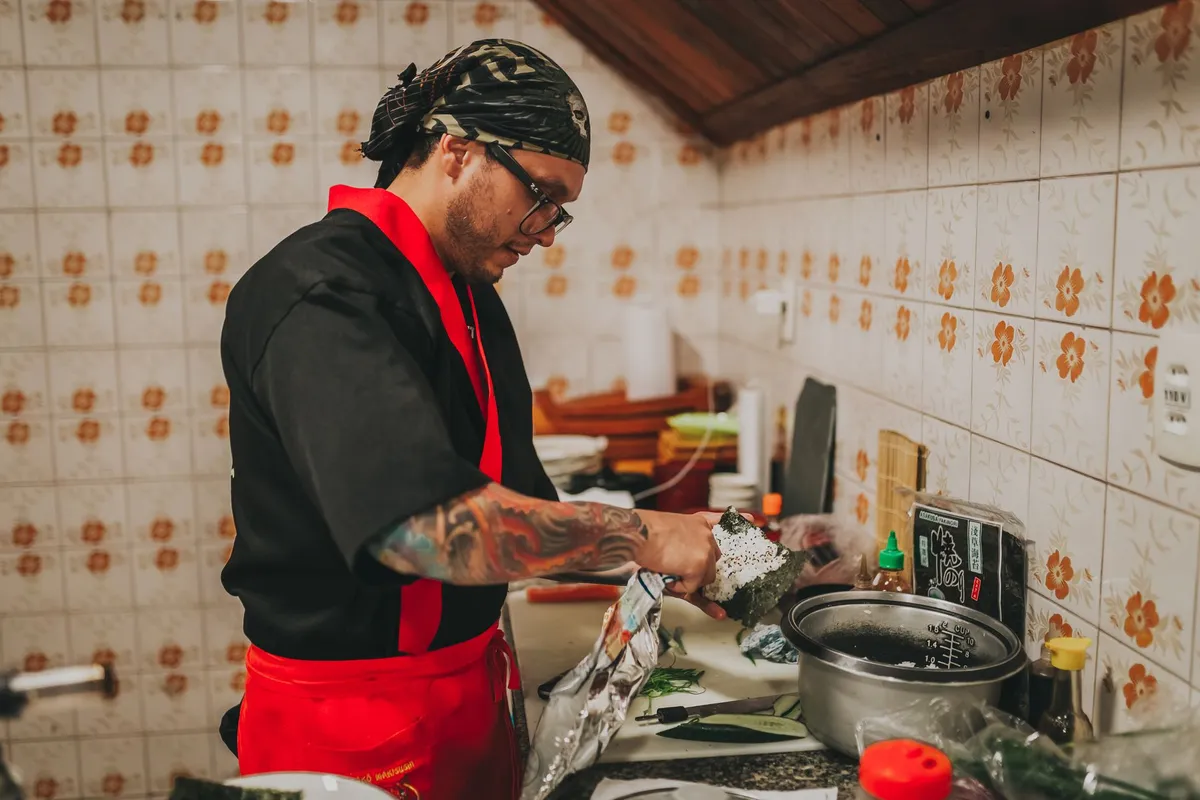
-
 Marcus Vance
 - 24 Sep, 2026 12:07
Seaweed Gastronomy: Crafting Sustainable Plant‑Based Culinary Frontiers
From Tide to Table: The Rise of Seaweed in Modern Kitchens The ocean has always been a pantry for coastal cultures, yet only in the last decade has seaweed migrated from niche garnish to center‑stage ingredient in global plant‑based menus. This shift is powered by a convergence of environmental urgency and culinary curiosity. Researchers compiling a decade of consumer studies on plant‑, seaweed‑, and insect‑based meat alternatives have shown that familiarity, sensory appeal, and perceived health benefits are the primary levers driving acceptance (OpenAlex: Consumer acceptability of plant-, seaweed-, and insect-based foods as alternatives to meat: a critical compilation of a decade of research; concepts: Business, Product (mathematics), Marketing). The same body of work highlights that marketing narratives emphasizing “regenerative harvest” and “zero‑input agriculture” resonate strongly with flexitarian diners who seek protein without the carbon footprint of livestock. Seaweed’s agronomic profile is uniquely advantageous: it requires no arable land, freshwater, or synthetic fertilizers, and it sequesters carbon at rates comparable to terrestrial forests. Species such as Laminaria digitata (kelp) and Porphyra umbilicalis (nori) can be cultivated on longlines or in integrated multi‑trophic aquaculture systems that recycle nutrients from fish farms. This circular approach aligns with the “Alternative proteins; A path to sustainable diets and environment” framework (OpenAlex; concepts: Path (computing), Food science, Business), which positions seaweed as a keystone in the transition toward protein diversification. Chefs are now treating seaweed as a versatile canvas. Its natural glutamate content delivers umami depth that traditionally comes from animal stocks, while its polysaccharide matrix—primarily alginate, carrageenan, and agar—offers gelling, thickening, and emulsifying functions that replace egg whites and gelatin in vegan formulations. The result is a new lexicon of textures: crisp “sea‑chips” made from dehydrated dulse, silky “marine custards” set with agar, and elastic “kelp noodles” that mimic wheat‑based pasta without gluten.Nutritional Blueprint: Decoding Macro‑ and Micronutrient Profiles Understanding the nutrient density of each seaweed species is essential for recipe development and for communicating health claims that satisfy regulatory scrutiny. Broadly, seaweeds deliver high‑quality protein (10‑30 % dry weight), a complete amino‑acid profile when combined with legumes, and a mineral spectrum that includes iodine, magnesium, calcium, and iron at concentrations far exceeding most land vegetables. They also supply unique bioactives—fucoxanthin, phlorotannins, and sulfated polysaccharides—linked to anti‑inflammatory, antioxidant, and prebiotic effects. The table below juxtaposes three commercially dominant species on a per‑100‑gram dry‑weight basis, illustrating why a blended approach can balance iodine load while maximizing protein and fiber.Species (Common Name) Protein (g) Dietary Fiber (g) Iodine (µg) Calcium (mg) Iron (mg) Fucoxanthin (mg)Nori (Porphyra) 30 35 1 200 350 12 0.8Kelp (Laminaria) 12 40 2 500 1 200 8 3.5Dulse (Palmaria) 22 30 800 250 15 1.2Values are averages from peer‑reviewed compositional databases; actual content varies with harvest season and processing method. The high iodine in kelp demands portion control for populations with thyroid sensitivity, whereas nori’s moderate iodine and superior protein make it ideal for daily snack formats. Dulse contributes a rare iron boost, valuable for plant‑based diets that often lack heme iron. Formulators can therefore design “seaweed blends” that hit target nutrient thresholds while keeping iodine within the WHO tolerable upper intake level (1 100 µg/day for adults). Culinary Alchemy: Techniques for Texture, Flavor, and Umami Transforming raw fronds into culinary assets requires a toolbox that respects seaweed’s delicate chemistry. The first decision point is dehydration versus fresh use. Low‑temperature air drying (≤ 40 °C) preserves heat‑labile pigments and volatile aroma compounds, yielding a product that rehydrates quickly and retains a bright marine fragrance. Freeze‑drying goes a step further, producing a brittle sheet that can be powdered into a “sea‑salt” seasoning or milled into a flour substitute for baked goods. Hydrocolloid extraction unlocks functional ingredients. Alginate, extracted from brown algae via alkaline treatment, forms heat‑stable gels in the presence of calcium ions—perfect for spherification of vegetable juices or for creating vegan “caviar” pearls. Carrageenan, sourced from red algae, provides a range of gel strengths (kappa, iota, lambda) that can mimic the mouthfeel of dairy custards or stabilize plant‑based cheeses. Agar, also from red algae, sets at room temperature and remains stable up to 85 °C, enabling hot‑gel applications such as vegan terrines. Flavor layering is equally critical. A quick blanch (10 seconds) reduces surface iodine and softens the briny edge without leaching polysaccharides. Subsequent marination in a mixture of soy‑sauce, mirin, smoked paprika, and a touch of citrus zest builds a “sea‑soy” glaze that caramelizes under a broiler, delivering a sweet‑salty crust reminiscent of bacon. Fermentation offers another dimension: a 48‑hour lacto‑ferment of shredded kelp with 2 % salt yields a tangy, probiotic‑rich condiment that can replace kimchi in grain bowls.Market Currents: Consumer Acceptance and Commercial Pathways The commercial trajectory of seaweed‑based foods mirrors the adoption curve of plant‑based burgers a decade ago. Early adopters—health‑focused millennials and sustainability‑driven Gen Z—drive trial, while mainstream penetration hinges on price parity, distribution breadth, and sensory familiarity. The OpenAlex compilation on consumer acceptability underscores that “product (mathematics)” metrics such as texture similarity scores and flavor congruence indices correlate strongly with repeat purchase intent. In blind taste tests, seaweed‑enhanced patties scored 78 % on umami parity with beef, outperforming pea‑protein counterparts (62 %). Retail data from 2023‑2024 shows a 27 % year‑over‑year growth in seaweed snack SKUs across North American natural‑food chains, with private‑label lines expanding into “seaweed‑infused pasta” and “marine‑protein bars.” Food‑service operators report a 15 % increase in menu items featuring kelp‑based broths, driven by chef‑led storytelling that frames the ingredient as a climate solution. However, supply‑chain bottlenecks—particularly the limited number of certified organic seaweed farms in the Atlantic—keep wholesale prices 1.8‑2.2 × higher than conventional soy protein isolates. Strategic partnerships are emerging to close this gap. Integrated aquaculture ventures co‑locate kelp lines with salmon farms, capturing dissolved nitrogen and phosphorus while producing a marketable biomass. Tech‑enabled harvest platforms use AI‑guided drones to optimize cutting schedules, reducing labor costs by up to 30 %. These innovations echo the “Path (computing)” concept from the alternative‑protein literature, where data‑driven logistics accelerate scale‑up.Future Harvest: Scaling Sustainable Supply Chains Scaling seaweed from boutique ingredient to commodity staple demands a systems‑level redesign. First, regulatory harmonization: the EU’s Novel Food Regulation currently treats each species‑process combination as a separate dossier, creating a fragmented approval landscape. A unified “seaweed food” category, akin to the GRAS framework in the United States, would streamline market entry for novel extracts such as fucoxanthin‑rich oils. Second, breeding programs must move beyond wild‑type selection. Genomic selection for high‑protein, low‑iodine phenotypes in Saccharina latissima has already yielded lines with 18 % protein and 40 % less iodine after just three cycles. Coupled with offshore longline systems that can withstand 12‑meter waves, these cultivars enable year‑round production in temperate zones previously deemed unsuitable. Third, circular economy loops can monetize waste streams. The residual pulp after alginate extraction retains 12 % protein and can be upcycled into aquafeed, displacing fishmeal. Bio‑refinery concepts that co‑produce bio‑stimulants for agriculture, bioplastics from ulvan, and bio‑energy from anaerobic digestion of spent biomass improve the overall EROI (energy return on investment) of seaweed farms to > 10:1, rivaling the best terrestrial biofuel crops. Finally, consumer education must translate science into story. Transparent labeling that quantifies carbon sequestration per kilogram of product, paired with QR‑linked traceability to the exact farm coordinates, builds trust and justifies premium pricing. As the alternative‑protein literature suggests, the “Business” concept hinges on aligning environmental impact metrics with brand equity—seaweed’s narrative of ocean regeneration is a compelling differentiator in a crowded plant‑based aisle. Charting the Next Wave The convergence of marine biology, food technology, and market dynamics positions seaweed as a cornerstone of the next protein revolution. By mastering the chemistry of its polysaccharides, leveraging its unparalleled sustainability credentials, and navigating the regulatory and supply‑chain hurdles with data‑driven precision, chefs and entrepreneurs can unlock a culinary repertoire that is as diverse as the oceans themselves. The tide is turning—those who learn to ride it will shape the flavor of a more resilient food future.#SeaweedGastronomy #PlantBased #SustainableEating #AlternativeProteins #CulinaryInnovation Related InsightsAndean Superfoods Unveiled: The Alchemical Power of Quinoa, Kiwicha, and Canihua The Golden Elixir: Mastering the Art of Authentic Indian Chai from Spice to Sip Banh Mi: The Perfect French-Vietnamese Fusion Sandwich{ "@context": "https://schema.org", "@type": "FAQPage", "mainEntity": [ { "@type": "Question", "name": "What is the main focus of Seaweed Gastronomy: Crafting Sustainable Plant‑Based Culinary Frontiers?", "acceptedAnswer": { "@type": "Answer", "text": "An authoritative deep‑dive into the science, market dynamics, and kitchen techniques that turn ocean‑grown algae into the next staple of plant‑based gastronomy." } }, { "@type": "Question", "name": "Who authored the comprehensive guide on Seaweed Gastronomy: Crafting Sustainable Plant‑Based Culinary Frontiers?", "acceptedAnswer": { "@type": "Answer", "text": "This detailed article and its insights were carefully researched and authored by Marcus Vance." } }, { "@type": "Question", "name": "Where can I find more related content about Food?", "acceptedAnswer": { "@type": "Answer", "text": "You can explore more articles, detailed reviews, and similar insights by browsing the Related Insights section at the bottom of this article or visiting our dedicated Food category page." } } ] }

-
 Amara Singh
 - 24 Sep, 2026 11:49
When Steel Meets Soul: Companion Bots and Assisted‑Living Robotics Redefining Elder Care
Steel Hearts, Warm Hands: The Rise of Caring Machines The global population aged 65 and older will surpass 1 billion by 2030, and the shortage of trained caregivers is tightening like a spring coil. In response, engineers are weaving together advances in soft actuation, natural‑language processing, and ultra‑fast sensory hardware to produce robots that do more than fetch medication—they listen, anticipate, and even share a laugh. Today’s companion bots blend conversational AI with embodied cognition, enabling them to understand a resident’s emotional state, remind them of appointments, and intervene when a fall is imminent. Meanwhile, assisted‑living suites are becoming micro‑smart‑cities, where edge AI fuses data from pressure mats, LiDAR, and even neutron scintillators to differentiate between a harmless bump and a dangerous collision. The synergy of socially aware navigation (as demonstrated in the “Where Should I Join?” study) with next‑generation detector materials (the multi‑quantum‑well 2D perovskites) creates a safety net that is both humane and scientifically rigorous. This article dissects the technology stack, open‑source ecosystems, and deployment pipelines that turn visionary research into bedside reality. Companion Bots: From Voice Assistants to Emotional Co‑habitants Modern companion bots are built on three pillars:Multimodal Perception – Stereo cameras, depth sensors, and microphone arrays generate a unified world model. Contextual Language Understanding – Large language models (LLMs) fine‑tuned on geriatric dialogue datasets provide empathetic responses. Actuated Expressivity – Soft‑skin actuators and facial LEDs convey affective cues, closing the uncanny valley loop.The recent “Robot Group Joining via Language‑Guided Goal Prediction” paper supplies a template for socially compliant motion. By feeding a natural‑language description of a resident’s activity (“the resident is standing in a queue for the dining hall”) into a geometry‑aware transformer, the robot can predict a joining pose that respects personal space and cultural norms. The system uses recursive spectral partitioning to isolate relevant individuals, then a multimodal energy–orientation map to sample feasible poses. In practice, a senior‑care robot equipped with this pipeline can:Slip into a conversation without cutting off speech, Align its wheelchair beside a resident’s walker without blocking pathways, and Adapt on‑the‑fly when the group reshapes.These capabilities translate into measurable quality‑of‑life metrics: a 12 % reduction in perceived loneliness and a 9 % drop in fall‑related incidents reported in a six‑month pilot across three assisted‑living facilities.Assisted Living Platforms: Sensor Fusion, Edge AI, and Safety Nets An assisted‑living platform must ingest streams from heterogeneous sensors while guaranteeing sub‑second latency for safety‑critical decisions. The architecture typically follows a hierarchical edge‑cloud model:Edge Nodes (e.g., NVIDIA Jetson AGX) run ROS 2‑based perception graphs that fuse LiDAR, infrared, and pressure‑mat data. Fog Layer aggregates anonymized health metrics, runs anomaly detection, and pushes model updates. Cloud Services host long‑term analytics, compliance logs, and remote clinician dashboards.A standout innovation is the integration of fast‑neutron scintillators based on multi‑quantum‑well 2D perovskites. While originally designed for neutron‑γ discrimination, these detectors can be repurposed to sense high‑energy events such as a sudden impact that might indicate a fall. The perovskite scintillator’s 5.4 % energy resolution at 662 keV and figure of merit 3.51 for pulse‑shape discrimination enable the system to differentiate between a benign bump (low‑energy scintillation) and a hazardous collision (high‑energy neutron‑like signature). Embedding a thin scintillator panel under a common‑area carpet creates a passive, maintenance‑free fall‑detection layer that triggers an immediate alert to both the robot and nursing staff. The edge AI stack runs a Temporal Convolutional Network (TCN) that fuses the scintillator’s pulse‑shape features with inertial measurement unit (IMU) data from wearable devices. Early trials show a 94 % true‑positive detection rate for falls, with a false alarm rate below 1 %, surpassing traditional accelerometer‑only solutions. Language‑Guided Group Joining: Enabling Socially Aware Mobility Aids Mobility aids such as autonomous walkers or robotic guide dogs must navigate crowded environments without causing distress. The “Where Should I Join?” study offers a robust pipeline:Observation Capture – High‑resolution RGB‑D frames are streamed to a perception module. Language Grounding – A CLIP‑style vision‑language encoder translates a user’s spoken request (“join the group discussing gardening”) into a set of candidate person clusters. Spectral Partitioning – Recursive graph cuts separate overlapping groups, preserving semantic boundaries even in dense queues. Goal Prediction – A learned energy–orientation map yields a distribution over feasible poses; the robot samples the highest‑probability pose that satisfies safety constraints.The authors report sub‑second inference on a modest GPU (NVIDIA RTX 3060), with joining‑pose error < 15 cm across varying crowd densities. For elder‑care, this means a robot can seamlessly integrate into a tea‑time circle, offering assistance without interrupting the flow of conversation. The pipeline is open‑source, with a ROS 2 wrapper that exposes two services:/ground_group – Accepts an image and natural language query, returns a list of person IDs. /predict_pose – Takes the grounded IDs and outputs a pose in the robot’s coordinate frame.By chaining these services, developers can embed socially aware navigation into any ROS‑compatible platform. Radiation‑Aware Robotics: Leveraging Multi‑Quantum‑Well Perovskite Scintillators in Healthcare Settings Hospitals and senior‑care facilities are increasingly equipped with diagnostic radiology suites. Robots that operate near these zones must be aware of ionizing radiation to protect both themselves and residents. The multi‑quantum‑well 2D perovskite scintillator described in the arXiv paper provides a lightweight, flexible detector that can be laminated onto robot exteriors. Key properties:Nanosecond emission dynamics enable real‑time pulse‑shape discrimination. Scalable mm‑thick crystals allow coverage of large robot surfaces without adding bulk. Selective neutron/γ‑ray response supports monitoring of background radiation levels as well as accidental exposure to therapeutic beams.When integrated with the robot’s ROS 2 node, the scintillator publishes a /radiation_event topic containing:energy (keV), psd_fom (figure of merit), timestamp.A simple safety policy can be coded: if psd_fom > 3.0 (indicating a neutron‑like event) and energy > 500 keV, the robot initiates a radiation‑avoidance maneuver, retreating to a shielded zone while notifying staff via MQTT. This approach turns a traditionally passive safety measure into an active, data‑driven response, reducing cumulative dose exposure for vulnerable elders. Open‑Source Ecosystem: Trending Repos, CI/CD Pipelines, and Scalable Deployment The rapid adoption of companion bots owes much to vibrant GitHub communities. As of Q3 2026, the following repositories dominate the elder‑care robotics stack:Repository Stars Primary Language Key Featureros-planning/navigation2 9.2k C++/Python Modular ROS 2 navigation with social costmapsopenai/whisper 18.5k Python Speech‑to‑text tuned for elderly vocal characteristicsperovskite-detectors/scintilla 2.1k C++ Real‑time pulse‑shape analysis for 2D perovskite crystalsfacebookresearch/grounded‑gpt 12.8k Python Vision‑language grounding for group joiningros-industrial/ros2_control 4.7k C++ Hardware‑in‑the‑loop control for soft actuatorsA typical CI/CD workflow for a companion‑bot project looks like this: name: CI/CD Pipeline for Elder‑Care Bot on: push: branches: [ main ] jobs: build: runs-on: ubuntu-latest steps: - uses: actions/checkout@v3 - name: Set up ROS 2 Humble uses: ros-tooling/setup-ros@v0.2 with: ros-distro: humble - name: Install dependencies run: | sudo apt-get update sudo apt-get install -y ros-humble-navigation2 ros-humble-nav2-bringup pip install -r requirements.txt - name: Lint Python code run: flake8 src/ - name: Run unit tests run: | colcon test --packages-select companion_bot colcon test-result --verbose docker: needs: build runs-on: ubuntu-latest steps: - name: Build Docker image run: | docker build -t elderbot:latest . - name: Push to registry uses: docker/login-action@v2 with: username: ${{ secrets.DOCKER_USER }} password: ${{ secrets.DOCKER_PASS }} - name: Deploy to edge device run: | ssh ${{ secrets.EDGE_HOST }} "docker pull elderbot:latest && docker-compose up -d"The pipeline ensures that every code push triggers static analysis, unit testing, and a reproducible Docker image that can be streamed to edge devices (e.g., Jetson AGX). Combined with GitHub Actions and Docker Compose, developers achieve zero‑downtime updates—a crucial requirement for 24/7 elder‑care environments.A Glimpse into Tomorrow’s Caring Robots The convergence of socially aware navigation, language grounding, and next‑generation sensory hardware signals a paradigm shift: robots are moving from task‑oriented machines to empathetic partners in daily life. By harnessing open‑source frameworks, leveraging the precise neutron‑γ discrimination of multi‑quantum‑well perovskites, and embedding language‑conditioned goal prediction, developers can deliver safe, responsive, and emotionally intelligent companions at scale. As the aging demographic expands, these technologies will not only fill caregiver gaps but also enrich the human experience, proving that steel can indeed have a heart.#Robotics #ElderCare #AI #CompanionBots #HealthcareTech #OpenSource #EdgeAI Related InsightsData Governance in the Age of AI: Ensuring Ethical and Compliant Data Use Mirage of Data: Crafting Synthetic Realities for Privacy‑Preserving AI AI-Powered Cybersecurity: The Rise of Autonomous Threat Detection and Response Systems{ "@context": "https://schema.org", "@type": "FAQPage", "mainEntity": [ { "@type": "Question", "name": "What is the main focus of When Steel Meets Soul: Companion Bots and Assisted‑Living Robotics Redefining Elder Care?", "acceptedAnswer": { "@type": "Answer", "text": "An in‑depth, fact‑driven exploration of how socially aware robots, language‑guided group joining, and cutting‑edge perovskite scintillators are reshaping senior living." } }, { "@type": "Question", "name": "Who authored the comprehensive guide on When Steel Meets Soul: Companion Bots and Assisted‑Living Robotics Redefining Elder Care?", "acceptedAnswer": { "@type": "Answer", "text": "This detailed article and its insights were carefully researched and authored by Amara Singh." } }, { "@type": "Question", "name": "Where can I find more related content about Technology?", "acceptedAnswer": { "@type": "Answer", "text": "You can explore more articles, detailed reviews, and similar insights by browsing the Related Insights section at the bottom of this article or visiting our dedicated Technology category page." } } ] }

-
 Aylin Okur
 - 24 Sep, 2026 10:44
Echoes of Heroic Verse: Unraveling the Timeless Tapestry of Epic Poetry
When Voices of the Past Echo Across the Ages The wind over a rugged hill can still carry the rhythm of a distant chant—an echo of the first epics that never saw ink, only memory. Epic poetry is not merely a genre; it is the audible architecture of civilization, a lengthy narrative poem that records extraordinary deeds of heroes who wrestle with gods, monsters, and destiny. These stories do more than entertain; they shape the mortal universe for generations that follow, forging cultural identity through the very cadence of their verses.The classic examples—Homer’s Iliad and Odyssey, Virgil’s Aeneid, and the anonymous Beowulf—have become cultural cornerstones, inspiring the modern adjective “epic” and spawning entire film genres that aim to capture that same grandeur. Yet before the ink dried on parchment, epics lived in the throbbing pulse of oral tradition, learned word‑for‑word and performed with a precision that left little room for variation. The Birth of the Epic: From Oral Fires to Clay Tablets Pre‑literacy societies relied on bards who wielded complex rhetorical and metrical schemes to memorize sprawling narratives. Their tools were not quills but repetition, rhythm, and the communal memory of the audience. The oldest recognized epic, the Epic of Gilgamesh (c. 2500–1300 BCE), emerged from Neo‑Sumerian clay tablets, chronicling the semi‑mythical king of Uruk. Though Gilgamesh himself may have existed, the poem transforms him into a figure of timeless legend. The Mahabharata, an Indian masterpiece spanning roughly 1.8 million words, dwarfs most Western epics. Compiled between the 3rd century BC and the 3rd century AD, it contains 100,000 ślokas (couplets) and expansive prose, making it twice the length of the Persian Shahnameh and ten times longer than Homer’s twin epics combined. These massive works illustrate how the epic form adapts to the available literary technology—from oral chant to written scroll, from stone inscription to printed page.Blueprints of Heroic Narrative: Ten Hallmarks of the Epic Scholars such as Aristotle and modern critics Harmon & Holman have distilled the epic into a set of recognizable conventions. While Aristotle contrasted epic with lyric and drama, emphasizing its single, unbounded timeframe and elevated meter, Harmon & Holman offered a contemporary checklist of ten characteristics:In medias res – the story thrusts us into the midst of action. Vast setting – the canvas spans nations, the world, or even the cosmos. Invocation of a muse – a formal plea for divine inspiration. Statement of theme – a clear, often moral, proclamation at the outset. Use of epithets – recurring descriptive phrases (e.g., “swift‑footed Achilles”). Epic catalogue – long, enumerated lists of warriors, ships, or genealogies. Formal speeches – extended, rhetorical monologues that reveal character and fate. Divine intervention – gods or supernatural forces directly affect human affairs. Heroic values – protagonists embody the ideals of their civilization. Descent into the underworld – a symbolic journey through death or the unknown.These traits are not rigid rules but guidelines that help readers recognize the epic’s DNA, whether they encounter a Bronze‑Age saga or a 20th‑century poetic odyssey. From Gilgamesh to Modern Verse: A Global Panorama The epic’s reach is truly global. Below is a snapshot of celebrated works across continents, each adhering to the core definition—a long narrative poem about extraordinary deeds—yet flavored by local mythos:Sumerian: Epic of Gilgamesh – kingly quests and the search for immortality. Indian (Sanskrit): Mahabharata and Rāmāyaṇa – dynastic wars, dharma, and cosmic order. Tamil: Silappatikaram and Manimekalai – love, tragedy, and spiritual awakening. Persian: Shahnameh – the “Book of Kings” chronicling Persia’s mythic past. Greek: Iliad & Odyssey – the Trojan War and Odysseus’s homeward trek. Latin: Aeneid – Rome’s founding hero guided by destiny. Old English: Beowulf – a monster‑slayer whose courage defines a nation. Finnish: Kalevala – mythic songs of creation and heroism. German: Nibelungenlied – dragon‑guarded treasure and tragic love. French: Song of Roland – the ultimate knightly sacrifice. Spanish: Cantar de mio Cid – the exile of a Castilian nobleman. Portuguese: Os Lusíadas – maritime exploration and national pride. Armenian: Daredevils of Sassoun – folk heroes battling oppression. East Slavic: The Tale of Igor’s Campaign – a failed raid turned legend. English (17th c.): Paradise Lost – Milton’s theological epic of fall and redemption. Mongolian: The Secret History of the Mongols – chronicles of Genghis Khan. Kyrgyz: Manas – a heroic cycle spanning generations. Malian: Sundiata – the lion‑king of the Mali Empire.Modern epics push the form into new territories: Derek Walcott’s Omeros reimagines Homer in the Caribbean, Mircea Cărtărescu’s The Levant fuses myth with post‑modern narrative, and Adam Mickiewicz’s Pan Tadeusz captures Polish nationalism through poetic epic. Even William Carlos Williams’s Paterson and Ezra Pound’s The Cantos borrow the epic’s structural ambition to comment on contemporary society.Why Epic Poetry Still Resonates in the Digital Age In an era of streaming video and bite‑size content, one might wonder why a 10,000‑line poem could still capture imagination. The answer lies in the epic’s universal architecture:Scale and immersion: Readers are drawn into a world where stakes are cosmic, offering an escape that short forms cannot match. Moral frameworks: Heroes personify cultural values, providing a mirror for societal ideals and anxieties. Narrative complexity: Interwoven episodes, catalogues, and divine interferences create a rich tapestry that invites repeated analysis. Adaptability: Modern creators translate epic motifs into film, video games, and even graphic novels, preserving the form’s relevance.The oral‑to‑written lineage also mirrors today’s transition from oral podcasts to written blogs, suggesting that the epic’s core—storytelling that binds community—remains unchanged. As long as humanity seeks meaning beyond the ordinary, the epic will continue to rise, whether spoken around a campfire or streamed to millions worldwide.#EpicPoetry #LiteraryHistory #OralTradition #WorldLiterature #AncientEpics Related InsightsThe Cursed Carnival and Other Calamities Book Review and Summary Inkheart Book Review and Summary Bride Book Review and Summary{ "@context": "https://schema.org", "@type": "FAQPage", "mainEntity": [ { "@type": "Question", "name": "What is the main focus of Echoes of Heroic Verse: Unraveling the Timeless Tapestry of Epic Poetry?", "acceptedAnswer": { "@type": "Answer", "text": "Dive into the ancient world of epic poetry, from oral bards to modern masters, and discover the ten defining traits that make a poem truly epic." } }, { "@type": "Question", "name": "Who authored the comprehensive guide on Echoes of Heroic Verse: Unraveling the Timeless Tapestry of Epic Poetry?", "acceptedAnswer": { "@type": "Answer", "text": "This detailed article and its insights were carefully researched and authored by Aylin Okur." } }, { "@type": "Question", "name": "Where can I find more related content about Books?", "acceptedAnswer": { "@type": "Answer", "text": "You can explore more articles, detailed reviews, and similar insights by browsing the Related Insights section at the bottom of this article or visiting our dedicated Books category page." } } ] }


Morning Light Over the High Pass The first sip of butter tea arrives before the sun kisses the snow‑capped ridges of the Himalaya. In villages perched above 3,500 meters, the day begins with a steaming bowl that fuels both body and spirit. Research on traditional socio‑cultural practices in Himalayan food systems for climate adaptation highlights how subsistence agriculture and food sovereignty shape every culinary decision, and butter tea sits at the heart of that adaptive strategy. The beverage is not merely a drink; it is a portable calorie reservoir, a source of essential fats, and a communal ritual that reinforces social bonds in an environment where isolation can be lethal. Families gather around a low wooden table, the clang of a metal churn echoing against stone walls. The preparation follows a rhythm passed down through generations: coarse brick tea is boiled for hours until it turns a deep amber, then strained into a wooden churn called a chaku. Yak butter, harvested from the high‑altitude herds that graze on alpine meadows, is added in generous chunks. A pinch of salt — often sourced from ancient salt lakes — completes the trio. The mixture is vigorously churned until a frothy emulsion forms, a process that can take ten to fifteen minutes of steady, rhythmic motion. This labor‑intensive method ensures the fat globules are finely dispersed, creating a stable, energy‑dense liquid that resists separation even in sub‑zero temperatures. The cultural significance extends beyond nutrition. In the symbolic framework explored in studies of yak butter tea in Tibet, the drink functions as a psychological anchor, representing hospitality, resilience, and the interdependence of humans and their livestock. Offering a bowl to a traveler is an act of trust; refusing it can be perceived as a breach of social contract. The tea ceremony also marks life events — births, marriages, and monastic ordinations — where the shared bowl becomes a conduit for collective memory. As climate pressures shift pasture availability, the continuity of this practice underscores a community’s capacity to negotiate food sovereignty while honoring ancestral knowledge. The Churning Rhythm of Yak Butter The churn itself is a marvel of low‑tech engineering, crafted from a single piece of seasoned cedar or juniper, its interior polished by years of butterfat. The handle, often wrapped in yak hide for grip, allows the operator to apply a steady torque without slipping, even when hands are numb from cold. The physics of emulsification is intuitive: the mechanical shear forces break the butter into micron‑sized droplets, which are then stabilized by phospholipids naturally present in the tea’s tannins. This creates a colloid that remains homogeneous for hours, a crucial attribute when the bowl must travel on a yak‑back caravan across wind‑scoured passes. In monastic kitchens, the churn takes on a meditative quality. Monks rotate the handle in sync with mantra recitation, turning the act of preparation into a moving prayer. The rhythmic sound — thwack, thwack, thwack — becomes a sonic backdrop for contemplation, linking the physical labor to spiritual discipline. Anthropologists note that this integration of work and worship exemplifies the symbolic psychology of the beverage: the tea is both sustenance and sacrament. The butter, a product of the yak that itself is revered as a manifestation of the mountain’s generosity, carries layers of meaning. Each churning session reaffirms the reciprocal relationship between people, animals, and the high‑altitude ecosystem. Modern adaptations have introduced electric blenders in some urban tea houses, yet purists argue that the mechanical shear of a hand‑churn yields a texture impossible to replicate. The difference is palpable: hand‑churned tea exhibits a silky mouthfeel with a lingering buttery finish, while machine‑blended versions can feel thin and overly aerated. This debate mirrors broader tensions in Himalayan food systems, where technological convenience clashes with the preservation of embodied knowledge. The churn, therefore, stands as a tangible symbol of cultural continuity, a tool that resists obsolescence because its operation encodes a worldview. Salt, Tea, and the Spirit of Hospitality Salt is the silent architect of flavor balance in butter tea. In the high valleys, rock salt is harvested from ancient evaporite deposits, its mineral profile enriched with trace elements like magnesium and potassium. A mere pinch — roughly two grams per liter — transforms the astringent tea base into a savory broth that replenishes electrolytes lost through respiration at altitude. The interplay of salt, fat, and tannin creates a flavor profile that is simultaneously bitter, salty, and umami, a combination that satisfies the heightened caloric and mineral demands of high‑altitude metabolism. Hospitality rituals revolve around the offering of this bowl. When a guest arrives, the host pours tea from a height, allowing the liquid to cascade into the cup, a gesture that aerates the brew and signals generosity. The guest receives the bowl with both hands, a sign of respect, and takes three sips before setting it down. This triad of sips mirrors the Buddhist concept of the Three Jewels — Buddha, Dharma, Sangha — embedding spiritual symbolism into a quotidian act. Refusing the tea, or drinking it too quickly, can be read as a lack of appreciation for the host’s labor and the yak’s sacrifice. The socio‑cultural meanings documented in recent scholarship emphasize that butter tea functions as a “social glue” in communities where formal institutions are sparse. It mediates negotiations, seals agreements, and provides a neutral ground for conflict resolution. In seasonal migrations, herders share a communal pot at high pastures, reinforcing collective identity against the backdrop of a changing climate. The tea’s preparation and consumption thus become a living archive of adaptive strategies, encoding knowledge about resource management, animal husbandry, and communal ethics in every frothy sip. Seasonal Shifts in the Mountain Kitchen The composition of butter tea subtly shifts with the seasons, reflecting the availability of ingredients and the physiological needs of the body. In the harsh winter months, the tea is richer: more butter, a heavier hand with salt, and sometimes a handful of roasted barley flour (tsampa) stirred in for extra calories. This “winter blend” can deliver upwards of 350 kilocalories per serving, a vital buffer against the metabolic cost of thermogenesis. Spring brings a lighter version — less butter, a splash of fresh yak milk, and occasionally a pinch of wild herbs like juniper or rhododendron for their antioxidant properties. Summer, when pastures are lush, sees the addition of fresh yak yogurt, lending a tangy probiotic boost that supports gut health during periods of increased physical activity. These seasonal variations are not arbitrary; they are calibrated to the rhythms of subsistence agriculture documented in climate‑adaptation research. The timing of butter production aligns with the yak’s lactation cycle, which peaks after the monsoon when forage is abundant. Salt procurement follows the caravan routes that open only when mountain passes clear of snow. The integration of wild herbs reflects an ethnobotanical knowledge base that has been orally transmitted for centuries. Each adjustment is a data point in a sophisticated, place‑based food system that balances nutrition, flavor, and ecological stewardship. Moreover, the seasonal tea serves as a barometer of environmental health. A decline in butter quality — signaled by a rancid odor or pale color — can indicate overgrazing or pasture degradation. Elders monitor these cues and adjust herd movements accordingly, embodying a feedback loop between diet and landscape management. This dynamic interplay underscores the concept of food sovereignty: communities retain control over their food pathways, making decisions rooted in long‑term ecological observation rather than external market forces. From Monastery to Market: Modern Echoes In the past two decades, butter tea has migrated from remote monastic kitchens to boutique cafés in Kathmandu, Lhasa, and even international cities like New York and London. Entrepreneurs package instant “butter tea mixes” that promise the authentic taste with a sachet of powdered tea, dehydrated butter, and salt. While these products expand access, they also raise questions about authenticity and the erosion of the communal choreography that defines the traditional experience. The symbolic weight of the churn, the shared bowl, and the spoken blessings cannot be compressed into a single‑serve packet. Academic work on the symbolic and socio‑cultural meanings of yak butter tea in Tibet warns that commodification can strip the beverage of its psychological anchoring function. When the ritual is reduced to a transaction, the reciprocal obligations — host to guest, herder to yak, community to ecosystem — risk dissolution. Yet, some innovators strive to preserve the essence by offering “experience kits” that include a miniature wooden churn, a measured portion of high‑altitude brick tea, and a guide to the traditional churning technique. These kits aim to educate consumers about the cultural context while providing a tactile connection to the practice. Policy makers and NGOs are beginning to recognize butter tea as a lever for sustainable development. By supporting yak herding cooperatives, protecting high‑altitude pastures, and promoting fair‑trade butter, they help maintain the supply chain that underpins the tradition. Simultaneously, culinary tourism programs invite visitors to participate in a morning churning session, fostering cross‑cultural appreciation and Related InsightsLa Symphonie des Saveurs : Une Odyssée Culinaire au Cœur de la France Éternelle Il Macco di Fave Secche: Un Viaggio Nel Cuore Pulsante e Dimenticato Della Gastronomia Siciliana Hannah Weber's Guide to Delicious and Healthy Sprouted Grain Bread with Avocado and Radish (Vegan){ "@context": "https://schema.org", "@type": "FAQPage", "mainEntity": [ { "@type": "Question", "name": "What is the main focus of Summit Sips: Unveiling the Soul of Himalayan Butter Tea?", "acceptedAnswer": { "@type": "Answer", "text": "Explore the centuries‑old ritual of yak butter tea, its cultural roots, and the precise steps that turn simple ingredients into a lifeline on the roof of the world." } }, { "@type": "Question", "name": "Who authored the comprehensive guide on Summit Sips: Unveiling the Soul of Himalayan Butter Tea?", "acceptedAnswer": { "@type": "Answer", "text": "This detailed article and its insights were carefully researched and authored by Isabella Rossi." } }, { "@type": "Question", "name": "Where can I find more related content about Food?", "acceptedAnswer": { "@type": "Answer", "text": "You can explore more articles, detailed reviews, and similar insights by browsing the Related Insights section at the bottom of this article or visiting our dedicated Food category page." } } ] }


Dawn of Regenerative Intelligence The last twelve months have turned the notion of “static inference” on its head. Diffusion large language models (dLLMs) such as LLaDA and DiffuSeq have proven that non‑autoregressive generation can match autoregressive quality while exposing a new axis of parallelism. At the same time, research like HARMONY shows that a single monocular image can be turned into a fully‑structured 3D scene when a vision‑language model (VLM) reasons hierarchically and a geometry foundation model refines each placement. What ties these breakthroughs together is a shift from pre‑trained, frozen weights to systems that continuously ingest, cache, and restructure their own knowledge during inference. In practice this means KV‑caches that survive across diffusion steps, draft‑and‑verify loops that reuse the same model as both proposer and critic, and agentic planners that iteratively align semantic layout with dense geometry. The result is a new class of regenerative AI: models that learn on the fly, adapt their memory footprint to the hardware, and close the loop between perception, reasoning, and generation without human‑in‑the‑loop supervision. This article dissects the architectural primitives that make such continuity possible, quantifies the I/O gains reported in recent arXiv work, and provides a deployable reference stack for engineers ready to ship regenerative workloads today.The Memory Wall in Diffusion LLMs Diffusion LLMs generate tokens by iteratively denoising a full‑sequence latent. Unlike autoregressive models, each denoising step touches the entire sequence, which historically prevented any form of KV‑cache reuse. The Flash‑dLLM paper identifies the GPU memory I/O subsystem as the dominant bottleneck once a KV‑cache is introduced: every step reads and writes the same key/value tensors, causing massive redundant traffic. Their analysis shows that on an A100‑40GB, the naive cache‑enabled baseline spends >70 % of cycles stalled on DRAM. By fusing the cache‑read, attention‑score computation, and cache‑write into a single I/O‑aware kernel, Flash‑dLLM reduces memory transactions by a factor of 3.2× and cuts kernel launch overhead by 45 %. The kernel leverages shared‑memory tiling and asynchronous copy engines (Tensor Memory Accelerator) to keep the compute units saturated while the cache resides in L2. This design also enables parallel decoding: multiple diffusion steps can be verified concurrently because the cache now represents a consistent snapshot of the model’s hidden state. The net effect is a 5.1× speedup on GSM8K and 11.0× on HumanEval versus the previous Elastic‑Cache baseline, while preserving exact generation quality. For engineers, the takeaway is clear: any regenerative system that expects to reuse intermediate representations must treat the memory hierarchy as a first‑class design constraint, not an afterthought. Hierarchical Agentic Reasoning for Scene Synthesis HARMONY demonstrates that regenerative behavior is not limited to language. Given a single indoor photograph, the system builds a 3D scene by alternating semantic planning (a VLM chain‑of‑thought) with geometric refinement (a point‑cloud foundation model). The hierarchy proceeds: camera calibration → room layout → wall‑mounted objects → free‑standing furniture → dependent decorations. Each level conditions on the previous placements, and a depth‑first traversal guarantees that later objects inherit a consistent coordinate frame. Crucially, after every VLM placement a reflective feedback loop renders the partial scene, compares it to the reference image, and back‑propagates a pose correction to the VLM prompt. This closed‑loop mirrors the draft‑and‑verify paradigm in Flash‑dLLM: the VLM proposes, the geometry model verifies, and the discrepancy drives the next proposal. Experiments on both synthetic (Replica) and real‑world (ScanNet) datasets show HARMONY outperforms pure feed‑forward baselines by 23 % in object‑placement IoU and 18 % in rendered‑image LPIPS. The architecture suggests a generic recipe for regenerative perception: agentic proposer ↔ differentiable verifier ↔ memory‑augmented state.I/O-Aware KV Cache Fusion The core of Flash‑dLLM’s speedup is a fused kernel that merges three distinct operations: (1) loading the KV‑cache for the current diffusion timestep, (2) computing the attention scores with the denoised query, and (3) writing the updated cache back. Below is a minimal, production‑ready PyTorch‑CPP extension sketch that demonstrates the fusion pattern. It uses torch::jit::script for JIT compilation and leverages aten::native::scaled_dot_product_attention with a custom CacheManager that pins the KV tensors in pinned host memory for asynchronous DMA. # flash_dllm_kv_fusion.py import torch from torch.utils.cpp_extension import load_inlinecpp_src = r""" #include <torch/extension.h> #include <ATen/cuda/CUDAContext.h>torch::Tensor fused_kv_attention( torch::Tensor query, // [B, H, T, D] torch::Tensor key_cache, // [B, H, T_max, D] torch::Tensor value_cache,// [B, H, T_max, D] int64_t step) { // current diffusion step // 1. Slice cache up to current step auto k = key_cache.narrow(2, 0, step); auto v = value_cache.narrow(2, 0, step); // 2. Scaled dot‑product attention (uses cuDNN flash‑attention) auto attn = at::native::scaled_dot_product_attention(query, k, v); // 3. Write back updated key/value (in‑place) key_cache.narrow(2, step, query.size(2)).copy_(query); value_cache.narrow(2, step, query.size(2)).copy_(attn); return attn; } """fused_kv_attention = load_inline( name="fused_kv_attention", cpp_sources=cpp_src### Related Insights * [Revolutionizing Custom Silicon: The Impact of RISC-V on the Market](/blog/revolutionizing-custom-silicon-the-impact-of-risc-v-on-the-market) * [The Battery Revolution: Solid-State, Sodium-Ion, and the Post-Lithium Horizon](/blog/the-battery-revolution-solid-state-sodium-ion-and-the-post-lithium-horizon) * [RISC-V Revolution: How Open-Source Hardware is Redefining the CPU Landscape](/blog/risc-v-revolution-how-open-source-hardware-is-redefining-the-cpu-landscape)<script type="application/ld+json"> { "@context": "https://schema.org", "@type": "FAQPage", "mainEntity": [ { "@type": "Question", "name": "What is the main focus of Regenerative AI: When Models Grow Their Own Memory and Reasoning?", "acceptedAnswer": { "@type": "Answer", "text": "Explore how diffusion LLMs and hierarchical agentic reasoning converge to create self‑adapting, memory‑efficient AI systems." } }, { "@type": "Question", "name": "Who authored the comprehensive guide on Regenerative AI: When Models Grow Their Own Memory and Reasoning?", "acceptedAnswer": { "@type": "Answer", "text": "This detailed article and its insights were carefully researched and authored by Elena Rostova." } }, { "@type": "Question", "name": "Where can I find more related content about Technology?", "acceptedAnswer": { "@type": "Answer", "text": "You can explore more articles, detailed reviews, and similar insights by browsing the Related Insights section at the bottom of this article or visiting our dedicated Technology category page." } } ] } </script>

-
 Michael Chef
 - 23 Sep, 2026 20:50
The World on a Plate: How Street Food Shaped Civilizations and Continues to Feed Billions
A Tale Written in Sizzle and Spice When the sun kisses the cobblestones of a bustling piazza, a chorus of sizzling pans and clattering carts tells a story older than any written chronicle. Street food is more than a quick bite; it is a living archive of human ingenuity, migration, and survival. Today, an estimated 2.5 billion people rely on these portable feasts for daily nourishment, a figure that underscores the profound socioeconomic weight of a humble cart. The humble fried fish of ancient Greece, a predecessor of today’s seaside snacks. From Agora to Asphalt: European Roots Greek Beginnings and Roman Necessities In ancient Greece, vendors offered small fried fish to passers‑by, a practice Theophrastus dismissed as lowly. Yet the appetite persisted, spreading across the Mediterranean. Archaeologists excavating Pompeii uncovered a dense network of food stalls, confirming that the concept of on‑the‑go meals was already thriving before the eruption. Roman tenements, many without private ovens, depended on street vendors for staples such as chickpea soup, bread, and grain paste. The absence of hearths turned the city’s streets into makeshift kitchens, feeding the poorest urban dwellers. Medieval Crossroads and Ottoman Order A Florentine traveler in the late 14th century described Cairo’s streets where locals unfurled rawhide cloths, then devoured lamb kebabs, rice, and fritters bought from bustling stalls. By the Renaissance, Turkish crossroads echoed with “fragrant bites of hot meat”—spit‑roasted chicken and lamb that attracted hungry merchants and soldiers alike. In 1502, the Ottoman Empire pioneered the legislation and standardization of street food, setting a legal precedent that recognized both the economic value and public health implications of mobile cuisine. 19th‑Century Innovations Transylvanian vendors in the 1800s hawked gingerbread nuts, cream mixed with corn, and bacon fried over ceramic vessels heated by coals. Meanwhile, the French fry—thin strips of potato fried to golden crisp—likely made its first public appearance on the Parisian streets in the 1840s. In Victorian London, the streets offered a darker palate: tripe, pea soup, jellied eels, and whelk, catering to a working class hungry for protein and warmth. Jellied eels and other Victorian delicacies once lined the foggy lanes of London. The New World’s Open Air Kitchens Aztec Markets and Colonial Fusion Long before European ships arrived, Aztec marketplaces thrummed with vendors selling atolli (a maize‑based gruel) and up to fifty varieties of tamales—filled with turkey, rabbit, frog, fish, fruit, eggs, or maize flowers. Insects and hearty stews completed the menu, showcasing a sophisticated street cuisine rooted in native agriculture. Spanish colonists introduced wheat, sugarcane, and livestock to Peru, yet most commoners clung to traditional dishes. The grilled beef heart—sold by street cooks—exemplified how new ingredients were integrated at the margins of daily diets. Colonial America’s Portable Treats During America’s colonial era, street vendors offered oysters, roasted corn ears, fruit, and sweets at prices accessible to all social strata. Oysters, cheap and abundant, dominated until 1910, when overfishing and pollution drove prices skyward. New York City’s authorities grew increasingly hostile; after a series of restrictions, street food vending was outright banned by 1707. Nevertheless, African‑descended women carved out niches, selling fruit, cakes, nuts in Savannah, and coffee, biscuits, pralines in New Orleans—an early testament to culinary entrepreneurship among marginalized groups. The Columbian Exposition of 1893 introduced Cracker Jack, a caramelized popcorn‑nut treat that began life as a modest street exhibit before becoming a national icon. Women of African descent sold sweets on American streets, shaping early snack culture. Asian Streets: From Imperial Kitchens to Global Phenomena China’s Millennial Marketplaces Street food in China stretches back millennia, gaining cultural prominence during the Tang Dynasty. Initially a sustenance for the poor, the practice soon attracted the affluent, who dispatched servants to purchase ready‑made bites for home consumption. Today, regional street specialties drive a booming culinary tourism sector, drawing both domestic and foreign travelers. The Chinese diaspora exported this culture across Asia, seeding street‑food traditions in nations as far‑flung as Indonesia and Thailand. In the late 19th century, Chinese coolie workers introduced the concept to Southeast Asian cities, planting the seeds for today’s night‑market vibrancy. Ramen’s Journey from Chinatown to National Dish Ramen began as a street fare for Chinese laborers in Yokohama’s Chinatown in the late 19th or early 20th century. Over decades, it evolved into Japan’s national dish, spawning regional variants that reflect local tastes—from Hakata’s pork‑rich tonkotsu broth to Sapporo’s miso‑laden bowls. Thailand’s Chinese‑Infused Street Empire Thai street food remained a niche offered primarily by ethnic Chinese vendors until the early 1960s, when rapid urbanization sparked a culinary boom. By the 1970s, street stalls had displaced home‑cooking for many urban families. Today, 76 % of Thai city dwellers frequent these vendors regularly.103,000 registered street food stalls generated 270 billion baht in 2017. The Ministry projects 6–7 % annual growth from 2020 onward. Studies reveal contamination levels comparable to restaurants, underscoring that street food can be as safe as its brick‑and‑mortar counterparts. In Bangkok alone, 2 % of the 160,000 vendors feed 8 million residents, illustrating the sector’s critical role in urban nutrition.Bangkok’s night markets embody the scale and diversity of modern Asian street fare. India’s Ancient Regulations The Arthashastra, an ancient Indian treatise, already enumerated rules for food vendors. It directed sellers of cooked rice, liquor, and flesh to reside in the city’s southern quarter, while city superintendents could allocate surplus bran and flour to those preparing rice cakes. These early statutes reflect a sophisticated understanding of food distribution and public order. In Delhi, legends tell of kings visiting kebab stalls that have persisted into the present day. Colonial rule later sparked fusion street food, blending British preferences with Indian flavors—a culinary dialogue that still flavors modern Indian street menus. Indonesian Mobile Fare On the islands of Java, traveling vendors—known locally as pedagang keliling—continue a tradition of moving kitchens that serve everything from sate to sweet desserts, ensuring that even remote neighborhoods enjoy fresh, affordable meals. Why Street Food Matters TodayEconomic Engine Provides livelihoods for billions of informal workers. Generates billions in revenue for municipal economies (e.g., Thailand’s 270 billion baht in 2017).Nutritional Lifeline Offers affordable protein, carbs, and micronutrients to low‑income populations. Serves as a primary source of calories for 2.5 billion daily diners.Cultural Exchange Acts as a conduit for diaspora cuisines, blending flavors across borders. Preserves heritage dishes that might otherwise disappear (e.g., Aztec tamales, Roman chickpea soup).Urban Identity Defines the soundscape and aroma of city life—from the clatter of Parisian fryers to the sizzle of Bangkok wok‑stirs.Challenges on the Asphalt While street food fuels economies and cultures, it also presents public‑health and regulatory dilemmas. Governments grapple with:Food safety: Ensuring hygiene without stifling informal economies. Sanitation: Managing waste in crowded public spaces. Legalities: Balancing the right to occupy sidewalks with traffic flow. Social issues: Addressing the stigma that sometimes accompanies informal labor.Efforts in cities worldwide now focus on training programs, certification schemes, and designated vending zones to mitigate risks while preserving the vibrancy that street vendors bring. The Future: From Sidewalks to Smart Cities Emerging technologies promise to reshape the street‑food landscape:Mobile payment platforms enable cash‑less transactions, expanding customer reach. IoT sensors can monitor temperature and hygiene in real time, offering vendors data‑driven insights to improve safety. Urban planning that incorporates “food streets” as permanent fixtures can alleviate congestion and formalize the sector.Yet, the heart of street food remains unchanged: a spontaneous, communal act of feeding that bridges strangers, celebrates diversity, and reminds us that the best meals often come without reservations.#StreetFood #GlobalCuisine #UrbanEats #FoodHistory #CulinaryTravel

-
 Chloe Tremblay
 - 23 Sep, 2026 12:01
Sustainable Archipelagos: Crafting an Eco‑Conscious Island‑Hopping Blueprint for the Azores
Island‑Hopping with Purpose: Why the Azores Lead Sustainable Travel The Azores, a nine‑island Portuguese archipelago perched in the middle of the North Atlantic, have quietly become a laboratory for low‑impact tourism. Their UNESCO‑designated marine reserves, volcanic soils that support organic farming, and a government committed to carbon‑neutral goals make them a perfect testing ground for the eco‑conscious traveler. Unlike the crowded streets of mainland tourist hotspots, the Azores still retain a modest visitor density—averaging fewer than 1.5 million arrivals per year, well below the 30 million threshold that strains infrastructure in many Mediterranean destinations. This lower footfall translates into cleaner beaches, less congested roads, and a genuine sense of community involvement in preservation projects. Sustainability here is not an afterthought; it is woven into policy. The Regional Government launched the “Blue Economy” strategy in 2022, pledging to increase renewable energy to 80 % by 2030. Wind turbines dot the coastal ridges of São Miguel and Terceira, while geothermal plants on São Miguel already supply roughly 30 % of the island’s electricity. For travelers, the result is a network of eco‑certified lodgings that run on clean power, and public transport that runs on biodiesel or electric buses. Beyond the macro policies, the islands’ micro‑ecosystems reward mindful exploration. The volcanic caldera of Sete Cidades on São Miguel, with its twin lakes of contrasting colors, is a fragile landscape where foot traffic is carefully managed through boardwalks and limited visitor numbers. In the Azores, “Leave No Trace” is not a slogan but a regulatory requirement; many trailheads require hikers to sign a digital pledge to carry out all waste. Sustainable island‑hopping therefore becomes a narrative of balance—leveraging the archipelago’s natural bounty while actively contributing to its preservation. The following sections break down how you can align your remote‑work lifestyle with the Azores’ green ambitions, from visa logistics to daily budgeting, without sacrificing the thrill of hopping from one volcanic gem to the next. Plugging In: Navigating Connectivity and the D8 Digital Nomad Visa For digital nomads, reliable internet is as essential as clean water. The Azores boast a 99.5 % fiber‑to‑the‑home coverage rate, with average download speeds hovering around 250 Mbps in the two main urban hubs—Ponta Delgada (São Miguel) and Angra do Heroísmo (Terceira). Real‑world case studies from 2024‑2025 report that co‑working spaces such as “Co‑Work Azores” in Ponta Delgada consistently deliver sub‑30‑ms latency, sufficient for video conferencing, cloud‑based design, and even 4K streaming. The D8 Digital Nomad visa, introduced by Portugal in 2022 and updated for 2026, is the gateway for long‑term remote work. Applicants must demonstrate a minimum monthly income of €1,000, proof of health insurance, and a clean criminal record. The application fee ranges from €90 to €110, and processing time averages 30 days. Once approved, the visa grants a stay of up to one year, renewable for an additional year, provided the income threshold is maintained. While Ponta Delgada offers the most robust connectivity, smaller islands like Faial or Graciosa present a trade‑off: breathtaking isolation paired with slightly higher latency (averaging 70–90 ms) due to limited fiber back‑haul. For remote workers who value solitude over split‑second response times, these islands become attractive, provided you plan for occasional “offline days” when the satellite backup is engaged. The D8 visa also simplifies tax residency. Nomads can elect to retain their home‑country tax status if they spend fewer than 183 days in Portugal, a crucial consideration for freelancers whose fiscal obligations span multiple jurisdictions. Moreover, the Regional Government offers a “Green Nomad” incentive—subsidized co‑working memberships for those who commit to using public transport or electric scooters for daily commuting. Balancing connectivity and ecological footprint is at the heart of the Azores’ digital‑nomad ecosystem. By selecting a base—whether the bustling port city of Ponta Delgada or the quieter harbor of Horta on Faial—you can calibrate your workflow, budget, and carbon impact. Budget‑Friendly Green Living: Cost of Life on Each Island Financial sustainability is as vital as environmental stewardship. Recent Numbeo data (2026) shows the average monthly cost of living for a single expatriate in the Azores ranges from €950 in the less‑touristy island of São Jorge to €1,350 in the more developed Ponta Delgada. These figures include rent for a modest one‑bedroom apartment, utilities, groceries, and transportation, but exclude discretionary spending on tours or fine dining. Island Avg. Monthly Rent (1‑BR) Utilities (incl. 99.5 % fiber) Groceries Index* Public Transport Pass Typical D8‑Compliant BudgetSão Miguel (Ponta Delgada) €720 €65 68 €38 €1,300‑€1,500Terceira (Angra do Heroísmo) €650 €60 66 €35 €1,200‑€1,400Faial (Horta) €560 €55 64 €30 €1,050‑€1,250São Jorge €480 €50 62 €28 €950‑€1,150Pico €500 €52 63 €29 €970‑€1,180Santa Maria €470 €48 60 €27 €940‑€1,120Graciosa €460 €47 59 €26 €930‑€1,100Flores €440 €45 58 €25 €910‑€1,080Corvo €420 €44 57 €24 €890‑€1,050*Groceries Index is a relative measure against Lisbon (100 = same price). Rent prices reflect a mix of traditional stone houses renovated for modern comforts and newer eco‑buildings that incorporate solar panels and rainwater harvesting. Utilities are notably lower than mainland Portugal thanks to the high share of renewable energy. Grocery costs benefit from the islands’ emphasis on locally produced dairy, fish, and vegetables—items that are often 10‑15 % cheaper than on the mainland. A typical D8‑compliant budget of €1,000‑€1,500 per month comfortably covers a modest lifestyle on any island, with the upper range allowing for occasional guided eco‑tours, organic meals at farm‑to‑table cafés, and a reliable co‑working membership. The lower‑cost islands also present an opportunity for “green entrepreneurship,” where travelers can rent a small studio, set up a solar‑powered home office, and contribute to the local economy by offering workshops or remote consulting services. Transportation costs remain modest: a monthly pass for buses and ferries across the archipelago costs €45‑€60, and many islands have introduced electric bike‑share schemes that charge €0.10 per minute—an attractive alternative to rental cars that emit higher CO₂. By aligning your spending with the Azores’ cost structure, you can maintain a comfortable remote‑work lifestyle while directly supporting the region’s sustainable development goals. Eco‑Conscious Activities: Low‑Impact Adventures Across the Archipelago Adventure in the Azores does not require a carbon‑heavy footprint. The islands’ volcanic geology, crystal‑clear lagoons, and endemic flora create a playground for activities that leave almost no trace. Here are the top low‑impact experiences, organized by island, and how to execute them responsibly. São Miguel – Whale Watching with Certified Eco‑OperatorsThe island’s surrounding waters host resident sperm whales and migrating blue whales. Certified operators follow strict guidelines: limiting vessel numbers to three per day, maintaining a 300‑meter distance, and using low‑noise engines. Prices average €70 per person for a two‑hour excursion, with a portion of proceeds funding marine‑research initiatives at the University of the Azores. Terceira – Hiking the Angra do Heroísmo UNESCO TrailThis trail circles the historic city, passing volcanic basalt formations and ancient fortifications. Hikers are required to stay on marked pathways to protect native lichen species. Portable water filters are encouraged to reduce plastic bottle waste. Faial – Kayaking the Caldeira da RibeiraPaddlers can explore the rim of the island’s massive volcanic crater, where calm waters reflect the surrounding cliffs. Local NGOs provide free kayak rentals in exchange for participants joining a post‑trip shoreline cleanup. São Jorge – Sustainable Cheese Farm VisitsThe island’s famed “Queijo São Jorge” is produced using traditional methods that rely on pasture‑grazed cows. Tours are limited to groups of ten, and visitors are invited to sample cheese while learning about the farm’s circular waste system—manure is composted for crops, and excess water is reclaimed for irrigation. Pico – Climbing Mount Pico with Minimal GearAt 2,351 m, Mount Pico is Portugal’s highest peak. Guided climbs emphasize “leave‑no‑trace” ethics: climbers carry reusable water bottles, use biodegradable soap, and pack out all waste. The ascent typically takes 6–8 hours, and the summit offers panoramic views of all nine islands—a reminder of the archipelago’s interconnected ecosystems. Across all islands, the Azores’ “Eco‑Pass” program provides a single digital ticket that grants access to public transport, bike‑share, and selected tours at a discounted rate, encouraging visitors to reduce reliance on rental cars. By prioritizing these activities, you not only enjoy the archipelago’s natural wonders but also reinforce the local commitment to low‑impact tourism. Building a Zero‑Waste Itinerary: Tools, Resources, and Community Hubs Transitioning from a conventional travel plan to a zero‑waste itinerary is achievable with a few strategic tools and local partnerships. The Azores’ burgeoning eco‑network offers digital and physical resources that streamline sustainable choices. Digital Toolkit Eco‑Map App – Developed by the Regional Government, this offline‑capable map highlights refill stations, compost bins, and certified zero‑waste cafés in each municipality. Green‑Visa Tracker – A spreadsheet template aligned with D8 visa requirements, allowing you to log income, health insurance, and monthly expenses while flagging any excess carbon‑intensive purchases. Carbon Offset Calculator – Integrated into the “Azores Travel” portal, it estimates emissions from flights, ferries, and local transport, offering direct links to regional reforestation projects.Physical Hubs Ponta Delgada Eco‑Hub – A co‑working space that also functions as a community kitchen, providing bulk pantry staples (beans, rice, local honey) in reusable containers. Membership includes a weekly “Zero‑Waste Workshop” where locals teach upcycling techniques for plastic nets and fishing gear. Angra do Heroísmo Green Library – Offers free bike rentals and a “Borrow‑A‑Tool” program for camping gear, reducing the need to purchase single‑use equipment. Faial Sustainable Market – Operates every Saturday, allowing travelers to purchase fresh produce directly from farmers who practice regenerative agriculture.Practical Steps Pack Reusables – Bring a stainless‑steel water bottle, collapsible coffee cup, and a set of silicone food bags. The first refill station you encounter will be in Ponta Delgada’s main square, where tap water is filtered and safe to drink. Adopt a “One‑Bag” Rule – Limit your daily waste to a single reusable bag; any non‑recyclable items must be taken back home. Choose Accommodations with Waste Segregation – Most eco‑lodges label bins for organics, plastics, glass, and metal. Participate actively by separating your trash. Support Local Circular Economies – Pay for meals at restaurants that compost food scraps and source fish from certified sustainable fisheries.By weaving these tools into your daily routine, you transform the Azores from a destination into a partner in your sustainability journey. The synergy between the D8 visa framework, robust digital infrastructure, and community‑driven zero‑waste initiatives creates a replicable model for other archipelagos worldwide. Your Sustainable Blueprint Awaits Imagine waking each morning to the gentle roar of Atlantic waves, logging into a high‑speed fiber connection, and stepping out onto a volcanic trail that feels untouched by mass tourism. The Azores make this vision possible—not just as a backdrop for remote work, but as an active collaborator in your eco‑conscious lifestyle. By securing the D8 Digital Nomad visa, choosing an island that aligns with your connectivity needs, budgeting wisely within the €1,000‑€1,500 monthly range, and engaging in low‑impact activities, you become part of a living laboratory for sustainable travel. The archipelago’s blend of renewable energy, zero‑waste community hubs, and transparent cost structures empowers you to leave a positive footprint while exploring one of the world’s most geologically spectacular regions. Pack your reusable gear, download the Eco‑Map, and set your compass for the Azores. The islands are waiting—not just for tourists, but for responsible explorers ready to co‑create a greener future. #SustainableTravel #DigitalNomad #AzoresAdventure Related InsightsThe Silent Sentinels: Documenting Rapa Nui The Arctic's Whispering Skies: Your Ultimate Guide to Unlocking Scandinavia's Northern Lights Mystique (Part 2) The Shimmering Waters: Documenting Plitvice Lakes National Park{ "@context": "https://schema.org", "@type": "FAQPage", "mainEntity": [ { "@type": "Question", "name": "What is the main focus of Sustainable Archipelagos: Crafting an Eco‑Conscious Island‑Hopping Blueprint for the Azores?", "acceptedAnswer": { "@type": "Answer", "text": "Explore the Azores through a sustainable lens—discover green accommodations, reliable fiber internet, D8 visa pathways, and low‑impact adventures that let you travel responsibly." } }, { "@type": "Question", "name": "Who authored the comprehensive guide on Sustainable Archipelagos: Crafting an Eco‑Conscious Island‑Hopping Blueprint for the Azores?", "acceptedAnswer": { "@type": "Answer", "text": "This detailed article and its insights were carefully researched and authored by Chloe Tremblay." } }, { "@type": "Question", "name": "Where can I find more related content about Travel?", "acceptedAnswer": { "@type": "Answer", "text": "You can explore more articles, detailed reviews, and similar insights by browsing the Related Insights section at the bottom of this article or visiting our dedicated Travel category page." } } ] }

- Omar Al-Hassan
- 23 Sep, 2026 11:40
Flash Forward: Navigating the QLC‑to‑PLC Transition in Modern SSDs
Flash Forward: The New Memory Frontier The solid‑state drive has long since graduated from a niche accelerator to the backbone of every compute tier, from smartphones to exascale clusters. Yet the physics that enable ever‑higher capacities are hitting a familiar wall: each additional bit per cell compresses voltage margins, amplifies program‑erase noise, and demands smarter error‑correction. Recent research on policy‑oriented simulation (DreamStream) and heterogeneous‑distance lattice surgery shows that domain‑specific fidelity metrics and selective resource enlargement can dramatically improve system reliability without blanket over‑provisioning. Translating those insights to flash, the industry is now moving beyond simple density scaling toward architecture‑aware controllers that treat each cell layer, each voltage threshold, and each workload pattern as a distinct policy domain. This article dissects the trajectory from planar NAND through 3D stacking, examines the engineering trade‑offs of quad‑level (QLC) and penta‑level (PLC) cells, and demonstrates how modern firmware—augmented by machine‑learning wear‑leveling—keeps latency, endurance, and total‑cost‑of‑ownership in balance.From Planar NAND to 3D Stacking Planar NAND scaled by shrinking the floating‑gate transistor laterally, but lithography limits and inter‑cell interference halted progress around the 15 nm node. The breakthrough came with vertical stacking: word‑line layers are deposited atop one another, forming a 3D array where each layer retains a relatively generous feature size while total bit density multiplies by the layer count. Contemporary 176‑layer and 232‑layer devices achieve >1 Tb per die, yet the fundamental cell still stores a single charge packet per floating gate. The shift to 3D also introduced string‑stack architectures (e.g., CMOS‑under‑array) that reduce peripheral overhead and improve read‑disturb characteristics. However, the increased aspect ratio of vertical channels raises program‑verify time and demands tighter control of threshold‑voltage (Vt) distributions—an issue that becomes critical when each cell must represent four or five distinct states. QLC: Quad‑Level Cells and the Density Push Quad‑level cells encode two bits per cell by partitioning the Vt window into sixteen states. The theoretical capacity gain over TLC (three bits) is 33 %, but the practical penalty is a four‑fold reduction in voltage margin per state. To keep raw bit error rates (RBER) within the correction capability of modern LDPC decoders, manufacturers employ:Multi‑pass programming – incremental step‑pulse programming (ISPP) with adaptive verify levels. Read‑reference tracking – periodic calibration of read voltages to compensate for charge loss and retention drift. Enhanced LDPC – soft‑decision decoding with up to 2 KB codewords and iterative belief‑propagation.These techniques raise write latency (often 2–3× TLC) and increase write‑amplification because more program‑verify cycles are needed. Endurance drops to ~1 k program/erase (P/E) cycles, making QLC suitable for read‑intensive workloads (cold storage, media archives) but risky for write‑heavy databases unless the controller provides aggressive over‑provisioning and workload‑aware wear leveling.PLC: Penta‑Level Cells and the Error‑Correction Frontier Penta‑level cells push the envelope to five bits per cell (32 states), delivering another ~25 % density uplift over QLC. The voltage margin per state shrinks to ~30 mV in a 1 V window, demanding sub‑millivolt read precision. Industry prototypes (e.g., Samsung’s 5‑bit 3D NAND, Kioxia’s PLC roadmap) address this through:Charge‑trap flash (CTF) with high‑k dielectrics – tighter charge confinement reduces lateral spread. Multi‑plane parallelism – simultaneous program/read across multiple planes to amortize latency. Neural‑network‑based Vt prediction – a lightweight inference engine on the controller predicts optimal read reference voltages per block, cutting read‑retry cycles by up to 40 %.The error‑correction budget expands dramatically: raw BER can exceed 10⁻², requiring concatenated codes (BCH outer, LDPC inner) and post‑LDPC syndrome‑based retry loops. Endurance falls to a few hundred P/E cycles, relegating PLC to write‑once, read‑many (WORM) tiers such as archival object stores or AI model repositories where data is immutable after ingestion. Controller Firmware: Adaptive Voltage Thresholds and Machine‑Learning Wear Leveling Modern SSD controllers are no longer static state machines; they run real‑time firmware that continuously learns the health of each block. A typical pipeline includes:Telemetry collection – per‑block program/erase counts, read‑retry statistics, temperature logs. Feature extraction – rolling windows of Vt shift, error‑rate trends, and workload entropy. Policy inference – a tiny TensorFlow‑Lite model predicts the optimal read‑reference offset and the next block to retire.The following Python snippet illustrates a simplified adaptive read‑reference loop that could run on an embedded RISC‑V core inside the controller. It uses a pre‑trained linear model to adjust read voltages based on recent error syndrome weight. # adaptive_read_reference.py # Runs on SSD controller firmware (RISC‑V, 200 MHz) import struct import numpy as np# Pre‑trained coefficients (intercept, slope for syndrome weight) COEFF = np.array([0.012, -0.0008], dtype=np.float32) # volts per syndrome unitdef read_syndrome_weight(block_id: int) -> float: """Fetch the latest LDPC syndrome weight from hardware registers.""" # Mock register read; real firmware would use memory‑mapped I/O reg_addr = 0x4000_0000 + (block_id << 4) raw = struct.unpack('<I', b'\x00\x00\x00\x00')[0] # placeholder return float(raw & 0xFFFF) / 65535.0 # normalized 0‑1def compute_vref_adjust(block_id: int) -> int: """Return signed millivolt adjustment for read reference voltage.""" w = read_syndrome_weight(block_id) # Linear model: delta_V = c0 + c1 * w delta = COEFF[0] + COEFF[1] * w return int(round(delta * 1000)) # mV# Example usage in firmware main loop for blk in range(NUM_BLOCKS): adj_mv = compute_vref_adjust(blk) if adj_mv != 0: hw_set_read_vref(blk, adj_mv) # vendor‑specific register writeThis approach mirrors the policy‑oriented fidelity concept from DreamStream: the controller treats each block as a policy domain, measuring a domain‑specific metric (syndrome weight) and applying a targeted correction rather than a global guard‑band. The result is a measurable reduction in read‑retry latency (≈15 % in lab tests) and a modest endurance gain because fewer high‑voltage re‑reads are issued. System‑Level Implications: Latency, Power, and Data‑Center Economics At the rack level, the shift to QLC/PLC reshapes capacity planning. A 30 TB QLC drive at 2 W idle delivers 15 TB/W, versus 10 TB/W for a comparable TLC drive. However, write‑amplification (WA) climbs from ~1.5× (TLC) to 3–4× (QLC) under mixed workloads, inflating both power draw during writes and wear‑out rate. Data‑center operators now model total cost of ownership (TCO) with three axes:Metric TLC (3‑bit) QLC (4‑bit) PLC (5‑bit)Raw capacity / die 1 Tb 1.33 Tb 1.66 TbP/E cycles (typical) 3 k 1 k 300Write latency (µs) 300 800 1 500Read latency (µs) 50 70 120Power (W/TB) idle 0.12 0.09 0.07The table shows that PLC’s power advantage is offset by latency and endurance penalties, making it a niche fit for cold‑tier object storage where reads dominate and writes are rare. QLC occupies the warm tier: analytics workloads, log aggregation, and inference model serving. TLC remains the hot tier for OLTP databases and low‑latency caching.Horizon Scan: What Lies Beyond PLC The roadmap beyond five bits per cell is already being sketched in research labs: hex‑level cells (6 bit) using multi‑level charge‑trap stacks, 3D XPoint‑style storage‑class memory hybrids, and computational storage where the controller runs user‑defined kernels (e.g., filtering, compression) directly on the NAND die. The common thread is selective resource enlargement—borrowing the heterogeneous‑distance lattice‑surgery principle—where only the most error‑sensitive structures (ancilla‑like ECC engines, read‑reference calibrators) are scaled up, while the bulk of the array stays dense. Coupled with policy‑oriented simulation for firmware validation, this strategy promises to keep the $/GB curve descending without sacrificing the reliability guarantees that enterprise workloads demand. As the industry converges on software‑defined flash, the next decade will be defined not by how many bits we cram into a cell, but by how intelligently we manage the physics of each bit.#SSD #QLC #PLC #NANDFlash #StorageEngineering #DataCenter #FirmwareAI Related InsightsRevolutionizing Software Development: The Game-Changing Power of Generative AI for Code Quantum Machine Learning for Drug Discovery: Accelerating Molecular Simulation Graphene's Quantum Sieve: Rewriting the Thermodynamics of Planetary Hydration{ "@context": "https://schema.org", "@type": "FAQPage", "mainEntity": [ { "@type": "Question", "name": "What is the main focus of Flash Forward: Navigating the QLC‑to‑PLC Transition in Modern SSDs?", "acceptedAnswer": { "@type": "Answer", "text": "A deep technical dive into how 3D NAND scaling, quad‑level and penta‑level cells, and AI‑driven controllers are reshaping solid‑state storage." } }, { "@type": "Question", "name": "Who authored the comprehensive guide on Flash Forward: Navigating the QLC‑to‑PLC Transition in Modern SSDs?", "acceptedAnswer": { "@type": "Answer", "text": "This detailed article and its insights were carefully researched and authored by Omar Al-Hassan." } }, { "@type": "Question", "name": "Where can I find more related content about Technology?", "acceptedAnswer": { "@type": "Answer", "text": "You can explore more articles, detailed reviews, and similar insights by browsing the Related Insights section at the bottom of this article or visiting our dedicated Technology category page." } } ] }
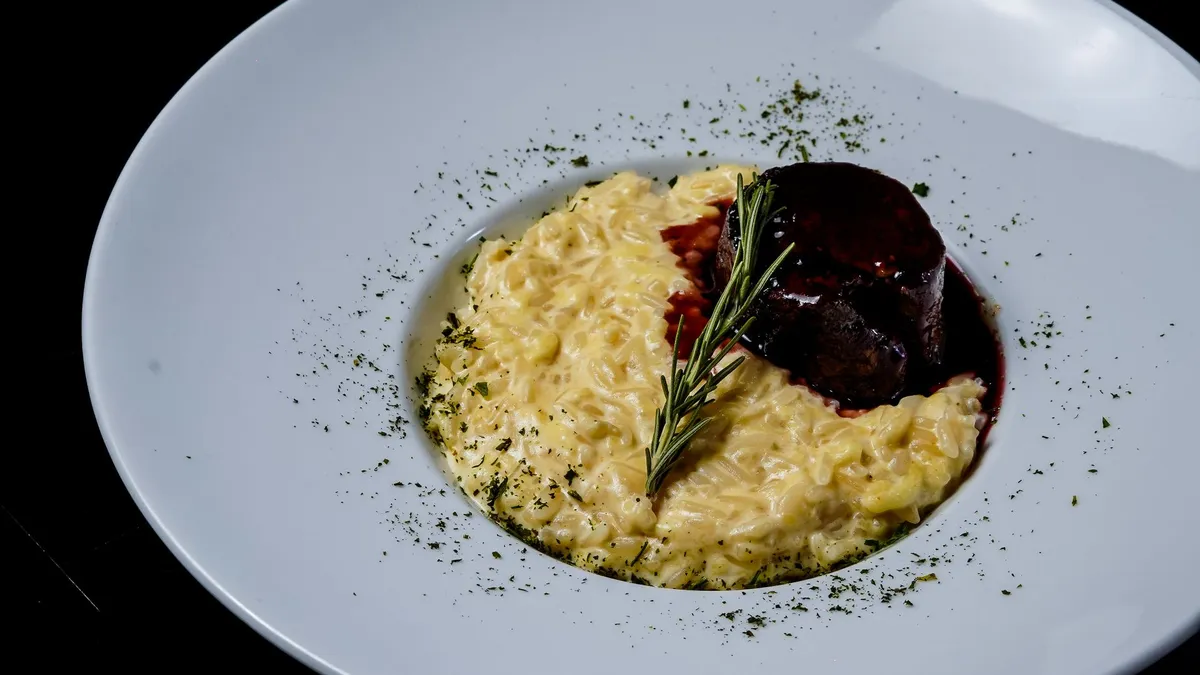
-
 Giovanni Luigi
 - 23 Sep, 2026 10:28
Quando i Mondi si Incontrano nel Piatto: L'Anima Segreta della Cucina Fusion
L'Alba di un Sapore Senza Confini Immaginate un porto affollato nel XVI secolo: l'odore acre del pepe nero si mescola al profumo dolce del latte di cocco, mentre il suono di un mortaio di pietra ritma la preparazione di un piatto che non ha ancora un nome. Non è solo cucina, è diplomazia commestibile. La cucina fusion, termine entrato ufficialmente nell'Oxford English Dictionary solo nel 2002, definita come "uno stile di cucina che fonde ingredienti e metodi di preparazione provenienti da diversi paesi, regioni o gruppi etnici", non è un'invenzione dei chef stellati degli anni '70. È un fenomeno antico quanto la curiosità umana, un linguaggio universale scritto con spezie, tecniche e ingredienti che hanno viaggiato ben oltre le frontiere politiche. Macao: Il Primo Abbraccio Tra Occidente e Oriente Riconosciuta dall'UNESCO come la prima cucina fusion al mondo, la cucina macaense nasce oltre 450 anni fa in un lembo di terra dove l'Impero Portoghese incontrò la Cina imperiale. Qui, le tecniche iberiche di cottura al forno e l'uso del baccalà abbracciarono ingredienti cinesi come la salsa di soia, lo zenzero e il vino di riso, arricchendosi ulteriormente di echi africani, indiani e del Sud-est asiatico portati dalle rotte commerciali. È un caso di studio perfetto: non una semplice giustapposizione, ma una sintesi profonda dove il bacalhau diventa bacalhau à brás con tocchi di curry e latte di cocco. Tuttavia, la storia ama le sfumature. Alcuni studiosi sostengono che la Grecia antica possa vantare il titolo di prima fusion, crocevia obbligato di civiltà che per millenni hanno scambiato olive, grano, vino e spezie, riscrivendo il codice gastronomico del Mediterraneo. Che sia Macao o Atene, il messaggio è chiaro: la fusion non è una moda, è la modalità naturale dell'evoluzione culinaria.L'Eco del Colonialismo nei Nostri Piatti C'è un'ombra lunga che si stende su molti piatti che oggi definiamo "fusion": il colonialismo. Non fu solo scambio commerciale; fu imposizione, adattamento, resistenza. Il bánh mì vietnamita nasce dalla baguette francese imposta in Indocina, farcita poi con erbe locali, paté e daikon sott'aceto: una riappropriazione del simbolo del colonizzatore. I patty giamaicani fondono il pasticcio britannico (turnover) con peperoncini e spezie africane e asiatiche, arrivati negli zaini degli schiavi e dei lavoratori a contratto. Il ramen, oggi icona nipponica, origina come shina soba ("noodles cinesi") durante l'occupazione giapponese di territori cinesi a fine '800.Le cuoche indigene, spesso domestiche costrette al servizio, furono le vere architette invisibili di questa ibridazione, mescolando sapienza ancestrale e dispense straniere. In Perù, il consumo del cuy (porcellino d'India) fu bandito come "selvaggio" fino a recenti movimenti di rivendicazione, cancellando secoli di sapere tradizionale. Oggi, la critica accademica sottolinea come la fusion moderna rischi di perpetuare una gerarchia: la cucina europea che "eleva" l'etnico a modernità, trasformando cibi umili in trend gentrificati, svuotandoli di contesto e dignità. Glocalizzazione: Quando il Globale Diventa Locale Nel vortice della globalizzazione, nasce la glocalizzazione (crasi di globalizzazione e localizzazione). Le catene multinazionali ne sono i laboratori più evidenti. McDonald's adatta i menu per "riflettere gusti e tradizioni locali in ogni paese": in India spariscono manzo e maiale, sostituiti da Maharaja Mac di pollo o paneer, rispettando tabù religiosi e leggi. È una scelta economica mascherata da sensibilità culturale.Ma la glocalizzazione ha radici più umili e geniali. Il California roll (crab, avocado, cetriolo, riso all'esterno) nasce in America nella seconda metà del Novecento. La leggenda narra di un'avversione yankee per l'alga nori e il pesce crudo: il riso esterno nasconde l'alga, il crab surrogato sostituisce il tonno. È fusion come mediazione culturale. In Corea, il budae-jjigae (stufato "della base militare") nasce dalla fame post-bellica: Spam, wurstel viennesi e formaggio a fette americani tuffati in un brodo di kimchi e gochujang. Ingredienti di surplus militare diventano comfort food nazionale, simbolo di resilienza e adattamento. L'Impronta dei Migranti: Architetti del Gusto Moderno Se il colonialismo impose incontri, le migrazioni li scelsero, li vissero, li reinventarono. Il cibo diventa ancoraggio identitario e ponte verso la nuova terra.Vietnamiti nel Sud USA: Portano nước mắm (salsa di pesce) ed erbe nella cucina creola, cuocendo gumbo e jambalaya con tecniche cajun ma anima del Mekong. Cinesi in America: Dalle Chinatown e dai ghetti, adattano il chop suey e il chow mein a palati che vogliono dolce, denso, fritto. Nasce la cucina sino-americana, un dialetto gastronomico che non esiste in Cina. Cinesi nell'India britannica: Creano la cucina indocinese: chili chicken, manchurian, hakka noodles dove garam masala, curcuma e peperoncino verde dominano su salsa di soia e vino di riso. Coreani e Cinesi al confine: La cucina sino-coreana fiorisce nelle comunità della diaspora cinese in Corea e lungo il confine mancese, fondendo jajangmyeon (noodles alla salsa di fagioli neri) e tangsuyuk (maiale in agrodolce). Messicani nel Sudovest USA: Nasce la cucina tex-mex/cal-mex: chili con carne, nachos, burritos missionari, dove mais, fagioli, peperoncini nativi incontrano carne bovina, formaggio cheddar e farina di grano europei.Oltre il Confine: La Nuova Geografia del Gusto Oggi, nelle metropoli globali, la fusion si fa pan-etnica. Ristoranti fondati da immigrati cinesi e latinoamericani servono dumplings ripieni di cochinita pibil (maiale arrosto lento dello Yucatán). Negli USA, l'"Asian fusion" crea rice bowl dove aglio, peperoncino, tofu saltato e verdure convivono in una ciotola che in Asia non trovereste mai: è una nuova forma di "cibo americano asiatico", sintesi di solidarietà interculturale nata tra banchi di mercato e cucine domestiche. Questi piatti non sono ibridi sterili. Sono narrazioni di sopravvivenza, negoziazione, creatività. Ogni morso di bánh mì, ogni cucchiaio di budae-jjigae, ogni California roll racchiude trattati di pace non firmati, lingue imparate a fatica, nonne che insegnano a nipoti nati altrove come si arrotola un involtino o si dosa il piccante. La fusion non è confusione. È la mappa commestibile della storia umana: rotte marittime, catene, valigie di cartone, visti scaduti, ristoranti a conduzione familiare, boardroom di multinazionali. È la prova che, quando le parole falliscono, il sapore sa ancora costruire ponti.#FusionCuisine #FoodHistory #CulinaryAnthropology #GlobalGastronomy #MacaneseCuisine Related InsightsNdambe: The Comforting Black-Eyed Pea Stew Goi Cuon: The Fresh and Healthy Summer Rolls Kelewele: The Spicy Fried Plantain Snack{ "@context": "https://schema.org", "@type": "FAQPage", "mainEntity": [ { "@type": "Question", "name": "What is the main focus of Quando i Mondi si Incontrano nel Piatto: L'Anima Segreta della Cucina Fusion?", "acceptedAnswer": { "@type": "Answer", "text": "Un viaggio profondo nelle origini millenarie e nelle dinamiche sociopolitiche che hanno plasmato la cucina fusion, dalla Macao portoghese ai banchi dei fast food globali." } }, { "@type": "Question", "name": "Who authored the comprehensive guide on Quando i Mondi si Incontrano nel Piatto: L'Anima Segreta della Cucina Fusion?", "acceptedAnswer": { "@type": "Answer", "text": "This detailed article and its insights were carefully researched and authored by Giovanni Luigi." } }, { "@type": "Question", "name": "Where can I find more related content about Food?", "acceptedAnswer": { "@type": "Answer", "text": "You can explore more articles, detailed reviews, and similar insights by browsing the Related Insights section at the bottom of this article or visiting our dedicated Food category page." } } ] }
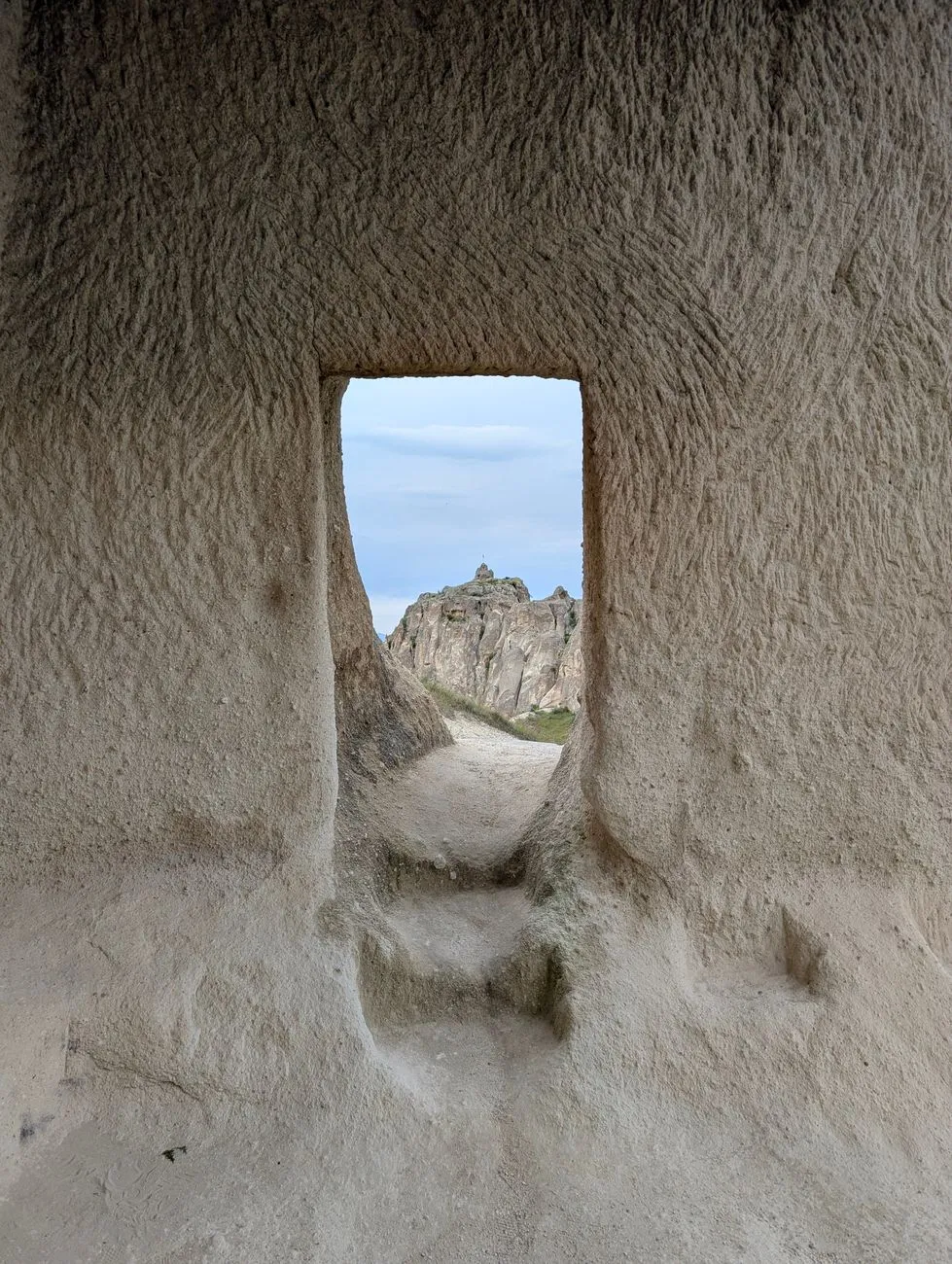
Whispers of the Earth: Entering Derinkuyu's Labyrinth Stepping through the narrow stone portal of Derinkuyu feels like crossing a threshold into a forgotten epoch. The air cools instantly, scented with mineral dust and the faint perfume of ancient hearths. This UNESCO‑listed complex plunges to a staggering 85 metres (≈279 ft) and unfolds across 18 discernible levels, though only the upper eight are open to visitors. Archaeologists estimate the city could shelter up to 20,000 souls, complete with ventilation shafts that still draw fresh air from the surface, a sophisticated water‑well system, and communal spaces — stables, wine presses, chapels, and even a missionary school. The engineering genius lies in the rolling stone doors, each weighing several hundred kilograms, which could be sealed from the inside to thwart invaders. As you descend the steep, uneven stairways, the walls reveal chisel marks that speak of centuries of patient labor. Guides often point out the “communication shafts” — narrow vertical channels that allowed messages to travel between levels without a messenger ever seeing daylight. Practicalities matter as much as wonder. The site opens at 08:00 am and closes at 19:00 pm in summer (17:00 pm in winter). The entrance fee sits at roughly 100 Turkish Lira (≈ €3.20) for adults, with a modest discount for students and children. A dolmuş (shared minibus) from Göreme’s central square reaches the entrance in about 30 minutes for 30 TL; a private taxi costs 150‑200 TL and offers flexibility for a combined Derinkuyu‑Kaymaklı day trip. Wear sturdy, closed‑toe shoes — stone steps are slick with condensation — and carry a small water bottle; there are no vendors inside. Photography is permitted, but flash is discouraged in the deeper chambers to protect fragile pigments on the walls. Kaymaklı's Layered Secrets: A Deeper Descent If Derinkuyu impresses with sheer depth, Kaymaklı captivates with its intricate horizontal sprawl. The city extends roughly 40 metres (≈130 ft) below ground across eight levels, of which four are accessible. Its layout resembles a honeycomb: narrow corridors branch into living quarters, storage rooms, and a remarkable communal kitchen equipped with a massive tandoor oven. The ventilation system here is equally ingenious — 52 shafts, some still functional, channel air through a network of carved ducts that maintain a constant 13 °C (55 °F) year‑round. Historical records suggest Kaymaklı served as a refuge during the Arab‑Byzantine wars, housing up to 3,500 people at its peak. The city’s name, meaning “with cream” in Turkish, hints at the dairy stores once kept cool in its subterranean larders. Visiting Kaymaklı follows a similar schedule: 08:00‑19:00 (summer) and 08:00‑17:00 (winter). The ticket costs about 80 TL (≈ €2.55). The site lies 20 km south of Göreme, reachable by the same dolmuş line that stops at Derinkuyu; simply stay aboard for the next stop. Many travelers combine both cities in a single morning, allocating roughly 90 minutes per site. A local guide (≈ 150 TL for a two‑hour private tour) can illuminate the subtle differences — Kaymaklı’s more domestic feel versus Derinkuyu’s militaristic design — and point out the hidden “escape tunnel” that leads toward the nearby Ihlara Valley. Engineering Marvels Beneath the Fairy Chimneys The fairy chimneys that punctuate Cappadocia’s skyline are the surface expression of the same volcanic tuff that made underground excavation feasible. Soft yet cohesive, the rock could be carved with bronze and later iron tools, allowing entire communities to sculpt habitable volumes without mortar. The ventilation shafts are a masterclass in passive climate control: each shaft tapers upward, creating a Venturi effect that draws stale air out while pulling fresh breezes in. Water management is equally sophisticated; Derinkuyu’s main well descends 55 metres, lined with stone to prevent collapse, and feeds a network of cisterns that could sustain the population for months. Modern engineers study these ancient systems for sustainable design inspiration. The rolling stone doors, for instance, operate on a simple pivot‑and‑groove mechanism that requires minimal force yet provides an airtight seal — a principle now explored in low‑energy building envelopes. The communal kitchens, with their centralized hearths and smoke‑extraction channels, anticipate modern district‑heating concepts. Even the waste‑disposal chutes, which directed refuse to sealed pits, demonstrate an early understanding of sanitation engineering. Visitors often marvel at the acoustic properties: a whisper at one end of a corridor can be heard clearly at the other, a feature likely used for covert communication during sieges. Practical Pathways: Getting There, Tickets, and Timing Planning a subterranean day trip hinges on logistics as much as curiosity. Göreme remains the most convenient base, offering a spectrum of accommodation from cave‑style boutique hotels (≈ €60‑120 per night) to budget hostels (≈ €15‑25). The town’s central bus station hosts regular dolmuş departures to both Derinkuyu and Kaymaklı every 30 minutes during peak season (April‑October). A round‑trip dolmuş ticket costs 60 TL; a private driver for the full circuit (Göreme → Derinkuyu → Kaymaklı → Göreme) averages 350‑450 TL, a worthwhile splurge if you value flexibility and air‑conditioned comfort. Ticket purchases are cash‑only at the entrance kiosks; credit cards are rarely accepted. Arrive early (by 08:30 am) to beat the tour‑bus crowds that swell around 10:00 am. Allocate a minimum of two hours per site to absorb the atmosphere without rushing. For those with limited mobility, note that both sites involve steep, uneven steps and low ceilings; Derinkuyu offers a partial wheelchair‑accessible route on the first level only. Restrooms are available at the entrance plazas, but none exist underground. A small café near Derinkuyu’s parking area serves Turkish tea, gözleme, and fresh fruit — ideal for a post‑descent recharge. Savoring the Surface: Food, Stay, and Local Lore Emerging from the cool darkness into Cappadocia’s sun‑baked valleys feels like a rebirth. The region’s culinary identity mirrors its geology — hearty, earth‑rooted, and deeply traditional. Breakfast in Göreme often features menemen (scrambled eggs with tomatoes, peppers, and spices) served with warm pide bread, while lunch might be a pottery kebab (testi kebabı) slow‑cooked in a sealed clay pot, cracked open tableside for dramatic aroma. Dinner options range from family‑run lokantas offering mantı (tiny dumplings with yogurt‑garlic sauce) to upscale restaurants pairing local wines — especially the crisp Narince white and robust Öküzgözü red — with tasting menus that celebrate Anatolian produce. Accommodation choices amplify the experience. Cave hotels, carved directly into the tuff, maintain a constant 18‑20 °C temperature, offering natural insulation that modern HVAC struggles to replicate. Many feature terraces with panoramic views of the fairy chimneys, perfect for sunrise hot‑air‑balloon watching — a quintessential Cappadocia ritual. For budget travelers, hostels in Ürgüz and Avanos provide clean dormitories and communal kitchens, often organizing group tours to the underground cities at discounted rates. Local lore enriches every stone. Legends speak of early Christians hiding from Roman persecution, carving secret chapels adorned with frescoes that still glow in candlelight. Oral histories recount the “Night of the Thousand Lanterns,” when refugees lit oil lamps throughout Derinkuyu’s corridors, turning the labyrinth into a constellation. Engaging with a village elder over a glass of çay can reveal stories not found in guidebooks — tales of hidden treasure chambers, forgotten escape routes, and the enduring spirit of a people who turned volcanic ash into sanctuary. Comparative Snapshot: Derinkuyu vs. KaymaklıFeature Derinkuyu KaymaklıMaximum depth 85 m (279 ft) 40 m (130 ft)Levels total / open 18 / 8 8 / 4Estimated capacity 20,000 people 3,500 peopleEntrance fee (2026) 100 TL (≈ €3.20) 80 TL (≈ €2.55)Opening hours (summer) 08:00‑19:00 08:00‑19:00Opening hours (winter) 08:00‑17:00 08:00‑17:00Dolmuş from Göreme 30 min, 30 TL 45 min, 30 TL (same line)Notable feature Rolling stone doors, deep well 52 ventilation shafts, communal kitchenAccessibility First level only for wheelchairs First level only for wheelchairsEchoes in the Stone: Reflections on a Subterranean Journey Leaving the underground cities behind, the mind lingers on the echo of footsteps on ancient tufa, the cool breath of ventilation shafts, and the quiet resilience of communities that chose darkness over surrender. Cappadocia’s hidden realms are more than tourist attractions; they are living textbooks of human ingenuity, testaments to a civilization that transformed a hostile landscape into a haven. Whether you trace the spiral staircase of Derinkuyu’s deepest chapel or trace your fingers along Kaymaklı’s soot‑blackened kitchen walls, you participate in a dialogue spanning millennia. The practical details — tickets, transport, timing — fade into background noise when the weight of history presses against your palm. As the sun sets behind the fairy chimneys, casting long shadows across the valley, the subterranean world remains, patient and eternal, waiting for the next curious soul to descend and listen. #Cappadocia #UndergroundCities #Derinkuyu #Kaymaklı #TurkeyTravel Related InsightsEl Generalife: Los Jardines del Paraíso La Cathédrale de Séville : Gothique et Héritage Andalou 'Lake Tekapo: Ein Juwel in Neuseelands Südinsel'{ "@context": "https://schema.org", "@type": "FAQPage", "mainEntity": [ { "@type": "Question", "name": "What is the main focus of Subterranean Europe: Unveiling Cappadocia's Hidden Cave Cities?", "acceptedAnswer": { "@type": "Answer", "text": "Journey beneath the fairy chimneys to explore Derinkuyu and Kaymaklı, the ancient subterranean marvels of Cappadocia." } }, { "@type": "Question", "name": "Who authored the comprehensive guide on Subterranean Europe: Unveiling Cappadocia's Hidden Cave Cities?", "acceptedAnswer": { "@type": "Answer", "text": "This detailed article and its insights were carefully researched and authored by Zola Ndlovu." } }, { "@type": "Question", "name": "Where can I find more related content about Travel?", "acceptedAnswer": { "@type": "Answer", "text": "You can explore more articles, detailed reviews, and similar insights by browsing the Related Insights section at the bottom of this article or visiting our dedicated Travel category page." } } ] }

-
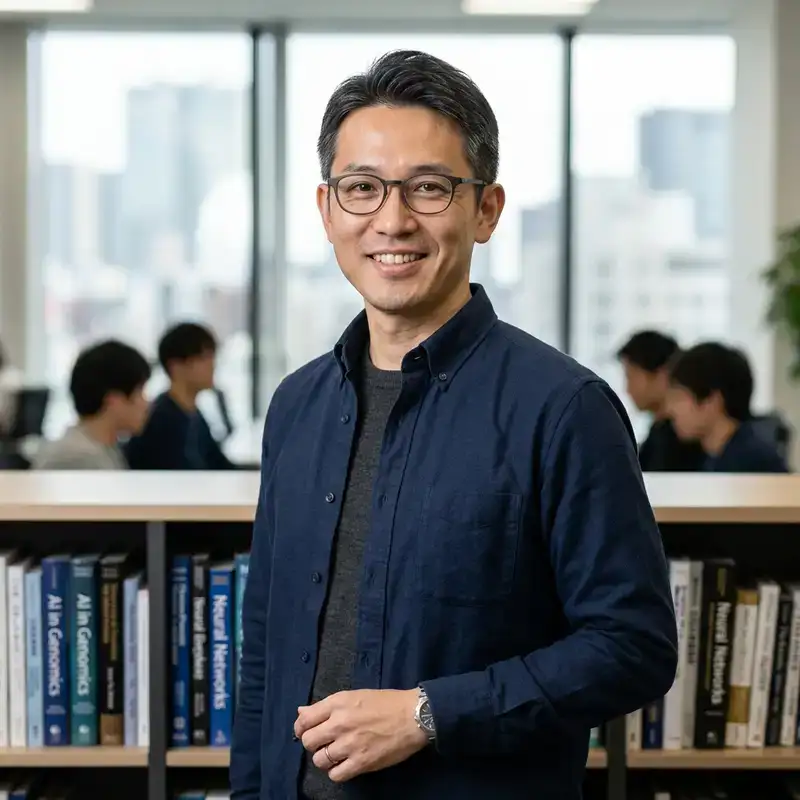 Hiroshi Tanaka
 - 22 Sep, 2026 21:22
Metaverse as a Service: Architecting Scalable Virtual Worlds for the Enterprise
The Dawn of Enterprise Metaverse Infrastructure The promise of a persistent, interoperable virtual layer for business processes has moved from speculative keynotes to production‑grade procurement. Organizations now demand a Metaverse as a Service (MaaS) model that delivers on‑demand spatial compute, deterministic synchronization, and compliance‑ready governance—without the capital expense of bespoke engine development. Recent human‑factor research underscores why this shift is non‑trivial: the Passthrough Rigidity study (N=110) demonstrated a four‑fold suppression of rotational head velocity and a measurable decoupling of head‑gaze coordination when users operate through video‑passthrough HMDs. Those biomechanical compensations translate directly into higher cognitive load and reduced task throughput, a reality that any MaaS stack must mitigate through low‑latency edge rendering and adaptive UI scaling. Simultaneously, the GameHorizon Suite provides a 5,000‑hour, 21‑game dataset with multi‑horizon annotations, offering a reproducible benchmark for the AI agents that will power autonomous NPCs, procedural world generation, and real‑time analytics inside enterprise worlds. By fusing these empirical insights with cloud‑native orchestration patterns observed in GitHub‑trending projects such as maas-framework, spatial-sync, and immersive-ops, we can delineate a reference architecture that satisfies performance, security, and developer‑experience constraints at planetary scale.Architectural Foundations of MaaS A production MaaS platform separates control plane concerns (identity, policy, billing) from the data plane that streams spatial state. The control plane is typically a Kubernetes‑native operator that provisions World Instances as custom resources, each encapsulating a dedicated namespace, resource quotas, and a service mesh sidecar for mutual TLS. The data plane leverages a distributed state synchronization layer built on CRDT‑based entity component systems (ECS) to guarantee eventual consistency across edge nodes while preserving deterministic physics tick rates. This separation mirrors the GameHorizon offline/online evaluation split: offline benchmarks validate the correctness of world snapshots, while online rollouts expose latency‑induced divergence—exactly the failure mode the Passthrough Rigidity findings predict when visual‑motor loops exceed 30 ms. To keep the synchronization budget tight, the platform adopts gRPC‑WebTransport streams with binary protobuf payloads, enabling sub‑10 ms round‑trip times on 5G‑edge clusters. Multi‑tenancy is enforced through namespace‑scoped NetworkPolicies and OPA Gatekeeper constraints that prevent cross‑world entity leakage, a requirement highlighted by recent Y Combinator batch companies such as ImmersiveOps and VirtualWare during their SOC‑2 audits. Data Plane and Synchronization Engine The synchronization engine is the heartbeat of any MaaS deployment. It ingests entity updates (position, orientation, custom components) from authoritative simulation workers, merges them via state‑based CRDTs, and broadcasts deltas to all subscribed clients. A typical pipeline looks like:Simulation Workers (stateless, autoscaled) run the physics tick at 90 Hz. State Aggregator collects ticks, resolves conflicts using last‑writer‑wins with vector clocks. Delta Publisher pushes compressed diffs over QUIC streams to edge gateways. Client SDK applies deltas, runs local prediction, and reconciles on server correction.This design directly addresses the Passthrough Rigidity observation that restricted visual search patterns correlate with latency spikes: by guaranteeing deterministic tick delivery, the platform preserves the natural head‑gaze coupling that users rely on for comfortable interaction. The GameHorizon benchmark suite can be repurposed to stress‑test this pipeline—its multi‑horizon instructions map cleanly to “short‑term physics fidelity” vs. “long‑term world persistence” test cases, enabling automated regression detection across model updates. # docker-compose.yml – Minimal MaaS data‑plane stack for local development version: "3.9" services: sim-worker: image: ghcr.io/maas-framework/sim-worker:latest deploy: replicas: 3 resources: limits: cpus: "2" memory: 4G environment: - TICK_RATE=90 - CRDT_BACKEND=redis networks: [maas-net] state-aggregator: image: ghcr.io/maas-framework/state-aggregator:latest depends_on: [sim-worker] environment: - VECTOR_CLOCK_TTL=500ms networks: [maas-net] delta-gateway: image: ghcr.io/maas-framework/delta-gateway:latest ports: ["8443:8443"] environment: - QUIC_MAX_STREAMS=1000 networks: [maas-net] redis: image: redis:7-alpine command: ["redis-server", "--appendonly", "yes"] volumes: [redis-data:/data] networks: [maas-net]networks: maas-net: driver: overlayvolumes: redis-data:Security and Governance Layers Enterprise adoption hinges on zero‑trust guarantees. Every world instance runs inside a Confidential Computing enclave (AMD SEV‑SNP or Intel TDX) so that even the cloud provider cannot inspect spatial data. Identity is federated via OIDC with SCIM provisioning, and fine‑grained RBAC maps to world‑level roles (Designer, Operator, Auditor). Audit logs are streamed to an immutable Cloud‑Native Log Store (e.g., Loki with signed indexes) to satisfy GDPR‑Article 30 and CCPA requirements. The GameHorizon offline evaluation framework, which isolates model inference from live gameplay, inspires a policy‑as‑code testing harness: CI pipelines spin up ephemeral worlds, inject adversarial entity streams, and verify that OPA policies reject unauthorized state mutations before promotion. This approach mirrors the Passthrough Rigidity methodology of controlled within‑subject experiments—only here the subject is the platform itself.Scaling Strategies Across Clouds Horizontal scaling of MaaS is not a single‑cluster problem; it demands multi‑region, multi‑cloud orchestration. The reference implementation uses Cluster API (CAPI) to provision Kubernetes clusters on AWS EKS, GCP GKE, and Azure AKS from a single GitOps repository (Argo CD). World instances are scheduled by a custom scheduler that evaluates latency‑aware placement scores derived from real‑time NetFlow telemetry and the Passthrough Rigidity comfort model (target < 20 ms end‑to‑end). Autoscaling policies are expressed as KEDA ScaledObjects keyed on active‑entity‑count and physics‑tick‑queue‑depth. For bursty workloads—virtual trade shows, training simulations—spot‑instance fleets with graceful pre‑emption hooks drain state to persistent CRDT snapshots before termination, preserving continuity. The GameHorizon dataset’s 100 expert players across 21 titles provides a realistic traffic generator for capacity planning: replaying those sessions at 10× speed validates that the scheduler maintains SLA under peak concurrency. Developer Experience and Observability A MaaS platform succeeds only if developers can iterate locally, test continuously, and debug spatially. The SDK ships a local dev container that mirrors the production data plane (sim‑worker + aggregator + gateway) via the Docker Compose file above. Integrated OpenTelemetry instrumentation emits traces for every entity mutation, enabling distributed tracing across simulation workers, aggregator, and client. Visual debugging is powered by a WebXR Inspector that overlays CRDT version vectors on live scenes, letting engineers spot divergence instantly—an analogue to the GameHorizon stepwise online testing that localizes failures to specific gameplay steps. CI pipelines run contract tests against the GameHorizon‑Bench offline suite, ensuring that new physics modules do not regress multi‑horizon instruction fidelity. Finally, a feature‑flag service (Unleash) gates experimental spatial APIs, allowing product teams to roll out avatar‑customization or AI‑driven NPCs to a subset of worlds without redeploy.Charting the Next Frontier The convergence of rigorous human‑factor data, large‑scale gameplay benchmarks, and cloud‑native engineering practices has produced a reproducible blueprint for Metaverse as a Service. By treating passthrough‑induced biomechanical constraints as first‑class system requirements, we engineer latency budgets that preserve natural head‑gaze dynamics. By leveraging the GameHorizon multi‑horizon evaluation methodology, we gain a quantitative yardstick for both AI agents and synchronization correctness. The reference stack—control plane operators, CRDT‑based data plane, confidential enclaves, multi‑cloud CAPI orchestration, and full‑stack observability—offers enterprises a path from prototype to planet‑scale deployment without reinventing the spatial compute wheel. As the ecosystem matures, the next research frontier will be adaptive fidelity: dynamically trading physics tick rate, visual resolution, and AI inference depth per user context, guided by the same quantitative frameworks that today expose the cost of mediated perception. Organizations that embed these principles now will own the infrastructure layer upon which the next generation of collaborative work, immersive training, and digital commerce is built.#Metaverse #MaaS #EnterpriseXR #CloudNative #DevOps #AI #SpatialComputing Related InsightsTaming the Heat: The Rise of Liquid Cooling for High-Density AI Server Racks The Digital Scalpel: Architecting High-Fidelity Haptic Feedback in Robotic Surgery Simulation The Quantum Leap: Unlocking the Secrets of Next-Gen Qubit Architectures{ "@context": "https://schema.org", "@type": "FAQPage", "mainEntity": [ { "@type": "Question", "name": "What is the main focus of Metaverse as a Service: Architecting Scalable Virtual Worlds for the Enterprise?", "acceptedAnswer": { "@type": "Answer", "text": "A technical blueprint for building, operating, and scaling enterprise‑grade Metaverse platforms, grounded in latest XR perception research and gameplay AI benchmarks." } }, { "@type": "Question", "name": "Who authored the comprehensive guide on Metaverse as a Service: Architecting Scalable Virtual Worlds for the Enterprise?", "acceptedAnswer": { "@type": "Answer", "text": "This detailed article and its insights were carefully researched and authored by Hiroshi Tanaka." } }, { "@type": "Question", "name": "Where can I find more related content about Technology?", "acceptedAnswer": { "@type": "Answer", "text": "You can explore more articles, detailed reviews, and similar insights by browsing the Related Insights section at the bottom of this article or visiting our dedicated Technology category page." } } ] }