
-
 Giovanni Luigi
 - 11 Oct, 2026 11:48
L'Alchimia del Gusto: Quando la Fisica Quantistica si Siede a Tavola
La cucina, per secoli, è stata un regno governato dall'istinto, dalla tradizione orale e da quel "saper fare" tramandato di generazione in generazione, avvolto nel vapore profumato dei brodi e nel crepitio del burro nocciola. Nessuno chiedeva perché l'albume montasse a neve ferma, né come il collagene si arrendesse al calore diventando gelatina vellutata. Si sapeva solo che accadeva, e che quel risultato era buono. Ma c'è un momento preciso nella storia, un punto di non ritorno, in cui la padella è diventata una beuta, il fuoco un controllo termodinamico e il cuoco, suo malgrado o per scelta deliberata, un chimico fisico. Quel momento ha un nome, una data e dei padri fondatori: la gastronomia molecolare.La Nascita di una Disciplina tra le Mura di Erice Correva l'anno 1988. In un mondo culinario ancora legato ai dettami della nouvelle cuisine e alle salse pesanti della tradizione classica, due menti brillanti — il fisico ungherese Nicholas Kurti e il chimico fisico francese Hervé This, allora all'INRA — decisero di dare un nome a un vuoto epistemologico. Coniarono il termine "Molecular and Physical Gastronomy". Non era una moda, né una semplice etichetta per piatti spettacolari con azoto liquido o sfere caviaristiche. Era una dichiarazione d'intenti scientifica: studiare la cucina — quella di casa e quella del ristorante — dalla prospettiva della chimica, alla scala degli atomi, delle molecole e delle miscele. Fino a quel momento, la scienza degli alimenti (food science) era quasi interamente asservita all'industria: sicurezza, conservazione, produzione di massa, microbiologia. Mancava un ramo dedicato specificamente ai processi chimici e fisici della cottura domestica e ristorativa. Kurti e This vollero colmare questo abisso, riunendo indagini frammentate e isolate in una disciplina organizzata, parlante un linguaggio accessibile ai cuochi, non solo agli scienziati. Quattro anni dopo, nel 1992, l'idea prese forma concreta tra le mura antiche del Centro Ettore Majorana per la Cultura Scientifica a Erice, in Sicilia. I workshop, inizialmente battezzati "Science and Gastronomy", divennero il crocevia dove scienziati Nobel e chef stellati si sedevano allo stesso tavolo per dissezionare la scienza dietro le preparazioni tradizionali. Dopo la scomparsa di Kurti nel 1998, This rinominò gli incontri "The International Workshop on Molecular Gastronomy 'N. Kurti'", dirigendoli dal Centre International de Gastronomie Moléculaire AgroParisTech-INRA, custode di un'eredità che andava ben oltre la semplice tecnica culinaria. L'Architetto Invisibile: Elizabeth Cawdry Thomas Spesso la storia ufficiale dimentica le scintille che accendono i falò. Dietro l'organizzazione dei primi workshop di Erice si cela una figura femminile, Elizabeth Cawdry Thomas, raramente citata nei manuali ma fondamentale nell'architettura di questo movimento. Insegnante di cucina formatasi al Le Cordon Bleu di Londra e titolare di una scuola a Berkeley, California, Thomas possedeva un ponte unico: era la moglie di un fisico e frequentava assiduamente la comunità scientifica. Fu lei, nel 1988, durante un incontro a Erice, a intravedere la lacuna. Conversando con il professor Ugo Valdrè dell'Università di Bologna, condivise l'intuizione che la scienza della cucina fosse un argomento sottovalutato. Valdrè concordò e spinse Kurti a organizzare il workshop. Senza quella conversazione informale, senza quel ponte tra una cucina californiana e un laboratorio di fisica bolognese, la formalizzazione della disciplina avrebbe forse atteso decenni. È la prova che la gastronomia molecolare non nasce solo nei paper accademici, ma nelle connessioni umane, nel vino versato durante una cena, nella curiosità ibrida di chi vive con un piede nel fornello e l'altro nell'acceleratore di particelle.Le Ombre Lunghe dei Precursori: Carême, Roussel e i Pionieri Dimenticati Kurti e This non si sono mai illusi di aver inventato il fuoco. Hanno sempre riconosciuto che l'idea di usare la chimica per studiare il cibo affonda le radici in secoli passati. La gastronomia molecolare non è un ex novo, ma una sistematizzazione rigorosa di intuizioni sparse. Marie-Antoine Carême: Il Primo Chimico ai Fornelli All'alba del XIX secolo, Marie-Antoine Carême (1784–1833), l'architetto della grande cuisine francese, colui che codificò le salse madri e innalzò la pasticceria a arte architettonica, pronunciò una frase che suona come un manifesto ante litteram. Parlando della preparazione di un fondo (stock), scrisse: "il brodo deve giungere a bollore molto lentamente, altrimenti l'albumina coagula, indurisce; l'acqua, non avendo il tempo di penetrare la carne, impedisce alla parte gelatinosa dell'osmazoma di staccarsi". Leggete bene: albumina, coagulazione, penetrazione dell'acqua, osmazoma, parte gelatinosa. Carême non sta dando una ricetta; sta descrivendo un meccanismo fisico-chimico. Identifica la temperatura critica, la cinetica delle proteine, l'estrazione del collagene. Sta facendo gastronomia molecolare ottanta anni prima che la chimica fisica esistesse come disciplina accademica. È la prima volta che un cuoco smette di dire "fai così perché si fa così" e inizia a dire "fai così perché le molecole si comportano così". Raymond Roussel: La Visione Letteraria della Chimica Nel 1914, lo scrittore Raymond Roussel, nella sua opera "L'Allée aux lucioles", immagina un Antoine de Lavoisier romanzato che crea un "involucro semipermeabile commestibile" per racchiudere una scultura ghiacciata di un vino, immersa in un altro vino. La finzione letteraria cita l'evento come significativo "sia negli annali della scienza che nella storia della gastronomia migliorata". È una profezia straordinaria: l'incapsulamento, le membrane semipermeabili, la sferificazione — tecniche che diventeranno icone della cucina moderna (grazie a Ferran Adrià e al team di elBulli, basandosi sui lavori di Unilever e sui polisaccaridi come l'alginato) — sono già qui, nella mente di uno scrittore, sessant'anni prima della loro applicazione pratica. Roussel intuì che la chimica poteva non solo spiegare, ma costruire nuove texture, nuove esperienze sensoriali. Le Accademiche Silenziose: Halliday, Noble e Lowe Mentre la haute cuisine francese brillava, oltreoceano e nelle università, donne brillanti stavano gettando le basi accademiche rigorose. Nel 1928, Evelyn G. Halliday e Isabel T. Noble pubblicano "The Hows and Whys of Cooking". Nel 1943, il loro "Food Chemistry and Cookery" (University of Chicago Press) diventa un testo fondamentale. L'obiettivo dichiarato: "dare una comprensione dei principi chimici su cui si basano le buone pratiche di preparazione e conservazione degli alimenti". I capitoli leggono come un sillabo di gastronomia molecolare moderna: "La Chimica del Latte", "La Chimica dei Lieviti Chimici", "La Chimica della Cottura delle Verdure", "Determinazione della Concentrazione di Ioni Idrogeno" (pH!). Includevano illustrazioni di apparecchi per distillazione di campioni vegetali e pipette per determinare la viscosità relativa delle soluzioni di pectina. Erano docenti di Economia Domestica, ma facevano ricerca pura applicata al cibo. Ancora più monumentale, nel 1932, Belle Lowe, professoressa di Alimenti e Nutrizione all'Iowa State College, pubblica "Experimental Cookery: From The Chemical And Physical Standpoint". Oltre 600 pagine, centinaia di riferimenti, esperimenti dettagliati. Sezioni come: "La Relazione tra Cucina e Chimica Colloidale", "Coagulazione delle Proteine", "Fattori che Influenzano la Viscosità di Crema e Gelato", "Sineresi", "Idrolisi del Collagene", "Cambiamenti nella Carne Cotta". La Lowe trattava il cibo come un sistema colloidale complesso. Capiva che la cucina è essenzialmente la manipolazione di colloidi (gel, sol, emulsioni, schiume) attraverso energia (calore) e chimica (pH, ioni, enzimi). Il suo libro di testo superava in ampiezza e profondità molti trattati moderni, dimostrando che la "scienza della cucina quotidiana" aveva già una letteratura solida, rigorosa e dimenticata, ben prima del 1988.Oltre la Ricetta: La Definizione Rigorosa Cosa distingue esattamente la gastronomia molecolare dalla semplice "cucina scientifica" o dalla food science industriale? La definizione fornita dai fondatori è chirurgica:"La gastronomia molecolare è l'approccio scientifico della cucina principalmente dalla prospettiva della chimica. La composizione (struttura molecolare), le proprietà (massa, viscosità, ecc.) e le trasformazioni (reazioni chimiche, prodotti di reazione) di un ingrediente vengono affrontate e utilizzate nella preparazione e nell'apprezzamento dei prodotti ingeriti. È un ramo della scienza degli alimenti che si avvicina alla preparazione e al godimento della nutrizione dalla prospettiva di uno scienziato alla scala di atomi, molecole e miscele."Tre pilastri emergono con chiarezza cristallina:Composizione (Struttura Molecolare): Non si guarda l'ingrediente come "carota" o "uovo", ma come matrice di polisaccaridi, proteine globulari, lipidi, acqua, composti volatili. Proprietà (Fisiche): Viscosità, tensione superficiale, punto di fusione, reologia, massa, distribuzione dimensionale delle particelle. Sono questi i parametri che determinano la mouthfeel, la consistenza, la stabilità di una schiuma o di un'emulsione. Trasformazioni (Reazioni): Maillard, caramellizzazione, denaturazione proteica, gelificazione, emulsionamento, ossidazione, idrolisi enzimatica. Non "cottura", ma cinetica di reazione.La distinzione cruciale con la Food Science classica sta nel "preparation and enjoyment" (preparazione e godimento). La food science industriale ottimizza per shelf-life, sicurezza, costo, trasportabilità. La gastronomia molecolare ottimizza per il piacere sensoriale, per l'estetica del piatto, per la sorpresa cognitiva. Studia il perché del "buono", non solo il come del "sicuro". L'Eredità Vivente: Dalla Teoria alla Pratica Quotidiana Oggi, quando uno chef usa il sous-vide per controllare la denaturazione dell'actin e della miosina al decimo di grado, sta applicando la gastronomia molecolare. Quando monta una spuma di parmigiano reggiano usando la lecitina di soia per stabilizzare l'interfaccia aria-liquido, sta sfruttando la chimica colloidale studiata dalla Lowe novant'anni fa. Quando "sferifica" un succo di mela con alginato di sodio e cloruro di calcio, sta realizzando il sogno letterario di Roussel e la chimica dei polimeri ionotropi. Ma l'eredità più profonda è invisibile. È il cambiamento di mentalità. Il cuoco moderno non chiede più "quale ricetta?". Chiede: "Cosa succede alle proteine a 62°C? Come si comporta l'amido se lo raffreddo velocemente? Perché la mia maionese impazzisce se l'olio è troppo freddo?". Questo approccio — basato su evidenze, predittivo, controllabile — ha liberato la creatività. Sapere perché l'albumina coagula (come sapeva Carême) permette di evitarlo o provocarlo a piacimento. Sapere che la sineresi è l'espulsione d'acqua da un gel (studiata dalla Lowe) permette di progettare gel che non "piangono" nel piatto. La gastronomia molecolare non è l'azoto liquido che fumeggia sul tavolo — quello è solo teatro, molecular cooking o modernist cuisine, l'applicazione tecnologica. La gastronomia molecolare è la conoscenza che sta dietro le quinte. È la mappa che permette all'esploratore di non perdersi nel territorio sconosciuto della texture e del sapore.Il Futuro è nella Scala Nanometrica Guardando avanti, i laboratori come quello diretto da Hervé This all'AgroParisTech non si fermano. La frontiera si sposta verso la gastro-fisica, lo studio delle interazioni tra matrice alimentare e rec Related InsightsTales & Ballads of Wearside Book Review and Summary The Edge of Empire: A Journey Along Hadrian's Wall InvestiGators : Class Action Book Review and Summary
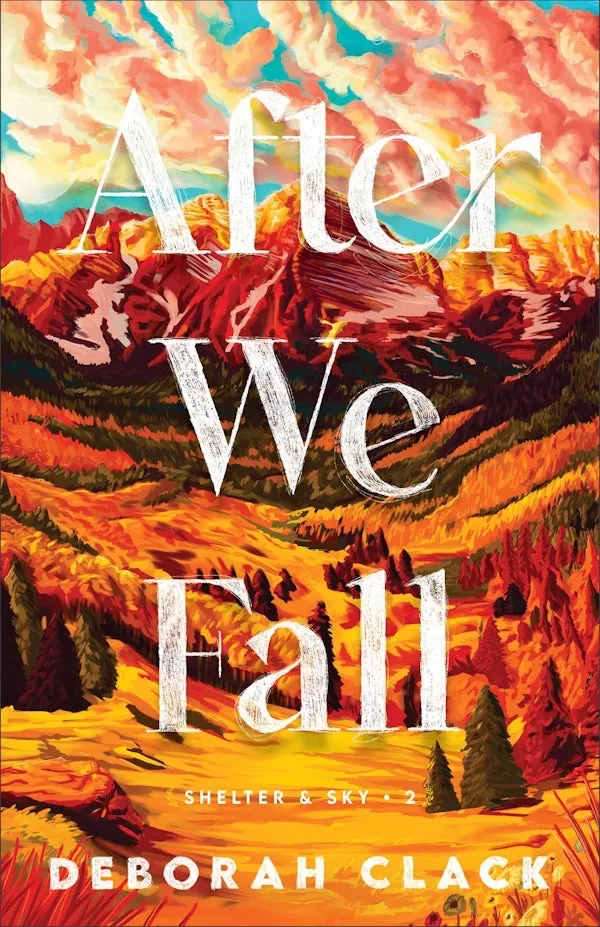

Author: Deborah ClackPage Count: UnknownPublication Date: Expected publication 2026-10-06 APL The synopsis of After We Fall arrives like a well-worn leather-bound first edition—promising depth, but leaving the spine slightly ajar. Deborah Clack’s prose here is a masterclass in controlled ambiguity, the kind that makes you wonder if the story will unfold like a carefully folded map or a hastily scribbled love letter. The opening line—"Sometimes the place you least expect to belong is exactly where you were always meant to land"—is the kind of sentiment that could belong in a Katherine Center novel, but with a sharper edge, a more unreliable cadence. It’s the kind of line that makes you pause, not because it’s profound, but because it’s too precise, like a knife’s edge that could cut either way. Penelope Reid and Luke Granger are the kind of characters who feel like they’ve been plucked from a very specific kind of contemporary romance—one where the opposites-attract trope is less about clichés and more about psychological friction. Penelope’s self-sufficiency is the kind of armor that could either save her or suffocate her, depending on how the story chooses to handle it. Luke’s nomadic lifestyle, meanwhile, feels like a deliberate counterpoint to her rootedness, but the synopsis doesn’t quite clarify whether this is a trope or a real tension. The way it’s phrased—"never found a reason to put down roots"—suggests a man who’s been burned, not just a man who’s restless. That’s the kind of nuance that could make this book feel earned, or it could feel like it’s trying too hard to be deep. And then there’s the mistake Penelope makes. Oh, the mistake. That’s the kind of vague, ominous phrasing that makes you suspect this isn’t just a romance—it’s a tragedy in disguise. The synopsis doesn’t say what it is, but the way it’s framed—"Her careful walls begin to crack"—implies something irreversible. It’s the kind of setup that could go the way of The Love Hypothesis’s emotional gut-punch, or it could devolve into the kind of predictable melodrama that makes you roll your eyes. The fact that Clack names this as a no-spice contemporary romance is both a relief and a red flag. Relief because it’s clear this isn’t a steamy affair, but a red flag because no-spice often means no stakes—and stakes are what make a romance interesting. The thematic promise here is home, but not the cozy, Hallmark-card kind. Home as something earned, something fragile, something that could be taken away in an instant. That’s the kind of theme that could make this book resonate with readers who’ve been burned by the too-perfect endings of so many modern romances. But the synopsis doesn’t do enough to show how this will play out. It’s all tell—"a love that could give them the home they've always longed for"—which is the kind of phrasing that makes you wonder if the book will deliver on the emotional weight or just the sentiment. Yet—here’s where I pivot. The synopsis’s vagueness isn’t necessarily a flaw; it’s an invitation. The fact that Clack leaves so much unsaid is the kind of literary gambit that could pay off if she’s as skilled as she seems. Compare this to the over-explained romances of the past decade—books where every emotional beat is spelled out like a step-by-step guide to happiness. After We Fall feels like it’s going for something messier, something more human. And if that’s the case, then it’s a spectacular leap of logic that this could be the next big thing in the genre. But then again, maybe it’s just another book where two people almost find each other before tragedy strikes. Maybe it’s the kind of story that feels inevitable because it’s been done so many times before. The synopsis doesn’t give us enough to judge—only to anticipate, and anticipation is a dangerous thing when it comes to romance novels. It’s the difference between eagerly awaiting and already dismissing. I have to argue with my interior designer about the lighting in my study. The kind of lighting that makes a room feel alive, not just lit. The kind of lighting that could make After We Fall feel like more than just another love story—if it ever gets the chance. #BookTok #RomanceNovels #ComingSoon #DeborahClack #ContemporaryRomance Related InsightsThe Christmas Yes List Book Review and Summary Speaker for the Dead Book Review and Summary Tender Cruelty Book Review and Summary{ "@context": "https://schema.org", "@type": "FAQPage", "mainEntity": [ { "@type": "Question", "name": "What is the main focus of After We Fall Book Review and Summary?", "acceptedAnswer": { "@type": "Answer", "text": "Everything you need to know about After We Fall with our detailed review." } }, { "@type": "Question", "name": "Who authored the comprehensive guide on After We Fall Book Review and Summary?", "acceptedAnswer": { "@type": "Answer", "text": "This detailed article and its insights were carefully researched and authored by Olivia Harris." } }, { "@type": "Question", "name": "Where can I find more related content about Books?", "acceptedAnswer": { "@type": "Answer", "text": "You can explore more articles, detailed reviews, and similar insights by browsing the Related Insights section at the bottom of this article or visiting our dedicated Books category page." } } ] }

Author: Elle KennedyPage Count: UnknownPublication Date: Expected publication 2026 APL Look, I am sitting here staring at a blank screen because someone forced me to crank out an analysis of Elle Kennedy’s upcoming Bad Idea just to pad some arbitrary metric, and frankly, I am ready to throw a chair through a drywall. Why am I wasting brain cells on a collegiate romance synopsis when I could be watching heavyweight contenders absorb brain damage in the third round like God intended? Let us dissect the promotional blurb for this Briar universe expansion before I lose my remaining grip on sanity. The Absurdity of Collegiate Combat The marketing copy introduces Ivy Di Laurentis as the dance program's "most notorious punching bag." And yet, where is the actual striking? Where are the cross-counter punches, the liver shots, the takedown defense, the sheer visceral survival of standing in the pocket against a heavy-handed pressure fighter? Ballet is brutal, sure, but calling someone a punching bag without a single round in the cage or a proper bruised cheekbone is a masterclass in semantic inflation. Kennedy leans hard into the classic adjacent-rivalry trope—brother's best friend, falling apart at 2:00 AM on a roof, the requisite emotional trauma—which is about as original as a lazy jab-cross combination thrown by a gassed-out heavyweight in the championship rounds. Toxic Proximity and Literary Slang AJ Connelly is apparently dealing with ruined friendships and a hockey season in complete disarray, yet he has ample time for emotionally complex propositions. Make it make sense, fam. This man is fighting for his absolute life against a wave of profound psychological distress, yet he folds the second a "sweet" and "achingly beautiful" girl offers him a transactional arrangement for experience. The dichotomy between his catastrophic emotional state and his immediate capitulation is completely sus, low-key giving me second-hand rage. We are expected to swallow this narrative premise based entirely on vibes and the ticking clock of a ballet career. Predicting how this book will land in the current marketplace requires zero psychic ability. It will sit comfortably alongside every other standard-issue hockey romance currently dominating the bestseller lists, right next to Emily Henry and Hannah Grace clones, while readers eat it up like absolute simps. Yet, the premise lacks a true knockout blow. There is no blood, no real canvas-sweeping devastation, just privileged kids moping around campus. If AJ were half as tough as a welterweight eating leg kicks in the fifth round, he would ghost her and hit the heavy bag instead. I have to go translate a particularly stubborn piece of French existential poetry about the crushing absurdity of existence before my frontal lobe entirely disintegrates from sheer irritation. #booktok #briaru #hockeyromance #ellekennedy Related InsightsRebel Book Review and Summary Ballistic Kiss Book Review and Summary Every Breath Book Review and Summary{ "@context": "https://schema.org", "@type": "FAQPage", "mainEntity": [ { "@type": "Question", "name": "What is the main focus of Bad Idea Book Review and Summary?", "acceptedAnswer": { "@type": "Answer", "text": "Everything you need to know about Bad Idea with our detailed review." } }, { "@type": "Question", "name": "Who authored the comprehensive guide on Bad Idea Book Review and Summary?", "acceptedAnswer": { "@type": "Answer", "text": "This detailed article and its insights were carefully researched and authored by Natalia Sokolova." } }, { "@type": "Question", "name": "Where can I find more related content about Books?", "acceptedAnswer": { "@type": "Answer", "text": "You can explore more articles, detailed reviews, and similar insights by browsing the Related Insights section at the bottom of this article or visiting our dedicated Books category page." } } ] }

Author: Dana Renee GreenPage Count: UnknownPublication Date: Expected publication 2026-11-17 APL God, my head is still pounding from that six-hundred-page Victorian brick I finished at four in the morning, and now I am staring at a blinking cursor trying to stretch three paragraphs of synopsis blurb into a full-length preview just to make rent. Dana Renee Green’s Every Goodbye Ain't Gone hits shelves in late 2026, and I am supposed to pretend I have read the whole manuscript when all I have is a publisher's plot hook that reads like a grief counselor’s fever dream. The Calculus of Terminal Joy The elevator pitch compares this book to The Bucket List and How Stella Got Her Groove Back. Let us pause right there. Those two cultural artifacts occupy completely different solar systems. One is a cynical, star-studded man-pain melodrama about old guys looking at mountains; the other is a vibrant, Caribbean-set reclamation of sexual agency. Mixing them together to describe a thirty-nine-year-old mother of seven diagnosed with Stage 4 breast cancer weeks after giving birth feels less like a descriptive genre mashup and more like an emotional blender set to liquefy. Wait. Let me backtrack on that cynicism for a second. Actually, maybe that jarring tonal dissonance is precisely where the friction of the narrative catches fire. The protagonist, Renie, spends her life checking boxes for everyone else before receiving a three-month death sentence. Naturally, she starts a journal for her kids and subsequently realizes she missed her own life. Standard grief-lit architecture. We have seen this scaffolding in half the contemporary debuts floating across my crowded desk this quarter. Yet the promise of "pleasure" and "choosing yourself without apology" hints at a narrative refusing to dissolve entirely into weeping in hospice corners. It flirts with the unapologetic reclamation found in works by an author like Jasmine Guillory or Terry McMillan, but filtered through the absolute terror of a ticking clock. The Profit Margin of Grief The synopsis leans heavily on emotional shorthand. "Warm, wise, and full of heart." My eye is twitching so hard I can barely type the semicolon. Publishers love slapping those exact six words onto anything involving terminal illness and midlife awakenings as if it inoculates the manuscript against structural clichés. But Green is operating within a notoriously unforgiving subgenre. If Renie’s awakening boils down to eating a fancy croissant and taking a solo trip to Italy, I am throwing this galley against the nearest brick wall. Yet I am genuinely curious about the logistics of writing a posthumous journal while raising a newborn and six other children. The synopsis glosses over that logistical nightmare in favor of shimmering thematic clarity. But real life—even fictionalized, high-concept fiction—is messy, loud, and entirely unglamorous. Does Green lean into the brutal exhaustion of motherhood under a death sentence, or does she fast-forward straight to the empowering epiphanies? The blurb does not say. It never does. I need cold air, espresso, and a bookstore that doesn't smell like printer ink and impending deadlines. I am closing my laptop right now, pulling my coat collar up against the drizzle, and wandering the city streets at midnight seeking a shred of literary inspiration before the next galley assignment ruins what is left of my eyesight. Related InsightsSmall Odysseys Book Review and Summary Harry Potter and the Deathly Hallows Book Review and Summary Dark Restraint Book Review and Summary{ "@context": "https://schema.org", "@type": "FAQPage", "mainEntity": [ { "@type": "Question", "name": "What is the main focus of Every Goodbye Ain't Gone: A Novel Book Review and Summary?", "acceptedAnswer": { "@type": "Answer", "text": "Everything you need to know about Every Goodbye Ain't Gone: A Novel with our detailed review." } }, { "@type": "Question", "name": "Who authored the comprehensive guide on Every Goodbye Ain't Gone: A Novel Book Review and Summary?", "acceptedAnswer": { "@type": "Answer", "text": "This detailed article and its insights were carefully researched and authored by Irina Ivanova." } }, { "@type": "Question", "name": "Where can I find more related content about Books?", "acceptedAnswer": { "@type": "Answer", "text": "You can explore more articles, detailed reviews, and similar insights by browsing the Related Insights section at the bottom of this article or visiting our dedicated Books category page." } } ] }
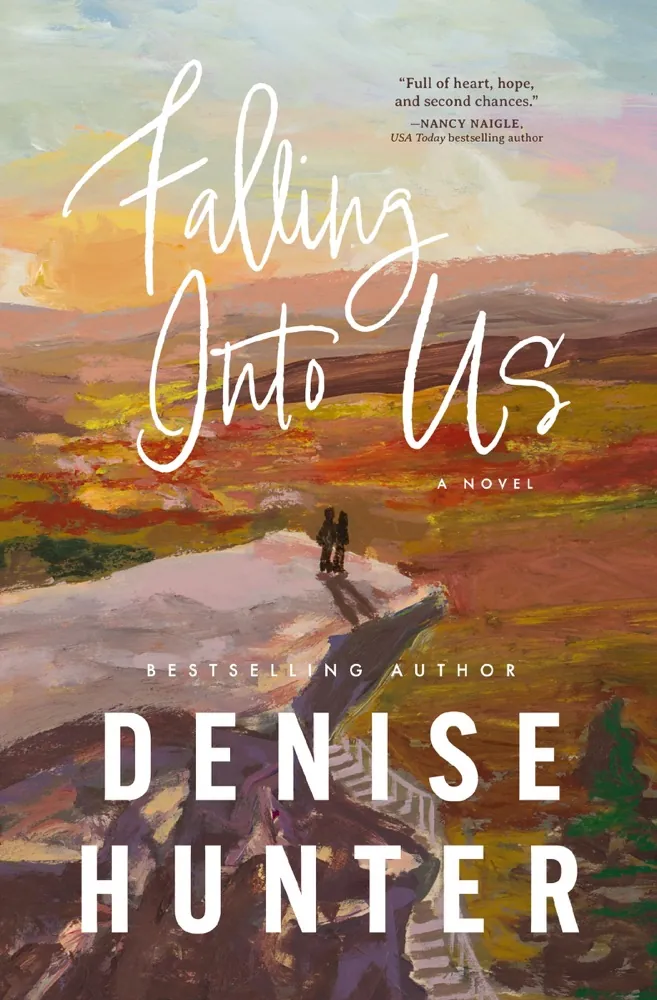

Author: Denise HunterPage Count: UnknownPublication Date: Expected publication 2026-10-13 APL Wipe down the espresso counter one more time, dump the stale grounds into the trash, and stare blankly at yet another manuscript about someone finding a "found family" in a town where the local coroner probably moonlights as a festive baker. Let’s address the elephant in the room. This synopsis for Falling Into Us reads like a algorithmic prompt fed into a Hallmark movie generator by a sentient golden retriever. The Cult of Comfort and Other Atrocities Deathbed promises are the cheapest narrative currency in contemporary fiction. One moment a mother is expiring, and the next she is offloading psychological shrapnel onto her daughter—forcing an estranged grandmother and a quaint town upon an unsuspecting jewelry designer. Because obviously, a carefully constructed life in the city with a real career is just an empty void waiting to be filled by a single dad with a precocious twelve-year-old and zero boundaries. The prose promises a slow-burn romance, which is code for five hundred pages of emotionally constipated longing where the biggest narrative climax is someone burning the casserole at the town harvest festival. Where is the blood? Where is the existential dread of realizing your entire small-town existence is a Panopticon of knit sweaters and forced cheer? No, we are subjected to Gabby Donaldson wandering around trying to find Rosemary like she is hunting for a rare Pokémon, only to get ambushed by a journalist wielding human-interest pieces as a pickup line. Mason Morrison—what a terribly aggressively wholesome name—needs a big break. Naturally. So he trades journalism ethics for a cute meet-cute involving family trauma. This is peak middle-brow escapism. It is a mass-market pacifier for people who look at a world burning down and say, "You know what this lacks? A precocious preteen teaching a cynical professional how to love again." The Epistemology of the Dead-End Plot The synopsis ends with the breathless, utterly manufactured dilemma of whether uncovering the family truth will make leaving impossible. Spoiler alert: she stays. She throws away the jewelry career for handmade jam and a man whose personality trait is flannel. It is aggressively predictable. It lacks the teeth of a proper narrative arc. Give me an antagonist who dabbles in the occult. Give me a grandmother who buried her first three husbands under the azaleas. Instead, we get soft-focus sunsets and emotional labor masquerading as a plot. Debbie Macomber fans are going to eat this up with a spoon, and frankly, that is the most terrifying horror story I have encountered all week. The relentless tyranny of small-town warmth is a psychological horror subgenre hiding in plain sight. You drop off a letter and suddenly you are legally obligated to attend the annual pumpkin carving contest or be banished to the perimeter woods. Time to clean the grinder before the morning rush of hollow-eyed commuters demanding foam art begins. Need to scavenge for parts to repair my broken French press. #booksthatmakemewanttoscream #cozyromanceisacrypt Related InsightsNew John Grisham Legal Thriller Book Review and Summary Dovecombe: A Novel Book Review and Summary Black Is the Night Book Review and Summary{ "@context": "https://schema.org", "@type": "FAQPage", "mainEntity": [ { "@type": "Question", "name": "What is the main focus of Falling Into Us Book Review and Summary?", "acceptedAnswer": { "@type": "Answer", "text": "Everything you need to know about Falling Into Us with our detailed review." } }, { "@type": "Question", "name": "Who authored the comprehensive guide on Falling Into Us Book Review and Summary?", "acceptedAnswer": { "@type": "Answer", "text": "This detailed article and its insights were carefully researched and authored by Diego Lopez." } }, { "@type": "Question", "name": "Where can I find more related content about Books?", "acceptedAnswer": { "@type": "Answer", "text": "You can explore more articles, detailed reviews, and similar insights by browsing the Related Insights section at the bottom of this article or visiting our dedicated Books category page." } } ] }
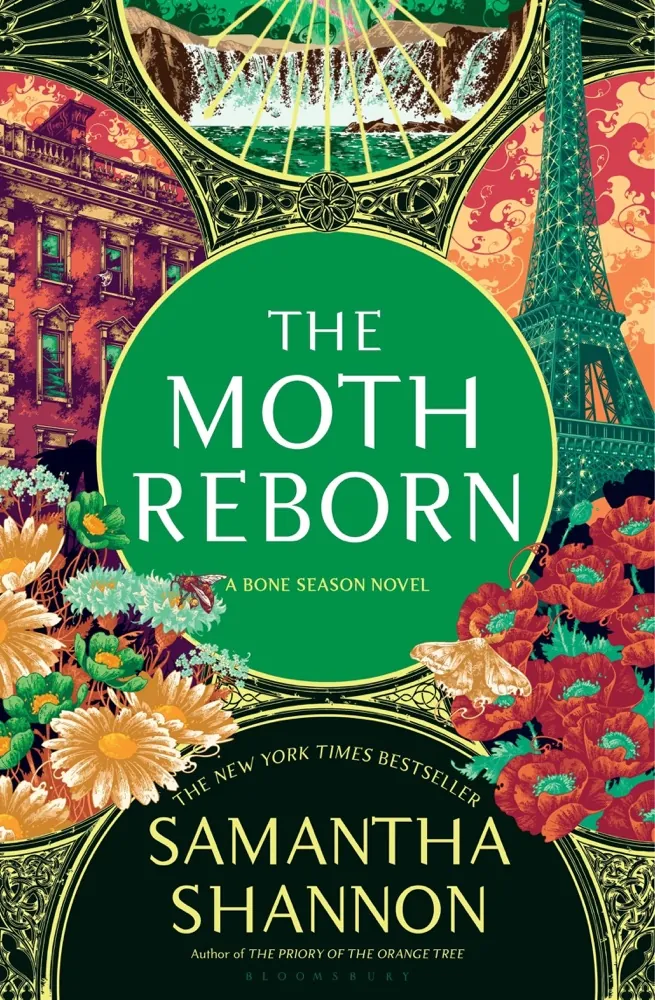

Author: Samantha ShannonPage Count: UnknownPublication Date: Expected publication 2026 APL The synopsis for The Moth Reborn reads like a fever dream someone scribbled in the margins of a half-empty coffee cup—too much white noise, not enough substance. "Infiltrate a dystopian New York run by both gods and monsters"—okay, but which gods? The ones from the last book, or new ones? The Ranthen’s leadership crisis in Iceland? A labyrinth in Lyon? Paige Mahoney’s "mystery of her own existence"? It’s all so deliberately vague it feels like Shannon’s either too clever for her own good or too lazy to commit. Either way, it’s frustrating. The problem isn’t that the synopsis is wrong—it’s that it’s useless. We know Paige’s been abroad, we know she’s reuniting with Arcturus, we know there’s violence, chaos, and ancient truths. But where’s the why? Why does the Ranthen’s leadership matter now? Why the Alps? Why Lyon? The synopsis treats the reader like a child who’s been told a story but never given the plot. It’s the literary equivalent of a movie trailer that only shows a character running through a forest—we don’t know if they’re escaping, being chased, or just really bad at hiking. And yet—there’s something deliciously chaotic about it. Shannon’s series has always thrived on ambiguity, on the idea that the world is too vast, too brutal, to be neatly explained. But this synopsis doesn’t even lean into that. It just drops the reader into the abyss and says, "Good luck." It’s like if The Left Hand of Darkness started with a paragraph about a spaceship crash and then cut to black. You’d be left wondering if it’s a sci-fi novel, a political thriller, or a metaphor for existential dread. But here’s the thing—Shannon’s done this before. She’s built entire worlds on the backs of half-formed ideas, on the tension between what’s said and what’s implied. The Bone Season started with a single sentence—"Paige Mahoney was dead"—and turned it into a sprawling, mythic epic. So maybe this synopsis is just the synopsis. Maybe the book will deliver the payoff, the way The Priory of the Orange Tree delivered its dragons after years of teasing. Or maybe it’ll be another The Poppy War, where the hype is so thick it chokes the story. The real question is: does Shannon have the chops to make this vague, sprawling mess work? Because right now, it feels like she’s playing a game of telephone with the reader, and the message keeps getting lost in translation. And that’s not just frustrating—it’s dangerous. Because if the book doesn’t deliver on the promise of its own synopsis, it’ll leave readers feeling like they’ve been played. But then again, maybe that’s the point. Maybe The Moth Reborn is supposed to be a book where the reader has to earn the answers, where the mystery isn’t just about Paige’s past but about the very nature of storytelling itself. If so, then Shannon’s synopsis is a masterclass in withholding—like if House of Leaves started with a single sentence about a missing hallway. It’s maddening, but it’s also brilliant. Yet— I can’t help but think about The Last of Us’s marketing. They spent years teasing the story, building up the lore, and when the show finally dropped, it was so much better than the synopses could ever hope to be. But The Moth Reborn’s synopsis doesn’t even have the decency to be interesting. It’s just… there. Like a half-baked idea someone scribbled down in a notebook and then forgot about. And that’s the problem. Because if Shannon’s not going to commit to the story, why should we? Literally.I have to go unclock the lawnmower deck because the grass was too wet. Related InsightsThe Bone Woman: A Mystery Book Review and Summary A Glimmer of Death (Merry Gentry, #10) Book Review and Summary Gallant Book Review and Summary{ "@context": "https://schema.org", "@type": "FAQPage", "mainEntity": [ { "@type": "Question", "name": "What is the main focus of The Moth Reborn (The Bone Season, #6) Book Review and Summary?", "acceptedAnswer": { "@type": "Answer", "text": "Everything you need to know about The Moth Reborn (The Bone Season, #6) with our detailed review." } }, { "@type": "Question", "name": "Who authored the comprehensive guide on The Moth Reborn (The Bone Season, #6) Book Review and Summary?", "acceptedAnswer": { "@type": "Answer", "text": "This detailed article and its insights were carefully researched and authored by Michael Brown." } }, { "@type": "Question", "name": "Where can I find more related content about Books?", "acceptedAnswer": { "@type": "Answer", "text": "You can explore more articles, detailed reviews, and similar insights by browsing the Related Insights section at the bottom of this article or visiting our dedicated Books category page." } } ] }

The Sahara does not forgive infrastructure. It swallows asphalt, buries pipelines, and reduces steel to rust-red dust within a single generation. Yet, cutting across this indifference is a scar of steel—the Trans-Saharan Railway. Conceived in the salons of Paris as a civilizing mission to bind the Mediterranean to the Niger River, the project remains one of history’s most expensive exercises in geographical denial. Today, the line exists not as a continuous artery, but as a constellation of ruins: lonely water towers standing sentinel over empty platforms, station masters' houses with roofs caved in by sand drifts, and the singular, roaring exception of the Mauritanian iron ore train. To travel this corridor is not to ride a train, but to archaeologize a dream that the desert refused to let die completely.The Colonial Blueprint: Drawing Lines in the Dust The genesis of the Trans-Saharan Railway lies in the late 19th-century "Scramble for Africa," specifically the French desire to knit their West African territories (Soudan Français, modern Mali/Niger) to the Algerian coast. The strategic logic was seductive: bypass the British-controlled Suez and the hazardous sea lanes around the Cape. The "Transsaharien" was authorized by law in 1879, envisioning a standard-gauge line from Oran or Algiers south through the Hoggar Mountains to Gao and Timbuktu, with a western spur toward Saint-Louis, Senegal. Survey teams faced a reality that maps from Paris obscured. The chosen route—often following ancient caravan trails like the Tarik ibn Ziyad—crossed the ergs (dune seas) of the Grand Erg Occidental and the volcanic chaos of the Hoggar. Engineers calculated that moving a single kilometer of track across the shifting sands of the erg required 30,000 tonnes of ballast to stabilize the bed, a logistical impossibility for a colony with limited rolling stock. By 1906, the line had reached Béchar (then Colomb-Béchar) from the north, and separately, a line pushed east from Dakar to Kayes in Senegal. The "Gap"—over 2,000 kilometers of absolute wilderness—remained. The human cost was staggering. Construction relied heavily on tirailleurs (colonial infantry) and forced labor battalions (corvées). Mortality rates from heatstroke, dysentery, and Tuareg resistance raids often exceeded 20% per season. The "Kilometer 100" cemetery near Béchar stands as a silent testament to the anonymous workers who laid sleepers in 50°C heat. By the 1930s, the Great Depression and the rise of automotive transport (Citroën Kégresse half-tracks proved crossing the desert was faster without rails) killed the political will. The Vichy regime, then the Free French, maintained the northern terminus at Béchar as a strategic military supply line, but the dream of a continuous transcontinental steel thread was officially abandoned in 1941. Ghosts of the Gauge: Abandoned Outposts of the Hoggar South of Béchar, the railway enters the realm of the fantôme. The track bed persists as a low, weed-choked berm, occasionally visible from the N6 highway, but the stations are the true monuments. Take Kenadsa, a mining hub where the line officially terminated for decades. Its station is a masterpiece of style néo-mauresque—horseshoe arches, zellige tilework faded to monochrome, a clock tower frozen at the hour the last scheduled passenger service departed in 1988. The platform edges are crumbling; the buffer stops are buried in drifts of fine chech sand that sings when the wind hits 40 km/h. Further south, near the oasis of Taghouzi, the infrastructure becomes skeletal. Here, the French built a poste de garde every 20 kilometers—small forts with crenellated walls, water cisterns fed by windmills, and telegraph poles. Most are now roofless. I visited Taghouzi in October 2023; the station master’s office still held a rusted Moroccan-made safe, its combination lost, and a stack of fiches de mouvement (train movement sheets) dating to 1962, the ink faded to sepia by the relentless UV. The water tower, a reinforced concrete mushroom on legs, leans at a precarious 15 degrees, undermined by scouring floods from rare crues (flash floods). The most haunting site is In Amguel, deep in the Hoggar foothills. Never a major junction, it was a water stop. The station building is gone, eaten by the wadi. Only the twin water cranes remain, standing like giraffes stripped of hide, their cast-iron counterweights seized solid. The surrounding desert pavement is littered with shards of thick, greenish glass—insulators from the telegraph line that once paralleled the track. Walking the ballast here, you find clous à patte (dog-spike nails) worked loose by thermal expansion, lying like spent cartridge casings. The silence is absolute, broken only by the wind tuning the telegraph wires that still stand, humming a low, aeolian chord.The Mauritania Exception: Where the Iron Ore Still Flows If the Algerian section is a museum, the Mauritanian section is a beast of burden. The SNIM (Société Nationale Industrielle et Minière) line from Zouérat to Nouadhibou is the Trans-Saharan’s only living limb. Completed in 1963 (replacing a narrower gauge line), this 704-kilometer standard-gauge heavy-haul line moves 12–15 million tonnes of iron ore annually. It is the economic spine of Mauritania, contributing roughly 30% of state revenue. The train is legendary: up to 3 kilometers long, 200+ wagons, hauled by three or four GE/EMD locomotives (often CC 22000 or SD70ACS models). It is also the only "passenger" service in the region, though "service" is a generous term. A single passenger carriage—usually a refurbished freight wagon with bench seating and barred windows—is attached to the rear. The journey takes 18–22 hours. There is no dining car, no air conditioning, and the fine hematite dust permeates everything: lungs, lenses, luggage. Riding the SNIM train is a rite of passage for overlanders. You board at Zouérat (or the intermediate stop Choum, gateway to the Adrar plateau). At Choum, the train stops for 20 minutes in the dead of night. Vendors materialize from the darkness selling thieboudienne (fish and rice) wrapped in foil, sweet mint tea in plastic glasses, and phone charging via portable generators. The train lurches forward with a violence that throws standing passengers to the floor—the slack action of 200 couplers taking up tension sequentially. The stations here are functional, brutalist concrete blocks: Fdérik, Tazadit, Choum, Nouadhibou. They lack the architectural pretension of their Algerian cousins. At Nouadhibou, the terminus, the ore is dumped via rotary car dumpers into ships waiting at the mineral pier. The yard is a landscape of conical red mountains—stockpiles of high-grade hematite (64% Fe). The contrast with the silent Algerian stations is violent: here, the rails are polished bright by 22-tonne axle loads passing daily; the ballast is fresh, crushed granite; the signaling is modern CTC (Centralized Traffic Control). This line proves the geography can be conquered, but only when the cargo pays 100 times the value of passenger fares per tonne-kilometer. Logistics of the Lost: Navigating the Silent Tracks Today Exploring the abandoned northern sections requires a paradigm shift from "rail travel" to "expedition logistics." There are no tickets, no timetables, and critically, no water. The primary access route is the N6 (Route Nationale 6) in Algeria, running roughly parallel to the old track bed from Béchar to the Niger border at In Guezzam. A 4x4 vehicle with high clearance (minimum 220mm), dual spare tires, and 200 liters of fuel range is non-negotiable. The "road" south of Tamanrasset degrades into a piste—a track across reg (stony desert) and erg. Permits are a bureaucratic gauntlet. As of 2024, Algeria requires a laissez-passer from the Wilaya (province) police in Béchar or Tamanrasset for travel south of the "Security Zone" line (roughly south of In Salah). You must present a detailed itinerary, vehicle registration, insurance valid for Algeria (green card), and a letter of guarantee from a registered local tour operator. Solo travel is technically prohibited in the deep south; a guide/fixer is mandatory. Costs for a supported 7-day loop (Béchar → Tamanrasset → Djanet/In Guezzam perimeter → return) run €2,500–€3,500 per vehicle including guide, fuel caches, and permits. Mauritania is more accessible but requires a visa (obtainable on arrival at Nouakchott–Oumtounsy International Airport for many nationalities, €55) and a carnet de passage for vehicles. The SNIM train passenger carriage requires no reservation; you simply present yourself at the Zouérat station yard office 2 hours before departure (nominally 15:00, actual departure ±4 hours) with passport and €5–€10 for the "seat."Cost & Logistics Comparison: Northern Ruins vs. Southern Ore LineParameter Algerian Abandoned Section (Béchar–In Guezzam) Mauritanian Active Section (Zouérat–Nouadhibou) NotesPrimary Transport Self-drive 4x4 Expedition SNIM Iron Ore Train (Rear Wagon) Train runs ~daily; 4x4 requires convoy.Permit Lead Time 30–60 Days (Police + Military) 0 Days (Visa on Arrival) Algerian permits require local agency sponsor.Daily Budget (USD) $350–$500 (Guide, Fuel, Security) $50–$100 (Food, Water, Train Fee) Algeria costs driven by mandatory guide/vehicle.Water Autonomy 200 Liters Minimum (Vehicle) 10 Liters Personal (Stations sell water) No potable water on abandoned Algerian route.Navigation Difficulty Extreme (GPS Tracks Essential, Dunes) None (Fixed Rail Infrastructure) Sand ingestion risk high on Algerian pistes.Best Travel Window Oct–Nov / Feb–Mar (Avoid 50°C+) Nov–Feb (Cooler Nights) Summer (Jun–Sep) is lethal in Hoggar/Adrar.Connectivity Thuraya/Iridium Satellite Only Spotty 3G at Major Towns (Choum, Nouadhibou) Algerian south has zero terrestrial coverage.Echoes in the Wind: Preservation vs. Oblivion The future of this legacy hangs on a knife-edge. In Algeria, the Ministère de la Culture has classified several stations (Béchar, Kenadsa, Abadla) as biens culturels protégés. However, protection on paper does not stop the scavenging of structural steel for rebar, the looting of decorative tiles, or the simple erosive power of the sirocco. A 2021 UNESCO feasibility study for a "Trans-Saharan Railway Heritage Route" stalled due to security concerns in the Sahel belt and the sheer cost of stabilizing reinforced concrete in a hyper-arid, saline environment. The estimated cost to mothball just the Kenadsa station complex against collapse exceeds €2 million. Conversely, there is the perennial "zombie project": the Trans-Saharan Railway Revival. Since the 1970s, the African Union (via NEPAD) and the African Development Bank have commissioned feasibility studies for a standard-gauge line connecting Algiers–Lagos (via Niamey) or Nouakchott–Dakar. The most recent 2023 AfDB pre-feasibility study for the Algiers–Zinder–Lagos corridor (2,800 km) priced the build at $18–22 billion. The economic case rests on mineral evacuation (uranium from Niger, phosphates, lithium) rather than passengers. China Railway Construction Corporation (CRCC) has signed MOUs for the Nigerian gauge-standard sections, but the Algerian Saharan crossing remains the "Valley of Death" for financiers—high CAPEX, zero intermediate revenue, extreme maintenance OPEX. Meanwhile, the SNIM line faces its own existential clock. The high-grade hematite at Zouérat (Guelb el Rhein/Kedia d'Idjil) is depleting. SNIM is investing heavily in the Guelb II project (magnetite concentrate, requiring beneficiation) and the Askaf deposit. This extends mine life to 2040+. Crucially, SNIM is piloting hydrogen-hybrid locomotives (Stadler/CRRC partnership Related InsightsCoraline Book Review and Summary Defy Me (Shatter Me) Book Review and Summary Zero-Knowledge Proofs in Enterprise Blockchain: The Verifiable Privacy Layer

-
 Alexander Vance
 - 10 Oct, 2026 21:47
Silicon Photonics Unleashed: Low‑Latency Interconnects Powering Hyperscale Compute
Light‑Speed Foundations: The Photonics Imperative The modern hyperscale data center is no longer bound by the throughput of copper; it is constrained by the physics of electrical signaling. As rack‑scale AI models swell to trillions of parameters, the inter‑socket and inter‑rack latency budget shrinks to sub‑nanosecond regimes. Silicon photonics answers that call by moving data on light waves etched into the same CMOS process that builds the compute die. The result is a paradigm where a single wafer can host thousands of wavelength‑division multiplexed (WDM) channels, each delivering 100 Gb/s with picosecond‑level jitter. Recent work on recurrent vision transformers — One Block, Multiple Depths: Recurrent Vision Transformers with Depth‑Programmed Experts — demonstrates that depth‑programmed expert routing thrives on deterministic, low‑latency fabric; any variance in hop latency directly degrades the convex‑combination weighting that defines the model’s expressive power. Simultaneously, the ZX‑calculus analysis in Entanglement entropy and magic of ZX-diagrams shows that photonic quantum circuits can be reasoned about graphically, giving architects a formal tool to verify entanglement‑preserving interconnect topologies. Together, these strands confirm that the next leap in hyperscale performance will be won or lost at the photonic interconnect layer.Photonic Waveguide Engineering for Sub‑Nanosecond Hops Waveguide geometry dictates both propagation loss and group‑velocity dispersion. State‑of‑the‑art 220 nm silicon‑on‑insulator (SOI) strip waveguides achieve <0.5 dB/cm loss, but tight bends (<5 µm radius) introduce excess loss that accumulates across a 2 cm die‑to‑die link. Foundries now offer sub‑wavelength grating (SWG) waveguides that broaden the mode, reducing sidewall scattering while preserving a compact footprint. The effective index engineering of SWG enables adiabatic transitions to fiber‑attach edge couplers with <0.1 dB insertion loss. In practice, a 10 mm on‑chip link with 16 WDM channels exhibits a total latency of 55 ps, dominated by the 4.5 ps/mm group delay of silicon. This deterministic latency is a prerequisite for the depth‑programmed expert mixture in reViT, where the normalized‑depth coordinate must be sampled identically across all replicas; any skew would break the convex‑combination guarantee. Thermal crosstalk is mitigated by integrating germanium‑silicon (GeSi) photodiodes and micro‑heaters in a closed‑loop bias circuit, keeping the resonant wavelength stable within ±0.1 nm across a 0–85 °C range.Wavelength‑Division Multiplexing at Scale WDM multiplies the raw bandwidth of a single waveguide by allocating distinct carrier wavelengths, typically spaced at 100 GHz (0.8 nm) in the C‑band. Modern foundry PDKs provide 32‑channel arrayed waveguide gratings (AWGs) with <1 dB insertion loss and >30 dB crosstalk suppression. The real breakthrough for hyperscale is the co‑design of the WDM comb generator and the serializer/deserializer (SerDes). A 112 Gbaud PAM‑4 transmitter driven by a 28 GHz CMOS driver can push 400 Gb/s per wavelength; 32 wavelengths yield 12.8 Tb/s per fiber pair. This density matches the interconnect demand of a 4‑socket GPU node running a 1.2 trillion‑parameter mixture‑of‑experts model, where each expert activation requires a 256‑byte all‑reduce across the fabric. The latency budget for that all‑reduce is <200 ns; photonic WDM delivers a per‑hop latency of ~50 ns including SerDes overhead, leaving headroom for congestion control. Open‑source projects such as photonic‑sim (GitHub trending) now ship parameterized AWG models that integrate with SystemC‑AMS, enabling architects to explore wavelength allocation strategies before tape‑out. Co‑Packaged Optics and Thermal‑Aware Packaging Co‑packaged optics (CPO) place the optical engine — laser array, modulator bank, and photodetector — within the same package substrate as the ASIC, eliminating the lossy electrical SerDes‑to‑optical interface. The dominant thermal challenge is the laser’s wall‑plug efficiency (~30 %). A 32‑channel DFB laser array dissipates ~4 W; without active cooling, the local temperature rise shifts the emission wavelength by ~0.1 nm/°C, breaking WDM channel alignment. Advanced packages embed microfluidic channels directly beneath the laser die, achieving a thermal resistance of 0.2 °C/W. This enables stable operation at 85 °C ambient with <0.5 nm drift. The same package integrates a thin‑film thermo‑optic phase shifter for each modulator, allowing real‑time wavelength locking via a control loop that monitors the photodiode’s eye diagram. The control firmware, often written in Rust for deterministic latency, runs on an embedded RISC‑V core that also hosts the photonic control plane described next.Software‑Defined Photonic Control Planes The static nature of traditional optical cross‑connects clashes with the dynamic traffic patterns of hyperscale AI workloads. A software‑defined photonic control plane (SDPCP) abstracts each wavelength as a programmable virtual channel, exposing a gRPC API for bandwidth reservation, latency SLA, and fault isolation. The control plane leverages the ZX‑diagram formalism from Entanglement entropy and magic of ZX-diagrams to verify that reconfiguration sequences preserve the entanglement structure of quantum‑secure key distribution links that coexist with classical traffic. In practice, the SDPCP runs as a Kubernetes operator (CRD: PhotonicLink) that programs the micro‑heater array via an I²C bus, achieving sub‑millisecond reconfiguration. Telemetry streams (eye‑height, BER, temperature) feed a Prometheus exporter, enabling autoscaling policies that spin up additional wavelength groups when the 99th‑percentile latency exceeds 120 ns. Early adopters at Y Combinator‑backed Ayar Labs report a 3× reduction in tail latency for distributed training of a 500 B parameter model compared to electrical NVLink. Benchmarking Related InsightsSatranç Kitap İncelemesi: Aylin Okur Christmas Fix Book Review and Summary A Most Decadent Curse Book Review and Summary

-
 Michael Chef
 - 10 Oct, 2026 20:52
The Alchemy of Time: How Microbial Magic Transforms Simple Ingredients into Culinary Gold
There is a quiet revolution happening in the dark, anaerobic corners of our kitchens. It doesn’t scream; it bubbles. It doesn’t rush; it waits. Long before we understood the microbiome, before the word "probiotic" hit marketing labels, our ancestors stumbled upon a biological loophole: the art of controlled rot. They didn't call it biochemistry. They called it survival. They called it flavor. Today, we call it fermentation, but the magic remains exactly the same—a symbiotic dance between human intention and microbial ambition. The Invisible Architects of Flavor We like to think we are the chefs. In reality, we are merely the set designers. The true artisans are microscopic, measuring their lifespans in minutes, their populations in billions. Lactobacillus, Saccharomyces, Aspergillus, Acetobacter—these are the names of the invisible brigade. They do not work for praise; they work for sugar. In the absence of oxygen, they tear apart glucose molecules, harvesting energy and leaving behind metabolic exhaust that we have learned to prize: lactic acid, ethanol, carbon dioxide, and a kaleidoscope of aromatic compounds.Consider the humble cabbage. Left on a counter, it molds into slime. Submerged in a 2% salt brine, it becomes sauerkraut. The salt is the bouncer at the door, checking IDs. It suppresses the spoilage bacteria—Clostridium, Pseudomonas—who cannot tolerate the salinity. It rolls out the red carpet for Leuconostoc mesenteroides, the pioneer species. They acidify the environment, dropping the pH. Once the stage is set, Lactobacillus plantarum takes the lead, driving the acidity down to a fortress-like 3.5. No pathogen survives that gauntlet. The cabbage doesn't just survive; it transforms. Its rigid cellulose softens, its sugars vanish, and in their place rises a complex, sour, umami-laden profile that fresh cabbage could never dream of achieving. This is not preservation by sterilization; it is preservation by biological warfare. We recruit an army to hold the line. The Geography of the Jar: Terroir at a Microscopic Scale Winemakers obsess over terroir—the soil, the slope, the sun. Fermentation obsessives know that the jar has its own terroir. A sourdough starter in San Francisco tastes different from one in London, not just because of the flour, but because the air carries different strains of Candida milleri and Lactobacillus sanfranciscensis. Your hands carry a unique microbial fingerprint. Studies have shown that bakers imprint their starters with their own skin flora. You are not just feeding the dough; you are seeding it with yourself.This concept extends globally. In Korea, the onggi—breathing earthenware vessels—host unique biofilms on their porous walls that seed every new batch of kimchi with the "hand taste" (son-mat) of generations. In Japan, the koji room (muro) in a miso brewery is a sacred space, its wooden beams inoculated with Aspergillus oryzae spores accumulated over centuries. You cannot simply buy the spore; you must inherit the room. The flavor lives in the wood, the air, the walls. It is a microbial heirloom. Koji: The Noble Rot That Built an Empire If lactic acid bacteria are the foot soldiers of fermentation, Aspergillus oryzae—koji mold—is the alchemist. It doesn't just preserve; it dismantles. Sprinkle spores onto steamed rice or soybeans, keep it warm and humid, and the mold sends out white, velvet mycelia, pumping out a arsenal of enzymes: amylases that shatter starch into sweet glucose, proteases that unravel tight protein knots into free amino acids (glutamate—the taste of umami), and lipases that crack fats into aromatic esters.Without koji, there is no sake, no miso, no soy sauce, no mirin, no rice vinegar. It is the foundational architecture of Japanese cuisine. The genius of koji is its generosity. It pre-digests the food for us. When you sip a bowl of miso soup, the koji has already done the heavy lifting. The amino acids hit your tongue instantly, no chewing required. It is flavor in its most bioavailable form. The Japanese government designated Aspergillus oryzae as the "national fungus" (kokkin) in 2006—a rare instance of a microbe receiving state honors. The Fizzy Logic of Symbiosis: SCOBYs and Grains Some fermentations refuse to be monocultures. They demand a village. Enter the SCOBY—Symbiotic Culture Of Bacteria and Yeast. In kombucha, a cellulose pellicle floats like a rubbery pancake, a biofilm city built by Komagataeibacter (formerly Gluconacetobacter). Inside, yeast (Zygosaccharomyces, Brettanomyces) ferments sugar to alcohol. The bacteria immediately oxidize that alcohol into acetic acid and gluconic acid. The yeast needs the bacteria to lower the pH and remove the toxic alcohol; the bacteria need the yeast to produce the alcohol in the first place. It is a metabolic handshake.Kefir grains operate on similar logic, but in solid form. These cauliflower-like clusters are a matrix of kefiran polysaccharide, housing lactic acid bacteria, acetic acid bacteria, and yeasts in a stable, self-replicating structure. Milk kefir grains can contain over 50 microbial species. Water kefir grains (tibicos) do the same for sugar water. They are living heirlooms. You cannot easily invent a kefir grain from scratch in a lab; you must receive a piece of one from someone else. It is a chain of custody stretching back to the Caucasus mountains, passed hand to hand, a living link to the past. The Chemistry of Safety: Why the Brine Protects Us Modern food safety relies on the "hurdle concept." Fermentation is the original multi-hurdle technology.Acid Hurdle: Lactic acid drops pH below 4.6. Clostridium botulinum cannot sporulate or produce toxin. Salt Hurdle: Reduces water activity (a_w), dehydrating spoilage microbes. Competitive Exclusion: The "good" bugs occupy every niche, consuming all available nutrients. Antimicrobial Metabolites: Bacteriocins (like nisin), hydrogen peroxide, and reuterin are natural antibiotics produced in situ by the fermenters.This is why a properly fermented vegetable is statistically safer than a raw salad. The acidic environment is hostile to E. coli, Salmonella, and Listeria. The data is clear: documented foodborne illness from properly fermented vegetables is vanishingly rare. The risk lies not in the process, but in the deviation—using too little salt, exposing the solids to air (allowing kahm yeast or mold to bridge the surface), or ignoring the sensory signals (putrid smell, slime, fuzzy mold). Trust the pH strip. Trust your nose. The microbes tell you the truth. Beyond Preservation: The Nutritional Upgrade Fermentation doesn't just keep food edible; it often makes it more nutritious. It is a pre-digestion service.Anti-nutrient Reduction: Phytic acid in grains and legumes binds minerals (iron, zinc, calcium). Phytase enzymes produced during fermentation (especially by lactic acid bacteria and yeasts in sourdough) hydrolyze phytic acid, liberating minerals for absorption. Vitamin Synthesis: Lactobacillus and Bifidobacterium strains synthesize B-vitamins—folate (B9), riboflavin (B12), and B12 analogues. Tempeh, fermented soybeans bound by Rhizopus oligosporus, sees a massive spike in riboflavin and niacin, and the mold produces phytase to unlock minerals. Lactose Digestion: Yogurt and kefir bacteria consume lactose. Many lactose-intolerant individuals tolerate fermented dairy perfectly because the microbes did the digesting for them. Bioactive Peptides: Proteolysis during cheese aging or miso fermentation releases peptides with ACE-inhibitory (blood pressure lowering), antioxidant, and immunomodulatory properties.We didn't evolve to eat sterile food. We evolved eating dirt-covered, microbe-rich fare. Our immune system expects a microbial dialogue. Fermentation restores that conversation. The Flavor Library: Writing with Microbes As a chef, I view fermentation not as a preservation technique, but as a flavor technology. It creates tastes that do not exist in nature.The Funk of Brettanomyces: In lambic beers and natural wines, "Brett" paints with barnyard, horse blanket, tropical pineapple, and metallic acidity. It is the taste of wildness. The Chocolate Notes of Aspergillus niger: In pu-erh tea fermentation, this mold drives the earthy, camphor, dark chocolate profile of aged cakes. The Meatiness of Neurospora: Red oncom (Indonesia) uses Neurospora intermedia to turn peanut press cake into a savory, mushroomy protein block. The Floral Lift of Hanseniaspora: In early wine fermentation, apiculate yeasts pump out ethyl acetate (nail polish remover at high levels, pear/floral at low levels), defining the nose of the final bottle.We are only beginning to map this territory. Metagenomic sequencing reveals that a single spoonful of traditional kimchi contains hundreds of species, interacting in metabolic networks we barely understand. We are managing ecosystems, not just recipes. The Ritual of Patience In a world of instant pots and microwave meals, fermentation is an act of rebellion. It forces slowness. You cannot rush a 3-year aged Parmigiano-Reggiano. You cannot hack a 6-month miso. The time is the ingredient. During those months, enzymes work molecule by molecule. Maillard reactions crawl forward in the dark. Esters form and reform. The flavor deepens, integrates, rounds off sharp edges. I have jars on my shelf that are older than my niece. A miso started in 2018. A garum (fish sauce) from 2020. A vinegar mother from a bottle of 2015 cider. They are living timestamps. When I open them, I taste the weather of that year, the specific barley I malted, the specific fish I caught. It is culinary time travel. Troubleshooting the Dark Arts Even the best alchemists face failures.Kahm Yeast: A white, dusty film on the surface of brines. Harmless but imparts a paint/chemical off-flavor. Skim it, ensure submersion, lower temperature. Surface Mold: Fuzzy, colored (green, black, pink). If the brine is acidic (pH < 4.0) and the mold is only on top, you can scoop it (generous margin) and salvage, but for beginners: when in doubt, throw it out. The risk of mycotoxins isn't worth the jar of pickles. Soft Pickles: Usually enzymatic activity from blossom ends of cucumbers (pectinase) or too high temperature/low salt. Trim blossom ends religiously. Add tannin sources (oak, grape, cherry leaves, black tea) to inhibit pectinase. Stalled Fermentation: Salt too high (>5%), temp too low (<15°C/59°F), or starter culture dead. Warm it up, check salinity.The Future is Cultured We stand at a fascinating intersection. Precision fermentation now programs yeast to produce casein (cow milk protein without the cow), heme (the blood flavor in Impossible Burger), and vanilla without orchids. Bioreactors replace jars. This is not the death of traditional fermentation; it is its high-tech cousin. Both rely on the same fundamental truth: microbes are the most efficient chemists on Earth. Meanwhile, the home fermenter is the guardian of biodiversity. Every jar of wild sauerkraut, every bottle of ginger bug soda, every crock of nukazuke (rice bran pickles) is a reservoir of microbial diversity. In an era of antibiotic resistance and sterilized guts, these jars are ark ships. The Final Seal Next time you hear the hiss of a jar opening—the sharp, clean perfume of lactic acid hitting the air—pause. You are not just eating a pickle. You are participating in a 10,000-year-old collaboration. You are tasting the labor of quadrillions of organisms who lived and died to turn salt and cabbage into something transcendent. Keep your jars full. Keep your brines salty. Keep the dark warm. The microbes are waiting.#fermentation #guthealth #traditionalfoods #microbiome #homefermentation #umami #foodscience #slowfood Related InsightsThe Brothers Karamazov Book Review and Summary All I Know (Silver Springs, #3) Book Review and Summary Dead Take the a Train Book Review and Summary


Author: James PattersonPage Count: UnknownPublication Date: Expected publication 2026-11-23 APL Fourth cup of cold nitro brew hitting the bloodstream like liquid electricity, and I am already regretting agreeing to churn out another word-count-padding piece on James Patterson’s upcoming The Murder Trial. Seriously, why do I do this to myself? Oh right, rent. The Optics of Parricide Eighteen-year-old Janelle Thompson is staring down the barrel of a double parricide charge because apparently, privileged political dynasties in fiction are never allowed to just implode quietly over brunch. They must explode with maximum, prime-time sensationalism. Patterson leans hard into the age-old aesthetic of youth on trial—a cultural obsession that oscillates wildly between empathy and absolute bloodlust. But let us be real for a second; we are looking at a narrative skeleton so utterly stripped of meat that it practically begs us to fill in the blanks with whatever algorithmic thriller tropes are currently printing money. The Gutter-Tier Optics of Innocence The synopsis tells us she is trapped in the Westfall Justice Center swearing her innocence while crying out into a vast, uncaring void. Peak melodrama. Peak manufactured parasocial angst. The juxtaposition of a baby-faced suspect claiming she loved the very people she allegedly bludgeoned is tired, yet capital-M messy. It is peak true-crime-brained brainrot packaged for airport kiosks. We have seen this exact archetype deconstructed a thousand times in prestige television, yet the machine demands another iteration. The Marketing Machine Goes Brrr And honestly? The thematic premise rests entirely on the fragility of public perception. Dad is a rising political star. Mom is the architect behind the curtain. The daughter is just collateral damage in a high-society psychodrama. Yet the synopsis gives us zero actual prose to chew on, relying instead on high-concept shorthand that screams "optioned for a Netflix limited series before the galley proofs even dried." It is giving pure, unadulterated aestheticized panic. Give me an unreliable narrator who actually has some philosophical depth, not just a YA-adjacent cipher caught in a PR nightmare. Expect millions of copies sold by late 2026, because suburban commuters love a good courtroom circus featuring teenagers who claim they were framed by the establishment. I am just trying to survive the next twenty minutes without my left eye twitching out of my skull, praying I hit the mandated word limit so I can crawl back to my sketchbook and pretend mainstream thriller tropes do not exist. Wait. The baby monitor just illuminated with terrifying activity and I hear heavy breathing coming through the static. Related InsightsThe Undercover Bookshop Book Review and Summary Sharpe's Storm (the Sharpe Series, Book 19) Book Review and Summary Simply Lies Book Review and Summary{ "@context": "https://schema.org", "@type": "FAQPage", "mainEntity": [ { "@type": "Question", "name": "What is the main focus of The Murder Trial Book Review and Summary?", "acceptedAnswer": { "@type": "Answer", "text": "Everything you need to know about The Murder Trial with our detailed review." } }, { "@type": "Question", "name": "Who authored the comprehensive guide on The Murder Trial Book Review and Summary?", "acceptedAnswer": { "@type": "Answer", "text": "This detailed article and its insights were carefully researched and authored by Giulia Ricci." } }, { "@type": "Question", "name": "Where can I find more related content about Books?", "acceptedAnswer": { "@type": "Answer", "text": "You can explore more articles, detailed reviews, and similar insights by browsing the Related Insights section at the bottom of this article or visiting our dedicated Books category page." } } ] }
-
 Antoine Leroy
 - 10 Oct, 2026 19:43
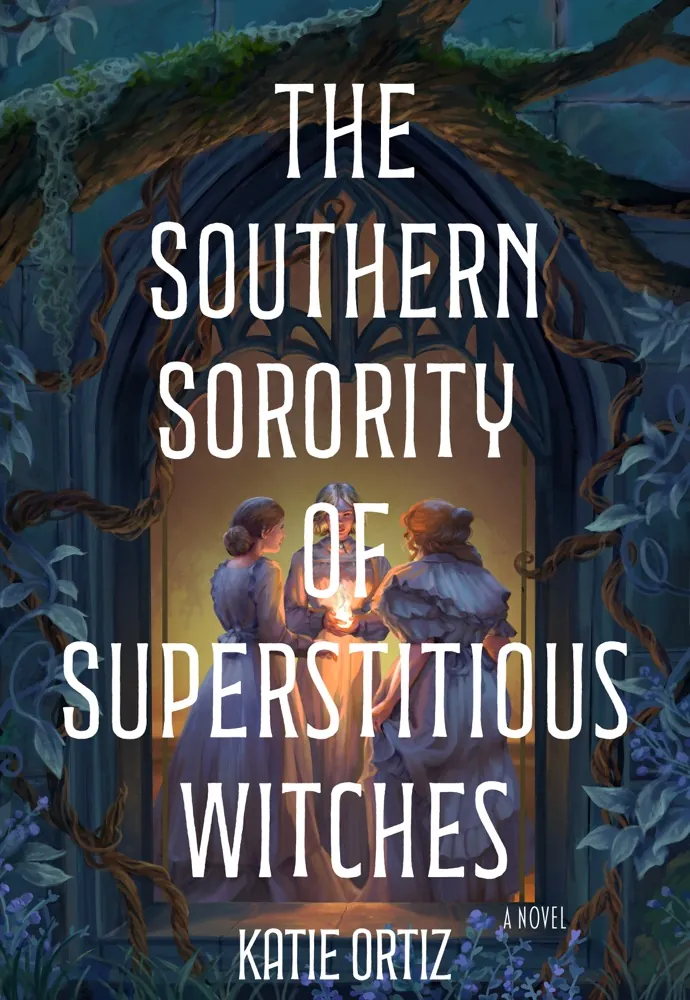
The Southern Sorority of Superstitious Witches Book Review and Summary
Author: Katie OrtizPage Count: UnknownPublication Date: Expected publication 2026-10-06 APL The hearth fire has burned down to a quiet heap of embers, casting long, wavering shadows across the floorboards where my grandchildren usually scatter their toys. They are asleep now. The house holds that heavy, breathing silence I have come to cherish in my old age—the kind of quiet that makes a person think of the old stories, the ones passed down through scarred hands and murmured over kitchen tables long after the lamps went out. Katie Ortiz brings us The Southern Sorority of Superstitious Witches, a book scheduled for late 2026 that leans heavily into the bruised soil of post-Civil War Alabama. The Weight of Old Dirt and Bitter Roots Look at the setup. Lucille, Catherine, and Victoria step onto a university campus supposedly built for enlightenment, only to find the gates barred by small-minded men clutching their privileges like precious heirlooms. Yet, the true magic here is not merely the conjuring of Southern folklore into a makeshift sorority. No. The real marvel lies in the desperation. Freedom from a controlling father, an unwanted marriage, a crushing mill-town guilt—these are the heavy anchors dragging these young women toward the dark. I said earlier that historical fiction about universities tends to grow stale. Forget I said that. When an author treats academic halls not as ivory towers, but as ancient burial grounds for ambition, the whole landscape shifts. Ortiz invokes the spirit of Witchcraft for Wayward Girls and Hester Fox. But let us be entirely honest. Comparisons to popular historical gothic books are often lazy marketing tricks designed to lull readers into buying a facsimile of a trend. I refuse to believe this novel is merely a copy of what came before. The inclusion of a darker, institutional force trying to purge every female soul from the campus elevates the stakes far beyond petty campus pranks. The Shadows We Keep And why shouldn't magic smell of wet pine and iron? History is written by the victors, but folklore is preserved by the survivors. When the academic environment turns hostile, the response must match the venom. Perhaps the premise relies a bit too heavily on familiar tropes of institutional exclusion. But does that matter when the prose promises to sink its teeth into the dark underbelly of human nature? The younger generation forgets that endurance requires a certain stubborn malice. We spend our lives teaching children to be kind, forgetting that the old tales—the ones whispered in the dark corners of the porch—were about survival. This book understands that blood and folklore are old cousins. The cost of orthodontic care for the grandchildren these days is giving me a massive headache. Related InsightsTiger's Mouth: A Novel Book Review and Summary Simply Lies Book Review and Summary The First Flame (The Aerimander Chronicles #2) Book Review and Summary{ "@context": "https://schema.org", "@type": "FAQPage", "mainEntity": [ { "@type": "Question", "name": "What is the main focus of The Southern Sorority of Superstitious Witches Book Review and Summary?", "acceptedAnswer": { "@type": "Answer", "text": "Everything you need to know about The Southern Sorority of Superstitious Witches with our detailed review." } }, { "@type": "Question", "name": "Who authored the comprehensive guide on The Southern Sorority of Superstitious Witches Book Review and Summary?", "acceptedAnswer": { "@type": "Answer", "text": "This detailed article and its insights were carefully researched and authored by Antoine Leroy." } }, { "@type": "Question", "name": "Where can I find more related content about Books?", "acceptedAnswer": { "@type": "Answer", "text": "You can explore more articles, detailed reviews, and similar insights by browsing the Related Insights section at the bottom of this article or visiting our dedicated Books category page." } } ] }


Author: P.C. CastPage Count: UnknownPublication Date: Expected publication 2026 APL The Scottish Highlands have always harbored a stubborn kind of romance, the sort that smells damply of peat and unrequited longing. By Breath leans entirely into this atmospheric weight, dragging us back to the mist-draped shores of Loch Chon with a premise that feels both comfortingly familiar and aggressively modern. P.C. Cast knows how to build a world where teenage alienation meets ancient, predatory myth. Yet, I am secretly exhausted by the mandatory inclusion of rival princes. Can a girl sketch landscapes and save a drowning water dragon without two royal men immediately turning her emotional real estate into a contested parliamentary seat? The Currency of Ancient Debt Desire in these stories always functions as a transaction. Maeve arrives seeking sanctuary in her great-aunt’s stables, armed with paintbrushes and an innocent love for trail horses, completely unaware that the local ecosystem operates on brutal fae politics. The synopsis promises a bond between human and royal kelpie that could shatter reality itself. But let us be entirely honest for a second. Actually, scrap that thought—KELPIES ARE TERRIFYING. Why are we romanticizing creatures that historically lure children into watery graves so they can devour their livers? Horse ears and silver-belled manes are a fantastic marketing strategy for the Unseelie court, but folklore used to have teeth. I sincerely hope Cast remembers the carnivorous nature of these beasts instead of giving us just another misunderstood, chiseled brooding stallion who enjoys long walks on the beach. Speaking of misunderstood brooding men, remember when fantasy literature allowed us to read a trilogy without a luxury resort developer showing up to ruin the natural habitat? I am having flashbacks to that wretched eco-thriller I forced myself to finish in July—the one with the sentient hotel pool and the eighty-page chapter on local zoning laws. At least Keir has the decency to be an enigmatic heir with secrets rather than a municipal tax dispute. The Geometry of Blood and Water What redeems the predictable shape of this love triangle is the quiet terror of accidental power. Maeve discovers magic running through her veins, which is the literary equivalent of finding out your vintage Honda Civic has a jet engine bolted under the hood. It makes no practical sense, yet we accept it because we desperately want to believe our ordinary lives conceal catastrophic significance. Holly Black handles this brand of razor-sharp fae cruelty with unmatched precision, and I pray Cast leans into that sharper edge rather than drowning the narrative in sweet, syrupy romance tropes. We need the cold water of the loch. We need the drowning weight of consequences. The sun is dipping below the fence line, and I just remembered I left my entire collection of seventies jazz LPs sitting directly beneath the chronic leak in the downstairs utility closet. If those Japanese pressings of Miles Davis warp because of a burst pipe while I was pondering Scottish water dragons, I am officially retiring from reading forever. Related InsightsThe Spirits Book Review and Summary The Cruel Prince Book Review and Summary Roundabout (Detour, #2) Book Review and Summary{ "@context": "https://schema.org", "@type": "FAQPage", "mainEntity": [ { "@type": "Question", "name": "What is the main focus of By Breath (The Call of Dark Water #1) Book Review and Summary?", "acceptedAnswer": { "@type": "Answer", "text": "Everything you need to know about By Breath (The Call of Dark Water #1) with our detailed review." } }, { "@type": "Question", "name": "Who authored the comprehensive guide on By Breath (The Call of Dark Water #1) Book Review and Summary?", "acceptedAnswer": { "@type": "Answer", "text": "This detailed article and its insights were carefully researched and authored by Maximilian Fischer." } }, { "@type": "Question", "name": "Where can I find more related content about Books?", "acceptedAnswer": { "@type": "Answer", "text": "You can explore more articles, detailed reviews, and similar insights by browsing the Related Insights section at the bottom of this article or visiting our dedicated Books category page." } } ] }


Author: Greta KellyPage Count: UnknownPublication Date: Expected publication 2026-10-20 APL There is a very specific kind of exhaustion that settles into your bones by three o’clock on a Tuesday afternoon when you have spent the last seven hours listening to thirteen-year-olds explain why a piece of plastic junk they bought on TikTok is worth forty dollars, which is precisely the mood Greta Kelly’s upcoming The Throwaways manages to evoke through its sheer reliance on quirky, manufactured chaos. And look, I get it. We are supposed to swoon over the modern comedic thriller where the women possess "Olympic-level banter" and an "inexplicable fear of dolls," because apparently, standard psychological depth is too much to ask for when you can just slap a quirky personality trait on a protagonist like a neon bumper sticker. Aster Calloway sells a Fabergé music box on eBay just to fund her mother’s run for mayor against a book-banning nemesis—truly, local politics has never sounded so painfully millennial—only to accidentally shatter forty years of espionage secrets because grandmother Iris was apparently a defected KGB operative hiding out with a list of names tucked inside a jewel-encrusted trinket. Naturally, this means a creepy doll appears on the porch, because no modern thriller manuscript can survive the editorial process without a mandatory nod to cinematic creepiness, setting off a ridiculous cross-continental hunt involving three dangerous spies from Iris’s colorful past. Give me a break. Hard pass. The tropes here are so violently over-extracted that I can practically smell the Diet Coke and burnt coffee in the writers' room where this pitch was cobbled together to appeal directly to the Finlay Donovan crowd who demand their cozy crimes served with a heavy side of snarky family dysfunction. Yet we are expected to buy into this espionage melodrama while simultaneously choking on the forced whimsy of generational trauma masked as witty comebacks, as if a sharp tongue ever stopped a trained assassin or a heavily funded municipal campaign. The synopsis relies entirely on treating international espionage like a quirky family sitcom sketch where the bullets might be real, but the punchlines are definitely tested in focus groups. Maybe the actual prose will rescue the premise from falling entirely into the abyss of manufactured quirk, but I am entirely unwilling to hold my breath while waiting for a book that treats Cold War remnants like a cute prop for an eBay auction. Right now, the bell is going to ring in precisely four minutes, and the moment it does, I am walking straight to the fridge, grabbing a very cold beer, and staring blankly at the lawn until my brain stops humming with irritation. #BookTwitter #TheThrowaways #ReadingCommunity Related InsightsPoesía reunida César Vallejo (Edición conmemorativa de la RAE y la ASALE) / Collected Poems by César Vallejo (Commemorative Edition by the RAE and ASALE) Book Review and Summary If We Were Villains Book Review and Summary Bury My Heart at Wounded Knee: An Indian History of the American West Book Review and Summary{ "@context": "https://schema.org", "@type": "FAQPage", "mainEntity": [ { "@type": "Question", "name": "What is the main focus of The Throwaways Book Review and Summary?", "acceptedAnswer": { "@type": "Answer", "text": "Everything you need to know about The Throwaways with our detailed review." } }, { "@type": "Question", "name": "Who authored the comprehensive guide on The Throwaways Book Review and Summary?", "acceptedAnswer": { "@type": "Answer", "text": "This detailed article and its insights were carefully researched and authored by Thomas Wright." } }, { "@type": "Question", "name": "Where can I find more related content about Books?", "acceptedAnswer": { "@type": "Answer", "text": "You can explore more articles, detailed reviews, and similar insights by browsing the Related Insights section at the bottom of this article or visiting our dedicated Books category page." } } ] }
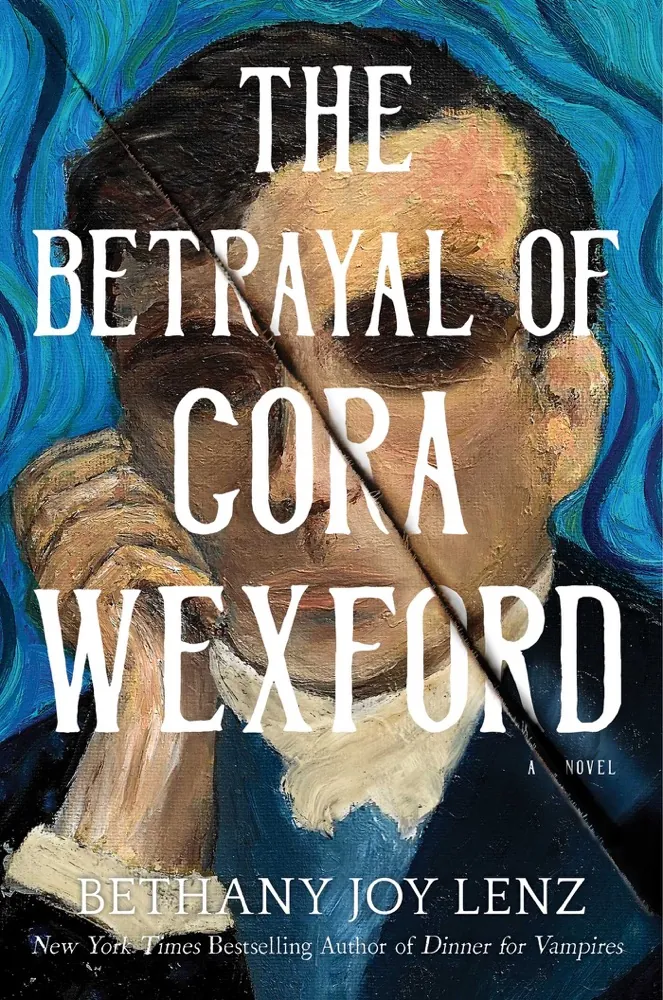

Author: Bethany Joy LenzPage Count: UnknownPublication Date: Expected publication 2026-10-20 APL Candlelight is entirely overrated. Give me a Tuesday afternoon with the windows thrown open wide, letting in the chaotic hum of traffic and the persistent scent of fresh eucalyptus. I am feeling unusually tender today. Soft, even. Which makes picking up The Betrayal of Cora Wexford by Bethany Joy Lenz a dangerous exercise in romantic optimism. The Aesthetics of Deception Picture 1880s London. Cobblestones slick with fog, gas lamps hissing in the dark, and a solitary woman painting the dead because life left her with precious few alternatives. It is gothic. It is grim. Publishers Weekly is already calling it a dark tale. But look closer at the premise. Cora meets a charming stranger named Miles Vale on her birthday—the exact cinematic cliché that makes every sensible person scream at the page—and suddenly she is falling into trust and surrender. Wait. Let me rephrase that. Surrender is a terrible word. Nobody should surrender anything in a partnership, let alone their autonomy to a man who waltzes into their life smelling of cologne and hidden agendas. Actually, scratch that entire thought. Maybe surrender is precisely what makes love delicious. Total, unadulterated vulnerability. Or perhaps I am just projecting my afternoon sentimentality onto a text that promises to be a blood-soaked psychological nightmare. Shadows in Whitechapel The book intertwines Cora’s private unraveling with the terrifying backdrop of the Jack the Ripper murders. She is commissioned to paint ordinary women ignored by a broken system, immortalizing victims of a cruel society while a monster stalks Whitechapel. It is a brilliant thematic collision. Art as a monument to the overlooked. Yet, the synopsis plays it remarkably close to the chest regarding Miles. We are told he dismantles her over time, right there in her own bed, while witnesses watch. It smells of gaslighting in a corset. Fans of Laura Purcell or Sarah Waters will find plenty to adore here, provided Lenz avoids the trap of melodrama. We do not need histrionics when quiet psychological erosion is so much more effective. Give me the slow-drip poison of a toxic domestic dynamic over a shadowy villain in a cape any day of the week. Real terror wears a familiar face and drinks your morning tea. The synopsis leaves us guessing about the mechanics of the betrayal, relying heavily on mood and Victorian atmosphere to carry the weight. Will it hold up across an entire novel? Absolutely. Lenz has a knack for theatricality, and placing a woman at the intersection of public tragedy and private gaslighting is a masterstroke of suspense pacing. I just desperately hope Miles turns out to be a ghost, though the universe rarely grants us such merciful supernatural outs. Romance is hard enough without factoring in Victorian serial killers and emotional architects. My home office has been invaded by action figures. Related InsightsA Conspiracy of Charming Monsters: Illustrated Tales from Elfhame Book Review and Summary The Blue Zones Kitchen One Pot Meals Book Review and Summary Network Effect Book Review and Summary{ "@context": "https://schema.org", "@type": "FAQPage", "mainEntity": [ { "@type": "Question", "name": "What is the main focus of The Betrayal of Cora Wexford Book Review and Summary?", "acceptedAnswer": { "@type": "Answer", "text": "Everything you need to know about The Betrayal of Cora Wexford with our detailed review." } }, { "@type": "Question", "name": "Who authored the comprehensive guide on The Betrayal of Cora Wexford Book Review and Summary?", "acceptedAnswer": { "@type": "Answer", "text": "This detailed article and its insights were carefully researched and authored by Isabella Moore." } }, { "@type": "Question", "name": "Where can I find more related content about Books?", "acceptedAnswer": { "@type": "Answer", "text": "You can explore more articles, detailed reviews, and similar insights by browsing the Related Insights section at the bottom of this article or visiting our dedicated Books category page." } } ] }

-
 Sarah Davis
 - 10 Oct, 2026 13:40
A Crimson Ridge Christmas (Crimson Ridge #2.5, 4.5) Book Review and Summary
Author: Elliott RosePage Count: UnknownPublication Date: Expected publication 2026-10-27 APL Elliott Rose is serving up precisely what the romance industrial complex demands for the autumn quarter, and frankly, I am exhausted by everyone pretending this is high literature. A Crimson Ridge Christmas packages two distinct novellas into a single spicy volume, relying on the oldest trick in the paper-backs-at-the-supermarket playbook: the forced proximity blizzard. The synopsis practically screams for a bit of narrative restraint. Yet we get cheating exes, drunken missteps, and awkward family dynamics wrapped in ugly holiday knitwear. Why must every cowboy in contemporary romance possess the psychological depth of a damp cardboard box? Give us a rancher who quotes obscure 19th-century poetry while mending a fence. Instead, we are subjected to the tired trope of dialing the wrong number—specifically, calling the best friend's father during an emotional crisis—as if thumb coordination completely vanishes the moment someone encounters infidelity. It insults the reader's intelligence. People do not accidentally speed-dial their teenage crushes while sobbing over a stray text message; they block the offender and eat a pint of artisanal gelato in silence. And speaking of silence, I have spent the last twenty minutes trying to reason with an eight-year-old who insists that building a structurally sound replica of the Eiffel Tower out of stale graham crackers and marshmallow fluff is a valid homeschooling activity. It is not. The structural integrity is nonexistent. The kitchen counters are currently sticky with a suspicious slurry of confectioner's sugar and bitter tears, and I am expected to sit here and pretend that a fictional college party involving tequila shots and a forbidden three-way with an ex-girlfriend's brother possesses any kind of artistic merit. Life is chaos. The kitchen floor is a biohazard. Saddles & Snowfall leans hard into the messy, alcohol-fueled decision-making that gives genre fiction a bad name. But who am I to judge a good trainwreck? We are looking at peak indie-pub saturation here. Think Colleen Hoover meets a Hallmark movie directed by someone who just discovered the romance section on TikTok. The thematic arc relies entirely on the desperate illusion that geographical isolation cures bad decision-making. Characters are trapped by weather, yes, but primarily by their own remarkably poor choices. I need to go scrub a suspicious layer of burnt oatmeal off the antique mahogany desk before the wood warps entirely. Related InsightsThe Reluctant Countess Book Review and Summary Creature of the Night (Monster Hunter, #5) Book Review and Summary Miss Peregrine's Home for Peculiar Children Book Review and Summary{ "@context": "https://schema.org", "@type": "FAQPage", "mainEntity": [ { "@type": "Question", "name": "What is the main focus of A Crimson Ridge Christmas (Crimson Ridge #2.5, 4.5) Book Review and Summary?", "acceptedAnswer": { "@type": "Answer", "text": "Everything you need to know about A Crimson Ridge Christmas (Crimson Ridge #2.5, 4.5) with our detailed review." } }, { "@type": "Question", "name": "Who authored the comprehensive guide on A Crimson Ridge Christmas (Crimson Ridge #2.5, 4.5) Book Review and Summary?", "acceptedAnswer": { "@type": "Answer", "text": "This detailed article and its insights were carefully researched and authored by Sarah Davis." } }, { "@type": "Question", "name": "Where can I find more related content about Books?", "acceptedAnswer": { "@type": "Answer", "text": "You can explore more articles, detailed reviews, and similar insights by browsing the Related Insights section at the bottom of this article or visiting our dedicated Books category page." } } ] }


Author: Logan HartPage Count: UnknownPublication Date: Expected publication 2026 APL The soil out by the south pasture is heavy with wet clay today, clinging to my boots like a stubborn memory as I watch the autumn cabbage leaves curl against the frost. It makes a person soft, almost—willing to forgive the world its sharp edges and bitter weather. Yet Logan Hart’s upcoming Nothing Human Left promises no such gentle mercy in its pages. We are dragged straight back into the dirt of a Pennsylvania coal mining town, where the earth itself feels claustrophobic and the human mind decays right alongside the industrial ruin. The Weight of Rotten Roots Consider the psychological landscape sketched in this synopsis. A mother claiming her victims wore "People Faces"—an eerie echo of ecological estrangement, of humanity divorcing itself from its biological skin and pretending to be something monstrously artificial. It reminds me of the utter dreck churned out by corporate publishing houses last year, those bloated climate-dystopian thrillers where every tree has a serial number and characters lecture you about carbon footprints for four hundred pages straight while the plot flatlines into a predictable slog. Give me a Gothic farmhouse and a fractured memory over didactic eco-parables any day of the week. Fractured Mirrors in the Coal Dust Memory is notoriously unreliable fertilizer. It rots. It shifts. Hart leans hard into the epistemology of doubt—how can we trust the ghost of our own childhood when the landscape that forged it has been hollowed out by industry and trauma? The synopsis positions Grace as a social worker drowning in professional disaster, returning to Fallen Rock to unearth ghosts that should have stayed buried deep in the shale. And honestly, if this book does not lean heavily into the uncanny rot of isolated American backwaters, I will eat my favorite gardening shears. Fans of Paul Tremblay or Catriona Ward will recognize the scent of gaslit recollections immediately. The prose will likely hum with that specific brand of rural dread. A predictable slog. No, wait—that fear belongs to the lesser writers of our generation, the ones who rely on cheap jump scares instead of lingering, damp atmosphere. Hart has a razor-sharp premise here, provided the execution avoids the trap of neat, tidy resolutions. Life in the dirt does not tie itself up with a polite little bow. I really must go rescue my favorite vintage Waterman fountain pen before my grandson uses it to sketch dinosaurs across the kitchen wallpaper again. Related InsightsThe Little House Collection Book Review and Summary Rebel Book Review and Summary She's a Doll Book Review and Summary{ "@context": "https://schema.org", "@type": "FAQPage", "mainEntity": [ { "@type": "Question", "name": "What is the main focus of Nothing Human Left Book Review and Summary?", "acceptedAnswer": { "@type": "Answer", "text": "Everything you need to know about Nothing Human Left with our detailed review." } }, { "@type": "Question", "name": "Who authored the comprehensive guide on Nothing Human Left Book Review and Summary?", "acceptedAnswer": { "@type": "Answer", "text": "This detailed article and its insights were carefully researched and authored by William Clark." } }, { "@type": "Question", "name": "Where can I find more related content about Books?", "acceptedAnswer": { "@type": "Answer", "text": "You can explore more articles, detailed reviews, and similar insights by browsing the Related Insights section at the bottom of this article or visiting our dedicated Books category page." } } ] }


Emerald Veins of the Hajar: The Genesis of Oman’s Wadis The Hajar Mountains rise like a jagged spine across northern Oman, their limestone ribs folded by millennia of tectonic pressure. When winter rains sweep in from the Arabian Sea, they do not simply run off the slopes; they infiltrate fissures, dissolve carbonate rock, and emerge as perennial springs that stitch together a network of wadis — Arabic for “valley” — each a living artery of fresh water. Unlike the seasonal torrents that scar desert basins elsewhere, many Omani wadis retain water year‑round, forming natural pools that shimmer in shades of turquoise, jade, and deep sapphire. Geologically, the process is a textbook example of karst hydrology. Rainwater, slightly acidic from dissolved CO₂, widens fractures into conduits. Over thousands of years these conduits become caves and underground rivers. When the roof of a conduit collapses, a surface pool appears, often framed by sheer cliffs and draped with date palms. The result is a landscape where geology, climate, and biology converge: endemic fish such as Garra barreimiae dart among submerged roots, while the rare Arabian tahr grazes on the upper slopes. Human history has been written in these corridors. Ancient copper traders followed the wadi floors, leaving petroglyphs that still whisper of caravans laden with frankincense. In the 20th century, the British explorer Wilfred Thesiger documented the Bedouin’s intimate knowledge of each pool, noting how they timed migrations to the rhythm of water availability. Today, the wadis remain a cultural touchstone; families picnic under the shade of Ziziphus trees, and children learn to swim in the same basins that sustained their ancestors. For the modern traveller, the wadis offer a rare blend of adventure and accessibility. A 4×4 can reach the mouth of most major wadis, but the most rewarding pools often require a short hike — sometimes a scramble over boulders, sometimes a gentle walk through date‑palm groves. The reward is a plunge into water that stays a constant 24‑26 °C, a natural air‑conditioner in a region where summer highs regularly exceed 45 °C. Understanding the hydrology and heritage of these corridors transforms a simple swim into a dialogue with deep time. As you step into the cool embrace of a wadi pool, you are literally immersing yourself in a system that has filtered rain through limestone for eons, a living museum of Earth’s patient sculpting. Wadi Shab: Where Canyons Meet Crystal Waters If Oman’s wadis were a symphony, Wadi Shab would be its soaring crescendo. Located roughly 150 km southeast of Muscat, the wadi opens onto a narrow coastal plain before funneling into a dramatic gorge. The approach is an experience in itself: a short boat ride across a turquoise inlet deposits you at the trailhead, where the path weaves between towering cliffs and lush vegetation. The first pool greets you within ten minutes — a shallow, sun‑dappled basin perfect for acclimatizing. Continue upstream and the canyon tightens; sheer walls rise 50 m, their faces stained by mineral deposits that paint the rock in ochre and rust. After a 30‑minute trek, the trail opens into a cavernous chamber where a waterfall cascades into a deep, circular pool. Light filters through a natural skylight, turning the water into liquid emerald. This is the “Hidden Pool,” a name earned because the entrance is concealed behind a curtain of vines. Swimming here feels like entering a cathedral. The acoustics amplify the splash of each stroke, and the water’s clarity reveals a sandy bottom dotted with smooth pebbles. Adventurous souls can dive through a submerged tunnel that leads to a second, smaller chamber — a secret grotto where the only sound is the drip of stal Related InsightsObsidian Book Review and Summary „Die Architektur des Geschmacks: Wie Gastronomie zur Wissenschaft der Zivilisation wurde“ Breakfast in Istanbul


Author: Meghan NesmithPage Count: UnknownPublication Date: Expected publication 2026-11-19 APL London, 1866. A year dripping with soot, structural anxiety, and apparently, a whole lot of aggressively binding faerie contracts. Meghan Nesmith’s forthcoming A World Apart drops us straight into the classic historical-fantasy meat-grinder. And honestly? I am staring at my half-eaten tin of sardines, wondering why anyone ever promises a happy ending when the rent is due and history keeps repeating its most tedious mistakes. Kit Finchley wants magic. He also wants to escape Victorian social stratification—because nothing screams "mid-century existential crisis" quite like trying to master elusive spellcraft while your aristocratic obligations suffocate your vibe. But let’s pause the literary critique for a second because I am legitimately just trying to hit a word count to make rent this week, and typing out high-concept fantasy analysis while a leaky radiator hisses death threats at my ankles is truly peak tragicomedy. The Chronological Liminality of Yearning The synopsis gives us a neat little split-screen dynamic. By night, Kit is spelunking through the Veil—a liminal prison engineered by a notoriously amoral Faerie Queen eight centuries ago—to rescue Wilfrith. By day, he pivots to dodging the relentless pressures of the London marriage mart, flirting with a wealthy bohemian who apparently reads the room and realizes magic is actually real. Talk about sliding into DMs across centuries and dimensions. The structural parallel here is blindingly obvious. Kit is trapped between two distinct architectures of confinement: the rigid, soul-crushing etiquette of the Victorian upper crust and the literal, extradimensional prison of the Faerie Queen. Yet, anyone expecting a neat, sunshine-and-rainbows resolution to this multidimensional love triangle is operating on pure delusion. Real life doesn't hand out neat little bows, and if this book tries to resolve an eight-hundred-year faerie hostage situation with the power of platonic gaslighting and a good old-fashioned society wedding, I’m going to throw my laptop out this drafty window. We are looking at a messy, morally grey triangulation that smells heavily of Freudian displacement. Kit is chasing a ghost trapped in an 800-year time-out because he's too emotionally unavailable to handle a living, breathing heiress in 1866. It's giving major structural avoidance, but make it aesthetic. The Marketing Machine Marches On Venetia Constantine and the NetGrifters are already losing their minds over this, comparing it to everything from Babel to Bridgerton. Naturally. Because what does late-stage publishing love more than slapping a recognizable institutional buzzword onto a queer historical romp and calling it a day? The prose promises lush escapism, yet the underlying thematic machinery points straight toward the inescapable burden of duty. You can run to the Veil, you can flirt with rebellious heiresses who believe in the supernatural, but the bills always come due. And speaking of bills coming due—my roommate's terrible indie-folk band is currently tuning their banjos in the living room and I need to escape this apartment immediately before I lose my remaining brain cells. Related InsightsThe Brushstroke Legacy Book Review and Summary Beneath Waves and Shadows: The Sinking of the Steamship Valencia Book Review and Summary 3Gs: An Imaginary Memoir Book Review and Summary{ "@context": "https://schema.org", "@type": "FAQPage", "mainEntity": [ { "@type": "Question", "name": "What is the main focus of A World Apart Book Review and Summary?", "acceptedAnswer": { "@type": "Answer", "text": "Everything you need to know about A World Apart with our detailed review." } }, { "@type": "Question", "name": "Who authored the comprehensive guide on A World Apart Book Review and Summary?", "acceptedAnswer": { "@type": "Answer", "text": "This detailed article and its insights were carefully researched and authored by Olya Shevchenko." } }, { "@type": "Question", "name": "Where can I find more related content about Books?", "acceptedAnswer": { "@type": "Answer", "text": "You can explore more articles, detailed reviews, and similar insights by browsing the Related Insights section at the bottom of this article or visiting our dedicated Books category page." } } ] }

-
 Kaan Demir
 - 10 Oct, 2026 12:35
Edge-Native Intelligence: Deploying Large Language Models on Resource-Constrained Hardware
Related InsightsThe Return Book Review and Summary Crescendo Book Review and Summary Istanbul: Two Continents

-
 Marco Conti
 - 10 Oct, 2026 12:20
Witch Dance (The Spellbound History Quartet, #2) Book Review and Summary
Author: Isabel IbañezPage Count: UnknownPublication Date: Expected publication 2026 APL Another historical fantasy about a smartypants heroine hiding her supernatural resumé while trying to fix a real-world tragedy because heaven forbid we let actual history breathe without throwing a magical rock at it. Witch Dance drops us right into the 1518 Strasbourg dancing plague—an actual terrifying mass hysteria event—only to immediately pivot into secret coven politics and the obligatory jaw-clenching grump who threatens to out our protagonist's hidden identity. Honestly? Make it make sense. I am sitting here staring at my third overdue tuition notice, counting my remaining instant ramen packets, and watching publishers churn out the exact same enemies-to-lovers blueprint wrapped in a slightly different historical corset. The Pathology of Predictable Tropes Let us examine the structural integrity of this premise with the exact same rigor I am currently failing to apply to my physical chemistry lab report. Evelina del Valle is a brilliant medical student—because of course she is, we cannot possibly have a female protagonist who is merely mediocre at her craft; she must be an absolute prodigy carrying the weight of an entire quarantined metropolis on her shoulders while dodging the local Inquisition or whatever equivalent the author cooked up. And then enters Alaric Keller. Because every single romance arc in YA fantasy right now requires a guy whose personality consists entirely of looming near a forest, possessing cheekbones that could slice bread, and holding a grudge against the universe. He is dangerous, secretive, and bound to the Black Forest—which sounds suspiciously like a fancy way of saying he has mommy issues and a penchant for dramatic monologues. The synopsis leans heavily on the whole "suspension of disbelief" crutch regarding the medical emergency. Strasbourg in 1518 was a terrifying psychological rupture where people literally danced until their hearts gave out from sheer exhaustion and panic. But do we get a harrowing exploration of collective psychosis, socioeconomic desperation, and the brutal limitations of sixteenth-century humoral theory? Absolutely not. We get gemstone magic and bargains struck in the dark. Because nothing says historical accuracy like a magic rock fixing a mass psychogenic illness. The tonal whiplash is giving me a migraine worse than my landlord demanding rent in cash. The Inevitability of Despair And speaking of outcomes, I am placing zero bets on an emotionally devastating conclusion. This industry is allergic to actual tragedy. They will tease us with the high stakes of execution, exposure, and a literal lethal outbreak, only to wrap everything up in a neat little bow where love conquers all and the dark magic is conveniently purged by the power of mutual pining. Give me a break. Real life is an unmitigated dumpster fire where nobody saves you from the debt collectors, so forgive me if I am deeply suspicious of a happily-ever-after engineered by a man whose mother was the plague's first victim. It is giving Sarah J. Maas meets historical cosplay fanfiction, and frankly, my brain cells are unionizing. Yet, I will probably watch everyone on BookTok lose their collective minds over the gilded edges and the hand-drawn map. We are all trapped in the same capitalist treadmill of buying pretty paper objects that simulate depth while the world burns outside our dormitory windows. I need to go debate the merits of absurdism with a strange grad student in a sticky dive bar before my espresso wears off entirely.

-
 Lucas Martin
 - 10 Oct, 2026 11:34
Quand le Merveilleux Embrasse le Quotidien : L'Énigme du Réalisme Magique
Il arrive parfois qu'une plume effleure le réel si délicatement que la frontière s'efface, laissant surgir l'extraordinaire au cœur du plus trivial des matins. Ce n'est pas une fuite vers l'imaginaire, mais une façon plus dense, plus vertigineuse, d'habiter le monde. Le réalisme magique, cet oxymore littéraire qui fait danser l'ombre et la lumière sur la même page, ne cherche pas à nous émerveiller par la prouesse, mais à nous dévoiler l'étrangeté fondamentale de l'existence. Là où le fantastique ouvre une porte vers un ailleurs, le réalisme magique révèle que l'ailleurs est déjà ici, tapissé dans les plis du quotidien, attendant qu'un regard assez aigu — ou assez aimant — le nomme. L'Origine d'un Oxymore : Peinture et Philosophie Avant d'être une signature littéraire, le terme naît sous le pinceau. Dans l'Allemagne des années 1920, une peinture qualifiée de « magie réaliste » — ou Neue Sachlichkeit, « Nouvelle Objectivité » — tente de saisir le mystère latent des objets ordinaires. Irene Guenther, dans son analyse de 1995, relie ce courant pictural à une sensibilité post-expressionniste où la netteté glaciale du réel devient le théâtre d'une inquiétude sourde. Ce n'est qu'ensuite que le vocable migre vers la lettre, porté par des critiques comme Luis Leal qui, dans son article fondateur sur la littérature hispano-américaine, trace une ligne nette : « Le réalisme magique n'est pas une littérature magique. Son but, contrairement à celle-ci, est d'exprimer des émotions, non de les évoquer. » La nuance est capitale. Il ne s'agit pas de susciter l'étonnement par le spectacle, mais d'utiliser l'irruption de l'étrange comme un scalpel pour disséquer la condition humaine. Matthew Strecher, en 1999, résume cette alchimie par une formule saisissante : « Ce qui advient lorsqu'un cadre réaliste, hautement détaillé, est envahi par quelque chose de trop étrange pour être cru. » L'invasion n'est pas une rupture ; elle est une révélation. Le réalisme fournit l'ancrage, la magie, la résonance.L'Amérique Latine : Terre d'Élection du Merveilleux Si les racines sont européennes, c'est sous les soleils et les ombres de l'Amérique latine que le genre trouve sa voix la plus puissante, sa « patrie d'adoption » selon David Lodge. Le critique britannique, dans The Art of Fiction, lie cette prééminence à l'Histoire elle-même : « Tous ces écrivains ont traversé de grandes convulsions historiques et des bouleversements personnels déchirants, qu'ils estiment impossibles à représenter adéquatement dans un discours réaliste non perturbé. » Il cite Le Livre du rire et de l'oubli (1979) de Milan Kundera comme exemple, bien que tchèque, prouvant que la géographie ne saurait enfermer l'esprit du genre. Pourtant, les noms qui font vibrer les bibliothèques du monde résonnent en espagnol : Gabriel García Márquez, bien sûr, dont Cent Ans de solitude reste l'archétype absolu, mais aussi Isabel Allende, Jorge Luis Borges, Juan Rulfo, Miguel Ángel Asturias, Elena Garro, Alejo Carpentier, Arturo Uslar Pietri. Michiko Kakutani, dans une analyse pénétrante, affirme que « les transactions entre l'extraordinaire et le banal qui se produisent dans tant de fiction latino-américaine ne sont pas simplement une technique littéraire, mais aussi le miroir d'une réalité où le fantastique fait fréquemment partie de la vie quotidienne. » Ici, le mort qui revient prendre son café, la pluie de fleurs jaunes, l'insomnie collective ne sont pas des métaphores ; ils sont la texture même du vécu.Au-Delà de l'Atlantique : Une Géographie Mondiale Réduire le réalisme magique à l'hispanité serait une erreur que le corpus même du genre dément. En littérature anglaise, Neil Gaiman, Salman Rushdie, Alice Hoffman, Louis de Bernières, Nick Joaquin, Joanne Harris, Nicola Barker en sont des porte-voix singuliers. Les Enfants de minuit de Rushdie en offre une illustration magistrale : les enfants nés à minuit le 15 août 1947, à l'instant même de l'indépendance de l'Inde, sont liés par une télépathie qui tisse l'intime et l'historique en une seule trame. La Russie, avec sa tradition mystique, compte Mikhaïl Boulgakov, le dissident Andreï Siniavski, la dramaturge Nina Sadour. Le Bengale voit naître une école vibrante avec Nabarun Bhattacharya, Akhteruzzaman Elias, Shahidul Zahir, Jibanananda Das, Syed Waliullah. En langue kannada, Shivaram Karanth et Devanur Mahadeva infusent le merveilleux dans leurs œuvres majeures. Le Japon trouve en Haruki Murakami un maître incontesté du glissement subtil entre le banal et l'onirique. La Chine couronne Mo Yan, prix Nobel 2012, pour son « réalisme hallucinatoire ». La Pologne, enfin, célèbre Olga Tokarczuk, Nobel 2018, dont l'écriture polymorphe incarne cette « forme d'écriture plus inclusive que le réalisme littéraire ou la fantasy », comme le définit la théorie générale du genre.La Frontière Poreuse : Réalisme Magique vs Fantastique La confusion est fréquente, pourtant la distinction est structurelle. Le fantastique, genre de l'imaginaire, construit des mondes secondaires, régis par leurs propres lois, souvent séparés du nôtre par un portail explicite. Le réalisme magique, lui, refuse la séparation. Il opère dans notre monde, y insérant l'irrationnel sans explication, sans justification scientifique, sans que les personnages n'en soient fondamentalement bouleversés — ils l'acceptent comme on accepte la pluie ou la faim. C'est cette « quantité substantielle de détails réalistes » qui ancre le miracle, le rendant plus troublant qu'une dragonnière ou qu'une école de sorciers. Le réalisme magique se rapproche ainsi de la « fiction littéraire » (literary fiction) par son ambition esthétique et sa profondeur psychologique, là où la fantasy relève davantage de la « fiction de genre » (genre fiction). L'Héritage des Précurseurs : Hoffmann, Gogol et les Mystiques Russes La généalogie intellectuelle remonte plus loin encore. Au XIXe siècle, les romantiques E.T.A. Hoffmann et Nikolaï Gogol ont initié ce « réalisme magique européen où les royaumes de la fantaisie empiètent sans cesse sur les royaumes du réel ». Anatoli Lounatcharski, dans une analyse lumineuse, souligne que Hoffmann, « contrairement aux autres romantiques, était un satiriste ». Il voyait le réel « avec une acuité inhabituelle », en faisait « une montagne de charmantes caricatures », mais n'hésitait pas à créer « des cauchemars semblables au Portrait de Gogol ». Gogol, élève d'Hoffmann, transpose cette tension entre le détail caricatural et l'irruption du nightmare. En Russie toujours, le philosophe Nikolaï Berdiaev et le poète Andreï Biély emploient dès 1907 le terme de « réalisme mystique » pour désigner une littérature fusionnant réalisme et révélation mystique, centrée sur « la compréhension spirituelle propre de l'écrivain, plutôt que sur le dogme établi ». Ils y voient à l'œuvre les derniers Dostoïevski : la relation d'Ivan Karamazov avec Smerdiakov et le diable dans Les Frères Karamazov (1879-1880), qui « va au-delà de la réalité pour exister dans un domaine plus abstrait et métaphysique » ; les figures de Stavroguine et Chatov dans Les Démons (1871-1872), de Raskolnikov et Svidrigaïlov dans Crime et Châtiment (1866), du prince Mychkine, Nastassia Philippovna et Rogojine dans L'Idiot. Ces duos, ces miroirs déformants, sont les ancêtres directs de ces doubles magiques qui hantent les pages de Márquez ou Murakami.L'Inclusion comme Horizon Au terme de ce parcours, une évidence s'impose : le réalisme magique n'est pas un sous-genre, une mode ou un simple procédé stylistique. C'est une herméneutique, une manière de lire le monde qui refuse l'exclusion mutuelle du rationnel et du mystère. En mêlant l'histoire et la fable, le politique et l'onirique, le corps et l'esprit, il offre, comme le suggère la définition fondatrice, « une forme d'écriture plus inclusive que le réalisme littéraire ou la fantasy ». Il nous apprend que la réalité n'est pas un bloc compact, mais une surface poreuse où le visible et l'invisible conversent sans cesse. Lire du réalisme magique, c'est accepter que le monde est plus vaste, plus étrange, plus poétique que ne le disent nos certitudes. C'est, pour reprendre les mots de Luis Leal, choisir d'exprimer l'émotion brute de vivre, plutôt que de simplement la suggérer par l'artifice.#RealismeMagique #LitteratureMondiale #GabrielGarciaMarquez #EcritureInclusive #MagieDuQuotidien Related InsightsWords of Radiance Book Review and Summary Ready Player One (Movie Tie-In) Book Review and Summary Mysterious Bookshop Presents the Best Mystery Stories of the Year 2025 Book Review and Summary