
-
 Isabella Ferrari
- 23 Jun, 2026 06:48
The Mediterranean Elixir: Baked Cod with Cherry Tomatoes, Capers, and Olives
"The Mediterranean Elixir: Baked Cod with Cherry Tomatoes, Capers, and Olives" Welcome to my kitchen, fellow food enthusiasts. I am Isabella Ferrari, and today we are embarking on a journey that bridges the gap between the art of fine dining and the rigorous world of nutritional science. Often, we view the act of cooking as purely sensory—a dance of aromas, textures, and tastes. Yet, when we choose our ingredients with intention, we are performing an act of medicine. There is a profound, almost poetic harmony found in the Mediterranean diet, a way of eating that has been the subject of countless medical inquiries. Among the stars of this dietary tradition, white fish like cod stands out, not just for its delicate, flaky texture, but for its role as a vessel for vital nutrients. When we pair this lean, high-quality protein with the antioxidants found in vine-ripened tomatoes and the briny, polyphenolic punch of olives and capers, we aren't just making dinner—we are crafting a formula for longevity. The Science of the Sea: Why Cod Matters The modern pursuit of health often leads us to seek complex solutions, yet the most enduring wellness strategies are rooted in nature. According to recent studies on nutraceuticals, the compounds found in natural products play a decisive role in cardiovascular health and metabolic management. When we look at ingredients like cod, we are looking at a lean source of protein that lacks the heavy saturated fats of terrestrial meats, making it a cornerstone for those focusing on heart-health and weight management.Research on cardiovascular health consistently points toward the necessity of immune-modulating compounds. The "Wisdom of Nature" abstract clarifies that the action mechanisms of specific natural compounds improve heart function and help in the prevention of cardiovascular disease. By incorporating cod into our weekly rotation, we provide our bodies with high-quality protein, which acts as a foundational block for muscle maintenance and systemic recovery, without the inflammatory baggage of processed alternatives. Mediterranean Aromatics: More Than Just Flavor The beauty of this dish lies in the confluence of its ingredients. The capers and olives are not merely there for their sharp, salty profiles; they are loaded with phytochemicals that assist the body in oxidative stress management. When paired with the healthy monounsaturated fats from extra virgin olive oil, these elements create a bioavailability synergy. Scientific literature regarding nutraceuticals highlights how these active compounds contribute to the development of innovative health therapies. When we roast tomatoes, we release lycopene, a potent antioxidant that becomes significantly easier for the body to absorb. This, combined with the Omega-3s in fish, creates an anti-inflammatory powerhouse on your dinner plate.A Culinary Ritual: Crafting the Dish To prepare this dish, we must respect the ingredients. Cod is a gentle fish; it requires care to ensure it remains succulent. The moisture from the cherry tomatoes acts as a natural poaching liquid, ensuring the fillets remain tender while the capers and olives create a concentrated reduction that packs a savory, umami-rich punch. This recipe is designed for those who value efficiency in the kitchen without sacrificing the health benefits of home-cooked meals. It is a dish that honors the "Wisdom of Nature" by letting the ingredients speak for themselves. [Insert Recipe Instructions Here, provided in the Frontmatter] Integrating Wellness into Your Lifestyle As you plate this meal, take a moment to consider the endurance and vitality you are fueling. The science of nutraceuticals reminds us that every meal is an opportunity to modulate our internal environment. By choosing a diet that prioritizes heart-healthy fats and nutrient-dense botanicals, we are engaging in a daily practice of health preservation.Remember, the goal is not perfection, but consistency. Whether you are a seasoned chef or a beginner looking to improve your health, dishes like this Baked Cod with Cherry Tomatoes, Capers, and Olives serve as a reminder that the path to wellness is delicious, sustainable, and entirely within your control. I invite you to try this recipe, savor the interplay of the briny olives against the sweetness of the tomatoes, and feel empowered by the knowledge that you are feeding your body the very best of nature’s pharmacopeia. Until next time, stay healthy, stay curious, and always keep cooking with love. #HealthyLiving #MediterraneanDiet #Omega3Nutrition #CulinaryScience #IsabellaFerrariEats #Gastronomy #FoodScience #HealthyRecipes #CulinaryArts Related InsightsThe Earthy Revolution: Crafting the Ultimate High-Fiber Whole Grain Lentil Shepherd’s Pie Wine: A Journey Through 8000 Years of History, Science, and Enjoyment Salmon Kulebyaka: A Harmonious Union of Omega-3 Rich Fish, Buckwheat, and Herbs{ "@context": "https://schema.org", "@type": "FAQPage", "mainEntity": [ { "@type": "Question", "name": "What is the main focus of The Mediterranean Elixir: Baked Cod with Cherry Tomatoes, Capers, and Olives?", "acceptedAnswer": { "@type": "Answer", "text": "Discover the perfect marriage of heart-healthy science and culinary bliss with this nutrient-dense baked cod recipe, packed with omega-3s and vibrant Mediterranean flavors." } }, { "@type": "Question", "name": "Who authored the comprehensive guide on The Mediterranean Elixir: Baked Cod with Cherry Tomatoes, Capers, and Olives?", "acceptedAnswer": { "@type": "Answer", "text": "This detailed article and its insights were carefully researched and authored by Isabella Ferrari." } }, { "@type": "Question", "name": "Where can I find more related content about Food?", "acceptedAnswer": { "@type": "Answer", "text": "You can explore more articles, detailed reviews, and similar insights by browsing the Related Insights section at the bottom of this article or visiting our dedicated Food category page." } } ] }

The Grapes of Wrath Author: John SteinbeckPage Count: UnknownPublication Date: 2014-PRH The Grapes of Wrath, a masterpiece penned by John Steinbeck, is a poignant and powerful portrayal of the Great Depression's unyielding grip on America's heartland. This classic novel, first published in 1939, has stood the test of time, and its 75th-anniversary edition is a testament to its enduring relevance. Steinbeck's magnum opus is a scathing critique of the social and economic injustices that plagued the nation during one of its darkest periods. At its core, The Grapes of Wrath is a story about the human condition, about the resilience of the human spirit in the face of unimaginable hardship. The Joads, an Oklahoma farm family, are forced to abandon their home and embark on a perilous journey to California, a land of promise and broken dreams. As they navigate the unforgiving landscape of the American West, they confront the harsh realities of poverty, exploitation, and disillusionment. Steinbeck's prose is a masterclass in subtlety and nuance, weaving a narrative that is both deeply personal and universally relatable. His characters are multidimensional and complex, with the Joads' struggles and triumphs serving as a microcosm for the larger societal issues of the time. The author's use of language is spare, yet evocative, conjuring the dusty, sun-scorched landscapes of the Great Plains and the cramped, squalid conditions of the migrant worker camps. One of the novel's most striking aspects is its exploration of the conflict between the powerful and the powerless. Steinbeck pulls no punches in his portrayal of the ruthless exploitation of the working class, the ways in which the capitalist system can crush the spirits of those who toil beneath it. And yet, even in the face of such oppression, the Joads and their fellow migrants find ways to resist, to organize, and to fight back. The character of Ma Joad is a particular standout, a testament to the strength and resilience of women in the face of adversity. Her stoicism and determination serve as a beacon of hope for her family, even as the world around them seems to be crumbling. Tom Joad, the novel's protagonist, is a complex and deeply human figure, driven by a fierce sense of justice and a desire to protect his family at all costs. The Grapes of Wrath is a novel that defies easy categorization, blending elements of social realism, drama, and tragedy to create a work of profound moral vision. It is a book that is both of its time and timeless, a powerful indictment of the social and economic ills that have always plagued America. As Don DeLillo so aptly put it, Steinbeck "shaped a geography of conscience" with this novel, one that continues to resonate with readers today. In short, The Grapes of Wrath is a masterpiece of American literature, a novel that should be read and reread by anyone who cares about the human condition. It is a powerful reminder of the importance of empathy, compassion, and social justice, and a testament to the enduring power of Steinbeck's prose. #TheGrapesOfWrath #JohnSteinbeck #GreatDepression #AmericanClassics #SocialJustice #DustBowl Related InsightsDear John Book Review and Summary Red (The Myth That Burns, #1) Book Review and Summary The Witches of Cambridge Book Review and Summary{ "@context": "https://schema.org", "@type": "FAQPage", "mainEntity": [ { "@type": "Question", "name": "What is the main focus of The Grapes of Wrath Book Review and Summary?", "acceptedAnswer": { "@type": "Answer", "text": "Everything you need to know about The Grapes of Wrath with our detailed review." } }, { "@type": "Question", "name": "Who authored the comprehensive guide on The Grapes of Wrath Book Review and Summary?", "acceptedAnswer": { "@type": "Answer", "text": "This detailed article and its insights were carefully researched and authored by John Steinbeck." } }, { "@type": "Question", "name": "Where can I find more related content about Books?", "acceptedAnswer": { "@type": "Answer", "text": "You can explore more articles, detailed reviews, and similar insights by browsing the Related Insights section at the bottom of this article or visiting our dedicated Books category page." } } ] }

A Clockwork Orange Tote Bag Author: Out of PrintPage Count: UnknownPublication Date: 2021-PRH I must confess, when I first laid eyes on "A Clockwork Orange Tote Bag" by Out of Print, I was both intrigued and perplexed. The title, a playful nod to Anthony Burgess's classic dystopian novel, seemed to hint at a work that would be both a tribute and a subversion of the original. As I delved into the book, I discovered a complex exploration of themes that, while not entirely new, were presented in a fresh and thought-provoking manner. At its core, "A Clockwork Orange Tote Bag" is a meditation on the tension between free will and determinism. The author, Out of Print, masterfully weaves together a narrative that challenges the reader to consider the nature of choice and the consequences of our actions. Through a series of vignettes and philosophical musings, the book probes the limits of human agency, raising questions about the extent to which our decisions are shaped by factors beyond our control. One of the most striking aspects of Out of Print's style is their use of language. The prose is at once lyrical and concise, with a keen attention to detail that rewards close reading. The author's writing is reminiscent of Burgess's own innovative use of language in "A Clockwork Orange," with its blend of slang, philosophical jargon, and poetic flourishes. This nod to the original is deliberate, and serves to underscore the themes of conditioning and control that run throughout the book. Throughout "A Clockwork Orange Tote Bag," Out of Print employs a range of narrative techniques to explore the tension between free will and determinism. The book is structured as a series of fragmented narratives, each of which offers a unique perspective on the central theme. These vignettes are often surreal and dreamlike, with a sense of disconnection that serves to underscore the sense of disorientation and confusion that pervades the book. One of the most compelling aspects of the book is its use of imagery and symbolism. The tote bag of the title becomes a recurring motif, representing both the constraints of societal expectations and the possibility of personal expression. The author's use of imagery is similarly evocative, with vivid descriptions of urban landscapes and interior spaces that serve to underscore the sense of disconnection and alienation that pervades the book. If I were to offer a critique of "A Clockwork Orange Tote Bag," it would be that the book's themes and ideas are not always fully developed. At times, the narrative feels disjointed and fragmented, with a sense of disconnection that can make it difficult to follow. However, this sense of disorientation is also a deliberate choice, one that serves to underscore the sense of confusion and dislocation that pervades the book. In conclusion, "A Clockwork Orange Tote Bag" is a thought-provoking and deeply unsettling work that challenges the reader to consider the nature of free will and determinism. Out of Print's innovative use of language and narrative technique serves to underscore the themes of conditioning and control that run throughout the book. While the book's ideas and themes are not always fully developed, the author's willingness to take risks and push boundaries makes for a compelling and deeply unsettling read. #AClockworkOrange #DystopianLiterature #FreeWillVsDeterminism #PhilosophicalFiction #ExperimentalLiterature #AnthonyBurgess Related InsightsThe Birthing Tree Book Review and Summary Extremely Loud & Incredibly Close Book Review and Summary Do Androids Dream of Electric Sheep? Book Review and Summary{ "@context": "https://schema.org", "@type": "FAQPage", "mainEntity": [ { "@type": "Question", "name": "What is the main focus of A Clockwork Orange Book Review and Summary?", "acceptedAnswer": { "@type": "Answer", "text": "Everything you need to know about A Clockwork Orange with our detailed review." } }, { "@type": "Question", "name": "Who authored the comprehensive guide on A Clockwork Orange Book Review and Summary?", "acceptedAnswer": { "@type": "Answer", "text": "This detailed article and its insights were carefully researched and authored by Anthony Burgess." } }, { "@type": "Question", "name": "Where can I find more related content about Books?", "acceptedAnswer": { "@type": "Answer", "text": "You can explore more articles, detailed reviews, and similar insights by browsing the Related Insights section at the bottom of this article or visiting our dedicated Books category page." } } ] }


The Warlord Author: Gena Showalter,Page Count: UnknownPublication Year: 2021-GB In "The Warlord" by Gena Showalter, the acclaimed author weaves a captivating tale that delves into the complexities of power, loyalty, and the unyielding human spirit. This global bestseller is a testament to Showalter's mastery of storytelling, as she transports readers to a world of intrigue and adventure. At its core, "The Warlord" is a story about the unrelenting pursuit of power and the true cost of ambition. The protagonist, a formidable and enigmatic figure, is driven by a fierce determination to claim dominance in a world where only the strongest survive. As the narrative unfolds, Showalter skillfully explores the moral gray areas that often accompany the quest for power, raising questions about the nature of leadership, loyalty, and the consequences of one's actions. One of the standout aspects of "The Warlord" is Showalter's writing style, which is both evocative and immersive. Her prose is richly detailed, painting vivid pictures of the world and its inhabitants. The characters are multidimensional and complex, with each one bringing their unique perspective to the story. Showalter's use of dialogue is also noteworthy, as it adds depth and nuance to the narrative, revealing the intricacies of the characters' relationships and motivations. Throughout the book, Showalter's expertise in crafting compelling characters is on full display. The warlord of the title is a particularly fascinating figure, with a depth and complexity that makes them both captivating and relatable. As the story progresses, the layers of their personality are slowly revealed, exposing a rich tapestry of emotions, desires, and contradictions. The world-building in "The Warlord" is equally impressive, with Showalter creating a richly detailed and immersive environment that draws the reader in. The politics, culture, and mythology of this world are meticulously crafted, adding depth and complexity to the narrative. The pacing is well-balanced, with moments of high-octane action and suspense juxtaposed with quieter, more introspective scenes. One of the most striking aspects of "The Warlord" is its exploration of themes that are both timely and timeless. Showalter tackles issues of power, corruption, and the human condition with a deft hand, raising important questions about the nature of leadership and the consequences of our actions. The book is also a powerful exploration of the human spirit, highlighting the resilience and determination that defines us as a species. In conclusion, "The Warlord" is a gripping and thought-provoking read that is sure to captivate fans of fantasy and adventure. With its richly detailed world-building, complex characters, and timely themes, this book is a must-read for anyone looking for a compelling and immersive story. Showalter's writing style is engaging and evocative, making this book a true page-turner. #TheWarlord #GenaShowalter #FantasyBooks #PowerAndCorruption #LeadershipAndLoyalty #EpicFantasy Related InsightsBreakfast of Champions Book Review and Summary Be Sure Book Review and Summary Born to be Wilde Book Review and Summary{ "@context": "https://schema.org", "@type": "FAQPage", "mainEntity": [ { "@type": "Question", "name": "What is the main focus of The Warlord Book Review and Summary?", "acceptedAnswer": { "@type": "Answer", "text": "Everything you need to know about The Warlord with our detailed review." } }, { "@type": "Question", "name": "Who authored the comprehensive guide on The Warlord Book Review and Summary?", "acceptedAnswer": { "@type": "Answer", "text": "This detailed article and its insights were carefully researched and authored by Isabella Moore." } }, { "@type": "Question", "name": "Where can I find more related content about Books?", "acceptedAnswer": { "@type": "Answer", "text": "You can explore more articles, detailed reviews, and similar insights by browsing the Related Insights section at the bottom of this article or visiting our dedicated Books category page." } } ] }

Bem-vindo! Prepare-se para uma #viagem inesquecível pelo coração de #Portugal. O Sussurro das Pedras Antigas: Uma Viagem Inesquecível por Óbidos, a Vila das Rainhas Olá, companheiros de viagem! Daqui fala o Tiago Silva. Se há um lugar no mundo onde o tempo parece ter decidido parar, recolhendo as suas asas para descansar sobre ameias de pedra e ruelas caiadas de branco, esse lugar é Óbidos. Esta joia fortificada, erguida como um sentinela do passado na nossa adorada pátria, convida-nos a uma desconexão total do bulício contemporâneo e a um mergulho profundo na herança que moldou a identidade de #Portugal. Hoje, convido-vos a calçar uns sapatos confortáveis e a acompanhar-me numa exploração exaustiva, detalhada e sensorial por esta vila que é, sem sombra de dúvida, um dos tesouros mais cintilantes da #Europa. Preparem-se para descobrir cada detalhe geográfico, histórico e cultural deste município que apaixona qualquer pessoa à primeira vista.Uma Localização Privilegiada entre a Terra e o Oceano Para compreendermos a grandiosidade de Óbidos, precisamos primeiro de nos situar no mapa da nossa belíssima região Oeste. Esta icónica vila portuguesa, que serve de orgulhosa sede de município, encontra-se aninhada na província histórica da Estremadura, integrando administrativamente o distrito de Leiria. No atual ordenamento territorial, o concelho faz parte da prestigiada NUTII do Oeste e Vale do Tejo. A nível demográfico, a vila intramuros preserva uma escala humana e incrivelmente acolhedora, albergando cerca de 2 200 habitantes que têm o privilégio diário de habitar um cenário de conto de fadas. No entanto, o Município de Óbidos estende-se muito para além das suas famosas muralhas, abrangendo uma área total de 141,55 km² e uma população que, de acordo com os dados censitários de 2021, ascende a 11 924 residentes. [Norte / Nordeste / Leste: Caldas da Rainha] \ [Noroeste: Oceano Atlântico] -- [ÓBIDOS] -- [Sul: Bombarral] / [Oeste: Peniche] -- [Sudoeste: Lourinhã]O território municipal desenha uma geografia rica e diversificada, delimitada a nordeste e a leste pelo vizinho concelho das Caldas da Rainha. Ao caminharmos para sul, encontramos as fronteiras do Bombarral, enquanto a sudoeste o horizonte se cruza com a Lourinhã. A oeste, a península de Peniche ergue-se como barreira terrestre, mas a noroeste o concelho abre-se generosamente para a vastidão azul, onde a magnífica costa encontra o Oceano Atlântico, fundindo a imponência da pedra com a frescura marítima onde a #nature se manifesta em toda a sua plenitude. Se planeia a sua próxima #viagem a partir dos grandes centros urbanos, o acesso é extremamente simples e rápido. Óbidos localiza-se a uns meros 88 quilómetros a norte da capital, Lisboa, um trajeto que se cumpre com facilidade através da autoestrada A8. Para quem viaja a partir do norte ou do centro do país, a vila situa-se a sudoeste da histórica cidade de Coimbra, a uma distância de 138 quilómetros, utilizando a ligação combinada das autoestradas A1 e A8. É um desvio mais do que obrigatório para quem deseja respirar o ar puro do Oeste.A Origem do Nome: De "Oppidum" a Óbidos Para os amantes da etimologia, o nome "Óbidos" encerra em si a própria essência física da vila. Esta palavra deriva diretamente do termo latino ópido (ou oppidum), cujo significado literal nos remete para as ideias de «cidadela» ou «cidade fortificada». Ao pronunciarmos o seu nome, estamos a evocar a própria arquitetura defensiva que a carateriza há milénios. A ocupação humana desta região é de facto ancestral, e a prova dessa presença continuada no tempo encontra-se a pouca distância do atual núcleo urbano, onde se erguem as ruínas históricas da antiga povoação romana de Eburobrício. É fascinante pensar como estas colinas têm sido, ao longo de gerações, um ponto estratégico de abrigo, vigia e habitação.Um Passeio pela História: Conquistas, Rainhas e Forais A #história de Óbidos lê-se como um romance de cavalaria repleto de conquistas, alianças políticas e generosidade real. O ano de 1148 figura com letras de ouro nos anais da vila, marcando o momento histórico em que este reduto fortificado foi tomado aos Mouros, no âmbito da reconquista cristã liderada pelo primeiro rei de Portugal, D. Afonso Henriques. Décadas mais tarde, em 1195, a vila recebia a sua primeira carta de foral, outorgada sob o reinado de D. Sancho I, garantindo-lhe privilégios e consolidando a sua importância no jovem reino português. A Vila das Rainhas Uma das particularidades mais românticas e singulares de Óbidos é o facto de ter integrado, durante séculos, o dote de inúmeras rainhas de Portugal. Esta tradição de generosidade régia fez com que a vila ficasse conhecida como a "Vila das Rainhas", uma terra cuidada e acarinhada pelas mulheres mais influentes da corte. Entre as soberanas que receberam Óbidos como parte do seu dote, destacam-se nomes incontornáveis da nossa história:D. Urraca de Castela: A influente esposa de D. Afonso II; Rainha Santa Isabel: A padroeira da paz e esposa de D. Dinis, que terá ficado encantada com a beleza da vila; D. Filipa de Lencastre: A culta esposa de D. João I e mãe da Ínclita Geração; D. Leonor de Aragão: Esposa de D. Duarte; D. Leonor de Avis: Esposa de D. João II, cujo impacto na região foi profundo.Esta ligação às rainhas moldou não só o património, mas também o desenvolvimento das terras circundantes. Sabia, por exemplo, que o atual concelho das Caldas da Rainha nasceu diretamente do território de Óbidos? Originalmente, aquela estância termal era denominada "Caldas de Óbidos". A alteração do nome deveu-se especificamente às longas temporadas que a rainha D. Leonor passou naquela localidade para usufruir das águas termais, acabando por autonomizar a povoação que hoje conhecemos. Ao recuarmos no tempo através dos registos demográficos, descobrimos dados curiosos: no ano de 1527, viviam escassos 161 habitantes no interior da vila de Óbidos. Este número representava, na época, cerca de um décimo de toda a população que residia no território do município. Ao longo dos séculos, a vila soube preservar a sua escala íntima, resistindo à expansão desordenada e mantendo intacto o seu traçado medieval.O Coração de Pedra: O Castelo e as Muralhas de Óbidos Falar de Óbidos sem mencionar a sua majestosa fortaleza é simplesmente impossível. No dia 16 de Fevereiro de 2007, o Castelo de Óbidos recebeu oficialmente o diploma de candidato a uma das maiores distinções patrimoniais do país. Meses mais tarde, ainda no decorrer do ano de 2007, o monumento foi solenemente declarado, através do concurso nacional "As Sete Maravilhas de Portugal", como o segundo dos sete monumentos mais relevantes de todo o património de #architecture português. A imponência deste conjunto defensivo transpôs as barreiras físicas e entrou no mundo digital. No ano de 2015, as Muralhas da Vila de Óbidos passaram a integrar o prestigiado projeto "Maravilhas de Portugal", uma feliz parceria entre a Direção-Geral do Património Cultural (DGPC) e a multinacional tecnológica Google. Graças a esta iniciativa inovadora, viajantes de todo o mundo podem realizar uma visita virtual detalhada, em formato de 360 graus, explorando online as muralhas e outros 56 monumentos nacionais diretamente a partir das plataformas da Google ou do Google Maps. Mas, acredite, nada substitui a sensação física de caminhar sobre aquelas pedras gastas pelo tempo, sentindo o vento do Oeste no rosto.Património Monumental: Uma Rota de Fé e Arte Ao cruzarmos as portas de Óbidos, entramos num museu a céu aberto. Cada esquina revela um detalhe de cantaria, uma flor que espreita de uma janela ou o portal de um templo secular. Para que não perca nenhum detalhe na sua próxima visita, compilei a lista essencial dos monumentos que constituem o riquíssimo património histórico da vila: Os Portais e a DefesaPorta da Vila: A entrada principal da povoação, adornada com belíssimos azulejos que dão as boas-vindas a quem chega com promessas de beleza e história. Castelo de Óbidos: A sentinela máxima da vila, com as suas torres imponentes e uma vista desafogada sobre a lezíria circundante. Porta do Vale: Outro dos acessos históricos que rompe a muralha, ligando o interior fortificado às paisagens verdejantes que o rodeiam. Aqueduto: Uma estrutura monumental que rasga a paisagem exterior, testemunho da engenharia de outrora que garantia o abastecimento de água à população.Templos de Fé e DevoçãoPraça de Santa Maria: O verdadeiro coração social da vila, onde a comunidade se reúne e onde se sente pulsar a alma obidense. Igreja de Santa Maria: O principal templo religioso da vila, palco de casamentos reais e detentor de um interior artístico de cortar a respiração. Igreja da Misericórdia: Um espaço de recolhimento que reflete a assistência social e a devoção religiosa ao longo dos séculos. Igreja de São Pedro: Com a sua arquitetura marcante, ergue-se como mais um ponto de paragem obrigatória para apreciar a arte sacra. Igreja de Nossa Senhora de Monserrate: Um exemplar charmoso da arquitetura religiosa local. Santuário do Senhor Jesus da Pedra: Localizado fora das muralhas, este monumento de planta singular desafia a gravidade e a geometria, atraindo os olhares dos amantes de arquitetura barroca. Capela de São Martinho: Um pequeno e antigo templo que guarda memórias de fé privada e devoção popular. Igreja de São Tiago: Localizada estrategicamente junto ao castelo, esta igreja encontrou uma nova vida, estando intimamente ligada à dinâmica cultural da vila. Ermida de Nossa Senhora do Carmo: Um ponto de recolhimento espiritual situado em harmonia com a paisagem envolvente.Cultura e Arte CivilCasa do Arco da Cadeia – Abílio Mattos e Silva e Maria José Salavisa: Um espaço que celebra a vida, a obra e a estética destes dois vultos artísticos incontornáveis, enriquecendo o roteiro cultural da vila. Museu Municipal de Óbidos: Situado na emblemática Rua Direita, no número 97, este museu é o guardião das memórias artísticas da vila, albergando obras de arte de valor inestimável que ajudam a decifrar o passado desta terra de rainhas.Óbidos, a Vila Literária: Onde os Livros Ganham Vida Se a história e a pedra nos apaixonam, a ligação de Óbidos à palavra escrita eleva esta vila a um patamar cultural de nível mundial. O audacioso projeto "Óbidos, Vila Literária" nasceu de uma ideia inovadora: reabilitar espaços urbanos degradados ou devolutos e transformá- #portugal #travel #history #europe #cultura Related InsightsColmar and the Alsace Wine Route: A Colorful Escape Im Bann der Gezeiten: Wenn Stein und Meer den Mont Saint-Michel umarmen L'Eterna Seduzione della Costa Azzurra: Tra Scogliere di Porfido e Misteri Belle Époque{ "@context": "https://schema.org", "@type": "FAQPage", "mainEntity": [ { "@type": "Question", "name": "What is the main focus of Óbidos: A Vila Medieval Rodeada de Muralhas?", "acceptedAnswer": { "@type": "Answer", "text": "Junte-se a Tiago Silva numa exploração profunda por Óbidos." } }, { "@type": "Question", "name": "Who authored the comprehensive guide on Óbidos: A Vila Medieval Rodeada de Muralhas?", "acceptedAnswer": { "@type": "Answer", "text": "This detailed article and its insights were carefully researched and authored by Tiago Silva." } }, { "@type": "Question", "name": "Where can I find more related content about Travel?", "acceptedAnswer": { "@type": "Answer", "text": "You can explore more articles, detailed reviews, and similar insights by browsing the Related Insights section at the bottom of this article or visiting our dedicated Travel category page." } } ] }
-
 Tiago Silva
- 22 Jun, 2026 13:22
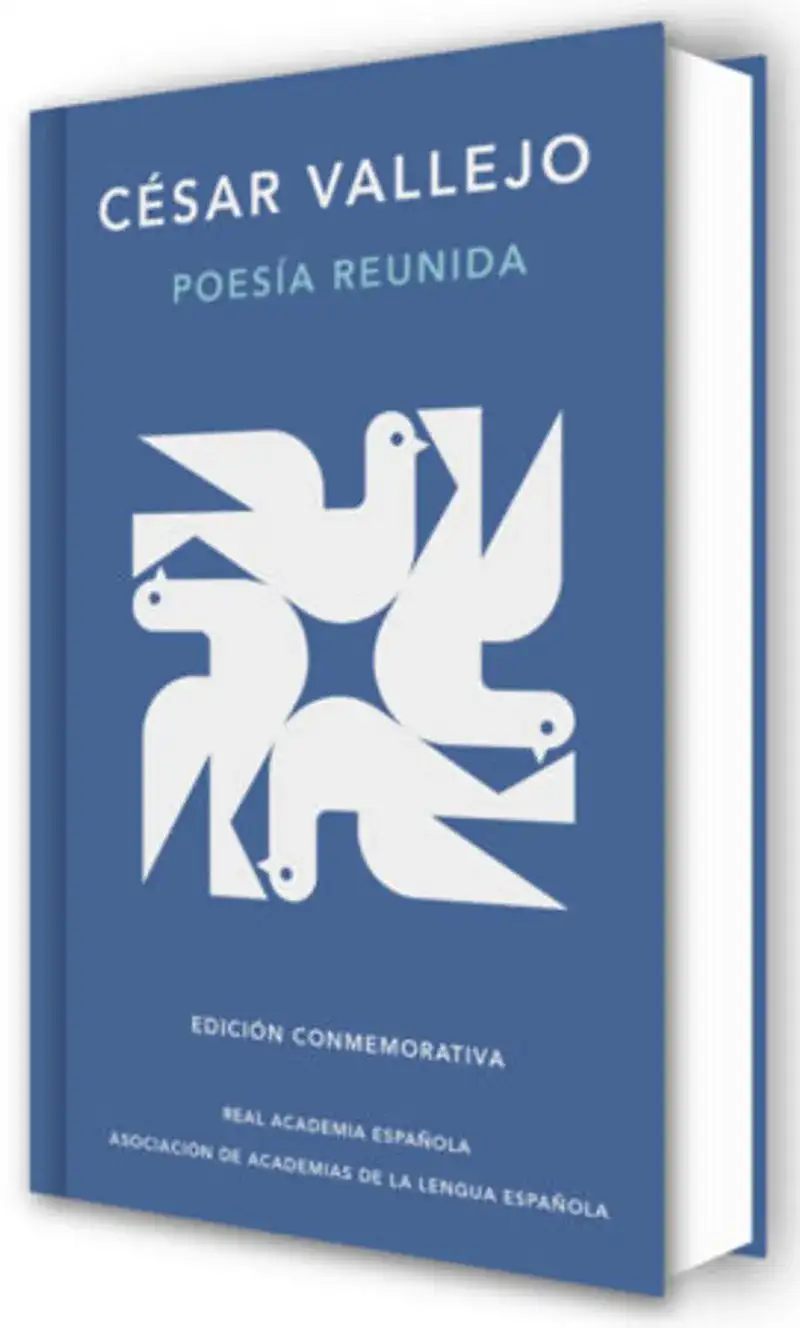
Poesía reunida César Vallejo (Edición conmemorativa de la RAE y la ASALE) / Collected Poems by César Vallejo (Commemorative Edition by the RAE and ASALE) Book Review and Summary
Poesía reunida César Vallejo (Edición conmemorativa de la RAE y la ASALE) / Collected Poems by César Vallejo (Commemorative Edition by the RAE and ASALE) Author: César VallejoPage Count: UnknownPublication Date: 2026-PRH César Vallejo’s Poesía reunida (Collected Poems), forthcoming in a landmark commemorative edition by the Royal Spanish Academy (RAE) and the Association of Spanish Language Academies (ASALE), is not merely a retrospective of one of Latin America’s most visionary poets—it is a seismic event in world literature. Scheduled for publication in 2026 to coincide with the 130th anniversary of Vallejo’s birth, this definitive volume arrives at a moment when poetry itself is being redefined by fragmentation, exile, and the raw urgency of human suffering. Vallejo, a poet who once wrote that “all sentiment is partial,” offers in this collection a totalizing vision of art as both wound and balm, prophecy and elegy. At the heart of Vallejo’s poetry is the theme of human solidarity in adversity—a theme that grows more urgent with each passing decade. Born in Peru in 1892 and later immersed in the bohemian ferment of Paris, Vallejo’s work traverses geographic and linguistic borders, yet never loses sight of the universal plight of the marginalized. His poems, whether rooted in the Andean highlands or drifting through European cafés, pulse with the heartbeat of the oppressed. In Trilce (1922)—one of the most radical collections of modern Spanish-language poetry—Vallejo dismantles syntax and punctuation to mirror the disorientation of modern life. Yet beneath the linguistic rupture lies a profound empathy: for the unemployed worker, the abandoned lover, the dying child. In poem after poem, Vallejo transforms personal grief into collective mourning, making every sorrow a shared one. Vallejo’s style is unmistakable and revolutionary. He wields language like a surgeon’s scalpel, dissecting emotion with clinical precision while infusing each incision with raw lyricism. His syntax often feels broken, as if the weight of existence has fractured the very tools of expression. In Poema XXVIII from Trilce, he writes:“¡Y el perro, el perro que no tiene perro! ¡El perro que no tiene perro y mira!”The repetition and exclamation mark the absence, the loneliness of a creature without its kind. Vallejo doesn’t just describe pain—he makes it visible, tangible, etched into the structure of the line. This technique—what critics have called his “poetry of the stutter”—is not decorative; it is ethical. It forces the reader to slow down, to stumble, to feel the same disorientation that afflicts the poem’s subjects. His later work, penned in exile and marked by the Spanish Civil War, deepens this commitment. In España, aparta de mí este cáliz (1939), written during the war, Vallejo elevates poetry to the level of spiritual resistance. The title, echoing Christ’s words on the cross, signals a poet not only bearing witness but offering himself as sacrifice. The poems here are incantatory, rhythmic, almost biblical in scope. Yet they remain grounded in the concrete horrors of war: children with “blue lips of hunger,” mothers clutching “empty breasts.” Vallejo’s genius lies in this alchemy—turning political outrage into spiritual transcendence without erasing the flesh-and-blood reality of suffering. What makes this commemorative edition by the RAE and ASALE so significant is its commitment to completeness and context. While earlier editions have gathered Vallejo’s verse, this one promises to include previously uncollected poems, variant drafts, and critical essays that illuminate the poet’s creative process. Given Vallejo’s habit of revising obsessively—often tearing up pages and starting anew—such editorial rigor is essential. The RAE’s imprimatur also signals a recognition of Vallejo as a central figure in the Spanish language, not just Peruvian or Latin American. This is poetry that belongs to the world. Reading Vallejo is to enter a world where language is not a shield but a wound. His poems do not comfort; they unsettle. They do not resolve; they persist. In an era when poetry is often dismissed as ornamental or irrelevant, Vallejo’s work stands as a defiant assertion of art’s moral necessity. He reminds us that to write is to bear witness, to love is to suffer, and to exist is to be in solidarity with all who hurt. This collected edition is not just a book—it is an act of cultural reparation, a gathering of scattered voices into a single, trembling chorus. It invites us to remember that poetry, at its highest, is not decoration but consecration. And César Vallejo, in every line, consecrates the pain of being human. #VallejoEterno #PoesíaReunida #TrilceYMásAllá #PoesíaComoResistencia #CésarVallejo2026 #LiteraturaQueDuele Related InsightsSomeone to Trust Book Review and Summary The Arabian Nights Book Review and Summary Sharpe's Command Book Review and Summary{ "@context": "https://schema.org", "@type": "FAQPage", "mainEntity": [ { "@type": "Question", "name": "What is the main focus of Poesía reunida César Vallejo (Edición conmemorativa de la RAE y la ASALE) / Collected Poems by César Vallejo (Commemorative Edition by the RAE and ASALE) Book Review and Summary?", "acceptedAnswer": { "@type": "Answer", "text": "Everything you need to know about Poesía reunida César Vallejo (Edición conmemorativa de la RAE y la ASALE) / Collected Poems by César Vallejo (Commemorative Edition by the RAE and ASALE) with our detailed review." } }, { "@type": "Question", "name": "Who authored the comprehensive guide on Poesía reunida César Vallejo (Edición conmemorativa de la RAE y la ASALE) / Collected Poems by César Vallejo (Commemorative Edition by the RAE and ASALE) Book Review and Summary?", "acceptedAnswer": { "@type": "Answer", "text": "This detailed article and its insights were carefully researched and authored by Tiago Silva." } }, { "@type": "Question", "name": "Where can I find more related content about Books?", "acceptedAnswer": { "@type": "Answer", "text": "You can explore more articles, detailed reviews, and similar insights by browsing the Related Insights section at the bottom of this article or visiting our dedicated Books category page." } } ] }


Das Mysterium der Laugenbrezel Die Brezel ist das unangefochtene Symbol der süddeutschen Bäckerzunft. Mit ihrer unverwechselbaren, verschlungenen Form und der tiefbraunen, glänzenden Kruste ist sie aus Bayern, Schwaben und Baden-Württemberg nicht wegzudenken. Die Ursprünge der Brezel reichen weit ins Mittelalter zurück. Einer Legende nach erfand ein schwäbischer Bäcker, der beim Grafen in Ungnade gefallen war, die Brezel, als er den Auftrag erhielt, ein Brot zu backen, durch das die Sonne dreimal scheinen kann. Die charakteristische braune Farbe und der typische Geschmack entstehen durch das "Laugen": Vor dem Backen wird der rohe Teigling in eine stark verdünnte Natronlauge (Natriumhydroxid, E524) getaucht. Diese Lauge reagiert im Ofen mit dem Teig und sorgt für die sogenannte Maillard-Reaktion, die Kruste und Aroma kreiert. Vegane Brezeln backen – Ein Handwerk Viele Liebhaber dieses Gebäcks wissen nicht, dass die klassische Brezel oftmals gar nicht vegan ist! Besonders in Bayern wird der traditionelle Brezelteig häufig mit Schweineschmalz zubereitet, um ihn geschmeidiger zu machen und den Geschmack abzurunden. Auch bei vielen Großbäckereien finden sich oft tierische Fette im Rezept. Ein traditionelles, rein pflanzliches Brezelrezept besinnt sich jedoch auf die essenziellen Grundzutaten: Weizenmehl (meist Type 550), Wasser, Hefe, etwas Salz und eine pflanzliche Fettquelle. Um den Teig auch ohne Schmalz elastisch und weich zu bekommen, verwendet die vegane Bäckerei pflanzliche Alternativen wie ein mildes Pflanzenöl, vegane Butter oder sogar hochwertiges Olivenöl. Das Öl sorgt für eine feine Porung und hält die Brezel länger frisch. Die Kunst des Schlingens und Laugens Das Formen einer echten Brezel, das sogenannte "Schlingen", erfordert viel Übung. Der Teigstrang muss in der Mitte dicker ("Bauch") und an den Enden ("Ärmchen") dünner auslaufen. Beim Backen daheim wird aus Sicherheitsgründen meist Haushaltsnatron (Kaiser Natron) in kochendem Wasser verwendet, anstatt echter, ätzender Bäckerlauge. Zwar wird die Brezel dadurch etwas matter in der Farbe, aber der Geschmack bleibt fantastisch. Vor dem Backen wird der "Bauch" der Brezel traditionell eingeschnitten (der "Ausbund"), damit sie im Ofen kontrolliert aufreißen kann. Anschließend wird sie mit grobem Hagelsalz bestreut. Eine ofenwarme, selbstgemachte vegane Brezel, aufgeschnitten und mit etwas pflanzlicher Butter und frischem Schnittlauch bestrichen, ist der absolute Inbegriff süddeutscher Genusskultur. #VeganeBrezeln #Laugengebäck #BayerischeKüche #Schwäbisch #VeganBacken #BrezelLiebe #Hausgemacht #PflanzlicheErnährung #GermanVegan #BrotBacken #recipe #exclusive Related InsightsSunday Roast Tradition Baking a Victoria Sponge Lahmacun: The Turkish Pizza{ "@context": "https://schema.org", "@type": "FAQPage", "mainEntity": [ { "@type": "Question", "name": "What is the main focus of Vegane Brezeln backen?", "acceptedAnswer": { "@type": "Answer", "text": "Explore the incredible journey of Vegane Brezeln backen with Hannah Weber." } }, { "@type": "Question", "name": "Who authored the comprehensive guide on Vegane Brezeln backen?", "acceptedAnswer": { "@type": "Answer", "text": "This detailed article and its insights were carefully researched and authored by Hannah Weber." } }, { "@type": "Question", "name": "Where can I find more related content about Recipe?", "acceptedAnswer": { "@type": "Answer", "text": "You can explore more articles, detailed reviews, and similar insights by browsing the Related Insights section at the bottom of this article or visiting our dedicated Recipe category page." } } ] }


Love Arranged Author: Lauren AsherPage Count: UnknownPublication Year: 2025-GB Lauren Asher’s Love Arranged isn’t just another romance novel—it’s a masterclass in blending cultural expectations with personal desires, wrapped in a narrative so sharp and emotionally charged that it’s no wonder it’s already a global bestseller. Set against the backdrop of a modern diaspora, Asher crafts a story where love isn’t just a feeling but a calculated risk, a rebellion, and ultimately, a declaration of freedom. At its core, Love Arranged explores the tension between tradition and self-determination. The protagonist, a woman of South Asian heritage raised in the West, finds herself torn between her family’s expectations of an "arranged" marriage and her own burgeoning romantic desires. But Asher doesn’t stop at the surface-level conflict. She delves deep into the internalized guilt, the quiet defiance, and the slow-burning realization that love—true love—isn’t something that can be dictated by parents or society. It’s a theme that resonates universally, especially for anyone who’s ever felt the weight of cultural obligations pressing against their own happiness. What makes Asher’s writing so compelling is her ability to balance wit with raw emotion. Her prose is crisp, often laced with humor that cuts through the heavier moments without diminishing their impact. The dialogue crackles with authenticity, whether it’s the sarcastic banter between friends or the stilted, polite exchanges that mask so much unsaid. Asher excels at capturing the micro-expressions of cultural dissonance—the way a raised eyebrow from a mother can feel like a thousand judgmental words, or how a shared look between siblings can convey an entire lifetime of unspoken understanding. The novel’s structure is another of its strengths. Rather than a straightforward linear narrative, Asher weaves in flashbacks and letters from the past, revealing the protagonist’s backstory in fragments that feel deliberate and earned. This isn’t just a gimmick; it’s a way to mirror the protagonist’s own struggle to piece together her identity. She’s not just fighting against an arranged marriage—she’s fighting to understand who she is beyond her family’s script. One of the most striking aspects of Love Arranged is its refusal to offer easy answers. Asher doesn’t fall into the trap of painting tradition as purely oppressive or love as a simple escape. Instead, she presents a nuanced portrait where both sides have merit, even if they’re fundamentally at odds. The arranged marriage isn’t just a villainous imposition; it’s a complex institution with its own history, its own logic. The love interest isn’t a flawless savior but a flawed human being grappling with his own expectations. This moral ambiguity makes the story feel real, relatable, and ultimately, deeply satisfying. Asher’s world-building is equally impressive. Whether it’s the bustling streets of London’s South Asian community or the quiet intimacy of a diaspora home, she paints vivid, sensory-rich scenes that pull the reader in. You don’t just read Love Arranged; you live it. The emotional beats land with precision—there’s a scene where the protagonist stands at a crossroads, literally and metaphorically, that will leave you holding your breath. It’s the kind of moment that lingers, that makes you pause and reflect on your own life choices. What’s most impressive, however, is how Asher makes this deeply personal story feel universal. While the specifics of South Asian culture provide the novel’s backbone, the themes of identity, family, and love transcend borders. Anyone who’s ever struggled with the expectations placed upon them—whether by culture, family, or society—will see themselves in these pages. It’s a testament to Asher’s skill that she can write a story so rooted in a specific experience while still feeling like a mirror for so many. By the final act, Love Arranged delivers not just a satisfying conclusion but a powerful statement: love isn’t about what’s expected of you. It’s about what you choose, even when that choice is terrifying. Asher doesn’t just tell us that—she makes us feel it. If there’s any criticism to be levied, it’s that the pacing occasionally stutters in the middle act, where the emotional stakes feel like they’re building toward something before settling into a rhythm. But even this minor flaw is forgivable because Asher’s voice is so distinct, so engaging, that you’ll forgive her almost anything just to keep turning the pages. Love Arranged is more than a romance; it’s a cultural manifesto wrapped in a love story. It’s the kind of book that makes you laugh, cry, and question your own beliefs about love and duty. Lauren Asher has crafted something rare here—a novel that’s both a comfort and a challenge, a mirror and a window. #LoveArranged #ArrangedMarriage #CulturalRomance #DiasporaLoveStory #LaurenAsher #ModernLove Related InsightsSteve Jobs / Steve Jobs: A Biography Book Review and Summary The Assassin's Blade / Throne of Glass / Crown of Midnight / Heir of Fire / Queen of Shadows / Empire of Storms / Tower of Dawn / Kingdom of Ash Book Review and Summary Outlander Book Review and Summary{ "@context": "https://schema.org", "@type": "FAQPage", "mainEntity": [ { "@type": "Question", "name": "What is the main focus of Love Arranged Book Review and Summary?", "acceptedAnswer": { "@type": "Answer", "text": "Everything you need to know about Love Arranged with our detailed review." } }, { "@type": "Question", "name": "Who authored the comprehensive guide on Love Arranged Book Review and Summary?", "acceptedAnswer": { "@type": "Answer", "text": "This detailed article and its insights were carefully researched and authored by Marco Conti." } }, { "@type": "Question", "name": "Where can I find more related content about Books?", "acceptedAnswer": { "@type": "Answer", "text": "You can explore more articles, detailed reviews, and similar insights by browsing the Related Insights section at the bottom of this article or visiting our dedicated Books category page." } } ] }


Freed Author: E. L. JamesPage Count: UnknownPublication Year: 2021-GB "Freed" by E.L. James, the concluding installment in the Fifty Shades trilogy, is a tale of love, obsession, and redemption that will leave readers breathless. Published in 2021, this novel brings the tumultuous journey of Anastasia Steele and Christian Grey to a close, wrapping up years of passion, power struggles, and emotional turmoil. At its core, "Freed" is a story about freedom—not just the physical kind, but the emotional and psychological liberation that comes from love, trust, and self-acceptance. Anastasia and Christian’s relationship has always been fraught with power imbalances, secrets, and the lingering shadows of Christian’s traumatic past. In this final book, James explores whether true freedom can exist within the confines of such a complex relationship. Can Anastasia break free from the chains of Christian’s control while still loving him? Can Christian overcome his demons to give her the partnership she deserves? These questions drive the narrative, making "Freed" more than just a romance—it’s a psychological and emotional odyssey. James’ signature style is unmistakable: lush, sensual prose that immerses readers in the intensity of the characters’ emotions. Her writing is undeniably addictive, with a rhythm that mirrors the ebb and flow of a passionate relationship. The dialogue crackles with tension, and the internal monologues of Anastasia and Christian lay bare their vulnerabilities, fears, and desires. James excels at creating a sense of intimacy, making readers feel as though they are privy to the most private moments of the protagonists’ lives. However, "Freed" is not without its flaws. Some critics argue that the characters’ flaws—particularly Christian’s controlling nature—are never fully resolved in a way that feels satisfying. While the book attempts to address his past trauma and its impact on their relationship, it sometimes feels like these issues are glossed over rather than deeply explored. Anastasia, too, often feels like a passive participant in her own story, reacting to Christian’s actions rather than driving the narrative forward. This can make their dynamic frustrating at times, as the power imbalance that defined their relationship remains unresolved. Yet, these imperfections do not detract from the overall allure of "Freed." James’ ability to tap into the primal emotions of love, desire, and fear is undeniable. The novel’s strength lies in its emotional rawness—readers will find themselves laughing, crying, and holding their breath as Anastasia and Christian navigate the final hurdles of their relationship. The book’s pacing is relentless, with each chapter pulling you deeper into their world, making it nearly impossible to put down. One of the most compelling aspects of "Freed" is its exploration of redemption. Christian’s journey is particularly poignant, as he grapples with the ghosts of his past and the realization that his need for control stems from a place of deep-seated pain. His evolution—though sometimes uneven—offers a glimmer of hope that he can change, that he can learn to love Anastasia in a way that liberates rather than constrains her. Anastasia, too, undergoes a transformation, finding her voice and asserting her independence in ways she never thought possible. James’ writing is at its best when it delves into the complexities of their relationship. The scenes of passion and intimacy are vivid and evocative, but it’s the quieter moments—where the characters confront their fears and insecurities—that truly resonate. These moments of vulnerability are what make "Freed" more than just a steamy romance; they elevate it to a story about the redemptive power of love. In the end, "Freed" delivers what fans of the series have been waiting for: a conclusion to Anastasia and Christian’s story. Whether it’s a satisfying one depends on the reader. Some will appreciate the emotional depth and the promise of a future together, while others may find the resolution too neat, too rushed. But one thing is certain—James’ ability to craft a narrative that is both gripping and emotionally charged ensures that "Freed" will leave a lasting impression. For those who have followed the Fifty Shades saga from the beginning, "Freed" is a bittersweet farewell. It’s a story about the messy, complicated, and sometimes painful journey toward love and freedom. And in that, it is undeniably compelling. #Freed #FiftyShadesSeries #ELEames #RomanceNovel #LoveAndRedemption #ChristianGrey Related InsightsHunted Book Review and Summary Words of Radiance Book Review and Summary Adam and Eve Book Review and Summary{ "@context": "https://schema.org", "@type": "FAQPage", "mainEntity": [ { "@type": "Question", "name": "What is the main focus of Freed Book Review and Summary?", "acceptedAnswer": { "@type": "Answer", "text": "Everything you need to know about Freed with our detailed review." } }, { "@type": "Question", "name": "Who authored the comprehensive guide on Freed Book Review and Summary?", "acceptedAnswer": { "@type": "Answer", "text": "This detailed article and its insights were carefully researched and authored by Camille Dubois." } }, { "@type": "Question", "name": "Where can I find more related content about Books?", "acceptedAnswer": { "@type": "Answer", "text": "You can explore more articles, detailed reviews, and similar insights by browsing the Related Insights section at the bottom of this article or visiting our dedicated Books category page." } } ] }

Don't Think Twice Author: Barbara SchoichetPage Count: UnknownPublication Date: 2016-PRH Barbara Schoichet’s Don’t Think Twice is a raw, roaring testament to the idea that sometimes, the only way out is straight through. At fifty, with her life in tatters—job gone, long-term relationship dissolved, and her mother dead from pancreatic cancer—Schoichet does the unthinkable: she buys a Harley on eBay from two guys named Dave and rides it solo from New York to Los Angeles. Not because she has a plan, but because she doesn’t. Not because she’s fearless, but because she’s too exhausted to care. What unfolds is less a travelogue than a cathartic scream into the wind, a middle-aged rebellion against grief that’s as hilarious as it is heartbreaking. The book’s central theme is resilience, but not the kind that wears a polished smile and a motivational quote. Schoichet’s resilience is messy, loud, and unapologetic. It’s the kind that manifests in speeding down Route 66 at 100 mph, in laughing through tears at a stranger’s kindness, in flipping off a guy who pulls a gun because, well, why not? Grief, she suggests, isn’t something you "get over." It’s something you carry, and sometimes, the only way to keep it from crushing you is to strap it to a motorcycle and ride until your hands go numb. Schoichet’s writing style is the book’s greatest strength—and its most disarming feature. Her voice is a cocktail of sass, sorrow, and unfiltered honesty, like if Dorothy Parker had been raised on road trips and bad decisions. She doesn’t romanticize her journey; she lives it. There’s no pretentious reflection here, no forced wisdom. Instead, there’s a woman who’s just trying to stay upright on two wheels while the world tries to knock her down. Her humor is sharp, her observations keen, and her vulnerability disarming. When she writes about her mother’s death, it’s not with maudlin sentimentality but with the kind of bluntness that makes you laugh through the ache: "Grief is a greedy bastard. It takes and takes, and you just keep giving, even when you’re empty." The road itself becomes a character in the story, a living, breathing entity that Schoichet both fears and adores. The Appalachian Mountains loom like ancient sentinels, the Turquoise Trail glows with otherworldly beauty, and Route 66 hums with the ghosts of travelers past. Schoichet doesn’t just pass through these places; she engages with them, whether it’s marveling at the decadence of Graceland, getting lost in a Cadillac graveyard, or nearly getting shot over a lane change. Each stop is a microcosm of her internal journey—sometimes awe-inspiring, sometimes absurd, always real. What makes Don’t Think Twice so compelling is its refusal to shy away from the ugly parts of healing. Schoichet isn’t a hero; she’s a woman who’s one wrong turn away from disaster, emotionally and physically. Her physical limitations—aging knees, a back that protests every mile—are as much a part of the story as her emotional ones. She’s not some invincible adventurer; she’s a woman who’s scared, tired, and occasionally reckless, but who’s also, against all odds, moving forward. That’s the magic of her story: it’s not about conquering grief, but about learning to dance with it. The book’s pacing mirrors the unpredictability of the open road. One chapter, Schoichet is marveling at the quiet beauty of a desert sunset; the next, she’s recounting a near-miss with a semi-truck. The prose is lean and muscular, mirroring the motorcycle she rides—no excess, just forward motion. There’s a rawness to her storytelling that feels intimate, like she’s confiding in you over a beer at a roadside dive, not performing for an audience. Ultimately, Don’t Think Twice is a book about the audacity of starting over, even when you’re broken. It’s about the strange alchemy of pain and freedom, how sometimes the only way to feel alive is to flirt with danger. Schoichet’s journey isn’t just a physical one; it’s a spiritual reckoning, a middle finger to the idea that life should be neat and tidy by fifty. Her message is simple: when the world takes everything from you, sometimes the only thing left to do is take something back—even if it’s just the open road and a motorcycle that might kill you. If you’ve ever felt like life has knocked you flat and you’re not sure how to get up, this book is your rallying cry. It’s proof that healing isn’t linear, that sometimes the bravest thing you can do is not think twice. #RoadTripMemoir #GriefAndGrit #SoloTravel #HarleyAdventures #LateBloomingRebel #HealingOnTheHighway Related InsightsBound by Fate Book Review and Summary Shadows Reel Book Review and Summary Las nueve revelaciones / The Celestine Prophecy : An Adventure Book Review and Summary{ "@context": "https://schema.org", "@type": "FAQPage", "mainEntity": [ { "@type": "Question", "name": "What is the main focus of Think Twice Book Review and Summary?", "acceptedAnswer": { "@type": "Answer", "text": "Everything you need to know about Think Twice with our detailed review." } }, { "@type": "Question", "name": "Who authored the comprehensive guide on Think Twice Book Review and Summary?", "acceptedAnswer": { "@type": "Answer", "text": "This detailed article and its insights were carefully researched and authored by Harlan Coben." } }, { "@type": "Question", "name": "Where can I find more related content about Books?", "acceptedAnswer": { "@type": "Answer", "text": "You can explore more articles, detailed reviews, and similar insights by browsing the Related Insights section at the bottom of this article or visiting our dedicated Books category page." } } ] }
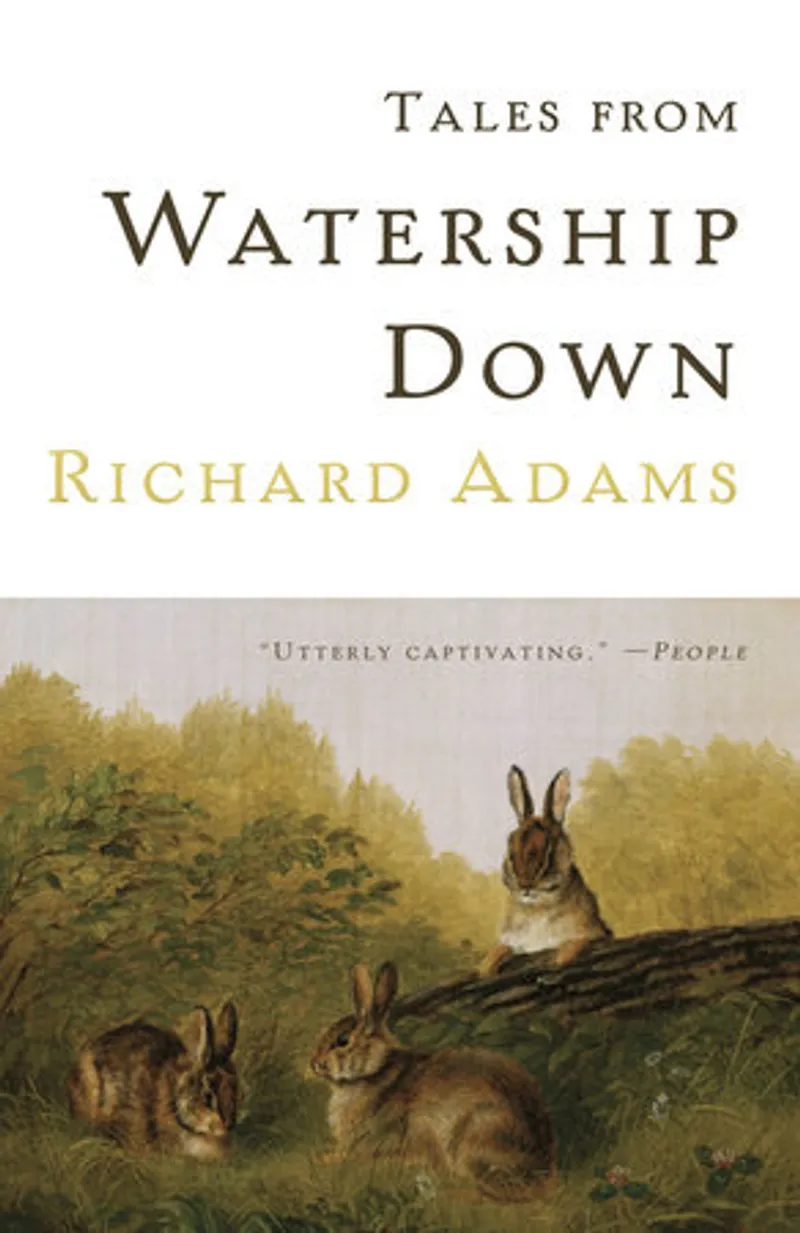
Tales from Watership Down Author: Richard AdamsPage Count: UnknownPublication Date: 2012-PRH In "Tales from Watership Down," Richard Adams masterfully weaves a captivating narrative that transports readers back to the enchanting world of rabbits he introduced in his beloved classic, "Watership Down." This spellbinding book of courage and survival is an exciting invitation to revisit a cherished world, reuniting us with the unforgettable characters of Fiver, Hazel, Bigwig, Dandelion, and the legendary hero El-ahrairah. Through a series of engaging tales, Adams recounts traditional stories of rabbit mythology, charming us once again with his imagination, heart, and wonder. The author's writing style is as captivating as ever, with his vivid descriptions of the natural world and the intricate social dynamics of rabbit society drawing readers into the narrative. Adams' masterful storytelling has the power to evoke a wide range of emotions, from the thrill of adventure to the poignancy of loss. One of the primary themes of "Tales from Watership Down" is the struggle for survival in a world fraught with danger and uncertainty. Adams skillfully explores the complexities of nature, where life and death walk a delicate balance, and the selfishness of humankind poses a constant threat to the rabbit's existence. Through the characters' experiences, the author highlights the importance of courage, perseverance, and community in the face of adversity. The characters in "Tales from Watership Down" are multidimensional and relatable, with each one bringing their unique personality and perspective to the narrative. The legendary hero El-ahrairah is as charismatic as ever, and the new heroes introduced in the book are equally well-crafted. Adams' characterization is so vivid that readers can't help but become emotionally invested in the characters' lives, sharing in their joys and sorrows. The world-building in "Tales from Watership Down" is equally impressive, with Adams expanding on the richly detailed landscape he created in "Watership Down." The author's depiction of the natural world is both beautiful and brutal, reflecting the harsh realities of life in the wild. The rabbit mythology and folklore that are woven throughout the narrative add depth and richness to the world, drawing readers into the rabbits' unique culture and way of life. In "Tales from Watership Down," Richard Adams has created a truly captivating book that will delight fans of the original classic and new readers alike. The author's writing style is engaging and accessible, making the book an enjoyable read for a wide range of audiences. The themes of survival, courage, and community are timely and thought-provoking, adding depth and complexity to the narrative. In conclusion, "Tales from Watership Down" is a spellbinding book that is sure to captivate readers with its imagination, heart, and wonder. Adams' masterful storytelling and vivid world-building make the book an exciting invitation to come home to a beloved world. If you're a fan of animal fiction, fantasy, or adventure stories, then "Tales from Watership Down" is definitely a must-read. #WatershipDown #RichardAdams #AnimalFiction #FantasyLiterature #RabbitMythology #ClassicSequel Related InsightsBlade of Two Faces (The Imperial Trials, 1) Book Review and Summary There Are No Giant Crabs in This Novel: A Novel of Giant Crabs (John Dies at the End, #5) Book Review and Summary Taking the Stand Book Review and Summary{ "@context": "https://schema.org", "@type": "FAQPage", "mainEntity": [ { "@type": "Question", "name": "What is the main focus of Watership Down Book Review and Summary?", "acceptedAnswer": { "@type": "Answer", "text": "Everything you need to know about Watership Down with our detailed review." } }, { "@type": "Question", "name": "Who authored the comprehensive guide on Watership Down Book Review and Summary?", "acceptedAnswer": { "@type": "Answer", "text": "This detailed article and its insights were carefully researched and authored by Richard Adams." } }, { "@type": "Question", "name": "Where can I find more related content about Books?", "acceptedAnswer": { "@type": "Answer", "text": "You can explore more articles, detailed reviews, and similar insights by browsing the Related Insights section at the bottom of this article or visiting our dedicated Books category page." } } ] }
-
 John Explorer
- 21 Jun, 2026 19:15
The Crystal Spine of Afar: An Odyssey Through Ethiopia's Ancient Salt Routes
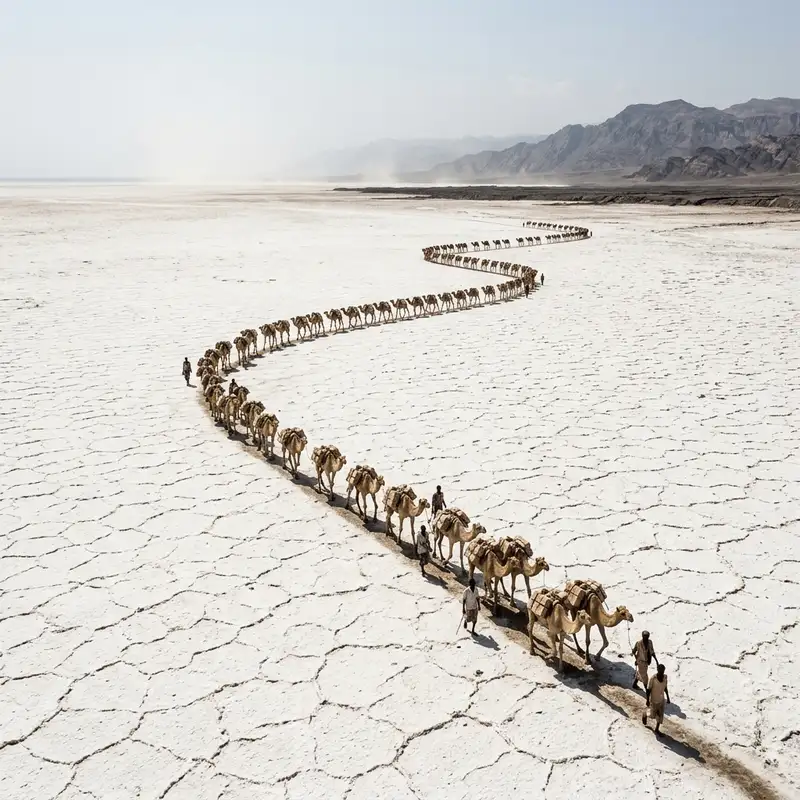
Seventy-five meters below sea level, where the Earth's skin puckers and weeps sulfuric tears, where the air shimmers with a heat that feels less like sunlight and more like the breath of a dragon, a rhythmic clink-clack cuts through the profound silence. It's the sound of a pickaxe striking rock, not gold, but a commodity infinitely more valuable in this landscape: salt. This isn't a museum or a curated cultural performance; this is the Danakil Depression, Ethiopia, a place often dubbed the 'Crucible of Creation' and, for me, the stage for an archaeological expedition not through ruins, but through living #history: the last independent salt caravans of the Afar people. My #journey, as always, began with a whispered rumor, a faint signal on the periphery of conventional #travel lore. While many venture to Danakil for the otherworldly Dallol sulfur springs or the fiery maw of Erta Ale volcano, my compass pointed deeper, towards the stark white plains where generations have carved out an existence from the very bedrock of the planet. I wasn't searching for geological wonders, but for the human story etched into the salt flats – an #ancient, arduous, and almost unbelievably resilient trade route on the verge of disappearing. The Lure of the Labyrinth: Why Salt? To understand the allure of this quest, one must first grasp the profound historical significance of salt. For millennia, before refrigeration and modern transport, salt was not merely a seasoning; it was currency, a preservative, a symbol of wealth and power. In Ethiopia, particularly, the Amhara heartland was entirely dependent on salt from the Afar lowlands, transforming this crystalline mineral into the very backbone of their economy. Blocks of salt, known as Amole, were once used as a form of money, traded for grains, tools, and textiles. The routes connecting the Danakil flats to the highlands were Ethiopia's arteries, pulsating with the tireless movement of caravans. Today, much of that trade has been supplanted by modern trucking and industrially mined salt. The romantic, perilous image of camels laden with sparkling white blocks, navigating merciless terrain under an unforgiving sun, has faded from common memory. Yet, in the most remote corners of the Afar region, a stubborn few continue this ancestral practice. They are the inheritors of an extraordinary legacy, guardians of a tradition that defies the logic of the modern world. It was this defiance, this deep-seated connection to an ancient way of life, that beckoned me. Gateway to the Underworld: Entering Afar Territory The journey to the salt flats begins not with a gentle descent but a jarring plunge. From the relative coolness of Mekele, the capital of Tigray, the landscape quickly transforms. The asphalt gives way to corrugated dirt tracks, then to no track at all, just a path woven between jagged volcanic rocks and sun-baked earth. The air, initially warm, steadily intensifies, pressing down with a tangible weight. Even the wind, when it came, felt hot, like a blast from an oven. Our convoy, a collection of battle-hardened 4x4s, was essential. This is not a journey for the faint of heart, nor for the unguided. The Afar region is #beautiful in its desolation, but it is also a land of tribal complexities and stark realities. Our guide, a seasoned Afar elder named Mohamud, with eyes that seemed to hold the wisdom of a hundred desert crossings, was not merely a navigator but a cultural bridge. He spoke of the land with an almost spiritual reverence, detailing its dangers – flash floods, extreme heat, and the ever-present threat of scarcity – with a calm resignation born of lifelong familiarity. Our first night was spent under a canopy of stars so bright they seemed to hum, the silence broken only by the distant calls of unseen creatures. The heat, even after sunset, was oppressive, leaching energy from bone and muscle. But it was also a cleansing heat, stripping away the superfluous, leaving only raw presence. It felt like standing at the threshold of a different epoch, a world where humanity's struggles against the elements were still direct, unmediated. Echoes of a Vanished #empire: Salt as Sustenance and Coin Before dawn, as the sky bled from charcoal to fiery orange, Mohamud recounted the history of salt. "Our ancestors," he began, gesturing towards the vast, featureless horizon, "they say the sea used to be here, many, many years ago. When it dried, it left us this gift." The 'gift' was a treasure that shaped empires. For centuries, the Abyssinian Empire relied heavily on Afar salt. The Amole currency, rectangular blocks painstakingly cut from the salt pan, facilitated trade across the Horn of Africa. Each block, standardized in size and weight, was a tangible piece of value, a testament to the labor and peril involved in its acquisition. This historical context deepened my appreciation for the modern salt harvesters. They are not merely laborers; they are unwitting participants in a millennia-old economic saga, their sweat linking them directly to the traders and warriors of forgotten kingdoms. The methods, Mohamud explained, have changed little over hundreds of years. The tools are rudimentary, the labor back-breaking, and the rewards, by modern standards, meager. Yet, the pride in their work, in continuing an inherited tradition, is immeasurable. The Afar Way: Guardians of the White Gold The Afar people are renowned for their fierce independence and their profound adaptation to one of Earth's harshest environments. Their society is structured around clan loyalties, a deep respect for elders, and an unparalleled understanding of their land. Living where the average daily temperature often exceeds 40°C (104°F) and can soar much higher, their resilience is legendary. They are nomads and pastoralists, their lives intertwined with their camel herds and, for some, the relentless rhythm of the salt flats. As we ventured deeper into the salt plains, the true scale of their endeavor became apparent. Miles upon miles of blinding white stretched in every direction, interrupted only by the occasional mirage shimmering on the horizon. Here, the temperature was a constant, searing presence. Water became the most precious commodity, and a single breakdown could mean catastrophe. Yet, amidst this extremity, life persisted. We saw nomadic settlements – temporary shelters of sticks and woven mats – where families lived, their children playing in the dust, seemingly oblivious to the inferno around them. These are the guardians of the 'White Gold,' a people whose very identity is forged by the landscape. Their traditional attire – light, flowing robes – is not merely cultural; it’s a vital protection against the sun. Their diets are adapted to the heat, their bodies lean and wiry, built for endurance. Their knowledge of the land, of where to find the best salt, the safest routes, the rare water sources, is encyclopedic – passed down orally through generations. Journey into the Salt Plains: Where Earth Meets the Sky in White After days of traversing volcanic fields and gravel plains, we finally reached the edge of the salt lake, or what remains of it. It’s less a lake and more an endless expanse of compacted, crystalline salt. The ground beneath our feet was hard, uneven, glittering under the merciless sun. It stretched to the horizon, a vast, flat mirror reflecting the blinding sky, the air above it vibrating with heat. This is where the magic, and the arduous labor, begins. Far in the distance, tiny specks appeared, growing larger to reveal groups of men, their figures silhouetted against the dazzling white. These were the salt cutters. They work in small teams, often families or clan members, their movements precise and practiced, honed over countless days under this punishing sun. Our arrival drew curious, but not unwelcoming, glances. Mohamud facilitated introductions, explaining my presence. There was no pretense, no performance. This was their life, unfolding naturally. Their faces, weathered by sun and wind, held a dignity that transcended their humble tools and back-breaking work.The Rhythm of the Pickaxe: A Symphony of Labor I spent hours watching them, mesmerized by the rhythm. First, a section of the salt pan is scored deeply with a long, heavy pole with a sharp metal tip, outlining future blocks. Then, using a broad-bladed pickaxe, they hack downwards, severing the blocks from the bed. The sound, clink-clack, clink-clack, was the only constant amidst the silence. It was a primal sound, a human heartbeat against the vast indifference of #nature. Each Amole block, roughly 4kg (8.8 lbs), requires immense effort to extract. Once cut, they are carefully pried up, then trimmed and smoothed with a small axe, transforming raw salt into a standardized, marketable commodity. The process is precise, requiring strength, skill, and an intuitive understanding of the salt's crystalline structure. The sun beats down relentlessly, reflecting off the white surface with blinding intensity. The air shimmers, distorting perception. Yet, they work on, their movements fluid and efficient, fueled by strong, sweet tea and an occasional piece of bread. The finished Amole blocks are stacked meticulously into pyramids, ready for the next stage: the arrival of the caravans. The men often work for days or even weeks on the flats, sleeping in makeshift shelters, their existence pared down to the essentials: water, food, and the relentless pursuit of salt. Caravans on the Horizon: The Journey Begins The most iconic image of the Danakil salt trade, and indeed of ancient commerce, is the camel caravan. And just as I was beginning to feel the deep fatigue of merely observing the labor, a distant, undulating line appeared on the horizon. It was a ghost from the past, made flesh: a camel caravan, slowly but steadily approaching. Hundreds of camels, strung together in long lines, their slow, deliberate gait perfectly suited for this terrain. Each camel would be loaded with approximately thirty Amole blocks, weighing around 120kg (265 lbs). This is their cargo, their entire livelihood. The camel drivers, often young men, walk alongside their animals for days, sometimes weeks, on a journey that would cripple lesser beings. Their routes twist and turn through searing plains and jagged mountains, avoiding bandits and finding the scarce water points. The destination is the highland markets, primarily towns like Berhale, where the salt is traded for other goods or cash. Watching the caravan arrive was like stepping into a living tableau. The air filled with the grunts of camels, the quiet commands of their drivers, and the excited chatter of the salt cutters. The process of loading is an art in itself: careful balance, secure knotting, ensuring the precious cargo is stable for the long march ahead. Each block is a testament to sweat and endurance, each loaded camel a moving symbol of an unbreakable tradition. Beyond the Horizon: The Future of a Legacy The salt trade, in its traditional form, is undeniably under threat. Modern transportation is faster, cheaper, and less physically demanding. Roads are slowly but surely encroaching, bringing trucks directly to the salt pans. The younger generation, understandably, looks towards easier livelihoods, drawn by the siren call of modernity. But for now, the caravans persist. They are a testament to the Afar people's deep cultural pride, their economic necessity, and perhaps, a quiet defiance against the relentless march of progress. There's a particular kind of stubborn beauty in witnessing such an ancient practice in an age of instant gratification. My journey to the Danakil salt flats was more than just an exploration of an extreme landscape; it was an immersion into a profound human story. It was a reminder that some of the most compelling narratives are not found in gilded museums or crowded monuments, but in the quiet, arduous lives of people who, against all odds, continue to honor their ancestors and their land. I left the Danakil with my skin baked, my clothes caked in salt dust, and my mind profoundly altered. The sheer scale of human endurance, the stark beauty of the landscape, and the quiet dignity of the Afar people etched themselves into my soul. This isn't just a place to visit; it's a profound experience, a living history lesson that reminds us of the fundamental human connection to the earth and the timeless value of labor. The clink-clack of the pickaxe, the distant rumble of the caravan, the pervasive shimmer of heat – these are the whispers of a white inferno, carrying echoes of a past that refuses to be forgotten. And in those whispers, I found a story far richer than any modern tale, a testament to the enduring human spirit against the backdrop of one of Earth's most formidable frontiers. #DanakilDepression #AfarSaltCaravans #EthiopianCulture #HiddenGems #ExtremeTravel #Travel #Culture Related InsightsRoadtrip durch den Schwarzwald 乌镇:梦回明清的水乡 Sun-Drenched Serenity vs. The Fjord’s Embrace: Choosing Between the Albanian Riviera and the Bay of Kotor{ "@context": "https://schema.org", "@type": "FAQPage", "mainEntity": [ { "@type": "Question", "name": "What is the main focus of The Crystal Spine of Afar: An Odyssey Through Ethiopia's Ancient Salt Routes?", "acceptedAnswer": { "@type": "Answer", "text": "Descend into Ethiopia's scorching Danakil Depression to witness the vanishing legacy of the Afar salt caravans, an ancient trade route clinging to life in one of Earth's most extreme environments." } }, { "@type": "Question", "name": "Who authored the comprehensive guide on The Crystal Spine of Afar: An Odyssey Through Ethiopia's Ancient Salt Routes?", "acceptedAnswer": { "@type": "Answer", "text": "This detailed article and its insights were carefully researched and authored by John Explorer." } }, { "@type": "Question", "name": "Where can I find more related content about Travel?", "acceptedAnswer": { "@type": "Answer", "text": "You can explore more articles, detailed reviews, and similar insights by browsing the Related Insights section at the bottom of this article or visiting our dedicated Travel category page." } } ] }
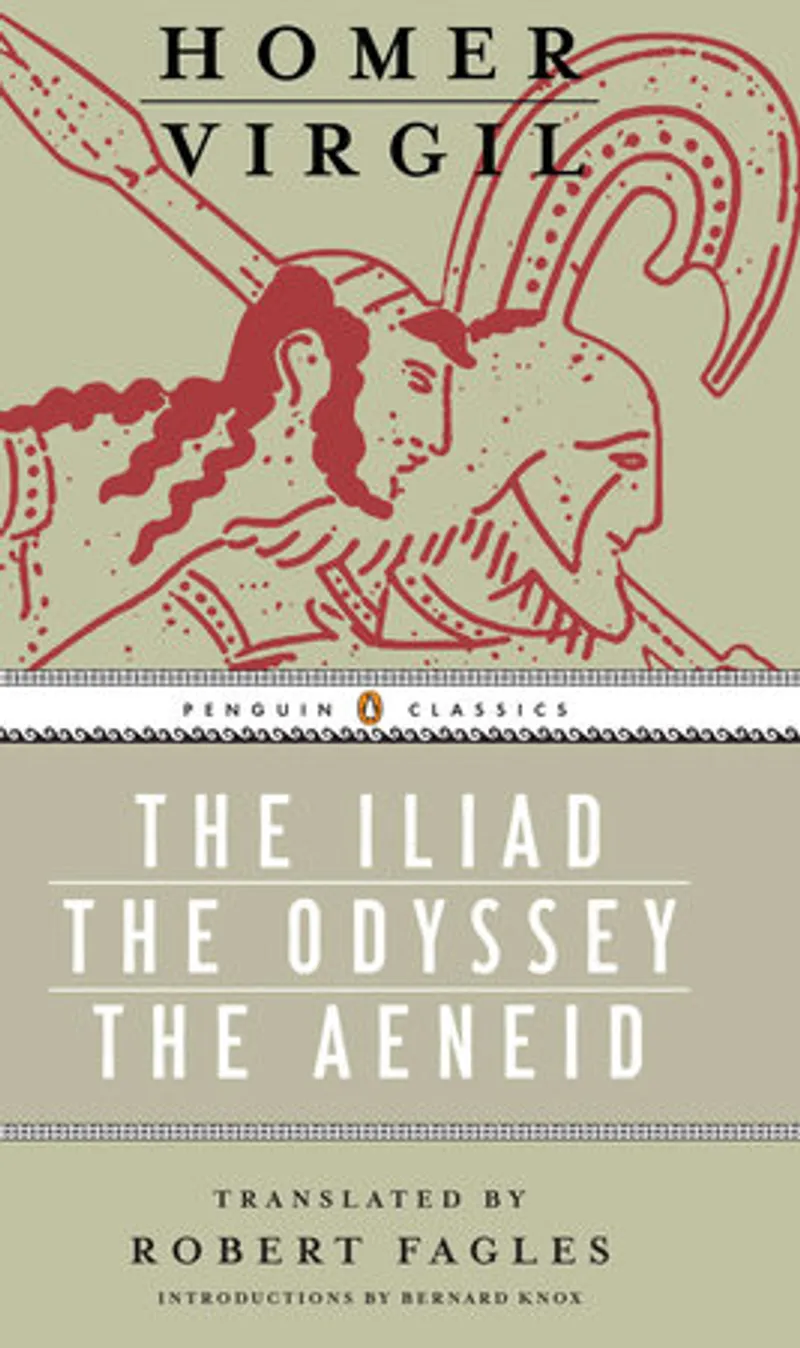
The Iliad, The Odyssey, and The Aeneid Box Set Author: VirgilPage Count: UnknownPublication Date: 2009-PRH The Iliad, The Odyssey, and The Aeneid Box Set, featuring Robert Fagles's award-winning translations, is a literary treasure that embodies the essence of Western literature. This exquisite collection brings together three epic poems that have shaped the course of human imagination and artistic expression. At the heart of this magnificent box set lies the masterful storytelling of Homer and Virgil, two of the greatest poets of the ancient world. Fagles's translations breathe new life into these timeless classics, infusing them with a freshness and vitality that resonates with modern readers. His interpretations are not mere renderings of the original texts but rather a deep understanding of the poets' visions, which he conveys with remarkable nuance and precision. The Iliad and The Odyssey, attributed to Homer, are foundational works of Western literature that explore the human condition in the face of war, loss, and the search for identity. The Iliad, with its focus on the Trojan War, delves into the complexities of honor, pride, and the devastating consequences of conflict. The Odyssey, on the other hand, follows the journey of Odysseus as he navigates the challenges of homecoming, confronting the darkness within himself and the world around him. Virgil's The Aeneid, written centuries later, is a profound meditation on the nature of empire, power, and the human experience. This epic poem tells the story of Aeneas, a Trojan hero who travels to Italy and becomes the ancestor of the Roman people. Through Aeneas's struggles and triumphs, Virgil explores the tensions between fate and free will, duty and desire, and the enduring legacy of Rome. Fagles's translations of these epic poems are characterized by their lyricism, clarity, and emotional depth. He captures the musicality of the original texts, conveying the rhythmic cadences and poetic flourishes that have made these works beloved for millennia. His language is both elegant and accessible, making these complex and nuanced poems feel approachable and engaging to readers who may be unfamiliar with the original texts. One of the most striking aspects of this box set is the way it highlights the connections and continuities between these three epic poems. Despite being written in different times and contexts, they share a common concern with the human condition, exploring fundamental questions about identity, morality, and the search for meaning. Through Fagles's translations, we can appreciate the ways in which these poems converse with one another, forming a rich and complex tapestry of ideas and emotions. The inclusion of Bernard Knox's introductions to each volume adds an additional layer of depth and insight to this collection. Knox's scholarship and expertise provide a valuable framework for understanding the historical and cultural contexts in which these poems were written, as well as their enduring relevance to contemporary readers. In conclusion, The Iliad, The Odyssey, and The Aeneid Box Set is a literary masterpiece that deserves to be cherished and celebrated. Fagles's translations are a triumph of scholarship and artistry, and this collection is a testament to the power of great literature to transcend time and touch our hearts and minds. Whether you are a seasoned classicist or a newcomer to these epic poems, this box set is an unforgettable reading experience that will leave you in awe of the beauty, wisdom, and timelessness of these ancient masterpieces. #TheIliad #TheOdyssey #TheAeneid #EpicPoetry #ClassicsReimagined #LiteraryMasterpieces Related InsightsAllegiant Book Review and Summary The Paris Files: A Novel Book Review and Summary A Breath of Snow and Ashes Book Review and Summary{ "@context": "https://schema.org", "@type": "FAQPage", "mainEntity": [ { "@type": "Question", "name": "What is the main focus of The Aeneid Book Review and Summary?", "acceptedAnswer": { "@type": "Answer", "text": "Everything you need to know about The Aeneid with our detailed review." } }, { "@type": "Question", "name": "Who authored the comprehensive guide on The Aeneid Book Review and Summary?", "acceptedAnswer": { "@type": "Answer", "text": "This detailed article and its insights were carefully researched and authored by Virgil." } }, { "@type": "Question", "name": "Where can I find more related content about Books?", "acceptedAnswer": { "@type": "Answer", "text": "You can explore more articles, detailed reviews, and similar insights by browsing the Related Insights section at the bottom of this article or visiting our dedicated Books category page." } } ] }

-
 Michael Chef
- 21 Jun, 2026 15:03
Steel-Cut Oats with Chia Seeds and Blueberries: A Delicious and Nutritious Breakfast Option
Introduction to Steel-Cut Oats with Chia Seeds and Blueberries In today's fast-paced world, it's easy to get caught up in the hustle and bustle of daily life and neglect our health and wellbeing. One of the simplest and most effective ways to prioritize our health is by starting the day with a nutritious breakfast. Steel-Cut Oats with Chia Seeds and Blueberries is a delicious and nutritious breakfast option that is rich in soluble fiber, antioxidants, and other essential nutrients. According to recent studies, a diet rich in soluble fiber can help lower cholesterol levels, regulate blood sugar levels, and even aid in weight management. Research on soluble fiber shows that it can also help promote the growth of beneficial gut bacteria, which is essential for a healthy immune system.Steel-cut oats are a type of oat that is less processed than rolled oats, which means they retain more of their natural fiber and nutrients. Chia seeds are a rich source of omega-3 fatty acids, protein, and fiber, making them a nutritional powerhouse. Blueberries are packed with antioxidants, vitamins, and minerals, and have been shown to have numerous health benefits, including reducing inflammation and improving memory. The Benefits of Soluble Fiber Soluble fiber is a type of dietary fiber that dissolves in water and forms a gel-like substance in the digestive system. It is found in foods such as oats, barley, fruits, and vegetables. According to a study published in the Journal of Nutrition, a diet rich in soluble fiber can help lower cholesterol levels by binding to bile acids and removing them from the body, which in turn reduces the amount of cholesterol produced in the liver. Research on soluble fiber also shows that it can help regulate blood sugar levels by slowing down the absorption of glucose into the bloodstream.In addition to its numerous health benefits, soluble fiber can also help promote the growth of beneficial gut bacteria. A study published in the Journal of Agricultural and Food Chemistry found that a diet rich in soluble fiber can help increase the production of short-chain fatty acids, which are produced by the gut bacteria and are used as energy by the cells in the colon. The Benefits of Antioxidants Antioxidants are compounds that help protect the body from damage caused by free radicals, which are unstable molecules that can damage cells and contribute to aging and disease. Blueberries are one of the richest sources of antioxidants, and have been shown to have numerous health benefits, including reducing inflammation and improving memory. According to a study published in the Journal of Neuroscience, antioxidants can help reduce the risk of age-related diseases such as Alzheimer's and Parkinson's.In addition to their numerous health benefits, antioxidants can also help protect the body from damage caused by environmental stressors such as pollution and UV radiation. A study published in the Journal of Investigative Dermatology found that antioxidants can help reduce the signs of aging, including fine lines and wrinkles, and improve skin elasticity. Recipe: Steel-Cut Oats with Chia Seeds and Blueberries Prep Time: 15 minutes Cook Time: 30 minutes Total Time: 45 minutes Ingredients:1 cup steel-cut oats 1/2 cup chia seeds 1 cup fresh or frozen blueberries 2 cups water or milk 1 tablespoon honey or maple syrup (optional)Instructions:Preheat oven to 375F. In a large pot, bring the water or milk to a boil. Add the steel-cut oats and reduce heat to low, simmering for 20-25 minutes or until the oats have absorbed most of the liquid and have a creamy consistency. In a small bowl, mix together the chia seeds and honey or maple syrup (if using). Stir the chia seed mixture into the cooked oats and top with fresh or frozen blueberries. Serve hot, garnished with additional blueberries and a sprinkle of chia seeds if desired.Conclusion Steel-Cut Oats with Chia Seeds and Blueberries is a delicious and nutritious breakfast option that is rich in soluble fiber, antioxidants, and other essential nutrients. According to recent studies, a diet rich in soluble fiber can help lower cholesterol levels, regulate blood sugar levels, and even aid in weight management. Research on soluble fiber shows that it can also help promote the growth of beneficial gut bacteria, which is essential for a healthy immune system.In addition to its numerous health benefits, this recipe is also easy to make and can be customized to suit your taste preferences. Whether you prefer your oats sweet or savory, there are countless ways to enjoy this nutritious breakfast option. So next time you're looking for a healthy and delicious breakfast idea, give Steel-Cut Oats with Chia Seeds and Blueberries a try! #HealthyLiving #Gastronomy #SolubleFiber #Antioxidants #BreakfastIdeas Related InsightsSip, Savor, and Swoon: The Art of French Wine and Cheese Pairings That Will Transport You to the Vineyards of Bordeaux Andean Superfoods Unveiled: The Alchemical Power of Quinoa, Kiwicha, and Canihua Dan Dan Noodles: The Ultimate Szechuan Street Bowl{ "@context": "https://schema.org", "@type": "FAQPage", "mainEntity": [ { "@type": "Question", "name": "What is the main focus of Steel-Cut Oats with Chia Seeds and Blueberries: A Delicious and Nutritious Breakfast Option?", "acceptedAnswer": { "@type": "Answer", "text": "Start your day with a nutritious and delicious breakfast option, Steel-Cut Oats with Chia Seeds and Blueberries, rich in soluble fiber and antioxidants." } }, { "@type": "Question", "name": "Who authored the comprehensive guide on Steel-Cut Oats with Chia Seeds and Blueberries: A Delicious and Nutritious Breakfast Option?", "acceptedAnswer": { "@type": "Answer", "text": "This detailed article and its insights were carefully researched and authored by Michael Chef." } }, { "@type": "Question", "name": "Where can I find more related content about Food?", "acceptedAnswer": { "@type": "Answer", "text": "You can explore more articles, detailed reviews, and similar insights by browsing the Related Insights section at the bottom of this article or visiting our dedicated Food category page." } } ] }


Yellowface Author: R. F. KuangPage Count: UnknownPublication Date: 2023-OL R.F. Kuang’s Yellowface is a literary Molotov cocktail disguised as a novel—sharp, acidic, and impossible to ignore. It detonates in your hands the moment you realize the narrator, June Hayward, is not just an unreliable guide through the cutthroat world of publishing but a villain straight out of a morality play. This is satire so biting it reads like truth serum, a first-person confession that forces you to confront the rot beneath the glitter of literary success. At its core, Yellowface is a dissection of cultural appropriation, but not the kind that unfolds in polite academic debates. Kuang weaponizes June’s voice—a white woman who weaponizes her own mediocrity by stealing the identity and labor of a dead Asian American author, Athena Liu. June doesn’t just misappropriate Athena’s story; she weaponizes it, rebranding herself as "Juniper Song," a pseudonymous genius of Asian American literature she neither is nor understands. The novel’s genius lies in how it forces the reader to inhabit June’s delusional self-justification. She doesn’t see herself as a thief; she sees herself as an artist who “deserves” the recognition Athena received simply by virtue of outlasting her. “Who wants stories about basic white girls?” June sneers, as if her whiteness isn’t the very foundation of the system that elevates her while Athena, brilliant and marginalized, is left behind. Kuang’s prose is a masterclass in toxic charm. June’s narration is a slurry of insecurity, entitlement, and performative wokeness, delivered in a voice that oscillates between self-pity and narcissism. She’s the kind of narrator who makes you cringe and laugh in the same breath because her delusions are so transparently human. When she recites hollow platitudes about diversity while exploiting Athena’s work, Kuang exposes the performative allyship that plagues literary circles. June doesn’t just want Athena’s book; she wants Athena’s identity, her trauma, her cultural capital—everything June herself lacks and resents. The horror isn’t just that June steals the work; it’s that she believes she’s entitled to it. The novel’s critique extends beyond individual malice to the systems that enable it. Publishing’s obsession with diversity is rendered as a grotesque farce. June’s publisher rebrands her with an “ambiguously ethnic” author photo, capitalizing on the demand for Asian American voices while sidelining the actual Asian American authors who created them. Kuang implicates not just June but the entire industry that rewards exploitation over integrity. The New York Times bestseller list isn’t a measure of merit; it’s a monument to June’s audacity, a monument built on stolen ground. What makes Yellowface so unsettling is its prescience. Kuang doesn’t need to exaggerate the publishing world’s hypocrisy because the real world already exceeds fiction. The novel’s social media subplot—a viral tweet about Athena’s stolen work—feels like a direct echo of real-life controversies where marginalized voices are erased by those who claim to amplify them. June’s panic isn’t just about losing her career; it’s about losing her carefully constructed identity as a “progressive” writer who gets to decide which stories are worthy of being told. Kuang’s style is deceptively accessible. The novel reads like a fever dream of viral tweets and backstage industry gossip, laced with June’s delusional inner monologue. It’s the kind of book you devour in one sitting, not because it’s comforting, but because it’s compulsively readable—like watching a car crash in slow motion while the driver insists they’re in control. Ultimately, Yellowface is a cautionary tale about the cost of unchecked entitlement. June isn’t a mustache-twirling villain; she’s a product of a system that rewards theft as long as the thief is charming enough. Kuang forces us to ask: Who gets to tell which stories? And more importantly, who decides? The answers aren’t pretty, but Yellowface doesn’t flinch. It’s a novel that will leave you questioning every book you’ve ever loved—and every author whose work you’ve uncritically celebrated. #Yellowface #BookTok #CulturalAppropriation #LiteraryFiction #PublishingIndustry #RFKuang Related InsightsSuch Charming Liars Book Review and Summary Boleyn Traitor Book Review and Summary Down Bad (The New Romantics, #2) Book Review and Summary{ "@context": "https://schema.org", "@type": "FAQPage", "mainEntity": [ { "@type": "Question", "name": "What is the main focus of Yellowface Book Review and Summary?", "acceptedAnswer": { "@type": "Answer", "text": "Everything you need to know about Yellowface with our detailed review." } }, { "@type": "Question", "name": "Who authored the comprehensive guide on Yellowface Book Review and Summary?", "acceptedAnswer": { "@type": "Answer", "text": "This detailed article and its insights were carefully researched and authored by Olya Shevchenko." } }, { "@type": "Question", "name": "Where can I find more related content about Books?", "acceptedAnswer": { "@type": "Answer", "text": "You can explore more articles, detailed reviews, and similar insights by browsing the Related Insights section at the bottom of this article or visiting our dedicated Books category page." } } ] }
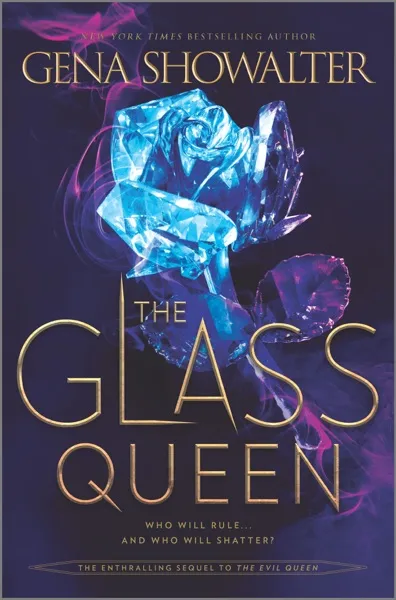

Glass Queen Author: Gena Showalter,Page Count: UnknownPublication Year: 2020-GB Glass Queen: A Dazzling, Dark Fantasy Where Power and Fragility Collide Gena Showalter’s Glass Queen (2020) is a glittering yet razor-sharp fantasy that blends the allure of high-stakes magic with the raw vulnerability of its protagonist. As a global bestseller, the novel cements Showalter’s reputation as a master of emotional, high-octane storytelling—a trait she wields with devastating precision in this tale of a woman who must shatter to rise. At its core, Glass Queen is a story about survival, identity, and the paradox of strength: the harder you fight to stay intact, the more likely you are to crack. The protagonist, Princess Adara, is a character carved from contradiction. She is the last in a bloodline of sorcerers who once ruled with unbreakable magic, now reduced to a fragile shell due to a curse that turns her bones to glass. Showalter’s genius lies in making Adara’s fragility her greatest weapon. Unlike the archetypal "chosen one" who wields power effortlessly, Adara’s magic is a double-edged sword—literally. Her every movement risks fracture, her every emotion a potential shatterpoint. This vulnerability isn’t just a plot device; it’s the emotional engine of the story, forcing readers to confront uncomfortable truths about resilience. What does it mean to be strong when your body is a liability? How much of yourself are you willing to break to save what’s left? Showalter’s prose is as polished as Adara’s cursed bones—sharp, vivid, and laced with a dark humor that cuts through the tension. Her writing thrives on contrasts: the opulence of courtly intrigue versus the grittiness of survival, the warmth of fleeting human connections against the cold calculations of power. The dialogue crackles with wit, particularly in the banter between Adara and her reluctant allies, whose loyalty is as precarious as the princess herself. Yet beneath the snark and spectacle, there’s a haunting melancholy. Showalter doesn’t shy away from exploring grief—whether it’s the loss of a kingdom, a loved one, or a version of oneself that no longer exists. The worldbuilding is equally compelling, though it serves primarily as a stage for Adara’s internal struggle. The kingdom of Iceanea, with its towering glass spires and treacherous politics, feels like a character in its own right—a frozen kingdom where beauty is as lethal as the blades in the dark. The magic system, rooted in bloodlines and curses, is inventive without being overly complex, allowing the focus to remain on Adara’s personal odyssey. Showalter excels at weaving personal stakes into larger conflicts, making the fate of a kingdom feel intimately tied to one woman’s fractured heart. What elevates Glass Queen beyond a mere fantasy romance is its refusal to offer easy answers. Adara’s journey isn’t about reclaiming her throne or mastering her magic—it’s about learning to exist in the in-between, where strength isn’t measured by unbreakability but by the courage to stay standing even when every step threatens to destroy you. The novel’s climax is a masterclass in emotional payoff, where victory isn’t celebrated with fanfare but with the quiet relief of a bruised survivor making it through another day. Showalter’s style is unmistakable: a blend of raw emotion and razor-sharp pacing, where every chapter feels like a duel—both external and internal. She doesn’t just tell a story; she immerses you in it, making you ache with Adara’s pain and cheer her on as she stumbles forward. Glass Queen is a testament to the idea that sometimes, the most powerful magic isn’t the kind that heals or destroys, but the kind that simply is—fragile, flawed, and fiercely alive. If you love dark fantasies that dig into the soul as much as they do into swordplay, if you’ve ever admired a heroine who’s as broken as she is brilliant, then Glass Queen is your next obsession. It’s a book that reminds you that even glass can reflect light—and that light is worth protecting, even if it means risking the cracks. #GlassQueen #DarkFantasy #GenaShowalter #FracturedHeroine #FantasyRomance #ShatterToRise Related InsightsBoy Who Cried Bear Book Review and Summary A Tree Grows in Brooklyn Book Review and Summary Camera Stays On Book Review and Summary{ "@context": "https://schema.org", "@type": "FAQPage", "mainEntity": [ { "@type": "Question", "name": "What is the main focus of Glass Queen Book Review and Summary?", "acceptedAnswer": { "@type": "Answer", "text": "Everything you need to know about Glass Queen with our detailed review." } }, { "@type": "Question", "name": "Who authored the comprehensive guide on Glass Queen Book Review and Summary?", "acceptedAnswer": { "@type": "Answer", "text": "This detailed article and its insights were carefully researched and authored by Antoine Leroy." } }, { "@type": "Question", "name": "Where can I find more related content about Books?", "acceptedAnswer": { "@type": "Answer", "text": "You can explore more articles, detailed reviews, and similar insights by browsing the Related Insights section at the bottom of this article or visiting our dedicated Books category page." } } ] }
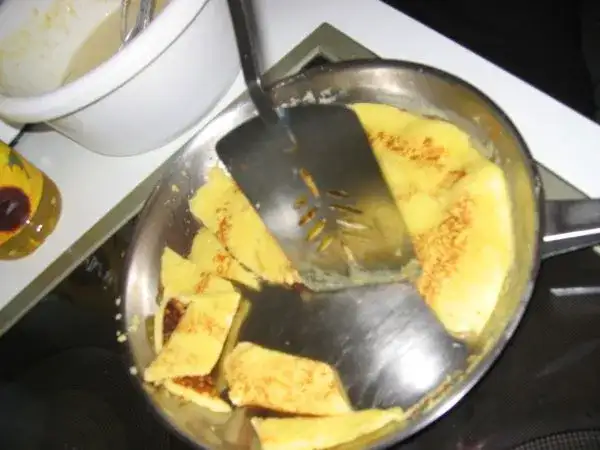
-
 Hans Müller
- 21 Jun, 2026 10:00
Der Kaiserschmarrn: Ein Meisterwerk aus zerrissenem Teig, kaiserlichen Legenden und purer Gemütlichkeit
Manche Gerichte sind weitaus mehr als nur eine bloße Ansammlung von Zutaten auf einem Teller. Sie sind essbare Poesie, gewobene Geschichten, Spiegelbilder einer ganzen Epoche und flüchtige Momente puren Glücks, die im Mund auf der Zunge zergehen. Wenn wir über die großen Monumente der österreichischen Küche sprechen, wandern unsere Gedanken unweigerlich zu den formvollendeten Klassikern: dem hauchdünn panierten Wiener Schnitzel, dem butterzarten Tafelspitz oder der majestätisch glänzenden Sachertorte. Doch es gibt ein Gericht, das sich durch seine herrliche Unordnung, seinen rustikalen, fast schon anarchischen Charme und seinen unvergleichlichen, tröstenden Geschmack von allen anderen abhebt. Es ist ein Gericht, das gleichermaßen in den prunkvollen, kristallkronleuchter-erhellten Speisesälen der Wiener Hofburg als auch in den rußgeschwärzten, holzgetäfelten Küchen der abgelegensten Alpenhütten zu Hause ist. Die Rede ist vom unangefochtenen König der Süßspeisen: dem Kaiserschmarrn. #Kaiserschmarrn #ÖsterreichischeKüche #KaiserschmarrnLiebe Dieses süße, fluffige, goldbraun karamellisierte und in unregelmäßige Stücke zerrissene Pfannkuchen-Dessert ist weitaus mehr als eine einfache Mahlzeit; es ist eine kulinarische Ikone und ein Stück gelebte Kulturgeschichte. Es ist ein Kunstwerk der bewussten Zerstörung. Der Kaiserschmarrn verkörpert die österreichische Seele auf eine Weise, die kaum ein anderes Gericht zu fassen vermag: Er vereint höchste kaiserliche Ansprüche mit der bodenständigen, fast schon rebellischen Gemütlichkeit des einfachen Volkes. Der Kaiserschmarrn ist der köstliche und lebende Beweis dafür, dass aus einem scheinbaren Fehler – einem beim Wenden unglücklich zerrissenen Teig – etwas entstehen kann, das so herausragend ist, dass es selbst einem Monarchen zur absoluten Ehre gereicht. In diesem umfassenden kulinarischen Essay begeben wir uns auf eine weitreichende Reise durch die Zeit. Wir wandeln durch die imperialen Küchen des k.u.k.-Reiches, spazieren über die ausgedehnten Jagdgründe der Habsburger und klettern hinauf in die verschneiten, windumtosten Gipfel der Alpen, um die Geheimnisse, Mythen und die handwerkliche Perfektion dieses einzigartigen Gerichts in all seinen Facetten zu ergründen. Wir werden die Etymologie seines kuriosen Namens erforschen, die historischen Anekdoten sezieren, die sich um seine Entstehung ranken, uns der puren Magie seiner Zutaten widmen und schließlich die tiefgründige Philosophie seiner perfekten Zubereitung beleuchten. #FoodHistory #Kulinarik #GenussReise Die etymologische Bedeutung: Was bitteschön ist überhaupt ein "Schmarrn"? Bevor wir tief in die feinen, süßen Nuancen des Geschmacks eintauchen können, müssen wir uns kurz mit der Linguistik befassen, denn der Name dieses Gerichts ist an sich schon ein literarisches Meisterwerk. Der Name "Kaiserschmarrn" ist ein herrliches, geradezu augenzwinkerndes Oxymoron – eine rhetorische Figur, bei der zwei sich scheinbar völlig widersprechende Begriffe untrennbar miteinander verbunden werden. Auf der einen Seite haben wir das Wort "Kaiser". Es ist der Inbegriff von Macht, Reichtum, strikter Ordnung, Hofprotokoll, Eleganz und vollendeter, unangreifbarer Form. Der Kaiser duldet keine Fehler. Auf der anderen Seite steht das Wort "Schmarrn". Im bairisch-österreichischen Dialekt ist ein "Schmarrn" (oder Schmarren) wörtlich übersetzt ein Unsinn, eine Kleinigkeit, etwas Minderwertiges oder auch ein völlig durcheinandergeratenes, chaotisches Zeug. Wenn ein Österreicher inbrünstig ausruft: "So ein Schmarrn!", dann meint er damit unmissverständlich, dass eine Aussage oder eine Situation absoluter Unsinn oder wertlos ist. Historisch betrachtet stammt der Begriff aus der einfachen ländlichen Küche und bezeichnete ursprünglich derbe, bäuerliche Speisen, die aus den billigsten Grundzutaten – Mehl, Schmalz, Milch und Eiern – in einer eisernen Pfanne zusammengerührt, hastig gebacken und dann achtlos zerrissen wurden. Es war oft eine schlichte Resteverwertung oder ein sättigendes, energiereiches Essen für hart arbeitende Holzknechte, Senner und Mägde. Wie konnte also ein solches "minderwertiges" bäuerliches Durcheinander plötzlich in den höchsten Adelsstand erhoben und mit dem Titel "Kaiser" gekrönt werden? Genau hier, an dieser faszinierenden Schnittstelle von bäuerlichem Alltag und aristokratischem Glanz, beginnt die Magie der österreichischen Geschichtsschreibung, oder besser gesagt, der kunstvollen Legendenbildung. #Dialekt #Wien #Sprachgeschichte #Austria Mythen und imperiale Legenden: Wie der einfache Schmarrn wahrhaft kaiserlich wurde Um die Entstehung und Namensgebung des Kaiserschmarrns ranken sich zahlreiche, teils widersprüchliche, aber stets liebevolle Anekdoten. Auch wenn ernste Lebensmittelhistoriker gerne nüchtern darauf hinweisen, dass das Gericht wohl lediglich eine stetige, schrittweise Verfeinerung älterer Bauernrezepte – wie etwa des Kaserschmarrns (Senner-Schmarrn) oder des Holzfällerschmarrns – durch die städtische Bourgeoisie darstellt, bevorzugt das Volk stets eine gute, romantische Geschichte. Und die Geschichten rund um den legendären Kaiser Franz Joseph I. (1830–1916) und seine ebenso berühmte, von Mythen umwobene Gemahlin Kaiserin Elisabeth, besser bekannt als Sisi, sind schlichtweg wunderbares Erzählgut. #KaiserFranzJoseph #Habsburger #WienHistory Legende 1: Die figurbewusste und diätende Kaiserin Sisi Die wohl bekannteste, charmanteste und am häufigsten erzählte Geschichte dreht sich um die nahezu manische Besessenheit der Kaiserin Elisabeth mit ihrer schlanken Linie und ihrem Aussehen. Sisi war europaweit berühmt (und am Wiener Hof berüchtigt) für ihre rigorosen Diäten, ihre stundenlangen, erschöpfenden Turnübungen an Ringen und Reck sowie ihre extremen, tollkühnen Reitjagden. Ihre Wespentaille war ein Politikum. Der arme Hofkoch Leopold (oder je nach Erzählung ein anderer bemitleidenswerter Patissier) stand folglich vor der täglichen, schier unlösbaren Herausforderung, Desserts zu kreieren, die exquisit genug für eine Kaiserin waren, aber leicht genug, um ihren strengen diätetischen Anforderungen zu genügen. Eines Tages versuchte der Koch, einen besonders luftigen, leichten Pfannkuchenteig zu kreieren, der fast nur aus Luft und wenig Kalorien bestehen sollte. Doch in der schweren Pfanne misslang ihm aufgrund des heiklen Teigs das Wenden; der Pfannkuchen riss in unansehnliche Stücke und sah auf dem edlen Porzellanteller wenig majestätisch, ja geradezu chaotisch aus. Als dieses "verunglückte" Dessert am kaiserlichen Tisch serviert wurde, verschmähte Sisi die zerrissene Mehlspeise mit einem einzigen kritischen Blick. Sie erschien ihr zudem, trotz aller Bemühungen des Koches, immer noch viel zu reichhaltig. Kaiser Franz Joseph hingegen, der für seinen eher rustikalen, bodenständigen und pragmatischen Appetit bekannt war (sein absolutes Lieblingsgericht war der gekochte Tafelspitz mit Schnittlauchsauce), sah die Verschwendung nicht gern. Er schob den Teller seiner grazilen Frau kurzerhand zu sich hinüber, schnappte sich entschlossen eine silberne Gabel und soll mit einem Schmunzeln gesagt haben: "Na geb' er mir halt den Schmarrn her, den unser Leopold da wieder z'sammenkocht hat." Dem Kaiser schmeckte die fluffige, süße, zerrissene Kreation derart vorzüglich, dass er Nachschlag verlangte. Von diesem legendären Tag an wurde das Gericht stolz "Kaiserschmarrn" genannt und fand fortan als eines der Lieblingsdesserts des Monarchen festen Eingang in den kaiserlichen Speiseplan. #Sisi #EmpressElisabeth #Kaiserpalast Legende 2: Der verzweifelte Senner und die kaiserliche Jagd Eine andere, nicht minder populäre und sehr stimmungsvolle Geschichte spielt fernab des strengen Wiener Hofzeremoniells, inmitten der idyllischen, wilden Alpen. Kaiser Franz Joseph war Zeit seines Lebens ein passionierter, fast schon besessener Jäger, der Wochen in den Bergen verbrachte. Während eines seiner ausgedehnten Jagdausflüge im rauen Salzkammergut geriet er samt seinem Gefolge in ein schweres, plötzliches Unwetter. Völlig durchnässt und durchgefroren suchte der Monarch Zuflucht in einer extrem bescheidenen, abgelegenen Almhütte. Der einfache Senner (Almbauer), der dort oben den Sommer über das Vieh hütete, erkannte den hohen, kaiserlichen Besuch sofort und war vollkommen überfordert, ja geradezu in Panik. Er hatte absolut keine standesgemäßen Zutaten, kein feines Fleisch und keine teuren Gewürze, um dem Herrscher eines Weltreiches ein festliches Mahl zuzubereiten. In seiner schieren Not nahm er das Beste und Einzige, was er zur Verfügung hatte: frische, dottergelbe Eier seiner Hühner, fette, rahmige Alpenmilch, etwas Mehl aus dem Vorrat und eine kleine, kostbare Handvoll Rosinen. Er bereitete im Grunde einen einfachen Holzfällerschmarrn zu, verfeinerte ihn jedoch in einem Akt der Verzweiflung mit deutlich mehr Eiern als üblich, um ihn irgendwie "luxuriöser" zu machen. Beim Wenden in der schweren, pechschwarzen Eisenpfanne über dem offenen Feuer riss der empfindliche Teig prompt in Stücke. Verzweifelt über sein vermeintliches Versagen versuchte der Senner, seinen groben Fehler optisch zu vertuschen, indem er Unmengen an kostbarem Puderzucker (den er für Notfälle hortete) wie frischen Schnee über das Gericht stäubte und es zitternd mit etwas selbst eingemachtem Pflaumenkompott servierte. Der Kaiser, der nach der anstrengenden Jagd und dem Unwetter schlichtweg bärenhungrig war, war von dem heißen, süßen, rustikalen Gericht derart begeistert, dass er den Bauern lobte und es fortan als "seinen" Schmarrn deklarierte. Der "Kaser-Schmarrn" (Senner-Schmarrn) wurde so durch einen simplen dialektalen Hörfehler zum "Kaiser-Schmarrn". #Alpen #Jagd #Salzkammergut #Hüttenzauber Legende 3: Der verunglückte Kaiserpalatschinken Eine dritte, eher bürgerlich-pragmatische Variante behauptet schlicht, dass der heutige Kaiserschmarrn ursprünglich als "Kaiserpalatschinken" gedacht war – ein besonders dicker, reichhaltiger und meisterhaft gefüllter Pfannkuchen. Doch dem gestressten Küchenpersonal passierte in der Hektik des Hoflebens ein irreparables Missgeschick: Der üppige Teig war viel zu dick geraten, buk nicht richtig durch und riss beim ungeschickten Wenden jämmerlich in ungleiche Stücke. Um das kostbare Gericht voller teurer Eier und Butter nicht wegwerfen zu müssen (was selbst am Hofe ungern gesehen war), erfand der clevere Maitre d'hôtel kurzerhand den charmanten Namen "Kaiserschmarrn", bestreute die Trümmer mit Zucker und verkaufte den groben Fehler dem Kaiser als absichtliche, brandneue kulinarische Raffinesse. Egal welcher dieser charmanten Legenden man nun den Vorzug geben mag, sie alle illustrieren eine tiefe und zentrale Wahrheit über den Kaiserschmarrn: Er ist ein Gericht, das die ultimative Perfektion in der vermeintlichen Unvollkommenheit findet. #PerfekteUnvollkommenheit #Mythos Die Anatomie eines Meisterwerks: Die Magie der puren Zutaten Ein wirklich herausragender Kaiserschmarrn besteht aus erschreckend wenigen, geradezu banalen Zutaten. Doch lassen Sie sich nicht täuschen: Genau in dieser Schlichtheit liegt die größte Gefahr und die häufigste Fehlerquelle. Wenn man nur eine Handvoll Komponenten hat, muss die Qualität jeder einzelnen absolut kompromisslos und herausragend sein. Ein Kaiserschmarrn verzeiht niemals minderwertige Produkte, alte Eier oder wässrige Milch. Er ist ein Spiegelbild seiner Bestandteile. #Backen #Rezeptgeheimnis #QualitätDie Eier: Sie sind das pochende Herzschlagvolumen des Teigs. In der traditionellen und einzig wahren Zubereitung werden die Eier sorgfältig getrennt. Das Eigelb sorgt in Verbindung mit der Milch für die cremige, vollmundige Reichhaltigkeit und die Bindung. Das Eiweiß jedoch, das mit einer Prise Salz zu strahlend weißem, extrem steifem Eischnee geschlagen wird, ist das eigentliche Geheimnis. Es verleiht dem Teig seine charakteristische, wolkenartige Leichtigkeit und sorgt dafür, dass er beim Backen in der Pfanne wie ein Soufflé aufgeht. Nur absolut frische Eier von freilaufenden Hühnern, am besten mit einem kräftigen, orangefarbenen Dotter, verleihen dem fertigen Schmarrn jene leuchtend gelbe, appetitliche Farbe, die das Auge so erfreut.Das Mehl: In Österreich schwört jede Großmutter auf sogenanntes "griffiges" Mehl (in Deutschland am ehesten mit einem Weizenmehl Type 405 bis 550 vergleichbar, das jedoch eine spürbar gröbere Mahlung aufweist und sich zwischen den Fingern leicht sandig anfühlt). Griffiges Mehl nimmt die zugeführte Flüssigkeit wesentlich langsamer und gleichmäßiger auf als das feine, "glatte" Mehl. Dies sorgt dafür, dass der Teig stabil bleibt, eine wunderbare Struktur entwickelt, aber beim Backen niemals klebrig, zäh oder gummiartig wird. Manche extrem ambitionierten Feinschmecker mischen das Mehl auch mit einem kleinen Anteil Maisstärke oder feinem Grieß, um noch mehr Textur und einen feinen Biss zu erhalten.Die Milch: Hier ist nur Vollmilch, ungeschönt, frisch und fettreich (mindestens 3,5% Fett, gerne mehr) zulässig. Sie verbindet Mehl und Eigelb zu einem seidigen, fließenden Teig. Wer gerne experimentiert und die Grenzen des Fluffigen ausloten möchte, tauscht einen kleinen Teil der Milch gegen flüssige Sahne aus, was den Geschmack intensiviert. Ein anderer, uralter und viel gepriesener Großmutter-Trick ist es, kurz vor dem Unterheben des Eischnees einen kräftigen Schuss stark kohlensäurehaltiges Mineralwasser in den Teig zu rühren. Die aufsteigenden Kohlensäurebläschen wirken wie ein natürliches Triebmittel und machen den Teig geradezu unverschämt luftig.Die Butter: Hier darf unter keinen Umständen gespart werden. Margarine oder Pflanzenöl haben in der Nähe eines Kaiserschmarrns Hausverbot. Ein Kaiserschmarrn wird nicht einfach in Butter gebacken, er wird in reichlich geschmolzener, leicht nussig duftender, bräunender Butter geradezu gebadet und frittiert. Die heiße Butter umschließt den Teig, gibt ihm die unwiderstehlich goldbraune Kruste, schützt das Innere vor dem Austrocknen und verleiht dem Gericht seinen unverwechselbaren, vollmundig-dekadenten Geschmack. Die Maillard-Reaktion – das chemische Bräunen von Proteinen und Zuckern bei Hitze – findet hier in absoluter Vollendung statt.Der Zucker und das Salz: Eine Prise feines Salz ist essenziell und absolut unverzichtbar! Ohne Salz schmeckt der Schmarrn flach und eindimensional. Das Salz hebt die feine Süße erst richtig hervor und balanciert sie aus. Der Teig selbst sollte im Inneren gar nicht übermäßig süß sein. Die wahre, explosive Süße kommt erst viel später, ganz am Ende des Prozesses, durch das kräftige Karamellisieren in der Pfanne und das abschließende Bestäuben mit Puderzucker.Die Rum-Rosinen – Die Mutter aller kulinarischen Kontroversen: Nichts spaltet die österreichische Gesellschaft, zerbricht Freundschaften und entzweit Familien an den Sonntagnachmittagen so sehr wie die existenzielle Frage: Gehören Rosinen in den Kaiserschmarrn oder nicht? Für die strengen Traditionalisten und Puristen sind sie absolut unverzichtbar. Vor der eigentlichen Zubereitung müssen gute, pralle Rosinen stundenlang, im allerbesten Fall sogar über Nacht, in echtem österreichischen Inländer-Rum eingeweicht werden. Inländer-Rum ist eine österreichische Spezialität, ein sehr aromatischer, kräftiger, nach Gewürzen duftender Rum-Ersatz, der zur k.u.k.-Zeit populär wurde, als echter Übersee-Rum unerschwinglich war. Die Rosinen saugen sich voll, platzen fast auf und werden im heißen Teig zu kleinen, feuchten, alkoholgeschwängerten Geschmacksexplosionen. Für die passionierten Rosinenhasser hingegen sind diese kleinen dunklen Früchte ein absolutes, unentschuldbares Sakrileg, das die weiche Textur des Teiges ruiniert. Eine salomonische, friedensstiftende Lösung in vielen modernen Wiener Restaurants ist es mittlerweile, die Rosinen aus dem Teig zu verbannen und stattdessen ein kleines, edles Porzellanschälchen mit den Rum-Rosinen separat dazu zu servieren. #InländerRum #RosinenLiebe #FoodDebate #ZutatenDie Philosophie der Zubereitung: Ein choreografierter Akt am Herd Die perfekte Zubereitung eines echten Kaiserschmarrns ist kein Kochen; es ist eine Choreografie. Sie erfordert Geduld, höchste Intuition, das richtige Timing und nicht zuletzt ein wenig Mut zur Hitze. Es ist ein Gericht, das sich der industriellen Vorproduktion entzieht. Man kann ihn nicht vorbereiten und lieblos in der Mikrowelle aufwärmen – das resultiert in einem zähen Trauerspiel. Ein Kaiserschmarrn ist ein Live-Act am Herd, der erst im Moment der Bestellung beginnt. Akt 1: Die schaumige Basis Zuerst wird das Eiklar mit einer mutigen Prise Salz und ein bis zwei Esslöffeln feinem Kristallzucker in einer sauberen Schüssel mit dem Schneebesen (oder dem Mixer) zu einem feinen, festen, schneeweißen, glänzenden Eischnee geschlagen. In einer zweiten, großen Schüssel werden die fetten Eigelbe, die Milch, das Mehl und ein Hauch von echter, ausgekratzter Bourbon-Vanilleschote (Niemals, wirklich niemals billiges, künstliches Vanillin aus dem Tütchen verwenden!) zu einem glatten, leicht dickflüssigen Teig verrührt, bis keine Klümpchen mehr zu sehen sind. Dann kommt der heiligste, entscheidendste Moment der gesamten Zubereitung: Das Unterheben des Eischnees. Ein Drittel des Schnees wird zügig eingerührt, um den zähen Teig aufzulockern. Die restlichen zwei Drittel werden dann mit einem Spatel oder einem Kochlöffel in großen, langsamen, fast schon zärtlichen Bewegungen unter die Masse gehoben. Dies muss mit größter Behutsamkeit geschehen, um die mühsam eingeschlagenen, feinen Luftbläschen, die später für die begehrte Fluffigkeit sorgen, nicht rücksichtslos zu zerstören. Der Teig darf nicht mehr wild gerührt werden; er soll wolkig und durchzogen bleiben. Akt 2: Das Braten und das Warten Eine große, schwere Gusspfanne oder eine beschichtete Pfanne mit sehr dickem Boden wird auf dem Herd erhitzt. Reichlich Butter (denken Sie an ein großes Stück, und dann fügen Sie noch ein bisschen mehr hinzu) wird darin sanft aufgeschäumt, bis sie beginnt, leicht nussig zu duften. Der luftige Teig wird behutsam in die Pfanne gegossen – er sollte mindestens ein bis zwei Zentimeter, bei echten Profis sogar noch höher stehen. Wenn man sich auf die Seite der Rosinenliebhaber geschlagen hat, ist nun der exakte Zeitpunkt gekommen, die rumgetränkten Rosinen gleichmäßig über den noch nassen, flüssigen Teig zu streuen, damit sie einsinken, aber nicht am heißen Pfannenboden verbrennen. Jetzt heißt es: Ruhe bewahren, Warten und die Temperatur exakt regulieren. Die Hitze darf auf keinen Fall zu hoch sein, sonst verbrennt der zuckerhaltige Boden augenblicklich zu einer schwarzen, bitteren Kruste, während das Innere noch roh und flüssig wie Wasser ist. Ist die Hitze zu niedrig, saugt sich der Teig mit der Butter voll und wird schwer und fettig. Bei mittlerer, konstanter Hitze lässt man den gigantischen Pfannkuchen in Ruhe backen, bis die Unterseite eine herrlich knusprige, tief goldbraune Kruste gebildet hat und der Teig an der Oberfläche langsam beginnt, Blasen zu werfen und matt zu werden. Akt 3: Die bewusste Zerstörung Dann folgt der wagemutige, spektakuläre Teil, an dem sich die Meister von den Amateuren scheiden: Das Wenden. Man kann versuchen, den gesamten, schweren Teigfladen mutig am Stück in der Luft zu wenden – was eine gewisse akrobatische turnerische Fähigkeit, ein starkes Handgelenk und eine große Portion Glück erfordert. Praktikabler und weitaus weniger nervenaufreibend ist es, den Fladen vorab in der Pfanne mit dem Pfannenwender kreuzweise in vier Viertel zu teilen und diese Viertel schnell und präzise einzeln zu wenden. Und hier kommt die entspannende psychologische Komponente des Gerichts ins Spiel: Wenn der Teig beim Wenden ohnehin bricht oder einreißt, ist das absolut kein Grund zur Panik. Schließlich wird er im nächsten Schritt ohnehin gnadenlos zerstört. Der Druck der Perfektion fällt ab. Sobald auch die zweite Seite fest und goldbraun angebacken ist, greift der Koch (oder die Köchin) zu zwei großen Gabeln. Mit flinken, reißenden Bewegungen wird der dicke Pfannkuchen noch in der Pfanne in unregelmäßige, mundgerechte Stücke zerrissen. Die eiserne Regel lautet: Niemals schneiden! Der Teig darf nicht mit einem Messer in exakte Quadrate zerteilt werden. Das Zerreißen ist essenziell, denn nur dadurch entstehen raue, ausgefranste, ungleichmäßige Ränder an den Teigstücken. Genau diese rauen Ränder sind das Geheimnis, denn sie bieten im nächsten und letzten Schritt eine viel größere Oberfläche und die perfekte Angriffsfläche für das flüssige Karamell. Akt 4: Das Karamellisieren Man streut nun großzügig ein bis zwei Esslöffel Kristallzucker über die wilden Schmarrnstücke in der heißen Pfanne und fügt zwingend noch ein kleines, eiskaltes Stückchen Butter hinzu. Die Hitze wird leicht erhöht, und man schwenkt die Pfanne rhythmisch durch. Der Zucker schmilzt sofort zischend in der Butter, karamellisiert zu einem braunen Sirup und legt sich wie ein hauchdünner, glänzender, süßer und knuspriger Mantel um die luftigen, vanilligen Teigstücke. Dieses Karamellisieren sorgt für den unglaublichen "Crunch" beim Reinbeißen, gefolgt von der wolkigen Weichheit im Inneren. Eine dicke Schicht Puderzucker (Staubzucker) wird am Ende durch ein feines Sieb darüber gestäubt und verwandelt das Gericht optisch in eine tief verschneite, winterliche Alpenlandschaft. Das Meisterwerk ist vollbracht. #Karamellisieren #PfannenGott #KochenMitLiebe #MaillardReaction Die treuen Begleiter: Ohne das richtige Kompott geht gar nichts Ein gut gemachter Kaiserschmarrn mag für sich allein schon himmlisch und ausreichend sein, aber erst die traditionellen Beilagen erheben ihn endgültig in den unantastbaren Olymp der globalen Desserts. Der reichhaltige, in Butter gebackene, süße Teig verlangt zwingend nach einem Gegenspieler. Er braucht eine fruchtige, leicht säuerliche Komponente, um der süßen Schwere des Karamells und der Eier etwas Erfrischendes entgegenzusetzen. Ohne Beilage ermüdet der Gaumen schnell. Der majestätische Zwetschgenröster: Er ist ohne Zweifel der absolute, unangefochtene König unter den Beilagen und in Wien quasi gesetzlich vorgeschrieben. Ein Zwetschgenröster ist nicht einfach nur ein banales Pflaumenkompott. Der feine, aber entscheidende Unterschied liegt im Wort "Röster". Im Gegensatz zu normalem Kompott, bei dem die Früchte lieblos in viel Flüssigkeit totgekocht werden, werden die aufgeschnittenen, reifen Zwetschgen (Pflaumen) für den Röster im eigenen Saft eingekocht. Dies geschieht oft im Backofen oder auf dem Herd mit sehr wenig Wasser, dafür mit viel Zucker, ganzen Zimtstangen, Nelken, etwas abgeriebener Zitronenschale und sehr oft einem kräftigen Schuss Rotwein oder Rum. Sie werden langsam eingekocht, ja fast schon geröstet. Die Früchte behalten dabei ihre Form, ihre Haut wird zart, und die Flüssigkeit reduziert sich zu einem dicken, dunklen, extrem aromatischen Sirup. Die herbstliche, tiefgründige, leicht herbe Tiefe dieses Zwetschgenrösters in Kombination mit dem heißen, süßen, vanilligen Schmarrn ist eine kulinarische Offenbarung, die ihresgleichen sucht. #Zwetschgenröster #Pflaumenliebe Das tröstende Apfelmus: Die wohl beliebteste und am weitesten verbreitete Alternative zum Zwetschgenröster, besonders bei Kindern und im Westen Österreichs, ist frisches, stückiges Apfelmus. Ein leicht säuerliches Apfelmus aus aromatischen Sorten wie Boskoop, Elstar oder Kronprinz Rudolf, verfeinert mit einer starken Prise Zimt und vielleicht etwas Zitronensaft, harmoniert fantastisch mit dem schweren Gericht und verleiht ihm eine erfrischende, helle Leichtigkeit. Die herben Preiselbeeren: In vielen alpinen Regionen, besonders in Tirol und im Salzburger Land, schwört man auf einen ordentlichen, tiefroten Klecks eingemachter Preiselbeeren (Moosbeeren). Ihre scharfe, herbe, waldige Säure durchschneidet das süße Fett des Schmarrns messerscharf und sorgt für einen faszinierenden, fast schon erwachsenen Kontrast am Gaumen. Oft werden auch frische Blaubeeren (Schwarzbeeren) im Sommer direkt unter den Teig gemischt. #Apfelmus #Preiselbeeren #Traditionsküche Eine Reise über die Grenzen: Die internationale Verwandtschaft des Schmarrns Das historische österreichisch-ungarische Reich (die k.u.k. Monarchie) war ein gewaltiger, brodelnder Schmelztiegel der unterschiedlichsten Kulturen, Sprachen und vor allem der Küchen. Rezepte reisten von Wien nach Budapest, von Prag nach Triest. So ist es überhaupt nicht verwunderlich, dass der Kaiserschmarrn rasch über die Grenzen des heutigen, kleinen Österreichs hinaus extrem populär wurde und in den verschiedenen Ländern faszinierende, regionale Adaptionen erlebte. In Ungarn, der stolzen zweiten Hälfte der Doppelmonarchie, liebt und verehrt man den Császármorzsa (was wörtlich übersetzt Kaiser-Krümel bedeutet). Im Gegensatz zur Wiener Variante wird der ungarische Teig oft nicht nur aus einfachem Weizenmehl, sondern zu einem sehr großen Teil oder sogar vollständig aus Grieß (Weizengrieß) hergestellt. Dadurch wird die Textur des Gerichts deutlich grobkörniger, bissfester und erinnert fast an einen zerrissenen Grießauflauf. Er wird dort ebenfalls mit viel Puderzucker bestreut und sehr oft mit selbstgemachter Aprikosenmarmelade (Baracklekvár) serviert – Aprikosen sind schließlich eine weitere unverzichtbare Säule der pannonischen Süßspeisenküche. In Tschechien, das ebenfalls stark von der böhmischen und Wiener Küche beeinflusst ist (die eigentlich oft identisch sind), ist das Gericht als Trhanec (von "trhat", was reißen bedeutet) bestens bekannt. Hier findet man nicht selten ländliche Varianten, die zur Verfeinerung und für zusätzlichen Crunch reichlich mit Nüssen oder Mandelsplittern versehen werden. Im benachbarten Slowenien erfreut sich der Šmorn bis heute riesiger Beliebtheit, besonders in den Bergregionen. Oft wird er dort nicht als reines Dessert, sondern als äußerst sättigendes Hauptgericht gegessen. Manchmal wird er sogar mit herzhaften, salzigen Zutaten gestreckt oder direkt mit frischen Beerenfrüchten im Teig in der Pfanne gebacken. Auch im angrenzenden deutschen Bundesland Bayern, das kulturell und kulinarisch eng mit Österreich verwandt ist, ist der Kaiserschmarrn fester Bestandteil der rustikalen Wirtshauskultur. Dies beweist eindrucksvoll, dass wahre kulinarische Genüsse keine künstlichen politischen Grenzen oder Zollschranken kennen. Die Bayern servieren ihn ähnlich wie die Tiroler am liebsten extrem deftig, direkt in der heißen, rußigen eisernen Pfanne, schonungslos karamellisiert auf dem rustikalen Holztisch des Biergartens. #KuKMonarchie #EuropaKocht #Bayern #Hungary #Slovenia Die emotionale und kulturelle Komponente: Weitaus mehr als nur ein Rezept Letztendlich gibt es Gerichte, die man isst, um schlichtweg Kalorien aufzunehmen und satt zu werden. Und dann gibt es Gerichte, die man isst, um sich geborgen zu fühlen, um sich an die Kindheit zu erinnern oder um sich selbst zu feiern. Der Kaiserschmarrn gehört zweifellos, ja vielleicht als Paradebeispiel, in letztere Kategorie. Er ist das ultimative, ur-europäische "Comfort Food". Stellen Sie sich folgende Szene lebhaft vor: Sie haben den gesamten Vormittag damit verbracht, einen extrem steilen, felsigen alpinen Wanderweg hinaufzuklettern. Ihre Beine sind bleischwer und müde, die Bergluft auf 2.000 Metern Höhe ist dünn und der Wind weht eisig kalt um Ihre Ohren. Plötzlich, wenn Sie glauben, nicht mehr weitergehen zu können, taucht hinter der nächsten schneebedeckten Biegung eine kleine, von der Sonne verwitterte, dunkle Holzhütte auf. Aus dem gemauerten Schornstein steigt ein feiner, nach Kiefernholz und Harz duftender Rauch auf. Sie treten ein in die gemütliche, mollig warme Stube, lassen sich völlig erschöpft auf eine knarzende Holzbank neben dem Kachelofen fallen und bestellen mit letzter Kraft einen Kaiserschmarrn. Eine gute halbe Stunde später – so lange dauert es eben zwingend, wenn er ehrlich und frisch in der Pfanne gemacht wird – stellt der wortkarge, aber freundliche Wirt eine schwere, brennend heiße gusseiserne Pfanne direkt vor Sie auf den Tisch. Der gezupfte Teig dampft noch, der Puderzucker schmilzt langsam auf der braunen Kruste, und der intensive Geruch von karamellisierter Butter, geröstetem Zucker und Rum erfüllt in Sekundenschnelle den gesamten Raum. Wenn Sie nun die Gabel in das erste weiche, knusprige Stück stechen, es durch das kalte Apfelmus ziehen und in den Mund stecken – in diesem exakten Moment gibt es auf der ganzen weiten Welt nichts Besseres, nichts Tröstlicheres, nichts Perfekteres als diesen zerrissenen Pfannkuchen. Er füllt nicht nur den leeren Magen auf sensationelle Weise, er streichelt die Seele und lässt alle Anstrengung vergessen. Dies ist der unumstößliche Grund, warum der Kaiserschmarrn so unglaublich tief und unsterblich in der alpinen Folklore und der Identität der Berge verwurzelt ist. Er ist die ultimative, süße Belohnung für körperliche Entbehrung. #AlpenLiebe #HüttenGaudi #WandernUndSchlemmen Doch die Magie dieses Gerichts ist universell; man muss nicht zwingend auf 2.000 Metern Höhe sein, um ihn tiefgreifend zu genießen. Auch in den weltberühmten, eleganten Wiener Kaffeehäusern – sei es im prunkvollen Café Central mit seinen Gewölben, im altehrwürdigen Café Sperl oder beim ehemaligen k.u.k. Hofzuckerbäcker Demel – wird der Kaiserschmarrn zelebriert, allerdings mit einer fast schon arroganten Eleganz. Hier wird er nicht in der Pfanne, sondern auf allerfeinstem, handbemaltem Augarten-Porzellan serviert, man isst ihn mit schwerem Silberbesteck, begleitet von einem Glas Wasser und einer perfekt geschäumten Wiener Melange auf einem Silbertablett. In dieser urbanen, intellektuellen Umgebung wird das rustikale Bauern-Dessert augenblicklich wieder zu jenem exquisiten, kaiserlichen Luxus, den sein vollmundiger Name verspricht. #Kaffeehaus #WienLiebe #Genussmomente #CafeCentral Moderne Interpretationen: Der kaiserliche Schmarrn im 21. Jahrhundert Obwohl der Kaiserschmarrn in seiner Seele ein zutiefst traditionelles, ja fast konservatives Gericht ist, das in Stein gemeißelte Regeln zu haben scheint, hat er sich dem Lauf der Zeit und dem Fortschritt nicht verschlossen. Ganz im Gegenteil: In den modernen Küchen großer Metropolen, bei avantgardistischen Köchen und unzähligen Foodblogs weltweit erlebt er derzeit ein regelrechtes, faszinierendes Revival und wird ständig mutig und kreativ neu interpretiert. Da der globale Ernährungstrend unaufhaltsam in Richtung pflanzlicher und nachhaltiger Ernährung geht, haben findige, moderne Köche längst exzellente Wege gefunden, den scheinbar unmöglichen perfekten veganen Kaiserschmarrn zu kreieren. Durch den cleveren Einsatz von Aquafaba (dem zähflüssigen, aufgeschlagenen Kochwasser von Kichererbsen), welches die Eigenschaften von Eiklar chemisch perfekt imitiert und sich zu einem steifen Schnee schlagen lässt, sowie hochwertiger Hafer- oder Mandelmilch und nussiger pflanzlicher Butter, entsteht ein Schmarrn, der dem kaiserlichen Original in Sachen Fluffigkeit, Textur und Geschmack geradezu verblüffend nahekommt. Auch die sogenannte herzhafte, pikante Variante erobert zusehends die hippen Speisekarten von Bistros. Völlig ohne Zucker zubereitet, dafür aber großzügig gespickt mit frischen, gehackten Bergkräutern, knusprig gebratenen Speckwürfeln, süßen Röstzwiebeln und kräftigem, geschmolzenem, gereiftem Bergkäse direkt im luftigen Teig, wird aus dem einstigen Dessert plötzlich eine hochgradig deftige, umami-reiche Hauptmahlzeit. Diese wird wunderbar kontrastiert, wenn man sie mit einem frischen, säuerlichen Blattsalat mit Kürbiskernöl serviert. Fitness-Enthusiasten und Sportler wiederum experimentieren unermüdlich mit geschmacksneutralem Proteinpulver, nahrhaftem Dinkel-Vollkornmehl, Magerquark und kalorienfreien Süßungsmitteln wie Erythrit oder Stevia, um den fett- und zuckerfreien "High-Protein-Schmarrn" für das perfekte, gewissensberuhigende Post-Workout-Meal tauglich zu machen. Auch wenn Traditionalisten hier vielleicht die Hände über dem Kopf zusammenschlagen, so zeigen solche extremen Evolutionen und Spielarten doch eines ganz deutlich: Der Kaiserschmarrn ist absolut kein totes, verstaubtes Museumsstück. Er ist eine höchst lebendige, wandelbare kulinarische Idee, eine fantastische geschmackliche Leinwand, auf der jede neue Generation von Köchen ihre ganz eigenen Visionen, Bedürfnisse und Geschmackswelten malen kann. #VeganKaiserschmarrn #FoodInnovation #RezeptKreation #Pflanzlich #Herzhaft Fazit: Das unsterbliche, süße Erbe der legendären Habsburger Wenn man am Ende des Tages all die historischen Anekdoten, das Hofprotokoll, die komplexen chemischen Prozesse beim Schlagen des empfindlichen Eischnees und die niemals endenden, leidenschaftlichen regionalen Debatten über die Anwesenheit oder Abwesenheit von Rosinen beiseite lässt, was bleibt dann eigentlich in der Essenz vom Kaiserschmarrn übrig? Es bleibt ein tiefes, urmenschliches, universelles Bedürfnis nach wohltuendem Trost, nach einhüllender Wärme und nach unkomplizierter Süße. Der Kaiserschmarrn lehrt uns beim genüsslichen Verspeisen eine wunderbare, fast schon tiefenpsychologische, philosophische Lektion fürs Leben: Nicht alles auf dieser Welt muss glatt, exakt, geometrisch perfekt und völlig makellos sein, um von höchstem Wert und unendlicher Schönheit zu sein. Im Gegenteil: Manchmal ist es gerade das Chaotische, die offensichtliche Unvollkommenheit – der unerwartete Riss im Teig, die wilden, ungleichmäßigen, ausgefransten Ränder, das völlig unorganisierte, wüste Aussehen auf dem Teller –, die den wahren, tiefgründigen Charakter und die höchste Qualität einer Sache ausmacht. Kaiser Franz Joseph hat vielleicht über viele Jahrzehnte ein gewaltiges, vielsprachiges Imperium regiert, das längst unwiderruflich in den dicken Geschichtsbüchern verblasst ist und dessen Grenzen auf keiner modernen Landkarte mehr existieren. Doch sein süßer, zerrissener Namensgeber aus Eiern, einfachem Mehl, Milch und reichlich Butter hat alle politische Reiche, Kriege und die Jahrhunderte völlig unbeschadet überdauert. Solange irgendwo auf der Welt ein großes Stück frische Butter in einer schwarzen Pfanne leise knisternd schäumt, solange weißer Zucker zischend zu dunklem Karamell schmilzt und solange der unvergleichliche, vanillige Duft von frisch gebackenem, luftigem Teig durch eine Küche oder eine Berghütte zieht, wird das wahre, genussvolle, kaiserliche Erbe Österreichs für immer lebendig bleiben. Gabel für Gabel. Bissen für Bissen. Generation für Generation. Also, wenn Sie das nächste Mal an einem regnerischen Sonntagnachmittag etwas Zeit haben, oder wenn Sie nach einem ausgedehnten, anstrengenden Spaziergang durchkühlt nach Hause kommen: Haben Sie Mut zur Lücke und zum Chaos! Greifen Sie nach der schwersten Pfanne, die Sie finden können. Trennen Sie sorgfältig die frischen Eier, schlagen Sie den Schnee bis er glänzt, lassen Sie den schweren, vanilligen Teig sanft in die zischende Butter gleiten und reißen Sie ihn am Ende beherzt und völlig ohne Reue in ungleiche Stücke. Und wenn dann ganz zum Schluss das dichte, weiße Puderzuckerschneegestöber weich über Ihr zerrissenes, goldbraunes Meisterwerk fällt und Sie den ersten warmen Bissen zusammen mit fruchtigem Zwetschgenröster probieren, dann wissen Sie mit absoluter Sicherheit: Sie haben in diesem Moment nicht einfach nur gekocht. Sie haben soeben ein ewiges Stück Kulturgeschichte erschaffen und gekostet. Guten Appetit! #Soulfood #KaiserschmarrnLiebe #Genießen #KulinarischePoesie #AustriaFoodÜber den passionierten Autor: Hans Müller, geboren in Salzburg, ist ein leidenschaftlicher Kulinarik-Historiker, renommierter Food-Blogger und ein unermüdlicher Entdecker der weiten österreichischen Geschmackswelten. In seinen ausführlichen Artikeln und Essays verbindet er akribische, tiefschürfende historische Recherche mit einer tiefen, ehrlichen und sinnlichen Liebe zum guten, handwerklichen Essen. Sein Herz schlägt gleichermaßen für die komplexe, feingliedrige und elegante Patisserie der Wiener Innenstadt wie für die urige, rustikale und ehrliche Bauernküche der steilen Alpen. Wenn er nicht gerade hochkonzentriert in alten, staubigen k.u.k.-Rezeptbüchern in Nationalbibliotheken blättert, findet man ihn meist mit einer gusseisernen Pfanne am Herd seiner eigenen Küche – stets auf der freudigen und ständigen Suche nach dem allerbesten, ultimativen Schmarrn. #Kaiserschmarrn #Dessert #Wien #Alpen #Mehlspeise #Rezept Related InsightsDie majestätische Schwarzwälder Kirschtorte: Eine kulinarische Reise durch Geschichte, Mythos, Handwerk und vollendeten Geschmack Der Mythos Sachertorte: Ein süßes Meisterwerk der Wiener Kaffeehauskultur Die Vollkommenheit der Brezel: Eine tiefgehende Reise durch Geschichte, Handwerk und Kultur{ "@context": "https://schema.org", "@type": "FAQPage", "mainEntity": [ { "@type": "Question", "name": "What is the main focus of Der Kaiserschmarrn: Ein Meisterwerk aus zerrissenem Teig, kaiserlichen Legenden und purer Gemütlichkeit?", "acceptedAnswer": { "@type": "Answer", "text": "Entdecken Sie die faszinierende Geschichte, kaiserliche Legenden und die Philosophie hinter dem ultimativen österreichischen Kaiserschmarrn. Ein tiefgreifender kulinarischer Essay über eine Mehlspeise, die die Welt eroberte." } }, { "@type": "Question", "name": "Who authored the comprehensive guide on Der Kaiserschmarrn: Ein Meisterwerk aus zerrissenem Teig, kaiserlichen Legenden und purer Gemütlichkeit?", "acceptedAnswer": { "@type": "Answer", "text": "This detailed article and its insights were carefully researched and authored by Hans Müller." } }, { "@type": "Question", "name": "Where can I find more related content about Kulinarik?", "acceptedAnswer": { "@type": "Answer", "text": "You can explore more articles, detailed reviews, and similar insights by browsing the Related Insights section at the bottom of this article or visiting our dedicated Kulinarik category page." } } ] }
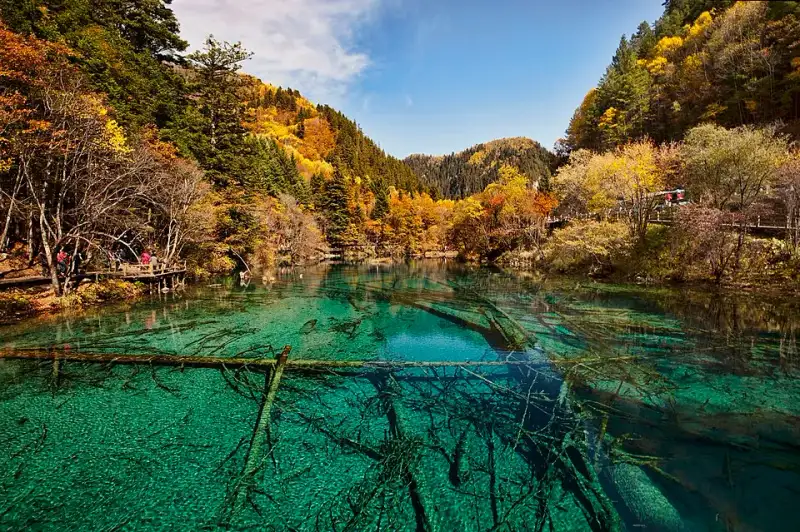

人间仙境:九寨沟的自然奇观与文化印记 引言:九寨归来不看水 在浩瀚的中国大地之上,隐藏着无数令人叹为观止的自然奇观。从巍峨壮丽的喜马拉雅山脉到奔腾不息的长江黄河,这片广袤的土地赋予了我们无尽的惊喜。然而,若要论及水之灵动、色彩之绚丽、生态之原始,恐怕没有哪个地方能与四川省北部的九寨沟相媲美。俗语云:“黄山归来不看山,九寨归来不看水。”这句话绝非夸大其词,而是无数旅人在亲历了九寨沟的绝美风光后,发自内心的由衷感叹。 作为一个热爱大自然与深厚文化底蕴的旅行作家,我曾游历过世界上许多著名的山川湖泊,无论是北美五大湖的辽阔,还是欧洲阿尔卑斯山脉冰川湖的纯净,都曾让我震撼。但九寨沟始终在我心中占据着一个无可替代的位置。它不仅仅是一处被联合国教科文组织列入《世界自然遗产名录》的宝地,更是藏族文化与自然生态完美交融的典范。今天,就让我们一同走进这片被称为“人间仙境”和“童话世界”的神奇土地,探索其背后的地理、生态、历史以及那些鲜为人知的人文故事。 #九寨沟 #人间仙境 #旅行日记 #李伟 #自然奇观 第一章:独特的地理位置与气候环境的绝妙结合 九寨沟位于中国四川省阿坝藏族羌族自治州九寨沟县境内,地处青藏高原向四川盆地过渡的边缘地带,即著名的岷山山脉南段。这里的海拔跨度极大,从沟口的不到2000米,一路攀升至最高峰的长海附近,海拔超过了4700米。这种显著的海拔落差,不仅造就了九寨沟复杂多变的地形地貌,也孕育了其独特的立体气候系统,使得这里的自然景观呈现出令人惊叹的层次感。 九寨沟的地质构造主要以碳酸盐岩为主,这是一种极其容易受到流水侵蚀和溶解的岩石。经过数百万年的地质构造运动、古冰川的切割作用,以及流水的不断冲刷与钙华沉积,最终形成了今天我们所见到的深邃峡谷、层叠的瀑布以及星罗棋布的高山湖泊(当地藏族同胞亲切地称之为“海子”)。这里的喀斯特地貌发育得非常成熟且极具特色,它与我们在广西桂林或是云南石林看到的传统陆相喀斯特景观截然不同,九寨沟的喀斯特美在水的深度参与,美在水底钙华与丰富矿物质交织出的斑斓色彩。 在气候方面,九寨沟属于高原湿润气候。这里冬无严寒,夏无酷暑,春秋两季气候宜人,但日夜温差较大。正是这种独特的气候条件,使得九寨沟的植被呈现出极其丰富的垂直分布带,从低海拔的落叶阔叶林到中海拔的针阔叶混交林,再到高海拔的暗针叶林和高山灌丛草甸,不同的植被在不同的季节更替中,为九寨沟披上了色彩斑斓的自然外衣。这种由于地理与气候完美结合而诞生的奇迹,在世界上是极其罕见的。 #自然奇观 #地理位置 #喀斯特地貌 #四川旅游 #气候变化 第二章:水之灵魂——海子与瀑布交织的视觉交响曲 九寨沟的灵魂毫无疑问在于水。这里大大小小的108个海子,如同108颗璀璨的明珠,镶嵌在深山幽谷之中,串联起了一条如梦如幻的项链。这些湖泊之所以呈现出令人迷醉的翠绿、宝蓝、鹅黄等多种色彩,主要是因为湖水中富含高浓度的碳酸钙以及其他矿物质,加之湖底的沉积物、丰富的水生植物以及周围五彩斑斓的树林倒影,在高原强烈阳光的折射和散射下,产生了极其奇妙的光学效应,仿佛是大自然在水中倾倒了所有的颜料。 五花海:九寨沟的骄傲与色彩极致 在众多的海子中,五花海无疑是最具代表性、最令人震撼的一个。它位于日则沟的中心地带,享有“九寨沟一绝”和“九寨精华”的美誉。湖水颜色极为丰富,浅黄、翠绿、墨绿、宝蓝相互交织,随着视角的转换和光线的移动,色彩也在不断变幻,仿佛是大自然打翻了最绚丽的调色盘。更为奇特的是,湖底布满了钙化的古树枯枝,这些枯木在水底不仅没有腐烂,反而被钙华层层包裹,宛如海底的珊瑚丛一般,清晰可见。透过水晶般清澈的湖水,你可以看到小鱼在枯木与水草间自由穿梭,仿佛游走在一个梦幻的平行宇宙中,让人分不清哪是现实,哪是梦境。 #五花海 #童话世界 #梦幻色彩 诺日朗瀑布:气势磅礴的水之帘幕 如果说海子是九寨沟的柔情与婉约,那么瀑布则是九寨沟的雄壮与阳刚。诺日朗瀑布是中国最宽的钙华瀑布之一,也是九寨沟众多瀑布中最引人注目的一个。“诺日朗”在藏语中意为男神,象征着高大威猛与神圣不可侵犯。瀑布宽达270米,落差20余米,丰沛的水流从长满树木的悬崖边缘倾泻而下,形成一道极其壮观的水帘。尤其是在丰水期的夏季,水流如万马奔腾,声震山谷,激起的水雾在阳光的照射下经常形成绚丽的彩虹;而在漫长的冬季,这里则会变成一幅巨大的天然冰瀑画卷,晶莹剔透,冰柱如林,美不胜收。 #诺日朗瀑布 #冰瀑奇观 长海与五彩池:极致的对比与互补 长海是九寨沟海拔最高、面积最大、湖水最深的海子。它呈一个巨大的“S”形蜿蜒于群山之间,湖面宽阔,湖水深邃湛蓝,四周被终年积雪的雪山环抱,显得格外宁静和庄严。长海最神奇的地方在于它没有地表出水口,它的水源主要依靠冰雪融水和地下水补给,同时它也是九寨沟其他许多海子的地下水源头。即使在干旱的季节,长海的水位也不会急剧下降,宛如一个沉默而包容的母亲。 与长海形成鲜明对比的是位于其下方的五彩池。五彩池是九寨沟最小的海子之一,但却是色彩最绚丽、最精致的。尽管面积不大,但湖水却呈现出不可思议的层次感,上半部呈深邃的碧蓝色,下半部则微微泛红,左边呈明亮的天蓝色,右边则变为深沉的橄榄绿。这种极致的色彩反差,让每一个走到这里的游客都为之倾倒。相传,五彩池是女神色嫫梳洗打扮的地方,那些斑斓的色彩便是她洗落的胭脂。 #长海 #五彩池 #神话传说 第三章:生态多样性——动植物的原始避风港与基因库 九寨沟不仅是一处令人沉醉的视觉盛宴,更是一个巨大的生物基因库。作为国家级自然保护区和联合国教科文组织的世界生物圈保护区,这里保存了大量完好的原始森林和极其丰富的动植物资源,是生物多样性保护的重要阵地。 在广袤茂密的原始森林中,生长着红松、冷杉、云杉、桦木等珍贵树种,参天古木遮天蔽日。林下则是厚厚的苔藓、各种蕨类植物以及名贵的中药材如冬虫夏草、雪莲花、天麻等。这里的植被覆盖率极高,空气中弥漫着高浓度的负氧离子,深呼吸一口,仿佛五脏六腑都被森林的清香所洗涤,是一个天然的“超级氧吧”。 更令人兴奋的是,九寨沟还是许多珍稀濒危野生动物的栖息地。这里生活着被誉为“国宝”的大熊猫、灵动的金丝猴、体型庞大的扭角羚(羚牛)、优雅的白唇鹿以及红腹锦鸡等国家一级保护动物。虽然普通游客在常规游览路线中很难直接与这些野生动物“面基”,但知道它们就在这片古老的森林深处与我们共享这片蓝天和水源,本身就是一种极大的心理慰藉和对自然保护工作的一份敬意。九寨沟的生态保护向我们展示了,在人类积极的干预、科学的管理和严格的保护下,脆弱的高山生态系统依然可以保持其原始的活力与生机,实现人与自然的和谐共生。 #生态保护 #野生动物 #大熊猫保护 #金丝猴 #生物多样性 第四章:三大沟的独特魅力:日则沟、则查洼沟与树正沟的完美组合 九寨沟的整体布局呈一个大大的“Y”字形,由三条主要的沟谷组成:日则沟、则查洼沟和树正沟。这三条沟各有千秋,每条沟都有其独特的风景线和游览重点,共同构成了九寨沟完美的立体景观系统。 日则沟:九寨精华的集大成者(Y字的右边分支) 日则沟被誉为九寨沟风景的精华所在,这里集中了九寨沟最密集的景点和最绚烂的色彩。除了前面详细提到的五花海,这里还有如同明镜般平静的镜海。在没有风的清晨时分,镜海的倒影能将蓝天、白云、远山、近树完美地复刻在水面上,水上水下两重天,难辨虚实,令人叹为观止。珍珠滩瀑布则是另一处不容错过的奇观,丰沛的水流在倾斜而凹凸不平的宽阔钙华滩面上跳跃跌宕,激起无数晶莹剔透的水珠,在阳光的照射下,宛如万斛珍珠洒落人间,清脆的水声悦耳动听。这里也是中国经典电视剧《西游记》片尾曲唐僧师徒牵马涉水的取景地,承载了无数中国人的童年记忆。除此之外,还有熊猫海、箭竹海等,每一处都如诗如画。 #日则沟 #珍珠滩瀑布 #镜海倒影 #西游记取景地 则查洼沟:探寻高海拔的苍茫与精致(Y字的左边分支) 则查洼沟是九寨沟游览路线中最长、海拔最高的一条沟,全长近18公里。它的主要景点相对集中在顶端,即壮丽深邃的长海和玲珑剔透的五彩池。游览这条沟,游客通常会乘坐环保观光车在蜿蜒的山路上盘旋而上直达长海,然后沿着木栈道徒步下行至五彩池。由于海拔跨度大,沿途的植被变化非常明显,能够让人深刻体验到从温带阔叶林到高山针叶林再到高山荒漠的生态过渡。途经的上季节海和下季节海,会随着季节降水量的不同而呈现出满溢或干涸的状态,展示了自然界的水循环奇观。 #则查洼沟 #高海拔风光 #季节海 树正沟:九寨沟的门户与微缩景观(Y字的下半部分) 树正沟是九寨沟的门户,也是主沟,全长约14公里。进入景区大门后,首先映入眼帘的便是树正沟秀丽的景色。这里有绵延数公里的树正群海,数十个大小不一、颜色各异的海子如同梯田般层层叠叠地分布在山谷之中,水流在海子之间穿梭跌落,形成了无数小型的瀑布群和跌水,漫步其间,仿佛走进了水做的迷宫。芦苇海则是一片长满高大芦苇的沼泽湖泊,一条碧绿的水带像玉带般蜿蜒穿过金黄色的芦苇丛,微风吹过,苇浪翻滚,白鹭惊飞,给人一种温柔而宁静的水乡美感。犀牛海则是树正沟中面积最大的海子,以其绝美的倒影和传说中藏族老僧骑犀牛入海的神秘故事而闻名。树正寨则坐落在群海之畔,是体验藏族风情的重要地点。 #树正沟 #树正群海 #芦苇海 #犀牛海传说 第五章:人文风情:九个藏族村寨的历史、信仰与文化传承 “九寨沟”这个名字的由来,正是因为在这片狭长的山谷中,历史上曾经错落有致地坐落着九个藏族村寨(盘信、彭布、故洼、盘亚、则查洼、黑角寨、树正、扒亚、建盘)。尽管随着时间的推移和保护区的建立,部分村寨已经搬迁或合并,但藏族文化依然是九寨沟不可分割的灵魂所在,赋予了这片自然山水深厚的人文底蕴。 这里的藏族居民被称为“白马藏族”的后裔,他们世代繁衍生息于此,其生活习俗、宗教信仰和建筑风格,为九寨沟增添了浓厚的人文色彩。在游览过程中,游客可以清晰地看到那些具有鲜明藏族特色的木结构民居。这些房屋通常依山傍水而建,木质的墙体散发着岁月的温润,外墙和门窗上涂着鲜艳的色彩并绘有吉祥的图案。屋顶和房前屋后悬挂着五彩斑斓的经幡(风马旗)。经幡在风中烈烈飘动,每一次飘动,在藏传佛教的信仰中,都代表着诵读了一次经文,是对大自然、神灵和芸芸众生的祈福。 此外,九寨沟地区的藏族文化受到古老的“苯教”影响深远。苯教是藏传佛教传入西藏之前,盛行于青藏高原的土生土长的原始宗教,它极度强调万物有灵,崇拜自然界的天地山川、日月星辰。这种对自然的敬畏之心,深深扎根于九寨沟藏族人民的血液中。他们视高山为神山,视湖水为神水,绝不轻易砍伐一草一木,绝对禁止向湖水中乱扔杂物或在海子中洗涤物品。正是这种古朴而严苛的生态保护意识和宗教禁忌,使得九寨沟在漫长的历史长河中,在人类活动的影响下,依然得以保持其最纯洁、最原始的自然状态。今天,当我们在树正寨或则查洼寨巨大的转经筒前驻足,听着低沉的诵经声,依然能深切地感受到那份跨越千年的虔诚与宁静。 #藏族文化 #九寨沟村寨 #人文风俗 #经幡信仰 #苯教 第六章:灾难与重生:大自然的力量、重塑与自我修复的奇迹 大自然的造物之手既是神奇伟大、令人惊叹的,有时也是残酷无情、充满毁灭性的。2017年8月8日,九寨沟地区发生了一场里氏7.0级的强烈地震。这场突如其来的天灾,不仅对当地居民的生活造成了严重影响,也给九寨沟引以为傲的自然景观和基础设施造成了巨大的破坏。诺日朗瀑布发生严重的岩体坍塌,原本宽阔壮丽的水帘一度断流,露出光秃秃的岩壁;火花海的坝体发生决口,湖水大量流失,昔日波光粼粼的湖面变成了干涸龟裂的泥滩;多处山体发生严重滑坡,导致道路中断,大片原始森林受损。 灾难发生后,无数曾去过或向往九寨沟的人们痛心疾首,在网络上纷纷留言,担心这个“童话世界”将永远从地球上消失。然而,大自然强大的自我修复能力,加上人类科学、谨慎而持续的干预,创造了令人惊叹的奇迹。在随后几年漫长而艰辛的封闭重建期里,国内顶尖的地质、生态专家团队经过反复论证,确立了“自然恢复为主,人工干预为辅”的核心原则。对于诺日朗瀑布的裂缝,科研人员采用了特殊的环保材料和微创的钙华修复技术,既弥补了裂缝,又促进了新钙华的生成;对于受损最严重的火花海,则通过极其精细的手工修补坝体并巧妙地重新引入水流,使其奇迹般地重获新生,再次荡漾起碧蓝的微波。 如今的九寨沟,不仅已经全面恢复了往日的绝美容颜,重新向世人敞开怀抱,甚至在地震的无情重塑下,因祸得福地诞生了新的壮丽景观。例如,因为地震滑坡导致水流改道而形成的双龙海瀑布,水量丰沛,水势浩荡,成为九寨沟新的打卡胜地。这场惊心动魄的灾难与涅槃重生的过程,让我们更加深刻地认识到大自然既威严又坚韧的两面性,也让我们对如今能够再次安然目睹九寨沟的美景倍感珍惜。这也是九寨沟作为世界自然遗产,向全人类活态展示其地质演变动态过程的一个极其独特而宝贵的篇章。 #灾后重建 #自然力量 #地震恢复 #火花海重生 #自然奇迹 第七章:四季九寨:流转于时光中的色彩魔术与永恒画卷 九寨沟的美,绝不是静止不动的死物,而是随着四季的更迭、光影的变幻,不断变幻出令人目眩神迷的色彩魔术。每一个季节的九寨沟,都有其独特的神韵,都值得被细细品味和记录。春季(冰雪消融,万物复苏的生机):春天的九寨沟,随着气温的回升,漫长的冰雪开始渐渐消融,沉睡了一冬的海子重新泛起温柔的微澜,水色显得格外娇嫩。山林间,各种不知名的野花竞相绽放,桃花、杏花点缀其间,嫩绿的树芽在枝头欢快地跳跃。虽然此时的水量可能不如夏秋季节丰沛,但那种生机勃勃、清新脱俗的初春气息,让人感到无比的愉悦和放松,仿佛生命在这里重新开始了轮回。 #九寨春色 #万物复苏 夏季(绿意盎然,瀑水如银的清凉):夏季是九寨沟降水最丰富的丰水期,也是国内避暑的绝佳胜地。整个山谷被浓郁、苍翠的绿色所覆盖,所有的海子都因为充足的水分而呈现出最饱满、最深邃的色彩。各大瀑布的水量达到巅峰,声势浩大,水雾弥漫在整个山谷间,带来阵阵沁人心脾的清凉。夏日的九寨沟,充满了生命的热烈与张力,是一派郁郁葱葱的盛夏景象。 #夏季避暑 #九寨沟瀑布 秋季(色彩斑斓,童话巅峰的绚烂):如果要选一个九寨沟最美、最具代表性的季节,那毫无疑问是秋季。每年的10月中下旬至11月上旬,九寨沟迎来了它一年中最辉煌的“高光时刻”。漫山遍野的阔叶林在秋风的吹拂和气温的催化下,如同被施了魔法一般,变成了金黄、火红、橙橘、紫红交织的色彩海洋。这些绚丽夺目的树叶倒映在碧蓝、翠绿的湖水中,形成了震撼人心的“秋水共长天一色”的绝世美景。此时的九寨沟,是全世界摄影师的天堂,是真正的、无可挑剔的“童话世界”。 #九寨沟秋季 #摄影天堂 #秋色无边 冬季(冰清玉洁,宁静悠远的纯粹):冬日的九寨沟,褪去了秋日的喧嚣与繁华,换上了一袭素洁淡雅的白纱。连绵的山峦被厚厚的白雪覆盖,部分海拔较高的海子结上了晶莹剔透的冰层,而神奇的是,透过冰面,依然能清晰地看到水下湛蓝的湖水和沉睡的枯木。最令人惊叹的莫过于那些巨大的冰瀑,诺日朗瀑布和珍珠滩瀑布的流水像时间被瞬间冻结一般,挂在陡峭的悬崖峭壁上,形成一根根巨大的冰柱,散发着幽蓝的神秘光芒。冬游九寨,虽然寒冷,但享受到的却是那份远离世俗喧嚣的绝对宁静与纯粹。 #冬季旅游 #冰雪奇缘 #冰瀑奇观第八章:旅游发展与环境保护的艰难平衡之道 作为中国乃至世界上最著名、最受欢迎的自然风景旅游区之一,九寨沟每年要接待数以百万计的国内外游客。如何在满足大众日益增长的旅游文化需求的同时,绝对保护好这片极其脆弱的高山喀斯特湖泊生态系统,是九寨沟管理者和每一个游客都面临的巨大挑战。 值得全世界赞赏和借鉴的是,九寨沟在旅游科学管理和生态环境保护方面做出了许多开创性、前瞻性的探索。为了彻底消除传统汽车尾气对纯净空气和水质的污染,景区内全面禁止外部社会车辆进入,统一斥巨资采购并使用天然气或纯电动环保观光车进行游客的有序摆渡。在各个核心景点之间以及湖泊边缘,精心修建了总长达数百公里的木质环保栈道。这些栈道不仅完美地融入了自然景观,方便了游客近距离、多角度地欣赏美景,更重要的是,它们极其有效地防止了数百万人类脚步对原始土壤、脆弱植被以及湖泊边缘钙华堤的无情践踏与破坏。 此外,九寨沟多年来雷打不动地实行了严格的“沟内游,沟外住”政策。除了极少数原住藏民外,游客必须在傍晚前离开景区核心区域,在沟外的乡镇酒店住宿。这一硬性规定极大地减轻了景区夜间的环境承载压力,减少了光污染和生活垃圾,也给在这片土地上世代繁衍的野生动物留出了充足的夜间活动空间和不受打扰的时间。面对节假日经常出现的井喷式客流,九寨沟还依托大数据和智能系统,实施了严格的每日游客数量限流(如限定每日最高接待量为4万人次)和全网实名制预约购票制度,确保旅游活动始终控制在科学测算的环境容量允许的范围之内。这种以保护为前提的可持续发展旅游模式,为全球其他脆弱生态系统中的自然遗产保护与开发利用提供了极其宝贵的“九寨经验”。 #可持续旅游 #环保 #生态管理 #世界遗产保护 结语:作为一位旅行者的深度思考与心灵羁绊 在我作为旅行作家漫长的职业生涯中,曾多次在不同的年份、不同的季节踏足九寨沟。然而,每一次的相遇,它都能带给我全新的震撼与不同的心灵感悟。九寨沟不仅仅是一个用眼睛去匆匆打卡欣赏的风景名胜,更是一个需要放慢脚步,用心灵去深深感受的神圣之地。这里的每一滴清冽的湖水、每一片随风飘落的彩叶、每一声空灵的鸟鸣、甚至每一次经筒的转动,都在以无声的语言诉说着地球母亲的伟大、神奇与脆弱。 我见证了九寨沟客流如织的繁华盛世,亲历了它震后令人心碎的满目疮痍与沉寂,也无比欣喜于它历经阵痛后的涅槃重生。九寨沟的美,固然在于它得天独厚、不可复制的天生丽质,但更在于它通过灾难与恢复,深刻地教会了我们人类应当如何敬畏自然、顺应自然、并竭尽全力去保护自然。当我们站在五花海畔,看着那片变幻莫测的深邃湛蓝,我们应该清醒地明白,这不仅仅是大自然馈赠给我们用于当下消费与享乐的美景,这更是我们肩负重任,必须完好无损地留给子孙后代的珍贵地球遗产。 如果你还未曾去过九寨沟,请务必将它列入你此生必去的旅行清单的首位;如果你已经去过,我强烈建议你在不同的季节再次造访,去探寻它截然不同的侧面。愿九寨沟的水,永远清澈见底,倒映出最蓝的天空;愿这片人间仙境,能在时光的无情流转中,永远保持其最纯粹、最动人的光芒。 #旅行总结 #李伟 #世界自然遗产 #保护地球 #人与自然#Jiuzhaigou #China #Nature #WorldHeritage #Travel #Sichuan #TibetanCulture Related InsightsWenn der Himmel tanzt: Die majestätische Sinfonie der Aurora The Dolomites, Italy: Hiking Through Alpine UNESCO Heritage Patagonian Ice Fields: The Ultimate Guide to Glacier Trekking in Chile{ "@context": "https://schema.org", "@type": "FAQPage", "mainEntity": [ { "@type": "Question", "name": "What is the main focus of 人间仙境:九寨沟的自然奇观与文化印记?", "acceptedAnswer": { "@type": "Answer", "text": "深入探索九寨沟的绝美风光、丰富生态、悠久历史及藏族文化,跟随李伟的笔触,带您领略被誉为'人间仙境'的四川自然奇观。" } }, { "@type": "Question", "name": "Who authored the comprehensive guide on 人间仙境:九寨沟的自然奇观与文化印记?", "acceptedAnswer": { "@type": "Answer", "text": "This detailed article and its insights were carefully researched and authored by Li Wei." } }, { "@type": "Question", "name": "Where can I find more related content about Travel?", "acceptedAnswer": { "@type": "Answer", "text": "You can explore more articles, detailed reviews, and similar insights by browsing the Related Insights section at the bottom of this article or visiting our dedicated Travel category page." } } ] }
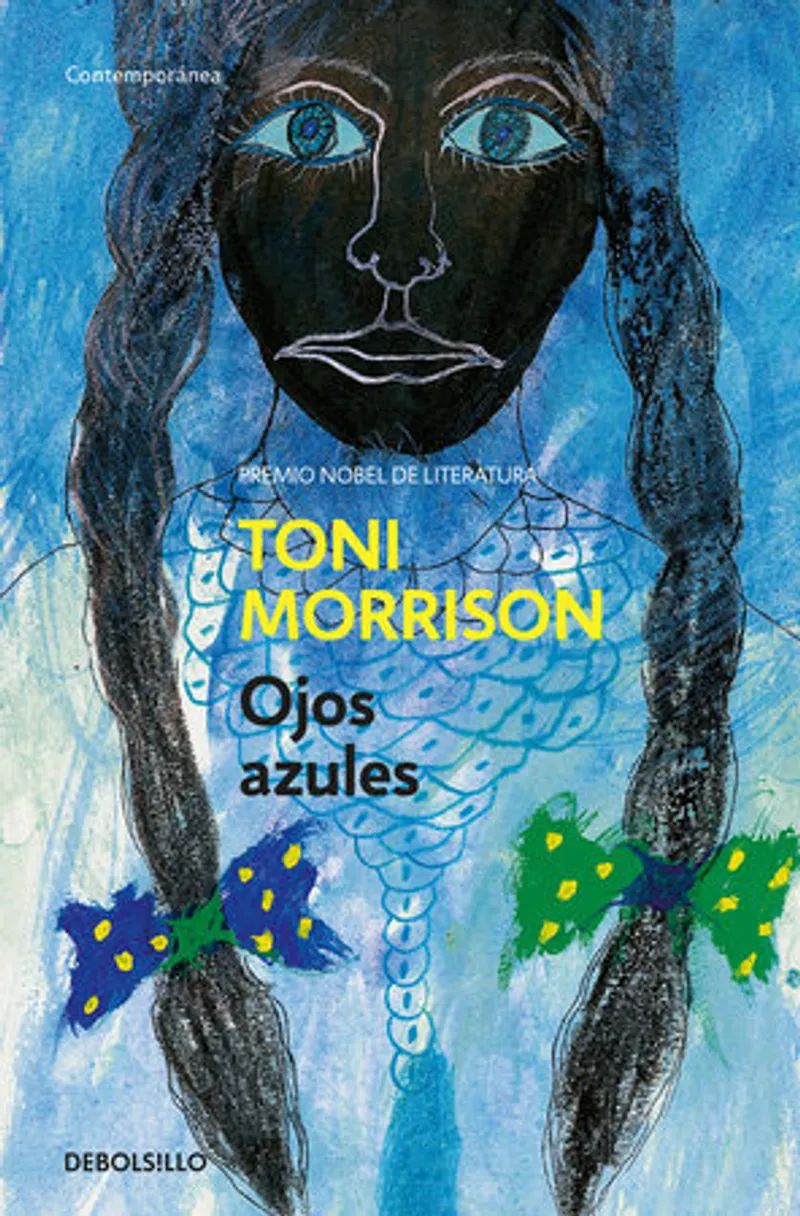
Ojos azules / The Bluest Eye Author: Toni MorrisonPage Count: UnknownPublication Date: 2022-PRH In the hauntingly beautiful "The Bluest Eye", Toni Morrison weaves a poignant tale of self-discovery, internalized racism, and the unrelenting pursuit of an unattainable beauty standard. This powerful novel, Morrison's acclaimed first, delves into the complexities of a society that reveres blue-eyed, blonde-haired children, leaving those who don't fit this mold to navigate a world of devastating rejection. At the heart of the story is Pecola Breedlove, an 11-year-old black girl who prays fervently for her eyes to turn blue. Her desire is not merely a childish whim but a desperate attempt to escape the cruel realities of her world. Pecola's obsession with blue eyes is a scathing critique of the societal beauty standards that devalue blackness. Through Pecola's narrative, Morrison masterfully exposes the ways in which internalized racism can erode a child's sense of self-worth, leaving her vulnerable to the whims of a society that deems her inferior. Morrison's writing is a triumph of lyrical prose, with a precision that is both faithful to the spoken word and charged with a deep sense of pain and wonder. Her use of language is akin to poetry, imbuing the narrative with a musical quality that is both haunting and beautiful. The characters in "The Bluest Eye" are multidimensional and complex, with Pecola's narrative serving as a powerful counterpoint to the societal norms that seek to define her. One of the most striking aspects of Morrison's writing is her ability to balance the harsh realities of Pecola's world with a deep sense of empathy and understanding. This is a novel that is unflinching in its portrayal of racism, poverty, and the destructive nature of internalized beauty standards. Yet, even in the midst of such devastation, Morrison's prose is infused with a sense of hope and resilience. Through Pecola's story, Morrison raises important questions about the nature of beauty, identity, and the human condition. What does it mean to be beautiful in a society that values whiteness above all else? How do we reconcile our own sense of self-worth with the societal norms that seek to define us? These are questions that are just as relevant today as they were when the novel was first published. In "The Bluest Eye", Morrison has created a masterpiece of contemporary literature that is both a powerful indictment of societal beauty standards and a testament to the enduring power of the human spirit. This is a novel that will leave readers moved, disturbed, and ultimately, transformed. #TheBluestEye #ToniMorrison #NobelPrizeWinner #RacismAndBeauty #InternalizedRacism #BlackLiteratureMatters Related InsightsThe Signal and the Noise Book Review and Summary B1 And now you're speaking Book Review and Summary Julius Caesar Book Review and Summary{ "@context": "https://schema.org", "@type": "FAQPage", "mainEntity": [ { "@type": "Question", "name": "What is the main focus of The Bluest Eye Book Review and Summary?", "acceptedAnswer": { "@type": "Answer", "text": "Everything you need to know about The Bluest Eye with our detailed review." } }, { "@type": "Question", "name": "Who authored the comprehensive guide on The Bluest Eye Book Review and Summary?", "acceptedAnswer": { "@type": "Answer", "text": "This detailed article and its insights were carefully researched and authored by Toni Morrison." } }, { "@type": "Question", "name": "Where can I find more related content about Books?", "acceptedAnswer": { "@type": "Answer", "text": "You can explore more articles, detailed reviews, and similar insights by browsing the Related Insights section at the bottom of this article or visiting our dedicated Books category page." } } ] }


Waakye, a traditional Ghanaian street food, is a harmonious blend of colors, flavors, and textures that awakens the senses and satisfies the palate. This vibrant breakfast dish, typically served in a large, steaming bowl, is a culinary embodiment of Ghanaian culture and hospitality. As the morning sun rises over the bustling streets of Accra, the aroma of waakye wafts through the air, enticing passersby to start their day with a delicious and filling meal. Introduction to Waakye Waakye is a one-pot dish made from a mixture of beans, rice, and a variety of spices, including garlic, ginger, and chili peppers. The name "waakye" is derived from the Ga language, in which "waakye" means "Wednesday," the day of the week when this dish was traditionally cooked. Over time, waakye has become an integral part of Ghanaian cuisine, with its popularity transcending cultural and geographical boundaries.The preparation of waakye is an art form that requires patience, skill, and attention to detail. The dish is typically cooked in large quantities, using a combination of cowpeas and rice, which are soaked overnight and then boiled in a flavorful broth. The cooking process is a labor of love, with the ingredients simmering together for hours to create a rich, savory sauce. The Cultural Significance of Waakye Waakye is more than just a meal; it is a symbol of community, hospitality, and cultural heritage. In Ghana, food plays a vital role in bringing people together, and waakye is no exception. This dish is often served at social gatherings, festivals, and family reunions, where it is shared among friends and loved ones. The communal nature of waakye is reflected in the way it is served, with large portions being ladled into bowls and shared among those present.The cultural significance of waakye is also reflected in its ingredients, which are carefully selected to reflect the country's rich agricultural heritage. The use of cowpeas, rice, and spices in waakye is a testament to Ghana's history as a major trading hub, with these ingredients being introduced by traders and travelers from across the continent. Preparing Waakye: A Recipe For those interested in trying their hand at making waakye, here is a simple recipe to get you started: Ingredients:1 cup cowpeas 1 cup uncooked rice 2 cloves garlic, minced 1-inch piece ginger, grated 1 teaspoon ground cumin 1 teaspoon paprika Salt and pepper to taste 2 cups water Vegetable oil for servingInstructions:Rinse the cowpeas and rice, and soak them in water overnight. Drain the cowpeas and rice, and place them in a large pot. Add the garlic, ginger, cumin, paprika, salt, and pepper to the pot. Pour in the water, and bring the mixture to a boil. Reduce the heat to low, and simmer the waakye for 2-3 hours, or until the cowpeas and rice are tender. Serve the waakye hot, garnished with chopped onions, tomatoes, and a sprinkle of pepper.This recipe is a basic guide, and you can adjust the ingredients and spices to suit your taste preferences. The key to making great waakye is to use high-quality ingredients and to cook the dish with love and care. Waakye: A Reflection of Ghanaian Cuisine Waakye is a prime example of Ghanaian cuisine, which is known for its bold flavors, vibrant colors, and hearty portions. Ghanaian cuisine is a fusion of traditional and modern influences, with dishes like waakye, jollof rice, and banku being staples of the national diet. The use of spices, herbs, and other ingredients in Ghanaian cooking reflects the country's rich cultural heritage, with influences from Africa, Europe, and the Middle East. Conclusion Waakye is a true reflection of Ghanaian culture and cuisine, with its rich flavors, vibrant colors, and hearty portions making it a beloved dish across the country. Whether you are a foodie, a culture enthusiast, or simply someone who loves to try new things, waakye is a must-try dish that is sure to leave you wanting more. So next time you are in Ghana, be sure to try a bowl of waakye, and experience the warmth and hospitality of this beautiful West African country. #GhanaianCuisine #StreetFood #Waakye #AfricanFood #Breakfast Recipes #TraditionalDishes #FoodieAdventures #CulturalHeritage Related InsightsPrahok: The Fermented Soul of Cambodia's Culinary Identity Mumbai’s Midnight Feast: The Spicy, Crunchy, Unforgettable Soul of the City’s Streets Black Forest Oat Porridge with Berries and Nuts (Vegan): A Nutritious and Delicious Antioxidant-Rich Breakfast{ "@context": "https://schema.org", "@type": "FAQPage", "mainEntity": [ { "@type": "Question", "name": "What is the main focus of Waakye: The Vibrant Street Food Breakfast?", "acceptedAnswer": { "@type": "Answer", "text": "Discover the deep cultural roots, authentic flavors, and history of Waakye: The Vibrant Street Food Breakfast." } }, { "@type": "Question", "name": "Who authored the comprehensive guide on Waakye: The Vibrant Street Food Breakfast?", "acceptedAnswer": { "@type": "Answer", "text": "This detailed article and its insights were carefully researched and authored by Kwame Osei." } }, { "@type": "Question", "name": "Where can I find more related content about Food?", "acceptedAnswer": { "@type": "Answer", "text": "You can explore more articles, detailed reviews, and similar insights by browsing the Related Insights section at the bottom of this article or visiting our dedicated Food category page." } } ] }


Clara Poole and the Long Way Round Author: Taylor TyngPage Count: UnknownPublication Date: 2024-PRH Clara Poole and the Long Way Round is a sparkling, high-flying debut that crackles with invention, heart, and the kind of relentless momentum that would make even Phileas Fogg check his watch. Taylor Tyng has crafted a middle-grade adventure that feels like a love letter to the golden age of around-the-world escapades, tempered by the emotional honesty of contemporary middle school life. The book is a quicksilver mix of slapstick humor, nail-biting peril, and a quietly devastating portrait of grief and self-forgiveness—all wrapped in prose that sings like a hot-air balloon catching a thermal. It’s Mr. Lemoncello meets The Amazing Race, but with a soul that lingers long after the last flag is captured. At its core, Clara Poole and the Long Way Round is about daring to live after loss. Clara’s mother died in a ballooning accident when Clara was just a child, and her father’s suffocating protectiveness has kept her earthbound ever since. Yet when her science project—a lawn chair tethered to weather balloons—accidentally lifts her over the Michigan countryside, Clara finds herself catapulted into a global race that demands courage, adaptability, and trust. Tyng beautifully frames the race not just as a physical challenge, but as a metaphorical journey toward emotional liberation. Each stage of the competition forces Clara to confront her fears: the jagged peaks of Nepal, the shifting dunes of the Sahara, the ring of fire in Hong Kong. But the real fireworks happen in Clara’s heart—when she learns that forgiving herself isn’t a solo act, that healing begins with leaning on others, even when they’ve been hurtful or absent. Tyng’s prose is one of the novel’s greatest strengths. It zips along with the speed of a racing balloon, full of punchy dialogue, vivid sensory detail, and a wry, self-aware humor that never condescends to its young audience. Clara is a narrator you want to root for immediately—clever, impulsive, and achingly human. Her voice is authentic, peppered with the kind of internal monologue that feels like eavesdropping on a bright, restless mind: “I didn’t run away to prove I could do it alone. I ran away because I was tired of being afraid.” Yet she’s not a perfect hero. Her impulsiveness leads to reckless decisions, and her emotional walls make her slow to trust her partner, the gruff and reluctant aeronaut, Captain Elias Voss. Their relationship is the emotional engine of the book, a slow-burn dynamic built on mutual exasperation and reluctant respect. Their dialogue crackles with tension—Voss’s gruffness masking a deep protectiveness, Clara’s stubbornness hiding a desperate need to prove she’s more than her grief. What sets Clara Poole apart is its refusal to sugarcoat hardship. The race is genuinely dangerous—balloon malfunctions, sabotage, near-fatal storms—and Tyng doesn’t shy away from the physical and emotional toll. Clara isn’t just racing against other teams; she’s racing against her own memories, her father’s grief, and the specter of her mother’s absence. Yet the book never feels bleak. The humor is abundant: a rival team named the “Dust Bunnies” who travel in a converted food truck, a maybe-wedding in the Sahara that devolves into a camel race, and a VIP lounge that serves nothing but plain oatmeal. These moments aren’t just comic relief—they’re proof that joy and sorrow can coexist, that life goes on even when it hurts. Tyng’s world-building is rich and immersive, painting a global tapestry with deft strokes. From the misty hills of Nepal to the neon-lit streets of Hong Kong, each location feels vivid and lived-in, infused with cultural details that never feel like window dressing. The international cast of competitors—each with their own quirks, dreams, and backstories—adds depth and diversity, making the race feel like a microcosm of the world itself. Clara’s journey isn’t just about winning; it’s about learning to belong to something bigger than herself. The emotional climax, when Clara finally faces the accident that took her mother, is handled with extraordinary tenderness. It’s not a moment of sudden catharsis, but a quiet, hard-won realization that healing isn’t about forgetting or excusing past pain—it’s about accepting it, carrying it, and choosing to move forward anyway. In that sense, Clara Poole and the Long Way Round transcends the adventure genre. It’s a story about the courage it takes to let go of fear, to trust others, and to forgive—not just others, but ourselves. Taylor Tyng has written a book that’s as smart as it is fun, as heartfelt as it is thrilling. It’s the kind of story that makes you want to leap out of your chair and into the nearest balloon, even if you’ve never left the ground. Clara Poole isn’t just a character; she’s a friend, a reminder that sometimes the bravest thing you can do is run toward what scares you—even when the skies are full of unknowns. #ClaraPooleAndTheLongWayRound #MiddleGradeAdventure #BalloonRaceAroundTheWorld #TaylorTyng #MGBooks #KidsFictionAdventure Related InsightsI'll Be Waiting Book Review and Summary The No. 1 Ladies' Detective Agency Book Review and Summary Ellie Ellie Book Review and Summary{ "@context": "https://schema.org", "@type": "FAQPage", "mainEntity": [ { "@type": "Question", "name": "What is the main focus of Clara Poole and the Long Way Round Book Review and Summary?", "acceptedAnswer": { "@type": "Answer", "text": "Everything you need to know about Clara Poole and the Long Way Round with our detailed review." } }, { "@type": "Question", "name": "Who authored the comprehensive guide on Clara Poole and the Long Way Round Book Review and Summary?", "acceptedAnswer": { "@type": "Answer", "text": "This detailed article and its insights were carefully researched and authored by Beatriz Costa." } }, { "@type": "Question", "name": "Where can I find more related content about Books?", "acceptedAnswer": { "@type": "Answer", "text": "You can explore more articles, detailed reviews, and similar insights by browsing the Related Insights section at the bottom of this article or visiting our dedicated Books category page." } } ] }