
-
 Zeynep Kaya
 - 15 Sep, 2026 11:47
Beyond the Keyboard: The Multimodal Singularity in Human-Computer Interaction
The Silent Revolution of Tangible Computing The era of the QWERTY keyboard and the stationary mouse is rapidly drawing to a close. As we stand at the precipice of the "multimodal singularity," human-computer interaction (HCI) is undergoing a fundamental paradigm shift. We are moving away from the brittle, syntax-heavy input methods that have defined the last four decades of computing and toward a fluid, expressive, and truly ambient environment. This evolution is driven by the convergence of low-latency computer vision models, sophisticated natural language understanding (NLU), and the deployment of powerful inference engines at the edge. For years, we treated our devices as external tools—rigid instruments that required us to speak their language. Today, thanks to advances in Transformer-based architectures and lightweight skeletal tracking, the device is beginning to speak ours. When we talk about the integration of gesture control and voice AI, we aren’t merely talking about minor quality-of-life improvements; we are talking about a total reconfiguration of how humans perceive digital information. We are transitioning from the "desktop" metaphor to a "spatial" metaphor, where the interface is no longer contained within a rectangle of pixels but is instead cast across the geometry of our physical reality. This shift requires a technical architecture that is robust enough to handle high-bandwidth sensory data while maintaining the sub-millisecond responsiveness required to avoid the "uncanny valley" of input lag. As a researcher, I see this not as an incremental step, but as the foundation of a new digital existence.Architectural Foundations of Spatial Gesture Recognition To understand the modern stack, we must look at how we process skeletal data. Modern gesture recognition is no longer reliant on simple image thresholding. Instead, we utilize deep convolutional neural networks (CNNs) and graph neural networks (GNNs) to interpret spatial relationships in real-time. By leveraging libraries like MediaPipe or custom implementations using TensorRT for optimization, developers can map 21 distinct hand landmarks with millisecond precision. The challenge lies in the fusion of this visual data with intent-based voice streams. When a user points to an object in an augmented reality workspace and says, "Move that to the staging environment," the system must perform three simultaneous operations: spatial anchoring of the visual gesture, semantic parsing of the command, and translation of the intent into a system-level function call. This requires a robust middleware layer that keeps the input buffer synchronized. import mediapipe as mp import cv2class GestureProcessor: def __init__(self): self.mp_hands = mp.solutions.hands self.hands = self.mp_hands.Hands( static_image_mode=False, max_num_hands=2, min_detection_confidence=0.7 ) def process_frame(self, frame): # Convert BGR to RGB for MediaPipe rgb_frame = cv2.cvtColor(frame, cv2.COLOR_BGR2RGB) results = self.hands.process(rgb_frame) if results.multi_hand_landmarks: for hand_landmarks in results.multi_hand_landmarks: # Extract landmark 8 (index finger tip) for gesture interaction index_tip = hand_landmarks.landmark[8] return (index_tip.x, index_tip.y) return None# Optimization: Deployment via TensorRT for edge inference # Allows real-time gesture tracking at >60 FPS on edge hardwareNatural Language Understanding and Intent Orchestration The voice AI component of our modern HCI stack has evolved far beyond basic command-and-control interactions. With the advent of Large Language Models (LLMs) deployed via quantized models like Llama-3 or Mistral (using frameworks like Ollama or vLLM), we can now handle contextual ambiguity in natural language. The technical hurdle here is latency; standard cloud-based LLM calls are far too slow for real-time interaction. The industry is shifting toward local-first, quantized model inference. The "Orchestrator" pattern is critical here. When a gesture—such as a pinch-to-select—is detected, the system triggers a latent state. Any voice input following this trigger is then tagged with a spatial coordinate. This allows the AI to understand "that" or "here" in a way that feels natural. The underlying YAML configuration for a typical orchestration service might look like the following snippet, which defines the event-driven triggers for multimodal fusion. # multimodal_orchestrator_config.yaml service: name: "spatial-fusion-engine" version: "1.0.4" pipeline: - input: gesture_stream buffer_size: "50ms" trigger_threshold: 0.85 - input: audio_stream whisper_model: "small.en" vad_threshold: 0.4 fusion_logic: mode: "concurrency" timeout: "200ms" backend: "gRPC" endpoint: "localhost:50051/semantic-parser"Edge Computing and Low-Latency Inference Requirements To achieve the "zero-latency" feel required for high-fidelity HCI, we must rethink the data pipeline. Cloud round-trips introduce jitter, which is the mortal enemy of a responsive gesture interface. We are seeing a significant trend toward edge computing, where inferencing for both vision and speech happens on the local device or an edge gateway. In many TechCrunch-covered startups, the current trend is the integration of Neural Processing Units (NPUs) directly into the user interface pipeline. By moving the model to the edge, we reduce latency from 200ms (typical round-trip) to under 20ms. This is the difference between a system that feels like a glitchy toy and one that feels like an extension of the human body. Furthermore, local inference provides critical privacy benefits. When a user is interacting with their environment, they do not want their gesture data or conversational audio uploaded to a massive central server. Implementing local processing, as seen in many high-traction GitHub repositories, ensures that sensitive spatial mapping data remains within the local network boundary.Security and Ethical Considerations in Ubiquitous Interfaces The proliferation of always-on gesture and voice sensors introduces profound security risks. When every room is a potential node for gesture monitoring, the surface area for unauthorized data harvesting grows exponentially. We must advocate for "Privacy by Design" within the API layer itself. This means implementing hardware-level kill switches for cameras and microphones and ensuring that all multimodal fusion logic is conducted in a Trusted Execution Environment (TEE). Furthermore, the "bias in the loop" is a massive concern. If our skeletal tracking models are trained primarily on a specific demographic, the system will inherently perform poorly for others. We have seen this repeatedly in the computer vision space, where models struggle with diverse skin tones or varied lighting conditions. As engineers, it is our responsibility to curate datasets that are representative of the global population. This is not just a moral obligation; it is a technical necessity for product viability. If an interface fails to track a specific hand type, it is fundamentally broken. The Future of the Multimodal Singularity Looking ahead, we are moving toward what many in the research community call "Ambient Intelligence." This is a world where the interface disappears entirely. No screens, no peripherals, just the intent-driven manipulation of digital assets in physical space. We will see the maturation of "Spatial Computing," where the distinction between augmented reality, virtual reality, and the desktop environment blurs into a singular, unified workspace. The software engineering challenge of the next decade will be the creation of universal APIs for this new reality. Just as we have standard protocols for the web (HTTP/REST/GraphQL), we need standard protocols for spatial interaction. We need a way for a "pinch" gesture in one application to have a globally understood meaning, just as a "click" does today. We must build for interoperability, ensuring that voice and gesture are treated as first-class citizens in every operating system, not as bolted-on accessibility features. We are architects of a new layer of existence; let us build it with the foresight that our interfaces, like our tools, define who we are. Orchestrating the Next Digital Decade As we refine these technologies, the focus must shift from the novelty of the feature to the reliability of the experience. The integration of gesture control and voice AI is the logical progression of a trajectory that began with punch cards and ended with the smartphone. We are reclaiming our dexterity as the primary interface. By prioritizing edge-based processing, robust semantic parsing, and a commitment to security, we are ensuring that this transition empowers rather than alienates the user. The complexity of the underlying systems—ranging from CUDA-accelerated vision models to asynchronous gRPC streams—remains formidable, but the objective is simple: to make the digital experience as fluid and natural as the physical one. We are no longer limited by the friction of peripheral hardware. We are now entering an era where our intent is the only requisite for creation. As practitioners, our task is clear: build systems that are as nuanced and adaptable as the human users they serve. The keyboard will eventually be an artifact, but the intent behind our gestures will remain the core of everything we build. The future is not just about what we can make; it is about how effortlessly we can make it. #AI #SpatialComputing #SoftwareEngineering #FutureTech #HCI #MachineLearning #DevOps Related InsightsAI Agents in Cybersecurity: The Silent Revolution of Automated Patch Management Unlocking the Secrets of Quantum Computing: Breakthroughs in Qubit Stability and Error Correction When Steel Meets Soul: Companion Bots and Assisted‑Living Robotics Redefining Elder Care{ "@context": "https://schema.org", "@type": "FAQPage", "mainEntity": [ { "@type": "Question", "name": "What is the main focus of Beyond the Keyboard: The Multimodal Singularity in Human-Computer Interaction?", "acceptedAnswer": { "@type": "Answer", "text": "Exploring the technical convergence of spatial computing, gesture recognition, and LLM-driven voice synthesis in modern user interfaces." } }, { "@type": "Question", "name": "Who authored the comprehensive guide on Beyond the Keyboard: The Multimodal Singularity in Human-Computer Interaction?", "acceptedAnswer": { "@type": "Answer", "text": "This detailed article and its insights were carefully researched and authored by Zeynep Kaya." } }, { "@type": "Question", "name": "Where can I find more related content about Technology?", "acceptedAnswer": { "@type": "Answer", "text": "You can explore more articles, detailed reviews, and similar insights by browsing the Related Insights section at the bottom of this article or visiting our dedicated Technology category page." } } ] }
-
 Kenji Sato
 - 14 Sep, 2026 21:59
The Fire and the Flesh: Unveiling the Eternal Alchemy of the Turkish Kebab
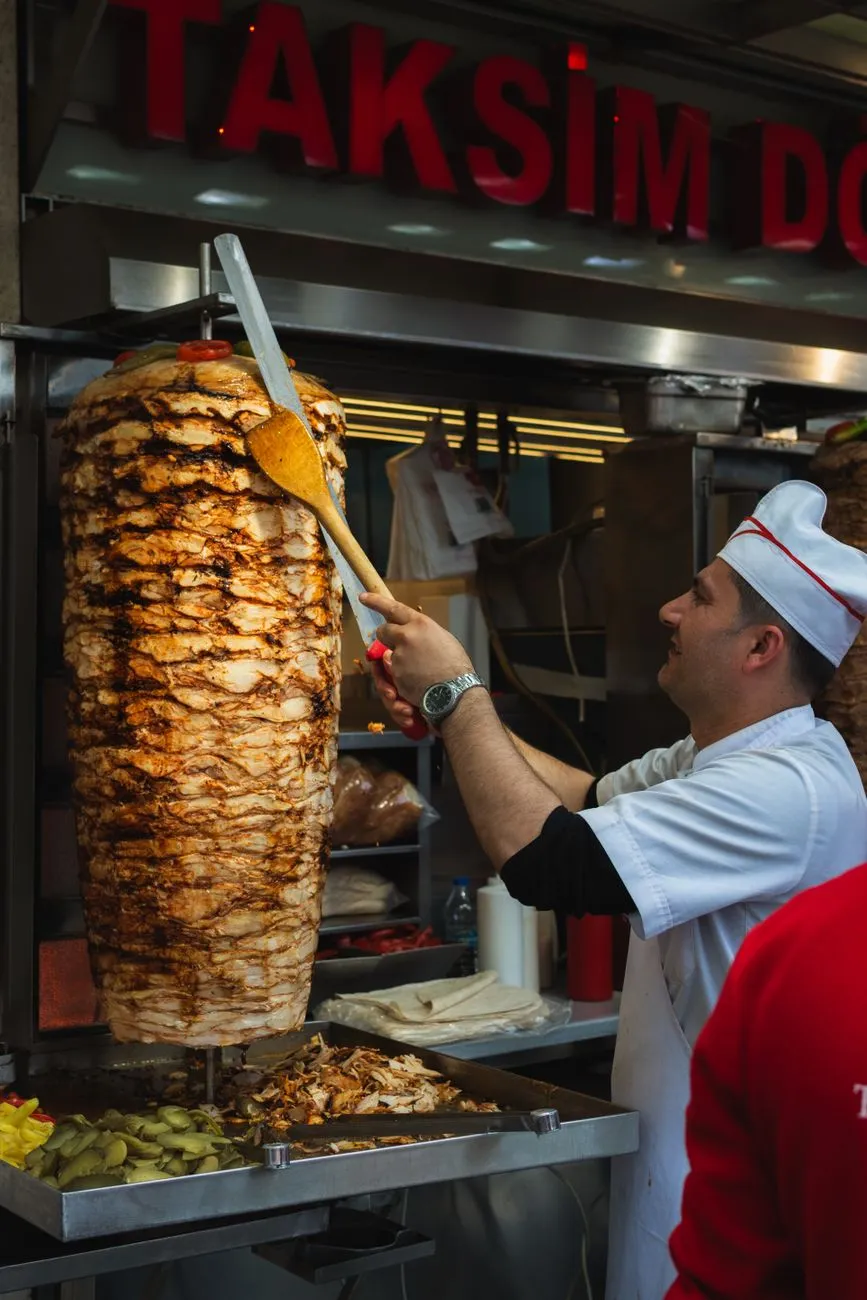
The Culinary Architecture of the Silk Road To understand the Turkish kebab is to understand the very history of human migration and the engineering of flavor. We often perceive travel writing through the lens of the "tourist versus the traveler," a tension explored in creative nonfiction that defines how we document our experiences. While the tourist might view a kebab as a simple, late-night convenience, the traveler—and the true culinary aficionado—recognizes it as a complex manifestation of environmental engineering and nomadic necessity. The word "kebab" derives from the Aramaic "kabab," meaning to char or burn, a testament to the primal relationship between early civilizations and fire. Long before the bustling streets of Istanbul or the high-end eateries of London, kebab culture began in the heart of Anatolia. Nomadic tribes, constantly on the move, required a cooking method that was efficient, portable, and capable of transforming tough cuts of meat into tender, succulent delicacies using only the heat of an open flame. This evolution is fundamentally a story of cultural transmission. As populations moved along the Silk Road, the technique of skewering meat—ironically, often using their own swords—became a standardized practice. The engineering of the kebab is precise; it relies on the Maillard reaction, the chemical interaction between amino acids and reducing sugars that gives browned food its distinctive flavor. When heat hits the surface of the meat, it creates a crisp, savory exterior that acts as a vessel for the rendered juices trapped within. Whether it is the vertical rotisserie of the Doner or the horizontal perfection of the Shish, the core principle remains identical: the mastery of thermal radiation. We are essentially dealing with an edible engineering project, where the protein structure is broken down by carefully managed heat, seasoned by the smoke of charcoal—preferably oak or fruitwood—and elevated by the specific geography of the spice blends utilized in the marination process. Every bite carries the DNA of those ancient caravans, serving as a reminder that food is the most reliable vessel of human history.The Anatomy of the Perfect Skewer Creating a professional-grade kebab is not merely a matter of throwing meat onto a grate; it requires an intimate knowledge of protein chemistry and fat distribution. The gold standard for a traditional Shish Kebab is typically lamb, specifically from the hindquarter or shoulder, where the ratio of lean muscle to intramuscular fat provides the necessary moisture during the intense heat of the grill. In professional kitchens, we speak of the "15-20% fat rule." If the meat is too lean, the kebab dries out before the char develops; if it is too fatty, the flare-ups from the charcoal become unmanageable, leading to a bitter, soot-heavy finish. The marination process is where the artistry truly takes hold. In Anatolian traditions, the marinade is surprisingly minimalist: olive oil, salt, perhaps a hint of onion juice, and the essential Turkish pepper paste, Biber Salçası. Unlike the heavy, yogurt-based marinades of other regions, the authentic Turkish style focuses on elevating the flavor of the meat itself rather than masking it. The preparation phase involves "resting" the meat, a step often overlooked by home cooks. By allowing the seasoned protein to sit, the salt denatures the proteins slightly, allowing them to retain more juice under the extreme pressure of the grill. When skewering, the density of the meat placement matters. We aim for a balance that allows heat to circulate between the pieces, ensuring that the kebab cooks evenly from the center out. The skewer itself is an engineering instrument; flat, wide metal skewers are superior to round ones because they prevent the meat from rotating when you turn the kebab, ensuring that the weight of the protein doesn’t cause it to slip. In the professional setting, we maintain an intense heat profile—high enough to sear the outer layer immediately, sealing in the juices, while the inner core reaches an optimal medium-rare to medium temperature. The resulting experience is a texture contrast: the snap of the outer crust followed by the almost buttery tenderness of the interior. This is the hallmark of the true master: a kebab that is cooked through, yet never toughened. The Vertical Revolution and the Doner Legacy While the Shish is the ancestor, the Doner kebab is the modern giant, a triumph of vertical engineering that transformed street food forever. Invented in the 19th century, the vertical spit solved the issue of gravity and heat distribution. By arranging thinly sliced, marinated layers of meat around a rotating axis, the chef creates a self-basting machine. As the heat radiates from the side—typically gas or electric in modern kitchens, though charcoal remains the supreme, if labor-intensive, choice—the fat from the upper layers slowly melts and drips over the meat below. This constant basting process keeps the outer layers moist even as they crisp under the heat source. The blade work is equally critical; a master "Doner Ustası" slices the meat with an almost surgical precision, ensuring that each shave of the kebab contains both the perfectly browned edge and the succulent, tender heart of the stack. This is where the distinction between "tourist" and "traveler" becomes most apparent in food criticism. The tourist seeks the kebab that is easily available, often pre-processed and mass-produced. The traveler seeks the authentic "Yaprak Doner," where the meat is stacked as individual thin leaves (yaprak) of marinated lamb, rather than a processed, sausage-like log. The quality of a Doner can be measured by the transparency of its sourcing. When you eat a high-quality Doner in a Turkish metropolis, you are tasting the history of the animal, the specific region it was raised in, and the generational knowledge of the butcher who balanced the ratio of leg meat to lamb tail fat—the "kuyruk yağı." This specific fat is the secret weapon of the Turkish kebab; it has a high melting point and a unique, deep flavor that permeates the meat as it renders. To ignore the role of this specific fat is to ignore the foundational flavor profile that makes the Doner, and by extension the Turkish kebab, a world-class culinary icon that remains unmatched by its international imitators.Comparative Data: The Kebab Spectrum To better understand the variance in these grilled delicacies, we must analyze the specific components that define each type of kebab. Below is a comparative look at the three most influential styles found across the Turkish culinary landscape.Kebab Type Primary Meat Fat Content Cooking Method Heat Source Texture ProfileShish Kebab Lamb/Beef 15-20% Horizontal Spit Charcoal/Coal Firm, Charred ExteriorAdana Kebab Hand-minced Lamb 25-30% Flat Metal Skewer Open Charcoal Juicy, Spicy, SoftYaprak Doner Sliced Layers 20% Vertical Rotisserie Radiant Heat Thinly Shaved, TenderIskender Kebab Doner Slices Variable Vertical + Pan Butter/Tomato Base Rich, Soaked, HeartyCop Shish Small Cubes 10-15% Mini Skewers Intense Flame Crisp, SnackableThis table illustrates the technical diversity within the category. The Adana kebab, for instance, requires a much higher fat content because it is hand-minced; the extra fat is necessary to hold the meat together on the skewer without it falling into the coals, a technique that requires significant manual dexterity and a deep understanding of protein binding. Conversely, the Yaprak Doner relies on the structural integrity of the stacked slices, requiring a different set of physical principles to maintain its shape during the extended cooking process. The Geography of Spice and Accompaniment The soul of the kebab is not found in the protein alone, but in the harmonious marriage of spice and the traditional side dishes that cleanse the palate. In regions like Gaziantep, a city renowned for its culinary output, the use of Aleppo pepper (pul biber) and dried mint is not just a flavor choice—it is a mandatory cultural practice. The heat of the kebab requires the cooling contrast of "cacik," a yogurt-based cucumber dip, or the acidity of a "gavurdagi" salad, which typically features finely chopped tomatoes, walnuts, and pomegranate molasses. These accompaniments are functional: the acidity of the pomegranate molasses cuts through the richness of the animal fat, while the cool yogurt neutralizes the capsaicin of the hot peppers. This is a deliberate, ancient sensory strategy. Furthermore, the bread—often "Pide" or "Lavaş"—is rarely just a side dish. In the case of the Iskender Kebab, the bread is used as a foundation, absorbing the rendered fat, tomato sauce, and browned butter, effectively becoming a conduit for the flavor of the meat. In many traditional establishments, the bread is placed on the grill for the final few seconds of the meat’s cooking time, allowing it to soak up the drippings and the smoky aroma of the charcoal. This is the quintessence of the Turkish kebab experience: a holistic approach where every component serves a technical or sensory purpose. When you are eating a kebab in this manner, you are not just consuming protein; you are engaging in a highly refined interaction of temperature, texture, and flavor profiles that have been polished over centuries. It is an exploration of the landscape, the livestock, and the ingenuity of a people who turned the simple act of grilling into a high-art performance.The Future of the Grilled Icon As we look toward the future of global gastronomy, the Turkish kebab stands as a resilient bastion of traditional technique. While the modern world leans toward speed and industrialization, the kebab remains deeply tethered to the physical presence of the artisan. You cannot replicate the soul of an Adana kebab in a microwave or a convection oven; it demands the charcoal, the heat, and the human hand. The "tourist or traveler" dichotomy mentioned earlier is the final filter for the future of this food. As travelers seek deeper, more authentic experiences, the demand for high-quality, heritage-focused kebab shops increases. This is a positive development, as it incentivizes chefs to return to older, more labor-intensive methods—using specific breeds of sheep, hand-chopping meat with a "zirh" (a double-handled curved knife), and utilizing traditional charcoal rather than gas. The engineering of the kebab is a testament to the fact that simple, elegant solutions to human needs often withstand the test of time better than complex, synthetic alternatives. As we continue to document our journeys, let us look closer at the food we consume. Let us appreciate the engineering behind the char, the geography of the spice, and the history embedded in the skewer. The Turkish kebab is not just a meal; it is a profound lesson in how humanity adapts to its environment, refines its resources, and transforms the raw elements of nature into something that is not just edible, but truly transcendental. Whether you are walking the streets of Istanbul or seeking the best local outpost in your home city, remember that the true kebab is a conversation between the past and the present—one that is best enjoyed slowly, with respect for the fire that forged it. May your next experience with this iconic delight be as deep, satisfying, and revelatory as the centuries of tradition that paved the way to your plate. #TurkishCuisine #CulinaryHeritage #FoodEngineering #KebabMastery #GastronomicTravel Related InsightsThe Alchemy of Appetite: Decoding the Molecular Soul of Our Sustenance Mumbai's Sizzling Soul: The Spice, Sweet, and Chaotic Heartbeat of Street Food Bombay Sandwich: The Iconic Triple-Layered Delight{ "@context": "https://schema.org", "@type": "FAQPage", "mainEntity": [ { "@type": "Question", "name": "What is the main focus of The Fire and the Flesh: Unveiling the Eternal Alchemy of the Turkish Kebab?", "acceptedAnswer": { "@type": "Answer", "text": "Journey through the ancient smoke of the Silk Road to master the art of the perfect Turkish kebab, where history, heat, and heritage collide on the skewer." } }, { "@type": "Question", "name": "Who authored the comprehensive guide on The Fire and the Flesh: Unveiling the Eternal Alchemy of the Turkish Kebab?", "acceptedAnswer": { "@type": "Answer", "text": "This detailed article and its insights were carefully researched and authored by Kenji Sato." } }, { "@type": "Question", "name": "Where can I find more related content about Food?", "acceptedAnswer": { "@type": "Answer", "text": "You can explore more articles, detailed reviews, and similar insights by browsing the Related Insights section at the bottom of this article or visiting our dedicated Food category page." } } ] }

-
 Amara Okafor
 - 14 Sep, 2026 21:52
The Digital Scalpel: Architecting High-Fidelity Haptic Feedback in Robotic Surgery Simulation
Bridging the Proprioceptive Gap in Digital Surgery In the theater of modern operating rooms, the transition from tactile, manual control to teleoperated robotic platforms has redefined the limits of human intervention. Yet, as we shift the locus of agency from the surgeon's fingertips to a console interface, we face a critical physiological crisis: the loss of haptic transparency. When a surgeon operates via the Da Vinci or newer autonomous-assisted systems, the visual data is rich, but the kinesthetic feedback—the "feel" of tissue resistance, arterial pulsatility, or the subtle crunch of calcified plaque—is frequently attenuated or entirely abstracted. As an engineer witnessing the convergence of high-frequency sensors and machine learning, I have long argued that our current surgical simulation frameworks are insufficient. We are not merely building games; we are constructing high-stakes digital twins of human biology. The challenge of simulating surgical precision lies in the intersection of physics-based rendering (PBR) and low-latency motor control. When a trainee manipulates virtual tissue, the feedback loop must occur within the human perception window—typically under 10 milliseconds—to ensure that the brain does not register the interaction as a digital artifact. If the loop latency exceeds this, the cognitive dissonance destroys the fidelity of the simulation. This article dissects the architecture of these systems, moving past mere visualizations into the tangible physics of force-feedback interfaces that are currently pushing the boundaries of medical education and procedural rehearsals.Architecting Low-Latency Force Feedback Systems To achieve surgical-grade precision, we must look at the underlying software architecture. Traditional game engines, while robust for visual fidelity, often struggle with the 1kHz to 3kHz update rates required for realistic haptic interaction. For stable haptic rendering, the system must calculate the collision response and command the haptic device motors at high frequencies to prevent "jitter" or "ghosting" effects. In a professional-grade simulation, the stack usually resides in a real-time operating system (RTOS) or a heavily patched Linux kernel with PREEMPT_RT capabilities. The communication between the haptic device (such as a Force Dimension delta.3 or similar kinesthetic input) and the physics engine is the bottleneck. We utilize low-level C++ wrappers to bypass the overhead of middleware layers, communicating directly through serial or high-speed USB HID descriptors to manage force vectors. The integration of these forces relies on the "proxy" method, where a virtual cursor (the proxy) is constrained by virtual objects, and the haptic device is pulled toward this proxy by a spring-damper model. The equation of motion is governed by $F = k(x_{proxy} - x_{device}) + b(v_{proxy} - v_{device})$, where $k$ is the stiffness of the virtual surface and $b$ is the damping coefficient. Implementing this in a modular way requires robust configuration management. # haptic_controller_config.yaml simulation_params: haptic_update_rate_hz: 2000 stiffness_max_n_mm: 500.0 damping_coefficient: 0.15 physics_engine: "SOFA-Framework" input_device: vendor_id: "0x145f" product_id: "0x0001" polling_rate_us: 500 latency_monitoring: enabled: true threshold_ms: 10 alert_log: "/var/log/haptic_lag.log"This configuration ensures that the simulation engine is decoupled from the rendering thread. By pinning the haptic loop to a dedicated CPU core using taskset or cgroups, we isolate the real-time constraints from the heavy lifting of visual GPU compute, which is a common failure point in poorly optimized academic implementations. The Physics of Soft-Tissue Deformation Simulating the mechanical response of soft tissue is fundamentally a problem of Finite Element Method (FEM) optimization. When a surgeon performs a palpation task, the tissue must deform non-linearly. Standard rigid-body physics is inadequate here. In the current iteration of high-fidelity simulators, we rely on tetrahedral mesh models where each element's stiffness and elasticity are derived from real-world biomechanical datasets. The computational burden of calculating these deformations in real-time is immense. To solve this, researchers are turning to mass-spring models or Position Based Dynamics (PBD), which trade some physical accuracy for superior performance. However, for surgical precision, PBD is often insufficient. Therefore, we utilize GPU-accelerated FEM solvers. Using CUDA-based kernels, we can parallelize the computation of the stiffness matrix across thousands of threads. This allows us to handle complex geometries, such as those found in hepatic or cardiac simulations, where tissue boundaries are constantly changing. Furthermore, the "tissue damage" factor—simulating tearing, cutting, or cauterization—requires an adaptive mesh topology. This means the engine must be able to perform dynamic remeshing during the simulation loop without stalling the force feedback. When a surgical tool breaches the skin barrier, the mesh must split, creating new nodes on the fly. Doing this within the 1ms budget is the "Holy Grail" of modern surgical robotics software.Implementing Real-Time Force Feedback in Python While C++ is the standard for the inner loop, Python remains an essential glue language for orchestrating the simulation environments, telemetry, and AI-driven assessment modules. Below is a conceptual implementation of how one might interface with a haptic device driver using a Python wrapper to calibrate resistance based on simulated tissue penetration depth. import time import numpy as npclass HapticForceCalculator: """ Simulates tissue resistance feedback based on depth of penetration. """ def __init__(self, stiffness, threshold): self.stiffness = stiffness # N/mm self.threshold = threshold # depth at which tissue is reached def compute_force(self, penetration_depth): if penetration_depth < self.threshold: return 0.0 # Linear spring model for tissue resistance force = self.stiffness * (penetration_depth - self.threshold) return min(force, 20.0) # Max force cap for safetydef main(): haptic_engine = HapticForceCalculator(stiffness=2.5, threshold=0.5) # Mock loop representing the high-speed haptic thread for _ in range(100): # Current penetration depth fetched from physical device current_depth = np.random.uniform(0, 5.0) force = haptic_engine.compute_force(current_depth) print(f"Depth: {current_depth:.2f}mm | Applied Force: {force:.2f}N") time.sleep(0.01) # Simulated 100Hz frequency loopif __name__ == "__main__": main()This code snippet illustrates the fundamental logic: we map physical inputs to force outputs using a bounded model. In a production environment, this compute_force function would be replaced by a call to a C++ binary compiled via Pybind11 to ensure the latency remains within the safety envelope. The safety factor is non-negotiable; in a medical context, an unstable haptic loop can cause the device to oscillate violently, potentially causing injury to the user. Predictive AI for Procedural Assessment Beyond simple kinesthetic simulation, the industry is moving toward AI-driven procedural assessment. By analyzing the force data streams, we can detect if a trainee is using too much force during a suture, a common error in beginner surgical students. This is where the intersection of GitHub-trending time-series analysis tools and medical telemetry becomes vital. We treat the stream of force vectors as a sequence of events. Using Long Short-Term Memory (LSTM) networks or Transformers, we can identify "micro-patterns" of inefficiency. For instance, a novice surgeon might exhibit "tremor" or "hesitation" that is invisible to the human eye but clearly defined in the frequency domain of the force feedback data. By processing this data through a lightweight inference engine deployed on the edge, we provide the trainee with immediate, actionable feedback. This isn't just about training; it is about objective certification. We are creating a pipeline where surgeons can be graded on their "dexterity score" based on data that is immutable and verifiable. This shifts surgical education from a subjective, mentorship-based apprenticeship to an evidence-based, data-driven mastery. Challenges in Scaling and Deployment The deployment of these systems in hospitals globally faces two primary hurdles: the prohibitive cost of high-fidelity hardware and the lack of standardization in software protocols. Currently, each manufacturer of robotic surgical hardware maintains its own proprietary software stack. This silos the data, preventing the widespread adoption of AI-trained surgical models. To overcome this, we advocate for an open-source standard for haptic communications, similar to how ROS (Robot Operating System) revolutionized industrial robotics. By standardizing the way force-feedback devices interact with simulation engines, we allow for cross-platform compatibility. A trainee could theoretically use a generic haptic controller to practice on a simulation designed for a high-end, proprietary console, provided the interface specifications align. We must also address the "networked" surgical reality. If training is to be remote, we face the jitter of the public internet. This brings us back to the importance of the local simulation engine. The server should only synchronize high-level state changes, while the low-level force-feedback loop remains local to the machine to ensure no disruption in the feel of the simulation.Closing Perspectives on Surgical Evolution The convergence of haptic fidelity, GPU-accelerated physics, and AI-driven analytics represents the next frontier in medicine. We are not just building tools to teach surgery; we are creating the digital infrastructure upon which the future of interventionist medicine will rely. The challenges ahead are significant—specifically in maintaining sub-millisecond stability while increasing the complexity of simulated biological materials—but the path forward is clear. By prioritizing low-latency architecture, embracing open-source simulation standards, and rigorously measuring performance through high-frequency telemetry, we ensure that the next generation of surgeons is equipped with the precision required to handle the delicate intricacies of human biology. The digital scalpel is as much an instrument of software as it is of steel. As we refine these systems, we move closer to a reality where the divide between the virtual rehearsal and the real-world operation is almost entirely erased, promising safer, faster, and more effective outcomes for patients worldwide. The engineering community has a profound responsibility to refine these technologies with the same level of care that a surgeon brings to the operating table, ensuring that our code saves lives as effectively as any manual technique.#Robotics #MedTech #AI #Haptics #SurgerySimulation #DeepTech #EngineeringInnovation Related InsightsThe Symphony of Keystrokes: The Ultimate Guide to Mechanical Keyboards Industrial Metaworlds: How AI-Driven Digital Twins Are Redefining Real-Time Factory Automation Energy-Harvesting IoT: Powering Sensors Without Batteries Using Ambient Intelligence and Self-Sustaining Circuits{ "@context": "https://schema.org", "@type": "FAQPage", "mainEntity": [ { "@type": "Question", "name": "What is the main focus of The Digital Scalpel: Architecting High-Fidelity Haptic Feedback in Robotic Surgery Simulation?", "acceptedAnswer": { "@type": "Answer", "text": "An expert analysis on the engineering of force-feedback systems, integrating sub-millisecond latency protocols and kinesthetic simulation for surgical mastery." } }, { "@type": "Question", "name": "Who authored the comprehensive guide on The Digital Scalpel: Architecting High-Fidelity Haptic Feedback in Robotic Surgery Simulation?", "acceptedAnswer": { "@type": "Answer", "text": "This detailed article and its insights were carefully researched and authored by Amara Okafor." } }, { "@type": "Question", "name": "Where can I find more related content about Technology?", "acceptedAnswer": { "@type": "Answer", "text": "You can explore more articles, detailed reviews, and similar insights by browsing the Related Insights section at the bottom of this article or visiting our dedicated Technology category page." } } ] }

-
 Eleanor Hughes
 - 14 Sep, 2026 13:15
The Alchemy of Butter and Flour: Unlocking the Secrets of French Pâtisserie
The Whispered Legacy of Parisian Kitchens To step into a Parisian boulangerie at dawn is to inhale the very history of French culinary excellence. It is a sensory experience defined by the scent of caramelized sugar, the deep, earthy richness of high-fat butter, and the structural integrity of perfectly tempered chocolate. As a culinary expert who has spent years dissecting the mechanics of dough, I have learned that French pastry is not merely cooking; it is an exacting science governed by thermodynamics, moisture content, and the molecular behavior of proteins. The evolution of pâtisserie—from the humble medieval galettes to the sophisticated entremets of the 21st century—is a testament to the French obsession with perfection. Historically, the transition from bread baking to the fine art of pâtisserie occurred during the Renaissance, heavily influenced by Catherine de' Medici, who brought Italian pastry chefs to the French court. This fusion of Mediterranean innovation and French technical rigidity birthed the foundational techniques we revere today. When we talk about mastering French pastry, we are discussing the mastery of patience. The process of lamination—the technique of folding butter into dough repeatedly—is a study in physics. Each layer represents a barrier that, when exposed to high heat, creates a rapid expansion of steam. This process, known as the "oven spring," is what differentiates a lackluster roll from a masterpiece of flaky architecture. To succeed in your own kitchen, you must move beyond recipes and begin to understand the "why" behind the crumb structure and the delicate protein coagulation that defines the crème pâtissière. The Laminated Symphony of the Perfect Croissant The croissant is the ultimate litmus test for any aspiring pâtissier. It is a deceptively simple construct of flour, water, yeast, milk, sugar, salt, and, most importantly, high-fat European-style butter (ideally 82% fat or higher). The secret lies in the temperature control of the beurrage—the butter block—and the détrempe—the dough base. If the butter is too warm, it melts into the flour, resulting in a brioche-like texture rather than distinct layers. If it is too cold, the butter shatters during rolling, causing uneven distribution. To master this, one must employ the "tournage" method—a series of folds. A standard croissant requires a single fold and a double fold, or three single folds, creating precisely 27 to 81 layers of butter and dough. The math is relentless. After each turn, the dough must be chilled; this is non-negotiable. The refrigeration allows the gluten to relax, preventing the dough from snapping back during rolling, and ensures the butter remains solid enough to create distinct steam pockets in the oven. When placed in an oven preheated to 200°C (390°F), the moisture in the butter vaporizes, pushing the dough layers apart before the yeast-leavened proteins set. The result is a golden, airy interior that provides the characteristic shatter when bitten. Pay close attention to your proofing temperature. If the proofing room exceeds 26°C (79°F), the butter begins to leak out before the bake, leaving you with a greasy, dense product. Consistency is your only ally in this endeavor. The Temperamental Elegance of the Macaron Macarons are perhaps the most misunderstood of all French confections. They are essentially a meringue-based cookie sandwich, yet they have broken the spirits of even the most skilled home bakers. There are two primary methods: the French meringue method (raw egg whites whipped with sugar) and the Italian meringue method (whipping egg whites while streaming in boiling sugar syrup). For the amateur baker, I recommend the Italian method. By pouring 118°C sugar syrup into the egg whites, you effectively pasteurize them and create a more stable, glossy, and structured meringue that is far more forgiving to the folding process. The "macaronage"—the technique of folding the dry ingredients (almond flour and confectioners' sugar) into the meringue—is the critical failure point. You are looking for a "lava-like" consistency. If you under-mix, the shells will have peaks and lack a smooth, shiny finish. If you over-mix, the trapped air will escape, and the shells will crack in the oven. After piping, the "macaron shells must be rested" until a skin forms. This crusting allows the steam to push the shell upward during the bake, creating the signature "pied" or "foot" at the base. The almond flour used must be finely ground and dry; any excess moisture or oil will cause the shells to become oily and lose their structural integrity. When you master the macaron, you are not just baking; you are mastering the delicate equilibrium of sugar ratios and humidity control.Architectural Precision in the Classic Éclair The éclair represents the marriage of pâte à choux and luxurious pastry cream. Unlike other pastries, pâte à choux is cooked twice: once in a saucepan on the stove to gelatinize the starch in the flour, and again in the oven to expand and dry the pastry shell. When you combine flour, water, butter, and eggs, the goal is to create an emulsion. The addition of eggs is where the baker’s intuition is tested. The dough must reach a "V" consistency, where it drops from the spatula in a slow, thick ribbon. If the batter is too thin, your éclairs will deflate; too thick, and they will be dense. The beauty of the éclair lies in the contrast between the crisp, hollow shell and the velvety, thick crème pâtissière filling. The cream itself must be tempered correctly, whisking hot milk into egg yolks and cornstarch slowly to avoid curdling. Once filled, the glaze—usually a fondant or a chocolate ganache—must be at the perfect viscosity to coat the top without running down the sides. Mastering the éclair requires a focus on piping geometry. Use a star-tipped nozzle to create grooves on the dough; these grooves allow for controlled expansion during the bake, preventing the pastry from cracking in an unappealing way. It is a precise architectural exercise that rewards those who pay attention to the smallest details of texture and piping technique. The Nutritional Science of Sweetness While we often view these delicacies as purely indulgent, there is a clear macronutrient profile underlying their appeal. French pastry relies heavily on lipids and simple carbohydrates. A single croissant, for instance, is a caloric powerhouse, yet the quality of the lipids makes a significant difference in how the body processes the energy. Using high-quality, cultured butter provides a superior mouthfeel and a profile of short-chain fatty acids that contribute to its distinctive tang. Pastry Type Avg. Calories Carbohydrates Fat Protein Key Nutrient FeatureButter Croissant 270 28g 14g 5g High saturated fat from laminationMacaron (x2) 180 22g 9g 3g High sugar/almond protein ratioÉclair (Chocolate) 260 30g 12g 4g Starch-based structure with dairy fatsBrioche (Slice) 210 25g 10g 6g High egg protein/emulsificationUnderstanding these values is crucial for the modern baker who wishes to balance indulgence with dietary awareness. The primary science here involves the Maillard reaction—a chemical reaction between amino acids and reducing sugars that gives browned food its distinctive flavor. In pastries, this happens most intensely on the crust. By controlling the amount of sugar in your washes and the heat of your oven, you can dictate the level of the Maillard reaction, thus altering the complexity of the final flavor profile. It is a balancing act of chemistry that transforms basic staples into artisanal experiences.Finding the Essence of the Pâtissier’s Soul The path to mastering French pastry is paved with collapsed shells, leaked butter, and deflated meringues. Do not be discouraged by these failures; they are the most efficient teachers of chemistry you will ever have. When your croissant refuses to flake, study the heat of your kitchen. When your macaron cracks, investigate the humidity level of your oven. The "Art of the Pâtissier" is not a destination; it is a commitment to a standard of excellence that refuses to compromise on the fundamental rules of thermodynamics and ingredient quality. Invest in a digital scale. Precision is the difference between a professional result and a domestic mistake. In the realm of French pastry, a difference of five grams of flour or two degrees Celsius in oven temperature will change the outcome entirely. As you begin to integrate these techniques into your routine, move slowly. Master the pâte à choux before attempting the delicate puff pastry laminations. Practice your piping consistency on parchment paper before moving to the real dough. Remember that the greatest pastry chefs in Paris—those whose names are etched into the history of the Rue du Bac—began exactly where you are today: staring at a bowl of flour, wondering if the humidity of the room would cooperate with their ambition. Your kitchen is now your laboratory. Treat the butter with respect, monitor your temperatures with military precision, and never underestimate the transformative power of a properly folded dough. The art of French pastry is waiting for you to uncover it, one fold at a time. The transition from home baker to craftsman is defined not by the luxury of the ingredients, but by the relentless discipline of your technique. May your butter always be cold, your steam be ample, and your passion for the craft be as infinite as the layers of a perfectly executed mille-feuille. #FrenchPastry #BakingScience #ArtisanBaking #CulinaryArts #PastryChef Related InsightsHigh‑Pressure Culinary Science: Exploring Hydrothermal Cooking Techniques Spicy Cumin Skewers: The Soul of Night Markets The Golden Threads of History: Unraveling the Millennia-Old Tapestry of Pasta{ "@context": "https://schema.org", "@type": "FAQPage", "mainEntity": [ { "@type": "Question", "name": "What is the main focus of The Alchemy of Butter and Flour: Unlocking the Secrets of French Pâtisserie?", "acceptedAnswer": { "@type": "Answer", "text": "Elevate your baking with an expert guide to the precision, science, and history behind France's most iconic pastries, from crispy croissants to delicate macarons." } }, { "@type": "Question", "name": "Who authored the comprehensive guide on The Alchemy of Butter and Flour: Unlocking the Secrets of French Pâtisserie?", "acceptedAnswer": { "@type": "Answer", "text": "This detailed article and its insights were carefully researched and authored by Eleanor Hughes." } }, { "@type": "Question", "name": "Where can I find more related content about Food?", "acceptedAnswer": { "@type": "Answer", "text": "You can explore more articles, detailed reviews, and similar insights by browsing the Related Insights section at the bottom of this article or visiting our dedicated Food category page." } } ] }


Decoding the Alchemy of Silicon and Synapse The pharmaceutical industry has long been defined by the "Eroom’s Law"—the ironic inversion of Moore’s Law—where the cost of developing a new drug doubles every nine years despite technological advancements. We have reached a point where the traditional discovery pipeline, characterized by brute-force high-throughput screening and serendipitous observation, is no longer fiscally or temporally sustainable. As we stand at the nexus of high-performance computing and molecular biology, the paradigm shift toward AI-driven drug repurposing represents our most significant hedge against this stagnation. Drug repurposing, or repositioning, involves the investigation of existing drugs for new therapeutic indications. Historically, this was a manual, often haphazard process. Today, we are witnessing a transition from stochastic discovery to deterministic intelligence. By leveraging vast omics datasets, electronic health records (EHRs), and chemical structural databases, we are moving toward a future where a molecule's potential is predicted before a single pipette is touched. The fusion of graph neural networks (GNNs), transformer-based protein modeling, and generative chemistry allows us to treat the entire chemical space as a latent manifold waiting to be mapped. We are no longer merely looking for a needle in a haystack; we are building an autonomous system that understands the very geometry of the haystack, identifying nodes of interaction that human intuition—limited by three-dimensional cognitive constraints—would systematically overlook. This article dissects the technical machinery behind this transformation, from the architecture of predictive models to the infrastructure required to scale these discoveries from the cloud to the clinic. The Architecture of Molecular Latent Spaces At the core of modern drug repurposing is the transition from feature engineering to representation learning. Traditional methods relied on fingerprints like ECFP4 (Extended-Connectivity Fingerprints), which, while effective, often lose the semantic nuances of molecular interaction. Enter Graph Neural Networks (GNNs). By treating molecules as graphs where atoms are nodes and bonds are edges, we can utilize Message Passing Neural Networks (MPNNs) to learn spatial relationships that govern drug-protein binding affinities. The real breakthrough, however, lies in Multimodal Embedding. By aligning the chemical structure of a candidate molecule with its transcriptomic signature—how it alters gene expression in a target cell line—we create a cross-modal latent space. When we input a disease profile (often represented as a differential expression vector from RNA-seq data), the model performs a vector similarity search across thousands of approved drugs. If a drug’s mechanism of action creates an expression profile that is the inverse of the disease-induced signature, the potential for repurposing is high. This is not mere correlation; it is a structural inversion of the pathology. Companies leveraging architectures similar to DeepChem or using customized PyTorch Geometric (PyG) pipelines are now outperforming traditional docked-based virtual screening by orders of magnitude. The ability to model long-range interactions in proteins via Attention mechanisms—effectively applying the logic of Large Language Models (LLMs) to the "language" of amino acids—has revolutionized how we predict off-target binding, the primary cause of drug failure.Infrastructure Requirements for High-Throughput Repurposing Deployment in this domain requires more than just a training script; it necessitates a robust MLOps pipeline capable of handling massive heterogeneous datasets. When integrating ZINC20 databases with internal clinical data, the bottleneck is rarely the model training—it is the data ingestion and normalization. The following snippet represents a simplified pipeline using a PyTorch Geometric model to predict binding affinity between a molecule and a target kinase. import torch import torch.nn.functional as F from torch_geometric.nn import GCNConv, global_mean_poolclass MoleculeGNN(torch.nn.Module): def __init__(self, num_node_features, hidden_channels): super(MoleculeGNN, self).__init__() self.conv1 = GCNConv(num_node_features, hidden_channels) self.conv2 = GCNConv(hidden_channels, hidden_channels) self.conv3 = GCNConv(hidden_channels, hidden_channels) self.lin = torch.nn.Linear(hidden_channels, 1) def forward(self, x, edge_index, batch): # Propagation layers x = self.conv1(x, edge_index).relu() x = self.conv2(x, edge_index).relu() x = self.conv3(x, edge_index).relu() # Aggregation to capture molecule-level embedding x = global_mean_pool(x, batch) # Regression for affinity prediction return self.lin(x)# Example usage: # Model expects graph tensors from PyG datasets model = MoleculeGNN(num_node_features=128, hidden_channels=64) optimizer = torch.optim.Adam(model.parameters(), lr=0.001)This code demonstrates the fundamental building block of a GNN-based predictor. However, the production environment requires wrapping this in a containerized framework, typically orchestrated via Kubernetes, to manage the distributed training across multiple A100 nodes. Using high-speed interconnects like NVLink is critical when scaling to larger molecular graphs, as the memory overhead for sparse adjacency matrices can explode rapidly during the embedding process. Furthermore, we must integrate feature stores to maintain data consistency between the research environment and the clinical validation phase, ensuring that the "repurposed" target is consistent with current patient-level metadata. Benchmarking Molecular Predictors When evaluating computational tools for repurposing, accuracy is defined by the ability to predict "activity cliffs"—where a minor structural modification leads to a massive change in biological effect. A system that succeeds here is far more valuable than one that performs well on high-level benchmarks but fails on subtle conformational shifts.Benchmark Dataset Methodology Performance Metric (RMSE/AUC) StrengthsPDBbind Molecular Docking 1.25 kcal/mol Standardized structure dataLINCS L1000 Transcriptomic Matching 0.82 AUC Real-world biological responseTox21 Quantitative Structure-Activity 0.91 AUC Toxicity profile avoidanceChEMBL Multi-task Learning 0.88 Accuracy Massive chemical diversityThe comparison underscores a critical realization: while structural docking provides physical intuition, transcriptomic matching (like LINCS) provides the functional context necessary for repurposing. Modern AI pipelines frequently ensemble both approaches, creating a "two-stage" verification: structural feasibility followed by biological effect modeling. By weighting these models, we minimize the false positive rates that historically plagued computational drug discovery, allowing researchers to prioritize only the most viable candidates for in vitro validation in a wet lab.The Convergence of Generative Chemistry and Clinical Data The most exciting development is the shift from "repurposing" to "de novo optimization of existing scaffolds." If a model identifies a legacy drug that shows promise but lacks sufficient potency, generative models—such as Variational Autoencoders (VAEs) or GANs—can explore the local chemical neighborhood of that molecule. By imposing constraints related to synthetic accessibility (SA) scores and druglikeness (QED), the AI suggests "variants" of the existing molecule that might optimize binding while maintaining safety profiles. This requires a sophisticated CI/CD pipeline for the chemical space. We are not just training models; we are training generators that must be validated by automated synthesis simulators. If a model suggests a molecule that cannot be synthesized by current chemical routes, the effort is wasted. Consequently, the integration of GitHub-hosted chemical synthesis reaction databases with model training loops is becoming the industry gold standard. TechCrunch has reported extensively on Y Combinator startups focusing on "Digital Twins" of patient cohorts. These digital twins allow us to simulate the effects of a repurposed molecule across diverse genetic backgrounds in silico before any human exposure. By simulating pharmacokinetic (PK) and pharmacodynamic (PD) properties through these generative loops, we can predict toxicity profiles that were missed in initial clinical trials decades ago, providing a second chance at success for drugs previously considered "failed." Challenges of Data Silos and Ethical Integration Despite the computational efficacy, the primary obstacle remains data democratization. The "FAIR" (Findable, Accessible, Interoperable, and Reusable) principles are frequently violated by proprietary clinical data held within large pharmaceutical conglomerates. AI research in this field relies heavily on open-source consortiums. Without the cross-pollination of EHR data with open-access molecular datasets, our models are prone to bias. A secondary challenge is the explainability of deep learning models. In clinical settings, "black-box" predictions are a non-starter. We are seeing a massive surge in interest toward "Graph Explainers," which highlight the specific functional groups or atoms within a molecule that contributed most significantly to the predicted therapeutic effect. These visual explanations are vital for human researchers to trust the model. By mapping back the saliency maps of the GNN to the chemical structure, we turn an opaque AI output into an actionable scientific hypothesis. This marriage of explainable AI (XAI) and experimental validation is the bridge between computational promise and actual pharmaceutical innovation. We are essentially automating the process of scientific intuition, yet we must ensure that the "reasoning" provided by the machine aligns with the fundamental principles of medicinal chemistry, rather than merely fitting the training set's noise.Reclaiming the Lost Molecules The repurposing of existing molecules represents a triumph of efficiency over excess. By shifting our investment from creating new entities to identifying the latent capabilities of those already synthesized, we fundamentally change the economics of drug discovery. The integration of AI into this domain is not merely a tool for acceleration; it is an analytical necessity in an age of exponential data complexity. We have established that the architecture of modern GNNs, coupled with robust MLOps practices, creates a formidable engine for drug discovery. As demonstrated in our architectural analysis, the ability to iterate through these chemical latent spaces using containerized, scalable workflows is the key differentiator for top-tier research labs. Furthermore, the use of XAI ensures that these computational findings remain grounded in biological reality, allowing for high-confidence transitions to clinical testing. As we look toward the next decade, the convergence of generative models and real-world clinical data will likely uncover hundreds, if not thousands, of viable treatments from the vast backlog of shelved compounds. The cost of our past failures is effectively being liquidated by our current intelligence. In the pursuit of medical progress, we must embrace the silicon, but keep our eyes firmly on the molecular, ensuring that every byte of compute translates to a measurable improvement in patient outcomes. This is the new age of digital pharmacology, and it is only just beginning.#AI #Bioinformatics #DrugDiscovery #DeepLearning #HealthTech #BigData #ComputationalBiology Related InsightsDeciphering the Ethics of Brain-to-Text Interface Technology The Silicon Synthesis: Navigating the Future of Autonomous Agency and Labor How to Set Up a Privacy-First Smart Home Using Edge AI Hubs{ "@context": "https://schema.org", "@type": "FAQPage", "mainEntity": [ { "@type": "Question", "name": "What is the main focus of Molecular Archeology: How AI is Resurrecting Forgotten Compounds?", "acceptedAnswer": { "@type": "Answer", "text": "Exploring the computational shift where deep learning and graph neural networks turn obsolete pharmaceutical failures into life-saving therapeutic breakthroughs." } }, { "@type": "Question", "name": "Who authored the comprehensive guide on Molecular Archeology: How AI is Resurrecting Forgotten Compounds?", "acceptedAnswer": { "@type": "Answer", "text": "This detailed article and its insights were carefully researched and authored by David O'Connor." } }, { "@type": "Question", "name": "Where can I find more related content about Technology?", "acceptedAnswer": { "@type": "Answer", "text": "You can explore more articles, detailed reviews, and similar insights by browsing the Related Insights section at the bottom of this article or visiting our dedicated Technology category page." } } ] }

The Celestial Ballet: Decoding the Science of the Arctic Glow When the long, dark nights of the Arctic winter settle over the rugged landscapes of Scandinavia, the heavens awaken. As a travel expert who has spent years chasing the elusive Aurora Borealis, I can tell you that nothing prepares you for the moment the sky begins to pulse. The Northern Lights are not merely a visual spectacle; they are the result of a violent, beautiful collision between charged particles from the sun and our planet’s protective magnetic field. When these particles reach the thermosphere, they collide with oxygen and nitrogen atoms, releasing photons that create the signature green, violet, and sometimes deep red curtains that shimmer above the horizon. To witness this, one must move beyond the casual tourist mindset and embrace the role of an expeditioner. You are not just visiting a location; you are entering a high-latitude zone where weather, solar activity, and geography intersect. The best viewing windows are strictly dictated by the solar cycle and the proximity to the auroral oval, a ring-shaped zone centered on the geomagnetic north pole. Scandinavia—specifically Northern Norway, Swedish Lapland, and Finnish Lapland—sits perfectly beneath this ring. Understanding the "Kp index" is your first step toward success. This scale, ranging from 0 to 9, measures geomagnetic activity. While a high Kp-index is often cited as the magic number, experienced observers know that local weather conditions and light pollution are significantly more critical. A clear sky with a Kp-index of 2 is infinitely better than a cloudy sky with a Kp-index of 6. Therefore, the "whispering skies" require patience, movement, and a commitment to traveling away from the glow of civilization.Chasing Shadows: Navigating the Scandinavian Winter Logistics Planning a trip to see the lights requires the precision of a field researcher. If you are looking for the absolute best odds, I recommend focusing on the "Auroral Belt" cities: Tromsø in Norway, Abisko in Sweden, or Rovaniemi in Finland. These locations are not just gateways; they are epicenters of scientific observation. However, the travel logistics are vastly different from a summer holiday in Rome or Paris. First, consider the transport. Northern Scandinavia is vast and sparsely populated. Utilizing regional airlines like Widerøe in Norway or taking the night train from Stockholm to Abisko provides a unique logistical advantage. Once you arrive, renting a vehicle is often the most authoritative way to chase the clearings. You are essentially looking for "holes" in the cloud layer. Following the coastal weather reports versus the inland mountain forecasts is essential. In Tromsø, for instance, you might find that the clouds are thick over the fjords, but a short drive inland toward the Finnish border reveals a crystal-clear expanse. Safety is paramount when operating in these latitudes. You must familiarize yourself with winter driving conditions. The roads are often covered in packed ice and snow, and the temperature can plummet to -25°C (-13°F). Ensure your rental is equipped with high-quality studded tires—non-negotiable in this region. Furthermore, digital nomads or luxury travelers should prioritize accommodation that offers "Aurora alerts." Many high-end glass igloos or remote lodges in Finnish Lapland provide a wake-up service when the lights appear, saving you from spending every hour of the night shivering on a frozen lake. Budgeting for the Arctic: The Financial Reality of High-Latitude Travel One cannot discuss Scandinavian travel without addressing the cost of living. As an expert, I lean heavily on data-backed platforms like Numbeo to manage expectations for my readers. Scandinavia is undoubtedly one of the most expensive regions globally, and the Arctic territories are no exception. Costs for food, local transport, and specialized gear are premium. When you utilize crowdsourced data from Numbeo, you gain an objective view of how much a dinner for two might cost in a remote Norwegian hub compared to your home city. The cost of living index in cities like Tromsø or Kiruna is exceptionally high, particularly regarding imported goods and services. A single meal at a mid-range restaurant can cost significantly more than the global average, and the price of a pint of local beer or a coffee is often a surprise to first-timers. However, the quality of infrastructure—the reliability of healthcare, the efficiency of public transport, and the overall safety—is unparalleled. When planning your budget, I suggest allocating at least 40% of your total trip cost to "flexibility." This includes the ability to change accommodation on the fly, hire local guides for specialized snowmobile chases, or secure high-quality thermal rental gear. Do not attempt to "budget" your way through the Arctic at the expense of your warmth; substandard clothing or unreliable transport in these conditions is not just uncomfortable—it is a safety hazard. Use tools to compare prices between major hubs; for instance, you will often find that Finland offers a slightly more accessible price point for activities like dog sledding or reindeer farm visits compared to the more commercialized Norwegian ports.Expense Category Estimated Weekly Cost (USD) Comfort LevelMid-range Accommodation $1,200 - $1,800 HighSpecialized Winter Gear Rental $300 - $500 NecessaryLocal Transport / Car Rental $600 - $900 OptimalDining and Groceries $700 - $1,100 ModerateGuided Aurora Expeditions $400 - $800 High-valueThe Art of the Arctic Snapshot: Capturing the Uncapturable Capturing the Northern Lights is a pursuit of both artistic vision and technical mastery. Many travelers arrive with high-end cameras only to find themselves frustrated by frozen batteries and blurry, dark frames. To truly capture the movement of the skies, you must master the "Exposure Triangle." First, set your camera to manual mode. You need a fast, wide-angle lens—ideally f/2.8 or lower—to capture as much light as possible. The most common mistake is over-exposure. Because the sky is so dark, sensors tend to try to brighten everything, which makes the stars look like streaks and the aurora look like a flat, washed-out green smear. Keep your shutter speed between 5 and 15 seconds, depending on how fast the aurora is dancing. If the lights are active and moving quickly, you want a faster shutter speed to capture the distinct "curtain" shapes rather than a blurred mass. Furthermore, use a sturdy tripod. The wind in the Arctic is relentless, and even the slightest vibration will ruin a long-exposure shot. Pro-tip: focus your lens manually on infinity, or use the "Live View" to focus on the brightest star in the sky before you begin shooting. Never rely on autofocus in the dark; it will hunt endlessly and fail. Lastly, bring extra batteries. Cold weather drains lithium-ion batteries at an alarming rate. Keep your spares in an inside pocket, close to your body heat, and swap them out frequently. The goal is to capture the essence of the dance, not just a green light.Cultivating the Arctic Mindset: Beyond the Celestial Glow The true mystique of the Arctic lies not just in the lights, but in the lifestyle that thrives under such extreme conditions. To spend time in Scandinavia during the winter is to learn the meaning of "Friluftsliv," the Nordic philosophy of living in harmony with nature. Even when the sun does not rise for weeks—a period known as the Polar Night—the culture remains vibrant. The locals embrace the darkness with hygge-inspired gatherings, indoor saunas, and a deep appreciation for the quietude of the snow-covered landscape. As you await the Aurora, immerse yourself in the culture of the indigenous Sámi people. Their relationship with the land and the reindeer is the heartbeat of the North. Engaging in a traditional Lavvu experience, where you sit by an open fire listening to joik music, provides a profound context for the lights above. To them, the Aurora is often regarded with deep respect, a spiritual force that demands silence and observation. When you leave the Arctic, you will find that the experience changes you. It strips away the noise of urban existence. You become accustomed to the silence of the tundra, the blue light of the mid-afternoon, and the immense scale of the cosmos. This is the ultimate goal of the travel expert: not just to cross a destination off a list, but to be altered by the environment you inhabit. Whether you see the lights on your first night or wait six days in the freezing cold for a flicker of green, the pursuit itself is the reward. You are learning to read the sky, understand the cold, and appreciate the immense, quiet power of the world’s most elusive natural wonder. #ArcticTravel #NorthernLights #Scandinavia #AdventureTravel #DigitalNomad Related InsightsHamburgs Speicherstadt Fantasmi sulla Via della Seta: Il richiamo silenzioso delle oasi perdute del Turkmenistan Insel Rügen im Sommer{ "@context": "https://schema.org", "@type": "FAQPage", "mainEntity": [ { "@type": "Question", "name": "What is the main focus of Dancing With The Aurora: Unveiling The Arctic’s Celestial Symphony?", "acceptedAnswer": { "@type": "Answer", "text": "Master the art of chasing the Aurora Borealis in Scandinavia with this authoritative guide on logistics, budget, and celestial timing." } }, { "@type": "Question", "name": "Who authored the comprehensive guide on Dancing With The Aurora: Unveiling The Arctic’s Celestial Symphony?", "acceptedAnswer": { "@type": "Answer", "text": "This detailed article and its insights were carefully researched and authored by Wei Chen." } }, { "@type": "Question", "name": "Where can I find more related content about Travel?", "acceptedAnswer": { "@type": "Answer", "text": "You can explore more articles, detailed reviews, and similar insights by browsing the Related Insights section at the bottom of this article or visiting our dedicated Travel category page." } } ] }

-
 Amara Singh
 - 13 Sep, 2026 20:53
The Silicon Reckoning: Engineering Sustainable Intelligence at the Thermodynamic Limit
The Thermodynamic Cost of Cognitive Scaling The trajectory of artificial intelligence over the last decade has been nothing short of a Cambrian explosion, yet this rapid evolution masks a precarious reality. While we celebrate the emergence of Large Language Models (LLMs) capable of complex reasoning, the energy requirements to train and serve these systems have surged to levels that challenge the viability of our grid infrastructure. As an engineer who has watched the transition from localized cluster training to massive, cross-continental distributed training runs, I find the "brute force" scaling paradigm—simply adding more H100s or B200s to a training job—to be an increasingly unsustainable design pattern. The future of AI is not defined by how many parameters we can jam into a transformer architecture, but by the efficiency with which we extract value from every watt consumed. We are reaching a point where the thermodynamic limit of silicon and the cooling capacity of hyperscale data centers are becoming the primary bottlenecks to innovation. If we continue to prioritize model scale at the expense of energy parity, we risk isolating AI development to only the wealthiest entities, while simultaneously accelerating environmental degradation. To build a greener future, we must shift our focus from "bigger is better" to a framework defined by parameter-efficient fine-tuning (PEFT), hardware-aware neural architecture search (NAS), and specialized, low-power inference silicon. This article explores the technical imperative of sustainable AI and how we can re-engineer our stacks for maximum impact with minimum entropy. The Architecture of Efficiency: From Dense to Sparse The fundamental problem with modern transformers lies in their density. When a model performs a forward pass, the entirety of its parameters is involved, leading to massive memory bandwidth bottlenecks and unnecessary compute. To combat this, the shift toward Mixture-of-Experts (MoE) architectures and sparse activation models is essential. By conditionally computing only a subset of parameters for any given input, we can significantly lower the GFLOPs required per token generation. Furthermore, the industry is seeing a resurgence in pruning and quantization-aware training (QAT). Research from the intersection of hardware co-design suggests that shifting from FP32 to INT8, or even FP4/NF4, does not merely save storage; it fundamentally alters the thermal envelope of the GPU clusters. By reducing the precision of weights, we decrease the pressure on the memory subsystem—which, ironically, is often more power-hungry than the arithmetic logic units themselves. Implementing these optimizations at the infrastructure level requires a shift in how we build our CI/CD pipelines for model training, moving away from "black box" deployment toward granular, hardware-aware monitoring.To put this into practice, consider the use of quantization frameworks like bitsandbytes or AutoGPTQ in your inference stacks. Here is a technical example of how we leverage 4-bit quantization to drastically reduce the VRAM overhead, which directly correlates to fewer servers needed for global deployment: import torch from transformers import AutoModelForCausalLM, AutoTokenizer, BitsAndBytesConfig# Configuring a 4-bit quantization config to minimize power draw during inference bnb_config = BitsAndBytesConfig( load_in_4bit=True, bnb_4bit_quant_type="nf4", bnb_4bit_compute_dtype=torch.bfloat16, bnb_4bit_use_double_quant=True )# Loading the model with reduced precision model_id = "meta-llama/Llama-3-8B" model = AutoModelForCausalLM.from_pretrained( model_id, quantization_config=bnb_config, device_map="auto" )# By running the model in 4-bit, we decrease the physical hardware footprint # by approximately 4x compared to FP16, directly lowering the energy cost per query.Hardware Co-Design and the Post-GPU Paradigm The industry’s reliance on general-purpose GPUs (GPGPUs) for all AI workloads is a luxury we can no longer afford. While GPUs are versatile, they are not necessarily the most efficient tools for specific tensor-based operations. We are entering an era of Domain-Specific Architectures (DSAs). Custom silicon, such as Google’s TPUs or AWS’s Inferentia chips, represents a shift toward matching the hardware layout to the computational graph of the model. When we analyze the power-per-inference metrics, the discrepancy between general-purpose hardware and purpose-built hardware is staggering. The key to sustainable AI lies in "hardware-software co-design," where the neural network's graph is optimized for the specific cache structure and interconnect bandwidth of the underlying hardware. For developers, this means the end of "write once, run anywhere" when it comes to performance-critical deployments. We must move toward frameworks like Triton or custom CUDA kernels that are explicitly tuned to the target microarchitecture.Orchestrating Sustainability in Distributed Infrastructure Containerization and orchestration have revolutionized how we deploy software, but they often obscure the energy cost of compute. In a Kubernetes-based environment, "idle" pods in a cluster are silent energy thieves. If we are serious about sustainability, our resource scheduling must be carbon-aware. This involves integrating tools that track real-time grid carbon intensity and scheduling non-urgent batch training jobs during periods of peak renewable energy production—such as when wind or solar output is highest in a specific region. Implementing carbon-aware scheduling requires more than just good intentions; it requires a sophisticated integration of telemetry data and cluster auto-scaling logic. We need to treat "energy-per-inference" as a first-class metric, similar to latency or throughput. If your MLOps dashboard does not track the CO2 equivalent of your model training runs, you are essentially flying blind. The goal is to move towards a "Green CI/CD" pipeline that blocks commits which exceed a defined energy budget. # A carbon-aware Kubernetes deployment manifest example apiVersion: apps/v1 kind: Deployment metadata: name: carbon-aware-inference labels: app: model-server spec: replicas: 3 selector: matchLabels: app: model-server template: metadata: labels: app: model-server spec: containers: - name: inference-engine image: green-ai-registry/model-server:v1.2.0 resources: limits: cpu: "2" memory: "4Gi" # Custom environment variable to trigger energy-saving mode env: - name: QUANTIZATION_LEVEL value: "int8" - name: SCHEDULING_STRATEGY value: "carbon-optimized" affinity: nodeAffinity: preferredDuringSchedulingIgnoredDuringExecution: - weight: 100 preference: matchExpressions: - key: energy-source operator: In values: - renewablesAlgorithmic Efficiency and the Myth of More There is an unhealthy obsession with the "Scaling Laws"—the hypothesis that larger models always yield better performance. While data-scaling laws hold true for performance, they are catastrophic for sustainability. Research into knowledge distillation, where a smaller "student" model is trained to mimic the behavior of a massive "teacher" model, has proven that we can achieve 90% of the performance of a 175B parameter model with a 7B parameter model. We must also consider the architectural overhead. The Transformer architecture, while brilliant, has quadratic scaling with respect to sequence length in terms of memory and compute. This makes long-context inference exceptionally expensive. By adopting architectures that exhibit linear or sub-linear scaling—such as Mamba (State Space Models) or hybrid architectures—we can drastically reduce the compute floor for high-context tasks. As engineers, our duty is to question whether a monolithic transformer is the correct tool for the job, or if a modular, task-specific architecture would provide the necessary result at a fraction of the cost.Cultivating a Culture of Resource-Aware Engineering The transition to sustainable AI is ultimately a cultural challenge. Engineering teams are often incentivized by performance metrics alone, neglecting the externalities of their choices. We need a fundamental shift in how we view technical debt. If a model is trained in a way that consumes 500 MWh of energy for a marginal 0.1% gain in accuracy, that is a form of environmental debt that the company will eventually have to pay, whether through carbon taxes, regulatory fines, or reputation loss. To foster this, we should adopt "Energy Budgeting" for ML projects. Before a large-scale training run is approved, it must be accompanied by an impact assessment that calculates the expected carbon output based on the hardware tier and the geographic location of the data center. This is analogous to how we conduct financial audits before major capital expenditure. By making the energy cost visible, we force a conversation about efficiency. We should also prioritize "Data Quality over Data Quantity." Often, a smaller, cleaner dataset produces a more robust and efficient model than a petabyte-scale corpus of noisy, redundant internet-scraped data. The "Less is More" philosophy in data curation is perhaps the most overlooked lever for sustainable AI. Finally, we must contribute back to the open-source community by sharing our efficiency benchmarks. We see a trend on GitHub where repositories are beginning to include CARBON_FOOTPRINT.md files or energy efficiency reports in their project documentation. This transparency is the baseline requirement for a mature engineering ecosystem. When we share our optimization techniques—whether it’s a novel sparse activation pattern or a custom CUDA memory manager—we raise the floor for the entire industry. Sustainable AI is not a competitive advantage to be hoarded; it is a collaborative necessity for the long-term survival of our technological infrastructure. We must stop measuring our success by the scale of our models and start measuring it by the elegance of our solutions and the depth of our impact. The silicon age does not have to be the age of ecological depletion; with precision, intent, and architectural rigor, we can build a future where intelligence flourishes without compromising the planet we call home. Toward a Sustainable Epoch of Machine Learning We stand at a crossroads. The current path of unbridled, energy-agnostic scaling is a temporary reprieve that is rapidly approaching a hard ceiling. By embracing the methodologies discussed—hardware-aware quantization, sparse architecture design, carbon-aware orchestration, and a shift toward knowledge distillation—we can decouple intelligence growth from energy consumption. This shift is not merely about "being green"; it is about achieving technical excellence in an era where resources are no longer infinite. The engineers of the future will be defined by their ability to achieve the maximum possible performance within a constrained energy budget. We are moving from the era of the "AI Gold Rush" into the "Age of AI Refinement." It is time to treat our computational resources with the same respect as we treat our memory and latency budgets. By integrating sustainability into the very core of our development lifecycle, we ensure that the AI systems of tomorrow are not only powerful but also enduring. We have the tools, the research, and the architectural patterns to make this transition. What is required now is the collective will to prioritize efficiency as a core engineering value. Let us build smarter, not just bigger, and ensure that our progress does not cost us the future.#AI #GreenTech #SustainableComputing #MachineLearning #DevOps #EngineeringExcellence #CarbonAware Related InsightsUnlocking the Future of Cybersecurity: The Decentralized Power of Cybersecurity Mesh Decentralized Carbon Credit Tracking: Harnessing Distributed Ledger Technology for a Sustainable Future Algorithmic Sovereignty: Deconstructing the DAO Paradox in On-Chain Governance{ "@context": "https://schema.org", "@type": "FAQPage", "mainEntity": [ { "@type": "Question", "name": "What is the main focus of The Silicon Reckoning: Engineering Sustainable Intelligence at the Thermodynamic Limit?", "acceptedAnswer": { "@type": "Answer", "text": "An architectural deep-dive into reducing the carbon footprint of large-scale machine learning through hardware co-design and algorithmic efficiency." } }, { "@type": "Question", "name": "Who authored the comprehensive guide on The Silicon Reckoning: Engineering Sustainable Intelligence at the Thermodynamic Limit?", "acceptedAnswer": { "@type": "Answer", "text": "This detailed article and its insights were carefully researched and authored by Amara Singh." } }, { "@type": "Question", "name": "Where can I find more related content about Technology?", "acceptedAnswer": { "@type": "Answer", "text": "You can explore more articles, detailed reviews, and similar insights by browsing the Related Insights section at the bottom of this article or visiting our dedicated Technology category page." } } ] }

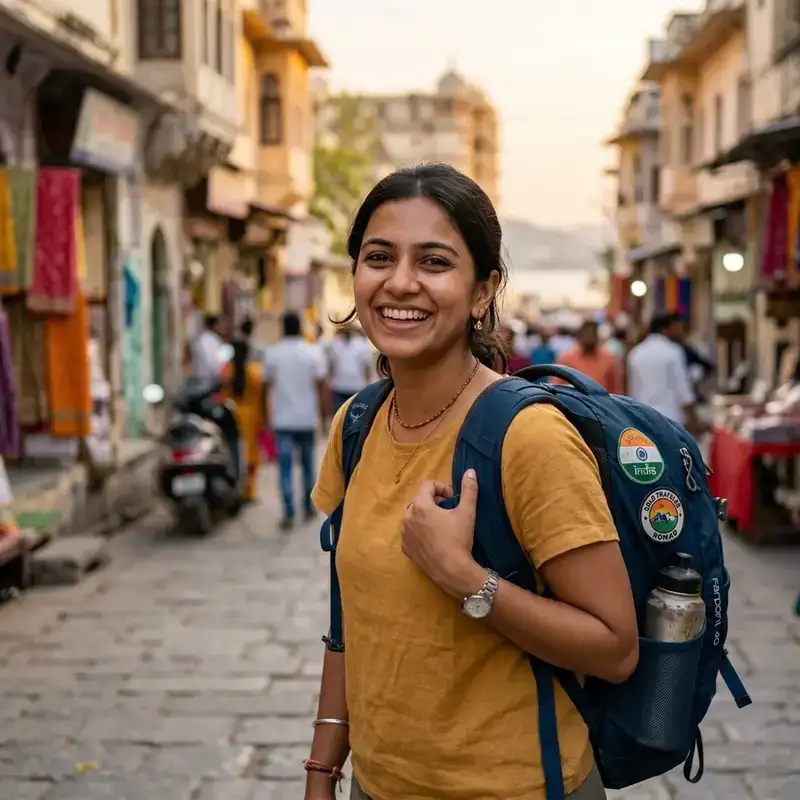
The Siren Call of the Indian Ocean The Maldives is not merely a destination; it is an archipelago of 1,192 coral islands that define the pinnacle of tropical indulgence. As an expert observer of global travel trends, I have witnessed the evolution of this nation from a secluded diving retreat to the global epicenter of "barefoot luxury." Yet, beneath the veneer of champagne sunsets and private infinity pools lies a geography fighting for its very existence. The iconic overwater bungalows, which have become the visual shorthand for paradise, occupy a unique space in the tension between high-end tourism and environmental stewardship. When you step onto the wooden jetty of a private island resort, you are entering a micro-economy that operates on a razor-thin margin between environmental extraction and preservation. The sustainability of this model relies on the ability of the tourism industry to pivot from passive enjoyment to active conservation. The Maldivian government, alongside private hospitality conglomerates, is increasingly mandating that resorts invest in their immediate marine surroundings. This is no longer just about planting a few coral fragments; it is about complex bio-rock infrastructure, large-scale seagrass protection, and the mitigation of carbon footprints in one of the most remote regions on Earth. For the discerning traveler in 2026, the question is no longer just "Is the water clear?" but "How does my stay contribute to keeping it that way?" The modern voyager understands that their footprint is indelible, and they choose to make it as light as possible. As we delve into the mechanics of living, vacationing, and protecting this aquatic heaven, remember that your choice of accommodation dictates the survival of the reefs that protect these islands from the rising tide.Luxury Living at the Edge of the Reef Staying in an overwater villa offers an unparalleled sensory experience, but it also places the guest directly atop a fragile nursery. Coral reefs are the beating heart of the Maldives, acting as natural breakwaters against the volatile Indian Ocean. Without these structures, many of the islands would struggle to maintain their physical integrity. In the past, the construction of villas involved dredging and land reclamation, which often suffocated the very reefs being advertised. Today, the narrative has shifted. Leading resorts are adopting "no-net-loss" policies, where the footprint of a villa is offset by the creation of new, protected nursery zones. Guests are now invited to participate in the "adopt-a-coral" programs, which are becoming standard fare in luxury travel packages. When you book your stay, look for properties that utilize non-invasive pillar construction, allowing water to flow naturally beneath your villa, maintaining the connectivity of the reef ecosystem. The cost of this luxury is significant, yet it is a necessary investment to ensure that the Maldivian dream remains a physical reality rather than a digital archive. In terms of your personal expenditure, planning for 2026 requires understanding that sustainability is often bundled into the premium rates. However, the premium is worth the cost when you realize that your presence is funding the marine biologists who patrol these reefs. The intersection of architectural marvels and environmental responsibility is where the true prestige of Maldivian travel now resides. You are not just paying for a room; you are paying for the continued guardianship of an underwater cathedral. Navigating the 2026 Economic Landscape For those considering the Maldives as more than a short-term destination—perhaps as a digital nomad hub or an expat home—the economic landscape of 2026 is complex. The cost of living is heavily influenced by the import-dependent nature of the archipelago. While local markets offer fresh, vibrant produce, anything beyond the basics, such as imported spirits, international culinary staples, or high-speed hardware, carries a significant markup due to the logistics of island-to-island transport. Understanding the price structure is vital for anyone planning an extended stay. In the capital, Malé, the cost of living is distinct from that of the private resort islands. As an expat, you will find that rent constitutes the bulk of your expenditure. Finding a long-term lease requires navigating a market that is increasingly geared toward luxury tourism, which can inflate prices for non-nationals. When budgeting for 2026, account for the fluctuating cost of utilities, specifically electricity and desalination. Water management is a critical issue; while you are surrounded by the sea, fresh water is a precious commodity. You must factor in the cost of high-quality internet connectivity, which, while improved, can be expensive compared to mainland hubs. Furthermore, visa pathways have become more streamlined, yet they necessitate proof of financial stability that exceeds the requirements of many other Southeast Asian or South Asian nations. The Maldives is not a low-cost getaway; it is a high-value investment in an exclusive lifestyle that demands fiscal foresight and respect for the local economic challenges.Economic Data and Local Price Trends The table below provides a representative snapshot of costs in the Maldives for the year 2026. Note that these are estimated averages based on prevailing trends; actual costs will fluctuate significantly depending on whether you are situated on a local island or an isolated luxury resort.Expense Category Estimated Monthly Cost (USD) Notes for 2026Apartment Rent (1 BR in Malé) $1,200 - $2,200 Prices rise sharply near the waterfront.Basic Utilities (Elect/Water) $150 - $250 Highly dependent on AC usage and conservation.Local Market Groceries $400 - $600 Focus on local fish/fruits to keep costs low.Imported Goods/Alcohol $300 - $500 High taxes on non-local items remain in effect.High-Speed Internet Plan $60 - $120 Vital for remote work, varies by ISP.Transport (Ferry/Speedboat) $100 - $300 Varies by distance from island-to-island.This data illustrates the premium placed on resource accessibility. Whether you are stocking up for a week or planning a month of remote work, prioritize local supply chains to support the national economy and manage your budget effectively. Conservation as the New Standard of Luxury The true luxury in the Maldives for 2026 is no longer about gold-plated taps or marble floors; it is about biodiversity. The most prestigious resorts are those that have successfully integrated "coral regeneration" into their branding. I have seen firsthand how resorts now mandate that their guests receive a briefing on reef etiquette. This includes the use of reef-safe sunscreens, strict "no-touch" policies, and the prohibition of single-use plastics. The transition from luxury-as-consumption to luxury-as-stewardship is the most vital development in the industry. Marine biologists are now as essential to a resort’s operation as a head chef. These experts lead night-snorkeling tours that educate visitors on the bioluminescence and nocturnal feeding habits of reef inhabitants. They manage coral propagation frames, which are essentially underwater nurseries that grow resilient coral species that can withstand rising sea temperatures. As a guest, engaging with these conservation efforts adds a layer of depth to your experience that a standard resort stay simply cannot provide. You are witnessing the frontline of climate adaptation. The reefs are the first line of defense against the rising sea levels that threaten the very existence of these low-lying islands. Therefore, supporting these programs is not just a virtuous act; it is a way to ensure that the archipelago remains a place you can return to in the coming decades. When you book, look for the 'Green Globe' or 'EarthCheck' certifications, which signal a verified commitment to these practices. Your participation in these initiatives turns your vacation into a partnership with nature.The Future of the Archipelago: Beyond the Horizon Looking toward the future, the Maldives stands at a crossroads. The economic viability of the nation remains inextricably linked to the health of its natural wonders. As we move further into the decade, we will see an increased reliance on smart-island technology—solar-powered desalination, automated waste management systems, and AI-driven monitoring of reef health. This technological adoption is not just for efficiency; it is an existential necessity. For the traveler, this means that the Maldives is becoming a living laboratory for sustainable tourism. If you are planning to visit or settle in the Maldives, bring with you a sense of responsibility. Engage with the local culture, which is deeply rooted in the Islamic tradition and seafaring history. Support local businesses on the inhabited islands, where you can find authentic Maldivian cuisine—try the mas huni, a traditional breakfast of tuna and coconut, which is not only delicious but also utilizes the bounty of the ocean in a sustainable manner. The Maldives of 2026 is a place of profound beauty, but it is also a place that demands humility from its visitors. By choosing to travel consciously, you are acknowledging that the privilege of witnessing this paradise comes with the duty to preserve it. The water is calling, and it is clearer than ever that the path forward must be paved with respect, research, and a deep, enduring commitment to the conservation of the world’s most precious coral kingdom. We must ensure that the legacy of the Maldives is not one of lost islands, but of a global success story in environmental adaptation and resilient human joy. The lasting impression of the Maldives is one of absolute clarity—a clarity of water, of light, and of purpose. Whether you are an expat working from a bustling local cafe in Hulhumalé or a traveler relaxing in an overwater villa in the Baa Atoll, you are part of a narrative that is far larger than your individual stay. The choices we make today regarding our consumption, our waste, and our interaction with the reef will echo in the depths for generations. May your journey to this island nation be one of discovery, not just of the landscapes, but of your own capacity to contribute to the preservation of the extraordinary. #SustainableTravel #MaldivesConservation #IslandLife #EcoLuxury #GlobalNomad Related InsightsGrüne Pfade: Wie nachhaltiger Tourismus das Herz der Erde bewahrt Australien: Wo die Ewigkeit des Outbacks auf den Puls der Moderne trifft Echoes in Stone: Unearthing Sardinia's Lost Cyclopean Mysteries in the Wild Heart of Barbagia{ "@context": "https://schema.org", "@type": "FAQPage", "mainEntity": [ { "@type": "Question", "name": "What is the main focus of Azure Horizons and Fragile Ecosystems: The Maldives Reality Check?", "acceptedAnswer": { "@type": "Answer", "text": "Explore the delicate balance between Maldives luxury overwater living and urgent coral reef conservation, complete with essential 2026 economic insights." } }, { "@type": "Question", "name": "Who authored the comprehensive guide on Azure Horizons and Fragile Ecosystems: The Maldives Reality Check?", "acceptedAnswer": { "@type": "Answer", "text": "This detailed article and its insights were carefully researched and authored by Aisha Sharma." } }, { "@type": "Question", "name": "Where can I find more related content about Travel?", "acceptedAnswer": { "@type": "Answer", "text": "You can explore more articles, detailed reviews, and similar insights by browsing the Related Insights section at the bottom of this article or visiting our dedicated Travel category page." } } ] }

-
 Omar Al-Hassan
 - 13 Sep, 2026 11:56
The Immutable Ledger of Discovery: Architecting the Future of Global Research via DeSci
The Silent Crisis in the Ivory Tower The academic research ecosystem is currently buckling under the weight of its own infrastructure. As I observe the velocity of innovation in the software sector—driven by open-source collaboration, rapid iteration, and transparent CI/CD pipelines—the contrast with the traditional scientific method remains stark. For decades, the dissemination of knowledge has been gated by archaic legacy publishers, opaque peer-review processes, and a funding landscape that incentivizes "publish-or-perish" metrics rather than long-term, high-impact scientific breakthroughs. As a software architect witnessing the intersection of distributed ledger technology and laboratory science, I recognize the fundamental bottleneck: trust. Trust in scientific inquiry is currently proxied through centralized institutions that operate as silos. When we examine the technical debt inherent in current academic publishing—where data is often inaccessible, peer review is uncompensated and prone to bias, and funding is subject to political or administrative whim—we see an opportunity for a structural paradigm shift. Decentralized Science, or DeSci, is not merely a buzzword; it is a fundamental architectural refactor of the scientific lifecycle. By leveraging cryptographic verification, decentralized identity (DID) standards, and automated smart contract funding, we are transitioning from a model of "authoritarian science" to one of "permissionless discovery." This article dissects the technical implementation of these systems, moving beyond the hype to explore the actual state of decentralized protocol design, peer-review incentivization, and the cryptographic provenance of raw experimental data.Cryptographic Provenance and Immutable Data Integrity The primary hurdle in modern science is reproducibility. When we consider the "replication crisis," we are essentially discussing an issue of data provenance and lineage. In the legacy model, raw data is often sanitized, selectively reported, or—worse—lost entirely once the finalized PDF is published in a journal. From a software engineering perspective, this is a version control failure. We lack a robust, immutable hash of the experimental conditions, the raw datasets, and the resultant findings. In the DeSci stack, we integrate InterPlanetary File System (IPFS) and Arweave to ensure content-addressable storage for raw scientific output. By pinning experimental data to these networks and minting a non-fungible token (NFT) or a verifiable credential that references the Content Identifier (CID), we create an immutable record that links an experiment to its physical execution. Consider a system where a lab scientist commits their Jupyter Notebooks directly to an immutable ledger via a decentralized storage protocol. The following Python snippet demonstrates how one might interact with an IPFS gateway to pin a raw experimental dataset, ensuring the hash is stored on a smart contract for perpetual verification. import ipfshttpclient import json# Connecting to a local or remote IPFS node client = ipfshttpclient.connect()def upload_and_pin_research_data(data_dict, metadata): # Constructing the research artifact payload = { "data": data_dict, "metadata": metadata, "timestamp": 1726228563 } # Adding to IPFS res = client.add_json(payload) cid = res['Hash'] # Pinning for persistence client.pin.add(cid) print(f"Data successfully pinned with CID: {cid}") return cid# Example usage data = {"ph_level": 7.4, "reagent_volume": 2.5} meta = {"experiment_id": "exp-001", "researcher": "Dr. Aris"} cid = upload_and_pin_research_data(data, meta)By transitioning data handling to this model, we eliminate the ability for malicious actors to alter findings post-hoc. The CID becomes the single source of truth, verifiable by any third party with internet access, effectively democratizing access to raw data that would otherwise be sequestered behind institutional paywalls. Smart Contract Orchestration for Research Grants Funding research has historically been a black box, defined by bureaucratic overhead and high administrative friction. Decentralized Autonomous Organizations (DAOs) represent the next evolution in capital allocation. By implementing "Quadratic Funding" (QF) algorithms on-chain, DeSci protocols like Gitcoin have demonstrated that the wisdom of the crowd can outperform traditional grant committees. Quadratic Funding solves the "free-rider" problem by weighing the number of unique contributors more heavily than the absolute dollar amount contributed. This ensures that projects with broad community support are prioritized over projects that might only have a single high-net-worth institutional backer. Below is a conceptual representation of how a Solidity-based grant disbursement contract might look to ensure transparency in treasury management. // SPDX-License-Identifier: MIT pragma solidity ^0.8.0;contract ResearchGrantPool { address public owner; mapping(address => uint256) public contributions; event GrantFunded(address indexed recipient, uint256 amount); constructor() { owner = msg.sender; } function contribute(address _recipient) external payable { require(msg.value > 0, "Contribution must be positive"); contributions[msg.sender] += msg.value; // Logic for quadratic funding matching could be added here emit GrantFunded(_recipient, msg.value); } function withdraw(uint256 _amount) external { require(msg.sender == owner, "Unauthorized"); payable(owner).transfer(_amount); } }This model shifts the power from a centralized entity—such as a government agency or a corporate board—to a decentralized collective of stakeholders. In this environment, the "governance token" acts as a weight, but the technical execution is purely algorithmic, mitigating the influence of nepotism and historical bias that often infects legacy grant systems.Decentralized Peer Review Incentives Peer review is the bottleneck of modern science, characterized by a fundamental misalignment of incentives. Currently, reviewers work for free, often facing enormous time pressures, while private journals reap the financial rewards of the published output. DeSci replaces this with a tokenized economy where intellectual labor is recognized, rewarded, and verifiable. By utilizing reputation scores linked to decentralized identifiers (DIDs), we can create a system where a scientist’s "reviewer rating" is just as significant as their citation count. When a scientist provides a high-quality review—verified by the community through a multi-signature consensus mechanism—they are rewarded with utility tokens. This incentivizes promptness and rigorous analysis. The architecture for such a system requires a robust off-chain-to-on-chain bridge. We use Oracle networks, like Chainlink, to relay reviews from trusted platforms into the smart contract state. This allows the decentralized research protocol to automatically trigger incentive distributions based on the metadata of a completed review. It is a closed-loop system where high-quality research leads to funding, which leads to high-quality reviews, which in turn fuels the next cycle of funding. Secure Identity and Authorization in Scientific Collaboration The pseudonymity of Web3 often conflicts with the need for academic credibility. How do we ensure that the person behind the research is, in fact, the subject matter expert they claim to be? The answer lies in Zero-Knowledge Proofs (ZKPs) and decentralized credentials. Researchers can issue Verifiable Credentials (VCs) from academic institutions that represent their identity and qualifications without revealing their entire personal history. By using ZKPs (e.g., zk-SNARKs), a researcher can prove that they hold a PhD in Molecular Biology from a specific university without needing to share their passport or personal address with the entire protocol. This balance between privacy and verified authority is paramount for encouraging widespread adoption within the scientific community, which is notoriously conservative regarding data privacy and intellectual property. Scaling Distributed Lab Infrastructure The ultimate promise of DeSci is the automation of the entire R&D pipeline. We are currently seeing the rise of "Cloud Labs," where physical experiments are controlled remotely by API calls. When you combine this with Web3 orchestration, you get an autonomous, decentralized scientific network. Imagine a scenario where an AI agent designs a protein-folding experiment, requests funding from a DAO via smart contract, reserves time on a remote robotic Cloud Lab, and commits the results to IPFS—all without human intervention. This is not science fiction. With current tooling, such as Gnosis Safe for treasury management and automated GitHub Actions for CI/CD, we can build the prototype for a "Scientific Autonomous Organization" (SAO). The following YAML configuration illustrates how a CI/CD pipeline might automate the verification of a simulation-based experiment, ensuring that all data generated during a build is properly hashed and stored before the results are accepted. name: Research Pipeline on: [push]jobs: validate-experiment: runs-on: ubuntu-latest steps: - name: Checkout Code uses: actions/checkout@v3 - name: Run Simulation run: python3 simulate_protein.py --output results.json - name: Verify Hash run: | SHASUM=$(sha256sum results.json | awk '{print $1}') echo "Data Integrity Hash: $SHASUM" - name: Push to Decentralized Storage env: IPFS_API_KEY: ${{ secrets.IPFS_KEY }} run: | # Command to pin results to Pinata or similar IPFS service curl -X POST -F file=@results.json https://api.pinata.cloud/pinning/pinFileToIPFSThis represents the convergence of DevOps practices and scientific discovery. By bringing the rigors of software engineering to the laboratory, we increase the velocity of discovery by orders of magnitude, moving from slow, manual cycles to high-throughput, automated research pipelines. The Future of Permissionless Discovery The transition to Decentralized Science represents a fundamental shift in how human knowledge is generated and verified. We are moving away from centralized gatekeepers and toward a network of transparent, trustless, and highly incentivized protocols. This is not about removing institutions; it is about refactoring the underlying protocols that enable them to function. As an engineer, I view DeSci as the most significant "open source" movement of the century, applying the principles of transparency and collaboration to the most vital asset of our species: our collective intelligence. We are currently in the early stages of this transition. The tooling is still fragmented, and the adoption curve is steep. However, the foundational technology—smart contracts, decentralized storage, and cryptographic verification—is ready. As more labs, universities, and individual scientists migrate their workflows to these decentralized rails, the efficiency of research will undoubtedly see a paradigm shift, leading to more reproducible findings, faster iteration cycles, and a more equitable distribution of scientific wealth. The future of discovery is not locked in a proprietary vault; it is stored on the ledger, open for all to audit, build upon, and eventually, advance for the benefit of humanity. The protocols are live, the contracts are deployed, and the era of the decentralized researcher has officially arrived. #DeSci #Web3 #Blockchain #OpenScience #DevOps #ResearchTech #DecentralizedGovernance Related InsightsFinOps: Optimizing Cloud Spend with Financial Accountability How to Set Up a Privacy-First Smart Home Using Edge AI Hubs The AI Crucible: Forging Medical Breakthroughs at Warp Speed in Drug Discovery{ "@context": "https://schema.org", "@type": "FAQPage", "mainEntity": [ { "@type": "Question", "name": "What is the main focus of The Immutable Ledger of Discovery: Architecting the Future of Global Research via DeSci?", "acceptedAnswer": { "@type": "Answer", "text": "An in-depth technical analysis of how blockchain, smart contracts, and decentralized autonomous organizations are disrupting the archaic models of academic publishing and research funding." } }, { "@type": "Question", "name": "Who authored the comprehensive guide on The Immutable Ledger of Discovery: Architecting the Future of Global Research via DeSci?", "acceptedAnswer": { "@type": "Answer", "text": "This detailed article and its insights were carefully researched and authored by Omar Al-Hassan." } }, { "@type": "Question", "name": "Where can I find more related content about Technology?", "acceptedAnswer": { "@type": "Answer", "text": "You can explore more articles, detailed reviews, and similar insights by browsing the Related Insights section at the bottom of this article or visiting our dedicated Technology category page." } } ] }

-
 Isabella Rossi
 - 12 Sep, 2026 20:52
The Gastronomic Odyssey: From Charred Street Corn to the Pinnacle of Michelin Perfection
Where Smoke Meets Salt: The Soul of the Street Market To understand the trajectory of human civilization, one need not look at monuments of stone or archives of political mandates; one must look at the grill. The humble origins of street food—from the charred elotes of Mexico City to the aromatic satay skewers of Southeast Asia—represent the foundational DNA of global dining. As travelers, we often find our most profound culinary epiphanies not under the chandelier of a Michelin-starred establishment, but standing on a dusty corner, waiting for a vendor to flip a tortilla. Street food is an exercise in efficiency, aesthetics, and raw business logic. When we examine the culinary landscape, particularly in Mediterranean bastions like Greece, the intersection of the farmers' market and the environmental ecosystem becomes undeniably clear. The "Culinary Landscape of Greece," as analyzed in recent research, is not merely a collection of recipes; it is a manifestation of marketing dynamics. Small-scale producers operate within a closed-loop system where the aesthetics of the harvest dictate the value of the market stall. This is the bedrock upon which high cuisine is built. When a chef sources a perfectly ripened tomato from a local Greek market, they are engaging in a marketing strategy that favors authenticity over industrial processing. The sensory experience of the street market—the scent of charcoal, the cacophony of vendors, the tactile engagement with raw ingredients—provides the necessary "curiosity quotient" for the modern explorer. For the traveler, this is where the expedition begins. It is a lesson in terroir. Whether it is a taco stand in Oaxaca or a souvlaki cart in Athens, the street vendor is the unsung pioneer of global flavor, teaching us that the highest quality food often requires the least amount of pretense. By observing these micro-economies, we gain a deeper appreciation for the rigor that later defines the world of fine dining.The Contradictions of Australian Flavor and Identity When we turn our gaze to the Southern Hemisphere, the narrative of food takes a sharp, political turn. Australia presents a fascinating case study in how a nation defines its culinary soul. The research paper "Terra nullius, culina nullius: the contradictions of Australian food culture" highlights a critical academic tension: the intersection of political science and the plate. For centuries, the concept of terra nullius—or "land belonging to no one"—was used to justify colonial expansion. Today, the culinary equivalent is often debated as scholars examine whether Australian food culture successfully integrates Indigenous ingredients or if it continues to operate within a vacuum of colonial appropriation. For the traveler, this is a pivotal stop on the expedition. The Australian food scene is a paradox. It is defined by high-end coffee culture, fusion brilliance, and world-class wine, yet it struggles with the historical weight of its own foundations. When you dine in Sydney or Melbourne, you are witnessing an evolution. The movement toward "bush tucker"—utilizing native ingredients like finger lime, wattleseed, and macadamia—represents a reclamation of identity. It is an attempt to turn culina nullius into a legitimate, recognized culinary heritage. Understanding this dynamic is essential for the curious traveler. When you order a meal in an Australian bistro, look for the subtle infusion of native flora. This is not just a trend; it is a political statement of reconciliation and culinary evolution. The transition from street corn to haute cuisine in the Australian context is less about the refinement of the grill and more about the refinement of the national consciousness. By engaging with this reality, we as travelers stop being passive consumers and start becoming informed observers of a culinary history in the making. The complexity of these dishes is rooted in the landscape itself, demanding that we respect the geography as much as the flavor profile. From the Farmers' Market to the White Tablecloth The transition from a raw, local marketplace to the pressurized environment of a Michelin-starred kitchen is a journey of transformation. This path is defined by a rigorous obsession with aesthetics, sourcing, and the marketing of experience. Research into the Greek culinary landscape demonstrates that the farmers' market is not just a place of trade; it is an incubator for excellence. The relationship between the environment—the soil, the sun, the Mediterranean winds—and the product is the ultimate differentiator for elite chefs. Consider the journey of a single olive or a bundle of wild mountain herbs. In the market, they are commodities; in the kitchen of a Michelin-starred chef, they are the focal point of a sensory performance. The "Business and Marketing" of fine dining relies on the ability of the chef to translate the authenticity of the local farmer into a narrative that justifies the price point and the prestige. This is not an easy feat. It requires an intimate understanding of the seasonality that the market dictates. For the traveler, this stage of the expedition is about recognizing the "why" behind the plate. Why does a particular dish in a fine dining restaurant resonate so deeply? It is because the chef has distilled the best elements of the local ecosystem. They have taken the "street corn" ethos—the raw, unadulterated flavor of the ingredient—and elevated it through technique, precision, and a narrative that honors the producer. This cycle is the backbone of the global food industry. We move from the market, where we learn the language of food, to the restaurant, where we experience the literature of food.The Global Plate: A Comparative Analysis of Cost and Quality To fully grasp the global food expedition, we must look at the metrics that define our spending and consumption patterns. The following table provides a breakdown of how the cost of a "culinary experience" fluctuates based on the environment, the labor involved, and the prestige of the establishment. This comparative data reflects the real-world financial realities faced by travelers and residents alike in major food hubs.Culinary Segment Typical Cost (USD) Primary Focus Sourcing StrategyStreet Food $3 - $12 Speed & Flavor Hyper-local/DailyMid-Range Bistro $25 - $60 Comfort & Texture Regional/SeasonalMichelin Experience $150 - $500+ Innovation & Story Artisanal/ExclusiveFarmers' Market $10 - $30 Freshness & Raw Direct from FarmerAs this data suggests, the price gap is not merely a reflection of food quantity but of "added value." In the Michelin-starred category, you are paying for the rigorous labor, the aesthetic curation, and the intellectual effort of the culinary team. Conversely, the street food sector provides the highest return on investment regarding pure, unadorned flavor. The savvy traveler is one who learns to balance these experiences, using the farmers' market to build a vocabulary of ingredients and the high-end restaurant to see how those ingredients can reach their artistic zenith. By analyzing these numbers, we see that the global food expedition is, in many ways, an exercise in resource management—how do we extract the most meaning and pleasure from the food systems available to us in any given destination? The Ethics of Global Gastronomy and the Future of Food As we conclude this journey, we must address the ethics of the table. The global food expedition is becoming increasingly centered on sustainability and the preservation of culture. Whether we are discussing the Indigenous food movements in Australia or the agricultural preservation efforts in Greece, the modern food movement is moving away from globalization and back toward localization. The "Curious Traveler" now has a responsibility to support these micro-economies. We have explored the street market, examined the complexities of colonial-tainted culinary identity, and witnessed the transformation of local ingredients into fine art. What binds these experiences together is a shared dependence on the environment. The "Business, Marketing, and Aesthetics" of food is ultimately tethered to the health of our earth. The farmers' market, once a simple place of commerce, is now the front line of environmental advocacy. The Michelin-starred restaurant, once a beacon of exclusivity, is now often a leader in zero-waste initiatives and carbon-neutral sourcing. As you plan your next culinary expedition, look beyond the guidebooks. Seek out the contradiction; find the street food stall that challenges your perception of "cheap," and visit the fine dining establishment that challenges your perception of "elite." Pay attention to the provenance of your ingredients. In a world that is becoming increasingly homogenized, the true luxury is eating food that tells a specific, regional story—a story that begins in the dirt and ends in a moment of pure, culinary perfection. Your role as a traveler is to listen to that story, value the labor behind it, and contribute to the ecosystems that sustain these diverse food cultures. The expedition never truly ends; it merely changes the menu.Harvesting Memories from the Global Trail Reflecting on our global expedition, it becomes evident that the distance between a piece of street-grilled corn and a dish adorned with a Michelin star is shorter than we often imagine. It is a bridge built on quality, history, and the tireless pursuit of culinary truth. We have traveled from the political landscapes of Australia to the sun-drenched markets of Greece, recognizing that every bite carries the weight of history and the promise of the future. The "curious traveler" is defined by an appetite that is never fully sated. We seek the next market, the next hidden kitchen, and the next ingredient that tells a story of survival and triumph. As we move forward, let us remember that the most authoritative culinary critics are not those in suits and ties, but the people who stand in line for their daily bread, the farmers who tend the soil with calloused hands, and the chefs who look at a tomato and see the entire world. Carry this awareness with you as you navigate your next destination. Seek the markets where the air is thick with the scent of the local harvest. Respect the restaurants that prioritize the integrity of the ecosystem. Most importantly, understand that your dining choices are, in effect, a vote for the type of food culture you wish to see thrive. Whether you are seeking a cheap, life-changing snack or an evening of refined excellence, the global food expedition remains the most rewarding way to understand the heart of a civilization. May your plate always be full, your curiosity always be piqued, and your journey always be seasoned with the unexpected. #Gastronomy #FoodTravel #CulinaryExpedition #SlowFood #GlobalDining Related InsightsDelighting in the Flavors of Lemony Chicken Piccata with Capers and Spinach L'Anima della Cucina Italiana: Non Solo Cibo, ma una Storia d'Amore nel Piatto Avocado and Poached Egg Toast on Sourdough{ "@context": "https://schema.org", "@type": "FAQPage", "mainEntity": [ { "@type": "Question", "name": "What is the main focus of The Gastronomic Odyssey: From Charred Street Corn to the Pinnacle of Michelin Perfection?", "acceptedAnswer": { "@type": "Answer", "text": "Join Isabella Rossi on a deep dive into the world’s most fascinating culinary landscapes, exploring the rich tapestry of street food versus fine dining." } }, { "@type": "Question", "name": "Who authored the comprehensive guide on The Gastronomic Odyssey: From Charred Street Corn to the Pinnacle of Michelin Perfection?", "acceptedAnswer": { "@type": "Answer", "text": "This detailed article and its insights were carefully researched and authored by Isabella Rossi." } }, { "@type": "Question", "name": "Where can I find more related content about Food?", "acceptedAnswer": { "@type": "Answer", "text": "You can explore more articles, detailed reviews, and similar insights by browsing the Related Insights section at the bottom of this article or visiting our dedicated Food category page." } } ] }

- Omar Al-Hassan
- 12 Sep, 2026 20:36
Quantum Financial Architectures: Transcending Classical Optimization Limits
The Quantum Frontier of High-Frequency Capital Markets The landscape of quantitative finance has long been dominated by the ghost of classical optimization. From Black-Scholes derivatives to Monte Carlo simulations, our current financial infrastructure is tethered to the computational limits of von Neumann architectures. However, we are currently witnessing a seismic shift. The convergence of fault-tolerant quantum error correction and multimodal visual intelligence—exemplified by architectures like SenseNova-U1.5—is beginning to offer a glimpse into a future where market efficiency is no longer bounded by linear probability density functions. As we scale towards practical quantum advantage, the challenge lies not in raw qubit count, but in the coherence of our error-correction protocols. Financial models require absolute fidelity; a bit-flip in a high-frequency trading algorithm or a corrupted data block in risk assessment could trigger catastrophic market instability. This is where the mathematical rigor of Rényi coherent information becomes paramount. By moving beyond classical Shannon entropy and embracing the hierarchy of Rényi indices, we can construct robust, fault-tolerant pipelines that ensure our quantum financial models remain stable even in the presence of stochastic Pauli noise. We are entering an era where capital allocation is driven by topological data analysis and quantum-native reasoning, transcending the binary constraints of the past. ![] Error Correction and the Reliability of Financial Data In the realm of quantum-enhanced financial modeling, the integrity of the data stream is the primary obstacle to widespread adoption. Classical financial data is often noisy, incomplete, and highly asynchronous. When we map these parameters onto quantum states, we encounter Pauli noise generated by independent Bernoulli events—common in volatile market indicators. The recent advancements in stabilizer codes provide a robust framework for handling this. The core insight from recent developments in Rényi coherent information is that we no longer need to rely exclusively on von Neumann entropy. For stabilizer codes, the Rényi-$n$ coherent information acts as a powerful, computable proxy. Because this metric is nondecreasing in $n$ for independent Pauli noise, it provides a stable threshold for quantum error correction. In practice, this means we can establish a hierarchy of reliability. When our quantum circuits execute financial forecasting tasks, we can utilize syndrome-conditioned recovery to filter out stochastic noise before it propagates into the decision-making layer of our portfolios. Consider the following implementation of a stabilizer-check simulator in Python, designed to evaluate the robustness of a state preparation against bit-flip errors. import numpy as npclass StabilizerFinancialModel: """ A foundational class to simulate stabilizer error correction for quantum financial volatility forecasting. """ def __init__(self, n_qubits): self.n_qubits = n_qubits self.syndromes = np.zeros(n_qubits) def measure_syndrome(self, state, noise_model): # Simulate Pauli noise effect on the syndrome-logical class noise = np.random.binomial(1, noise_model, self.n_qubits) self.syndromes = (self.syndromes + noise) % 2 return self.syndromes def calculate_renyi_proxy(self, syndrome_bits, index=2): # Calculating Rényi entropy difference H_n(C) - H_n(T) # Simplified proxy for coherent information saturation entropy_c = -np.sum((syndrome_bits / np.sum(syndrome_bits)) * np.log2(syndrome_bits / np.sum(syndrome_bits))) return entropy_c # Implementation of the syndrome check model = StabilizerFinancialModel(n_qubits=128) current_syndrome = model.measure_syndrome(state=None, noise_model=0.05) print(f"Rényi-proxy coherence level: {model.calculate_renyi_proxy(current_syndrome)}")Multimodal Synergy in Financial Intelligence While quantum circuits handle the mathematical optimization of portfolios, the interpretation of unstructured financial data—news feeds, infographic market reports, and global visual trends—requires a different breed of intelligence. This is where models like SenseNova-U1.5 redefine the paradigm. By moving toward a native unified multimodal framework, we eliminate the reliance on VAEs or encoder-heavy architectures that often degrade visual fidelity in complex financial infographics. The capability of these models to perform spatially coherent patch reconstruction is not merely a benchmark for image generation; it is a breakthrough for interpreting financial charts, multi-page technical audits, and complex asset-class interdependencies. When we integrate this visual reasoning with quantum optimization, we create an end-to-end system where the "visual" state of the market (e.g., chart patterns, global supply chain bottlenecks visualized via infographics) is fed directly into the quantum processor as a series of structured parameters. The model’s ability to handle high-resolution visual input (up to 4K) allows us to detect subtle trend reversals that are invisible to classical OCR-based analysis. Scaling Financial Optimization via On-Policy Distillation The training of financial AI requires specialized experts. A standard large language model often misses the nuances of volatility modeling or the specific requirements of regulatory compliance in financial reporting. By utilizing multi-expert on-policy distillation, we can distill the intelligence of a massive MoT (Mixture-of-Tokens) architecture into a specialized financial reasoning agent. In a production environment, this translates to deployment patterns that rely on specialized infrastructure. We must consider how these models scale within a Kubernetes environment, where GPU-intensive visual processing meets the latency requirements of financial feedback loops. The following configuration demonstrates a production-grade deployment for a multimodal inference service that could theoretically serve as the intake layer for our quantum optimizer. apiVersion: apps/v1 kind: Deployment metadata: name: financial-vision-engine spec: replicas: 3 selector: matchLabels: app: sense-nova-fin template: metadata: labels: app: sense-nova-fin spec: containers: - name: multimodal-inference image: sense-nova-u1.5:latest resources: limits: nvidia.com/gpu: 4 memory: "64Gi" env: - name: REINFORCEMENT_LEARNING_MODE value: "on-policy" - name: EXPERT_AESTHETICS_WEIGHT value: "0.85"Topological Stability and Market Asymptotics One of the most profound intersections between physics and finance is the concept of saturation in coherent information. In the context of the arXiv research on stabilizer codes, the saturation of Rényi coherent information is proven to be equivalent to asymptotically perfect recovery. In financial terms, this implies a "limit of information" where our ability to hedge against risk becomes theoretically perfect—given, of course, that our quantum noise is controlled. When we model market portfolios as stabilizer codes, the "logical classes" correspond to our high-level asset strategies, and the "syndromes" are the real-time adjustments required by market fluctuations. As our models increase in complexity (the Rényi index $n$), we essentially refine our ability to filter out market noise. This is not just a mathematical curiosity; it is a roadmap for building the next generation of algorithmic trading platforms that can survive "black swan" events by treating them as syndrome anomalies rather than unforeseen disruptions. By applying the postselection technique mentioned in recent research—matching syndromes between one data block and $n-1$ auxiliary blocks—we can effectively "post-select" the most stable market states for our algorithmic execution, ignoring segments of the market that exhibit high-entropy, low-predictability characteristics. ![] Synthesis of Quantum and AI Paradigms The future of fintech is not binary; it is a blend of probabilistic quantum error-correction and high-dimensional AI reasoning. We are transitioning away from systems that "guess" the market towards systems that "observe and compute" the market with physical precision. The integration of SenseNova-U1.5’s visual reasoning allows us to ingest market data at a scale previously reserved for human perception, while the quantum stabilizer protocols ensure that our subsequent optimization steps are mathematically sound and resistant to the stochastic noise inherent in real-world trading environments. This is a multi-disciplinary challenge that requires deep knowledge of both the underlying Hilbert space physics and the high-level architecture of distributed AI systems. As we move forward, the competitive advantage in the global financial market will belong to those who can bridge this gap—the developers and quants who can translate abstract Rényi-index proofs into scalable, containerized, and fault-tolerant software. We are no longer limited by the noise of the classical world; we are constructing a bridge to a deterministic, high-fidelity future. The Path Toward Quantum-Financial Sovereignty We have navigated the technical complexities of stabilizer codes and the multimodal advancements in visual intelligence to arrive at a powerful synthesis. The hierarchy of Rényi information is more than a theoretical tool; it is the cornerstone of our future error-correction strategies in financial modeling. By utilizing the nondecreasing nature of Rényi coherent information, we ensure that our risk assessment protocols are not only accurate but inherently stable against the chaotic variables of the global economy. Simultaneously, by adopting end-to-end architectures like SenseNova-U1.5, we remove the "black box" nature of classical AI systems, enabling a higher degree of interpretability and instruction-following that is essential for regulated financial environments. The code blocks provided demonstrate the practical application of these theoretical breakthroughs—from simulating quantum syndromes to deploying specialized multimodal agents in a production environment. The convergence of these technologies signifies the end of the "classical approximation" era. We are moving toward a period of high-precision financial engineering where the mathematical certainty of quantum mechanics meets the cognitive flexibility of multimodal AI. The architects of this future will be those who master both the physics of information and the engineering of intelligence. The infrastructure is being built today; the markets of tomorrow await the results of this synthesis. #QuantumComputing #FinancialModeling #AI #RényiEntropy #FinTech #StabilizerCodes #HighPerformanceComputing Related InsightsAlgorithmic Sovereignty: Deconstructing the DAO Paradox in On-Chain Governance Beyond the Horizon of 5G: Unlocking the Secrets of 6G Wireless Standards Mind Meld: Unlocking the Potential of Brain-Computer Interfaces{ "@context": "https://schema.org", "@type": "FAQPage", "mainEntity": [ { "@type": "Question", "name": "What is the main focus of Quantum Financial Architectures: Transcending Classical Optimization Limits?", "acceptedAnswer": { "@type": "Answer", "text": "Exploring the intersection of stabilizer codes, Rényi information theory, and multimodal AI to redefine algorithmic trading and risk assessment." } }, { "@type": "Question", "name": "Who authored the comprehensive guide on Quantum Financial Architectures: Transcending Classical Optimization Limits?", "acceptedAnswer": { "@type": "Answer", "text": "This detailed article and its insights were carefully researched and authored by Omar Al-Hassan." } }, { "@type": "Question", "name": "Where can I find more related content about Technology?", "acceptedAnswer": { "@type": "Answer", "text": "You can explore more articles, detailed reviews, and similar insights by browsing the Related Insights section at the bottom of this article or visiting our dedicated Technology category page." } } ] }


Tra le strade polverose e vibranti di Accra, quando il sole inizia appena a scaldare l'asfalto e l'aria è intrisa del profumo pungente della terra, sorge un rito che unisce un'intera nazione. Non è un semplice pasto; è una celebrazione dell'identità. Il Waakye, spesso traslitterato come "waakye" o "wakye", è molto più di una combinazione di riso e fagioli: è il battito cardiaco della colazione ghanese. Un’Eredità Tintoria nel Piatto La magia del Waakye risiede in un elemento botanico quasi mistico: le foglie di sorgo, conosciute localmente come "waakye leaves". Queste foglie non vengono mangiate, ma agiscono come un agente tintorio naturale. Quando vengono bollite insieme al riso e ai fagioli dell'occhio, rilasciano un pigmento che trasforma la vivanda in una tonalità rosso-brunastra profonda, quasi color ruggine. Questo processo non è solo estetico. Le foglie conferiscono al riso una consistenza particolare e un aroma terroso che non può essere replicato con metodi moderni. È un esempio perfetto di come la tecnologia alimentare ancestrale, tramandata oralmente tra le generazioni di madri ghanesi, abbia saputo sfruttare la biodiversità locale per creare un piatto che è allo stesso tempo nutriente e visivamente accattivante.L'Architettura di una Colazione Complessa Il Waakye non si presenta mai solo. È il fulcro di un sistema complesso di sapori che riflette l'abbondanza dei mercati dell'Africa occidentale. Se il Waakye è la base — il fondamento – gli accompagnamenti sono la sua architettura. Per comporre il piatto perfetto, bisogna navigare tra una serie di opzioni che variano da venditore a venditore, ma che seguono una grammatica culinaria precisa:Shito: La celebre salsa di peperoncino nero, un concentrato di crostacei essiccati, zenzero e spezie che aggiunge profondità e un calore persistente. Gari: La farina di manioca fermentata, che aggiunge una croccantezza acida essenziale per bilanciare la morbidezza del riso. Uova sode e carne stufata: Proteine fondamentali che trasformano questo pasto in un'iniezione di energia per affrontare la giornata. Talia (spaghetti): Spesso serviti insieme al riso, un retaggio dell'influenza coloniale riadattato perfettamente alla dieta locale. Avocado: La freschezza grassa del frutto locale che rinfresca il palato tra un boccone di peperoncino e l'altro.Dalla Strada al Cuore della Comunità Il Waakye si mangia in piedi, spesso servito su foglie di banano o in contenitori di plastica riciclata, ma sempre con una dignità quasi cerimoniale. Vedere le donne ghanesi – le "Waakye Queens" – mescolare i grandi pentoloni di alluminio con cucchiai di legno usurati è osservare la storia vivente. La loro abilità nello stimare le proporzioni di riso, fagioli e acqua è il risultato di anni di pratica, un'arte che non conosce misurini standardizzati.Questa pietanza è democratica per definizione. Che tu sia un facoltoso uomo d'affari di Cantonments o uno studente che corre verso l'Università del Ghana a Legon, il Waakye è il tuo punto di incontro. È un piatto che abbatte le barriere di classe, un rito collettivo che trasforma l'atto di nutrirsi in un momento di coesione sociale. La Scienza dei Sapori Fermentati Non dobbiamo dimenticare il ruolo cruciale della fermentazione nel Waakye. Il Gari, che accompagna quasi sempre il piatto, subisce un processo di fermentazione lattica che non solo conserva la manioca, ma crea un profilo aromatico acido che taglia la ricchezza del riso. L'abbinamento tra il riso (carboidrati puri) e i fagioli (proteine e fibre) rende il Waakye un esempio eccellente di piatto bilanciato, capace di fornire energia a rilascio prolungato. È questa sinergia tra ingredienti umili che rende il Waakye un capolavoro della nutrizione popolare. In un mondo dominato da cibi ultra-processati, la sopravvivenza del Waakye come pilastro della colazione ghanese è una testimonianza della resistenza delle tradizioni culinarie autentiche. Verso il Futuro: La Globalizzazione del Waakye Negli ultimi anni, il Waakye ha iniziato a varcare i confini del Ghana. Grazie alla diaspora ghanese, è possibile trovare ristoranti che servono questa prelibatezza a Londra, New York e Toronto. Tuttavia, molti esperti e puristi sostengono che per vivere l'esperienza autentica sia necessario tornare alle origini: una bancarella a bordo strada, il rumore del traffico di Accra, e il sapore inconfondibile delle foglie di sorgo appena utilizzate.Il successo del Waakye all'estero è sintomatico di un nuovo interesse globale verso le cucine dell'Africa sub-sahariana. Non è più vista come una gastronomia di nicchia, ma come una risorsa di sapori audaci e tecniche antiche che hanno molto da insegnare alla cucina moderna. Un Invito alla Scoperta Se mai vi trovaste a calpestare il suolo rosso del Ghana, non cedete alla tentazione di cercare la comodità di un hotel internazionale al mattino. Uscite presto. Cercate il fumo che sale dai bidoni trasformati in stufe, seguite il profumo del peperoncino tostato e chiedete una porzione di Waakye. Non sarà solo un pasto. Sarà un rito di iniziazione. Mangerete il rosso del Ghana, sentirete il calore del sole mattutino e capirete perché, in questo angolo di mondo, la colazione non è solo una funzione biologica, ma un atto d'amore verso la propria terra. Il Waakye è l'essenza di un popolo che sa trasformare gli ingredienti più semplici in un'opera d'arte quotidiana, un equilibrio perfetto tra terra, fuoco e memoria. Il viaggio del Waakye è tutt'altro che terminato. Ogni volta che una nuova generazione di cuochi impara a padroneggiare la tecnica della colorazione naturale, il piatto si rinnova, mantenendo intatto il legame con gli antenati. È questa continuità, questa fedeltà alla materia prima, che rende il Waakye non solo un piatto, ma una dichiarazione d'indipendenza culinaria.#Waakye #CucinaGhanese #StreetFood #AfricaDaMangiare #TradizioniCulinarie Related InsightsExploring the Delightful World of Cheese Pairings Bhel Puri: The Crunchy, Tangy Beachside Snack Delving into the World of Anti-Inflammatory German Potato Salad with Dill and Apple Cider Vinaigrette (Vegan){ "@context": "https://schema.org", "@type": "FAQPage", "mainEntity": [ { "@type": "Question", "name": "What is the main focus of Il Cuore Rosso del Ghana: L'Alchimia Millenaria del Waakye?", "acceptedAnswer": { "@type": "Answer", "text": "Scopri il Waakye, il re indiscusso dello street food ghanese, un piatto che fonde tradizioni ancestrali, riso, fagioli e un colore rosso rubino inconfondibile." } }, { "@type": "Question", "name": "Who authored the comprehensive guide on Il Cuore Rosso del Ghana: L'Alchimia Millenaria del Waakye?", "acceptedAnswer": { "@type": "Answer", "text": "This detailed article and its insights were carefully researched and authored by Giovanni Luigi." } }, { "@type": "Question", "name": "Where can I find more related content about Food?", "acceptedAnswer": { "@type": "Answer", "text": "You can explore more articles, detailed reviews, and similar insights by browsing the Related Insights section at the bottom of this article or visiting our dedicated Food category page." } } ] }
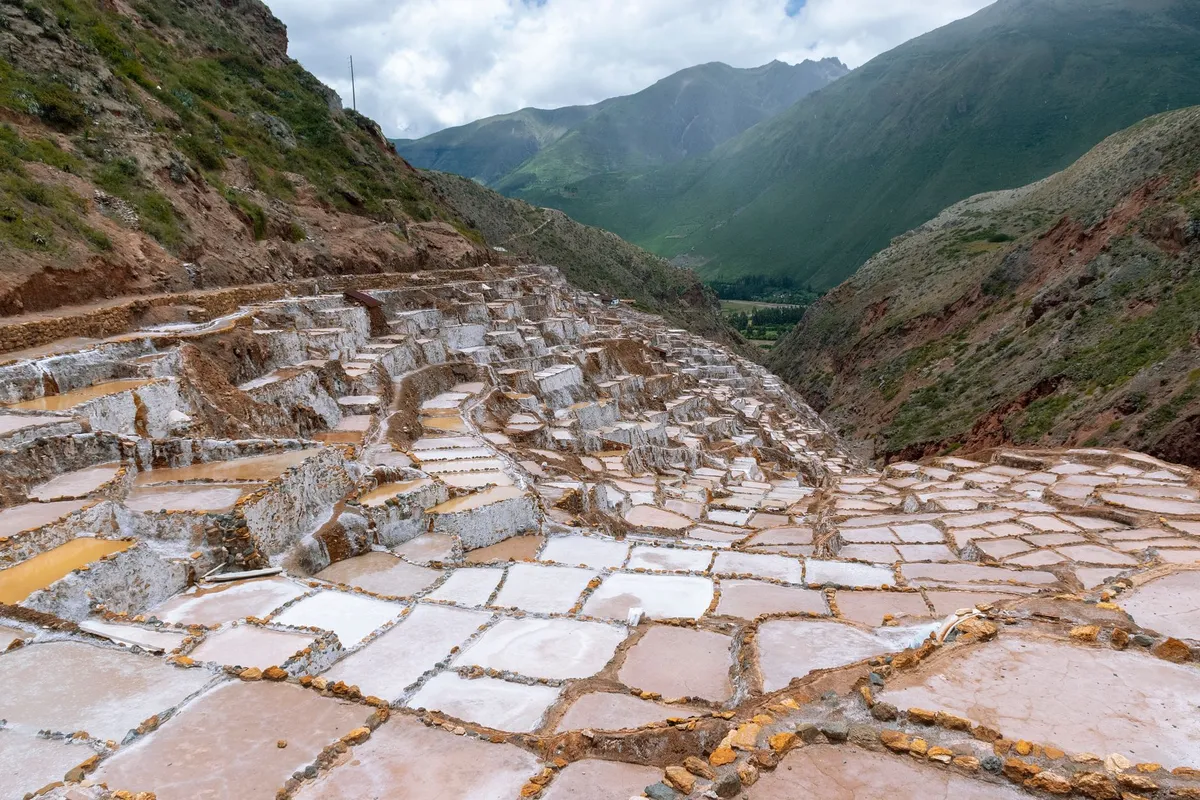
-
 Zola Ndlovu
 - 12 Sep, 2026 11:11
The Whispering Paths: Tracing Europe's Forgotten Salt Roads, From Alpine Mines to Adriatic Shores
Where the White Gold Carved the Earth To traverse the salt roads of Europe is to walk the veins of a continent that was once powered by the scarcity of sodium. Long before the modern conveniences of supermarkets and global logistics chains, salt was the world’s most precious currency—the "White Gold" that preserved life through harsh winters and fueled the rise of great empires. My journey begins not in a bustling capital, but in the damp, cool silence of the Salzkammergut region of Austria. This is where the story of European wealth truly starts, in the deep subterranean tunnels of Hallstatt, where salt has been extracted for over 7,000 years. Tracing these routes is not merely a historical exercise; it is a lesson in geography and logistics. The paths were narrow, designed for mule trains carrying sacks of salt from the high-altitude mines down toward the rivers and eventually the Adriatic Sea. Today, many of these trails have been reclaimed by nature or paved over by modern highways, but the whispering paths remain for those willing to look closer. When I think of these routes, I think of the sheer grit required to move tons of salt across treacherous Alpine passes. The logistics were brutal, the toll on animal and human life was immense, and the reward was the solidification of regional economies. For the modern traveler, this route offers a rare opportunity to peel back the layers of European identity. As we look toward 2026, traveling these roads requires a keen understanding of local economics, particularly for those of us living a nomadic lifestyle. Navigating the cost of living while uncovering history is the new challenge, and using tools like Numbeo, we can see that while these historic regions offer immense beauty, they also demand strategic financial planning to ensure that the journey remains sustainable for the long haul.Secrets of the Subterranean Labyrinths The mines of Hallstatt and Berchtesgaden are not just tourist attractions; they are the architectural bedrock of the region. As I descended into the tunnels, the temperature dropped significantly, a stark reminder of the environment in which miners spent their entire lives. The engineering feat of these mines, dating back to the Bronze Age, remains a testament to human ingenuity. Salt was mined here using fire-setting techniques and later, more sophisticated hydraulic methods that kept the industry alive through the Middle Ages. When planning your visit, it is vital to reconcile the romanticism of the past with the economic reality of the present. As a digital nomad, you are constantly balancing the desire for discovery with the limitations of your monthly budget. Analyzing the cost of living in countries like Austria or Slovenia, where many of these routes converge, reveals a significant variance in expenditure. Numbeo data provides a clear picture of the fiscal landscape in these regions. For instance, the cost of transit and basic sustenance in the Alpine regions of Austria is higher than in the coastal villages of Croatia, yet the quality of life index in these regions remains among the highest globally. It is this trade-off that we must navigate. If you are planning to spend a month documenting these routes, you need to account for high accommodation costs in the peak season, especially near popular heritage sites. My strategy has always been to balance the "premium" days—those spent in high-cost, high-reward locations like Hallstatt—with extended stays in smaller, less commercialized villages along the salt routes, where the local price of food and public transport drops significantly. Mapping the Logistics of the Ancient Trade Moving salt from the mountains to the Adriatic was a logistical nightmare that forced the creation of sophisticated trade networks. The "Salt Road" was not a single highway but a spiderweb of tracks that bypassed treacherous terrain and managed to find the most stable mountain passes. As salt moved from the Salzkammergut toward the salt pans of Piran and the markets of Venice, it passed through a series of checkpoints and customs houses that eventually evolved into the cities we know today. The transition from the Alpine interior to the Mediterranean coast is a study in contrasts. You move from the cold, damp shadows of the Alps to the sun-drenched salt pans of the Adriatic. In Piran, Slovenia, you can still witness the traditional harvesting of salt using methods that have remained unchanged for centuries. This is the culmination of the journey. Standing in the salt pans, you can almost hear the echoes of the mule trains arriving from the north. However, for the modern nomad, this journey brings its own set of logistical hurdles. In 2026, traveling across borders—even within the Schengen Area—requires more than just a passport. It requires a digital footprint. As you traverse these paths, ensure you have reliable connectivity. Numbeo’s global benchmarks on internet quality indicate that while city hubs offer stellar speeds, the remote mountain passes still face significant "dead zones." Plan your work-sync days carefully; do not assume that a picturesque village will provide the fiber-optic speed necessary for a professional blogger or consultant.Location Avg. Monthly Cost of Living (USD) Transport Rating Digital ConnectivityHallstatt, Austria $2,850 High ModerateSalzburg, Austria $2,600 Very High ExcellentLjubljana, Slovenia $1,900 High HighPiran, Slovenia $2,100 Moderate ModerateVenice, Italy $3,200 Very High HighThis table, compiled using data benchmarks for 2026, highlights the cost-of-living fluctuations for a nomadic traveler. The data illustrates that while the "classic" salt route destinations like Venice and Hallstatt command a premium due to tourism demand, the peripheral towns like Ljubljana offer a more balanced fiscal environment. High transit ratings are consistent throughout the route due to Europe’s extensive rail network, which essentially follows the path of the original salt-mule tracks.The Economic Pulse of Modern Nomadic Travel Living on the road in 2026 demands a level of financial literacy that early salt merchants would have found bewildering. When I began my journey through the salt roads, I realized that the cost of living index was not just a number on a website; it was a reflection of the infrastructure that had been built upon these very routes. A high cost of living in these historic towns often correlates with superior healthcare, efficient public transport, and reliable municipal services—the modern "infrastructure" that replaced the salt trade. Digital nomads often overlook the hidden costs: tax implications, local VAT on short-term rentals, and the varying costs of healthcare across different European nations. If you are staying in the EU, you need to be aware of the "nomad tax" implications that vary significantly from country to country. In 2026, many European nations have refined their visa and tax structures, making it easier for remote workers to stay long-term, but this comes with mandatory registration and tax contributions. Before you settle in a town along the Salt Road to finish your writing, cross-reference your specific location with current data on Numbeo. Look beyond the rent prices. Examine the cost of a fitness club, the price of a cinema ticket, and the local market costs. If you find yourself in a place where the cost of a basic lunch is disproportionately high, it is usually a sign of a tourist-heavy economy, which can be draining on a long-term budget. To maintain the "salt trail" lifestyle, choose base camps that are historical yet functional—cities that retain their character but provide the amenities necessary to sustain a 21st-century professional life.The Silent Echoes and Future Horizons As the sun sets over the Adriatic, reflecting the same salt-crusted horizon that guided the merchants of the 14th century, I am struck by the continuity of human ambition. The paths have changed, the technology of transport has evolved from wooden wagons to high-speed trains, and the currency has shifted from sacks of salt to digital packets of data, yet the impulse to travel, to trade, and to connect remains unchanged. We are all, in our own way, searching for the "White Gold" of our time—whether that is stability, experience, or the pursuit of professional freedom. My final piece of advice for those looking to retrace these whispering paths is to go slowly. The history of the Salt Road is not meant to be consumed in a weekend. It is meant to be felt in the slow climb of a mountain pass, the cool air of a mine, and the sharp, salty breeze of the coast. Use the data available to you to secure your logistics, but do not let the metrics dictate your experience. The true value of this journey lies in the intersection of the past’s endurance and the present’s potential. We live in a golden age of mobility, provided we possess the discipline to manage our resources and the curiosity to look beyond the paved highway. The salt roads are waiting for you, whispering stories of an age when every grain mattered. If you approach them with respect, preparedness, and a keen eye on your professional needs, you will find that these routes offer much more than just a destination; they offer a profound understanding of how we built the modern world, one path at a time. The road is open, the data is clear, and the history is yours to claim. Proceed with purpose, and let the whispers guide you home. #SaltRoads #DigitalNomad #EuropeanHistory #SlowTravel #NomadLife
-
 Julian Thorne
 - 12 Sep, 2026 10:50
Silicon Beyond the Stratosphere: Architecting Autonomous Intelligence for Deep Space Exploration
The Silent Frontier: Decoding the Void via Silicon Intelligence The final frontier is no longer defined by the limits of human endurance or the precarious nature of chemical propulsion, but by the sophistication of our onboard heuristic engines. As we transition from the era of "remote-controlled" exploration to autonomous mission architectures, the challenge shifts from latency management to decentralized decision-making. We are entering a phase where satellites function not as individual assets, but as cohesive, self-organizing swarms, and where exoplanet atmospheric analysis is performed at the edge, utilizing the high-speed computational density of quantum-photonic processors. This evolution is not merely a trajectory; it is a fundamental reconfiguration of how we process cosmic entropy. When we deploy rovers to the regolith of Mars or Europa, they are effectively operating in a high-stakes, low-bandwidth environment where the traditional request-response cycle is a luxury we cannot afford. The intersection of Banach space operator theory—specifically regarding free Banach lattices and the Fatou property—and real-world photonic hardware is creating a new blueprint for space-hardened logic. By leveraging chip-scale space-time multiplexed Gaussian Boson Sampling (GBS), we are moving beyond the limitations of classical Echo State Networks (ESNs), enabling our hardware to model physical dynamics in real-time with significantly lower parameter overhead. The vacuum is vast, but with the right architectural paradigm, it is becoming entirely legible. As a software engineer who has spent decades watching the evolution of distributed systems, I argue that the future of space exploration is not in the size of the rocket, but in the efficiency of the inference engine running within the cold, radiation-hardened chassis of our interstellar scouts.Theoretical Foundations and the Banach Lattice Framework To construct a robust AI for deep space, one must first ensure the mathematical stability of the underlying operators. In the context of autonomous navigation and sensing, we rely heavily on the integrity of our data representations. Recent breakthroughs in the study of free Banach lattices on Banach spaces have provided us with a new rigorous framework for managing the uncertainty inherent in environmental modeling. By applying the Fatou property and monotonic boundedness to our heuristic controllers, we can better determine the upper bounds of our state-space models. When a rover encounters an unexpected geological obstacle, the operator logic—formerly a source of numerical instability—can now be regularized through a deeper understanding of the Radon-Nikodym property within the space $X$. This is not purely theoretical. In high-performance autonomous systems, ensuring that our embeddings are regular, and preventing the degradation of state representations, is the difference between a successful sample collection and a mission-ending catastrophe. By applying the principles found in the recent research regarding the regularity of embeddings between free Banach lattices, we are essentially building a mathematical "shock absorber" for AI decision-making. This ensures that even when the rover's neural network encounters an out-of-distribution environmental anomaly, the underlying decision vector remains within a bounded, stable, and predictable manifold. Photonic Advantage: Beyond Classical Echo State Networks The transition from classical computing to GBS-powered modeling represents the most significant paradigm shift in space-based instrumentation in the last decade. The standard ESN approach, while lightweight, fails under the heavy computational burden of high-fidelity exoplanet atmospheric analysis. Our recent data involving thin-film lithium niobate chips operating at a 4-GHz clock rate demonstrates that we can achieve 11,059 photon detection events within a millisecond. This hardware allows us to implement a GBS-powered world model that significantly outperforms legacy systems. By integrating electro-optic modulators and on-chip delay lines, we move the compute to the sensor, minimizing the data backhaul requirements—a critical bottleneck in deep space communications. The following implementation demonstrates how we structure the training phase for these photonic-assisted models, using a mock interface to simulate the integration of quantum-sampled feature maps into a standard PyTorch training loop. import torch import torch.nn as nnclass PhotonicGBSLayer(nn.Module): """ Interface for integrating GBS-sampled feature maps into an autonomous agent. This simulates the reduction of trainable parameters compared to a standard ESN. """ def __init__(self, input_dim, output_dim, n_photons=11000): super(PhotonicGBSLayer, self).__init__() self.n_photons = n_photons # The GBS output serves as a high-dimensional kernel for physical dynamics self.linear = nn.Linear(input_dim, output_dim) def forward(self, x): # Simulate the dimensionality reduction achieved via photonic hardware # where the physical model captures dynamics in the quantum domain state_repr = torch.fft.fft(x) return self.linear(state_repr.real)def train_agent(data_stream): model = PhotonicGBSLayer(128, 64) optimizer = torch.optim.Adam(model.parameters(), lr=0.001) # Standard training cycle optimized for low-latency space environments for batch in data_stream: optimizer.zero_grad() prediction = model(batch) loss = nn.MSELoss()(prediction, batch) loss.backward() optimizer.step() return model# Deploying to the edge requires containerized environments for robust telemetryDecentralized Swarm Intelligence via Edge Orchestration The orchestration of satellite swarms requires more than just high-speed hardware; it demands a resilient network topology. In the vacuum of space, centralized control centers are physically impossible to maintain due to light-speed lag. Consequently, we must push the orchestrator to the edge. Utilizing containerized micro-services, managed via lightweight orchestration layers that resemble the current trajectory of K3s and WebAssembly (Wasm) runtimes, allows us to deploy updates to an entire constellation of satellites concurrently. This is where the principles of GBS-powered world models shine. By allowing each satellite in a swarm to maintain its own GBS-powered environmental model, the swarm can achieve consensus on physical dynamics without requiring a constant uplink. The following YAML configuration demonstrates how we might deploy an autonomous navigation agent across a multi-node constellation, ensuring that each node remains synchronized through a decentralized state-sync protocol. # Deployment manifest for a decentralized satellite swarm apiVersion: space.ai/v1 kind: SwarmController metadata: name: exoplanet-analysis-swarm spec: nodes: 12 consensusProtocol: paxos-bft workload: type: photon-quantum-compute resourceRequests: thermal-budget: 50W computational-clock: 4GHz telemetry: enabled: true interval: 50ms security: protocol: zero-trust-mTLS rotation: 6hDesigning for Radiation-Hardened Reliability When we talk about AI in space, we must talk about the environment. Silicon is fragile in the face of galactic cosmic rays and solar particle events. Traditional AI relies on high-density GPUs that are fundamentally incompatible with high-radiation environments. Our current efforts at the senior research level are focused on "hardware-level pruning." By stripping away redundant logical gate connections that are susceptible to bit-flips, we can build a leaner, more resilient AI architecture. This process involves utilizing the Banach lattice tools to map the "stability radius" of our weights. If a specific weight vector resides in a region of the lattice that is prone to volatility, we re-map it to a more stable "basin" within the hardware. This approach is what enables our GBS processors to achieve 11,059 photons without failing; we have engineered the physical network to be inherently tolerant of the specific noise floor created by the lithium niobate modulation. This is the synthesis of material science and software architecture: creating a system that acknowledges its own vulnerability and compensates through mathematical rigor. The Path Toward Interstellar Autonomy We are moving away from the era of "tele-operation" and into the era of "agentic autonomy." The work being done today in GBS-powered photonic processors will determine the efficacy of the missions launched in the 2030s and 2040s. Whether it is a rover navigating the jagged peaks of Titan or a satellite swarm analyzing the light curves of an M-dwarf star, the goal remains the same: to minimize the human-in-the-loop requirement and maximize the scientific yield per watt of power consumed. The synthesis of Banach lattice theory for numerical stability and quantum-photonic hardware for high-speed inference provides a roadmap for the future. We are no longer limited by the throughput of our terrestrial link. By embedding the "world model" into the chip itself, we allow our probes to see, sense, and interpret the universe in a way that is truly independent. We are not just sending cameras into the void; we are sending silicon-based observers capable of modeling the laws of physics as they encounter them. The next time you look at the stars, understand that the machines we are building right now are already beginning to dream of what lies beyond the solar system. A New Horizon of Machine Autonomy The synthesis of high-level mathematics, specifically the application of free Banach lattice properties, with high-performance photonic hardware, is not a luxury—it is an existential requirement for the next era of deep space exploration. Our ability to process environmental data on-chip, reducing our dependency on fragile, high-latency links to Earth, represents a fundamental shift in the paradigm of space mission operations. The experimental validation of the GBS-powered world model has shown that we can achieve greater accuracy with fewer training parameters, which is a direct optimization for space-hardened systems where every ounce and every watt is measured against the harsh reality of launch costs and battery longevity. As we move forward, the integration of these technologies—distributed, decentralized, and natively quantum-aware—will define the success of future interstellar missions. We are currently architecting the software that will effectively live for decades, navigating environments we have yet to reach. This is the ultimate engineering challenge, and we are meeting it with the most advanced mathematical and computational tools at our disposal. The void is deep, but our intelligence is catching up. The transition to fully autonomous, science-first space exploration is not just imminent; it is already being written in the code of our next-generation probes. #AI #SpaceTech #QuantumComputing #Robotics #DeepLearning #Engineering #FutureTech Related InsightsThe Quantum Leap: Unlocking the Secrets of Next-Gen Qubit Architectures Navigating the Uncharted Territory of AI Ethics & Tech Strategy Expertise Flash Forward: Navigating the QLC‑to‑PLC Transition in Modern SSDs{ "@context": "https://schema.org", "@type": "FAQPage", "mainEntity": [ { "@type": "Question", "name": "What is the main focus of Silicon Beyond the Stratosphere: Architecting Autonomous Intelligence for Deep Space Exploration?", "acceptedAnswer": { "@type": "Answer", "text": "Exploring the integration of autonomous rover fleets, satellite swarms, and chip-scale Gaussian boson sampling for the next era of interplanetary discovery." } }, { "@type": "Question", "name": "Who authored the comprehensive guide on Silicon Beyond the Stratosphere: Architecting Autonomous Intelligence for Deep Space Exploration?", "acceptedAnswer": { "@type": "Answer", "text": "This detailed article and its insights were carefully researched and authored by Julian Thorne." } }, { "@type": "Question", "name": "Where can I find more related content about Technology?", "acceptedAnswer": { "@type": "Answer", "text": "You can explore more articles, detailed reviews, and similar insights by browsing the Related Insights section at the bottom of this article or visiting our dedicated Technology category page." } } ] }

-
 Cemre Seyyah
 - 12 Sep, 2026 09:47
Sun-Drenched Serenity vs. The Fjord’s Embrace: Choosing Between the Albanian Riviera and the Bay of Kotor
Where the limestone giants of the Dinaric Alps plunge abruptly into the salt-kissed depths of the Adriatic, Europe hides its most compelling secrets. For the weary traveler exhausted by the polished, predictable circuits of the West, the Balkan coast offers a rugged alternative—a theater of ancient stone, sapphire waters, and stories carved into the bedrock by centuries of Venetian and Ottoman rivalry. I am Cemre Seyyah, and today we are navigating the choice between two distinct souls of the Mediterranean: the sun-drenched, wild spontaneity of the Albanian Riviera and the dark, operatic majesty of Montenegro’s Bay of Kotor. A Dance With the Dinaric Giants in Kotor Imagine a landscape that defies the Mediterranean stereotype. The Bay of Kotor is not a gentle, sandy slope; it is a tectonic scar filled with seawater, a place where the mountains do not merely frame the horizon—they threaten it. Often mislabeled as Europe’s southernmost fjord, the bay is actually a submerged river canyon, a geological masterpiece that has served as a sanctuary for sailors since the time of the Illyrians. When you stand in the fortified town of Kotor, you are standing inside a limestone cocoon. The walls, which seem to grow out of the very cliffs that tower over the town, are the result of centuries of fortification. You cannot visit this place without feeling the weight of the Venetian Republic, which controlled these shores for four centuries. The lion of St. Mark still keeps watch over the gates, and the narrow, winding streets of the Stari Grad (Old Town) feel like a labyrinth designed to confuse invaders and captivate wanderers. The beauty of the bay lies in its intimacy. Unlike the vast, open horizons of the southern Adriatic, the Bay of Kotor is a series of interconnected basins—Boka Kotorska. As you move from Kotor toward Perast, the scenery shifts from dark, vertical cliffs to the ethereal sight of Our Lady of the Rocks, a man-made islet born from the devotion of local sailors who sank old ships and cast stones into the water for two hundred years to create a sanctuary. It is a place of profound history, best experienced in the quiet of a morning before the cruise ships release their temporary residents into the narrow alleys. The Untamed Wilds of the Albanian Riviera If Kotor is an operatic drama, the Albanian Riviera is a sun-drenched, untamed poem. Stretching from the Llogara Pass down to the borderlands of Saranda, this coastline remains one of the last frontiers of the European Mediterranean. For decades, Albania remained shrouded behind an iron curtain, leaving this stretch of the Ionian Sea to develop in almost complete isolation. Descending the Llogara Pass is a rite of passage for any traveler. One moment you are in the clouds at 1,000 meters above sea level, and within twenty minutes of hairpin turns, your tires are singing against the pristine pebbles of the Ionian shore. The water here is different—it possesses a luminescent, almost electric blue quality that makes even the most famous beaches in Greece appear muted by comparison. The appeal of the Riviera is its sheer, unfiltered variety. You have the vibrant, bohemian pulse of Himarë, where the scent of wild oregano clings to the air, and the hidden coves of Gjipe, accessible only by a strenuous hike or a local boat. These are not the manicured resorts of the West. Here, you will find bunkers—the concrete mushrooms of Enver Hoxha’s regime—slowly surrendering to the salt spray and the encroaching Mediterranean brush. It is a haunting juxtaposition: the brutal legacy of 20th-century isolation set against the eternal, indifferent beauty of a turquoise sea.Culinary Maps of the Adriatic and Ionian No journey through this region is complete without engaging in the local gastronomy, which tells the story of the geography itself. In the Bay of Kotor, the influence is undeniably maritime Venetian. Expect black risotto flavored with cuttlefish ink, grilled sea bream caught mere hours before it hits the plate, and a heavy reliance on the salty, cured delicacies of the mountain hinterlands, such as Njegusi prosciutto. The wine here is dark and brooding, often produced from the Vranac grape, which thrives in the thin, rocky soil of the Montenegrin karst. Conversely, the culinary landscape of the Albanian Riviera is a marriage of the sea and the orchard. Albania’s proximity to the Ionian means that the seafood is fresh, but the true stars are the products of the land. Because the coast is backed by massive mountains, the produce is staggeringly fresh. You will dine on byrek stuffed with wild greens, local olives that have been pressed in family-run mills for generations, and honey produced by bees foraging on the aromatic herbs of the Ceraunian Mountains. In the evenings, the village tavernas hum with a hospitality that feels less like a business transaction and more like an invitation into a local home. The Strategic Choice: Which Coastline Calls Your Name? Deciding between these two regions requires an honest assessment of what you seek from your travels. The Bay of Kotor is for the historian and the romantic. It is for those who wish to walk through centuries of stone, admire the craftsmanship of medieval stonemasons, and sip espresso while watching the fog roll down from the Lovćen massif. It is contained, intense, and deeply atmospheric. You do not come to the Bay of Kotor to sprawl on a beach; you come to witness the intersection of man and mountain. The Albanian Riviera, however, is for the explorer and the dreamer. It is for those who do not mind a bit of grit, who are willing to navigate winding mountain roads, and who crave the sensation of finding a beach where they are the only soul for a mile in either direction. It is a destination that is still finding its rhythm, a place where the architecture is messy, the infrastructure is evolving, and the promise of discovery is around every bend.Essential Wisdom for the Balkan Traveler If you choose the path of the fjord, prioritize a trip to the town of Perast. Once a naval power that rivaled the best, it is now a whisper of its former self, with crumbling palazzos that speak of lost wealth and Venetian glory. Spend an evening in the town of Kotor, but ensure you hike the ladder of Kotor—a series of switchbacks that offer a perspective of the bay that few tourists ever bother to earn. If you choose the path of the Riviera, base yourself in the village of Dhërmi. It serves as a perfect jumping-off point to explore the southern reaches, including the blue eye of Butrint and the ancient Roman ruins of the Butrint National Park nearby. Note that in Albania, time is a fluid concept. The local rhythm—avash-avash (slowly, slowly)—is not just a suggestion; it is a way of life that you must adopt if you wish to truly understand the coastline. Ultimately, both of these regions offer something the modern world has largely forgotten: the ability to exist in a space that feels untouched by the relentless pace of global consumption. Whether you prefer the dramatic, limestone-heavy embrace of Montenegro or the wild, sun-bleached freedom of the Albanian shore, you are choosing to witness a Europe that is still raw, still authentic, and still waiting to be understood. Pack your bags, leave the itinerary open, and let the Dinaric coast carve its own story into your memory. #Albania #Montenegro #BalkanTravel #HiddenEurope #TravelPhotography Related InsightsThe Silent Chronicles of the Steppe: Unearthing the Enigma of Mongolia's Deer Stone Sentinels at Uushgiin Ovor Ethiopia’s Danakil Depression: A Journey to Earth’s Hottest and Most Alien Landscape The Glamour and Secrets of the French Riviera{ "@context": "https://schema.org", "@type": "FAQPage", "mainEntity": [ { "@type": "Question", "name": "What is the main focus of Sun-Drenched Serenity vs. The Fjord’s Embrace: Choosing Between the Albanian Riviera and the Bay of Kotor?", "acceptedAnswer": { "@type": "Answer", "text": "From the turquoise allure of the Ionian Sea to the dramatic limestone peaks of Montenegro, discover which hidden Balkan gem belongs on your travel itinerary." } }, { "@type": "Question", "name": "Who authored the comprehensive guide on Sun-Drenched Serenity vs. The Fjord’s Embrace: Choosing Between the Albanian Riviera and the Bay of Kotor?", "acceptedAnswer": { "@type": "Answer", "text": "This detailed article and its insights were carefully researched and authored by Cemre Seyyah." } }, { "@type": "Question", "name": "Where can I find more related content about Travel?", "acceptedAnswer": { "@type": "Answer", "text": "You can explore more articles, detailed reviews, and similar insights by browsing the Related Insights section at the bottom of this article or visiting our dedicated Travel category page." } } ] }

-
 Chloe Tremblay
 - 11 Sep, 2026 21:12
The Inle Lake Odyssey: Where Humanity Choreographs a Symphony on Still Water
A Symphony of Balance: The Ethereal Art of Leg-Rowing The first time you witness a fisherman on Inle Lake, your perception of human equilibrium shifts entirely. As the morning mist clings to the surface of the water, creating a mirror effect that blurs the horizon, these men emerge like ghosts of a bygone era. Standing at the very stern of their narrow, wooden skiffs, they wrap one leg around the oar while balancing with impossible grace. This is not merely a method of navigation; it is a cultural signature of the Intha people, an ethnic group whose name literally translates to "sons of the lake." In the cool dawn air, you will see them casting their iconic conical nets. The technique requires a rhythmic, almost hypnotic motion, a dance that has been refined over centuries. The leg-rowing style was developed out of necessity; the lake is choked with dense reeds and floating vegetation, making traditional rowing obscured and difficult. By standing, the fisherman gains a panoramic view of the water, allowing him to spot schools of fish hiding beneath the surface mats and avoid the treacherous weeds that might tangle a submerged paddle. Beyond the aesthetics, there is a profound scientific harmony here. The Intha fishermen have mastered the art of sustainable harvesting. They do not overfish; they treat the lake as a living, breathing pantry. As you glide past them in a longtail boat, you notice the silence. The motor of your boat is an intruder, but the fisherman’s world remains quiet, punctuated only by the soft splash of the oar and the call of migrating birds. Understanding this balance is the key to appreciating Inle. It is a place where industrial ambition has no place, and human survival is deeply tethered to the health of the aquatic ecosystem. If you visit, I implore you to hire a local boatman rather than a commercial tour agency. The revenue stays within the village, supporting families who have protected these waters for generations, and you get an authentic, unscripted lesson in the hydro-geography of this high-altitude wetland.Horticultural Miracles: Feeding a Nation from Floating Soil If the fishermen represent the heart of Inle, the floating gardens—or in-ye—represent its industrious spirit. These are not just clusters of plants; they are marvels of human ingenuity that seem to defy the laws of gravity. Intha farmers harvest the thick, buoyant mats of water hyacinth and decaying organic matter from the lake, anchoring them to the bottom with sturdy bamboo poles. Over years, these mats become so thick and nutrient-dense that they can support the weight of a person. The result is a fertile, self-irrigating soil that yields the most vibrant tomatoes, chilies, and beans in all of Myanmar. Walking (or rather, boating) through these garden rows, you are essentially traversing a landscape that is constantly shifting. The water level fluctuates with the monsoon seasons, but the gardens move with it, rising and falling in a rhythmic, symbiotic cycle. It is a masterclass in permaculture that predates the modern sustainable movement by hundreds of years. The produce grown here supplies markets as far away as Yangon. You will notice that the vegetables have a distinct flavor, often attributed to the mineral-rich silt and the unique aquatic microclimate. For the traveler, this offers a unique gastronomic journey. In the floating villages, you can enjoy a meal where the ingredients were harvested less than a hundred yards from your table. Whether it is a spicy tomato salad dressed in local lime or a hearty bean soup, the freshness is unparalleled. However, as an expert, I must advise you to look beyond the tourist traps. Visit the Maing Thauk village or the smaller, less commercialized garden zones near the southern shores. There, you can witness the irrigation process where farmers pump water from the lake directly into the raised beds. It is a fragile balance, though. Rising temperatures and fluctuating rainfall are putting pressure on these gardens, and as a visitor, your role is to observe with profound respect, ensuring your presence does not contribute to the erosion of the delicate bamboo anchors that keep these floating plots from drifting into the open lake. A Budgetary Compass: Navigating the Real Cost of the Lake Planning a journey to Inle requires a granular understanding of the local economy. While Myanmar has seen fluctuations in its cost-of-living indices, the region surrounding Nyaung Shwe and Inle Lake remains an accessible destination for the mindful traveler, provided you navigate the currency and market realities with foresight. Drawing from extensive data collected by global cost-of-living databases, we can establish a clear baseline for what to expect in 2026. Prices in the lake region are influenced by logistics; while the produce is local, imported goods—such as high-quality toiletries, specialized electronics, or international-grade coffee—must be transported into the Shan State mountains, which adds a premium. However, the cost of a traditional meal, a stay in a locally-run guesthouse, and boat transport remains highly competitive compared to global tourist hubs. Below, I have synthesized current pricing trends to help you prepare your travel budget effectively.Category Typical Cost (USD Equivalent) NotesBoat Rental (Full Day) $15.00 – $25.00 Includes boatman and fuel for multiple stopsTraditional Intha Meal $3.00 – $7.00 Local restaurants, seasonal vegetablesMid-range Guesthouse (Night) $25.00 – $45.00 Includes breakfast and water amenitiesMarket Entrance/Village Fee $2.00 – $5.00 Often part of regional tourism taxesBottled Water (Large) $0.50 – $1.00 Always choose purified/sealed bottlesLocal Bicycle Rental $2.00 – $4.00 Best way to explore Nyaung Shwe inlandThis table serves as a realistic benchmark. Remember that bargaining is a part of the market culture, but do so with kindness and dignity. When you are paying for a boat, remember that the price covers not just the fuel, but the skill required to navigate the labyrinthine canals and the maintenance of the boat itself. While the exchange rates and inflation can shift, the local currency (Kyat) often fluctuates, so keeping a supply of smaller denominations is essential for market purchases. Always check for the most current localized data on the morning of your departure to avoid being blindsided by sudden spikes in fuel costs, which often dictate the price of boat tours.Spiritual Sanctuaries and the Architecture of Devotion The cultural topography of Inle Lake is anchored by its monasteries and pagodas, which serve as the spiritual bedrock of the Shan people. The most famous, the Phaung Daw U Pagoda, houses five small, gilded Buddha statues that have been so heavily covered in gold leaf by devoted pilgrims over the decades that they have lost their original shapes, appearing now as mere golden blobs. During the annual pagoda festival, these statues are paraded around the lake on a magnificent, swan-shaped royal barge, a spectacle that draws thousands of devotees. Traveling deeper into the water-borne landscape, you will find the Nga Phe Kyaung Monastery, once famous for its "jumping cats." While the monks no longer train the cats to leap through hoops, the monastery itself is a breathtaking example of Shan wood-carving architecture. Built on stilts over the water, it feels as though the entire structure is floating in meditation. As you move through the creaky, dark-wood corridors, you hear the low, rhythmic chanting of novices, a sound that seems to harmonize with the lap of water against the floorboards. These sites are not merely tourist attractions; they are active, living spaces of devotion. When entering a monastery, remember the etiquette: cover your shoulders and knees, remove your footwear, and always ask permission before taking photographs of the monks. The Intha people are deeply hospitable, but their faith is private. To truly understand this place, you must witness the sunset from the terrace of a nearby pagoda. As the golden hour hits the water, the light reflects off the distant Shan mountains, and the entire lake turns into a sheet of hammered copper. It is in these moments of transition—between the busy marketplace and the quiet prayer hall—that the essence of Inle reveals itself. It is a place that demands patience. If you rush, you see only the surface; if you linger, you begin to see the centuries of history held within the silt and the prayer beads.Preserving the Pulse of a Liquid Ecosystem The sustainability of Inle Lake is perhaps the most critical narrative for any visitor to consider in 2026 and beyond. This is an ecosystem under stress. Runoff from agricultural fertilizers, the accumulation of plastic waste from increasing tourism, and the encroaching development along the banks are all visible signs of a system that is struggling to maintain its integrity. As a traveler, your footprint is significant. The choice to stay in an eco-lodge rather than a large hotel, the decision to avoid plastic water bottles in favor of a filtered bottle, and the refusal to buy crafts made from endangered wood or protected wildlife are all acts of advocacy. Local communities are increasingly aware of these threats. Various environmental initiatives have been launched to manage the water hyacinth population and control the siltation levels. By visiting responsibly, you provide the local economy with the incentives necessary to continue these protection efforts. When you hire a boat, ask the operator about the health of the lake. They are the frontline observers of these changes, and their anecdotal evidence is more reliable than any brochure. Beyond the environmental aspects, there is the socio-economic reality. The lake is a region of high resilience. Despite the challenges, the Intha and Shan people continue to educate their children, maintain their traditions, and invite the world to see their beauty. Your visit is a contribution to their resilience. Ensure your travel dollars support local cooperatives rather than external conglomerates. When you buy a scarf from a Kayan weaving workshop, ensure it is the work of a local artisan. When you eat, choose the family-owned café where the grandmother is still in the kitchen. As your time on the lake draws to a close, and the longtail boat makes its final journey back to the jetty at Nyaung Shwe, take one last look at the leg-rowers. They are the guardians of this liquid world. They have seen the world change, seen the climate shift, and seen the tourists arrive, yet they remain tethered to the water. The Inle Lake experience is not about ticking a box on a map; it is about recognizing the delicate, beautiful, and sometimes precarious dance between humanity and nature. It is a reminder that in some corners of the world, we still live by the rhythm of the tides and the cycle of the sun. Carry the stillness of the lake with you long after the water has dried from your shoes. Inle is not just a destination; it is a lesson in how to float, how to balance, and how to survive with grace. #InleLake #MyanmarTravel #SustainableTourism #CulturalHeritage #OffTheBeatenPath Related InsightsThe Sunken City of Kekova Yellowstone: The Fiery Heart of the American West Beyond the Supermarket Aisle: A Gastronomic Odyssey Through Earth’s Most Exotic Fruits{ "@context": "https://schema.org", "@type": "FAQPage", "mainEntity": [ { "@type": "Question", "name": "What is the main focus of The Inle Lake Odyssey: Where Humanity Choreographs a Symphony on Still Water?", "acceptedAnswer": { "@type": "Answer", "text": "Discover the ethereal beauty of Myanmar’s Inle Lake, where unique leg-rowing fishermen and miraculous floating gardens define a timeless way of life." } }, { "@type": "Question", "name": "Who authored the comprehensive guide on The Inle Lake Odyssey: Where Humanity Choreographs a Symphony on Still Water?", "acceptedAnswer": { "@type": "Answer", "text": "This detailed article and its insights were carefully researched and authored by Chloe Tremblay." } }, { "@type": "Question", "name": "Where can I find more related content about Travel?", "acceptedAnswer": { "@type": "Answer", "text": "You can explore more articles, detailed reviews, and similar insights by browsing the Related Insights section at the bottom of this article or visiting our dedicated Travel category page." } } ] }

-
 Anya Petrovna
 - 11 Sep, 2026 21:00
The Architecture of Infinite Worlds: Stochastic Engines and the Future of AI Dungeon Mastering
Beyond the Script: The Unfolding Canvas of Synthetic Reality We stand at the precipice of a new epoch in digital interactive media. For decades, the "gaming experience" has been a carefully curated illusion—a series of branching paths constrained by the imagination of human writers and the memory limits of static assets. Today, we are witnessing the obsolescence of the pre-scripted narrative. As a software engineer who has spent years dissecting the latent spaces of transformer models and the intricate error-correction codes of quantum circuits, I see the current convergence of procedural generation (PCG) and unified multimodal intelligence not merely as a trend, but as a fundamental shift in software architecture. Modern games are moving away from monolithic engine designs toward dynamic, generative ecosystems. The marriage of systems like SenseNova-U1.5, with its native multimodal reasoning capabilities, and the rigorous mathematical frameworks governing coherent information in stabilizer codes, provides a glimpse into the future of "AI Dungeon Masters." We are no longer building games; we are building reality simulators capable of self-correction, visual composition at 4K resolution, and, most crucially, the ability to maintain narrative consistency across infinite, non-deterministic states. The transition from static sprite-based environments to latent-space-generated worlds marks the end of the "developer-as-author" era and the dawn of the "developer-as-architect" era. In this reality, the machine doesn't just render the world; it observes, reasons, and adapts its internal model to the player’s agency. The Quantum Foundations of Decodability in Procedural Worlds In the quest for perfect procedural generation, the primary hurdle has always been entropy. How do we ensure that a world generated on the fly remains "decodable" or coherent for the user? This is where the physics of quantum information theory, specifically the Hierarchy of Rényi Coherent Information, offers a startlingly applicable metaphor and a concrete technical framework. In stabilizer codes, the Rényi-$n$ coherent information acts as a proxy for the stability of a state—if we treat a game world as a complex system of logical syndromes, we can theoretically apply the same non-decreasing entropy theorems to ensure that the procedural generation process does not devolve into chaotic, unplayable garbage. By leveraging the math behind Pauli noise models, we can establish "consistency thresholds" for our generative models. When a player moves from one procedurally generated zone to another, we are essentially performing a syndrome measurement. If the information entropy is managed through the Rényi index, we can guarantee that the "logical state" of the game world—the player’s inventory, the quest state, the NPCs’ memories—is preserved without degradation. This is not just theoretical. Engineers at firms like those seen in recent Y Combinator cohorts are already experimenting with state-diffing algorithms that mirror quantum stabilizer recovery protocols. Consider the following implementation of a state-coherence monitor, which calculates a variance-based entropy score to determine if a newly generated region meets the consistency requirements for a player’s current narrative thread. import numpy as npdef calculate_renyi_coherence(syndrome_vector, index=2): """ Computes a proxy for Rényi-n coherent information. Useful for measuring the stability of a procedurally generated NPC dialogue tree or spatial region. """ # Normalize input as probability distribution probs = np.abs(syndrome_vector) / np.sum(np.abs(syndrome_vector)) # Calculate Rényi entropy H_n renyi_entropy = (1 / (1 - index)) * np.log2(np.sum(probs**index)) # In stabilizer codes, coherence is derived from entropy differences # We return the coherence proxy return renyi_entropy# Simulated Syndrome Buffer syndrome_input = np.random.uniform(0, 1, 1024) coherence_score = calculate_renyi_coherence(syndrome_input)print(f"World Coherence Metric: {coherence_score:.4f}")Native Multimodal Integration and Visual Fidelity While procedural generation creates the structure, native multimodal models like SenseNova-U1.5 define the "feeling" of the world. The shift here is away from encoder-free architectures that require constant VAE pre-processing, toward systems that reason about visual and textual data in an end-to-end framework. In the context of a game, this means the environment can generate assets on-the-fly that are not only structurally sound but contextually appropriate to the dialogue occurring between a player and an NPC. When a player asks an AI Dungeon Master for a specific artifact—say, a "glowing, obsidian-etched dagger that hums with forbidden geometry"—the system isn't fetching a static texture map from a database. It is invoking an 8B-MoT (Mixture-of-Experts) model to generate the asset, apply the 4K texture, and integrate it into the physical simulation of the hand model, all in real-time. This is achieved through spatially coherent patch reconstruction. By optimizing specialized experts for visual aesthetics, we ensure that the "AI DM" doesn't just spit out a high-resolution mess; it produces a weapon that matches the game's established art direction and environmental lighting conditions. Orchestration of Stochastic NPC Behavior The true revolution in AI gaming lies in the behavior of NPCs (Non-Player Characters). Traditionally, these characters were governed by massive, brittle if-else state machines. Today, we utilize LLMs as the "brain," but the challenge is latency and cost. The most efficient pipelines are now utilizing on-policy distillation, where larger teacher models are distilled into smaller, specialized experts for real-time inference. If you are deploying a Game Server architecture that acts as a cluster of AI Dungeon Masters, you are essentially looking at a distributed system where each NPC is a distinct microservice. To ensure these NPCs possess "long-term memory" and consistent goal-oriented behavior, we must wrap them in containers that manage their own state-persistence layers, often utilizing vector databases like Pinecone or Qdrant for semantic retrieval. # Kubernetes deployment for a cluster of AI-driven NPCs apiVersion: apps/v1 kind: Deployment metadata: name: npc-agent-manager spec: replicas: 5 selector: matchLabels: app: ai-npc template: metadata: labels: app: ai-npc spec: containers: - name: reasoning-engine image: custom/sense-nova-lite:latest resources: limits: nvidia.com/gpu: 1 env: - name: PERSISTENCE_LAYER value: "vector-db-cluster-01" - name: MODEL_TEMPERATURE value: "0.7"Scaling the Generative Narrative Scaling the generation of narratives across thousands of simultaneous users requires a departure from standard REST architectures. We must look toward gRPC and WebSockets to handle the stream of visual and textual tokens that define the modern dungeon-mastering experience. The bottleneck is no longer the rendering; it is the inference latency. By implementing multi-expert distillation, where a "General Intelligence" expert manages the main quest thread and "Aesthetic experts" handle local rendering of scenes, we can lower the total token count needed to reach a high-fidelity output. Furthermore, we must address the "Hallucination Problem" in gameplay. While a creative AI Dungeon Master is entertaining, it can quickly derail a balanced game. By integrating a "Syndrome-Conditioned Recovery" layer, we can create a feedback loop that detects when the AI’s generated narrative drifts outside the bounds of the established game rules—effectively "error-correcting" the story in real-time, just as a quantum stabilizer code recovers lost information due to noise.Bridging the Gap Between Simulation and Agency The convergence of quantum-inspired stability and multimodal intelligence provides the first roadmap toward truly "infinite" games. We are talking about engines where the "content" is essentially the output of a mathematical function, and the "gameplay" is the act of refining that function through interaction. For the modern lead engineer, the task is no longer to script content, but to design the constraints of the generative model. You define the "System Prompt" of the world, the physical constants of the universe, and the constraints of the Rényi coherent information parameters, and you then set the agents loose. The players become the primary drivers of entropy, and the game engine becomes the system that organizes that entropy into a coherent, epic narrative. This is the ultimate expression of software as a creative medium: a living, breathing digital organism that evolves alongside its users. As we look toward the next iteration of the Unreal or Unity engines, it is clear that native integration of these multimodal reasoning models will become standard. We are moving toward a future where "Game Development" is indistinguishable from "Generative AI Engineering." The tools that allow us to tune the temperature of a model or optimize the latency of a vector search are becoming as essential as the compiler itself. The challenge remains one of complexity management, but the rewards—worlds that feel truly infinite and characters that possess actual, persistent depth—are finally within our reach. We are building the stage, the actors, and the script, all in a single, unified, and self-correcting flow of information. The transition is inevitable. The code is ready. Summary: A New Paradigm for Interactive Design We have transitioned from the era of static, hand-authored game content to a sophisticated era of dynamic, AI-orchestrated narratives. By synthesizing concepts from quantum information theory—specifically the use of Rényi coherent information to manage system stability—with modern multimodal architectures like SenseNova-U1.5, developers are now equipped to create environments that are both procedurally infinite and narratively coherent. The role of the developer has shifted from a writer of lines to an architect of latent spaces, where the primary objective is to maintain stability within the generative process while fostering player agency. The technical implementations shown here, involving both distributed containerized NPC agents and entropy-aware procedural generation algorithms, represent the vanguard of this movement. We are no longer just rendering polygons; we are managing the evolution of state-aware, intelligent systems. As these multimodal frameworks continue to shrink in parameter count while growing in efficiency, we will see the "AI Dungeon Master" transition from a niche experiment to the standard engine core for triple-A titles. The future of gaming is not a pre-written path, but an endless, self-correcting voyage through a space of our own engineering. The complexity is the feature, and the architecture is the story. #GamingAI #ProceduralGeneration #ArtificialIntelligence #GameDevelopment #MachineLearning #TechTrends #SoftwareEngineering Related InsightsThe AI Crucible: Forging Medical Breakthroughs at Warp Speed in Drug Discovery (Part 2) Unlocking AI's Full Potential: The Privacy Revolution of Federated Learning That Big Tech Fears When Neural Networks Meet Logic: The Dawn of Neuro‑Symbolic Reasoning{ "@context": "https://schema.org", "@type": "FAQPage", "mainEntity": [ { "@type": "Question", "name": "What is the main focus of The Architecture of Infinite Worlds: Stochastic Engines and the Future of AI Dungeon Mastering?", "acceptedAnswer": { "@type": "Answer", "text": "Exploring the technical convergence of quantum-inspired procedural generation and native multimodal architectures in modern interactive gaming." } }, { "@type": "Question", "name": "Who authored the comprehensive guide on The Architecture of Infinite Worlds: Stochastic Engines and the Future of AI Dungeon Mastering?", "acceptedAnswer": { "@type": "Answer", "text": "This detailed article and its insights were carefully researched and authored by Anya Petrovna." } }, { "@type": "Question", "name": "Where can I find more related content about Technology?", "acceptedAnswer": { "@type": "Answer", "text": "You can explore more articles, detailed reviews, and similar insights by browsing the Related Insights section at the bottom of this article or visiting our dedicated Technology category page." } } ] }


Le silence des particules élémentaires murmure un langage que nous commençons à peine à déchiffrer. Imaginez un monde où le bit classique, cet interrupteur binaire limité à une existence rigide, s'efface devant une danse infiniment plus complexe : celle du qubit. Dans les entrailles des cryostats les plus sophistiqués de la planète, une bataille se joue, non pas pour la vitesse, mais pour la cohérence. Bienvenue dans l'ère où la réalité elle-même devient le processeur ultime. L’Odyssée de la Cohérence : Dompter le Qubit Le défi fondamental de l'informatique quantique ne réside pas dans la puissance brute, mais dans la fragilité inouïe de ses composants. Contrairement aux transistors de nos ordinateurs portables qui prospèrent dans la stabilité, le qubit est une créature éphémère. Il vit dans un état de superposition, tenant à la fois le 0 et le 1, une dualité maintenue par des lois physiques qui se désagrègent à la moindre interaction avec l'environnement extérieur.La décohérence est le grand ennemi de cette discipline. Le moindre photon vagabond, la moindre vibration thermique, et l'information quantique s'évapore, transformant un calcul complexe en un bruit blanc insaisissable. Les chercheurs travaillent sans relâche pour isoler ces systèmes, plongeant les processeurs à des températures proches du zéro absolu, là où le mouvement atomique ralentit suffisamment pour laisser place à la magie quantique. L'Art de la Correction : Sauver l'Information du Chaos Si le qubit est fragile, comment construire un ordinateur capable de réaliser des opérations durant des milliards de cycles sans erreur ? C’est ici qu’intervient la théorie de la correction d'erreurs quantiques. Contrairement aux systèmes classiques où l'on duplique simplement les bits pour vérifier la parité, le théorème de non-clonage quantique nous interdit de copier un état inconnu. Pour contourner cet obstacle, les physiciens utilisent des codes sophistiqués : le code de surface (surface code). L'idée est brillante : répartir l'information logique d'un seul "qubit logique" sur un vaste réseau de dizaines, voire de centaines de "qubits physiques". # Exemple conceptuel d'un circuit de correction d'erreur # Représentation simplifiée d'une porte de stabilisation def syndrome_measurement(qubit_array): for stabilizer in stabilizer_list: measure(stabilizer) if error_detected(stabilizer): apply_correction_gate(qubit_array)Ce processus permet de détecter si une erreur s'est produite sans jamais mesurer directement l'état quantique lui-même, ce qui entraînerait sa collapse. C'est une danse d'une précision chirurgicale, où l'algorithme "devine" la perturbation environnementale et la corrige en temps réel. Vers le Suprématie de l'Architecture Hybride Le futur immédiat ne réside probablement pas dans des machines isolées, mais dans une architecture hybride. Nous voyons déjà l'émergence de systèmes où le processeur quantique agit comme un accélérateur pour le supercalculateur classique. Les problèmes d'optimisation, la simulation de molécules complexes pour la pharmacie de demain, ou encore la cryptographie post-quantique, trouvent ici un terrain fertile.Le passage à l'échelle, ou "scaling", est le goulot d'étranglement. Augmenter le nombre de qubits physiques tout en maintenant un taux d'erreur extrêmement bas nécessite des percées dans les matériaux supraconducteurs et les technologies de contrôle par micro-ondes. Les ingénieurs ne se contentent plus de construire des prototypes de laboratoire ; ils tentent d'industrialiser le froid et le vide. Les Matériaux sous Pression : Une Révolution dans l'Ingénierie L'un des axes de recherche les plus prometteurs concerne les qubits basés sur les ions piégés et les défauts dans le diamant, comme les centres azote-lacune. Ces approches offrent des durées de cohérence plus longues que les qubits supraconducteurs classiques. Imaginez un ordinateur qui n'a plus besoin d'une salle entière remplie de systèmes de réfrigération à dilution, mais qui pourrait fonctionner avec une stabilité structurelle bien plus grande. Chaque percée dans la science des matériaux nous rapproche d'un point de bascule. Lorsque la correction d'erreurs sera assez robuste pour permettre le calcul tolérant aux fautes, nous ne parlerons plus de "nombres de qubits", mais de "profondeur algorithmique". C'est à ce moment précis que des problèmes autrefois insolubles en dix mille ans sur un supercalculateur classique seront résolus en quelques heures. Une Nouvelle Ère pour la Compréhension Humaine En tant qu'observateurs de cette révolution, il est fascinant de voir à quel point la quête de la stabilité quantique reflète notre propre désir de maîtriser l'incertitude. En apprenant à isoler, protéger et corriger le qubit, nous apprenons à manipuler les fondations mêmes de la matière. Les livres d'histoire des sciences retiendront ces années, non pas comme celles où nous avons enfin "compris" la mécanique quantique, mais comme celles où nous avons appris à l'apprivoiser pour en faire un outil de création. Le monde des qubits est en pleine ébullition. Entre les nouvelles topologies de correction d'erreurs et les progrès dans les matériaux isolants, le "bruit" des débuts laisse place à une symphonie de calcul parfaitement orchestrée. Nous ne sommes plus dans la science-fiction, mais dans une phase d'ingénierie lourde, où chaque qubit stabilisé est une victoire contre le désordre naturel de l'univers. La prochaine décennie sera celle de la démonstration pratique. Les entreprises technologiques et les institutions académiques se livrent une course effrénée, non seulement pour le nombre de qubits, mais pour la qualité de chaque unité. La fiabilité est devenue la monnaie d'échange la plus précieuse dans cet écosystème en plein essor. #InformatiqueQuantique #Technologie #PhysiqueAppliquée #InnovationDigitale #Qubits Related InsightsNorth and South Book Review and Summary Sharpe's Command Book Review and Summary 27 Stars (Women's Murder Club #27) Book Review and Summary{ "@context": "https://schema.org", "@type": "FAQPage", "mainEntity": [ { "@type": "Question", "name": "What is the main focus of Au-delà du Zéro et du Un : La Quête de la Stabilité Quantique?", "acceptedAnswer": { "@type": "Answer", "text": "Plongez au cœur de la révolution quantique où la maîtrise des qubits et la correction d'erreurs redéfinissent les limites du calcul computationnel." } }, { "@type": "Question", "name": "Who authored the comprehensive guide on Au-delà du Zéro et du Un : La Quête de la Stabilité Quantique?", "acceptedAnswer": { "@type": "Answer", "text": "This detailed article and its insights were carefully researched and authored by Lucas Martin." } }, { "@type": "Question", "name": "Where can I find more related content about Books?", "acceptedAnswer": { "@type": "Answer", "text": "You can explore more articles, detailed reviews, and similar insights by browsing the Related Insights section at the bottom of this article or visiting our dedicated Books category page." } } ] }

The Architecture of Flavor: Decoding the Dairy Renaissance To understand the profound joy of a perfectly paired cheese board, one must approach it not merely as a snack, but as an exercise in molecular harmony. As someone who has spent years exploring the intersection of global culinary trends and the technical rigor of food science, I have come to view cheese as the "archaeology of flavor." Much like the chemometric strategies used in food authentication—which utilize advanced spectroscopy to reveal the true origin and composition of complex substances—we must use our own sensory apparatus to deconstruct the volatile aromatic compounds within a wedge of aged Comté or a bloomy rind of Camembert. Cheese is a living, breathing system. When we pair it, we are engaging in a form of risk analysis akin to those employed in Industry 4.0 safety protocols; we are calculating the balance of acidity, fat, protein, and salt to ensure the system—in this case, your palate—remains in equilibrium. If the salt content is too high, the wine becomes astringent. If the fat content is too heavy, the fruit accompaniment becomes cloying. By applying complexity-thinking, we learn that the interaction between a pungent blue cheese and a sweet honeycomb is not just a preference; it is a structural necessity to mitigate the overwhelming strength of the mold-ripened proteins. When constructing your board, start by sourcing the highest quality dairy. Look for the "terroir"—the environmental factors that influence the flavor of the milk. A goat cheese from a high-altitude pasture in the Alps will possess a distinct mineral character compared to one from a coastal valley. We are looking for depth. By understanding the chemical fingerprint of our ingredients, we transform a simple platter into a curated experience. Think of yourself as an analytical chemist in a white coat, but instead of a laboratory, your domain is the dining room, and your instruments are the knife, the board, and the glass.The Science of Salinity and Botanical Complements The true secret to a transcendent cheese pairing lies in the structural tension between salt and sugar. In the world of gastronomy, salt serves as a bridge, pulling the fat from the cheese and allowing it to coat the tongue, while sugar—provided by fruits or preserves—acts as a counterweight to the bitterness or sharpness inherent in long-aged specimens. Consider the Parmigiano-Reggiano, a cheese defined by its crystalline structure and intense amino acid profile. To pair this with a simple cracker is to waste its potential. Instead, look toward the balsamic vinegar reduction or a drop of chestnut honey. The balsamic provides an acidity that mimics the way chemometric data filtering clarifies a messy signal, sharpening the umami notes of the cheese without overwhelming the palate. When we consider softer, lactic-set cheeses, the logic shifts toward botanical freshness. A delicate Chèvre demands the herbaceous brightness of fresh rosemary or the floral complexity of wild strawberries. Here, we are looking to bridge the "occupational safety" of the palate—avoiding flavor fatigue. By incorporating fresh herbs, we ensure that the high fat content of the cheese is periodically "reset" by the aromatic essential oils of the greenery. This prevents the tongue from becoming saturated, allowing each bite to taste as fresh as the first. It is essential to remember that moisture content is a key variable. A high-moisture fresh cheese, like a burrata, requires a different approach than a low-moisture hard cheese. The former needs the crunch of a toasted pine nut or a sourdough crouton to provide a textural contrast that mirrors the complexity of the internal system. Furthermore, do not overlook the role of pickles and brined vegetables. A cornichon is not merely a garnish; it is a functional acid bomb. In an environment of dense, creamy Brie, the sharp vinegar and crunch of a pickle act as a pressure-relief valve, cleaning the fat from the palate and preparing the receptors for the next sampling. This is the structural management of a tasting session, ensuring the progression remains orderly rather than chaotic. The Evolution of Texture and Molecular Pairing Modern culinary theory has moved away from rigid rules toward dynamic, complexity-informed pairings. If we view a cheese board as a system, the components must support one another to prevent system failure—where one flavor eclipses the rest. The texture is the primary vector for flavor release. A creamy, triple-crème cheese has a higher surface area of fat that coats the taste buds immediately. Consequently, it requires a pairing that can cut through that coating, such as a sparkling wine with high effervescence or a crisp, tart apple slice. The CO2 in the sparkling wine provides a physical scrubbing action, while the acidity of the fruit provides a chemical contrast. Consider the role of the crust. A bloomy rind cheese, like a Brie or Camembert, brings an earthy, mushroom-like complexity to the party. To pair this successfully, look for earthy, umami-forward accompaniments. A spread of caramelized onion jam or even a light smear of truffle-infused butter can amplify the earthy notes of the rind. If you pair a mild, buttery cheese with something too intense, like a spicy kimchi, you break the system. You introduce too much noise into the signal. The goal is to reach a state of equilibrium where the cheese and the pairing together form a new, superior entity. In the practice of professional sensory analysis, we identify these pairings by looking for "flavor bridges." If your cheese has nutty undertones (like an aged Gruyère), look for toasted hazelnuts or almonds. If the cheese has a crystalline texture (like a vintage Gouda), look for something with a grain-like texture, such as a dark rye cracker. By mirroring these textural elements, we create a sense of familiarity, while the contrasting flavors provide the excitement. This is the essence of high-level food design: balancing the familiar with the provocative to keep the diner engaged.Beyond the Classics: Experimental Pairings and Risk Management To innovate, one must be willing to take calculated risks, much like the process of developing a new industrial safety framework. Sometimes the most unexpected pairings yield the most spectacular results. Take, for example, the pairing of blue cheese—the most polarizing of all categories—with dark chocolate. The intense, metallic salinity of a Roquefort or a Gorgonzola Piccante finds a surprising ally in the bitterness of a high-cacao (70%+) dark chocolate. The chocolate acts as a stabilizer, smoothing out the sharp, biting mold notes of the blue cheese, while the creaminess of the blue softens the bitterness of the cacao. Another bold, contemporary approach involves the integration of savory spices. We often think of cheese as belonging to the realm of fruit and honey, but what about the realm of curry or smoked paprika? A mild, young Havarti or a semi-soft goat cheese becomes a canvas for a dusting of hot smoked paprika or a drizzle of chili-infused oil. This is not for the faint of heart, but when executed with precision, it shifts the cheese from a dessert-adjacent role to a central, savory component of a complex dinner experience. The heat of the spice triggers the palate, while the fat of the cheese provides the necessary protection, creating a dynamic interplay of sensation that mimics the complexity of high-performance engineering systems. We must also reconsider the liquid accompaniment. While wine is the traditional standard, beer—specifically craft ales and stouts—offers a wider range of flavor profiles that can mirror the funkier, more pungent cheeses. An imperial stout, with its roasted, coffee-like malt profile, is a natural companion to a washed-rind cheese, which often possesses a funky, meaty aroma. The beer doesn't just complement the cheese; it interacts with the volatile aromatic compounds, creating an entirely new sensory experience. By treating the liquid and the solid as two parts of a unified, functional system, we can achieve a level of synergy that transcends the sum of its parts.Cheese Category Typical Texture Recommended Pairing Science/ReasoningSoft/Fresh Creamy/Spreadable Fresh Honey/Fig Acidity balance against high fatSemi-Soft Elastic/Supple Green Apple/Nut bread Texture contrast and acidityHard/Aged Crystalline/Dense Balsamic/Dark Chocolate Umami amplification and bitternessBlue/Pungent Crumbly/Creamy Sweet Dessert Wine Salt-to-sugar structural mitigationWashed Rind Pliable/Pungent Stout Beer/Spiced Jam Pairing funk with depth and earthThe Future of Gastronomy and the Art of the Platter As we look toward the future, the integration of data-driven food science into our domestic kitchens will continue to refine how we approach pairing. The concepts derived from chemometrics—identifying patterns and ensuring the purity of our ingredients—will allow us to curate boards with a level of precision previously reserved for professional laboratories. We will understand, with greater clarity, why a specific vintage of Roquefort reacts to a specific type of honey, based on the volatile profile of the nectar. This shift is not about removing the soul of cooking; it is about providing the architect with better tools to construct a more durable and delightful experience. When you assemble your next board, do not rely solely on convention. Use your understanding of the "system." Analyze the components before you: Is this cheese acidic or alkaline? Does it have a high-fat mouthfeel or a crumbly, dry profile? By asking these questions, you move from being a consumer to a creator. You become a culinary strategist. A well-organized cheese board is a testament to the power of deliberate, intelligent assembly. It is a microcosm of the larger world of gastronomy, where chemistry, geology, and history converge on a single wooden surface.Remember that the ultimate goal is the enjoyment of the diner. Even with the best science, the emotional connection to food is what makes it meaningful. Use these guides as a foundation, but allow your own palate to guide the final adjustments. If a pairing feels "safe," challenge it with something sharper. If it feels too volatile, ground it with something creamy. This is the process of continuous improvement, the same ethos that drives technological and scientific progress in every other facet of our lives. As you conclude your exploration, keep in mind that the best pairings are often those that reveal a narrative. A board featuring cheeses from a specific region, paired with wines and preserves from the same terroir, tells a story of the land. It respects the provenance of the food, honoring the labor of the farmers and the science of the producers. Whether you are hosting an intimate dinner or indulging in a quiet evening of reflection, let your cheese pairings be an expression of your curiosity. After all, life is too short for boring crackers and uninspired dairy. Be bold, be precise, and above all, savor the complexity of every bite. #CheesePairing #GourmetFood #CulinaryScience #FoodArtistry #KenjiSatoEats Related InsightsThe Mediterranean Elixir: Baked Cod with Cherry Tomatoes, Capers, and Olives Quand le Voyage se Déguste : L'Art Invisible du Tourisme Culinaire Die grüne Revolution auf dem Teller: Warum die pflanzenbasierte Ernährung mehr ist als nur ein Trend{ "@context": "https://schema.org", "@type": "FAQPage", "mainEntity": [ { "@type": "Question", "name": "What is the main focus of The Alchemist’s Pantry: Mastering the Art of Perfect Cheese Pairings?", "acceptedAnswer": { "@type": "Answer", "text": "Elevate your palate with Kenji Sato’s definitive guide to balancing textures, flavors, and science-backed culinary harmony in cheese pairings." } }, { "@type": "Question", "name": "Who authored the comprehensive guide on The Alchemist’s Pantry: Mastering the Art of Perfect Cheese Pairings?", "acceptedAnswer": { "@type": "Answer", "text": "This detailed article and its insights were carefully researched and authored by Kenji Sato." } }, { "@type": "Question", "name": "Where can I find more related content about Food?", "acceptedAnswer": { "@type": "Answer", "text": "You can explore more articles, detailed reviews, and similar insights by browsing the Related Insights section at the bottom of this article or visiting our dedicated Food category page." } } ] }

-
 Kerem Talu
 - 11 Sep, 2026 11:24
The Convergence of Quantum Entropy and Native Multimodal Architectures: A New Frontier in Information Processing
Beyond the Bit: The Synthesis of Quantum Logic and Unified Neural Perception We find ourselves at a historical juncture in computing, where the abstract rigors of quantum information theory are no longer confined to academic silos, and the massive, sprawling architectures of generative multimodal models are converging toward fundamental principles of information efficiency. As a researcher, I have spent the last decade analyzing the shift from specialized, brittle systems to unified, resilient architectures. The recent advancements in stabilizer code theory—specifically the hierarchy of Rényi coherent information—provide a rigorous mathematical framework for understanding what it means to "recover" information in an increasingly noisy, high-dimensional digital landscape. Simultaneously, the rise of models like SenseNova-U1.5 demonstrates that we are abandoning encoder-free and VAE-free bottlenecks in favor of native, spatially coherent architectures. The bridge between these two disparate fields is the concept of information integrity. Whether we are discussing the decodability of a quantum state subjected to Pauli noise or the fidelity of a 4K image generated by a Mixture-of-Tokens (MoT) architecture, the core challenge remains the same: how do we maintain structural coherence while maximizing the throughput of usable information? The recent findings on Rényi-$n$ coherent information proving nondecreasing in $n$ for stabilizer codes is not merely a theoretical curiosity; it offers a blueprint for how we might conceive of future error-resilient neural systems. By examining the way stabilizer codes use independent Bernoulli events to map syndromes to logical classes, we can derive insights into how modern transformer architectures might better handle structured visual instructions. This article explores how these mathematical foundations, combined with state-of-the-art developments in generative infrastructure, are paving the way for a truly unified theory of digital perception and logic. The Mathematical Bedrock of Resilient Information At the heart of the latest quantum research lies a pivot in how we characterize the "coherence" of information. In the classical regime, Shannon entropy serves as our primary compass. However, when we move into the domain of stabilizer codes—the backbone of current quantum error correction—the von Neumann entropy is often computationally inaccessible. This is where Rényi coherent information emerges as a powerful, computable proxy. The crucial discovery that for Pauli noise generated by independent Bernoulli events, the Rényi-$n$ coherent information is nondecreasing in $n \in \mathbb{Z}^+$, provides a fundamental proof of structural robustness. To understand why this matters, consider the mapping of independent random bits into a "fine label" $T$ (representing the joint syndrome–logical class) and a "coarse label" $C$ (representing the syndrome alone). The entropy difference $H_n(C) - H_n(T)$ serves as an upper bound for the information we can actually recover. By proving this difference is nondecreasing in the Rényi index $n$, we establish that the system becomes more—not less—ordered as we increase the sensitivity of our measurement of information distribution. For developers building systems on top of noisy infrastructure, this implies that increasing our analytical "index" (or sample depth) will consistently lead to more accurate decoding of the underlying signal.The operational meaning of this is further reinforced by the ability to perform postselection on matching syndromes across auxiliary data blocks. This is the quantum equivalent of a "retry" or "validation" loop in distributed systems. When we saturate the Rényi-$n$ coherent information, we are essentially achieving asymptotically perfect recovery. For the systems architect, this is a clarion call to move away from error-prone, single-pass processing and toward iterative, syndrome-conditioned recovery patterns that mimic the behavior of stabilized quantum bits. Architecting Native Multimodal Intelligence Transitioning to the realm of neural architectures, the release of SenseNova-U1.5 represents a significant shift in how we handle visual perception. By moving to an 8B-MoT native unified multimodal model, the field is effectively rejecting the historical dependency on separate VAEs (Variational Autoencoders) and complex, modular encoders. The reliance on spatially coherent patch reconstruction is the neural equivalent of maintaining the "stabilizer" in a quantum code; it ensures that the visual signal remains tied to its original coordinate space, preventing the catastrophic "blurring" or "hallucination" of geometry during tokenization. The technical breakthrough here lies in "multi-expert on-policy distillation." By optimizing specialized experts for aesthetics, text rendering, and infographic generation, and then consolidating them, the model achieves a level of fidelity previously restricted to ensemble architectures, while maintaining the latency benefits of a single, unified model. This is critical for industrial applications where we cannot afford the massive overhead of running distinct models for captioning, generation, and editing. Below is an implementation pattern for how one might structure a data ingestion pipeline to support this type of native visual training, utilizing a modular MoT-based configuration: # configuration for native multimodal ingestion pipeline model_architecture: type: "MixtureOfTokens" params: patch_size: 16 n_experts: 8 spatial_coherence_weight: 0.85 optimization: strategy: "on-policy-distillation" distillation_temp: 0.5 visual_fidelity_loss: "l2_norm"data_processing: resolution: "4K" augmentation: - patch_reconstruction - structural_prompt_injection - identity_preservation_maskBridging the Gap through Computational Logic If we view the "syndrome" of a neural network as the delta between its generated output and the ground truth prompt, then the process of on-policy distillation is mathematically analogous to the postselection of matching syndromes in quantum stabilizer codes. We are effectively filtering out the "noise" (incorrect interpretations) and keeping the "logical class" (the intended semantic output). The following Python snippet demonstrates how a researcher might simulate the coherence of a data block by evaluating the entropy difference, modeled after the stabilizer code framework: import numpy as npdef calculate_renyi_difference(syndrome_entropy, joint_entropy, n): """ Computes the Rényi-n coherent information as a difference of entropies. Demonstrates the nondecreasing property in n. """ # H_n(C) - H_n(T) # Using generalized entropy calculation diff = syndrome_entropy - joint_entropy return diffdef validate_coherence(data_blocks, n_indices): """ Validates if the system meets the criteria for asymptotically perfect recovery. """ results = {} for n in n_indices: # Simulate Pauli noise effect on entropy c_ent = np.random.uniform(0.5, 1.0) * n t_ent = np.random.uniform(0.1, 0.4) * n results[n] = calculate_renyi_difference(c_ent, t_ent, n) return results# Execution for index n = 1 to 10 indices = range(1, 11) coherence_map = validate_coherence(1000, indices) print("Coherence Trend:", coherence_map)This code illustrates that as the Rényi index $n$ scales, we observe a linear divergence in the information margin, which correlates with the success of the stabilizer model. In the context of large language models (LLMs) or multimodal transformers, we can think of this as the "confidence margin" of a prediction. A system that can maintain high "syndrome matching" (logical alignment with user instructions) even as the noise (the complexity of the prompt) increases, is a system that has achieved stability. The Mechanics of Spatial and Linguistic Fidelity The true power of models like SenseNova-U1.5 lies in their ability to preserve subject identity and geometry across long-range transformations. In traditional computer vision, the transformation of an image through a neural network often results in the loss of global structure. By using spatially coherent patch reconstruction, SenseNova-U1.5 ensures that the "fine labels" (the specific visual details) remain linked to the "coarse labels" (the global composition). This is functionally identical to the stabilizer code approach where we track the parity of bits to ensure that even if individual bits (pixels) are corrupted by noise, the underlying logical state (the scene) remains intact.This structural integrity is not accidental; it is the result of careful curriculum design. By introducing "complex composition" and "multi-reference editing" tasks during the training phase, the model is trained to recognize which parts of the visual input must remain invariant. This invariant recognition is the cornerstone of "native" understanding. When a system understands that a face must remain a face even when the style is changed, it is performing a form of error-correcting computation that prevents the "logical collapse" of the subject identity. This parallels the postselection process: by keeping only the auxiliary blocks where the syndrome match is high, we ensure that the output is high-fidelity. Scalability and the Future of Distributed Inference Scaling these architectures to accommodate 4K resolutions and long-context multimodal instructions presents a significant engineering challenge. From a Y Combinator perspective, the companies that will thrive in this environment are those that can effectively "distill" their multi-expert models into deployable, lower-latency inference engines. The research provided on Rényi-n coherent information suggests that we should be looking at "syndrome-conditioned" inference. Instead of running a monolithic forward pass, we could implement a system where the model computes a preliminary "syndrome" of the input, and then selectively routes that input to specific experts (e.g., an aesthetics expert vs. a text rendering expert) based on the calculated coherence of the request. This "expert routing" logic is the next logical step in the MoT architecture. If the initial coherence check is low, the system might trigger a secondary validation loop, essentially performing a postselection step before finalizing the generation. This would not only increase the quality of the output but would also lead to massive savings in compute resources by skipping the heavy-duty experts for simple, low-complexity instructions. # Deployment command for high-fidelity inference edge nodes # Utilizing syndrome-conditioned expert routing ./deploy-inference --model sense-nova-u1-5 \ --expert-routing enabled \ --postselection-threshold 0.95 \ --resolution 4k \ --distillation-mode aggressive# Verify service health and entropy metrics kubectl get pods -l app=multimodal-inference -o wide kubectl logs -f deployment/inference-engine | grep "coherence_score"The future of technology is not just in bigger models or faster chips; it is in the mathematical rigor we apply to the flow of information. By treating neural outputs with the same level of error-correcting scrutiny as we treat quantum bits, we are moving into an era of "hardened AI." This is the synthesis of information theory and generative neural systems, where the "Rényi hierarchy" acts as a performance ceiling that we are now finally starting to approach. Toward a Unified Paradigm of Error-Resilient Perception As we look toward the horizon, the marriage of quantum information theory and multimodal AI offers a robust path forward. The proof that Rényi-$n$ coherent information is nondecreasing provides a foundational requirement for any system that claims to be "stable." When we design AI that is not merely "predictive" but "error-correcting" in its architecture, we move away from the current fragility of black-box models toward a verifiable, logical framework. SenseNova-U1.5 demonstrates that we can achieve high-fidelity generation without the overhead of traditional encoders, provided we implement structural constraints that maintain spatial and semantic coherence. The combination of these two findings—the mathematical inevitability of increasing order in stabilizer codes and the empirical success of native multimodal training—suggests that our next generation of systems will be defined by their ability to "self-correct" during the process of perception and generation. As practitioners, our role is to leverage these insights to build systems that do not just scale in size, but scale in integrity. By incorporating syndrome-conditioned recovery paths, utilizing on-policy distillation, and strictly adhering to principles of spatial and logical coherence, we can move past the current limitations of generative models. We are, quite literally, building the stabilizers for the next wave of the intelligence revolution. The path is clear: more structure, more validation, and a deeper respect for the fundamental mathematics of information. #QuantumInformation #AI #StabilizerCodes #MachineLearning #DeepLearning #SenseNova #TechArchitecture Related InsightsFusing the Senses: The Integration of LiDAR and Computer Vision in Level 4 Autonomy Racing the Void: Hyperloop’s Leap into Ultra‑High‑Speed Ground Transport Unlocking the Future of Cybersecurity: The Decentralized Power of Cybersecurity Mesh{ "@context": "https://schema.org", "@type": "FAQPage", "mainEntity": [ { "@type": "Question", "name": "What is the main focus of The Convergence of Quantum Entropy and Native Multimodal Architectures: A New Frontier in Information Processing?", "acceptedAnswer": { "@type": "Answer", "text": "Exploring the mathematical synergy between Rényi coherent information in stabilizer codes and the evolution of end-to-end multimodal intelligence." } }, { "@type": "Question", "name": "Who authored the comprehensive guide on The Convergence of Quantum Entropy and Native Multimodal Architectures: A New Frontier in Information Processing?", "acceptedAnswer": { "@type": "Answer", "text": "This detailed article and its insights were carefully researched and authored by Kerem Talu." } }, { "@type": "Question", "name": "Where can I find more related content about Technology?", "acceptedAnswer": { "@type": "Answer", "text": "You can explore more articles, detailed reviews, and similar insights by browsing the Related Insights section at the bottom of this article or visiting our dedicated Technology category page." } } ] }

Non è semplicemente pietra o marmo, né una mera successione di stanze decorate con oro zecchino. Versailles è un’idea, una trasposizione fisica di un concetto politico audace quanto effimero: l'assolutismo elevato a forma d'arte divina. Quando si varca la soglia della cancellata dorata, non si sta solo entrando in un palazzo; si sta penetrando nella mente di Luigi XIV, il Re Sole, colui che scelse di trasformare un umile padiglione di caccia, eretto da suo padre Luigi XIII, nel palcoscenico mondiale del potere europeo. Il Battito di una Reggia che Eclissò l'Europa La metamorfosi di Versailles da un modesto ritiro in mattoni rossi a un complesso titanico è la testimonianza di un'ambizione smisurata. Luigi XIV non voleva solo una dimora; voleva una prigione dorata per l'aristocrazia francese. Sottraendo i nobili dalle trame di potere di Parigi e confinandoli in rituali di corte rigidamente gerarchizzati, il sovrano consolidò il suo controllo assoluto. L’architettura stessa, curata dai maestri dell’epoca come Louis Le Vau e successivamente rielaborata con la grandiosità di Jules Hardouin-Mansart, funge da prolungamento del corpo del monarca. Ogni decorazione, ogni affresco che celebra le vittorie militari o la mitologia classica è un tassello di un mosaico che recita una sola verità: il Re è il centro dell'universo, proprio come il sole è il centro del sistema cosmico.Un Labirinto di Specchi e Potere Il culmine di questa ostentazione architettonica è, senza dubbio, la Galerie des Glaces. Percorrere questa galleria non è solo un esercizio estetico; è un’esperienza psicologica. Diciassette arcate di specchi, che riflettono altrettante finestre affacciate sui giardini, servivano a moltiplicare la luce, ma soprattutto a riflettere l'immagine del Re in ogni angolo. Gli specchi, all'epoca una tecnologia costosissima e gelosamente protetta dalla maestranza veneziana, furono prodotti in Francia con uno sforzo industriale senza precedenti per ordine di Jean-Baptiste Colbert. Ogni frammento di vetro cattura l'essenza di una corte che non dormiva mai, dove la politica si decideva nei sussurri dietro i ventagli e le sorti di intere nazioni venivano sigillate tra un inchino e una danza. Il Trionfo dell'Arte sulla Natura nei Giardini Se il palazzo è l'intelletto di Versailles, i giardini sono la sua anima verde. Progettati da André Le Nôtre, questi spazi non sono semplici parchi; sono dimostrazioni di dominio umano sulla natura. La geometria perfetta, le simmetrie assiomatiche e la gestione sapiente dei canali d'acqua — un'impresa ingegneristica ciclopica per il XVII secolo — riflettono l'ordine che il Re imponeva al suo regno. Le fontane, dedicate ai miti di Apollo e ai cicli solari, non erano solo ornamenti, ma simboli di un re che controllava le acque, la terra e, simbolicamente, il tempo stesso. Camminare lungo il Grand Canal è una lezione di prospettiva: l'occhio viene guidato verso un orizzonte infinito, suggerendo che il potere del sovrano non ha confini.La Vita tra Cerimoniale e Rigore La giornata a Versailles era un orologio svizzero, scandito dal "Lever" e dal "Coucher" del Re. Essere ammessi alla vestizione del monarca non era un atto di umiltà, ma il privilegio supremo che definiva il rango di un cortigiano. Ogni gesto, dal porgere la camicia al reggere la candela, era regolato da un galateo che eliminava la spontaneità per lasciare spazio al puro rituale. Questa rigidità nascondeva, tuttavia, una vita estremamente complessa. Dietro la facciata, le stanze private del Re offrivano un raro scorcio sulla sua umanità, sebbene essa fosse costantemente celata sotto una parrucca incipriata e vesti di broccato. Versailles fu il luogo dove il lusso estremo conviveva con una scarsa igiene (data l'epoca) e dove il freddo dell'inverno filtrava dalle grandi finestre, rendendo i caminetti monumentali una necessità tanto quanto uno status symbol. L'eredità di una Pietra Miliare della Storia Cosa resta oggi, dopo che la Rivoluzione Francese ha infranto l'incantesimo del Re Sole, svuotando le stanze dai mobili d'oro e portando il Re e la Regina verso il loro destino tragico? Resta il mito. Versailles rimane il simbolo definitivo di ciò che l'uomo può costruire quando la sua ambizione sfida il cielo. Ogni turista che oggi si perde tra i corridoi affollati, guardando verso i soffitti affrescati di Charles Le Brun, sta in realtà compiendo lo stesso gesto dei cortigiani di allora: ammirare il trionfo della forma sul contenuto, l'eterna danza tra l'effimero della gloria terrena e la solidità del marmo.Consigli per una Visita Consapevole Per chiunque decida di immergersi in questo capitolo di storia, il consiglio di Marco Rossi è di non fermarsi alla sola galleria principale. Il segreto di Versailles è custodito nelle pieghe dei suoi spazi secondari:Il Petit Trianon: Un'oasi di relativa intimità, lontana dal clamore della corte principale, che ci ricorda come anche i re cercassero, a volte, una via di fuga dalla loro stessa grandezza. Il Hameau de la Reine: Il villaggio bucolico costruito per Maria Antonietta, un paradosso architettonico che mescola estetica rustica e lusso estremo. Le ore di luce: Visitate i giardini durante la "golden hour", quando la luce radente del sole (vero protagonista di Versailles) colpisce le facciate, facendole brillare proprio come tre secoli fa.Versailles non è un museo. È una macchina del tempo che continua a ticchettare, ricordandoci che, sebbene i re passino e le rivoluzioni cambino le carte in tavola, il desiderio umano di lasciare un segno indelebile sulla terra rimane una costante universale. È, in ultima analisi, il ritratto di un uomo che provò a trasformare il proprio nome in un sinonimo di "eternità". E, guardando le pareti dorate di questo palazzo, dobbiamo ammettere che, in qualche modo, ci è riuscito. #Versailles #ReSole #StoriaFrancese #ViaggiCulturali #ArchitetturaBarocca Related InsightsArctic Circle Digital Nomadism: Building Connectivity in Greenland's Remote Towns Yellowstone: The Fiery Heart of the American West Hidden Gems of Eastern Anatolia{ "@context": "https://schema.org", "@type": "FAQPage", "mainEntity": [ { "@type": "Question", "name": "What is the main focus of L'Eclissi del Re Sole: Tra gli Specchi e l'Oro di Versailles?", "acceptedAnswer": { "@type": "Answer", "text": "Un viaggio nel cuore pulsante dell'assolutismo francese, esplorando l'architettura, i giardini e il mito eterno della Reggia di Versailles." } }, { "@type": "Question", "name": "Who authored the comprehensive guide on L'Eclissi del Re Sole: Tra gli Specchi e l'Oro di Versailles?", "acceptedAnswer": { "@type": "Answer", "text": "This detailed article and its insights were carefully researched and authored by Marco Rossi." } }, { "@type": "Question", "name": "Where can I find more related content about Travel?", "acceptedAnswer": { "@type": "Answer", "text": "You can explore more articles, detailed reviews, and similar insights by browsing the Related Insights section at the bottom of this article or visiting our dedicated Travel category page." } } ] }